My baby monitor plays a lullaby from an empty room. But the floor holds a rocking chair's deep, decades-old track.
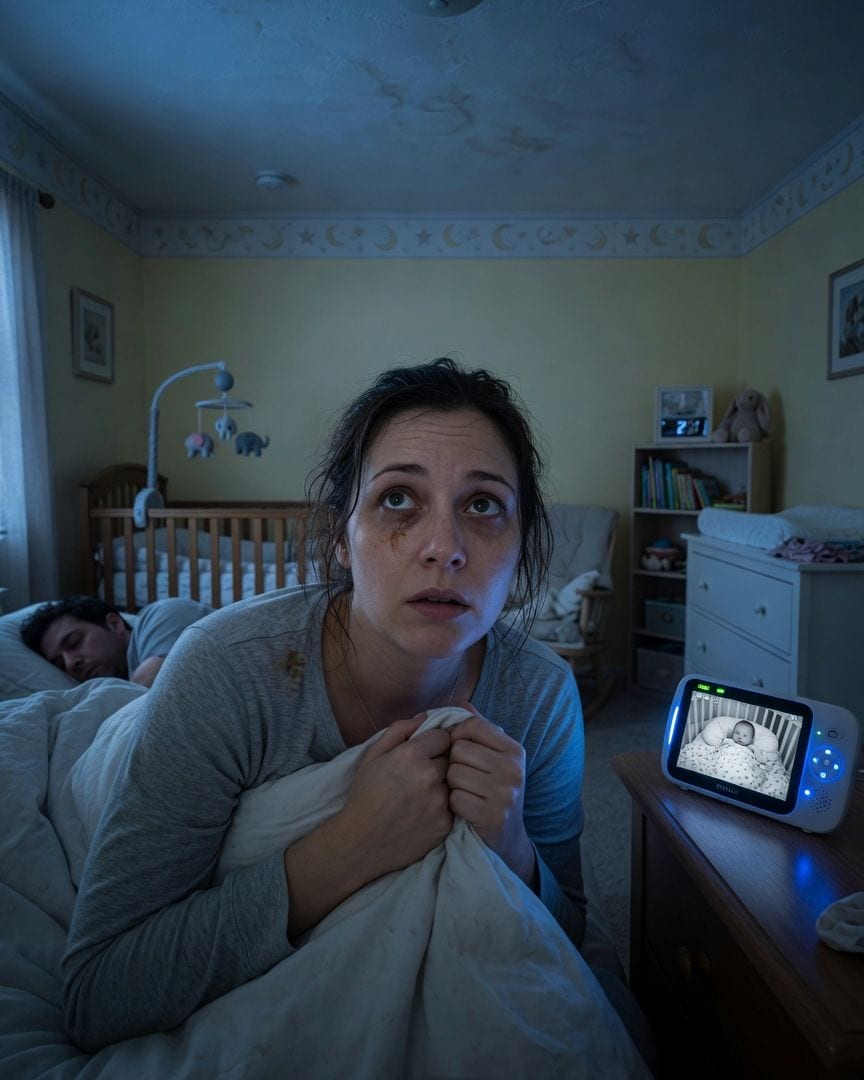
The blue glow of the baby monitor cast a weak light across the ceiling. It was 2 AM, again. From the speaker, the soft, familiar hum of a woman singing a lullaby drifted out, clear as day.
"Hush now, little baby, don't say a word..." Underneath it, a rhythmic, gentle creak, back and forth, back and forth. A rocking chair. My breath hitched. I knew, rationally, what I would see if I looked. My phone lay beside me, screen already active, showing Emily's room.
The single camera feed showed her tucked securely in her crib, a tiny, peaceful mound under her blanket. The room was empty otherwise. No rocking chair. I’d checked a dozen times over the last few weeks.
David stirred beside me, a soft snore, oblivious. I tried to rationalize it all again, for the hundredth time. A neighbor's radio, a faulty signal, maybe some strange interference from a nearby baby monitor?
But the sound was always too clear, too close, as if the speaker were right there in the room with Emily. And the lullaby, always the same, note for note, the same steady rhythm to the phantom creak.
It had become a routine, this nightly serenade, between two and three, a presence that wasn't there, in a room that should have been safe and silent.
I pulled the blanket tighter around my chin, a cold knot tightening in my stomach as the rhythmic creak continued its steady, maddening rhythm.
The next morning, I was a wreck, operating on fumes. David, bless his heart, managed a quick, dismissive suggestion about a loose floorboard before heading out to work. “Just the old house settling, hon. Get some sleep.”
But I couldn’t shake the unease. Sleep felt impossible, the phantom lullaby still echoing in my head.
I went into Emily’s nursery. During the day, it was bright and cheerful, a happy yellow, filled with sunlight. I moved around the room slowly, deliberately, examining every inch.
I tapped along the walls, checked the outlets, even pulled Emily’s dresser and the small bookshelf away from the baseboards. I was searching for any rational source, any loose wire, any hidden speaker, anything that could explain the sound. Nothing.
I went to the baby monitor unit itself, unplugging it, checking the port, plugging it back in. It looked fine. The room was pristine, newly painted, recently furnished, as perfect as the day we moved in.
As I knelt by the crib, my gaze fixed on the spot where I kept imagining a rocking chair would sit, my fingers brushed against a slight unevenness in the carpet.
It was a subtle dip, almost imperceptible to the eye, but definite under my touch. I pressed down, feeling a strange resistance, a definite give in the floorboards beneath the carpet. It wasn’t a loose board. It felt… smooth, worn.
Like something had been pressed into the wood, deeply, for a very, very long time. A shiver, colder than any morning draft, ran down my spine.
Driven by a growing dread, I went to the kitchen and found the utility knife in the junk drawer. My hands were shaking slightly.
Back in the nursery, I knelt again, carefully, slowly, cutting a small square of carpet around the subtle dip. The plush fibers gave way, revealing the polished hardwood floor beneath. But it wasn’t smooth.
There, etched into the dark wood, was a deep, crescent-shaped groove, almost perfectly semi-circular. It was too large, too precise to be random damage. My breath caught in my throat.
I traced the smooth, worn curve with my finger, the wood cool and ancient beneath my touch.
It was exactly the footprint of a rocking chair runner, worn into the floor as if by decades of rhythmic motion, directly beneath where the monitor's sound seemed to center every single night.
The rocking chair mark consumed me. I took photos, showed them to David. He just shrugged, looking tired. "Just old house wear, Sarah. Houses have histories. It's a hundred-year-old floor." But I knew better. This wasn't just "wear."
It was too deliberate, too deep, perfectly matching the phantom creak. I started pulling threads. I called the realtor, feigning interest in the house's history. She was vague, mentioned a "Florence Radcliffe" who'd lived here decades ago.
That name was all I needed. I spent the next few days at the local historical society, poring over property records, microfiche of old newspapers.
I found the house's deed history: Florence Radcliffe had indeed owned it from 1955 to 1968.
As I squinted at a blurry old newspaper page, a librarian, an older woman with kind eyes and a name tag that read Judith Donovan, leaned over my shoulder. She'd overheard my questions about the "Radcliffe house."
"Oh, poor Florence," she said, her voice dropping to a near whisper. "She had a little one, a baby girl. Used to hum her to sleep every night, same lullaby. Always around two in the morning, I heard.
I lived across the street back then, in the little blue bungalow. You could hear it sometimes, faint but clear, even through closed windows. Tragic, what happened." My blood ran cold.
The routine, the lullaby, the time – it all clicked. Judith continued, her gaze distant, fixed on some memory. Florence’s baby disappeared first, she said, just… gone. Then Florence herself, a few months later. "Just vanished. Left everything behind.
Everyone said she was heartbroken, but to just disappear like that…"
It was a growing sense of validation, mixed with profound dread.
As I deepened my investigation into Florence, the house seemed to push back. The humming from the baby monitor grew louder, sometimes starting earlier, lingering later.
It wasn’t just a faint sound anymore; it felt like it was filling the air around Emily's crib.
One afternoon, I was in the living room, laptop open to an archived news site, searching Florence’s name.
A distinct, sharp creak echoed from the nursery directly overhead, followed by a soft, dull thud, as if something heavy had been set down. I froze, my heart hammering against my ribs. Emily was downstairs with David, in the backyard.
I was alone. Slowly, cautiously, I walked up the stairs, my phone camera ready, though I had no idea what I expected to see. The nursery door, which I had left ajar, was now fully closed.
A chill seeped from under it.
I pushed it open. The room was empty, the sunlight still streaming through the window. But on the exact spot of the rocking chair indentation, a small, antique wooden rocking horse sat silently.
It was old, faded, its paint chipped in places, but in perfect condition for its age. Its painted eyes stared blankly forward. I knew, with a certainty that iced my veins, it hadn't been there an hour ago.
We didn’t own a rocking horse. We’d bought all of Emily’s toys new. I backed away slowly, my hand still on the doorknob. A cold certainty settled over me: the house knew I was digging.
And it was showing me exactly what it remembered.
I confronted Judith Donovan again, clutching the rocking horse. The old woman gasped softly when she saw it. "That was Florence's baby's favorite! She kept it right by the rocking chair, always. She'd pretend it was real, you know?
Rocked it for hours sometimes, even after..." Judith trailed off, her eyes wide, then narrowed. "After the baby disappeared, she still did it. Some said she was mad with grief, just playing to an empty crib.
Others… well, they said the house just kept her."
My stomach lurched. "Kept her?"
Judith nodded, her gaze fixed on the rocking horse in my trembling hands. "She was always in that nursery, humming that tune. She never stopped, even after the baby… vanished. Like she couldn't leave. Like she was tied there."
It clicked. It wasn't just a memory, I realized, not just an echo. It was an active re-enactment. This house was repeating something.
Judith then leaned in closer, lowering her voice. "There was a rumor back then. Florence, she was a quiet woman, kept to herself. But people said she wrote things. A diary, maybe.
Tucked away in a loose brick in the old fireplace, they said. She wrote about her struggles after her child's disappearance. About how she couldn't leave, how the house felt… alive, demanding the routine continue."
The pieces of the puzzle weren't just clicking; they were slamming into place. The lullaby, the chair, the specific time, the 'routine that continues.' Florence wasn't just a memory; she was a victim, compelled by the house itself.
I felt a chill that penetrated to my bones. The house wasn't just haunted; it was a trap.
Back at the house, I frantically searched the fireplace, my fingers running along the rough brickwork, searching for any give. My fingers found a loose brick, just as Judith had described, tucked behind the old cast-iron grate.
Behind it, not a cavity, but a small, leather-bound diary, brittle with age, tied with a faded ribbon. I opened it to a random page, my heart pounding.
Florence's elegant, looping script detailed her unbearable grief, her endless humming of the lullaby, her inability to leave the nursery. "The house won't let me stop," one entry read, the ink faded but clear. "It demands the routine.
I rock, and I hum, and I pretend she is here. It is all I can do."
I flipped through more pages, my eyes scanning, desperate for any clue, any explanation. The desperation and despair in her words were palpable. Near the end, tucked between the crumbling pages of the diary, was a faded, brittle newspaper clipping.
The headline was stark, the black ink bleeding slightly into the yellowed paper: "Local Mother Vanishes from Radcliffe Home." The date was 1968. Below, a smaller paragraph caught my eye, a chilling detail.
It mentioned a local legend, a similar incident of another family, the Eastons, who disappeared without a trace from the very same address in 1927, their young child also gone. The article mentioned "similar unsettling occurrences" reported by prior residents.
I stared at the clipping, my breath catching in my throat, a cold dread twisting inside me. It wasn't just Florence. It had happened before. The house isn't just remembering; it's repeating, on a cycle. And Emily is here now.
The full horror dawned on me, a sickening clarity. The house didn't simply echo past tragedies; it absorbed and re-enacted the routines of mothers and children who lived within its walls.
The presence of a new young child, like Emily, seemed to 'activate' this retained memory, drawing the new mother into the same cycle of obsessive care and eventual loss.
Florence's diary confirmed it, describing how the humming started, how the rocking chair moved on its own, how she felt compelled to perform the routine, even after her baby vanished.
"It feeds on my longing," she’d written in a frantic hand. The house was 'feeding' on her maternal energy, her grief, her devotion.
The newspaper clipping confirmed the cyclical nature, showing it wasn't a singular haunting but a repeating, predatory pattern across generations. The house 'keeps' its occupants, particularly the mothers and their children, never letting them truly leave.
The rocking horse was a lure, a reminder of what the house wants, what it demands.
I realized with chilling clarity that the house was trying to make me the next Florence, drawing me into the same inescapable routine, preparing to take Emily as it took Florence's child, and then Florence herself.
I knew I had to get Emily out. Now. David walked in from work, finding me frantically stuffing Emily’s clothes into a duffel bag. He looked alarmed by my wild eyes, my frantic state. "Sarah, what's going on? You're shaking!"
He tried to calm me, to touch my arm, but I shoved the diary and the brittle newspaper clipping into his hands. "It's real, David! This house, it’s not letting us go!"
As I scrambled to pack the last of Emily’s things, the humming from the monitor intensified, no longer confined to the tiny speaker in the living room. It filled the entire house, reverberating through the floorboards, through my own bones.
The rhythmic creak of the rocking chair echoed from the nursery, louder now, faster, almost desperate. Downstairs, doors slammed shut with sickening thuds.
The front door, which David had just opened, swung violently closed and locked itself with a heavy, final click. The lights flickered, plunged the house into near darkness. Emily started crying, startled by the noise and the sudden gloom.
"We have to go!" I shouted, grabbing her from her crib, pressing her close.
I raced downstairs, David behind me, shouting my name, telling me to stop, to calm down. The air grew heavy, cold, as if all the oxygen had been sucked out.
Shadows seemed to deepen and move on their own, writhing at the edges of my vision. The humming was no longer just one voice; it was a chorus, a cacophony of spectral lullabies, converging on us, surrounding us.
We reached the back door. I fumbled with the deadbolt, my hands slick with sweat. It was jammed, unmoving. I could feel an invisible pressure, pushing against the door, holding it shut.
David threw his weight against it, grunting, but it held fast. The humming reached a fever pitch, a wailing symphony of despair.
I spotted a heavy cast-iron poker by the fireplace, its polished surface catching the last slivers of dying light. With a desperate cry, I grabbed it. I swung it with all my might, smashing the glass in the back door.
The sound of shattering glass was deafening, momentarily cutting through the oppressive humming. A gust of cold, stale air rushed in, smelling of damp earth and something ancient.
I pulled Emily through the broken pane, David following close behind, cuts on our arms and hands from the jagged edges.
We ran, not looking back, the wailing lullabies fading behind us as we reached the street, our home now a dark, silent maw.
Sarah and Emily stayed with Sarah's sister for weeks. David, though shaken by the events of that night, rationalized the house's resistance as a power surge and a jammed lock, attributing Sarah's conviction to stress and sleep deprivation.
He tried to have the house investigated, but no one found anything amiss. The police dismissed their claims. Sarah kept the diary and the newspaper clipping, proof no one would believe.
The house was eventually put back on the market, its history left unmentioned. Sarah refused to ever return, even for their belongings, abandoning everything inside that house.
They started over, in a small apartment across town, scarred and with little left.
I watch Emily play in our new, small living room, a cheap plastic rocking horse her only toy. David is at work. We are safe, but the cost was everything.
Our home, our sense of security, David’s trust in my complete sanity. I hum a quiet tune to Emily, a familiar, comforting lullaby.
Sometimes, when the house is quiet, I swear I can still hear the faint, familiar notes, just beneath my own humming.
If this one got to you
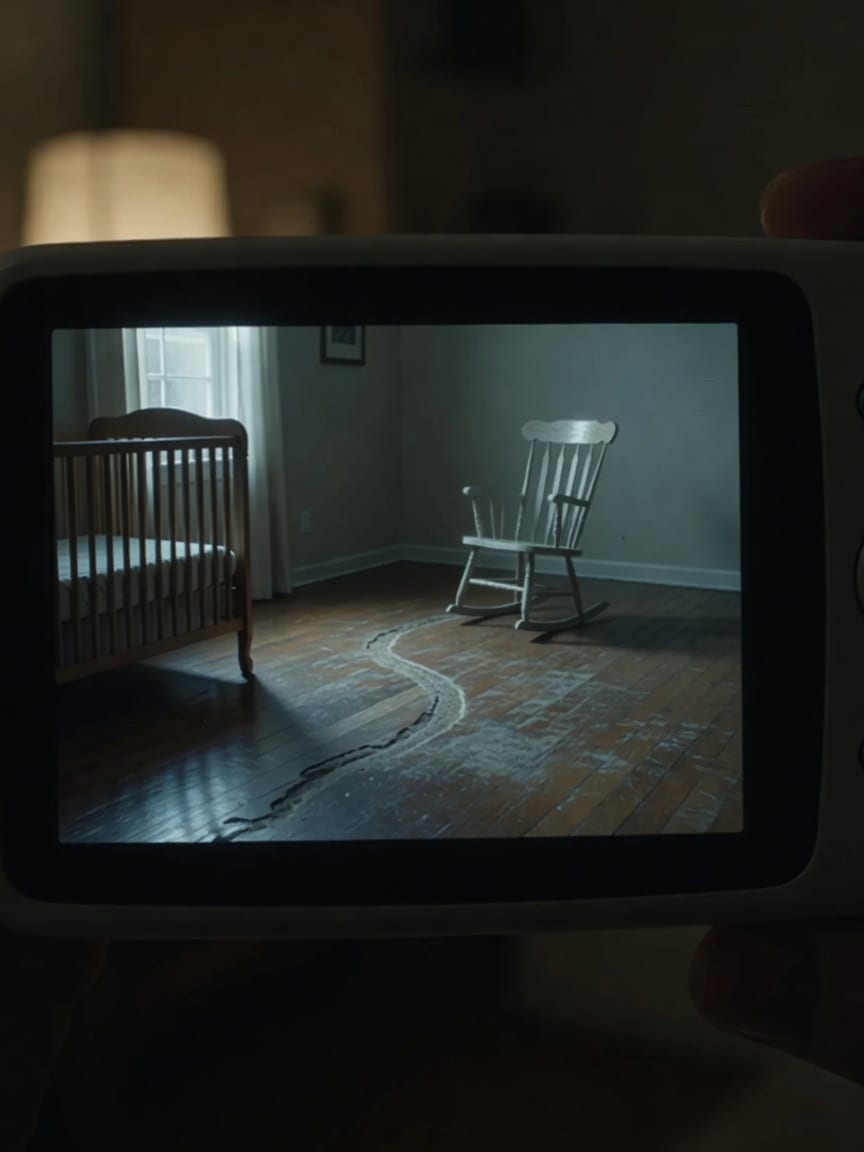
My baby monitor hums a lullaby at 2 AM. I hear a rocking chair creak. The camera shows my daughter's room empty, every night.
Every night, my baby monitor hums a gentle lullaby and a rhythmic creak, as if a rocking chair is in Lily's nursery. But the room is always empty, the monitor's camera shows nothing, and we don't even own a rocking chair. Then I found a newspaper clipping from sixty years ago, detailing a child's disappearance from our house.
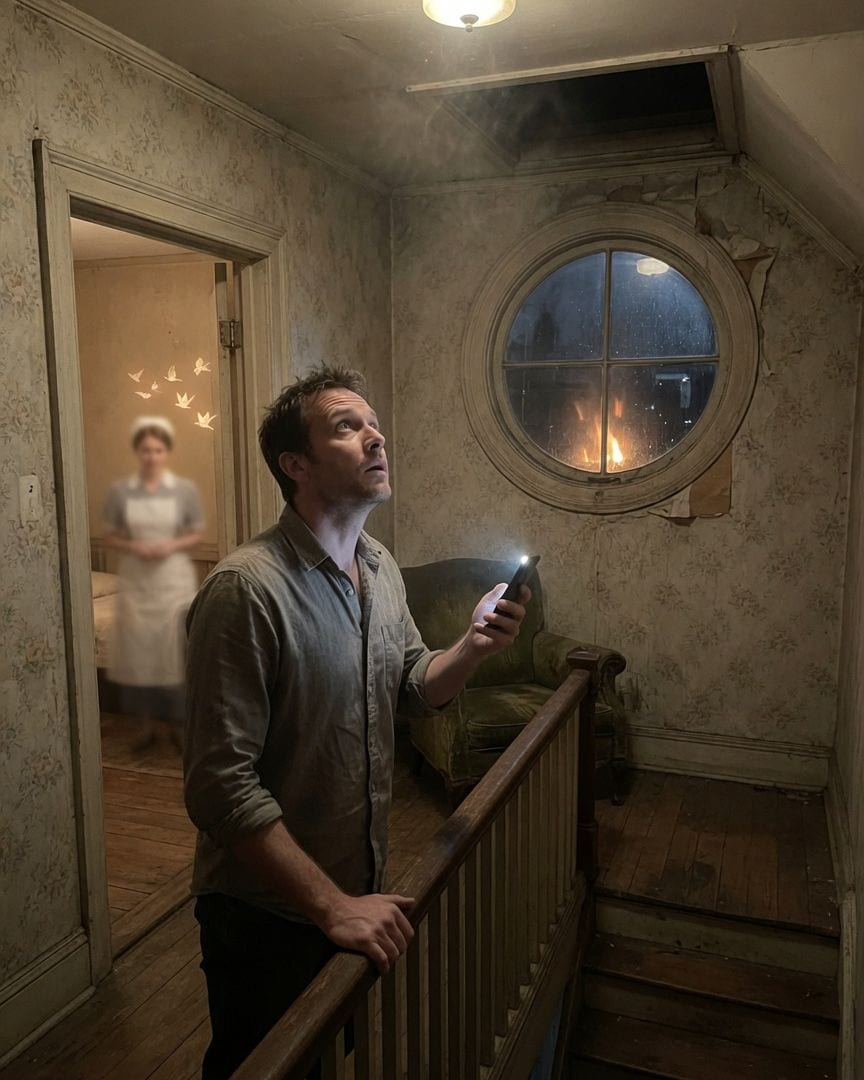
My attic window shows a nursery lit by firelight. The blueprints say no room exists there.
I inherited an old house with good bones, an architect's dream. But soon, I started seeing a nursery, lit by firelight, in the attic window. My blueprints confirm there's no room there.
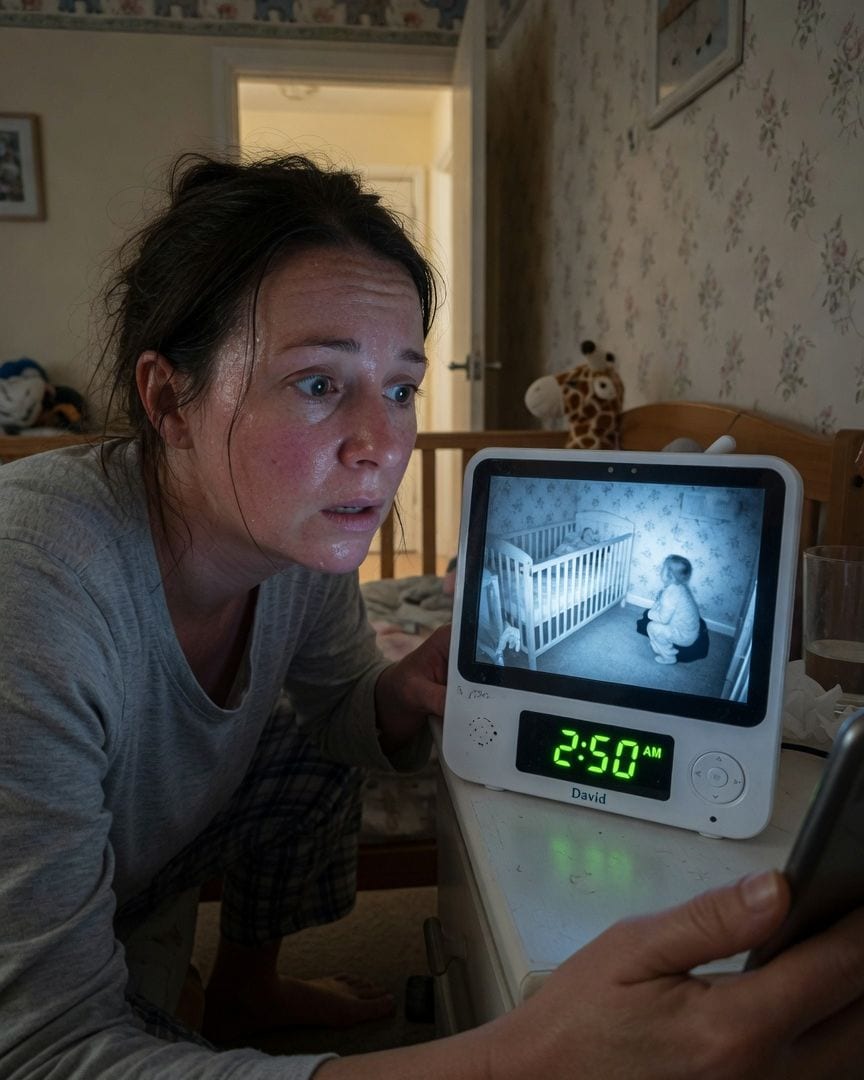
My baby monitor shows David's nursery with floral wallpaper and a boarded-up window. My nursery has elephants. It's a room that doesn't exist.
Waking to my baby monitor at 2:50 AM, I saw my one-year-old son, David, staring at a crouched shadow in his nursery. But reviewing the footage later revealed an impossible truth. The room on the screen had faded floral wallpaper and a boarded window, a place that does not exist in my home.
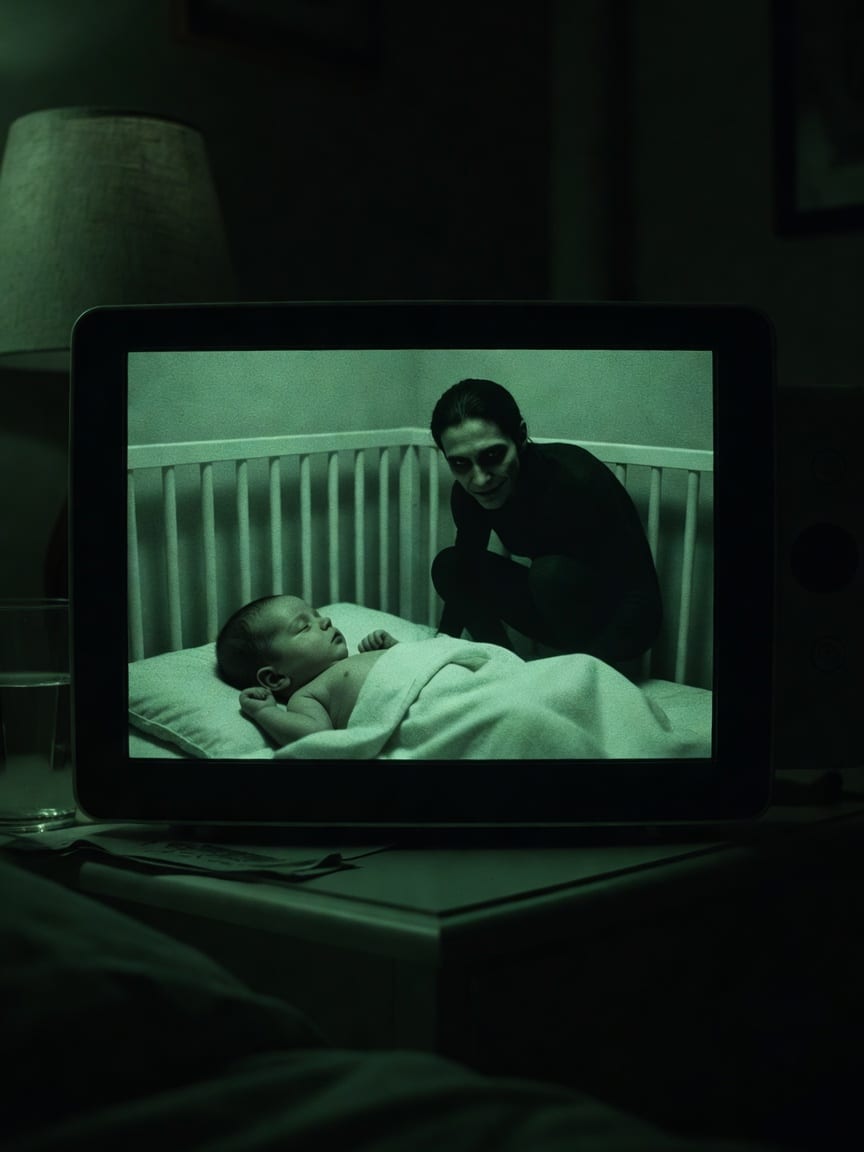
My baby monitor showed something crouched in my son's cot corner, looking back. He was sleeping alone, then it named him.
I was watching my one-year-old son Theodore on the baby monitor one night when he slowly sat upright, staring into his room's far corner. My stomach clenched as a grey, hunched shadow began to coalesce in that empty space, then subtly shifted, looking directly back into the camera.

My sleep clinic's Bed 4 patient waves and asks about the humming — but the bed's empty, and its intercom was disconnected.
It was 3 AM, and the sleep clinic should have been empty, especially Bed 4, which was officially offline for repair. But for the third night in a row, a patient in Bed 4 was waving at me, their voice asking about a humming sound through a disconnected intercom.
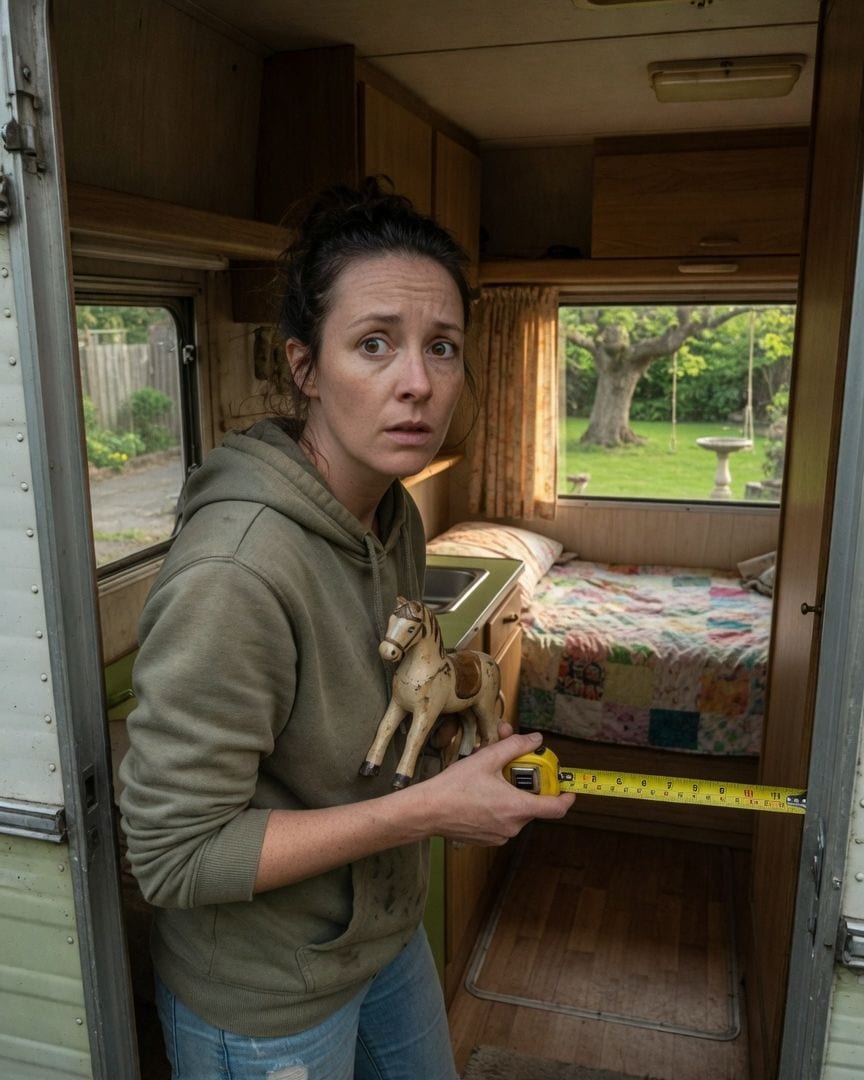
My new caravan's corridor runs longer than the caravan itself. Eleven feet of hallway past the end wall, to a room with a made bed and a window looking out on a garden it's never been parked in.
I finally bought my dream vintage caravan, a twelve-foot beauty. But when I measured inside for a mattress, the numbers didn't add up. Beyond where the wall should be, an impossible room with a window looked out onto a manicured garden I'd never seen before, a garden that couldn't possibly exist.