My heart has a metal wire threaded inside it, dormant, but my chest is unmarked and I've never had surgery.
The fluorescent light of Dr. Reynolds’s office hummed, casting a clinical glow on the X-ray screen.
There it was, unmistakable: a thin, metallic wire, like a delicate, impossible thread, woven into the tissue just outside the lower chamber of my heart.
A pacemaker lead, Dr. Reynolds, a man whose permanent frown lines seemed etched by years of baffling medical anomalies, confirmed. He tapped the screen with his pen, a small, silver click against the digital image.
“It’s dormant, completely non-functional,” he explained, his voice measured. “Not powered, not connected to anything. But it’s definitely there, Zoe. And it’s been there a long time.”
My throat felt dry. “But that’s… impossible. I’ve never had heart surgery. I’ve never even been seriously sick, not really. No major procedures, ever.”
The X-ray was mine, taken just an hour ago as part of the mandatory biometric screening for my new marketing job. No mix-up, he’d assured me.
He pointed to faint, fibrous scar tissue visible around the lead on the image, the body’s quiet response to a long-term foreign presence.
“The tissue suggests decades,” he repeated, as if the sheer timeframe might make it easier for me to accept.
I nodded, feeling a cold knot in my stomach. The room, for all its sterile neatness, suddenly felt wrong, the air too thick. Later that night, alone in the brutal honesty of my bathroom mirror, I pulled up my shirt.
I pressed my fingers over my ribs, tracing the curve of my chest, just above where I knew my heart beat.
I turned, angled, searched for any tell-tale mark – a faint surgical line, a barely visible incision, anything that could explain the impossible guest inside me. My skin was unblemished. Smooth. Whole.
The wire, though unseen, felt like a silent, impossible guest, a cold secret threaded deep within me.
Dr. Reynolds, after a perplexed week, had suggested the hospital archives. “It’s a long shot, Ms. Vance,” he’d said, “but if this lead was implanted, there would have been a record. Even if it was… unusual.”
And so, I found myself in the dusty, echoing labyrinth of the local hospital’s basement archives. Camille Whitmore, the archivist, a woman whose neat bun and sensible shoes suggested a lifetime of order, was remarkably patient.
Together, we waded through decades of brittle paper, sifting through patient ledgers, discharge summaries, and handwritten notes, searching for any obscure cardiac event tied to my childhood.
Days blurred into a frustrating string of dead ends, the smell of old paper and dust settling into my clothes.
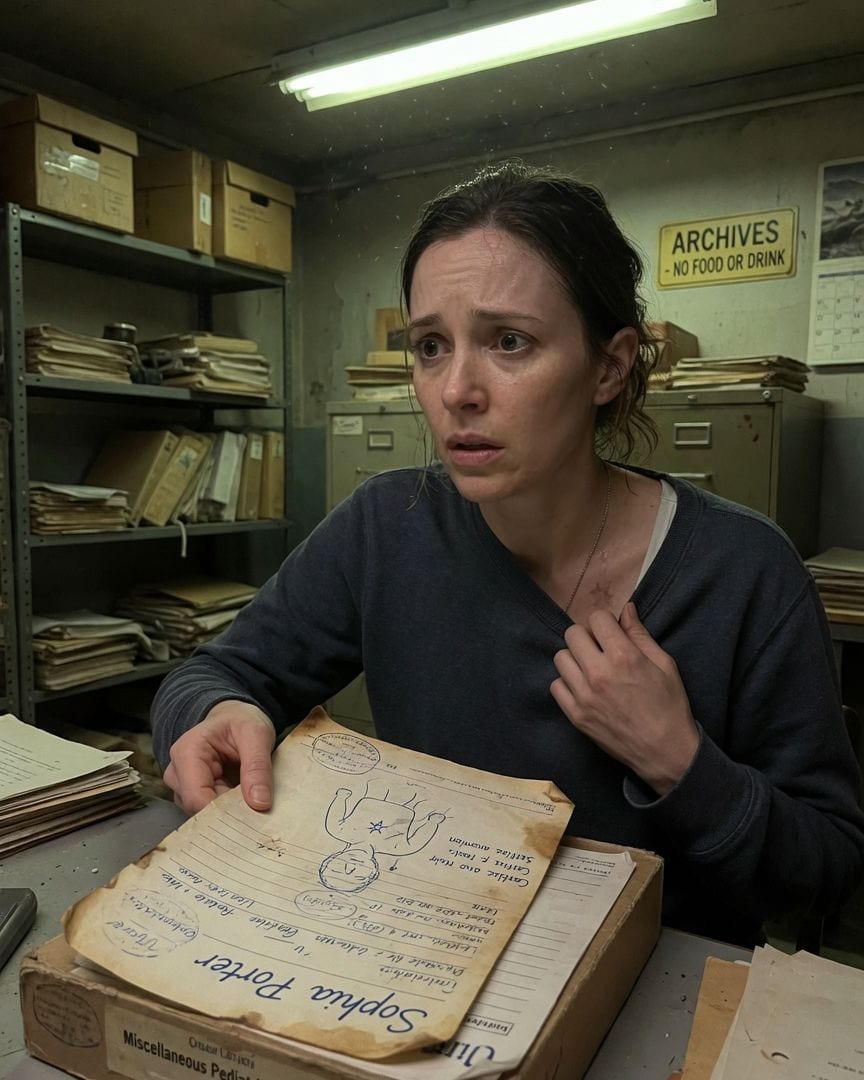
“This one’s a mess,” Camille sighed, pulling out a misfiled cardboard box labeled, simply, ‘Miscellaneous Pediatrics - 1990s.’ She blew a puff of dust from the lid.
Inside, beneath a stack of faded discharge summaries for tonsillectomies and broken bones, lay a single, brittle patient intake form. It wasn’t mine. The name at the top, handwritten in a looping cursive, read: ‘Sophia Porter.’
Camille was about to refile it, her hand already reaching for the box. “Just another misplaced form,” she murmured. But my eye caught a detail, a tiny pinprick of wrongness. The birthdate. October 27th, 1990.
My own birthday was November 3rd, 1990. Just days apart.
A prickle of unease, cold and sharp, crawled up my spine. My gaze darted to a handwritten note scrawled in the margin, almost an afterthought: ‘Cardiac anomaly – status post lead implantation.’ The words seemed to jump off the page.
Camille, noticing my sudden stillness, her hand frozen mid-air, frowned. “Is something wrong, dear?” she asked, her voice quiet in the hushed archive. I didn't answer.
My eyes had dropped to a small, crudely drawn diagram in the lower corner of the form, next to a box for ‘identifying marks.’ It depicted a tiny, distinct star-shaped mark on a child’s upper chest.
The exact spot, just beneath my own left collarbone, where a faint, star-shaped birthmark had always been.
I stared at the faded hospital intake form, my finger tracing the name 'Sophia Porter' and the listed birthdate, just days before my own.
Beside a scrawled medical note about a 'lead implant,' a small, crudely drawn diagram showed a tiny, distinct birthmark on a chest — exactly matching the one just beneath my own left collarbone.
Rattled, I tried to find anything, anything, on Sophia Porter online. Google searches yielded nothing concrete. No obituaries, no family trees, no social media. As if she’d simply… evaporated. The silence was more unnerving than any wild speculation.
Determined, I turned to the local historical society, hoping their old archives might hold family records, birth registries, anything less ephemeral than the digital ether.
The society was housed in an old Victorian, smelling of beeswax and forgotten lives. There, I met Gerald Maddox, a retired history professor whose kind, rheumy eyes seemed to hold centuries of local knowledge.
He was 78, his hands spotted with age, but his mind sharp as a tack. When I mentioned Sophia Porter, his brow furrowed, then cleared. An almost unnerving eagerness flickered in his gaze.
“Porter, you say? Ah, yes. Old family.” He disappeared behind a stack of dusty volumes, returning with a large, leather-bound book that looked like it had seen generations. He flipped through pages, his finger landing on an entry. “Sophia Porter.
Born right here in town, 1990. Father, Thomas. Mother, Eleanor. Yes, yes.” He confirmed she did exist. “Interesting case, that family. Moved away quite abruptly, as I recall. Just after little Sophia had some heart trouble, surgery, I believe.
Then poof, gone.” He tapped the page. “There was a rumor, you know,” he continued, his voice dropping, conspiratorial. “Back in those days. Hushed stories about children. Vanishing. Or… changing hands. Through unofficial channels at the hospital.
Desperate times, you understand.”
My blood ran cold. The air in the room, already heavy with the scent of aging paper, seemed to press in. Gerald had old town photos, census records, even some Porter family ephemera.
He showed me a small, black-and-white photograph, slightly faded, of a solemn-faced girl he identified as Sophia. Her eyes, wide and dark, held a peculiar familiarity, a flicker I couldn’t quite place, like looking at a distorted memory.
Gerald’s gaze was sharp, watching my reaction, a faint, knowing smile playing on his lips. It was almost as if he was waiting for me.
He offered to help me dig deeper into the ‘unusual’ circumstances of the Porter family’s departure, hinting at a pattern he’d observed over the years, a string of similar, inexplicable disappearances and reappearances of children in the town’s history, always, he stressed, linked to the hospital.
As I delved deeper, the unsettling awareness crept in like a slow-moving tide. A dark sedan with tinted windows started appearing on my street. Not always the same spot, but always there, for several days running.
Empty when I looked directly, always. But its presence was a cold, heavy weight, a silent observer. It would be parked two houses down, then across the street, then just past the corner. Never conspicuous, but consistently there.
One evening, my phone buzzed with a voicemail from an unknown number. My heart leaped. I opened it, my thumb shaking slightly. A low, calm voice, neither threatening nor friendly, simply stated, "Some things are better left buried, Zoe.
For everyone's sake." The call hung up without another word. My blood ran cold, spreading through my veins like ice. The mundane explanation – a wrong number, a spam call – died in my throat.
The tone was too specific, too personal. Zoe. How did they know my name?
I reviewed my interactions with Gerald Maddox, replaying his unsettling eagerness, the way his eyes seemed to gauge me, almost like he was waiting for me to come along and connect these dots.
He never seemed surprised by my discoveries, only confirmed them.
I started to wonder if he wasn't just an accidental helper, but 'the one who knew,' calmly observing me unravel a truth he’d long suspected, perhaps even hoped I would uncover.
The sedan remained. A silent, knowing presence. I checked my social media privacy settings, my digital footprint, but found no obvious breach. No strange logins, no odd activity.
The feeling was primal, a sense of being watched from the edges of my life, a predator circling. And the warning felt profoundly personal, as if the caller knew exactly what I was pursuing, what implications my questions held.
I locked my doors, triple-checked them, pulled my blinds tight against the darkening evening.
But the unease wasn’t just outside; it was inside my apartment now, a shadow in every corner, a chill on my skin that no amount of heat could dispel.
“I told you this was a pattern,” Gerald said, his voice low, his expression betraying no surprise as I showed him the chilling voicemail. His calm demeanor was unsettling, a rock in the rising tide of my panic.
“People don’t like old patterns disturbed, Zoe.”
We were back in the historical society, the old books silent witnesses. He admitted it then, the truth he’d been quietly studying for decades. “A series of ‘replacements,’ I call them,” he explained, his gaze distant, as if seeing ghosts.
“For generations, certain families in town, particularly those who experienced infant loss, somehow ended up with a ‘new’ child from the hospital. Often within days or weeks. Scant official paperwork.
They spoke of ‘miracle babies’ or ‘mix-ups’ that were too convenient, too neat. Too… frequent.”
He pushed a meticulously organized binder across the table. Inside were birth announcements, vague death certificates with missing details, old newspaper clippings. He pointed to children with similar ‘cardiac anomalies’ or other unique physical markers mentioned in their early records.
He stopped at Sophia Porter’s entry.
“Sophia never truly left,” he stated, his eyes meeting mine, steady and unwavering. “They just… reassigned her. Her body, her life, was given a new story.”
He produced a faded photograph of Sophia Porter’s headstone, a simple stone in the old town cemetery. It bore the name, Sophia Porter, and her birthdate.
“This is where Sophia Porter was laid to rest, officially,” Gerald said, his voice dropping, heavy with years of unspoken horror. “But the real records… they don’t quite add up.”
He explained how he’d painstakingly cross-referenced every official record he could find. Sophia’s death certificate, while present, had glaring omissions. Discrepancies that hinted at something purposefully obscured.
“That pacemaker lead in your heart, Zoe,” he continued, leaning forward, his voice a whisper that somehow echoed in the quiet room. “It’s not just a coincidence. It’s a physical legacy. A marker of the original inhabitant.
A trace that couldn’t be erased when Sophia was ‘re-homed’ into a new family and a new identity.”
The dread solidified in my stomach, a cold, hard knot. The scattered clues – the X-ray, the intake form, the matching birthmark – snapped into a coherent, horrifying shape.
It implicated the hospital, the town, and most terrifyingly, my own existence. I was not just living a life; I was living a life, one that had been started by someone else.
I stood before Sophia Porter’s weathered headstone, the dates confirming Gerald’s chilling story. The cold granite felt impossibly real beneath my fingertips, solid, immutable.
With shaking hands, I pulled out my phone and accessed the digital registrar for the town, searching for Sophia Porter’s death certificate, just as Gerald had instructed.
The page loaded slowly, agonizingly, and then an error message flashed where the full certificate should have been: 'Record Incomplete: Death Certificate Not Found.' The words glowed, stark and impossible, against the screen.
Gerald, watching me, pulled a final, well-preserved photograph from his worn leather satchel.
It was an old Porter family photo, slightly creased at the edges, taken in a sun-dappled garden, dated roughly 30 years ago — a year or two after Sophia’s official burial.
In the foreground, a small girl, no older than three or four, smiled brightly at the camera. She had my face, unmistakably.
Around her neck, glinting in the sunlight, was the small, silver locket I inherited from my own mother, the one I’d worn since childhood, believing it was a treasured family heirloom from the Vance side.
My breath caught in my throat, the image flickering before my eyes, and the world tilted.
Gerald watched my face, his expression grave, almost sympathetic. “It wasn’t just a re-homing, Zoe,” he said, his voice barely a whisper, cutting through the stunned silence. “It was a continuation. Sophia Porter didn’t die. Not truly.”
He laid out the chilling hypothesis he’d pieced together over the decades: a clandestine program, likely initiated by desperate doctors and grieving parents at the local hospital. It was perfected over years, a quiet, terrifying experiment.
Children like Sophia, with unique physiological markers or medical conditions – a weak heart, a rare blood type, a distinctive birthmark – were ‘transferred.’
Their core identity, their essence, somehow imprinted upon a new, healthy infant whose original life had, for whatever reason, ended prematurely.
The pacemaker lead, he theorized, was one of the earliest, crudest attempts at this transfer; a physical anchor, a medical record that stubbornly persisted.
My own parents, Renee and Maxwell Vance, desperate after losing their own child at birth – a boy, Gerald had discovered – were offered a ‘miracle’ baby.
A healthy girl with a vague, convenient story of a mix-up at the hospital. No questions asked, just endless gratitude. The locket, he explained, was not a Vance heirloom at all, but a ‘talisman’ from the Porter family.
Given to the new parents as a quiet, unspoken link to the child’s true origin, a small, tangible reminder of the life that continued.
The pattern snapped into place with a horrifying click: the missing death certificate, the matching birthmark, the inexplicable pacemaker lead, the photograph of a ‘dead’ child, alive and smiling, wearing my locket.
I wasn’t just given a new life; I was Sophia, re-written, re-packaged. My entire existence, a living testament to a monstrous, quiet conspiracy born of desperation and terrifying medical ambition. The horror wasn’t supernatural, but deeply, disturbingly human.
I drove home, the weight of Gerald’s words crushing me, making every turn, every familiar street sign feel alien. My small, neat apartment, once my sanctuary, suddenly felt like a stage set for a life that wasn’t mine.
I found my parents, Renee and Maxwell, in their living room, watching the evening news, the gentle hum of the television a contrast to the earthquake inside me.
I held up the faded photograph of young Sophia, the one wearing the locket. My mother’s face drained of color, slowly, terribly, as her eyes locked onto the locket, then to the girl’s face.
My father’s jaw clenched, a muscle jumping in his cheek. Renee broke down first, a small, choked sob escaping her. She buried her face in her hands, her shoulders shaking.
“We lost a baby,” she choked out, her voice raw. “A boy. He… he didn’t make it. At birth.” The grief, she explained, had been unbearable, a gaping hole.
Days later, a doctor at the hospital – a kind, older man, long retired now, she vaguely remembered – approached them. An extraordinary offer: a healthy baby girl, available through a ‘special program.’ No questions asked.
Only a promise to never look back, to never speak of it. They were told the locket was a ‘keepsake’ from the birth family, a small gift for their new beginning.
They were desperate, she pleaded, blinded by grief and an overwhelming, immediate love for the child they were offered, for me.
Maxwell, his voice thick with guilt, confirmed it all. He admitted they always felt a vague unease, a sense of something unspoken, something profoundly wrong beneath the surface of their perfect miracle. But they had pushed it down.
They loved me fiercely, he said, refusing to question the gift.
The revelation shattered my world into a thousand irreparable pieces. I was not the person I thought I was. My entire life, my memories, my very identity, built on a desperate, agonizing deception.
The horror wasn’t a monster lurking in the shadows, but the quiet, agonizing choices made by grieving parents, and the chilling implications of a life stolen, then re-gifted.
I looked at my parents, their faces etched with decades of unspoken guilt, and saw not villains, but victims of their own sorrow, and the unwitting architects of my impossible existence.
I felt a profound, unshakeable alienation, the ground beneath my identity dissolving. I couldn’t forgive them, not yet, maybe not ever. My home, my family, my very self, irrevocably altered.
I left my parents' home that night, not knowing if I’d ever return. I rented a small apartment across town, a blank canvas where I tried to rebuild a sense of self.
The hospital records were too fragmented, the key players from decades ago either deceased or suffering from dementia. Gerald Maddox offered to help me further investigate, but I felt a profound exhaustion.
The truth was too vast, too deeply embedded in the fabric of my life. What would I even tell the authorities? ‘My body belonged to someone else’?
The legal and ethical implications were a labyrinth I had no energy to navigate. I kept the locket, a tangible, unsettling link to a life that should have ended, but continued in me.
My parents sent occasional texts, calls, which I rarely answered. The silence was a heavy, constant presence.
Months passed. I tried to resume my life, to go back to work, to pretend. But every beat of my heart, every glance in the mirror, was a stark reminder.
I’d look at my own hands, then at an old, slightly blurred photograph of Sophia Porter that Gerald had given me, a digital copy on my phone. The resemblance was undeniable, a ghostly echo, a reflection of a reflection.
I lived with the knowledge that a piece of another life, another self, resided within me, a silent passenger. The world around me continued, oblivious to the quiet horror I carried.
I sometimes imagined the faint scar tissue around the dormant pacemaker lead, a tiny monument to a life that refused to end. I was Zoe, but I was also Sophia, a merged identity, a living paradox.
My sense of self was no longer singular, but a strange, unsettling duality. I carried the weight of two lives, two histories, inside one body.
Zoe Vance attends a quiet dinner with her parents a year later. Renee asks, 'Are you happy, darling?' Zoe smiles, a small, faint curve of her lips that doesn't quite reach her eyes.
Sometimes, when I catch my reflection, I see a flicker of someone else looking back, and I wonder if she feels me too.
If this one got to you
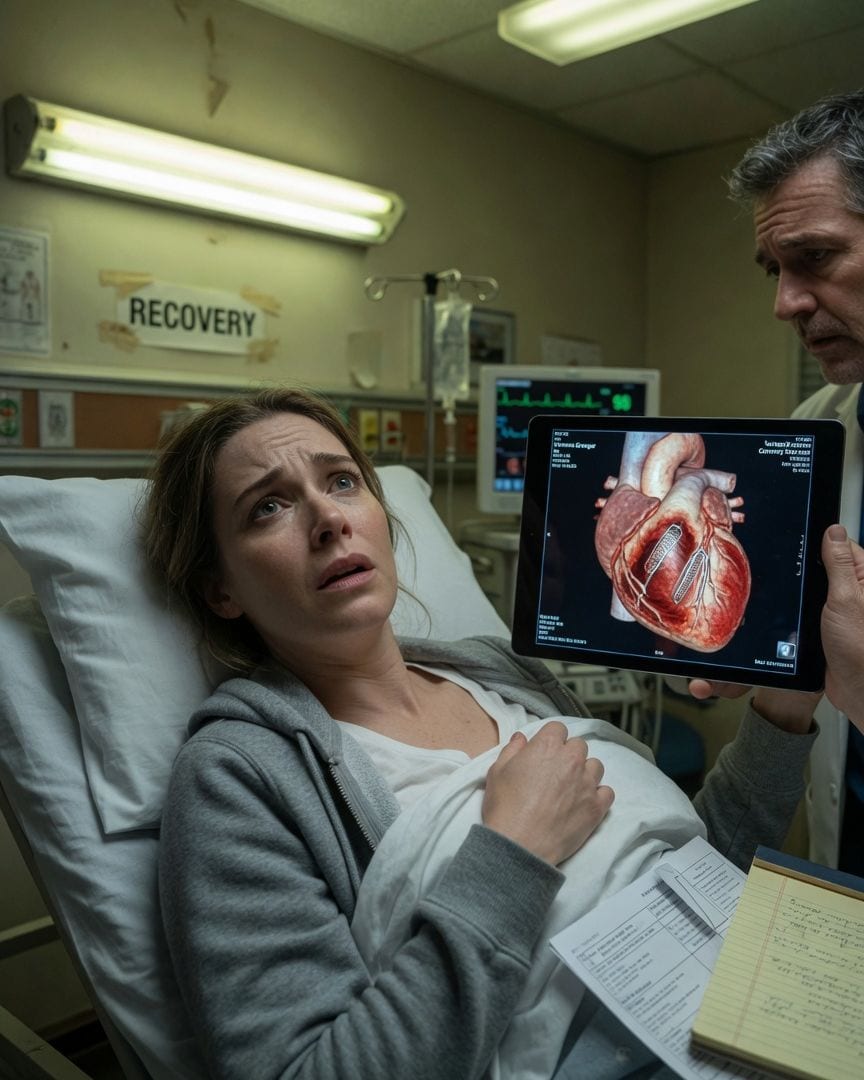
Metal stents are propping open my heart. The doctor rotated the image, but I've never had a cardiac procedure.
After years of dismissed chest pain, a CT scan revealed an impossible truth: my heart contained two metal stents. Dr. Maddox confirmed there was no record of any cardiac procedure in my entire medical history, and I had no memory of ever having surgery. My own body held a secret, alien architecture I couldn't explain.
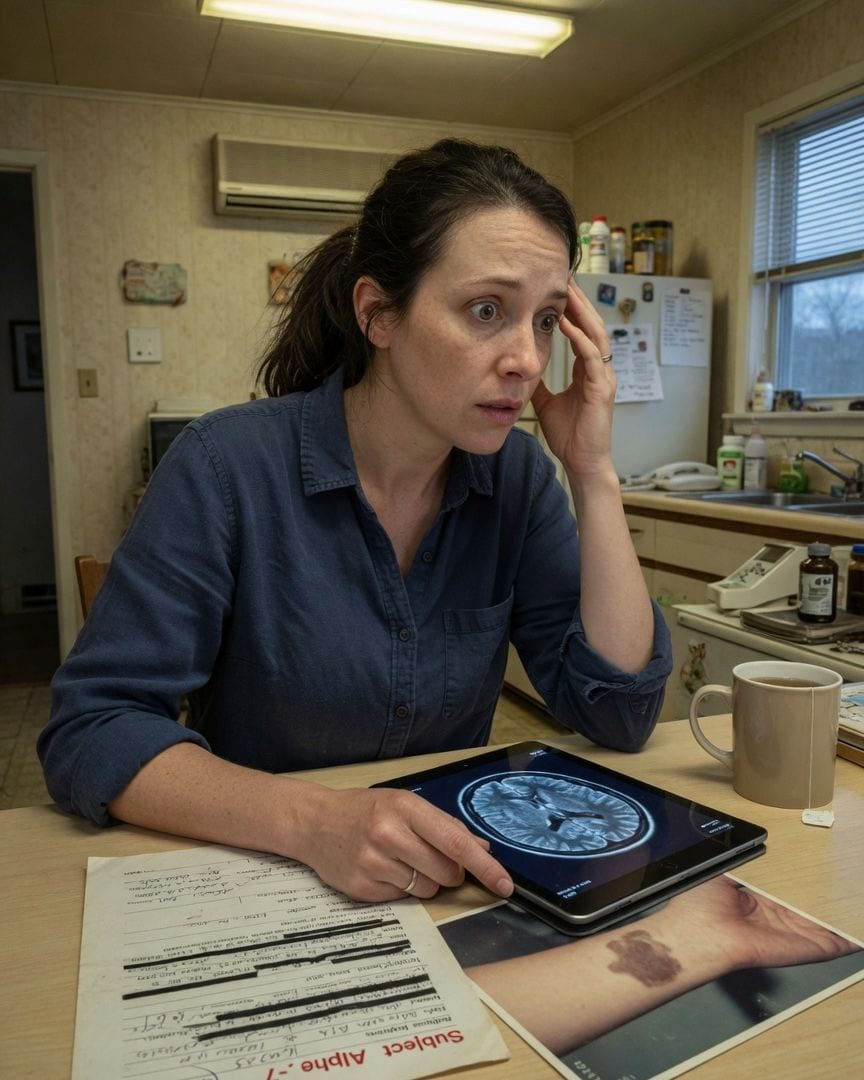
A metal clip seals off a vessel deep inside my brain. My head has no scar, I've had no surgery, and it's been there for over a decade.
My persistent headaches led to an MRI, revealing an impossibly neat metal clip inside my brain. My doctor confirmed it had been there for over a decade, despite no record of any past surgery or scar. Now, a restricted file links my unique birthmark to a mysterious patient from 1968.
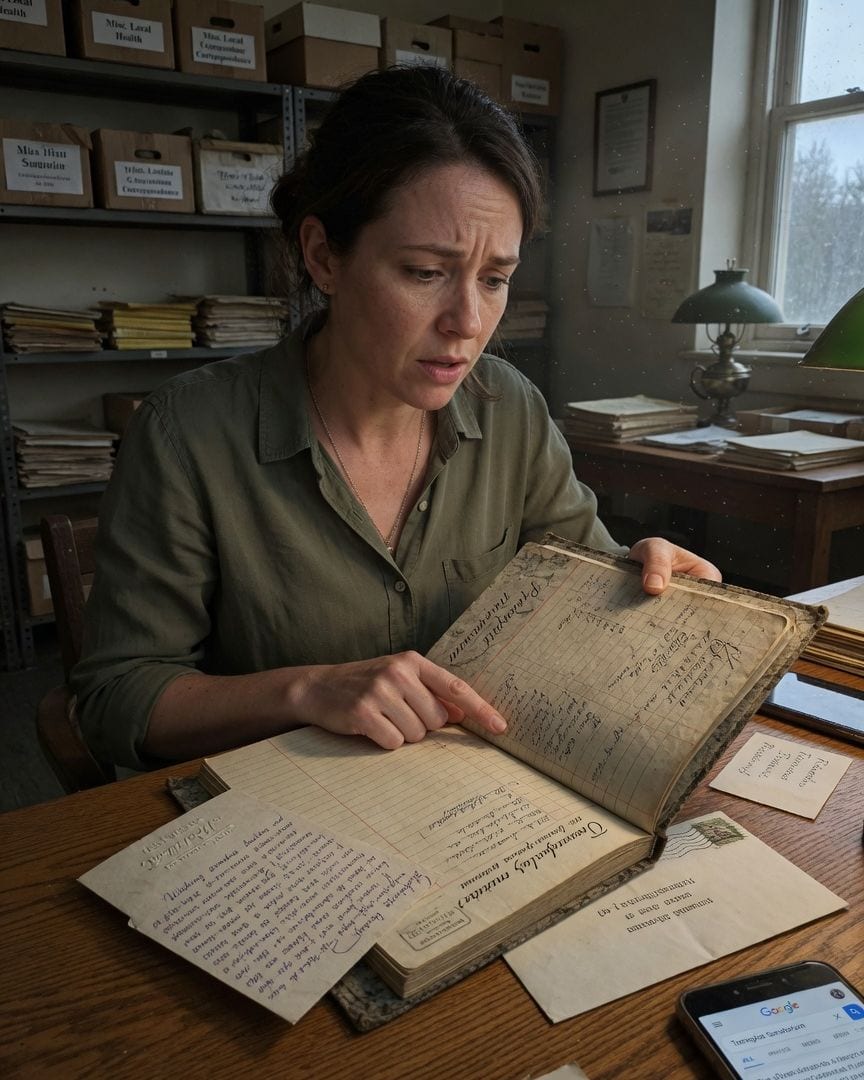
My get-well card wished me recovery from an operation I never had, postmarked from a hospital that burned down in 1963.
I received a get-well card wishing me recovery from an operation I never had. The envelope bore a fresh postmark from Treneglos Sanatorium, a TB hospital that burned down and ceased to exist in 1963. Now, a patient register from that long-gone sanatorium lists my name, dated 1959.
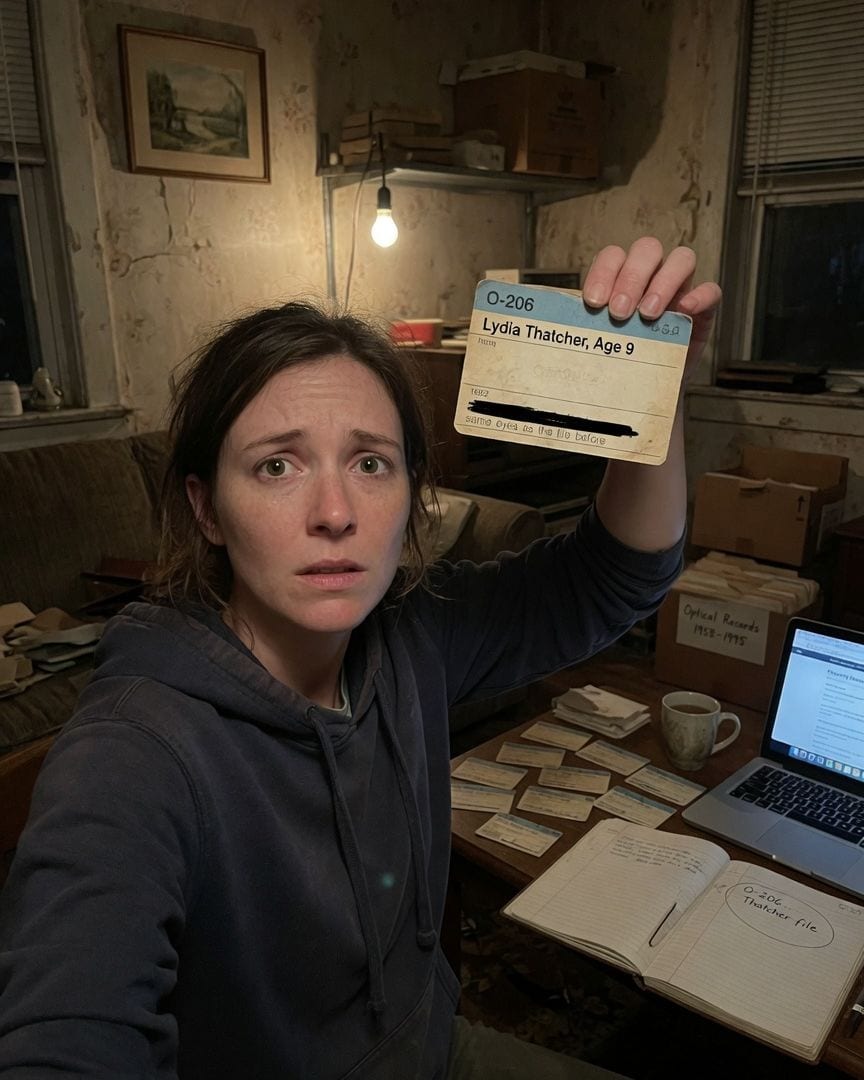
My own optical card is dated 1962, with my name on it. I wasn't born until 1993.
Sifting through old patient files from my former optical practice, I found my own O-206 card. It had my name, Lydia Thatcher, and my current home address printed on it. But the card was dated 1962, decades before I was even born, and a redacted note mentioned 'same eyes.'
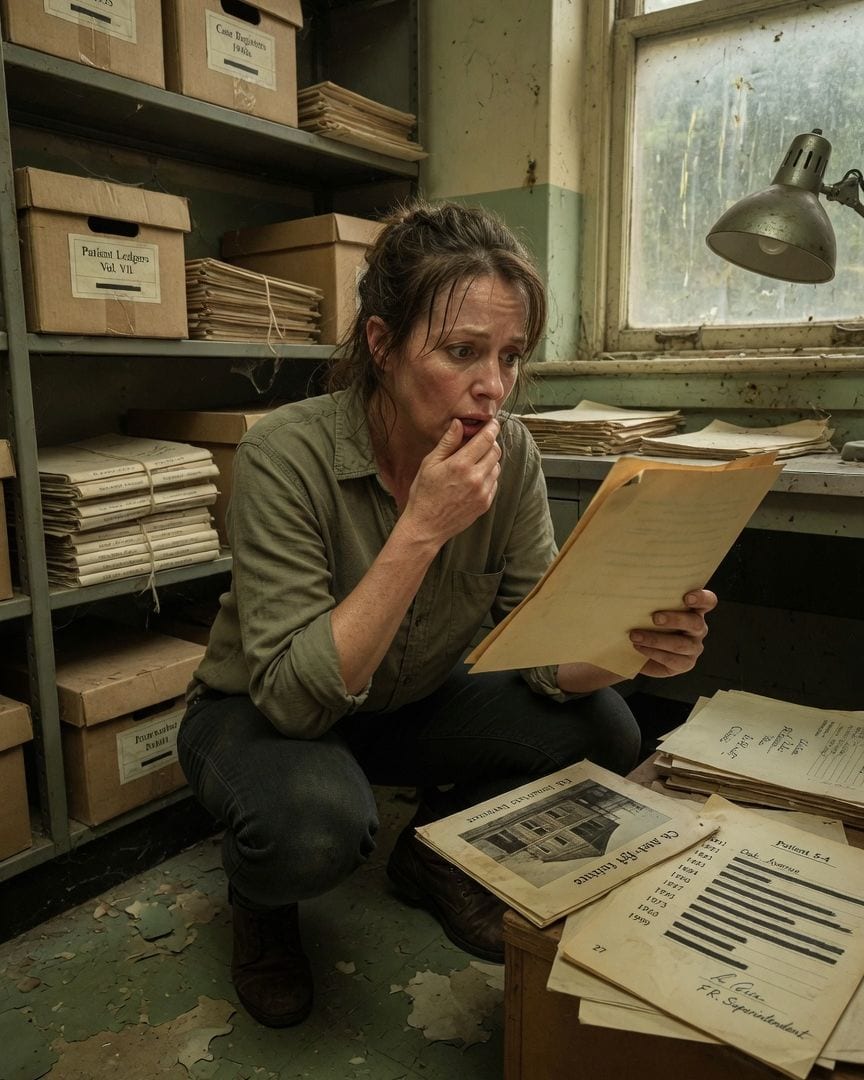
Patient 5-4 keeps checking into my aunt's old sanatorium chalet. The same initials sign them out, 'not traced,' every thirteen years since 1921.
Sifting through my aunt Margaret's estate, I found her old sanatorium file from 1999. Her patient record listed her as 'Patient 5-4,' discharged 'not traced.' But when I accessed the archives, I found 'Patient 5-4' was admitted every thirteen years since 1921, always with identical discharge notes.
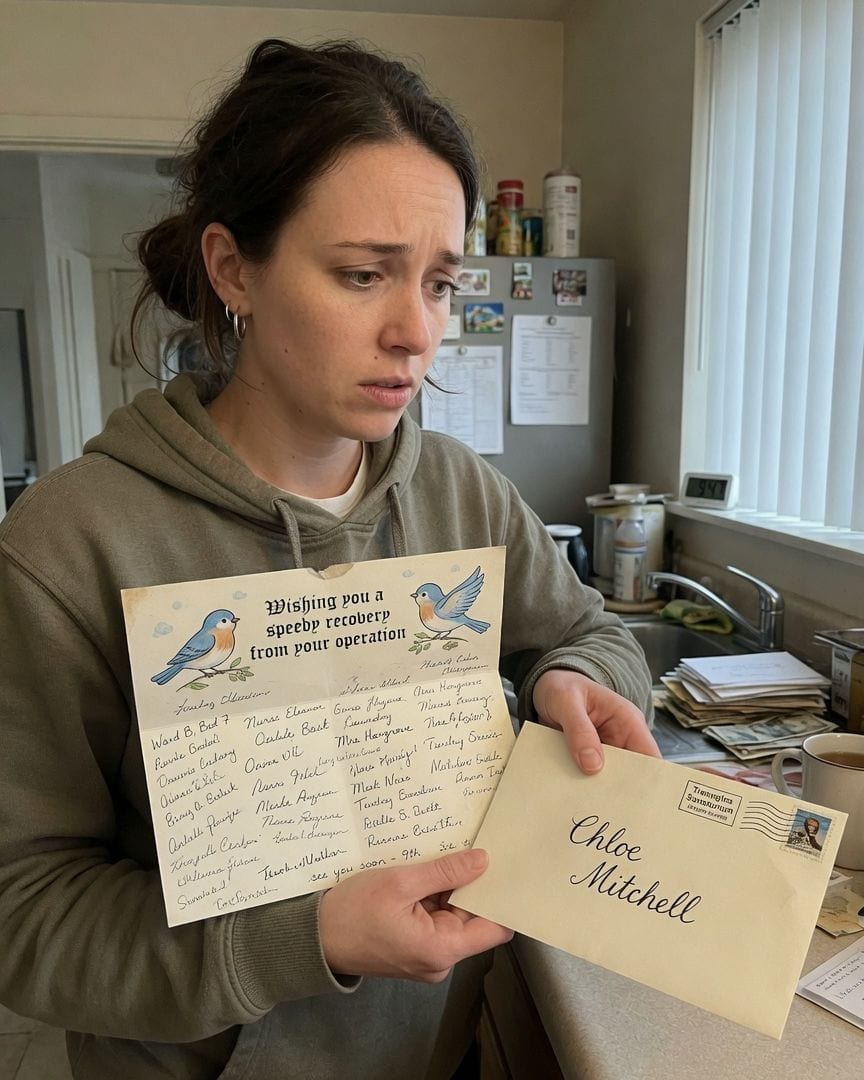
A get-well card wished me a speedy recovery from an operation I never had. It was postmarked from a sanatorium that burned down in 1963.
My quiet Tuesday morning was interrupted by an elegant get-well card, addressed to me. It wished me a speedy recovery from an operation I'd never had. But the postmark read 'Treneglos Sanatorium,' a hospital that vanished in a fire back in 1963.