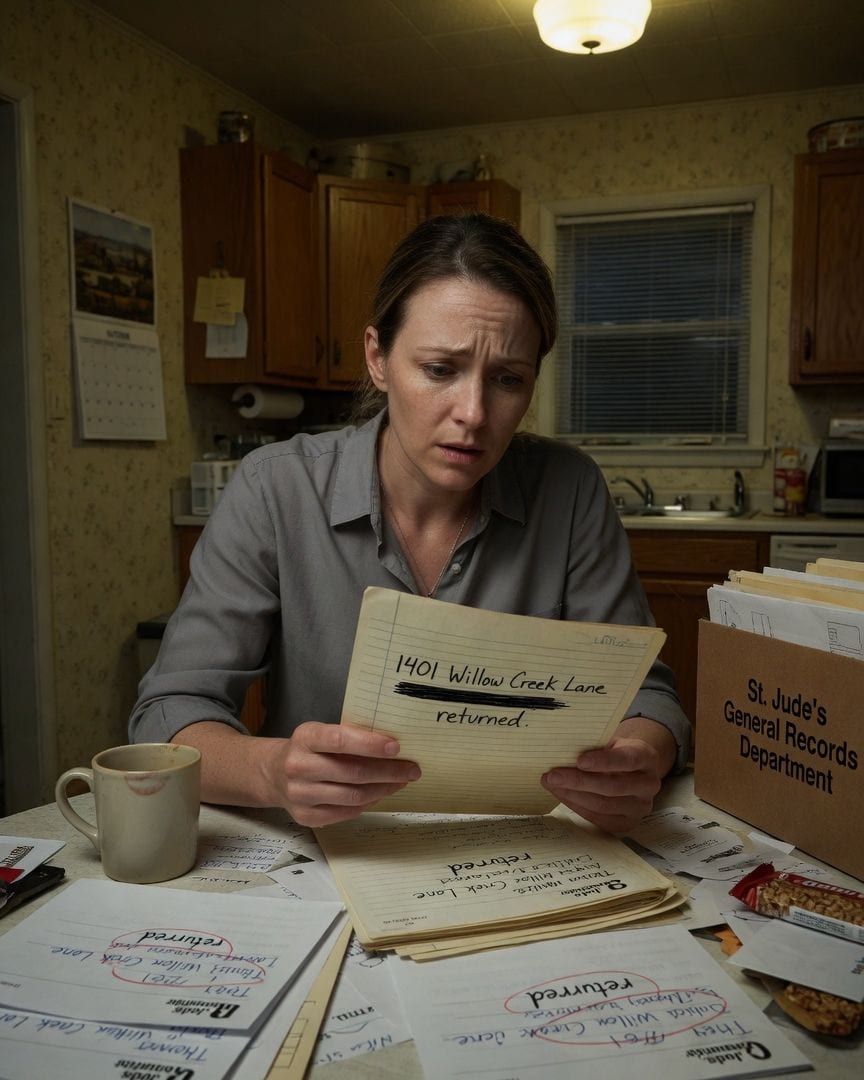
My medical file shows my street address on a struck-through line from 1988, a year I lived two counties away. It just says 'returned'.
I remember the day the package arrived, a plain brown envelope tucked under the usual pile of junk mail. My full medical file from St. Jude's General, a necessary evil for an upcoming insurance audit at work.
I expected a dry stack of forms, a mundane testament to childhood scrapes and forgotten vaccinations. Just the usual bureaucracy.
But as I sat at my kitchen table, a lukewarm cup of coffee at my elbow, flipping through the crisply copied pages, my gaze snagged. It was in the intake notes from 1988.
A line, clearly handwritten, then deliberately struck through, but still perfectly legible beneath the faded black ink. It listed an address: '1401 Willow Creek Lane.' Followed by a black bar, thick and heavy, and then a single, stark word. 'returned.'
A cold knot tightened in my stomach. Willow Creek Lane. That’s my street. My house, now. But in 1988, I was six years old. We lived two counties away, in a different school district entirely. A completely different life.
The address was undeniably mine, in the present, but impossible for the past. I stared at the page, willing it to make sense. A clerical error, I told myself.
A transposed digit, a misfiled document from another patient who did live on Willow Creek Lane. It had to be.
But the specificity of 'Willow Creek Lane' – not just a number, but the entire street name – and that chilling, final word, 'returned,' felt too deliberate. Too unsettling to simply dismiss. The coffee went cold.
The next morning, the unease was still a dull throb behind my eyes. I called St. Jude's General, requesting clarification on the anomalous 1988 entry. I was quickly transferred to Carl Barlow, the current Head of Medical Records.
His voice was as dry and unyielding as the old parchment I sometimes found in historical archives, rustling with an almost imperceptible impatience.
"Ah, Ms. Underwood," he said, before I’d even finished explaining. "Legacy data. Sometimes old files have… irregularities. A simple data entry error from decades ago, I imagine. Happens more often than you'd think, with the conversion processes."
He paused, as if expecting me to accept this easy explanation. "We can correct that for you, of course. Just initial the amendment form and send it back."
His offer felt too quick, too neat. I wasn't satisfied. "It's the word 'returned' that's bothering me, Mr. Barlow," I said, trying to keep my voice calm, professional. "It's not a standard medical annotation.
And the address—it's my current address, but I lived in Cedar Ridge in '88."
There was a brief silence on the line, a beat too long. "Indeed," he finally said, his tone still flat. "Highly irregular. But these things happen." He paused again.
"Perhaps a child from Willow Creek Lane was treated under your name, by mistake? An odd coincidence."
I shook my head, even though he couldn't see me. "Could you," I asked, my voice holding firm despite the prickle of unease, "provide me with all records associated with that specific patient ID number from the 1988 entry?
The whole sequence. I’d like to ensure no other 'irregularities' exist under my old file." I gave him the number, a seven-digit sequence I now felt imprinted on my memory. Carl hesitated, another beat too long, before agreeing.
His tone, when he spoke again, was laced with a subtle, almost imperceptible annoyance. "Very well, Ms. Underwood. I'll have the archive team prepare those for you."
A week later, a heavy box arrived at my office. It was clearly marked "St. Jude's General, Records Department."
Carl Barlow had sent everything he could find, perhaps hoping to overwhelm me into silence, to bury my curiosity under a mountain of paperwork.
I pushed aside my current audit reports and set up the old microfiche reader, the hum of the machine a low, steady counterpoint to my racing pulse.
The air in the room seemed to thicken, stale with the scent of aged paper and dust.
I started sifting, meticulously cross-referencing the seven-digit patient ID number I’d given Carl. My initial theory of a one-off error dissolved, replaced by a chilling dread that settled deep in my bones.
I found not one, but multiple files under that exact same patient ID. Each file bore a different name, a different intake date – a 'Thomas Miller' from 1961, a 'Sarah Jennings' from 1975, then my own 1988 entry.
Yet every single one listed '1401 Willow Creek Lane' in the intake notes, and every single one, after a black bar or a struck-through line, ended with the single, stark word: 'returned.'
I stared at the stack of microfiche printouts on my desk, my breath catching in my throat. My rational world tilted on its axis.
I created a spreadsheet, meticulously logging each file under the recurring patient ID. The pattern was undeniable, stark in its regularity: a new 'patient' every 10 to 15 years, always associated with my street, my address.
The listed 'conditions' were vaguely defined – 'disorientation,' 'agitation,' 'temporary absence from normal functioning.' Never anything specific, nothing medically diagnosable. It was like a placeholder, a blank canvas for something else entirely.
Then I noticed the small, neat handwritten annotations in the margins of several older files. They were sparse, almost like shorthand: 're-entry successful,' 'stabilized at site,' 'balance maintained.'
The script was consistent across decades, a precise, almost elegant hand, as if written by the same person who had penned the sticky note on my door. Who was writing these? And what did 'stabilized at site' even mean?
What kind of 'balance' were they maintaining?
Determined to put faces to these names, to connect them to something tangible, I spent evenings at the local library, sifting through microfilmed newspaper archives.
I searched for missing persons reports, local peculiarities, anything that might connect to the names or dates in my files. The projector whirred softly, casting a dim light on the dusty screen.
I went back decades, through town councils, obituaries, even police blotters. Nothing. No disappearances, no strange local events that made headlines, nothing even remotely tied to a 'Thomas Miller' or 'Sarah Jennings' who might have suffered from 'disorientation.'
It was as if these 'patients' simply… existed in the hospital's records, briefly, then were 'returned' without a ripple in the outside world. The quiet, bureaucratic nature of it was far more unsettling than any dramatic disappearance.
It was a silence too profound for coincidence.
As I continued my clandestine investigation, subtle shifts began to make themselves known. My access to St. Jude's digital archive, usually seamless, became intermittent.
I'd click on an older patient record, specifically one from the recurring ID, and the screen would flash 'system maintenance' or 'access denied due to privacy protocols.' It was too specific, too targeted to be random.
Then, Carl Barlow called again. His voice, this time, was devoid of its initial annoyance or dismissiveness. It was unnervingly calm, almost soft. "Ms. Underwood," he began, "I understand you're still digging into those old files.
We're getting some flags on legacy data access. Excessive queries. Are you quite finished?"
The question wasn't a question at all. It was a statement, a thinly veiled warning delivered with the quiet authority of someone who knew more than he was letting on.
He mentioned "privacy concerns" and "the sensitivity of historical records," his tone like cool marble. I felt a prickle down my spine. He knew exactly what I was doing, what I was looking for.
The next morning, I arrived at my office building a few minutes before eight. The fluorescent lights hummed with their usual bland cheer, but as I approached my door, something was different. A flash of yellow.
Tucked just under the handle, almost hidden, was a sticky note. In a neat, almost artistic script, identical to the annotations I’d seen in the old file margins, it read: 'Some things are best left buried.' No signature.
My blood ran cold. The bland office suddenly felt like a trap. I wasn't just investigating; I was being watched. The danger was no longer abstract, a chill in old records.
It was personal, immediate, and silently delivered to my very doorstep. The hum of the lights now felt like a buzzing threat.
I confronted Carl Barlow in his office that afternoon, the yellow sticky note clutched so tightly in my hand that the paper was soft and warm.
I laid out my spreadsheet on his polished desk, the recurring patient ID, the endless list of 'returns' to '1401 Willow Creek Lane,' the identical marginal annotations. Each column was a testament to a pattern I couldn’t unsee.
"This isn't a clerical error, Carl," I stated, my voice trembling slightly despite my best efforts. "This is a system. What is 'returned'? What is 'stabilized at site'? And who left this on my door?"
I pushed the sticky note across the desk.
Carl leaned back in his chair, his face unreadable, his hands resting on his stomach. He tried to deflect, to dismiss it as "administrative protocols for complex cases," something about unique patient care plans.
But I pressed harder, detailing the pattern across decades, the lack of external records for these 'patients,' the way the system seemed to track a location, not a person. "Who would track an address for seventy years, Carl?"
Finally, Carl's composure cracked. Not in fear, or even anger, but with a profound weariness, a sigh that seemed to carry the weight of generations.
It was the sound of someone who had been holding a heavy secret for a very long time.
"It's… a specific condition," he admitted, his voice barely above a whisper, his gaze fixed somewhere past my shoulder, out the window. "Tied to the location. Not a person. The ID tracks the event, the recurrence. Not a single patient.
The people are… receptive." He finally looked at me, his eyes tired. "The hospital's role, for decades, has been to 'manage' these events, to ensure a certain 'balance' is maintained. It's… a stewardship."
My mind raced, the vague conditions, the meticulous notes, the silent warnings – they snapped into focus. It wasn't about sick people in a conventional sense; it was about a place, and people who were part of its management.
"Who manages it?" I asked, my voice barely audible.
"Some families," he added, looking directly at me with an unsettling familiarity. "Some families have always known how to handle it. They're… facilitators." He mentioned Edith Sinclair, the former Head of Records.
"Edith," he said, his voice regaining a fraction of its dry certainty. "She understood the legacy. She knows more than anyone. She's… retired, but still sharp."
I drove straight to Edith Sinclair's retirement home, the address Carl had reluctantly given me, the city blurring through my windshield. My thoughts spun, trying to grasp the enormity of what Carl had implied.
Edith, a woman of sharp eyes and a serene demeanor despite her advanced age, greeted me at the door. Her apartment was small, meticulously neat, filled with the scent of lavender and old paper.
Her frail hands offered me a cup of herbal tea, the ceramic warm against my palm.
As we sat on her faded floral sofa, Edith listened patiently to my fragmented, urgent questions, the story spilling out of me in a torrent of dates, names, and chilling words.
When I finally paused, breathless, the silence in the room felt profound, heavy with unspoken things. Edith simply smiled, a faint, knowing curve of her lips that made the skin around her eyes crinkle.
It wasn't a kind smile, nor an unkind one; just… knowing.
She reached for a dusty, leather-bound photo album from a nearby shelf. It was thick with faded sepia and black-and-white photographs, the pages brittle with age.
Edith slowly turned the pages, her finger tracing images of nurses and doctors from a bygone era, stiff smiles and starched uniforms. She stopped on a blurry group photo from what looked like a hospital picnic, circa 1950s.
Among the smiling faces, a young woman stood out, her features strikingly similar to my own, a quiet intensity in her eyes. The woman stood next to a man with a familiar, strong chin.
Edith's finger landed on the woman's face, a gentle tap.
"Your grandmother, Hazel Underwood," she murmured, her voice soft but clear, her gaze fixed on me. "She handled the first 'returns' on your street. She was very good at it."
The cup of tea in my hand grew suddenly heavy, the heat seeping through the ceramic, a searing brand against my skin.
Edith Sinclair spoke with a chilling, almost academic calm, as if she were lecturing on a historical medical practice. The 'condition,' she explained, wasn't a disease at all.
It was an intrinsic connection to a specific geological anomaly that lay deep beneath Willow Creek Lane. Certain individuals, born or living on that street, possessed a unique 'receptivity' to its subtle energies.
These 'receptive' individuals would periodically experience 'absences' – moments of profound disorientation, a feeling of being pulled away, sometimes even brief physical disappearances.
The hospital's long-standing role, Edith revealed, was never to 'cure' them. It was to 'manage' these episodes.
They would 'stabilize' the receptive person and 'return' them to the precise 'site' – their home on Willow Creek Lane – ensuring the anomaly remained quiescent, the 'balance' maintained.
She opened a drawer in her small writing desk and produced a sheaf of faded, handwritten notes, crisp with age. These detailed 'triggers' and 're-integration protocols,' specific observations, patterns of behavior.
She explained how my grandmother, Hazel Underwood, wasn't merely a records keeper. She was a key 'facilitator,' part of a network of local families who understood this deep connection to Willow Creek Lane and quietly ensured the cycles continued.
They were the ones who saw the signs, who knew when to bring a 'receptive' person to St. Jude’s, and when to bring them back.
"You, Paige," Edith said, her eyes piercing, holding my gaze. "You were one such receptive child. Briefly 'removed' in 1988, then carefully 'returned.' Just like your grandmother before you, and others before her."
Every scattered date, every vague diagnosis, every 'returned' annotation, every strange event from my childhood that I’d long since forgotten or rationalized away, snapped into one coherent, monstrous shape.
The horror wasn't in a monster, but in the seamless, decades-old coherence. I had always been inside it.
A cold, crushing weight descended on me. I wasn't just investigating a hospital's dark secret; I was the secret, a piece of the pattern.
The house I lived in, my family home on Willow Creek Lane, was not just an address but a focal point, a necessary anchor.
"No," I whispered, shaking my head, my voice barely a thread. "That's impossible. I was sick. I had a fever, they said—"
Edith gently cut me off. "The symptoms often mimic illness, dear. Disorientation, fever, sometimes even convulsions. It makes the 'return' easier to explain, less traumatic for the child and for the community. Your grandmother's journal will elaborate."
She rose and walked to a built-in bookshelf, pulling out a thick, leather-bound journal. Its cover was worn smooth, almost polished, from generations of handling.
On its first page, I could see the same elegant script I'd observed in the margins of the old files, in the sticky note on my door. Hazel’s script.
"Hazel's notes," Edith said, placing the heavy book into my hands. The leather was cool and smooth beneath my fingers. "The true history of Willow Creek Lane. It's yours now. She intended for it to be."
The weight felt immense, a generational inheritance I never asked for, a legacy of stewardship.
"Once a receptive person reaches adulthood and becomes aware," Edith continued, her voice soft but firm, "they often choose to help manage it. It's a stewardship. A responsibility. To keep the balance."
I stumbled to my feet, the journal clutched tight against my chest. My mind reeled, trying to reconcile the rational world, my world, with this calmly presented, horrifying truth.
I couldn't argue, couldn't deny, not with the evidence I'd found and the calm certainty in Edith’s eyes. This wasn't a monster to be fought, but a truth to be absorbed, a legacy to be inherited.
I mumbled a hasty farewell, barely registering her serene nod.
I fled Edith's home, the journal a leaden anchor in my arms, the weight of generations settling on my shoulders, each step taking me closer to the heart of the pattern I now knew I was part of.
I returned to my house on Willow Creek Lane, the same house my grandmother had lived in, the house that was the nexus of everything. The heavy journal sat on my kitchen table, a dark, silent sentinel.
I couldn't bring myself to touch it immediately. I looked at my own medical file, spread out beside it, the 1988 entry now a chilling prophecy, not an error.
The cold knot in my stomach had solidified, becoming a dull, permanent ache, a new organ in my body, beating in time with some unseen rhythm.
The silence of the house felt different now, no longer empty, but expectant, humming with a low, latent energy I was only now beginning to perceive.
I walked the familiar rooms, the floorboards creaking underfoot, a symphony of energies I was now acutely aware of.
Days later, I sat at my kitchen table, the leather-bound journal open before me. I had been reading it, meticulously comparing its entries to my spreadsheet, cross-referencing names and dates.
The words, once cryptic, were becoming familiar, the patterns clearer, almost intuitive. I understood the shorthand now, the subtle indicators, the quiet rhythm of the cycles.
A faint tremor ran through the floorboards beneath my feet, a low, resonant hum emanating from deep within the earth – a sound I'd always dismissed as the old house settling, or the distant rumble of traffic on the bypass.
Now, I recognized it as something else. Something familiar. Something waiting. I reached for a pen, my hand steady, and began to add a new entry to the journal, my neat script mirroring the annotations of generations past.
It was time to update the legacy.
Carl Barlow received an email from Paige Underwood requesting expanded archive access for 'legacy data management protocols.' He smiled faintly as he clicked 'approve.'
'Is that so?'
If this one got to you
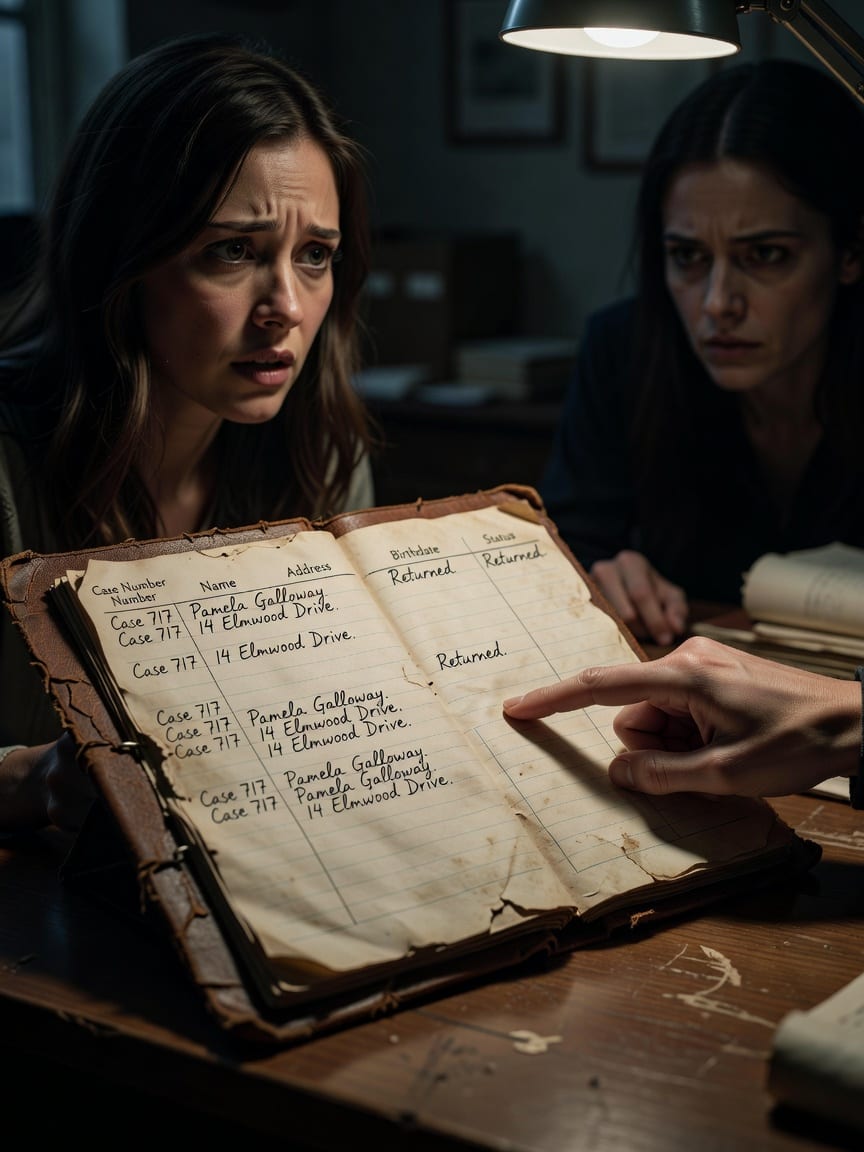
My hospital file has a blacked-out line from 1988. It names my street address, decades before I lived here. Then: 'returned'.
I finally got my medical file, hoping to clear up a ridiculous bill. Inside, I found an entry from 1988: my current home address, scrawled on a partial intake form and marked 'returned.' I was six then, living fifty miles away.
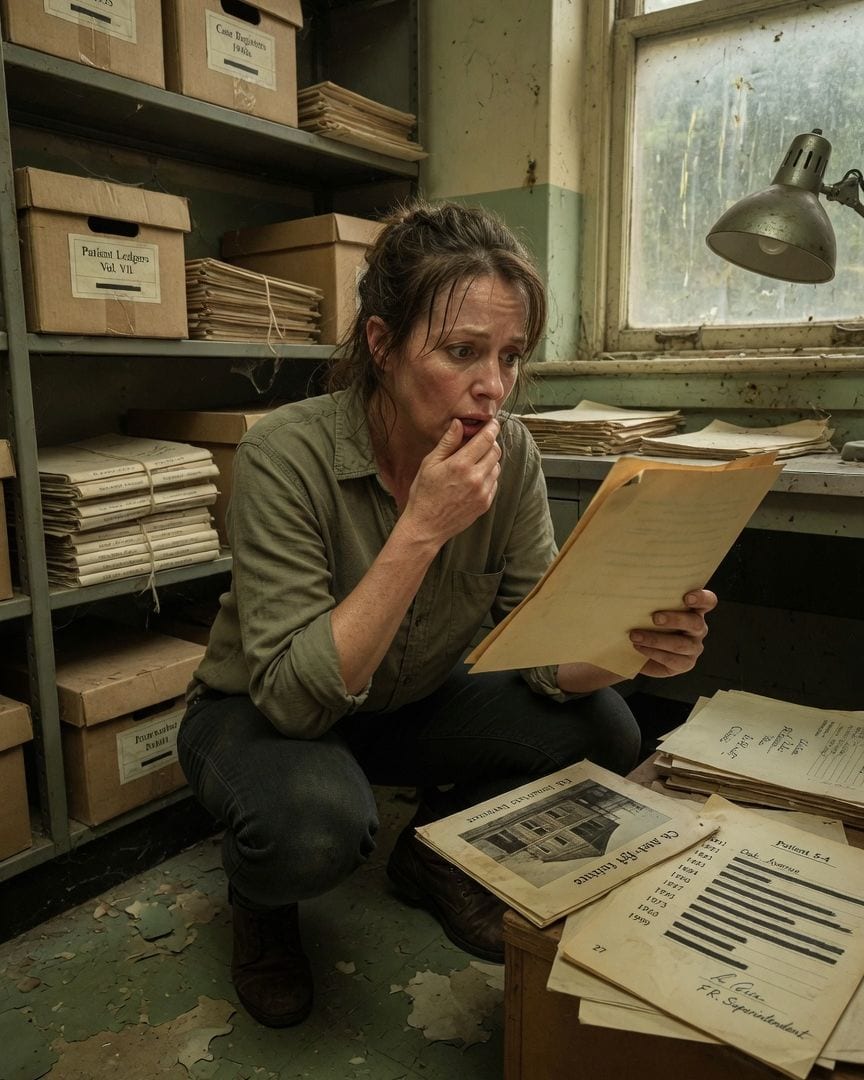
Patient 5-4 keeps checking into my aunt's old sanatorium chalet. The same initials sign them out, 'not traced,' every thirteen years since 1921.
Sifting through my aunt Margaret's estate, I found her old sanatorium file from 1999. Her patient record listed her as 'Patient 5-4,' discharged 'not traced.' But when I accessed the archives, I found 'Patient 5-4' was admitted every thirteen years since 1921, always with identical discharge notes.
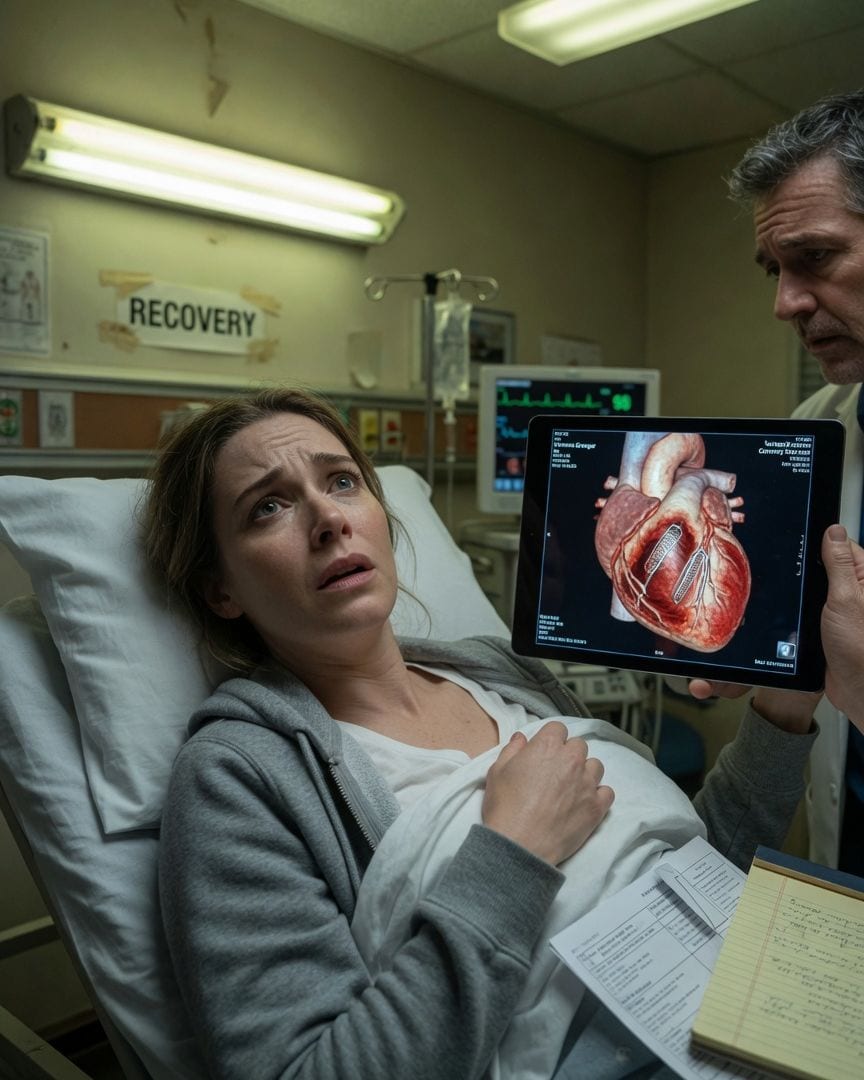
Metal stents are propping open my heart. The doctor rotated the image, but I've never had a cardiac procedure.
After years of dismissed chest pain, a CT scan revealed an impossible truth: my heart contained two metal stents. Dr. Maddox confirmed there was no record of any cardiac procedure in my entire medical history, and I had no memory of ever having surgery. My own body held a secret, alien architecture I couldn't explain.
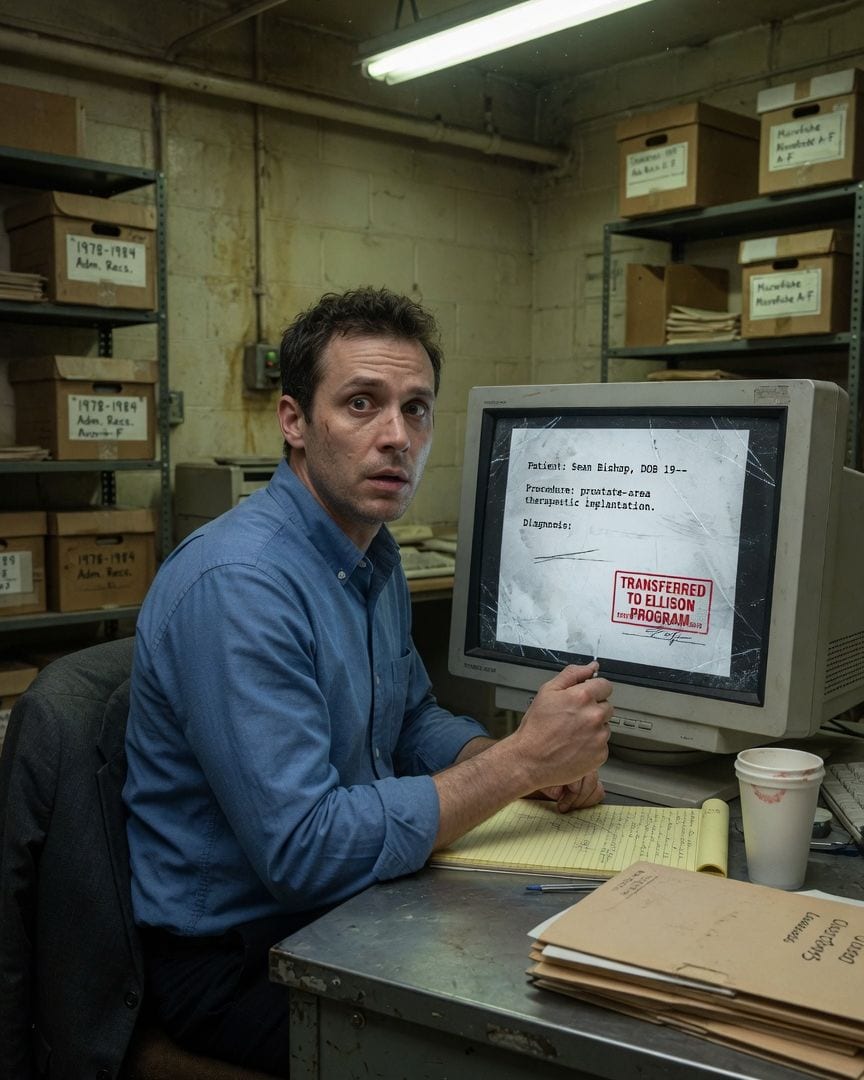
My prostate scan showed tiny metal seeds inside it. The radiologist said they were years old, for cancer. I've never had cancer or treatment.
A routine CT scan for a dull backache was just to be thorough, 'probably nothing.' But the radiologist found something impossible: forty-seven cancer treatment seeds embedded in my prostate, long-healed, from a procedure I have no memory of. My doctors confirmed the undeniable physical evidence, yet my medical history was perfectly clean.
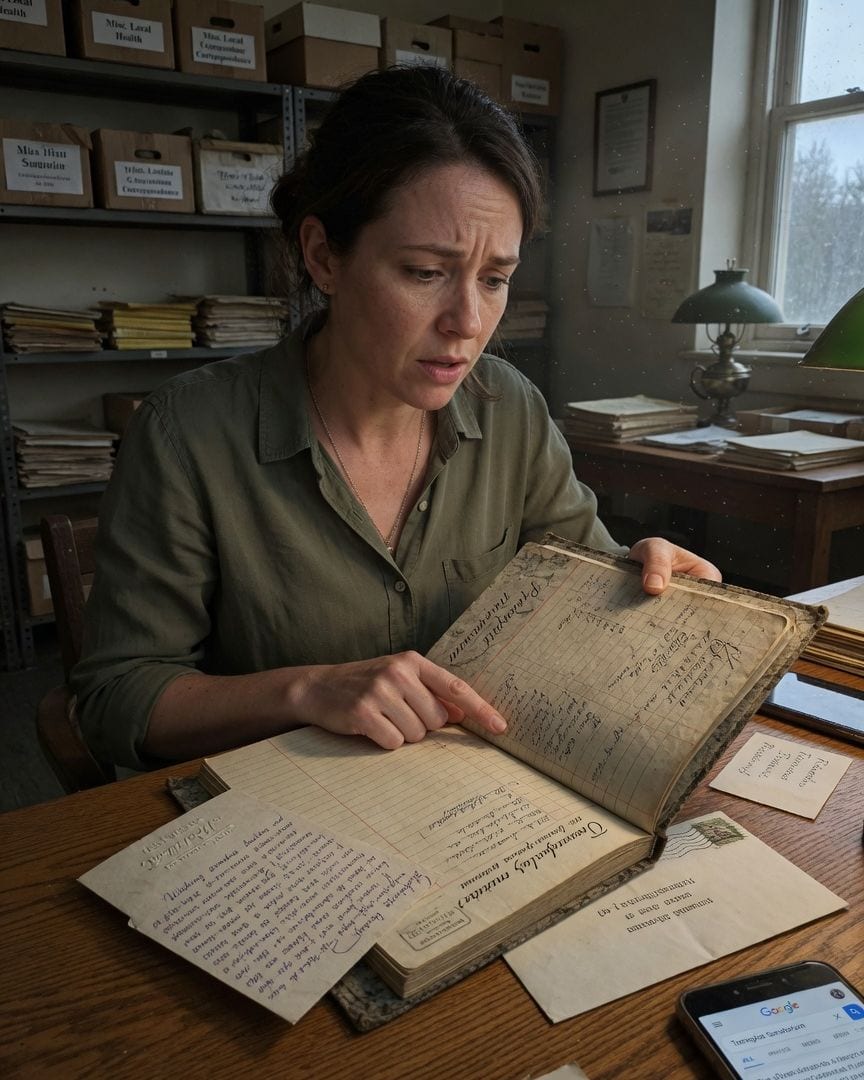
My get-well card wished me recovery from an operation I never had, postmarked from a hospital that burned down in 1963.
I received a get-well card wishing me recovery from an operation I never had. The envelope bore a fresh postmark from Treneglos Sanatorium, a TB hospital that burned down and ceased to exist in 1963. Now, a patient register from that long-gone sanatorium lists my name, dated 1959.
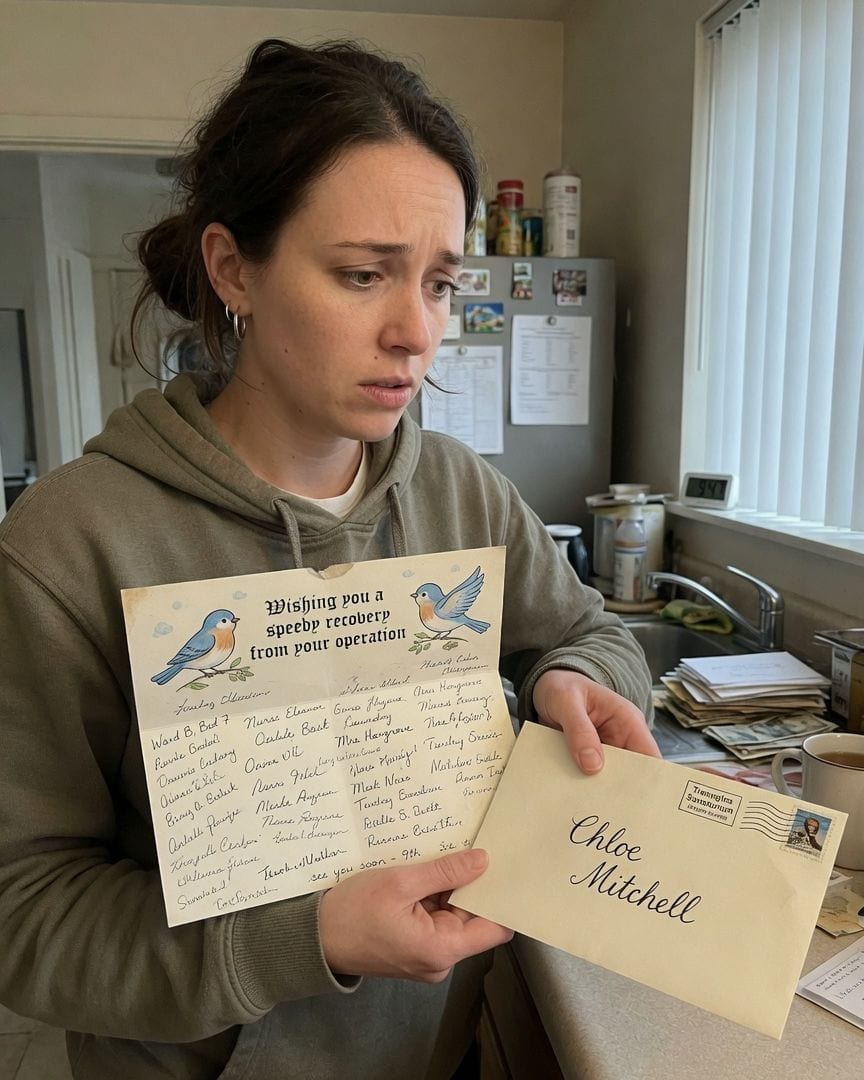
A get-well card wished me a speedy recovery from an operation I never had. It was postmarked from a sanatorium that burned down in 1963.
My quiet Tuesday morning was interrupted by an elegant get-well card, addressed to me. It wished me a speedy recovery from an operation I'd never had. But the postmark read 'Treneglos Sanatorium,' a hospital that vanished in a fire back in 1963.