My parish vaccination register holds my 2004 entry; a blacked-out 1931 line lists my same name, same house.
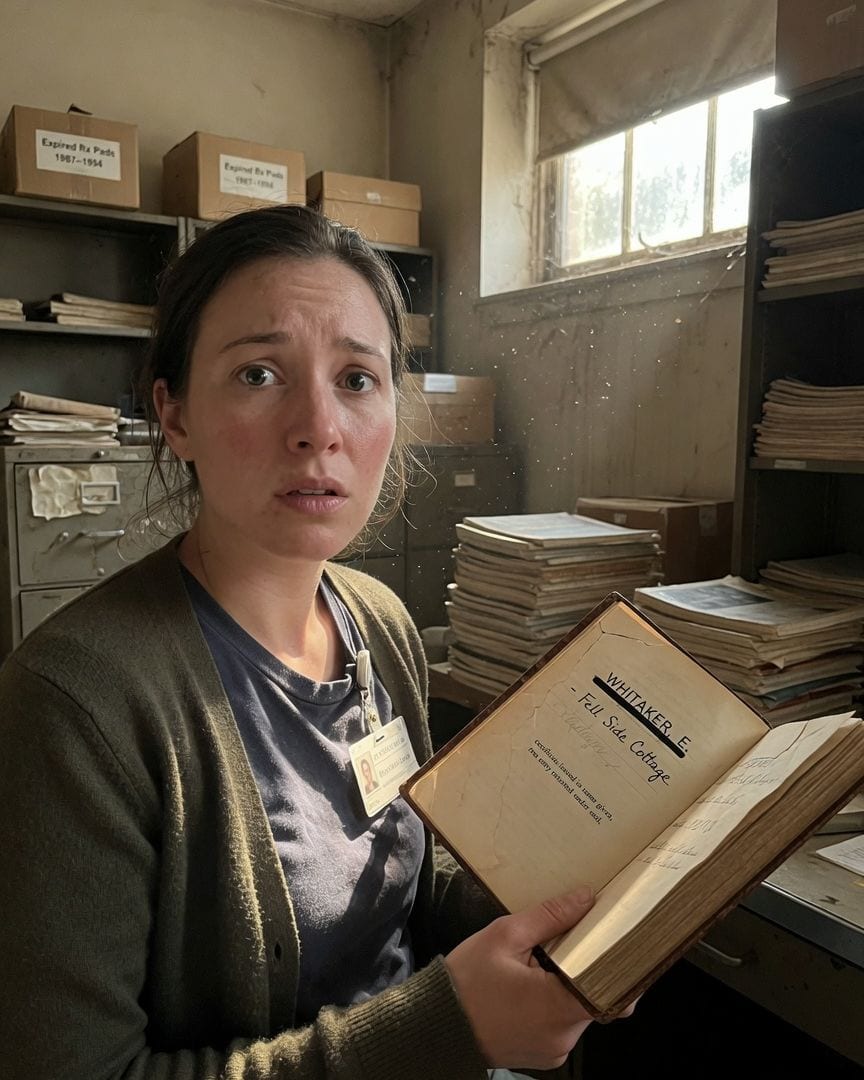
The old surgery’s storage room was mostly forgotten. Dust motes danced in the single beam of sunlight that cut through the grimy window, illuminating stacks of ancient medical journals and expired prescription pads.
I was clearing it out, an archivist’s penance for a quiet week, when I found the parish vaccination register. It was tucked beneath a stack of periodicals from the late 90s, the leather binding cracked and dry to the touch.
The pages were yellowed, brittle, but the hand-scripted entries were surprisingly clear. I flipped through, a routine habit, until I reached 2004. There it was: 'Evelyn Whitaker, Fell Side Cottage, vaccinated.'
My own name, my own address, a mundane record of a childhood jab. I even remembered the nurse, Mrs. Peterson, her breath smelling faintly of peppermints. A moment of normal, before curiosity pulled me back through the years.
A few pages prior, I stopped. The ink was different, heavier, from 1931. And there, beneath a thick, inky black bar that had been drawn through a line, I could faintly discern it: 'WHITAKER, E. - Fell Side Cottage.'
My breath caught in my throat. It was impossible. Below the heavy bar, the vaccinator’s tiny, precise script still read: 'certificate issued in name given, true entry retained under seal.'
My pulse began to thrum, a low, insistent drum against my ribs. What did 'retained under seal' even mean? It was a legalistic phrase, not something you’d see in a medical record.
I turned to the very back page of the register, hoping for an index, an explanation. Instead, I found a neat, spidery hand had logged a series of dates: 'Seal broken and re-sealed: 1849, 1872, 1901, 1931, 1972.'
The loop of my own name, my own home, now had a chilling, inexplicable history.
I tried to dismiss it, of course. An odd coincidence. Whitaker isn’t an uncommon name in this valley, and Fell Side Cottage has stood for centuries. Perhaps another Evelyn Whitaker. A distant relative, a shared surname, a common address.
It was the only rational explanation that came to mind. But the detail, 'retained under seal,' gnawed at me like a persistent splinter. It was too specific, too formal, to be a simple clerical error.
My next step, predictably, was Eleanor Fairfax. The village’s unofficial historian, an octogenarian with a mind like a steel trap and a memory that spanned generations.
I found her in her tiny cottage, surrounded by precariously stacked books and the scent of lavender and old paper.
She offered me a cup of weak tea and listened to my story, her sharp eyes fixed on me over the rim of her spectacles.
Eleanor confirmed that Fell Side Cottage had been 'Whitaker land' for as long as anyone could remember, 'a line that always seemed to find its way back home,' she’d said, almost to herself.
She mentioned old parish tales of 'the families of Fell Side' and their 'long memories,' but offered no real explanation for the sealed entries in the vaccination register. "Just the parish being peculiar, dear," Eleanor had chuckled, her eyes twinkling.
But I saw a flicker there, a brief shadow of something else, a knowledge she wasn’t sharing.
Back at St. Jude’s Hospital, where I worked as an archivist, the matter refused to leave me alone. I needed a mundane explanation, something concrete that would make this fit into a normal world.
A family quirk, perhaps, an obscure local tradition, or a genuinely strange clerical error that somehow propagated itself across decades.
I decided to search the hospital archives for any records related to 'Fell Side' and 'vaccinations' from the early 20th century. It was a long shot, but I needed something. Anything.
Deep in the hospital's subterranean archives, the air was perpetually cool and smelled of ozone and forgotten paper. I was surrounded by decades of forgotten lives, rows of grey filing cabinets stretching into the gloom.
My uneasiness grew with every empty folder I pulled. The old 'Fell Side' records were sparse, almost deliberately so, it seemed. But then, a few patient files from the 1960s caught my eye.
They were thin, each with a unique, seven-digit patient number stamped on the cover.
Out of habit, I pulled my own current patient file for comparison. Its crisp white cover was a contrast to the yellowed, brittle folders I’d been sifting through.
My eyes scanned my patient number, a sequence assigned when I’d had a minor surgery years ago. Purely on a whim, I typed my number into the archive’s obsolete search terminal, a clunky monitor that hummed softly like something trapped.
I expected a single result, my own file, a quick check to see if the system was even working properly.
Instead, the screen flickered, slow and uncertain, then listed not one, but dozens of files. Each entry showed the exact same patient number. And every single one had 'Fell Side Cottage' listed as the address.
The room suddenly felt colder, the humming of the terminal louder. I pulled the oldest physical file I could find, dated 1961, with a patient number identical to my own.
Inside, amidst a few faded notes about a tetanus shot, was a cross-reference page. The last entry on the list, neatly typed, read: 'WHITAKER, E. - 1931 (SEE REGISTER SEALED)'.
The next few days were a blur of archive dust and a growing, suffocating dread. I systematically pulled every single file linked to that reissued patient number. My patient number.
The pattern was horrifyingly clear: each file, despite being assigned to a different person across decades, contained minimal medical history, just a brief mention of a childhood illness or a minor injury.
But always, without fail, there was a reference to a 'vaccination certificate issued' and an internal 'retention protocol' memo.
The hospital's patient number system wasn't just reissuing old numbers; it was reissuing them to people who seemed to be part of a cycle.
The reissuance dates on these hospital files aligned eerily with the 're-sealing' dates I had found on the parish register's back page. 1961, 1972... It wasn't a coincidence; it was a cold, deliberate cycle.
I discovered a series of internal hospital memos from a defunct 'Fell Side Liaison Office,' a department I'd never even heard of in my years here.
The memos, dated from the 1950s through the 1990s, discussed 'Subject E.W.' and 'management of cyclical transfers,' using detached, clinical language that chilled me to the bone. The sheer bureaucratic calm of it all was worse than any monster.
Someone had been actively managing this for generations, across two institutions. I copied everything, the weight of the paper trail growing heavier with each discovery.
My digging, it turned out, did not go unnoticed. One morning, I found my archive access card temporarily deactivated. I swiped it again, then again, getting nothing but a blinking red light.
My supervisor, Desmond Marsh, called me into his office less than an hour later. He leaned back in his chair, hands steepled beneath his chin, a practiced casualness in his posture.
"Heard you've been quite busy with the historical patient data, Evelyn. Anything interesting?" His tone was light, but his eyes were sharp, a hint of warning in their depths that made my stomach clench.
I mumbled something about a research project, a forgotten corner of local medical history, and felt a prickle of fear. He just nodded slowly, his gaze lingering a moment too long.
Later that week, as I worked late in the archives, meticulously cross-referencing names and dates, the silence around me felt heavier, thicker. A shadow detached itself from the far shelves, a deeper pool of darkness in the already dim room.
It moved slowly, deliberately, between the towering stacks, before disappearing into the gloom at the back. I heard no footsteps, only the faint rustle of paper that could have been the building settling, or a stray current of air.
My heart hammered, a frantic, trapped bird against my ribs. I froze, waiting, but nothing else happened. I told myself it was tiredness, my imagination, but the hair on my arms stood on end.
The following morning, tucked discreetly into my locker, amidst my half-eaten lunch and a spare pen, I found a single, anonymous, typewritten note. It was stark, no flourishes, no signature: "Some files are better left sealed, Miss Whitaker.
For your own health." The message was clear. I wasn't just observing a pattern; I was being observed.
I knew I couldn't continue in the hospital. The threat was too close, too personal. It felt like the walls themselves were closing in. I had to know, and the hospital was no longer safe for asking questions.
I confronted Charlotte Lockwood, the current parish clerk, about the register. I showed her the blacked-out entry, the 'retained under seal' note, the re-sealing dates. Charlotte, usually so composed, became flustered and evasive, her gaze darting away from mine.
She wrung her hands, then finally, in a hushed voice, admitted, "My predecessor, Malcolm Russo, he knew the true history of Fell Side. He managed... certain records. Better than I ever could."
With a lead, albeit a terrifying one, I drove to Malcolm Russo’s quiet cottage on the outskirts of the village. It was a neat, unassuming place with a well-tended garden.
He greeted me with unnerving calm at the door, as if he’d been expecting me. "Ah, Miss Whitaker. I assumed it wouldn't be long before another of your line came looking."
His words were soft, yet they hit me with the force of a physical blow.
I stood there, breathless, for a moment too long. "My line?" I demanded, my voice hoarse. "What is this? The register, the reissued numbers, the 'retention protocols'—what are you talking about?"
Malcolm merely smiled, a gentle, unbothered expression. He gestured for me to come in, offering me a seat by the window. He poured tea, the clinking of china the only sound in the small room.
He looked older than his 68 years, but his eyes were clear, steady, unnervingly serene. "The register, the hospital files, the 'Liaison Office' — all part of the same process, Evelyn. A long-standing practice, Evelyn. To ensure... continuity.
For certain families of Fell Side." He wouldn't elaborate on what 'continuity' meant, or why, but his serene admission confirmed my worst fears: this wasn't an accident. It was a deliberate, institutional mechanism.
The blacked-out entries, the reissued numbers, the 'retention protocols' — they all clicked into place, forming a coherent, terrifying picture of managed identity, not just for others, but for my own lineage.
The room felt suddenly very cold, despite the warmth of the tea in my hands.
My mind reeled. Malcolm Russo, the quiet, unassuming retired clerk, was 'the one who knew,' calmly managing generations of this grotesque bureaucracy. His composure was the most terrifying thing of all. "But what is it? What does it do?"
I pleaded, my voice trembling, barely a whisper. My blood felt like ice water in my veins.
Malcolm took a slow, deliberate sip of his tea, his gaze unwavering, fixed on some distant point past my shoulder. "It ensures the line continues, Evelyn. And it has continued, unbroken, since long before the parish was even founded."
He placed his teacup carefully onto its saucer, the sound echoing unnaturally loud in the silent room.
He rose, walked to a locked, antique cabinet set against the far wall, a piece of dark, polished wood that seemed to hum with age. He retrieved a heavy, leather-bound ledger from inside.
Its cover was embossed with the St. Jude's crest, faded but still clear, and the words 'Fell Side Retention Log.' He placed it carefully into my shaking hands.
The leather was cold against my skin, the weight immense, almost too much to bear. "It's all in here, Evelyn. Everything they've been keeping on you. For generations."
The truth was not just about the institution; it was about me, written down, managed, and sealed.
I opened the 'Fell Side Retention Log' with a sense of terrible inevitability. The heavy cover creaked, and the pages, thick and creamy, turned with a rustle that sounded like dry leaves.
Inside, it wasn't a ledger of medical conditions or parish records. It was a meticulously kept record of 'transfers of identity.'
Each 'E. Whitaker' entry from the parish register, the one from 1931, the one from 1972, had a corresponding page here.
Each page detailed a 'sealing' date, a 'reissue' date, and a new patient number – the same numbers I’d found in the hospital archives.
The language was cold, precise, horrifyingly clinical. 'Original Subject E.W. (1931) sealed, identity transferred to E.W. (1972).' The entries continued, generation after generation, a chilling genealogy of replacement.
My own name, my current patient number, and the 2004 vaccination date were the final entry, chillingly marked in bold: 'TRANSFER COMPLETE.'
The log detailed how a piece of identity, a 'core self,' was preserved and passed on, ensuring the 'Fell Side lineage' continued, unbroken, generation after generation.
The blacked-out entries in the parish register, the reissued patient numbers, the 'retention protocols' – it all made a horrifying, coherent sense.
The 'vaccination' wasn't a protection against disease; it was the precise, bureaucratic process of 'sealing' the old self and 'activating' the new. I was not just a descendant; I was a continuation.
My entire life, every memory, every experience, was built on this foundation of quiet horror.
I found Malcolm in his garden, pruning roses with the same unnerving calm. The Retention Log was clutched to my chest, its weight a physical manifestation of my unraveling world. "'Transfer complete'? What does that mean for me?"
I demanded, my voice hoarse, raw with disbelief.
Malcolm met my gaze, his expression unchanging, a faint smile playing on his lips. "It means you are the latest Evelyn Whitaker in a line stretching back centuries.
Your 'original' self, the one born in 1992, was sealed away in 2004. You are now the 'retained' identity, carrying the essence of all those who came before." He snipped a deadhead, the sound sharp and final.
He explained that the institution, St. Jude's, in conjunction with the parish, ensures these 'transfers' continue, a quiet stewardship of a unique inheritance. Not for power, not for wealth, but for continuity. For the sake of the line.
The artifact, the Retention Log, laid bare the terrifying truth: my life, my very self, was a curated continuation. My memories, once so personal, now felt like echoes, like fragments borrowed from previous Evelyns.
The mundane explanation of coincidence died a definitive death, leaving only this stark, horrific truth. I felt a profound, chilling sense of displacement. I was real, undeniably present, yet not original.
I was a vessel, inhabited by a legacy I couldn't escape, managed by a calm, benevolent bureaucracy that had always known.
The sunlight on the roses, the gentle breeze, everything felt wrong, shifted, like a stage set I had only just realized I was performing on.
I left Malcolm's house, the heavy ledger a leaden weight in my arms, in my soul. The records were irrefutable, undeniable. My fate, my very being, was sealed on their pages.
I no longer felt like a singular person, an individual with a unique story, but a composite, a continuation.
The institution’s calm, bureaucratic management of this horrific truth persisted, undisturbed, its mechanisms silent and unseen, ensuring the 'Fell Side lineage' would continue. The original Evelyn Whitaker, the one born in 1992, was gone, sealed away, replaced.
The dread was not in what was coming, but in what had already happened, what I had already become.
I sat alone in my cottage on Fell Side, the Retention Log open to my own final entry: 'TRANSFER COMPLETE.'
I looked at my hand, then at the familiar furniture, the old photographs on the mantelpiece, and felt a profound sense of not truly being here, not truly being herself.
The original Evelyn Whitaker was gone, sealed away, an echo in the bureaucratic past. The current Evelyn Whitaker was merely the latest iteration, a managed continuation.
The house felt less like a home and more like a carefully maintained stage, perfectly set for an ongoing performance. My life, my every moment, a meticulously archived act.
I closed the heavy book, the thud echoing in the silence, a sound of finality. It was done. She was complete.
Malcolm Russo, watching from his window across the valley, saw the light in the Whitaker cottage go out. He took a sip of his tea, a faint, knowing smile on his face.
He’d known this Evelyn would eventually find the records. They always did.
If this one got to you
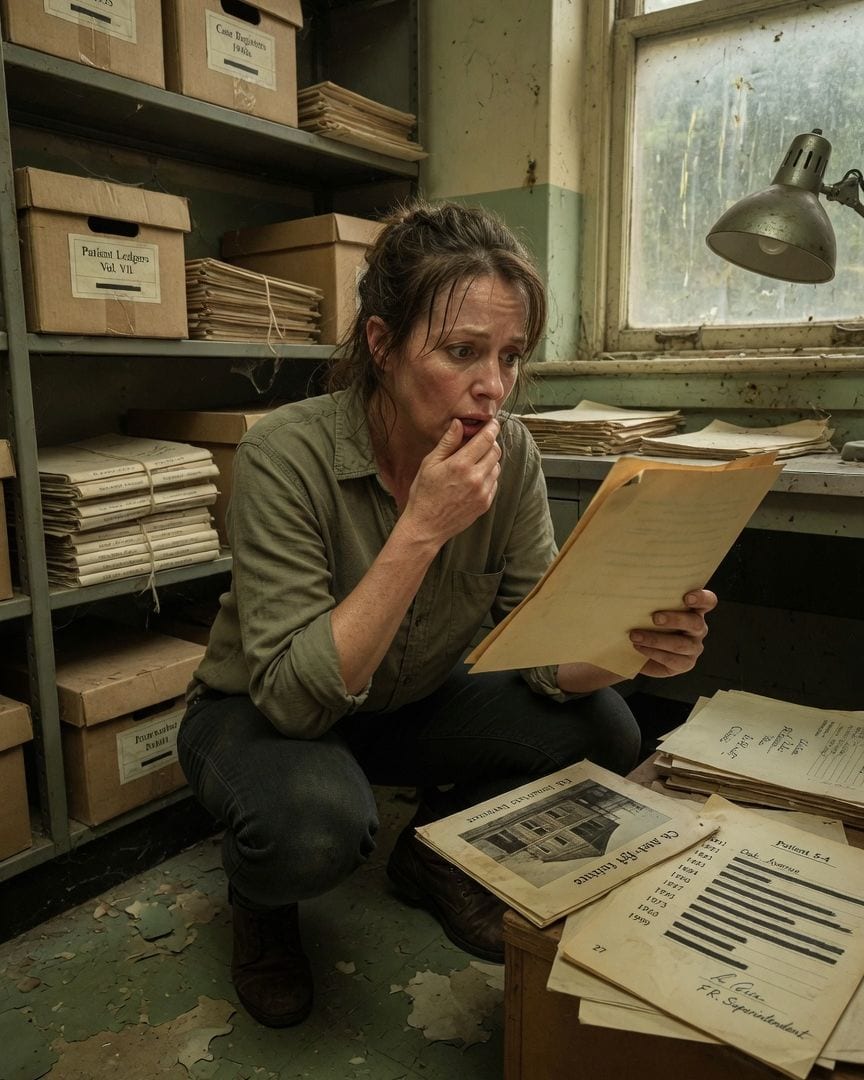
Patient 5-4 keeps checking into my aunt's old sanatorium chalet. The same initials sign them out, 'not traced,' every thirteen years since 1921.
Sifting through my aunt Margaret's estate, I found her old sanatorium file from 1999. Her patient record listed her as 'Patient 5-4,' discharged 'not traced.' But when I accessed the archives, I found 'Patient 5-4' was admitted every thirteen years since 1921, always with identical discharge notes.
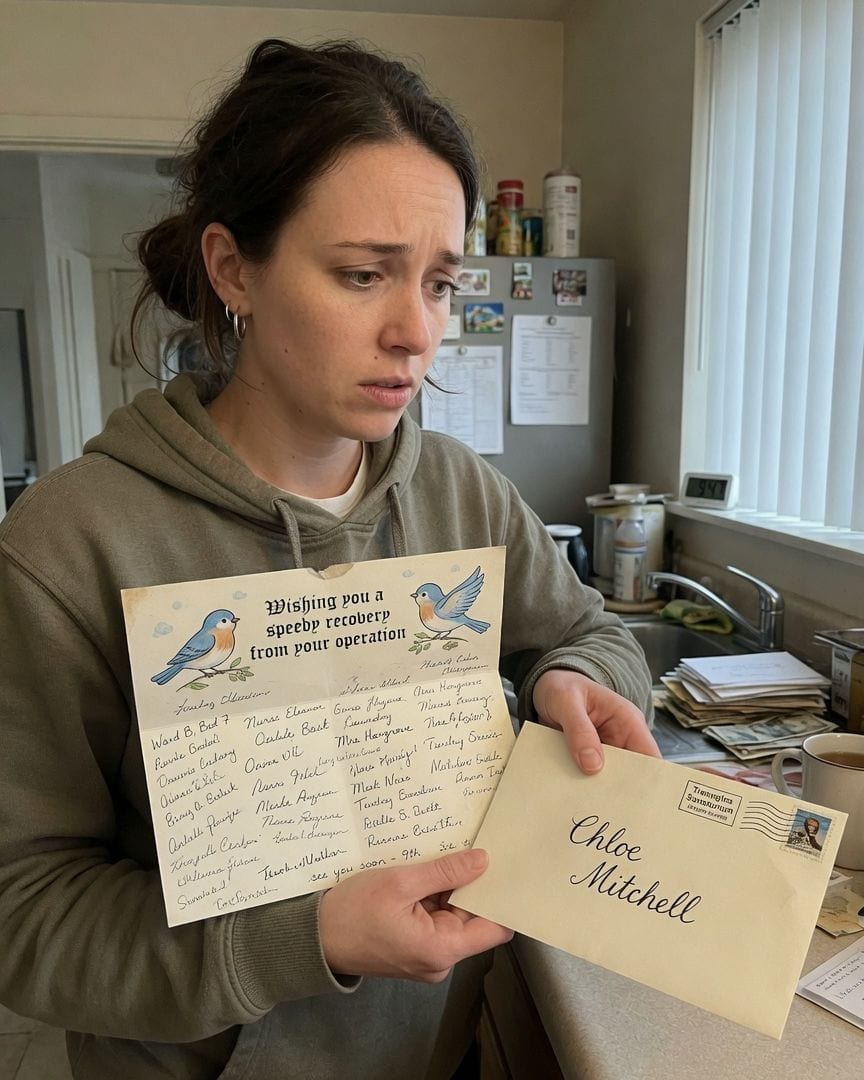
A get-well card wished me a speedy recovery from an operation I never had. It was postmarked from a sanatorium that burned down in 1963.
My quiet Tuesday morning was interrupted by an elegant get-well card, addressed to me. It wished me a speedy recovery from an operation I'd never had. But the postmark read 'Treneglos Sanatorium,' a hospital that vanished in a fire back in 1963.
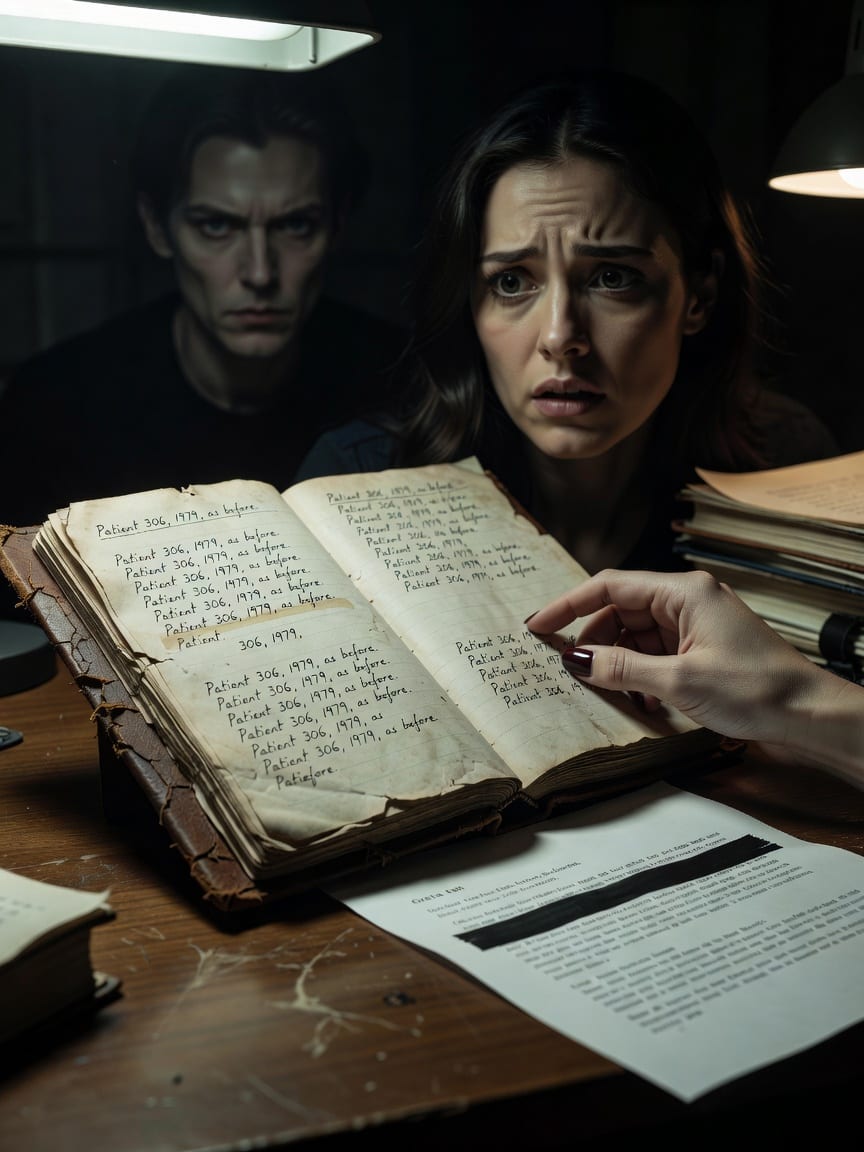
My archive ledger shows Patient 306 admitted in 1889, 1911, 1934, 1957, 1979 — same diagnosis, different names, and always, 'as before.'
My job as an archive transcriber is usually soothing, digitizing ancient admissions ledgers. But a recurring entry for 'Patient 306' caught my eye, noted 'as before' in the same hand for nearly a century. Digging deeper, I found a council file, dated 1998, outlining 'containment procedures' – and it named my own street and surname.
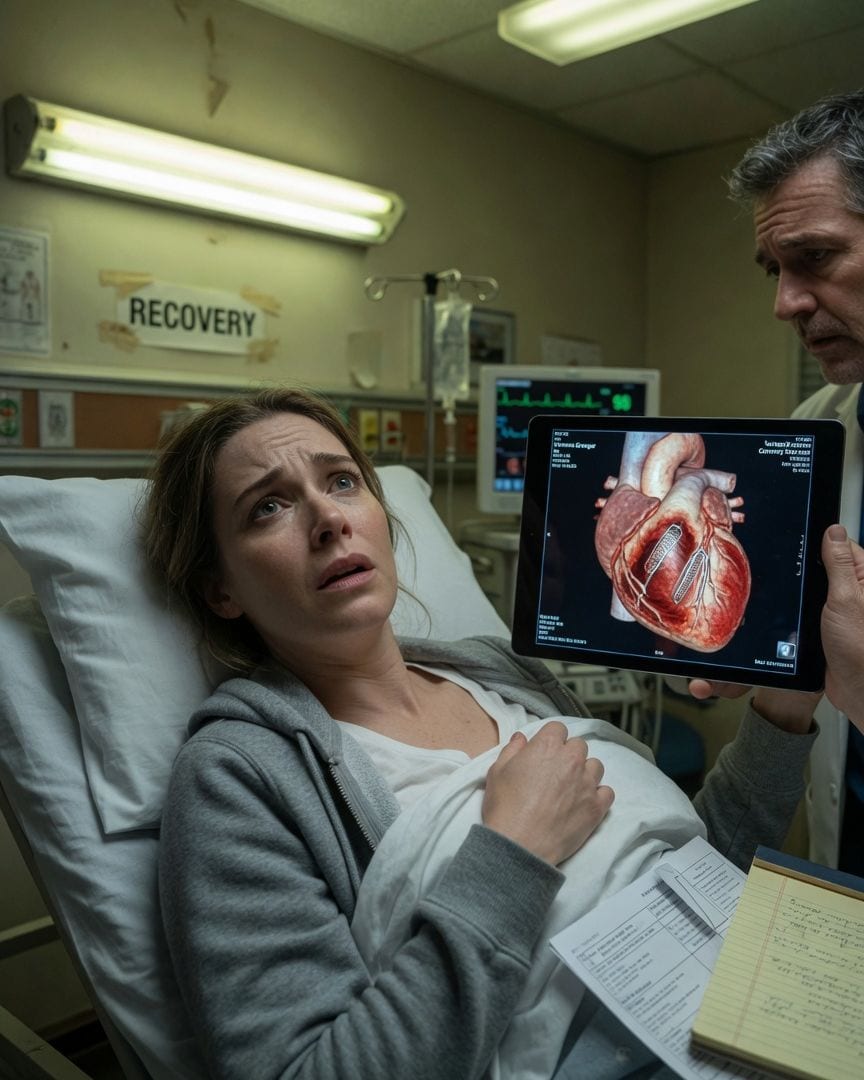
Metal stents are propping open my heart. The doctor rotated the image, but I've never had a cardiac procedure.
After years of dismissed chest pain, a CT scan revealed an impossible truth: my heart contained two metal stents. Dr. Maddox confirmed there was no record of any cardiac procedure in my entire medical history, and I had no memory of ever having surgery. My own body held a secret, alien architecture I couldn't explain.
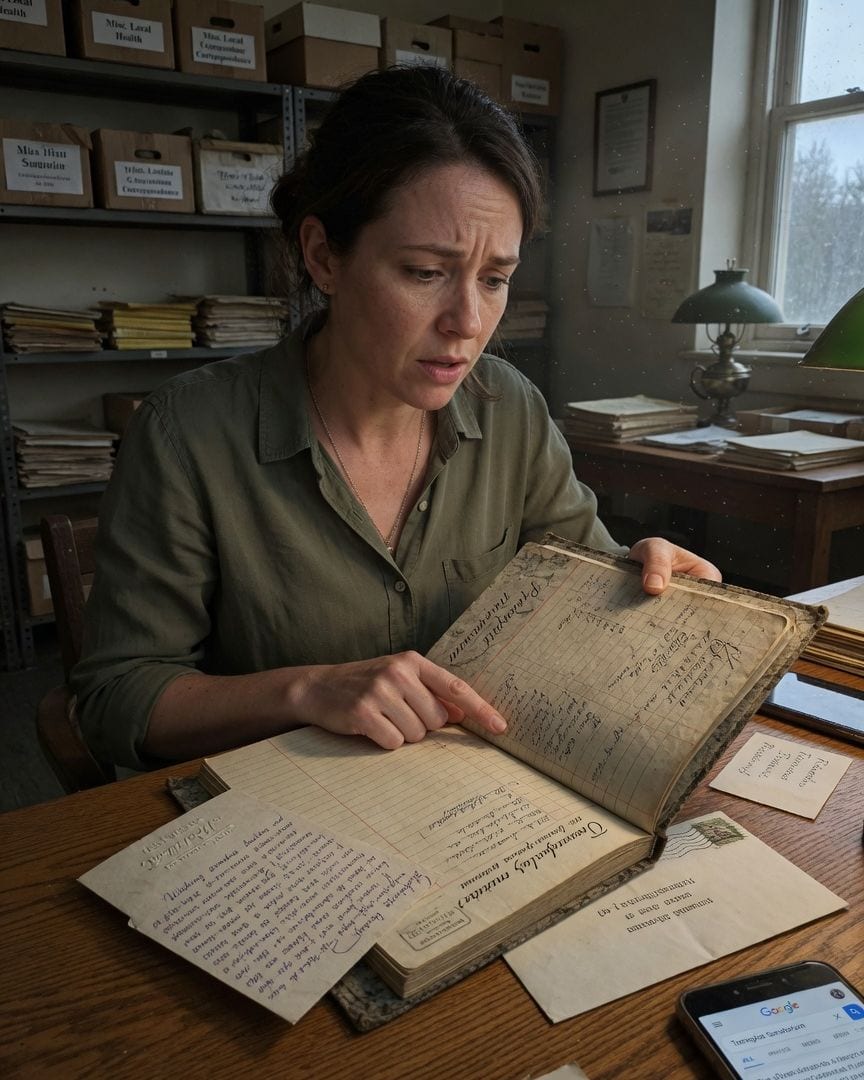
My get-well card wished me recovery from an operation I never had, postmarked from a hospital that burned down in 1963.
I received a get-well card wishing me recovery from an operation I never had. The envelope bore a fresh postmark from Treneglos Sanatorium, a TB hospital that burned down and ceased to exist in 1963. Now, a patient register from that long-gone sanatorium lists my name, dated 1959.
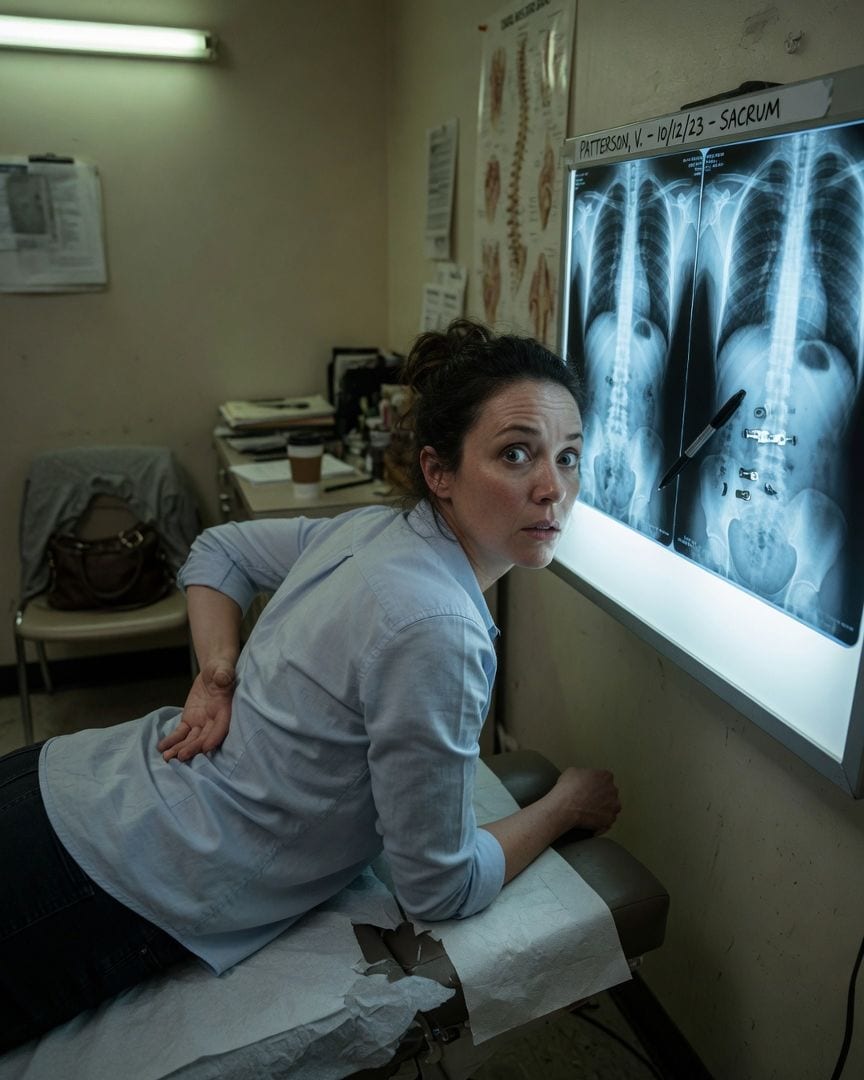
My spinal X-ray shows a healed fusion with metal hardware I never had installed. I've never had back surgery in my life.
I visited my chiropractor for a nagging backache, expecting a routine visit. But my X-ray revealed a perfectly healed fracture in my sacrum with decades-old spinal fusion hardware. The image was undeniably mine, yet I knew with absolute certainty I had never broken my back or had surgery in my life.