My back bedroom smells of pipe tobacco. Sweet, old, unmistakable. No one's smoked here in sixteen years. I aired it for a week. By the second night, it settled back in.
I moved into Reginald Bishop's old house in early summer, inheriting it from a distant relative I barely knew. It had sat empty for sixteen years since Bishop died in 2008.
You’d think sixteen years would be enough to scrub away any lingering scent, but no. The back bedroom, the one that overlooks the overgrown garden, held it firm. It wasn't a stale, forgotten smell, either.
It was rich, almost cloying, like someone had just put down a freshly smoked pipe.
I tried everything. Window wide open for a solid week, a fan blasting air through the space, even a few of those heavy-duty odor neutralizers from the hardware store. Nothing worked.
Each morning, I’d open the door to a room that smelled fresh, clean. By evening, a ghost of the tobacco would be there, a faint undercurrent.
By the next morning, it would be back in full force, a thick, comforting cloud that felt entirely out of place in an empty room.
I called the estate agent, a brisk woman named Sarah, just to be sure. "No, definitely no smoking in the house for at least sixteen years, since Mr. Bishop passed," she’d confirmed, a slight note of bewilderment in her voice.
"He was very particular, apparently." I considered damp, maybe some strange old wood, but it was too distinct, too… specific. Like a brand I almost recognized.
It wasn’t just the smell. Sometimes, around 6 AM, a faint, metallic whistle would cut through the pre-dawn quiet. It sounded like a kettle, a gentle, insistent hiss.
I’d always dismiss it as old pipes settling, the house adjusting to a new occupant. But it was always at 6 AM, and it was always that specific sound, a familiar, distant call from an empty kitchen.
The pipe tobacco smell, stubborn and pervasive, had me looking at the house differently. My attempts to rationalize it led me to other small, nagging oddities. The stairs, for instance.
There’s a faint, almost polished indentation on the third stair leading up to the second floor, about halfway across.
It’s not a gouge or a divot, just a spot where the wood grain seems smoother, shallower, as if someone consistently avoided stepping on that exact inch of wood for decades. It's too specific to be random wear, too intentional.
I found myself unconsciously stepping around it, a weird mimicry.
One morning, the kettle sound wasn’t faint. It was louder, more insistent, a sharp, clear whistle that dragged me out of a half-sleep. My heart jolted. I rushed downstairs, convinced I’d left my own kettle on.
But it was cold, untouched on its hob. The kitchen was empty, silent, save for the hum of the fridge. But in the air, a faint, warm, unmistakable smell of cooked porridge. Not my breakfast.
I hadn’t eaten porridge in years. It hovered, then dissipated.
Driven by a growing unease, I focused my investigation on the source of the persistent tobacco smell: the back bedroom. If it was so particular about this room, maybe the room itself held a clue.
I decided to give the room a deep clean, moving furniture, checking every nook and cranny. That’s when I found it. Near the old, built-in wardrobe, the floorboards felt slightly springy. A loose one, near the back corner, almost imperceptible.
I knelt, pressing my fingers along the seam, and it gave way.
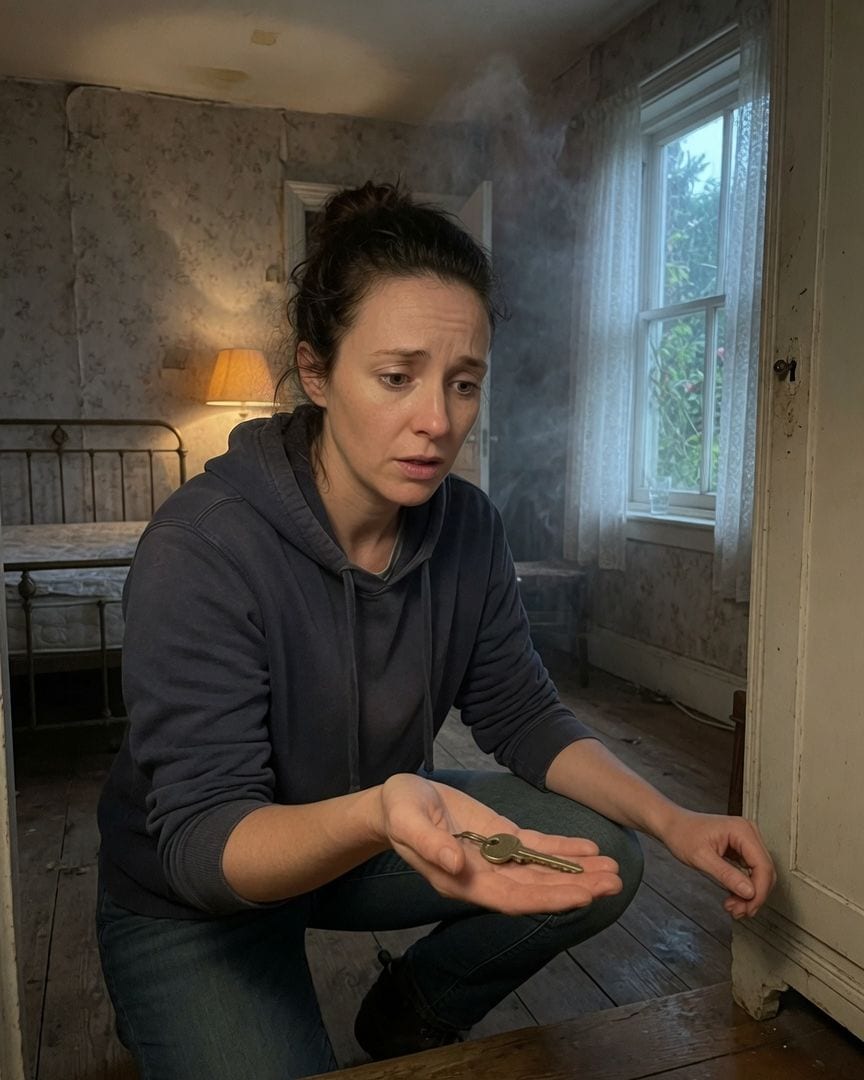
Beneath it, tucked into a shallow, carved-out recess, was a small, tarnished brass key. It was tiny, intricate, and worn smooth in places, as if someone had held it often, rubbed it with their thumb.
I pulled it out, testing its weight. It was cold against my palm. I tried it on the wardrobe lock. No fit.
I tried it on every other lock in the house I could find – the desk drawers, the garden shed, the old chest in the attic. Nothing. It didn't belong anywhere.
Megan kneels, her fingers tracing the worn, smooth curve of the tiny brass key. It's cold against her skin, nestled in her palm.
Her gaze flickers from the key to the empty keyhole of the old wardrobe, then to the faint, unexplained indentation on the third stair. The air in the quiet room feels heavy, suddenly expectant.
The brass key and that inexplicable worn spot on the third stair became anchors for a rising tide of unease.
I found myself unable to shake them, constantly turning the key over in my fingers, or catching myself instinctively stepping around that small, smooth curve on the landing.
This wasn’t just an old house; it was a house with specific, non-negotiable details.
I started looking into Reginald Bishop, the previous owner. The local archives were sparse; he wasn't a public figure. What I found described him as a 'recluse with fixed habits.'
There was an old property listing from the 1950s—the year he moved in—and it included a blurry photo of the back bedroom. In the photo, clearly visible next to the wardrobe, was a small, locked wooden panel in the wall.
That panel was long gone, replaced by seamlessly plastered wall, but the image lingered. The key, I realized, might have been for that.
I spent hours at the local library, poring over microfiches of old newspapers. No scandals, no hidden fortunes. Just a brief obituary from 2008, describing Bishop as a man of 'unwavering routine' and 'deep, quiet contemplation.'
The more I read, the more the pipe tobacco smell in my back bedroom seemed to intensify, settling even thicker when I was in the house.
And the kettle sound, though still faint, was a daily fixture now, a soft, precise chime at 6 AM.
The porridge smell started to appear more frequently, sometimes even lingering when I returned home in the evening, a warm, oat-laden breath in the kitchen.
I started noticing other subtle signs of a routine I hadn't set.
A specific armchair in the living room, an old velvet thing I rarely sat in, seemed to have a deeper impression on its cushion than I remembered, as if someone had been sitting there daily for years.
My rational mind fought hard. Old house quirks, drafts, imagination, phantom smells. But the coherence of the details, the sheer precision of them, chipped away at my resolve. These weren't random. They were patterns.
I needed someone who knew the house, someone who knew Reginald. The oldest resident on the street was Lydia Radcliffe, a 78-year-old woman who had lived next door since Bishop moved in.
I figured she was my best, and last, hope for a mundane explanation.
I walked the familiar few steps across my front yard to Lydia Radcliffe's house, a mirror image of my own. The porch swing moved slightly in the breeze. I knocked, and after a moment, the door opened a crack.
Lydia, frail but with surprisingly sharp, intelligent eyes, peered out. "Megan, dear? Come in, come in. I'll put the kettle on."
She ushered me into her cozy living room, which smelled of lavender and old books. As she poured tea, I cautiously broached the subject. "I was hoping you might tell me a little about Reginald Bishop," I began.
"I've been finding some… odd things in the house."
Lydia’s demeanor shifted. Her hands, delicate and veined, paused over her teacup. Her gaze became distant, almost wary. "Reginald," she said, slowly. "He had his ways. Very peculiar. Very fixed."
She looked at me then, her eyes seeming to pierce right through me. "Always on schedule, he was. Always… waiting."
I mentioned the pipe tobacco, the kettle, the porridge smell. Lydia nodded slowly, her eyes never leaving mine. "Oh yes. He always had his pipe, you know. That sweet blend. And his porridge, precisely at six. Never changed. Never."
I felt a prickle of unease. It wasn't just a memory for her; it was almost like she was observing a pattern, a cycle, still playing out.
"And the back bedroom?" I asked, trying to keep my voice even.
Her lips pressed into a thin line. "He spent most of his time in there, after… after the incident."
"Incident?"
She clamped down, her gaze hardening. "Some things are best left undisturbed, dear. Old stories. The house… it likes its routines. It doesn't like them broken."
The chilling implication of her words hung in the air, a physical weight. It was as if she spoke of the house as a conscious entity, capable of preference, of enforcement.
I tried to ask more, but she deflected, changing the subject to my garden.
Later that night, back in my own home, the dread settled deep. I was trying to read in the living room when I noticed a light on in Lydia’s house, in her own back bedroom.
As I watched, Lydia stood at her window, a still silhouette against the dim light. She wasn't looking at her own garden. She was looking directly at my back bedroom. For a long moment, she just stood there, watching.
Then, slowly, deliberately, she pulled her curtain shut. The feeling of being watched was palpable, a cold certainty that my investigation had been noted, and perhaps, not approved of.
The next morning, I returned to Lydia’s house, refusing to be put off. This wasn't just about odd smells anymore. This was about a house with a memory, and a neighbor who knew far too much.
I pushed gently, explaining about the hidden key, the missing panel in the back bedroom, the weird spot on the stair. Lydia, after a long, quiet moment, finally relented.
It was like a dam breaking, or perhaps, a burden finally being shared.
"Reginald Bishop," she began, her voice soft, almost a whisper. "He moved into that house in 1950. The same year it happened." She paused, took a slow breath. "A young woman, Evelyn Mercer. No relation to you, I don't think.
Just nineteen. Vanished without a trace. It was all anyone talked about back then. Everyone gave up, but not Reginald."
Lydia leaned forward, her eyes wide, haunted by old memories. "He became convinced she would return. That the house, his house, was the place she would come back to. That she would know the way." She shook her head slowly.
"He started… preparing. Every day. An elaborate, unchanging ritual. He thought if everything was exactly the same, she would know her way back. He believed in it with his whole heart."
The pipe, she confirmed, was always lit in the back bedroom, her preferred blend. A specific porridge, cooked at 6 AM, because he believed it was her favorite. The third stair?
"He called it a 'threshold'," Lydia whispered, her voice barely audible. "He believed she shouldn't cross it until her true return. So he always avoided it, never stepped there himself, kept it… clean for her."
The small brass key, she added, was for that hidden compartment behind the wall panel. "He kept 'things for her' in there. Things she might need when she came back."
Lydia described how Reginald would sit in the armchair in the living room, waiting. His pipe smoke would fill the house, always at the same time each day.
He lived a life of rigid, almost ritualistic habit, preparing for an unknown return that never came.
As Lydia spoke, a sickening clarity washed over me. The tobacco smell, the kettle, the porridge, the worn stair, the armchair – every single detail clicked into place with horrifying precision.
It wasn't just a lingering memory of a man; it was his life, his obsession, playing out on a loop. My mundane explanations crumbled to dust. This wasn't residual damp or a faulty kettle. This was something else entirely.
Lydia finished, her voice a fragile thread. "He thought if he kept everything exactly the same, she would know her way back. He kept the house alive for her. And the house… it learned to wait, too."
I sat across from Lydia, the weight of her confession pressing down on me, heavy and cold. The pipe, the porridge, the stair—it all fit Reginald's waiting. His decades-long vigil for Evelyn Mercer.
I could almost hear the whistle, smell the sweet tobacco. It was all chillingly coherent.
But then Lydia leaned forward again, her eyes wide and fixed on mine. "He always said it was for her return," she whispered, her voice barely audible. "And the house… it always remembers.
It just needs someone to carry on the waiting. It’s happened before, you know. With others." A cold certainty settled in my gut, not just about Reginald, but about what the house was doing.
And the way Lydia was looking at me, like she's already gone.
I retreated from Lydia’s house, the implication of 'it's happened before' echoing in my mind like a death knell. My home, once a sanctuary, now felt like a cage built of recurring dread.
The house itself felt watchful, patient, as if it had been waiting for me to catch up.
I went straight to the back bedroom, a new intensity guiding my hands. I knew where the panel had been. I found the faint outline beneath the paint and plaster, a subtle imperfection.
Prying away the plaster with a screwdriver, the old wood beneath gave way with a soft crackle. It wasn’t an empty space. It was a meticulously constructed, small, secret compartment.
Inside, nestled on a bed of yellowed, brittle velvet, were two things. An old, dark briar pipe, heavily worn, the bowl still smelling faintly of that sweet, specific tobacco.
Beside it, carefully folded and impossibly preserved, was a newspaper clipping from the local paper. It was brittle, almost translucent, but otherwise untouched by time, the ink startlingly clear.
I unfolded it carefully. The date read: October 12, 1950. The headline, stark and unsettling: 'Local Girl Vanishes: Evelyn Mercer, 19, Last Seen Near Home.'
The ordinary explanation died, choked by the dust of decades. This artifact, this perfectly preserved trace of Reginald's obsession, confirmed everything. The house wasn't merely haunted by a routine; it was perpetuating a cycle.
It had absorbed Reginald’s unwavering wait, and now, it was forcing its new occupant – me – to take up the mantle.
The 'return' wasn't about Evelyn coming back; it was about someone always waiting, always preparing, becoming the house's perpetual occupant. The 'others' Lydia mentioned, I understood now, were previous short-term tenants.
They hadn't stayed long, perhaps not long enough for the house to fully imprint, but they too had felt the subtle, growing shift, their own routines overwritten by the house’s memory.
I held the pipe and the newspaper clipping, the impossible reality of them chilling me to the bone. The date, the name – it was all real, verifiable, yet its presence here defied all logic.
The ordinary explanation was dead, replaced by the terrifying coherence of the house's retained memory.
As I sat there, the familiar kettle whistle sounded. Sharp, clear, as if right beside me. Not faint, not distant. It was 6 AM. The smell of porridge was strong, comforting, and utterly, profoundly wrong.
I looked at the pipe in my hand, the tobacco tin. A strange compulsion began to settle over me, a quiet, insistent urge to pack the pipe, to sit in the armchair, to wait.
The house wasn't just remembering; it was making me remember, making me continue.
I tried to resist, to stand up, to throw the pipe away, but my limbs felt heavy, sluggish, as if wading through thick water.
My gaze drifted to the worn spot on the third stair, then to the back bedroom where the tobacco smell was now overwhelming, drawing me in. The house was quiet, but it hummed with an ancient, patient energy.
I felt my own will slowly dissolving, replaced by an unfamiliar calm, a sense of purpose that was not my own. I watched my hand, detached, reach for the tobacco, my fingers fumbling with the sweet, dry leaves.
The routine was not a haunting; it was a destiny. My own identity, my own life, was being meticulously overwritten by the house's demand for perpetual waiting.
The pipe tobacco smell became a constant presence throughout the house, no longer confined to the back bedroom. The kettle now whistled sharply every morning at 6 AM, followed by the distinct aroma of cooked porridge.
The worn spot on the third stair remained, a silent testament to a routine that continued. Lydia Radcliffe, the neighbor, stopped visiting, but sometimes, Megan could see her through the window, watching the house.
Megan's social media posts grew less frequent, then stopped altogether. Friends and family tried to reach her, their calls and messages unanswered.
The familiar click of the door closing echoed through the quiet house. Megan, sitting in the worn armchair, her pipe gently smoldering, didn't stir. The scent of sweet tobacco filled the air.
She heard the soft footsteps climb the stairs, pause briefly at the third step, then continue upwards. A voice from the doorway of the back bedroom called out, "Megan? Are you still waiting?"
The figure in the armchair turned its head slowly, a faint, unfamiliar smile playing on its lips. "Always."
Days later, a concerned friend, worried by the silence, visited the house. The door was unlocked. The house was quiet, filled with the faint, sweet smell of pipe tobacco.
In the living room, an old briar pipe lay on a side table next to a half-empty tin of tobacco. The friend called out Megan's name.
There was no reply, only the distant, faint sound of a kettle beginning to whistle from the kitchen. The friend left a note, then called again a few days later. Still no answer.
A week after that, Lydia Radcliffe, the next-door neighbor, was seen watering her flowers, humming softly. When asked if she'd seen Megan, Lydia paused, a faint, knowing smile on her face. "Oh, she's here. Still waiting."
If this one got to you
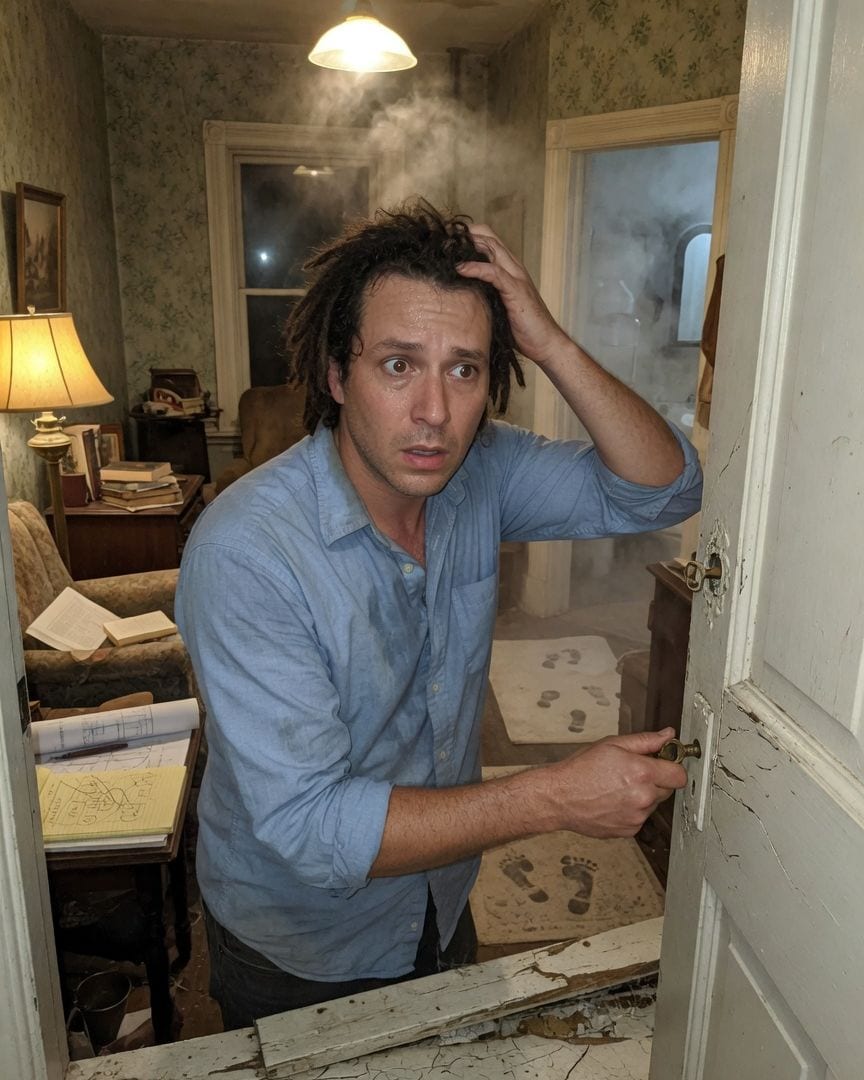
The bath filled itself at 9:30 PM. My main house water was off. Wet footprints led from the tub to a locked airing cupboard.
As an architect, I pride myself on logic. Moving into my inherited Victorian house was supposed to be a quiet fresh start, but on the third night, I heard the impossible. Even after I shut off the main water to the entire house, my clawfoot bath upstairs ran full, warm, and steaming at 9:30 PM.
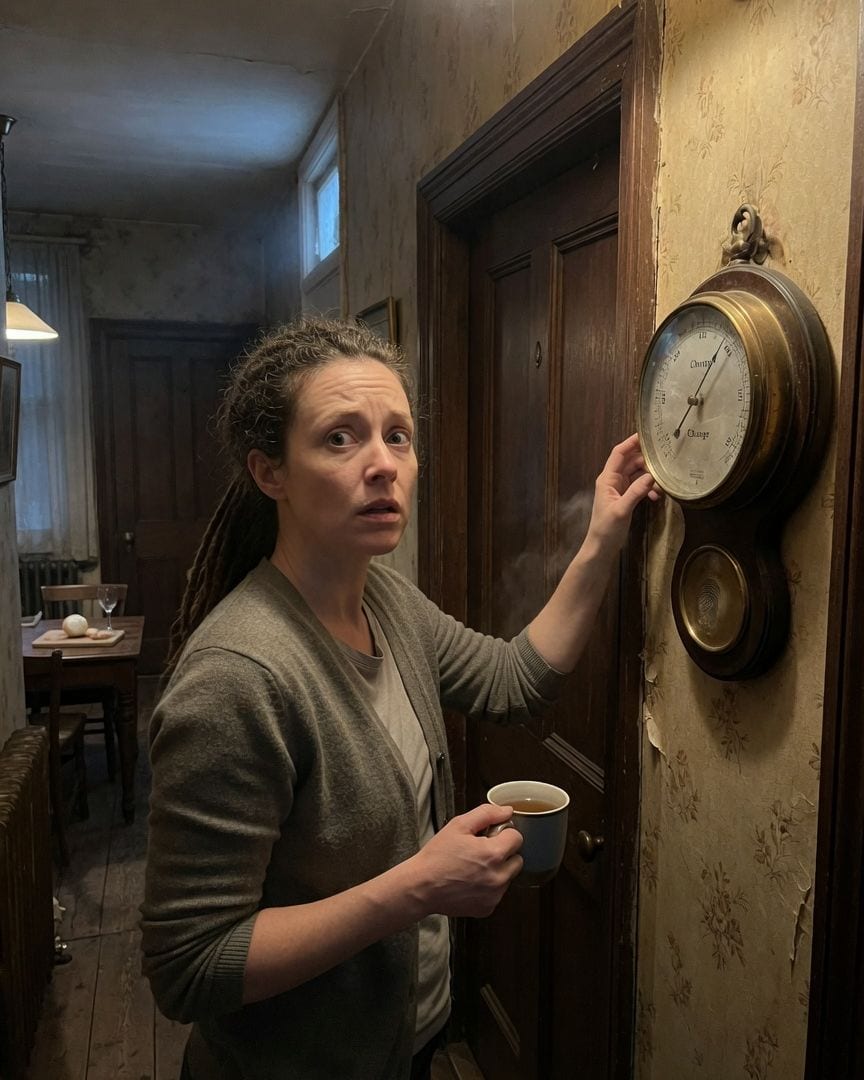
My hall barometer taps itself every night at six. From the next room, with nobody there.
After moving into Oscar Vaughn's old house, I became accustomed to the strange noises that came with it. But then, a heavy, locked oak door in the dining room, one I'd never been able to open, slowly pushed itself ajar at precisely six o'clock one evening. I hadn't touched it, and no one else was there.
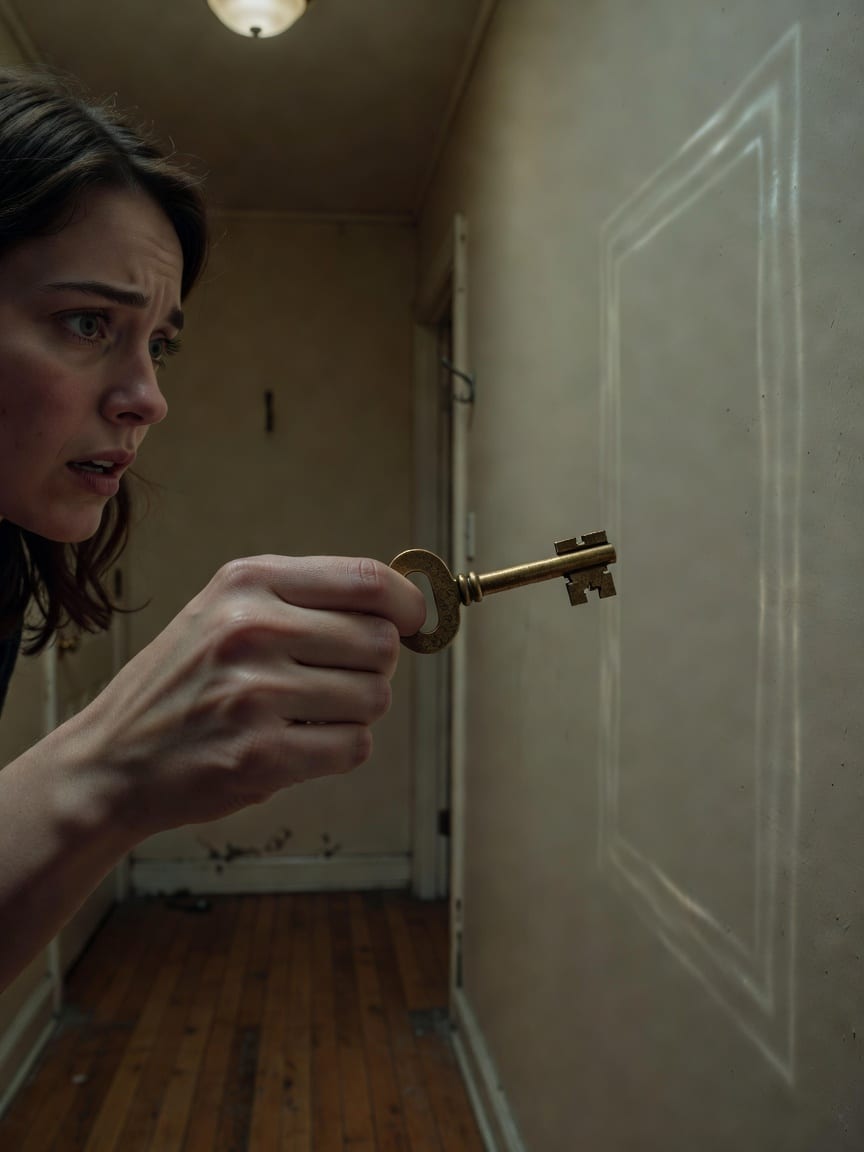
My new house has seven rooms. The removal men counted six. Now one of them asks who's in the locked seventh, on a landing with only six doors.
Moving into my new house, I supervised the removal men hauling boxes. But on the landing, Paul, the senior man, asked about a locked seventh room upstairs, pointing to a blank wall. His quiet certainty, despite the clear absence of a door, filled me with a sudden, icy dread.
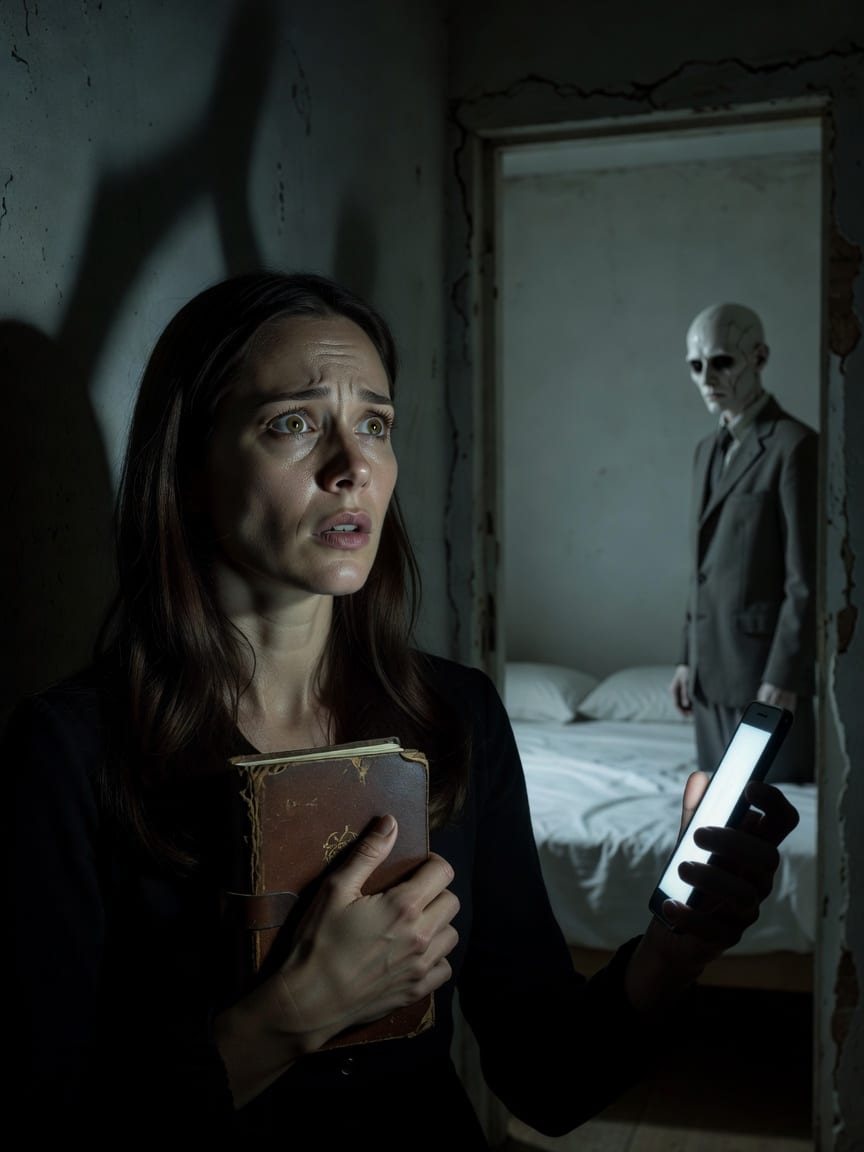
Behind a plastered-over doorway, I found a room. Papered, carpeted, and furnished with a made bed, sealed for decades. The air was dead still, but the bed wasn't dusty. My council tax bill only lists five rooms.
I'm Claire, an architect, meticulously planning my new Victorian terrace renovation. But when I uncovered a hidden room behind a wall, everything I knew about time and decay shattered. The bed was perfectly made, the air still, yet there was no dust, only an unnerving cold.
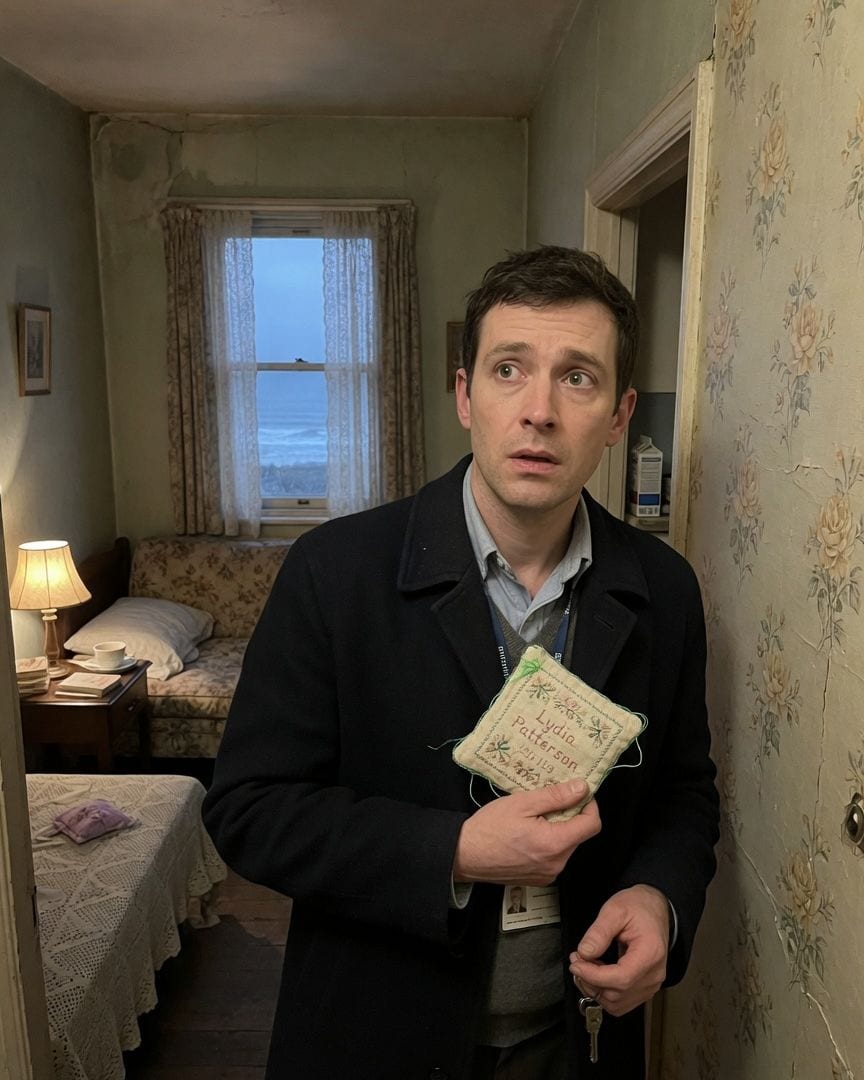
The 'empty' almshouse I was auditing wasn't empty. I heard a bare foot *thump-thump* from next door.
My new charity role involves auditing the supposedly 'empty' almshouse units. But from the unexplained activity outside to a fresh carton of milk inside, something is deeply wrong. Then, in one unit, I found a dead woman's sampler with a jarringly new thread, and heard bare feet thumping next door.
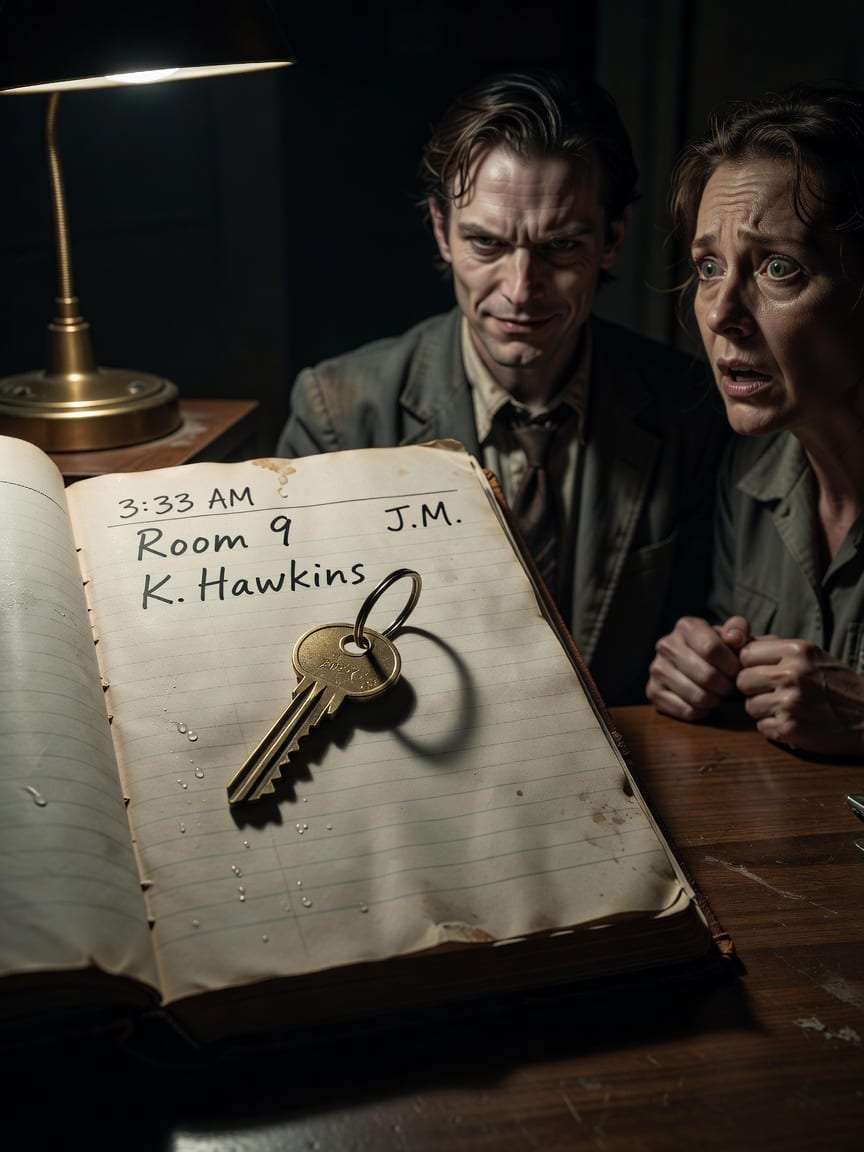
My hand wrote the Room 9 check-in at 3:33 AM. My initials were there. But Room 9 has been sealed since the spring flood, and its key still hangs on the peg.
Working the quiet night shift at the Marsh View Motel, I found a fresh entry in the register with my own initials, for Room 9. But Room 9 has been sealed since the spring flood, its key hanging untouched on the wall. Inside, a half-empty glass of water and a second, mud-encrusted key lay on the bed.