Behind a plastered-over doorway, I found a room. Papered, carpeted, and furnished with a made bed, sealed for decades. The air was dead still, but the bed wasn't dusty. My council tax bill only lists five rooms.
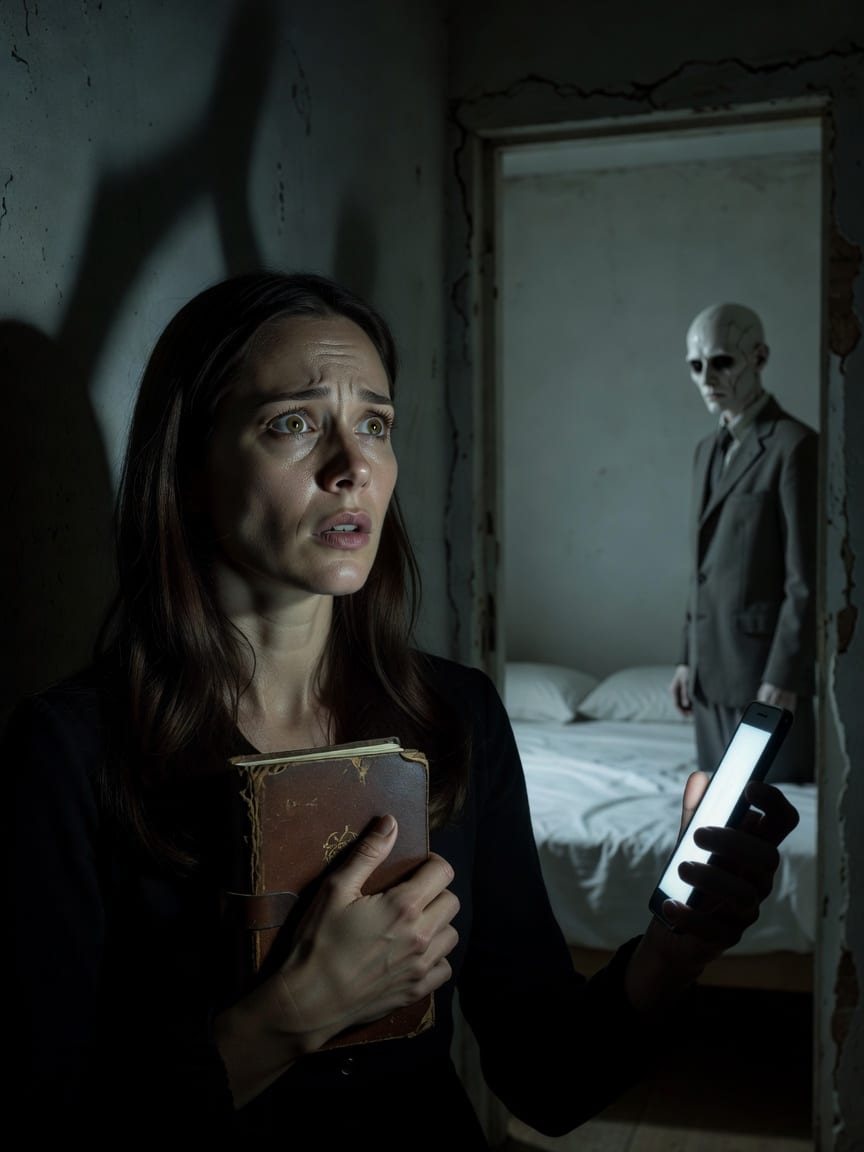
Claire Kowalski, 35, architect. That’s what it said on my business cards. Precise. Meticulous. And I’d just bought my first house, a charming Victorian terrace. Or it was charming, beneath the layers of neglect.
The council tax bill, though, that thing had been gnawing at me since day one. Five rooms. I’d counted six, maybe seven, not including the bathroom. I’d gone over the floor plan, scaled it, measured.
No matter how I sliced it, the numbers never quite clicked. It was a minor irritation, the kind you shrug off as council bureaucracy, but it always just sat wrong.
Renovations started, as they do. The house was a project. I was stripping out a hideous, avocado-green airing cupboard in the landing, crowbar in hand, grunting with effort. The water tank came out, then the shelves.
I was about to plaster over the exposed brick when my crowbar struck something hollow, deeper than it should have been. Not plasterboard. Solid brick, then a distinct void. Curiosity, or maybe something colder, sparked.
I chipped away, a slow, painstaking process. Dust choked the air, gritty and thick, but an inexplicable compulsion kept my hands moving. It felt like uncovering an old wound the house had tried to hide.
Hours later, the plaster gave way with a soft crunch, revealing a dark, square opening. My phone light cut through the gloom. It wasn’t a wall void. It was a room.
Fully papered, a faded floral pattern popular god knows when. Carpeted in a worn, clean green. Furnished with a small dresser, a bedside table, and a perfectly made bed. The linens were pristine, the pillows fluffed. And the bed itself?
Not dusty at all. After decades behind a plastered-over wall, sealed, the air dead still, it should have been thick with grey, forgotten particles. But it was… fresh. Untouched.
My heart hammered against my ribs, a frantic drum against the sudden, unnerving silence. I stepped inside, the air here unnervingly cold, a sharp, penetrating chill that instantly contrasted with the warm, dusty hallway I’d just left.
The wallpaper was definitely 1950s, maybe late 40s. The carpet, a muted green, was clean, as if vacuumed yesterday. My gaze fell to the bedside table.
A small, leather-bound journal lay open, its pages a deep yellowed cream, but the dark ink looked… surprisingly fresh. Too fresh for something abandoned for decades.
I picked it up, my fingers tracing the subtle, embossed symbol on its cover – a strange, almost organic pattern I couldn't quite place. The open page, I saw, described this exact room. The floral paper. The same pristine bed.
The elegant, feminine handwriting wasn't my previous owner’s, not the one I’d met, a brisk woman in her eighties. This was older. Much older. A shiver, colder than the room’s air, ran down my spine.
I tried to rationalize it. A hidden room, sure. A previous owner’s eccentric hideaway, a sanctuary perhaps? Maybe they sealed it up when they moved, just left everything. But the lack of dust… that was the sticking point.
The perfectly made bed, the absolute stillness of the air, yet no layer of time. It defied everything I understood about enclosed spaces, about abandonment. I pulled out my tape measure, extending it across the room’s width, then its length.
I then walked outside, out into the garden, and measured the exterior wall. I measured it twice, then a third time. My numbers refused to reconcile. There was no architectural logic for this space. The room was simply… extra.
It didn't fit the footprint of the house I thought I knew. It was a space that shouldn’t exist.
I flipped through the journal, past the current open entry, my fingers clumsy with a growing sense of dread. I needed a name, a date, something to ground me. I found it: 'Eleanor Delaney,' dated 1957.
The earlier entries were quiet observations, daily life in the house, then a subtle, creeping unease. She wrote about a 'shifting space,' things being not quite where they should be.
The page I’d found open, the last entry, was a frantic, desperate scrawl. It detailed growing dread, the feeling of being watched, and an 'impossible geometry' that was slowly claiming her.
The final sentence, bolder, darker than the rest, burned itself into my mind. It read: 'God help the next one, when it returns.'
My breath hitched in the cold, still air of the newly opened room, the words a cold knot in my gut.
That line, 'God help the next one, when it returns,' had burrowed into my skull like a parasite. Driven by a cold, insistent dread, I spent the next few days not renovating, but poring over property deeds, microfiche, local archives.
Eleanor Delaney. I found her. She had indeed owned the house from 1950 to 1957. Then, as Malcolm would later confirm, she vanished without a trace, the property eventually changing hands a year later.
A peculiar detail from an early journal entry caught my eye: Eleanor mentioned a stained-glass window in the hallway that 'seemed to shimmer with an internal light, even in darkness.' I checked.
It was still there, a vibrant mosaic of blues and greens. And it did, faintly, shimmer, even on a dull afternoon. Just a trick of the light, I told myself, a quality of the old glass.
But it felt like Eleanor was watching me, guiding me.
I decided to try a different tack. I visited the local council office, feigning interest in historical renovations for my Victorian property.
Edward Pennington, the property records clerk, was a man in his early fifties, polite but weary, with a permanent slump to his shoulders. He patiently pulled up old blueprints for my address. They all showed a standard, five-room layout.
Nothing more. Nothing less.
'Houses can be quirky, Miss Kowalski,' he’d said, without looking up from his screen, his voice flat. 'Always a story behind them.' He handed me a printout of the official floor plan, a ghost of the house I knew.
It was missing a room. My new room.
I left the council office with a sinking feeling. Rational explanations were becoming harder to grasp.
Back home, with a sense of bizarre compulsion, I folded a small note and tucked it inside the journal, right into the last page Eleanor had written. 'Are you still here?' it read.
I closed the door to the extra room, the plaster dust still clinging to the frame like a morbid halo, and tried to ignore the growing chill that now seemed to emanate directly from that part of the house, permeating the entire landing.
The rational part of me screamed for a logical explanation, a prank, a misunderstanding, but the numbers, the dates, the journal itself—they refused to add up. They mocked my logic.
The next morning, the note was gone. Not fallen out, not pushed aside. Simply gone.
In its place, scrawled beneath Eleanor’s last, frantic entry, was a single, stark word, in the exact same faded ink, the same elegant, feminine hand: 'WAIT.' The blood drained from my face. My hands began to shake.
Someone, or something, was actively responding. It was here. And it knew I was digging.
The house felt different now. Charged. The air thrummed with an invisible electricity. I started noticing subtle shifts. A door frame, perfectly straight when I’d passed it moments before, seemed slightly askew, off-kilter.
I’d rub my eyes, blink, and it would snap back to normal. A trick of the light. Tiredness. I tried to dismiss it.
But then, walking from my kitchen to the living room, a familiar route I’d taken a hundred times a day, I suddenly found myself back in the kitchen, disoriented.
The hallway, a straight line, had somehow looped me around, deposited me back at my starting point. The 'Road That Returns,' Eleanor had written, and now it was happening to me.
I peered through the stained-glass window in the hallway; it seemed to shimmer with an unnatural intensity, throwing fractured, vibrant colors onto the walls, even though the morning light was dim.
The feeling of being watched became constant, a prickle on the back of my neck, like an invisible gaze following my every move.
One evening, after the sun had gone down and the house was settling into its nighttime creaks, I heard it. A faint, almost imperceptible hum emanating from behind the now-closed door of the extra room.
It was like a low-frequency vibration, more felt than heard, resonating deep in my bones, making my teeth ache. The house was alive, and it knew I was digging. It was reacting.
I knew I needed answers beyond dusty records and chilling journal entries. I sought out Malcolm Hughes, a local historian whose name kept appearing in my property research.
He was known for his encyclopedic knowledge of the area’s older properties, an unofficial keeper of forgotten stories. I found him in a small, cluttered cottage crammed with books, maps, and artifacts.
He was a frail man in his late seventies, with eyes that seemed to hold generations of stories, seeing more than they let on.
I laid Eleanor’s journal and my blueprints on his kitchen table, detailing my discovery of the extra room, the unnerving lack of dust, the 'WAIT' message. Malcolm listened, his expression not surprise, but a quiet, weary recognition.
He slowly nodded, his gaze distant.
'The pocket,' he murmured, his voice raspy, barely a whisper. 'It's been known to open and close. Always in that house.' He explained that his own grandmother had spoken of it, warned him about it.
It wasn't a hidden room, he clarified; it was a localized spatial anomaly, a 'fold' in reality, a tear that periodically became accessible.
'The house isn't just old, Miss Kowalski,' he said, his gaze fixed on the journal. 'It’s… active.' He explained that the 'pocket' didn't just create space; it borrowed it, shifted it, and preserved what was inside.
That was why the bed wasn't dusty. Time, as we understood it, barely touched anything within the pocket’s influence. The 'WAIT' message was likely Eleanor, or an echo of her, still trapped, still trying to warn.
The impossible geometry – the looping hallway, the shifting door frames – wasn't a glitch in the house; it was the house itself, reacting to the pocket's presence, twisting distances, making things 'return.'
My dread solidified in my chest, cold and hard. This wasn't a ghost story, not a simple haunting. This was a story about physics gone profoundly, terrifyingly wrong.
Malcolm pointed a gnarled finger at the stained-glass window marked on my blueprint. 'My grandmother always said that window was a focal point, Miss Kowalski.
A kind of anchor for the pocket when it opened, holding it in place, as it were.' He then pulled out an old, brittle map from a dusty chest.
It was hand-drawn, a crude survey of the local area, meticulously detailing not just houses but old stone markers, disused wells, and ancient trees. Faint, almost invisible lines connected these points.
One line, thicker and darker than the rest, led directly from my house to a nearby, overgrown, disused well.
'The pocket doesn't just hold things; it wants to hold them,' Malcolm said, his voice dropping, taking on a grave tone I hadn't heard before. 'It collects.'
I looked at the map, a cold dread spreading through me like spilled ink. On the map, next to the well, was a faded, almost illegible name, and a date: 'Eleanor Delaney, 1957.' Eleanor Delaney.
One of the house's previous owners, listed in the journal I held. The author of those desperate warnings. She didn’t just vanish. She was collected.
I realized the journal was a warning not just about the room, but about what happens to those who stay too long. Malcolm’s finger moved again, pointing to a small, almost invisible symbol next to Eleanor's name on the map.
It was the same symbol that was subtly embossed on the leather of the journal I clutched in my hands. The same subtle symbol I had noticed when I first picked up the book.
The last entry in the journal, the one I had found open, was written by Eleanor. And Eleanor Delaney had gone into the well in 1957.
Malcolm leaned back in his chair, his eyes fixed on my stunned, terrified face. 'Eleanor wasn't just trapped by the pocket, Miss Kowalski. She became part of it.'
He explained that the pocket wasn't a static space; it was a hungry one. It absorbed not just physical objects, but echoes of consciousness, memories, a kind of residual self.
Eleanor’s journal was not just a historical record; it was a communication from an entity that was once human, now a lingering presence within the anomaly.
The 'WAIT' message, the unsettling lack of dust, the perfectly made bed—it was all Eleanor, or the pocket using her, preserving her, trying to lure the next 'collection.'
The map, Malcolm explained, wasn't just a survey of the land; it was his ancestor's attempt to chart the 'nodes' of this larger, unseen spatial network that permeated the area.
These were points where the pocket's influence was stronger, where the veil between realities was thinnest. The well was another, deeper node, a conduit where people like Eleanor were fully absorbed, becoming a permanent part of the system.
My house, with its shifting geometry and extra room, was a gateway, a recurring invitation. The horror wasn't a ghost; it was a place that systematically consumed people, leaving only their preserved traces and fragmented warnings.
I knew I couldn't just leave, not with that hum in the house, not with Eleanor’s echo stirring. The house was active, and I felt its subtle, insidious pull, a constant urge to check on the extra room, to understand.
Malcolm, with a grim resolve, shared his family's desperate solution. 'There's a way to quiet it, for a time,' he said, his voice low. 'A sigil. Carved into the foundation, directly beneath the stained-glass window.
It's an ancient reconciliation of the geometry, meant to temporarily stabilize the pocket, to calm it.'
Armed with a chisel and a hammer Malcolm had lent me, I returned to the extra room.
The hum was no longer faint; it was a resonant thrumming that made my teeth ache, vibrating through the floorboards and up my legs. The air was frigid, the cold pressing in on me like a physical weight.
I found the loose flagstone Malcolm had described, beneath a corner of the faded carpet. With shaking hands, I pried it up. Beneath it, carved into the cold, ancient stone, was the intricate, almost invisible sigil he’d drawn for me.
As I raised the chisel, the room groaned. A low, deep sound, like a living thing in pain. The air grew even more frigid, my breath misting in front of my face.
The furniture shimmered, the perfectly made bed seeming to ripple as if someone had just risen from it, or was about to.
I felt a profound, invisible resistance, a mental push-back, trying to drive me out, a silent scream of 'GET OUT' echoing in my mind.
'Eleanor?' I whispered, my voice barely audible above the hum, but only the low thrumming responded. Gritting my teeth, I brought the hammer down, striking the chisel against the sigil.
A sharp, echoing CRACK split the oppressive silence, and the hum intensified, a deafening crescendo, then abruptly ceased. The cold receded, the shimmering stopped. The room felt utterly still. Empty. Inert. The dread, though not gone entirely, had been quelled.
The presence was gone, for now.
The extra room remained, but it was just a room now, devoid of its unsettling aura. The journal was gone, vanished with the hum, leaving no trace.
I sold the house quickly, not wanting to tempt fate, ensuring the new owners were blissfully unaware of its peculiar history. Malcolm helped, discreetly.
I moved to a thoroughly modern apartment across town, deliberately choosing a new build, far from anything old or 'quirky.' I still measured my new rooms, sometimes, just to be certain. They always added up perfectly.
The impossible geometry of the old house was stopped, or at least dormant, for now.
I settled into my new life, the memories of the house fading into a surreal nightmare, a story I would never tell. I rarely thought of the pocket, or Eleanor. My council tax bill arrived, crisp and clean. Five rooms.
Everything was normal. One afternoon, while unpacking a forgotten box of old kitchenware, I found a small, smooth, grey stone, just like the ones Malcolm had described finding near other 'nodes' on his map. It wasn't mine.
I threw it out with the recycling. A week later, I was organizing my new kitchen, arranging spices in a rarely used cupboard.
Behind a stack of old plates, a small, dark recess, a perfect rectangle, barely visible in the shadows. It wasn't there yesterday. The air in the cupboard felt strangely cold.
If this one got to you
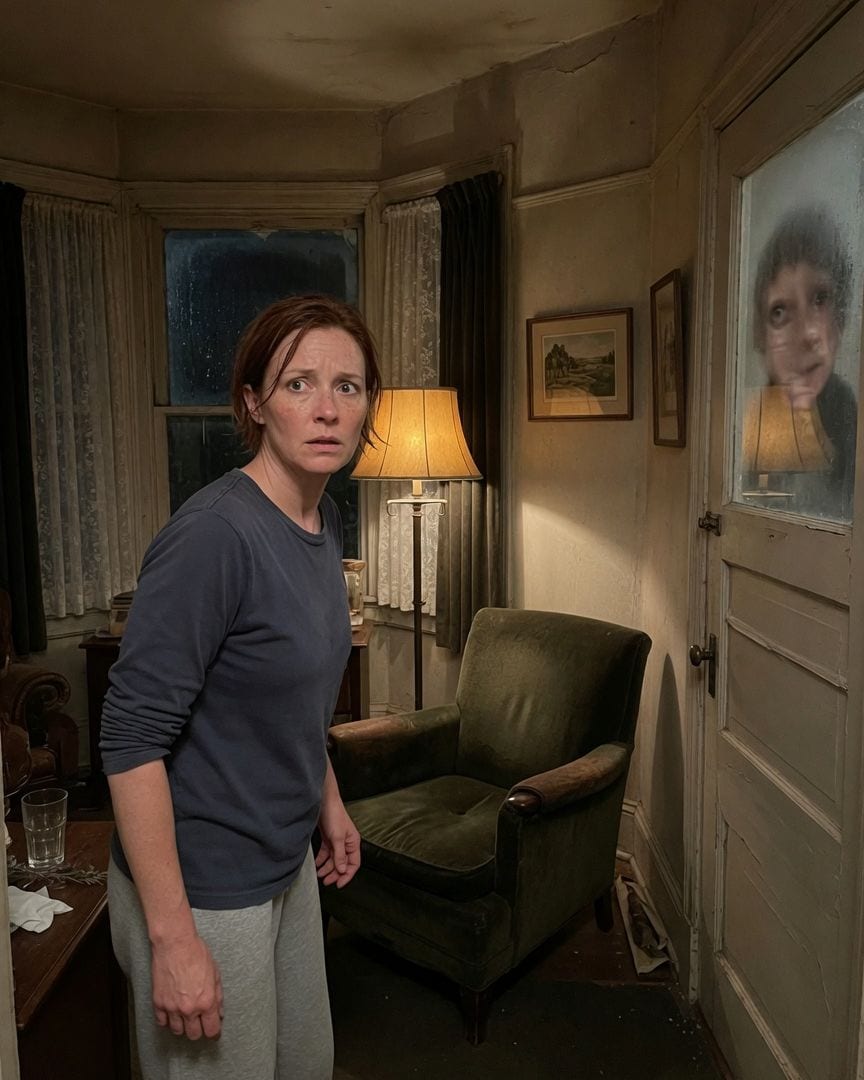
The armchair by the bay window was warm last Tuesday at 9pm. I’ve never sat in it, and the cushion was still settling from a weight that wasn't mine.
I bought this old house for quiet, and most days it's exactly what I needed. But there’s an antique armchair in the living room, deep green velvet, with a permanent hollow from years of use. I’ve never sat in it, yet last Tuesday, I found it radiating a distinct warmth, the cushion slowly settling as if someone had just left.
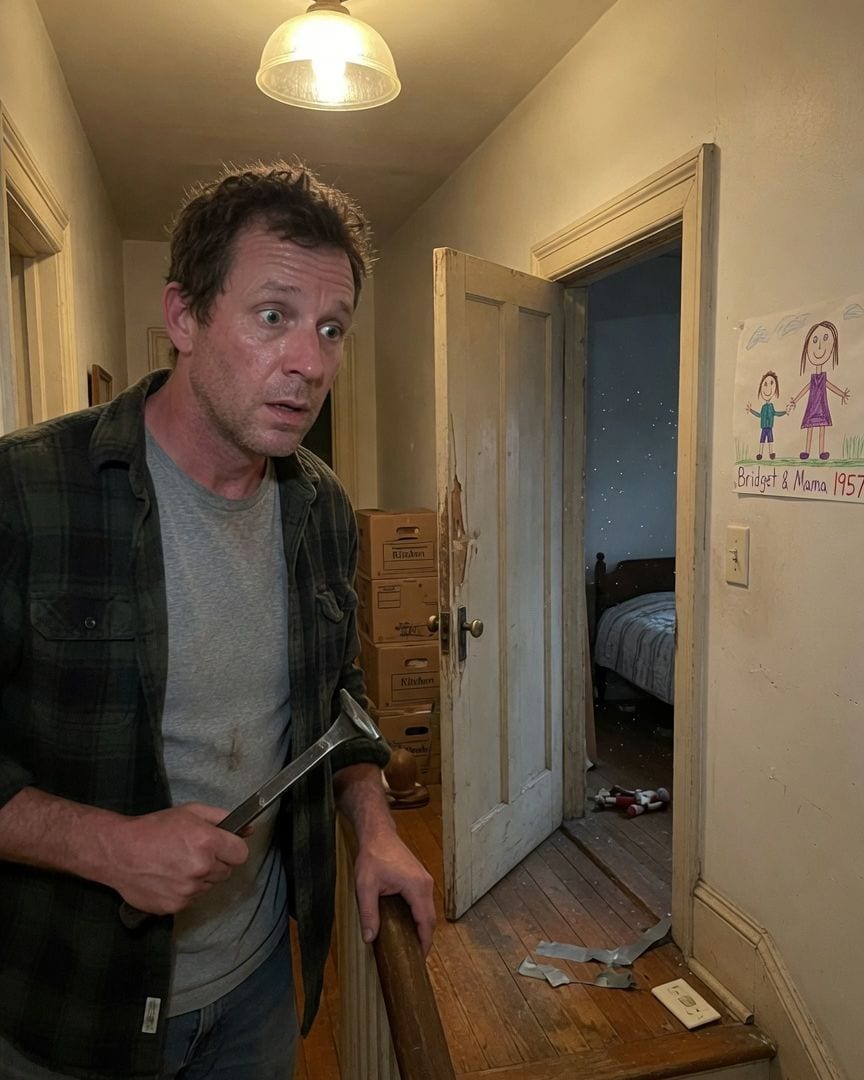
My landing light switches itself off at 9:40 every night. I've watched the switch flick down under nothing, the tape peeled back. The house holds its breath.
My great-uncle's old house was a quiet gift, a place to finally settle. But as I unpacked, a strange worn path on the floorboards led me to a small, barely visible door, perfectly blended into the wall. It was undeniably locked, and felt like a deliberately obscured secret.
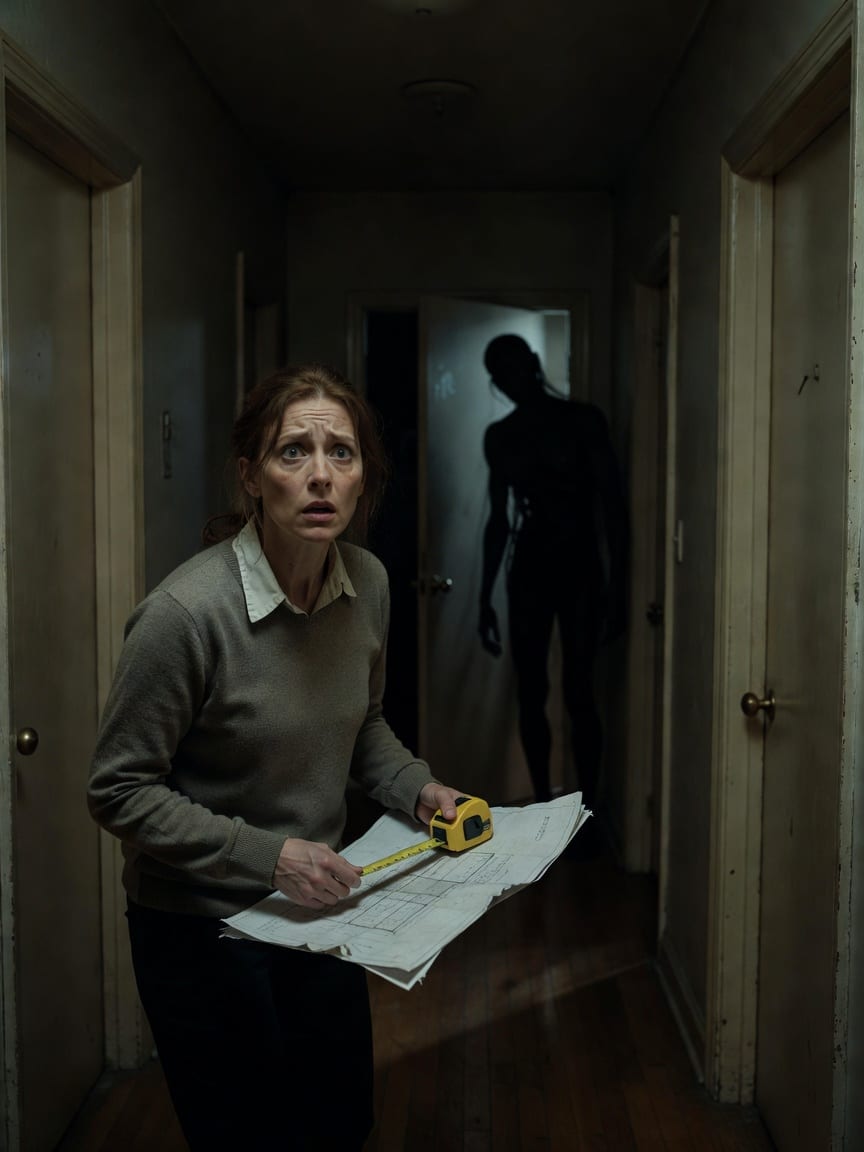
My front door has a dented gate and a dead hydrangea. I walked past it six times, trying to reach the corner shop just a hundred yards away. The pavement kept bringing me back to my own porch, and the shop's light never moved.
My morning started like any other, a quick walk to the corner shop from my home at Number 14, Elm Terrace. But after walking what felt like two minutes, I found myself back at my own front door, the shop no closer. I tried six times, faster and slower, but my street kept compressing, refusing to let me leave.
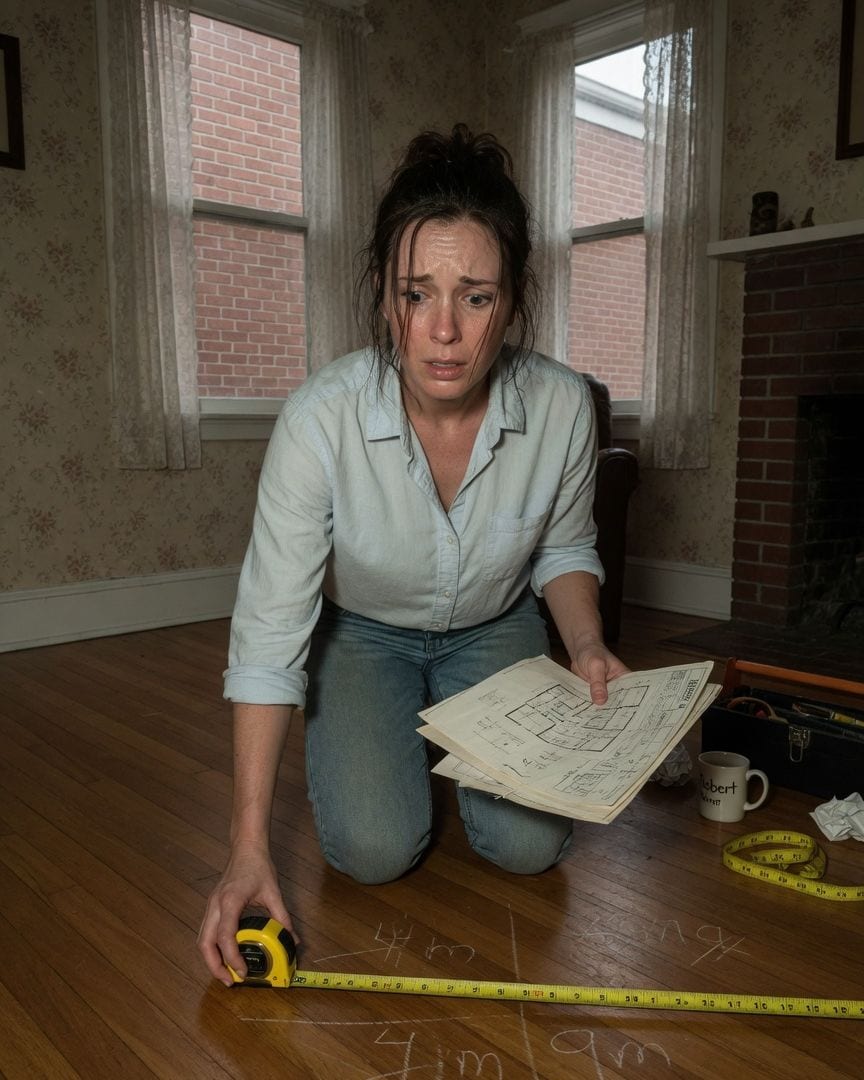
Our living room measures four by five metres. But the outside wall is nine metres long. A metre of house, gone, and I can't find it.
After moving into our charming 1920s house, I was meticulously measuring the living room when the dimensions refused to add up. My calculations of the interior space led me to discover a narrow, unpainted fifth door in the hallway, tucked almost out of sight. It wasn't on any original plans, and it opened to absolute, impenetrable darkness.
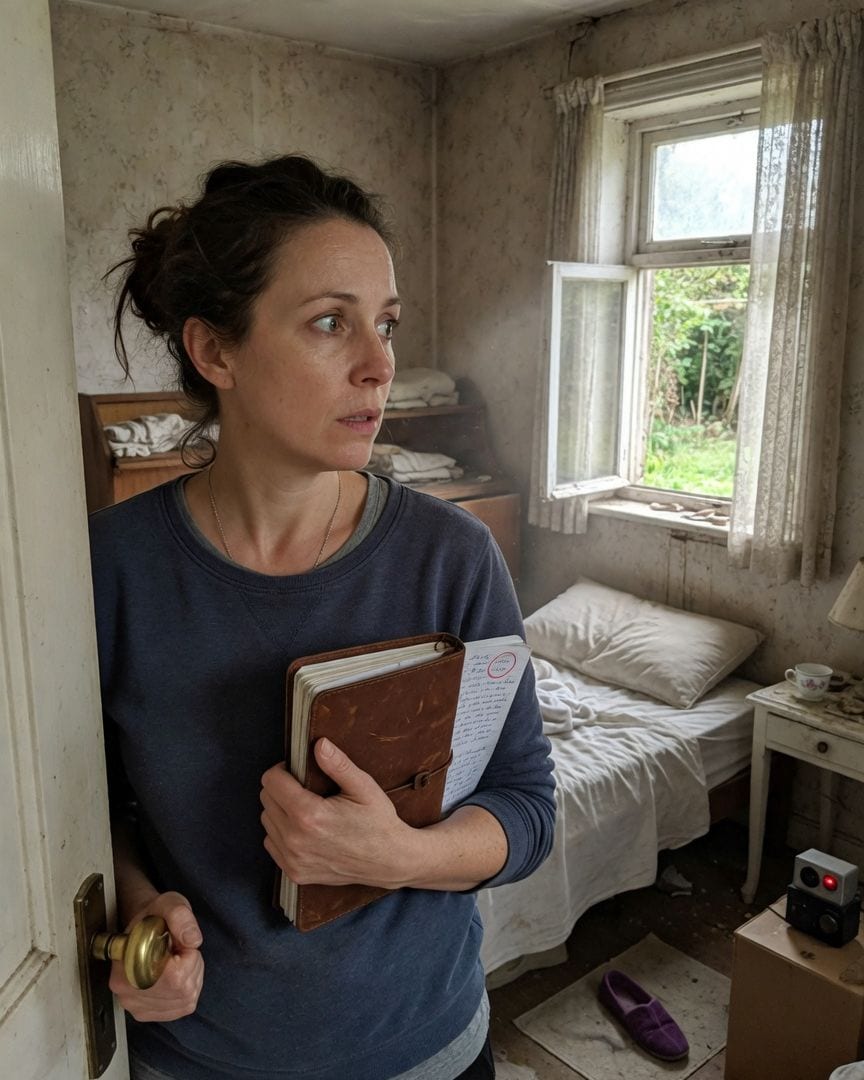
My spare room bed is slept in every few nights, sheets warm and pillow dented. I live alone, painted the window shut, and nobody has a key.
I've lived in Grace's house for six months, adjusting to its quiet rhythms. But the spare room, which I keep shut and empty for storage, has a disturbing routine of its own. Every few mornings, the bed is clearly slept in, the sheet rumpled and warm, and the window I painted shut is open exactly two inches.
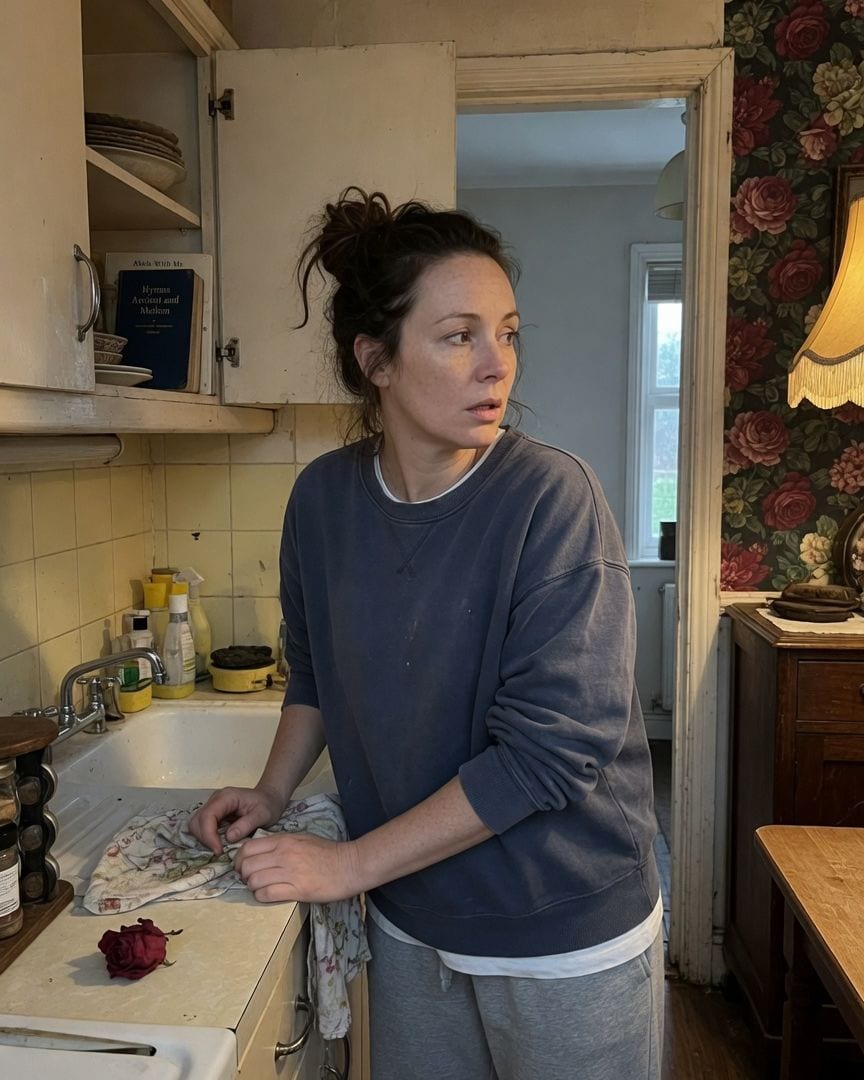
My kitchen taps run themselves on Sundays while a woman hums 'Abide With Me.' I live alone.
I moved into this quiet 1928 house for a fresh start, living alone. But for three months now, every Sunday morning, a low, tuneless hum and the distinct sound of running water drift from my kitchen sink. A plumber found no explanation.