Our living room measures four by five metres. But the outside wall is nine metres long. A metre of house, gone, and I can't find it.
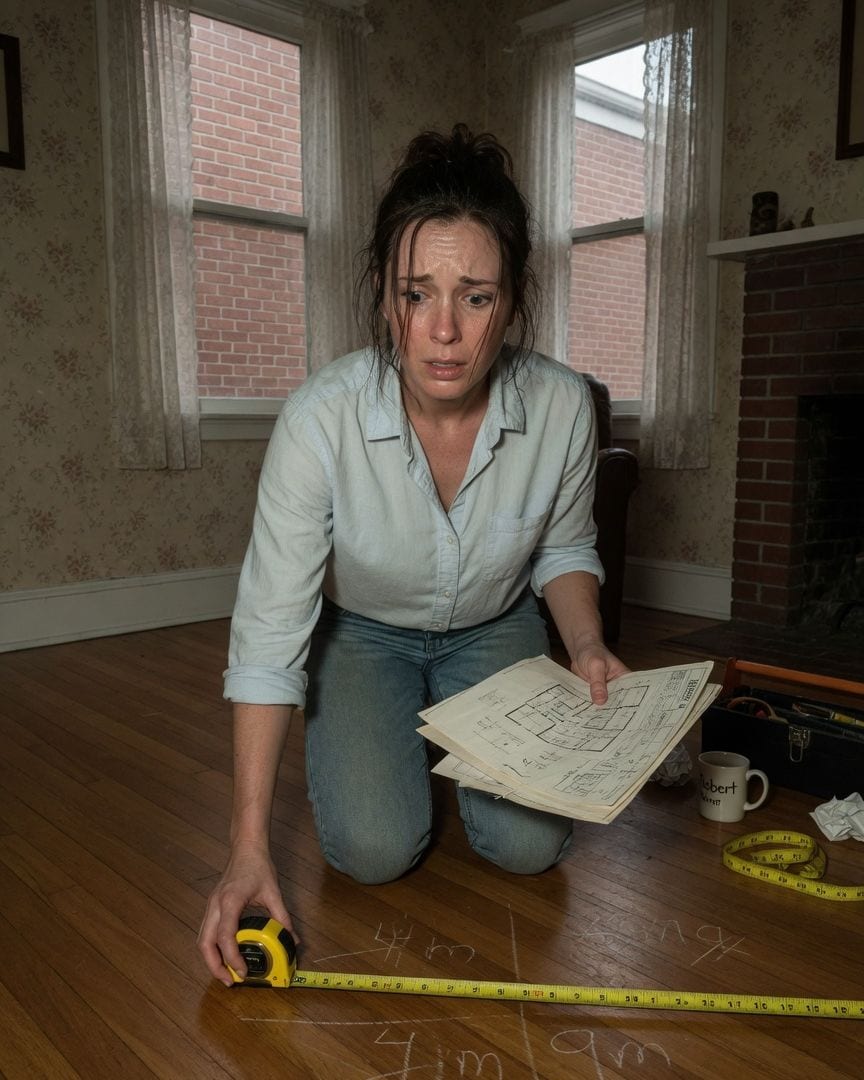
I knelt on the polished hardwood, the metal tape measure taut across the living room floor. Robert, my husband, watched from the doorway, nursing a steaming mug of coffee, probably already thinking about his next video game.
“Four metres by five,” I announced, clicking the tape back with a snap. “Perfect for the new rug. It’ll fit beautifully here, between the fireplace and the big window.”
He just grunted, taking a sip. “Sure, love. Whatever you say.”
We bought this house, 14 Elmwood Lane, last year. A charming 1920s build, lots of character. I’d pulled out the surveyor’s report from our closing documents, double-checking the living room dimensions, just to be thorough for the rug order.
It confirmed the 4x5 metres, clear as day. I folded the report, satisfied, and set it on the kitchen counter.
Later that afternoon, I was out in the garden, pruning the rose bushes along the side of the house. The living room’s main exterior wall, the one facing the garden, stretched out before me.
It was a long, unbroken expanse of warm red brick. Something about it, a visual intuition perhaps, just felt… off. Too long, somehow, for a four-metre room.
I went back to the shed, retrieved my trusty tape measure, and walked its entire length. Nine metres. My heart gave a jolt that felt like a physical thump. That couldn’t be right.
I walked the length of the brick again, slowly, pressing the end of the tape against the rough mortar. Nine metres.
Eleven times, I measured. Eleven times, the tape stretched, the numbers unwavering. Nine metres, every single time. There was a metre of house, a solid, brick-and-mortar metre, that simply was not there from the inside.
I ran my hand over the smooth exterior wall, feeling the gritty resilience of the brick, then walked back inside. The living room wallpaper, a perfectly normal beige with a subtle floral pattern, stared back at me, utterly oblivious.
I stood there, trying to reconcile the numbers that refused to add up, the physical space that insisted on defying its own existence.
The missing metre became an obsession. Robert went to work, leaving me to it. I spent the next few days with my tape measure, systematically checking every room, every wall, every window.
I measured the kitchen, the dining room, the bedrooms, the bathroom. The numbers inside always matched the plans, and usually, they matched the outside. But the living room remained the glaring, impossible exception.
Robert, poor man, found me pacing the hallway, muttering dimensions to myself. “It’s a surveyor’s error, love,” he’d say, trying to wave it away, but even he couldn’t explain the nine metres of outside wall versus the four metres inside.
He just shook his head and retreated to his office, leaving me to my strange, arithmetical torment.
I pulled out the original house plans from the attic again, a faded architect’s drawing from the 1920s, brittle with age.
I laid them out on the dining room table, tracing every line with a finger, scrutinizing every door, every window. And that’s when I found it. The hallway leading to the bedrooms.
It had four doors: two for the bedrooms, one for the main bathroom, and one for the linen closet. The plans showed four.
I’d counted four a hundred times since we moved in, opening and closing them without a second thought.
But now, standing there in the hallway, my hand resting on the familiar, painted wood of the linen closet door, I saw a fifth.
Tucked almost out of sight, barely more than a shadow between the linen closet and the bathroom door, was a narrow, unpainted door.
Its wood was darker, older, and set ever so slightly askew in the frame, almost as if it had been forced into an existing gap. I’d never noticed it before. How could I have missed it?
A door that simply wasn't counted.
I knocked. A hollow, dusty sound. The rational part of my mind, the part that still clung to explanations, screamed 'renovation, a previous owner, a builder's mistake!' But the plans were explicit. Four doors. Not five.
My heart hammered against my ribs. I tried the knob. It turned with a creak that sounded ancient, a groan of wood that seemed to have been holding its breath for decades.
The door swung inward, revealing absolute, impenetrable darkness. The air that wafted out was thick with dust and the smell of old, stagnant wood, like a forgotten tomb.
I fumbled along the wall for a light switch that wasn't there, then pulled out my phone, its flashlight beam cutting a stark, almost solid path through the gloom.
It was a small closet, barely wide enough for one person, utterly empty except for a thick layer of dust and cobwebs that shimmered in the light.
And in the very back, almost hidden by the dust, a small, brittle object lay on its floor. I stepped inside, the impossible room swallowing the sound of my breath, my own pulse thudding in my ears.
I knelt, reaching for the object, my fingers brushing against something dry and papery. It was an old, hand-drawn sketch, yellowed with age, depicting a house that was unmistakably my own.
The sketch was crude, certainly not a professional rendering, but it was incredibly detailed. It showed our house from the front, every window, every quirk of the roofline, perfectly recognizable.
But there, on the wall where I knew there was only solid brick – the very wall of my living room, the one with the impossible nine-metre exterior – the drawing clearly depicted an extra window.
It was small, oddly proportioned, almost like a narrow slit, positioned directly where the 'missing' metre should have been.
I showed it to Robert that evening. He was initially dismissive. “A child’s drawing, Annika. Probably an old tenant’s kid.”
But as he looked closer, tracing a finger over a familiar bay window and the distinctive curve of our porch roof, his brow furrowed. “No, wait. It’s too accurate. The details… that’s definitely our house. But the window… that’s impossible.”
He handed it back to me, the color drained from his face. “Where did you even find this?”
I told him about the fifth door, the closet that didn’t exist on any plans. His disbelief warred with a dawning horror.
He went to the hallway, peered at the narrow, dark gap I’d now left open, and slowly, carefully, pushed the door wider. The dust, the smell, the impossible size – he saw it all.
He didn’t say anything, just backed away, shaking his head.
The unease deepened into something colder, more defined. This wasn't just a quirky renovation. This was a consistent, documented wrongness, stretching back in time.
I spent days poring over local historical archives online, searching for any mention of our address, 14 Elmwood Lane, or any architectural oddities. I found records of previous owners, the Delaney family, who lived there for generations before us.
There were vague mentions in old town council minutes about 'structural peculiarities' on Elmwood Lane, casually dismissed as 'settling' or 'poor construction' in reports from the 1950s.
I cross-referenced the sketch’s style with local artists, wondering if it was a commissioned piece, perhaps an early architectural concept. Nothing.
This wasn't just a house. This was a mystery, a defiance of logic embedded in brick and mortar, and I felt a strange pull, a need to understand why this house, my house, defied reality itself.
I found a reference to a 'historical society' in a neighboring town, a place known for preserving old property records and local legends. A long shot, I knew, but I had to try.
The historical society was housed in a quaint, dusty building that smelled of old paper and forgotten wood. I explained my search to Reginald Abbott, a thin, bespectacled man in his late sixties who presided over stacks of yellowed documents.
He listened intently, his gaze unnervingly steady, his fingers steepled under his chin.
“Ah, the old Winslow place,” he murmured, a faint, knowing smile playing on his lips.
I froze. I hadn't mentioned my surname, Annika Winslow, nor the exact address, 14 Elmwood Lane. I hadn't given him any specifics at all, beyond 'a house on Elmwood Lane, built in the 1920s.'
“How did you know?” I asked, my voice tight, a prickle of alarm crawling up my neck.
Reginald merely chuckled, a dry, reedy sound. “Elmwood Lane has a certain… reputation. Especially among those who, shall we say, appreciate unique architecture. And the Winslows… well, your family has quite the history with that particular stretch of road.”
He pulled out a large, leather-bound ledger, its cover worn smooth with age, and flipped through pages filled with elegant, faded script.
He spoke of 'spatial anomalies' and 'shifting rooms,' local lore dismissed as mere superstition or the fanciful tales of eccentrics.
He showed me a faded map of the area, pointing to a cluster of properties, including the exact location of mine, marked with a tiny, almost invisible symbol – a small, looped knot.
“Some things are best left undisturbed, Mrs. Winslow,” he said, his voice dropping to a low, gravelly warning. His eyes, magnified by his thick lenses, seemed to hold a centuries-deep understanding, a silent knowing that both fascinated and terrified me.
He closed the ledger with a soft thud.
As I left, the bell above the door jingling faintly, I glanced back. Reginald Abbott stood by the window, a still, dark silhouette, watching me.
His face was unreadable, a blank slate, but the chill that ran down my spine was undeniable. Someone knew. And they were watching me dig.
The house wasn’t just wrong; it had a history of wrongness, and someone had been keeping track.
I returned to the historical society the next day, the sketch of the impossible window clutched in my hand, my resolve hardened. Reginald Abbott was at his usual desk, immersed in a vast tome.
He looked up as I approached, his expression neutral, but his eyes held that familiar, unsettling spark of recognition.
“You know more than you’re letting on, Mr. Abbott,” I stated, placing the sketch on his desk. Its yellowed paper seemed to glow faintly under the fluorescent lights. “This house, 14 Elmwood Lane. You called it the 'Winslow place.' Why?”
Reginald sighed, a long, tired sound, and adjusted his spectacles, pushing them higher on his nose. “The Winslows were a prominent family in this area, generations back. They owned that property, among others, for a very long time.”
He paused, his gaze fixed on the crude drawing. “And they had… a knack. For geometry, for patterns. And for observing things others couldn’t, or wouldn’t.”
He pulled open a drawer in his desk, its wood groaning softly, and retrieved a brittle, yellowed newspaper clipping. The headline, dated 1957, read: 'Local Family Baffled by Vanishing Room.' My breath hitched.
The article detailed the Coleman family’s bewilderment over a small, extra room in their Elmwood Lane home that would ‘appear and disappear,’ its dimensions never quite adding up.
The address wasn't precise, just 'a residence on Elmwood Lane,' but the description of the house, its distinctive gables and the placement of its main windows, was unmistakable: Annika's house.
“The Colemans were tenants, after the last Winslow sold it off. They couldn't cope with the… inconsistencies,” Reginald explained, his voice low, almost a whisper. “They thought it was a haunting, or perhaps they were going mad.
But it’s not a ghost, Mrs. Winslow. It’s the house itself. It’s always been this way. A pattern. A fold in reality, some called it.”
A cold dread settled deep in my stomach, spreading through my limbs like ice. The missing metre, the fifth door, the extra window in the sketch – it wasn’t random.
It wasn’t a builder’s mistake, or a surveyor’s error, or even a previous owner’s quirky renovation. It was a consistent, terrifying pattern, a geometry that actively defied the laws of space and time.
And it had been doing so for decades, documented in local records, discussed in hushed tones, and dismissed as an eccentricity. My rational world, the one I had so carefully constructed, was crumbling around me, piece by logical piece.
I rushed home, the newspaper clipping a burning weight in my bag, its impossible headline seared into my mind. The impossible closet, the source of the sketch, now felt like the absolute key.
It wasn't just an oddity; it was the nexus. I returned to it, the door still ajar, my phone’s flashlight beam sweeping the dusty interior. The air was thick, heavy, almost viscous.
I ran my hands along the rough, unpainted walls, feeling for any imperfection, any seam or gap that might explain its existence.
My fingers snagged on something loose behind a baseboard, a section that felt slightly raised, not quite flush with the wall. I pried it open with my fingernail, the wood groaning softly, revealing a shallow, hidden cavity.
Inside, rolled tight and tied with a faded, brittle ribbon, was another document. My heart hammered, a frantic drum against my ribs. I carefully untied the ribbon, my fingers trembling, and unrolled it, my breath catching in my throat.
It was a blueprint, meticulously drawn, clearly of my house, but far more intricate than the simple plans I had in the attic.
And the date, printed in faded, elegant ink in the lower-left corner, sent a fresh shock through me, a jolt that went through my bones: '1888.' Decades before the house was even built.
The blueprint detailed every room, every dimension, but one section, a central, impossible space, was labeled in a strange, archaic script: 'The Fold.'
And there, precisely drawn within 'The Fold,' was the impossible closet, its dimensions mathematically baffling, impossible to reconcile with any known architecture.
As my eyes scanned the impossible blueprint, I noticed something else, etched almost imperceptibly into the lower right corner, a small, intricate family crest. It was a symbol I knew, a familiar, unsettling echo.
It was the exact crest from the antique silver locket my grandmother had always worn around her neck, a locket now tucked away in my own jewelry box, a piece of family history I had always cherished.
Robert, pale and shaken, stared at the impossible blueprint Annika had laid out on the kitchen table. The '1888' date, the precise rendering of 'The Fold,' and the crest from Annika's grandmother’s locket—it was too much.
His skepticism, once so steadfast, shattered like glass. He ran a hand through his hair, muttering, "This isn't just old; it's… it's wrong. How can it be our house before our house even existed?"
I contacted Reginald Abbott again, my voice tight with a revelation that felt both terrifying and liberating. He answered on the second ring, his voice calm, as if he’d been expecting my call.
“The blueprint,” I began, my voice trembling slightly, “from 1888. It has a section labeled 'The Fold.' And a family crest. My grandmother’s crest.”
Reginald listened, his tone somber, devoid of surprise. “The Fold,” he confirmed, his voice a low, resonant rumble. “It’s a persistent anomaly. Not a mistake, but a fundamental characteristic of that specific location.
It is a place where space itself deviates, creating these… inconsistencies. And your family, the Winslows… they were intimately involved. They were not merely owners; they were, in a sense, its custodians, or perhaps its inheritors.
They understood its geometry, documented it, even designed structures to contain or interact with it. The house, Annika, was built around the Fold, not the other way around.
It’s a generational pattern, a legacy of impossible space that draws specific bloodlines back to it. The crest… it’s a mark of those who are 'inside' its influence.”
I felt a cold clarity settle over me, chilling me to the bone.
The house wasn't just haunted; it was a living, breathing paradox, a geometric error sustained through generations, and my family had been entangled with it for centuries, drawn to its impossible heart like iron filings to a magnet.
Every discrepancy, every odd measurement, every 'vanishing room' now clicked into terrifying coherence. It wasn't an isolated incident. It was an inheritance.
“We have to leave, Robert,” I stated, my voice hollow, the words tasting like ash. “Now.”
We packed frantically, throwing essentials into bags, our movements clumsy, spurred by a primal urgency. The house felt different now, heavier, its very air thick with an unspoken presence.
It was as if its impossible geometry, awakened by my discoveries, was pressing in on us, flexing its unseen muscles.
Every creak of the old wood, every whisper of the wind outside, sounded like a breath, a sigh from the structure itself.
As we carried the last boxes to the car, our old sedan stuffed to the brim, I paused in the living room. The one with the nine-metre exterior wall that was only four metres inside.
I ran my hand over the wallpaper, where the extra metre should have been, where the impossible window had been drawn on the sketch. It felt… softer now, almost yielding, as if the plaster itself had become pliant.
The impossible closet door, which I had closed tightly after finding the blueprint, was now slightly ajar. A sliver of deeper, unyielding darkness, a profound, almost absolute void, seeped out from the gap, pulling at the light in the room.
I knew I shouldn't. Every instinct screamed at me to run, to get out, to pretend I had never seen it. But I couldn't resist. The Fold, my inheritance, called to me.
I walked to the door, my feet moving as if pulled by an invisible string, and pushed it wider. The small, dusty space I remembered, barely large enough for one person, was gone.
Instead, the closet opened into a vast, cavernous expanse, receding into impenetrable gloom. The air was still, heavy, and silent, utterly devoid of sound. It was an absence, not an echo.
On the far wall, stretching into the impossible distance, were countless doors, all identical to the one I had just opened, each bearing the faint, familiar family crest.
They weren't just doors; they were entries to other 'Folds,' other impossible spaces, other houses. The house wasn't just a place with a fold; it was the Fold, a nexus of infinite, impossible geometries.
I wasn't just leaving a house; I was leaving a dimension, a reality. And the wrongness wasn't just in the house; it was in me, the legacy of my blood, the call of the crest.
I felt a profound, horrifying understanding. The house had never truly been hers; she had always belonged to it.
Annika and Robert drove away from 14 Elmwood Lane, leaving it behind in the growing dusk. They tried to sell it, of course, but every surveyor’s report came back with wildly conflicting measurements, or baffling mentions of 'unaccounted for' spaces.
The listing vanished from the market as quietly as it had appeared. They moved to a new town, a small, unremarkable bungalow on a quiet street far from Elmwood Lane.
Annika found herself compulsively measuring things, double-checking every dimension, every door frame, every seemingly solid wall. Robert, though physically unharmed, was withdrawn, haunted by the experience.
He often stared blankly at walls, as if expecting them to shift, to ripple, to open. Annika tried to reassure him, to reassure herself, that they were safe now, that the Fold was behind them, a nightmare they had escaped.
But the constant measuring, the insatiable need to confirm reality, never left her.
Annika sat in their new kitchen, a pristine, normal kitchen, the kind of space that promised stability.
A tape measure lay coiled beside her coffee cup; she had just measured the countertop, the pantry, the distance from the sink to the refrigerator. All perfectly normal. All perfectly, reassuringly, right.
She looked up as Robert walked in, his eyes distant, unfocused. He stopped by the far wall, a plain stretch of plaster, painted a neutral cream. He simply stood there, staring at it, his shoulders rigid.
“What is it, Robert?” she asked, her voice soft, but with an edge of apprehension she couldn’t quite hide, a tremor in the carefully constructed normalcy.
He didn’t answer immediately. He slowly raised a hand, his finger trembling slightly, pointing to a spot on the wall.
There, where the plaster should have been smooth and unbroken, a faint, almost imperceptible line appeared, like the ghost of a door frame, a subtle geometric distortion in the paint.
It wasn’t quite there, but it wasn’t quite not there either. It was a whisper of a line, a suggestion of depth, a quiet defiance of two dimensions.
Robert looked at her, his face a mask of quiet terror, his eyes wide and pleading. Annika felt a warmth bloom in her chest, a strange, quiet acceptance, an almost serene understanding. It had followed them.
Or perhaps, it had always been with them, woven into the very fabric of their bloodline, a spatial legacy that could not be outrun.
She simply smiled, a faint, wrong little smile, and said, 'It's perfectly fine, Robert. Just a little more room than we thought.'
If this one got to you
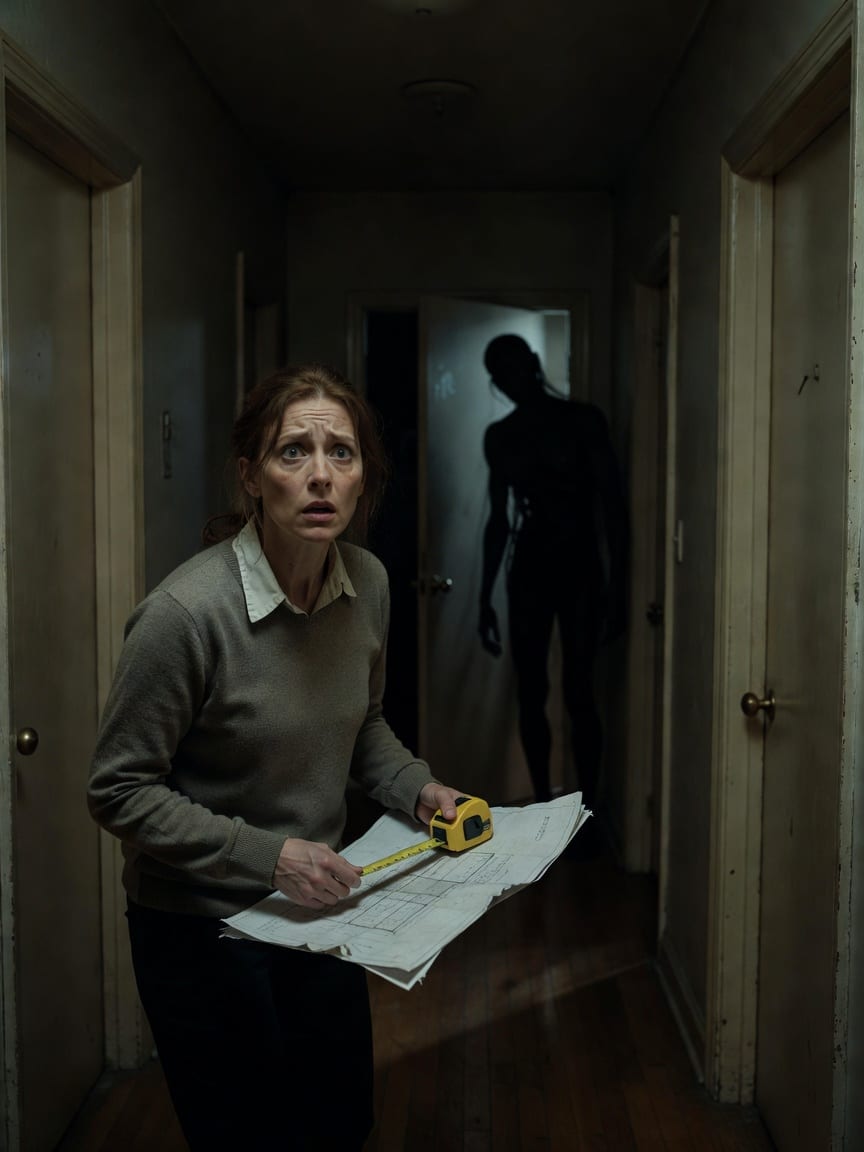
My front door has a dented gate and a dead hydrangea. I walked past it six times, trying to reach the corner shop just a hundred yards away. The pavement kept bringing me back to my own porch, and the shop's light never moved.
My morning started like any other, a quick walk to the corner shop from my home at Number 14, Elm Terrace. But after walking what felt like two minutes, I found myself back at my own front door, the shop no closer. I tried six times, faster and slower, but my street kept compressing, refusing to let me leave.
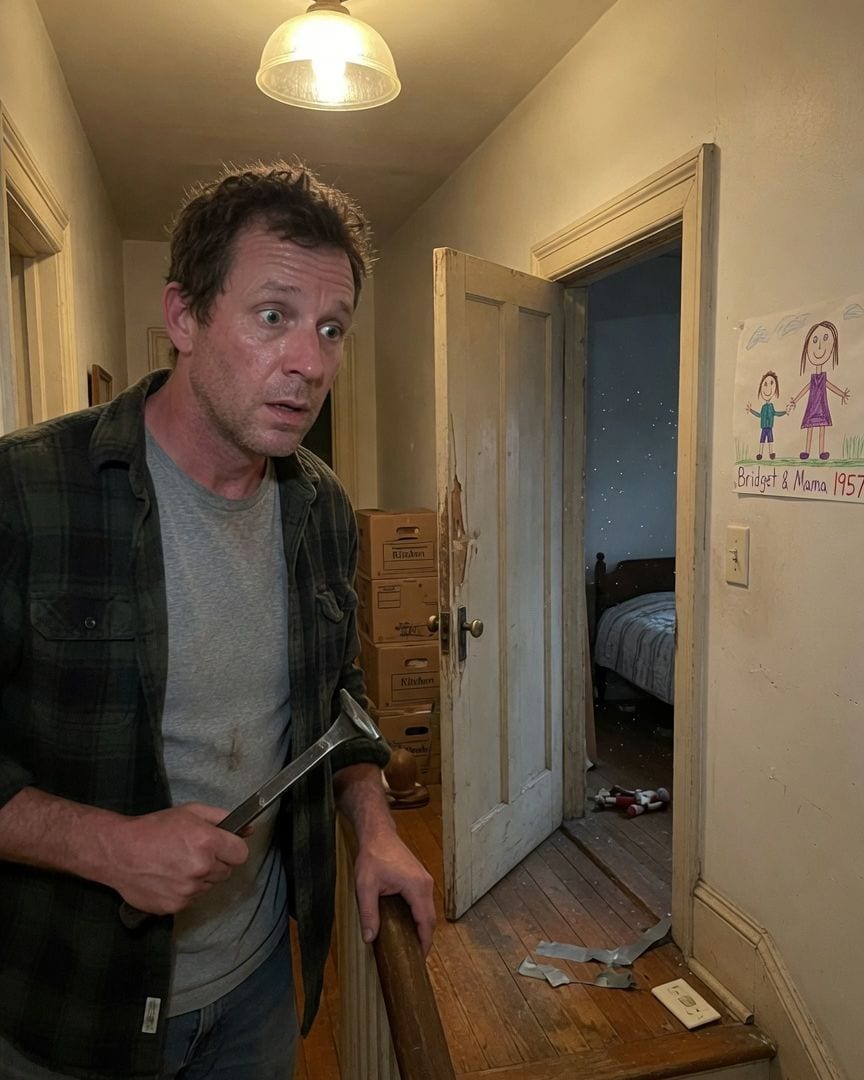
My landing light switches itself off at 9:40 every night. I've watched the switch flick down under nothing, the tape peeled back. The house holds its breath.
My great-uncle's old house was a quiet gift, a place to finally settle. But as I unpacked, a strange worn path on the floorboards led me to a small, barely visible door, perfectly blended into the wall. It was undeniably locked, and felt like a deliberately obscured secret.
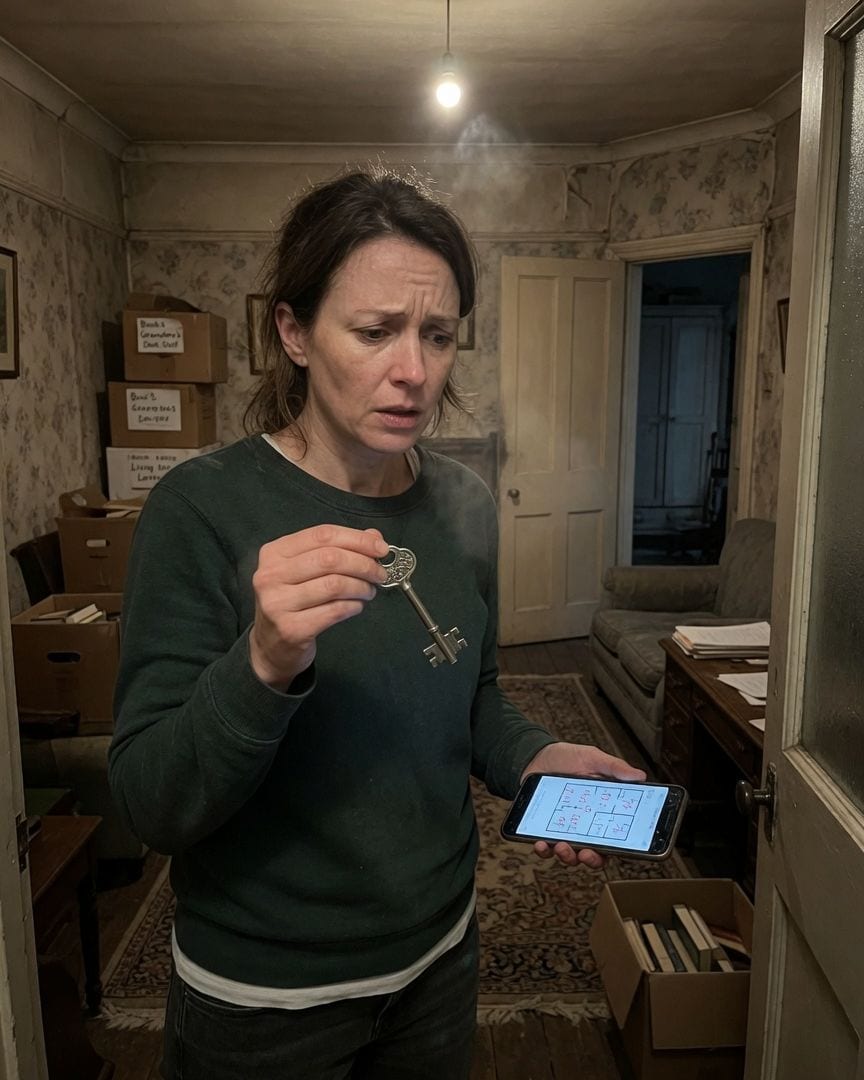
Our moving truck drove 71 miles in a loop, plotting our furniture back to our old flat. The men swore they unloaded it at our new house.
My new Victorian house felt vast and quiet after the moving van's impossible journey left my belongings missing. I bought an air mattress, ready to start over, but then I found a door in the master bedroom I'd never seen. It opened into a fully furnished room, packed with all my missing furniture – a room that simply wasn't on the house's floor plans.
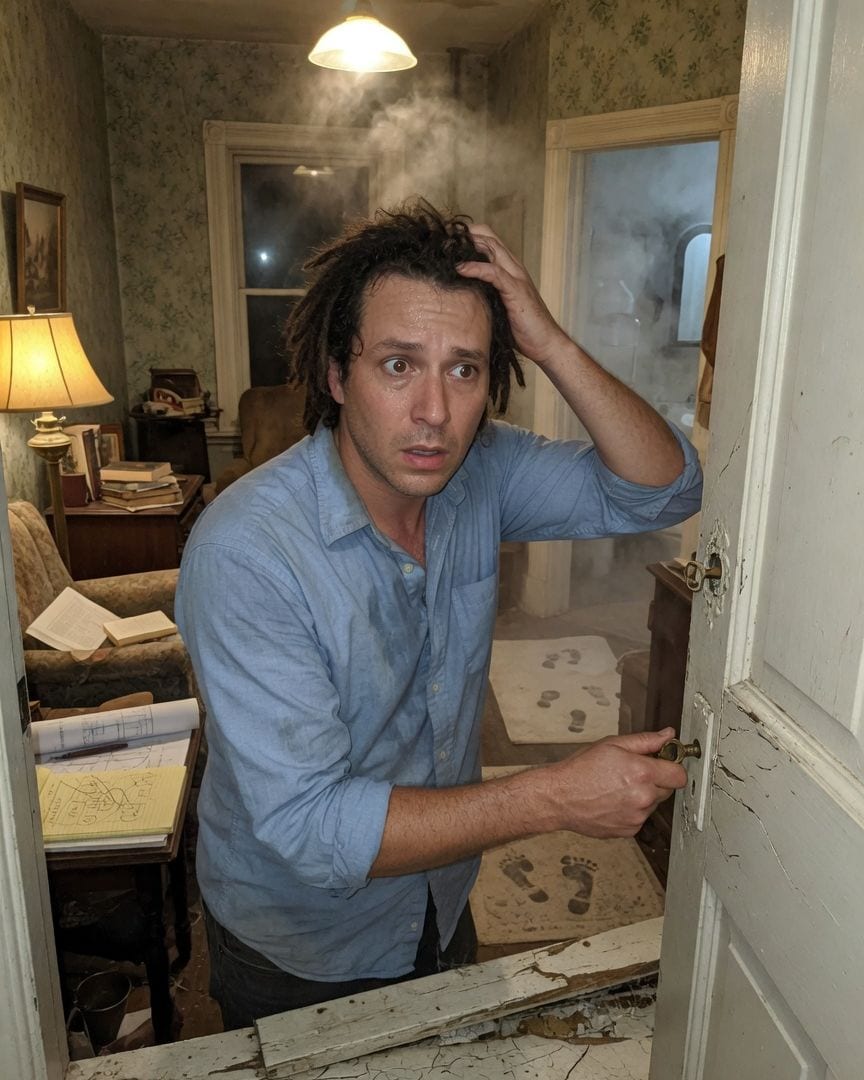
The bath filled itself at 9:30 PM. My main house water was off. Wet footprints led from the tub to a locked airing cupboard.
As an architect, I pride myself on logic. Moving into my inherited Victorian house was supposed to be a quiet fresh start, but on the third night, I heard the impossible. Even after I shut off the main water to the entire house, my clawfoot bath upstairs ran full, warm, and steaming at 9:30 PM.
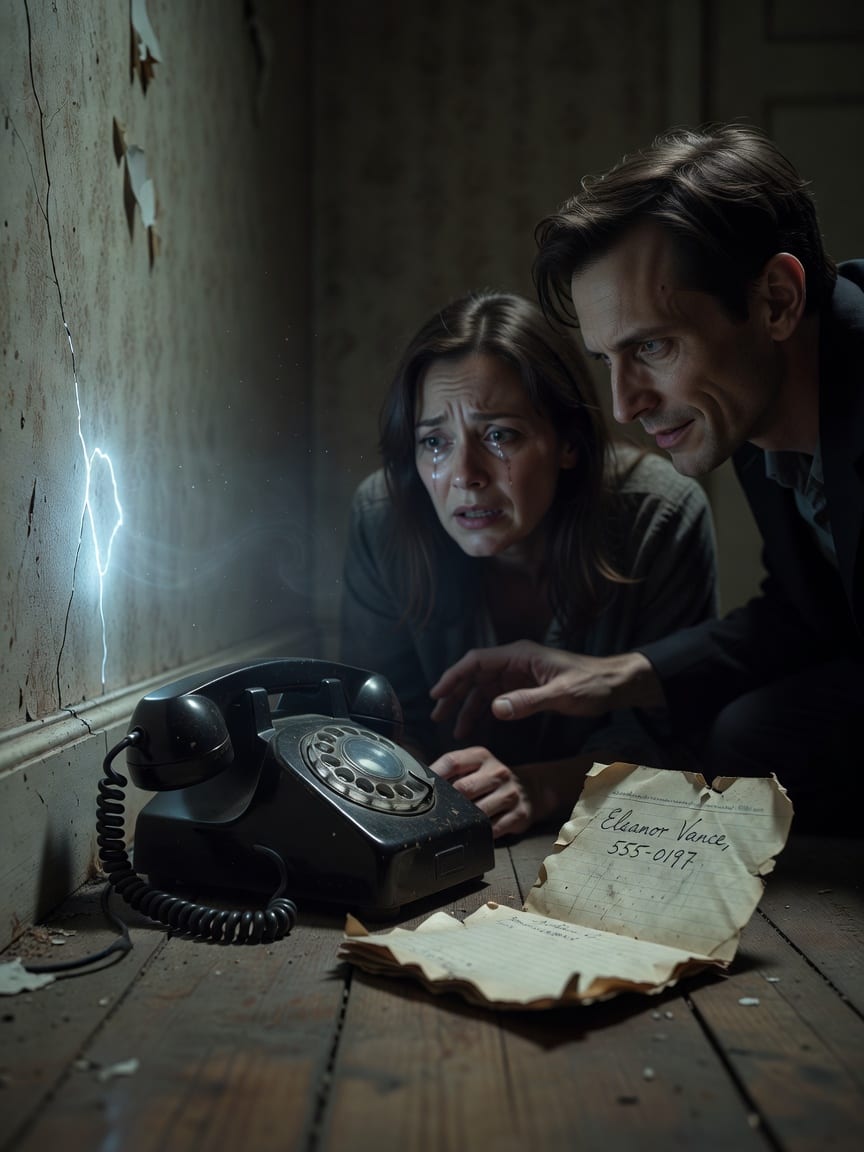
My house's walls ring when I dial a phone number from a 1974 directory. My neighbors said that directory was trash.
I was sifting boxes in my new house when I found an old 1974 telephone directory for my street. It listed my address, 12 Elm Street, under the name "Mr. & Mrs. Sheppard." On a whim, I called the faded seven-digit number. My cell phone rang, but a low, muffled sound also vibrated from the wall beside me.
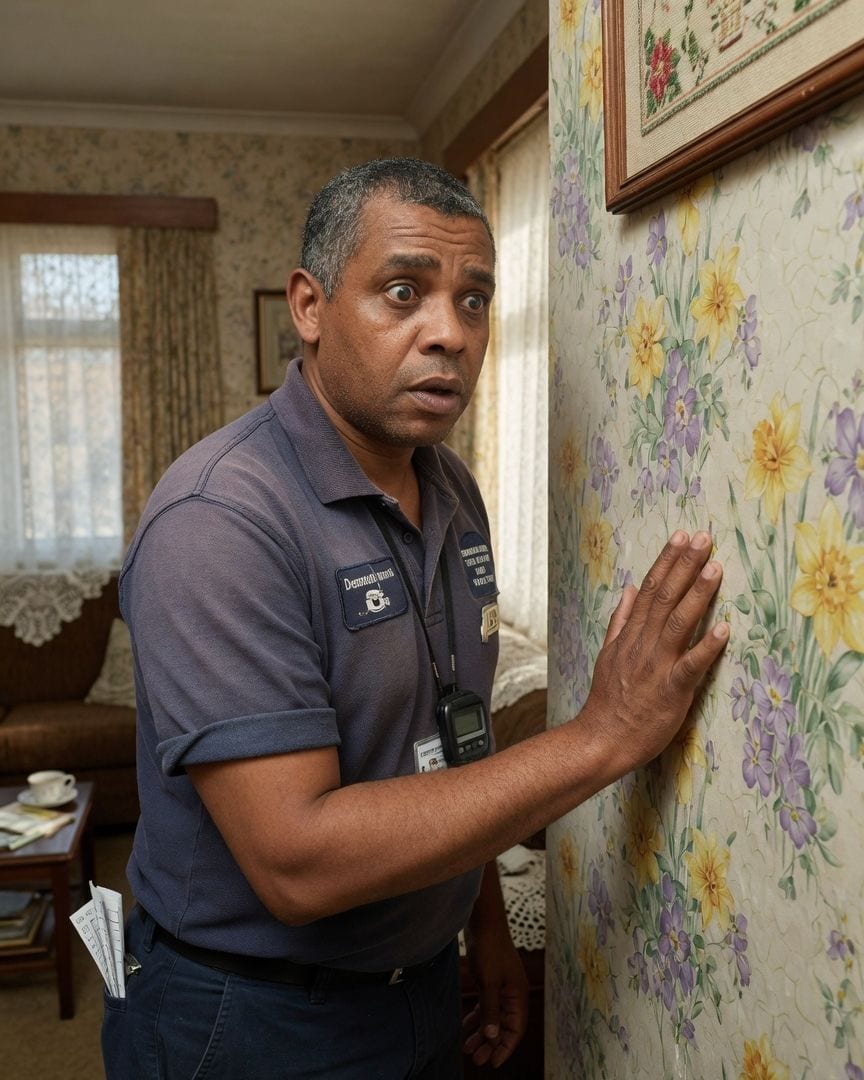
I read the water meters on this street, and this month number 30 grew a second one in pavement that was solid last month — its pipe runs back under a front door I cannot find.
I'm Desmond Drummond, a city water meter reader, used to the predictable rhythm of my fifteen-year route. But this month, Mrs. Crane's house on Elm Street showed a second meter reading. It led to a new meter pointed at a blank brick wall, and later, to a hidden door behind her living room wallpaper where no door should exist.