My house's walls ring when I dial a phone number from a 1974 directory. My neighbors said that directory was trash.
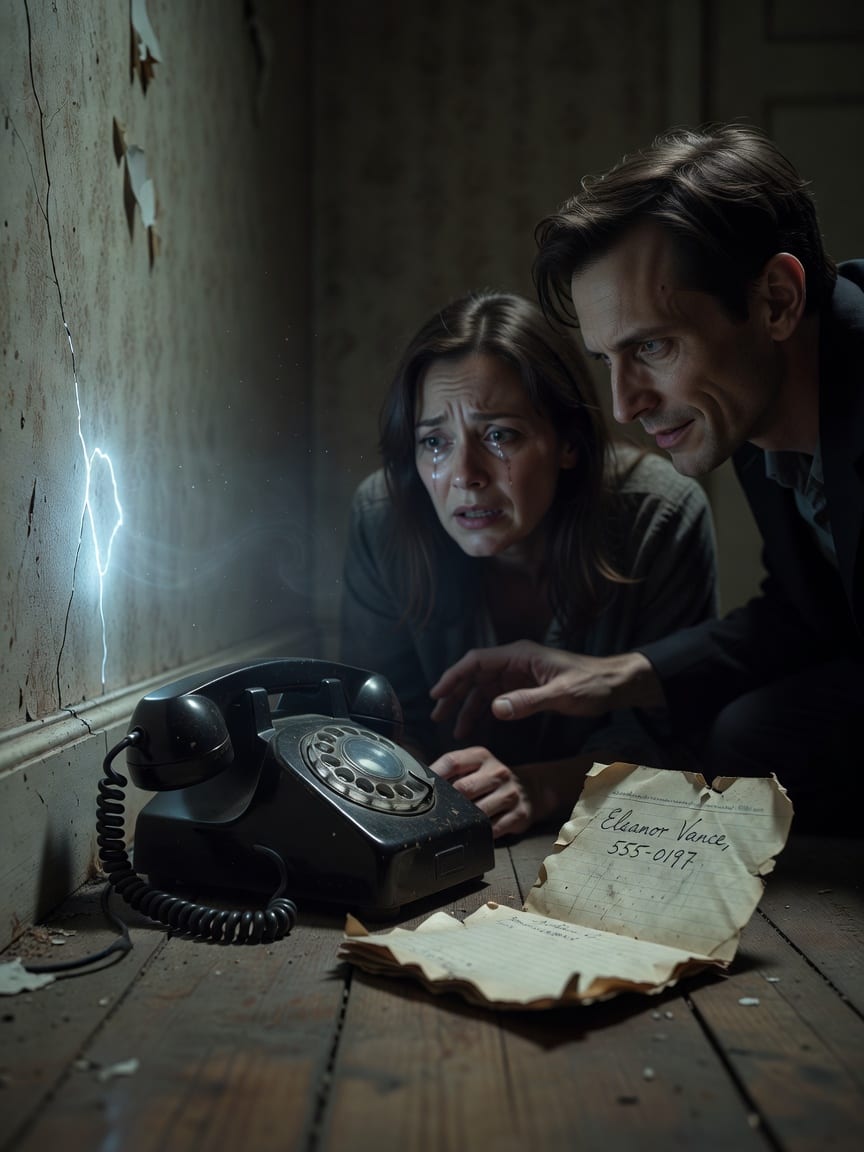
I was sifting through the last of the boxes in the spare room at 12 Elm Street, the ones the previous owner had left behind. Mostly old newspapers, some paint cans, and at the bottom, a dusty telephone directory.
It was a local book, thin and brittle, dated 1974. When my new neighbors, Helen Delaney and George Fairfax, had stopped by the week before, they'd both spotted it.
Helen, a sweet-faced woman with hair like spun silver, had wrinkled her nose. "Oh, that old thing? It's rubbish, dear. Just toss it out." George, a gruff man who always had a trowel in hand, grunted in agreement.
"Waste of space. Nothing in there you'd need." It had seemed an odd thing for them to fixate on, but I'm methodical. I kept it.
Now, flipping through the brittle pages, the paper crackling like old bones, I found my street. "Elm Street." And then, an entry that made me pause: "Mr. & Mrs. Sheppard, 12 Elm St." My address. And 1974.
That was the year the house was supposedly built. A funny coincidence, I thought. Maybe they were the first owners. On a whim, I pulled out my cell phone and punched in the faded seven-digit number.
I half-expected a disconnected tone, or maybe just a stranger on the other end, confused. But as my phone started to ring, a low, muffled sound began to emanate, not from my phone's speaker, but from the wall beside me.
It vibrated through the plaster, through the very studs of the house, a hollow, insistent buzz.
I hung up, my heart a dull thump against my ribs. That couldn't be right. I redialed the number. Again, the familiar ring from my cell, and then, the answering resonance from the wall.
Rrring… rrring… It was deep, almost subterranean, a sound that bypassed my ears and went straight for my teeth. I tapped the plaster, trying to locate it. It wasn't an old bell system; there were no wires, no discernible mechanism.
This house had been completely rewired before I bought it. My mind scrambled for a rational explanation. An electrical anomaly, perhaps? A crossed wire from some forgotten conduit? But the current wiring was brand new, meticulously installed.
Over the next few days, I became obsessed. I pressed my ear to the wall, convinced I was losing my mind, but the sound was undeniably there, even when I wasn't dialing. A faint hum.
I ran my fingers along the painted surface, searching for anything out of place.
Finally, near the floorboard, just to the left of the old fireplace hearth, I found it: a subtle seam in the faded wallpaper, a hairline crack that didn't quite match its surroundings.
It was almost invisible unless you were looking for it. I picked at it with my thumbnail, then used a butter knife. The wallpaper peeled back, revealing a small, loose panel in the lath and plaster.
It was barely large enough for a hand to fit. Behind it, in the dark, my fingers brushed against something brittle and papery. I pulled it out.
It was a child’s drawing, faded with age, on a piece of thick, cream-colored paper. A house. My house. Signed in childish scrawl: 'Sarah Sheppard, 1974.'
I held the drawing, the paper thin as onion skin. The house in the picture was unmistakably mine, down to the gabled roof and the front porch swing. But the windows were wrong.
They were unnaturally dark, shadowed squares, like empty sockets. And then I saw it. A faint, smudged detail in one of the upstairs windows, barely discernible against the dark crayon. A shape.
A misshapen, indistinct face, pressed flat against the glass, peering out. It wasn’t a child’s playful ghost. The eyes were too wide, too empty.
It looked less like a person trapped, and more like something observing, something that shouldn’t be there, watching from within the house itself.
My initial shock gave way to a cold resolve. Sarah Sheppard. 1974. I researched her and her parents, Mr. & Mrs. Sheppard. Town records were frustratingly sparse.
No forwarding address, no death certificates, just a blank space where their names should have been. It was like they’d never existed. I tried Helen Delaney again, casually.
"You know, I found an old directory, mentioned some Sheppards at my address back in '74. Any idea what happened to them?" Helen offered a vague, rehearsed smile. "Oh, the Sheppards? Lovely family. Moved away suddenly, I think.
Went out West." George Fairfax, pruning his rose bushes, nodded, his voice equally smooth. "Yes, lovely folks. Always kept to themselves." Their stories were too smooth, too identical. It set my teeth on edge.
I spent an entire afternoon at the local library, poring over microfiche for old newspaper archives. It was a painstaking, dusty process.
Finally, buried in the back pages of the town gazette from late 1974, I found it: a small notice. "Sheppard Family Missing." No details. No follow-up articles. Nothing.
It was as if the town had collectively decided to erase them, to forget the entire incident. A prickle of unease started just behind my sternum and spread like frost.
The ringing from the walls had stopped completely, but the silence that replaced it felt heavier, more deliberate. As if it were waiting.
The next morning, I found the hidden panel in the wall. I’d carefully sealed it with a piece of painter's tape, but now it was slightly ajar. The child's drawing was gone.
A chill raced down my spine, a cold serpent uncoiling in my gut. I’d told no one about it. Not a soul. My stomach clenched. Had I left it open? Had it just… fallen open? No. I’d sealed it.
I knew I had.
Later that day, Helen Delaney stopped by, ostensibly to offer a fresh-baked apple pie. She chattered about garden gossip, but her gaze kept drifting. It landed on the wall where the panel had been, a subtle shift of her eyes.
"Still fiddling with those old walls, dear?" she asked, her smile tight around the edges. Her voice was light, but the underlying current felt like a threat. "Some things are best left undisturbed, you know. Old houses have their… quirks."
The message was clear. I felt a cold knot tighten in my chest. That evening, as darkness bled into the room, I noticed it. A faint, almost imperceptible scratching sound from inside the walls.
A soft, rhythmic scrape, like something dry moving against wood. It wasn't a mouse; it was too deliberate, too deep. It seemed to follow me.
When I moved from the living room to the kitchen, the scraping faded behind me, only to start up again from the wall nearest me in the new room.
Desperate, I sought out Vincent Carver, 75, the town's former clerk. He was rumored to have an encyclopedic memory of local history, even the parts the official records conveniently forgot.
I found him in his cluttered home, a small bungalow packed with boxes of old documents, the air thick with the smell of dust and old paper. He was polishing his spectacles with a handkerchief when I introduced myself.
I started with the Sheppards. Vincent listened, calm and unbothered, his eyes crinkling at the corners. "Ah, the Sheppards," he said, a faint, knowing smile playing on his lips. "They were… quiet. Kept to themselves."
I pressed him, my voice tight. "Mr. Carver, they vanished. No one talks about it. The town just glossed over it. There's no record of them moving, no deaths."
He sighed, a dry, rustling sound that echoed the rustle of papers around him. "The town has its ways, Miss Mitchell. Its agreements. Some stories are best left unwritten, for the good of all."
He finally looked at me, his gaze sharp. "The Sheppards didn't just 'move away,' Miss Mitchell. You're right. They were gone. One day, the house was occupied, lights on, curtains drawn. The next, it was empty.
And quickly, quietly, put back on the market." He leaned forward, his voice dropping. "It's how things are done here. To keep the peace. The house… it needs to be occupied." The words hung in the air, heavy and solid.
I felt a cold dread clawing its way up my throat, but Vincent wasn't finished. He rose slowly, moving to an old, dark wood desk against the far wall. From a locked drawer, he retrieved a small, leather-bound ledger.
It wasn't an official town record, clearly, but a personal log. The pages were yellowed, the entries meticulously penned in fading ink. He opened it to a page.
"The Sheppards, 1974," he pointed to a neat entry, the ink a little fresher than the rest. Then he flipped back a few pages. "And before them, the Walshes. 1924. Same house, same story."
He traced a finger further back, to an even older, more faded entry. "And the Blackwoods, 1874. Always 12 Elm Street. Always the same pattern."
My gaze snapped from the ledger to Vincent, then back to the names and dates, the pattern stark and undeniable. "A cycle?" I whispered, the word tasting like ash. Vincent nodded, his gaze unwavering, devoid of pity.
"Fifty years, Miss Mitchell. Always fifty years. The house… it gets hungry. And you, my dear, are right on time."
The silence in the room rang louder than any phone, and I felt the weight of generations settling upon me, the walls of my own house closing in.
Vincent Carver explained the full, horrifying truth with detached calm, as if discussing the weather. "It's not a ghost, Miss Mitchell. It's… a presence. An emptiness that needs to be filled. It's tied to that land, that house.
For generations, the town has known. The 'folk rule' isn't about superstition; it's a warning, and a system."
He revealed that the ringing from the walls, the one I'd first heard, was its call, its way of drawing in the next occupant.
The town's quiet agreement to steer newcomers, to provide the 'rubbish' old directory I’d found, to sell the house quickly after a 'departure' – it was all part of a grim ritual.
They ensured the house was never empty for too long, never allowed to 'spread' its hunger. The Sheppards, the Walshes, the Blackwoods – they weren't victims of bad luck. They were sacrifices. And the faded face in Sarah Sheppard’s drawing?
That was the presence, beginning to show itself, beginning to claim. I felt the pattern snap into place, every vague warning, every smooth lie, every odd detail now forming a coherent, monstrous picture.
I wasn't just buying a house; I was entering a cage.
I stumbled out of Vincent Carver’s house, the terrible truth a physical weight pressing down on me. My car keys felt slick in my sweating palm.
I started the engine, my mind screaming to get out, to drive away, to escape this goddamn town.
I aimed for the highway, but every road seemed to loop back, every turn leading me deeper into familiar streets, the same storefronts, the same quiet houses. I pushed the accelerator, my tires squealing, my knuckles white on the wheel.
When I finally broke free of the town limits, speeding down the empty highway, the ringing started again.
Not from a phone this time, but from within my own head, a deep, resonant hum that vibrated through my bones, shaking my teeth loose in their sockets.
I slammed on the brakes, pulling over to the shoulder, clutching my skull. The hum grew, filling my vision with static, a grey-white light blooming behind my eyes. I saw flashes. Other lives. Other faces.
All trapped within the same walls. I saw the Sheppards, the Walshes, their eyes wide with recognition, beckoning, their mouths open in silent screams. I wasn't escaping; I was being absorbed.
My hands, gripped on the steering wheel, began to feel cold, distant, no longer entirely my own. A voice, a chorus of whispers, echoed in my mind, pulling me back, back to the house. It wasn’t a choice.
It was a compulsion. I turned the car around, a puppet on invisible strings, driving toward 12 Elm Street, the ringing a siren song.
I pulled into my driveway, the house dark and waiting, its windows like those in Sarah's drawing. The front door stood slightly ajar, a black mouth inviting me in.
I stepped out of the car, my legs heavy, and walked towards the open door. The ringing stopped. The house was silent.
Days later, 12 Elm Street stood empty again. The 'For Sale' sign reappeared on the lawn, weathered but resolute. Helen Delaney and George Fairfax nodded to each other across the street, a silent, knowing agreement passing between them.
The town went back to its careful quiet. Rachel Mitchell’s car was found unlocked in the driveway, her belongings still inside the house, neatly arranged. No note, no trace.
Just another 'moved away suddenly' story for the local rumor mill, another quiet erasure. The old telephone directory, still in the box room, waits for its next reader.
Months later, a young couple, new to town, moves into 12 Elm Street. As they unpack, they find a dusty box in the spare room. Inside, an old telephone directory, brittle and yellowed.
The husband flips through it idly, then stops. "Look at this," he says to his wife, pointing to an entry. "Our address, back in 1974. Mr. & Mrs. Sheppard." He dials the number on his phone, expecting nothing.
A faint, muffled ringing begins, not from his phone, but from deep within the walls of their new home. The old directory, still in the box room, held a new name now, nestled right beside the faded one.
If this one got to you

My neighbor’s house plans show a room in my bedroom that doesn’t exist. The surveyor described its door, but my wall is solid.
I was signing off on my neighbor's loft plans when I saw it: a small, square room off my own bedroom. My house, where I’d lived for five years, had no such room. But a surveyor confirmed its presence on paper, and older blueprints showed it had been there for decades. Now, I can feel a faint coldness from a hidden doorframe behind my wallpaper.
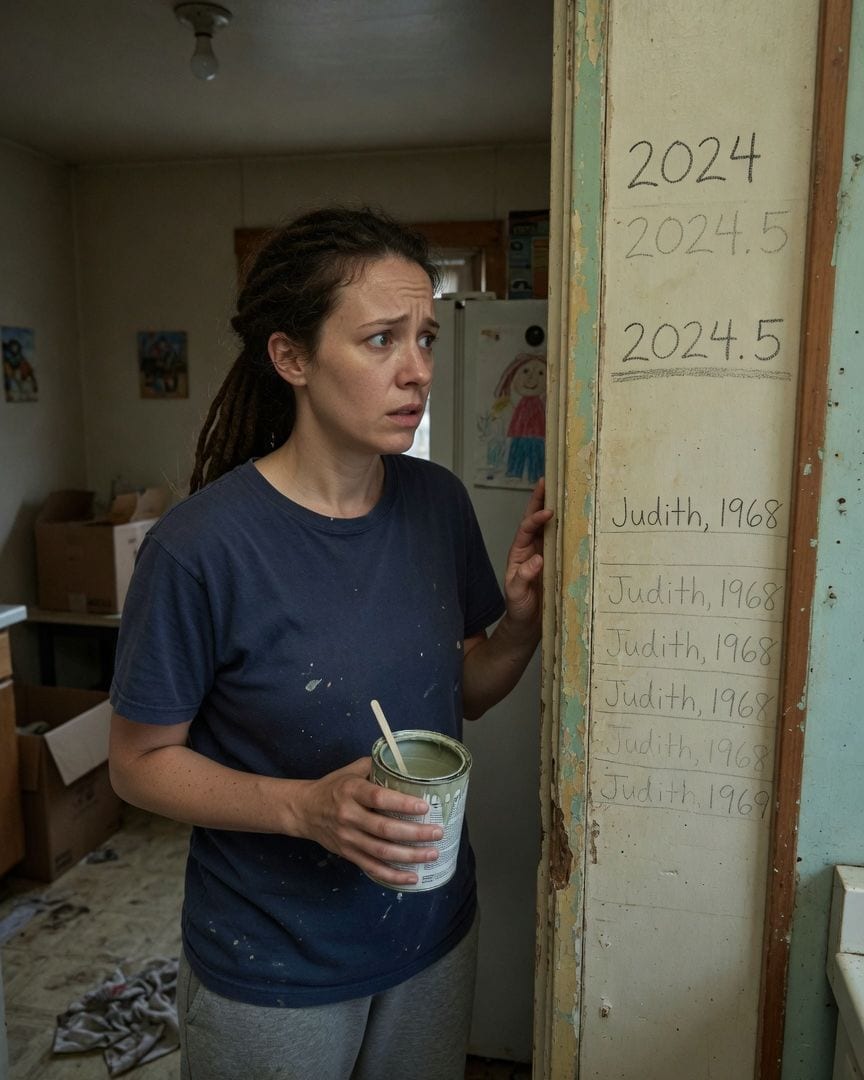
A child's height marks grow on my kitchen doorframe, dated this year, in a house where I live alone.
I moved into my new house, ready for a fresh start, and found a child's old height chart on the kitchen doorframe. The last mark was dated 1968, but a week later, a new one appeared, dated this year, in the exact same looping handwriting. I live completely alone.
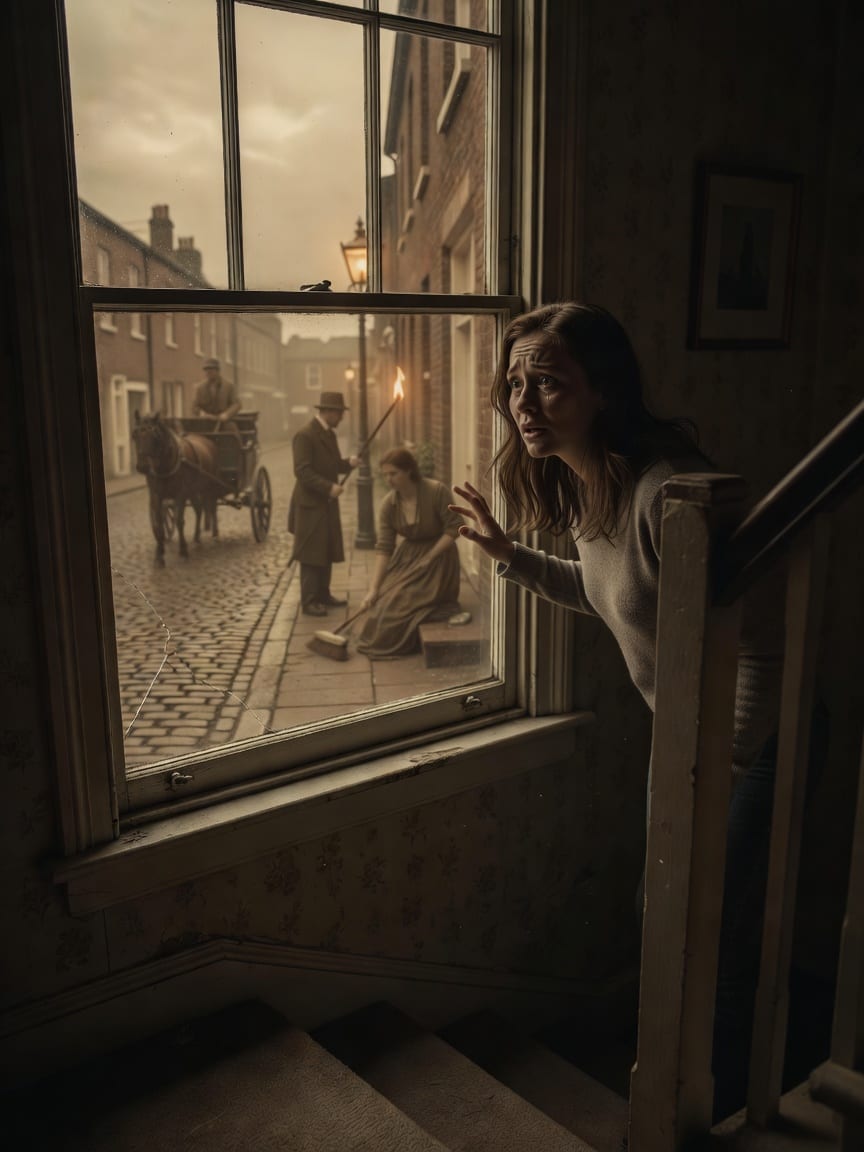
My half-landing window looked down on a cobbled street, a horse and cart. My panes, same crack. Below, only the bins.
I moved into this inherited house for a fresh start, living alone in the quiet. But the third stair on the main flight is deeply worn, a ghostly scoop hinting at decades of unseen footsteps. It feels hollow, and the wall beside it hides a faint, inexplicable seam.
My front door has a dented gate and a dead hydrangea. I walked past it six times, trying to reach the corner shop just a hundred yards away. The pavement kept bringing me back to my own porch, and the shop's light never moved.
My morning started like any other, a quick walk to the corner shop from my home at Number 14, Elm Terrace. But after walking what felt like two minutes, I found myself back at my own front door, the shop no closer. I tried six times, faster and slower, but my street kept compressing, refusing to let me leave.
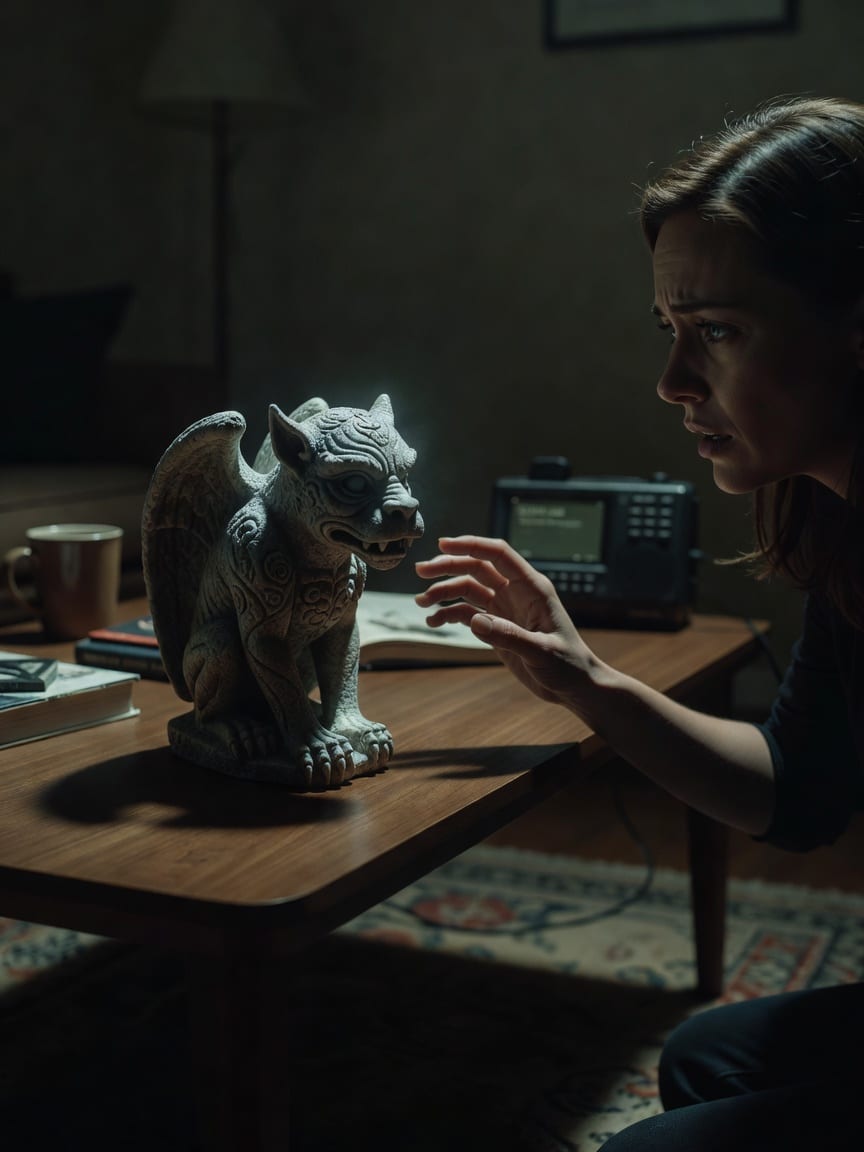
My radio scanner spoke my address at 2 AM. A flat voice read local homes, all with past dates. Mine was the only one in the future.
It was two in the morning, and my quiet house was filled with the usual hum of my weather scanner. But the static broke, replaced by a flat, synthesized voice reading a list of local addresses and dates. My hand froze when it spoke my own address, 181 Foster Drive, followed by a date: October 27th. That date was three weeks from now.
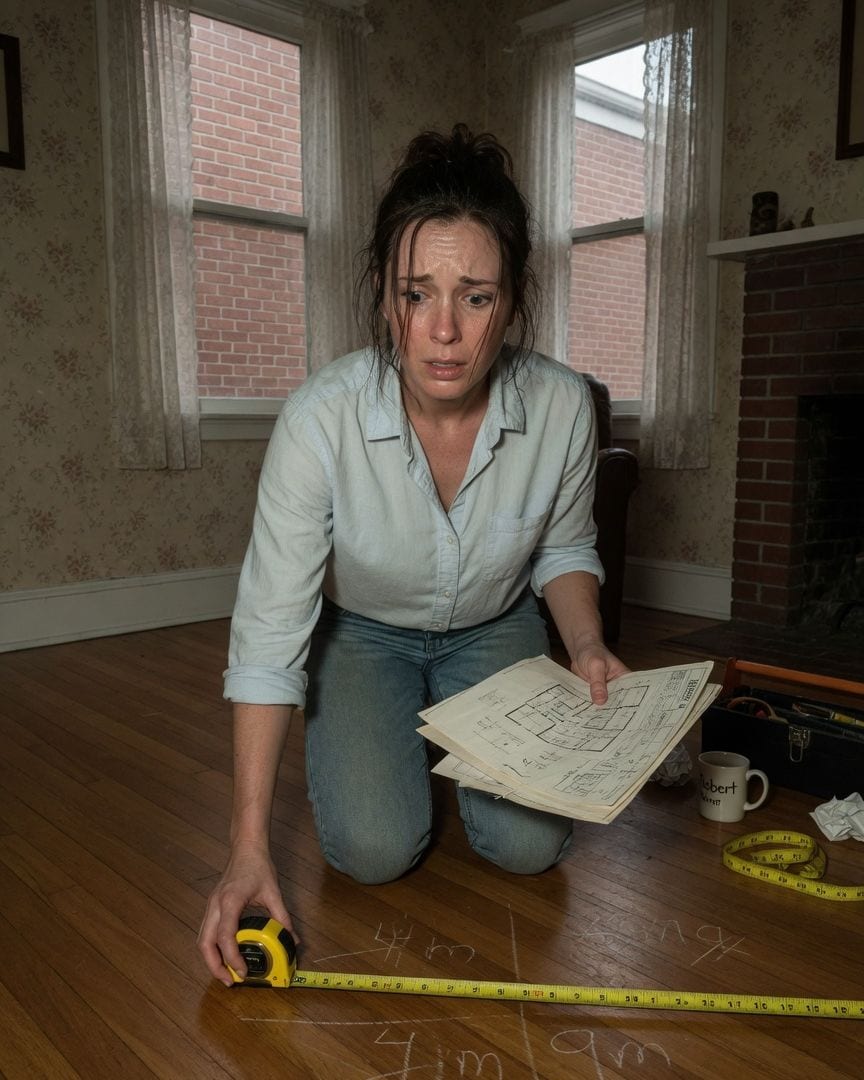
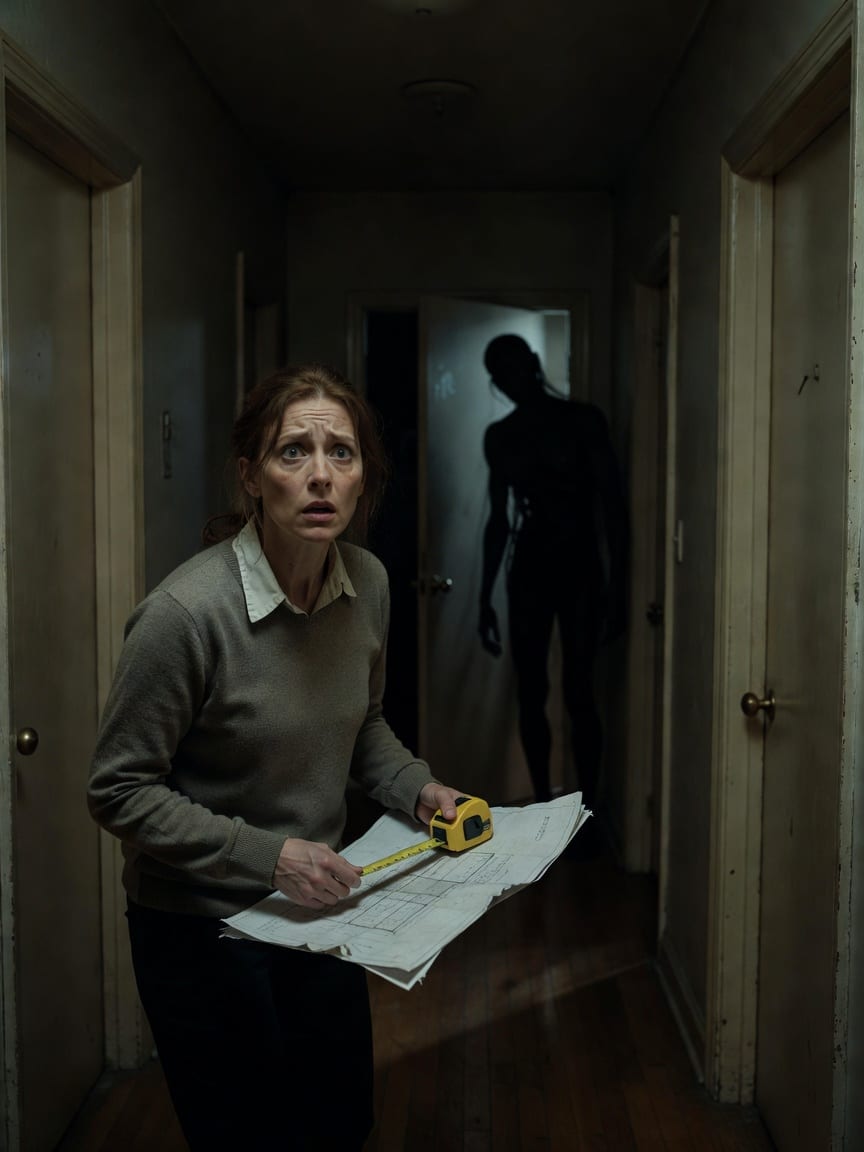
Our living room measures four by five metres. But the outside wall is nine metres long. A metre of house, gone, and I can't find it.
After moving into our charming 1920s house, I was meticulously measuring the living room when the dimensions refused to add up. My calculations of the interior space led me to discover a narrow, unpainted fifth door in the hallway, tucked almost out of sight. It wasn't on any original plans, and it opened to absolute, impenetrable darkness.