My radio scanner spoke my address at 2 AM. A flat voice read local homes, all with past dates. Mine was the only one in the future.
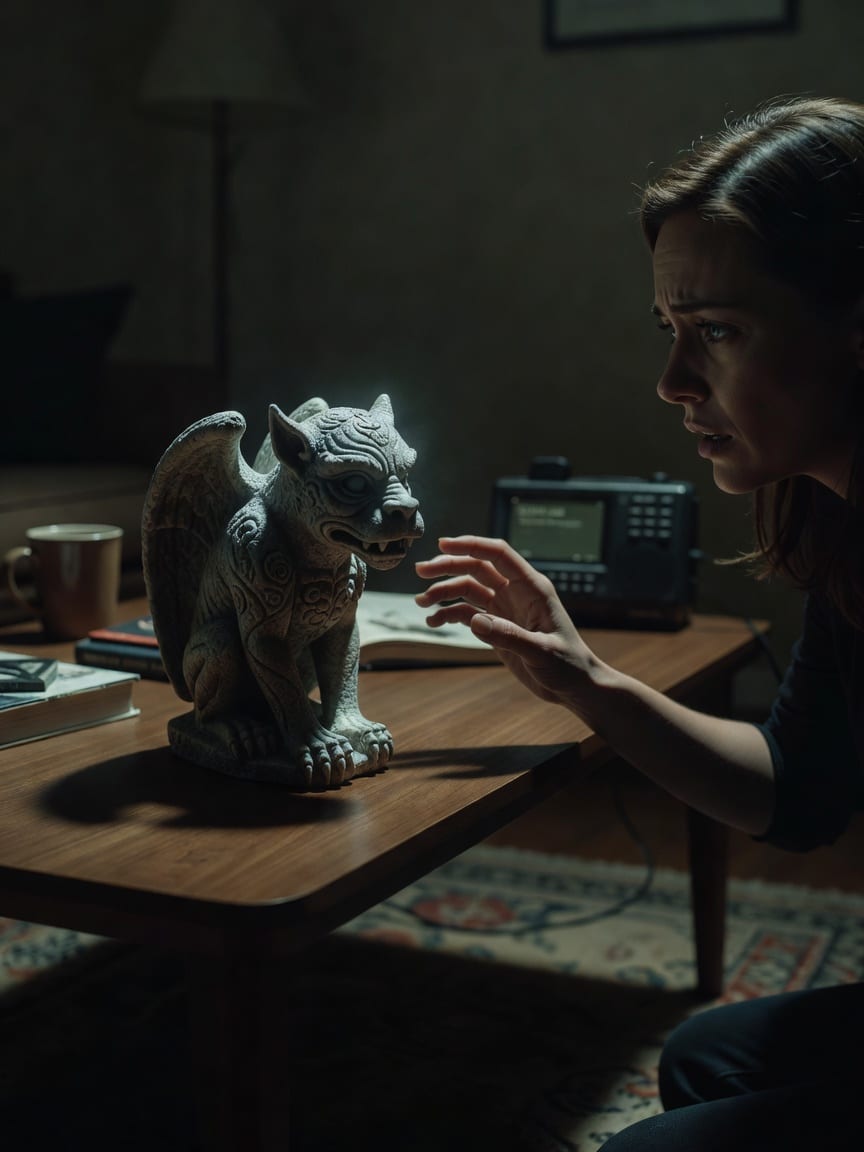
The low hum of the weather scanner was a comfort in my quiet house. It was a Tuesday, two in the morning, and I was making chamomile tea, just winding down.
Static usually filled the silence, a white noise I’d grown used to, almost dependent on. But that night, the familiar static broke.
A flat, synthesized voice cut through the air. No human inflection, no urgency. It began to read a list of local addresses, each one followed by a date. Too precise, too calm. Not a typical emergency band.
My hand, midway to grabbing my mug, froze. The cold knot in my stomach tightened with each street name I recognized, each date in the past. It droned through Maple Street, then Oak, then Willow. I knew these streets.
I knew some of the houses.
Then it spoke my own address: "181 Foster Drive."
My breath caught. My house. My damn house.
Beside it, the voice read a date. "October 27th."
All the previous dates were in the past, some decades old. My hands started to shake. October 27th was three weeks from now. Three weeks.
I stared at the blinking numbers on the scanner’s display, the red digits mocking me in the dark kitchen. My gut screamed it was real, but my rational mind fought back, scrambling for an explanation. A prank?
A glitch in the broadcast? Some kind of weird radio anomaly? I rewound the recording on the device, my finger trembling on the button. The flat, emotionless voice repeated the list, repeating my address, repeating that date. It was undeniable.
It was there.
The scanner recording looped in my mind, a chilling mantra. I couldn’t dismiss it.
The next morning, I pulled out a notebook and started jotting down every address and date I’d heard, cross-referencing them against the time I’d started the recording.
I was still trying to rationalize it, to find the pattern that would explain away the impossible. Most were old, some from the 70s, others just a few years back.
One in particular caught my eye: 142 Elm Street, dated ten years ago. 2014. I remembered that address. An elderly woman, Vera Bishop, used to live there. She’d moved to the Caldwell Senior Living Facility a few years back.
I hadn't thought about her or her house in a long time.
Against my better judgment, I drove to Elm Street. The house stood on a quiet, tree-lined street, outwardly normal. Faded blue paint, a small porch, neatly trimmed hedges. But an unnerving quiet hung around it, different from the other houses.
It felt… too still, almost like a photograph. I rolled down my window, straining to hear something, anything, but there was nothing. No birdsong, no distant lawnmower.
Back home, I dove into online archives. Property records for 142 Elm Street were confusing. A series of transfers, minor structural permits in the decade following 2014, the listed date.
Nothing that seemed to fully account for the current structure, for the quiet I'd felt. I found an old real estate listing from before Vera moved, from around 2013, complete with a timestamped photo of the exterior.
The photo showed the house, undeniably Vera's, but a small, distinctive stone gargoyle statue was clearly visible on the porch, right by the railing. I remembered Vera mentioning it once, a family heirloom, a little good luck charm.
I pulled up the current street view on my phone, aligning the images. The house was identical. The faded blue paint, the shape of the porch, even the overgrown rose bushes by the steps. But the gargoyle was absent.
Not just removed, but the spot where it stood was pristine. Smooth concrete. No scuff marks, no outline of where a base might have been. As if it had never been there at all.
I drove back to 142 Elm Street that afternoon, the sun low in the sky, casting long shadows. My head pounded. This had to be a mistake. A trick of the light, a different house, anything.
I pulled out my phone, holding the old real estate photo up to the glass of my window, aligning it perfectly with the house outside. The angles matched.
The faded blue paint, the overgrown rose bushes, even the chipped step leading up to the porch – all identical. Every detail was right.
But the small, distinctive stone gargoyle statue, clearly visible in the foreground of the timestamped photo, right by the porch railing, was completely missing from the physical house. I looked from the screen to the real porch.
The concrete slab where it should be was smooth, undisturbed. It looked as if it was never there. The photo, dated years before, showed it undeniably present. It just… wasn't.
The missing gargoyle gnawed at me. It was a physical manifestation of the wrongness, something tangible I could point to. I tracked down Vera Bishop at the Caldwell Senior Living Facility.
She was frail, her hands spotted with age, but her eyes were sharp.
"Oh, my little guardian," she said, a soft smile on her face when I mentioned the gargoyle. "He sat right by the railing. My grandfather brought him back from Europe. A beloved fixture." She confirmed it was a family heirloom.
I asked her about the year 2014. Her smile faltered. She recalled a strange period around that time. "Felt disoriented, dear. Like I’d woken up from a very deep sleep, and the house seemed… off.
Like a dream I couldn't quite remember." She’d dismissed it as old age, as memory playing tricks. But the way she said "off," the way her gaze drifted, it wasn’t just a simple lapse.
The room, usually filled with the gentle hum of the facility, seemed to hold its breath around her admission.
Armed with Vera’s confirmation, I dove into local newspaper archives from that period. It was a needle in a haystack, but I found it. Hidden deep in the classifieds section, a small, peculiar ad.
No contact number, just a P.O. box. It read: "Seeking lost items from 142 Elm St. Reward for specific gargoyle statue. Contact P. Langford."
The surname was unfamiliar, but the address and the specific mention of the gargoyle made my heart thump. Someone else knew. Someone else was looking.
I expanded my search. I cross-referenced other addresses from my scanner list with property records and old satellite imagery. A chilling pattern emerged. Each property, after its listed 'shift' date, showed similar, minor, yet unexplainable discrepancies.
A shed on Miller Lane that appeared subtly different in post-2005 photos, the lean of its roof off by a few degrees.
A tree line on Ridge Road that didn't quite match old photos from 1998, a specific oak missing, replaced by a younger, smaller maple.
A patch of ground behind a house on Juniper Street that, after its 1987 date, seemed to have been smoothed over, 'reset,' like someone had pressed a giant eraser to the earth and started again.
It was like the houses were rebuilt, but imperfectly, or replaced by slightly altered versions. The sheer coherence of these small, impossible details was far more terrifying than any grand, obvious destruction.
My investigation began to draw unwanted attention. I was sitting at my kitchen table, my laptop open to a property deed database, when an anonymous email arrived. Its subject line was ominously blank.
The body simply read: 'Stop digging where you don't belong, Ms. Caldwell. Your recent queries about property deeds are noted.'
A cold shiver ran down my spine. No one should know about my specific searches. I hadn't posted anything, hadn't shared my findings with anyone other than Vera, and she was barely online. How could anyone know?
The quiet of my house, once a comfort, now felt like a shroud. The old grandfather clock in the hall, usually a comforting tick, now seemed to beat like something trapped in its wooden cage.
That night, I replayed the scanner recording again, desperately searching for another clue. The flat voice, the addresses, the dates. Then I heard it. A faint, almost imperceptible click, buried beneath the static.
It was so faint I almost missed it, dismissing it as interference. But then, a distorted, static-laced whisper followed, sounding like my name, 'Caldwell,' drawn out and hollow, as if someone was speaking from a great distance, or from underwater.
My own name, spoken by something not quite human, coming from my own scanner.
I was alone in my house, every window locked, every light on. Panic began to bubble in my throat. I felt watched. I felt hunted. I immediately checked my home network logs. There it was.
An unknown device, with an unfamiliar MAC address, briefly connected to my Wi-Fi network.
The timestamp was precise: around the exact time the email was sent, and coincidentally, the same time I’d been playing the scanner recording, just before I heard the whisper.
It was only online for a few minutes, just enough to leave a trace, a digital footprint that shouldn't exist. My house, my sanctuary, had been breached, not physically, but intimately, silently.
I needed answers, and I needed them from someone who knew more than they let on. Donald Lawson, the local historian I’d consulted about property records, was my last hope.
I found him in his cluttered office, surrounded by stacks of old maps and ledgers. He was initially evasive, his eyes darting nervously when I mentioned the discrepancies in the archived photos and the 'P. Langford' classified ad.
He cleared his throat, adjusting his glasses. "Local folklore, Emily. Old wives' tales."
I slammed my folder of compiled evidence onto his desk. "Folklore doesn't leave identical gaps in satellite imagery from decades apart, Mr. Lawson. And it doesn't leave an impossibly pristine patch of concrete where a seventy-year-old statue used to sit.
Or the fact that someone placed an ad specifically for that statue on the exact year it vanished."
I pushed the printouts across the desk: the scanner list, the photo of Vera's house with and without the gargoyle, the copies of the old classifieds, the satellite images of other shifted properties.
The dates, the missing gargoyle, the subtle shifts in other properties – it was all there, undeniable.
His composure cracked. His gaze finally settled on the documents, then on me. He sighed, a deep, rattling sound. "Alright, Emily. You've been digging. Deeper than anyone should." He admitted he’d been tracking these 'anomalies' for decades.
His voice was low, almost a whisper, as if afraid the walls were listening.
He led me to a back room I hadn't noticed before, a small alcove crammed with more history. Pulling out a meticulously hand-drawn map of the town, faded with age, he unrolled it on a dusty table.
Certain properties were circled in red, each with a handwritten date beside it – the exact dates from my scanner. My breath hitched.
"These aren't just missing items, Emily," he said, his voice barely audible. "The houses themselves are… different. Replicas, almost. They've been subject to what I call a localized temporal displacement. A shift."
He ran a finger along one of the red circles. "The originals, and everything in them, simply vanish. Replaced by a near-perfect facsimile." He looked at me, his eyes full of a weary dread I now understood.
"I don't know what causes it. God help me, I wish I did. But I know the dates are precise." He turned back to a shelf filled with small, wrapped objects. "I have a box of 'artifacts' from these shifts.
Things I’ve found that should no longer exist, but do."
Donald Lawson, his face pale and grim, reached beneath his desk. His hand reappeared, clasping a small, locked wooden box, worn smooth with age. It looked like something passed down through generations.
He placed it carefully on the desk, the wood thudding softly. With trembling hands, he produced a tiny brass key from his vest pocket and inserted it into the lock. The click was unnervingly loud in the silent room.
He opened the box.
Inside, nestled on a bed of faded, dark velvet, was a small, heavy stone gargoyle statue.
My eyes widened, my heart hammering against my ribs. It was identical to the one missing from Vera Bishop’s old house.
The weathered texture of its stone, the slight tilt of its head, the unique chip on its right wing – everything matched the old photograph. It was undeniable. It was the same one.
"It was found years ago," Donald said, his voice flat, "buried in a farmer's field miles away from Elm Street. On the exact date of Vera's house's 'shift.'"
He picked it up carefully, his fingers brushing the cold stone, and pushed it into my hands.
It felt impossibly cold to the touch. A deep, bone-chilling cold that seemed to emanate from within the stone itself, not just from its time in a cool room.
It wasn't the cold of stone left in a basement; it was an active, radiating chill, as if it had been pulled from the deepest part of winter itself. My fingers immediately felt numb.
I turned it over, trying to find some flaw, some explanation. Etched on its base, barely visible beneath a layer of grime, was a tiny, perfect inscription. I had to squint to read it: '142 Elm St, 2014.'
The date on the scanner. The date Vera’s house shifted. The date it was found.
It was real. Tangible. And it should not exist here. My own address, 181 Foster Drive, with its terrifying future date of October 27th, screamed in my mind.
The gargoyle in my hands vibrated with an impossible cold, a silent witness to a truth I could no longer deny.
I stared at the gargoyle, its impossible reality pressing down on me. The bone-deep cold it radiated felt like an anchor to a truth I wasn’t sure I could bear.
Donald confirmed my worst fears, his face ashen. "This gargoyle… it's proof. The original structures aren't just replaced, Emily. They're displaced. Moved. To other, arbitrary locations, sometimes with their contents intact." He took a shaky breath.
"I hypothesize a form of 'reality harvesting' or 'relocation.' By an unknown, incomprehensible force."
He showed me other artifacts from his box. A child's worn wooden toy from a shifted house on Caldwell Lane, dated 1982.
A specific antique clock from a disappeared cottage on Langford Road, 1994 – all dated, all linked to the scanner's list. Each item, impossibly preserved, impossibly displaced.
Then he revealed the chilling truth about the scanner broadcast. "It isn't a list of targets, Emily," he whispered, his voice cracking. "It's a status report. Internal. From whatever mechanism is doing this.
Locations that have been successfully 'processed,' and their new 'disposition' date."
Emily’s address, with its future date, meant it was scheduled. The scanner wasn't a warning, it was a window into the cold, methodical operations of whatever was causing these shifts.
Donald’s voice cracked as he revealed the most devastating truth. "'P. Langford' from the classified ad? That was my father, William Langford. He meticulously investigated these shifts. Just like you, he saw the patterns, found the artifacts.
He tried to find a way to stop it, or at least understand it. Until he himself vanished thirty years ago. On April 14th, 1994. The date on the scanner for our family cottage on Langford Road.
He left only cryptic notes and these first few artifacts." He gestured to the box. The weight of generations of silent horror settled heavily in the room.
Terror gripped me. My scheduled shift was only days away. Donald urged me to leave, abandon everything. "Your father tried to warn them, tried to fight it. It just… took him. You can’t win, Emily. Just leave."
But Emily had a desperate idea. If the scanner was picking up the internal broadcast of the shifting entity, a signal from within its own process, then perhaps it could also transmit.
Perhaps it could send a signal back, a disruption. A glitch in their system.
I raced home, the impossibly cold gargoyle clutched in my hand, its inscription a stark reminder of what was coming. Every shadow in my house seemed to deepen, every creak of the floorboards a warning.
I set up my scanner, bypassing its receive function, configuring it to broadcast on the exact frequency I had recorded.
I placed the gargoyle, an undeniable displaced artifact, directly onto the scanner's antenna, intending it as a focal point, a 'return signal.'
As the clock ticked towards my scheduled shift time—October 27th, 2 AM—my hands shook so violently I could barely adjust the dials.
I focused on my address, on my reality, on the simple fact of my own existence here, in this house, in this time. I closed my eyes, picturing the gargoyle, the coordinates, the dates.
At the precise minute the scanner had listed for my address, the device crackled violently, sparks dancing around its antenna. Then, a high-pitched, agonizing screech ripped through my living room.
It wasn’t just a sound; it was feedback from two realities clashing, a sound that vibrated through my bones, shaking me to my core. The house shuddered violently, objects rattling on shelves, dust falling from the ceiling in ghostly curtains.
A strange, cold wind rushed through the closed rooms, not from any draft, but from an unseen source, thick with an alien, metallic scent I couldn't place.
The air itself seemed to thicken, heavy with an unseen presence, pressing in on me, crushing the breath from my lungs.
The screeching stopped abruptly. The house was plunged into an unnatural silence, every sound muted, swallowed. Emily was left disoriented, gasping, slumped against the wall.
The gargoyle, which had been radiating that impossible cold, was now warm in her hand, almost pulsing with a faint heat. The scanner was dead, its screen dark, fried beyond repair, a faint wisp of smoke curling from its vents.
My house felt different. Subtly, but profoundly.
Nothing was overtly wrong, no furniture moved, no walls shifted, but the quiet hum of the refrigerator, the specific scent of my old books, the way the late afternoon light fell through the living room window – it was all just a fraction off.
Like a photograph that had been adjusted, ever so slightly, the colors a little too vibrant, the focus a hair too sharp. I had survived, but something about my home, and perhaps myself, had changed irrevocably.
I never lived in that house again. I sold it quickly, telling no one why, only that I needed a change of scenery.
Donald Lawson continued his research, now with a new, quiet determination, his files growing thicker, his map an intricate web of red circles. The gargoyle sits on my new mantelpiece, a constant, warm reminder of the thin veil between worlds.
Sometimes, late at night, in the deepest quiet of my new home, I think I hear a faint, flat voice, just at the edge of hearing, listing addresses in the static. But her own is never among them.
If this one got to you
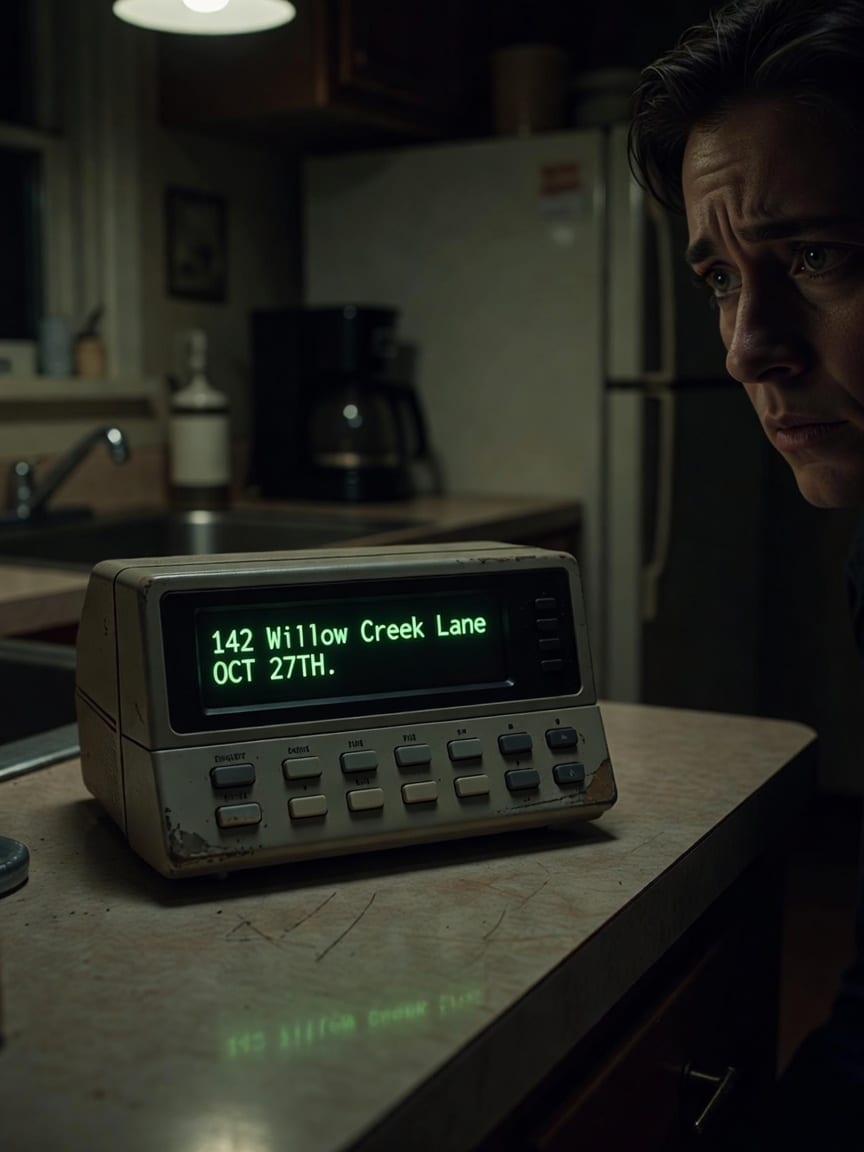
My radio scanner picked up a channel at 2 AM reading local addresses. Mine was on it, dated tomorrow.
I was tracking a storm on my old weather radio when a synthesized voice cut through the static. It began reading local street addresses, then my own: 142 Willow Creek Lane. But the date it gave for my address was tomorrow.
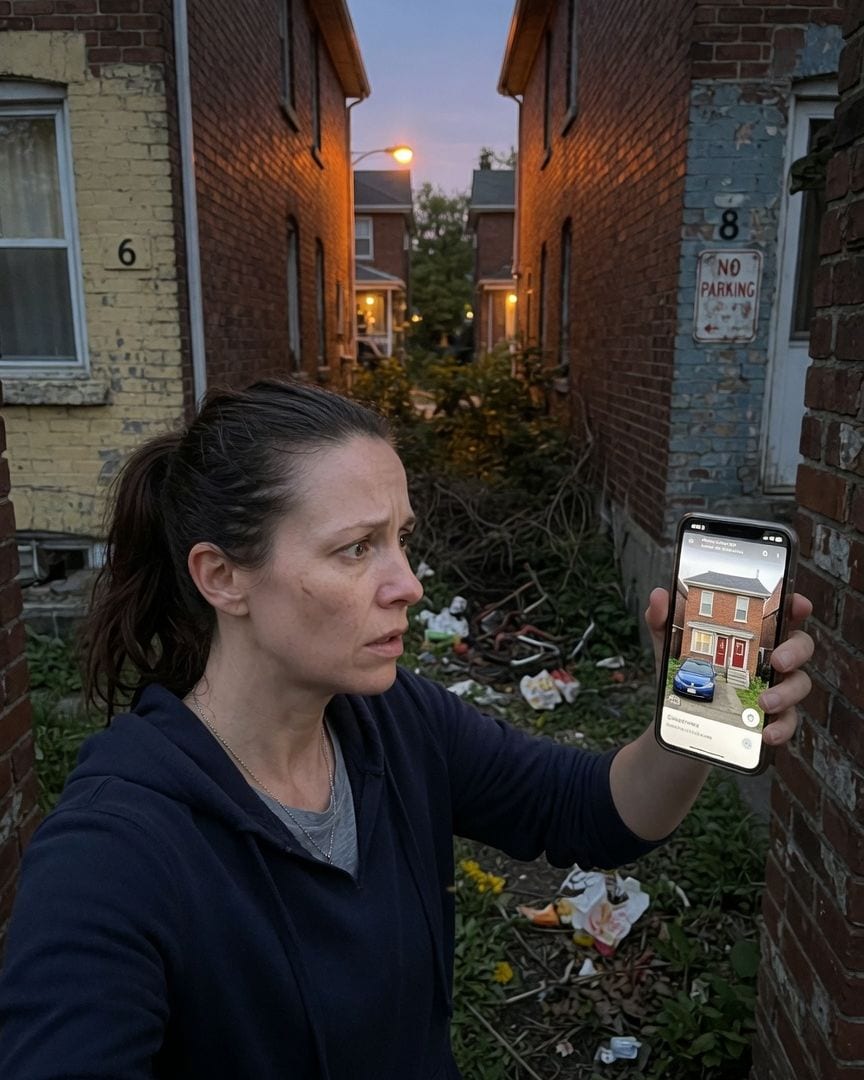
My childhood street's online map showed a number 7 house. I drove over that night. There is no number 7, just the ginnel I grew up with.
Scrolling Google Street View of my childhood neighborhood, I found an impossible house. Between my old house and number 6, where only a narrow ginnel should be, the screen showed a fully formed number 7. It had drawn curtains, a freshly painted door, and a blue car dated 'last month,' yet every other map showed an empty gap.
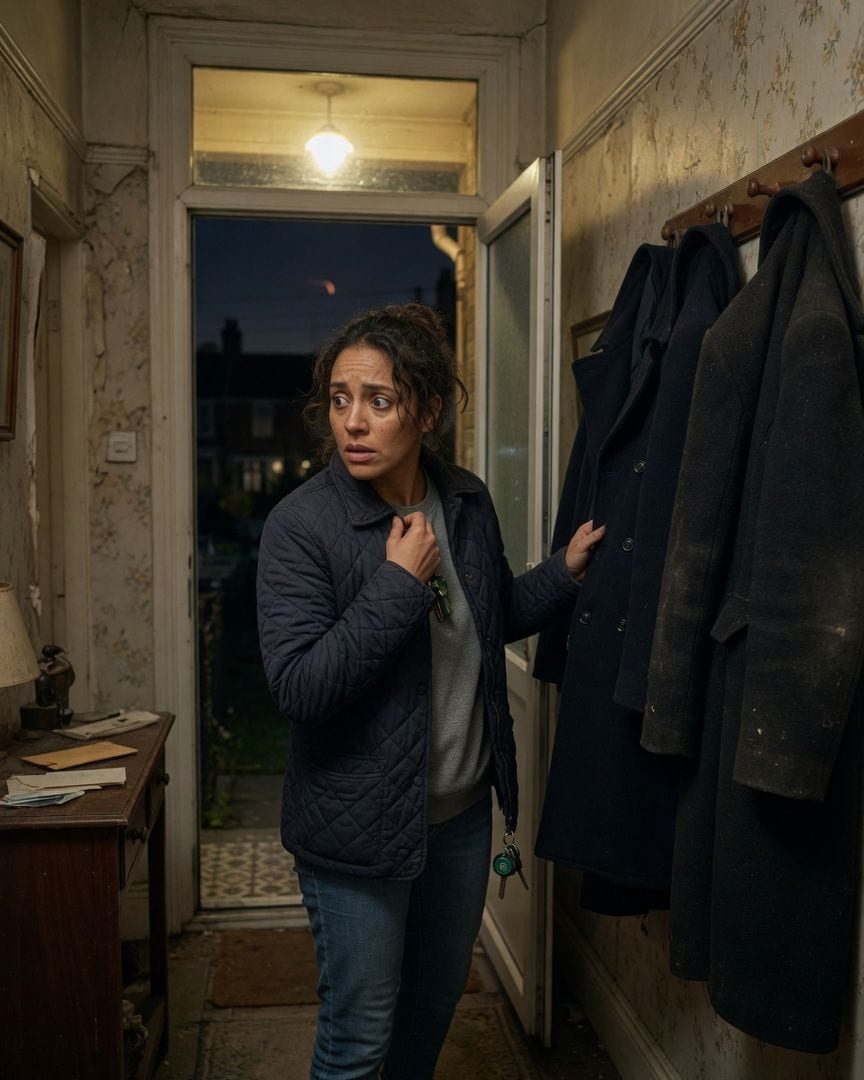
My tiled path was new, my front door green. Then three dark coats hung in my hallway.
After a late night watching the lunar eclipse, I returned to my Victorian house, only to find the path and front door inexplicably changed. Though the house seemed to revert to normal, strange things started appearing: a kettle warm from boiling, a distinct impression on my armchair. Then, an antique, lavender-scented handkerchief appeared on my bedside table, an undeniable presence in my private space.
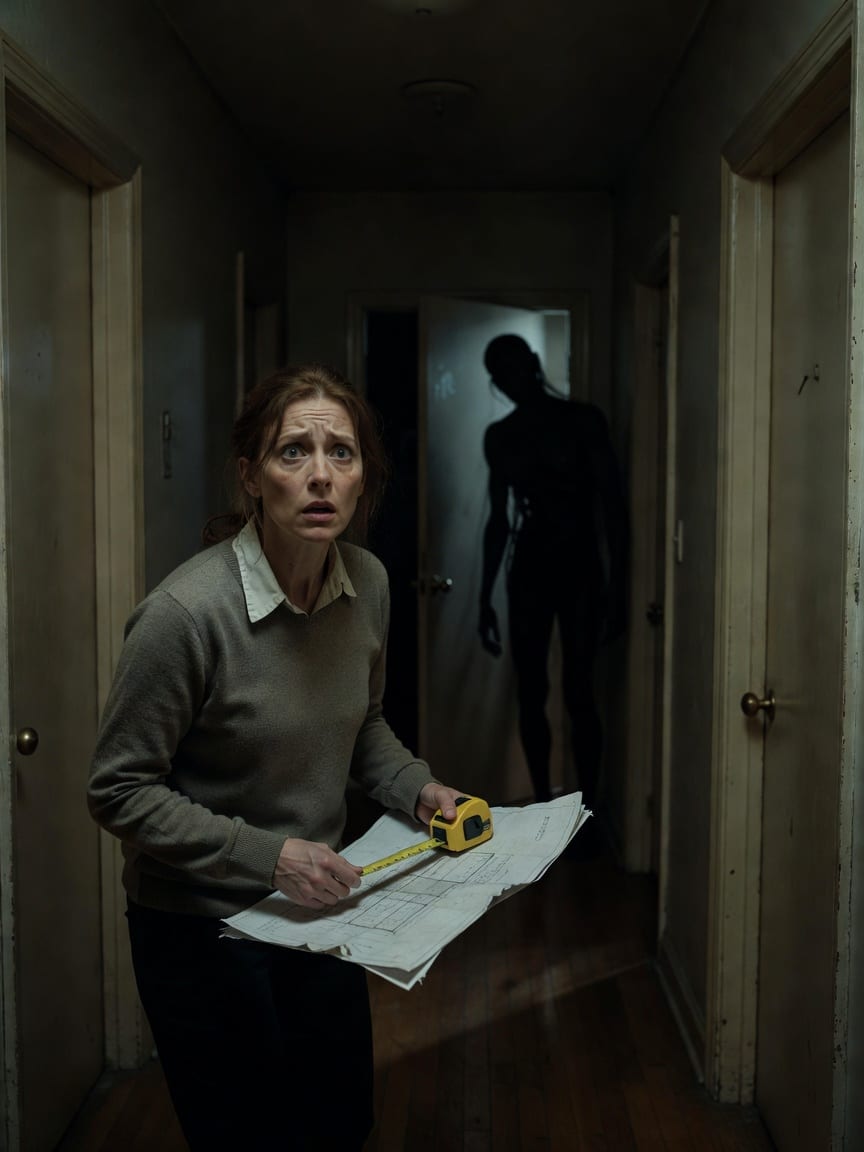
My front door has a dented gate and a dead hydrangea. I walked past it six times, trying to reach the corner shop just a hundred yards away. The pavement kept bringing me back to my own porch, and the shop's light never moved.
My morning started like any other, a quick walk to the corner shop from my home at Number 14, Elm Terrace. But after walking what felt like two minutes, I found myself back at my own front door, the shop no closer. I tried six times, faster and slower, but my street kept compressing, refusing to let me leave.
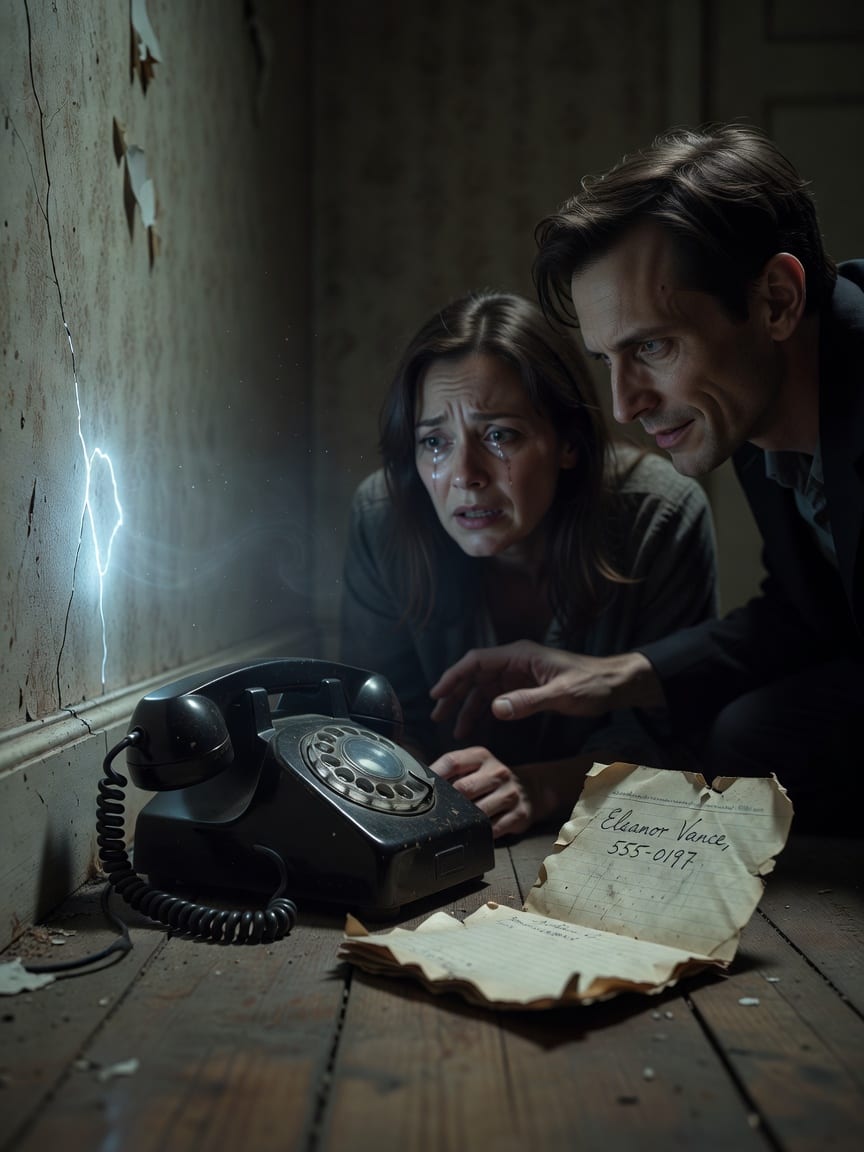
My house's walls ring when I dial a phone number from a 1974 directory. My neighbors said that directory was trash.
I was sifting boxes in my new house when I found an old 1974 telephone directory for my street. It listed my address, 12 Elm Street, under the name "Mr. & Mrs. Sheppard." On a whim, I called the faded seven-digit number. My cell phone rang, but a low, muffled sound also vibrated from the wall beside me.
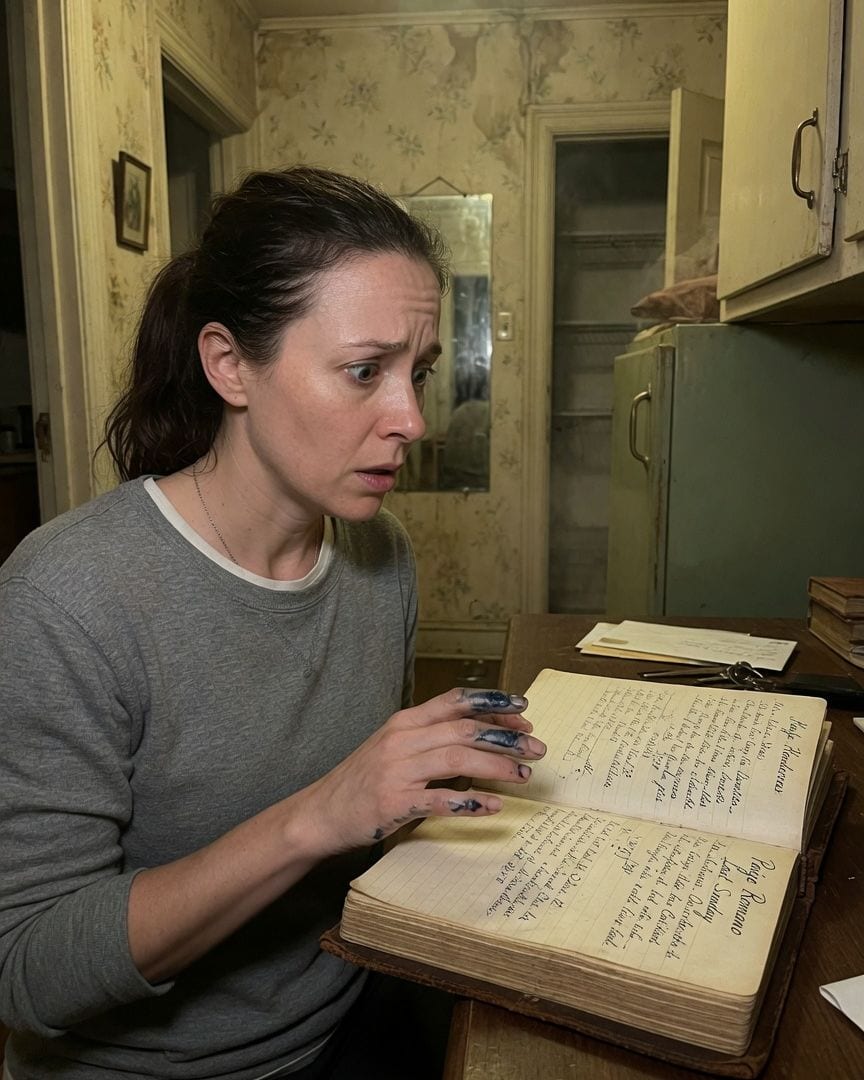
My visitors' book records guests who arrive in the future. Last Sunday, my own name appeared at the bottom, the ink still wet.
I bought an old house last March, complete with a dusty, leather-bound visitors' book. It seemed a charming relic, until I found new entries appearing, dated months into the future, the ink still wet. Then, my own name, Paige Romano, appeared, dated 'Last Sunday,' with a bead of ink shimmering at the 'R'.