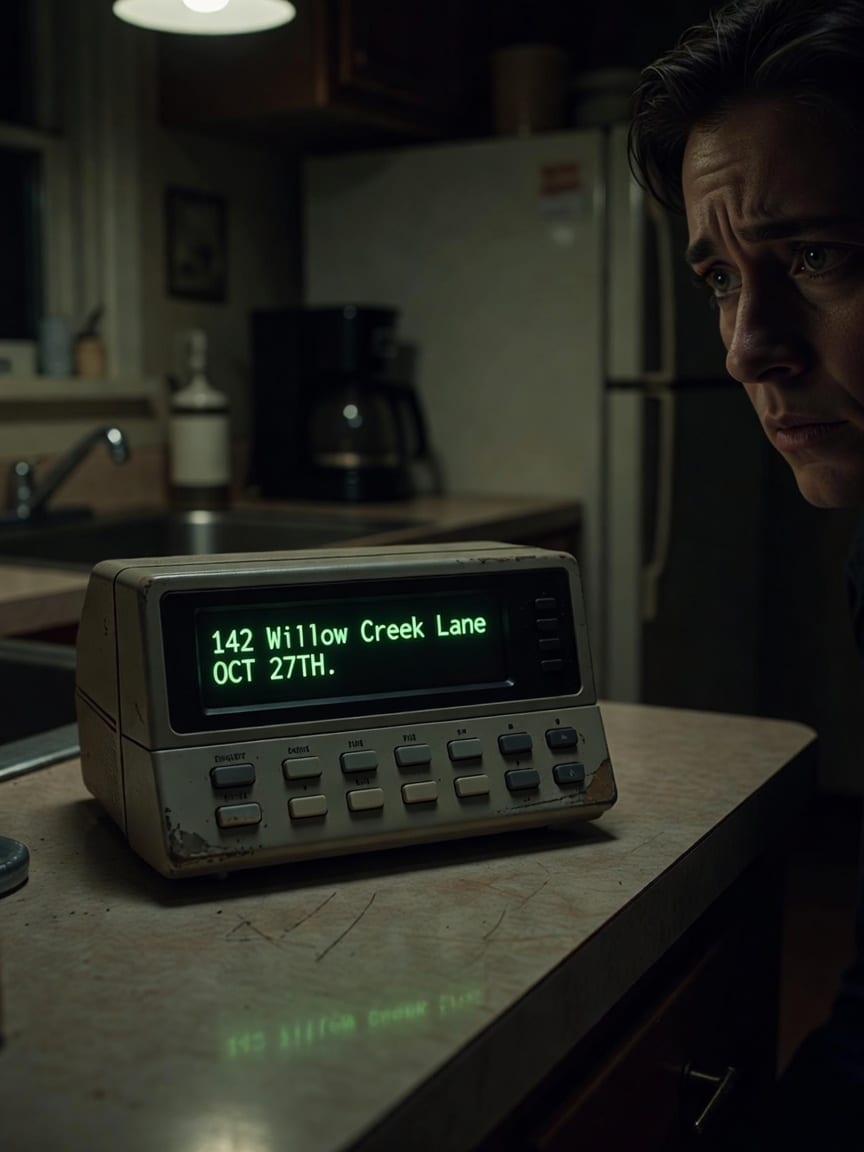
My radio scanner picked up a channel at 2 AM reading local addresses. Mine was on it, dated tomorrow.
I was only trying to track a storm, a band of heavy rain they’d forecast for the early hours.
My old analog weather radio scanner, a relic from my dad’s garage, sat on the coffee table, spitting its usual static and garbled meteorological reports.
It was 2 AM, October 26th, and the house was quiet, the kind of deep quiet where you can hear your own pulse. The familiar chatter on the scanner abruptly cut out. For a second, nothing. Then, a voice.
Flat, synthesized-sounding, like something generated by an old computer program. It began reading. Not weather data, but a list. Local street addresses, each followed by a date.
I figured it was some amateur radio enthusiast, maybe a prankster playing over the emergency bands. Weird, but probably harmless.
Then my own address echoed in the small living room. "142 Willow Creek Lane." Followed by "October 27th."
Today was October 26th. The specific detail of my address, spoken so calmly, so precisely, made the air in the room feel suddenly, impossibly cold, like a window had been flung wide open in the dead of winter.
I lived alone. No one knew this. No one should. My hand, suspended in the chill, reached for the volume knob, but froze.
The voice continued its rhythmic, emotionless delivery of names and dates, while I just sat there, listening to the impossible words echo in the silent house, unable to dismiss them.
I’d instinctively hit record on my phone the moment I heard my address. Now, an hour later, the room still felt like an icebox. I played back the recording, the sound tinny through the phone's speaker.
The voice was just as I remembered: utterly devoid of emotion, a cadence that sounded artificially generated, yet the words were chillingly clear. "142 Willow Creek Lane, October 27th."
Following my own address, the voice continued with others, all accompanied by dates in the past.
I tried to find the station again on my scanner, manually sweeping the bands, but the frequency was now silent, just the hiss of white noise. Online searches for "strange radio broadcasts, Willow Creek" yielded absolutely nothing.
It was like it had never happened.
Determined to find a mundane explanation, to pin it on some local weirdo or a technical glitch, I picked one of the past addresses from the recording: "21 Elmwood Drive, April 12th, 1998." I pulled on my jacket and drove.
The house stood well-maintained but obviously vacant, its windows dark eyes on a quiet street. No signs of anything unusual now, just a 'for sale' sign leaning against a mailbox.
But the date, April 12th, 1998, hung in my mind, a cold anchor.
I told myself it was probably just an old house where someone had moved away years ago, the scanner picking up some odd, disconnected data from an archived municipal server or some such nonsense.
But the cold feeling, the one that had gripped me in my living room, persisted.
Back at my home, the unease gnawed at me. The mundane explanations felt thin, fragile. I needed something more. I needed to prove it was nothing.
I headed to the local library, a quiet building smelling of old paper and dust, a comforting scent I usually associated with knowledge and certainty. I requested access to the newspaper archives, specifically for 1998.
My fingers, a little shaky, traced the microfiche reader's controls as I scrolled through the April editions. Page after page of local headlines about town council meetings and bake sales. Then, a small, almost overlooked article appeared on April 14th.
The headline was mundane enough: 'Local Woman Vanishes Without a Trace.' But the small print detailed the disappearance. The address listed: 21 Elmwood Drive. The date: April 12th, 1998. Janet Pierce, 23, last seen at home.
No signs of struggle, no explanation. Just gone. I stared at the faded newsprint, the grainy photograph of a smiling young woman, her life neatly summed up by an absence. The scanner wasn't wrong.
The address, the date, the disappearance – all of it was real.
Shaken, I returned home, the library’s quiet confirmation echoing in my mind. The mundane explanations had fallen away, leaving behind a chilling void.
I pulled out a fresh sheet of paper and carefully transcribed every address and date from my scanner recording.
There were seven entries in total, stretching back over three decades, each a precise address and a past date, culminating in my own address and 'October 27th.' Over the next few days, I systematically visited each past address.
Some houses were now vacant, overgrown with weeds, paint peeling like old skin; others had new families living in them, friendly but utterly oblivious to previous occupants. The air around these places felt still, somehow heavy.
Back at the library, I delved deeper, cross-referencing town records, old obituaries, and local news archives.
For each address on my list, I uncovered a corresponding, unexplained vanishing or sudden, unannounced departure of a resident on the exact date the scanner had spoken.
No reason, no forwarding address, just a blank space where a person used to be. I noticed a chilling detail: every disappearance occurred at 2 AM, the same precise time the broadcast always began.
My attempts to alert the local police were met with polite dismissal, chalked up to local legends or a misheard radio signal. They looked at me like I was a crank.
Undeterred, I focused on the next address on the list, chronologically preceding my own: '88 Maple Street, July 1st, 2012.' I found a record of a Felix Coleman, who, according to local registries, simply 'moved away suddenly' on that date.
No other details. Just gone.
I began to stake out 88 Maple Street, hoping to find some lingering clue, a thread to pull. It was a well-kept, ordinary suburban house, currently occupied by a young family who seemed utterly unaware of its past.
As I watched, a growing sense of unease settled over me, a distinct feeling of being observed. It wasn't just paranoia. I started noticing an older model, dark blue sedan.
It was always parked a few blocks down, seemingly empty, whenever I was in the vicinity of the listed addresses or the library. It wasn't distinctive, just... always there.
One evening, after hours spent sifting through more dusty town records at the library, the scent of old paper clinging to my clothes, I walked back to my car.
As I approached, I spotted a small, plain manila envelope tucked under my windshield wiper. My heart thumped, a sudden frantic drum against my ribs.
Inside, a single slip of paper with neat, block letters: 'Some things are better left unheard. The ledger keeps its own time.' There was no signature, no return address, just the unnerving warning.
I scanned the street, my gaze sweeping from parked cars to darkened windows, but the dark blue sedan was gone.
The street was empty, silent, leaving me with the chilling certainty that someone knew exactly what I’d found, and they’d been watching.
The warning note, instead of scaring me off, only solidified my resolve. Someone knew. And they confirmed it.
I remembered Dean Doyle, a retired local historian I’d met once at a town fair, known for his encyclopedic, if sometimes eccentric, knowledge of local lore.
He lived in an old house on the edge of town, surrounded by towering oak trees. Finding his number in an old community directory, I called him, my voice tight with urgency, almost cracking as I launched into the story.
Dean was initially wary, his answers clipped, full of long pauses that spoke of a deep reluctance. But I persisted, describing the scanner, the list, the confirmed disappearances.
I mentioned Janet Pierce and Felix Coleman by name, watching the silence stretch between us, profound and heavy.
Finally, Dean sighed, a long, weary sound that seemed to carry the weight of decades. "The ledger," he said, his voice barely a whisper. He admitted he knew of it.
He described it as an old, unspoken town secret, a pattern of people 'leaving' that had gone on for generations, always linked to specific addresses and dates. It wasn’t a conspiracy, he insisted, but something... older.
He explained that the 'channel' wasn't radio in any conventional sense, but something deeper, a 'frequency' that only certain devices, or certain people, could pick up.
He called it an 'accounting,' a 'tally,' almost like a natural process that the town simply endured. He confirmed the addresses and dates matched old family stories he’d heard, never published, never officially acknowledged.
He said the people weren't just gone; they were 'accounted for.' The ledger was a record, he told me, and it was absolute.
The dread in my chest tightened, solidifying as the fragments of my investigation clicked into place with Dean's reluctant admissions. The scanner wasn't a glitch, or a prank, or interference. It was a record, and I was on it.
Dean hung up abruptly, clearly disturbed by our conversation, leaving me alone with the chilling weight of the confirmed truth. The list was real, the disappearances were real, and they followed a pattern that had haunted Willow Creek for generations.
The full implications of Dean's words, 'The ledger keeps its own time,' settled over me, colder than any draft.
I replayed the scanner recording for the tenth time, my mind racing, trying to reconcile Dean's somber pronouncements with the flat, emotionless voice on the recording.
If it was an 'accounting,' a 'tally,' then who or what was doing the tallying?
I decided to try a basic audio filter program on my laptop, hoping to isolate the voice, to hear if there was any distortion, any hint of a human origin behind the synthesized cadence.
I clamped my headphones to my ears, the plastic cold against my skin. I looped the segment where my own address was read.
As the filtered voice repeated, "142 Willow Creek Lane, October 27th," a faint, almost imperceptible lilt, a familiar rhythm, began to emerge from the static, from the digital cleaning process.
I leaned closer, my breath catching in my throat, my fingers hovering over the keyboard, wanting to stop it, unable to. My eyes widened as the full, horrifying realization hit me: the voice, calm and detached, was unmistakably, her own.
The realization detonated in my mind, shattering any remaining hope of a rational explanation. I stared at the silent scanner, then at my own reflection in the dark screen of my computer.
The voice on the recording, my voice, was not a message to me, but a message from me.
The scanner isn't just picking up a broadcast; it's a conduit, a device through which I am speaking, a future version of myself, or perhaps a part of me that has already been 'accounted for.'
The 'channel,' Dean's 'ledger,' is a pre-written destiny, a relentless accounting. The scanner, the ordinary device that has become the impossible object, is not merely a receiver.
It's a mechanism that records the moment of 'taking,' and in doing so, names the next subject, using the voice of the one who is next to be taken.
It's a cyclical, self-fulfilling prophecy, an endless loop where each 'taken' individual becomes the voice that announces the next. I remembered Dean saying, 'The ledger keeps its own time.'
The dates aren't just predictions; they are the precise moments the 'accounting' happens, and I am the next to speak, the next to be silenced.
It's 1:55 AM. October 27th. I sit in my living room, the scanner dark and inert on the coffee table. I haven't slept, haven't moved much since the horrifying truth settled over me.
The knowledge is a cold, heavy weight, numbing me to any fear, any panic. There's no escape, no fight left. The ledger is simply what is.
I’d tried everything in the hours since: packing a bag, calling distant friends – their concerned confusion only highlighted the futility of it all – even attempting to smash the scanner with a hammer.
But it remained unnervingly intact, its plastic shell unyielding, mocking my efforts. Now, I just wait. The digital clock on my microwave ticks over to 1:59 AM.
A faint, almost imperceptible hum emanates from the scanner, a sound like distant electricity. Its display flickers, then illuminates with the familiar frequency, a soft green glow in the dim room, the color of sickness.
At precisely 2:00 AM, the flat, calm, slightly distorted voice begins to speak. It says, "142 Willow Creek Lane, October 27th."
Then, without a pause, it starts the next address, reading out a familiar street name, a new date, for someone I don't know yet.
I feel a strange lightness, a profound quiet descending over me, like everything is finally making sense. My eyes are fixed on the scanner, listening to my own voice, reading the next name on the ledger.
The house was quiet again. The scanner sat on the coffee table, dark and inert. The front door was unlocked. The coffee pot on the counter was half-full, cold. A half-eaten bowl of cereal sat beside it.
Everything was exactly as Hannah Reynolds had left it, except Hannah herself. The air in the house was still, a faint, almost metallic tang lingering. The familiar sounds of the neighborhood slowly resumed, oblivious.
The radio scanner was found on Hannah Reynolds' coffee table, unplugged but otherwise intact. Her car was still in the driveway. The police report noted no signs of forced entry, no struggle, nothing out of the ordinary.
Just an empty house and a missing person. Her neighbor, Beatrice Thatcher, later commented to an officer, 'She was always so meticulous, you know? But sometimes, when I'd see her in the garden, she'd just stare at the sky.
Like she was listening for something only she could hear.'
If this one got to you
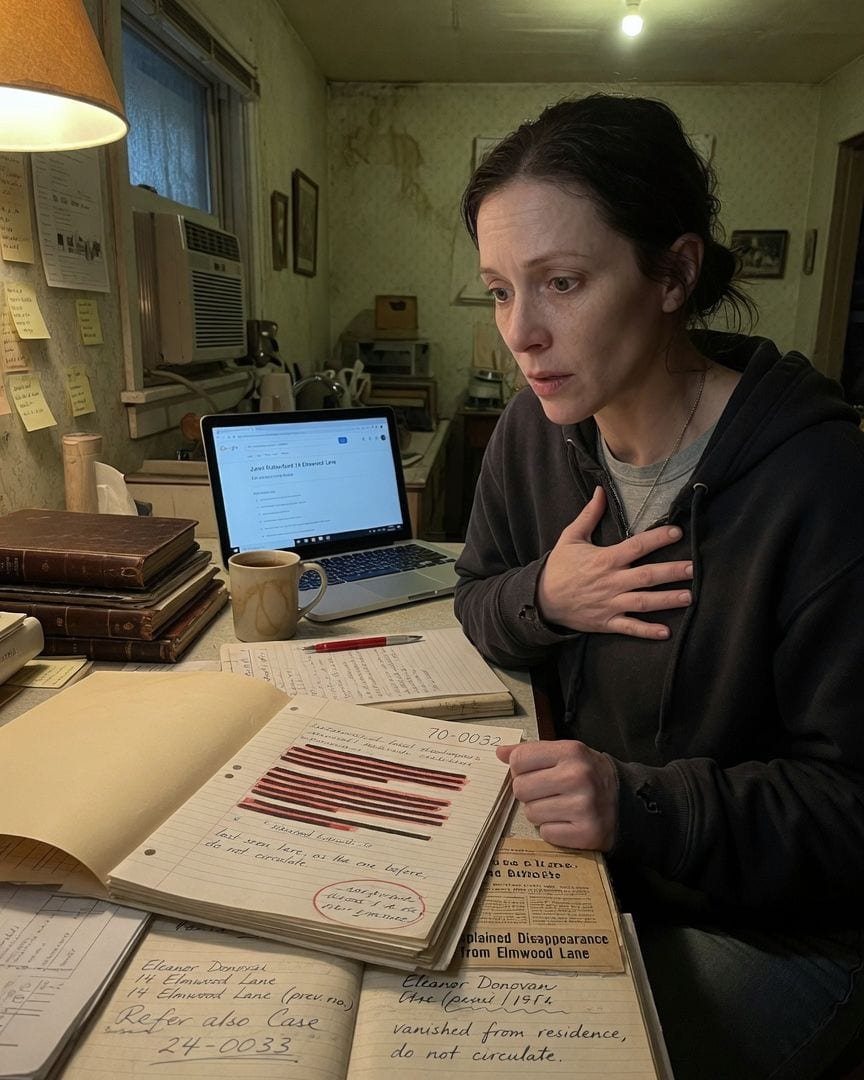
My own address is on a missing person's file from 1970. The blacked-out line names my street. She never lived here.
When my neighbor vanished, I started digging into old local missing persons cases. In a police file for a woman who disappeared in 1970, I found my own address, 14 Elmwood Lane, framing a blacked-out section of the duty log. Janet Rutherford never lived here, and the file contained a chilling handwritten note: 'do not circulate.'
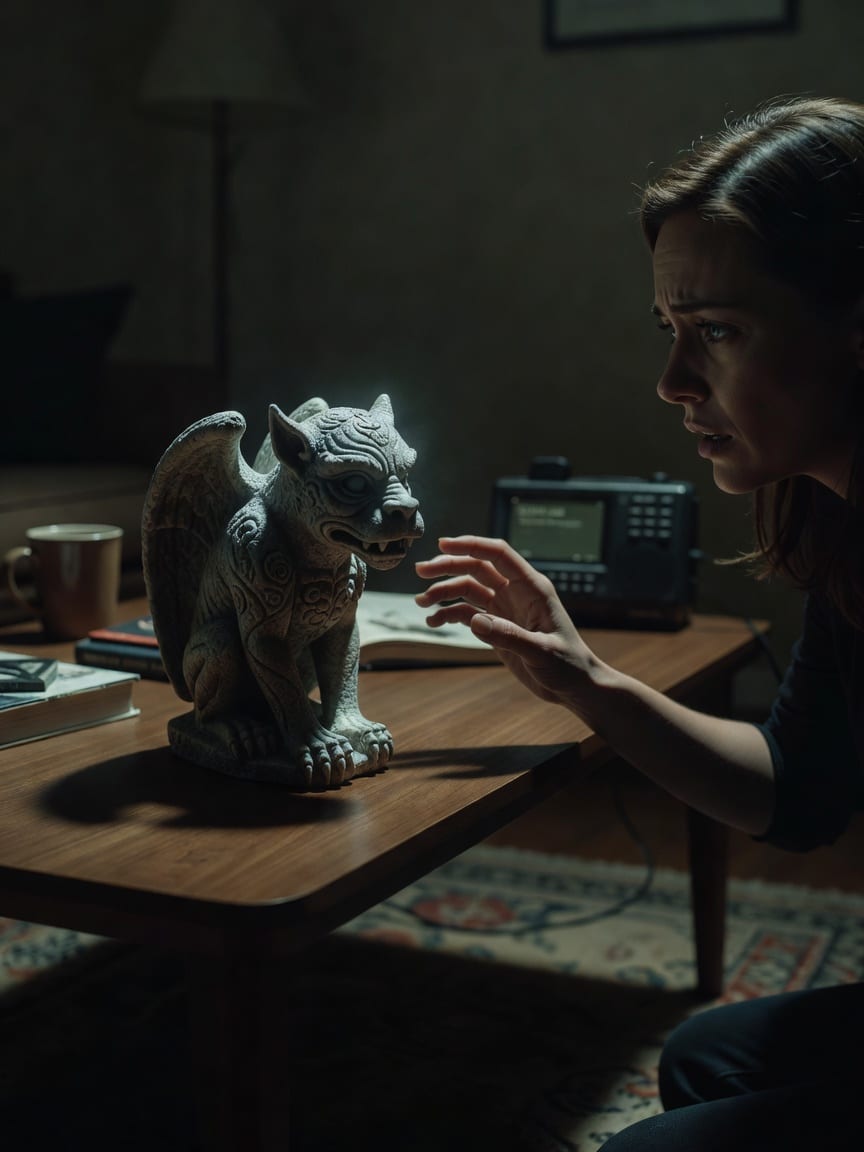
My radio scanner spoke my address at 2 AM. A flat voice read local homes, all with past dates. Mine was the only one in the future.
It was two in the morning, and my quiet house was filled with the usual hum of my weather scanner. But the static broke, replaced by a flat, synthesized voice reading a list of local addresses and dates. My hand froze when it spoke my own address, 181 Foster Drive, followed by a date: October 27th. That date was three weeks from now.
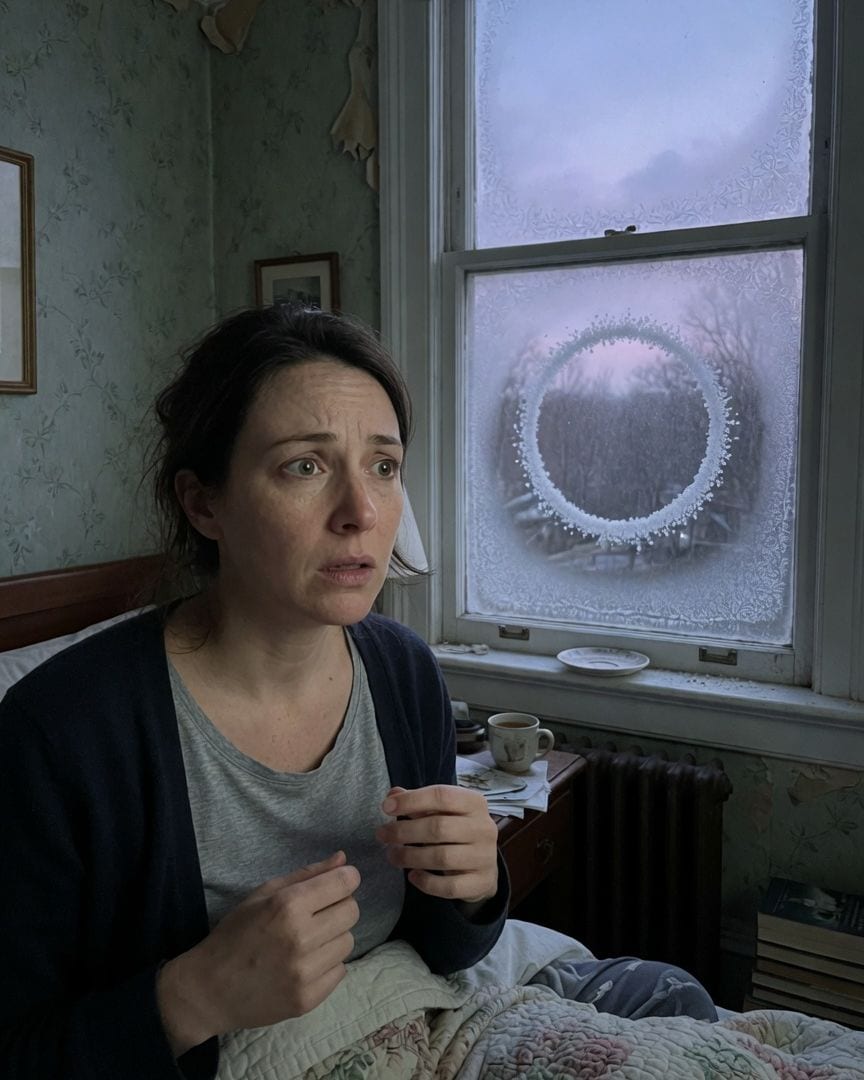
A 1963 obituary for a vanished 7-year-old girl lists *my Fenwick address* as her last known home.
Fenwick has its quaint traditions, like placing a salt saucer on the sill for protection. I put mine on my fourth-floor bedroom window, a private scoff at local custom. The next morning, the saucer was gone, replaced by a perfect salt ring on the *outside* of the glass, impossible to reach.
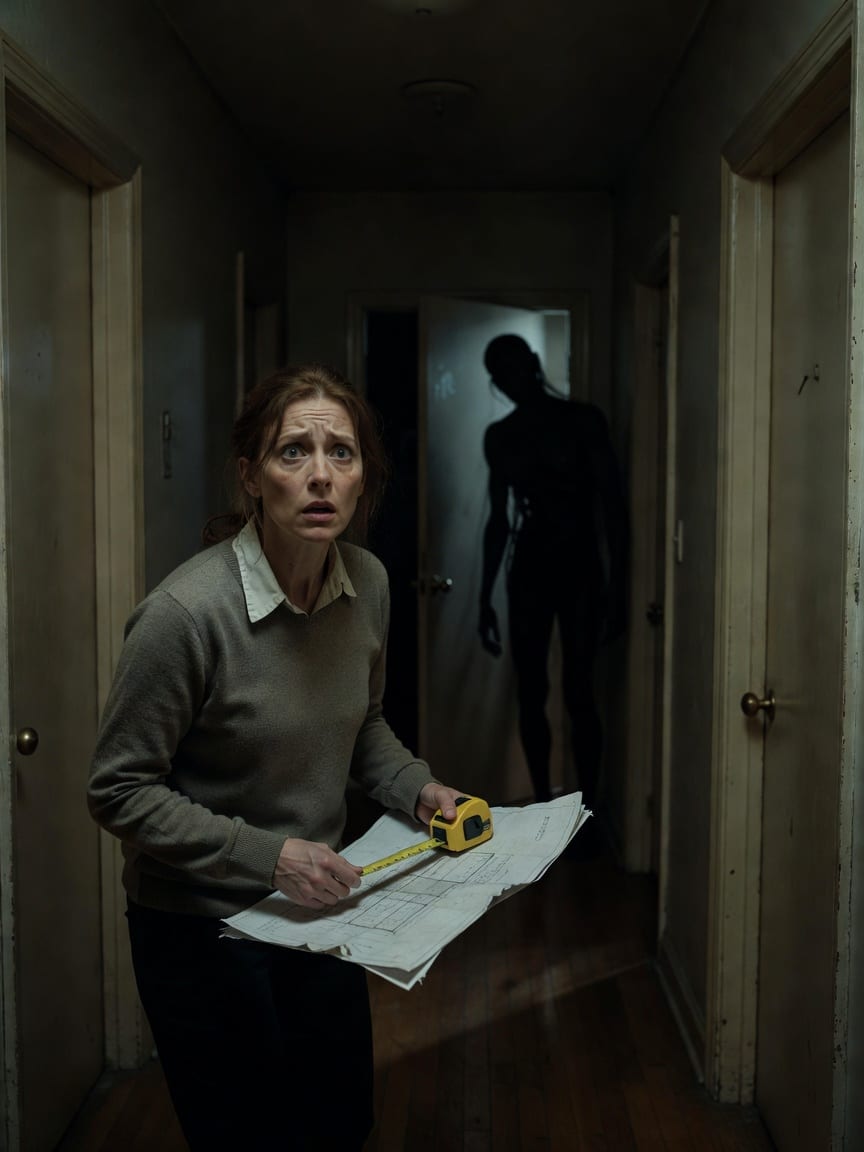
My front door has a dented gate and a dead hydrangea. I walked past it six times, trying to reach the corner shop just a hundred yards away. The pavement kept bringing me back to my own porch, and the shop's light never moved.
My morning started like any other, a quick walk to the corner shop from my home at Number 14, Elm Terrace. But after walking what felt like two minutes, I found myself back at my own front door, the shop no closer. I tried six times, faster and slower, but my street kept compressing, refusing to let me leave.
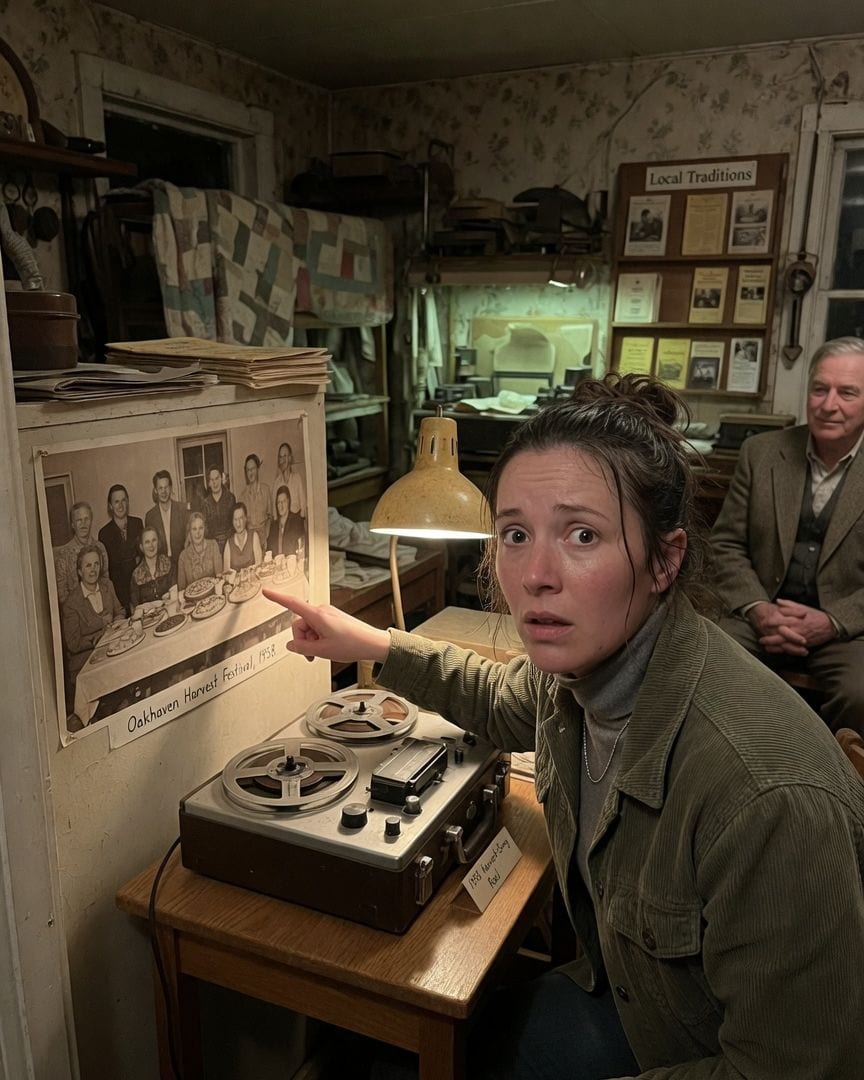
The folk museum's harvest tape counts one more singer than the photograph shows. The curator turned the recorder off before playing it.
I found a quiet escape at Oakhaven's dusty Folk Museum, where the curator played a rare 1958 harvest song. But as a cheerful tune filled the room, a low voice began to count. The tape tallied thirteen, yet the old photograph beside it showed only twelve smiling villagers.
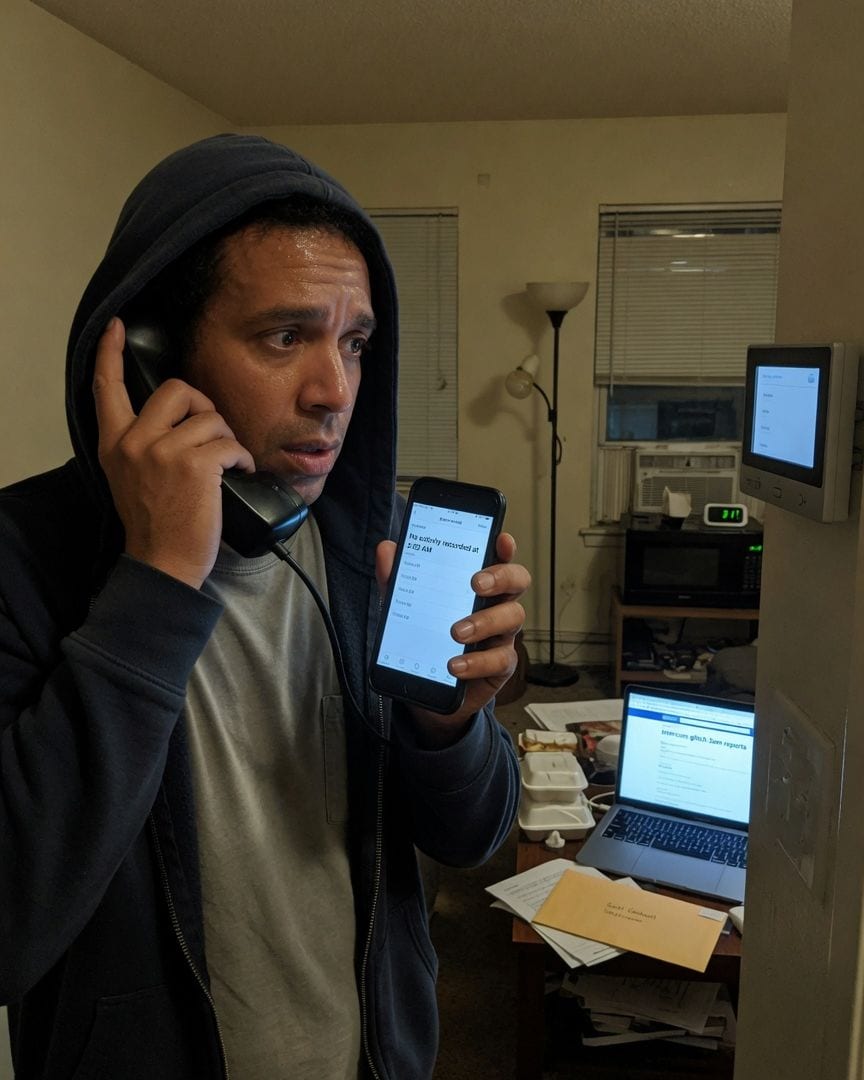
A calm voice apologized for Thursday at 3:03 AM. My intercom screen was blank. The next day, a man stopped me to repeat the apology.
My intercom buzzed at 3:03 AM, startling me awake. A calm voice apologized, "it's about Thursday," but the screen was blank. When I checked the building's entry log, there was no record of any call, not even a ghost. It was like a message delivered from nowhere, meant only for me.