A calm voice apologized for Thursday at 3:03 AM. My intercom screen was blank. The next day, a man stopped me to repeat the apology.
![An open ancient ledger with a yellowed page showing 'Caldwell, Scott - Designated: [Thursday's Date]' in dark ink.](https://m5.owriter.xyz/2026/07/13/6a548259c613c5201cd3a292.jpg)
My intercom buzzed at 3:03 AM. I jolted awake, heart thudding against my ribs, the sound a shrill intrusion in the quiet pre-dawn dark. A steady male voice, calm and clear, said, 'I'm sorry, Mr. Caldwell — it's about Thursday.'
My throat was dry. 'Who is this?' I managed, fumbling for the intercom panel. The small screen, usually lit with the apartment number of the caller, was blank. No digits, no name. Nothing. I pressed the talk button again, 'Hello?
Who is this?' Silence. I checked the building's entry log, accessible on my phone, which timestamps every call. There was no record of any activity at 3:03 AM. Not even a ghost of a missed call. Nothing.
Thursday is the day after tomorrow. I couldn't shake the unnerving precision of the time, the specific, calm apology, and the blank screen. It felt like a message delivered from nowhere, meant only for me, and I couldn't unhear it.
The ordinary logic of a prank call or a malfunction simply didn't fit the unwavering clarity of the voice or the absence of any digital trace.
The next morning, Wednesday, I felt a prickle on the back of my neck all day. I spent hours online, searching for any local news about strange intercom incidents, any forum where someone might mention a similar event. Nothing.
When I left my apartment for groceries, a man stepped out from the shade of the oak tree across the street, directly into my path.
He was in his late fifties, dressed in a worn but clean trench coat, carrying a small, plain envelope. His eyes were a pale, watery blue, and he looked genuinely distressed.
He stopped me, placing a hand gently on my arm. 'Mr. Caldwell?' he asked, his voice soft, almost a whisper. I nodded, wary. 'I am so very sorry,' he said, his gaze fixed on some point beyond my shoulder.
'For Thursday. I truly am.' He pressed the envelope into my hand and walked away without another word, his shoulders slumped. I stood there, stunned.
The envelope contained a single sheet of paper, thick and cream-colored, with my name and address meticulously hand-printed, and a single sentence: 'The Field awaits.' No stamp, no return address. Just that.
It was Malcolm Abbott, I'd seen him around the neighborhood for years, always quiet, always alone. He'd never spoken to me before, never even met my eye.
Now, he'd apologized for something that hadn't happened yet, by name, and delivered a cryptic note about 'The Field.' The intercom call, the blank log, and now this targeted, physical interaction. The ordinary explanations were dissolving.
The note about 'The Field' haunted me. I tried to find Malcolm Abbott, but he seemed to have vanished. Every neighbor I asked knew of him but couldn't offer any information beyond his solitary habits.
I drove past his small, detached house – dark, silent. My search for 'The Field' online yielded nothing but agricultural reports. Desperate, I remembered a passing comment from a neighbor about Malcolm being a local history enthusiast.
I headed to the local historical society, a small, dusty building tucked behind the library. Joan Thatcher, the archivist, a woman with kind eyes and a formidable memory, greeted me. I asked about Malcolm.
She mentioned he'd been researching 'local peculiarities' and had spent a lot of time with their older ledgers. She pointed me to a shelf of ancient, leather-bound books.
My fingers traced the spines until one caught my eye: 'Registry of Local Designations.' It was thick, heavy, with brittle pages. I opened it, the smell of old paper filling my nostrils.
On a page dated 'October 12th, 1989,' my full name, 'Scott Caldwell,' was meticulously handwritten in elegant script, next to the single, chilling word: 'Designated.' The musty air of the archive felt suddenly thin, cold.
My breath hitched. 1989. That was the year I was born. My hand trembled as I touched the page. Joan Thatcher, noticing my sudden stillness, came over. 'Find anything interesting, Mr. Caldwell?' she asked, her voice gentle.
I pointed, my finger shaking, to my name. She leaned in, her spectacles sliding down her nose. 'Oh, how curious,' she murmured. 'You share a name with one of the old entries.
This ledger records… well, local 'designations' for various purposes, mostly land deeds and civic duties from centuries ago. But some entries are… less clear.' I pressed her. 'What does 'Designated' mean here?' She frowned, tapping a fingernail on the page.
'It's a very old term, often associated with a particular plot of land, or a specific date. But in these later entries, from the 19th century onward, the land references disappear, and it's just a name and a date.
No clear purpose. A mystery, really.' I asked if Malcolm Abbott had shown interest in this particular ledger. Joan nodded. 'Yes, he was quite fixated on it. Said he was trying to understand a 'pattern of apologies.'
I thought he meant old feuds, you know.' A pattern of apologies. Malcolm's words echoed in my mind. I took photos of the page, the date, the word 'Designated.' My rational mind struggled to reconcile this. A coincidence?
A macabre joke? But the meticulous script, the ancient book, Joan's genuine confusion – it didn't feel like a joke. I left the archive, the weight of the ledger's revelation pressing down on me. I needed to find Malcolm.
I drove back to his street, feeling a desperate urgency. His house was still dark, but I noticed a faint, almost imperceptible line of light under the garage door. I knocked, then called his name. Silence.
I tried the handle; it was unlocked. My heart pounded, but a new kind of dread, one of inevitable discovery, pushed me forward. I stepped inside, calling his name again.
The house was cold, dusty, smelling of old paper and something else, something metallic and faint.
On a small, cluttered table in the living room, amidst stacks of books and papers, I found a pile of envelopes identical to the one he’d given me.
Each one addressed to a different name, all with the same handwritten note inside: 'The Field awaits.' And on top of the pile, a fresh, blank envelope, my name already meticulously written on it, ready to be filled.
It was a stack of apologies, a production line of dread.
My blood ran cold. The blank envelope, my name on it, meant Malcolm had intended to give me another. Or perhaps, it was a template.
I rifled through the other envelopes, noting the names, trying to find a pattern in the addresses. Some were local, others from further afield, but all within the general region.
As I was examining a list Malcolm had meticulously compiled – a list of dates, names, and notes like 'Apology delivered,' 'Location: The Old Mill,' 'Status: Reclaimed' – I heard a faint creak from the back of the house.
My head snapped up. I wasn't alone. I froze, holding my breath, straining to hear over the frantic pounding of my own heart. Another creak, closer this time. I backed away slowly, clutching the list.
A shadow moved in the hallway. 'Malcolm?' I whispered, my voice barely audible. A figure emerged from the shadows. It was Malcolm Abbott, but he looked different.
His eyes, usually watery, were now wide and darting, filled with a frantic fear I hadn't seen before. His trench coat was disheveled, and his hands trembled.
He held a small, antique-looking device, like an old compass without a needle, which he quickly tucked into his pocket. 'You shouldn't be here, Scott,' he rasped, his voice hoarse. 'You shouldn't have looked.' He wasn't angry, not truly.
He was terrified. 'What is this, Malcolm? The ledger? The apologies? 'The Field'?' I demanded, holding up the list. His eyes widened further, fixed on the paper. 'You… you saw the ledger. You saw my name, didn't you?' he stammered.
'And yours.' He took a stumbling step back, his gaze flickering nervously towards the window, as if expecting to be watched. 'They know you're digging. They know you have the list.'
He wasn't looking at me, but past me, at the empty doorway, the wall. 'You have to stop, Scott. Before Thursday. You have to stop.' His terror was palpable, a live thing in the room.
He was not just warning me; he was warning himself, reliving some past horror. I knew then he wasn't just a messenger. He was a survivor, haunted.
I lowered the list. 'Malcolm, what happened to you? What is 'The Field'?' I asked, trying to keep my voice calm, rational. He collapsed onto a dusty armchair, burying his face in his hands.
'It's a designation,' he mumbled, his voice muffled. 'A calling. They choose you. On a specific date. You're marked. Like in the ledger.' He looked up, his eyes pleading. 'I was designated. Years ago. For a Tuesday.
I tried to run. I drove for hours, hundreds of miles. But when Tuesday came, I found myself… at the edge of The Field. It's not a place you can find on a map, Scott. It just… is.
And you're drawn to it. You can't fight it.' He shuddered. 'I was lucky. I don't know why. Something… pulled me back. Or pushed me out. I saw others. Walking into the tall grass, just… vanishing. They looked so calm.
Resigned.' He gestured vaguely at the stack of envelopes. 'They found me afterwards. They made me understand. My 'apology' is a warning. A mercy, they said. To prepare the next one. To let them know it's coming.
That's why I gave you the note, the apology. Because you're next. Your Thursday.' He was frantic now, his words tumbling out. 'The intercom call, that wasn't me, Scott. That was… them. A direct line.
They let me deliver the physical warnings, but they make sure you know, personally. They use your name. Always your name.' He pointed to the list I held. 'Those are all the ones I've delivered apologies to.
The ones I watched walk into The Field. The ones who didn't come back. Their Thursdays. Their Tuesdays. Their Wednesdays.' He stopped, catching his breath, his eyes fixed on me. 'You're on the list now, Scott. You're already on it.
They knew your name before you were born. The ledger proves it. And now you know too. You know what 'Designated' means.' The coherence of it slammed into me.
The 3:03 AM call, the specific mention of Thursday, Malcolm's apology, the ledger entry from 1989, the letters about 'The Field.' It all clicked into place with a horrifying, undeniable logic.
I wasn't being targeted by a person or a prank. I was part of a mechanism, an ancient, inexorable process that had my name, my date, and a place already chosen.
And Malcolm was just another cog in its terrifying, relentless turning. He wasn't a threat; he was a victim, just like me, caught in its terrible intimacy.
Malcolm's story hung heavy in the air, a suffocating shroud of inevitable doom. He clutched his antique device, staring at it with a mixture of fear and reverence. 'It's how they… guide me,' he whispered, sensing my gaze. 'It points.
To the next one. Or to The Field, when it's time.' I looked at the list of names and dates in my hand, then at Malcolm, a man broken by an impossible truth. 'Is there any way out?'
I asked, my voice raw. He shook his head slowly, tears welling in his watery eyes. 'No one gets out, Scott. I was… delayed. Not spared. I just have more Thursdays to dread.' He looked at me with profound pity.
'You have to accept it. It's already decided.' The weight of his words, the sheer, crushing finality, settled over me. There was no escape. Just understanding.
I felt a cold dread seep into my bones, a knowledge so absolute it stole my breath. I had found the truth, and it was worse than any unknown. It was absolute.
I left Malcolm's house, the list clutched tight in my hand, the knowledge of my fate burning in my mind. The streetlights seemed to hum with a new, sinister energy.
I got back to my apartment, the familiar space now feeling like a trap. I sat on my couch, the silence pressing in. My phone, lying on the coffee table, suddenly vibrated. I jumped. 'UNKNOWN' flashed on the screen.
My heart hammered. I knew. I knew exactly who it was. I picked it up, my hand shaking, and answered, holding it to my ear.
From the other end, the same steady, calm male voice from the 3:03 AM intercom call, the voice that offered the apology, said, "Hello, Scott. Thursday is almost here."
The voice was eerily calm, devoid of inflection, yet it resonated with an ancient, undeniable authority. It wasn't a question; it was a statement of fact, a confirmation. 'What do you want?' I managed, my voice a thin rasp. 'You.
Your designated time,' the voice replied, its tone unchanging. 'As it has always been. As it will always be.' I heard a faint, almost imperceptible rustling sound in the background, like wind through tall grass. 'The Field,' I whispered.
'Yes,' the voice affirmed. 'You have been informed. You have been prepared. The path is clear.' I felt a terrible certainty settle over me, a chilling sense of inevitability.
This wasn't a negotiation, or a threat, but a simple declaration of a predetermined event. The ledger, Malcolm's apology, the note, the names on the list – it all led to this single, inescapable moment.
Every planted clue clicked into place, forming a coherent, horrifying mosaic. The entity wasn't evil in a human sense; it was a force of nature, a bureaucratic dread. It didn't hate; it simply designated. It didn't kill; it reclaimed.
The apology wasn't for malice, but for the unavoidable disruption to a life. And the phone call, the direct channel that used my name, was the final, intimate confirmation of my designation.
It was a terrifying grace note, the entity itself reaching out to acknowledge my impending 'reclamation.' I was not special in my suffering, only in my awareness.
I was one in a long, unbroken line, my name written in a ledger before my first breath, my Thursday marked.
The full truth wasn't a hidden monster, but an ancient, impersonal system that had simply chosen me, and would soon collect.
I hung up the phone, my hand numb. Thursday was less than twenty-four hours away. There was no escape, Malcolm had said. But I couldn't just sit and wait. My rational mind, though shattered, still demanded action.
I packed a small bag, grabbed my car keys, and drove.
I drove for hours, heading north, then west, putting as much distance as I could between myself and my apartment, between myself and the city, between myself and 'The Field.'
The sun set, casting long, eerie shadows, and the night deepened around me. I kept driving, the hum of the engine a desperate mantra against the encroaching silence. I passed through small towns, their lights blurring into streaks.
I tried to think of a destination, a place where 'The Field' couldn't reach, but Malcolm's words echoed: 'It's not a place you can find on a map.' Around 2 AM, exhaustion blurred my vision.
I pulled over on a deserted stretch of highway, surrounded by fields, their tall, dry grass rustling in the night wind. I slumped against the steering wheel, my body heavy with fatigue and dread. I must have dozed off.
I woke with a jolt, the first light of dawn painting the sky a bruised purple. The air was still, unnaturally so, and a profound silence had fallen. I looked out the window. The highway was gone.
My car was parked on a narrow, unpaved track, barely visible amidst an expanse of tall, swaying grass. Miles of it. Stretching to the horizon in every direction. Featureless. Identical to the description Malcolm had given.
Identical to the image conjured by the letters. I was at the edge of The Field. I checked my phone. No signal. The time on the dashboard clock read 3:03 AM. Thursday. It had found me.
Or rather, I had been guided, inexorably, to it. I stepped out of the car, my legs heavy, my mind numb with a terrible understanding.
The air was cool, carrying the scent of dry earth and something else, something ancient and vast. Before me, the tall grass rippled gently, as if beckoning.
I looked back at my car, then at the endless expanse of 'The Field.' There was no turning back. No fighting. Only the path, clear and inevitable. I took a deep breath, the taste of dry grass on my tongue.
The sun, a sliver of orange, began to rise over the horizon, illuminating the endless, empty expanse. I started walking.
My car was found abandoned on a rarely used access road two days later. The doors were unlocked, the keys in the ignition. My wallet and phone were on the passenger seat, untouched.
There were no signs of a struggle, no footprints leading away from the vehicle into the surrounding fields, only the faint, dry impressions of the car tires.
The police report noted the unusual stillness of the area, the lack of any discernible tracks. Gary Sterling, the building manager, filed a missing person report after I failed to pay rent.
Malcolm Abbott, when questioned, simply repeated, 'He was designated. It was his Thursday.' He was dismissed as a confused old man.
The local historical society noted the disappearance of a few pages from the 'Registry of Local Designations' ledger, but attributed it to age and decay. The Field remained just a field, vast and silent under the sun.
My apartment sat empty, untouched. The intercom, silent. The mail piled up, including another cream-colored envelope, addressed to 'Mr. Scott Caldwell,' with no return address. Gary Sterling, the building manager, eventually entered the flat to clear it out.
He noticed a faint, dry scent in the air, like old grass and distant earth. On the coffee table, a small, antique-looking device, like a compass without a needle, lay beside my abandoned phone.
It pointed, with unwavering precision, towards the window. He picked up the phone, checking for service. It had none.
He put it down, and as he turned to leave, he thought he heard a faint, calm voice whisper his name from the intercom speaker. He glanced at the blank screen, then shook his head. Just the building settling.
He locked the door, and the silence returned. The field stretched, empty, beneath a sky that promised a clear Thursday.
If this one got to you
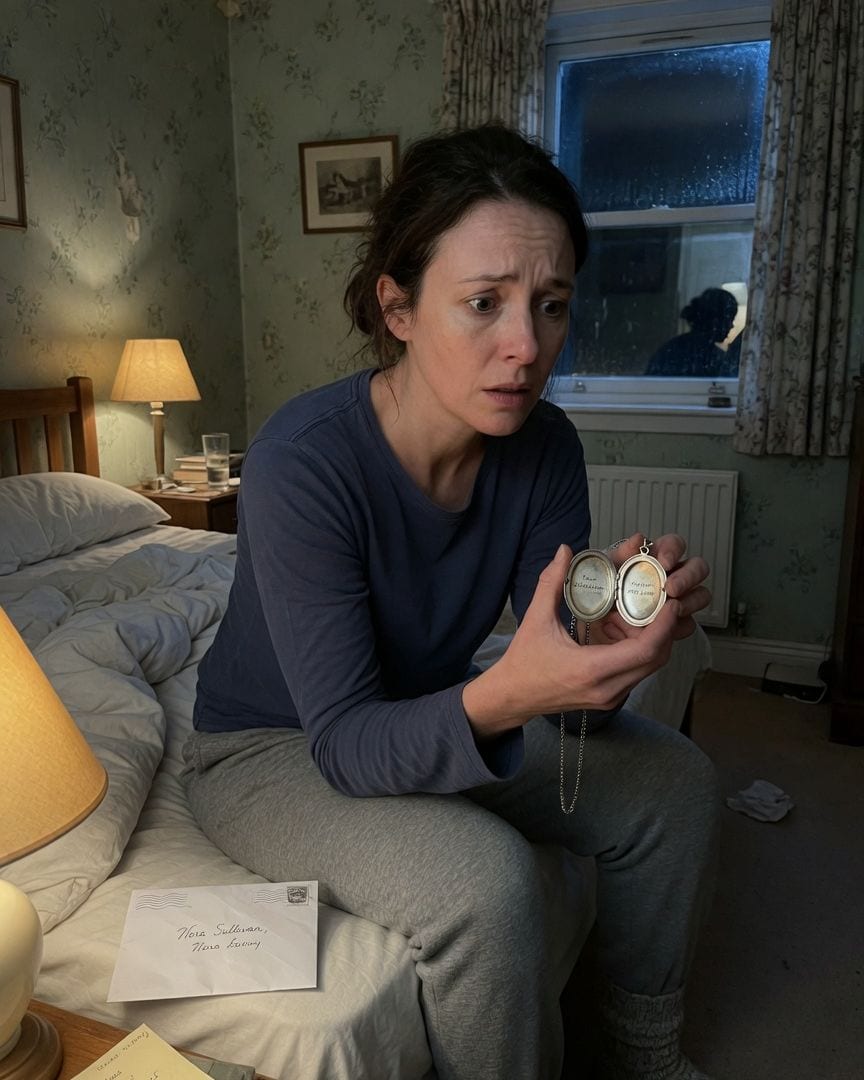
My antique locket held my maiden name, engraved with 'until the ninth.' The dealer said the woman who owned it left a note: 'for her, when she comes.'
My husband Scott, always finding unusual things, gave me an antique silver locket. Inside, engraved beneath my maiden name, Nora Sullivan, were three chilling words: 'until the ninth.' It felt like a direct, personal address, even though I hadn't used that name in years.
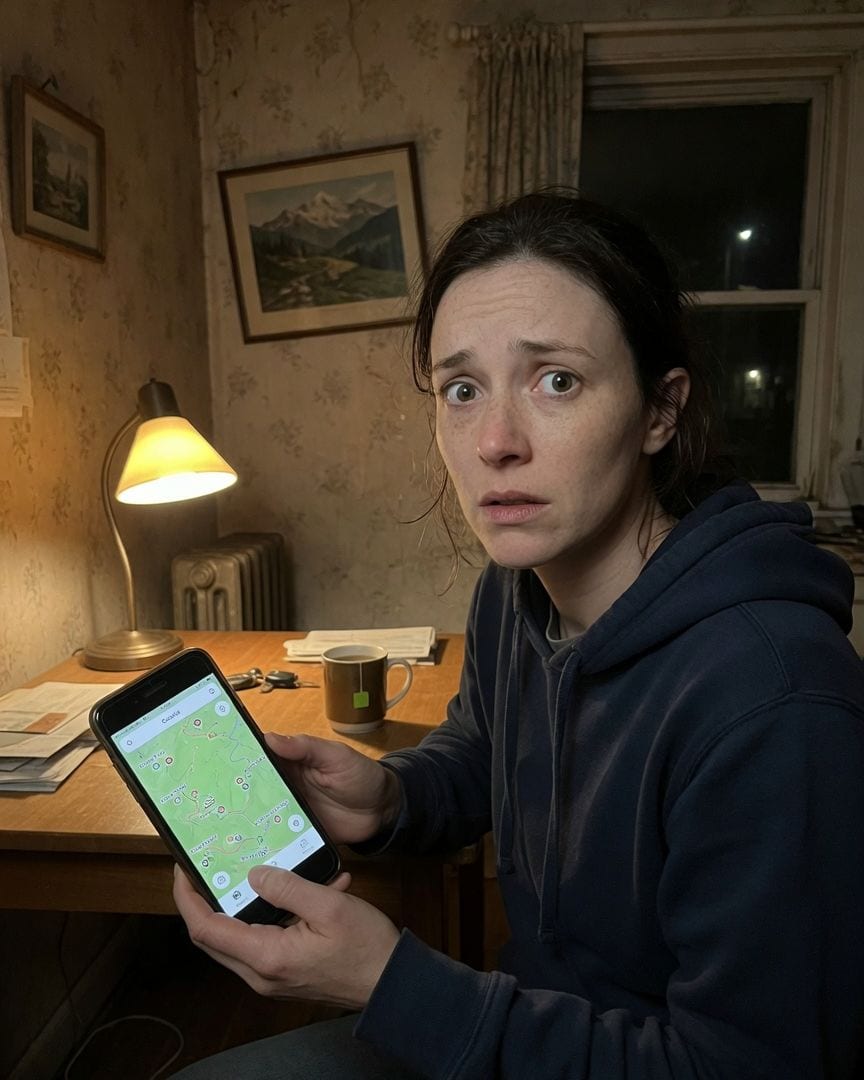
My hiking app scrubbed the hill's name from the map, on a phone that's been in airplane mode for two days.
I just moved to town and hiked a local hill, 'Cathan Tor,' according to my phone's app. But when I mentioned the name to the mechanic, he froze, dropped his wrench, and whispered, 'Don't say that name, Colette.'
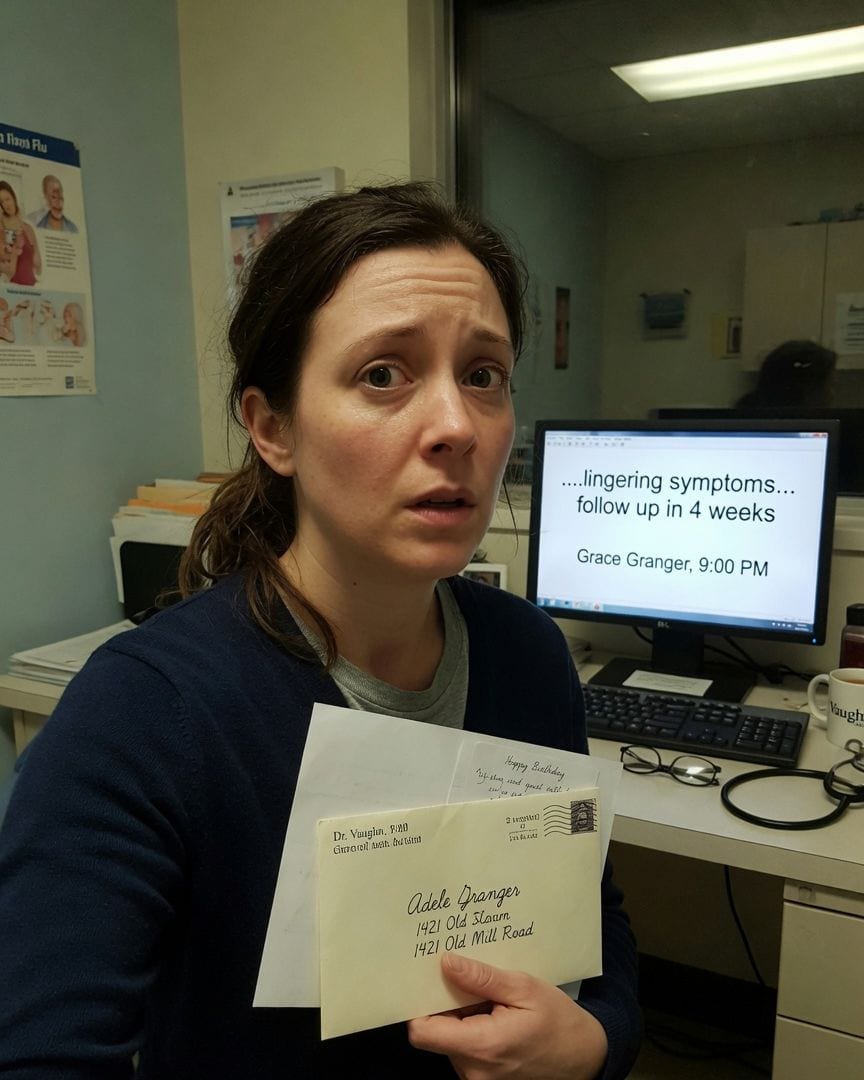
Mid-appointment about my cough, my doctor told me to call my estranged sister tonight — a sister I'd never mentioned to him. The note on his screen ended with her name and a time.
My doctor dismissed my cough as a lingering virus, but then he said something impossible: "You should call your sister tonight." I hadn't spoken to Grace in years, and I'd never mentioned her to him. When I saw her name on his screen with a specific time, a cold dread began to claw at me.
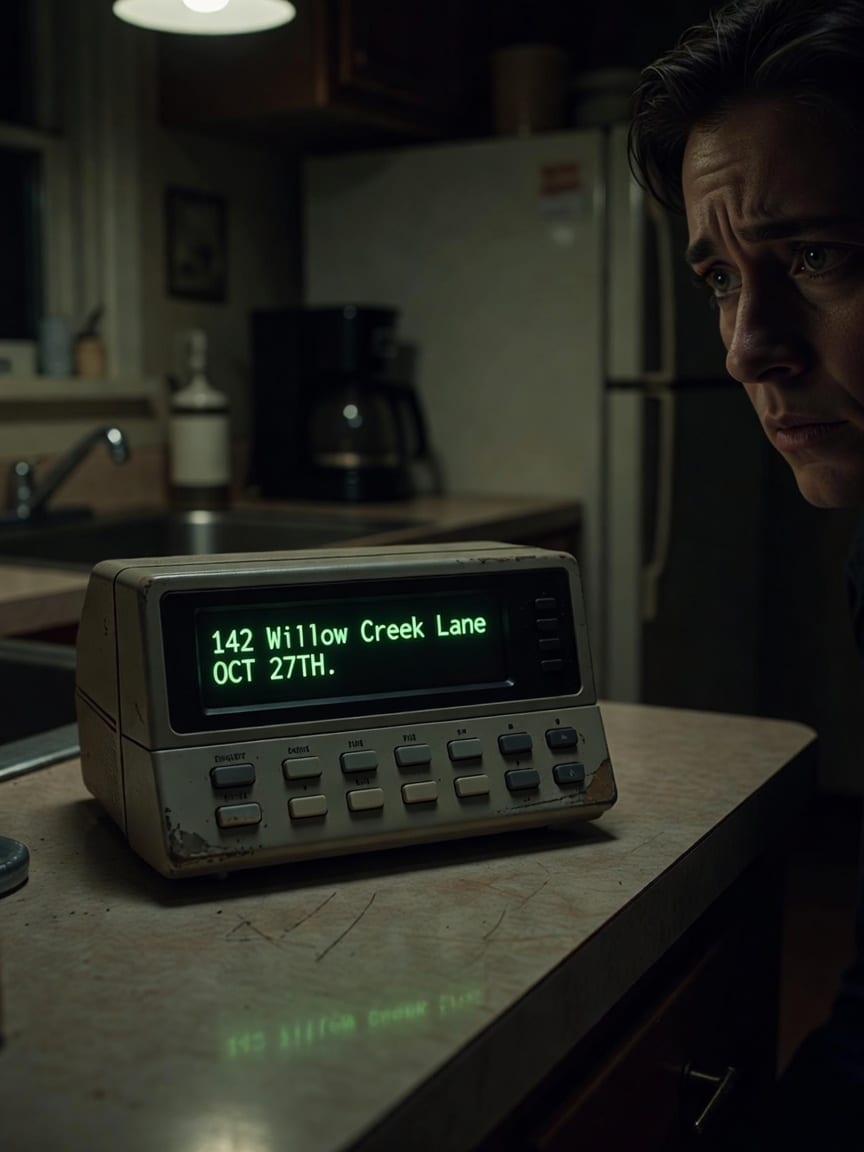
My radio scanner picked up a channel at 2 AM reading local addresses. Mine was on it, dated tomorrow.
I was tracking a storm on my old weather radio when a synthesized voice cut through the static. It began reading local street addresses, then my own: 142 Willow Creek Lane. But the date it gave for my address was tomorrow.
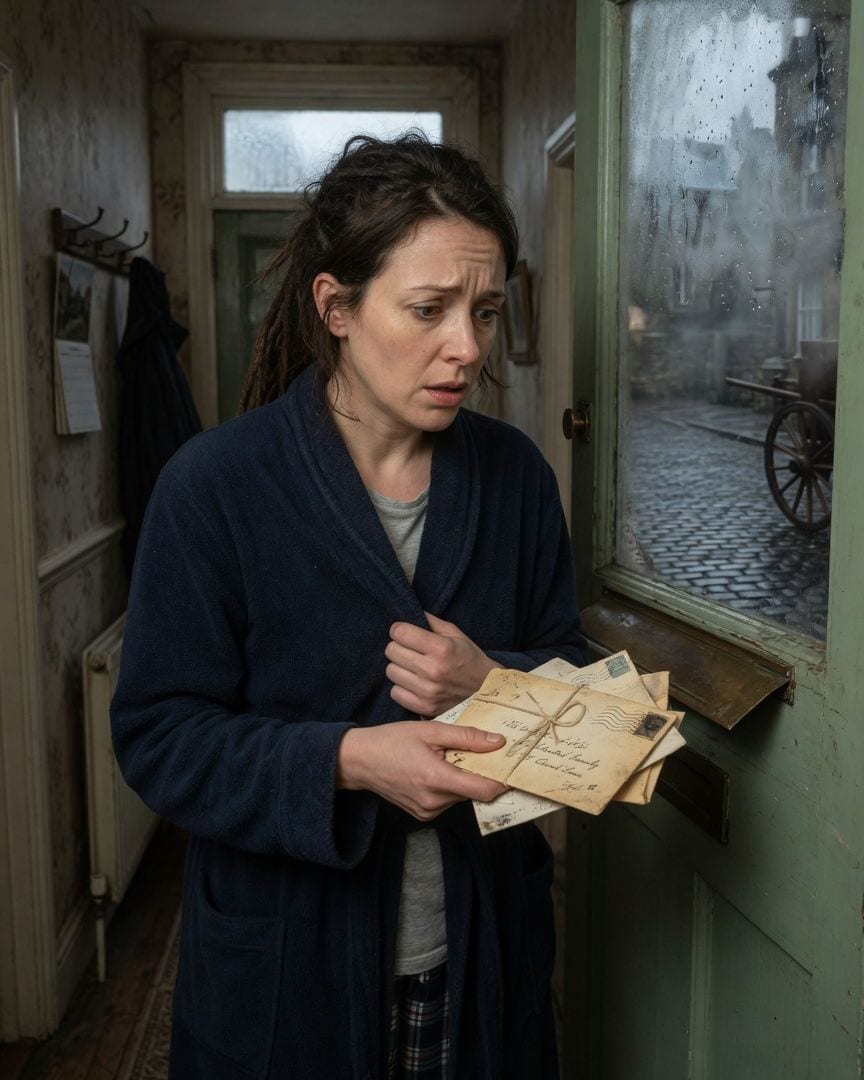
Seventy years ago, a hidden journal recorded my door opening to the wrong street and receiving Lockwood post.
I'd only recently moved into my inherited house, a quiet place on the edge of town. One grey morning, a distinct clatter from the front door's post flap caught my attention. Reaching down, I expected my gravel path, but instead, the flap showed a dark, cobbled street that wasn't mine. A bundle of warm, old letters, addressed to 'The Lockwood Family,' slid through, before the vision flickered and was gone.
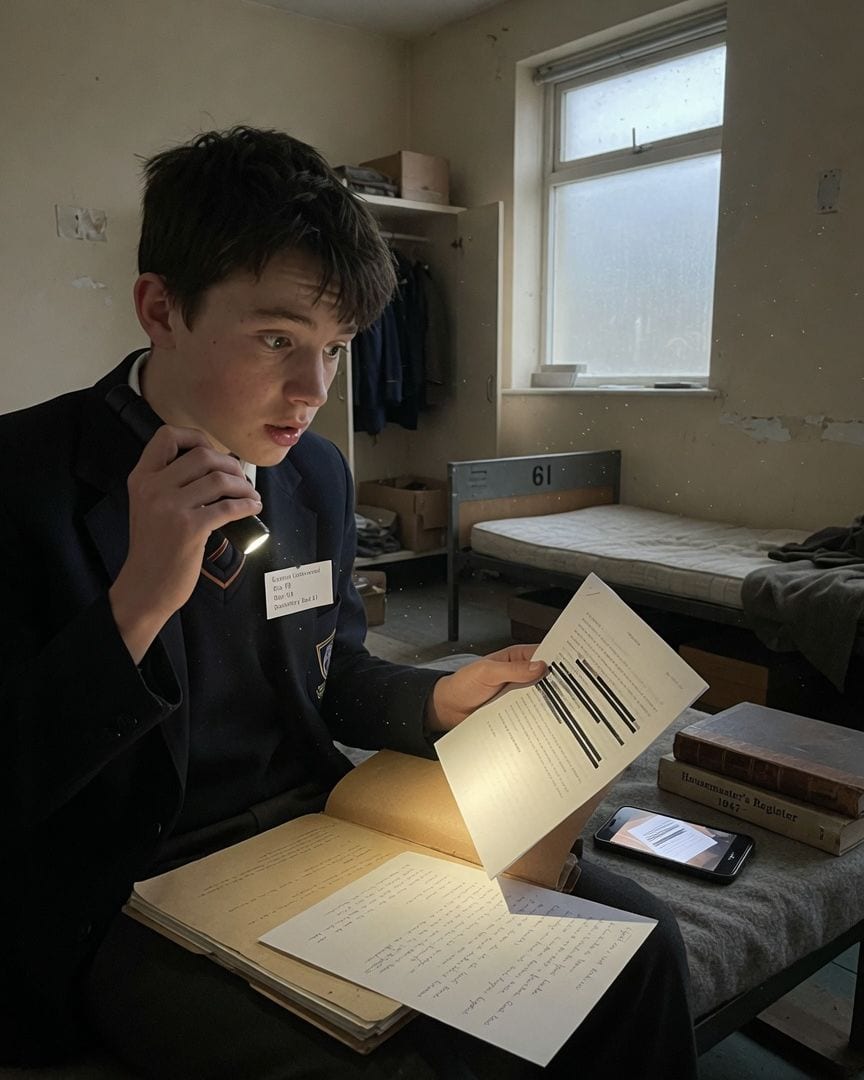
My boarding school bed number was 61, and the archive shows a boy assigned it every eight years since 1947, each leaving mid-term with the bed 'to remain made up'.
I found my matriculation card, listing me as 'Boy 61, Dormitory Bed 61.' Later, an old ledger revealed every boy assigned that bed since 1947 left mid-term, with an unsettling note: 'bed to remain made up.' Our housemaster’s recent scribble, 'as the others,' only deepened the dread around my own assigned bed.