Seventy years ago, a hidden journal recorded my door opening to the wrong street and receiving Lockwood post.
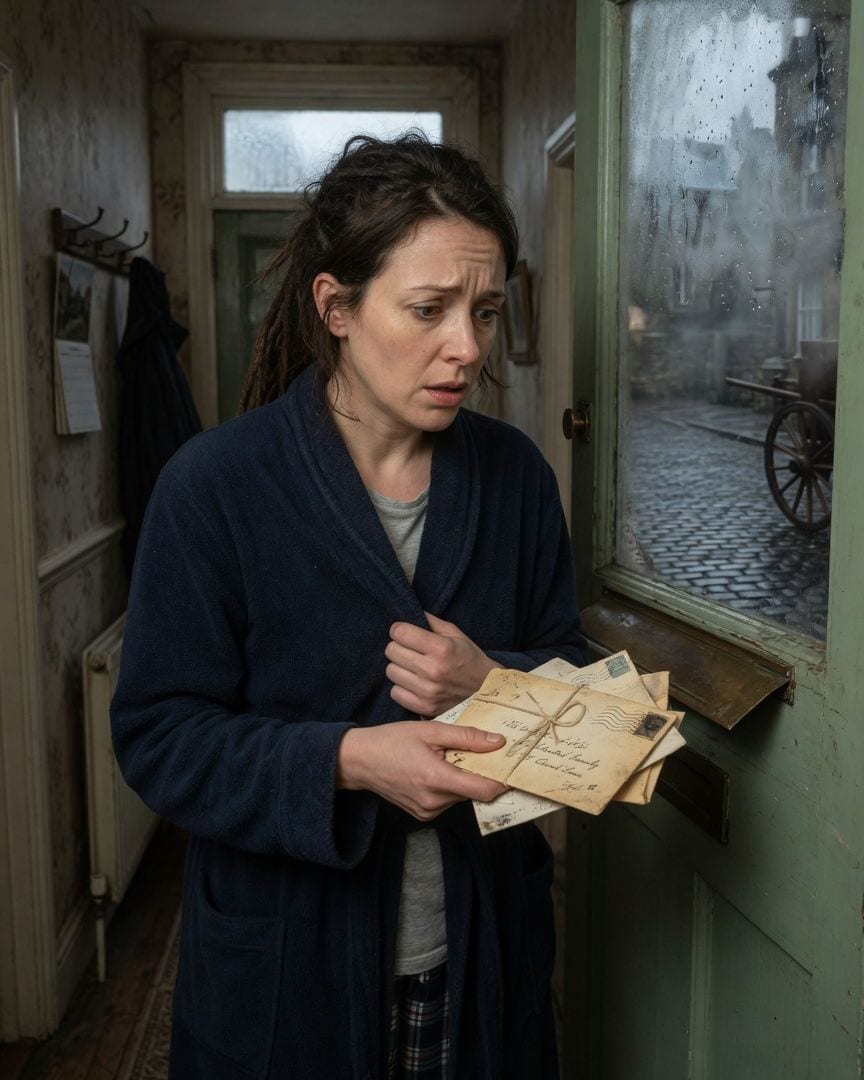
It was a grey morning, the kind that settles damply over everything and makes you wish you hadn't bothered to get out of bed.
I’d only been in the house a few weeks, inherited from a distant aunt, and was still finding my feet.
The place was quiet, on the edge of town, and the only sound usually was the distant bleating of sheep from the fields behind.
But then, a distinct clatter from the front door, the metal post flap hitting against the wood. My heart gave a small, inexplicable jump. Post usually came much later.
I walked to the door, pulling my dressing gown tighter. Reaching down, I lifted the inner flap, expecting to see my gravel path and the old rose bushes. Instead, the world outside was wrong.
It was a strip of cobbled street, slick and dark with rain, reflecting a murky, leaden sky that wasn't mine.
The air through the flap was thick and damp, smelling of coal smoke and something like wet earth, not the clean autumn air of my own garden.
A hand-cart rumbled past, its wooden wheels clattering on the stones, too close to the door. Then, heavy, muffled boots passed by, their sound surprisingly clear.
A bundle of letters, tied with grimy string, slid through the slot and into my hand. They felt distinctly warm, as if freshly held. The script was elegant, old-fashioned, written with a dip-pen.
They were addressed to 'The Lockwood Family' at this address. Before I could even register the impossible detail of the street, the vision flickered, the cobbled street winked out, and the flap fell shut with a soft thud.
I stood there, letters in hand, staring at the closed door. I lifted the flap again. My gravel path, my wind-blown recycling bin, my quiet street. Mundane. Absolutely normal.
The damp earth smell, however, still clung to the letters, to my fingers. And the warmth.
My rational mind scrambled: a trick of the light, a momentary hallucination brought on by low blood sugar, a particularly elaborate prank by local kids.
But the warmth of the paper was real, undeniable, a physical sensation that bypassed all logic.
I looked at the name 'Lockwood' on the brittle envelope, a name I’d seen carved, faded and almost illegible, on a large headstone in the old churchyard.
A family, I recalled from a casual glance at a local history book, long gone from these parts.
The letters themselves were brittle, the ink slightly faded, smelling faintly of coal smoke and that strange, old paper scent. I tried to dismiss the whole thing, convinced it was just an isolated, bizarre incident.
My research at the local library only yielded brief mentions of the Lockwood Family: they had simply vanished over a century ago, a local enigma no one had ever solved.
But then, other things started.
Every morning, at precisely 6 AM, I’d hear it. The distinct, old-fashioned whistle of a kettle boiling, like something from a Victorian kitchen. It was too clear, too specific to ignore.
My own kettle was electric, modern, and utterly silent save for a low hum. I tried unplugging it entirely, but the whistle, fainter now, still came from somewhere in the house, a ghost of steam in the quiet dawn.
I also found myself instinctively avoiding the third stair up to the landing.
It wasn't broken, but whenever I accidentally stepped on it, a faint, inexplicable creak would come, as if someone else, a habitual presence, had always avoided it, too. It felt… used. Or rather, un-used in a very specific way.
Then there was the antique armchair by the fireplace. It was a lovely, dark wood piece, comfortable enough, but I hadn’t sat in it more than a handful of times.
Yet, there was a worn indentation in the seat cushion, a polished sheen on the wood armrest where a hand might have rested for decades, much deeper than my brief use could possibly account for.
It was a set of quiet, persistent routines, happening in a house where I lived alone.
Eventually, I gathered the letters, tied once more with their grimy string, and took them to Roland Porter, the local archivist. He was a kindly, meticulous man, in his early seventies, surrounded by ledgers and dusty maps.
He recognized the Lockwood name instantly. "Ah, the Lockwoods," he mused, tapping a finger on a yellowed index card. "Vanished without a trace, back in the 1890s, I believe. Quite the local mystery. Before my time, of course."
He looked at the letters I’d brought, his brow furrowing. "Remarkable script, though. You don't see that much anymore."
He then mentioned, almost as an aside, that Joan Easton, the previous owner of my house, had been 'a bit eccentric' in her later years, often talking about 'the house's memories' and 'the schedule.'
Roland’s cryptic remark about Joan Easton and her 'house's memories' stuck with me, a burr under the saddle of my rational mind. Back home, a prickle of unease led me to search for any clues she might have left behind.
My house was old, full of nooks and crannies. I started in the dusty, rarely-used pantry, a narrow space off the kitchen where my aunt had kept old canning jars and forgotten preserves.
Beneath a stack of those empty jars, I noticed it: a loose floorboard. It was almost perfectly camouflaged, but a faint seam, just barely visible, caught my eye. My heart started to hammer against my ribs.
With a grunt, I managed to pry it open. Inside, tucked away in the shallow cavity, was a small, leather-bound journal.
Its pages were brittle, yellowed with age, but filled with the same elegant, old-fashioned dip-pen script I’d seen on the Lockwood letters. My breath hitched as I traced the faded words. The first entry was dated exactly seventy years ago:
'The post came again. The street was there. They asked for the Lockwoods. The cycle begins anew.'
The chill in that pantry was no longer just from the old stone walls; it was from the dawning, terrifying realization that this wasn't new, that someone else had known, and had documented it with unnerving precision.
Joan Easton’s journal quickly became my unsettling guide, a chilling, meticulous chronicle of the house's peculiar, cyclical life.
She hadn't just observed the phantom post; she'd documented a whole range of daily routines, each one resonating with the strange details I’d already noticed. The kettle, of course, was there, the 6 AM whistle noted repeatedly.
The avoided third stair, too.
But Joan also recorded the precise moment a faint scent of baking bread would fill the kitchen at 3 PM, and the even more unsettling sound of children’s laughter from the garden at dusk, always at 5:15 PM.
She meticulously recorded dates, noting how these 'manifestations' would intensify as a particular date in late autumn approached, culminating, she wrote, in a profound silence. With each entry, my own experiences snapped into sharper, more terrifying focus.
I cross-referenced Joan’s entries with historical records Roland Porter reluctantly granted me access to.
The Lockwood family, indeed, had vanished on a late autumn day in 1890, leaving behind an untouched meal on their dining table and a house that seemed to have simply absorbed them.
Roland, initially dismissive, grew quietly attentive as I presented the evidence from Joan’s journal, confirming the names and dates.
He recalled local folklore about the house being 'hungry,' but he’d always dismissed it as old wives' tales, the kind of things fearful people made up.
Now, seeing the terrifying coherence of Joan's observations, a grim expression settled on his face.
The house, I realized, wasn't just haunted; it was a recording, playing back a specific sequence of events, like a broken film loop.
The worn seat in the armchair, the polished sheen on the wood – I now knew it wasn't just worn by Joan.
It had been worn by the Lockwoods before her, by the unseen presences whose routines continued, their lives etched into the very fabric of the home.
As I delved deeper into Joan’s journal, the house’s 'routines' began to shift, becoming less an observation and more… an interaction.
The kettle’s whistle, which had been distant and faint, now sounded closer, more insistent, as if just in the next room, a breathy sigh.
The children’s laughter from the garden, once a distant echo, seemed to follow me as I walked through the house, a soft, almost tangible whisper just behind my ear. It made the hairs on my arms stand up.
One afternoon, I came downstairs to find the antique armchair, which I always kept tucked neatly under the window, pulled out and facing the fireplace.
Its worn seat cushion was slightly depressed, and a faint, unsettling warmth radiated from it, as if someone had just risen.
I reset it, pushing it back under the window, trying to convince myself it was a draft, or maybe I’d knocked it. But I found it moved again, facing the fireplace, the next morning.
I was no longer just observing; I felt distinctly observed.
Roland Porter, after another session in the dusty archives, gave me a strange look. He leaned across the table, his voice low, almost a whisper. "You know," he said, "Joan Easton, she… she started talking to the empty rooms.
Said they answered back, sometimes. Said she was trying to warn them." He paused, his eyes fixed on me. "Be careful, Sylvia. Some history isn't meant to be disturbed. It might disturb you back."
That night, back in the quiet house, I found a new letter in the bundle of old Lockwood mail. It wasn’t addressed to the Lockwoods. This one was addressed directly to 'The Occupant,' in Joan Easton's familiar dip-pen script.
It was dated decades ago, but the paper was still warm, radiating that same impossible heat. My hands trembled as I unfolded it. It read:
'They know you’re watching. Don’t try to intervene. The date is approaching. You’ll be next.'
I brought Joan's warning letter to Roland Porter, my hand shaking slightly as I laid it on his desk. His usual academic composure cracked, replaced by a grim resignation that was far more chilling than any panic.
He sat back, running a hand over his bald head.
"The Lockwood vanishing wasn't just a local mystery, Sylvia," he said, his voice barely audible. "It was the first in a series of similar disappearances from that specific house. Less frequent, perhaps, but it's happened again and again."
He pulled out a thick file, filled with faded newspaper clippings. They detailed other families who had simply 'left town' without a trace, all from the same address, all around the same late autumn date, roughly every fifty years.
"The house," he whispered, "it doesn't just remember. It... re-enacts. It needs a full cast for its play, and it finds them. It collects moments, and lives."
He explained that Joan Easton, in her later years, believed the house was a 'collector' of moments and people, absorbing them into a repeating loop.
The cobbles, the hand-cart, the kettle, the laughter – these aren't just echoes; they're the last moments of the absorbed, replaying.
The letters, he now understood, were part of the Lockwoods' final mail delivery, a moment forever etched into the house, replaying without end.
The 'warmth from a hand' that I had felt, he speculated, was the phantom touch of the postman from the 1890s, or perhaps Joan Easton’s own hand, trying to feel connected to the past, or even a last desperate touch from those being pulled in.
The dread deepened, settling in my bones.
The house wasn't just haunted by a presence; it was haunted by a pattern, a cyclical consumption, and I was living within its next iteration, the lead role in a play I never auditioned for.
Every routine, every smell, every sound, now snapped into horrifying focus: they were the prelude, a meticulously re-enacted countdown.
Frantically, I reread Joan's journal, flipping through the brittle pages, searching for answers, for a way out.
Her final entries detailed the intensifying routines, the growing pull towards the 'wrong street' vision, the feeling of being watched by unseen eyes, of being 'called.'
She described her desperate attempts to communicate with the echoes, to understand the 'rules' of the house, to warn them. The entries grew more desperate, less coherent, her handwriting becoming frantic, barely legible.
Then, a chilling realization hit me as I read the last few pages. Joan wasn't just documenting the cycle; she was becoming part of it.
Her final entries were dated precisely fifteen years ago today, the very same late autumn date as the Lockwood's disappearance, and the date the house's cycle culminates.
The last words, written in a shaky, almost desperate hand, ended abruptly mid-sentence:
'The smell of bread is strong now. I think… I think I see them. The street is waiting. They want the letters. It’s the date. The door, it’s—'
The ink smeared off the page, as if the pen had been dropped mid-stroke, her final thought interrupted, consumed. I looked around my own kitchen, a frantic pulse throbbing in my temples.
The smell of fresh bread was suddenly overpowering, thick and sweet in the air, though I hadn't baked anything in weeks. The kettle on the hob, unplugged and cold, let out a soft, distant whistle, an almost playful sound.
The date today was the same late autumn date. The cycle had not only happened before, but it had claimed Joan Easton. And now, I knew, it was closing in on me. The house’s next memory.
The full truth detonated in my mind, a horrifying clarity that slammed into me with the force of a physical blow. The house was not just old, not just a place where things had happened.
It was a living memory, a temporal anomaly that didn’t just record, but absorbed.
The 'wrong street' wasn't just a vision; it was a gateway, a specific moment in time – the final destination for its residents before they were pulled into its eternal, replaying loop. It was a single point, re-enacted without end.
The letters, warm from a hand, were not just echoes of the past; they were the last tangible links between the 'outside' world and those about to be pulled into the house's memory.
Perhaps even a desperate, phantom attempt at communication from within, a final plea from those trapped in the repeating tableau.
The kettle, the worn stair, the children’s laughter – these were not just traces; they were the house's 'digestion,' the process of integrating new memories, new routines, new occupants into its timeless schedule.
Joan Easton, in her attempts to understand, was drawn into the very pattern she observed, becoming another 'echo,' another player in the house's endless drama. And the cycle culminated today.
I walked through the house, the smells, sounds, and subtle movements of the past now overwhelming, tangible. The scent of coal smoke, of old tea, of fresh bread.
The faint, rhythmic creak of the third stair, the soft whistle of the kettle, the ghostly laughter of children from the garden.
I saw faint, shimmering outlines of figures moving through the rooms – the Lockwood family, dressed in their old-fashioned clothes, Joan Easton, a frail, translucent woman – all engaged in their final, mundane routines, their faces serene, unseeing, yet expectant.
They were waiting. For her. For me. The house was not evil; it was simply. And it was hungry for another memory to retain, another life to replay, another routine to absorb into its timeless schedule.
I had to escape. I grabbed my car keys from the hook by the door, my fingers fumbling. But the front door, usually so easy to open, felt heavy, immovable, as if rooted to the frame, despite my frantic pulling.
The air in the hallway grew thick with the scent of old tea and baking bread, cloying and sweet. The sounds of unseen children playing echoed from the garden, drawing me back, a siren song of innocence.
I heard the insistent, familiar whistle of the kettle from the kitchen, louder now, almost demanding.
I felt a profound, almost irresistible urge to answer it, to check the post one last time. My hand, as if acting on its own, reached for the letterbox flap, my fingers trembling.
The house pulled at me, not with violence, but with a gentle, insistent gravity, a sense of belonging that I now understood was its trap.
The vision of the cobbled street flickered at the edge of my perception, growing clearer, more real, the sound of the hand-cart almost deafening. I saw the postman from another century, a vague, uniformed shape, waiting to deliver the letters.
I struggled, fighting the compulsion, but my legs felt heavy, rooted to the spot. My will dissolved into the house’s vast, hungry memory.
I felt a cold hand gently guide my own towards the post flap, and as my fingers touched the metal, I saw it. The door, which had been so heavy, now felt light, almost inviting, a portal to another time.
I looked down at my hand, now covered in the faint, shimmering outline of another, older hand, then another, then many, ghostly layers of touch. I knew I could not fight it.
The house was simply continuing its routine, and I was now part of it, one more memory to be replayed.
The house settled. A week later, a new post delivery person noticed the letterbox flap was slightly ajar, rattling in the breeze. The recycling bin was still blown over, just as it had been for weeks.
Inside, the house was quiet, meticulously neat, as if waiting. The faint smell of baking bread lingered in the kitchen, and a kettle, unplugged, sat on the hob. Nothing seemed out of place, yet everything felt profoundly empty.
A new 'For Sale' sign appeared on the lawn, the property listed as 'charming period home, recently vacated,' a quiet testament to another life absorbed.
The house is quiet, waiting for its next occupant. The post flap, once a source of unsettling visions, now hangs innocently, its metal cool to the touch.
But sometimes, when the light is just right, and the wind whistles through the eaves, a faint, distant whistle of a kettle can be heard from within, and the phantom scent of baking bread drifts through the air.
And on certain grey mornings, a new post delivery person might notice the letterbox flap open, not onto the familiar gravel, but onto a narrow, cobbled street where a hand-cart rumbles past, its wheels clattering.
And a bundle of letters, tied with string, slides through the slot, addressed in elegant, old-fashioned dip-pen script to 'Sylvia Marsh' at this address, feeling distinctly warm, as if freshly held. The house remembers, and it waits.
If this one got to you
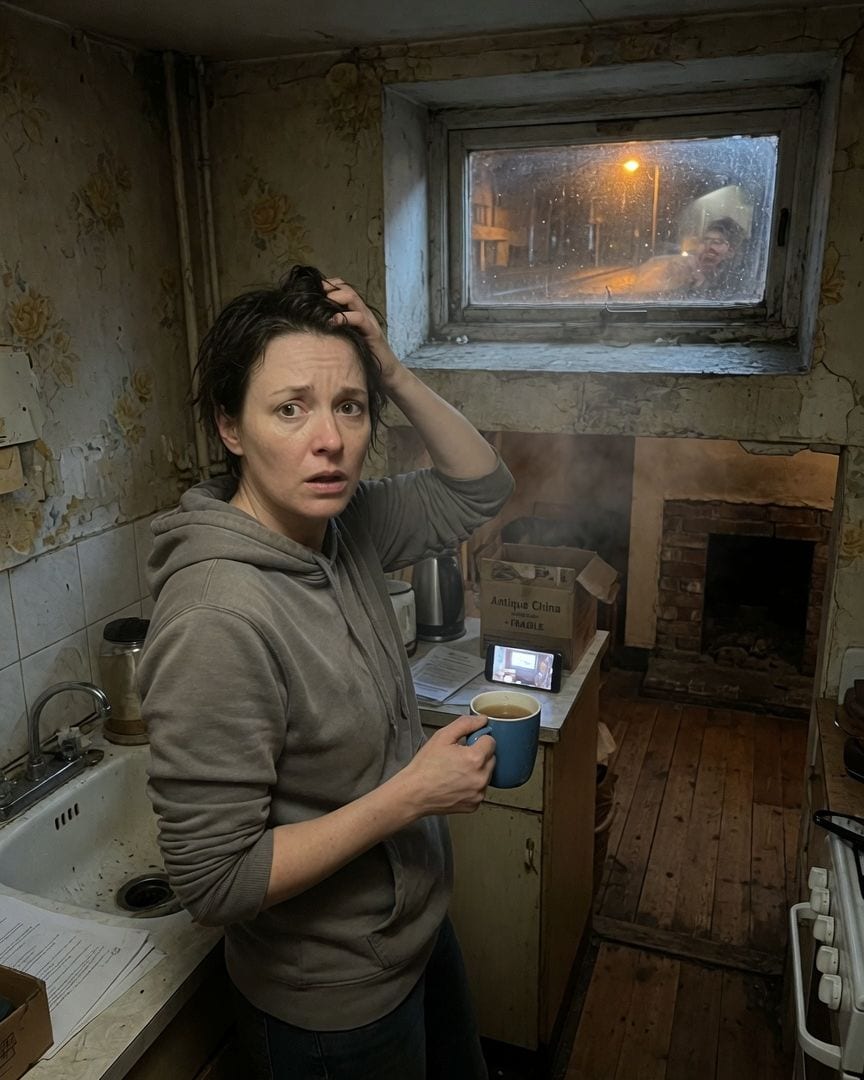
My basement window shows a gaslit kitchen moving at midnight, hams hung from the ceiling. My own kitchen is dark.
Settling into my new basement flat, I was making tea late one night when I glanced out my kitchen window. Instead of the concrete well, I saw a gaslit kitchen with an enormous cast-iron range, a young scullery girl, and cured hams hanging from the rafters. The vision was too sharp, too real, and the smell of coal smoke lingered long after it vanished.
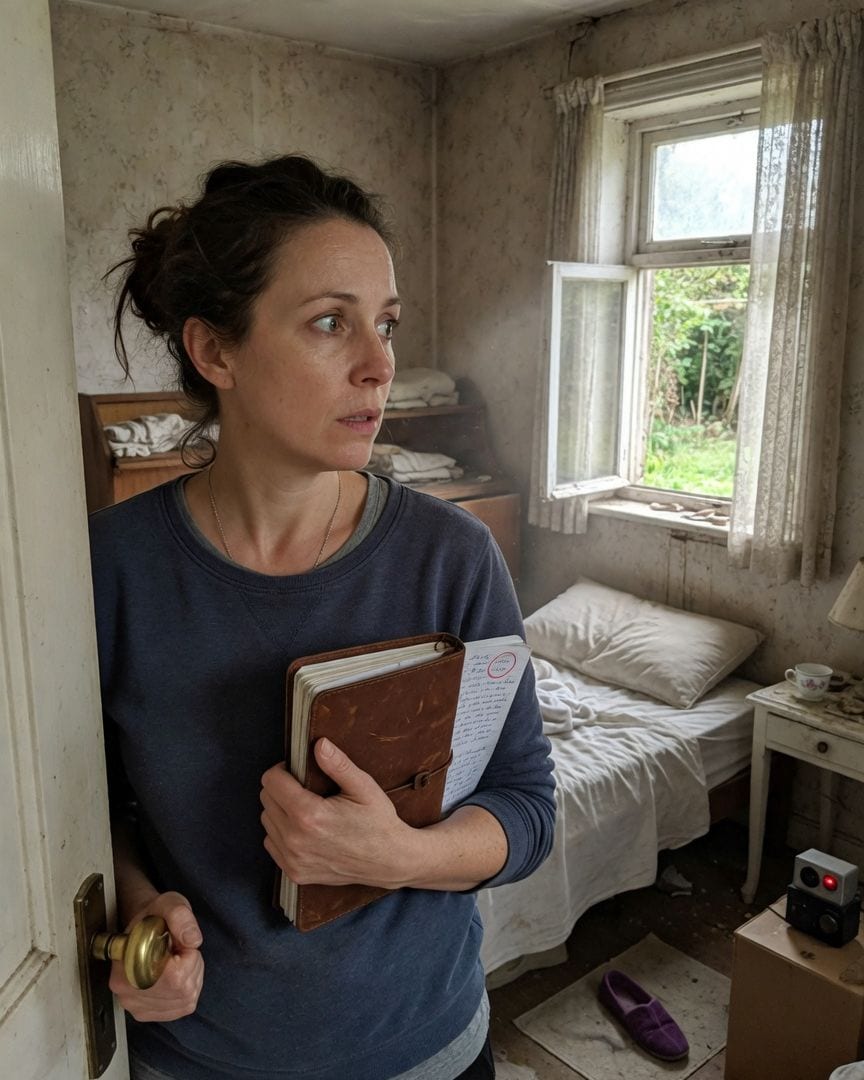
My spare room bed is slept in every few nights, sheets warm and pillow dented. I live alone, painted the window shut, and nobody has a key.
I've lived in Grace's house for six months, adjusting to its quiet rhythms. But the spare room, which I keep shut and empty for storage, has a disturbing routine of its own. Every few mornings, the bed is clearly slept in, the sheet rumpled and warm, and the window I painted shut is open exactly two inches.
My front door has a dented gate and a dead hydrangea. I walked past it six times, trying to reach the corner shop just a hundred yards away. The pavement kept bringing me back to my own porch, and the shop's light never moved.
My morning started like any other, a quick walk to the corner shop from my home at Number 14, Elm Terrace. But after walking what felt like two minutes, I found myself back at my own front door, the shop no closer. I tried six times, faster and slower, but my street kept compressing, refusing to let me leave.
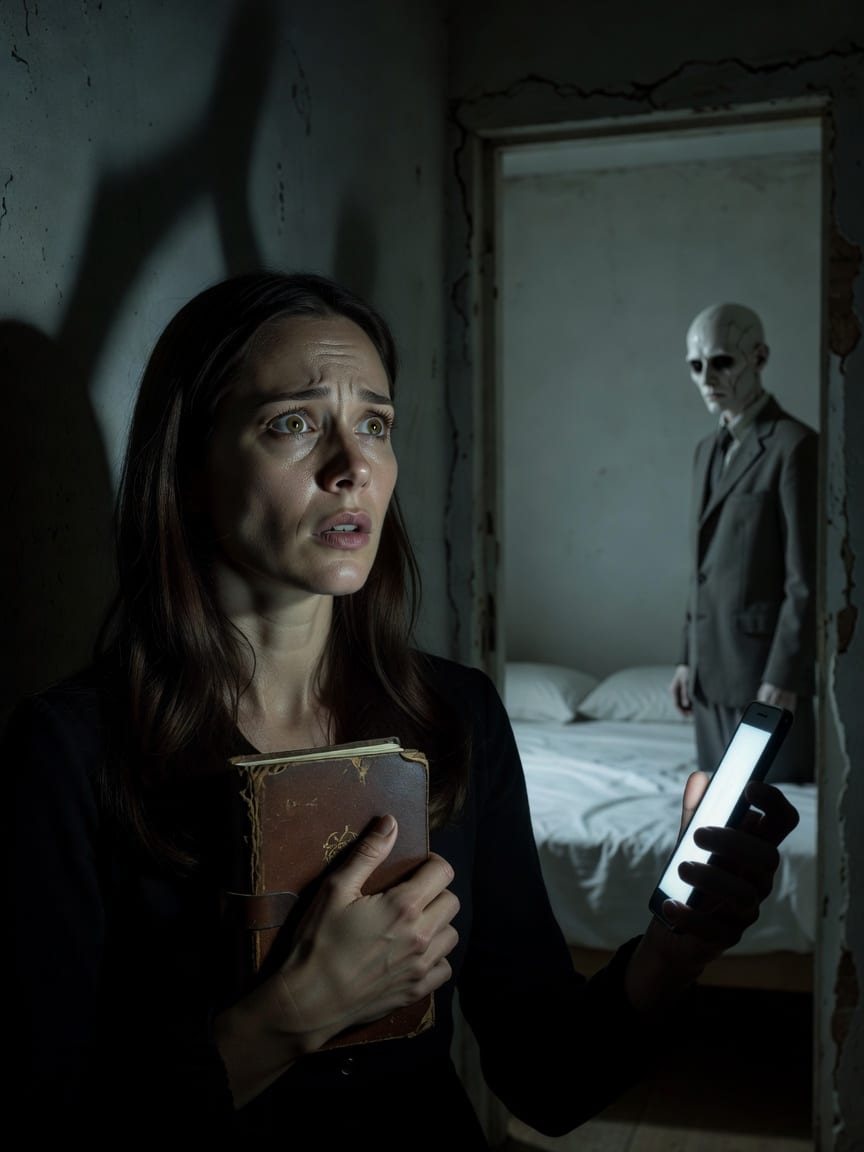
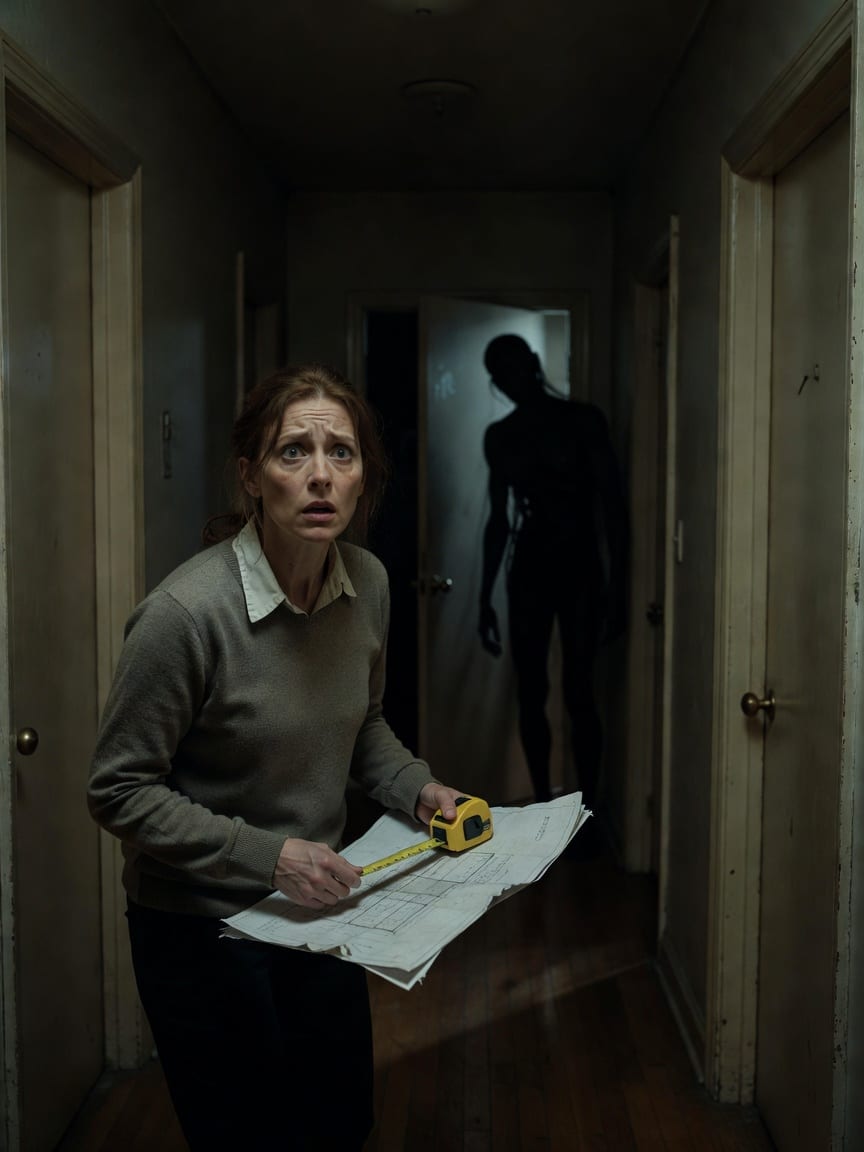
Behind a plastered-over doorway, I found a room. Papered, carpeted, and furnished with a made bed, sealed for decades. The air was dead still, but the bed wasn't dusty. My council tax bill only lists five rooms.
I'm Claire, an architect, meticulously planning my new Victorian terrace renovation. But when I uncovered a hidden room behind a wall, everything I knew about time and decay shattered. The bed was perfectly made, the air still, yet there was no dust, only an unnerving cold.
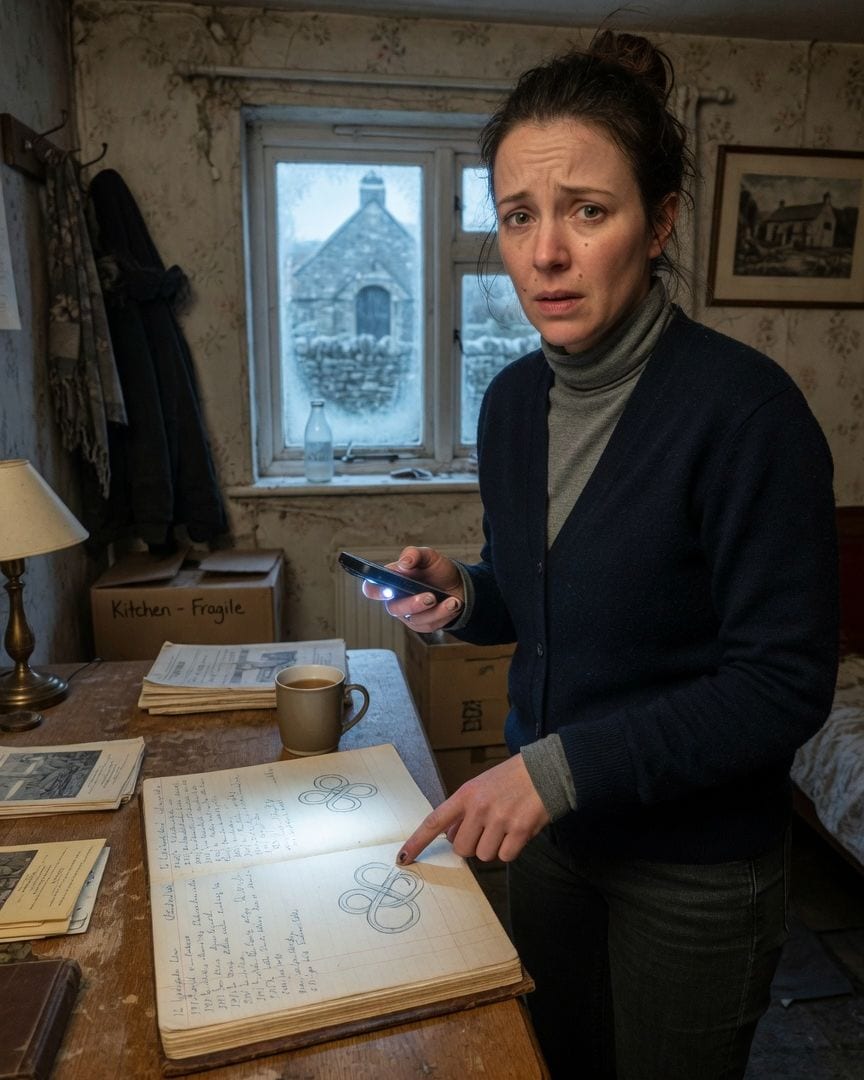
Milk appears daily by my lychgate. The dairy closed in '79. My address is handwritten into their old delivery book, starting the day we moved in.
Moving to Blackwood Creek, I loved the quaint charm, especially the unexpected morning milk delivery to my lychgate. But when I mentioned it to Eleanor at the village shop, her smile froze. She told me Willow Creek Dairy closed decades ago, in '79.
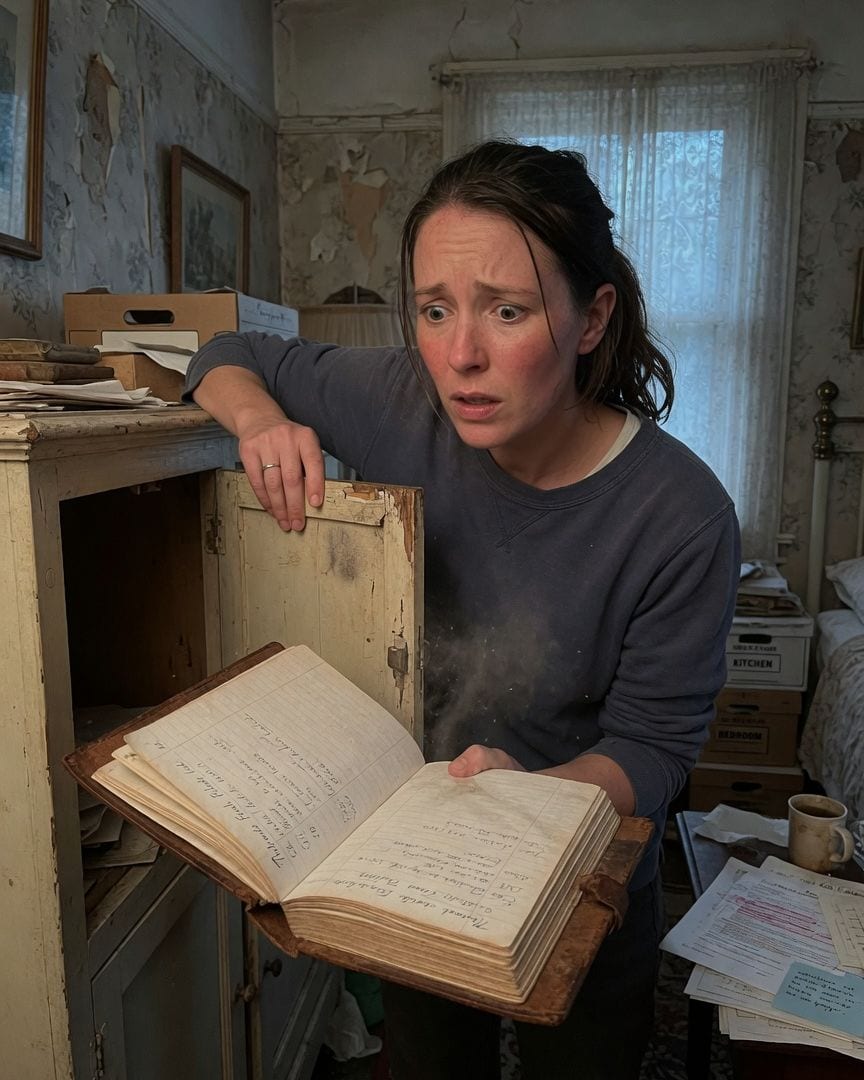
My house’s 1962 valuation has a redacted line, but the surveyor’s note says 'condition as attaches to each owner in turn.' It’s the same code on my own mortgage completion statement.
Moving into my new Victorian house, I found a redacted line in an old mortgage report. It mentioned a condition that 'attaches to each owner in turn,' a phrase my solicitor dismissed as an 'archival quirk.' But then, a hidden ledger in a bedroom cupboard revealed a chilling chain: every past owner's name, followed by 'Condition Fulfilled'.