Milk appears daily by my lychgate. The dairy closed in '79. My address is handwritten into their old delivery book, starting the day we moved in.
The morning I found the milk by the lychgate, I remember thinking it was exactly the kind of quaint detail that had drawn me to Blackwood Creek.
The air was sharp, smelling of damp leaves and woodsmoke, and a thin frost rimed the low stone wall marking the edge of my garden. There, a single, old-fashioned glass bottle sat, its contents impossibly white against the grey stone.
It looked like something from a storybook, a silent, charming welcome to my new life in the village. I picked it up, the glass cool and condensation-beaded, and carried it inside. Fresh milk for my morning tea.
Later that day, I was in Eleanor Vaughn’s village shop, stocking up on essentials. She was a woman with kind eyes and a smile that rarely faltered. As she rang up my basket, I gestured vaguely.
"You know, I had the loveliest surprise this morning. A milk delivery, right to my lychgate. I didn't even know there was a local dairy that still did that."
Eleanor paused, her smile freezing for a beat, a faint stiffness entering her posture. She looked down at the counter, her fingers fiddling with a stack of local postcards. "A milk delivery, you say?"
Her voice was a little too soft. She cleared her throat. "Willow Creek Dairy closed down back in '79, miss. Been gone for decades." She met my gaze, her eyes suddenly serious, almost wary.
"Best leave that be, miss," she added, her voice dropping, "what you find by the lychgate."
I laughed, a little uncomfortably. "Oh, I'm sure it's just some sweet elderly neighbor, perhaps a bit confused, thinking it's still their route from forty years ago." I wanted to believe it.
Wanted to believe the village was simply charmingly eccentric. But the next morning, despite the previous day's consumption, another fresh, cool bottle sat precisely where the first had been. Untouched. Pristine. The plastic cap unbroken.
It was unnerving, this silent, persistent delivery from a dairy that had ceased to exist before I was even born. It wasn't a mistake. It wasn't a prank. It was simply there.
The milk deliveries continued for a week, a quiet, impossible routine. Every morning, the fresh pint would appear, precisely at dawn, by my lychgate.
I tried to find a rational explanation, running through possibilities: a complicated prank orchestrated by a bored local, a bizarre historical re-enactment, some kind of forgotten village service I hadn't been informed about.
But each theory withered under the sheer, silent persistence of it. It simply was.
One afternoon, desperate for distraction and still hoping to find some local history about my new house at 12 Lychgate Lane, I visited the small village museum.
It was a dusty, quiet place, filled with relics of a forgotten time: farming tools, faded sepia photographs of stern-faced villagers, and display cases crammed with local crafts.
Amidst a section dedicated to old village businesses, my eyes snagged on a heavy, leather-bound book under a glass case. The label, in elegant, looping script, read: "Willow Creek Dairy: Daily Delivery Ledger, 1950-1979."
My pulse quickened, a cold certainty forming in my stomach. I walked over to the desk where Conrad Bishop, the elderly curator, sat hunched over a newspaper, his spectacles perched on the end of his nose.
"Mr. Bishop," I said, trying to keep my voice even, "may I… may I look at that ledger?"
He looked up, his eyes, pale and ancient, focusing on me. His expression was unreadable, a blank slate that gave nothing away. He simply nodded, a slow, deliberate movement.
The sound of him unlocking the glass case seemed unnaturally loud in the quiet room. He lifted the heavy book out, placing it on the desk between us.
The leather was smooth and cool under my fingertips as I opened it, the pages brittle with age.
I turned to the very last page, where the final, faint entries from 1979 trailed off, almost illegible. But below them, at the very bottom of the page, in fresh, undeniable pencil, was a new entry. My breath hitched.
It was my own address: '12 Lychgate Lane,' followed by the date, 'October 12th,' the exact day I had moved in, and then, 'one pint daily.'
It was too precise, too current to be a mistake, too impossible to be real.
I stared at the ledger, my breath catching in my throat. My address. My move-in date. My hand trembled slightly as I traced the line, my fingertip grazing the fresh graphite. Then, I noticed it.
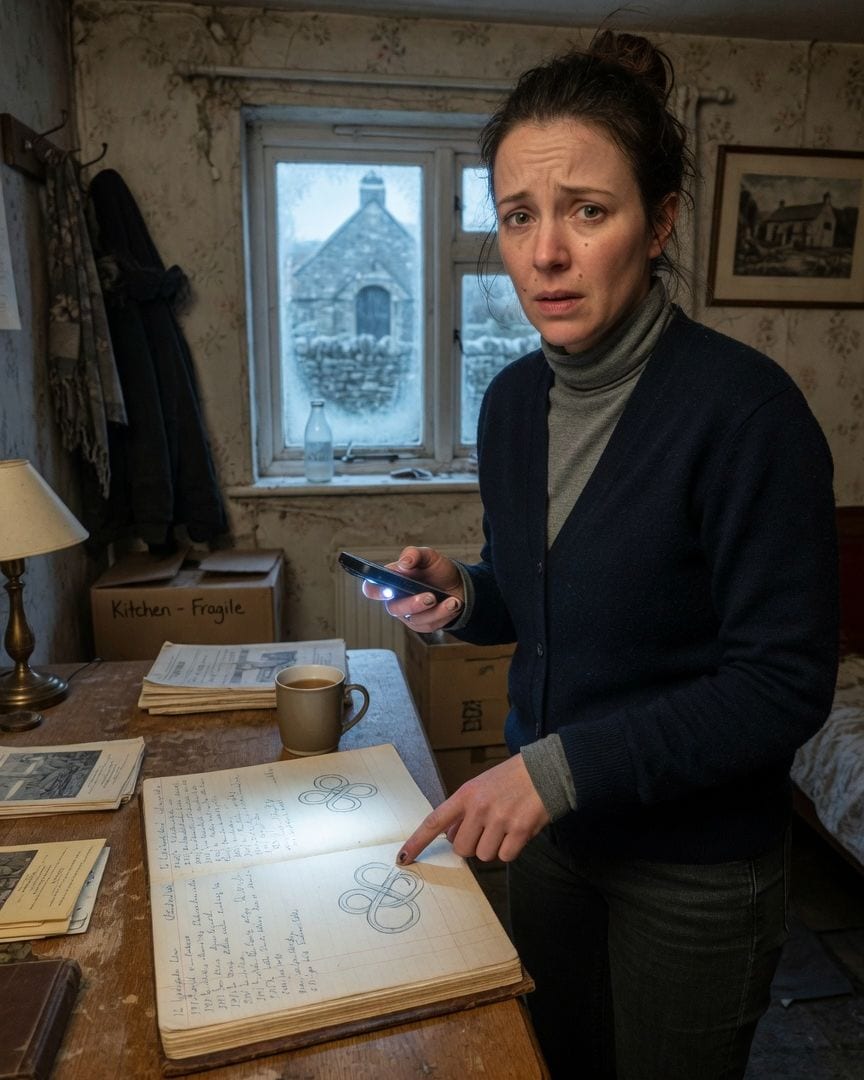
Next to her freshly penciled entry, a small, almost imperceptible mark. It wasn't a tick, not an initial, not a signature I recognized. It was a simple, abstract symbol, like a crude, looping knot, drawn with a single, unbroken stroke.
I ran my finger up the page, to the entry above hers, one of the last from 1979. A similar symbol, faint but undeniably present, etched into the yellowed paper next to that address. And the one before it.
And the one before that. Each name, each address, each date of a 'delivery' across the decades, was accompanied by this same, unsettling mark. A tally. A signature.
I couldn’t place it, couldn’t understand it, but the repetition was a cold, creeping dread.
The symbols in the ledger haunted me. I tried to dismiss it as a coincidence, a quirk of some long-dead dairy worker, a strange habit.
But every morning, the fresh pint of milk appeared, a silent, persistent reminder, and the quiet evasiveness of the locals now felt like a physical wall, thick and unyielding.
The easy charm of Blackwood Creek was curdling into something profoundly unsettling.
I decided to try again. I dropped by Eleanor Vaughn’s shop under the guise of needing more eggs. I casually mentioned the old dairy ledger, how fascinating it was to see such a record of village life.
Eleanor, who had been chatting amiably with a customer just moments before, suddenly became very busy, polishing a shelf of jams with intense concentration. Her movements were jerky, her answers clipped and vague. "Oh, that old thing?
Just a record, I suppose. Not much to it, really. History, you know." Her eyes darted to the window, avoiding mine. The air in the small shop grew thick with an unspoken warning.
Feeling more isolated than ever, I decided to consult Marcus Sinclair, the village archivist, hoping his meticulous nature would cut through the local reticence.
I framed it as a deep dive into my new house’s history, which was, in part, true.
Marcus, a precise man with thick spectacles and neatly combed grey hair, was initially very helpful, pulling out old property deeds, census records, and even maps tracing the lineage of 12 Lychgate Lane back to the 18th century.
But when I subtly steered the conversation towards the Willow Creek Dairy and the names I’d seen in the ledger – not mentioning my own, of course – his posture stiffened.
He cleared his throat, a small, dry sound, carefully placing a brittle document back in its archival folder. The sudden quiet in the room was louder than any shout.
"A fascinating but perhaps tangential detail, Miss Reynolds," he said, his voice losing its initial warmth, becoming clipped and distant. "I suggest you focus on more relevant aspects of your property’s lineage.
There are many important records here, far more pertinent to your interests." He then politely but firmly ended our session, pushing the stack of documents towards me, indicating my time was up.
He stood, a silent signal that dismissal was final, leaving me with a profound sense of being not just dismissed, but warned.
The dismissal from Marcus only fueled my resolve. The quiet fear in Eleanor’s eyes, Marcus’s sudden coldness – it all resonated with the chill of the ledger.
I spent the next few days holed up in my cottage, cross-referencing names from the ledger with old census records and property transfers I’d managed to copy before Marcus’s abrupt cutoff.
I was searching for patterns, anything that might explain the symbols or the sudden shifts in local demeanor.
The air in the village seemed to thicken around me, the pervasive quiet turning into something oppressive, as if every window held unseen eyes.
One morning, as I stepped out to retrieve the daily milk bottle, I found something else. A small, smooth, dark grey stone sat on my doorstep, wet with dew.
It was shaped exactly like the looping knot symbol from the ledger. My blood ran cold. It wasn't a natural shape; it had been carved, deliberately, perfectly mimicking the mark.
I looked up, scanning the street, my heart thumping against my ribs. Across the village square, on the porch of his house, Marcus Sinclair stood. He was watching me. He didn't wave, didn't smile.
His face was devoid of expression, save for a strange, knowing calm in his eyes. He gave a slow, almost imperceptible nod, a gesture that conveyed both acknowledgment and a chilling sense of "I told you so."
It was a silent, personal warning, delivered with unnerving precision. My digging had been noticed. I was being watched.
The stone on my doorstep, the nod from Marcus, the quiet fear in Eleanor’s eyes – it all coalesced into a desperate need for answers. I couldn't ignore it any longer.
I returned to the museum, the stone clutched in my hand, my heart a frantic drum against my ribs. I found Conrad Bishop exactly where I’d left him, behind his desk. This time, there was no polite request.
I placed the ledger on his desk with a thud, then the stone beside it, pointing to my own entry, then to the repeating symbols.
"What is this, Mr. Bishop?" I demanded, my voice tight, barely above a whisper. "Why is my address in this book? Why do these symbols appear next to every name?
And this," I pushed the stone forward, "this was on my doorstep this morning. What does it mean?"
Conrad looked at the ledger, then at the stone, then at me, his ancient eyes holding a depth of knowledge that chilled me to the bone. He sighed, a slow, heavy sound that seemed to carry the weight of decades.
"The ledger," he began, his voice gravelly, "it's not for milk deliveries, Miss Reynolds. Not really." He paused, choosing his words with immense care, his gaze distant. "The symbols… they marked those who moved on."
A knot tightened in my stomach, a cold, hard stone. "Moved on? What does that mean?"
He leaned forward, his voice barely a whisper, forcing me to lean closer to hear. The air around us seemed to grow heavy, as if the very walls of the museum were listening. "It means they left. Permanently.
And the village… Blackwood Creek… it has an understanding. An old agreement." He wouldn't elaborate on the "agreement" itself, only that it had kept Blackwood Creek safe and prosperous for generations.
Fertile soil, good harvests, peace – all at a cost. He implied the milk, the daily delivery, was a kind of beacon, a notification, but for what, he wouldn't say.
He spoke of "the arrangement" as if it were a natural law, unchangeable, unchallengeable, hinting that the town's collective silence was not malice, but a deeply ingrained, fearful compliance.
The dread wasn't in what he said, but in the calm, unshakeable certainty with which he said it, as if he were discussing the weather, not human sacrifice.
Conrad, with unnerving calm, explained that the pattern of 'moving on' was directly tied to the ledger entries, occurring roughly ten years after the first 'delivery' to an address.
He spoke of it as a natural, inevitable consequence of 'the arrangement,' as if it were simply the way things were, always had been, always would be.
As he spoke, he gestured to an old, faded sepia photograph on his desk: a group of stern-faced village founders from the 1800s, posing stiffly in front of the original lychgate, now a crumbling monument at the edge of the village.
My eyes were drawn to one woman in the photo, standing slightly apart from the others, her expression unreadable, almost serene. She held herself with an odd rigidity.
In her hands, she held a small, round, leather-bound book, identical in every detail to the Willow Creek Dairy ledger now open on Conrad’s desk, its pages still showing my penciled entry.
A sudden, cold shock jolted through me, a blast of icy recognition that made my breath catch in my throat.
This woman, I realized with a terrifying certainty, was the exact same person who had greeted me on my first day in the village, standing by my lychgate. The one who told me, "Best leave that be, miss."
I'd assumed the woman was a long-term local, perhaps a neighbor I’d simply not seen again, or whose face had blurred into the initial overwhelming impression of a new place.
But now, I realized I couldn't recall her name, couldn't place her in any other village memory since that first morning.
The woman in the 1800s photograph, the one holding the ledger, looked precisely, impossibly, like the woman who had warned me just weeks ago. Not similar. Not a family resemblance. Exactly the same.
"Who is she?" I whispered, my voice barely audible, pointing a trembling finger at the woman in the photograph. The air in the room, already heavy, seemed to press in on me, making it hard to breathe.
"The Steward," Conrad replied, his voice flat, devoid of any emotion. "A guardian of the arrangement. She ensures it is honored."
He explained that 'the Steward' isn't one person, but a role, a continuous presence, perhaps even the same entity manifesting through generations, maintaining the pact.
The arrangement, he finally confessed, was a bargain struck centuries ago with a primal force connected to the very land of Blackwood Creek. Prosperity, fertile soil, and peace for the village came at a price: a life, every ten years.
The milk marked the chosen, a daily notification of their selection, and the ledger recorded their passage.
Olivia, by taking the milk from her lychgate, had either delayed the original target's marking or, worse, marked herself.
The town elders, including Marcus and Eleanor, were not just aware; they were complicit, descendants of the original signatories, ensuring the cycle continued, their quiet agreement a horrifying testament to survival.
The Steward, the woman in the photo, was not a ghost but a living embodiment of the pact's enforcement, appearing to those who were either designated or who interfered.
Every clue I had found, every evasive glance, every symbol, every disappearance, now clicked into a terrifyingly coherent, unbreakable pattern. The world had shifted on its axis, revealing the true, ancient horror beneath Blackwood Creek's quaint facade.
The full, terrible truth detonated in my mind, a cold, hard blast.
There was no fighting centuries of pact, no breaking an agreement with a force tied to the very earth, no convincing a whole community bound by fear and blood. There was only escape.
I fled Conrad's office, my heart a frantic drum against my ribs, the sound echoing in my ears as I ran through the quiet village streets.
I burst into my house, gasping for air, and began to pack frantically. My hands shook as I threw essentials into a duffel bag, my mind racing with images of the woman in the photograph, her ageless face.
I would drive away, I decided, and never look back. The milk, the ledger, the village – it would all be a nightmare I left behind.
As I zipped my duffel, my eyes fell upon the lychgate outside my window. Another milk bottle sat on the stone wall, freshly delivered, gleaming white in the afternoon sun.
This time, a small, smooth, dark grey stone, shaped like the looping knot symbol, was perched squarely on its cap. A cold, heavy dread settled over me, chilling me to the bone. It was a final, undeniable mark.
I looked up, and there, standing by the lychgate, just out of the streetlight's reach, was a figure. It was the Steward, the woman from the photograph, her silhouette stark against the fading light.
She was watching my house, watching me. Her face was calm, unreadable, an ancient serenity that was more terrifying than any anger.
I grabbed my car keys, my hand shaking so violently the metal jingled. I moved towards my front door, my only way out.
I had installed a smart lock, a modern convenience in an old house, a touch of the new world in a place steeped in the old.
As my fingers brushed the doorknob, I heard a faint, almost imperceptible click from the lock mechanism. It wasn't me unlocking it. It was locking. From the inside.
The house at 12 Lychgate Lane stood empty for weeks. Lights remained off, curtains drawn. The milk bottle continued to appear daily by the lychgate, untouched, until one morning, it simply stopped.
Eventually, a 'For Sale' sign appeared on the lawn, then quietly vanished. No one in Blackwood Creek asked about Olivia Reynolds. Her name faded from memory, a quiet ripple in the village's unchanging current.
The general store no longer stocked her preferred brand of tea. The local archives were quietly rearranged, the ledger secured once more in its glass case, its fresh pencil entry now subtly faded, blending into the past.
A year later, a new family moved into the house by the lychgate. They were a young couple, excited by the village’s charm and the house's quaint history.
On their first morning, the wife stepped outside, stretching in the crisp air, and noticed a bottle of milk sitting on the stone wall by the lychgate. She smiled, a little surprised, and called back into the house. "Look, honey!
A fresh delivery already!" Her husband, a tall man with kind eyes, walked out onto the porch, carrying two steaming mugs of coffee. He saw the milk bottle, and a faint, almost imperceptible change flickered across his face.
He smiled back at her, a strange, knowing calm settling over his features. "Best leave that be, love," he says, a faint, wrong little smile on his face.
If this one got to you
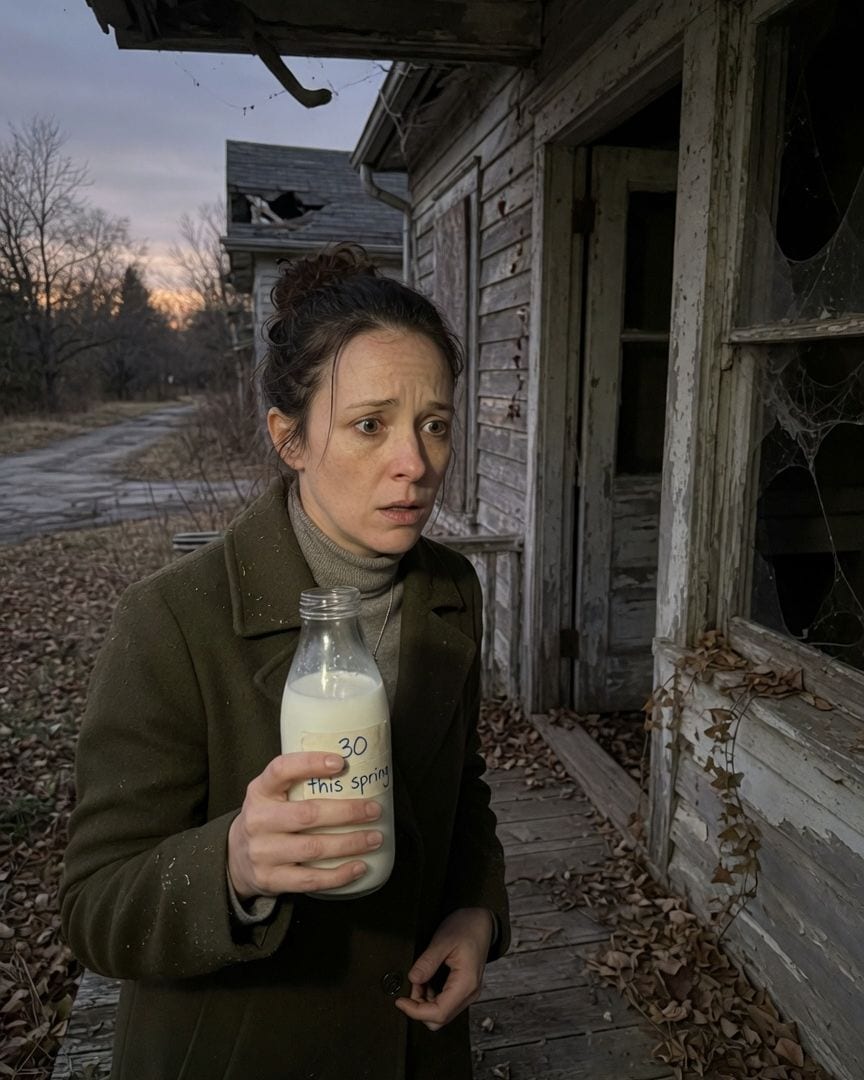
My grandfather's old milk ledger shows Account 30 reissued to the same house every ten years since 1930. Different names, same number. The last entry, unpaid, is dated this spring.
Sifting through my grandfather Howard's old things, I found his milk ledger. One account for a house long abandoned on Foldyard Lane showed a strange pattern of recurring 'stopped taking milk, gone' entries, ending with 'unpaid' this spring. Driving out to the decades-old ruin, I found a pristine, sealed milk bottle, dated 'this spring,' on its crumbling porch.
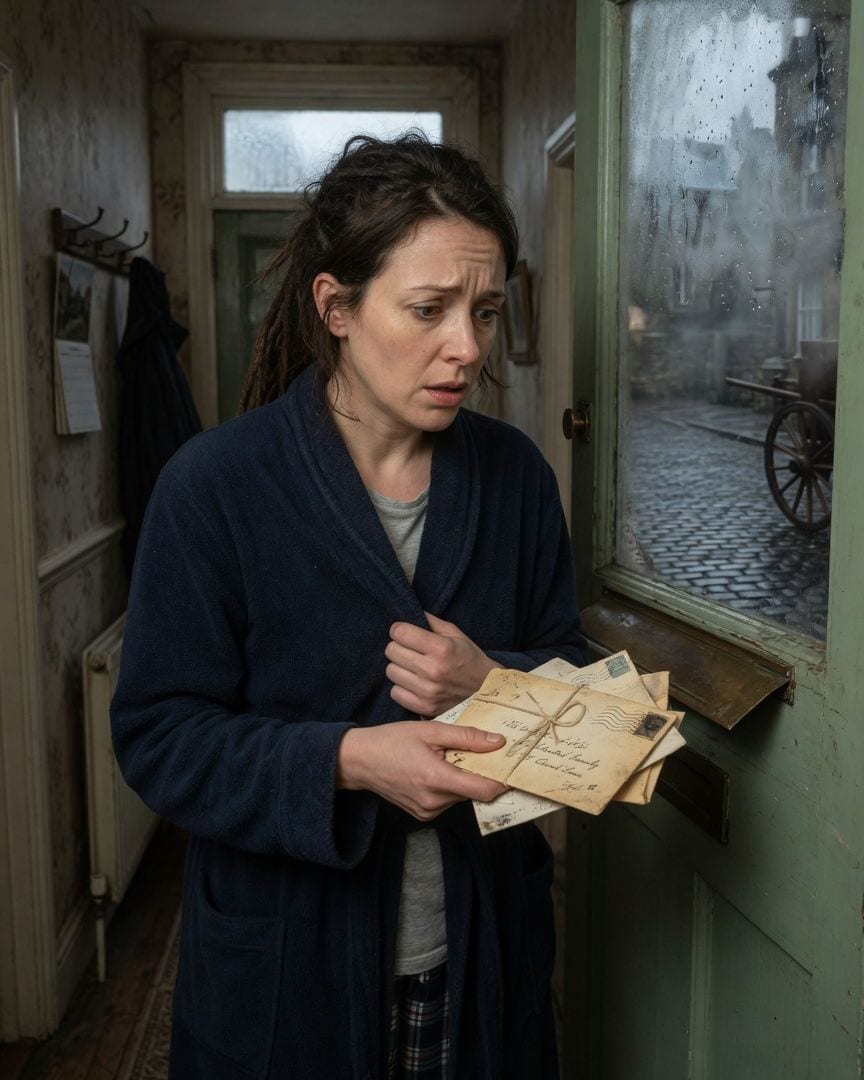
Seventy years ago, a hidden journal recorded my door opening to the wrong street and receiving Lockwood post.
I'd only recently moved into my inherited house, a quiet place on the edge of town. One grey morning, a distinct clatter from the front door's post flap caught my attention. Reaching down, I expected my gravel path, but instead, the flap showed a dark, cobbled street that wasn't mine. A bundle of warm, old letters, addressed to 'The Lockwood Family,' slid through, before the vision flickered and was gone.
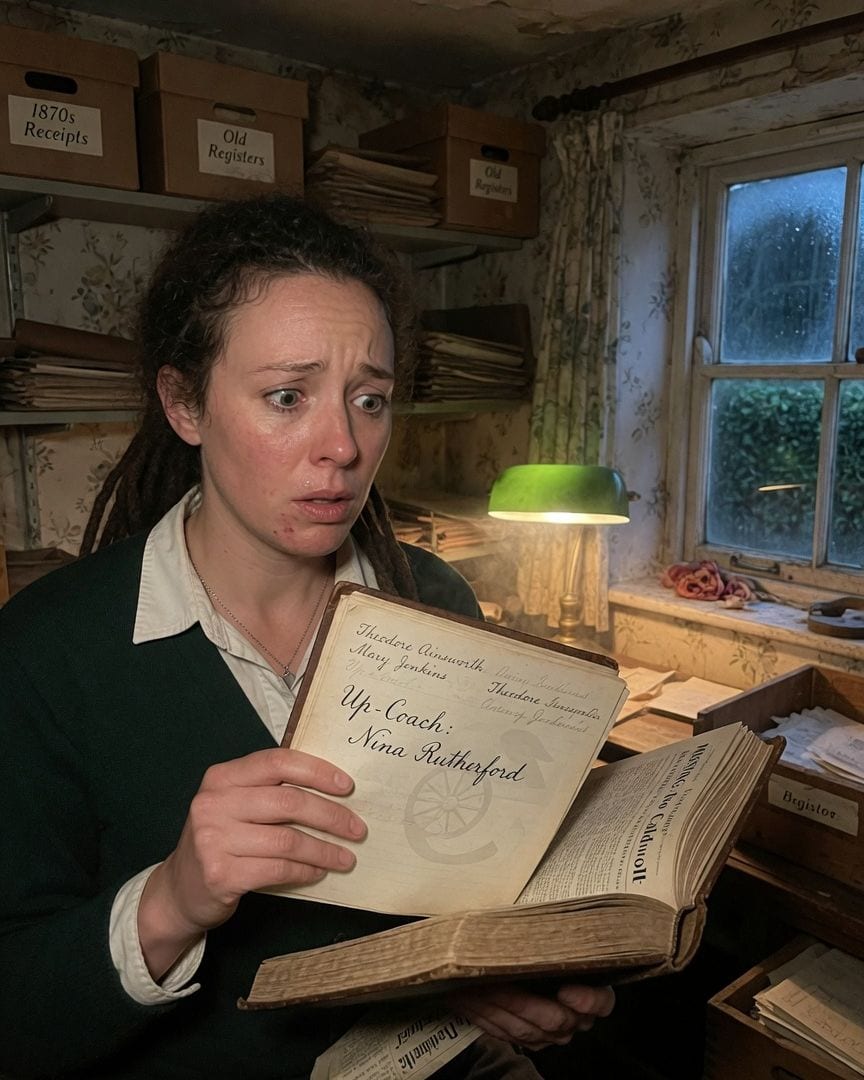
The old inn's arrivals book logs a vanished girl's name. She disappeared two months ago, but the ledger says she checked in last week.
As the new owner of The Angel Inn, I cherished its ancient history. But one evening, while tidying the old arrivals book, I found a chilling entry: Nina Rutherford, a local girl who vanished two months ago, was logged as checking in last week.
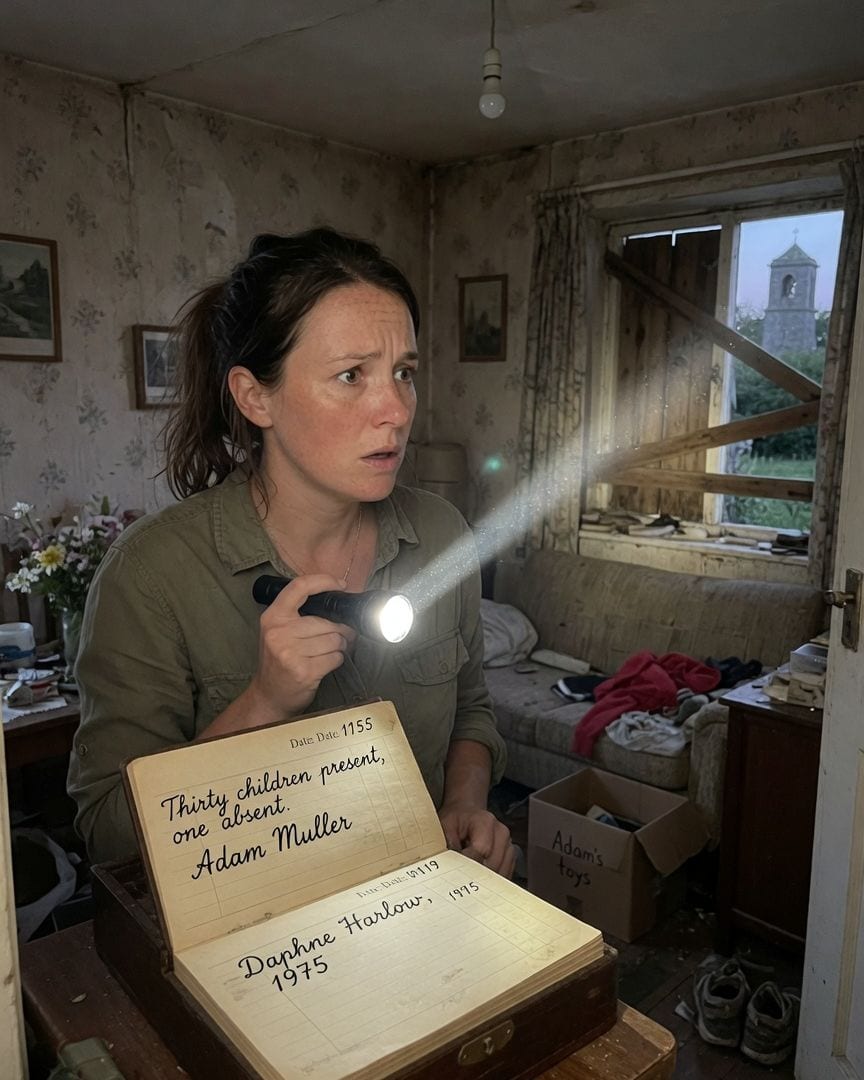
My son rang the old school bell. The attendance register, visible through the boarded window, now shows today's date and his name marked 'absent'.
We moved to a quiet village for peace, but my six-year-old son Adam found the old, boarded-up schoolhouse. Locals warned us, "Never ring the old school bell." That Tuesday, Adam rang it. Later, I saw his name on the school's long-closed attendance register, marked 'absent' in impossibly fresh ink from today.
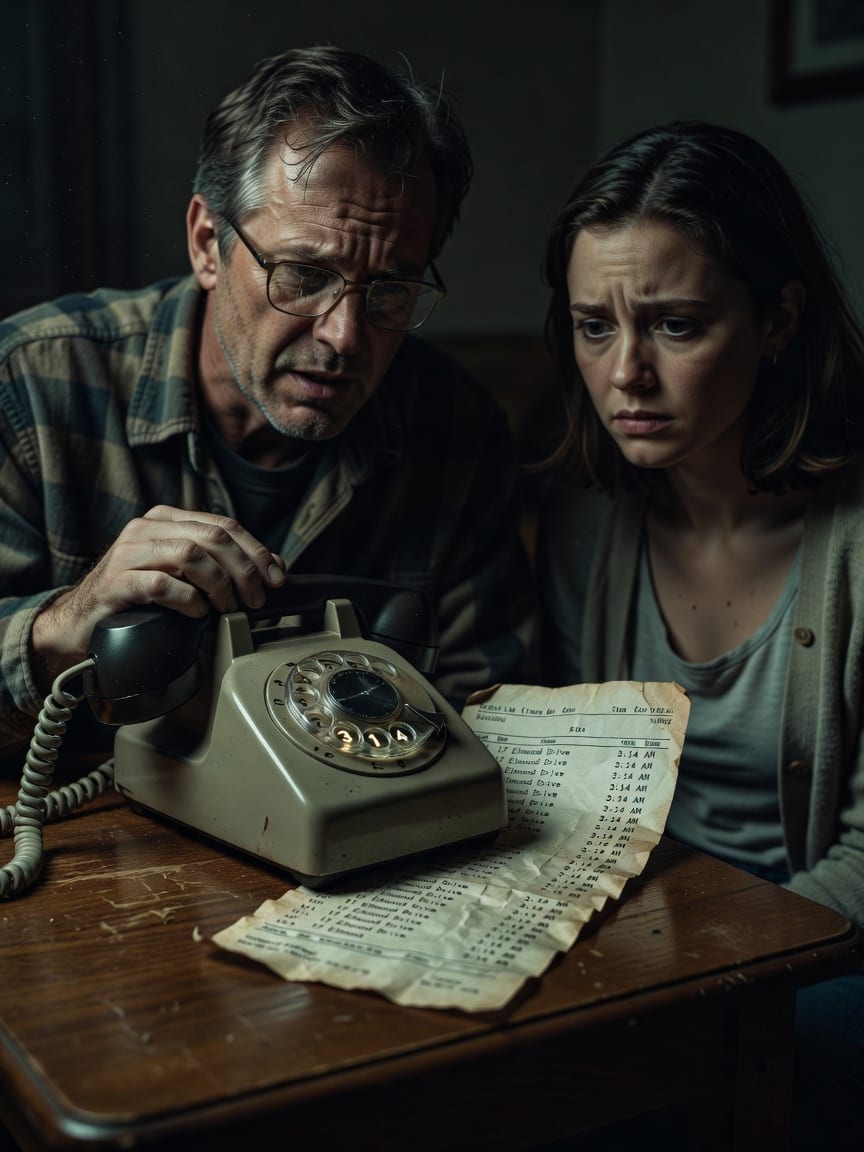
My phone bill itemised forty calls from my number to a house demolished in 1990. Each call at 3:14 AM, lasting eleven minutes. The bill arrived postmarked from a flattened building.
I expected the usual mobile bill, but my landline statement listed forty calls from my number to '17 Elmwood Drive.' That address was for a house torn down in 1990, a vacant lot I remembered from childhood. The phone company insisted the calls were legitimate, leaving me profoundly unsettled by the impossible charges.
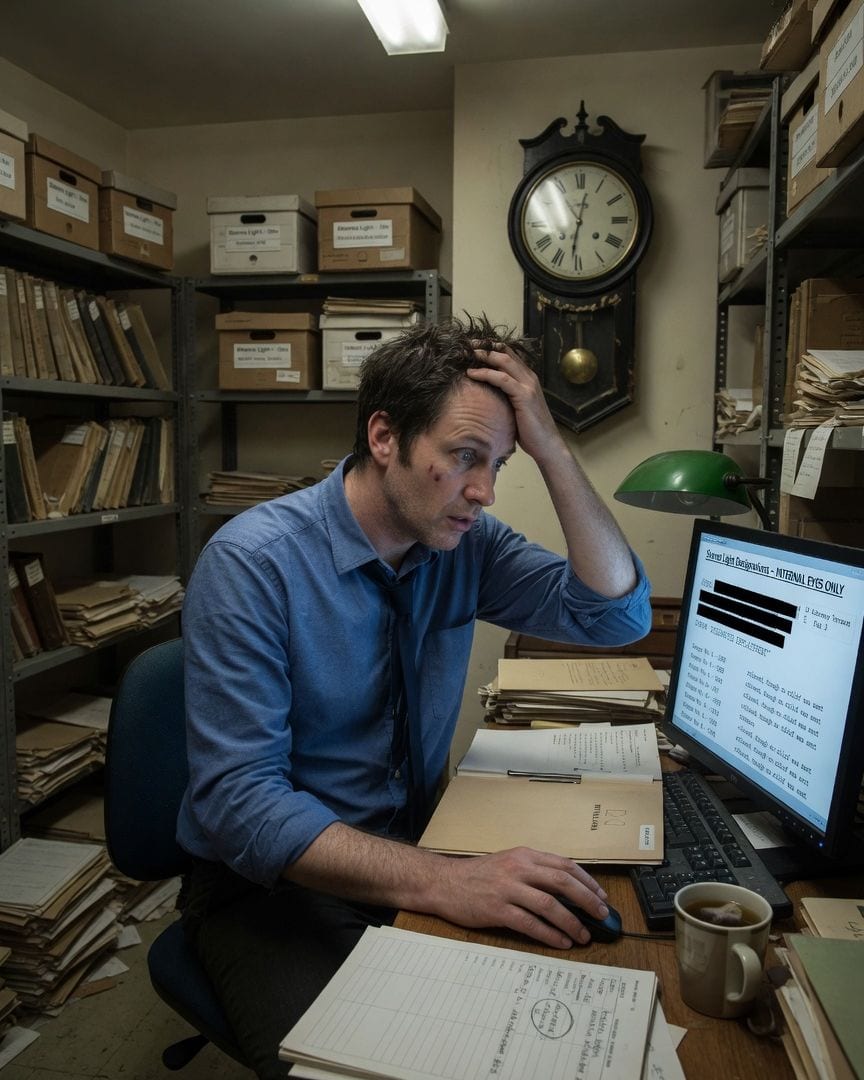
I found my street address in a century-old lighthouse file, printed decades before I lived there.
As a maritime archivist, my world revolves around forgotten lives and dusty ledgers. But the Skerne Light files broke that quiet rhythm, revealing a chilling pattern: 'Keeper number 6' relieved, though no relief was sent, repeating for decades. Now, an internal document with a strange code has led me to a redacted entry, revealing my own street address, decades before I ever lived there.