I found my street address in a century-old lighthouse file, printed decades before I lived there.
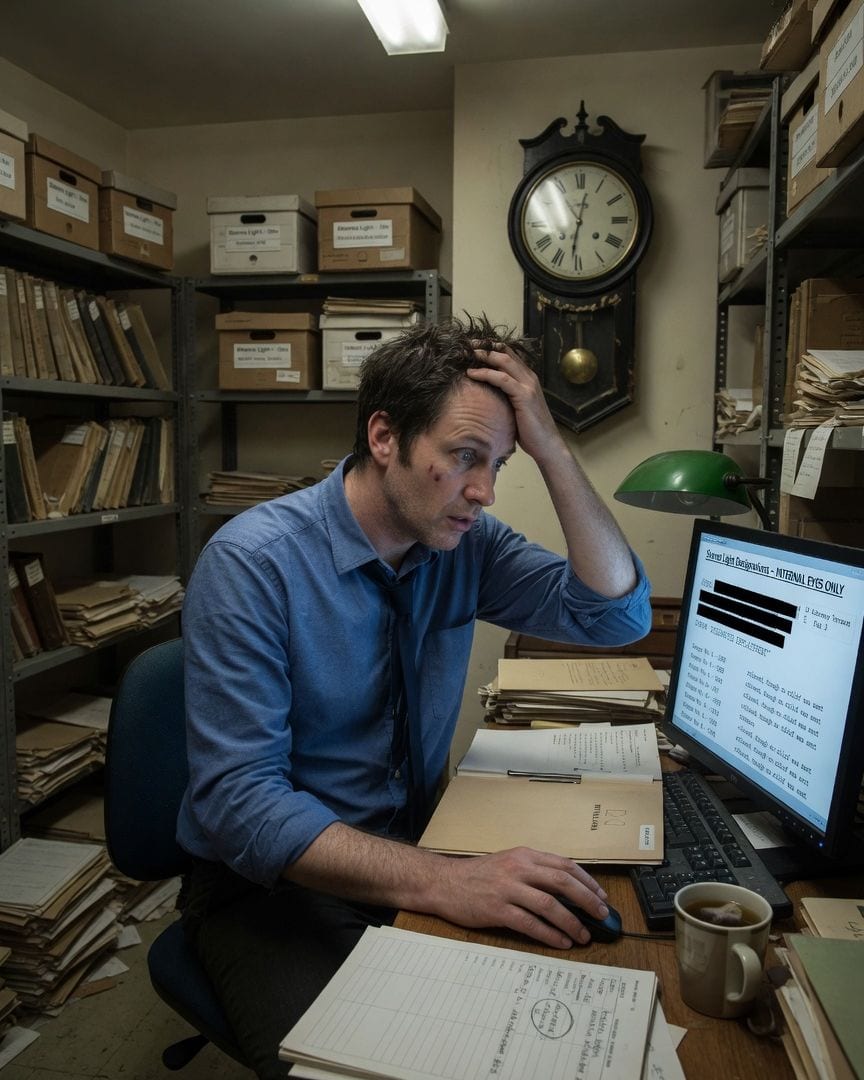
I spend my days sifting through dust and forgotten lives. Maritime archivist. Sounds grand, doesn't it? Mostly it's just endless lists, ledgers filled with names like faded ghosts, and the relentless ticking of the ancient clock in the reading room.
A quiet, orderly rhythm. Or it was, until the Skerne Light files.
I first noticed it in a service record from 1908. A lighthouse keeper, listed simply as 'Keeper number 6', with the principal’s usual closing remark: 'relieved, though no relief was sent.' Standard enough, I thought.
Maybe the relief ship was delayed, or the records were incomplete. But then I saw it again.
Another 'Keeper number 6' entry, 1929. Different name, same isolated tower. And the identical phrase: 'relieved, though no relief was sent.' My pencil paused mid-note. Coincidence? Perhaps. Then came 1951. Another name. Another 'Keeper number 6'.
And that chilling, familiar refrain, word for word.
A cold prickle started in my gut. Not fear, not yet. More like the quiet hum of something deeply wrong, a pattern asserting itself where no pattern should be.
I tried to rationalize it – a bureaucratic quirk, a reused designation, maybe a very specific kind of error. But three times? Across half a century, with different men, at the same remote, rocky outcrop?
The precise repetition felt like a deliberate act, a coded message, not an accident. The air in the room seemed to grow heavier, pressing in, as if the silence itself was a judgment. I couldn't unhear it.
The quiet hum wouldn't let me go. I started pulling every Skerne Light file I could lay my hands on. The work piled up, overflowing my desk, spilling onto the floor.
More 'Keeper number 6' entries emerged, extending into the late 20th century, each one a fresh jab of unease. The dates weren't random, either. Always a gap of about two decades. 1908, 1929, 1951, then 1973. A cycle.
One file, the 1973 one, felt different. It was thinner, almost delicate, tucked away behind a stack of thick, bound logs. I ran my thumb over the cover.
There was a faint, unusual watermark I hadn't seen before – a stylized, interlocking double-helix symbol, barely visible against the aged paper. And a tiny, almost invisible reference code stamped in the corner: 'INT-SKL-006A'. Not a standard archive code.
Nothing I recognized from the Maritime Authority's public system.
"Just an old classification system, Samuel," Beatrice Abbott said, leaning over my shoulder. She was my colleague, sharp as a tack but a firm believer in the mundane. "Probably for internal memos they never bothered to digitize.
You know how these places are. Half the records are older than dirt." She shrugged, dismissing it, already moving on to her own pile of requests.
But I couldn't shrug it off. The code. The watermark. The sheer, relentless consistency of 'relieved, though no relief was sent.' It wasn't an accident. It felt like something deliberate. A trail, waiting to be found.
The air around my desk seemed to thicken, a palpable presence, the silence no longer peaceful but watchful.
Ignoring official channels, I leveraged a forgotten back-door access I'd stumbled upon years ago, buried deep in the archive's outdated digital framework. I typed in 'INT-SKL-006A'. The search whirred, sluggishly, for what felt like an hour.
My heart hammered, a dull drum against my ribs. And then, a file appeared on my screen.
'Skerne Light Designations – INTERNAL EYES ONLY'.
I clicked it open. The screen glowed, illuminating the tense lines of my face. Page after page listed names and dates, many of them familiar from the 'Keeper number 6' records.
My gaze tracked down the list, a cold dread coiling tighter. Then, a single line, thick with black redaction, stretched across the page, a solid block of ink.
I leaned closer, straining, trying to discern the text beneath the heavy mark. My breath hitched.
Beneath the ink, a faint, ghosted outline of letters. And beside it, a small, almost invisible address. My own street. Printed years, decades, before I ever lived there.
The redacted line was a cold knot in my stomach, a physical weight. I spent hours trying every digital enhancement trick I knew, adjusting contrast, brightness, even trying a crude spectral analysis tool I’d once downloaded. Nothing.
The black ink was absolute, a perfect, impenetrable void.
So I focused on what I could see: the names listed around the redacted block. I cross-referenced them with old census records, local directories, anything that could give me context.
A disturbing pattern emerged, slow and insidious, like rust creeping through iron.
Many of the 'Keeper number 6' individuals, spanning decades, were linked not just to the Skerne Light, but to a small, forgotten cluster of streets in the old port district. The very same district that encompassed my current address.
My own street, the ghosted name under the black bar. It wasn't just a coincidence. It couldn't be.
I showed Beatrice the file, the maps I'd overlaid, the census data highlighting the common addresses. "Look," I said, my voice tight. "My street. It's here. In a file from 1973, tied to these people, these disappearances.
It's not just my street name, Beatrice, it's this specific part of the city."
She blanched, the color draining from her face, but immediately tried to find a rational explanation. "Samuel, lots of streets have common names. Or maybe it's a district code?
An internal departmental thing that references a zone, not a specific address." Her voice was too quick, too bright. She was trying to convince herself as much as me.
But I knew better. The precision was too unsettling. The way the lines on my map converged, connecting the seemingly disparate lives to this one small geographic anomaly. The cold hum was back, louder now, a vibration in my teeth.
The archive, once a sanctuary of order, now felt like a cage, its walls whispering secrets I was only just beginning to hear.
My deepening investigation did not go unnoticed. Edward Easton, the senior archivist, began to appear with unnerving frequency. He was a man made of calm, a quiet presence you could almost miss, until he was right there.
His questions were always polite, delivered with that soft, cultured voice. "Still fascinating deep-dives into historical maritime staffing, Samuel?" he'd ask, his hands clasped behind his back, his gaze unnervingly direct.
His eyes, though, held an unsettling, knowing glint, like a predator observing its prey from a distance.
I started noticing things. My active files, neatly stacked and labeled, would be subtly rearranged on my desk. Not enough to be obvious, just enough to make me pause, wonder if I was losing my mind.
A specific book I needed for cross-referencing—an obscure gazetteer of old port towns—would mysteriously be absent from its shelf, only to reappear later with its bookmark shifted to a different page, a page I hadn’t been on.
I’d try to explain it away—tiredness, forgetfulness, the quirks of an old building. But the feeling of being watched, of being managed, grew with each instance.
One evening, I was working late, the only sound the hum of the old fluorescent lights and the distant city. The air in the archive was always cool, but suddenly, a distinct chill crawled up my spine.
I hadn't heard a door open, hadn't heard a single footstep. I looked up.
Edward Easton stood silently in the doorway of the reading room, framed by the dim light of the hallway. He simply watched me, his face a placid, unreadable mask. He didn't speak. He didn't move.
After a long moment that stretched like an elastic band, he simply nodded once, a slow, deliberate gesture, before turning and walking away without a word. The sound of his footsteps, when they finally came, faded quickly.
The air grew heavy, thick with unspoken meaning. I was no longer just hunting a mystery. I was being observed. And I knew, with a certainty that iced my blood, that Edward knew exactly what I was looking for.
I confronted Edward in his office the next morning. I couldn't hold it in anymore. I spread out the maps, the census data, the 'Skerne Light Designations' file, its redacted line a gaping wound on the page.
"This isn't a coincidence, Edward," I said, my voice tight, straining against a tremor. "This isn't a clerical error. The names, the dates, the phrase 'no relief was sent'—it's a pattern. A precise, horrifying pattern.
And it's tied to this specific cluster of streets. My street."
Edward sat behind his massive mahogany desk, calm, almost serene. The morning light caught the dust motes dancing in the air, but he remained utterly still.
He spoke of 'institutional protocols' and 'the need for discretion in matters of sensitive historical record,' his voice smooth as polished stone. "The Maritime Archive holds many secrets, Samuel. Some records are best left undisturbed."
"Disturbed?" I pushed back, my hand slapping the desk, making the old lamp shade vibrate. "Edward, people vanished. And the records say 'relieved, though no relief was sent.' That's not discretion. That's a cover-up.
The dates are too exact, the repetition too perfect. Something other than human error is at play here. Something... systematic."
Edward sighed, a sound of weary acceptance, not defeat. He reached into a drawer, pulling out a flat, cream-colored folder.
"Keeper number 6 is not a person, Samuel," he finally admitted, his voice low, almost a whisper that carried perfectly in the hushed room. "It's a designation. For an occupancy."
He slid a pristine, unredacted internal memo across the desk. It was dated 1951, the same year as one of the 'Keeper number 6' entries. The paper was thicker, crisper than the other documents, clearly preserved with meticulous care.
The heading read: 'Skerne Light Entity: Host Criteria and Transition Protocols.'
My eyes raced over the bullet points: 'Specific genetic marker identified within ancestral lines originating from the designated coastal regions,' 'Familial lineage found predominantly in the Skerne Light district, specifically the old port quarter.'
The last line of the memo concluded, stark and terrifying: 'The host is relieved when the transference is complete; no external relief is required.'
The pieces clicked into place with horrifying clarity. The consistent phrase. The repeating dates. The specific street names. All of it. Not a series of accidents, but a meticulously managed process.
An institution, not just preserving history, but managing something in it. The air grew cold. The dust motes in the light seemed to slow, suspended in the unbearable silence.
Edward, his expression unsettlingly calm, gestured to a much more recent file open on his desk, already positioned for me to see. It was a crisp, modern document. "We ensure the continuity, Samuel. It's our legacy."
My eyes were drawn to the page. It was a list, typed with clinical precision. The title, stark and chilling, read: 'Current Candidates for Skerne Light Occupancy'. My breath hitched. My heart seized in my chest.
My own name, Samuel Galloway, was there. Highlighted in bright yellow. Beside it, my current address, and a date just six months from now.
Directly beneath it, Beatrice Abbott's name was also highlighted, with her details listed in the same precise format.
Edward leaned forward slightly, his gaze unwavering. A faint, almost imperceptible smile touched his lips, a mere ripple in his otherwise serene composure. "We've been watching the lineage for generations, Samuel. You're next in line.
And Beatrice, a suitable backup, of course."
Edward meticulously explained the full, horrifying truth. The entity at Skerne Light was ancient, a presence of profound antiquity. Not malicious, he insisted, but profoundly parasitic.
It required a human host on a precise, cyclical basis, its transitions tied to specific tidal and lunar alignments.
The institution, initially founded for its study, had evolved into its quiet caretaker, ensuring these 'transitions' occurred without causing public panic, without alerting the wider world.
'Keeper number 6' was merely the designation for the entity itself, occupying a human body.
He showed me an archive of 'post-transition' records: photographs of previous hosts, spanning a century. They were physically identical to their 'before' pictures, same height, same hair, same facial structure. But something was subtly, profoundly wrong.
The eyes, in every photograph, held a deep, unreadable calm, vacant of any recognizable personality. An altered gait, a profound, unshakeable stillness that was utterly alien.
He explained that the 'relieved' hosts were often found wandering miles away, amnesiac, or simply vanished, their bodies merely shells discarded when the transference was complete.
The pattern across dates and names, the specific lineage, my street—it was not coincidence. It was a meticulously managed breeding program, generations of families carefully observed, their genetic markers tracked, ensuring a compatible host was always available. A cultivated lineage.
For it.
I tried to argue, to escape, to warn Beatrice. My mind screamed for her name, for the chance to call, to text, to do anything. Edward calmly blocked my path.
His movements, for a man his age, were surprisingly swift, almost fluid. There was no aggression, no violence, only an unyielding, terrifying certainty.
"Resistance only complicates the transition, Samuel," he stated, his voice devoid of emotion, as if discussing a minor bureaucratic hurdle.
He spoke of his own family's long history of 'service' to the institution, his own quiet duty. I saw it then, the same vacant calm I’d seen in the photographs reflected in his eyes.
He was part of it, perhaps had always been part of it. A familial link to prior 'Keepers' or their silent caretakers. He was the one who knew, the one who perpetuated the horror.
I lunged for my phone on the desk, my fingers fumbling, desperate to reach Beatrice, to save her, to save myself.
Edward was too quick. His grip on my wrist was surprisingly firm, unbreakable. No struggle in the conventional sense. Just an unyielding, terrifying inevitability.
He simply held me, guiding me with an almost paternal calm towards a secluded, unmarked door in the oldest part of the archive, a door I had never noticed, never seen open.
A faint, metallic scent wafted from within, like old rain on iron. "The preparations must begin," Edward said, his eyes hollow but resolute. "It's for the greater good."
Days later, Beatrice Abbott found Samuel Galloway's desk unusually tidy. His personal effects were gone. Edward Easton told her Samuel had taken an 'early sabbatical' for a 'personal matter,' his tone perfectly normal, entirely unbothered.
Beatrice felt a prickle of unease, remembering Samuel's frantic warnings about redacted lines and old records, but she dismissed it as stress. She returned to her own work, the archive feeling just a little too quiet, a little too orderly.
A week later, Beatrice, walking past Edward's office, saw him speaking to someone within. It was Samuel. He looked different, subtly. Perhaps slightly taller, or just more upright. His eyes held a deep, unreadable calm.
Edward smiled warmly at Beatrice as she passed. 'Samuel's back,' he said, his voice light. Samuel turned, and his faint, wrong little smile is the first thing Beatrice notices.
If this one got to you
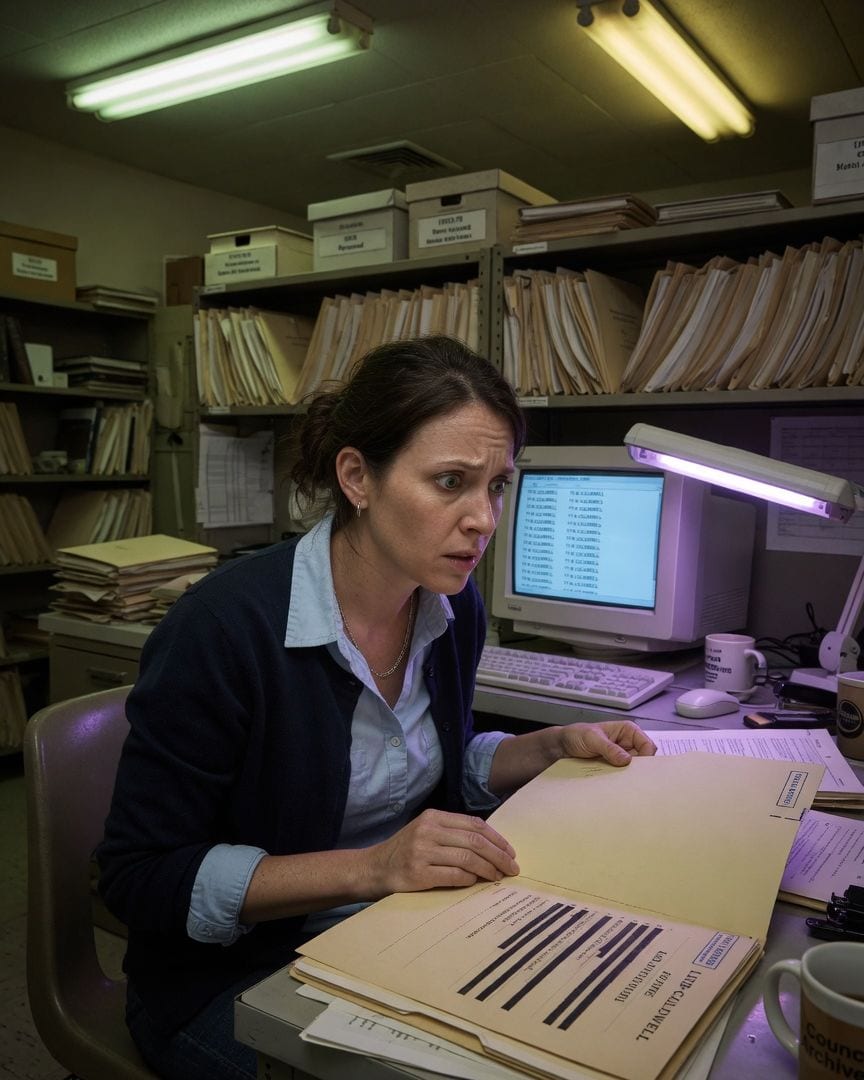
My employer's security file holds a vetting report on me dated nine years before I ever applied. It has my full name and my parents' address — with only one line, the source who referred me, blacked out.
Working a routine data audit, I pull my own security file. The issue date is nine years before I even applied for the job. Then, hidden within an old archive file, I find my current address etched under a blacked-out line.
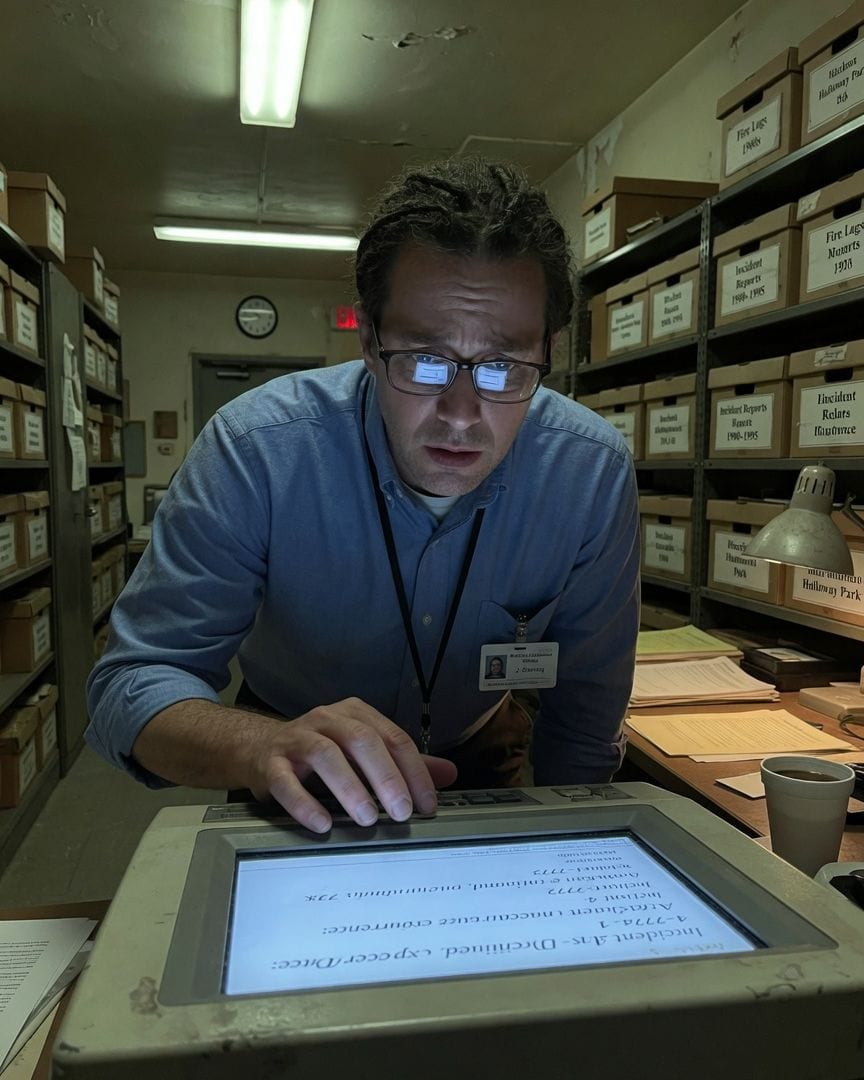
My old rope works fire log repeats the same 3:14am blaze, same incident number, across 1967, 1980, 1993. Each ends: 'origin undetermined, expect recurrence.'
As an Archival Digitization Officer, my days are spent scanning old records. I was numbly working through fire service logs when Incident 4-772 caught my eye: the same structural fire, same time, same number, repeated across different decades. Each entry ended with the chilling, identical phrase: 'origin undetermined, expect recurrence.'
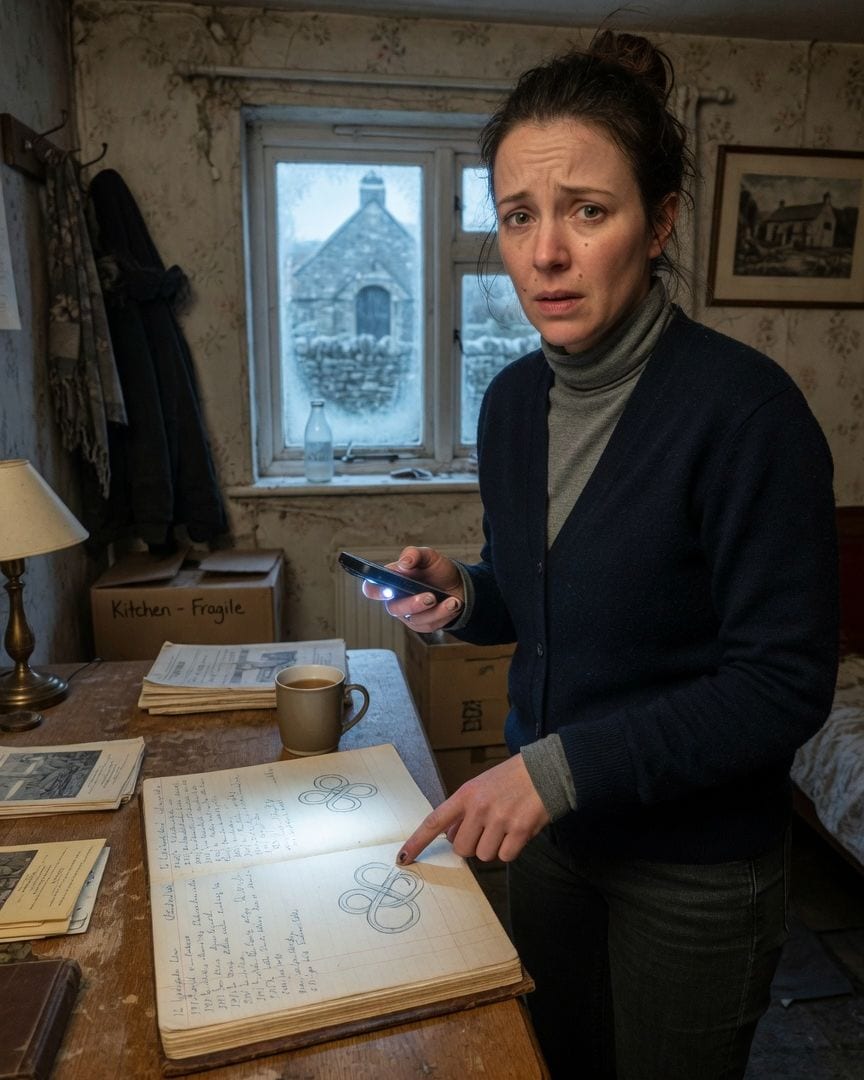
Milk appears daily by my lychgate. The dairy closed in '79. My address is handwritten into their old delivery book, starting the day we moved in.
Moving to Blackwood Creek, I loved the quaint charm, especially the unexpected morning milk delivery to my lychgate. But when I mentioned it to Eleanor at the village shop, her smile froze. She told me Willow Creek Dairy closed decades ago, in '79.
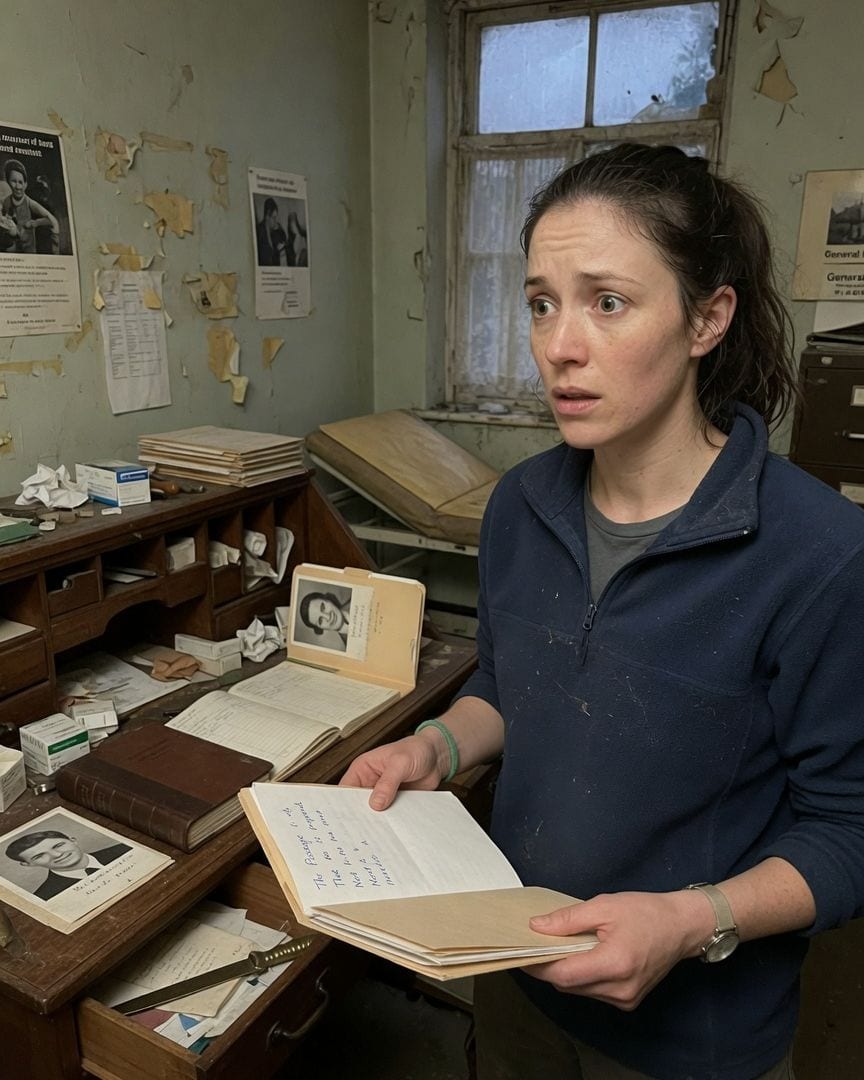
My new clinic's appointment book shows entries for this coming Monday, decades after the doctor retired and died.
Chloe Lawson bought an old, abandoned surgery in Nettlebed, ready to open her new vet clinic. Locals insisted Dr. Almott retired in '79 and the practice shut down for good. But then Chloe found his dusty appointment book filled with meticulous entries, continuing unbroken from 1979 through the decades, right up to this coming Monday.
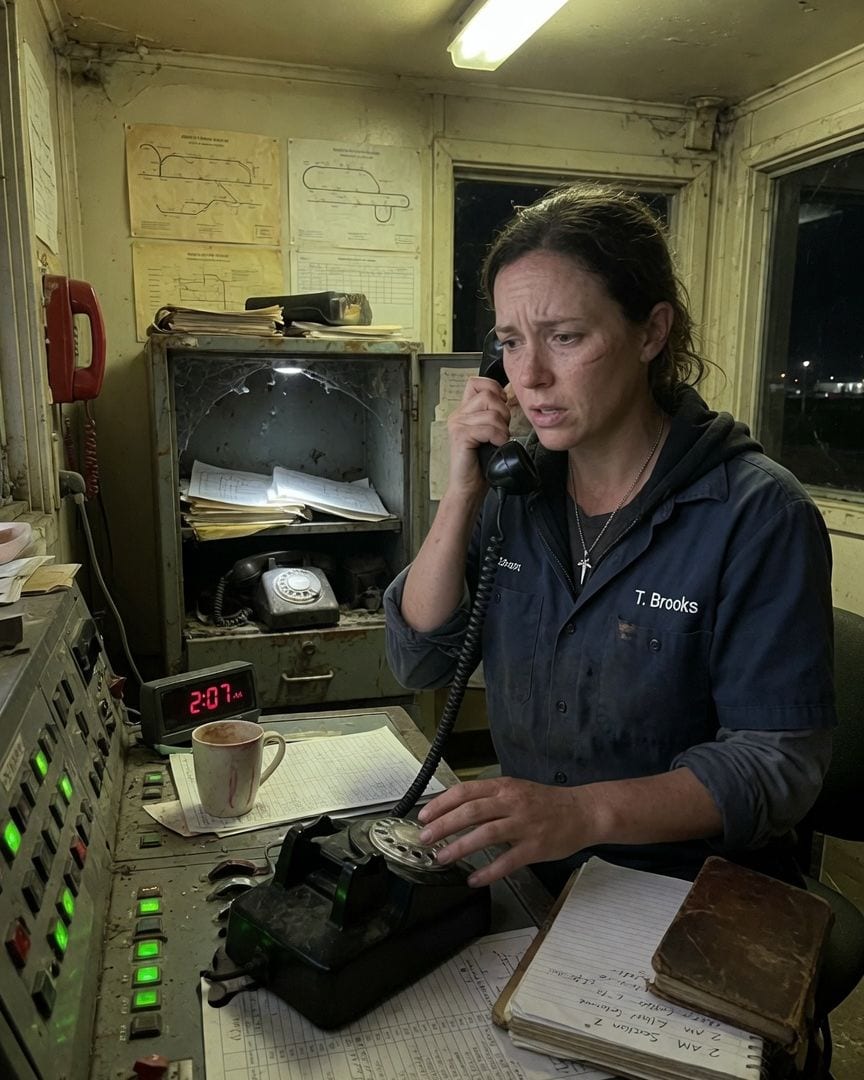
My signal box gets a 2 AM call every night from a man whose section was demolished eleven years ago. Now I found his logbook with today's date.
My night shift at the signal box is quiet and precise, defined by the routine 2 AM call from Ellis confirming Section 7 is clear. But when I asked my duty manager to log it, he said Section 7 hasn't had a track walker in eleven years, not since its cabin and phone were demolished.
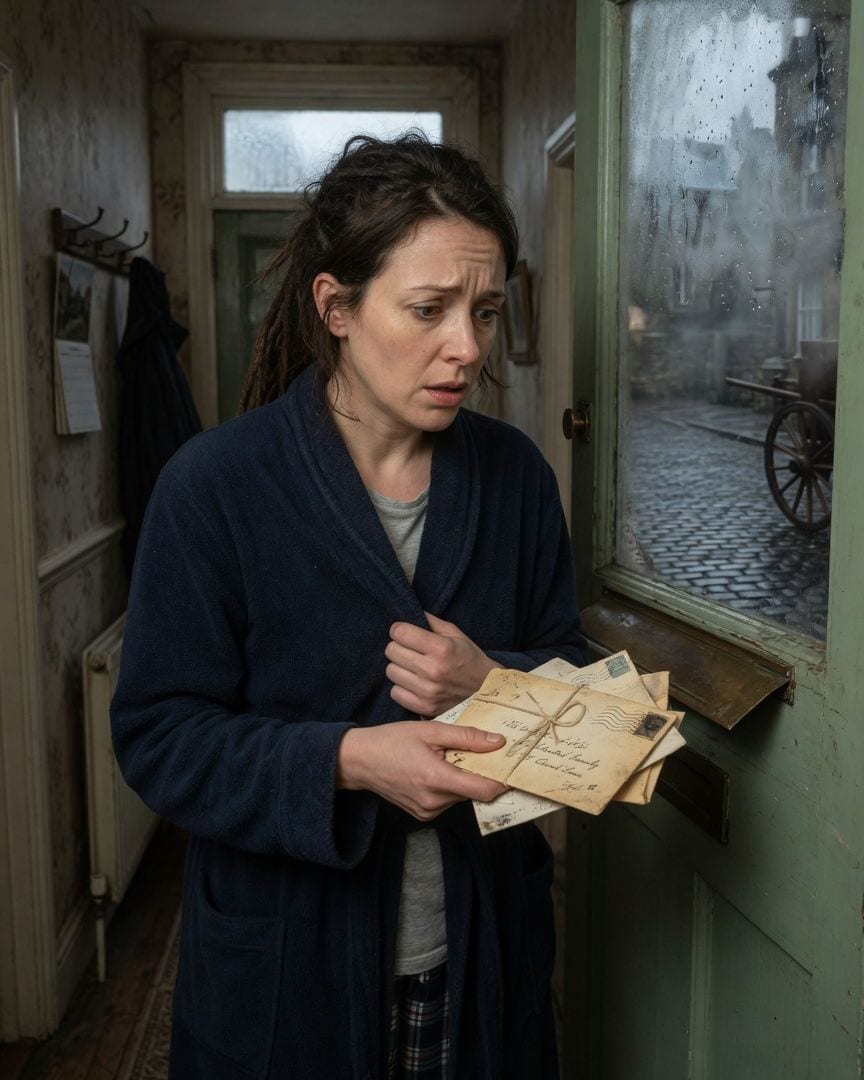
Seventy years ago, a hidden journal recorded my door opening to the wrong street and receiving Lockwood post.
I'd only recently moved into my inherited house, a quiet place on the edge of town. One grey morning, a distinct clatter from the front door's post flap caught my attention. Reaching down, I expected my gravel path, but instead, the flap showed a dark, cobbled street that wasn't mine. A bundle of warm, old letters, addressed to 'The Lockwood Family,' slid through, before the vision flickered and was gone.