My signal box gets a 2 AM call every night from a man whose section was demolished eleven years ago. Now I found his logbook with today's date.
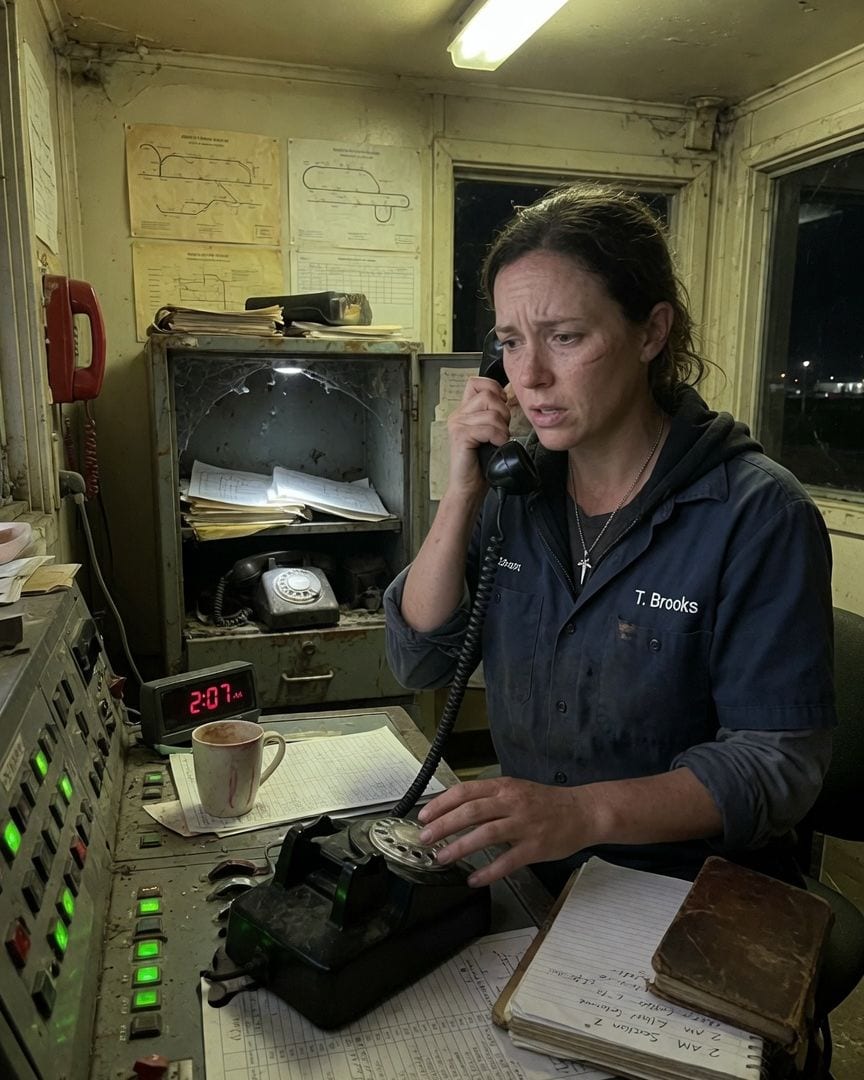
The signal box was quiet tonight, same as any other, just the low hum of the equipment and the distant rumble of the freight line.
I was on the night shift, same as always, isolated out here beyond the county road, watching the green lights on the console. My name is Tessa Brooks. I’m 28, and this job is my life. It’s methodical, precise.
Trains run on time because of that precision.
At precisely 2 AM, the box phone rang. It sits on the console right beside the main controls, an old black landline model that looks like it belongs in a museum.
It's a jarring sound in the quiet, especially when you’re not expecting it. But I was expecting it. It rings every night.
I picked it up. “Signal box, Brooks.”
A man’s voice, calm, gravelly, came through the line. “Ellis here, Section 7 clear.”
“Copy that, Ellis. Section 7 clear. Good night.”
“Good night, Tessa.”
The line clicked dead. It’s always the same exchange, always 2 AM, always Section 7. I hung up the phone. Habit, I guess. It’s a courtesy call, not strictly necessary, but it’s part of the rhythm of the line.
Or so I thought.
The next morning, I was filling out my log for the shift change when Maxwell Romano, the duty manager, came in. He’s 45, solid, by-the-book. I mentioned the nightly calls. “Could you add Ellis to the log for record-keeping, Max?
He calls in Section 7 clear every night at 2.”
Max frowned, pulling up the digital roster on his tablet. He scrolled, his brow furrowed, then scrolled again. He looked up at me, bewildered. “Ellis? What are you talking about, Tessa? There’s no Ellis on your line.
No track walker assigned to Section 7, full stop.”
I stared at him. “What? But he calls every night. Section 7. All clear.”
Max shook his head, a slow, deliberate movement. “Tessa, Section 7 hasn’t had a dedicated track walker in eleven years. Not since the cabin and its phone were officially demolished. It’s all automated now. No one’s out there.
Especially not at 2 AM.”
The air in the signal box suddenly felt heavy, thick. I looked at the black phone on the console, a silent, unsettling presence.
It sat there, innocent and inert, but I could still hear the echo of Ellis’s voice in my head.
Disturbed, I spent my next few hours trying to rationalize it away. Maybe it was an old line, crossed wires. A prank, even, though a very committed one.
I started digging into the old, dusty station records stored in a metal cabinet within the signal box. The archives were a mess of faded paperwork and forgotten manuals.
I was looking for any mention of a 'Section 7' walker from before the demolition, a name, a date, anything to make sense of what Maxwell had told me.
I found old blueprints, brittle and yellowed, confirming the cabin's existence, its location, and then, starkly, its official demolition date: eleven years ago, just as Max said. No Ellis, no walker for that section since. The official records were clear.
My rationalizations started to feel thin, stretched.
While sifting through the cabinet, amongst forgotten maintenance tools and rusted clamps, my fingers brushed against something cold and smooth. Tucked away in a dark corner, almost hidden, was an unused, ancient rotary phone.
It was disconnected, of course, the cable neatly clipped. It was a relic, probably left here by some signalman decades ago. Its bakelite casing was dull, covered in a fine layer of dust.
The dial plate was worn, the numbers almost illegible, but as I ran my thumb over it, I felt something.
Etched into the metal of the dial plate, almost imperceptibly, were tiny, repetitive scratches. They formed what looked distinctly like a '7'.
Not just one scratch, but many, overlapping, as if someone had idly, repeatedly, traced the number with a sharp point. I tried to dismiss it as coincidence, just random wear on an old piece of equipment.
But the specific, repeated nature of the etchings, the way they were so clearly formed, made me pause. It was too precise to be random.
The hum of the equipment in the signal box suddenly seemed louder, more insistent.
Driven by a hunch, a prickle of something cold crawling up my spine, I investigated the signal box’s oldest section.
It was behind a rusted panel near the back wall, a panel I’d never had reason to open, assuming it was just access to old wiring.
I had to force it, the metal groaning as it peeled back, revealing a narrow, dust-choked recess. Dust motes danced in my flashlight beam, swirling like tiny, frantic ghosts in the sudden light.
Tucked into that recess, nestled deep, I found it. A thick, leather-bound logbook, its cover scarred and faded, its pages brittle with age. It clearly predated any of the official records I'd been looking at.
I pulled it out, the leather cool and smooth beneath my fingers, strangely heavy.
My heart began to pound a slow, heavy rhythm against my ribs. I flipped through the pages, careful not to tear them. Spidery, faded ink entries filled the brittle sheets. My breath hitched.
'Section 7, All Clear' was a common entry. So was '2 AM.' And there, again and again, was the name 'Ellis,' sometimes alongside other names I didn't recognize, spanning decades.
Then, my eyes landed on the last entry. Stark and clear on a yellowed page, as if written just moments ago, it read: '2 AM, Section 7, All Clear. Ellis.' The date beneath it, crisp and unmistakable, matched today's date.
The logbook, by all accounts, should not exist. And yet, here it was. And it held a record of a call I had just received.
The next few days off were a blur of frantic research. I needed a rational explanation for that logbook, something, anything, to un-lodge the dread that had taken root.
I visited the local railway museum, a quiet, dusty place filled with forgotten equipment and sepia-toned photographs. I spent hours poring over their archives, old personnel records, and regional maps. Nothing. No 'Ellis' assigned to my section.
Certainly not in the last eleven years, and not even in the decades prior that the logbook seemed to cover. I cross-referenced the logbook’s dates with historical events – major train accidents, line closures, signal box upgrades. No anomalies.
Just the consistent, impossible entries for 'Section 7, All Clear, Ellis, 2 AM.'
I spoke to an elderly local, Mrs. Granger, whose family had lived by the tracks for generations, her house a stone’s throw from what used to be Section 7’s cabin.
I asked her about the old track walkers, the history of the line. She was frail, her eyes a distant, milky blue.
She listened to my vague questions, then just nodded slowly, looking out towards the tracks that ran behind her garden. "The line always had its own rhythm, child," she said, her voice a soft rasp. "Some things just… continue.
People come and go. The rails stay." Her words, meant to be comforting, settled on me like a cold, wet cloth.
Back at the signal box, the dread sharpened into something precise. I started noticing the faint, almost imperceptible hum that preceded Ellis’s 2 AM call. It wasn’t the usual mechanical thrum of the equipment.
It was a deeper resonance, like a low thrumming chord, coming from the very floor of the box, just before the phone would ring. I’d dismissed it before as background noise, part of the normal operation.
Now, it was a prelude.
My inquiries, it turned out, did not go unnoticed. Maxwell Romano called me into his office at the main station. His office was sterile, all chrome and efficiency.
He didn't directly accuse me of anything, just leaned back in his chair, his hands steepled. "Tessa," he said, his voice unnervingly calm, "some lines of inquiry are best left alone. You're a good operator.
Focus on what's real, what's on the roster. The smooth running of the line. That’s what matters."
The implied threat in his composure chilled me more than any shout could have. He knew I was looking. He didn't want me to.
During my next night shift, the signal box felt different. Heavier. Every shadow seemed to lengthen, every creak of the old wood more pronounced. I kept glancing at the window, the black expanse of night reflecting my own worried face.
I couldn't shake the feeling of being watched, a phantom gaze from the darkness beyond the glass.
I heard faint, rhythmic footsteps on the gravel outside, just past the perimeter lights. Too light for a train, too steady and deliberate for an animal.
They paced, paused, then paced again, moving away, then returning, always just out of sight. I gripped the edge of the console, my knuckles white.
The 2 AM call came as usual. The hum vibrated through the floor first, then the ring. I picked up the phone, my hand trembling slightly. "Signal box, Brooks." "Ellis here, Section 7 clear."
His voice, as ever, calm, utterly normal. I copied it down, my heart hammering.
I hung up, trying to slow my breathing. The footsteps outside had stopped. I watched the clock tick. At 4 AM, the phone rang again. It wasn't the usual dispatcher's line. It was the black phone, the Ellis phone.
My stomach clenched. I answered, expecting a dispatcher, or maybe Maxwell.
Instead, there was only static. A low, hissing sound. Then, a single, sharp click before the line went dead. It wasn’t a hang-up. It was a sound that felt deliberate, final. A quiet warning, right into my ear.
I knew I needed to talk to someone who understood, someone outside the rigid chain of command.
I sought out Ralph Walsh, a retired signalman whose name had popped up repeatedly in the museum archives as having worked my particular line for decades.
I found him in a quiet, dimly lit pub on the edge of town, nursing a pint. He was 76, his face a roadmap of wrinkles, his eyes still sharp, if a little bloodshot.
He was initially reluctant to speak, eyeing me with suspicion when I introduced myself. "What do you want, lassie? Old men have stories, but not usually for young operators."
I took a deep breath. "I've been getting calls," I began, my voice low, "from a track walker, Ellis. Section 7. Every night at 2 AM. My manager says that section hasn't had a walker in eleven years.
Says the cabin and phone were demolished." I watched his face for a reaction. Nothing yet. "And then... I found this."
I slid my phone across the table, open to a photo I’d taken of a random page from the logbook, an entry for "Ellis, Section 7, 2 AM, All Clear," dated decades ago.
Ralph's eyes, initially dismissive, narrowed as he looked at the photo. He picked up his pint, took a long, slow sip, his gaze still fixed on the screen. "Ellis," he murmured, the name a whisper, "Aye, I remember him.
Or… them."
My blood ran cold. "Them?"
He put the pint down, wiped a trace of foam from his lip. "Yes. Ellis. And Thomas before him. And Fontaine before that. All from sections that didn’t exist, or cabins long gone. Just like yours."
He looked at me, a strange, knowing look in his eyes. "You’re not going mad, lass. I got them too. For years. Every night, 2 AM. 'Section 7 clear.' Always the same."
I felt a wave of dizzying relief, quickly followed by a deeper, colder dread. "What… what is it?"
Ralph leaned closer, his voice dropping to a conspiratorial whisper. "It’s the line’s way of keeping itself running. A recurring presence. It’s not malicious, you understand. Not evil. Just… an aspect of the line. Always ensuring the all clear.
The trains have to run, Tessa. Always have. Whatever it takes." He tapped the photo of the logbook. "That book you found? It’s not a record of men. It’s a record of a routine.
A pattern the railway has quietly endured for generations. Before your Ellis, before my Thomas, there was others. The line remembers. And it keeps its own logs."
I was reeling from Ralph's confession, the truth of the logbook suddenly clicking into a terrifying new coherence. This wasn't a prank. It wasn't a glitch. It was… ingrained. Deeper than I could have imagined. "So, it's just… a ghost?"
I asked, my voice barely a whisper, hoping for a simple, if terrifying, answer.
Ralph shook his head, a slow, deliberate movement. "Not a ghost, lass. More like… a memory, given form. And it's not just the calls. The calls are just one part of the assurance."
He finished his ale, set the glass down with a soft thud, then rose from the table. He walked over to a dusty cardboard box tucked away on a shelf behind the bar, a box I hadn't even noticed.
From within, he carefully lifted a small, heavy object.
He brought it back to the table, placing it gently between us. It was a tarnished brass bell, its surface pitted with age, a dull, greenish patina coating its intricate engravings.
It felt ancient, radiating a cold weight even from a foot away. "This belonged to the original track walker on this very section," he said, his voice low, almost reverent.
"The one who disappeared a century ago, the one they said laid the very first rails here. Thomas Granger. They never found his body. Just his empty cabin, and this bell, left behind. It rings sometimes, on its own.
It’s how the line really passes the freight."
As he spoke, a faint, almost imperceptible 'ting' echoed through the quiet room. It didn't come from Ralph striking the bell, or from any external force.
It resonated from deep within its metal, a tiny, resonant pulse, as if the bell itself had a slow, rhythmic heartbeat.
Ralph explained that the bell was an "artifact that cannot exist" in any official record. It had been officially lost for a century.
Yet, it had been passed down through generations of signalmen who, like him, 'understood' what the line demanded.
He recounted the legend of Thomas Granger, the first track walker on this very section, who had vanished mysteriously after a catastrophic derailment he couldn't prevent.
His body was never found, swallowed by the earth or the line itself, no one knew. The line, in a strange, terrible way, had 'absorbed' him.
And ever since, a persistent, cyclical presence ensured the trains ran, manifesting as phantom track walkers like Ellis, and before him, Thomas, and Fontaine.
The bell, he explained, was its conduit, the true 'signal' of its presence, far older and more deeply ingrained than any phone call.
He reached into his wallet, pulling out a fragile, yellowed newspaper clipping, folded and refolded a thousand times. The date, barely legible, was 'October 14, 1898.'
The headline spoke of a terrible derailment, and further down, a small paragraph noted the disappearance of 'Track Walker Thomas Granger, presumed lost in the tragedy.'
Then he pointed to a tiny, almost invisible etching on the bell itself, obscured by the patina. I had to squint, tilting it to catch the light.
There, in spidery, antique script, were the initials 'T.G.' and a miniature, stylized signal box, dated '1898.' The ordinary explanation for the calls, for the logbook, for everything I had witnessed, died for good. It wasn't a trick.
It was a truth, etched in brass and time.
I returned to my signal box for my next shift, the heavy brass bell carefully placed in my bag. I could feel its cold weight against my side.
The hum, the prelude to the 2 AM call, started exactly on schedule. My heart was pounding, but it was different now. Not fear, not exactly. More like a grim anticipation.
The phone rang. I answered, my hand steady this time. "Signal box, Brooks."
But instead of Ellis's usual calm report, there was a prolonged, distant, rhythmic clanking sound, like metal on metal, echoing through the phone line. It grew steadily louder, closer, each clang vibrating through the receiver, through my bones.
It wasn’t a train. It was too precise, too deliberate, too… measured.
Then, from within my bag, the brass bell began to vibrate. A low thrum, growing stronger. Then, a clear, sharp 'ding' that reverberated through the small space of the signal box, shaking the silence.
The phone line went dead, the clanking abruptly cut off from the receiver. But the rhythmic clanking continued, now seemingly from beneath the tracks outside the signal box, a deep, grinding thrum that shook the very foundations of the building.
I slowly removed the bell from my bag. It was still faintly humming. I placed it on the console next to the phone, its tarnished brass dull in the console's green light. A strange sense of calm settled over me.
The 'all clear,' I realized, was not just a report; it was an assurance, a ritual demand made by the line itself. And now, I was part of it. I looked at the bell, then at the silent black phone.
My hand rested on the cool brass. The line needed its signals.
I continued my night shifts. The 2 AM calls from 'Ellis' still came, a familiar, calm voice reporting Section 7 clear.
But now, just before the phone rings, I always heard the faint, inexplicable 'ting' of the brass bell I kept on my console. It was a soft, almost internal sound, like the bell was clearing its throat.
I no longer questioned it. The trains continued to run, always on time, their passage a testament to the unseen forces that maintained their schedule.
The signal box, once a place of isolated dread, had become a place of quiet, unsettling understanding. I performed my duties with a new, almost serene focus, my gaze often drifting to the bell.
Months later, Maxwell Romano, on a rare night inspection, entered Tessa’s signal box. He glanced at the antique brass bell sitting prominently on her console, next to the modern equipment. "Where did you get that old thing, Tessa?"
he asks, a note of curiosity in his voice, reaching out to touch it. Tessa just looks at him, her expression unreadable, a faint, almost imperceptible smile touching her lips. "It was always here," she says, her voice calm.
Romano pauses, his hand hovering over the tarnished metal. He shrugs, dismissing it as an old trinket. He checks the logs, everything in order. The trains pass on time, as they always do.
He leaves, and Tessa turns back to her console, the faint smile still playing on her lips, her hand resting gently on the cool, worn brass. The signal box hums quietly. It was always here.
If this one got to you
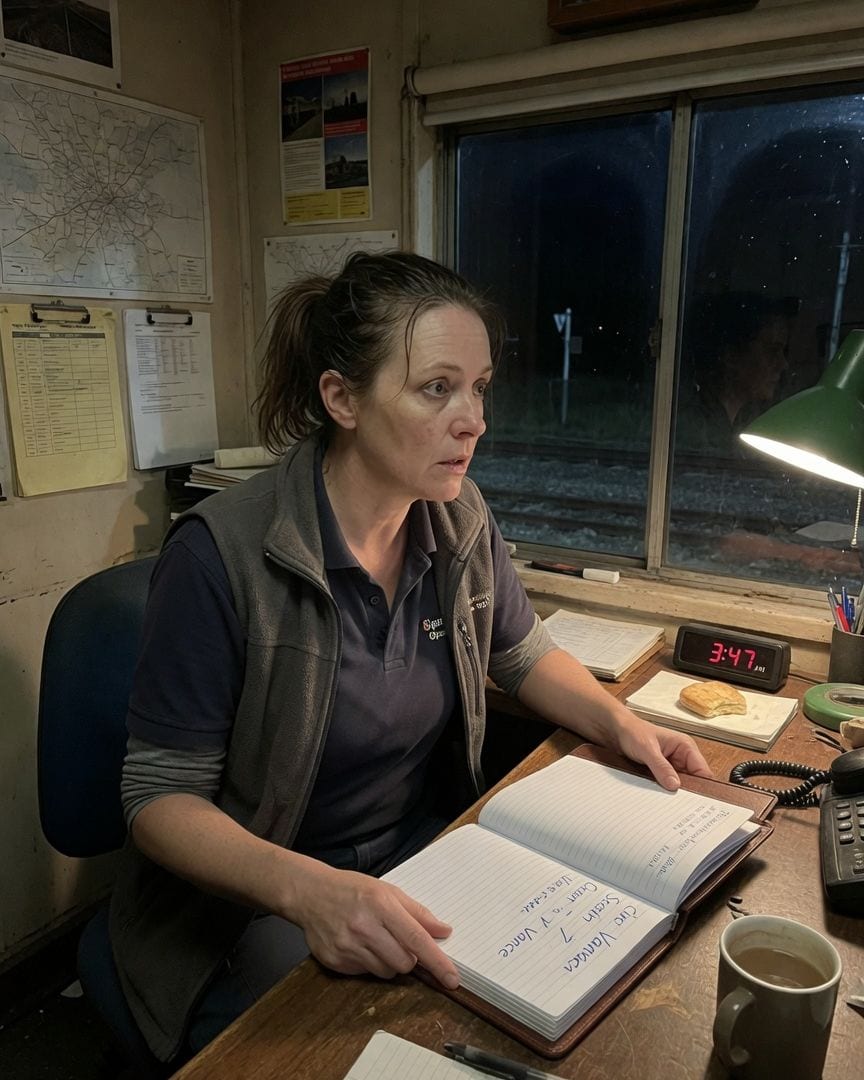
My linesman taps twice on my window at 3 AM. Control says he retired and passed years ago.
My routine at the rural signal cabin was regular: the linesman's double tap on the window at 3 AM. But then my supervisor called, revealing the linesman I knew, Warren Vance, had died five years ago. Now, an impossible entry in my official logbook, with his signature and timestamped from my shift, proves someone else was there.
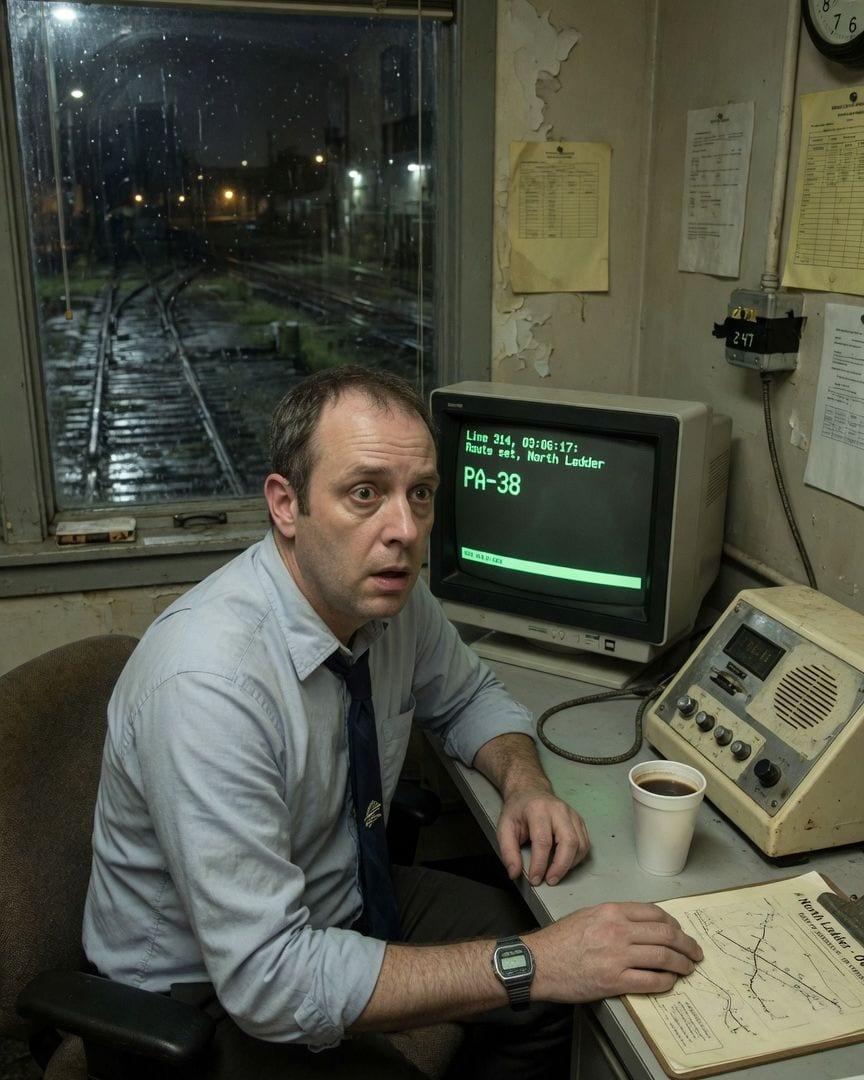
The log says my lever set a route at 3:06 AM through a track that's been shut for repair work — and the circuits show something moved down it. I never touched that lever; I sat there still.
I, Preston Abbott, a night dispatcher, was running a routine signal log check when I saw my code had set a route. It was for the North Ladder, a track decommissioned twenty years ago and physically impassable. Then, the yard's old, physically severed intercom system crackled to life, whispering a specific routing instruction for that very track.
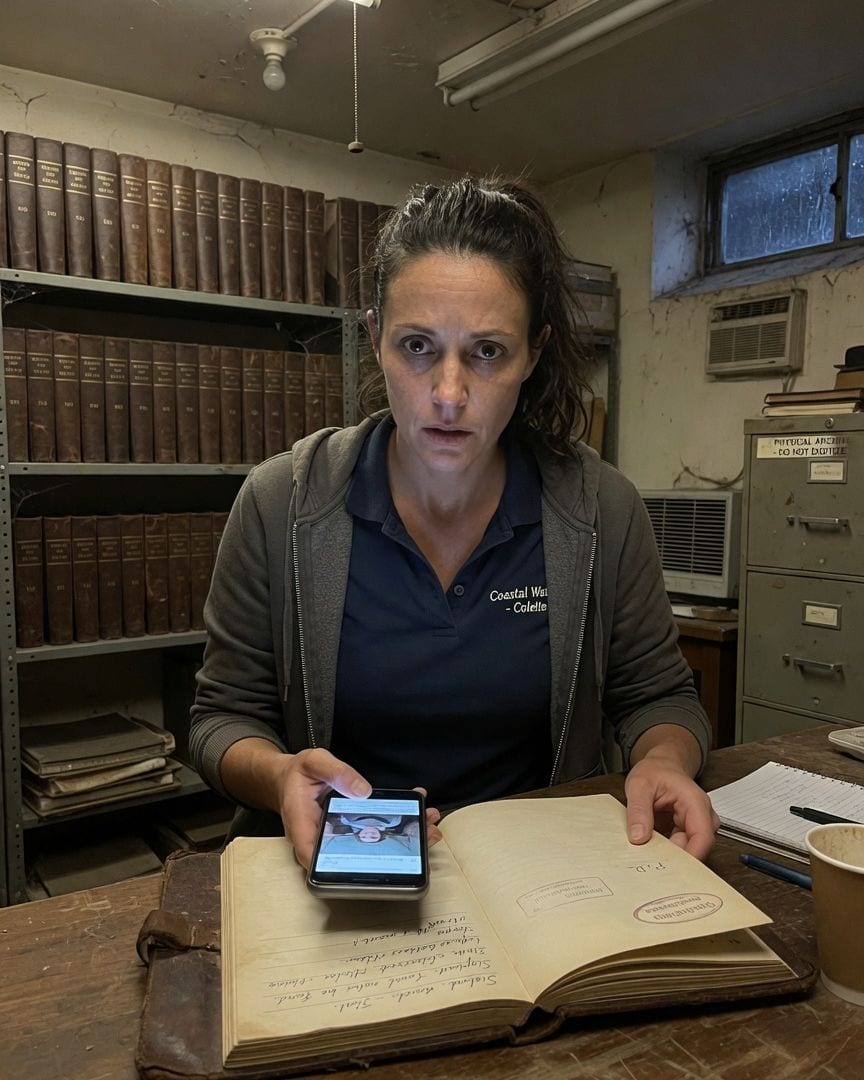
My coastguard log noted Sighting 9 again tonight, a light where no vessel showed. The old logs carry Sighting 9 off Skerry Point at 3:14am every tenth year since 1954, always 'nothing found,' always 'send no boat.'
On my watchtower night shift, the radar screen glowed green and the ocean was quiet. Then, a familiar light appeared off Skerry Point, exactly on cue, just as it had every tenth year for decades. But digging deeper, I found a hidden stamp in an old logbook: 'Operation Skerry. Status: Complete.' It left me with a chilling sense of finality.
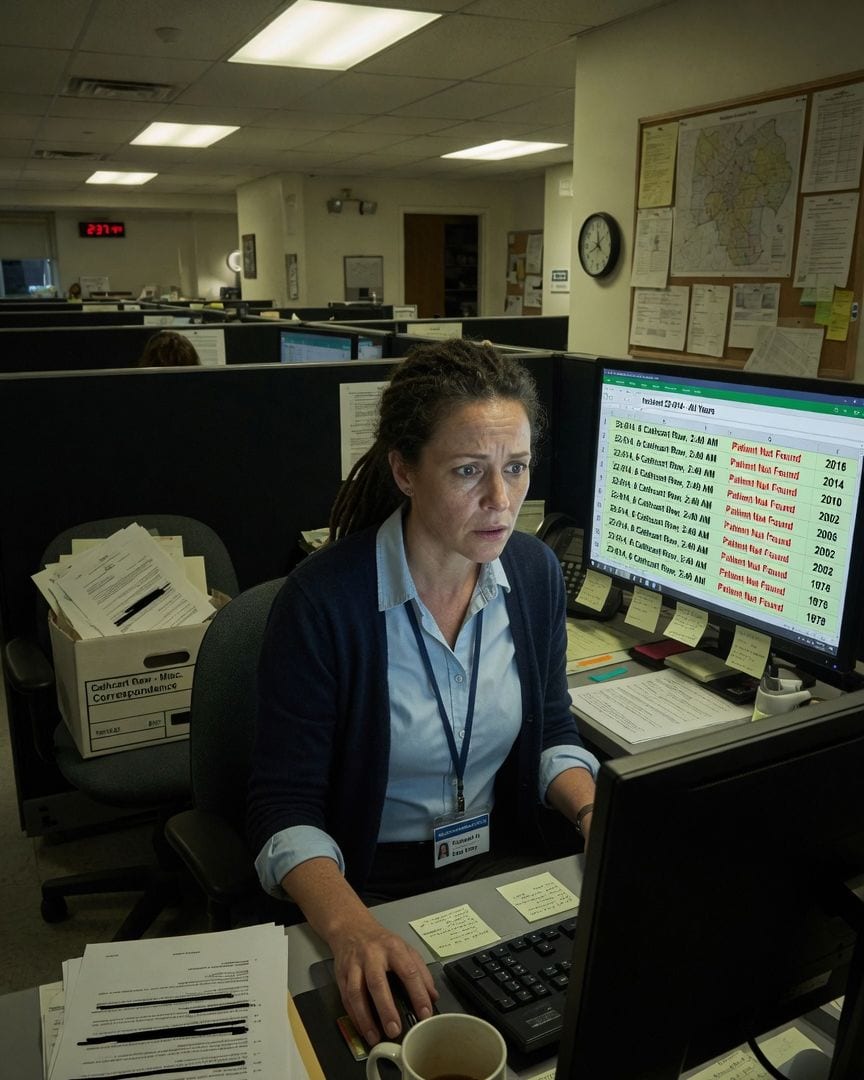
My computer log shows the same 2:40 AM call to Cathcart Row, every four years since 1978, always closed 'patient not found'.
Working data entry for the County Ambulance Trust, I found a routine incident logged as 'Patient Not Found.' But digging deeper, I discovered the exact same phantom call had repeated every four years for over forty years, always at the same address, always at 2:40 AM. Then I found a heavily redacted memo linking it to my own street.
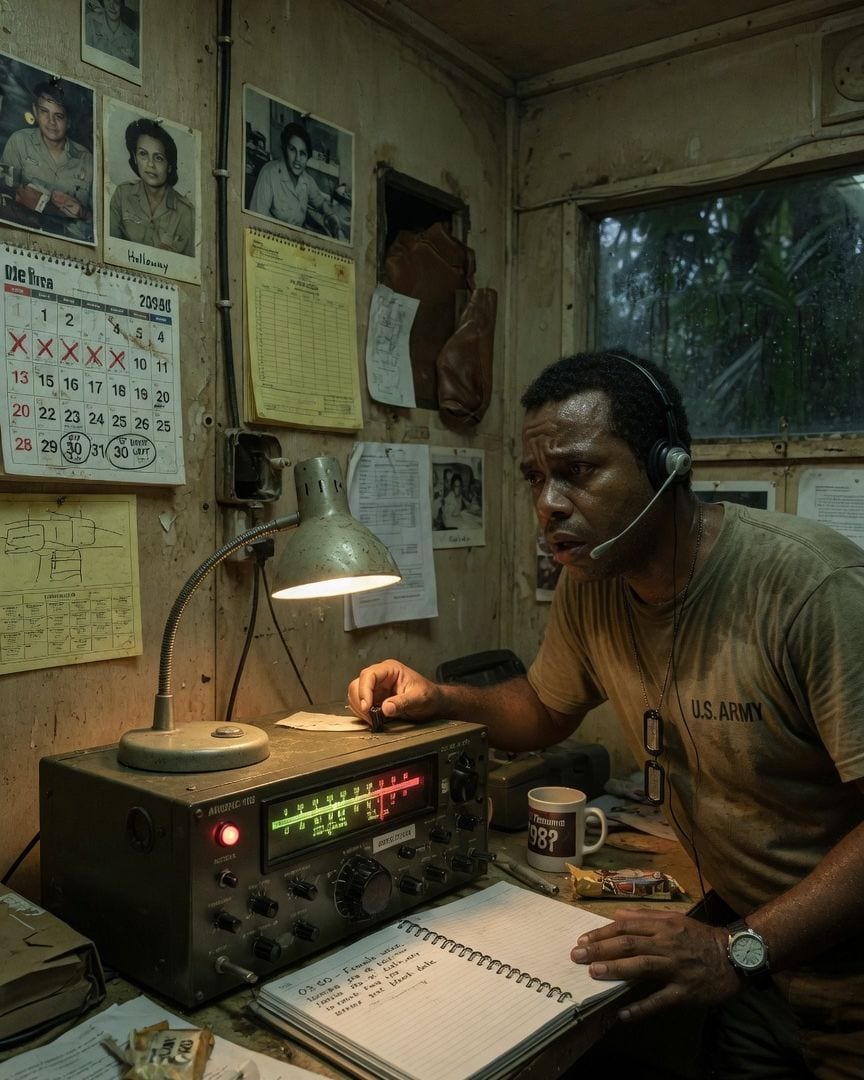
Three months from his tour ending, a sergeant's Cold War radio lists his name with a blank 'ceased answering' date. A hidden logbook warns: 'It knows my name.'
Sergeant Kevin Brooks was three months from finishing his year-long tour at a remote Panamanian jungle station. He meticulously marked each passing day, eager to escape the humid nights and unseen blossoms pressing against the comms shack walls. But at 0300, his old radio crackled to life with a woman's calm voice, listing names of past operators who 'ceased answering.' Then the voice spoke his own name, leaving a chilling blank space where his date should have been. What grim roll call had Sergeant Brooks stumbled upon?
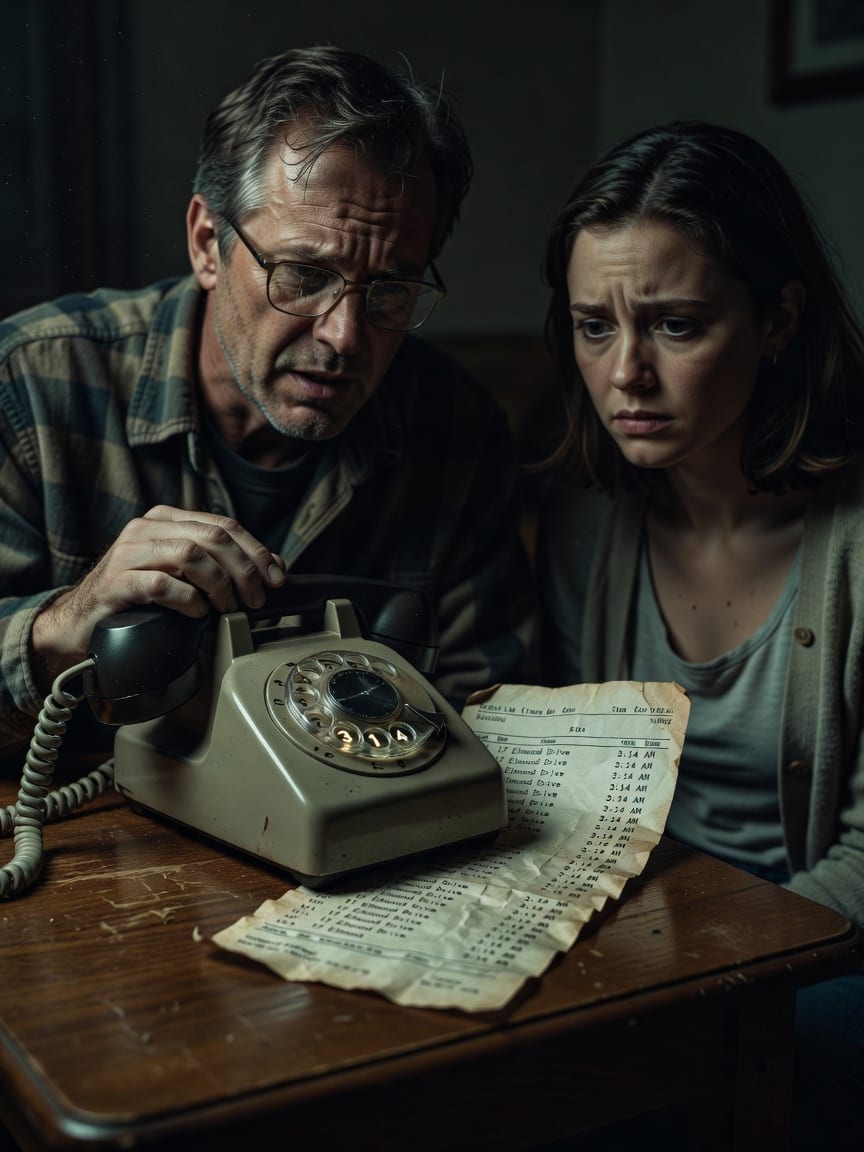
My phone bill itemised forty calls from my number to a house demolished in 1990. Each call at 3:14 AM, lasting eleven minutes. The bill arrived postmarked from a flattened building.
I expected the usual mobile bill, but my landline statement listed forty calls from my number to '17 Elmwood Drive.' That address was for a house torn down in 1990, a vacant lot I remembered from childhood. The phone company insisted the calls were legitimate, leaving me profoundly unsettled by the impossible charges.