The log says my lever set a route at 3:06 AM through a track that's been shut for repair work — and the circuits show something moved down it. I never touched that lever; I sat there still.
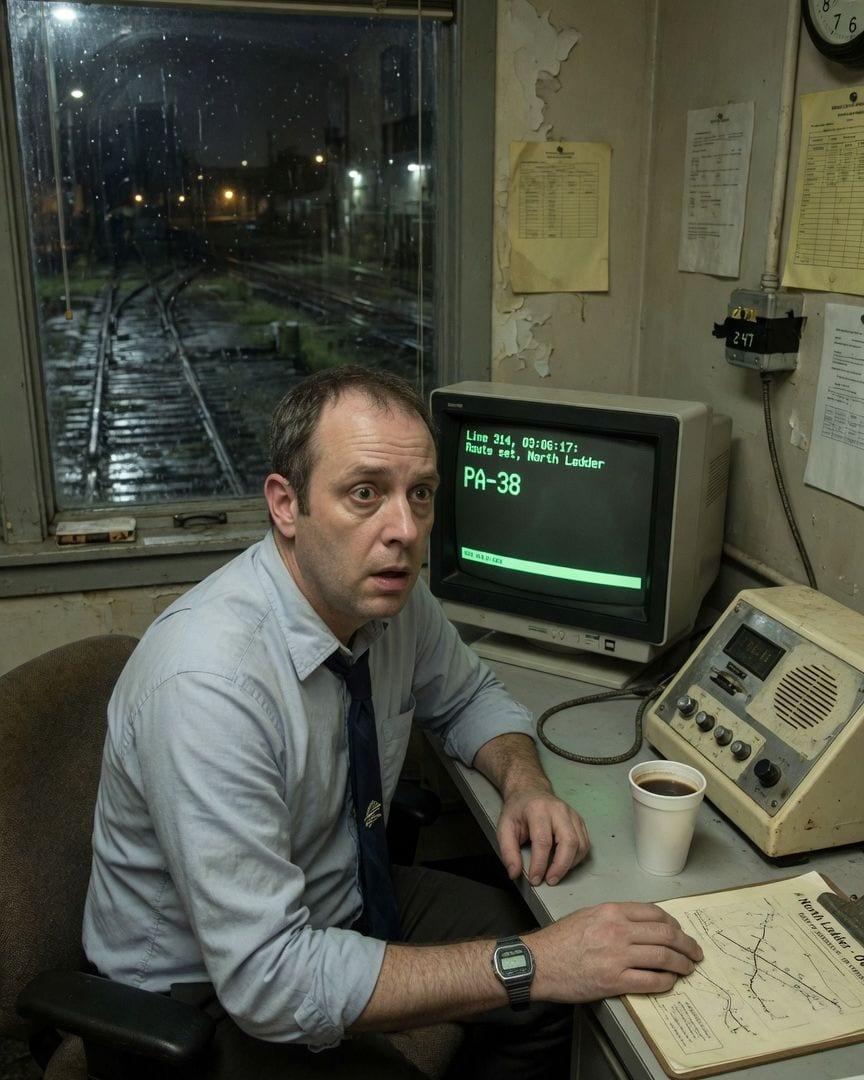
The hushed glow of the night dispatcher’s panel was a familiar comfort, the rhythmic click of relays the only company in the vast control room. Another quiet Wednesday shift at the yard.
I, Preston Abbott, age 38, ran the export for the signal log, a routine check I’d performed a thousand times in my five years here. The screen populated with green text, a cascade of numbers and codes.
My eyes scanned, confirming normal operations, nothing out of place. Until I saw it.
Line 314, timestamp 03:06:17: Route set, North Ladder. Line 322, timestamp 03:14:03: Route cleared, North Ladder.
My lever, my panel. It showed my dispatch code, PA-38, as the operator who had initiated the route. But the north ladder… that track had been out of service for tie work for a month, maybe longer.
Officially, it had been decommissioned twenty years ago, its rails rusted, its ties rotting. I hadn’t touched that lever. Not even close. I remembered drinking lukewarm coffee, staring out at the rain-slicked tracks, entirely still.
I scrolled down, double-checked the track circuits for any anomalies.
They registered a movement, a brief, ghost-like passage through the north ladder, from switch point A to switch point B. A train that didn’t exist had moved on a track that shouldn’t have been active, and my own system had recorded me doing it.
My stomach tightened. It had to be a system error, a software bug. I’d seen false positives before, usually quickly flagged and purged. But this wasn’t flagged. This was a clean, normalized entry.
I zoomed in on the log entry, dissecting every data point. No error code, no system anomaly, no glitch-induced flicker in the readouts. It was a perfect, normal route setting, executed and cleared with the precision of a seasoned dispatcher.
I pushed back my chair and walked the length of the control room, peering out at the dark, silent yard. Rain still fell, a soft hiss against the reinforced windows.
The north ladder was a skeletal tangle of rusted rails and missing ties, clearly impassable. Moonlight glinted off the standing water in the track beds, reflecting nothing but empty space. There was no way anything could move on those tracks.
I returned to my panel, my mind racing. If it wasn't a system error and it wasn't a physical train, what was it? I pulled up the yard's internal communications logs for the night.
Every dispatcher's channel, every maintenance call, every general announcement. Nothing. Not a peep about the north ladder, or any unscheduled movement. It was like the event was invisible to everything but my signal panel.
Then, I remembered the old intercom system. It sat in a forgotten corner of the room, a dusty console of Bakelite and tarnished chrome, supposedly offline since before I started five years ago. A relic.
On a hunch, a desperate need to find something, I patched into its dormant channel, overriding the lockout with an old maintenance key I kept. Static. A deep, persistent hiss filled my headset, like ocean surf.
I was about to give up, convinced it was truly dead, when a faint whisper of a voice, barely audible beneath the hiss, cut through. Calm, even, it murmured, "North ladder, clearance granted."
I froze, my hand hovering over the disconnect button. It sounded like an old recording, played through a tin can, but too clear, too present to be a simple bleed-over. A phantom signal, a fragment of an ancient, forgotten test?
My mind scrambled for a rational explanation. I rewound the audio, playing the segment again and again, trying to catch a full word, a name, anything that would pin it to a human error, a known voice.
The voice spoke again, a single, clear word this time, not a name I recognized, followed by a low, mechanical hum that seemed to resonate in my chest.
I checked the roster for the last few weeks, then the whole month. No one with that name. No temporary operators, no one assigned to any ‘north ladder’ duties.
I even called Hugo Mitchell, the dispatcher on the previous shift, at home. He just laughed, thick with sleep, saying the north ladder was a “graveyard, always has been.”
I went back to the old intercom console itself, tracing its thick, braided cable along the floor. It led to a junction box on the wall, where it was cleanly cut, the ends sealed with electrical tape. Decades old.
The cuts were neat, deliberate. This system wasn't just offline; it was physically severed, rendered inert.
I remembered the faint voice from the recording. I replayed the audio log, isolating the segment again, pushing the volume to max, running it through noise reduction software. This time, the whisper wasn’t just “clearance granted.”
It was a calm, specific instruction for routing, ending with a name. Not my name, Preston Abbott. Not Hugo Mitchell. It was the name I couldn’t place, the one that wasn't on any roster.
The voice was speaking to him, or through him, setting a route I never touched.
The chill stayed with me through the next day, a cold dread that clung to my bones. I couldn't shake the image of that severed cable, those cleanly taped ends, and the impossible voice.
I ran all the diagnostics again, convinced I’d missed something. I found nothing. That night, against my better judgment, I brought in an old, portable recorder, a sturdy analog model I used for logging specific track sounds.
I rigged it to the phantom intercom channel, the one I’d temporarily bypassed. For two nights, nothing but static, confirming the system was indeed dead.
I started to tell myself it had been a fluke, a bleed, a fragment of an old memory playing tricks on my tired brain.
Then, on the third Wednesday of the month, exactly at 3:06 AM, the recorder's tiny red light flickered on. The same calm voice, a little clearer this time, spoke.
It gave precise, technical instructions for a route through the north ladder, detailing specific switch points and signal changes. "North track clear. Ladder B, engagement sequence one-niner-two. Signal green to shunt, then hold."
Simultaneously, I felt a faint tremor through the floor, a low, resonant rumble that vibrated up through my chair, through the very concrete of the building.
It was too subtle for the seismic sensors, which registered nothing, but I felt it in my bones, a deep thrumming that was distinctly… mechanical. Like something massive, far off, was moving.
I immediately checked the yard's official logs again – nothing. The entire yard was silent on the monitors, a blank slate.
I then spent hours in the dusty archives, deep in the basement, digging through decades of physical maintenance records for the north ladder. The paper was brittle, smelling of old dust and mildew.
I found a strange, recurring pattern: every third Wednesday, almost without fail, there were conflicting entries. One page would list the north ladder as 'Decommissioned – 20 years ago,' a fact carved in stone.
Another, from the same month, often just a few days later, would have a handwritten entry: 'Routine Inspection – North Ladder.' Or sometimes, simply 'Clear.' No details, no signatures. Just a single word.
I started cross-referencing these dates with old shift schedules, looking for any dispatcher who consistently worked those specific nights, hoping to find a pattern, a name, someone who might have known something.
The names were a blur, old hands, new hires, gone now. But the pattern of dates, that remained.
My obsession grew. Small, unsettling things started happening. I found my office door slightly ajar one morning, despite having locked it securely the night before with the heavy brass padlock I always used.
My specific 10mm socket, a rarely used tool for old panel diagnostics, was no longer in its designated slot in my toolbox, but resting on the edge of the console, as if someone had been using it and set it down.
I dismissed it as my own forgetfulness, a byproduct of sleep deprivation, but a seed of unease had been planted.
The hairs on my arms would prickle, and I'd turn quickly, expecting to see someone standing behind me, but the room was always empty. The quiet hum of the machinery seemed to grow louder, more insistent.
Oliver Porter, age 62, the long-serving day shift supervisor, started to linger after his handover. "Still digging into the old logs, Preston?" he’d ask, his tone casual, but his eyes too sharp, too knowing. "Fascinating stuff, the yard’s history.
So much goes on beneath the surface, eh?" His gaze felt heavy, like a physical weight.
One night, after the 3:06 AM voice had issued its phantom instructions and I'd felt the subtle thrumming in the floor, I heard it clearly: a faint, rhythmic clack-clack from the yard, like distant rolling stock, echoing through the vast, empty space.
It lasted only a few seconds, then silence. No trains were scheduled, no shunting was happening. I rushed to the window overlooking the north ladder, my breath misting on the glass. Nothing.
Just the dim yellow glow of the sodium lamps on the rusted rails, reflecting in the puddles.
But as I stood there, a distinct, icy draft swept through the heated control room, carrying with it a faint, metallic tang of old iron and wet earth, not the familiar smell of diesel or creosote.
Someone, or something, knew I was listening.
I couldn't ignore it anymore. The next morning, fueled by lukewarm coffee and a deep, gnawing certainty, I cornered Oliver Porter during the shift change. He was sipping from a chipped mug, his face impassive.
"Oliver, what do you know about the north ladder?" I began, trying to keep my voice even, steady.
He just raised an eyebrow, taking another slow sip. "It's out of service, Preston. You know that. Been that way for years." His calm was almost maddening.
I pushed, my words tumbling out. "The signal logs, Oliver. My panel. It showed a route setting. At 3:06 AM. On a track that's dead. I heard a voice on the old intercom, giving instructions.
And I felt a rumble in the floor. And I heard… clack-clack." I showed him printouts of the conflicting maintenance records, the dates for 'Routine Inspection' on the decommissioned track. "It’s not just out of service. Something's happening out there.
Something nobody's talking about."
Oliver listened, nodding slowly, his expression unreadable. His gaze was steady, unwavering. He didn’t interrupt, didn’t flinch. "You’re thorough," he finally said, a hint of something Preston couldn’t quite place in his voice.
"Most people would just call it a glitch. Or blame the late-night pizza." He put down his mug, the clink echoing in the quiet office. "The north ladder isn't just out of service, Preston. It's… dormant."
He leaned forward, lowering his voice, though we were alone. "There’s an older yard, beneath this one. A routine that predates us all. Fifty years, maybe more. We call it ‘The Old Shift.’"
My mind reeled. "The Old Shift?"
"It’s a self-sustaining system, almost like a living thing," Oliver continued, his voice a low, even hum. "And it occasionally activates. Always at 3:06 AM, always on certain nights. Every third Wednesday, for example."
He walked to a locked cabinet behind his desk, extracting a faded, hand-drawn map of the yard. It was old, the paper soft with age.
It showed not only the modern layout but also a network of 'dormant' connections, including the north ladder, all marked in red ink, as if they were veins of an unseen body.
"These are The Old Shift’s routes," he explained, tracing a finger along the red lines. "They run, whether we acknowledge them or not. My job, and others before me, has been to ensure they don’t interfere with the modern yard.
We’re custodians, you see. We just let it pass."
The calm, matter-of-fact way Oliver spoke was more unsettling than any scream. He wasn’t denying it; he was explaining it, as if it were the most normal, mundane thing in the world. As if I should have known all along.
The chill in the room deepened, cold enough to make the air itself feel heavy.
Oliver then reached into the cabinet again, pulling out a small, leather-bound book, its cover worn smooth with age, the edges softened by countless touches.
He placed it gently on the desk, opening it to a page filled with neat, single names, sometimes just initials, each next to the 3:06 AM time slot.
The handwriting varied, some faded, almost illegible, others bold and clear, spanning what looked like decades. "These are the ones who noticed," Oliver said, his voice a low hum. "The ones who heard the call."
His finger traced a line down the page, stopping at the very bottom.
Preston felt his blood run cold, a sudden plunge into absolute zero. His own name, 'Preston Abbott,' was scrawled in fresh ink beneath the latest entry. His shift code, 'PA-38,' was next to it. The date matched last Wednesday.
He looked at Oliver, whose calm smile stretched, thin and utterly unbothered, as if he’d just handed Preston a new work schedule.
Oliver’s smile remained fixed, unwavering. “You see, Preston, The Old Shift requires an operator. Not to physically move anything, not anymore. That’s long since passed. But to acknowledge. To listen.
To let it pass without incident, without disruption to the day-to-day operations.”
He explained that the faint voice I heard, 'The One Who Was Always Here,' was the dormant dispatcher, a constant presence woven into the very fabric of the yard, an echo from a time before our time.
It wasn’t a human, but something… else. A call. A request for silent permission.
The names in the ledger, Oliver revealed, weren't just 'the ones who noticed'; they were the ones who became part of the 'agreement.' Some, he said, disappeared, swallowed by the yard’s forgotten routines, unable to cope.
Others, like Oliver himself, stayed and quietly maintained the old system, becoming its silent guardians, its witnesses. "It’s not malevolent, Preston," Oliver insisted, his gaze unwavering, almost pleading. "Just… persistent. The yard remembers its old routes, its old purpose.
And now, it remembers you. Your repeated investigations, your listening, your attempts to understand—they’ve marked you as the next in line to tend to The Old Shift."
He closed the ledger, the soft thud echoing in the silence, heavy as a coffin lid.
Everything clicked into place: the cut intercom cable, severing it from human interference, making it an exclusive channel for the 'One Who Was Always Here.' The conflicting logs, showing the official decommissioned status against the ghost system's routine inspections.
The unexplainable movements, the rhythmic clack-clack that no sensor registered. It all fit into Oliver’s terrifying, calm narrative of a living, breathing rail yard with a forgotten, ancient heart.
The silence in the room seemed to press in on me, suffocating.
Oliver reached into his desk drawer again, pulling out a small, heavy brass key, its teeth intricate and unfamiliar, unlike any standard yard key I'd ever seen.
He placed it on the desk between us, its cold metal glinting under the fluorescent light. “This is for the old panel,” he said, nodding towards the defunct intercom console. “For when it calls. To acknowledge the route.
To open the channel.”
He offered me a choice, his voice even, his gaze locked on mine. Ignore it, and risk The Old Shift interfering with the modern yard, causing accidents, disruptions.
Or accept my place, take the key, and become another silent custodian, ensuring the phantom routine passed without incident. The key shimmered, a heavy, cold promise, the weight of a history I couldn’t escape.
“No,” I said, my voice barely a whisper, thin and reedy. “I won’t.” I pushed the key back across the desk with a trembling finger. "This is insane, Oliver. This isn’t a routine, it’s… it’s a phantom! A ghost!
A lie!"
Oliver merely smiled, a faint, sad expression. "It just is, Preston. It always has been."
I stood up, backing away from the desk, from the key, from Oliver’s unnerving calm. My chair scraped loudly against the floor. I couldn't fight it, not truly, but I refused to join it. I had to get out.
Out of the yard, out of this town, before the next 3:06 AM, before the call came again and I found myself answering.
I resigned the next morning, giving no explanation beyond 'personal reasons.' Oliver simply nodded, as if expecting it, his gaze lingering on me a moment too long.
I submitted a detailed report of the phantom logs and the strange occurrences to my superiors, but they dismissed it as stress-induced hallucinations from the night shift, or perhaps a series of bizarre system glitches they would 'look into.'
No one believed me. The north ladder remains officially out of service, a dead end in a busy yard, its rusted rails silent and still.
I now work a day shift at a different, smaller rail yard upstate.
I meticulously avoid night shifts, avoid anything that reminds me of the quiet hum of machinery in the dark, the vast, empty spaces where things might move unseen. I’ve found a new routine, a new kind of peace.
But sometimes, in the dead of night, in the profound silence of my new apartment, I still wake with a start, convinced I hear a faint, rhythmic clack-clack in the distance, a sound that shouldn't be there, echoing from a track that doesn't exist.
I close my eyes, trying to banish the image of rusted rails and a single, faint yellow light. He knows it will always be there, waiting.
If this one got to you
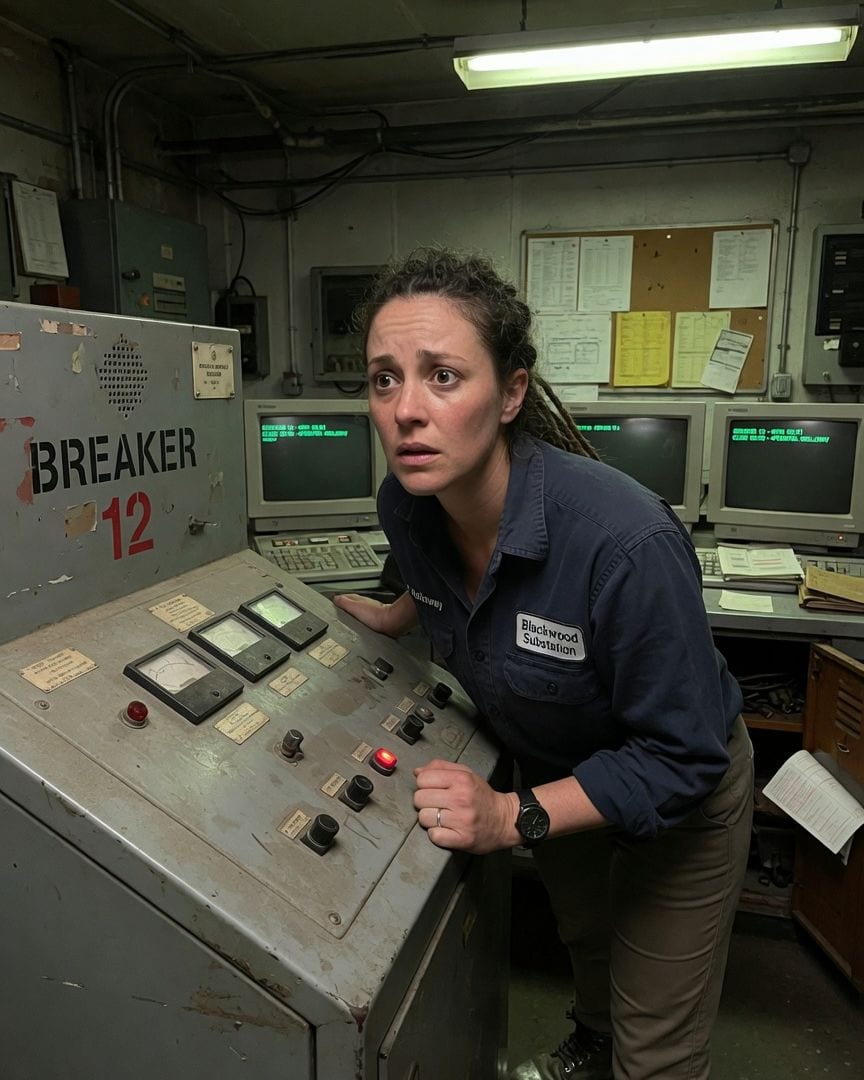
My power station's computer logs a breaker I never touched, opened and closed under my name, while the lights stayed on.
Night shifts at Blackwood Substation used to be a comforting hum, but an impossible event logged under my name shattered the peace. I'd never touched Breaker 12, yet the system claimed I opened and closed it. Now, from that same panel, a low, insistent hum resonates, and a whispered voice asks, 'Are you going to fix it this time?'
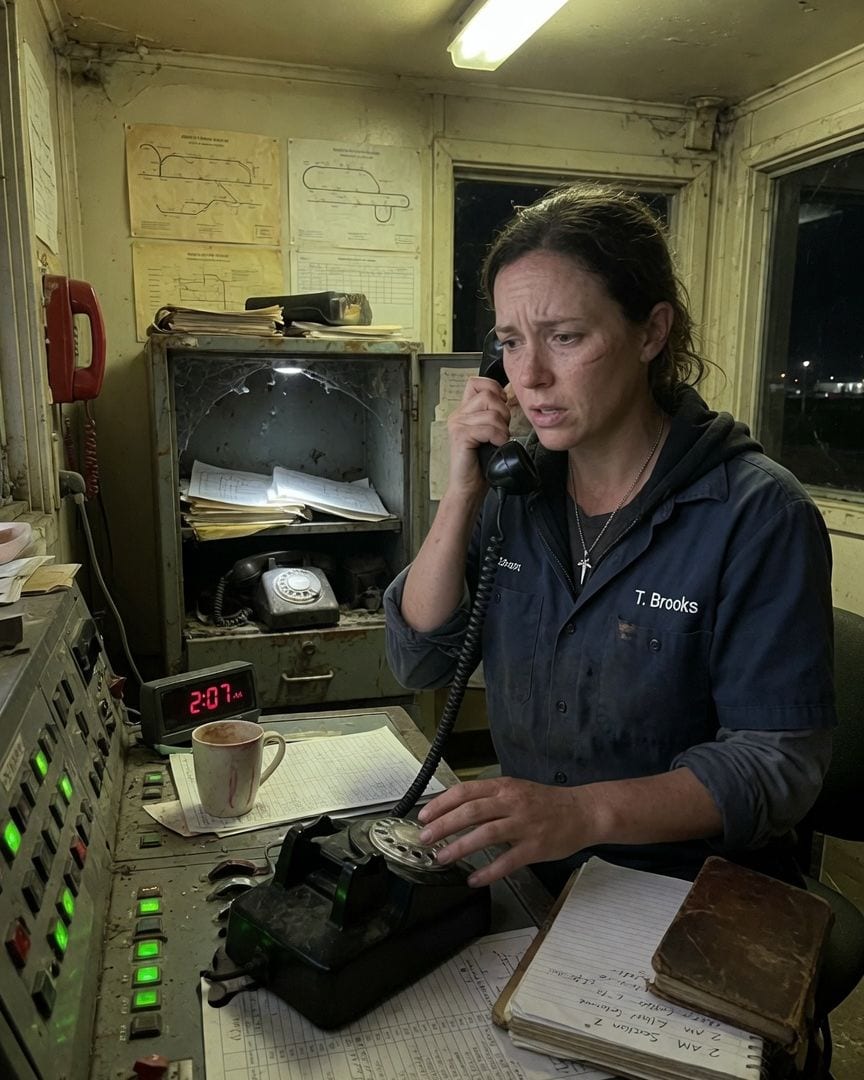
My signal box gets a 2 AM call every night from a man whose section was demolished eleven years ago. Now I found his logbook with today's date.
My night shift at the signal box is quiet and precise, defined by the routine 2 AM call from Ellis confirming Section 7 is clear. But when I asked my duty manager to log it, he said Section 7 hasn't had a track walker in eleven years, not since its cabin and phone were demolished.
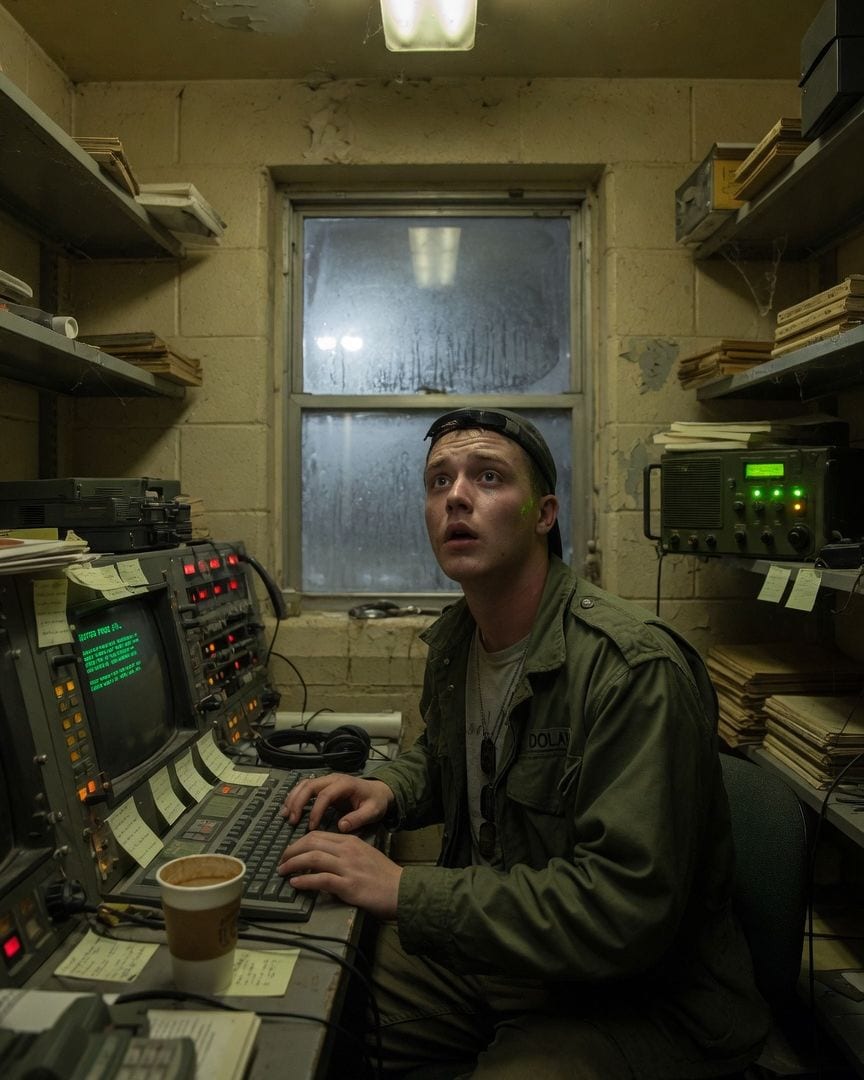
On his last watch, Specialist Dolan heard a dead soldier's voice from an old radio, a week too late.
Specialist Raymond Dolan was on his final watch at Firebase 7, a remote mountain outpost swallowed by a thick, oppressive fog, before its permanent closure. The fire-direction center should have been silent, but strange calls began routing directly to his console, reporting an enemy element in the draw where the 'Ghost Patrol' was lost just a week prior. While Control heard only Dolan's voice echoing into a void, the panicked voices in his ear were terrifyingly real. As he tried to purge the system, an old, unpowered field radio on a dusty shelf inexplicably powered on, its small light glowing green. From its speaker, the voice of Private Abigail Foster, a soldier from the Ghost Patrol, burst through—a week-old transmission, a final warning from the dead.
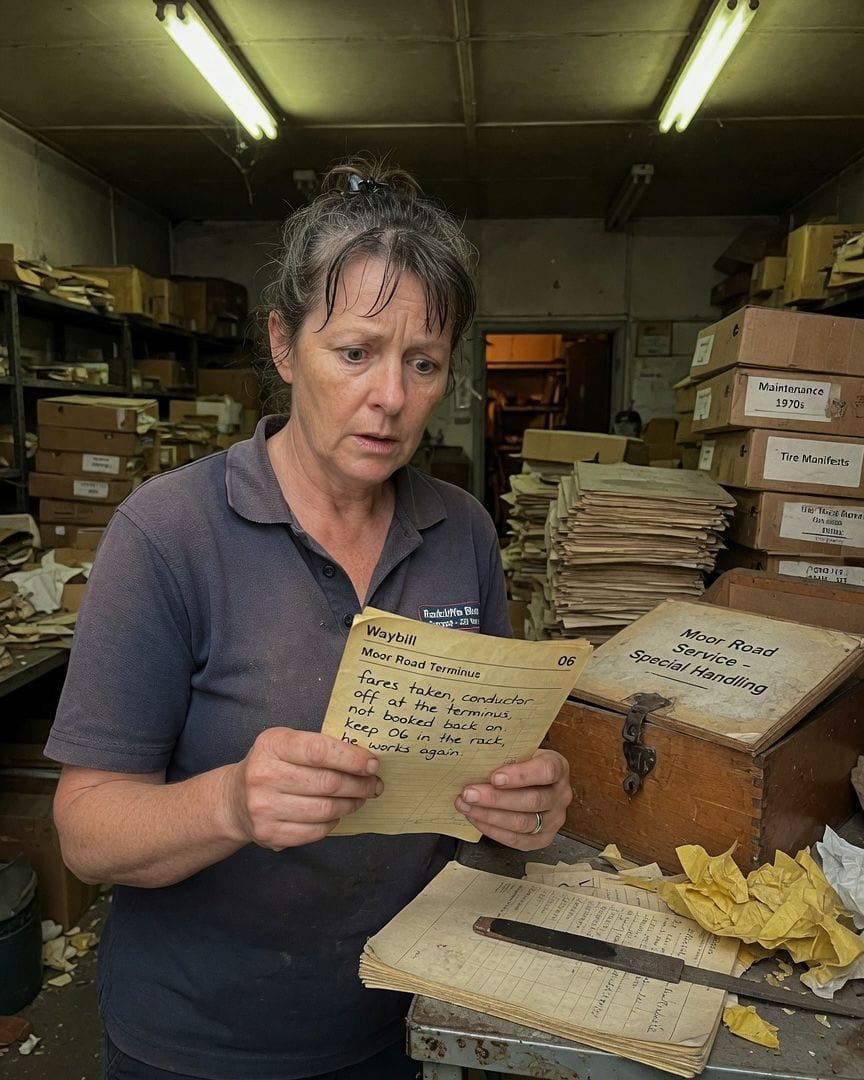
Our depot's Waybill 06 filed a moor road service we stopped running years ago. Every eight years since 1956, it closes: 'keep 06 in the rack, he works again.'
Sorting waybills in the depot, I stumbled across a form for the Moor Road Terminus. That route was decommissioned decades ago, but this waybill had a chilling handwritten instruction: 'keep 06 in the rack, he works again.'
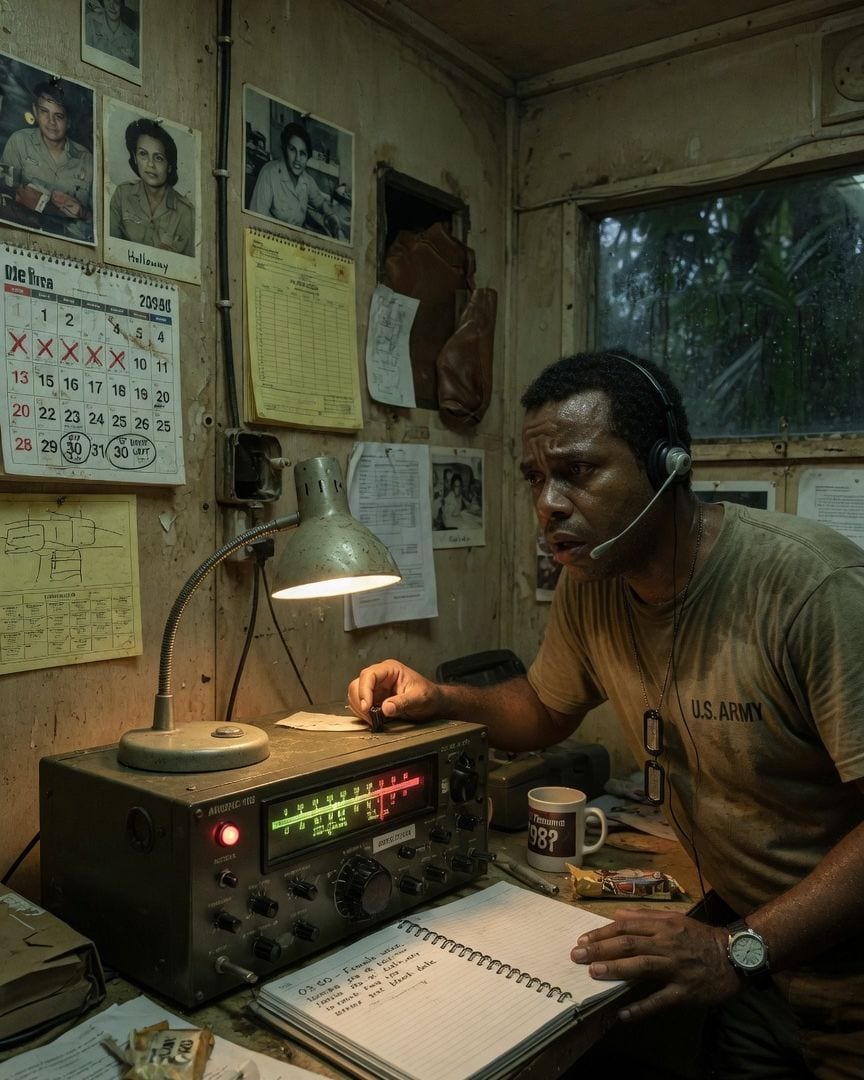
Three months from his tour ending, a sergeant's Cold War radio lists his name with a blank 'ceased answering' date. A hidden logbook warns: 'It knows my name.'
Sergeant Kevin Brooks was three months from finishing his year-long tour at a remote Panamanian jungle station. He meticulously marked each passing day, eager to escape the humid nights and unseen blossoms pressing against the comms shack walls. But at 0300, his old radio crackled to life with a woman's calm voice, listing names of past operators who 'ceased answering.' Then the voice spoke his own name, leaving a chilling blank space where his date should have been. What grim roll call had Sergeant Brooks stumbled upon?
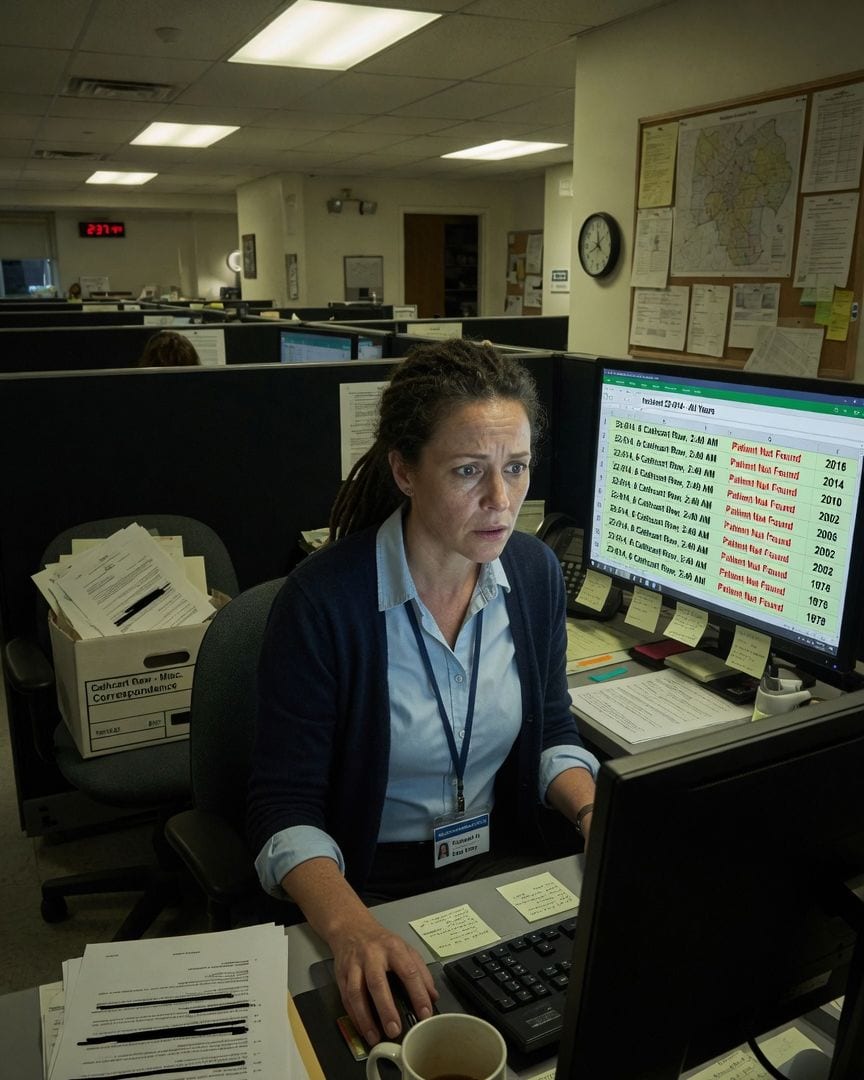
My computer log shows the same 2:40 AM call to Cathcart Row, every four years since 1978, always closed 'patient not found'.
Working data entry for the County Ambulance Trust, I found a routine incident logged as 'Patient Not Found.' But digging deeper, I discovered the exact same phantom call had repeated every four years for over forty years, always at the same address, always at 2:40 AM. Then I found a heavily redacted memo linking it to my own street.