My power station's computer logs a breaker I never touched, opened and closed under my name, while the lights stayed on.
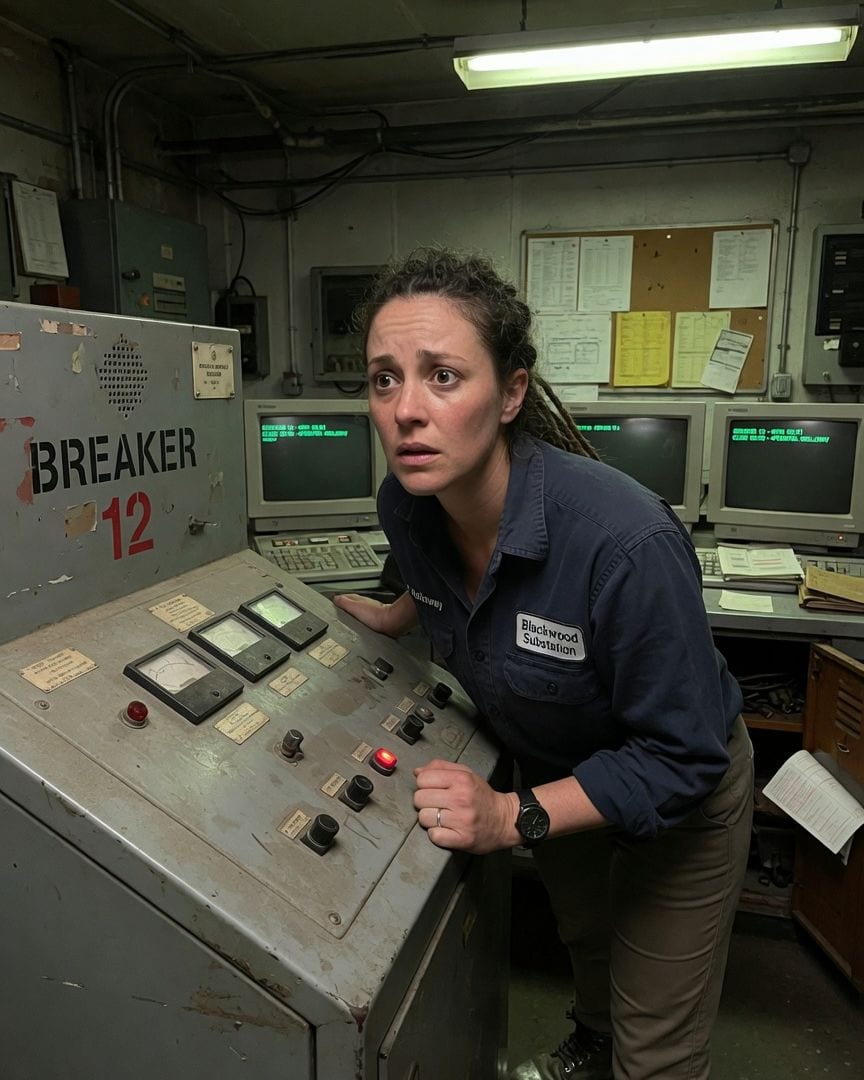
The low hum of Blackwood Substation usually lulled me into a kind of nocturnal peace. On night shift, it was just me, the whirring machinery, and the distant, almost musical thrum of the transformers out back.
My shift on Tuesday, two weeks ago, had been uneventful. Until it wasn't.
The SCADA system, the substation's central nervous system, flashed an alert across my screen. Not a critical warning, just a notification. Breaker 12, a seldom-used line, had been opened at 2:51 AM and reclosed at 2:58 AM. Seven minutes.
The event log, chillingly precise, clearly tagged my user ID, 'CHolloway,' as the operator who performed the action. There was even a 'dual-confirm' timestamp, indicating I'd digitally signed off on both the open and close.
I stared at the screen, my stomach tightening into a knot. I never touched Breaker 12. Not last night, not ever, not without an explicit directive.
And the entire feeder it controls, the one leading to the old industrial park, should have gone dark. But the system showed no power interruption, no customer complaints, nothing. Just my name, attached to an impossible operation.
It was like someone had borrowed my hands, done something impossible, and put them back without me knowing.
A faint, almost imperceptible low hum, deeper than the usual machinery, seemed to resonate from the direction of Breaker 12’s physical panel, a sound I’d never noticed before in all my years here.
A system glitch? A phantom reading? My first thought was always the mundane explanation. I logged the incident as an anomaly, just like Dean Sullivan, my supervisor, always told me to do with the "ghost readings" he occasionally dismissed.
I called him that morning, before I left, trying to explain it. He just sighed, his voice thick with sleep. "Charlotte, old systems act up. Log it, forget it. Don't go chasing shadows on the night shift."
But I couldn’t forget it. The impossible login, the hum. The next night, I decided to physically inspect Breaker 12.
The control room felt colder than usual as I walked towards the heavy, gray panel, the polished metal gleaming under the fluorescent lights.
As I approached, the faint humming I’d heard from my desk grew subtly louder, a low thrumming vibration I could feel in the soles of my feet, right through my work boots.
I ran diagnostics on the breaker itself; all systems nominal, no errors. Everything appeared perfectly normal, perfectly dormant.
I tried to replicate the phantom operation from my console, but the system demanded a physical override at the panel itself, impossible to do from my desk. No, whatever had happened had been done right here.
I leaned in closer, inspecting the dusty control interface for any sign of tampering, any loose wire or tell-tale scratch. That’s when it happened.
A soft, almost whispered voice seemed to drift from the small, grated speaker mounted near the panel, a voice so low I initially mistook it for a colleague speaking somewhere behind me. "Are you going to fix it this time?"
I whipped my head around. No one. The room was empty. No one else was on shift, not for miles. My heart hammered against my ribs. "Hello?" I called out, my voice too loud in the sudden silence. "Penelope?"
The name just came to me, an echo of the voice, though I didn’t know why. The voice didn't answer. I checked the digital roster again, then the printed one pinned to the board.
No 'Penelope' on duty, or even on staff. The only sound left was the low, insistent hum emanating from the Breaker 12 panel and the steady click of the substation’s internal relays.
Driven by the phantom voice and the impossible log entry, I started searching the substation. I scoured the dusty storage spaces, the archives, the old maintenance room—a forgotten corner rarely touched, mostly used for junk storage.
Behind a stack of ancient, yellowed manuals that smelled of dust and old paper, I discovered a small, unmarked wooden locker, tucked into a dark recess. It looked like it hadn't been opened in decades.
Inside, amidst forgotten, corroded tools, lay a rolled-up sheet of heavy, brittle paper. Carefully, I unfurled it.
It was a hand-drawn schematic of the Blackwood Substation, dated years before its official construction, signed with an unfamiliar, looping name at the bottom. My eyes traced the lines, noting the discrepancies with the official blueprints I knew by heart.
Whole sections were different, rearranged, or simply missing. And then I saw it: a thick, bold red line, clearly labeled 'Conduit 7,' running from the very heart of Breaker 12's housing.
It plunged downwards, down, down, to an undocumented, unlabeled chamber, a dark void sketched beneath the substation's foundation, a place that should not exist. My breath caught in my throat.
I spent my next night shift poring over that unofficial schematic, the brittle paper spread across my console, comparing it to every official document I could find.
There was no mention of 'Conduit 7' or the subterranean chamber on any blueprint, any engineering plan. It was as if a crucial part of the substation had been deliberately erased from existence.
The hum from Breaker 12 seemed to follow me, a low, buzzing presence that vibrated just at the edge of my hearing, no matter where I sat. It had become a constant.
I knew Dean wouldn’t take this seriously. I needed more. I began searching for older records, anything that might shed light on the schematic or the phantom operations.
Deep in a dusty archive box, tucked beneath a pile of old wiring diagrams, I found it: an old, leather-bound maintenance logbook from the 1970s. The cover was cracked, the pages thin and yellowed, the entries handwritten in faded ink.
I flipped through, my fingers smudging the fine layer of dust, looking for anything related to Breaker 12.
And I found them. Several entries, spanning years, describing 'unexplained fluctuations' and 'ghost readings' on Breaker 12, often dismissed with a curt 'operator error' or 'system quirks.' But one entry, dated June 1974, made my blood run cold.
It described an operator reporting a 'whispering voice' from the Breaker 12 panel, eerily similar to my 'Penelope' encounter. The entry was signed by a 'T. Ellison.'
I tried to cross-reference T. Ellison with current or past employee rosters, searching every database I had access to. Nothing. No employee by that name had ever worked at Blackwood, according to official records.
It was like he never existed, just like the chamber beneath my feet.
The pattern of dismissed anomalies, the ghost readings, the vanishing names – it began to feel less like a series of random glitches and more like a deliberate, repeating erasure.
As I dug deeper, the substation’s silence felt less empty and more occupied. It wasn’t just the hum anymore; it was a constant awareness that prickled the hairs on my neck.
I started receiving internal system messages, brief, garbled texts that would flash on my console, seemingly from no source. 'STOP LOOKING.' 'YOU'LL BE NEXT.'
They would vanish if I tried to screenshot them, melting away before my fingers could hit the keys.
One night, while I was deep in the archive room, surrounded by shelves of forgotten files, a heavy metal cabinet door down the hall slammed shut with a deafening clang that rattled the very floor beneath me.
I froze, listening, every muscle tense. Footsteps, slow and deliberate, seemed to approach, the faint scuffing sound echoing down the corridor, then they stopped just outside the archive door.
I held my breath, my heart pounding a frantic rhythm against my ribs. "Penelope?" I whispered, my voice barely audible. There was no answer, only a sudden, cold draft that swept through the room, making my skin prickle.
The footsteps receded, fading into the ubiquitous hum of the substation. A chilling certainty settled over me: whatever was causing these anomalies knew I was investigating. It was watching me, learning my movements. The threat had become personal.
I tried to explain this to Dean again the next morning, my voice tight with exhaustion and fear, showing him the strange logbook entries, the faded reports. He merely shrugged.
"Charlotte, I told you, your imagination’s getting the better of you on the night shift. Those old logs are practically fiction. We don't need you chasing conspiracy theories and affecting your work performance."
His calm dismissal, his utterly unbothered tone, felt more menacing than any direct threat. He wasn’t just disbelieving me; he was willfully blind.
I realized Dean wasn't going to help. He was part of the problem, perhaps unknowingly. I needed concrete proof. Remembering the old schematic's hidden chamber, I decided to find it.
Following the thick red line on the brittle paper, I located a section of the basement wall where Conduit 7 should terminate.
It was a solid concrete wall, thick and unyielding, but running vertically down it, almost imperceptible, was a faint seam. It was expertly camouflaged, blended perfectly with the surrounding concrete.
Prying at it with a crowbar from the maintenance room, I found that the seam wasn't just a flaw; it was a hidden door, heavy and sealed with rust and time.
With a groan of tortured metal, it finally gave way, swinging inward into darkness.
Inside was a small, damp chamber, the air thick with the faint smell of ozone and something else, something metallic and organic, like wet earth and electricity.
In the very center, bathed in the dim light of my phone, a large, dark, crystalline formation pulsed with a faint, internal light, like a slow, living heart.
Thick, glowing tendrils, almost like veins, connected it to a series of conduits embedded in the walls, including what I knew had to be 'Conduit 7.'
As I stared at it, a cold wave of understanding, not fear, washed over me. The hum I’d heard, the phantom operations, the missing operators – it all snapped into sickening focus. This was what 'runs the night.'
This was what fed on the power, and on the operators.
To the side, bolted to the damp concrete wall, was an old, rusted metal box. I pried it open. Inside were more records: a series of personnel files, meticulously kept, but not by the substation.
These files detailed operators who had vanished, some with notes like 'transferred,' others simply 'missing.' Each file was accompanied by a faded photograph. One photo, in particular, caught my eye. A young woman, smiling shyly.
Her name, scrawled in elegant script: Penelope Mercer. The same Penelope I thought I heard. The same Penelope who was never on any official roster.
The files showed a pattern: an operator experiences anomalies with Breaker 12, investigates, then vanishes, their records either erased or vaguely explained away. This wasn't a glitch. This was a system. A cycle.
And Penelope was just one of its victims.
I frantically searched the chamber for more information, my hands shaking as I flipped through the old personnel files. I found a file for Thomas Ellison, the one who reported the whispering voice in the 1970s.
His photo showed a man with haunted, shadowed eyes. And then I uncovered the file for Penelope Mercer. The faded photograph, the name clearly printed below, confirmed it.
This was Penelope, the voice I heard from the control room, the one I'd called out to. The file listed her disappearance in the mid-1970s.
The chilling pattern of identical 'phantom operations' in Breaker 12 logs, each tied to a different vanished operator, solidified into a repeating cycle of absorption.
And then, nestled amidst the blank files at the very end of the stack, I saw a new, pristine file, almost stark white against the yellowed paper of the others.
My name was scrawled on it, in a hand that isn’t hers, but looks strangely familiar: Charlotte Holloway.
A faint, almost imperceptible tremor ran through the concrete floor, and the crystalline formation in the center of the chamber pulsed brighter, humming with renewed intensity. The air grew heavy, charged.
A whisper, clearer than before, echoed through the chamber, seemingly from everywhere at once, a chorus of faint, sad voices. 'Welcome, Charlotte. You've found us.'
Charlotte stares at the faded photo in the old personnel file – a young woman with a kind, serious face, her name clearly printed below: Penelope Mercer.
The eyes in the photo seem to hold a familiar, distant sadness, the same sadness she heard in the voice that answered her from the empty control room, the voice of "The One Who Was Always Here," an operator who vanished from all records fifty years ago.
The presence that filled the chamber was overwhelming, a psychic weight pressing down on me, trying to pull my consciousness into the crystal.
It wasn't a physical touch on my hand, but a profound mental intrusion, a surge of fragmented memories and emotions that weren't my own. I recoiled, stumbling back, my head swimming, but the voices intensified, a cacophony of past operators.
I saw glimpses: Penelope, confused and desperate, attempting to log a phantom operation on Breaker 12, her face etched with a fear I now understood; Thomas Ellison, staring wide-eyed at the pulsating crystal, his sanity unraveling.
The crystal was not just an energy conduit; it was a repository, a living archive of every operator who came too close.
'The One Who Was Always Here' wasn't a single entity but a collective consciousness, the merged identities of every absorbed night shift worker, trapped within the grid, guiding the next, ensuring the cycle continues.
They were trying to communicate, to warn me, but also to draw me in, to add me to their ranks.
Breaker 12 was their primary interface, allowing them to manipulate the grid and exert influence, maintaining their 'operations' to sustain their existence.
The lack of power outage during the phantom operations was because the entity wasn't causing a fault; it was orchestrating a precise, energetic siphon, a manipulation so subtle it bypassed all conventional diagnostics.
The humming, the system messages, the 'Penelope' I heard – it all made a terrifying, coherent sense. I was not just an observer; I was the next target for assimilation, the next 'voice' to join the choir.
The entity’s presence was overwhelming, a psychic weight pressing down on me, trying to pull my consciousness into the crystal. I fought back, screaming silently against the intrusion, against the insidious pull at my mind.
I knew I couldn't destroy it; it was too vast, too ingrained in the substation's very fabric, a parasitic heart beating in the wires. My only option was to escape, to carry the truth, however unbelievable.
I clutched the old maintenance logbook and the unofficial schematic to my chest, my only physical proof, my mind screaming for clarity amidst the cacophony of voices.
As the crystal pulsed with a renewed, hungry light, the hidden door to the chamber began to slowly close, drawn by an unseen force, a grinding sound echoing through the small space.
I scrambled, shoving the documents into my bag, and forced my way through the narrowing gap, feeling a cold, desperate pull at my mind, a chorus of desperate, longing whispers pleading with me to stay, to join them, to find peace in the current.
I stumbled out into the substation basement, gasping for breath, the door slamming shut behind me with a sickening thud, sealing the chamber once more.
I raced back to the control room, my mind reeling, grabbed my personal belongings, and punched out for the last time. My shift was technically over, but I knew I was never coming back.
I drove away from Blackwood Substation, the rising sun doing little to dispel the profound chill that had settled deep in my bones.
I had escaped, but the cost was immense: I carried a truth no one would ever believe, a truth that had shattered my perception of reality, and the memory of the voices that called my name.
I reported my findings to Dean Sullivan, presenting the old logbook and schematic as proof. He listened patiently, a placid, unreadable expression on his face.
Then, he dismissed it all as 'stress-induced hallucinations' and 'unsubstantiated theories,' suggesting I take an extended leave for mental health. My proof was too anecdotal, too easily explained away as a breakdown brought on by too many night shifts.
I was quietly let go a week later, my employment records citing 'personal reasons.' The substation continued its operations as usual, the night shift still running, the hum of the transformers unbroken.
No one ever followed up on the hidden chamber or the missing operators. My story became just another strange rumor in the long, unsettling history of the Blackwood Substation.
I now live far from Blackwood, working a mundane day job, trying to rebuild a semblance of normal. But the nights are still long.
Sometimes, when the power flickers during a storm, I feel a faint, familiar hum deep in my bones, a phantom vibration that makes my skin crawl. I know it’s still there, still waiting, still running the night.
The thought chills me, but it’s the quiet truth I live with now.
I survived, but a piece of me is forever marked by the voices I heard, the faces I saw in the records, and the crystal that watched me from the dark. I know I'll never truly escape Blackwood, not entirely.
It’s part of me now, a shadow in my periphery, a hum I can almost hear when the world falls silent.
Months later, Dean Sullivan reviewed the new night operator's performance logs. He paused, noticing a peculiar entry: Breaker 12, opened and closed at 2:51 AM, tagged to 'V. Marsh.' He sighed, shaking his head.
Some things, it seemed, never changed at Blackwood. He picked up the phone to call Vincent, to tell him not to worry about the 'ghost readings,' just like he'd told Charlotte, and Penelope, and Thomas before her.
If this one got to you
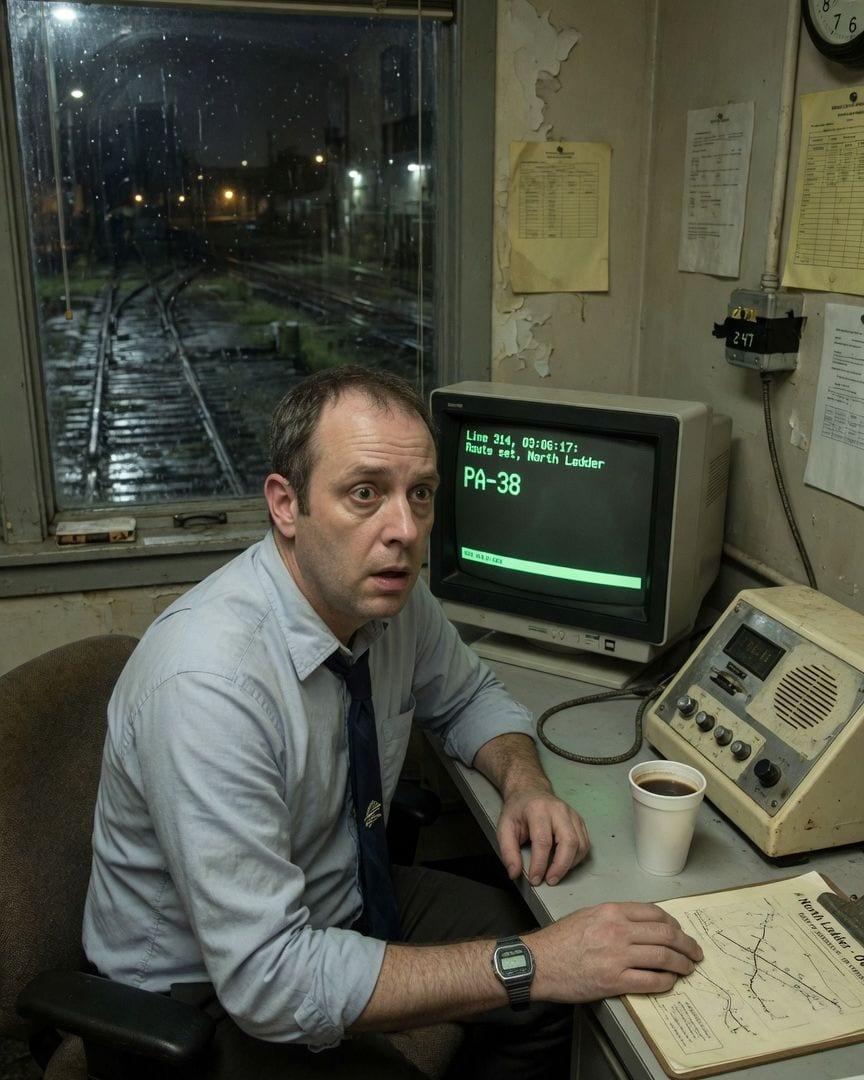
The log says my lever set a route at 3:06 AM through a track that's been shut for repair work — and the circuits show something moved down it. I never touched that lever; I sat there still.
I, Preston Abbott, a night dispatcher, was running a routine signal log check when I saw my code had set a route. It was for the North Ladder, a track decommissioned twenty years ago and physically impassable. Then, the yard's old, physically severed intercom system crackled to life, whispering a specific routing instruction for that very track.
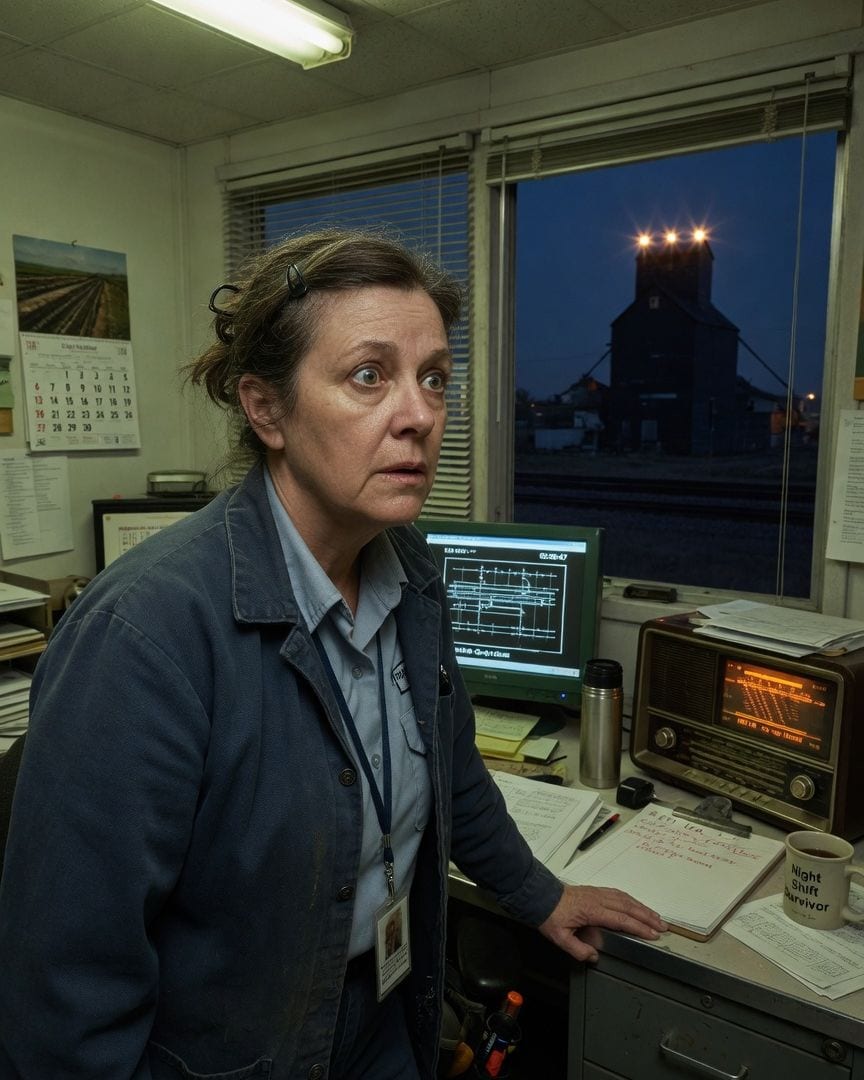
The grain tower light flashed three times at 2 AM, signaling me clear. The bulb was removed six years ago.
Every night, I work the lonely shift at the transport hub. For fifteen years, an old grain elevator, automated and unpowered with its light bulb physically removed, still flashes a 'Clear' signal across the tracks at 2 AM. Recently, the impossible flashes have grown sharper, stirring a deep unease from a place that should be completely silent.
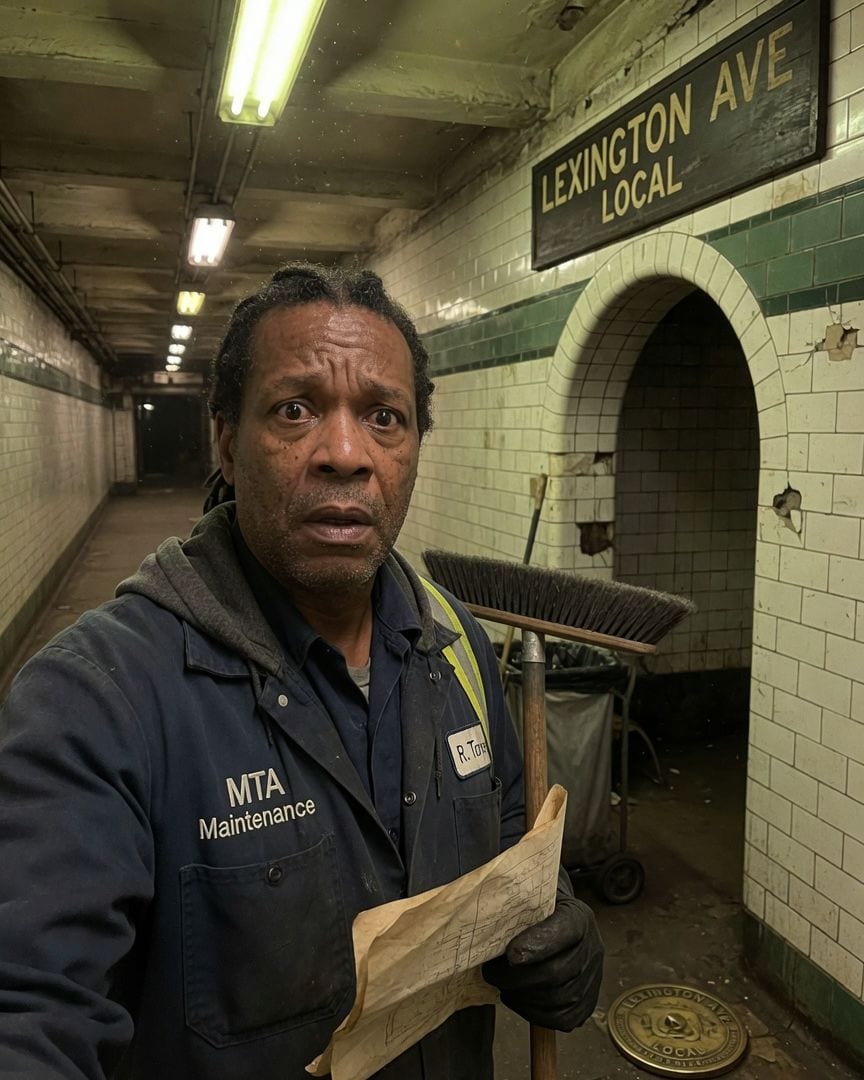
A decommissioned subway line now calls 'All aboard!' from a dark platform that shouldn't exist.
For ten years, my job as a cleaner in the Lexington Avenue Local transfer point was a precise routine. But one night, the solid wall I swept past every shift simply vanished, replaced by a dark, perfectly tiled opening. Now, from that impossible space, a train from a line decommissioned seventy years ago calls 'All aboard!'
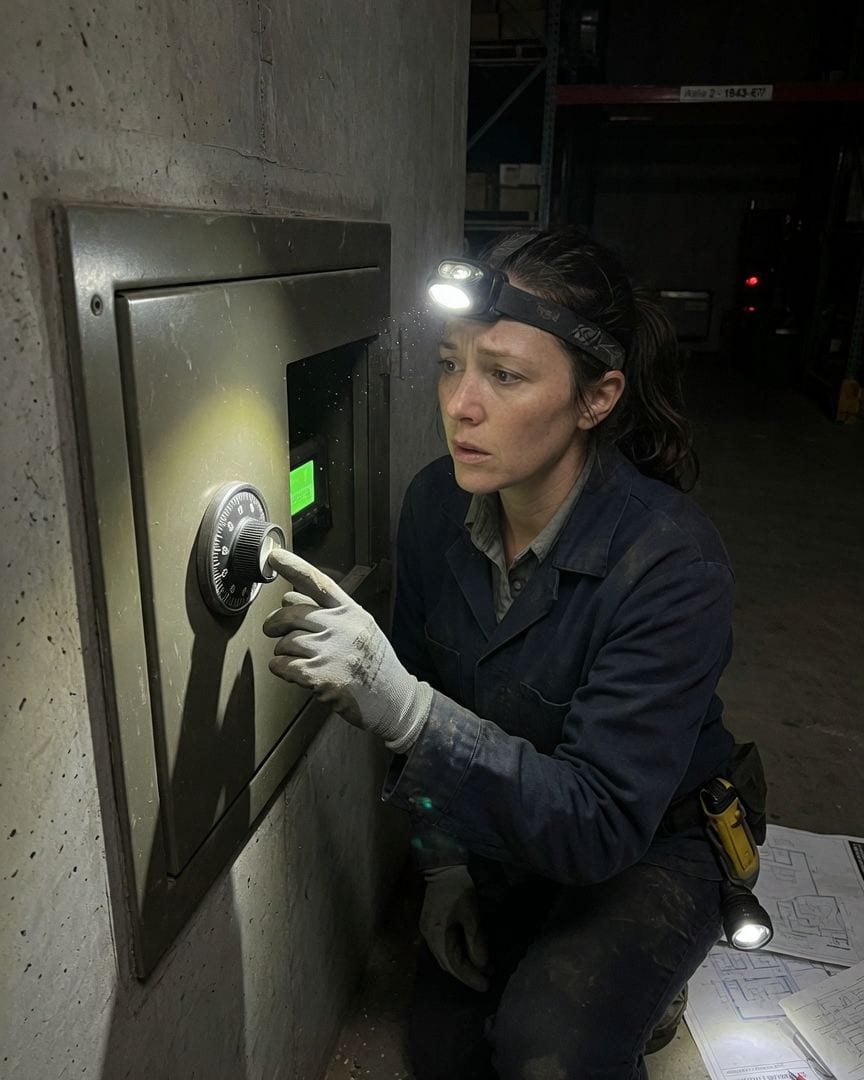
A meticulous records clerk finished her final inventory in a Cold War depot, then found a steel door not on any blueprint, worn smooth by decades of use, opening to an office with a log updated just hours ago.
Merit Lachance moved through the echoing darkness of Building 9, her headlamp cutting a lonely circle through dust motes. The depot’s oldest section was losing power, leaving her to finish her mandated shelf-read for the impending decommissioning. Every blueprint showed Building 9 as a single, vast room, so when her light fell on a waist-high, solid steel door set flush into the wall, her mind reeled. Its combination dial was worn smooth from decades of constant use, an impossible contradiction to the building’s known history. After meticulously working the dial, the heavy door shifted inward, revealing a dust-free, actively maintained office space with a terminal log updated just hours ago.
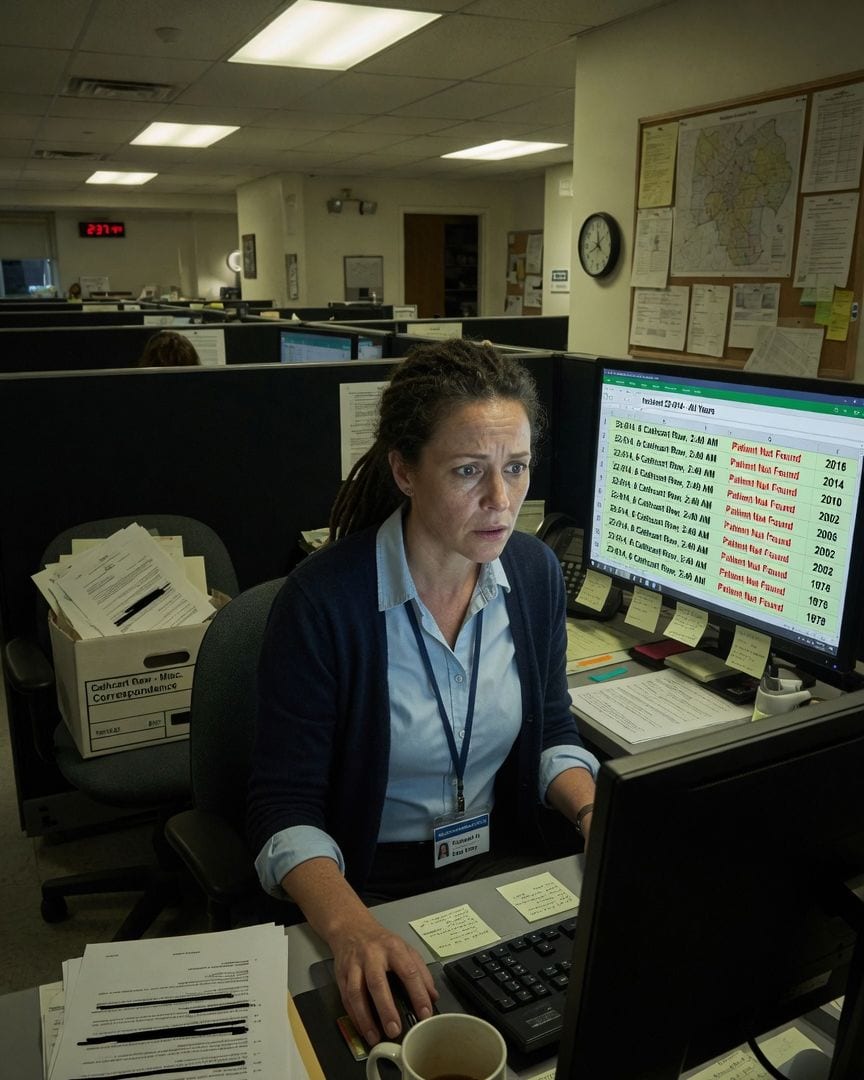
My computer log shows the same 2:40 AM call to Cathcart Row, every four years since 1978, always closed 'patient not found'.
Working data entry for the County Ambulance Trust, I found a routine incident logged as 'Patient Not Found.' But digging deeper, I discovered the exact same phantom call had repeated every four years for over forty years, always at the same address, always at 2:40 AM. Then I found a heavily redacted memo linking it to my own street.
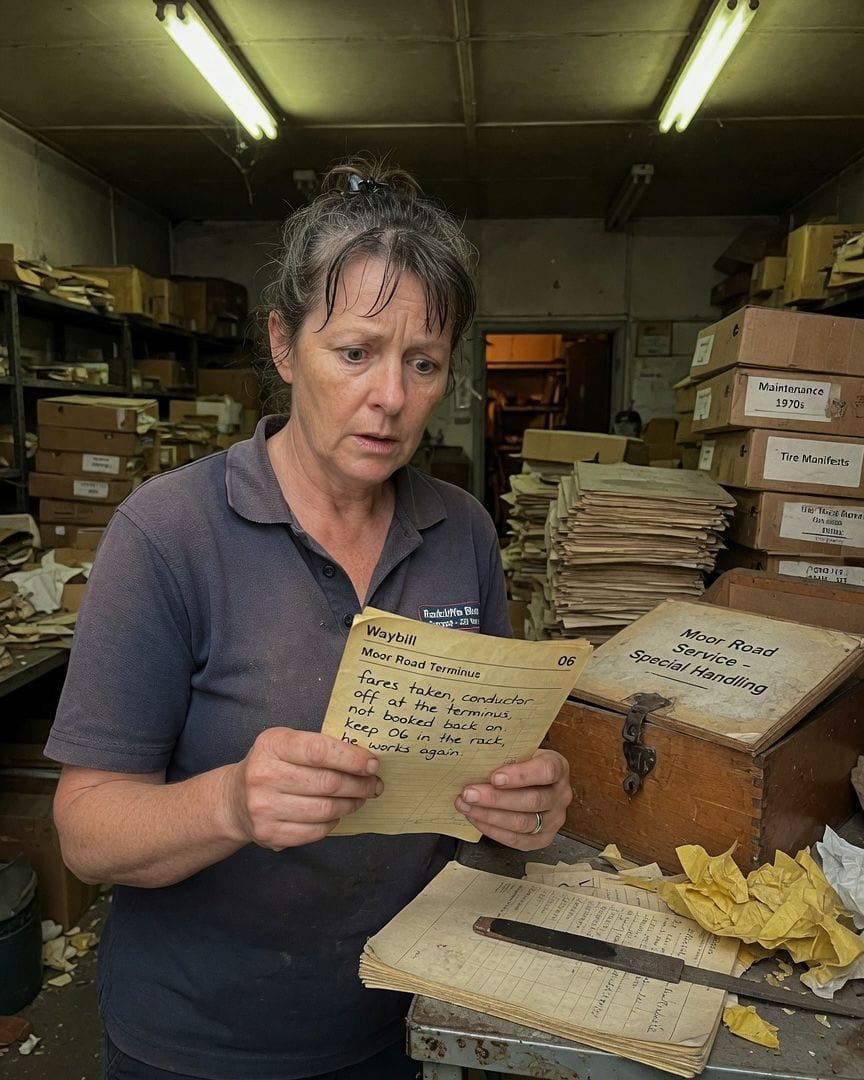
Our depot's Waybill 06 filed a moor road service we stopped running years ago. Every eight years since 1956, it closes: 'keep 06 in the rack, he works again.'
Sorting waybills in the depot, I stumbled across a form for the Moor Road Terminus. That route was decommissioned decades ago, but this waybill had a chilling handwritten instruction: 'keep 06 in the rack, he works again.'