A decommissioned subway line now calls 'All aboard!' from a dark platform that shouldn't exist.
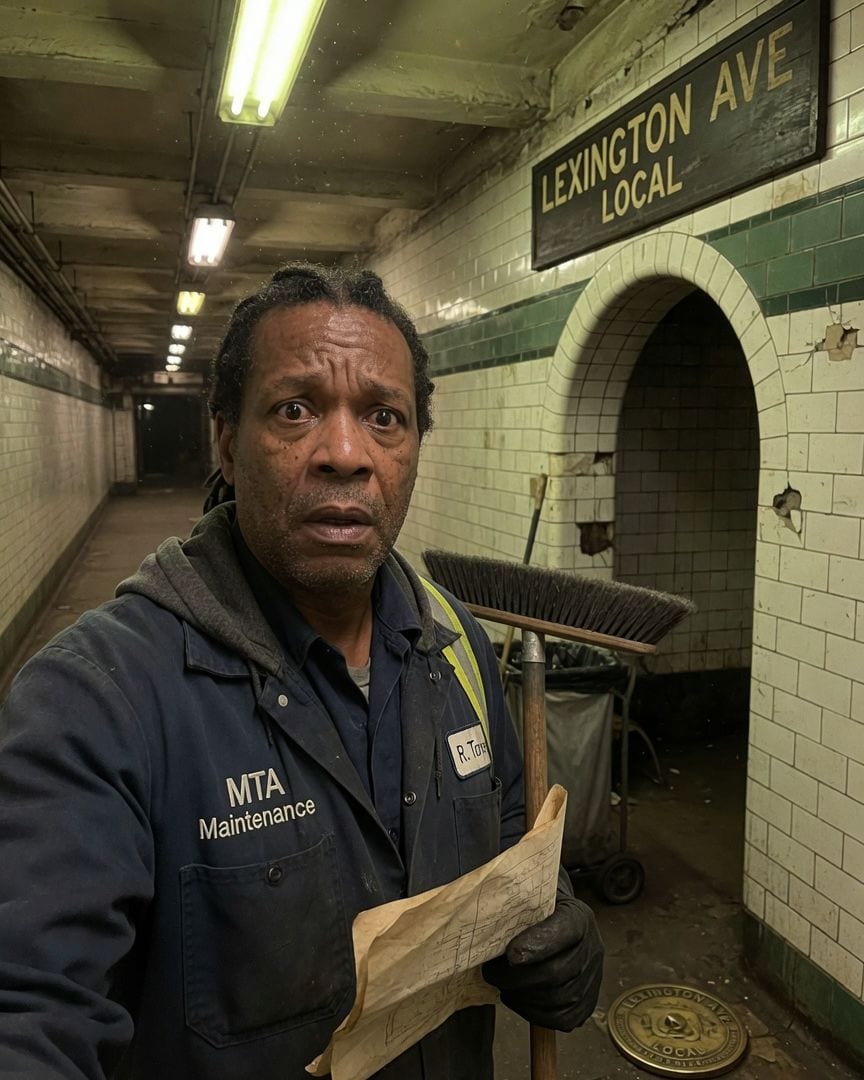
It started with the wall. My subway station, the Lexington Avenue Local transfer point, has been my world for ten years. I know every tile, every shadow, every echo of its vast, damp tunnels.
My job as a cleaner is methodical, precise. I sweep the westbound passage at exactly 3:14 AM, every shift. For ten years, that passage ended in a solid, unyielding expanse of 1920s-era glazed white tile. Then June happened.
On June 14th, as I pushed my heavy cart down the familiar stretch, the solid wall wasn't there. Instead, there was an opening. It was tiled perfectly, indistinguishable from the surrounding original construction, stretching into a dark, recessed space.
Above it, an ornate wooden sign, faded but legible, read: ‘LEXINGTON AVE LOCAL’. That line was decommissioned seventy years ago. My cart wheels grated to a halt.
The air from the opening was the first thing that struck me – warm, stale, not the usual damp chill that clung to the station like a second skin.
It smelled faintly of ozone and something else, something metallic and old, like a forgotten engine. I told myself it was a new vent, a ventilation shaft I’d never noticed before. But that sign.
Twice this week, just as I approached that impossible opening, I heard it: a faint, deep rumble that vibrated up through the soles of my shoes, followed by the distinct hiss of pneumatic doors.
Then, from the darkness beyond, a voice, tinny and distant, calling out: "All aboard!" A train. On a platform that had no right to exist.
I tried to dismiss it, of course. Fatigue, I thought, or the echoing acoustics playing tricks. Maybe a new art installation, a strange prank by some late-night crew.
But the opening remained, night after night, as stubbornly real as the main platform. My routine, my bedrock, began to crack. I started my own quiet investigation.
I counted the tiles in the passage, every single one, pressing my fingers against the grout lines, then paced the exact distance from the main platform entrance to the anomaly.
Back in my locker, I pulled out the station’s official blueprints, the faded paper brittle in my hands, cross-referencing my mental map. Every measurement confirmed it: the passage was 14 feet longer than it should have been.
It now accommodated a third opening, a full platform’s width, that simply wasn’t on any authorized plan.
Yet, the tiles, the dark green trim, the off-white mortar, the very smell of the concrete – they were identical to the rest of the 1920s construction. There was no seam, no repair work, nothing to suggest a recent addition.
It felt like it had always been there, perfectly integrated, only now I was seeing it. One evening, as I swept near the opening, my broom bristled against something hard.
Between the cracks of the old floor tiles, a small glint caught the overhead lights. I bent down. It was a tarnished brass token, etched with ‘LEXINGTON AVE LOCAL’ and a fare value from decades past.
It felt impossibly warm to the touch, as if someone had just dropped it.
The warmth of the token burned a strange path in my palm. My mind raced, trying to find an explanation, a normal explanation. It led me to a forgotten utility closet near the old maintenance offices.
Everyone said it had been cleared out years ago, empty save for dust. I remembered seeing it on my original training walkthrough, just a locked door then.
The lock was rusted solid, but I found a pry bar in my cart. With a grunt and a screech of metal, it gave way.
The air inside was thick, choked with decades of dust and the sharp, acrid smell of old paper. Tucked behind a stack of broken light fixtures, nestled against the grimy wall, was a rolled-up, brittle blueprint.
It was old, yellowed, but clearly a schematic of this station. My breath caught in my throat. There, drawn in meticulous detail, was the impossible third platform, labeled 'Lexington Ave Local.'
It wasn't a historical reference, it was an active part of the layout. A red circle, drawn with a thick, hasty hand, highlighted the platform. Beneath it, a cryptic, looping note scrawled in faded ink: 'The Anchor's Return.'
I pulled the fragile blueprint closer, my finger tracing the faded red circle. The date within it, rendered in that looping script, was not a historical marker, not an old note. It was fresh, immediate: June 14th, 2024.
The exact day the third opening first appeared.
The blueprint consumed me. During my breaks, I’d spread it out, comparing it inch by inch to the actual station, my heart thumping with a growing unease.
The ‘Anchor’s Return’ note, its looping script now chillingly familiar, pointed to a specific junction of old and new construction, precisely where the third opening had manifested. It was a precise instruction, not just a label.
Dean Walsh, my older, cynical colleague, caught me staring at the blueprint one night, a half-eaten sandwich in his hand. “Still chasing ghosts, Ev?” he grunted, wiping mayo from his mustache.
I tried to explain, to articulate the impossible details, the warm air, the token. He just waved me off. “Old tunnels, kid. Station’s a maze. Things shift. Don’t let it get to you.”
But my internal map of the station was absolute. It didn’t shift.
Dean’s dismissal only fueled me. I started researching the Lexington Ave Local line. Public records were sparse, detailing its short, troubled existence before its official 1954 closure. No mention of a third platform, no anomaly.
I went to the public library on my days off, spent hours hunched over dusty microfiche machines. The humming of the reader, the smell of old celluloid, became my new routine.
I cross-referenced old newspaper articles, sifting through decades of local news. Then I found them.
A series of small, local news items from the early 1950s: ‘Unexplained Disappearances Near Lexington Station,’ ‘Faint Rumors of Phantom Line,’ ‘Station Management Denies Structural Anomaly.’
They were vague, quickly dismissed as urban legends, local color stories, or just “folks gone missing.” But the articles were clustered around June and July of 1954. Exactly seventy years ago. Just before the line’s official, unquestioned closure.
The timing was chillingly precise.
My digging didn't go unnoticed. My locker, which I always double-locked, was found ajar one morning. Nothing was missing, no sign of forced entry, but my neatly arranged cleaning supplies were subtly disarrayed.
It was too small a detail to report, but too specific to be accidental. Then Charles Crane, the station manager, called me into his office.
His demeanor was calm, almost too calm, as he leaned back in his worn leather chair. "Evelyn," he said, his voice level, "I've heard you've been... asking questions about the old Lexington line. And that old blueprint."
His eyes were cold, fixed on mine. "We don't need rumors disrupting morale, not with the new security protocols. Focus on your work." The implicit threat was clear.
That night, as I swept the long connecting passage near the anomalous opening, the overhead lights flickered erratically, plunging sections into deep darkness before snapping back on with an audible buzz. I froze, my broom falling with a clatter.
A wave of ice-cold dread washed over me, a counterpoint to the growing warmth emanating from the third opening. It felt like a breath, a presence, pressing in.
I heard a faint, drawn-out hum, like a massive, dormant engine slowly coming to life, vibrating through the concrete. Then, from the impossibly dark passage, the rhythmic click-clack of a train, closer this time, approaching on tracks that weren't there.
The next day, with Crane's warning echoing in my ears and the phantom train's rhythm still thrumming in my bones, I tracked down Franklin Radcliffe.
He was a name I’d found in the deep archives, a retired archivist who’d dedicated his life to the city’s transit history.
His apartment, high up in a pre-war building, was a labyrinth of books, rolled-up maps, and overflowing file boxes, smelling of dust and dried paper.
Franklin, frail but his eyes still sharp behind thick glasses, listened to my story without interruption, his face unreadable. He offered me a cup of lukewarm tea.
When I mentioned the 'Lexington Anomaly' articles and the 'Anchor's Return' note, his eyes, suddenly keen and focused, fixed on mine. "You found that, did you?" he rasped, his voice like dry leaves.
He took a sip of his tea, then leaned forward, his voice dropping to a near-whisper. "The Lexington Ave Local was always 'troubled.' Not by finances, not by bad planning. By its very geometry."
He explained that the line had been built on a "seam." "A weak point," he said, tapping a gnarled finger on his knee, "where realities sometimes… touch. Or bleed through."
He described how, every few decades, under specific, precise conditions—often tied to the summer solstice, and the meticulous attention of certain individuals—the line would "bleed through." "The platform isn't just an echo, Miss Bishop. It's a re-manifestation. A bridge.
And someone, often a cleaner or a track walker, someone who knows the station intimately, who notices every tile, every crack… they become the focus. The anchor."
He pulled out an old, hand-drawn map from a precarious stack, the paper brittle and yellowed, dated 1954.
It highlighted the exact spot of the third opening, marked with a small, careful 'X.' "It needs a connection to hold," he continued, tracing the X with a trembling finger. "Someone to observe it, to acknowledge it.
To make it real." The pieces clicked into place with horrifying clarity: my meticulous routine, the consistent discrepancy in the passage length, the warm air, the train sounds, the brass token.
All of it the station trying to pull itself back into existence, using me as its conduit.
Franklin’s gaze sharpened, his voice growing graver. "The disappearances in the 50s… those weren't just missing persons, Miss Bishop. Not entirely. The last one… they didn't get out whole. The station kept them."
A cold dread settled in my stomach, heavier than any fear I'd known.
Franklin, seeing the utter horror dawning in my eyes, sighed. “There’s one more thing.” He shuffled through a dusty cardboard box, labeled in his neat, looping hand: ‘Personnel - Decommissioned Lines.’
He rummaged for a moment, then pulled out a brittle, yellowed employee file from 1954. “The cleaner who documented the last major incident,” he said, handing it to me.
My hands trembled as I took it. The paper felt impossibly cold despite the humid apartment air. The name on the file, typed in an old Remington font, was stark: ‘Evelyn Bishop.’ My breath hitched.
Below it, a faded, black-and-white photograph. It was me. My face, thirty-four years old, staring back from seventy years in the past. The same faint, almost imperceptible scar above my left eyebrow, exactly where mine is now.
My own eyes, looking out from 1954. The accompanying report, written in a familiar, precise hand, detailed ‘The Lexington Anomaly’ and the ‘uncountable platform.’ The final entry, dated December 22nd, 1954, was scrawled in a frantic, almost illegible hand.
My own handwriting. It read: ‘It beckons. I cannot look away. It’s almost fully here. I am almost fully in it.’
Franklin confirmed my dawning horror, his voice barely a whisper in the cluttered room. “You see, Miss Bishop? You are the anchor. You always have been, or a part of you. This isn’t just a place.
It’s a pattern, a cycle, and you are its constant.” He explained that the ‘Lexington Ave Local’ wasn't just a physical line that closed.
It was a sentient, geometric entity that existed in a state of flux, needing a conscious observer—a focal point—to pull it into tangible reality.
My meticulous nature, my daily sweep of every tile, my unwavering focus on the ‘wrongness’ of the third opening, had made me the perfect conduit. I wasn't just witnessing a phenomenon; I was actively manifesting it.
The warm air, the train sounds – they weren't echoes. They were the line actively drawing itself through the tear, strengthening its presence with every observation I made, every detailed thought I gave it. The disappearances in 1954?
Those were previous ‘anchors’ who succumbed, fully pulled into the other side, becoming part of the impossible geometry itself. "It needs you, Evelyn," Franklin whispered, his gaze intense, "to fully manifest. And once it's fully here, it takes its price."
His words hung in the air, heavy and inescapable. I wasn't just a witness; I was an unwitting accomplice, and soon, a victim.
I returned to the station, terror mixing with a strange, chilling clarity. I knew what I had to do: break the cycle, sever the connection. I couldn't sweep the passage. I couldn't acknowledge the third opening.
I tried to avoid it, taking a different route through the maze of tunnels, but the station itself seemed to conspire against me. Doors on my usual exit route were locked, the heavy metal slamming shut with a deliberate finality.
Lights flickered out in alternate passages, forcing me back toward the main artery, back toward the impossible opening.
The warm air from the third opening was no longer just a draft; it was a powerful, almost physical current, pulling at my clothes, whispering my name in a soundless rush.
The train sounds were deafening now, the brakes squealing as if a phantom train had arrived, vibrating through the concrete, through my very bones. I saw shadows, long and gaunt, moving down the dark tunnel of the impossible platform, beckoning.
Panic rising, I remembered Franklin's words: 'You know its true geometry.' He meant the real geometry, the solid, unchanging structure I'd known for ten years. I made a desperate choice.
Instead of trying to ignore the opening, instead of running away, I sprinted towards it. But instead of entering the impossible space, I slammed my body against the opposite wall, my hands flat against the cold, solid tiles.
I closed my eyes, counting tiles, tracing the correct, solid geometry of the passage in my mind, remembering every detail of the original blueprints, the ones without the third platform.
I found a small, unmarked maintenance door, one I’d always dismissed as a storage closet, but which, according to the original, correct blueprints, connected to an emergency stairwell.
The station groaned around me, a deep, grinding sound that vibrated through the floor, the air thick with resistance, a palpable force trying to pull me back.
But I shoved the door open, feeling the impossible geometry warp and stretch behind me, a tearing sensation. I stumbled through, slamming it shut. I had escaped, but the cost was profound.
The brass token from the 'Lexington Ave Local' line, which had been so warm, now felt impossibly cold and heavy in my pocket, a small, impossible proof.
I quit my job the next day. I never went back to the subway. The brass token, my impossible proof, sits on my nightstand, cold and heavy, a constant reminder. No one believed my story. Dean thought I'd finally snapped.
Charles Crane just gave me a dismissive, cold smile. The police, when I tried to report the disappearances from 1954, treated me like a crank.
Franklin Radcliffe’s apartment was found empty a week later, as if he’d simply vanished, leaving only dust behind.
The Lexington station continued its daily rhythm, the third opening, according to Dean when I spoke to him one last time, “just a weird draft now, probably old pipes.” But I knew better.
I knew what I had done, and what I had almost become.
I try to live a normal life, but the world’s geometry feels subtly off. I constantly measure rooms with my eyes, count steps, check the number of exits in every building I enter.
My meticulous nature, once a comfort, is now a cage of paranoia. One afternoon, riding a different subway line, far from Lexington, I felt a familiar, unseasonable warmth on my cheek.
A faint, distant rumble vibrated through the floor, followed by the unmistakable hiss of pneumatic doors drawing open. My head snapped up.
Across the tracks, on the opposite platform, I saw it: a section of the wall where a perfectly tiled, but utterly impossible, third opening glowed faintly, emanating that warm, stale air, waiting.
The wrong place is always there, and it's always waiting.
If this one got to you
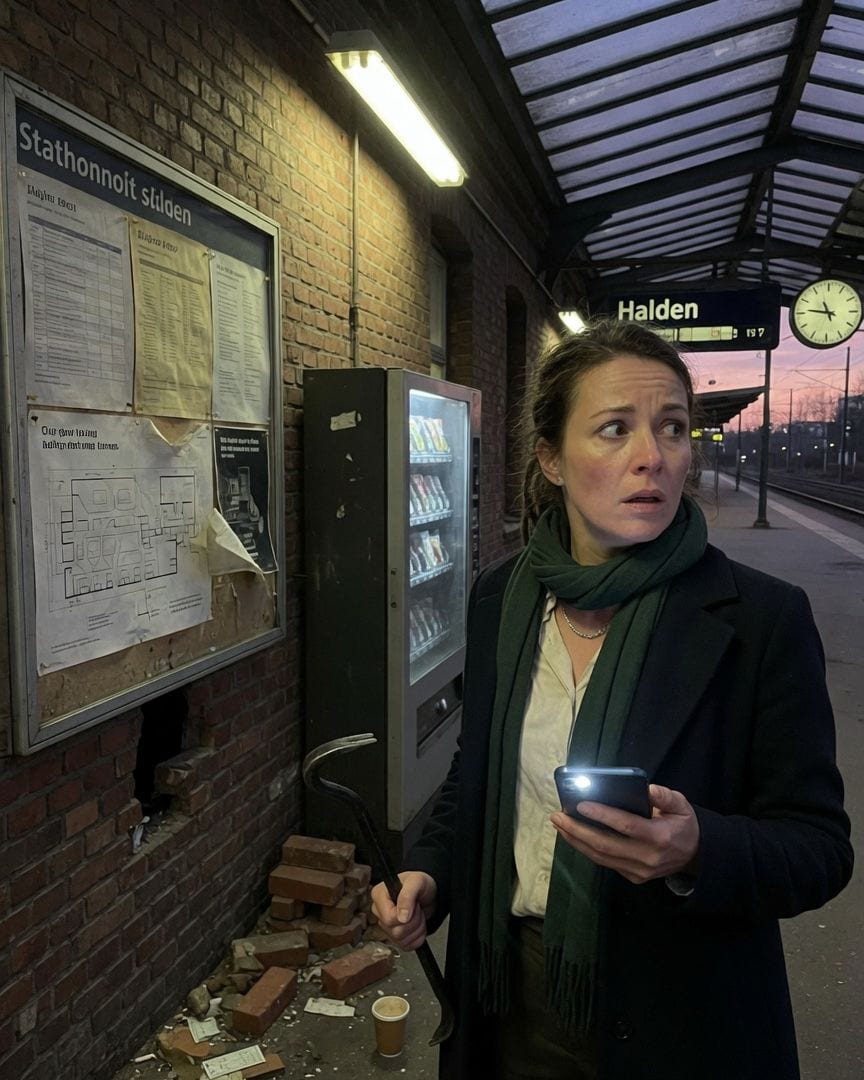
My train ticket took me from Halden to Marsh Cross, but the doors opened back on the Halden platform. The same guard checked the same clock. The fare was taken. Marsh Cross was never announced.
My usual forty-minute train journey to Marsh Cross was supposed to be uneventful, like dozens before it. But when the doors hissed open, I was back at Halden platform, my ticket stamped 'used' and forty minutes gone. The guard and station clock were exactly as I’d left them, as if I’d never departed at all.
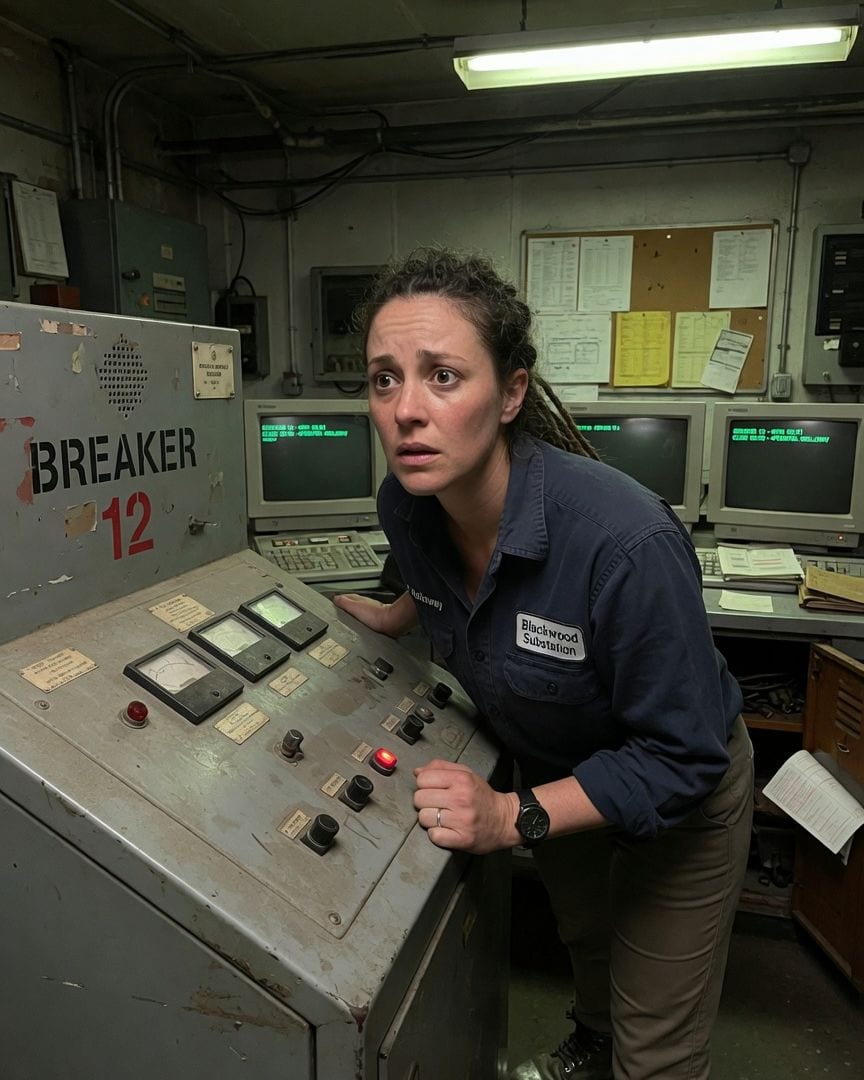
My power station's computer logs a breaker I never touched, opened and closed under my name, while the lights stayed on.
Night shifts at Blackwood Substation used to be a comforting hum, but an impossible event logged under my name shattered the peace. I'd never touched Breaker 12, yet the system claimed I opened and closed it. Now, from that same panel, a low, insistent hum resonates, and a whispered voice asks, 'Are you going to fix it this time?'
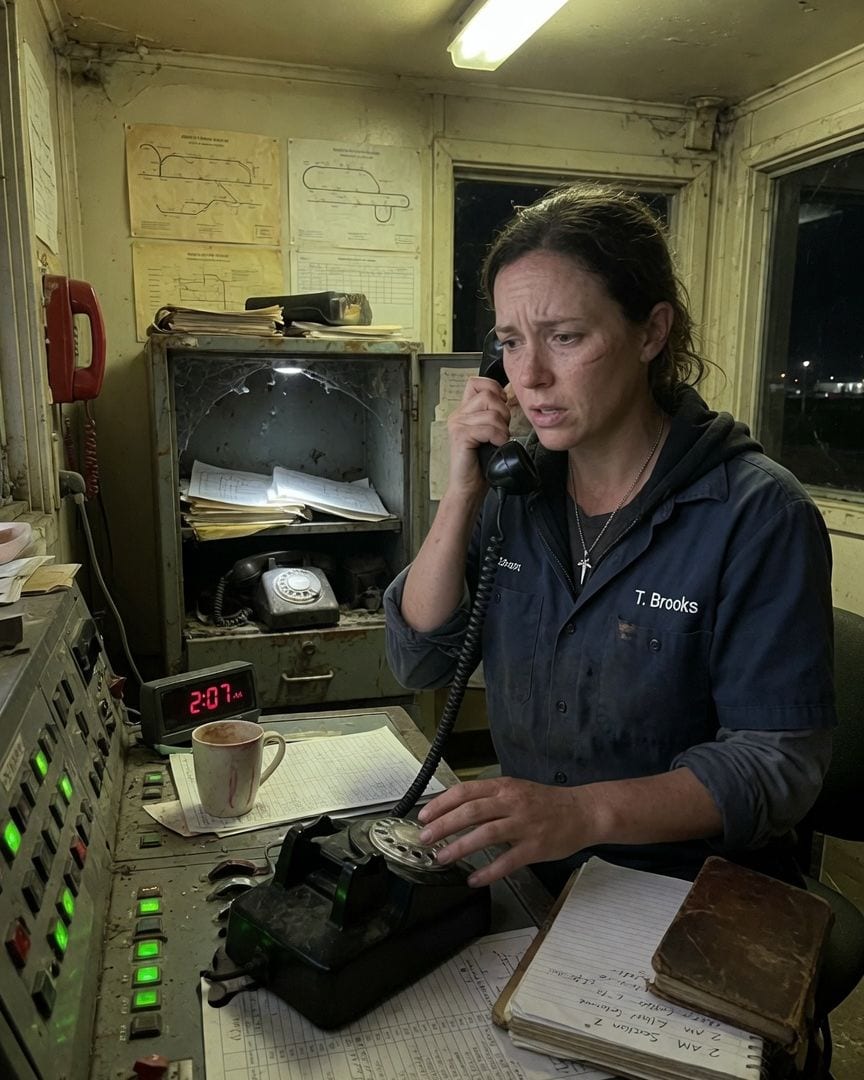
My signal box gets a 2 AM call every night from a man whose section was demolished eleven years ago. Now I found his logbook with today's date.
My night shift at the signal box is quiet and precise, defined by the routine 2 AM call from Ellis confirming Section 7 is clear. But when I asked my duty manager to log it, he said Section 7 hasn't had a track walker in eleven years, not since its cabin and phone were demolished.
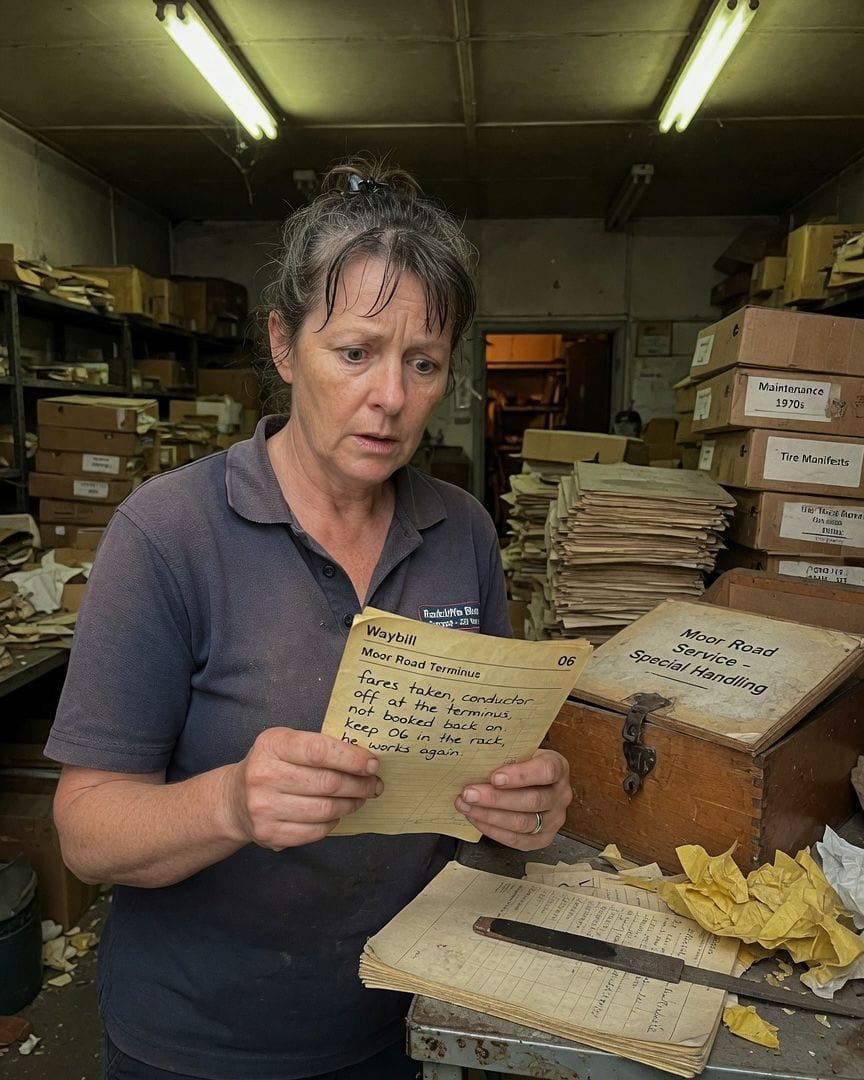
Our depot's Waybill 06 filed a moor road service we stopped running years ago. Every eight years since 1956, it closes: 'keep 06 in the rack, he works again.'
Sorting waybills in the depot, I stumbled across a form for the Moor Road Terminus. That route was decommissioned decades ago, but this waybill had a chilling handwritten instruction: 'keep 06 in the rack, he works again.'
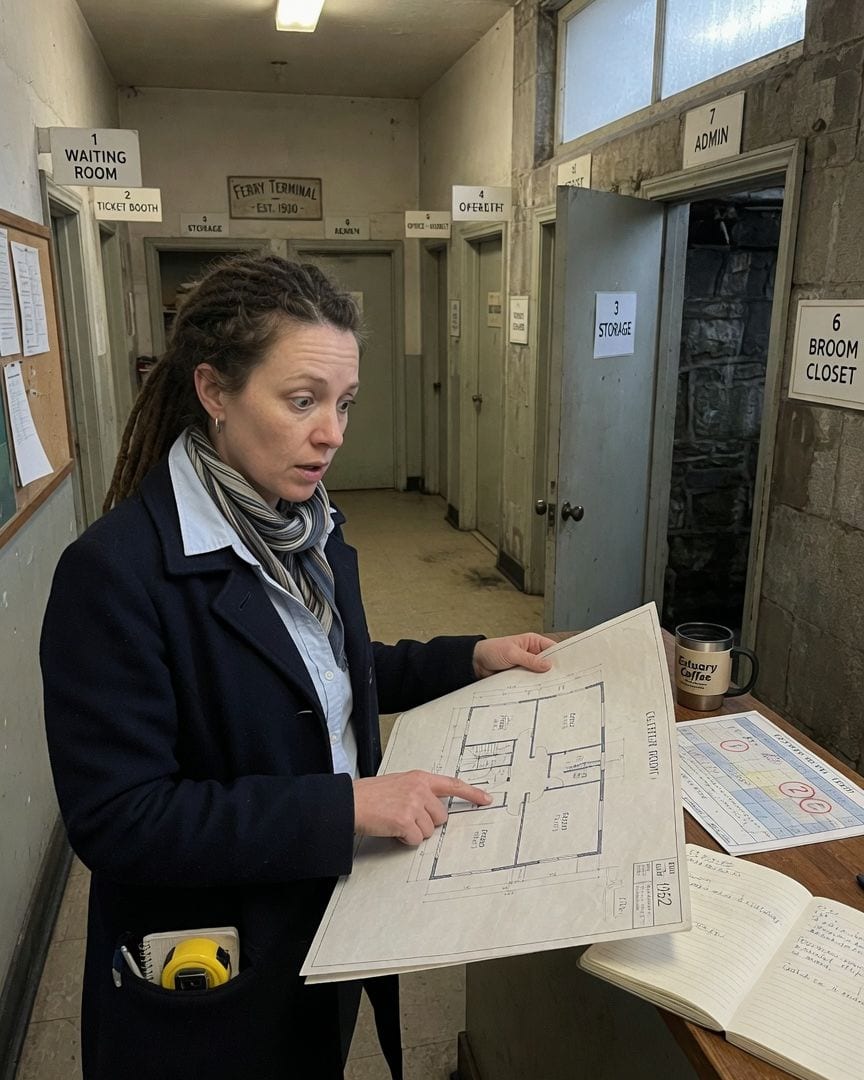
Our ferry returned to the same slipway three times yesterday, the town quay dissolving to our village shore. The crossing was never made.
After our ferry inexplicably kept returning to shore, I investigated the old office building. Its architectural plans clearly showed six rooms, but when I walked the hallway, I found a seventh door. That extra room was undeniably there, an impossible presence.
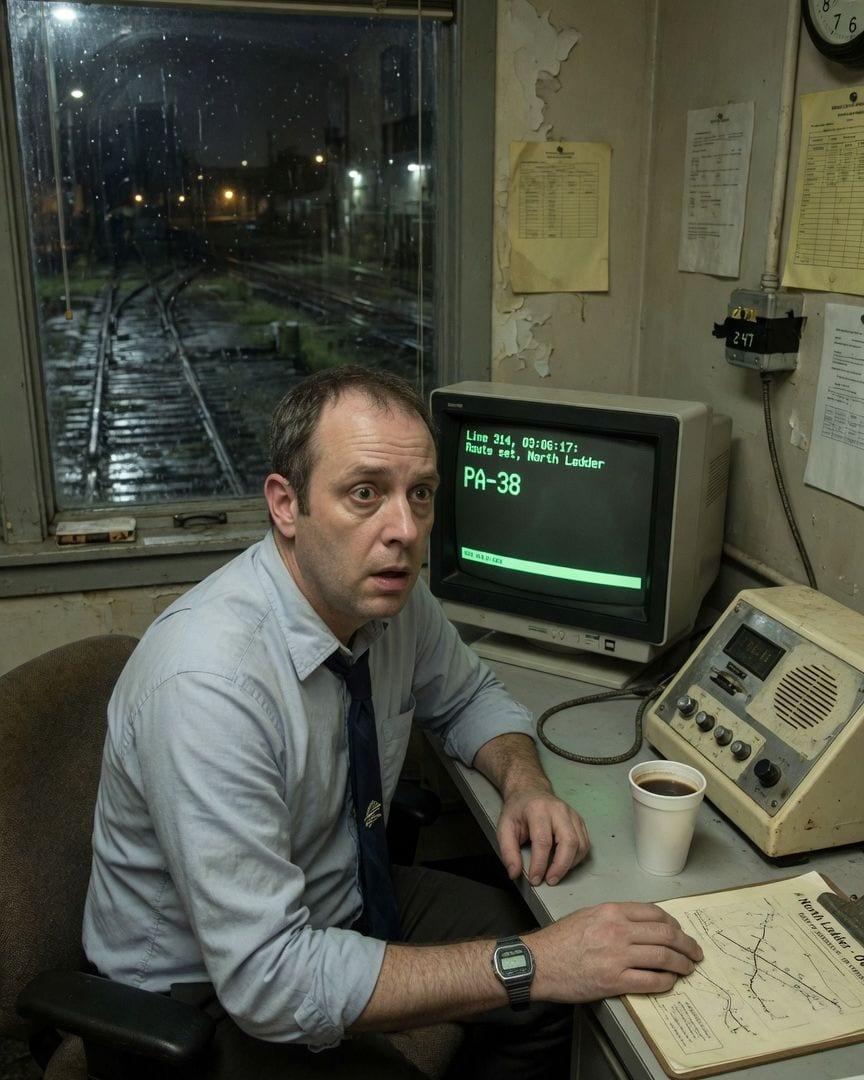
The log says my lever set a route at 3:06 AM through a track that's been shut for repair work — and the circuits show something moved down it. I never touched that lever; I sat there still.
I, Preston Abbott, a night dispatcher, was running a routine signal log check when I saw my code had set a route. It was for the North Ladder, a track decommissioned twenty years ago and physically impassable. Then, the yard's old, physically severed intercom system crackled to life, whispering a specific routing instruction for that very track.