Our ferry returned to the same slipway three times yesterday, the town quay dissolving to our village shore. The crossing was never made.
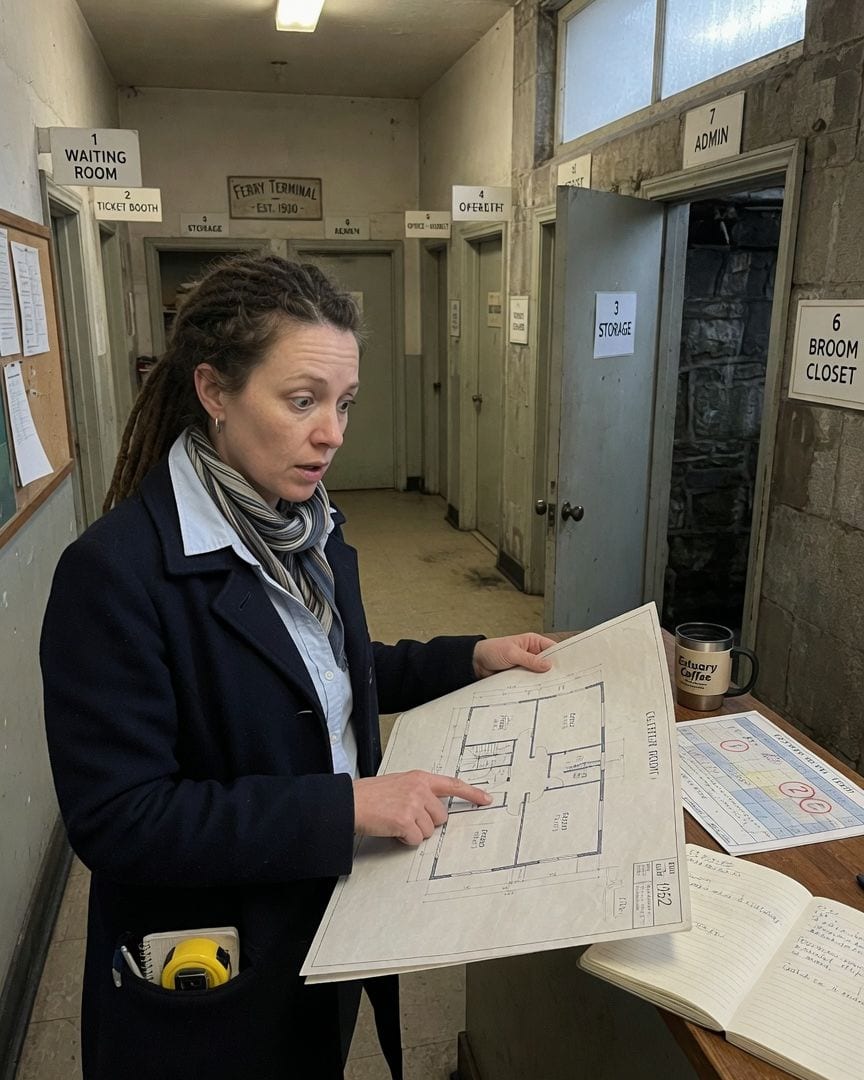
It started like any other Tuesday. Up before the sun, coffee lukewarm in my travel mug, the familiar crunch of gravel under my sensible shoes as I walked to the slipway.
The dawn was a smudge of bruised purple over the estuary, and the air smelled of salt and diesel. Everett Mercer, our regular skipper for the foot-ferry, was already there, fiddling with a mooring line.
He’s been doing this run for thirty years, a straight eight-minute crossing to the town quay on the other side.
The handful of us on board – Mrs. Henderson with her shopping trolley, young Tim heading to school, and me – barely exchanged greetings. We just settled in for the usual short chug.
Everett gave a blast on the horn, the engines rumbled to life, and we pulled away.
The village receded, the distant lights of the town quay grew clearer, just as they always did. I was scrolling through emails when Mrs. Henderson gave a sharp gasp. I looked up.
The town quay was there, the familiar row of shops, the old fish market. Then, in the space of a breath, it wasn't. The view subtly, impossibly, shifted.
The shops blurred, the fish market dissolved, and suddenly, unmistakably, we were nosing back into our slipway. The one we’d just left.
Everett looked at the shore, then at us, a bewildered frown creasing his weathered face. "Well, I'll be damned," he muttered. He checked the tide, swore at the engine, and tried again. The second time, it was worse.
We made it halfway, the town quay a clear, bright promise, before the entire landscape seemed to ripple. Like water distorting a reflection, but on a massive scale.
And then, there we were, back where we started, the ferry nudging the same barnacle-encrusted pilings.
A tense silence fell over the small group of passengers. Young Tim looked scared. Mrs. Henderson clutched her trolley. Everett, his face now a mask of grim confusion, tried for a third time.
We cast off, the engines strained, the bow cut through the water, and once again, the far shore dissolved, replaced by the exact same patch of village shore we’d been trying to leave. Three times. Eight minutes, each time.
Never made it across.
We all disembarked, shaken. Everett just shook his head, offering vague apologies about "unusual currents." But it wasn't the currents. I know the estuary.
I went straight to the ferry office, pulled out the tide charts, checked the ferry’s logbooks from the last week. The times, the tides, the compass bearings – everything was normal. Everything, except what we had just experienced.
Nothing in the numbers explained the impossible recurrences of our own village shore.
Everett, when I pressed him, just waved me off. “Fog,” he insisted, even though the sky was clear, "or some engine trouble I can’t quite put my finger on."
His dismissiveness, his easy explanations, just made the knot in my stomach tighten. I knew what I’d seen. I wasn't going crazy. But if it wasn't the ferry, and it wasn't the tide, then what was it?
The building itself, perhaps? It was an old stone structure, built in 1900, housing the ticket booth, a small waiting room, and a cramped office.
I started thinking about the layout, specifically an odd, rarely used door on the ground floor, tucked away near the broom closet. I'd never seen anyone use it, or even open it. It was just there.
Driven by an impulse I couldn't explain, I marched over to the local council building and requested the original architectural plans for the ferry terminal.
I expected to find a history of renovations, a wall knocked down here, an extension added there, something to explain the odd door. A simple, mundane answer.
A few days later, a stack of large, brittle sheets arrived, smelling of dust and forgotten corners. I unrolled the earliest one, dated 1952, spreading it out on my kitchen table.
I traced the layout with my finger: ticket booth, waiting room, storage, two small offices. Six distinct rooms. The blueprint was clear, precise.
The next morning, I went to the ferry office, a tape measure tucked into my bag, a pen and notebook in hand. I started on the ground floor, systematically. The main waiting room, door one. The ticket booth, door two.
The small storage closet under the stairs, door three. Everett’s office, door four. My own cramped office, door five. Then, near the broom closet, exactly where I remembered it, was the other door. Door six.
And beyond it, a small, windowless space. Room seven. I pushed the door open. It was just a small, empty room, dark and still, smelling faintly of damp stone. Nothing remarkable. But it was there.
I walked the hallway, counting each door. Six. I opened the seventh door. And counted again. Seven rooms. I paced the distance, mentally mapping it against the blueprint. The numbers just didn't add up.
The blueprint clearly showed six marked rooms for this floor plan. Yet, the seventh space undeniably existed. It was right there. I counted a third time. Seven doors. Six rooms on the plan.
The discrepancy, a single, extra room, a quiet, impossible presence, was there every single time I checked.
The 'Room That Isn't Counted' gnawed at me. It wasn't a renovation, no matter how many old plans I looked at.
I returned to the ferry office the next day, a laser measure in hand, meticulously checking every wall, every corner, comparing the physical space to the faded blueprints. The dimensions of the other six rooms matched perfectly.
But the space for the seventh room, the one beyond the broom closet, simply wasn't on any of them.
I even tracked down an even older set of plans, brittle with age, from 1900 – the year the building was first constructed. It, too, showed only six rooms. My mind reeled.
The seventh room, a small, windowless space, always there when I looked, was never accounted for on any map, never drawn, never marked.
My inquiries about this impossible room, and about that impossible ferry journey, started to attract attention. Everett, who’d initially been dismissive, now looked at me with an odd blend of irritation and apprehension.
"You're asking too many questions, Colette," he'd grumbled. "Some things are best left alone." His words, rather than deterring me, only fanned the flames.
His reaction, and the sheer impossibility of the room, led me to Ralph Prescott. Ralph was a retired local historian, known for his eccentric collection of village ephemera, everything from old fishing nets to dog-eared ledgers from defunct businesses.
I found him in his cluttered cottage, surrounded by stacks of paper and dusty curios. He initially dismissed my questions about a "missing room" and a "ferry loop" as idle gossip, waving a dismissive hand.
But then, as I insisted, describing the exact impossible details, a flicker of something knowing, something almost weary, crossed his eyes.
"The way things turn," he mumbled, not to me, but to a stack of old maps, "they always find their way back." He didn’t elaborate, but that vague comment, that hint of recognition, was enough.
After leaving Ralph's, a hunch pulled me back to the ferry office. There was an old, disused section of the building, mostly used for storing broken furniture and forgotten bits of hardware. I’d never really looked through it.
Tucked away in a dark corner, beneath a shroud of cobwebs, I found a heavy wooden box.
Inside were forgotten items: yellowed ledgers, faded sepia photographs of stern-faced people I didn't recognize, and, beneath them all, a crudely drawn map of the estuary.
It was hand-drawn, on thick, yellowed parchment, with strange, looping lines marked in a heavy red ink, lines that seemed to go nowhere, yet always returned to the same point.
It looked eerily, sickeningly similar to the ferry’s recent failed crossings.
My persistent questions about the ferry and the peculiar room began to draw unwanted attention. Everett Mercer, now less amused and more agitated, confronted me by the slipway one morning. His usual jovial face was drawn tight.
"Colette, I’m serious," he said, his voice low. "You need to let sleeping dogs lie. There are some things in this village best not poked at." He didn't explain what those things were, but the underlying warning was clear.
His agitation, instead of scaring me away, only convinced me I was on the right track.
One evening, I stayed late in the old ferry office, poring over the strange map I'd found, tracing the impossible red lines with my finger. The light was fading, casting long, eerie shadows from the old wooden furniture.
The air grew still, colder than it should have been. I heard a distinct creak. It came from the direction of the 'Room That Isn't Counted,' a soft, complaining groan, like an old ship settling in a rough sea.
My hand instinctively flew to the doorknob of my own office. I froze, holding my breath, straining to hear over the sudden, pounding thump of my own heart. The silence that followed was absolute, heavy, pressing down on me.
There was nothing, yet the room felt… alert. Watching. I couldn't shake the feeling I wasn't alone.
A few days later, Ralph Prescott approached me in the village square. He walked with his usual slow, methodical pace, but his demeanor was unusually serious.
He pulled me aside, under the shade of the old oak tree, his voice a hushed whisper, barely audible above the distant cries of gulls. "You saw the map, didn't you?" he asked, his eyes sharp.
I nodded, clutching my bag. He sighed, a long, drawn-out sound. "Some things are best left undisturbed, Colette. Trust me. There are old families in this village, my own included, who've seen these cycles come and go.
Best not to get caught up in them. They have a way of… keeping what they find." He didn't threaten me, not exactly.
But his calm, knowing tone, the way he spoke of these 'cycles' and 'old families,' implied a deep, quiet understanding of the danger I was approaching.
A danger he seemed to regard as inevitable, almost a natural part of the landscape, like the turning of the tide. His composure was more unsettling than any anger would have been.
I couldn't back down. The map, the room, Everett's warnings, Ralph's cryptic comments – they all pointed to something far beyond fog or engine trouble.
I went back to Ralph’s cottage, the strange looping map clutched in my hand, and laid it out on his cluttered table. "What is this, Ralph?" I demanded, pointing to the impossible lines. "And what about the room?
The one that isn't on any blueprint, but is always there?"
He looked at the map, then at me, his face etched with a weary resignation I hadn't seen before. He settled into an old armchair, its springs groaning in protest.
"Our village," he began, his voice low, "has always had its moments. Strange tides. Fog that doesn't clear. Places that don't quite fit the map." He picked up a chipped ceramic mug, staring into its empty depths.
"My grandfather, he used to tell stories. Not bedtime stories. Warnings. About the ferry."
He told me about an incident, hushed up, from his grandfather's time. The ferry, he said, had 'lost its way' for days. Not lost at sea, not crashed, but simply… gone. And then, it reappeared.
With its crew disoriented, their eyes wide and vacant. They claimed they had 'crossed nothing.' Just an endless, grey expanse, always turning back, always returning to a shore that wasn't there.
It sounded eerily similar to what Everett and I had experienced.
Ralph rose slowly and shuffled to a stack of old newspapers, pulling one out with careful, almost reverent hands. It was brittle, yellowed, and dated October 1974.
He laid it flat on the table, pointing a trembling finger to a small, unassuming article tucked away on an inside page. The headline read: "Unusual Atmospheric Conditions Disrupt Local Ferry Service, Residents Report Disorientation."
The article detailed strangely persistent fogs, unusual shifts in local landmarks, and a number of villagers reporting feelings of acute spatial disorientation near the estuary.
And there, buried in the third paragraph, was a familiar name: "The local inquiry committee, including Mr. Thomas Prescott and a representative from the Davenport family…"
My breath caught in my throat. A Davenport. My family. The ferry’s recent impossible returns, the looping map, the 'Room That Isn't Counted' – it all snapped into sickening focus. This wasn't an isolated incident. This was a pattern.
A cycle.
Ralph, seeing my dawning horror, didn't offer comfort. Instead, he led me to a hidden compartment behind a loose brick in his study wall. From it, he pulled out a heavy, leather-bound ledger, its cover worn smooth with age.
It was an unofficial log, he explained, meticulously kept by his family for generations. Not official records, but a private accounting of the strange occurrences around the estuary.
He opened it, the dry pages rustling, and pointed to an entry from 1974, written in his father's elegant, sloping hand. It detailed the ferry incident precisely as he’d described it, down to the disoriented crew.
And then, explicitly, it mentioned "the temporary appearance of 'the extra room' in the old office, correlating with the onset of the disorientation." My blood ran cold.
He turned the page, and there, beneath a list of local families affected by that specific cycle, was the name 'Davenport.' Beside it, an annotation in a different, more frantic hand, read: "Lost to the turning. Fifth cycle."
Lost to the turning. Fifth cycle. The words echoed in my head, a chilling pronouncement. I stared at the blurred, sepia-toned photograph Ralph had pulled from the box earlier, its edges brittle with age.
It showed a group of stern-faced locals standing by the old slipway, their expressions grim. My eyes went to one figure, barely discernible through the faded print, a woman with a severe bun and a familiar tilt to her chin.
It was undeniably my great-aunt Vivian, from an old family album I’d seen as a child. She stood beside a man, his face equally severe, identified in a handwritten caption on the back of the photo: 'Prescott, Committee Lead.'
The date beneath the photo read 'October 1974.' Fifth cycle. Lost to the turning.
I demanded access to the official Harbor Authority archives, citing the historical entries in Ralph's ledger. They were wary, of course, their eyes darting between my determined face and Ralph's quiet, knowing one.
But the weight of the Prescott family name, coupled with the clear consistency of Ralph's unofficial records, made it impossible for them to outright refuse. They granted me limited access, under strict supervision.
Deep within the Authority’s dusty, climate-controlled archives, beneath layers of bureaucratic red tape and heavy official silence, I uncovered a series of heavily redacted reports and internal memos.
They spanned back to the late 1800s, each one stamped with classification marks, some so faded they were almost illegible. They confirmed everything. The cyclical nature of the spatial anomaly, recurring almost precisely every 50 years.
Its manifestation as impossible routes, like the ferry's looping journeys, and the 'extra' room that appeared and disappeared without a trace.
The records called the 'Room That Isn't Counted' a "non-Euclidean ingress," a temporary pocket of distorted space that occasionally 'absorbs' objects or individuals who linger too long, those who become too entangled.
A chilling entry from 1974, the exact same year as Ralph’s ledger and the newspaper clipping, explicitly detailed the disappearance of my great-aunt Vivian Davenport.
It stated she was "lost to the turning," swallowed by the very anomaly I was now investigating. My family’s name, my own blood, inextricably linked to the pattern, not just observers, but victims. The Harbor Authority had known.
For over a century, they had known. And they had buried it.
Armed with the full, terrifying truth, I felt a terrible imperative. The records, with their cold, scientific precision, predicted the next cycle’s peak was imminent, a concentrated surge of the anomaly. I had to warn Everett.
I had to warn anyone caught near the estuary.
I rushed back to the ferry office, the key digging into my palm. As I pushed open the heavy oak door, the air grew instantly heavy, thick with a strange, metallic scent, like ozone and damp earth.
Familiar lines began to subtly warp. The hallway, usually a straight, narrow corridor, now seemed to stretch impossibly, the far end receding even as I stepped forward.
The old floorboards groaned beneath my feet, not with the familiar creak of age, but a deep, resonant sound, as if under immense, unseen pressure. The very structure of the building felt like it was breathing.
Then, I saw it. The door to the 'Room That Isn't Counted' was now wide open. Not just ajar, but flung back against the wall.
It revealed not the small, empty space I had always found there, but a swirling, indistinct grey void within. A hungry emptiness, like smoke and static and endless distance. A low hum vibrated in the air.
"Everett!" I shouted, but my voice was swallowed by the sudden, overwhelming silence. Then, a reply, muffled, distant, as if from a great distance. "Colette? Is that you? What's going on?"
It was Everett's voice, calling from what sounded like the far end of the impossibly elongated hall. He sounded lost.
I took a step, then another, trying to reach him, but the floor beneath my feet seemed to fold, a non-Euclidean trick of perspective, making each step bring me no closer to his voice.
The walls around me began to breathe in earnest, contracting and expanding with slow, deliberate rhythm.
The very geometry of the space was dissolving and reforming around me, pulling me deeper into the anomaly, into the grey void, just as it had pulled Vivian, just as it had pulled others, lost to the turning.
The hum intensified, a low thrumming that resonated in my bones.
The next morning, the ferry crossed the estuary without incident. Everett Mercer, looking unusually pale and quiet, tied off the mooring lines. He looked at the few commuters gathered, his gaze distant.
"Colette Davenport won't be coming in today," he said, his voice flat. He didn’t elaborate.
The old ferry office stood silent, its heavy oak doors closed and locked.
I returned later that day, out of habit, but the small, windowless room near the broom closet was no longer there; the wall was solid, seamless, as if it had never existed.
The local newspaper carried a small notice in its classifieds section that week, a brief mention about a "temporary disruption of ferry services," with no mention of an anomaly, or of me.
The village settled back into its rhythms, the incident with the ferry quickly becoming a forgotten oddity, another strange local tale.
Everett Mercer continued his crossings, never mentioning the absent Colette, his gaze often lingering on the dark, still waters of the estuary, as if searching for something.
The old ferry office, its 'extra' room having vanished without a trace, remained just an old building.
The only lingering trace was a single, faded architectural blueprint found tacked to the inside of the broom closet door, its lines impossibly misaligned, its measurements refusing to add up.
Fifty years later, a new commuter, Marianne Prescott, found herself on the morning ferry, watching the town quay approach. But something was wrong. The familiar cluster of fishing boats dissolved, replaced by her own village slipway.
The gulls cried, and the tide turned, just as it always had, just as it always would.
If this one got to you
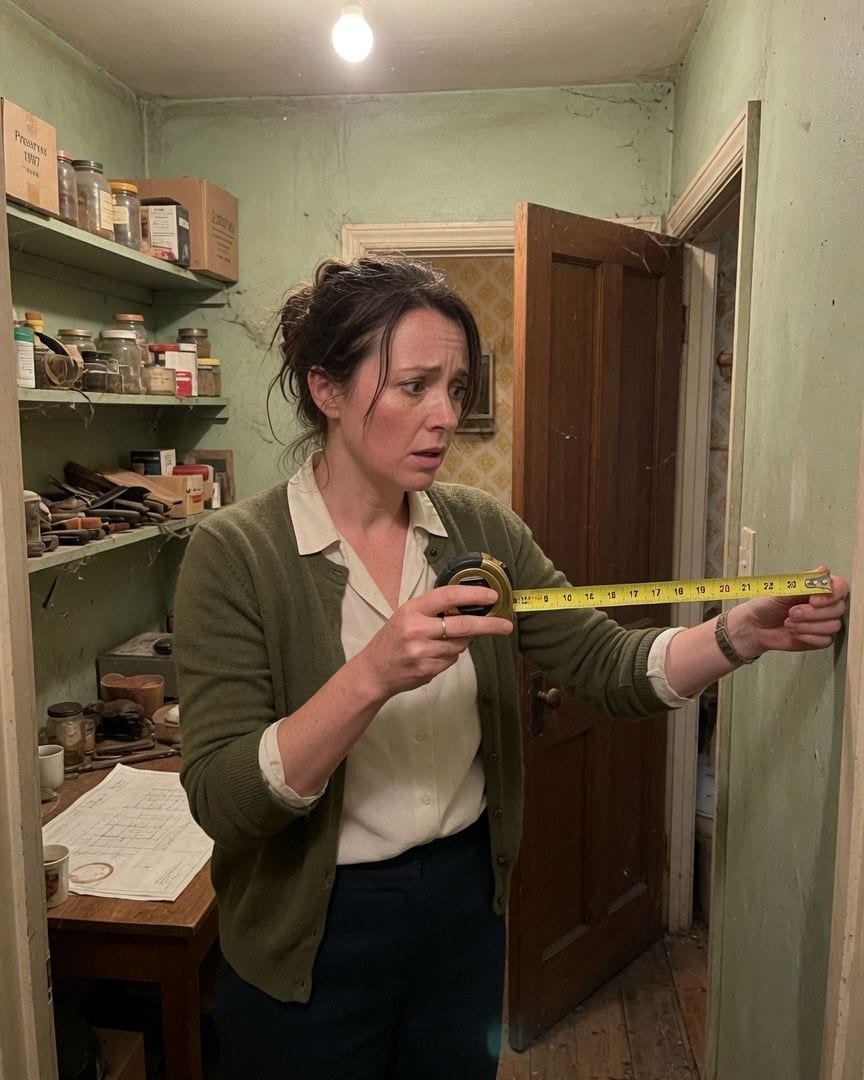
My ferry crossed the estuary three times yesterday, and each time we landed back at our own dock. The far shore simply wasn't there.
My routine ferry commute to the Oakhaven archives usually anchors my day, but yesterday, the boat inexplicably kept returning to our starting point. That unsettling feeling followed me home to my old family house, where I discovered a small, windowless annex whose internal measurements simply did not match its exterior footprint.
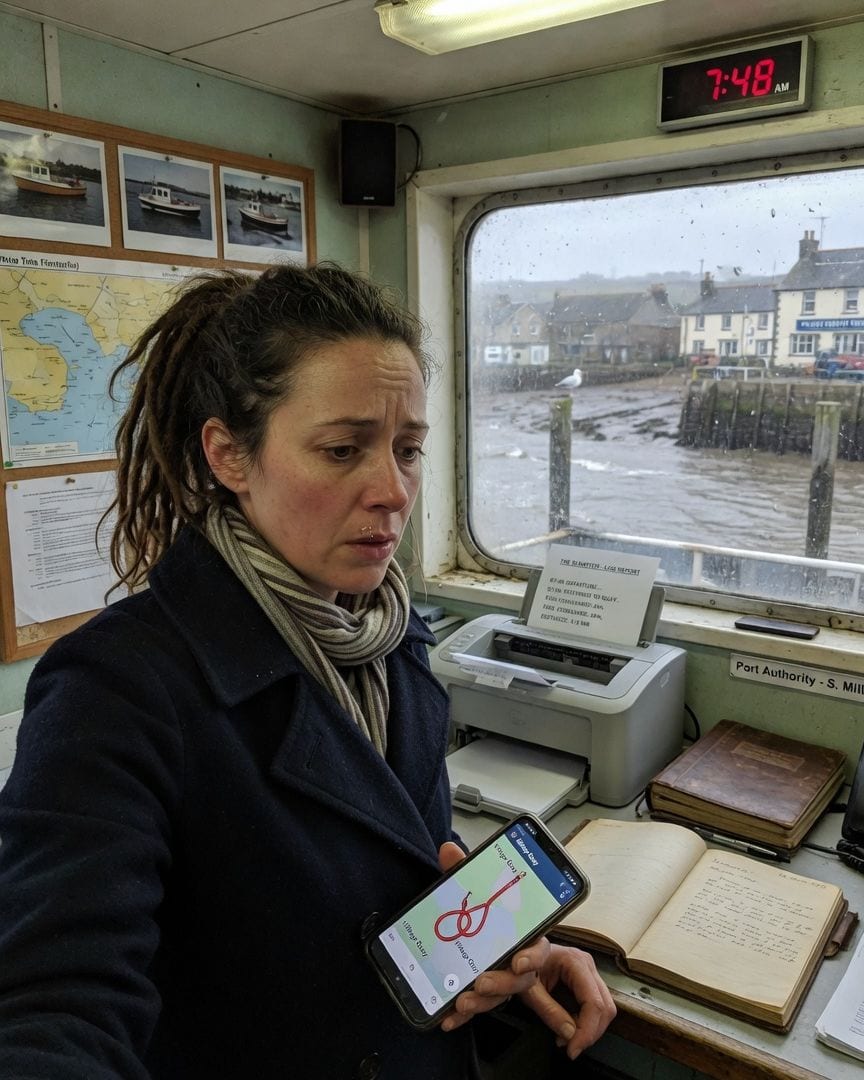
My morning ferry crossed for 40 minutes. The destination town just disappeared.
I board 'The Seawitch' every Tuesday for the familiar eight-minute estuary crossing. But this morning, after making good time, Captain Bernard and I watched the town quay simply fail to appear. Instead, our ferry repeatedly returned to the very same village quay we'd just left, despite burning fuel and advancing the clock.
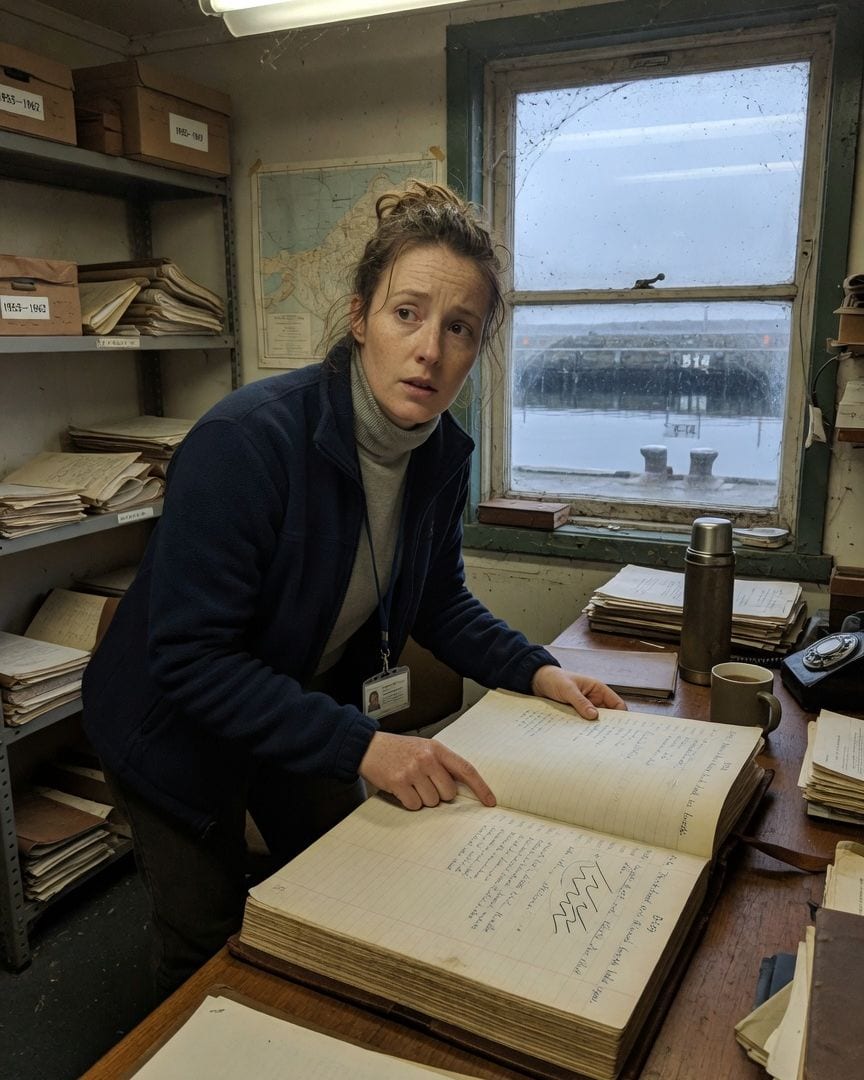
My harbour ledger shows Berth 14 let to a trawler every few years, but it's always empty. Each entry reads 'not returned to sea, berth held open'.
My job as Harbour Master's Assistant is managing the berth ledger, tracking every vessel. But Berth 14 holds a strange paradox: my book says it's let, yet it's always empty. Each entry for that berth closes with the same cryptic note – 'not returned to sea, berth held open' – a pattern stretching back to 1955.
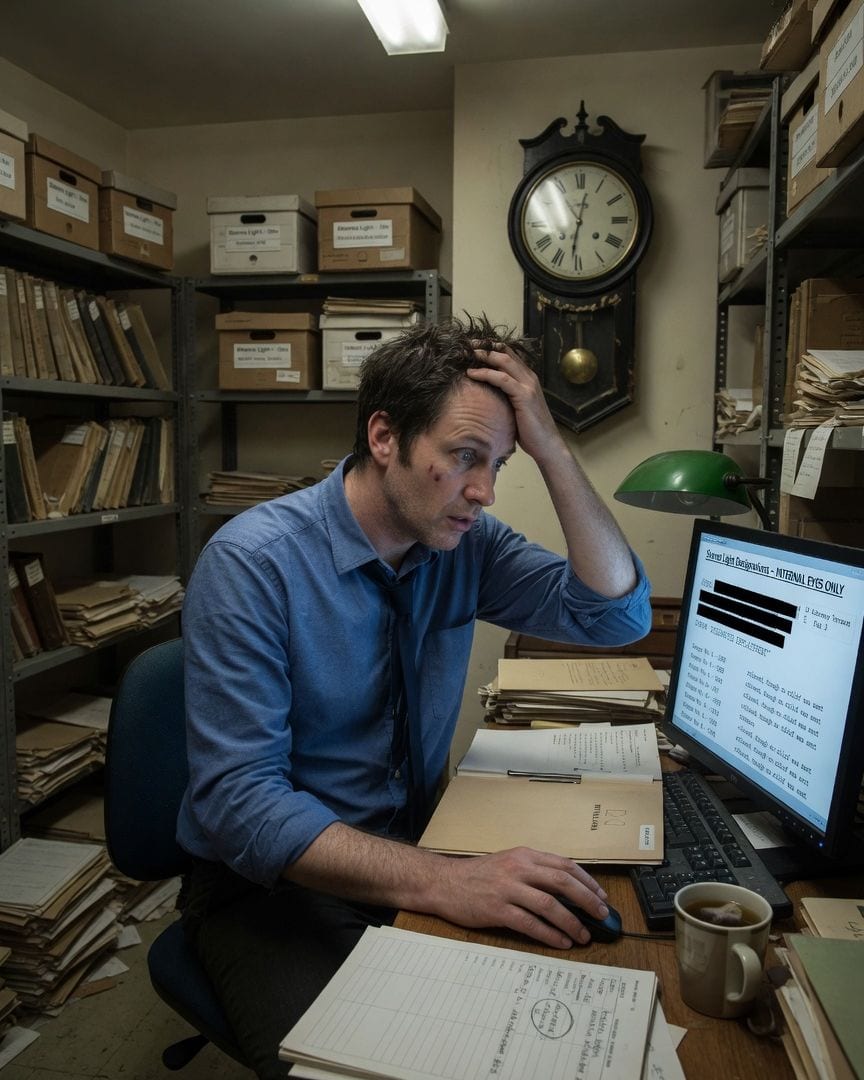
I found my street address in a century-old lighthouse file, printed decades before I lived there.
As a maritime archivist, my world revolves around forgotten lives and dusty ledgers. But the Skerne Light files broke that quiet rhythm, revealing a chilling pattern: 'Keeper number 6' relieved, though no relief was sent, repeating for decades. Now, an internal document with a strange code has led me to a redacted entry, revealing my own street address, decades before I ever lived there.
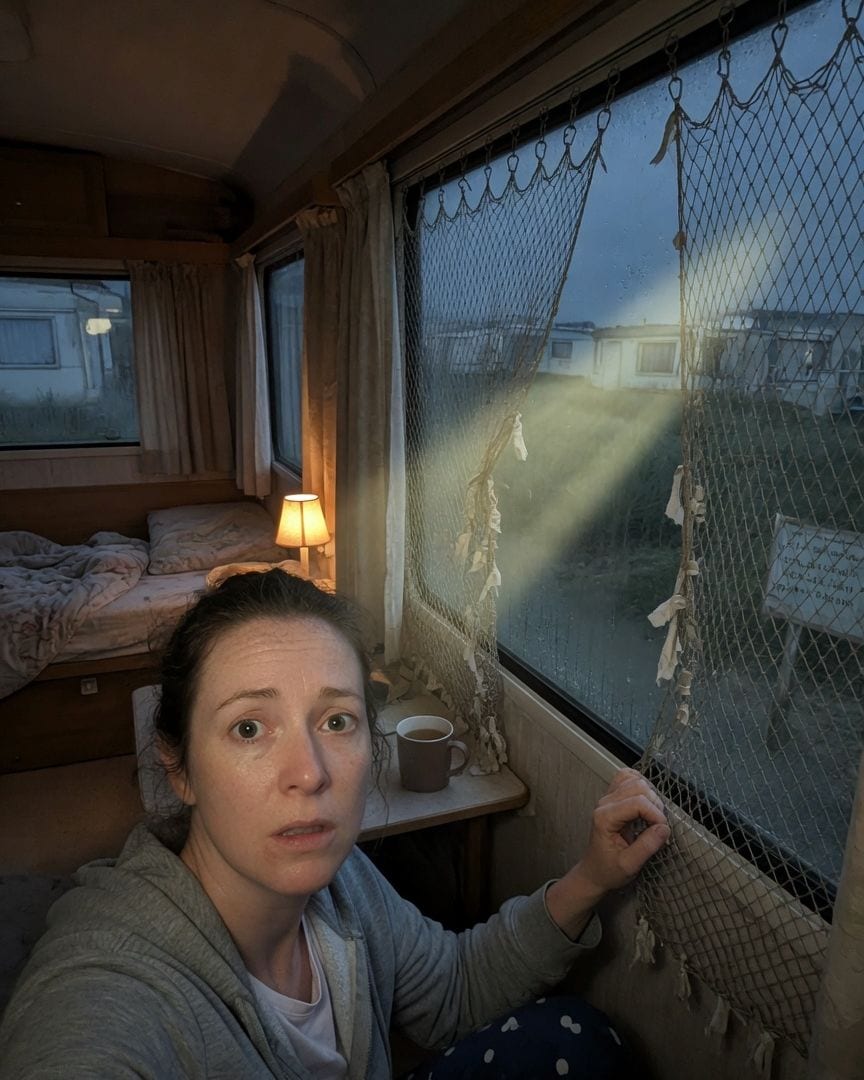
My caravan's seaward curtain was wide open. Fifteen minutes later, it was drawn tight, the hooks ripped outwards from the sea.
I arrived at Seawall Sands Caravan Park, looking forward to quiet nights by the sea in my caravan, number 14. An old sign mentioned a rule to draw seaward curtains by nine, but I forgot. I woke to find my curtain, left open, now tightly closed, its metal hooks ripped outwards from the sea side.
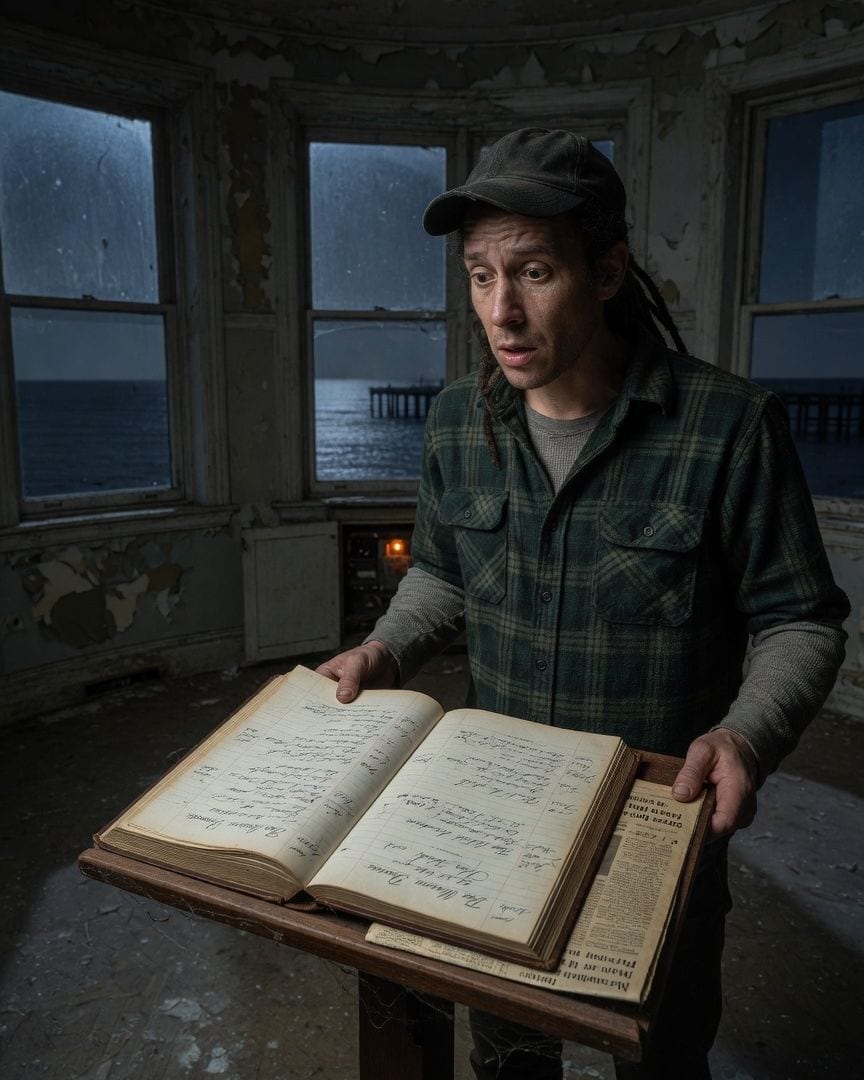
My pier's ballroom register books a new dance for Saturday, electricity meter running, but those lights are never on.
Taking over as pier caretaker, I was told one rule: never turn on the end pavilion's lights. But my first week, I noticed its electricity meter was steadily advancing every single night, even though the main breaker was off. Inside the dark, unused ballroom, I found an old ledger open to 'The Moonlit Waltz' for this Saturday, raising a chilling question: who was booking a dance and drawing power in a place that should be empty?