My harbour ledger shows Berth 14 let to a trawler every few years, but it's always empty. Each entry reads 'not returned to sea, berth held open'.
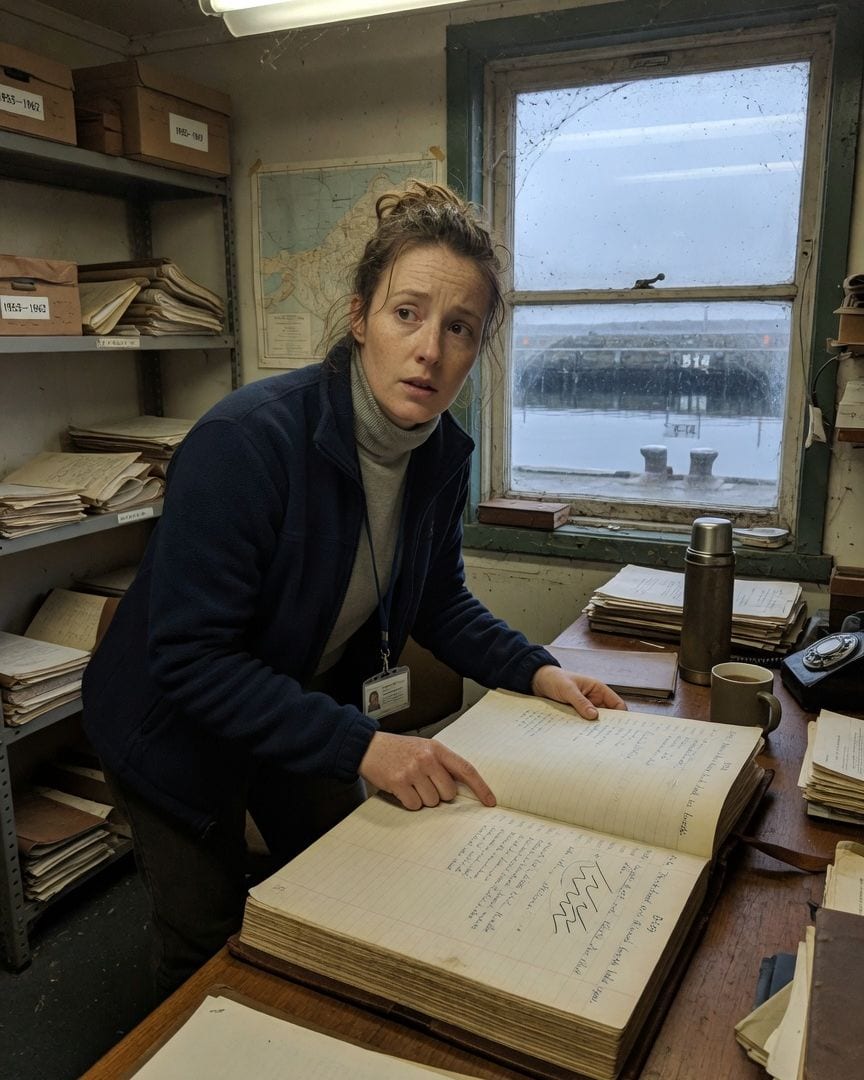
The harbour office always smells the same: diesel, brine, and the faint, metallic tang of cold iron. I’m Rachel Carver, 32, and I’ve been the Harbour Master’s Assistant for two years now.
My job involves a lot of paperwork, mostly managing the berth ledger, this thick, leather-bound book that tracks every vessel coming and going. This month, Berth 14 was theoretically let to a trawler, the Sea Serpent.
The entry in my ledger, in my own neat hand, clearly states 'Berth B-14'.
But below my window, Berth 14 sits empty. It has been empty since I started here, and I'm told it’s always been that way. Yet, every few years, the ledger shows B-14 let to a new vessel.
Each entry for that particular berth closes with the exact same cryptic note: 'not returned to sea, berth held open.'
I run a finger over the smooth, worn page. The latest entry for the Sea Serpent is just a few lines above. The Sea Serpent never left, never arrived. No vessel ever leaves Berth 14, but none ever return either.
It’s a paradox in ink, a ghost in the system. I glance out the window again.
The water below Berth 14 is dark and still, reflecting the grey sky like an unbroken mirror, a surface that seems to swallow all light.
A faint shiver traces my spine, a feeling I’ve learned to ignore in this old building.
I couldn’t shake the quiet wrongness of Berth 14. It was like a splinter under the skin of my routine. I decided to cross-reference the Sea Serpent's details with the port's digital shipping manifest. Maybe the old ledger was just… outdated?
The manifest showed the trawler cleared for departure, dated three weeks ago. But there was no record of its return.
This wasn't entirely unusual for lost vessels, of course – the sea is a harsh mistress – but combined with the ledger's consistent 'berth held open' note for that specific berth, it nagged at me.
I pulled out an older, physical ledger from 1982. The spine cracked softly as I opened it. Another B-14 entry. This one was for a boat named The Salty Dog. The same terse notation followed: 'Not returned to sea, berth held open.'
I tried to find a common thread, looking for a pattern in vessel type, crew size, even the time of year. Nothing obvious jumped out. Just the same number, the same note, the same empty berth.
It felt less like a series of accidents and more like… a category.
Hugo Lambert, 45, the current Harbour Master, passed by my desk, coffee in hand. 'Find anything odd in the old books, Rachel? You look like you're solving a puzzle.'
I gestured to the open ledgers. 'It's Berth 14, Hugo. Always listed as 'let', but always empty. And every entry ends with 'not returned to sea, berth held open'. Since 1955.'
Hugo shrugged, taking a sip of his coffee. 'Probably just a clerical quirk, an old system error. Before our time, anyway. Don’t get lost in the weeds, Rachel.' He smiled, a casual, dismissive gesture.
But the sheer consistency of it, across decades, felt too deliberate for a simple error. It felt like a rule. A rule written in a dead language, one I couldn't quite decipher. It was too precise, too repetitive.
Errors are messy, varied. This was meticulous.
Driven by a persistent unease that Hugo's dismissiveness only amplified, I requested access to the deep archives. They were rarely touched, a maze of dusty shelves and forgotten files.
I found a stack of even older ledgers, some brittle with age, their leather bindings cracked. Dust motes danced in the single shaft of light from a high, grime-streaked window, illuminating the still, stale air.
The silence was absolute, broken only by the soft rustle of paper.
I opened a ledger from 1959. My breath hitched. Another B-14 entry. This one for a fishing boat, The Wanderer.
Next to 'not returned to sea, berth held open,' a faint, hand-drawn symbol, like three overlapping, jagged waves, was etched into the page. Below it, almost erased, a single word in faded pencil: 'Observed.'
The air in the archive suddenly felt heavy, cold, as if something ancient had just stirred. My heart thudded against my ribs. This wasn’t a clerical error. This was a record of something else entirely.
The 'Observed' note and the strange symbol gnawed at me. It wasn’t a splinter anymore; it was a hook, pulling me deeper.
I started spending my lunch breaks in the archives, meticulously searching for other B-14 entries with the same mark.
It was painstaking work, brushing away decades of dust from brittle pages, my fingers growing sore from turning paper yellowed with time.
I found three more. One from 1963, for a freighter called the Morning Star. Another from 1971, for a small pleasure craft, the Lucky Charm. And a final one from 1978, a fishing trawler, the Ocean's Promise.
Each entry had the symbol, a set of three overlapping, jagged waves, clear enough to confirm. Each also had 'Observed' faintly scrawled beneath it in the margin, sometimes so faded it was almost invisible.
The script wasn't always identical, suggesting different hands, different times, but the message was consistent.
I decided to cross-reference the dates of these 'Observed' entries with local newspaper archives. I searched for any unusual events: storms, missing persons reports linked specifically to those dates or vessels, anything that might explain the consistency.
I found nothing sensational, only standard 'lost at sea' notices, usually buried deep in the classifieds. The lack of public alarm, the quiet, almost mundane way these disappearances were recorded, made the precise documentation in the ledgers even more chilling.
It suggested a deliberate suppression, or worse, an accepted norm.
Then I began to notice a subtle, almost imperceptible pattern. The 'Observed' entries, the ones with the symbol, always coincided with a specific lunar phase: the peak of the new moon.
It was a detail too obscure to be coincidence, a cosmic rhythm guiding these disappearances. This wasn’t random loss; it was a cyclical event. The pieces weren't making a picture, but they were definitely forming a shape. A dark one.
My late-night archival work didn't go unnoticed. I was often the last one in the building, the fluorescent hum and the distant groan of the harbour my only company.
One evening, as I was poring over the 1971 ledger, tracing the waves of the symbol for the Lucky Charm, the archive door creaked open. I jumped, my heart vaulting into my throat.
Edward Marsh, 68, the retired Harbour Master, stood in the doorway. He was a familiar presence, known for his quiet visits to 'check on the old place', always with that calm, almost serene expression on his face.
'Still digging through those dusty old books, Rachel?' he asked, his voice soft but carrying clearly in the quiet.
I tried to appear casual, quickly closing the ledger on the B-14 entry. 'Just tidying up, Mr. Marsh. Amazing how much history is buried here.'
Edward walked slowly towards me, his gaze sweeping over the towering shelves of forgotten documents, then landing briefly on the table where the ledgers were stacked.
His eyes seemed to linger on the area where I had just closed the book. 'History has a way of repeating itself, doesn't it?' he said.
Without a word, he reached down and picked up a loose page that I had overlooked—a printout of the lunar phases I'd been meticulously tracking, my notes scrawled in the margins.
He glanced at it, his gaze momentarily fixed on the circled dates, then at me. There was a knowing glint in his eye, a depth I hadn't seen before. 'Some things are best left buried, child.
For everyone's peace of mind.' He replaced the paper precisely where it was, aligning it with the edge of the table, then turned and left, the archive door sighing shut behind him.
The air seemed to grow heavier, colder, in his wake.
I stood there, a chilling certainty blossoming in my chest: he knows what I'm looking for.
I confronted Edward Marsh in the empty harbour office the next morning. The air was thick with the scent of old coffee and a nervous energy that was all mine.
The lunar phase printout, creased from being clutched in my hand, felt like a weapon. 'What did you mean, 'some things are best left buried'?' I demanded, my voice shaking slightly despite my best efforts.
I pushed the 1959 ledger across his desk, open to The Wanderer's entry, pointing a trembling finger at the faint, jagged wave symbol. 'And this. What is this 'Observed' note? What is this symbol?'
Edward didn't flinch. His composure was unsettling. He took the ledger, his gaze lingering on the symbol for a moment. 'That's the Mark,' he said, his voice devoid of emotion, as if stating a fact about the weather.
'A sign of the agreement.'
'Agreement?' I pressed him, feeling a desperate edge creeping into my voice. 'With whom? Why are these ships disappearing, Mr. Marsh?'
Edward sighed, a sound like dry leaves skittering across pavement. He settled back in his chair, his eyes fixed on the distant grey of the harbour. 'It’s not ships disappearing, Rachel. It’s... an exchange.
To keep the rest of the harbour safe. It’s been going on for centuries, long before the ledgers. We just started documenting it properly in 1955, to keep track.'
He spoke of it with the calm detachment of someone discussing a tax ledger, or a scheduled maintenance report. 'The 'berth held open' isn’t for the ship's return, you see. It’s for the entity's periodic 'visitation' to claim its tribute.
When the Mark appears, it means the tribute was accepted. The harbour is safe for another cycle.'
The scattered clues—the empty berth, the recurring number, the lunar phases, Edward’s unnerving calm—snapped into place with a horrifying, sickening click. It wasn't a glitch in an old system. It was a system.
A horrifying, ancient system, managed by the very institution I worked for. My mind reeled. The harbour, a place of industry and order, was a façade over something monstrous.
I stared at Edward, the monstrous coherence of his words hitting me with the force of a physical blow. The world felt like it had tilted on its axis, and I was holding on by a thread. 'You mean...
you knew? All this time? People... people were taken, and you just... documented it?'
Edward nodded slowly, his gaze steady, unwavering. 'It’s a responsibility passed down. From Harbour Master to Harbour Master. And to those who manage the records. Someone always has to know, Rachel.
Someone always has to make sure the protocol is followed.' He picked up the current berth ledger, the one that normally sat on my desk. He turned to the last B-14 entry, the Sea Serpent's.
'The cycle is due again, you see. The lunar alignment is close.'
He looked at me, his eyes clear and unblinking, utterly devoid of malice, or even regret. 'You've learned too much, Rachel. You've seen the Mark, understood the protocol. You're part of it now.'
He placed the ledger gently on the table, open to the Sea Serpent's entry, a fresh, blank space next to the 'not returned to sea' note. Then, with a deliberate, unhurried motion, he picked up a pen from the desk.
He drew the three overlapping wave symbol next to the note, his hand steady and precise. As he finished, he pushed the ledger across the desk towards her, a silent, terrible transfer of responsibility.
Edward Marsh's calm, unblinking gaze fixed on Rachel. He took a slow sip of tea, then gestured to the old ledger on the table, open to a B-14 entry. 'It's a duty, Rachel,' he said, his voice flat.
'Someone always has to keep the ledger. And someone always has to keep the berth open. It's your turn now.'
He smiled, a faint, unsettling curl of his lips, and I felt a cold dread bloom in my chest, realizing the 'duty' wasn't just about paperwork. I looked down at the freshly drawn Mark, then back at Edward's placid face.
The symbol was clear now, undeniable, and I felt the cold grip of something ancient and inescapable closing around me.
The blood drained from my face as I stared at the fresh Mark. The black ink, still slightly wet, seemed to pulse on the page. 'No,' I whispered, pushing the ledger away as if it were contaminated.
'I won't be part of this.'
Edward's expression remained unreadable, utterly unperturbed. 'It's not a choice, Rachel. You uncovered the truth. The entity, it knows when its protocol is understood. It requires someone to oversee the continuation.'
He explained that the 'berth held open' was more than just a note; it was a psychic anchor, a beacon in the deep. The 'trawlers' weren't always actual fishing vessels, he said.
Sometimes they were just any ship that happened to be in the wrong place at the wrong time, its crew designated as the 'tribute' by the entity's inscrutable will, drawn to Berth 14 as if by an invisible current.
The Harbour Master's role, and now mine, was to maintain the illusion of normal port operations, to ensure the records reflected a mundane 'loss' while quietly facilitating the ancient exchange.
He opened a hidden compartment in his old desk, a small, polished panel that blended perfectly with the mahogany. Inside, nestled on velvet, was a small, tarnished brass bell.
'This rings when it's time,' he said, his voice barely a murmur. 'Only those who know, hear it.'
The pattern snapped into place. The dates, the empty berth, the 'Observed' marks, the lunar phases—all part of a monstrous, living system that had been humming quietly beneath the surface of the harbour for centuries.
And I was always inside it, a cog in its terrible mechanism, unknowingly facilitating its horror.
I tried to argue, to deny, to find a way out. My mind raced, searching for any escape. 'This is insane! I'll expose it, I'll tell Hugo, I'll go to the police!'
Edward just shook his head, a pitying look on his face. 'They wouldn't understand. They would become part of it, or they would be taken.
You think you can fight something that has been here since before the first stone of this harbour was laid?'
Suddenly, a low, resonant hum filled the office. It wasn't the distant rumble of shipping traffic outside, or the creak of old timbers.
This was a deep, vibrating sound that seemed to come from the very floorboards, from the water below. It settled in my teeth, in my bones.
Edward's eyes widened slightly, a flicker of something I couldn't quite name passing through them. 'It's time,' he murmured, looking towards the window that overlooked Berth 14.
The brass bell in his hand began to tremble, then it rang with a faint, clear chime that only Rachel and Edward seemed to hear, a sound both delicate and utterly chilling.
Outside, the water in Berth 14, usually so still and dark, began to ripple. It churned slightly, even though there was no wind, no boat disturbing its surface.
A dark, impossibly smooth surface broke the water for an instant, reflecting the grey sky like polished obsidian, then sank again, leaving only an oily sheen that slowly spread across the berth.
I felt a cold, heavy pressure in my mind, a sense of being drawn, pulled towards the window, towards the empty berth. Edward placed the brass bell, still faintly trembling, into my hand. Its brass was unexpectedly warm.
'It's your duty now,' he said, his voice firm, almost kind, his eyes fixed on me. 'The berth is open. It's always open.'
Hugo Lambert, the current Harbour Master, found Rachel Carver's desk unusually neat the next morning.
The current berth ledger was open, its latest B-14 entry for the Sea Serpent now bearing the familiar, three-wave symbol and the word 'Observed' in Rachel's neat hand. Her personal effects were gone, her apartment cleared out. No note, no explanation.
Hugo felt a brief, unsettling shiver, then dismissed it. Another assistant would be hired. Life at the harbour continued, the ships coming and going, the gulls crying overhead. Berth 14 remained empty, as always.
Edward Marsh, sipping tea on his porch overlooking the harbour, saw Hugo Lambert emerge from the office, looking mildly perplexed. A new face would appear soon enough. The cycle continued.
He noticed a faint, almost imperceptible shimmer on the surface of Berth 14, just for a moment, then gone. He smiled to himself, a small, knowing smile, and took another sip of his tea.
The berth was open, as it always had to be.
If this one got to you
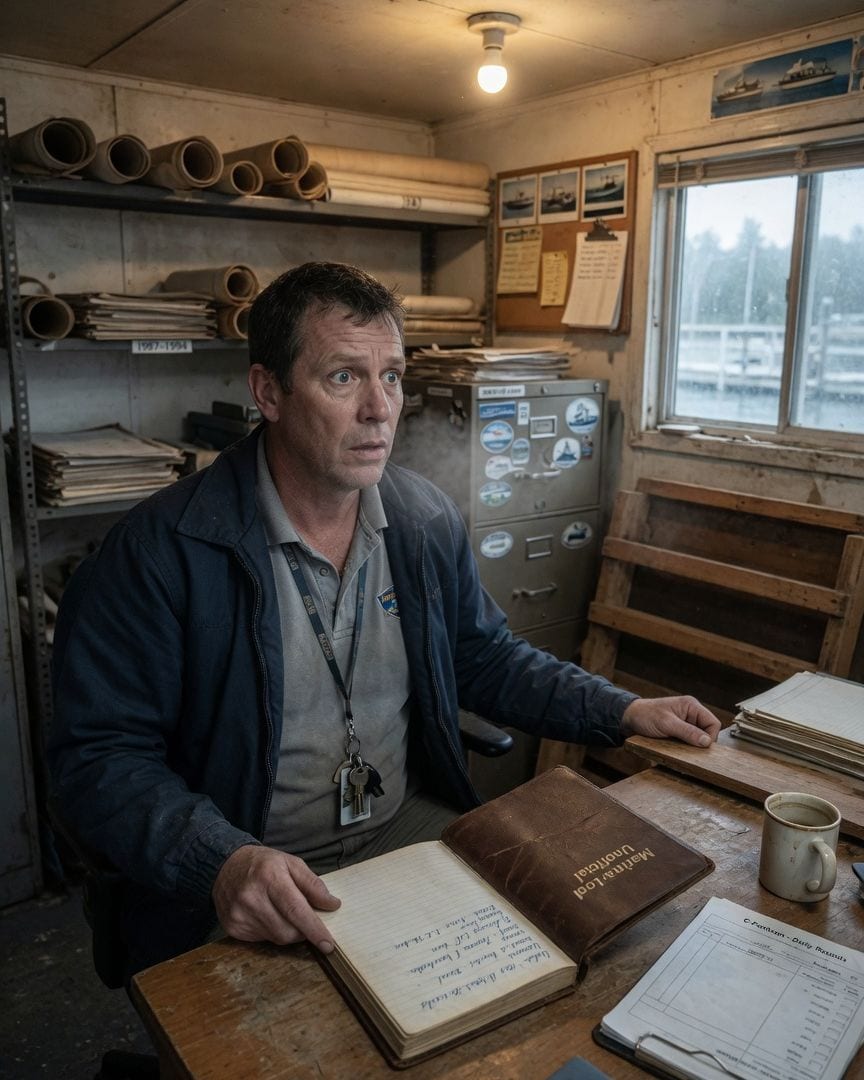
My C-Pontoon goes an extra thirty feet to Berth 61, with a sleek, dark yacht I've never seen. It's drawing power, but doesn't exist on any records.
As harbormaster, my morning rounds are always routine, checking the sixty berths on our C-Pontoon. But one chilly morning, beyond the last numbered post, C-60, I found the pontoon inexplicably extended by another thirty feet. It ended in a new numbered post: Berth 61, a physical fact that simply could not exist.
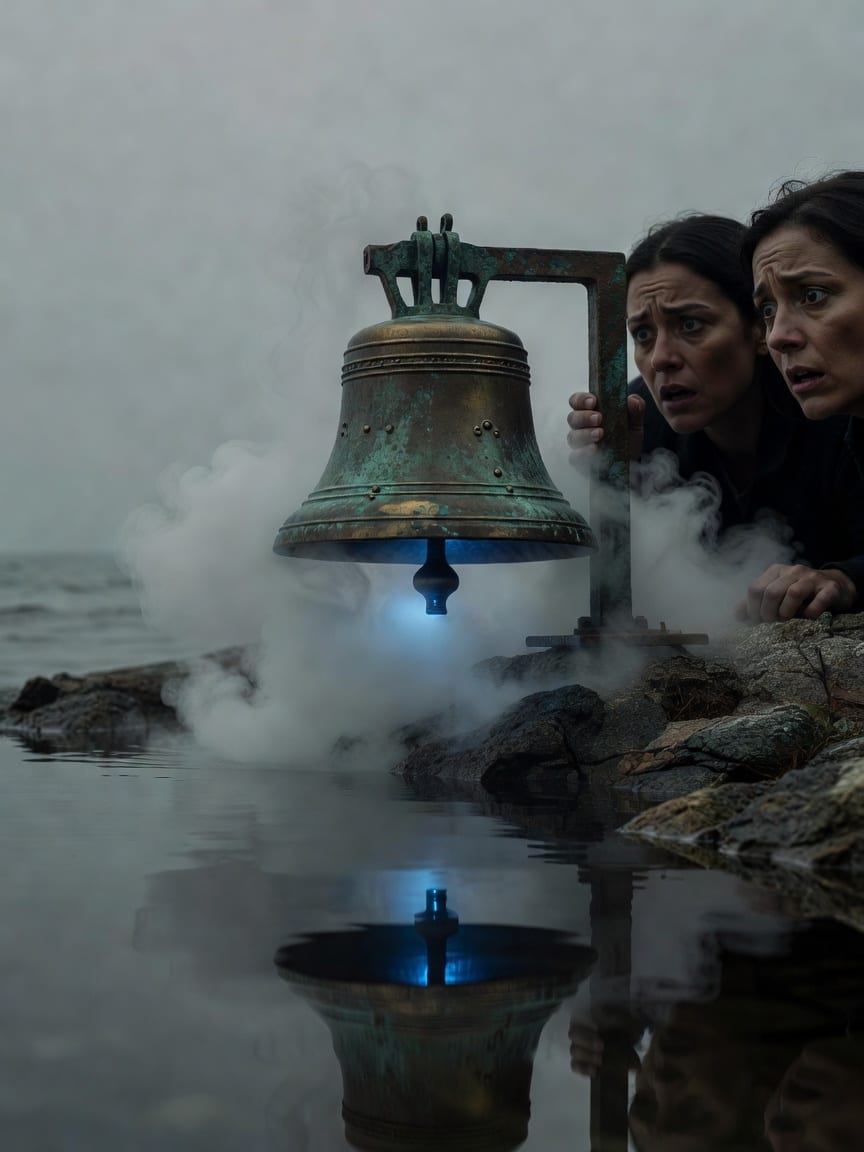
The fog bell on the point rings itself on still nights. The framed log at the yacht club lists eleven calm evenings it rang – each entry beside a boat that never came home.
Moving to a quiet coastal town, I found myself drawn to an old logbook at the yacht club. It recorded the fog bell ringing on flat-calm nights, each instance tied to a boat that simply vanished. Then, I found my own boat's name, 'The Osprey,' penciled at the bottom, marked with an unfinished, cryptic symbol.
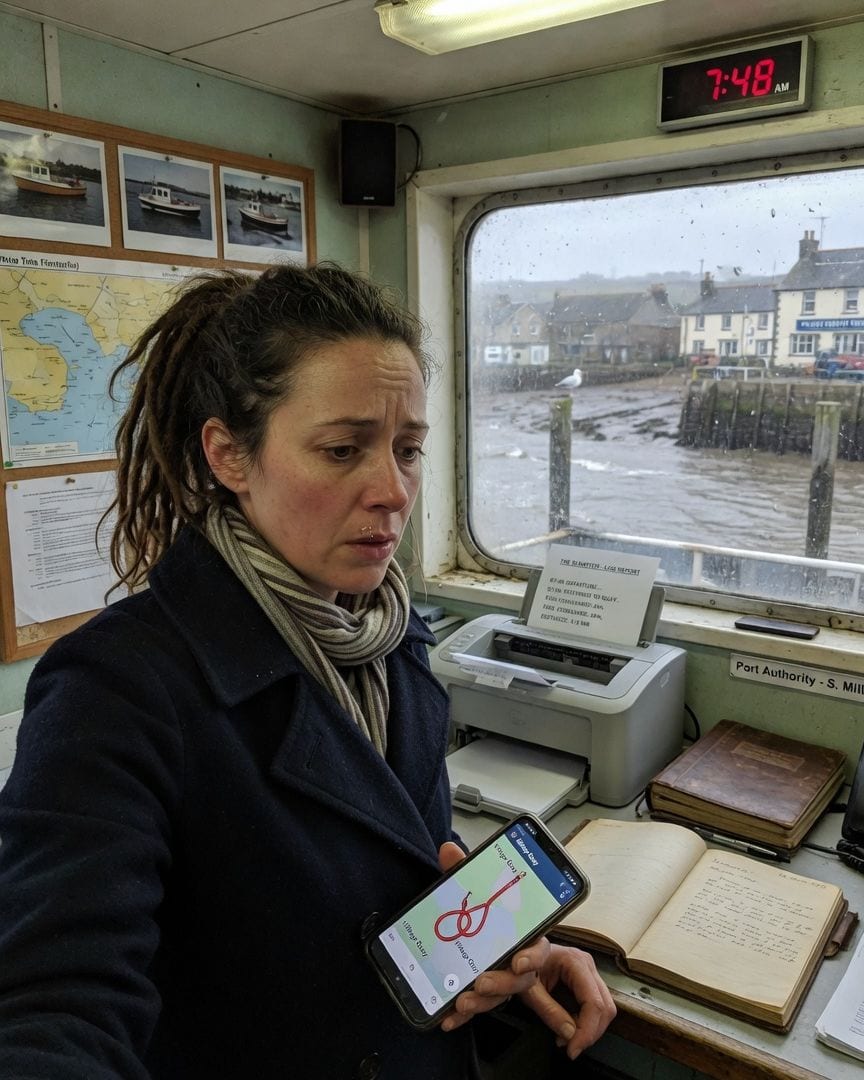
My morning ferry crossed for 40 minutes. The destination town just disappeared.
I board 'The Seawitch' every Tuesday for the familiar eight-minute estuary crossing. But this morning, after making good time, Captain Bernard and I watched the town quay simply fail to appear. Instead, our ferry repeatedly returned to the very same village quay we'd just left, despite burning fuel and advancing the clock.
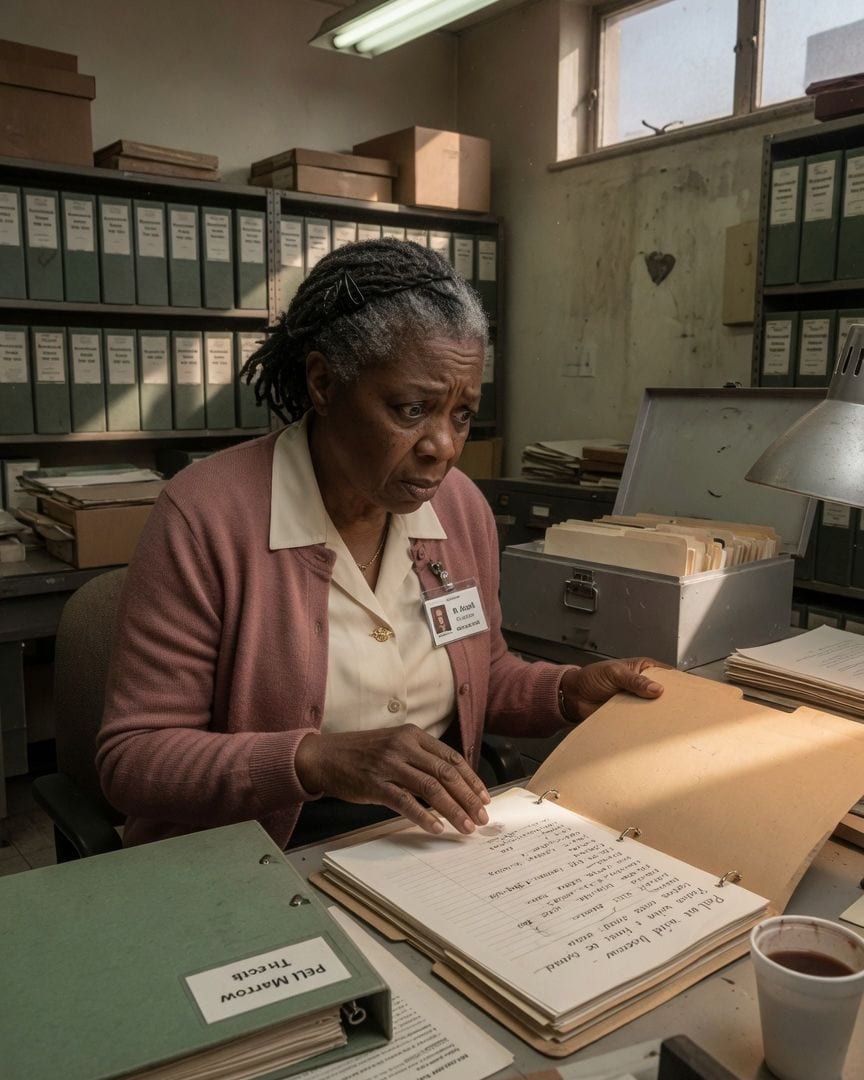
A records clerk's archive file for a Cold War reconnaissance plane lost in 1968 showed it flew yesterday to her own building.
Marguerite Ansell, a records clerk nearing her final week before retirement, meticulously audited Cold War-era files. In the cool, dusty archive, she pulled a file for an oiler declared missing in 1951. Inside, she found a fueling schedule with entries stretching into the present, the last dated just eleven days ago. Then, a second lost ship revealed a similar impossible log, and a cold certainty began to bloom in her chest. Deep in the shadows, Marguerite found an unmarked steel box containing a file for a reconnaissance plane lost in 1968. Its flight log showed a final flight yesterday, to the precise coordinates of her own archive building.
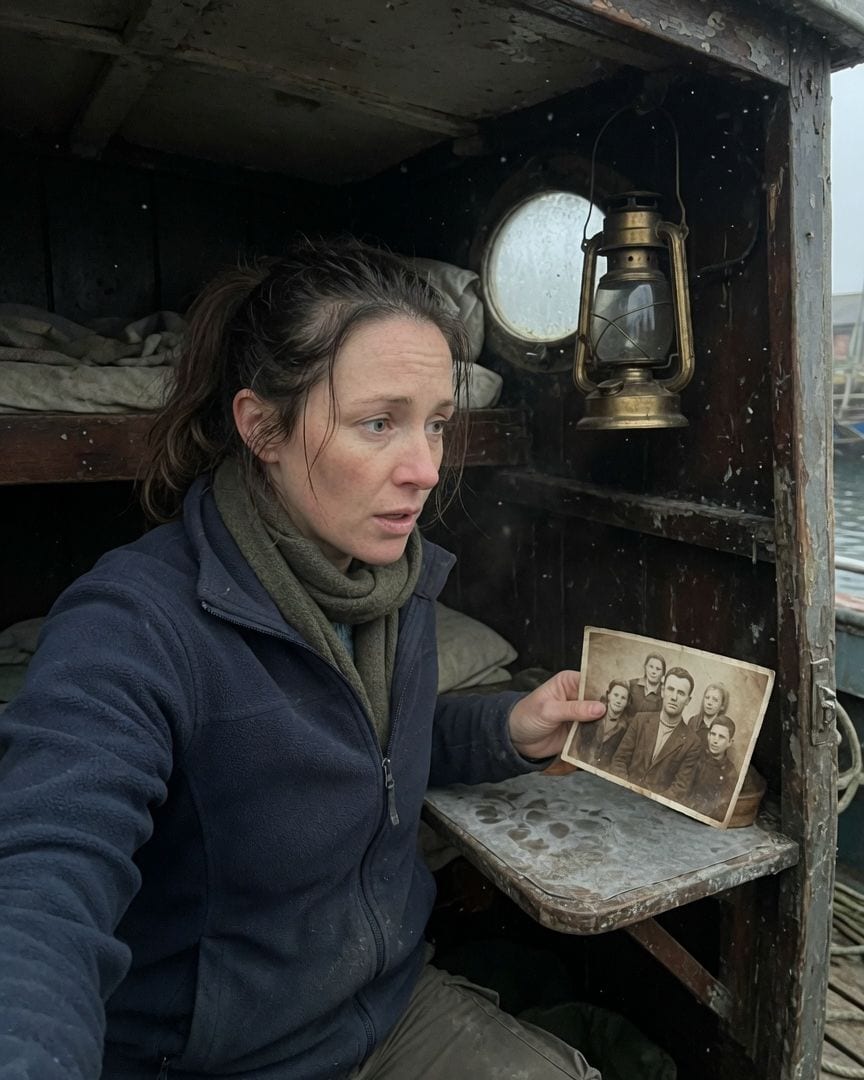
My harbour counted fourteen boats out, but fifteen came back. The last one has my name on it, tied to a berth empty since the war.
I cherished the crisp morning air in Port Blossom, watching the fishing fleet return. Fourteen boats had chugged out before dawn, but that morning, a fifteenth, older boat glided silently into the harbour. It tied itself to the very end berth, unused since the war, and painted on its stern was my family name: Walsh.
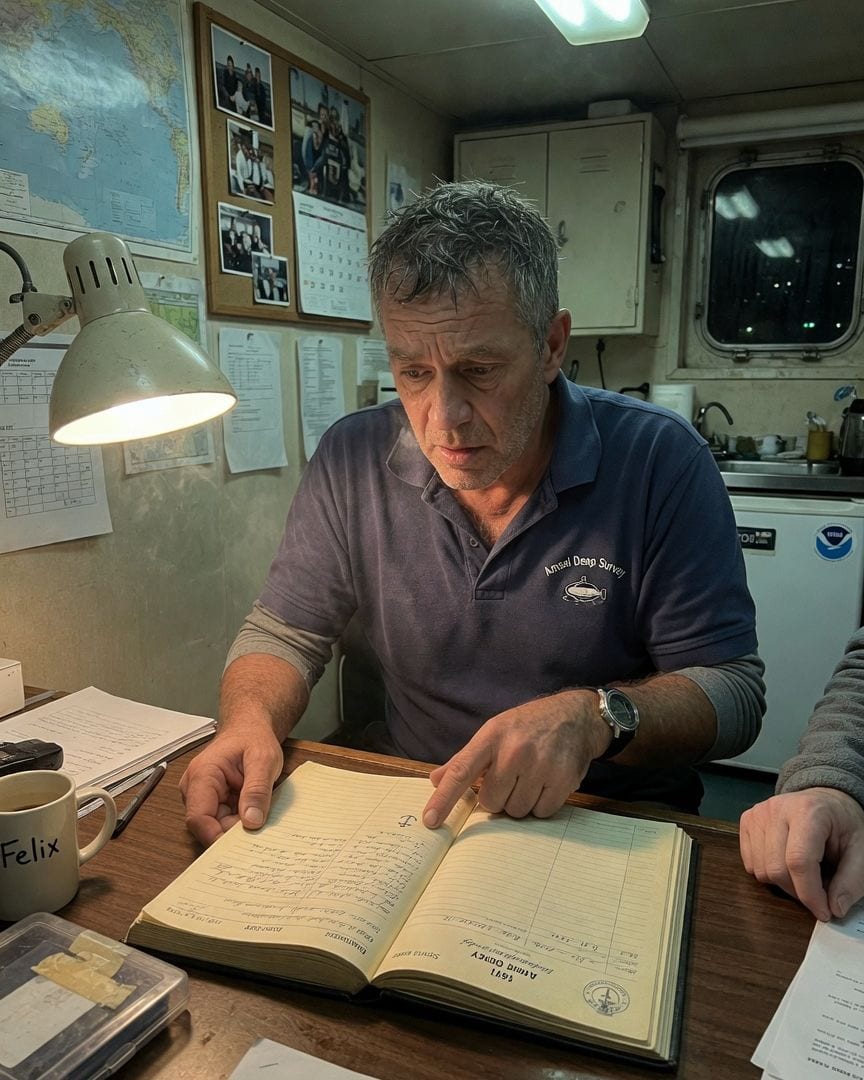
On his final deep-sea survey, a submersible pilot watches a 32-year-old Cold War wreck's rudder shift two degrees.
Deep-sea surveyor Hugo Amsel embarked on his final major dive, anticipating a quiet retirement after decades exploring the crushing pressures of the deep. His submersible's lights cut through the murky green, revealing the *Wynn Portal*, a sealer vanished in 1991, eerily preserved with unnervingly clear windows, free of any marine growth. Then, the inexplicable: the wreck's rudder angle indicator, softly lit, twitched two degrees further to starboard. Later, inside the wheelhouse, Hugo found the ship's official logbook, its final entry dated three days *after* the vessel's recorded disappearance, hundreds of miles north. How could a ship vanish, only to log a journey days later, from a place it never reached?