My harbour counted fourteen boats out, but fifteen came back. The last one has my name on it, tied to a berth empty since the war.
The morning air in Port Blossom was something I'd come to cherish, a crisp, salty kiss after years of city grime.
I stood on the harbour wall, a mug of lukewarm coffee in my hand, watching the fishing fleet make its slow, ponderous return.
Fourteen boats had chugged out before dawn, a familiar sight I’d learned to count in my first few weeks here. But that morning, a fifteenth boat, older and heavier than the rest, glided silently into the harbour.
It looked like it had been pulled from a black-and-white photograph, timbers dark with sea-brine, a single battered lantern hanging from its mast.
It tied itself to the very end berth, the one everyone knew had been empty since the war, unused, almost forgotten.
I squinted. The name painted on its stern, weathered but clear, felt like a punch to the gut: Walsh.
Maxwell Bennett, the harbourmaster, was nearby, fiddling with a coil of rope. I walked over, my voice a little too loud in the quiet morning. "Max, where did that come from? The fifteenth boat?"
He grunted, his gaze fixed on the outgoing tide, a strange set to his jaw. He didn't turn. "Don't count the boats coming in, Sandra. You count them going out and leave it."
He said it like a mantra, his voice flat. I tried to rationalize it. Maybe it was a stray, a visitor stopping for repairs. But it hadn't moved since Saturday morning.
The name on it, my name, felt like a cold weight in my gut, pressing down.
Compelled by a creeping unease, I found myself back at the harbour the next morning, supposedly for a walk, but my destination was inevitable. The ‘Walsh’ boat was still there, exactly where it had been for days, undisturbed.
Its timbers were old, dark with salt and lichen, but the small cabin door, to my surprise, wasn't locked. I hesitated, my hand hovering over the tarnished brass handle, before pushing it open.
Inside, the cabin was small, a single bunk, a tiny table built into the wall. What struck me immediately was how clean it was. Too clean.
The boat on the outside looked like it had sailed through decades of storms, but the cabin was almost pristine, as if someone had just finished polishing it, despite the thin layer of dust that had settled on everything.
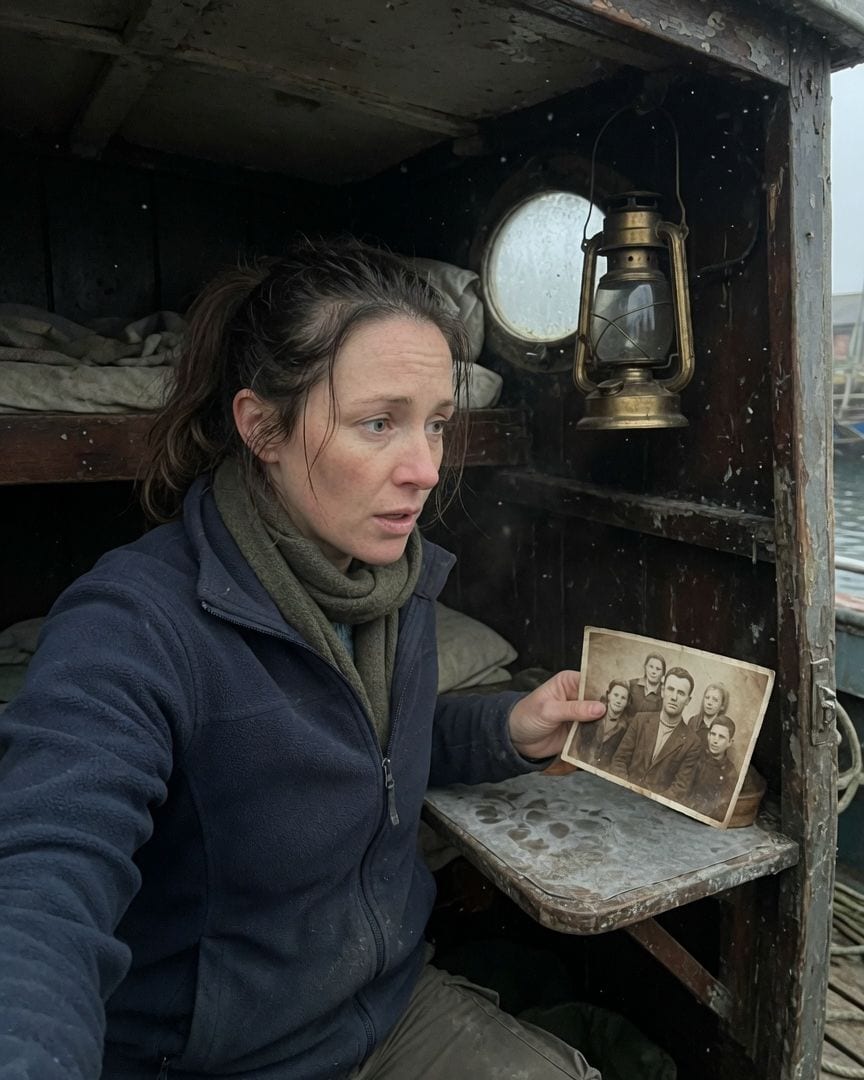
It was like stepping into a preserved moment, utterly out of sync with the exterior. On the tiny table, beneath that film of dust, lay a single, water-stained photograph.
I picked it up. Sepia-toned, faded at the edges, it was clearly a family portrait.
A stern-faced man sat in the middle, his expression unyielding, but there was a familiarity to the set of his jaw, the shape of his nose.
It was an unsettling resemblance to my own distant great-uncle, Patrick, lost at sea generations ago, his face known only from the single faded picture my grandmother kept.
The rational part of me tried to dismiss it as a coincidence, a lost heirloom from another Walsh family, perhaps.
But the sheer improbability of it, the name on the stern, the harbourmaster's silence, and now this… it made the mundane explanation feel flimsy, almost mocking.
The dread, up until now a vague chill, began to solidify into something sharp and cold in my chest.
Determined to find an explanation, any explanation, I visited the dusty town archives. The air inside smelled of old paper and forgotten time.
I asked the archivist, a quiet woman with spectacles perched on her nose, about old harbour records or missing persons from generations past.
She gave me a long, unblinking look, then simply pointed a bony finger towards a forgotten corner at the back, where shelves sagged under neglected volumes.
Tucked away on a bottom shelf, unindexed and unmarked, I found a heavy, leather-bound ledger. Its cover, embossed with faded gold script, read: 'Harbour Returns - Unclaimed.'
My heart hammered against my ribs, a frantic drum against the silence. I pulled it out, the old leather cold against my fingertips, and carefully flipped through the brittle, yellowed pages.
Each entry was meticulously recorded: a date, a local surname, and a brief, cryptic note: 'drifted,' 'acknowledged,' 'lost to tide.' My breath caught. My finger, trembling slightly, traced the name 'Walsh' at the bottom of the list.
The date next to it matched the day the boat had appeared in the harbour. Directly above it, I saw 'Coleman' with a chilling note: 'claimed.'
And in the margin, scrawled in faint, spidery ink, was a specific birth date for 'Edith Coleman,' years before the entry date, making no sense at all.
I tried to confront Maxwell Bennett again, later that week. I found him mending a net down by his own trawler, the familiar smell of diesel and fish guts hanging heavy in the air.
I held up my phone, the screen displaying a photo of the 'Harbour Returns - Unclaimed' page, my finger pointing at the 'Walsh' entry. He flinched, his shoulders tightening, and his face hardened into something unyielding.
"That's old fishermen's tales, Sandra," he said, not looking at the screen, his voice tight. "Nonsense from the rum-soaked days. Forget about it." His evasion was too practiced, too swift, a wall slamming shut. He wouldn't meet my eyes.
Maxwell was useless. Edith Coleman, on the other hand, the oldest resident in town, lived in a small cottage overlooking the harbour. Her name, etched into that ledger with the word 'claimed,' burned in my mind.
She was frail, her skin like parchment, but her eyes, when she looked at me, were sharp, knowing. I showed her the photo, and her gaze lingered on the 'Coleman' entry.
"The sea," she rasped, her voice like dry leaves skittering across pavement, "it gives back what it chooses. And sometimes, you pay the price for looking too closely."
She offered vague pronouncements, riddles about 'what the sea gives back' and 'the price of looking too closely.'
I pressed her, gently at first, then with more urgency. "Edith, what does 'claimed' mean?" She just shook her head, her gaze drifting out to the grey expanse of the ocean. Her refusal to be direct only solidified my suspicion.
I spent days in the tiny public library, cross-referencing surnames from the ledger with old newspaper archives. I found missing person reports that corresponded to many of the names.
Men lost at sea, their boats found empty, or never found at all. But the dates of their disappearances never matched the 'return' dates in the ledger.
The returns were always later, sometimes decades later, long after official searches were called off. The pattern was too consistent to be coincidence; these 'returns' were not rescues. They were something else entirely.
A distinct chill began to settle over me as my quiet investigation continued. It wasn't just the cold ocean air anymore. I started noticing Maxwell Bennett’s fishing boat docked near mine more often than not.
I'd glance up from scrubbing barnacles off my hull and there he'd be, a silent, watchful presence on his deck, mending nets that seemed to need endless mending.
Once, as I drove away from Edith Coleman’s house, after another frustrating conversation, I caught his eyes in my rearview mirror. His expression was unreadable, a blank mask that still sent a jolt of unease through me.
He knew I was digging.
The next morning, a folded, damp piece of paper was slipped under my front door. It wasn't pushed all the way through, just tucked so that the corner peeked out from beneath the crack.
I picked it up, my fingers brushing against the cool, slick paper, still slightly wet from the morning dew. The message, scrawled in an old-fashioned, looping hand, not unlike Edith’s, read: 'Some things are best left undisturbed.
The sea has its reasons.' The anonymous warning rattled me more than I cared to admit, a physical tremor through my hands. It wasn't just my imagination. Someone knew I was digging. Someone wanted me to stop.
Later that day, from my kitchen window, I saw Maxwell Bennett talking in hushed tones with another fisherman by the docks.
They were leaning close, their heads almost touching, their voices too low to carry over the cry of the gulls.
Every now and then, both of them would cast quick, furtive glances towards my house, their eyes lingering for a beat too long.
The town’s quiet avoidance of the fifteenth boat, and now of me, was turning into something more active, more menacing.
The silence of the town itself felt heavy, pressing in on me, as if the very air knew something I didn't. I felt hunted.
Clutching the cryptic note in my hand, the ledger photo on my phone a stark reminder of the names, I returned to Edith Coleman's house.
The air in her small parlour felt thick and ancient, scented with lavender and old wood. I laid both the note and the phone before her, the screen glowing faintly in the dim room. "What does this mean, Edith?"
I demanded, my voice trembling despite my best efforts to keep it steady. "What happened to the Colemans? What happened to your father?"
Edith’s ancient eyes, which had been so evasive, now filled with a deep, weary sorrow. She sighed, a sound like rustling leaves caught in a dry wind. "The sea… it doesn't give back what it takes, not truly.
It offers a copy. An echo." Her gaze drifted to the window, fixed on the grey-blue expanse of the harbour. She explained the old rule, a whisper of a forgotten time: never count them in, never acknowledge them.
"My father," Edith whispered, her voice barely audible now, "he was lost at sea. My mother, heartbroken, couldn't bear it. When the 'Coleman' boat came in, she… she claimed him. She counted him."
Edith recounted how her father returned, looking exactly as he did the day he vanished, not a wrinkle or a grey hair out of place. But he was subtly, fundamentally wrong.
His eyes were too still, like dark glass, and his laughter, when he tried to make it, was hollow, an empty chime. He never aged, never changed, never grew tired or ill.
He was a perfect, unaging replica, a living monument to grief and a broken rule. "He still lives in town," Edith said, her voice dry now, devoid of emotion, "a silent, unsettling presence. We see him every day.
The town, we just… live with them. Avoid them. It's the only way to manage what we've allowed to stay." A sudden gust of wind rattled the windowpane, and the old house seemed to sigh around us.
Edith rose slowly from her armchair, her gaze drifting towards the window overlooking the quiet street below. The light outside was fading, painting the small houses in shades of bruised purple and grey.
"He's still here," she whispered, her voice raspy now, thin with age and a sorrow too deep for tears. "My father. He looks just like he did the day he disappeared, sixty years ago."
I followed her gaze, my breath catching in my throat.
A man walked slowly down the street, impeccably dressed in old-fashioned, well-maintained clothes. His stride was unhurried, almost stately, and his face, even from this distance, was unlined by age, smooth and unblemished.
He was the picture of a man from a bygone era, perfectly preserved.
As he passed, his eyes, though distant, seemed to fix on Edith's window for a fleeting moment, a brief, unblinking stare that made a shiver run down my spine. This man, a living ghost, was the proof.
The horrible, impossible proof.
But then, Edith turned back, her eyes, ancient and knowing, locking onto mine with a terrifying intensity. The light caught them, making them gleam like polished stones. "And he's not the only one. Others were claimed.
You broke the rule, Sandra. Your boat, with your name, it's not for a relative. It's for you."
Edith's words echoed in the silent room, the air suddenly thick and cold around us. "For me?" I stumbled back, horrified, hitting the edge of her small tea table. A teacup rattled precariously. "What do you mean, for me?"
My voice was a choked whisper, barely my own.
Edith explained, her voice heavy with ancient dread, each word a slow, deliberate drop of ice. "The sea doesn't just offer copies of the lost, Sandra.
Sometimes, when a rule is broken, when the balance is disturbed, it offers a future replacement. A pre-emptive return."
She revealed that the 'Walsh' boat wasn't carrying an echo of a past family member, but a vessel for my own future replica.
By counting it in, by acknowledging its presence and its name on the stern, I had inadvertently claimed my own replacement. The boat wasn't a warning for someone else; it was waiting for me.
The unaging, hollow figures like Edith's father, and others I'd seen in town, the ones I'd dismissed as merely eccentric old men who'd never left, were not just memorials.
They were living warnings, the town's quiet burden of what happens when the sea's offerings are accepted.
Every clue, every hushed word from Maxwell, every evasive glance, every detail from that damned ledger – it all clicked into place with horrifying coherence. The room itself seemed to darken, the shadows stretching and twisting like cold, grasping fingers.
Panicked, a cold knot of dread twisting in my stomach, I raced through the town. My own footsteps echoed too loudly on the cobblestones.
The usual sounds of gulls and distant waves were swallowed by the frantic pounding in my ears. I didn't stop until I reached the harbour, gasping for breath, my lungs burning.
The 'Walsh' boat was still there, rocking gently in the tide, an innocent, malevolent presence. Maxwell Bennett stood by the gangplank, his back to me, his shoulders slumped as if under an immense weight.
He turned as I approached, his face etched with a grim, knowing sorrow. He didn't try to stop me as I scrambled onto the boat, his gaze fixed on the horizon, his hands clasped behind his back.
I rushed into the tiny cabin. The air was cold, stale, and impossibly still. My eyes darted to the table, to the faded photograph I'd found days ago. It was still there, but it had changed.
The stern-faced man who'd resembled my great-uncle was gone. Instead, the family portrait now showed my face, unmistakably mine, among my own family. My parents, my brother, all smiling, oblivious, and there, perfectly placed in the middle, was me.
My heart lurched. As I stared at the impossible image, the boat gave a deep, resonant shudder from somewhere beneath the hull. The timbers groaned, a low, guttural sound that vibrated through the deck beneath my feet.
And then, without a breath of wind, without so much as a ripple of water to nudge it, the cabin door slowly, inexorably, creaked shut behind me, plunging the small space into near darkness.
Days bled into weeks. The 'Walsh' boat remained tied to the empty berth, never moving, its cabin door closed, a permanent, silent fixture in the harbour.
Maxwell Bennett resumed his duties, meticulously logging boats out, never in, his face a mask of practiced indifference.
The townspeople continued their routines, their gazes carefully, instinctively avoiding the end berth, as if it were simply part of the harbour's unchanging landscape. No one spoke of Sandra Walsh, or the boat, or the broken rule.
Life in the coastal town settled back into its familiar, quiet rhythm, punctuated only by the cries of gulls and the distant thrum of fishing trawlers.
Edith Coleman sat by her window, her hands clasped, watching the perpetual dance of the harbour. She saw the empty berth, then looked at the street below. A woman walked by, her stride familiar, her face calm.
She looked exactly like Sandra Walsh, but her eyes were a shade too wide, and her smile, when she offered it to a passing neighbour, held no warmth.
The woman who called herself Sandra Walsh bought fresh fish at the market, her gaze steady, her movements precise. She paid in cash and walked home, passing the harbour without a glance at the boat tied to the end berth.
The name on the stern was 'Walsh'.
If this one got to you
My pier's ballroom register books a new dance for Saturday, electricity meter running, but those lights are never on.
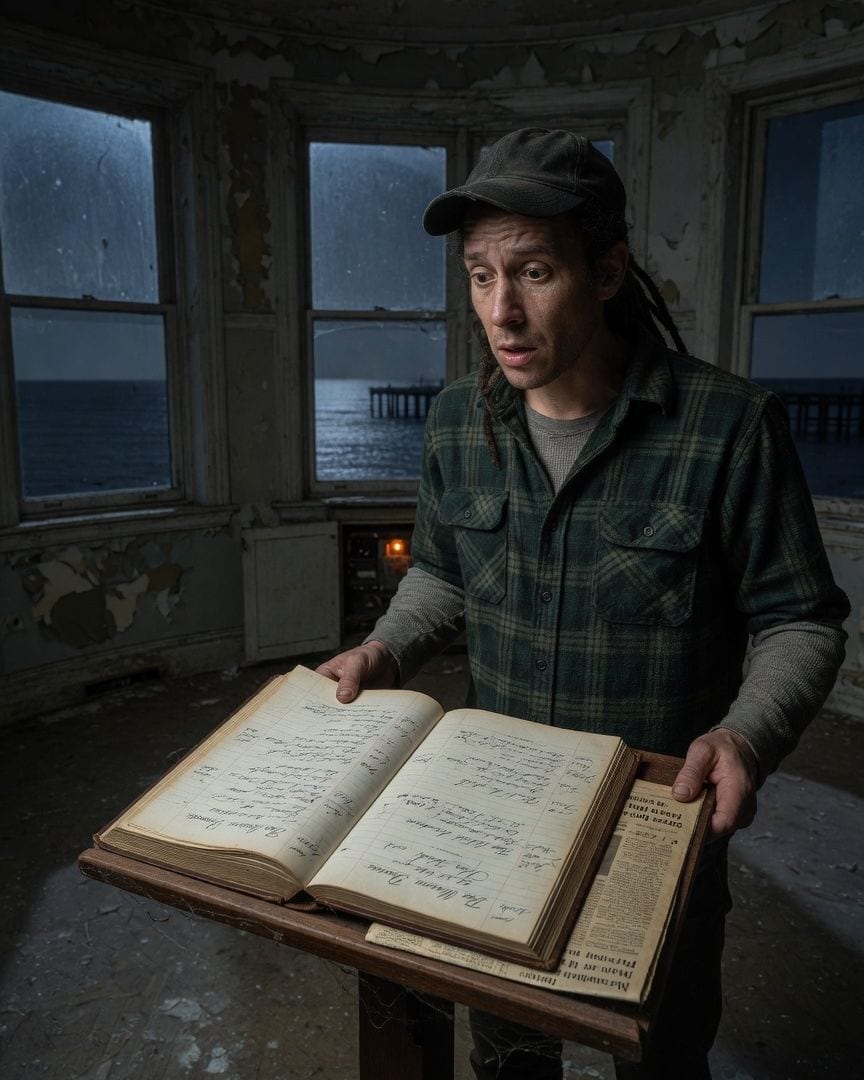
Taking over as pier caretaker, I was told one rule: never turn on the end pavilion's lights. But my first week, I noticed its electricity meter was steadily advancing every single night, even though the main breaker was off. Inside the dark, unused ballroom, I found an old ledger open to 'The Moonlit Waltz' for this Saturday, raising a chilling question: who was booking a dance and drawing power in a place that should be empty?
Wet moss handprints cover my kitchen window. My kitchen backs onto no water at all.
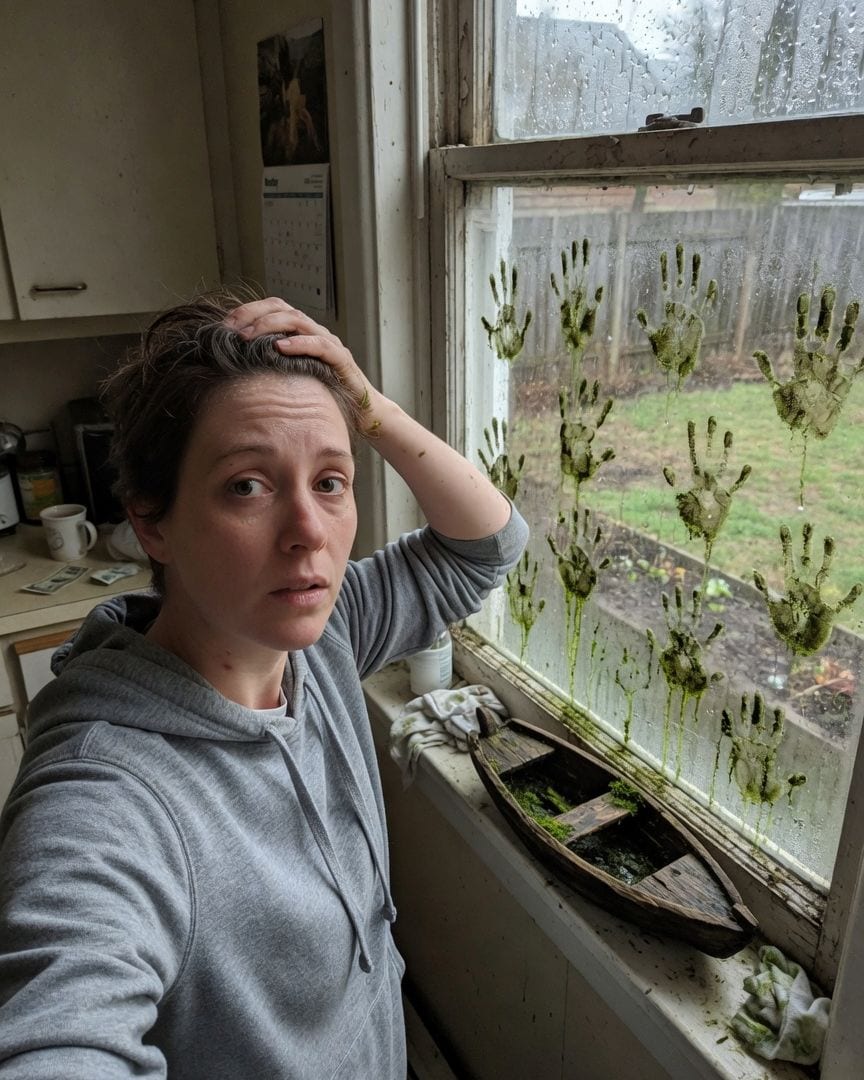
Monday morning, I found small, perfect handprints pressed against the *inside* of my kitchen window. They were wet and outlined in dark green moss, an impossible sight since my sealed window backs only onto a patch of lawn, with no water nearby. I ran my hand over them; they felt damp and cold.
My harbour ledger shows Berth 14 let to a trawler every few years, but it's always empty. Each entry reads 'not returned to sea, berth held open'.
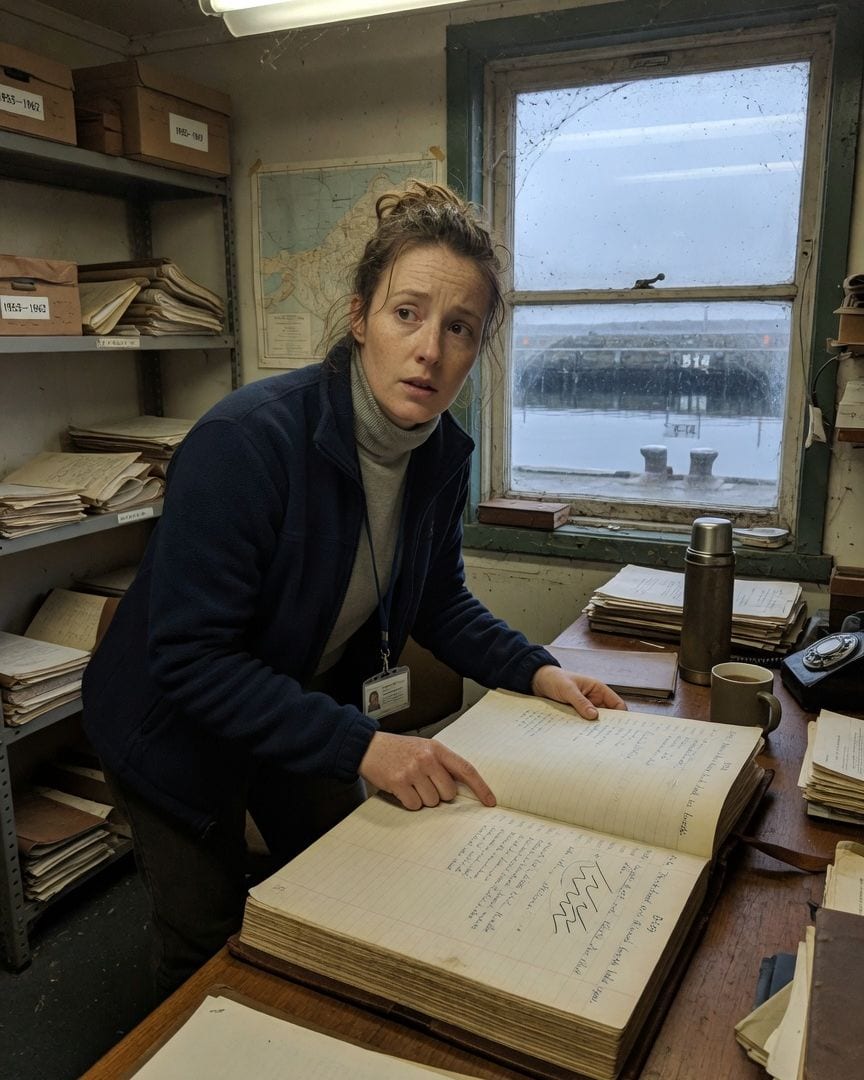
My job as Harbour Master's Assistant is managing the berth ledger, tracking every vessel. But Berth 14 holds a strange paradox: my book says it's let, yet it's always empty. Each entry for that berth closes with the same cryptic note – 'not returned to sea, berth held open' – a pattern stretching back to 1955.
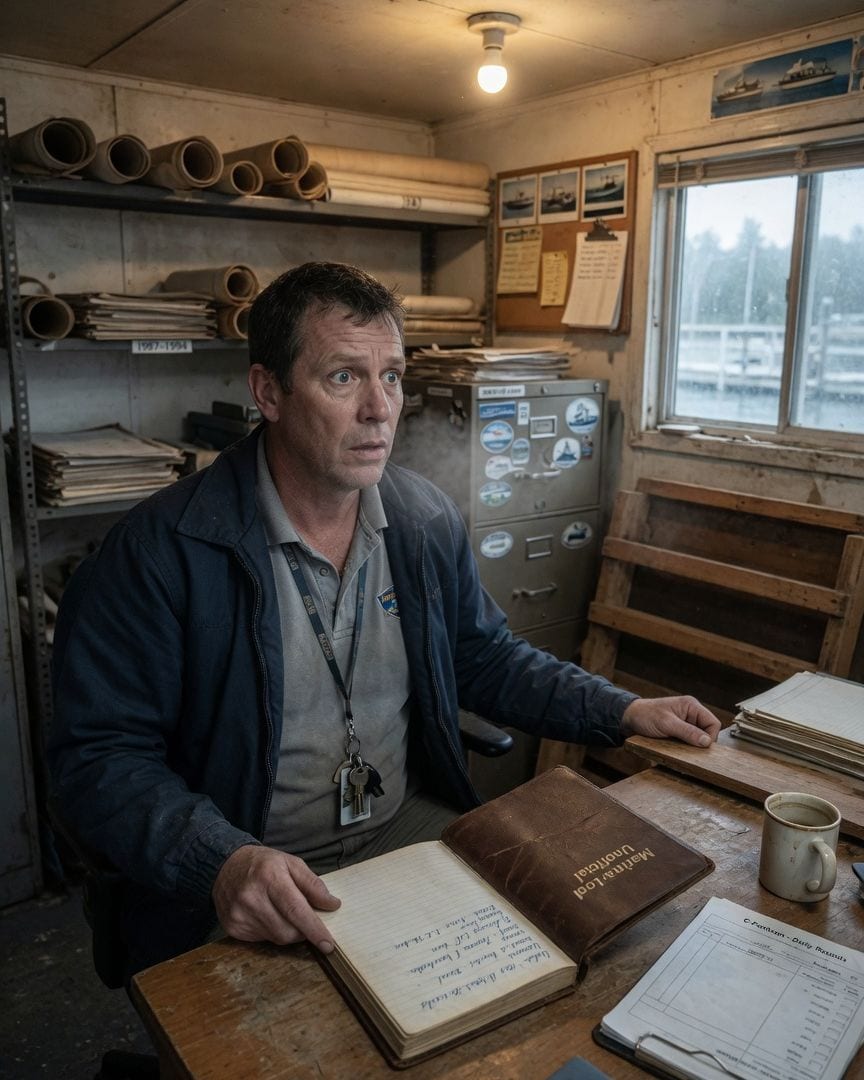
My C-Pontoon goes an extra thirty feet to Berth 61, with a sleek, dark yacht I've never seen. It's drawing power, but doesn't exist on any records.
As harbormaster, my morning rounds are always routine, checking the sixty berths on our C-Pontoon. But one chilly morning, beyond the last numbered post, C-60, I found the pontoon inexplicably extended by another thirty feet. It ended in a new numbered post: Berth 61, a physical fact that simply could not exist.
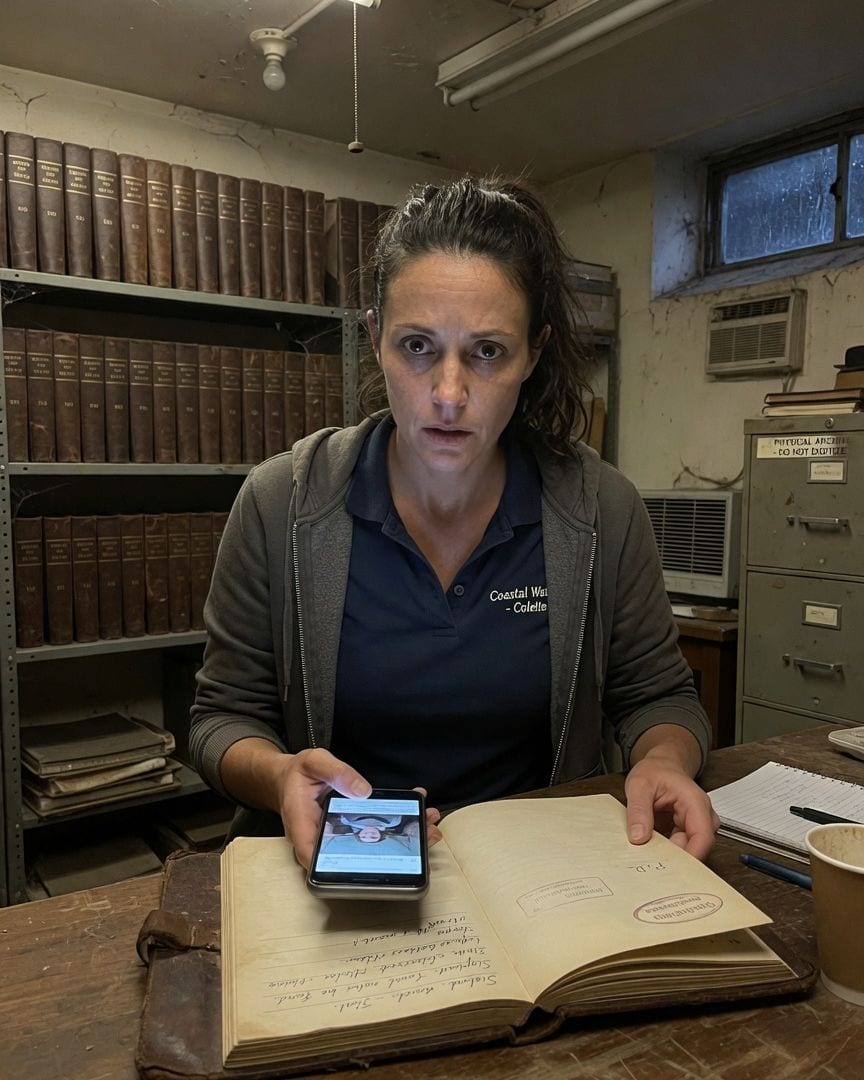
My coastguard log noted Sighting 9 again tonight, a light where no vessel showed. The old logs carry Sighting 9 off Skerry Point at 3:14am every tenth year since 1954, always 'nothing found,' always 'send no boat.'
On my watchtower night shift, the radar screen glowed green and the ocean was quiet. Then, a familiar light appeared off Skerry Point, exactly on cue, just as it had every tenth year for decades. But digging deeper, I found a hidden stamp in an old logbook: 'Operation Skerry. Status: Complete.' It left me with a chilling sense of finality.
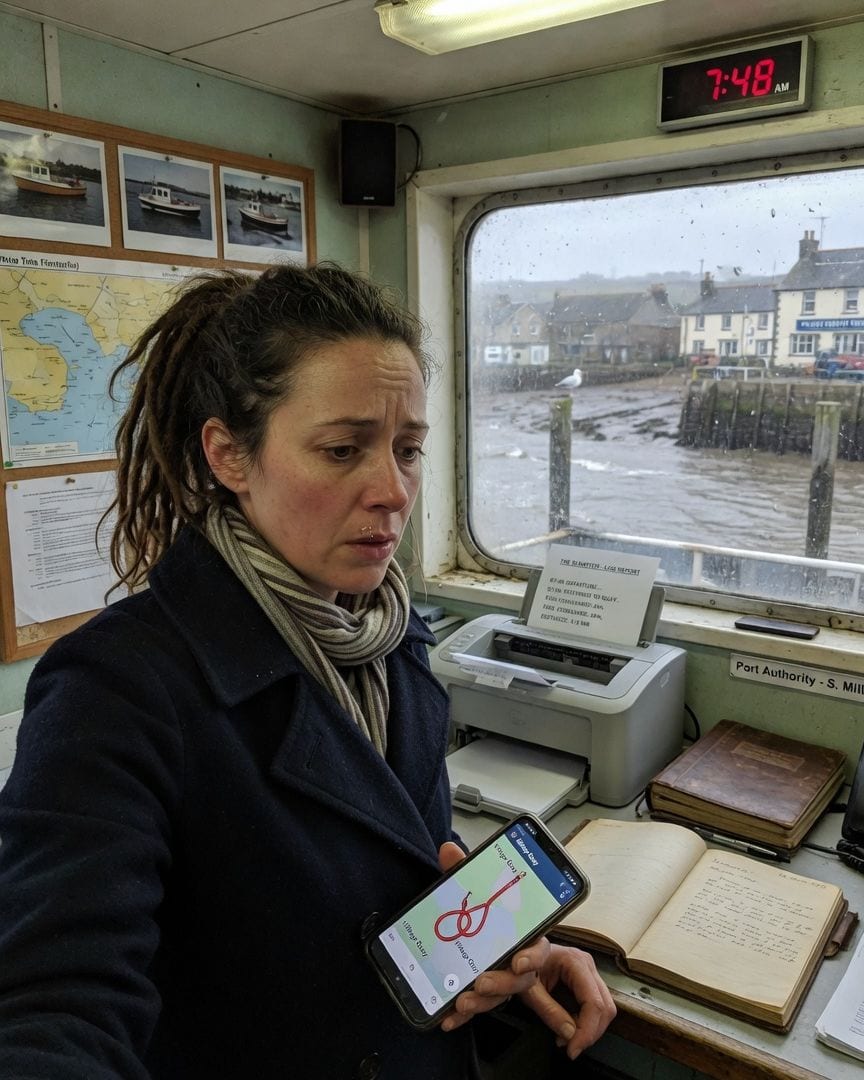
My morning ferry crossed for 40 minutes. The destination town just disappeared.
I board 'The Seawitch' every Tuesday for the familiar eight-minute estuary crossing. But this morning, after making good time, Captain Bernard and I watched the town quay simply fail to appear. Instead, our ferry repeatedly returned to the very same village quay we'd just left, despite burning fuel and advancing the clock.