My morning ferry crossed for 40 minutes. The destination town just disappeared.
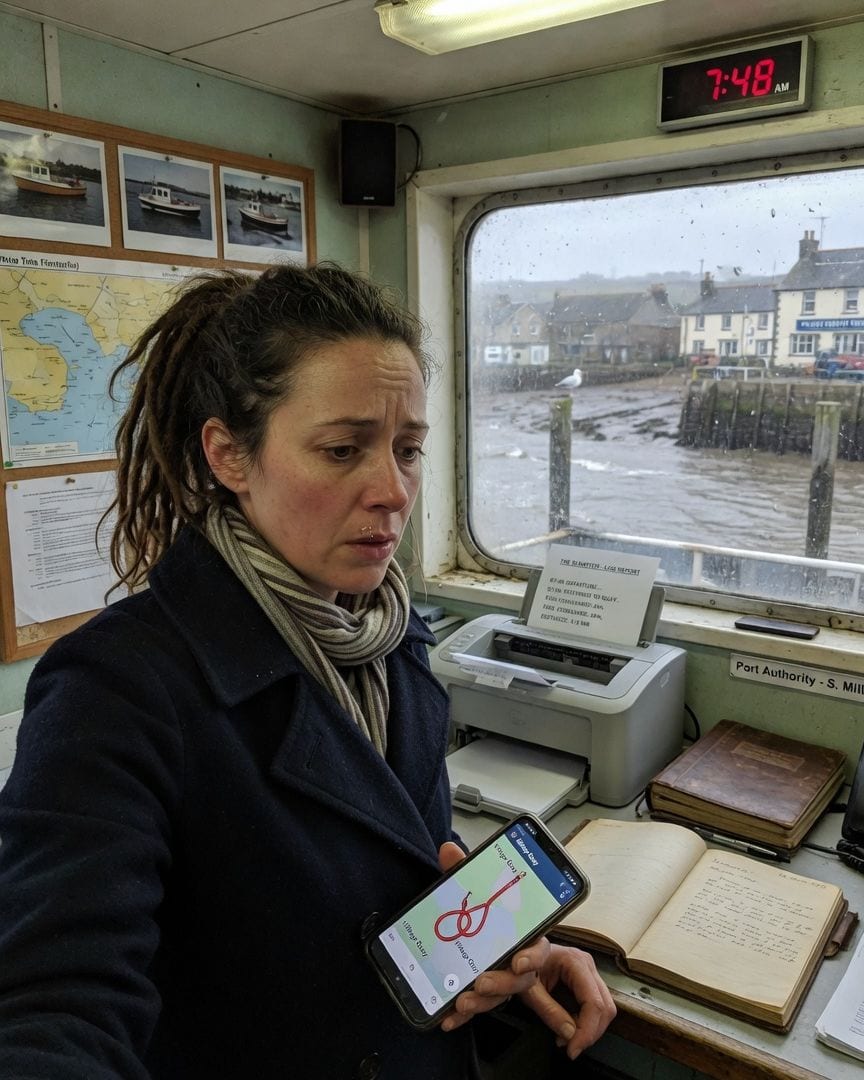
The smell of salt and diesel was as familiar as my own breath on Tuesday mornings. I boarded 'The Seawitch' just after seven, like every weekday, ready for the usual eight-minute run across the estuary.
The air was crisp, the gulls already squawking their protests over the fishing boats tied up at the quay.
Captain Bernard Porter, a man whose face was as weathered as the old pilings he tied up to, gave me his usual brisk nod from the helm. Forty years he’d navigated these waters.
If anyone knew the estuary, it was Bernard.
The engine rumbled to life beneath my feet, a familiar vibration. We cast off, the rope thudding against the deck, the water churning white behind us.
I watched the village shrink, the cluster of cottages and the old pub becoming miniatures. Ahead, the town quay should have been growing larger, its cranes and the distinctive red brick of the old lighthouse slowly resolving into detail.
I glanced at the ferry's internal clock, a cheap digital display that always ran a minute or two fast. 7:14 AM.
I felt the boat making good time, the slight pitching and rolling the same as always. Then, a few minutes in, I felt a shift. Not in the boat's motion, but in the landscape.
The familiar lines of the town quay, which should have been just over the bow, weren't there. Instead, the quay ahead, growing steadily larger, was our quay. The village.
The exact same seagull, I swear, perched on the same barnacle-encrusted pilings we’d just left.
Bernard was already staring, a deep furrow in his brow. He didn’t say anything, just eased off the throttle, the engine whine dropping. He pulled back, guiding the boat away from the quay, then turned in a wide arc.
He tried again, setting a course a little further north this time. I watched the fuel gauge on the small panel near the helm. It was clearly ticking down. The clock on the wall advanced. 7:25 AM, then 7:32.
Still, the distant shore, which should have been the town, sharpened into the utterly familiar outlines of the village slipway. Again, the same seagull.
A third time. Bernard’s jaw was tight. He gunned the engine, cut a path through the water further south. The fuel gauge dropped again, the digital clock clicked over to 7:46 AM.
And a third time, 'The Seawitch' nosed into the very place we’d left. The tide had visibly shifted in the estuary around us, the exposed mudflats a little wider, but we were exactly where we’d started, the crossing never made.
The far shore was simply gone.
Back on the village quay, the salt air suddenly felt colder. I pulled out my phone, my hands shaking slightly. My GPS history wasn't showing a straight line across the estuary.
It showed a short, jagged loop, a tight knot of motion from our starting point and back, repeated three times, like someone had tried to draw a fishing hook on the map. It made no sense.
Bernard was already hunched over his own navigation instruments, his face etched with something I'd never seen there before: bewilderment. He looked up, his gaze distant. "Fuel's down a good quarter tank," he muttered, his voice hoarse.
"And the clock says forty minutes passed. But we never left."
"Maybe it was a GPS glitch?" I offered, trying to sound rational. "A magnetic anomaly? An unheard-of tidal current?" My own voice sounded hollow.
Bernard shook his head slowly, a grim certainty in his eyes. "I know these waters, Monica. Forty years. I've never seen anything like it. It wasn't a glitch. The town just... wasn't there."
He paused, his gaze fixed on the churning water near the quay. "I felt the boat moving. The engines were pulling, the current was against us in places, then with us. We were making progress.
But every time, the landscape ahead, the approaching shore, it just… subtly reconfigured itself until it was our own slipway again. Like a film playing on a loop, but the film was real, and we were in it."
The dread wasn't in the impossible event itself, but in the meticulous, undeniable proof that it had happened. The fuel gauge, the clock, the physical sensation of movement, all confirmed the irrational. Every rational check made the impossible more real.
Determined to find some explanation, any explanation, I insisted on checking the ferry office's digital logs.
The port authority clerk, a young man with too much gel in his hair and an air of permanent boredom, sighed dramatically but pulled up the data for 'The Seawitch's' morning runs.
The screen glowed with a clear, undeniable record: three separate departures, each timestamped precisely, each logged as a full-duration trip. And each ending with the boat docked back at the village quay. Mileage logged. Fuel consumed.
It was all there, stark and unblinking, a digital testament to the impossible.
As the clerk printed the latest logs, his printer rattling noisily, my eye fell on a dusty, leather-bound book tucked under a stack of old manifests on a lower shelf.
It was an old ferry logbook, its spine cracked, its pages yellowed with age. Curiously, I pulled it out, a faint smell of mildew clinging to the leather.
Flipping through, my fingers traced the brittle paper until I stopped on a date. Exactly fifty years ago. And under it, in spidery, faded ink, in an old-fashioned script, I read: 'Attempted crossing, returned to quay. Three times.'
The old logbook entry from fifty years ago confirmed my worst fears: this wasn't an isolated incident. It wasn't a glitch, or a one-off anomaly. This was… something else entirely.
I spent the next few days in a quiet frenzy, the logbook hidden in my backpack, poring over online archives and microfiche at the local library. I searched for anything, anything, about 'The Seawitch' incident from decades past.
Major navigation failures, strange happenings, even local folklore. I found nothing conclusive. It was as if the event had been erased from public record, or simply never recorded in a way that made it traceable now.
The silence was as unnerving as the loop itself.
Frustrated and feeling like I was chasing ghosts, I turned to the local historical society, a quiet, unassuming building near the old market square, smelling faintly of old paper and beeswax.
Inside, I found Edmund Marsh, a man in his seventies with keen, intelligent eyes that seemed to miss nothing. He was meticulously cataloging ancient maps, his movements slow and precise.
He greeted me with unnerving calm, his voice soft but clear.
I explained my interest in local ferry history, specifically any unusual incidents or anomalies. Edmund listened patiently, his gaze fixed on some point just past my shoulder.
He offered anecdotes about old captains, the changing shape of the estuary over centuries, the hazards of certain sandbanks. He had an encyclopedic knowledge, but it felt… curated.
When I pressed for records of 'unexplained delays' or 'navigation anomalies,' trying to keep my voice casual, Edmund’s calm deepened. It wasn't a sign of ignorance, but something else. Resignation, perhaps. Or knowledge.
He mentioned, almost conversationally, that sometimes, 'local quirks' weren't widely publicized, 'to avoid unnecessary concern among the residents.' He said it like it was the most natural thing in the world.
He was helpful, almost too helpful, gently guiding my inquiries away from specific dates or incidents and towards general folklore and tidal superstitions. His gaze never quite met mine when I mentioned the impossible return.
It slid past, like water over a smooth stone.
I persisted, returning to the historical society the next day. I felt a growing certainty that Edmund knew something, but wouldn't volunteer it.
This time, instead of asking him directly, I burrowed into the physical archives, pulling dusty boxes from the shelves. I found a fragile newspaper clipping, tucked away in a mislabeled folder of 'Estuary Bygones.'
It was from the local gazette, dated exactly fifty years ago. My hands trembled as I unfolded it. It was a small, almost dismissive paragraph, barely an inch long, titled 'Curious Turn of Tide for Ferry.'
It described a brief, unexplained return of 'The Seawitch' as a 'minor navigational hiccup' due to 'unusual currents.'
It was exactly what I’d been looking for, yet it was so understated, so quickly dismissed, it felt less like a report and more like an intentional burial.
I felt a prickle on my neck, a distinct cold spot, as I read the flimsy paper. I looked up. Edmund Marsh was standing in the doorway of his office, watching me.
His expression was unreadable, not angry, not surprised, just… observing. He didn't speak, didn't move. My heart hammered in my chest, a frantic bird. I folded the clipping carefully, pressing the old creases flat, and placed it inside my bag.
I felt the weight of his gaze follow me as I walked out of the historical society, the heavy oak door creaking shut behind me.
The next day, as I cycled past the historical society on my way to the village shop, I saw Edmund in the window of his office, his back to me, staring out at the estuary.
A wave of unease washed over me. I rounded the corner, feeling a peculiar pressure, and glanced back, almost instinctively. He was no longer staring out at the water.
He was standing at the window, facing me, his gaze locked onto my retreating figure. He must have turned the instant I went out of sight. I was no longer just investigating; I was being watched.
I returned to the historical society, the old logbook and the newspaper clipping clutched tight in my hand. I found Edmund Marsh in his office, his back to me again, meticulously arranging old photographs of the village docks.
The air in the room felt thick, heavy with unspoken things. I laid the items on his desk, the faded clipping a contrast to the polished wood.
"Mr. Marsh," I said, my voice tight, my own composure fraying at the edges. "This isn't just a curious turn of tide. This happened fifty years ago, and it happened again this week.
The ferry returned to the same quay, three times, against all logic. The far shore just… wasn't there."
Edmund turned slowly, his face calm, almost serene. He picked up the logbook, his fingers tracing the faded ink of Captain Holloway’s entry. "Ah, yes. Captain Holloway. A diligent man. Quite precise in his observations, even for the inexplicable."
He then picked up the clipping, his gaze sweeping over the dismissive paragraph. "And the gazette. They did their best to make sense of it, didn't they? In their own way."
"Make sense?" I pressed, my voice rising a little. "It makes no sense. The town quay just… vanished. What happened, Mr. Marsh? Why is there no proper record?
Just this tiny article glossing over it, and this one obscure log entry?"
Edmund sighed, a soft, almost wistful sound that seemed to carry the weight of centuries. "The estuary, Miss Beaumont, has always had its seasons. Its moods. There are times when certain paths... simply aren't meant to be crossed."
He looked at me then, his eyes ancient, holding a quiet, unnerving depth. "Some truths are best kept quiet, for the general good. To prevent panic. To allow life to continue, without everyone questioning the very ground beneath their feet.
My family, you see, has been involved in these matters for a very long time."
Edmund Marsh, with a strange, unblinking calm, rose from his desk and walked to a heavy oak cabinet against the far wall.
The room seemed to grow cold as he opened its doors, revealing stacks of carefully preserved documents and books. He pulled out a thick, leather-bound journal, much older and more substantial than the old ferry logbook.
Its covers were worn smooth, its pages brittle at the edges, filled with elegant, precise script that spanned generations. He laid it gently on the desk between us, pushing it towards me.
"This," he said softly, his voice barely a whisper, "is a more complete record. Passed down through my family."
I hesitated, my hand hovering over the ancient leather. Then, with a deep breath, I opened the journal. The first entry was dated over two hundred years ago.
My eyes widened as I saw meticulously detailed accounts, specific dates, and precise descriptions of the 'non-crossings' stretching back centuries. Each entry was separated by precisely fifty years, a chilling, mathematical rhythm.
The descriptions were almost identical to what Bernard and I had experienced. The fuel consumed, the time elapsed, the destination inaccessible, the return to origin.
My gaze skimmed down the pages, following the inexorable pattern, until I found the current date marked, a small, neat 'x' beside it.
And then, a chilling note in an ancestor's hand, dated from a previous cycle, written two hundred years ago: 'The Marsh family's stewardship begins.'
I looked up, my eyes meeting Edmund's across the desk. I saw not malice, not triumph, but a quiet, ancient understanding that chilled me to the bone. He simply watched me, unblinking.
Edmund Marsh began to speak, his voice soft but unwavering, explaining his family's role as I stared at the chilling entry. "We are not 'keepers' in the sense of controlling it, Miss Beaumont.
That would imply mastery over something far older and greater than ourselves. We are merely the stewards of its knowledge. The estuary, at a certain conjunction of tide and perhaps unseen celestial mechanics, experiences what we call a 'temporal eddy.'
A fold in the local space-time. For a short, precise period, the destination – the town quay – is momentarily inaccessible, folded back upon the origin. It exists, yes, but not within reach of that particular journey."
He gestured to the open journal. "The boat does move. The fuel is consumed. The clock does advance.
All the physical proofs are real because the journey is made, but the space itself, through which you travel, resets to its origin point.
It is not malice, not a ghost, but a natural, ancient phenomenon, as old as the tides themselves. Like an invisible current that always, always, brings you back."
He explained how his ancestors, initially terrified and bewildered by what they witnessed, had eventually come to understand its cyclical nature. They learned to identify the precise window of its activation, and to manage the public perception.
The 'records that cannot be,' the newspaper clippings, the vague local anecdotes, were either dismissed as anomalies or quietly removed from common view, preventing widespread panic or disruptive scientific scrutiny that would ultimately be futile.
The dread for me wasn't in a monster, but in the universe's cold, indifferent geometry, and the Marsh family's centuries-long, calm acceptance of it.
I felt a profound horror, not of a violent entity, but of the sheer, unfeeling mechanism of existence and Edmund’s placid acceptance of it. "But people rely on that ferry!"
I argued, my voice tight, almost a whisper against the weight of his words. "You let them try to cross, knowing it's impossible, knowing they'll be terrified, confused!"
Edmund merely smiled faintly, a serene, unbothered expression. "They learn. They adapt. Or they find other routes for a few days. The cycle is brief. It is the way things are, Miss Beaumont. The town has always adapted.
Our role is to ensure the essential fabric of society isn't torn by truths too vast for the everyday mind." He closed the journal gently, the soft thud echoing in the quiet room. "You now share this knowledge.
You understand the pattern. The next cycle is fifty years away. There is a place for you, Monica, in our stewardship. To learn, to observe, to help maintain the balance, just as my family has done for generations."
I recoiled, a shiver running down my spine. The calm was the worst part. The invitation was not an honor, but a chilling implication of complicity, of surrendering to an ancient, unfeeling truth. "No," I whispered, pushing back my chair.
It scraped loudly on the wooden floor. "I can’t. I won’t." I stood, the weight of the impossible knowledge crushing me, the reality of the folded space and the cycles of cosmic indifference pressing in.
I turned and walked out, leaving Edmund Marsh sitting amidst his ancient records, his calm gaze following me until I was gone.
I tried to explain it to Bernard Porter. I showed him the old logbook, the faded clipping, even tried to draw diagrams of what Edmund had described.
He listened, his face slowly turning pale, his eyes wide, but then he shook his head, a single, decisive gesture. "Too much, Monica. Too much. It was a bad week, that's all. A freak thing. It'll pass."
He couldn't accept it, couldn't integrate it into his decades of knowing the estuary.
I saw 'The Seawitch' continue its runs a few days later, a symbol now of a quiet, terrifying truth. I couldn't stay in the village, near the estuary, near the knowledge that coiled beneath the placid surface of the water.
I packed my bags, sold my small cottage, and moved to a small town inland, far from any large bodies of water.
The memory of Edmund Marsh's calm, knowing eyes, and the chilling pattern in his journal, haunted me every waking moment. The world, I now understood, was not as solid or as predictable as I had always believed.
Monica lives a quiet life now, in a town nestled safely between hills, miles from the coast. She never takes ferries, never travels by boat. The sight of a wide expanse of water brings a cold knot to her stomach.
She finds herself scanning news reports, not for local curiosities anymore, but for distant, unexplained anomalies: a road that always leads back to the start, a building with a room that isn't on the plans, a flight that lands in the wrong year.
She knows the world is full of places that simply are, defying all logic, and that some people, like Edmund Marsh, simply accept them.
The dread isn't for what might happen, but for what already exists, silently, beneath the veneer of the ordinary. She knows, now, that some truths are too quiet to be heard.
If this one got to you
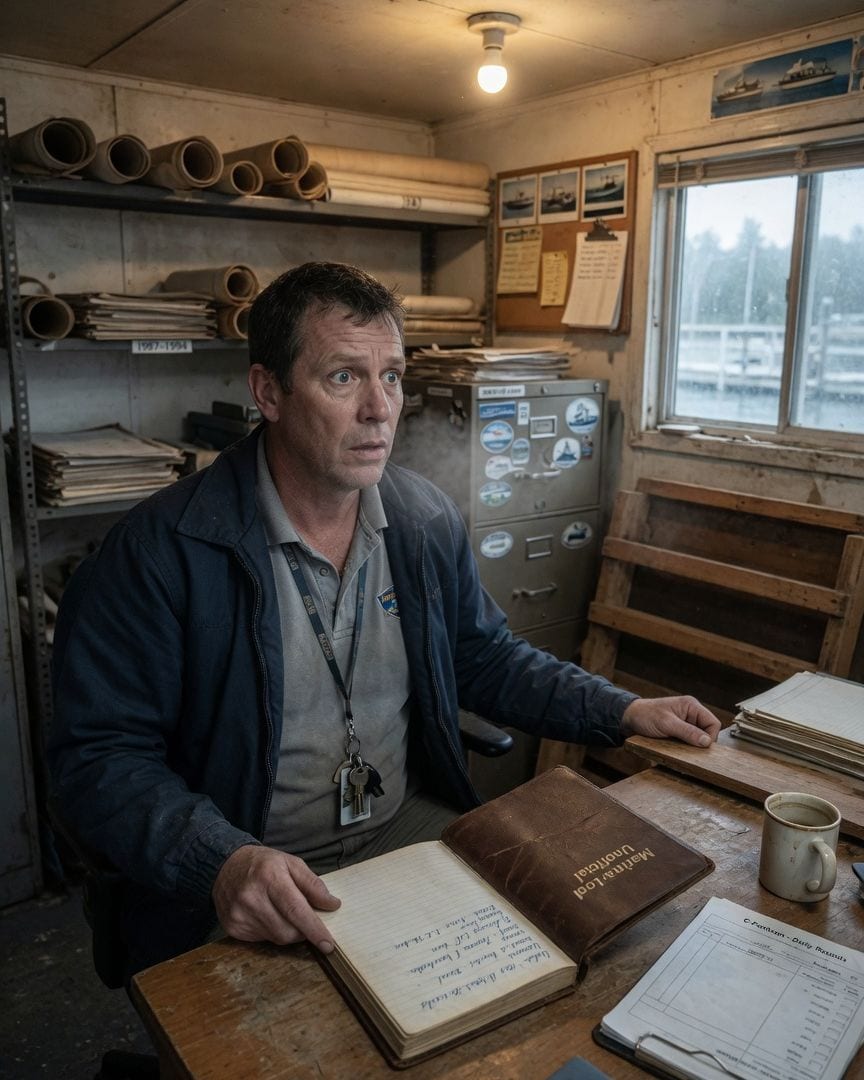
My C-Pontoon goes an extra thirty feet to Berth 61, with a sleek, dark yacht I've never seen. It's drawing power, but doesn't exist on any records.
As harbormaster, my morning rounds are always routine, checking the sixty berths on our C-Pontoon. But one chilly morning, beyond the last numbered post, C-60, I found the pontoon inexplicably extended by another thirty feet. It ended in a new numbered post: Berth 61, a physical fact that simply could not exist.
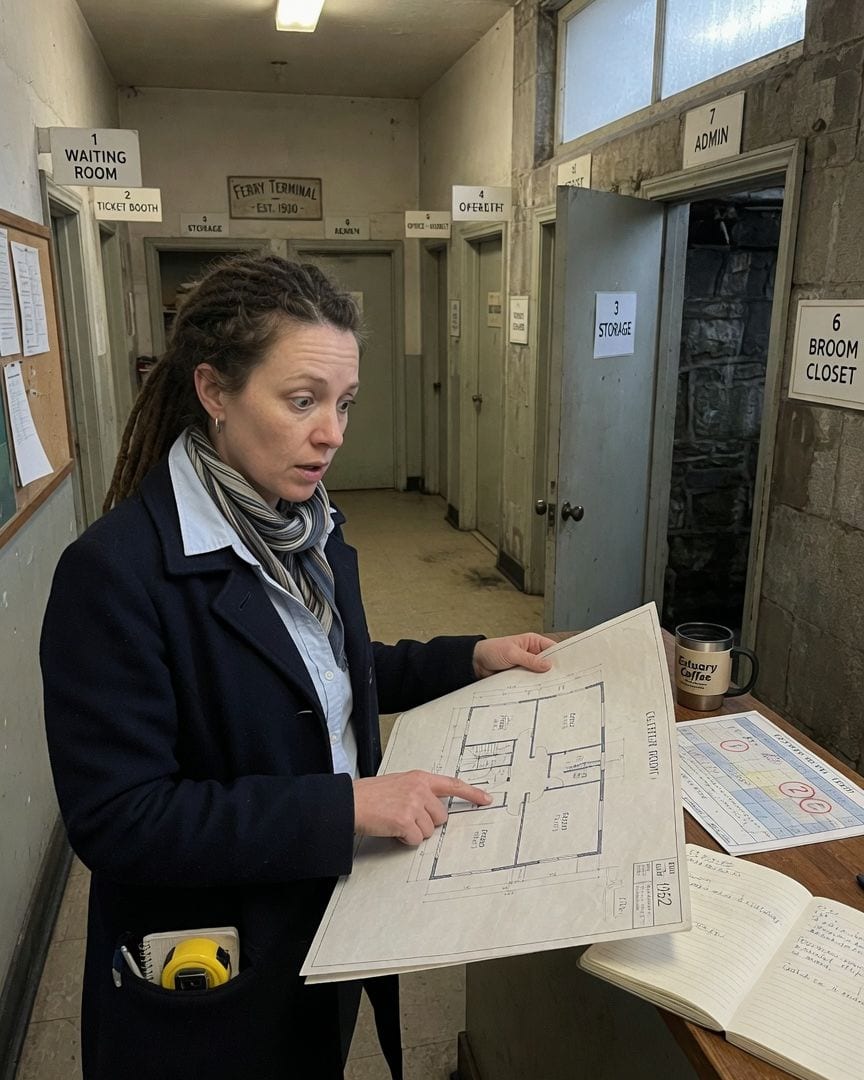
Our ferry returned to the same slipway three times yesterday, the town quay dissolving to our village shore. The crossing was never made.
After our ferry inexplicably kept returning to shore, I investigated the old office building. Its architectural plans clearly showed six rooms, but when I walked the hallway, I found a seventh door. That extra room was undeniably there, an impossible presence.
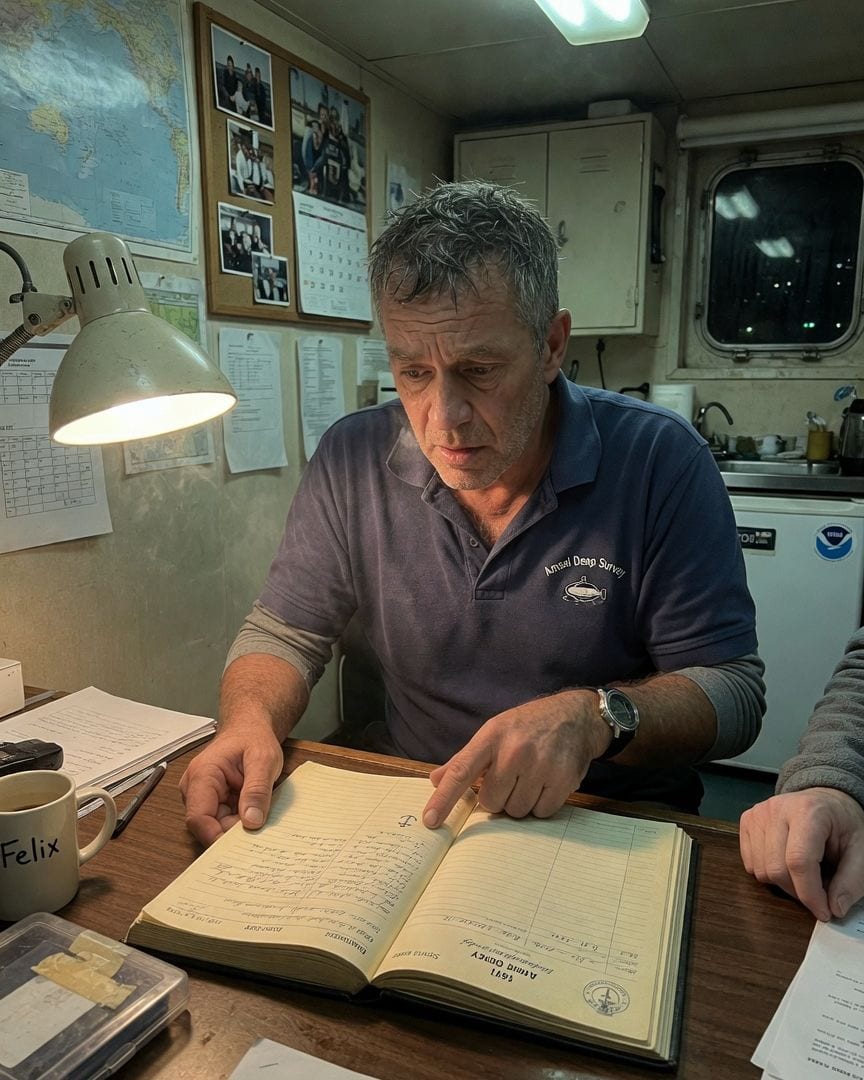
On his final deep-sea survey, a submersible pilot watches a 32-year-old Cold War wreck's rudder shift two degrees.
Deep-sea surveyor Hugo Amsel embarked on his final major dive, anticipating a quiet retirement after decades exploring the crushing pressures of the deep. His submersible's lights cut through the murky green, revealing the *Wynn Portal*, a sealer vanished in 1991, eerily preserved with unnervingly clear windows, free of any marine growth. Then, the inexplicable: the wreck's rudder angle indicator, softly lit, twitched two degrees further to starboard. Later, inside the wheelhouse, Hugo found the ship's official logbook, its final entry dated three days *after* the vessel's recorded disappearance, hundreds of miles north. How could a ship vanish, only to log a journey days later, from a place it never reached?
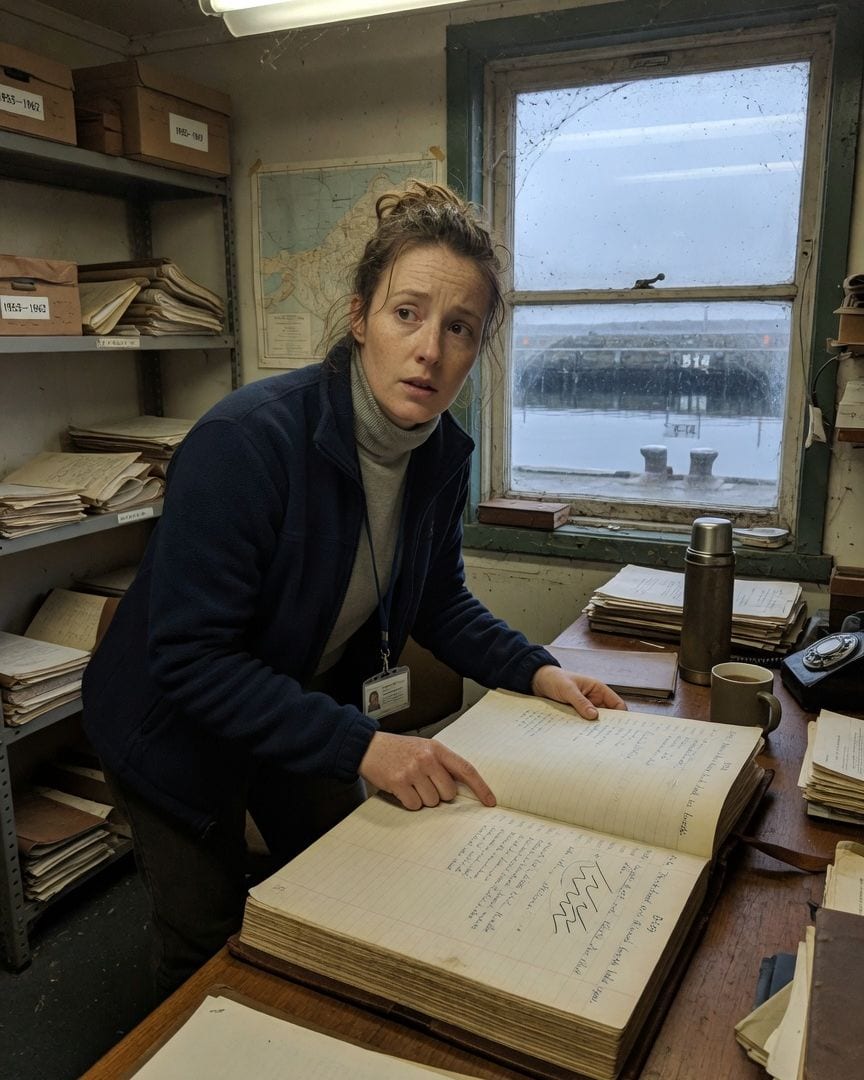
My harbour ledger shows Berth 14 let to a trawler every few years, but it's always empty. Each entry reads 'not returned to sea, berth held open'.
My job as Harbour Master's Assistant is managing the berth ledger, tracking every vessel. But Berth 14 holds a strange paradox: my book says it's let, yet it's always empty. Each entry for that berth closes with the same cryptic note – 'not returned to sea, berth held open' – a pattern stretching back to 1955.
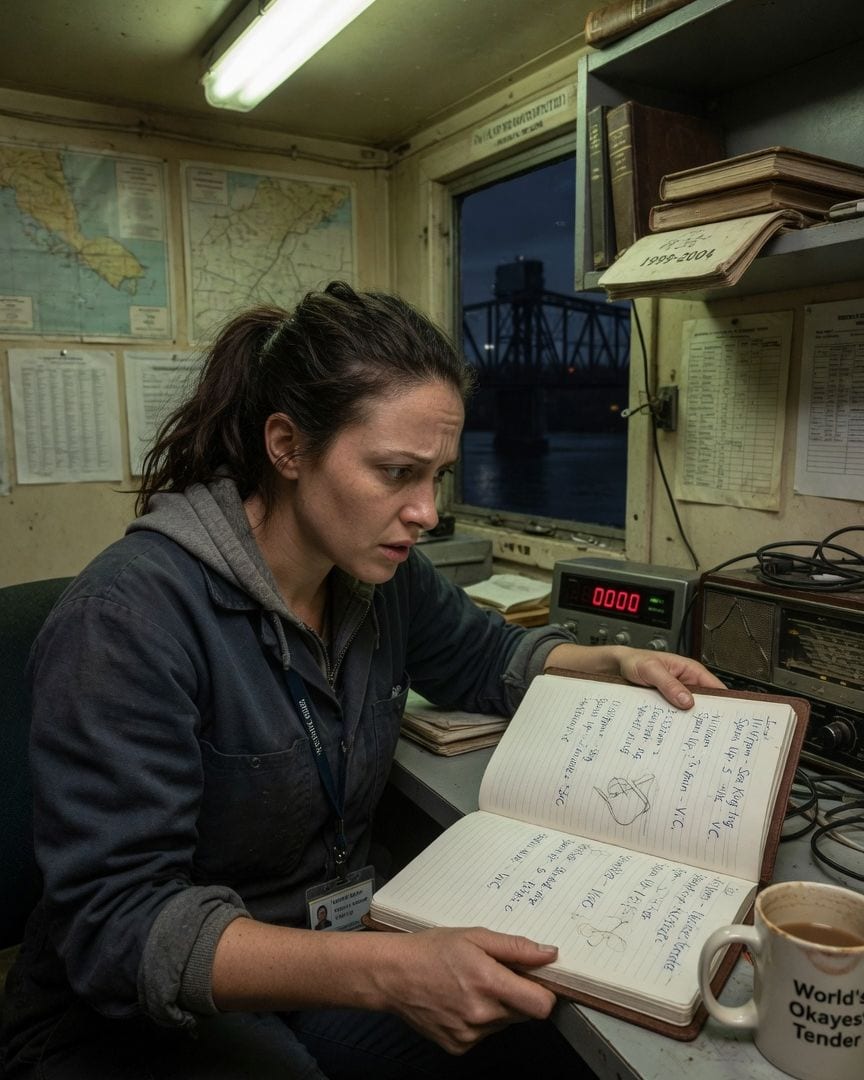
My drawbridge log shows a 2:33am lift I didn't make. The span counter never moved.
As a drawbridge tender, my midnight to dawn shift is usually quiet, a routine of monitoring traffic and logging lifts. But tonight, my own logbook shows an impossible entry for a bridge lift I have no memory of making. My initials and handwriting are there, yet the span counter above my panel reads a steady zero. No boat called, no span ever went up.
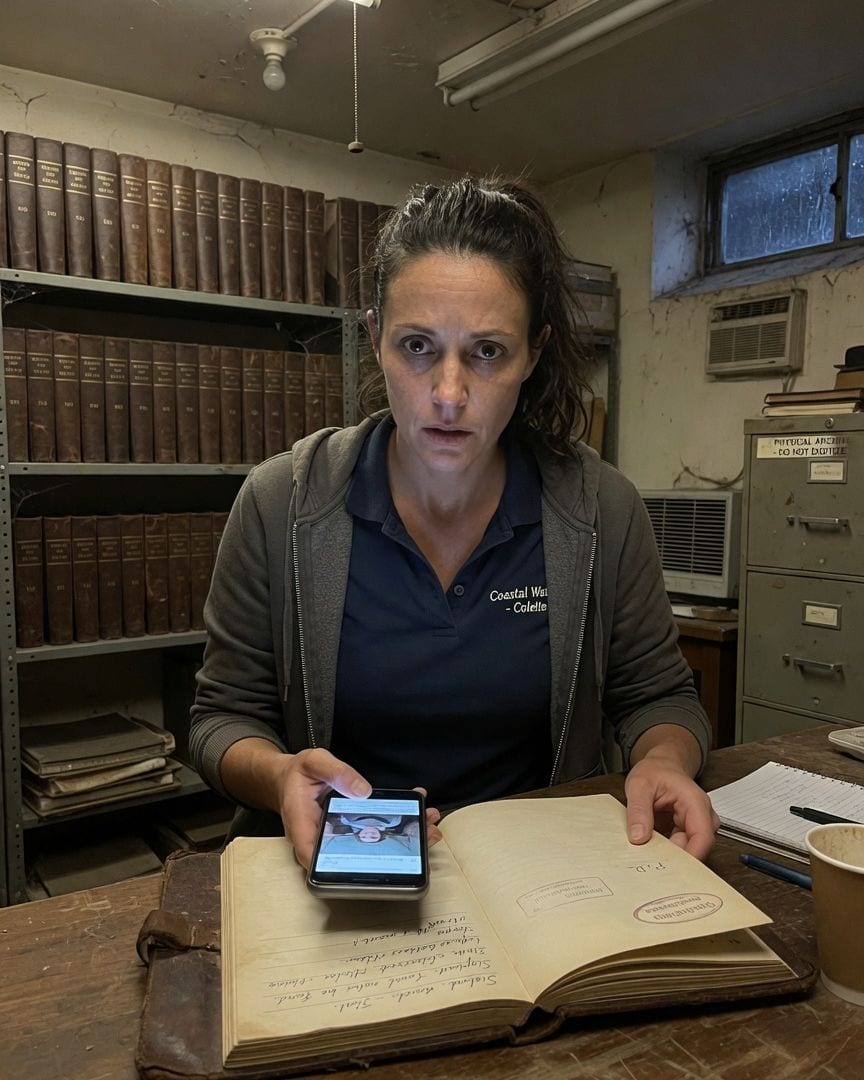
My coastguard log noted Sighting 9 again tonight, a light where no vessel showed. The old logs carry Sighting 9 off Skerry Point at 3:14am every tenth year since 1954, always 'nothing found,' always 'send no boat.'
On my watchtower night shift, the radar screen glowed green and the ocean was quiet. Then, a familiar light appeared off Skerry Point, exactly on cue, just as it had every tenth year for decades. But digging deeper, I found a hidden stamp in an old logbook: 'Operation Skerry. Status: Complete.' It left me with a chilling sense of finality.