My pier's ballroom register books a new dance for Saturday, electricity meter running, but those lights are never on.
The salty air was a balm after the city, and the caretaker's cottage at the pier’s base felt like a fresh start.
Scott Hayes, the man I was replacing, was a quiet type, but his parting words had lodged themselves in my head. "Never, ever switch on the end pavilion's lights, son. That's the one rule."
I’d nodded, figuring it was just an old man’s eccentricity about a derelict section of the pier. Most of it was mothballed, anyway, relic of some forgotten era.
But then, the first week, I’d noticed the meter. The end pavilion's electricity meter, tucked away in a dusty cabinet near the main junction box, was advancing every single night.
Not a lot, just a slow, steady click, click, click, like something was drawing power. The main breaker for that section was always off, though. I’d checked it multiple times, flicking the heavy switch, testing the old wiring. Nothing.
No lights came on, no sounds from the pavilion. And I certainly hadn't touched the actual light switch inside. It felt like a low, internal hum, not a fault in the wiring, but something deliberate, unseen.
Curious, and increasingly unnerved, I’d finally gone into the pavilion itself. The heavy iron door groaned on its hinges. It was dark, cobwebbed, and smelled of salt, rot, and something else – something faintly sweet, like forgotten potpourri.
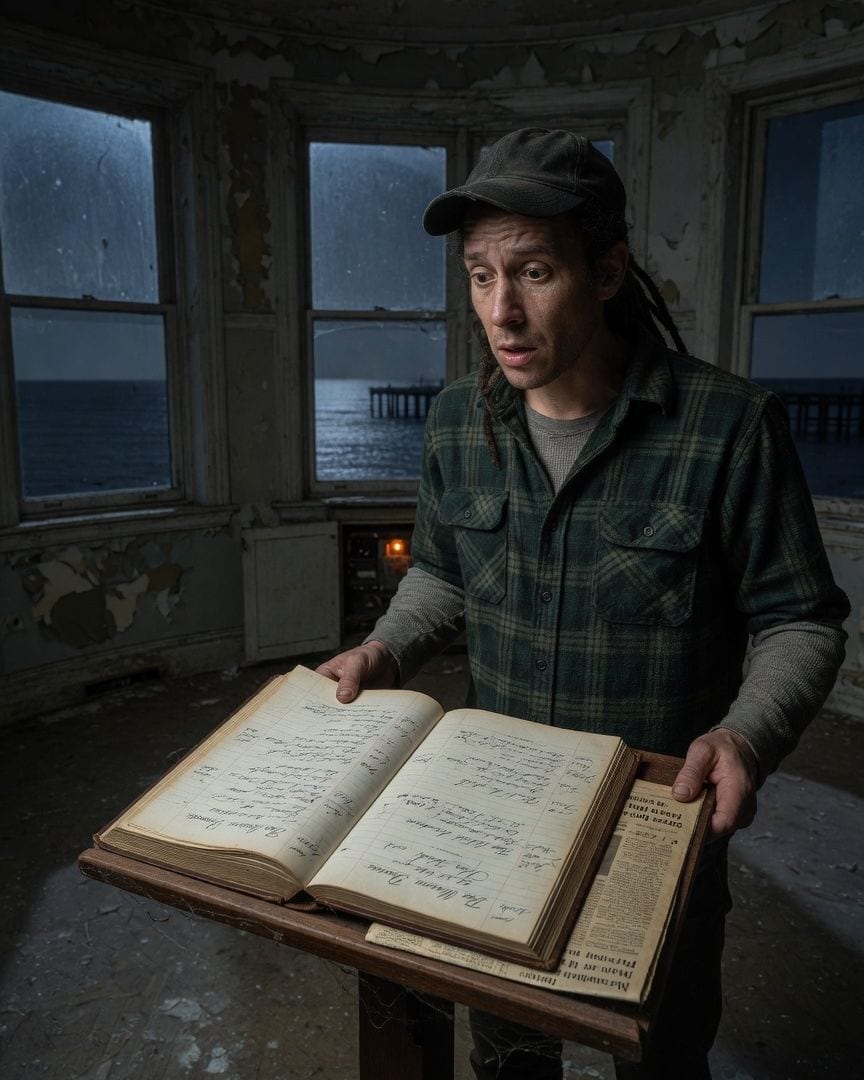
But it wasn't entirely empty. In what must have been an old ballroom, a wide, circular room with tall, grimy windows looking out over the water, stood a small, antique podium. And on it, a heavy, leather-bound ledger lay open.
The 'Ballroom Dance Register'.
I flipped through a few pages. The paper was thick, yellowed, and the entries were written in an elegant, looping script.
And on the page for this very week, for the coming Saturday, was a neatly penned entry: 'The Moonlit Waltz'. No name, just the dance. I’d stared at it, the advancing meter clicking faintly in my mind.
Who was booking a dance in a dark, defunct ballroom, and how was it drawing power without any lights actually being on? It didn't make a lick of sense.
I tried to rationalize it. A prank, maybe. Some local kids messing with the new guy. Or a faulty meter, a ghost reading, a trick of the old wiring that Scott hadn't mentioned.
But the 'Moonlit Waltz' entry nagged at me. I went back to the register the next day, in full daylight, the salt spray misting through the broken windows. I carefully flipped through the thick, yellowed pages.
The entries weren't daily, or even weekly. They were sporadic, always for a Saturday, usually a few months apart, sometimes a year or more. The pattern was unsettlingly precise, like a slow, deliberate heartbeat, ticking off dates across decades.
Each entry detailed a 'dance' – 'The Mariner's Jig', 'The Widow's Lament', 'The Fisherman's Reel', each name evoking the pier's history, the town's lifeblood.
And then, about halfway through the book, I saw it. Beneath 'The Harvest Ball', dated 1987, was a name: 'Marcus Underwood'. I remembered Marcus.
Everyone in town knew the story of Marcus, the young fisherman who'd vanished without a trace from his boat, decades ago. The police had found his empty skiff, adrift, but no body, no sign. Just… gone.
A shiver traced its way down my spine. Coincidence, I told myself, a grim local joke that someone had decided to write down.
I kept looking. Page after page of elegant script. And then another name. 'Florence Radcliffe', from a 'Starfall Gavotte' entry in 1965.
Florence, the quiet librarian, who'd supposedly left town suddenly for family, everyone said, but whose house had sat empty for years afterward, never sold, never rented. Just… vacant.
The town had a way of not talking about certain things, of quietly accepting absences, like they were just part of the weather. The ordinary explanation was failing, leaving a cold, hard knot of dread in my gut.
These weren't just names in an old ledger; they were echoes of the disappeared, tied to dates that felt too specific, too… intentional.
The internet was no help for disappearances that old, but the town's small library had a local history section. I spent hours, poring over microfiche, sifting through brittle old town gazettes.
Finally, tucked into a brittle 1987 edition, a small article, barely a paragraph, almost an afterthought: 'Local Fisherman Marcus Underwood Presumed Lost at Sea.' The date matched the 'Harvest Ball' entry exactly. July 18, 1987.
My hands trembled as I carefully laid the clipping on the pavilion's podium, next to the open register.
The name 'Marcus Underwood' on the faded newsprint stared up at its counterpart in the elegant script of the register, both tied to the same impossible date, a chilling testament to a secret I was just beginning to touch.
I tried calling Scott Hayes, the former caretaker. His voice was gruff, distant, laced with an irritation I hadn’t heard before. "Some things are best left alone, Ethan. I told you the rule for a reason."
He hung up before I could press him, before I could even mention the register or the names. His evasiveness, his sudden reluctance to talk, was a new kind of clue.
My next stop was the town archives, a dusty, quiet room behind the municipal building. It smelled of old paper and dust motes dancing in the sunbeams.
Janet Romano, the town archivist, was a stern woman with spectacles perched on her nose, surrounded by stacks of ledgers and maps. I approached her carefully, asking about old local disappearances, specifically Marcus Underwood and Florence Radcliffe.
She eyed me with suspicion, then a flicker of something else – recognition? – when I mentioned the pier. I explained my job, the meter, and then, hesitantly, the register.
To my surprise, she didn't dismiss me. Instead, she produced a series of old census records, property deeds, and even more local newspapers. As I cross-referenced names and dates, a horrifying consistency emerged.
Not every missing person, but a distinct subset. Always on a Saturday. Always followed by a quiet, almost immediate erasure from local memory, a town-wide agreement not to speak of them.
"Genevieve Calloway's cousin, Tessa Underwood, from 1952," she murmured, tracing a finger down a census page. "Sean Ford, from 1971. Zoe Granger, 1999." Each name, each date, a perfect mirror to an entry in that ballroom register.
The coincidences piled up, becoming a crushing weight of evidence. It wasn't just a story; it was a chronicle. The unease transformed into a cold, specific dread. The pier wasn't just old; it was… active. It was doing something.
My digging didn't go unnoticed. I started feeling eyes on me. A dark sedan I didn't recognize, parked near the pier entrance for hours, its tinted windows opaque.
A shadow at the edge of the woods behind my cottage, slipping away when I turned my head too quickly. It felt like the whole town had decided to watch me.
One afternoon, I was walking past the old fish market when Genevieve Calloway, the town elder whose cousin I’d found in the register, stepped out of a doorway. Her eyes, ancient and knowing, fixed on mine.
Her face was a network of wrinkles, like a dry riverbed. "The pier keeps its own secrets, boy," she rasped, her voice like dry leaves skittering across pavement. "And it doesn't like them disturbed.
Some things are best left undisturbed, for everyone's sake." Her words weren't a threat, but a warning, heavy with resignation, a weary acceptance that chilled me to the bone.
That night, returning to the pier, I felt a prickle on the back of my neck. A sense of wrongness, a cold certainty.
I distinctly remembered locking the end pavilion's heavy iron door, double-checking the padlock, giving it a good tug. But now, it was slightly ajar, just enough to reveal a sliver of inky darkness within.
The padlock dangled, unbroken, but the latch was loose. My heart hammered against my ribs, a frantic bird. Had someone followed me? Had they been inside? Or was it… something else?
I pushed the door open slowly, the groan echoing in the sudden silence. A cold draft, tasting of deep water and something metallic, washed over me. The register was still on the podium, open to the 'Moonlit Waltz' entry.
Nothing seemed disturbed, but the air was thick, heavy, as if something immense had just left, or was still there, unseen, holding its breath. The dread was no longer abstract; it was personal, breathing down my neck.
I went straight to Janet Romano the next morning, the open pavilion door burning in my mind. "They know, Janet. Someone knows I'm looking. Genevieve Calloway warned me. The pavilion door was open."
I laid out all my findings on her dusty desk: the register, the newspaper clippings, the census data. The pattern was undeniable, a mosaic of disappearances. "These aren't just missing people, are they? These are… sacrifices. And the town knows."
Janet's composure finally cracked. Her hands, usually so steady as they shuffled ancient papers, trembled as she adjusted her glasses. "It's not a sacrifice, Ethan. Not in the way you think." Her voice was barely a whisper, thin and reedy.
"It's… an arrangement. The pier… it's a place where things come through. From the water. It needs… sustenance." She explained, haltingly, that for generations, the town had lived with 'the Dancer'. It wasn't malicious, not exactly. It simply… was.
An ancient, hungry presence. And it needed to 'dance'.
"The rule, the lights… it's to keep it contained. To keep it from taking indiscriminately. If you don't turn on the lights, it stays… quiet. It takes one, on its cycle, and leaves the rest of us alone.
The register isn't a list of victims, Ethan. It's a record of the agreement. Of the… partners." My mind reeled.
The quiet acceptance, the evasiveness, the way the town simply moved on after a disappearance – it all clicked into place with horrifying clarity.
They weren't protecting themselves from it; they were protecting themselves by it, by feeding it, by maintaining a terrible, unspoken contract with something from the deep.
"And the meter?" I asked, my voice hoarse, barely my own. "Why is it always running?"
Janet looked at me, her eyes hollow. "It's always there, Ethan. Always active. Always consuming. The lights just… make it visible. Make the 'dance' clear. And that's what we must never see."
The horror wasn't in some fanged monster, but in the town's cold, rational complicity. Their grim, quiet bargain.
Janet pushed herself away from her desk, walking to an old, ornate grandfather clock in the corner of her office. Its pendulum swung with a steady, hypnotic rhythm, filling the silence.
With a click, she opened a hidden panel on its side, revealing a narrow, deep compartment, built seamlessly into the clock's polished wood.
From within, she pulled out a heavy, leather-bound ledger, its covers far more aged and worn than the pier’s register, the leather almost black with time. It was identical in design, though, clearly an earlier version, perhaps the original.
Her hands shook violently as she laid it on the desk and slowly, agonizingly, turned to the very last page. My breath caught in my throat. It was laid out exactly like the other register. A date, a 'dance'.
And then, at the bottom, under the heading 'Next Dance', was today’s date. And beneath it, scrawled in an elegant, looping script that was eerily familiar, was a name. My name. Ethan Maddox.
The ink, a rich, dark black, glistened faintly under the archive light, still wet, still fresh.
Janet collapsed into her chair, burying her face in her hands, her shoulders shaking. "It's the cycle, Ethan. You disturbed it. You saw too much, asked too many questions. When you break the rule, you… become part of it."
She explained that 'the Dancer' wasn't just taking people; it was seeking a 'host', a temporary vessel to manifest more fully, to 'dance' in the world for a brief period before retreating back into the depths.
The town had learned, generations ago, that by keeping the pier dark, by meticulously recording the 'dances' in the ledger, they could ensure the entity took only one, on its schedule, and left the rest of the community unharmed.
It was a terrible, cold bargain, a carefully managed tribute. Each 'partner' wasn't a victim in the traditional sense, but a chosen participant, whose life force or consciousness was absorbed to fuel the Dancer's brief, cyclical presence.
My breaking of the 'no lights' rule, my relentless investigation, had not only revealed the truth but had also, inadvertently, identified me as the next suitable 'partner'.
The pattern wasn't just a record of the past; it was a future schedule, and I was now the next appointment.
Every clue clicked into place with sickening precision: the advancing meter was the Dancer's constant, hungry presence, drawing energy even in its dormant state; the 'dances' were the moments of absorption, the terrifying transaction; the names were the vessels, the chosen few.
And the town’s quiet complicity was their desperate, pragmatic attempt to survive, to keep the horror at bay by feeding it a curated few.
I wasn't just an observer anymore; I was now part of the very pattern I had uncovered.
Panic seized me, a cold, visceral terror that left my mouth tasting of bile. I stumbled out of the archives, my own name echoing in my ears, scrawled in that elegant, damning script.
I had to get out, leave this cursed town.
I raced to my truck, fumbling with the keys, but the main road out was inexplicably blocked by an 'emergency repair' crew, their faces impassive, their orange vests unnaturally bright in the afternoon sun.
I tried a back road, the winding, unpaved track through the salt marshes, but a familiar old sedan, Genevieve Calloway's, was parked casually across the narrow lane, blocking passage.
She sat behind the wheel, watching me, her ancient eyes holding that same knowing resignation. The town wasn't just letting it happen; they were ensuring it. They were herding me.
Realization dawned, cold and sharp: there was no escape. I was being guided, inexorably, back to the pier, back to the pavilion. My truck felt like a cage, the air thick and heavy.
I abandoned it, my legs moving without conscious thought, carrying me back towards the water.
The pier was brightly lit now, not by its own lights, but by the full moon, huge and white, casting an eerie glow over the water, illuminating the path like a stage.
The end pavilion stood dark, a gaping maw at the edge of the world, blacker than the night around it.
I found myself walking towards it, my legs heavy, as if someone else was guiding them, each step a further descent into something I could not name.
Inside, the meter was screaming now, a frantic whine, a high-pitched hum that vibrated through the floorboards. The register lay open to my name, illuminated by the moon through the grime-streaked windows.
I could hear a soft, rhythmic thrumming from beneath the floorboards, a cadence that was both water and something else entirely, something vast and ancient shifting.
Through the grimy ballroom windows, reflected in the dark, still water beneath the pier, I saw a faint, undulating movement, a vast, indistinct shape that seemed to stretch into the depths, dissolving into shadow.
It wasn't a monster with teeth and claws, but something ancient, immense, and hungry. As the thrumming intensified, a cold, wet tendril of air brushed my cheek, carrying the scent of salt and decay.
I looked at my name in the register, then back at the water, and understood. I had been inside the pattern from the moment I took the job. I was the Moonlit Waltz.
The pier returned to its usual quiet hum. The end pavilion's electricity meter fell silent, its needle resting at zero. The ballroom register lay closed on its podium, the elegant script of the last entry now dry.
The town, as it always did, resumed its calm, unbothered rhythm, the 'emergency repairs' on the roads swiftly concluded. Another name had been quietly absorbed into the town's unspoken history, another cycle completed, the balance maintained.
A few weeks later, Scott Hayes, the former caretaker, was seen walking the length of the pier, his gaze lingering on the end pavilion. He paused, a faint, knowing smile playing on his lips, before turning back towards the shore.
The new caretaker had settled in well.
The pier always finds a new caretaker.
If this one got to you
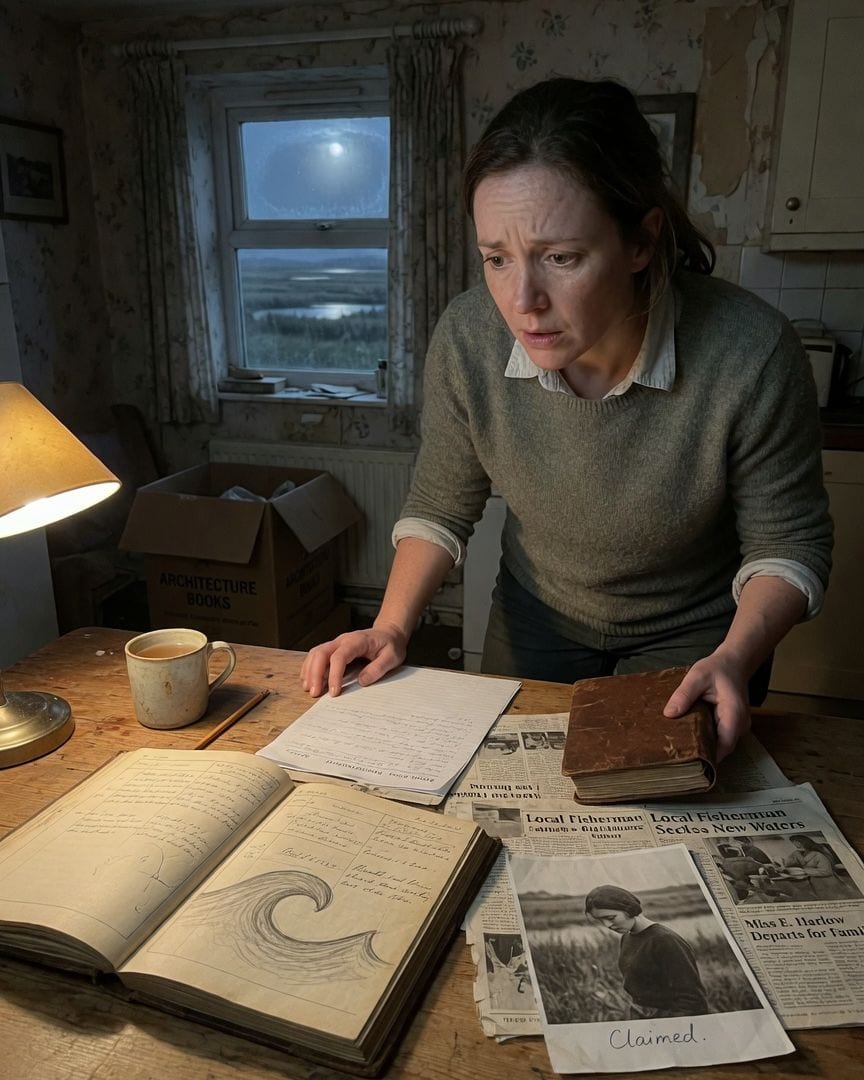
The light crosses the estuary on six specific nights a year. My ferryman called it marsh gas, but the coastguard's log entries for it stop abruptly and resume in a new hand.
I moved to Blackwater Bay for a fresh start, but the quiet marsh holds a secret. One night, I saw a strange light gliding across the mudflats, which the ferryman dismissed as 'marsh gas.' Later, an old coastguard log revealed entries for this 'estuary light' abruptly stop mid-sentence, then resume in a different, shaky hand.
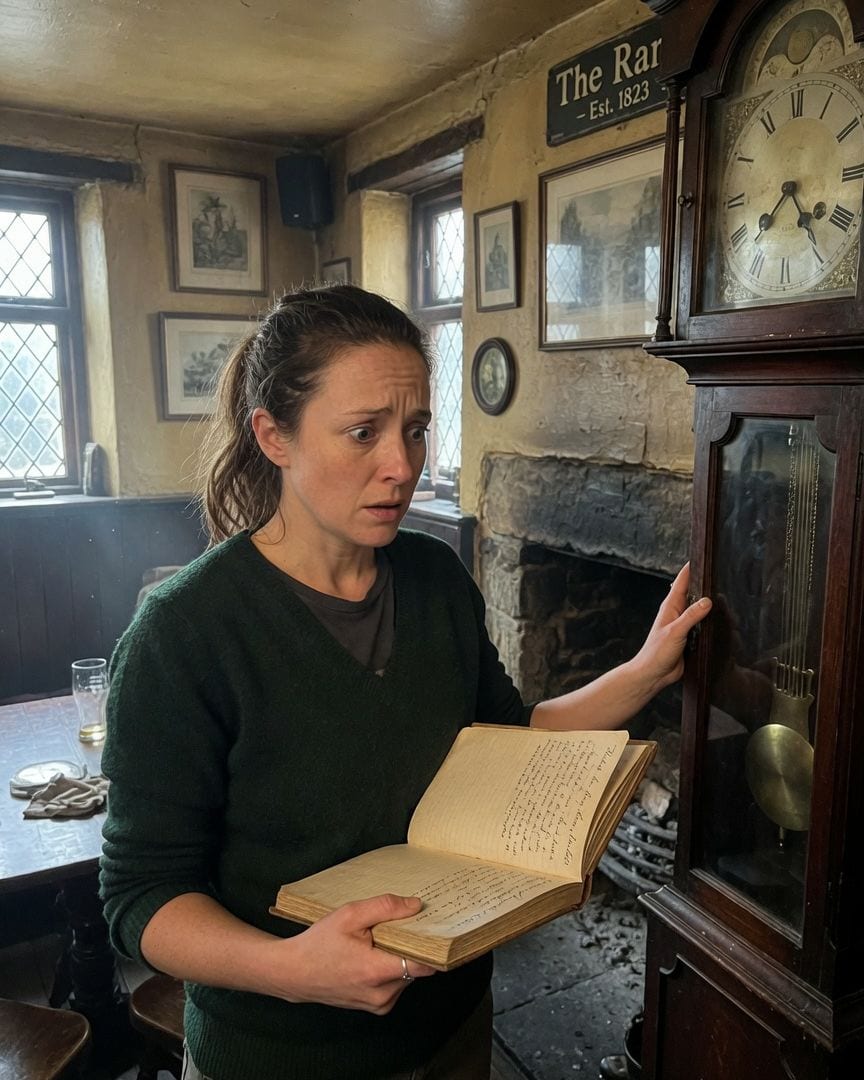
My pub window holds a vanished landlord's face in an old photo, staring out, weeks after he supposedly left the village.
As the new landlord of The Ram, I was getting used to the pub's two-century-old clock when I accidentally stopped its pendulum. The next morning, checking the cellar book, I found an entry dated yesterday. In an archaic, looping script, it simply read: 'Thank you for winding it before the house was empty again.' I was the only person in the locked pub all night.
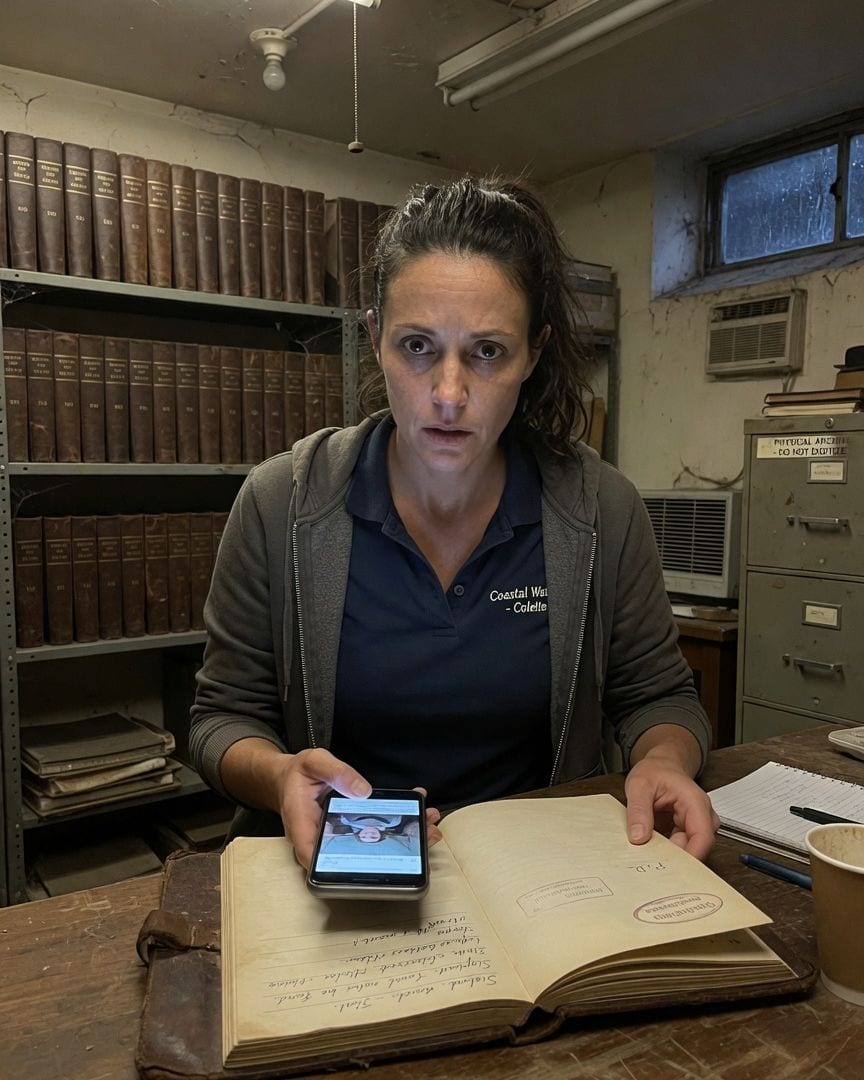
My coastguard log noted Sighting 9 again tonight, a light where no vessel showed. The old logs carry Sighting 9 off Skerry Point at 3:14am every tenth year since 1954, always 'nothing found,' always 'send no boat.'
On my watchtower night shift, the radar screen glowed green and the ocean was quiet. Then, a familiar light appeared off Skerry Point, exactly on cue, just as it had every tenth year for decades. But digging deeper, I found a hidden stamp in an old logbook: 'Operation Skerry. Status: Complete.' It left me with a chilling sense of finality.
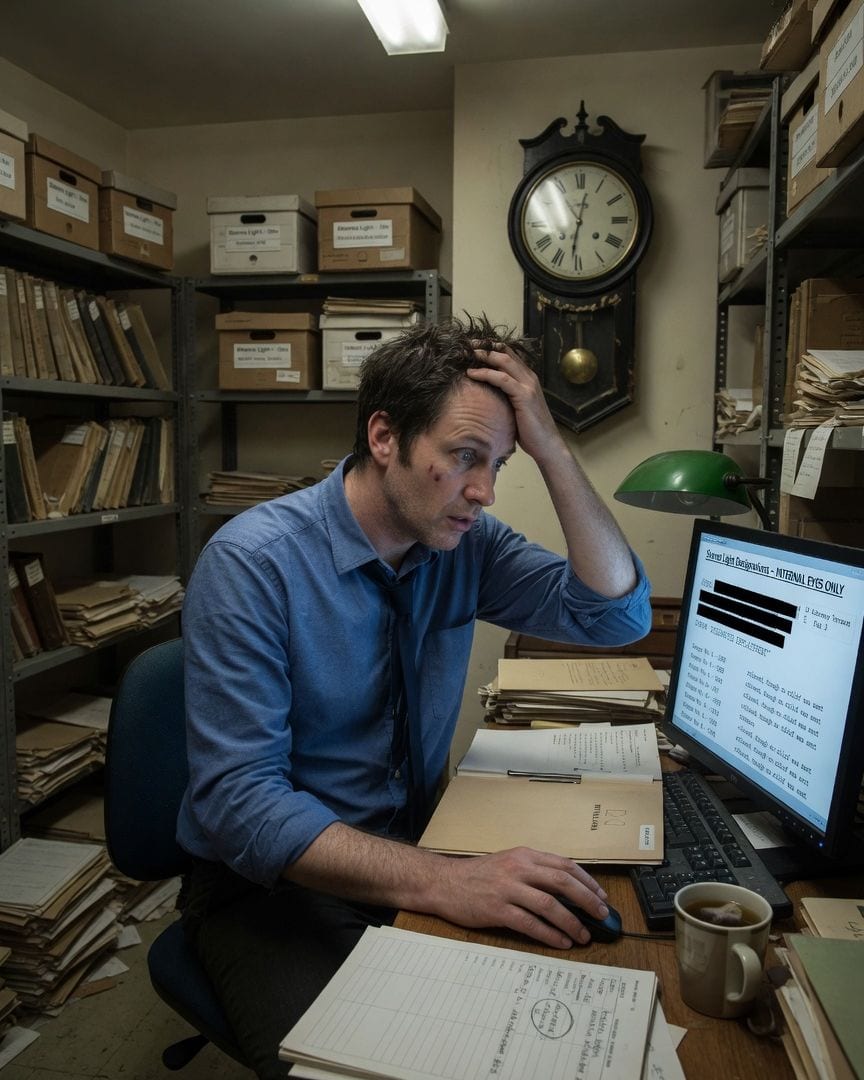
I found my street address in a century-old lighthouse file, printed decades before I lived there.
As a maritime archivist, my world revolves around forgotten lives and dusty ledgers. But the Skerne Light files broke that quiet rhythm, revealing a chilling pattern: 'Keeper number 6' relieved, though no relief was sent, repeating for decades. Now, an internal document with a strange code has led me to a redacted entry, revealing my own street address, decades before I ever lived there.
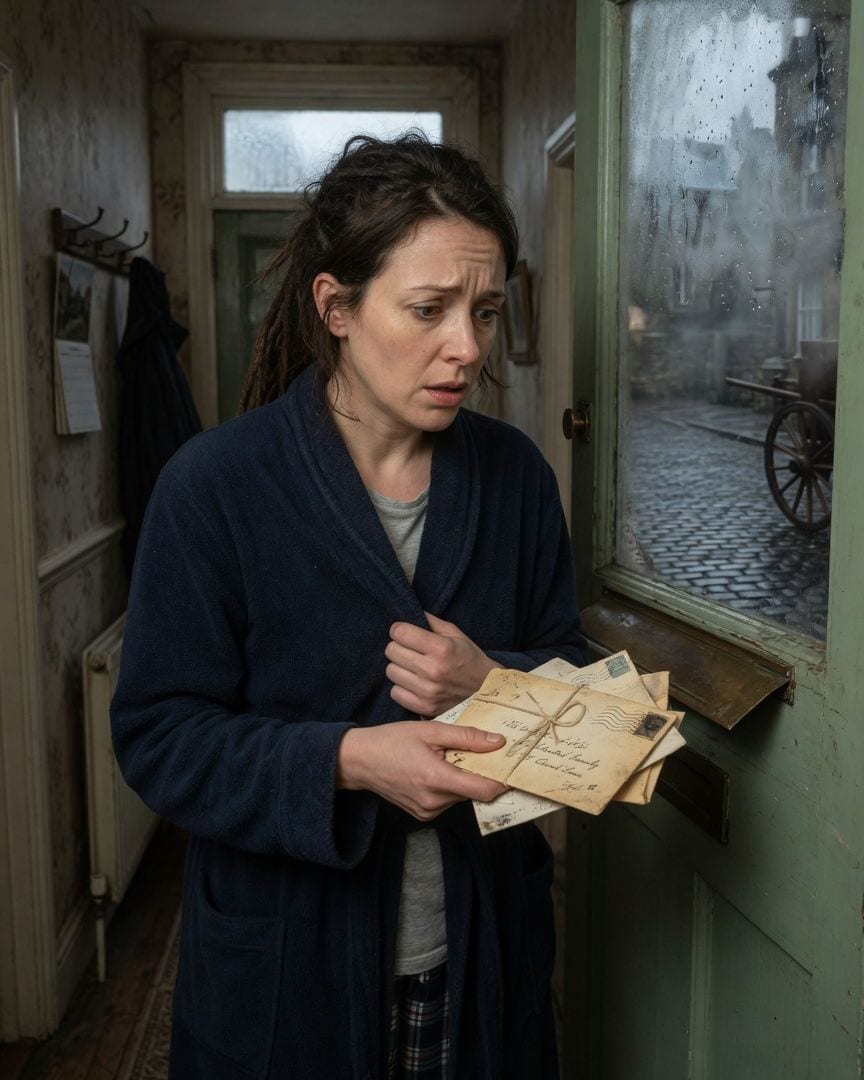
Seventy years ago, a hidden journal recorded my door opening to the wrong street and receiving Lockwood post.
I'd only recently moved into my inherited house, a quiet place on the edge of town. One grey morning, a distinct clatter from the front door's post flap caught my attention. Reaching down, I expected my gravel path, but instead, the flap showed a dark, cobbled street that wasn't mine. A bundle of warm, old letters, addressed to 'The Lockwood Family,' slid through, before the vision flickered and was gone.
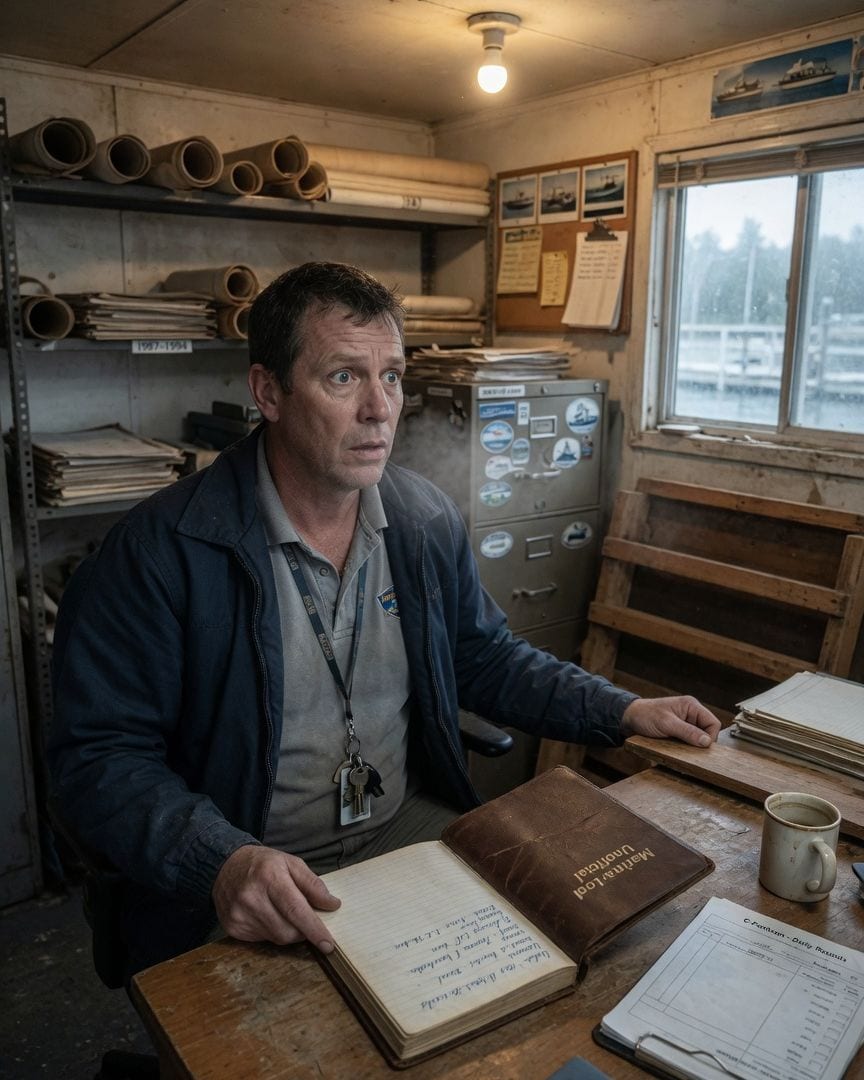
My C-Pontoon goes an extra thirty feet to Berth 61, with a sleek, dark yacht I've never seen. It's drawing power, but doesn't exist on any records.
As harbormaster, my morning rounds are always routine, checking the sixty berths on our C-Pontoon. But one chilly morning, beyond the last numbered post, C-60, I found the pontoon inexplicably extended by another thirty feet. It ended in a new numbered post: Berth 61, a physical fact that simply could not exist.