My pub window holds a vanished landlord's face in an old photo, staring out, weeks after he supposedly left the village.
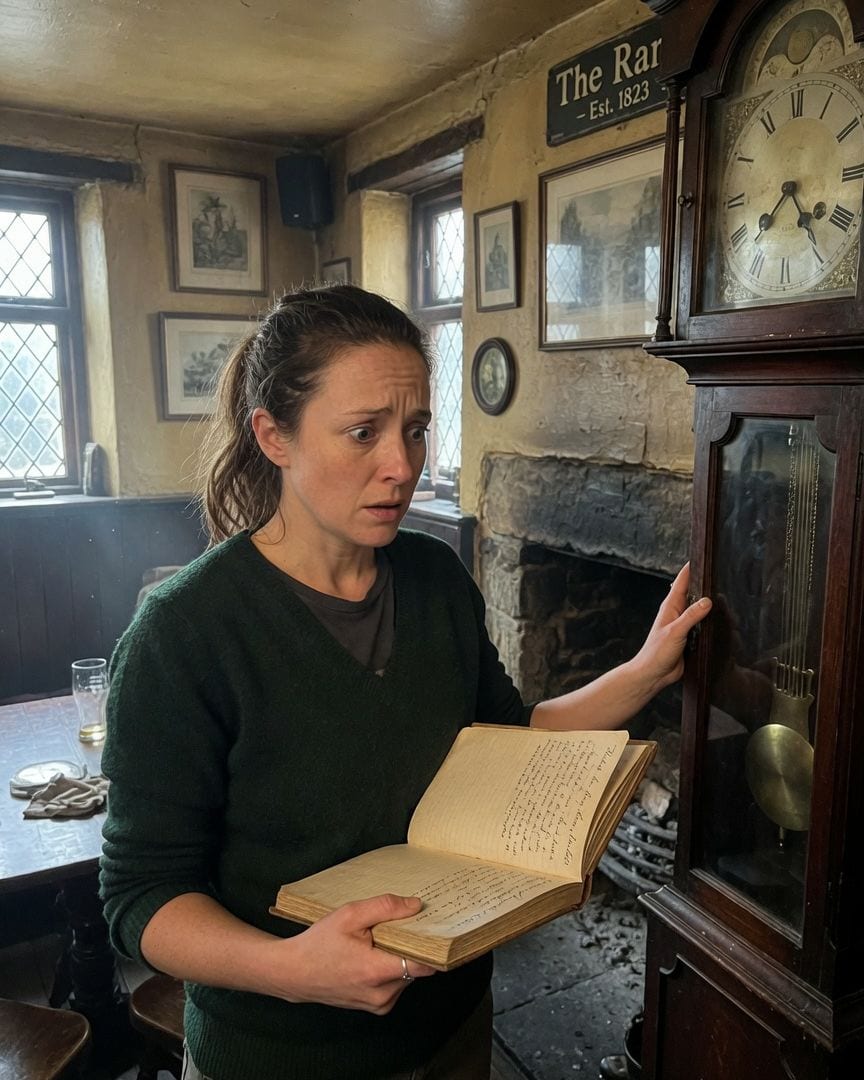
The Ram has stood here for two centuries, maybe more, and the clock in the snug is just as old.
My first week as the new landlord, I spent hours just trying to feel out the place, to make it mine. You know, clearing out the cobwebs, literal and otherwise.
George Granger, the old landlord, he’d been so particular about the clock. “One job, passed down,” he’d grumbled on my first night, his gaze fixed on the mahogany case. “It must never be allowed to stop.”
He’d made it sound like an arcane ritual, not just a timepiece.
I was dusting the snug, Friday afternoon, sun slanting through the leaded windows, making motes dance in the air. My hand slipped. It was stupid, careless. The polishing cloth snagged on the heavy brass pendulum.
It clanged, a sharp, metallic note that echoed through the empty room, then swung wide, hesitated, and simply… stopped. The silence that followed felt enormous, pressing. I stared at the still pendulum, the hands frozen at 3:14.
George’s warning rang in my ears, louder than the clang. I reached in, tried to give it a push, a little nudge to get it going. It just hung there, heavy and dead. I tried again, harder this time. Nothing.
The clock, for the first time in two hundred years, was stubbornly still. A chill snaked up my spine, though the pub itself, with its thick walls and ancient hearth, usually held a constant, almost internal warmth.
The next morning, the chill was still in the air. I went to the cellar book. George had shown me, with meticulous pride, how every landlord had recorded the clock’s winding, sometimes daily, sometimes weekly, for generations.
A ritual, he’d called it. I wanted to see when it had last been wound, just to get a handle on the pattern. I flipped to the current page. Yesterday’s date, clear as day.
Beneath it, in a neat, looping hand, a script I didn't recognize, ink faded but legible, an entry was already written. It simply read: 'Thank you for winding it before the house was empty again.'
I stared at the page, a prickle of unease turning to a cold, spreading dread. The handwriting wasn’t George’s. It wasn’t mine. It looked… old. Two centuries old, just like the clock. But it was on yesterday’s page.
I tried to rationalize it, of course. A prank, maybe. Some local tradition George hadn't mentioned, a practical joke on the new girl. But the pub had been empty last night, just me. The cellar was locked.
No one else had the key.
I called George, my voice tighter than I liked. “George, about the clock,” I started, trying to sound casual. “And the cellar book. There’s… an entry. From last night.”
He cleared his throat. “Ah, yes. Old habits, you know. Some of these villages, they have their… quirks.” His voice sounded strained, too smooth.
I pressed him, “The entry says, ‘Thank you for winding it before the house was empty again.’ And it’s not your hand.”
There was a pause, a beat too long. “Just… local colour, Iris. Don’t pay it any mind. The clock’s just a clock. Just keep it wound, eh? That’s the main thing.”
He changed the subject abruptly, asking about the ale order, his voice carefully neutral. I could almost picture him, his eyes avoiding mine, just like they had when he gave me that warning about the clock.
The phrase ‘empty again’ hung in the air between us, unspoken.
Unconvinced, I spent the next few hours in the quiet, empty pub, pouring over the cellar book’s dense, yellowed pages. Generations of neat entries, dates, names, little notes about weather or harvests. And then I found them.
Other entries, scattered throughout the centuries, always in that same archaic, looping script. Always following a gap in the winding log, a period where the clock had presumably stopped.
And each of these impossible ‘thank you’ entries was followed, within weeks, by a terse, formal record of a previous landlord’s ‘sudden departure’ from The Ram. No forwarding address, no explanation. Just gone.
One entry, precisely fifty years ago, caught my eye, a name I’d heard George mention once or twice as an old tale, always with a shiver. It read: 'Felix Russo.
Thank you for winding it before the house was empty again.'
The name Felix Russo lodged in my mind like a burr. Fifty years ago. He’d just vanished. I couldn't shake the image of that impossible entry. I needed more than George’s vague platitudes.
So, I walked down to the local library, a small, quiet place that smelled of old paper and dust motes. I asked the librarian for microfilmed newspaper archives from fifty years prior.
It was tedious work, the projector humming, static flickering across the screen as I scrolled through blurry headlines about local fêtes and council meetings.
I finally found a small, almost invisible notice, tucked away on an inside page. It reported that Felix Russo, landlord of The Ram, had ‘departed suddenly from the village’ with no further details. No obituary. No farewell party. Just… gone.
I was about to give up, convinced this was all I’d find, when something else caught my eye.
In a section covering a local summer fete from the same year, a few weeks after Russo’s reported departure, I saw a faded, grainy photograph. Villagers laughing, children playing around the Maypole on the village green.
And then, in the background, peering from the second-story window of The Ram, above the very snug where the clock now stood silent, was a figure.
I recognized him from a tiny portrait in the cellar book, a younger Felix Russo. But his face here, in the photograph, was pale. His eyes were wide and fixed, not on the fete below, not on the laughing children.
They were staring directly at the camera. A silent, desperate plea, as if he wasn't looking out at the world, but through the lens, trapped within the very building he was supposed to have left weeks ago.
Armed with the photograph, its unsettling image burned into my mind, I found myself walking towards the town archive, a squat stone building tucked behind the church.
It was a quiet, dust-filled room, smelling of parchment and something indefinable, like ancient paper turning to earth. Janet Hughes, the archivist, presided over it all.
She was a woman whose calm demeanor belied a pair of sharp, knowing eyes that seemed to take in everything and give nothing away.
I laid the newspaper, carefully folded to the photograph, on her desk. “I’m trying to find out more about the previous landlords of The Ram,” I began, trying to keep my voice even. “Specifically, Felix Russo.”
Janet barely glanced at the photograph. Her eyes, however, seemed to assess me, not the document. “Ah, Mr. Russo,” she said, her voice soft, almost a murmur. “A long time ago, that was.”
She was helpful, almost too much so, pulling out tenancy records, council minutes from the period. She pointed out changes in ownership, tax receipts, every detail meticulously logged.
But whenever I tried to bring the conversation back to ‘departures’ or the strange entries in the cellar book, her answers became smooth, almost practiced, like a well-worn path she’d walked a thousand times before.
She subtly steered me away, back to dates and property lines.
Under her watchful, unnerving gaze, I found more. More landlords, over the centuries, leaving 'suddenly'. Bridget Thornton, in the early 1900s. Donald Abbott, back in the 18th century – Abbott, like me, a distant relative maybe?
Each name a faint echo in the record, each coinciding with a gap in the clock’s winding log and a subsequent entry in that same, archaic hand. The pattern was unsettling, a chilling regularity.
Not random disappearances, but almost a cycle.
I felt Janet’s eyes on me from behind a stack of old ledgers, a faint, unreadable smile on her lips, as if she knew exactly what I was looking for, and exactly what I was finding.
The feeling of being watched intensified over the next few days. It wasn’t just Janet. The pub itself seemed to hold a new, quiet presence.
The ancient timbers of The Ram seemed to sigh at night, settling into a deeper silence than before. I found an anonymous, handwritten note slipped under my pub door one morning, tucked neatly under the brass plate.
It simply read: 'Some things are best left wound.' No signature, no return address. Just that stark, unsettling advice.
The villagers, once boisterous and friendly, now offered a new, quiet deference. Russell Mercer, a regular at The Ram since he was a boy, used to swap jokes with me.
Now, when I asked him about Felix Russo, or the clock, he’d shift uncomfortably. “Oh, that old thing,” he’d say, waving a dismissive hand. “Just an old folk tale, Iris. Something to keep the kids in line.”
His smile didn’t reach his eyes. It was a practiced ease, almost as if he were reciting a well-worn script, careful not to deviate.
Linda Harlow, the town clerk, usually a fount of local gossip, grew flustered and vague when I pressed her about the details of these 'sudden departures'. Their agreement was palpable, a silent wall of polite evasion, closing around me.
One evening, as I locked up, pulling the heavy oak door shut against the twilight, I saw Janet Hughes.
She was standing on the village green, near the old market cross, silhouetted against the last streaks of orange in the sky. She wasn’t walking, or waiting for someone. She was just standing there, watching The Ram. Watching me.
Janet didn’t wave or call out. She simply watched, a knowing look on her face. A look that was far too calm, far too expectant.
I couldn’t stand it anymore. The evasions, the whispers, the note, the feeling of eyes on me every time I turned around. The next morning, I walked straight back to the archive.
Janet was there, in her usual place, sifting through papers. The quiet solitude of the room felt almost oppressive.
I laid out everything on her desk: the impossibly dated entry from the cellar book, the chilling pattern of 'departures' over two centuries, the faded photograph of Felix Russo, his trapped eyes staring out.
Janet didn’t deny a thing. Her gaze, however, betrayed no surprise. Only a deep, weary understanding. She sighed, a sound like rustling old paper.
“The clock,” Janet began, her voice soft but firm, a low hum in the silent room, “is not merely a clock, Iris. It is a tally. A ward.”
I waited, my breath caught in my throat.
“For generations,” she continued, her eyes fixed on mine, unwavering, “this town has maintained it. When the clock stops, it… calls. It calls for a replacement, a ‘keeper’ to be taken. To pay the tally.”
She gestured vaguely to the pile of evidence I’d gathered. “The ‘empty again’ isn’t a departure, Iris. It’s a fulfillment. A payment. The entries in the book are the names of those who have ‘kept the tally’ for the town.”
My mind reeled. George. His evasiveness, his strained voice. It all clicked into place with a horrifying certainty. “George knew,” I whispered. “He knew what I had done.”
Janet nodded slowly. “He understood. He knew the clock had chosen you when you stopped it.” She paused, then added, her voice dropping, almost a confession, “The town, Iris, ensures the tally is paid. They always have.
It is to protect themselves from something far, far worse than losing one keeper.” The quiet of the archive seemed to press down, heavier than the dust.
Janet’s calm explanation chilled me to the bone. Every unexplained detail, every odd encounter, every forced smile from the villagers, snapped into brutal focus.
I thought of the old hand in the cellar book, the one that had written the impossible 'thank you' entry after I’d stopped the clock.
“The old hand,” I managed to choke out. “The one that wrote it. Who was that?”
Janet nodded again, her gaze unwavering. “That belonged to the last person who wound it before they were taken. Their final act of compliance, their last agreement to the town’s pact.”
She reached for the heavy cellar book, turning a page slowly, deliberately. Her finger, a long, slender digit, traced the blank space directly below the 'thank you' entry from the morning after I had stopped the clock.
The one in that ancient, looping script. The one that was dated yesterday.
“The tally,” Janet said, her voice barely above a whisper, her eyes fixed on mine, “is always completed.”
With a deliberate movement, she took an old, heavy, brass-tipped pen from a nearby pot on her desk. Its surface was worn smooth from generations of use. She placed it gently, almost reverently, into my trembling hand.
Its tip hovered over the blank line on the page, the empty space waiting. The silence in the archive was absolute, broken only by the frantic, echoing beat of my own heart.
My hand trembled, the heavy pen feeling impossibly cold, impossibly weighted. Janet’s voice, still unnervingly calm, filled the silence that thrummed between us. “The clock,” she explained, her gaze never leaving my face, “is a physical ward.
It keeps the Taker from claiming the entire village.”
“The Taker?” I breathed, the word feeling alien, ancient.
“A presence, a hunger,” she clarified, her voice devoid of emotion, “a force this town has managed for centuries. Each time the clock stops, the current keeper of The Ram is chosen. To pay the tally.
To sate it, for a time.” She indicated the pen in my hand. “The entry is their last act of compliance. Their final agreement to the town’s grim pact.
It’s a cycle that has protected this village for two hundred years.”
Janet shifted slightly, her eyes sweeping over the dusty shelves of the archive. “My family, Iris, we are the keepers of the knowledge. A role passed down through generations.
To ensure the clock is always wound, and the new keeper is informed of their duty.” She leaned forward, pointing to names further back in the cellar book. Not just Felix Russo, but others I’d only skimmed.
‘Bridget Thornton,’ I read. ‘Donald Abbott.’ My own surname. A distant relative. A lineage of sacrifice. All ‘keepers’ who had completed the tally.
My hand snapped back, the pen clattering against the ancient wood of the desk. “No,” I whispered, the word a raw, desperate thing. “I won’t. I can’t.”
Janet didn't raise her voice. She simply looked at me, her expression unyielding. “Refusal doesn’t stop the tally, Iris. It only delays it. And it makes it infinitely worse for the village.”
She paused, her eyes seeming to stare into a distant, terrible past. “If the tally isn’t paid… the crops fail. The animals sicken. People disappear, randomly, not just the designated keeper.
The Taker becomes indiscriminate, its hunger unleashed upon the whole community.”
I looked at the names in the book, then at the faded faces in the old photographs I’d found, at Felix Russo’s desperate eyes. The quiet desperation I now recognized in the villagers’ gazes, their too-smooth stories. They weren't malicious.
They were simply terrified. Making a terrible, necessary choice to protect their homes, their children. The ‘folk rule’ wasn't superstition. It was a desperate, generations-old warning. A profound sense of resignation, colder than any dread, washed over me.
I felt a chilling understanding of my new, inescapable role. My hand, which had fallen to my side, felt heavy, leaden. I picked up the pen again. My hand shook, but I forced it steady. I wrote my name.
'Iris Abbott.' Beneath the 'thank you' entry. Completing the tally.
I still run The Ram. The clock ticks steadily in the snug, a constant, heavy presence. Every night, before I lock up, I check the pendulum.
Every morning, I open the cellar book and make my own careful entry: date, time, ‘clock wound.’ The villagers greet me with a new, quiet deference now, a subtle shift in their eyes that I now understand.
They bring me small gifts – a freshly baked loaf, a jar of homemade jam, fresh flowers left on the bar. Almost as if ensuring I’m never truly alone. Or never have a chance to stop the clock again.
George Granger visits more often, sitting in his usual corner by the fire, offering silent support, a shared burden in his knowing gaze. He never mentions the clock.
I dust the clock every day. Its steady tick, like a slow, deliberate heartbeat, is a constant reminder.
Sometimes, late at night, when the pub is empty and quiet, and the only sound is the creaking of the old building, I trace the letters of my own name in the cellar book.
It’s written in my hand, but it feels foreign, as if someone else wrote it, a final, chilling acceptance. I wonder how many more ‘keepers’ will follow me. How many names will fill the pages after mine.
And if the Taker ever truly sleeps.
The Ram’s clock continues to keep time, its brass face gleaming softly in the snug. The new landlord, Iris Abbott, serves pints with a quiet grace, her eyes holding a knowledge that the townspeople recognize and respect.
Sometimes, a newcomer will comment on the old clock. They’ll ask if it’s an original, or if it keeps good time. Iris smiles, a faint, wrong little smile. “Oh, that,” she’ll say. “It must never be allowed to stop.”
If this one got to you
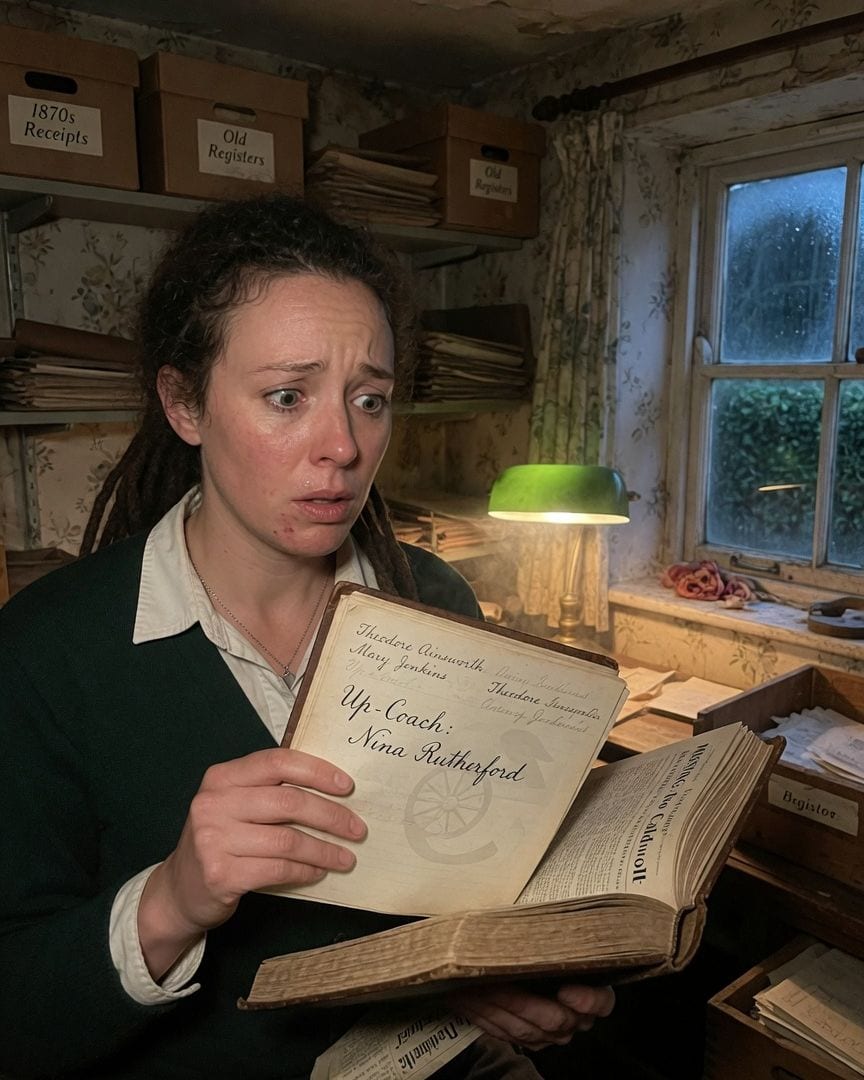
The old inn's arrivals book logs a vanished girl's name. She disappeared two months ago, but the ledger says she checked in last week.
As the new owner of The Angel Inn, I cherished its ancient history. But one evening, while tidying the old arrivals book, I found a chilling entry: Nina Rutherford, a local girl who vanished two months ago, was logged as checking in last week.
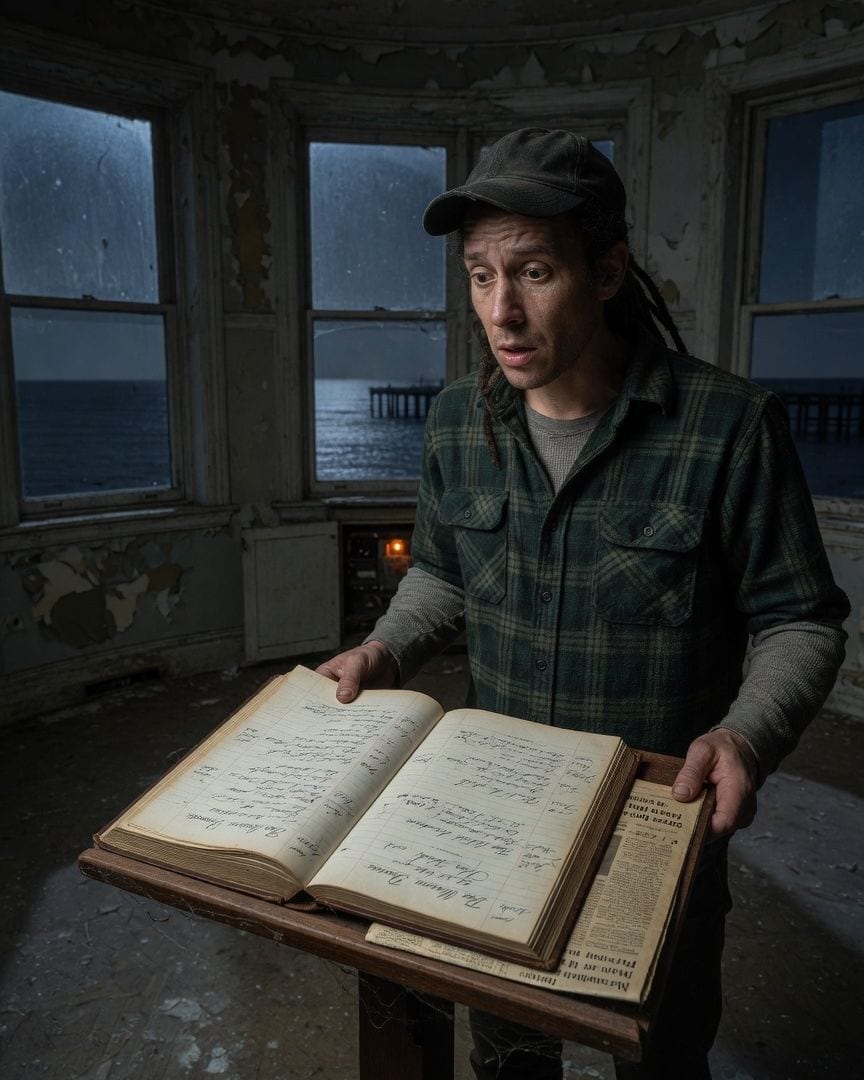
My pier's ballroom register books a new dance for Saturday, electricity meter running, but those lights are never on.
Taking over as pier caretaker, I was told one rule: never turn on the end pavilion's lights. But my first week, I noticed its electricity meter was steadily advancing every single night, even though the main breaker was off. Inside the dark, unused ballroom, I found an old ledger open to 'The Moonlit Waltz' for this Saturday, raising a chilling question: who was booking a dance and drawing power in a place that should be empty?
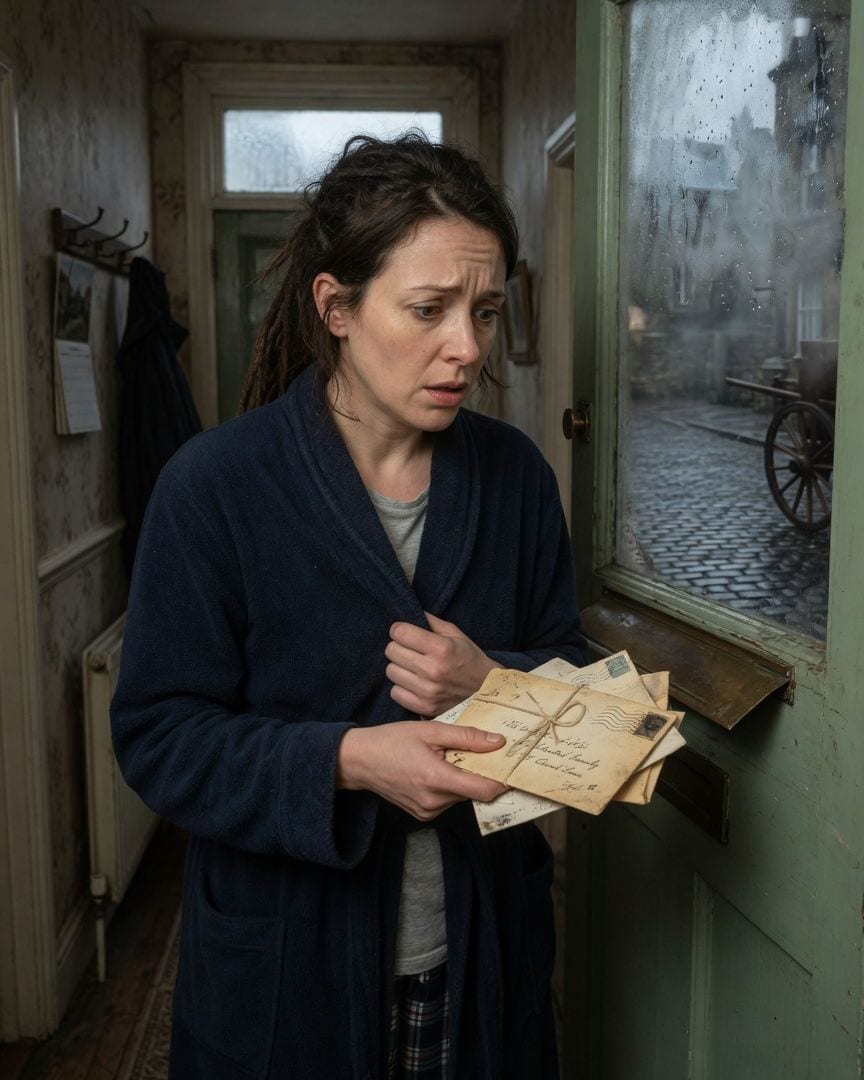
Seventy years ago, a hidden journal recorded my door opening to the wrong street and receiving Lockwood post.
I'd only recently moved into my inherited house, a quiet place on the edge of town. One grey morning, a distinct clatter from the front door's post flap caught my attention. Reaching down, I expected my gravel path, but instead, the flap showed a dark, cobbled street that wasn't mine. A bundle of warm, old letters, addressed to 'The Lockwood Family,' slid through, before the vision flickered and was gone.
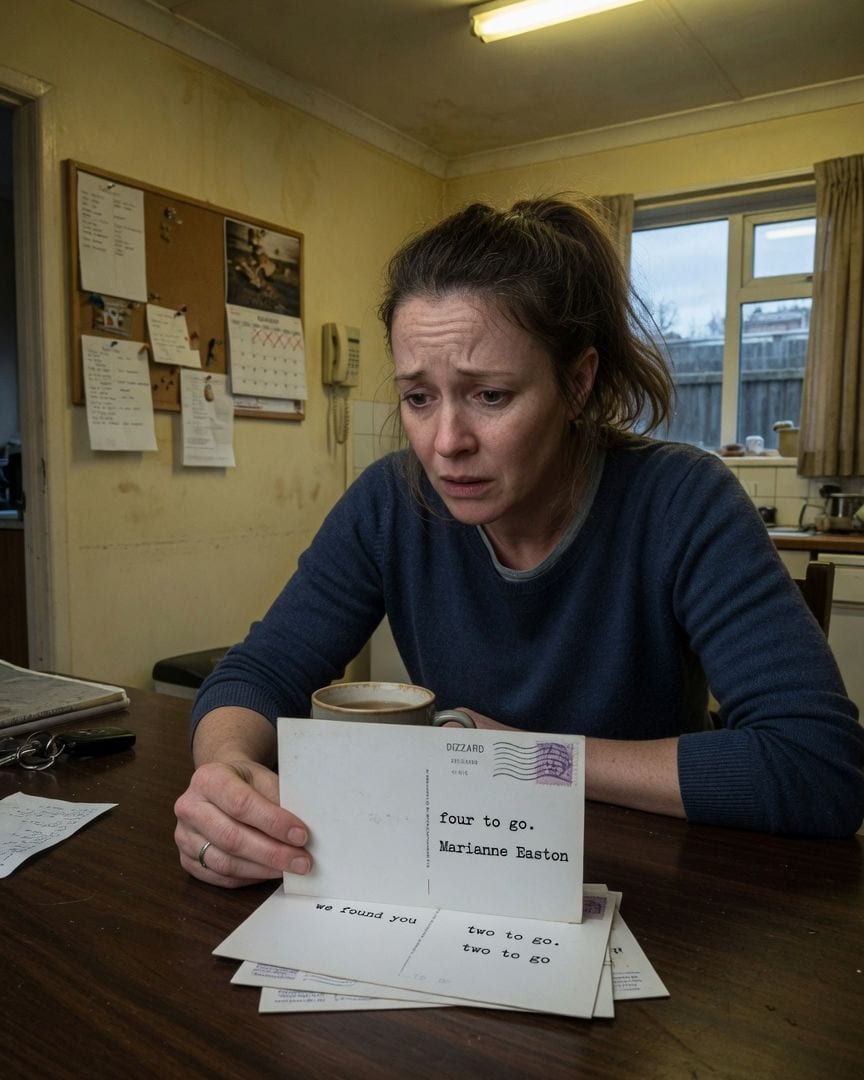
My postcards arrive each Friday, addressed by name, counting down. This week's says 'four to go,' postmarked from a cliff with no postbox.
Every Friday, stark white postcards arrive on my kitchen table, addressed to me. Each one is postmarked 'Dizzard,' a desolate cliff miles from any town, with no post office. For weeks now, they've been counting down.
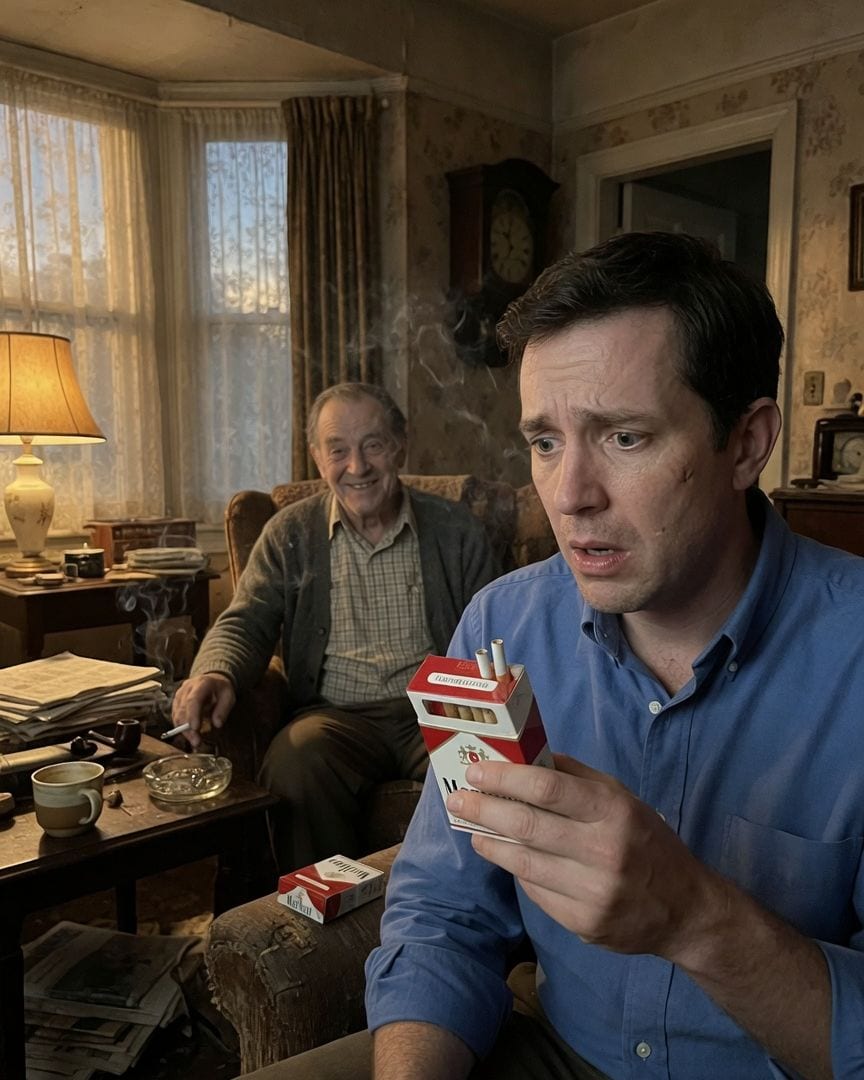
My uncle always smoked left-handed. He went missing, came back smoking with his right — and when I said so, he held out the pack and asked me to show him how he used to do it.
My Uncle Frank, a fixture in his armchair, vanished for two days and returned changed. He's always smoked left-handed, a nicotine stain on his thumb a permanent reminder. But tonight, he holds his cigarette in his right hand, a slow, wide smile on his face that doesn't quite reach his eyes.
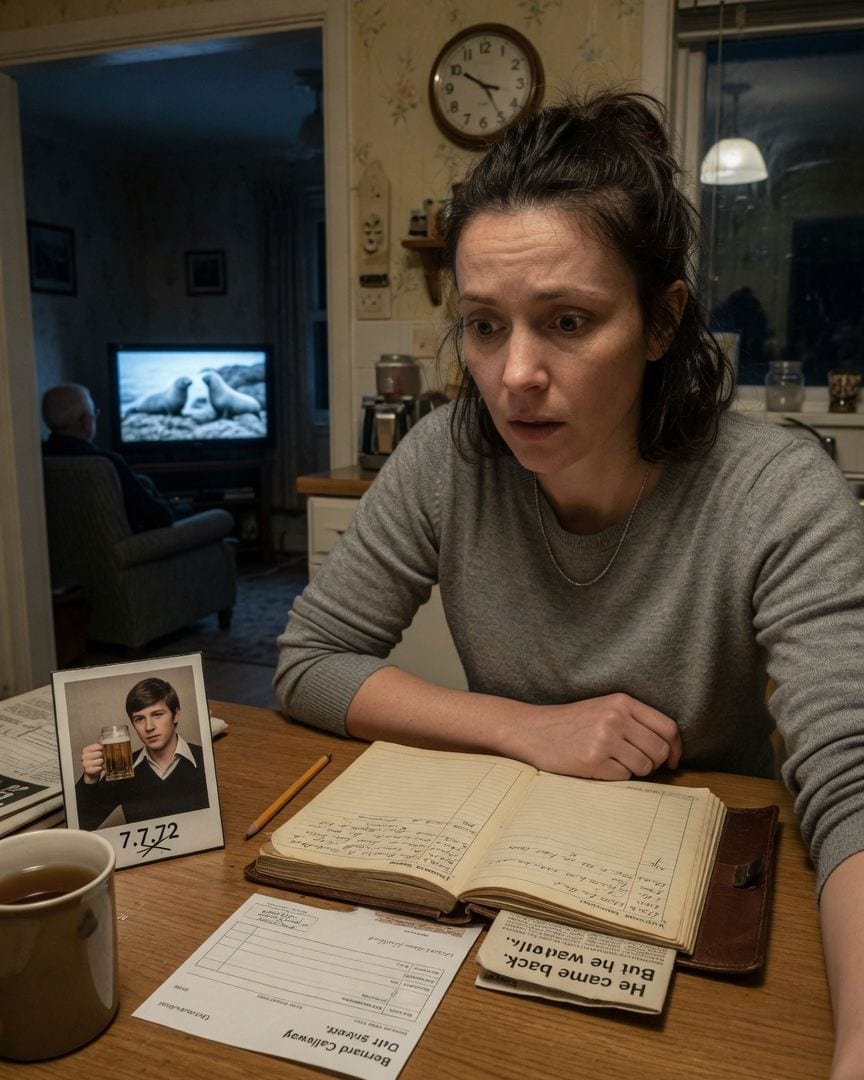
My father's bank slip had uncrossed '7's. He swore he never had that habit.
My father, Bernard, returned three months ago, a miracle after being presumed lost at sea. But a bank statement revealed a disturbing detail: the '7's in his signature were uncrossed. For decades, he'd meticulously crossed every '7', yet now he denied ever having the habit.