My father's bank slip had uncrossed '7's. He swore he never had that habit.
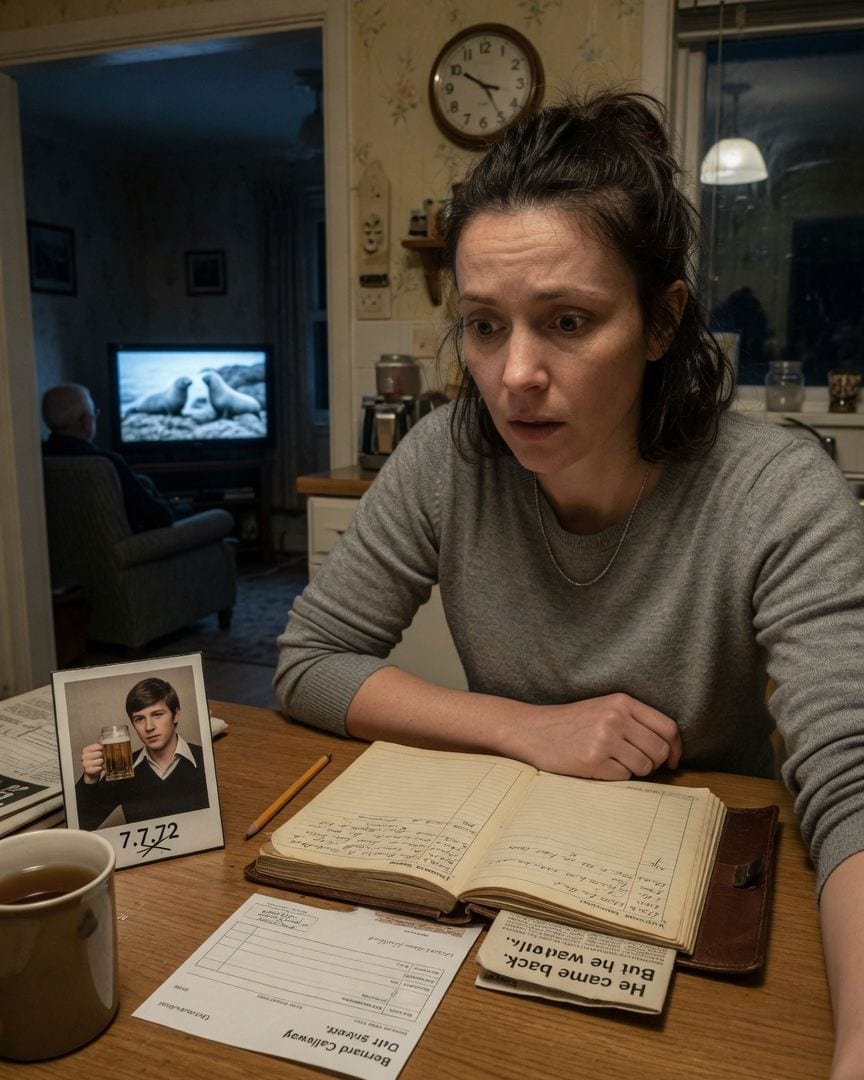
The soft hum from the living room was my father, Bernard, watching one of his old black-and-white nature documentaries. I sat at the kitchen table, a bank statement spread before me, trying to focus on the numbers.
He’d been back for three months now, a miracle after the car crash 18 months ago that had left only debris on the rocky coast, his body presumed lost to the sea.
Three months of getting used to his face again, his voice, his quiet presence. But my eyes kept snagging on the withdrawal slip from yesterday, taped to the statement. A simple cash withdrawal, his signature, and the amount.
Every ‘7’ was plain, straight-backed, utterly uncrossed. For as long as I could remember, since his youth spent in Germany, Bernard Calloway had meticulously crossed every '7' he ever wrote.
On checks, on calendar dates, on grocery lists, even the occasional birthday card to me. It was his signature, as much as his name. Just last week, I'd asked him about it, joked about his "continental affectation."
He'd smiled, a little too wide, and said he'd never picked up that habit in his life. The bank, of course, had matched his new signature to old ones without a flicker of concern.
Later, at dinner, he spooned a second generous helping of clam chowder onto his plate. My father, who, his entire life, had loudly despised clam chowder, once claiming it smelled like "wet dog and regret."
He ate it with relish, humming, an unbothered smile on his face. I watched him, and a chill, colder than the ocean wind outside, slowly spread through me.
The next day, a quiet, frantic energy propelled me. I started my search in the attic, pulling down dusty photo albums. Most pictures showed Bernard in the background, his handwriting not visible, just his familiar, aging smile.
I needed something concrete. Tucked away in a corner, under an old quilt, was a box labeled 'Dad's Army Papers' in my own childish script.
Inside, among yellowed discharge forms and letters from decades past, I found it: a small, leather-bound personal ledger. It was from his early twenties, when he was stationed in Germany.
He’d used it to track expenses, a meticulous record of every mark and pfennig. My heart began to thud, a heavy, muffled drumbeat in my ears. I flipped through it, page after page.
Columns of numbers, dates, careful entries—all in his unmistakable hand. And there it was. Every single '7' was bisected by a neat, deliberate cross. It wasn't just a habit; it was part of his very handwriting, clear as day.
The evidence stared back at me, stark and irrefutable. I remembered him once telling me, 'It’s a tiny thing, Florence, but it keeps the numbers from blurring. A small discipline, you see.'
Now, that discipline was gone, erased as if it had never existed. I tried to tell myself it was a memory lapse, a side effect of the trauma of the crash and his disappearance.
But the ledger was concrete, a silent witness to a truth he now denied. The rational explanation felt thin, brittle, and I could feel it cracking.
Driven by this growing unease, I delved deeper into the ledger. Most of the pages were filled with currency conversions and dates, but towards the back, tucked between the last few pages, a brittle, folded newspaper clipping fell out.
It was old, yellowed, from a local paper, dated thirty years ago. The headline spoke of the disappearance of a young fisherman, Felix Maddox, whose boat was found empty at sea, just offshore. My breath hitched.
Below the article, in Bernard’s neat, crossed-seven handwriting, a single, underlined sentence was scrawled: He came back. But he wasn’t Felix. The ink was faded, but the words were clear, a chilling echo of my own unspoken fear, a secret my father had kept for decades.
I stared at the clipping, the quiet house suddenly vast and cold around me, the implication a physical weight. I had to know.
I found it in the study, among his things from Germany, tucked into a box of old photos. A small, framed picture of him, younger, maybe twenty-five, smiling broadly, a beer stein raised in one hand.
The air in the room felt thick, heavy, pressing down on me. I traced the faded inscription in the bottom corner of the frame: '7.7.72.' All three sevens were unmistakably crossed.
I held it in one hand, and in the other, the bank slip from yesterday, with its stark, uncrossed figures. A cold certainty settled over me, heavy and absolute. The man downstairs was a stranger.
I tried to be subtle. I left the old ledger open on Bernard's desk, turned to a page with a dozen clearly crossed sevens. He glanced at it during breakfast the next morning, then at me, his smile unwavering.
'An old habit, I suppose,' he said, dismissing it with a shrug. 'Must have forgotten I ever did that.' His casual indifference was more terrifying than anger. It wasn’t a lapse in memory he was feigning, but a complete erasure.
I felt a prickle of alarm, then resolution. I needed more. I needed to know if this was just him, or something else. I visited the local historical society, ostensibly for research on the town’s founding.
The kind old librarian, Mrs. Henderson, pointed me to the microfiche machines, where I started sifting through old newspaper archives. I specifically looked for disappearances followed by ‘returns.’
It took days, staring at blurry black and white images on the screen, the quiet whir of the machine the only sound in the dusty room. But the pattern, slow and insidious, began to emerge.
Not always car crashes, sometimes just people who vanished and then reappeared weeks or months later. A fisherman in '42, his nets found tangled and empty, then him, walking back into town a month later, gaunt but unharmed.
A lighthouse keeper in '68, gone for two months, then returned, but his logbooks filled with a strange, looping script. A young woman in the late seventies.
Each time, neighbors quoted in the articles mentioned subtle changes: a new accent, a forgotten skill, a strange aversion or, conversely, a sudden fondness.
The reports were vague, often chalked up to trauma, or the strangeness of the isolated coastal life, but I saw the thread.
I found an article from fifty years ago about a missing local artist, Harold Doyle, whose family claimed he 'lost his passion' after returning from a supposed fishing trip that went wrong. He just stopped painting.
A small, coastal community, isolated, where these things could be dismissed, absorbed, ignored. The dread tightened its grip, coalescing into something specific and horrifying.
As I continued my research, the atmosphere at home shifted. It was nothing overt, just a series of small, unsettling details. I’d find my bedroom door slightly ajar after I’d specifically locked it.
My laptop, which I'd left open on a local history forum discussing old disappearances, would be closed, the screen dark. Bernard was always nearby, always smiling, always just a little too present.
One evening, I was in the kitchen, making tea, the kettle whistling a thin, reedy note, when I felt a prickling sensation on my neck. The hairs stood on end. I turned quickly, my heart hammering.
Bernard was standing in the doorway, watching me. His expression was unreadable, his eyes a little too still, reflecting the low kitchen light like polished stones. 'Everything alright, dear?' he asked, his voice perfectly normal, almost warm.
I forced a smile, my lips feeling stiff. 'Just fine, Dad.' But the silence that followed stretched, thick and heavy, until he finally turned and walked away, leaving me alone with the chill that had settled into the room.
Later that night, my phone buzzed with an anonymous email. The subject line simply read: 'Some things are better left buried.' There was no sender, no other text. Just that one, chilling line.
My hands trembled as I deleted it, but the message had landed. Someone knew I was digging, and they wanted me to stop.
Desperate, I drove to the quiet, secluded home of Sylvia Mitchell.
She was an old family friend, a woman in her early seventies, known for her sharp mind and even sharper memory, who had lived in this town her entire life.
Her small cottage was nestled away from the main road, surrounded by gnarled pines. Sylvia invited me in, her movements slow and deliberate, offering a cup of herbal tea.
The air in her living room was warm, smelling of old books and dried herbs, a contrast to the growing chill I felt.
I started by talking about my father, about his miraculous return, trying to keep my voice casual, as if recounting a curious anecdote.
Then, slowly, carefully, I described the changes: the uncrossed sevens, the sudden fondness for clam chowder, the strange detachment I sometimes felt, like looking at a carefully constructed mask. Sylvia listened, her face unmoving, her eyes fixed on mine.
There was no surprise, no judgment, just a deep, unsettling calm. When I finished, the silence stretched, broken only by the tick of an old grandfather clock in the corner.
Sylvia set her teacup down with a soft click, her gaze still unwavering. 'Bernard was a good man,' Sylvia said, her voice calm, utterly devoid of the emotion I’d expected. 'Always crossed his sevens, yes.
And that chowder… he'd rather starve than touch it.' I stared at her. 'You noticed?' Sylvia nodded slowly. 'Some of us do. Always have. It’s how they announce themselves, isn't it? The little things they can’t quite get right.'
She explained that these 'returns' had been happening for generations in their isolated coastal community. 'People disappear, the sea takes them, or the woods swallow them up. Then someone comes back. Same face, same name.
But never quite the same soul. They're good mimics, though. Getting better all the time.' The realization hit me then, a cold, sickening blow. It wasn't just my father.
This was a pattern, a dark secret woven into the very fabric of our town, older and deeper than I could have imagined.
Sylvia leaned forward, her voice dropping to a near whisper, the sound almost lost in the sudden gusts of wind that rattled her windows. 'They choose carefully. The ones who are missed, the ones who leave a hole.
And they learn from them, from their lives, from the love around them.' She gestured vaguely towards the coast, a dark, churning line visible through the window. 'It's been here longer than any of us. Taking, replacing.' My breath hitched.
I felt a cold dread bloom in my chest, a blossoming of terror that threatened to choke me. 'So, what… what are they?'
Sylvia shook her head slowly, her eyes distant, as if looking at something far away, something ancient and terrible. 'No one truly knows. A hunger, perhaps. A void that needs to be filled.'
Her gaze intensified then, meeting mine, and I felt a chill that had nothing to do with the wind outside. 'But there's something else. When they return, they aren't just taking a place. They're watching. Learning.
And when someone starts to see through the disguise, when someone starts to dig…' Sylvia paused, her eyes widening slightly, a flicker of something akin to fear finally appearing in their depths, something I hadn't seen in her before.
'They learn from that too. And they remember.' The tea in my cup trembled, the liquid barely rippling with my shaking hands, and I understood.
The thing wearing my father's face wasn't just a mimic; it was an intelligent, evolving predator, and I had just made myself its next lesson.
Sylvia, her composure regained after that brief flicker of fear, explained the full, chilling scope. 'It's a cycle,' she said, her voice a low, steady current against the wind. 'Tied to the deep places, the old currents.
When the sea gives up its dead, sometimes it gives up something else instead.' She reached behind her armchair, pulling out a worn, leather-bound book. The title, etched in faded gold, read: 'Coastal Lore and Forgotten Tides.'
Inside were cryptic etchings and generations of handwritten notes, passed down through 'witnesses' like herself. They documented the 'tells': the reversed habits, the sudden aversions, the uncanny stillness in their eyes, the subtle shifts in cadence.
She explained that the entity, or 'the Hollow Tide' as some called it in these ancient writings, didn't just replicate; it absorbed the essence of the departed, gaining their memories, their mannerisms, but always missing some fundamental, deeply ingrained detail.
'The original bodies,' Sylvia added, her voice flat, her eyes fixed on the distant ocean, 'they are never found. Not a trace, not a bone. The car, your father's car, it wasn't just lost in the crash. It was gone.
Absorbed, perhaps, along with him.' My mind raced, every clue clicking into place with horrifying precision: the police finding only scattered debris, never the vehicle itself. The subtle changes in Bernard, the odd details that didn't fit.
The other disappearances in the town's history, the vague mentions of people 'not quite themselves.' It all fit, a horrifying tapestry woven from generations of quiet horror and whispered truths.
The entity wasn't just an individual replacement; it was a pervasive, ancient presence, slowly, meticulously, infiltrating their world, getting better with each life it took.
I returned home, my heart pounding a frantic rhythm against my ribs. The house, once a sanctuary, now felt like a trap. I knew I couldn't stay. I had to get out, and I needed proof, something beyond my word.
I went straight to my father's study. The familiar scent of old paper and pipe tobacco, once comforting, now felt stale, wrong.
My hands trembled as I quickly grabbed the old ledger and the Felix Maddox clipping, tucking them into a small, sturdy canvas bag. Then, I pulled out my phone.
My voice was quiet, almost a whisper, as I started to record. I described Bernard's changes, the uncrossed sevens, the clam chowder, the ledger, the clipping, and finally, the pattern Sylvia Mitchell had laid bare.
As I finished, hitting 'stop,' a shadow fell over me. Bernard was standing in the doorway, his smile gone, replaced by an expression of cold, patient understanding. The air in the room seemed to congeal, thick and still.
'Leaving so soon, Florence?' His voice was flat, devoid of its usual warmth, like a familiar melody played off-key. I froze, my hand still on my phone, my body screaming at me to run.
'Just running an errand, Dad,' I managed, trying to sound casual, trying to ignore the sudden chill emanating from him. He took a slow step towards me. 'Are you, now?'
His eyes, usually a warm hazel, seemed darker, deeper, reflecting the dim light with an unnatural intensity, like black glass. I felt a primal fear, the sense of being utterly outmatched, utterly seen. I bolted.
I grabbed my keys from the hook by the door, running past him, out the front door, and to my car, fumbling to unlock it. He didn't chase me.
Instead, as I sped away, glancing wildly in my rearview mirror, he was standing on the porch, watching my car disappear down the road. His unblinking gaze was fixed on my retreating vehicle.
A small, faint smile played on his lips, a smile that didn't reach his eyes.
I drove until the coastal town was a distant memory in my rearview mirror. I moved to a new city, far from the sea, far from any familiar face.
I tried to tell my story, to show the ledger and the clipping, to play the video I’d recorded on my phone.
I was met with polite disbelief, pitying glances, and referrals to grief counselors who spoke of trauma and delusion. The police closed Bernard's case as 'resolved' after his 'return.'
The missing car was never found, a detail easily overlooked amidst the relief and the mundane paperwork. I live alone now, constantly vigilant, always looking for the tells in strangers, in neighbors, in the news.
The proof I carry is a burden no one will share, a truth that screams silently in my mind.
I check every '7' on every document I see, a habit I can’t break. I avoid clam chowder, the smell of it now an insidious reminder, a taste of cold dread.
I know the truth, a truth that isolates me more profoundly than any lie could. The world spins on, oblivious, and I am merely a witness, marked by what I saw, by what I know.
I sometimes wonder if Bernard ever looks for me, if the thing wearing his face remembers my flight, remembers me. The thought is a cold, sharp blade, twisting in my gut. One evening, my phone buzzes on the counter.
An unknown number. I don't answer. A voicemail appears a moment later. I listen, my hand shaking, barely touching the screen. It’s a man’s voice, deep and familiar, humming a tune my father used to sing. It cuts off abruptly.
I delete it, but the melody lingers, a quiet, unsettling hum in the empty apartment.
If this one got to you

My father takes his coffee black now. He put three sugars in it every morning of my life. He looks at the sugar bowl like it's from another man's house.
My father, Gideon Bishop, came back after eighteen months lost at sea. His return felt like a miracle, until the first morning coffee. He always took three sugars, but his gaze fell on the sugar bowl as if it were a relic from another man's house, then he drank it black. A cold certainty began to form: this simple, small thing was profoundly wrong.
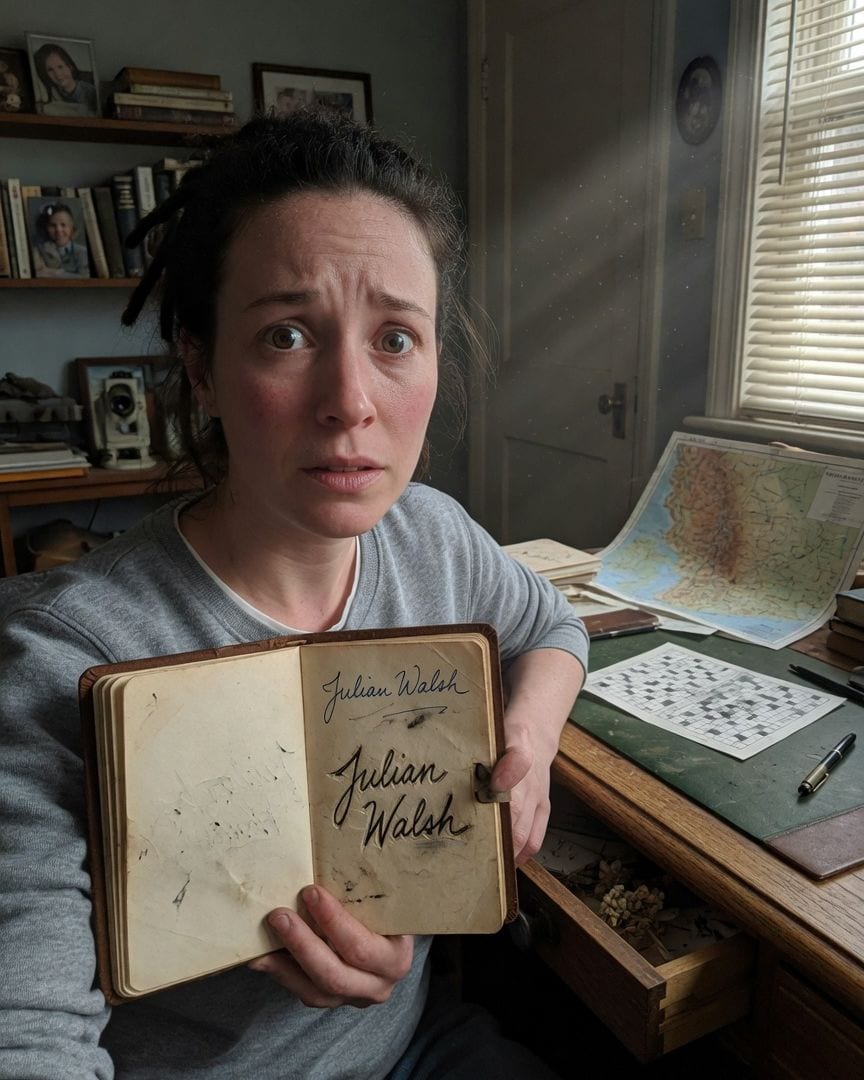
My father signs his name left-handed now. He was right-handed for sixty years. When I asked, he just wrote it again and asked what I meant.
My father, Julian Walsh, returned eighteen months after we buried an empty casket. It was a miracle, a genuine impossible relief, until he signed his insurance papers. For sixty years, my father was fiercely right-handed, but now he etched his name with a confident left-handed flourish, claiming he always had.
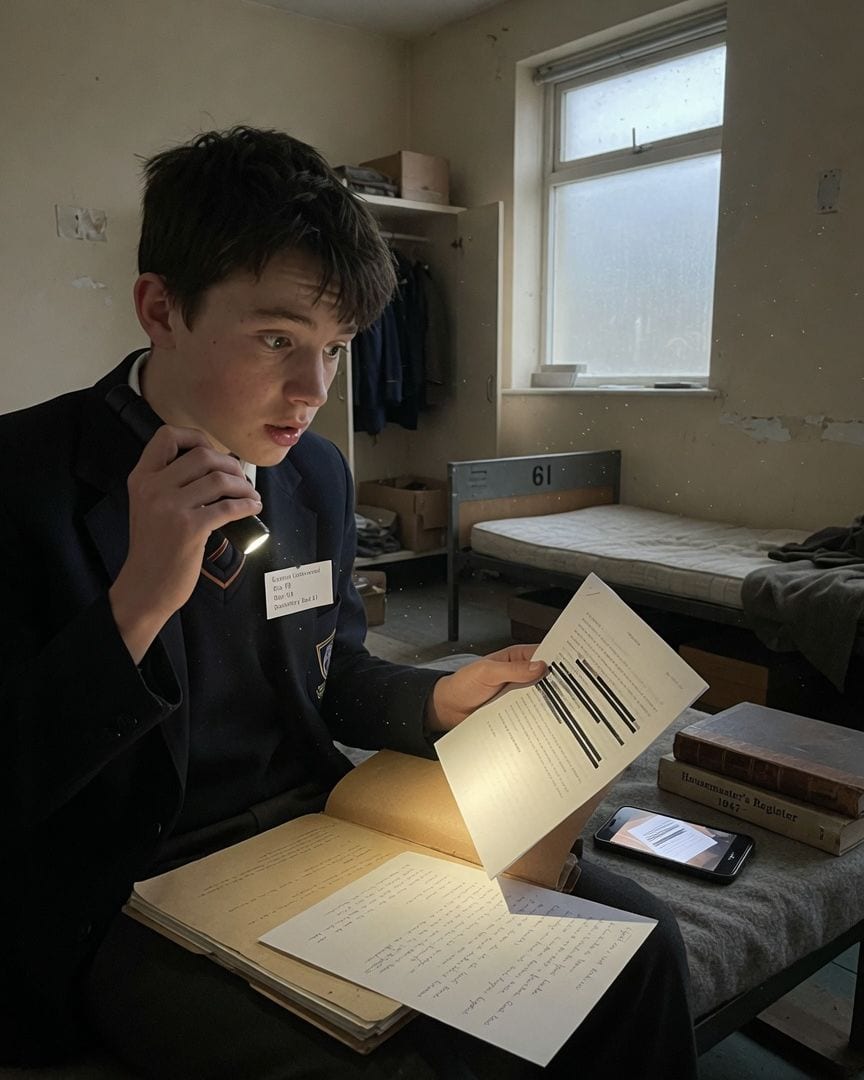
My boarding school bed number was 61, and the archive shows a boy assigned it every eight years since 1947, each leaving mid-term with the bed 'to remain made up'.
I found my matriculation card, listing me as 'Boy 61, Dormitory Bed 61.' Later, an old ledger revealed every boy assigned that bed since 1947 left mid-term, with an unsettling note: 'bed to remain made up.' Our housemaster’s recent scribble, 'as the others,' only deepened the dread around my own assigned bed.
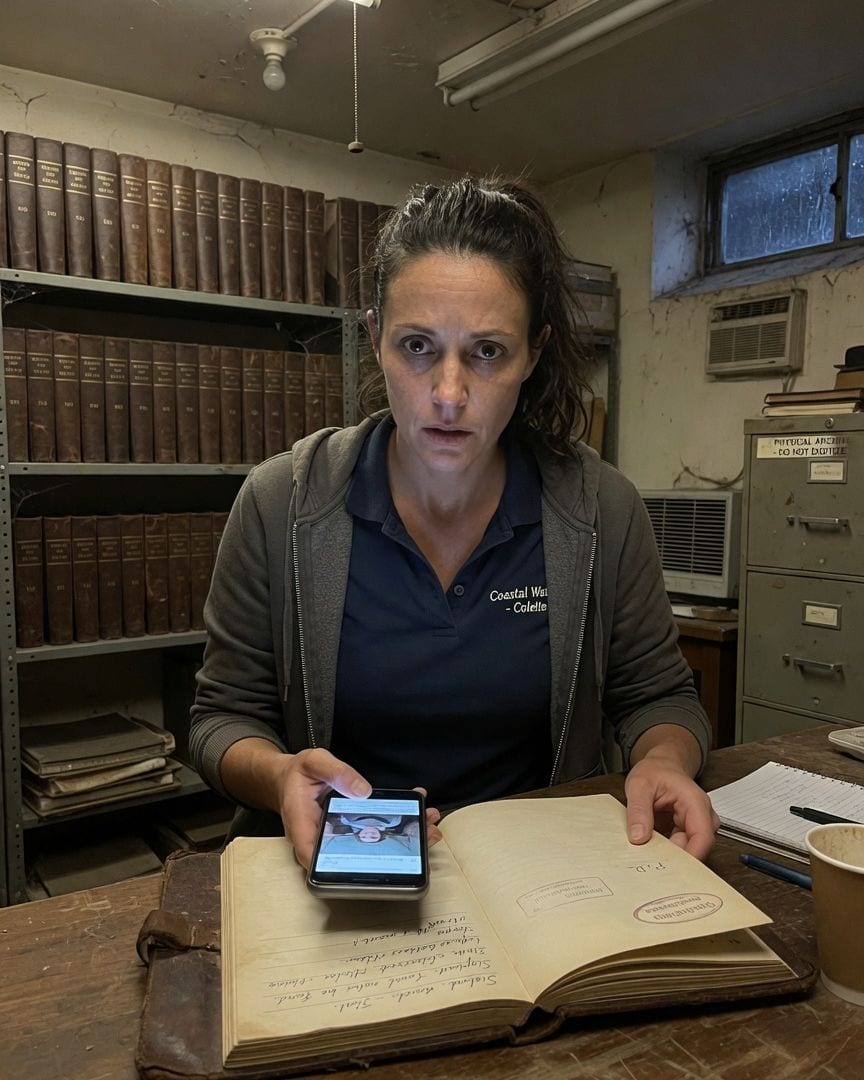
My coastguard log noted Sighting 9 again tonight, a light where no vessel showed. The old logs carry Sighting 9 off Skerry Point at 3:14am every tenth year since 1954, always 'nothing found,' always 'send no boat.'
On my watchtower night shift, the radar screen glowed green and the ocean was quiet. Then, a familiar light appeared off Skerry Point, exactly on cue, just as it had every tenth year for decades. But digging deeper, I found a hidden stamp in an old logbook: 'Operation Skerry. Status: Complete.' It left me with a chilling sense of finality.
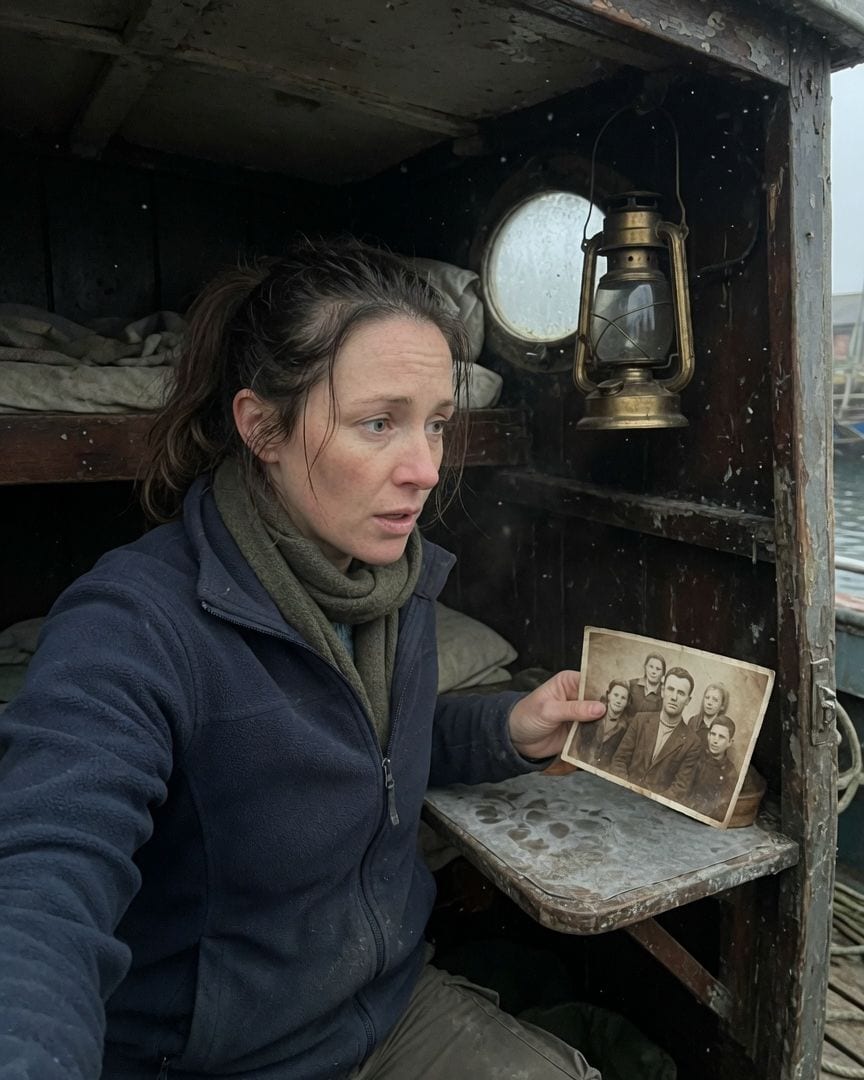
My harbour counted fourteen boats out, but fifteen came back. The last one has my name on it, tied to a berth empty since the war.
I cherished the crisp morning air in Port Blossom, watching the fishing fleet return. Fourteen boats had chugged out before dawn, but that morning, a fifteenth, older boat glided silently into the harbour. It tied itself to the very end berth, unused since the war, and painted on its stern was my family name: Walsh.
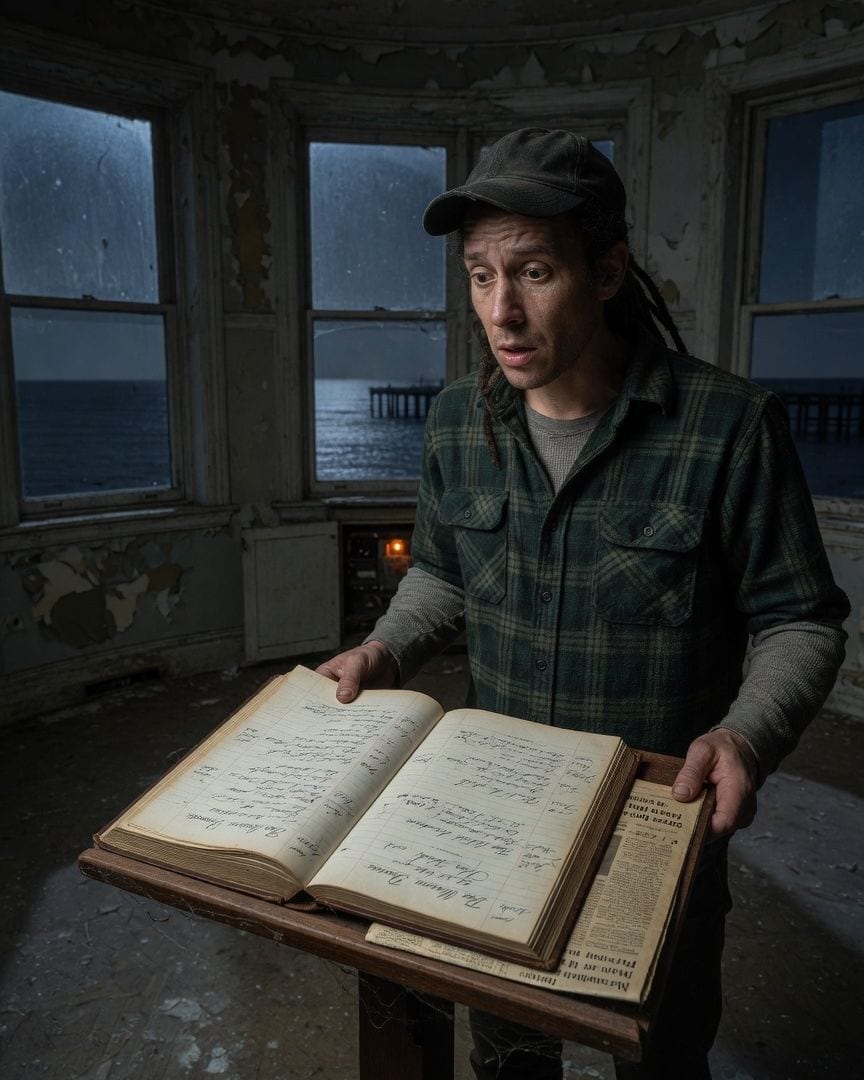
My pier's ballroom register books a new dance for Saturday, electricity meter running, but those lights are never on.
Taking over as pier caretaker, I was told one rule: never turn on the end pavilion's lights. But my first week, I noticed its electricity meter was steadily advancing every single night, even though the main breaker was off. Inside the dark, unused ballroom, I found an old ledger open to 'The Moonlit Waltz' for this Saturday, raising a chilling question: who was booking a dance and drawing power in a place that should be empty?