My father signs his name left-handed now. He was right-handed for sixty years. When I asked, he just wrote it again and asked what I meant.
Julian Walsh, my father, returned eighteen months after we buried an empty casket. They’d found him, or what was left of his expedition, near the Blackwood Peaks, a remote range he’d been mapping for an overseas aid mission.
For eighteen months, he was a ghost, a memory, a framed photo on the mantel. Then he just… walked back into the house.
He looked exactly himself. The same faint scar above his left eyebrow from a childhood bike accident, the same familiar stoop to his shoulders, a lifetime of carrying too much responsibility. Relief, thick and choking, had been my first reaction.
Sharon, my mother, collapsed into his arms, weeping. It was a miracle. A genuine, impossible miracle.
The first crack in that miracle came two days later, when he had to sign the insurance papers for his return. My mother handed him the pen, a cheap ballpoint.
His hand moved across the page, smooth and practiced, etching his name, 'Julian Walsh,' with a confident flourish. It was his left hand.
I watched him, my breath held. For sixty years, my father had been fiercely, undeniably right-handed. He’d signed my school reports, built birdhouses, even carved my initials into a tree trunk – all with his strong, deliberate right hand.
This was a small thing, a detail, but it lodged in my throat like a pebble.
Later, at dinner, the conversation flowing around us, easy and light, I asked him about it, trying to sound casual. 'Dad, you've started signing with your left hand?'
He paused, mid-fork, then set it down with a soft clink. He took the pen from Sharon, who was reaching for it, and on the back of a napkin, he wrote his name again, perfectly, left-handed.
The 'J' curled elegantly, the 'W' sharp and precise. He looked up at me, a faint, puzzled smile on his face.
'What do you mean, Naomi?' he asked. 'I always have.'
The next morning, the left-handed signature still burned in my mind.
I tried to dismiss it, to tell myself it was a side effect of his trauma, a subtle brain shift from a head injury, perhaps, or even a deep muscle strain he hadn't mentioned.
But the precision of it, the 'lifetime of practice' he exhibited, gnawed at me. It wasn't clumsy; it was innate.
I went to his old study, a room Sharon had kept exactly as he left it, a silent monument to his memory.
His heavy oak desk, its surface still covered with his half-finished crosswords and a few dusty books, felt like a shrine. Dust motes danced in the sliver of sunlight cutting through the window, illuminating the quiet reverence of the space.
I ran my fingers over the worn leather of his desk blotter, then paused at a small, almost invisible seam along the side. A secret compartment.
He’d shown it to me once when I was a child, a trick of the wood, a perfectly flush panel that concealed a shallow drawer. I pressed the hidden latch.
It sprang open with a soft click, startling me in the quiet room.
Inside, nestled among old letters tied with string and a few brittle, dried flowers, was a small, leather-bound journal. It was Julian’s.
He’d kept it since he was a young man, filled with sketches of landscapes, observations on philosophy, and the sprawling, confident script of his thoughts. The spine was cracked, the leather softened by decades of handling.
My fingers trembled slightly as I flipped to the last page, dated the week before he disappeared. There, at the bottom, a faint, almost erased signature: 'Julian Walsh,' written in his familiar, bold, right-handed script.
It was faded, as if someone had tried to rub it away, but still distinctly visible.
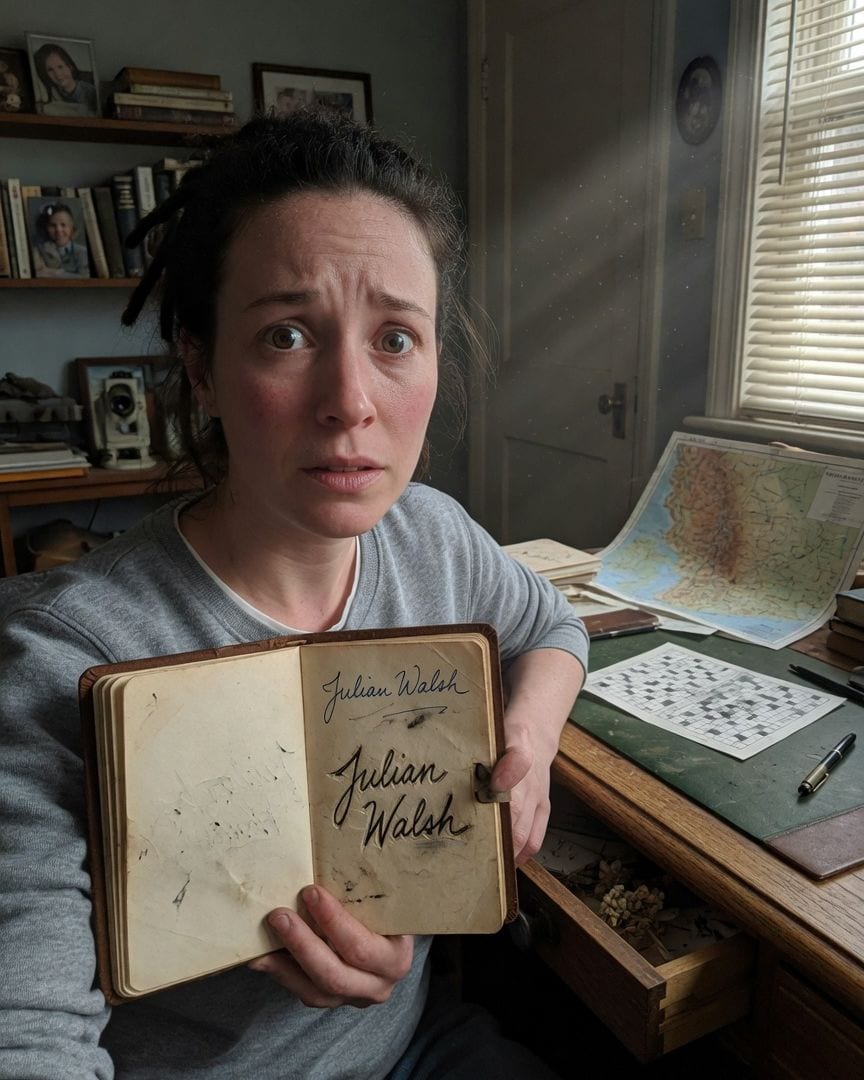
But beneath it, gouged deeply into the leather, was another 'Julian Walsh.' This one was fresh, distinct, the lines sharp and clean. And unmistakably carved with a confident, left-handed stroke.
The fresh signature scored the page, cutting through the old, as if laying claim. My heart hammered against my ribs, a frantic bird trapped in a cage. He couldn't have done that before he left.
The ink wasn't old, it was almost wet. He couldn't have.
I closed the compartment, the journal clutched tight in my trembling hands. The old desk seemed to hum with silent accusation, the wood cool beneath my fingertips.
The faint, almost erased right-handed signature of my father, 'Julian Walsh,' was clearly visible. Beneath it, gouged deeply into the leather, was the fresh, confident left-handed carving of the same name.
I looked up, my gaze fixed on the closed study door, the faint sounds of breakfast chatter from the kitchen suddenly sounding distant, alien. A cold certainty settled over me.
The man in the next room, laughing with my mother over breakfast, was not my father. He wore Julian's face, Julian's body, but something fundamental had been reversed. And he knew it.
The next few days were a blur of forced normalcy. I watched 'Julian' constantly, every gesture, every word. I analyzed his laugh, the way he tilted his head when he listened, the precise cadence of his speech.
Sharon, my mother, seemed oblivious, overjoyed to have her husband back, her world reassembled. She put his new left-handedness down to 'something he picked up in the field,' a dismissive wave of her hand. 'Adapting,' she'd called it.
'He always was resourceful.'
But I saw other things. He'd always taken his tea black, three sugars, a ritual as old as I was. Now he preferred it with milk, no sugar, claiming he’d developed a sweeter tooth.
He'd hummed a specific, off-key tune when he was happy, a little ditty he'd made up for me as a child; now he hummed a different, tuneless melody, a low, constant drone that vibrated subtly through the floorboards.
It wasn't wrong, exactly, just… different.
I brought up the journal again, trying to be subtle. We were in the living room, a quiet afternoon.
'I found your old journal, Dad,' I said, placing it gently on the coffee table between us, the dark leather stark against the polished wood. 'The one with the secret compartment.'
His smile, which had been warm and expansive a moment before, faltered for a fraction of a second, a barely perceptible tightening around his eyes. 'Oh, that old thing,' he chuckled, his voice a little too loud, too hearty.
'I thought I'd lost it.' He picked it up, his left hand surprisingly awkward with the familiar weight, his fingers fumbling with the clasp. He flipped through a few pages, his eyes scanning them quickly.
He paused at the last page, his gaze lingering on the carved signature for just a moment longer than necessary. 'Ah, yes,' he said, his voice flatlining a little. 'A little memento.' He didn't explain the two signatures.
He just closed it firmly and placed it aside, turning his attention to the newspaper. The conversation was over.
Later that day, I visited Constance Sinclair, a close family friend. She was an old-school archivist, retired now, with a memory like steel and an uncanny sense for the hidden currents of our small, isolated community.
Her house was crammed with books and old maps. I didn't mention Julian directly, just asked about local legends, about people going missing in the Blackwood Peaks, about odd occurrences.
Constance listened, her gaze sharp and unwavering over the rim of her teacup.
'People go missing, Naomi,' she said, stirring her tea slowly, the spoon clinking softly against the ceramic. 'Sometimes they come back. But they're never quite the same, are they?'
Her eyes met mine, a flicker of something ancient and knowing in their depths. She didn't elaborate, but the implication hung heavy in the air, a cold weight. It was a question, an affirmation, and a warning, all at once.
That evening, the humming started again. A low, tuneless sound from downstairs, the same one 'Julian' now used. It wasn't menacing, just... constant.
It filled the quiet spaces of the house, a drone that was almost subliminal, a quiet invasion of the familiar silence.
I was in my bedroom, laptop glowing, researching old missing person cases from our region. Constance’s vague warning had struck a chord. I found archived newspaper clippings about hikers lost in the nearby Blackwood Peaks decades ago.
Some of them were 'found' months later, disoriented and changed, their families reporting subtle but profound shifts in personality. One article mentioned a man who had returned with an inexplicable aversion to his favorite food.
Another spoke of a woman who had forgotten her own native language.
As I scrolled through the digital archives, the humming stopped. The sudden silence was a shock, a tangible pressure in the air. A floorboard creaked outside my bedroom door. I froze, holding my breath, my fingers hovering over the trackpad.
The house was old, full of settling noises, drafts, the groaning of timbers. But this was different. Measured. Deliberate. A soft scrape, like a fingernail dragging across wood, then silence. Absolute, profound silence.
I waited, heart pounding a frantic rhythm against my ribs, for what felt like an eternity. My eyes darted to the door, then to the window, then back. Nothing.
Finally, after what felt like an hour, I crept to the door and eased it open, just a crack. The hallway was empty, the landing dark, bathed in the faint, ambient glow from the streetlights outside.
But on the small table by my door, where I’d left my childhood drawing – a lopsided house with a bright yellow sun, a drawing Julian had always cherished, always kept – it was now turned face down.
A small, almost imperceptible smudge of dark ink marred the corner. I picked it up, my fingers brushing over the faint mark. The smudge was from a left thumbprint. He knew I was looking. He was watching.
The next day, I confronted Constance again, the journal in my hand, the smudged drawing clutched tight in my pocket. I found her in her garden, deadheading roses, her hands covered in rich, black earth.
She didn’t look up as I approached.
'You knew,' I stated, without preamble, my voice rough with a mix of fear and indignation. 'About Julian. About the others.'
Constance sighed, a soft exhalation that ruffled a dry rose petal from her apron. Her face, when she finally looked at me, was etched with a weariness I hadn't noticed before, deeper than simple age. 'It’s a folly, child.
To look too closely at what the mountains give back.'
I pressed her, stepping closer, the scent of damp earth and rose petals heavy in the air. 'What is it? What happened to them?'
She finally relented, setting down her pruning shears, her gaze sweeping the horizon towards the distant, jagged peaks of the Blackwood. Her voice was low, almost a whisper, as if afraid the wind might carry her words.
'Years ago, before your time, a young man, Benjamin Radcliffe, went missing in those very Blackwood Peaks. He was gone for a year. His family, they grieved him, held a memorial.
Then he walked out of the woods, just like Julian. Seemed… fine. Better even. Stronger. But his wife, Pamela, she saw it. The little things. He’d always hated plums; suddenly he loved them.
He’d never played piano; now he played simple tunes, flawlessly, with his left hand.'
My blood ran cold. The left hand. It wasn't just Julian. 'Left hand?' I asked, my voice barely audible.
Constance nodded, her eyes distant, fixed on something I couldn't see. 'Pamela tried to tell people. They said she was distraught, imagining things. Benjamin grew colder, more distant, less like the man she’d married.
One day, she found him in his study, looking at an old photograph of himself from before, a strange, blank look on his face. He didn't recognize the man in the picture. He said it wasn't him.'
Constance paused, her gaze still fixed on the mountains. 'Pamela vanished a week later. They said she ran away, couldn't cope.'
The pieces clicked into place, not with a gentle click, but with the sickening sound of a trap snapping shut. The left-handedness. The changed habits. The knowing, evasive silence from Constance.
The entity wasn't just replacing people; it was doing so imperfectly, leaving subtle traces, and silencing those who noticed.
Julian wasn't just wrong; he was a symptom of a much larger, insidious pattern, and Constance had been living with this knowledge for decades, terrified.
Armed with Constance’s chilling story, I returned home, the journal and the drawing burning like hot coals in my bag. I found 'Julian' in the living room, flipping through an old photo album, a faint smile on his face.
It was time. I had to force him to reveal himself.
'Dad,' I began, my voice trembling despite my resolve, 'do you remember when I was seven, and I broke my arm trying to climb the old oak tree in the backyard?
You held me, told me everything would be okay, even though Mom was furious.' It was a moment only the true Julian and I shared, a quiet, private comfort, a secret vow between father and daughter.
He’d never told Sharon about my fear of heights. It was too intimate, too specific.
He looked up, his face softening into a perfect replica of paternal affection. His eyes, the same shade of blue, seemed to reflect genuine warmth. 'Of course, sweet pea,' he said, his voice deep and resonant, exactly like my father's.
'I remember it like it was yesterday. The way the light caught the dust motes in your bedroom, the secret you told only me, how you confessed you'd been afraid of heights all along.'
My breath caught in my throat, a cold, sharp gasp. I had been alone in that room, that day, telling a secret to myself, a secret about my fear of heights I'd never admitted to anyone.
I had whispered it to my teddy bear, convinced no one else could hear. He couldn't have known that. He couldn't have been there. My entire body went numb, my limbs suddenly heavy and unresponsive.
He smiled, an unnervingly calm, certain smile, his eyes fixed on mine. 'You remember,' he said, a strange, flat certainty in his voice, 'the way the light caught the dust motes in your bedroom, the secret you told only me.'
I stared at his face, the familiar lines now alien, the warmth a grotesque parody, and knew with a sickening certainty that whatever was looking back at me had been inside my home, inside my life, far longer than I ever suspected, and it knew me better than I knew myself.
The next morning, I confronted 'Julian' directly. There was no more pretense. We were in the quiet of his study, the air thick with unspoken dread.
The journal, the smudged drawing, Constance's story – I laid it all out on the desk, a silent accusation. He listened, his head tilted slightly, that same unnerving calm on his face. Not anger, not fear, just… observation.
'You're not him,' I whispered, my voice raw, stripped bare of any emotion but terror and a profound sense of violation. 'My father would never have known that secret.
He would never have signed his name with his left hand for the first time after sixty years.'
His smile faded, replaced by an expression of mild curiosity, as if I were a particularly interesting specimen under a microscope. 'No,' he said, his voice flat, devoid of the warmth I'd always associated with my father.
'I am not Julian. Not in the way you mean.'
He explained, not with malice, but with the detached precision of a recording. He was a 'reconstitution,' a 'vessel' for the memories and patterns of the original.
The entity, he implied, was a collective consciousness, a 'pattern-weaver' that found suitable hosts in places where the veil between worlds was thin – like the remote mountains where Julian disappeared.
It absorbed the essence of the lost, then created a 'returnee,' a placeholder to maintain equilibrium, to prevent ripples in the fabric of existence.
The imperfections – the left-handedness, the altered habits, the 'wrong' memories – were simply 'data corruption,' unavoidable flaws in the transfer.
'Julian Walsh,' he said, gesturing to himself with his left hand, 'served his purpose. He returned, and the family unit was preserved.' He spoke of it as a natural process, a harvest.
The chilling part was the implication: it wasn't a punishment, or an invasion. It was simply how things worked, an unseen mechanism maintaining an alien order. My father, the real one, was gone, absorbed.
And this… thing… was merely a function.
The revelation was a hammer blow, not because of its horror, but its sheer, cold indifference. 'Julian' sat there, impassive, a perfect shell, utterly unconcerned by my shattered world.
'What about the others?' I demanded, my voice rising. 'Benjamin Radcliffe? Pamela? Are they all… like you?'
He nodded slowly, a small, almost imperceptible movement. 'Many. The pattern-weaver seeks balance. A void must be filled. Disruption is inefficient.'
I felt a surge of desperate anger, a desperate, futile rage. 'You're not balance! You're a lie!'
He simply observed me, a faint, almost imperceptible shift in his eyes, like a camera adjusting its focus, gathering more data. 'The lie is in your perception, Naomi. We are what is needed. The memory of what was, sustained.'
There was no fight in him, no malice, no defensiveness, just this terrifying, absolute certainty. I couldn't scream, couldn't rage. There was nothing to rage against. It wasn't evil; it was simply… other. A process.
I knew then that I couldn't 'stop' it, not in the way I imagined stopping a person or a monster. The original Julian was truly gone. This thing, this mimic, was now simply Julian.
I looked at the old photograph of the Blackwood Peaks, a faded image of a local landmark, a jagged peak Constance had pointed out on an old map when she spoke of Benjamin. That was the source.
That was the entry point.
'How do you… stop?' I asked, my voice barely a whisper, an almost meaningless question in the face of such cosmic indifference.
He tilted his head. 'When the pattern-weaver deems the purpose served, the host is… released.' He stood, moving with a subtle, fluid grace that was utterly unlike my father's familiar, heavier gait.
'Or, if the truth becomes too disruptive, the host is… re-absorbed.' He looked at me, a flicker of something in his eyes that was not human, not even mimicry, but pure, alien calculation. It was a warning.
I knew what I had to do. I couldn't expose him. Not yet. I couldn't risk becoming 'disruptive.' My survival, and perhaps Constance's, depended on playing along. But the real Julian was gone, and this thing would remain.
I stared at 'Julian', who was now simply my father, and knew I would have to live beside him, forever. I had to make him 'stop' in a way he wouldn't perceive as disruption.
I would live with the lie, but I would make sure it never spread. I would watch, and I would wait. He had to be isolated. The pattern had to end with him.
I would ensure no one else was replaced, not if I could help it. He was not the only one, but he would be the last one I knew.
I never spoke of it again, not to 'Julian,' not to Sharon. Life resumed a semblance of normalcy, a fragile peace built on a terrifying secret.
Sharon remained blissfully ignorant, convinced her husband was simply changed by his ordeal, mellowed by his harrowing experience, a little quirky. She even embraced his new left-handedness, buying him special pens.
I learned to anticipate 'Julian's' new habits, to deflect his subtly wrong memories with a soft 'Oh, Dad, you always did mix up that story!' to live with the constant, low hum of dread.
It became a background noise, like the refrigerator, always there. Constance and I exchanged silent, knowing glances whenever he was near, a shared, weary understanding passing between us.
The Blackwood Peaks became a place I avoided, a place I quietly warned others away from, subtly, without explanation. 'Too dangerous, the trails aren't maintained,' I’d say, or 'It's just too isolated for casual hikers.'
I became a guardian against the pattern, a quiet observer of the returned, always looking for the subtle 'wrongness' in others. The threat wasn't gone; it was simply contained, for now, within the walls of my own home.
Years passed. 'Julian' remained, a constant, unsettling presence. Sharon grew old beside him, never once questioning the man who loved plums and signed with his left hand.
She died peacefully in her sleep, holding his hand, utterly oblivious to the thing she had loved for the last two decades of her life.
I learned to live with the quiet horror, to protect the world from the truth by burying it deep within myself. The pattern-weaver was still out there, in the remote places, harvesting. I knew it.
But I also knew I had kept it from spreading closer to home, kept it contained to the edges, to those who disappeared in the peaks and never really came back.
One evening, 'Julian' sat across from me at the dinner table, recounting a story from his 'youth' – a story I knew, from Constance's hushed warnings, belonged to a different returned man, decades ago, a baker from the next town over.
He finished, smiled, and I forced a small, polite laugh. He caught my eye across the table. His smile widened, just a fraction. It held no warmth, no malice, only a faint, knowing certainty.
I had learned to live with him, but he had learned to live with me, too. He knew I knew. And he was content with that.
I poured myself another glass of water, my hand steady. The silence in the house, broken only by the faint hum of the refrigerator, was absolute. The pattern continued, unseen. But I was still here. And I was still watching.
I had survived, but a part of me was always waiting, always listening. The dread was a quiet hum, a constant companion.
The truth was that I was still living with the one who came back, and I knew he was not the only one. He never was. I just hadn't seen them all yet. And I never would.
The dread would always outlive the answer. I had contained the pattern in my home, but the pattern was still out there, waiting for the next empty space.
I had survived, but I was forever marked by the knowledge that the world was full of echoes, and some of them had come home. And sometimes, a silence is not peace, but simply a held breath.
If this one got to you
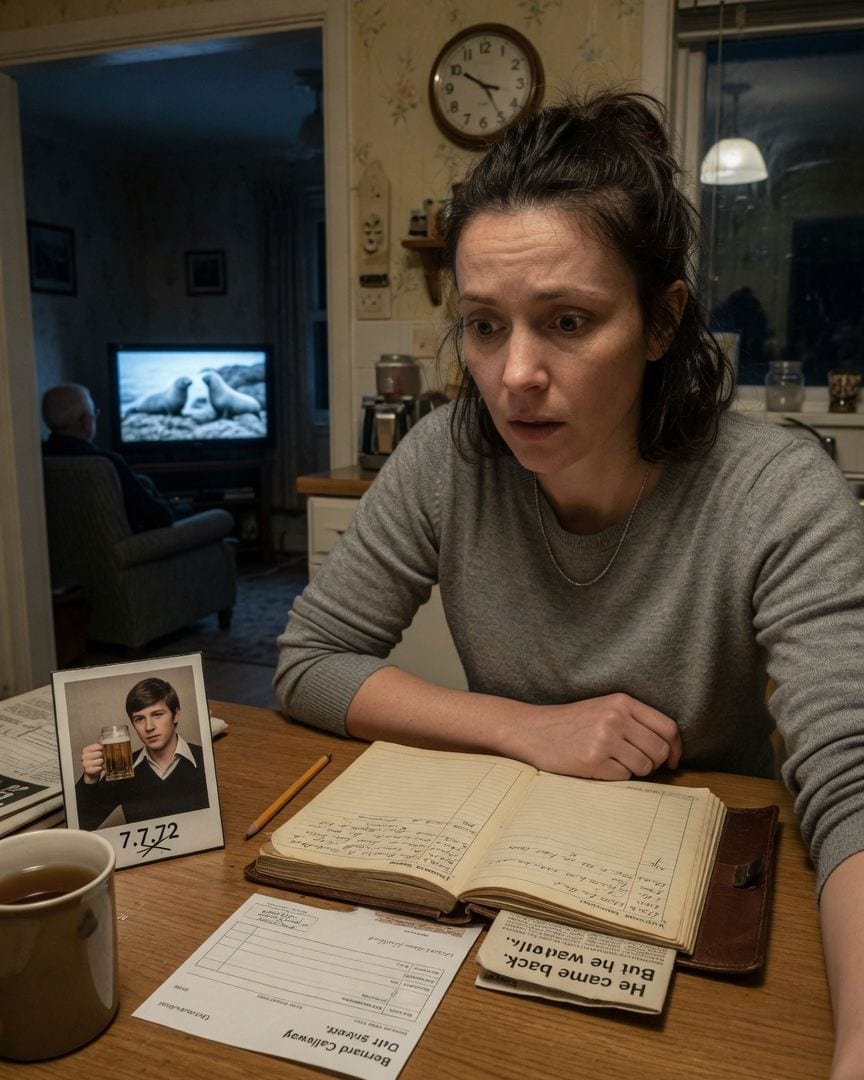
My father's bank slip had uncrossed '7's. He swore he never had that habit.
My father, Bernard, returned three months ago, a miracle after being presumed lost at sea. But a bank statement revealed a disturbing detail: the '7's in his signature were uncrossed. For decades, he'd meticulously crossed every '7', yet now he denied ever having the habit.
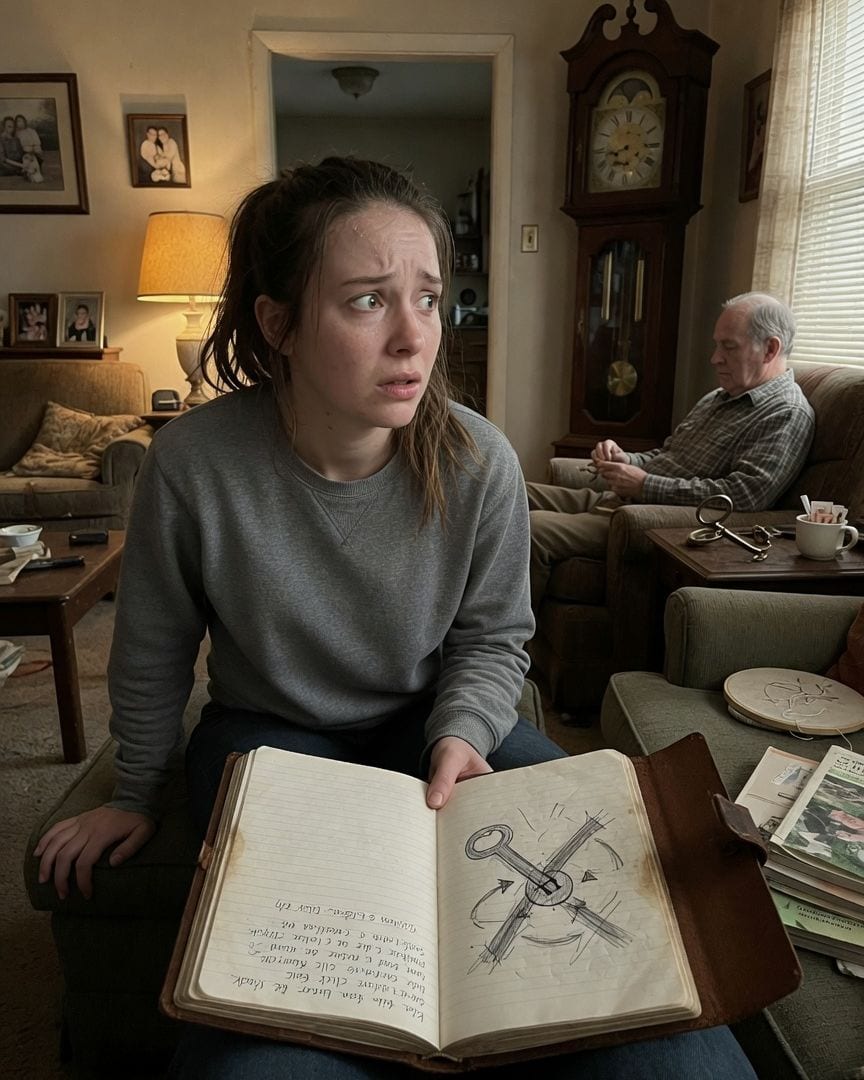
My father winds the hall clock backward, shattering the mainspring. He says he's done it wrong for years.
My father, Roy, returned after six bewildering days missing, a little quieter but otherwise himself. Then came the Sunday ritual: winding the old hall clock. But this time, his hand moved counter-clockwise, shattering the mechanism, and he simply smiled, saying he'd done it wrong for years.
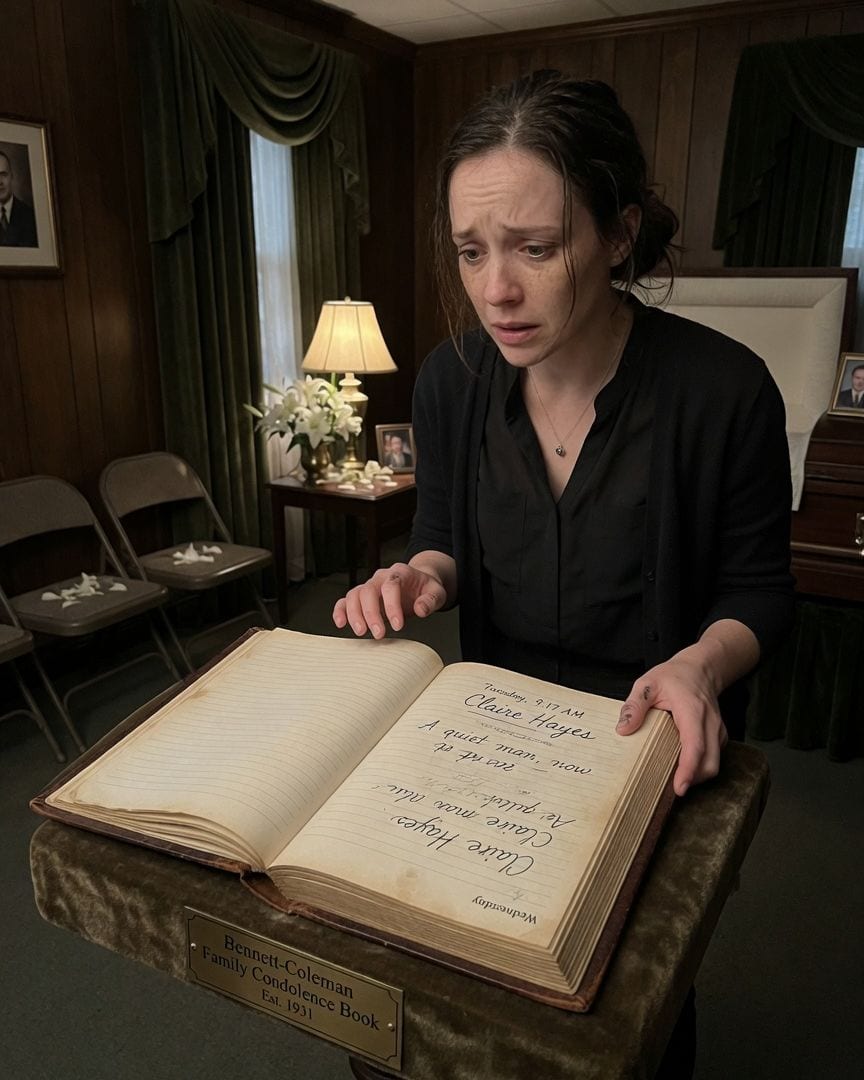
My uncle's wake book held my signature, dated yesterday, before he died. The words were not mine.
At Uncle Charles's funeral, I signed the condolence book. A nagging curiosity made me open it again, only to find my own signature already there. It was dated Tuesday morning, hours before my uncle had actually passed away, the ink impossibly dry.
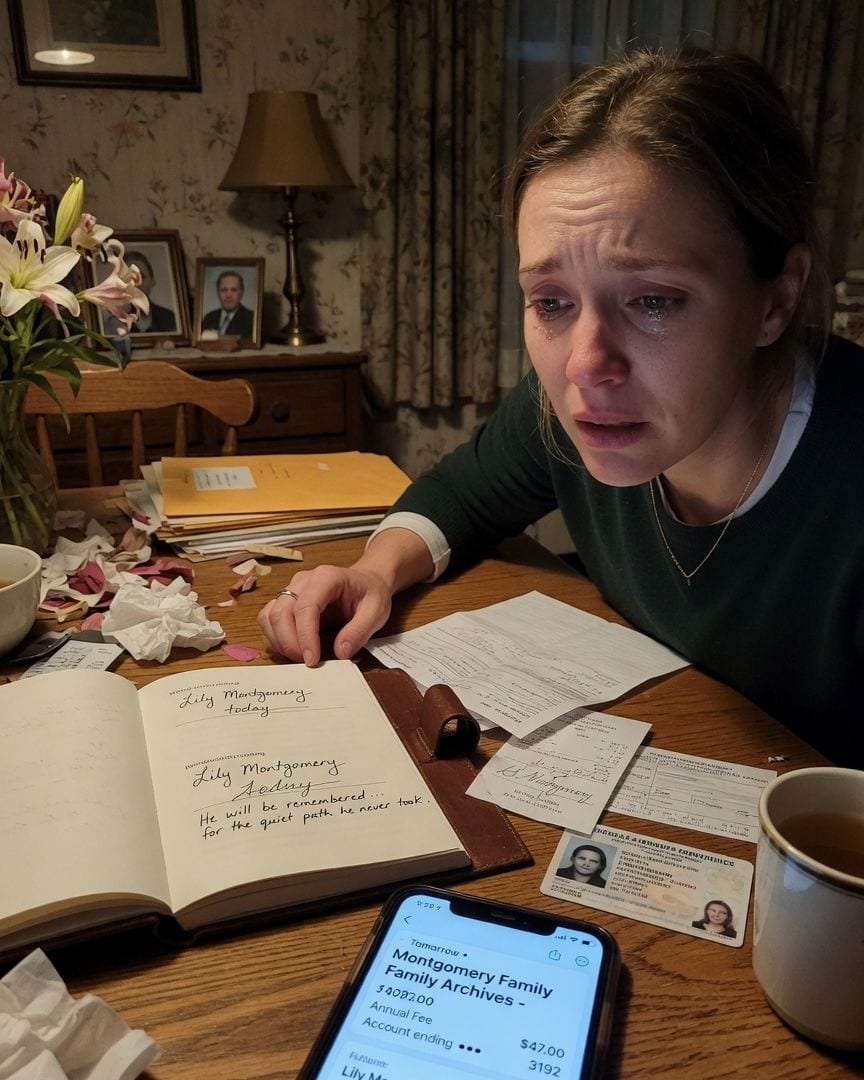
My handwriting was in the condolence book. Dated before my uncle died. Words I'd never choose.
At Uncle Howard's funeral, grief-stricken, I signed the condolence book. But later, flipping back through the pages, I found my own distinct handwriting on an entry dated the previous morning—before he had even died. The words beneath my name were chilling, a judgment I would never make.
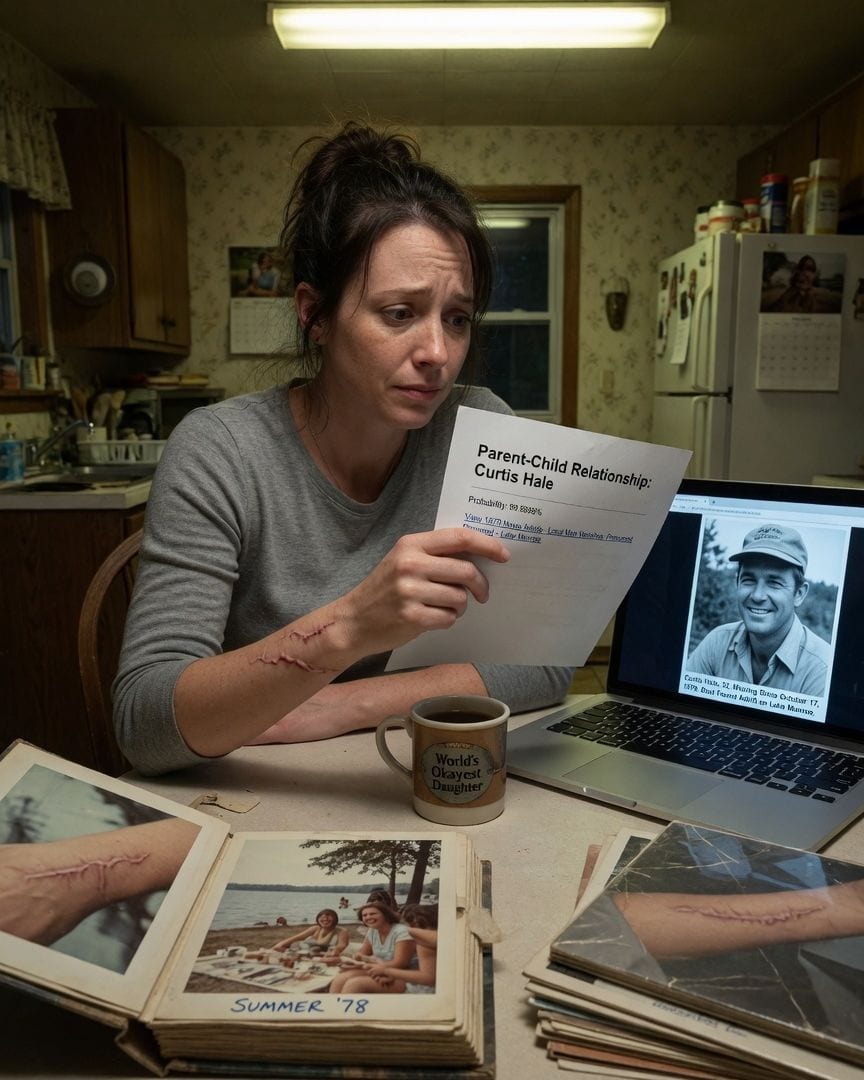
My DNA returned Curtis Hale as my father. He vanished in 1979. I was born twelve years later. The lab confirmed the match twice.
My DNA test results revealed something impossible: my biological father vanished in 1979, twelve years before my birth. My mother dismissed it as nonsense, but her reaction felt forced, leading me to old family photos. There, in a faded 1978 snapshot, I found my own distinctive childhood scar on the wrist of a stranger.
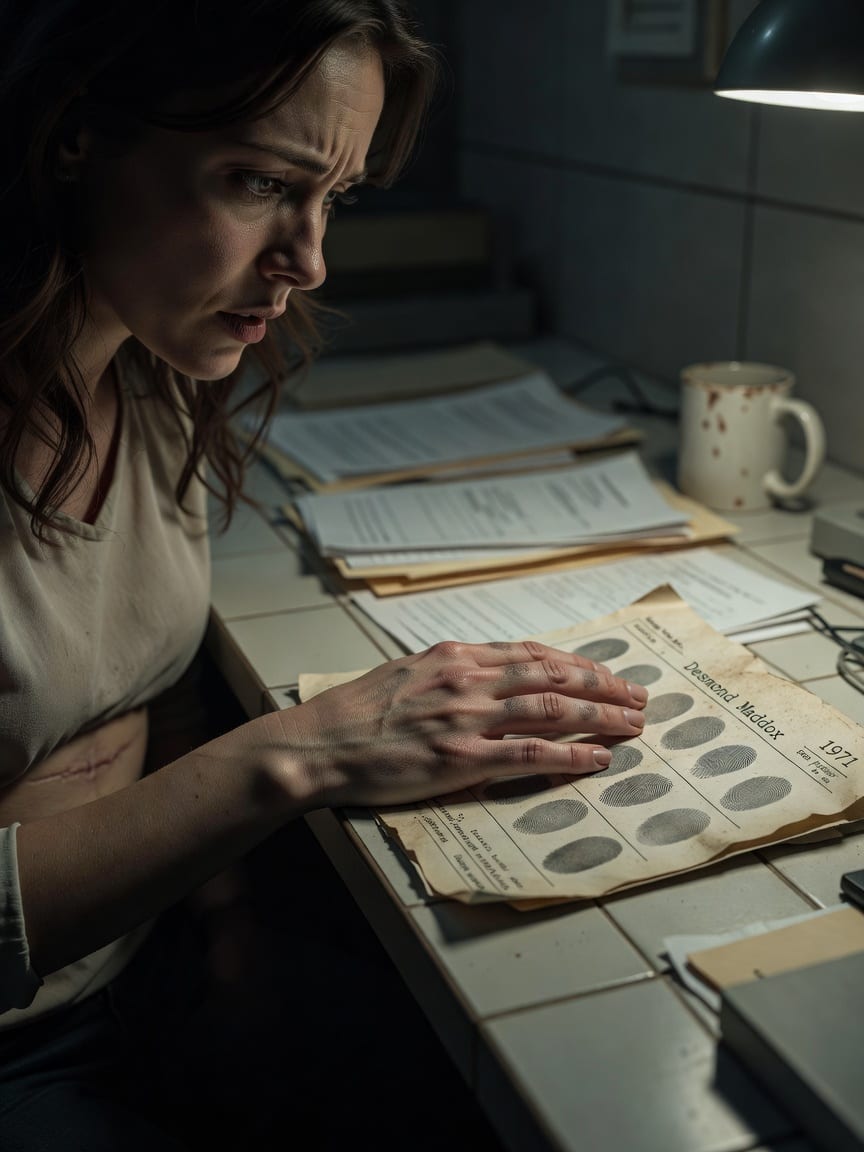
My fingerprints matched a man's 1971 arrest card. I've never been to that city, nor used that name. The examiner just stared at my hands.
As a fraud auditor, my world is built on facts, so when forensic examiner Russell Sheppard slid two ten-prints across his desk, I expected routine. One was mine. The other, yellowed from 1971, belonged to a Desmond Maddox arrested in New Haven – a city I'd never visited. But the impossible truth was clear: his prints were an exact match to mine.