My father winds the hall clock backward, shattering the mainspring. He says he's done it wrong for years.
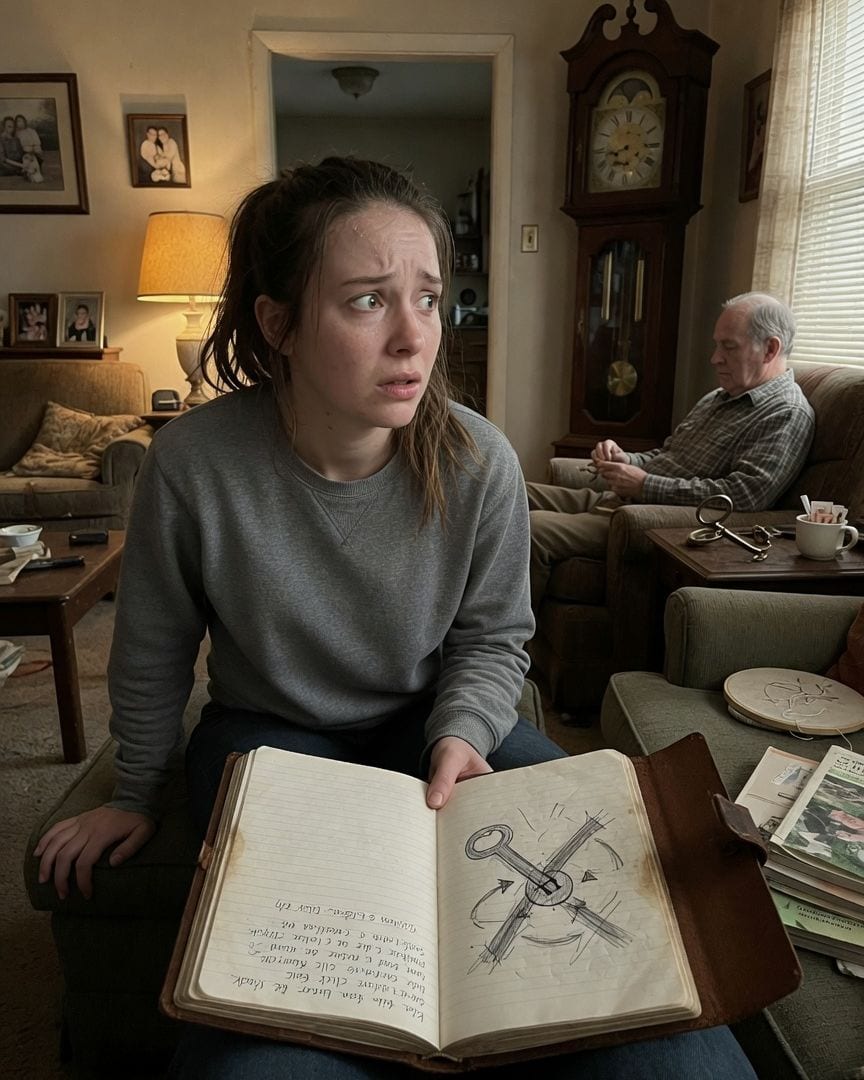
The first Sunday after my father, Roy Calloway, returned, I sat in the living room, trying to make sense of the silence that wasn't really silence.
He'd been missing for six days, a bewildering stretch of time after he'd simply lost his way home from church. Now he was back, sitting in his armchair, a little quieter, a little thinner, but undeniably him.
Or so I told myself.
Then came the ritual. Every Sunday afternoon, without fail, Dad would wind the old hall clock. It was a beautiful thing, mahogany, standing tall in the entryway, its gentle tick-tock the heartbeat of our house.
He took the small brass key from its hook, inserted it into the keyhole, and began the familiar turn. Only, this time, his hand moved not clockwise, but counter-clockwise.
I watched, frozen, as his fingers rotated the key, grinding against the mechanism. It wasn’t a hesitant motion, not fumbling. It was deliberate, firm.
There was a sharp, terrible crack that echoed in the quiet room, a sound like bone snapping. The mainspring, I knew, was shattered.
Dad pulled the key out. It was bent at an odd angle, useless. He looked at it, then at the clock, a faint, serene smile on his face.
"Must have been doing it wrong for years," he murmured, his voice soft, almost dreamy. He tossed the broken key onto the console table.
My stomach clenched, a cold, hard knot. He had wound that clock the same way every Sunday for my entire life. Its winding, always clockwise, was a comforting, immutable rhythm of home, a sound I associated with safety and permanence.
It was as fundamental as the sunrise.
My mother, Kathleen, sat in her armchair opposite him, a half-finished embroidery sampler limp in her lap. Her gaze was fixed on my father, a strange, unreadable calm on her face.
It felt less like true peace and more like a carefully maintained facade, stretched thin over something I couldn't comprehend.
I wanted to dismiss it—a lapse in memory after six days missing, the trauma of being lost—but the wrongness of it, the absolute certainty of my father's lifelong habit, clawed at me.
The clock incident was just the start. Roy, a lifelong coffee purist who took his brew black and strong enough to stand a spoon in, now asked for two sugars, stirring it slowly, almost contemplatively.
"Always preferred it sweet," he’d say, a faint, unfamiliar politeness to his tone. He, a meticulous planner who scheduled his garden work down to the hour, now shrugged off missed appointments with a wave of his hand.
"Oh, well, there'll be other days."
Most unnerving were the small, physical things. I remembered him always using his right hand for the heavy garden shears, the calluses on his palm a testament to years of work.
Now, he fumbled with his left, clumsily clipping rose bushes, occasionally nicking a finger.
His distinct, slightly off-key whistling of old tunes – the kind that made you smile despite yourself – was replaced by a perfectly pitched, unfamiliar melody, one I’d never heard him hum before.
It was technically better, flawlessly on tune, but it wasn't his.
I observed him, trying to find a mundane explanation for each anomaly. Maybe stress. Maybe the disorientation of being lost had caused some kind of minor stroke or brain fog.
The doctors had found nothing, of course, giving him a clean bill of health. But the cumulative effect was a growing knot of dread in my chest, tightening with each small, reversed detail.
It was like watching a familiar painting where someone had subtly altered a brushstroke, changing the entire feel of the art.
Then I remembered his old journal. A leather-bound book, heavy and worn, where he meticulously recorded daily thoughts, observations, and yes, habits. He’d kept it for decades, a personal chronicle.
I found it tucked away in his study, exactly where it always was, on the second shelf of his old oak desk, beside a stack of gardening manuals.
My fingers trembled as I pulled it out, the familiar scent of old paper and leather reassuring, almost. Flipping through, I found entries describing his precise routines, page after page of his neat, looping script.
There was a detailed account of the hall clock’s weekly winding ritual, even noting the satisfying click of the mechanism as he tightened it, emphasizing the firm clockwise turn.
I traced my father's familiar script with my fingertip, a small vindication against the creeping doubt. Here it was, in his own hand, proof of the clockwise turn, proof that I wasn't imagining things.
I turned the page, expecting more mundane entries about soil amendments or the price of feed, but my breath caught.
Scrawled across a blank section of the facing page, over a faint pencil outline of what looked like a half-started poem, was a crudely drawn diagram. It was in a hurried, almost childish hand that was definitively not my father's.
It showed a clock key, unmistakable, jammed into a winding hole, but turning hard counter-clockwise, with a series of aggressive, scratched-out arrows indicating the direction.
The lines were raw, visceral, as if carved by someone who understood the ritual only in reverse, a mirror image of the truth.
The diagram in the journal became my obsession. It burned into my mind, a stark, impossible contradiction.
I tried to subtly test Roy, casually asking about his coffee preferences, watching his polite, almost empty smile as he reiterated his newfound love for sugar.
I'd hand him a tool, say the pruning shears, and wait to see which hand he reached for. He'd always take it with his left, then, if I was still watching, switch it, almost as an afterthought, to his right.
But the initial instinct was always the reverse of what it should be. He either dismissed my questions with a vacant politeness or performed the reversed habit with an unsettling ease, as if it had always been that way.
Kathleen, meanwhile, seemed to observe everything. I’d catch her watching Roy with an intensity that bordered on clinical, her gaze lingering on his left hand as he stirred his sugared coffee.
Her eyes would follow his movements, sometimes with a flicker of something I couldn't quite name – not fear, not sadness, but a deep, knowing weariness.
When I tried to bring up the journal or the diagram, to share what I'd found, she changed the subject with an almost practiced smoothness. "Did you remember to call the plumber about the leaky faucet?"
or "The garden needs weeding, dear." It was an evasion so subtle, so immediate, that it felt like a door slamming shut in my face.
Driven by a desperate need for answers, for any explanation that wasn't the creeping horror of the impossible, I began researching local disappearances and subsequent returns from decades past.
The internet was a labyrinth of urban legends and vague missing-person reports.
It was hard to find concrete information, most of the old local newspapers weren't digitized, but I unearths a few vague, unsettling clippings from nearby towns, tucked away in dusty archives.
A woman who returned after a week, suddenly preferring bitter tea to her lifelong love of sweets. A man found after a month, who inexplicably started writing left-handed despite being a renowned calligrapher.
Each story carried a whisper of something 'off,' a detail that defied simple explanation. A feeling, reading those old articles, that the world was far wider, and far more precarious, than I'd ever understood.
The more I dug, the more I felt a new layer of observation. It wasn't just Roy; it was Kathleen.
I found her standing silently in the doorway of my study one afternoon, where I had left out my research notes – printouts of obscure folklore, clippings from microfiche. My back was to the door, and the floorboards hadn't creaked.
She simply smiled, a cool, unreadable expression, and said, "Still trying to make sense of things, dear?" The question felt less like maternal concern and more like a warning, a subtle assertion of knowledge I didn't possess.
The air in the small room suddenly felt heavy, thick with unspoken things.
Later, in the attic, searching for old family albums, anything that might offer a clue about my grandmother or earlier family history, I stumbled upon Kathleen’s antique sewing box.
It was an elaborate wooden box, inlaid with mother-of-pearl, smelling faintly of lavender and old linen. Buried beneath spools of thread and thimbles, nestled amongst ancient lace, I found a small, hand-stitched sampler.
It depicted a grandfather clock, its hands frozen at an arbitrary time, and a key winding it backward. Beneath the image, stitched in faded green thread, was a single, stark word: 'Returned.' The stitches were meticulous, almost obsessive.
As I held it, the cold dread I’d been trying to outrun washed over me, deeper and colder than before. The clock, the winding, the word – it all clicked into a terrifying, impossible pattern.
The attic, usually a haven of dusty memories, felt suddenly cavernous, the shadows lengthening around me. The attic door creaked open, a slow, deliberate sound that made me jump.
Kathleen stood there, her face utterly devoid of emotion, her eyes fixed on the sampler in my hands.
I confronted Kathleen in the living room, holding up the sampler as if it were a weapon. My voice, when I spoke, was thin, stretched tight with fear. "What is this, Mom? What does 'Returned' mean?"
Her composure, usually absolute, finally cracked. Just a fraction, but it was enough. Her gaze dropped from my face to the sampler, her fingers reaching out, almost reverently, to trace the backward-wound clock.
"It means he's not entirely your father, Sarah. Not anymore."
My breath hitched. The words, spoken so calmly, were a punch to the gut. I tried to speak, but no sound came.
She sat down, her hands smoothing the fabric of the sampler on her lap. Her voice was low, steady, but threaded with a deep, ancient sorrow.
"My own mother… your grandmother… she went missing for two weeks when I was a young woman. Just vanished from the farm one morning. The whole county searched. When she returned, she was… subtly, chillingly different."
I remembered the faded photograph. My grandmother, Sarah's namesake, a woman known for her vivacity and quick wit. "Different how?"
"The same face, the same memories," Kathleen continued, her eyes distant, "but a lifelong fear of heights had become a fascination. She’d climb the highest silo just to watch the sunset.
Her deep love for gardening, for working the soil with her bare hands, was replaced by an aversion to dirt, to anything that came from the earth. She'd wear gloves constantly, even indoors."
She described the creeping dread, the isolation of being the only one who noticed. The way her father, my grandfather, dismissed it as shock, as a phase.
"I read old folklore, spoke to hushed elders in the next valley, people who remembered things. I pieced together a horrifying truth: that sometimes, when people go missing, something else comes back in their place.
Substitutes," she said, the word a heavy stone, "wearing the skin, but not the soul."
The words echoed in the quiet room. "You mean… like Roy?"
Kathleen nodded slowly. "I've spent decades learning to identify them, to live with them, trying to find a way to make them… leave, before they fully settled."
She explained that the reversed habit was their tell, a consistent signature across all of them. The clock, the coffee, the handedness – it all snapped into sickening focus for me, proving my instincts were right. The nightmare was real.
And it was living in our house.
Kathleen's voice was low, heavy with generations of unspoken dread. "I thought I knew how to stop them, Sarah. How to unmoor them before they became… permanent."
She rose, walked over to her sewing box, and retrieved an old, faded photograph from a hidden compartment. It was a picture of her own mother, Sarah’s grandmother, taken years after she returned.
The woman in the photo was smiling, but it wasn't right. Her eyes were utterly blank, a chillingly vacant smile that didn’t reach them.
She held a teacup, fragile china, in her left hand, though I knew from family stories and old letters that my grandmother had been fiercely right-handed, a dominant trait she'd often joked about.
Kathleen's gaze was distant, haunted, fixed on the image. "She eventually became like that. Empty. A living statue. She would just… sit. All day."
I felt a cold wave of horror, a visceral understanding of what 'empty' meant. This was my grandmother, yet utterly alien, a shell.
Kathleen then quietly stated, her voice barely a whisper, that the specific ritual she'd been using to identify and unmoor these things, a ritual involving a particular antique silver key, stopped working just a few months ago.
Right before Roy went missing.
Kathleen explained the ritual, her voice still quiet, but with a new edge of desperation. "It was a complex sequence. A specific pattern of turns, a binding chant, using that antique silver key.
The one that came with the clock, the one Roy always used for winding." She paused, her eyes wide with a dawning, terrible realization. "It was meant to disrupt the substitute's initial hold, to force it to abandon the host.
It was a way to make them… leave. Before they became too deeply rooted."
Her voice trembled then. "But the key… it was gone. I searched everywhere for it after Roy came back. It was nowhere. He took it with him when he left for church that Sunday."
I gasped, the air knocked from my lungs. The key. The very object meant to protect, to unmoor these things, was taken by the thing that returned. The horror deepened, twisting in my gut.
"It didn't just stop working, Sarah," Kathleen continued, her eyes fixed on mine, full of a chilling certainty. "It was used. It was used to bind it. To bind him."
The implication hit me like a physical blow: the entity wasn't just subtly wrong, a flawed copy. It had evolved, or learned. It had used their own defense against them, twisted it, to secure its place.
"The reversed habits, the clock…" I whispered, the words catching in my throat. "It wasn't a mistake. It was testing the new lock."
Kathleen nodded, tears finally brimming in her eyes. "Yes. The clock wasn't just a habit reversed.
It was the substitute, now fully entrenched, demonstrating its mastery over your father's former life, and over the very mechanism that had once signified his identity, and our last defense."
We found 'Roy' in the living room, sitting in his usual armchair, calmly reading the newspaper.
He held it upside down for a beat, his eyes scanning the inverted headlines with a vague, serene focus, before he slowly, deliberately righted it.
The morning sun streamed through the window, illuminating dust motes dancing in the air, but the room felt impossibly cold.
Kathleen held up her mother's faded photograph, then the journal, open to the page with the crudely drawn, inverted winding diagram. "You aren't him," I stated, my voice shaking but firm, surprised it came out at all.
"You took him, and you used his own things against us."
'Roy' slowly lowered the newspaper. His serene, slightly vacant smile widened. "Your mother almost had it right, all those years. Almost."
The voice was a perfect imitation of Roy's, the same timbre, the same slight rasp, yet utterly devoid of his warmth, his love. It was a sound divorced from any true feeling.
He reached into his pocket and pulled out an antique silver key, identical to the one Kathleen had described, the one that used to belong to the clock, twirling it casually between his fingers.
This one was pristine, catching the light, not a scratch on its polished surface.
Kathleen's face drained of color. "The binding key," she whispered, her voice barely audible.
I saw it then, a flicker of something ancient and hungry in 'Roy's' eyes as he looked at the key, then at us. Not human emotion, but something akin to satisfied malice, a deep, satisfied wrongness.
In a sudden, desperate move, Kathleen grabbed a heavy antique music box from the mantelpiece, a solid brass thing, and hurled it at 'Roy,' not to harm him, but aiming squarely for the key in his hand.
The music box struck his hand with a dull thud. The key clattered to the polished hardwood floor, bent and broken into two pieces.
For a split second, 'Roy's' face contorted into something utterly alien, a flash of pure, wrong, inhuman rage that twisted his features into a mask of monstrous fury, before settling back into his serene, empty expression.
He simply looked at the shattered key, then at us, his smile now utterly vacant, like a doll's.
The 'thing' in Roy's body became inert. It sat in the armchair, unmoving, watching the world with that same serene, empty expression. The flicker of rage was gone, replaced by a profound, unfeeling stillness.
Sarah and Kathleen explained to concerned neighbors and relatives that Roy had suffered a severe, sudden stroke, leaving him aphasic and catatonic.
They arranged for full-time care, transforming their home into a quiet, watchful prison, where 'Roy' sat by the window, a silent, empty sentinel. The hall clock remained broken, its shattered mainspring a silent testament to the beginning of their nightmare.
Life settled into a new, unsettling rhythm, marked by the presence of the substitute and the unspoken, terrible truth between mother and daughter.
Months passed. Sarah often found herself watching Kathleen, now. Her mother, 'the witness who always knew,' seemed too calm, too accepting of this new, inert version of Roy.
She tended to him with a detached efficiency, a grim resignation that felt older than her years. One night, Sarah found Kathleen in the study, late, her back to Sarah.
She was polishing something small and metallic, her movements slow and deliberate in the quiet room.
Sarah stepped closer, her heart hammering an uneven rhythm against her ribs. Kathleen turned, her gaze meeting Sarah’s, revealing a different antique silver key, one Sarah had never seen before, glinting softly in the lamplight.
It was perfectly intact, smooth and cold, without a single scratch.
Kathleen smiled, a faint, knowing curve, and the glint of the polished silver key caught the light, promising more than just 'in case'.
If this one got to you
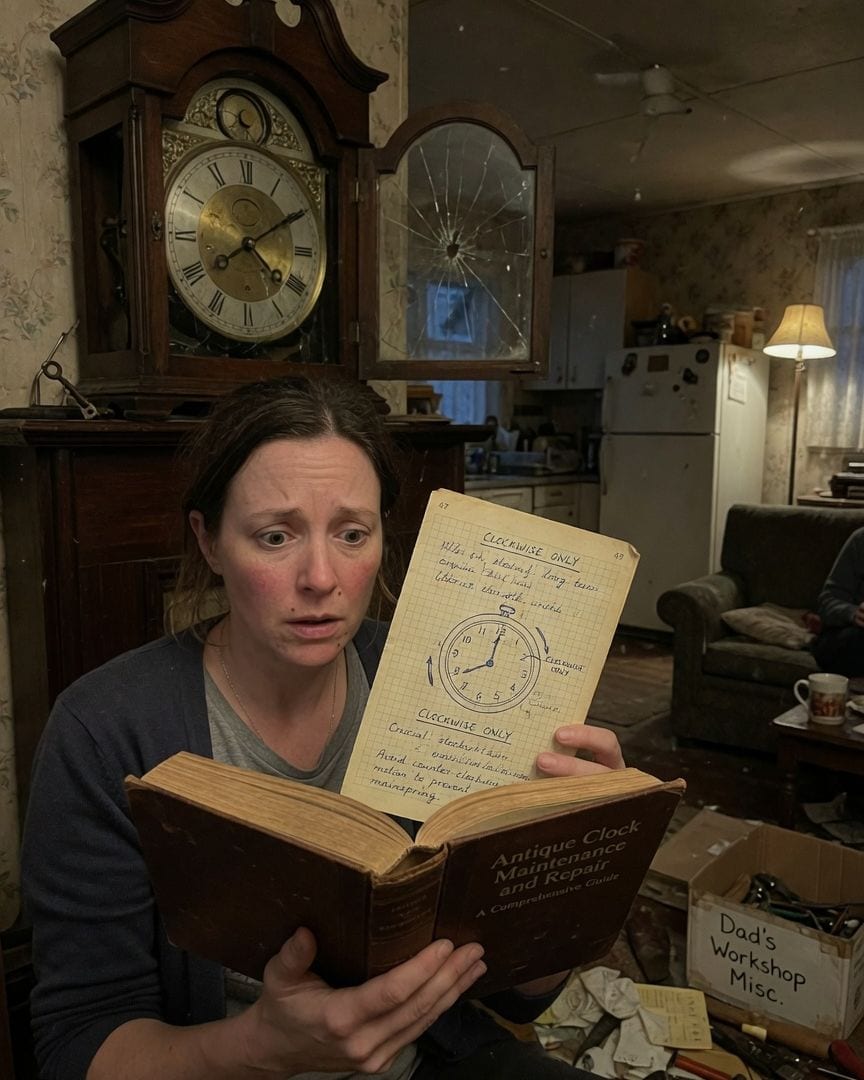
My father wound the hall clock the wrong way. He said he'd been doing it wrong for years.
My father, Henry, has wound our antique hall clock clockwise every Sunday for 32 years. Tonight, just days after getting lost, he turned the key counter-clockwise, shattering it. He looked at the wreckage and calmly stated, 'Must have been doing it wrong for years.'
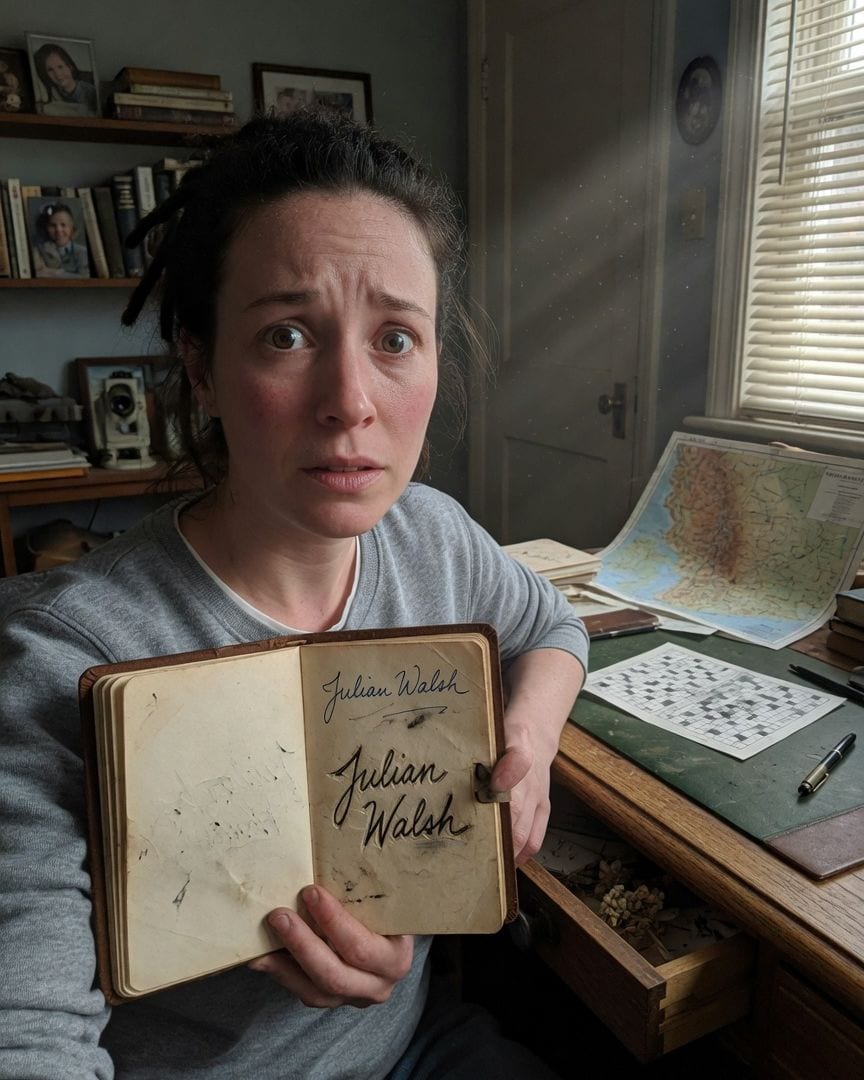
My father signs his name left-handed now. He was right-handed for sixty years. When I asked, he just wrote it again and asked what I meant.
My father, Julian Walsh, returned eighteen months after we buried an empty casket. It was a miracle, a genuine impossible relief, until he signed his insurance papers. For sixty years, my father was fiercely right-handed, but now he etched his name with a confident left-handed flourish, claiming he always had.
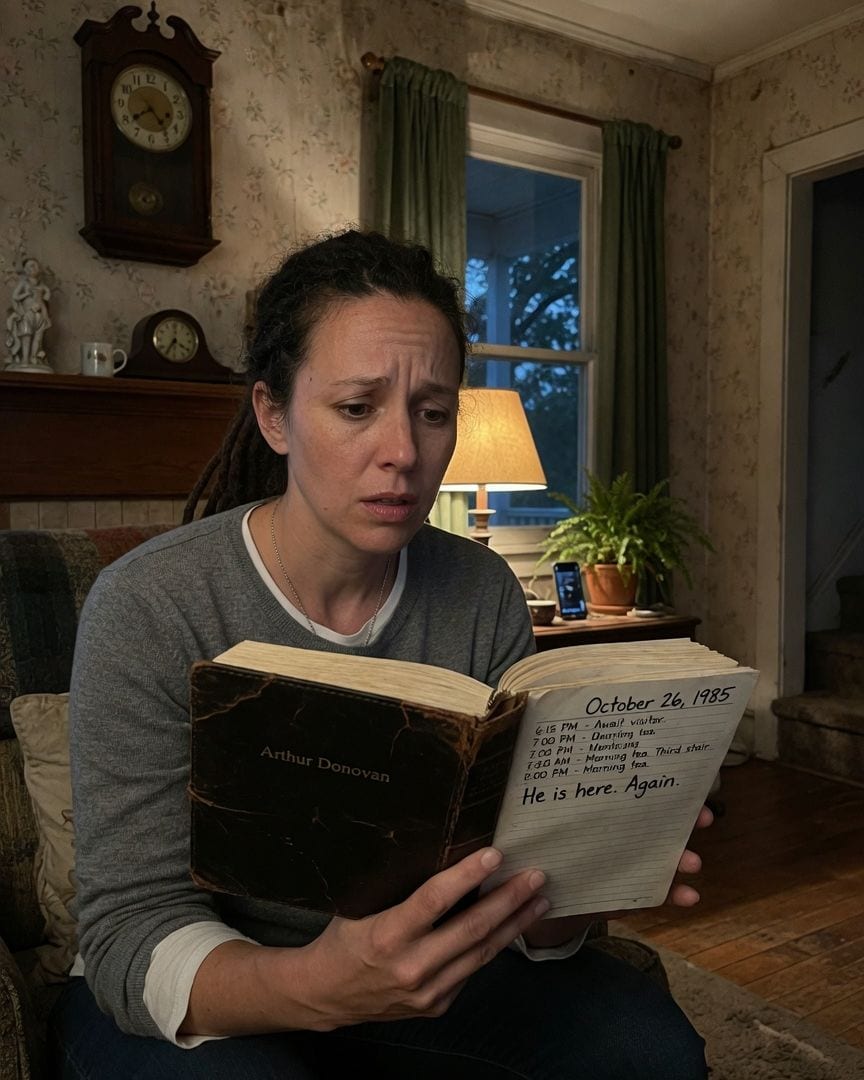
My front door gets three firm knocks every 6:15 PM. Nobody's ever there, but the doormat is always nudged, like someone just wiped their feet and left.
I moved into my inherited house expecting quiet, but every evening at 6:15 PM, three firm knocks hit my door. Each time, I find the porch empty, with no one in sight. My phone camera confirms it: only the doormat subtly shifts, echoing the clear knocks, like an invisible visitor wiping their feet.
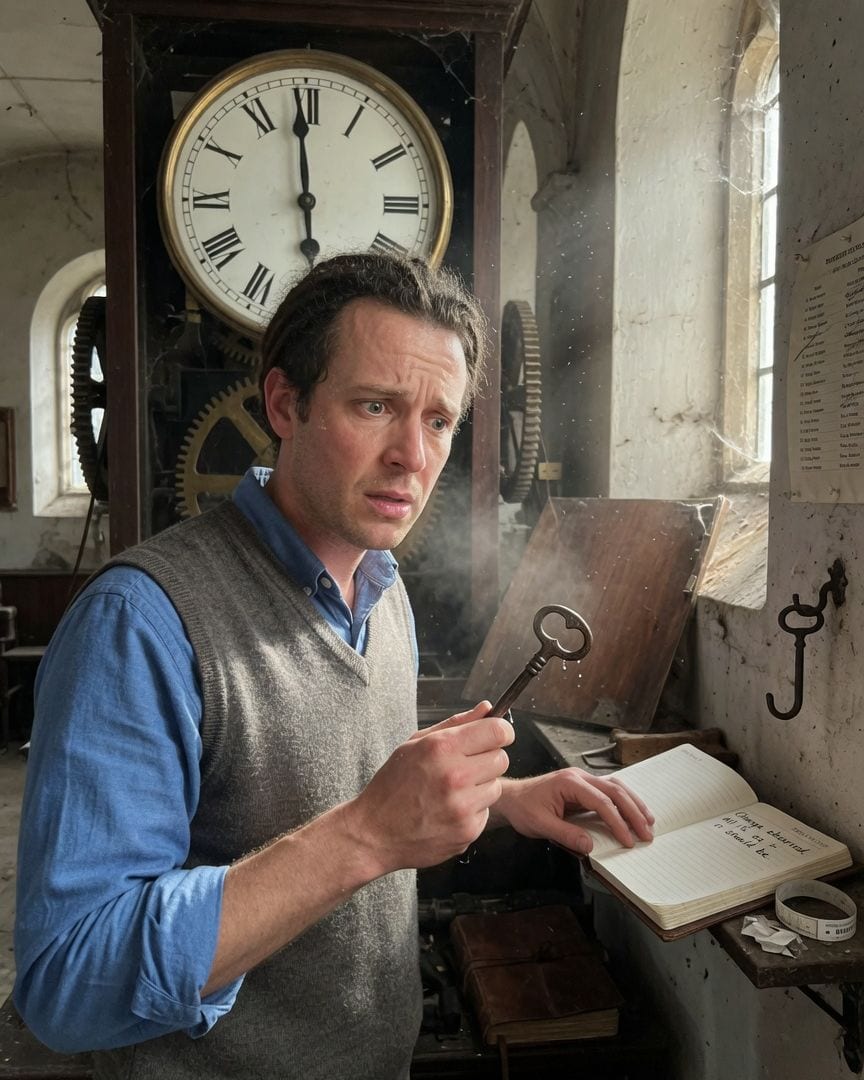
My church clock was already set, key warm, logbook signed — the sexton’s been in hospital for a month.
As caretaker for Stonely's historic church, I was tasked with setting its ancient clock for Daylight Saving. But when I went to turn the key, the massive mechanism was already set to the correct new time. Even more unsettling, the key itself was distinctly warm, as if someone had just used it, despite the sexton being strictly bedridden in the hospital.
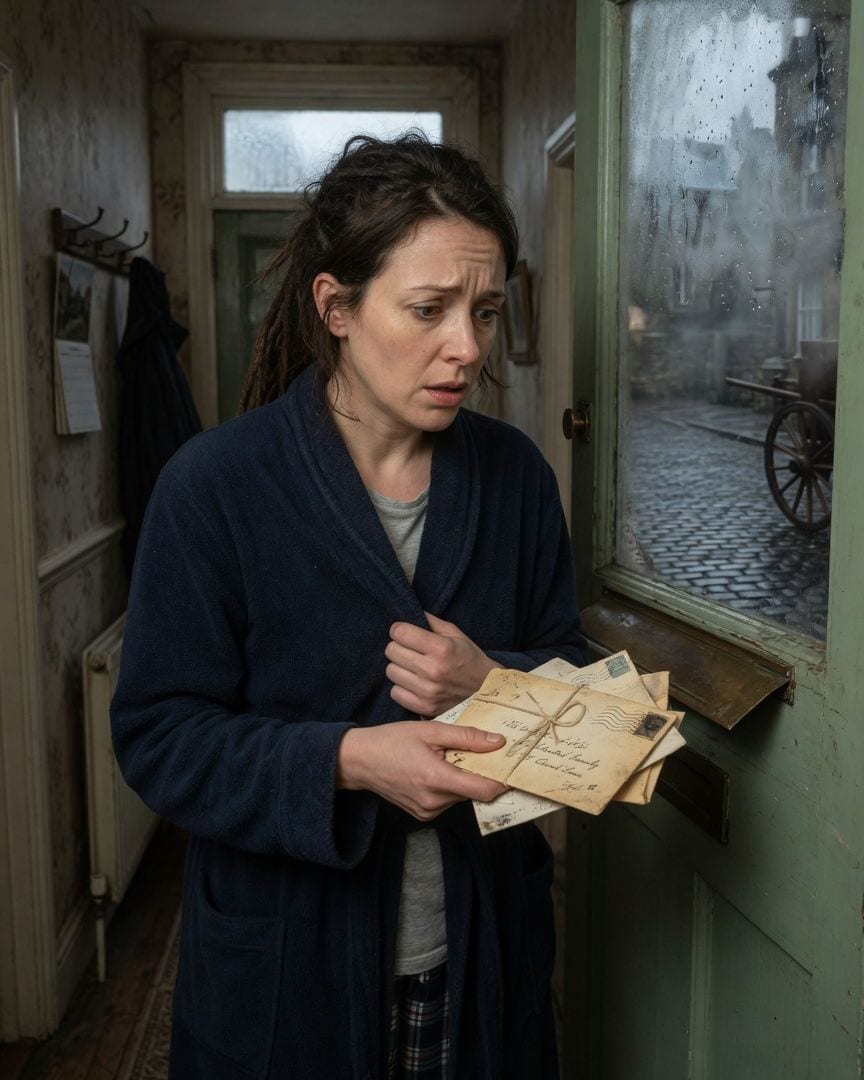
Seventy years ago, a hidden journal recorded my door opening to the wrong street and receiving Lockwood post.
I'd only recently moved into my inherited house, a quiet place on the edge of town. One grey morning, a distinct clatter from the front door's post flap caught my attention. Reaching down, I expected my gravel path, but instead, the flap showed a dark, cobbled street that wasn't mine. A bundle of warm, old letters, addressed to 'The Lockwood Family,' slid through, before the vision flickered and was gone.

My lighthouse log has my own 3 AM entry for a phantom ship. I was alone in the tower, and I wrote no such thing.
Perched in the lantern room for my usual 2-6 AM watch, I reached for the thick logbook. But the 3:00 AM entry, under my own name, detailed a vessel I never saw. The words were in my own ink, yet I had never written them.