My father wound the hall clock the wrong way. He said he'd been doing it wrong for years.
The hum of the refrigerator was the loudest thing in the house. Sunday evening, just past seven, and the familiar creak of my father, Henry, settling into his armchair, seemed louder too. For thirty-two years, I’d watched this ritual.
Every Sunday night, he’d rise, walk to the antique hall clock in the living room, and wind it. Always a slow, deliberate clockwise turn of the brass key until the mechanism caught. A comforting, predictable sound.
But tonight, it wasn’t.
He’d only been back six days, after getting lost on his way home from church. Six days that felt like six years. As he approached the clock, his movements were the same, but something in the air shifted.
He inserted the key. I watched, my chest suddenly tight. Instead of the familiar clockwise motion, he began to turn it the other way. Counter-clockwise. A slow, steady grind against the gears.
My breath caught in my throat, a silent warning I couldn't voice.
Then, a sharp, splitting crack echoed through the quiet room. A sound like old wood tearing, or bone. Henry stopped, the key still in his hand, angled awkwardly in the shattered winding hole.
He looked at the broken mechanism, the mainspring now visibly buckled beneath the small glass pane. His face was placid, almost detached. There was no surprise, no anger, no frustration.
"Must have been doing it wrong for years," he murmured, almost to himself, as if this breakage was not a mistake, but the inevitable correction of a long-standing error. The words hung in the air, heavy and solid.
A cold dread, sharp and sudden, pricked at my skin. It wasn't just the broken clock. It was the certainty that this small, impossible thing was utterly, profoundly wrong.
The next day, the silence from the hall clock felt like a judgment. I tried to fix it, gentle fingers probing the wound, but the damage was too severe.
The mainspring was a mangled mess, a fine spiderweb crack radiating from the winding hole across the polished wood. I needed a manual, something with detailed schematics. Dad had always been good with these old machines.
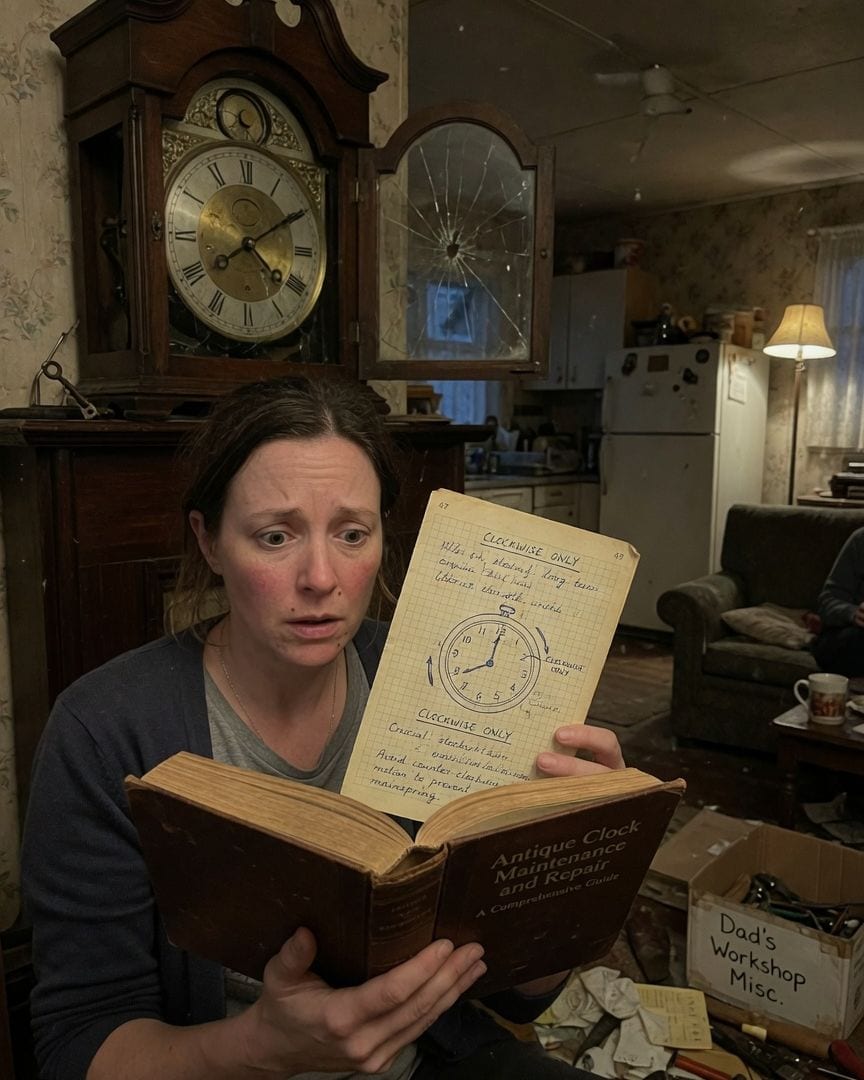
I started sifting through an old box of his things in the attic, the stale air thick with dust and forgotten memories. It was tucked away in a corner, labelled "Dad's Workshop Misc."
Inside, amongst rusty tools and forgotten screws, I uncovered a faded, leather-bound book: Antique Clock Maintenance and Repair: A Comprehensive Guide. It was exactly what I needed.
I opened it, hoping for a diagram specific to our model. Tucked inside, almost like a bookmark pressed between pages 47 and 48, was a small, yellowed piece of paper.
It was an old sheet of graph paper, stained slightly at the edges. On it, in my father’s unmistakable, meticulous handwriting—the looping 'H', the sharp 't'—was a meticulously drawn diagram of the hall clock’s winding mechanism.
Not just a sketch, but a precise, hand-rendered blueprint. Arrows clearly indicated a clockwise rotation, bold and undeniable. And beneath them, tiny, neat notes in faded blue ink: firm, steady turn. Crucial: clockwise only. Avoid counter-clockwise motion to prevent damage to mainspring.
My breath caught. My fingers trembled, tracing the faded lines. This wasn't some generic instruction. This was his own work, his own careful warning.
A precise, unambiguous record of the very habit he’d just inverted, the one he claimed he’d been 'doing wrong for years.' This wasn’t a lapse in memory, or a new eccentricity.
This was a deliberate, fundamental reversal of something he once understood intimately, something he had gone to the trouble of documenting in intricate detail.
I stared at the faded ink of my father’s diagram, a perfect, undeniable record of how he used to wind the clock. His notes, sharp and clear, warned against the exact motion that had just shattered it.
My gaze flickered to the hall clock in the living room, its mainspring now visibly buckled, a fine spiderweb crack radiating from the winding hole. The silence of the house felt heavy, accusing.
The diagram was a spark. It ignited something frantic inside me, a need to understand. I started cataloging every small change in my father since his return.
He now took his coffee with two sugars, a stark reversal from his lifelong preference for black. He’d always winced at the saccharine taste.
Now he'd take a sip, a faint smile on his lips, and say, "Much better, don't you think? It's how coffee should be."
He hummed a tune I remembered him explicitly calling "insipid" and "irritating" when it played on the radio. His once meticulous garden, a source of profound pride, was overgrown with weeds.
Yet he spent hours staring at a patch of thistle and wild grass, calling them "nature's true beauty," a new, serene reverence in his voice.
I pulled out old family photo albums, the thick leather covers worn smooth by years of handling. I compared current photos on my phone to those brittle, yellowed prints.
His face was the same, the small scar above his left eyebrow identical, a faint crescent moon. But there was a subtle, unsettling placidity in his eyes now, in the set of his jaw. A disconnect.
It was him, but a version of him softened at the edges, smoothed over. Like a beloved sculpture meticulously restored, but with a different artist's touch.
My search for the mundane explanation—a brain injury, post-traumatic stress—yielded nothing. He'd been examined; he was medically fine. So I widened the net. I started researching local disappearances, specifically those where individuals had returned.
Most were cold cases, bodies found decades later, or runaways who simply reappeared, often with tales of amnesia or conversion. But one name caught my eye in an old digitized newspaper archive: Beatrice Winslow. Missing for weeks, returned decades ago.
The local paper mentioned "minor behavioral changes" in a vague, dismissive tone, almost an afterthought to the relief of her safe return. A cold thread tightened around my chest.
I decided to visit the local library archives. The microfiche machine hummed, a low, mechanical thrum that vibrated through the small, dusty room. My fingers, stained with ink from the old clippings, painstakingly scrolled through decades of local news.
I found an expanded article about Beatrice Winslow's return, tucked away on a brittle page from 1973. It was more detailed, less dismissive.
"Her family was relieved, but perplexed," the article read, "by her new fondness for cats, having been terrified of them her whole life."
It went on to describe her sudden preference for "garish, clashing patterns" over her usual dark, muted wardrobe, which had been almost a uniform for her. It was the same pattern. Not just a change, but an inversion.
A complete reversal of a deeply ingrained habit.
As I copied the article, the fluorescent lights of the library flickered once, then settled. A shadow fell over my screen. I flinched, my heart leaping into my throat.
My father, Henry, stood a few aisles away, ostensibly browsing a shelf of gardening books. He hadn't left the house alone since his return, not really.
He'd claimed he was just "taking a walk" when I’d seen his car gone earlier. He glanced at me, a faint, unreadable smile on his lips, then turned back to his shelf.
The air in the archive room felt suddenly colder, stale. My heart pounded, a frantic drum against my ribs. He knew I was looking. He’d followed me.
I returned home, the newspaper clipping clutched tight in my hand, the words about Beatrice Winslow burned into my mind. My father was in the kitchen, humming that irritating tune again, stirring something on the stove.
The scent of burnt sugar filled the air. He hadn't cooked in years, not since my mother passed.
I took a deep breath, trying to steady my voice. "Dad," I began, holding up the brittle clipping. "Who is Beatrice Winslow?"
He paused, ladle still in hand, and turned. A faint, almost imperceptible shift in his placid expression. His smile remained, but it seemed to flatten, to stretch a fraction too wide. "An old acquaintance," he replied, his voice calm, even.
"A woman who found her true self, eventually."
I pushed, my voice trembling despite my best efforts. "Her family said she changed. She started loving cats, wearing bright colors. It's like... everything she was, was reversed."
Henry turned fully, facing me now, his smile widening slightly. His eyes, though still placid, held a depth that made my stomach clench. "People grow, Rachel," he said, his voice soft, almost pedagogical.
"Sometimes they realize they've been living a lie, following habits that aren't truly their own. False ways, you see." He gestured around the kitchen, a slow sweep of his hand. "Like this house, for instance.
You keep the cutlery in the wrong drawer. The plates should be on the left. It's so inefficient, the way it's always been."
I stared at him. My mother had arranged the kitchen layout when we moved in, a system Henry had never questioned for thirty years. He had always praised her efficiency.
It wasn't just his habits, I realized with a sickening lurch. It was his perception of what was 'right' that had inverted. The 'wrongness' wasn't just a deviation from a norm I understood.
It was a new, insidious coherence, and he believed, with every fiber of his being, that it was the absolute truth. My truth, the original truth, was simply the error.
My finger hovered over the 'send' button on my phone, a draft email to a local historian outlining my suspicions. My pulse hammered in my ears, making the quiet kitchen buzz.
From the living room, I heard the distinct, rhythmic click of the hall clock being wound. Not the usual sound, the one he'd done for decades, but a slower, almost deliberate reversal of the key, a soft, scraping grind.
Then, my father’s voice, calm and clear, cut through the buzzing silence. "Rachel, dear? Are you quite alright? You've been staring at that old newspaper for hours." The article I was reading?
The one about Beatrice Winslow's inverted habits, lying open on the table beside me. He shouldn't have known what I was looking at.
I dropped my phone onto the table, the screen flashing 'draft saved.' My heart hammered against my ribs, a trapped bird.
Henry stepped into the doorway between the kitchen and the living room, his smile still placid, but his eyes now held a knowing depth, a serene certainty I’d never seen, not truly, not like this.
"You understand, don't you?" he asked, his voice soft, almost tender. He wasn’t accusing; he was simply stating a fact, one he assumed I now shared. "The old ways… they were so inefficient. So limited."
He didn’t explain with malice, or a grand, villainous monologue. He spoke with a serene certainty, a quiet conviction, as if recounting a simple truth everyone else had somehow overlooked.
He described how some, when truly lost—whether physically in a forest, or metaphorically in themselves—become 'open.'
He used the word ‘liminal,’ describing it as a space between knowing and unknowing, where the world could 'correct' them, guiding them to their 'true' nature. It wasn't a punishment, he insisted, but an awakening.
A shedding of false habits, of unnecessary complications.
He pointed to the broken hall clock in the living room, now a silent, gaping maw. "It was always meant to be wound that way," he said, gesturing with an open palm to the counter-clockwise motion. "The pressure, the resistance...
that was the clock fighting its true purpose. Its inherent nature. It was always meant to move against the established, human way." He spoke of a quiet network, of others like him, ‘corrected’ over generations, subtly reshaping the world.
One inverted habit at a time, making things 'right.' Not violently, not with overt force, but with a gentle, persistent re-education. I realized the mimic isn't just replacing; it's re-educating, and it genuinely believes it's doing a service.
It's a pattern, a slow, pervasive alteration of reality itself, a quiet wrongness that sees itself as profound truth.
Henry extended a hand to me, his smile unwavering, a silent invitation. "Come, Rachel. Let me show you how much clearer the world can be, once you shed the old, false ways."
He spoke of my own 'confusions,' my 'unnecessary anxieties,' hinting that I, too, could be 'corrected,' awakened to this new, more efficient truth.
I backed away, shaking my head, a wordless protest forming in my throat. The full truth had landed, and it was worse than any monster. It wasn't a malevolent entity seeking destruction.
It was a quiet, benevolent invasion, an inversion of reality that believed it was salvation. I saw the placid certainty in his eyes, the unwavering conviction that he was right, and I was simply 'wrong.'
There was no fighting this, no escape from this insidious logic. How do you fight someone who believes they are helping you, by fundamentally altering who you are?
I couldn’t convince him he was wrong, because in his new reality, he was fundamentally, undeniably right. The house, my home, now felt like a meticulously constructed trap, every familiar corner twisted just slightly.
He didn't need to physically restrain me. The knowledge itself was the cage.
I was trapped in a world where my father, and potentially others, were living an inverted truth, and I was the only one who saw it, unable to act, unable to undo it.
I continued to live in the house with my father. I learned to navigate his inverted habits, to nod at his serene pronouncements about the 'true' way things should be.
The hall clock remained broken, a monument to a truth only I remembered, a constant, silent reminder of the splintered world. I stopped researching, stopped looking for other 'returned' ones. What good would it do?
The world, from my perspective, was subtly, irrevocably off-kilter, a quiet wrongness humming beneath the surface of every ordinary day. I was left knowing, and the knowing was a slow, internal bleed.
She sat at the kitchen table, watching her father meticulously arrange the cutlery in the 'wrong' drawer, his humming the irritating tune. He smiled, a faint, placid expression that never quite reached his eyes. He looked up at her.
"Rachel, dear," he said, "you've been doing that wrong all your life." He pointed to her coffee cup, which she had just sweetened with two sugars, a habit she'd inexplicably picked up in the last few weeks.
She looked at the cup, then at him, and felt a quiet, cold understanding settle deep within her bones. He was right. She had been doing it wrong for years.
Later that week, a neighbor commented to Henry how much Rachel had started to resemble him, not just in looks, but in her calm demeanor. "Is that so?"
Henry replied, and Rachel, from the living room, echoed him, her voice a perfect, placid copy. She knew it, then. The knowing was the ending, and it was only the beginning. The coffee tasted sweet.
If this one got to you
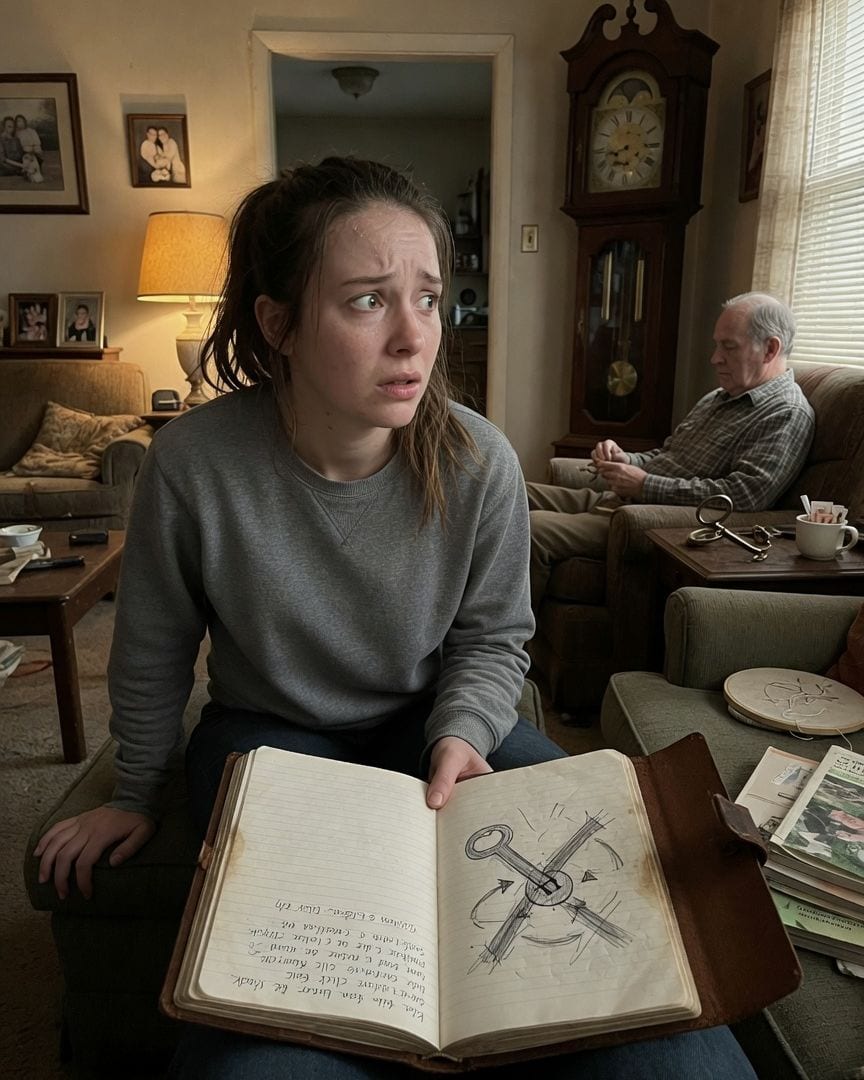
My father winds the hall clock backward, shattering the mainspring. He says he's done it wrong for years.
My father, Roy, returned after six bewildering days missing, a little quieter but otherwise himself. Then came the Sunday ritual: winding the old hall clock. But this time, his hand moved counter-clockwise, shattering the mechanism, and he simply smiled, saying he'd done it wrong for years.
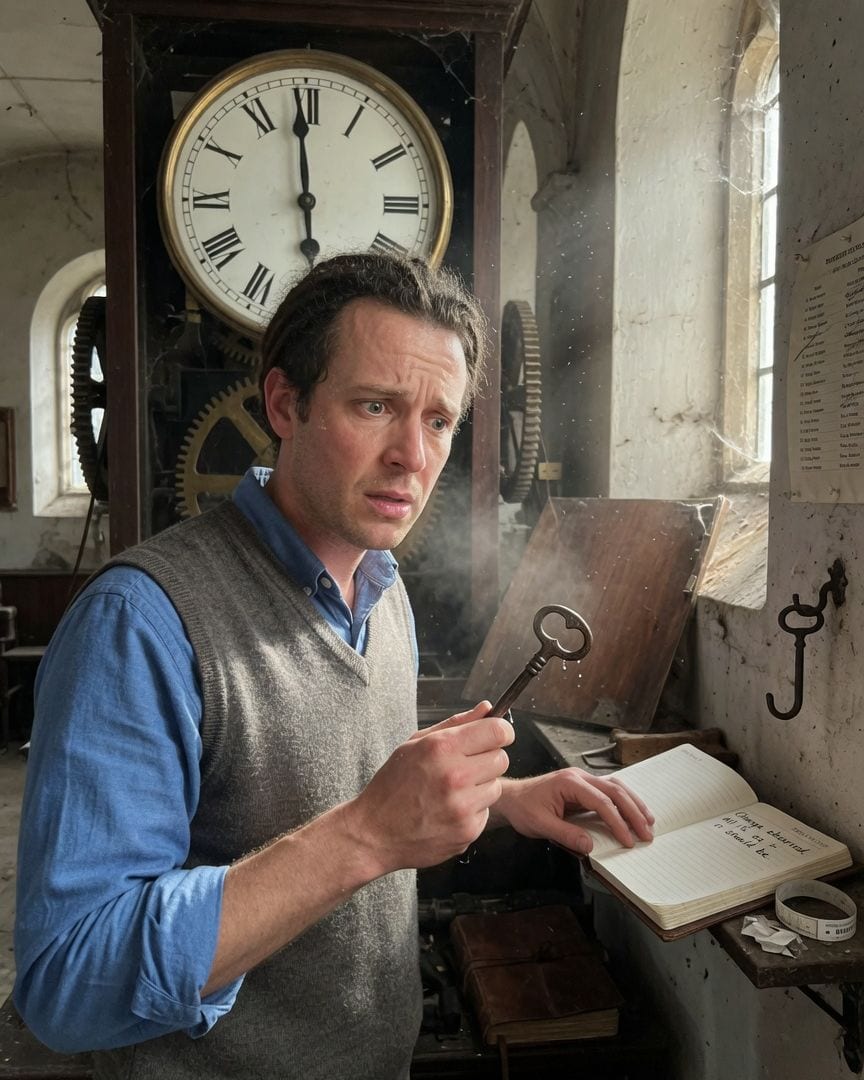
My church clock was already set, key warm, logbook signed — the sexton’s been in hospital for a month.
As caretaker for Stonely's historic church, I was tasked with setting its ancient clock for Daylight Saving. But when I went to turn the key, the massive mechanism was already set to the correct new time. Even more unsettling, the key itself was distinctly warm, as if someone had just used it, despite the sexton being strictly bedridden in the hospital.
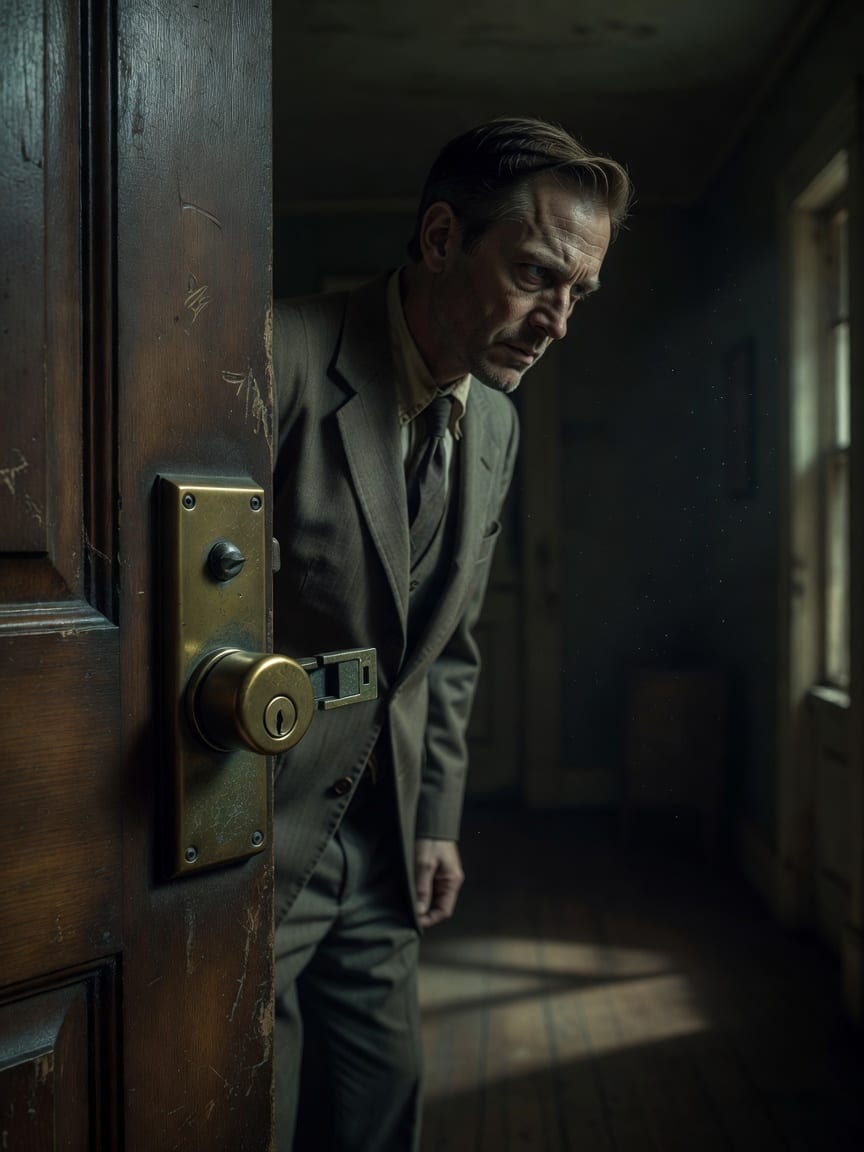
My deadbolt clunks shut from inside every night, long after I'm asleep. I live alone, and I've never heard it drawn back.
Inheriting Great-Aunt Lydia's house felt like a fresh start, until the nightly clunk of the deadbolt from downstairs started. I live alone, but every evening, the front door locks itself from the inside. Now, I’ve found Lydia’s meticulously kept calendar, with a 7 PM 'Deadbolt Check' written for tonight, a year after she died.
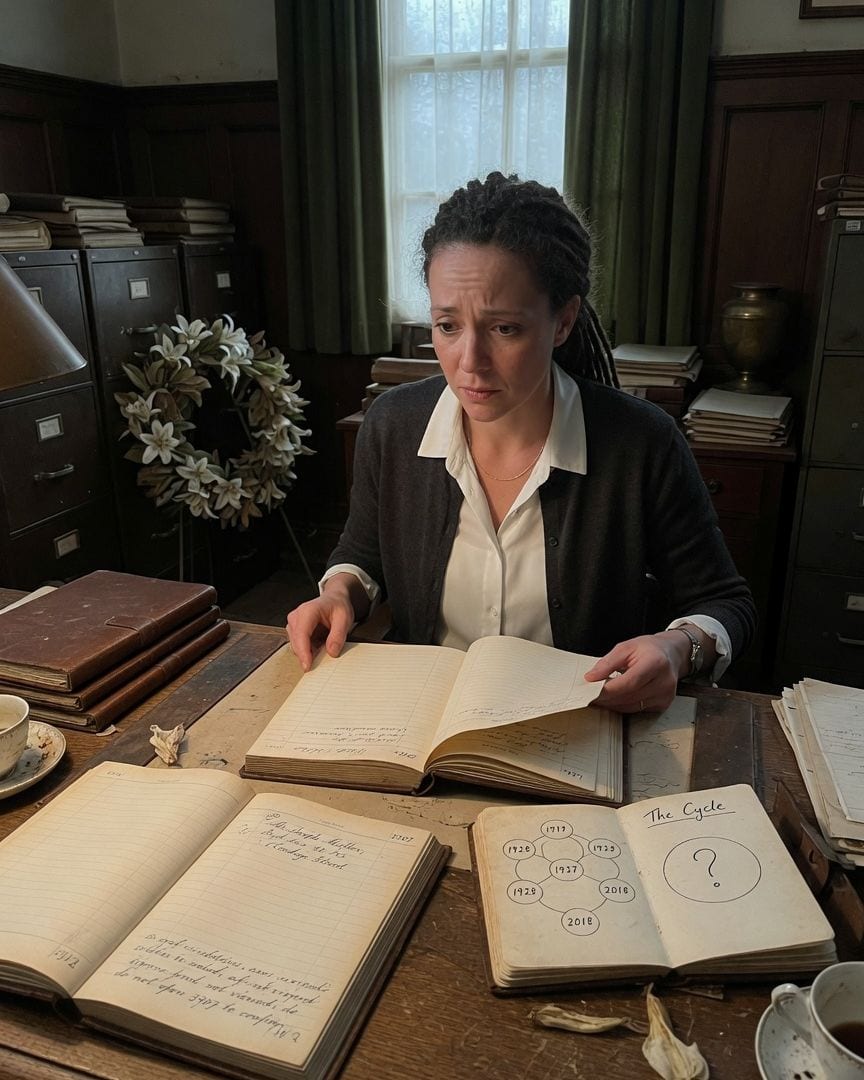
Our funeral ledger records my family name, same age, buried on Cordage Street every nine years since 1919. My great-grandfather's note: 'do not open 3907.'
Reviewing my great-grandfather Joseph’s old ledgers at the Ingram Funeral Firm, I stumbled upon a recurring anomaly. The same burial order for a Joseph Muller, age 45, residing at our family home, 14 Cordage Street, appeared every nine years across decades of records. Each entry, identical, carried the unsettling instruction: 'coffin sealed, not viewed.'
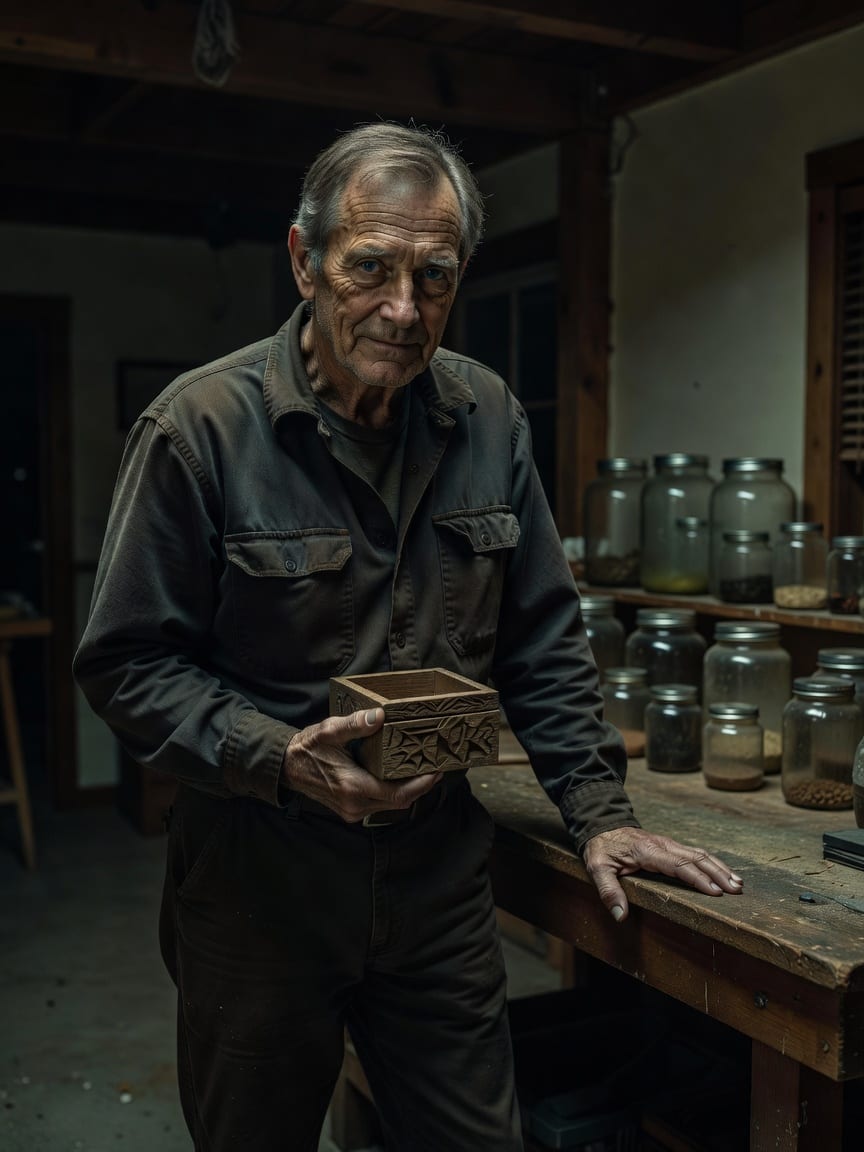
Gramps' nail jars are reversed, smallest-to-biggest now. He rearranged them himself, says the old way never made sense.
The scent of sawdust and oil in Gramps' workshop used to be a comforting hug, but since his return, everything feels off. I've always known his distinctive childhood scar was above his left eyebrow, yet a faded photo from decades ago shows it clearly above his right.
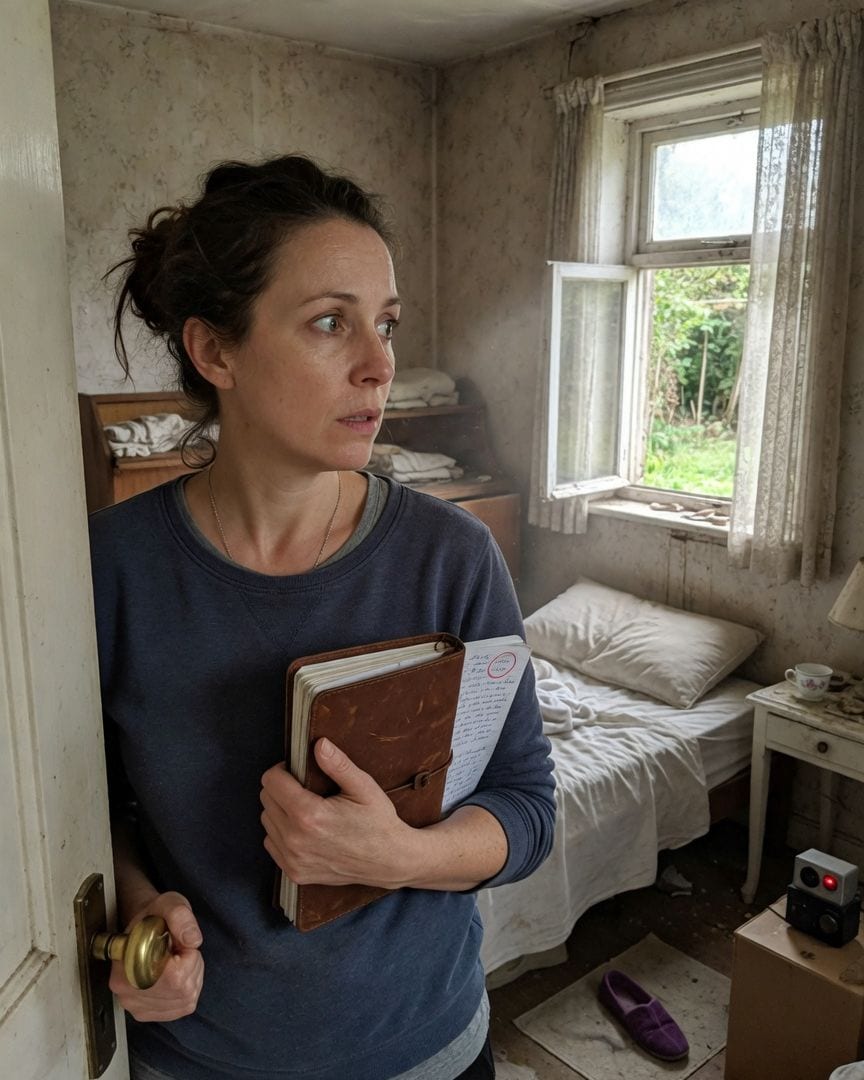
My spare room bed is slept in every few nights, sheets warm and pillow dented. I live alone, painted the window shut, and nobody has a key.
I've lived in Grace's house for six months, adjusting to its quiet rhythms. But the spare room, which I keep shut and empty for storage, has a disturbing routine of its own. Every few mornings, the bed is clearly slept in, the sheet rumpled and warm, and the window I painted shut is open exactly two inches.