My handwriting was in the condolence book. Dated before my uncle died. Words I'd never choose.
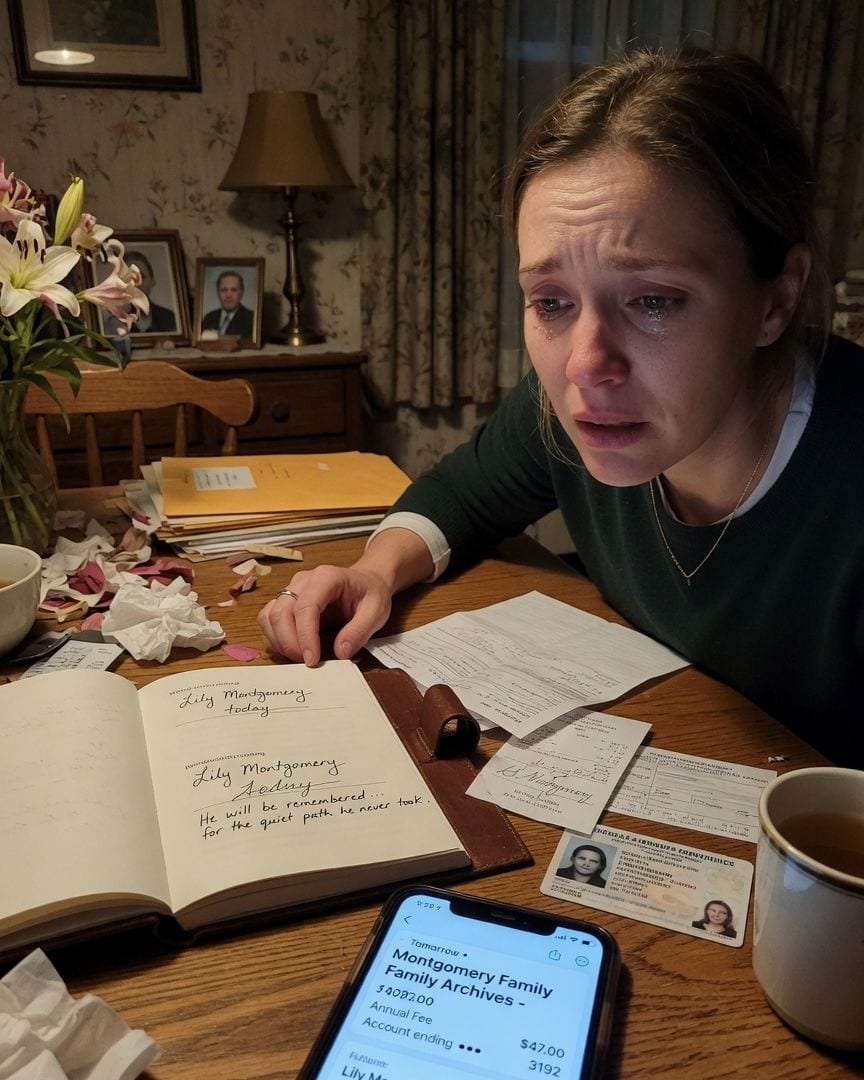
The air in the funeral home hung thick with hushed condolences, a smell of lilies and old furniture clinging to everything. I moved through the room in a blur of polite nods, my grief a dull ache beneath the surface.
My Uncle Howard was gone, suddenly, unexpectedly. Near the exit, by the guest book, Aunt Charlotte pressed a heavy, leather-bound book into my hands. "Just sign for us, darling," she whispered, her eyes red-rimmed.
My hand, steady despite the sorrow, signed "Lily Montgomery" near the bottom of a blank page, below a few other names I recognized.
Later, the wake winding down, a morbid curiosity drew me back to the book. I wanted to see who else had come, to perhaps find a familiar name that could offer some comfort.
I flipped back a few pages, scanning the neat script of neighbors and distant relatives. And then my breath caught.
Higher up, on a page dated the previous morning—before Howard had even died, before we'd even gotten the call—was my own distinct handwriting. The looping 'Lily Montgomery' was unmistakable, utterly my own.
The ink was fully dry, utterly set, indistinguishable from my later entry. But the words beneath my name were not mine. "He will be remembered... for the quiet path he never took." A cold knot tightened in my stomach.
I tried to rationalize it. A relative playing a cruel, tasteless joke? Had I somehow misremembered signing it earlier, perhaps in a state of shock? But I'd only been here once, today.
And the sentiment, "the quiet path he never took," felt alien, a judgment I would never make of my kind, gentle uncle.
The book lay open on its stand, my two identical entries staring back at me, one impossible, the other painfully real. The scent of lilies seemed suddenly cloying, suffocating.
For days, the condolence book entry picked at me. I tried to dismiss it, to tell myself grief was playing tricks, but the certainty of my own hand on that impossible date wouldn't let go.
I tried, subtly at first, to probe Aunt Charlotte. "Did anyone else notice anything odd about the guest book? Any jokes?" I asked one afternoon, carefully. She frowned. "Odd? No, dear. Just a lot of lovely messages."
I asked my cousin Mark, hoping he'd confess to some dark humor. He just looked at me blankly. Each denial made me feel more foolish, more isolated in this strange wrongness.
Eventually, I tried to convince myself it was a bizarre, isolated incident, a trick of the mind fueled by grief and exhaustion.
A week later, I was back at Aunt Charlotte's, helping her sort through the avalanche of Uncle Howard's financial papers. Stacks of bills, insurance documents, old tax returns.
It was tedious work, the kind of mundane task that grounds you in the present. We were halfway through a box labeled 'Bank Statements' when Charlotte handed me a thick envelope. "This one's from last month, dear.
Take a look, make sure I haven't missed anything important." I pulled out a statement. It was dated a week before Howard's death. My eyes scanned the transactions, mostly familiar household expenses, until one jumped out at me.
A significant withdrawal, noted vaguely as 'Estate Planning Services.' And tucked inside, a matching receipt. My heart gave a violent thump.
The signature for the approver, 'L. Montgomery,' was unmistakably mine—the exact flourish of the 'L,' the distinct slant of the 'M' that I'd practiced since childhood.
But the date on the receipt placed me firmly in a hotel conference room, two hundred miles away, delivering a presentation on regional demographics. I remembered it vividly. I even had the badge, the flight tickets.
My rational mind scrambled for an explanation: identity theft, perhaps? But the signature was too perfect, too intimate. It was my hand, my precise, familiar hand, affixed to a document from a time and place I demonstrably wasn't.
The room suddenly felt colder than it should have, the silence stretching taut between Charlotte and me.
Disturbed, I took the bank statement and receipt home with me, a growing dread replacing the initial confusion. I pulled out my driver's license, my credit card, comparing the signatures. They were identical. Every loop, every slant.
I dug out my old conference badge, the flight itinerary, the receipts from the hotel. My alibi was ironclad. I couldn't have been there. I couldn't have signed it.
I pulled out the condolence book again, my two entries, the real one next to the impossible one. It was the same handwriting. The very same.
As I ran my finger over the strange words in the book, trying to reconcile the impossible dates, my phone, resting on the table beside me, pinged. A bank alert. A new transaction.
It was a small, recurring charge, dated tomorrow, for 'Montgomery Family Archives - Annual Fee.' It listed my own account, my name as the payer. Lily Montgomery.
I stared at the screen, at the impossible date, the impossible charge for something I'd never authorized, never even heard of. My breath caught in my throat.
The next morning, I called my bank, my voice tight with a forced calm. "There's been a mistake," I insisted, explaining the pre-dated 'Estate Planning Services' charge, and now this, a charge scheduled for tomorrow.
The representative, polite but firm, confirmed the 'Montgomery Family Archives' transaction was indeed scheduled and that it had been authorized with my account details. "It appears to be an annual subscription, Ms. Montgomery," she said, as if that explained everything.
My frustration flared. "An annual subscription to what? I've never authorized this!" But she just repeated that the system showed it as valid.
Frustrated and frankly, a little spooked, I hung up and looked up 'Montgomery Family Archives.' Their website was barebones, a single page with contact information and a brief mission statement about preserving local history.
The address listed was for an old brick building downtown, one I’d passed a hundred times without a second glance. It looked like an obscure historical society, barely scraping by. I called the number. An elderly man, Samuel Vance, answered.
When I asked about the annual fee, he confirmed it. "Oh yes, the Montgomery Family Archives Annual Fee. Been paid by the Montgomery family for generations, Ms. Montgomery. Good of you to keep up the tradition." My blood ran cold.
Generations? When I mentioned Uncle Howard's 'Estate Planning Services' withdrawal, he hummed. "Ah, yes. The Montgomery family often donated 'family records' to us, particularly around significant life events. We wouldn't have a direct service record, no. Just the acquisitions."
I hung up, a new, unsettling thread forming in my mind.
I spent the rest of the day digging through my own family boxes in the attic. Old photo albums, bundles of letters tied with ribbons, yellowed documents.
I was looking for anything that might mention these 'Archives' or hint at other oddities. Hours passed, dust motes dancing in the faint light from the attic window.
Just as I was about to give up, tucked inside a dusty, leather-bound journal belonging to my great-grandmother, Bridget Montgomery, I found it. A small, faded receipt, folded in half.
It was for a donation to the same 'Archives,' dated a week before Bridget's own death, signed clearly by Bridget, for 'final family records.' The pattern, dark and undeniable, was starting to emerge.
The silence of the attic seemed to press in on me, heavy and knowing.
The next morning, driven by a desperate need for answers, I went to the Montgomery Family Archives.
It was exactly as I’d imagined: a quiet, cramped space, smelling profoundly of old paper and dust, with towering shelves crammed with boxes and binders. Samuel Vance, the archivist, was waiting for me.
He was a calm, unbothered man in a tweed jacket, his gray hair meticulously combed. He greeted me with a knowing, almost expectant smile. "Lily Montgomery, I presume?" he said, his voice soft, his eyes twinkling faintly behind thick spectacles.
"I'd been expecting you. The records tend to bring certain family members here, eventually."
My skin crawled. It wasn't a question, but a statement of fact. "How?" I whispered, my voice tight. He simply gestured to an open ledger on his desk. It was a thick, venerable book, its pages yellowed with age.
On the page facing me, meticulously written in elegant script, was today's date, or rather, tomorrow's. Her own name, 'Lily Montgomery,' was listed as a new donor, with a precise list of 'items to be accessioned.'
Among them, 'Uncle Howard's condolence book.' The chill that swept through me had nothing to do with the drafty building. It was the kind of cold that seeped into your bones and stayed there. "How?"
I repeated, a little louder this time, my voice trembling. Samuel leaned back in his chair, a faint, unsettling smile playing on his lips, as if amused by my bewilderment. "The records are quite accurate, Ms. Montgomery.
And sometimes, a little ahead."
"What does that even mean? 'A little ahead'?" I demanded, my panic rising. I could feel the blood pounding in my ears. "My uncle's condolence book, a bank statement, a charge to my account for tomorrow... my own great-grandmother's receipt!
This isn't just 'a little ahead,' this is impossible! Explain it, Mr. Vance."
He remained unnervingly calm, his placid demeanor a contrast to my rising hysteria. He led me to a heavy oak table in the center of the room, pulling out a chair for me.
Then, he spread out a series of documents, each one carefully handled. "These are what we call 'pre-records,'" he explained, his voice even, as if discussing the weather.
He pointed to a faded birth certificate, dated three days before the listed birth. "Child was born on the 10th. Certificate was filed on the 7th." Then, a marriage license, signed a month before the actual proposal.
"The groom hadn't even bought the ring yet." Finally, a death notice, bearing a signature from the deceased, dated a week prior to their passing. "This one," he said, tapping it gently, "is from a Montgomery ancestor.
She signed it while still very much alive, though she passed precisely a week later."
Each document was genuine, bearing the correct names and official seals, but always subtly off in time, or with a minor, unsettling difference in wording – a middle name subtly changed, a clause in a will that never materialized.
"Certain family lines," Samuel continued, his gaze steady on mine, "including the Montgomerys, seem to be 'echoed' in a slightly shifted temporal reality. These echoes manifest as physical records in our reality, always a little ahead.
They are not prophecies, not intentions, but... reflections." He gestured to Uncle Howard's condolence book. "The words you never chose? 'He will be remembered... for the quiet path he never took.' They were the words of her grief.
Just a slightly different Lily, in a slightly different moment, already mourning. The 'Estate Planning Services' receipt with your signature? A decision made by her, in her timeline, which resonated back into this one as a physical document."
He explained that the 'Montgomery Family Archives' existed to collect and catalog these 'pre-records,' to keep them from disrupting the fabric of the everyday world. The annual fee, the one scheduled to hit my account tomorrow, was for this custodianship.
I stared at the documents, the implications slowly congealing into a horrifying truth: my life, my family's lives, were being written ahead of time, by an unseen hand, a parallel self.
The dread was no longer just a feeling; it was a coherent, terrifying reality. The silence of the archives was no longer just quiet; it was ancient, expectant.
Samuel stood, pulling a heavy ring of brass keys from his pocket. "If you'd like to see more..." he offered, his voice still unnervingly calm.
He led me to a heavy, locked door at the very back of the Archives, almost hidden behind a tall, teetering stack of ledgers.
"The core collection," he said, his voice devoid of emotion, as he fitted a key into the lock. Inside, the room was colder, somehow, despite no discernible draft. Floor-to-ceiling shelves were packed with hundreds of identical, plain, leather-bound journals.
Each was labeled with a Montgomery family name and a date range. It was like entering a library of other lives, pre-written.
He pulled one down, its binding cracked, dated from my grandmother’s lifetime. He opened it. It was filled with familiar, flowing handwriting – my grandmother's – detailing daily life, thoughts, events.
But as Lily read, my own memories began to surface. I saw entries describing events that I remembered happening, or things I said, but dated years earlier, attributed to my grandmother.
A specific conversation about my first crush, word for word, dated 1965. An argument I had with my sister last Christmas, recounted here, almost verbatim, but in 1978. Then I spotted my own name, stark against the faded ink.
'Lily will meet him in the park, on the bench by the weeping willow, and he will tell her about the rain.' An entry dated decades ago. My breath hitched. I remembered that day, vividly. It happened last summer.
I dropped the journal, my hands trembling violently, the thud echoing in the heavy silence of the room. It fell open to another page, face up. A blank page, dated two weeks from now.
And on it, in my own distinct handwriting, a single sentence was already written, the ink still faintly damp, the letters perfect, undeniable: 'I understand now. I always have.'
I stared at the journal, at my own words, written in the future, the ink still wet. My mind, usually so determined to find a logical explanation, finally snapped under the weight of the impossible.
Samuel Vance watched me, his expression unreadable, waiting. He began to speak, his voice a low, steady drone that seemed to pull me into the terrifying coherence of it all.
These journals, he explained, were not merely records of past events, but active conduits. They were the 'source' of the pre-records, the physical manifestation of these temporal echoes.
The entity creating them was not just observing, but actively embedding these parallel realities into physical form.
He explained that the 'Montgomery Family Archives' was founded by a Montgomery ancestor who first discovered the phenomenon and tried to understand it, rather than fight it.
They learned it was tied to specific family lines, a kind of inherited temporal resonance. The 'pre-records' were not prophecies, he clarified, but echoes of choices made in a slightly different, always-ahead timeline.
The words I 'would never choose' in Uncle Howard's condolence book were simply the words of that other Lily, a near-identical self existing a beat ahead, expressing her grief in her own way.
The bank statement, the future annual fee, the conversation recorded decades before it happened to me — all echoes. And the sentence on the blank page, 'I understand now. I always have.'?
That was the culmination of my own journey, a future realization that had already been recorded. It meant I was always destined to find this, to understand, and, inevitably, to become another custodian of this strange, unsettling family legacy.
The chilling coherence made my head spin, then settle with a profound thud.
Every impossible entry, every misplaced date, every subtly wrong word, all clicked into place, forming a horrifyingly logical pattern that has dictated my family's existence for generations, and now, mine.
The room, crammed with its hundreds of journals, felt less like an archive and more like a living, breathing entity.
I didn't confront Samuel. There was no one to confront. No antagonist, no villain. Just a phenomenon, a natural law tied to my bloodline. I confronted the chilling, immutable truth of my own existence, of my family's existence.
A profound, cold acceptance settled over me, heavier than any grief. There was no escaping it, no fighting a force that was simply a fundamental, unchangeable aspect of my family's reality. It just was.
Samuel, sensing my understanding, offered me a choice, though it felt less like a choice and more like a gentle push down a predetermined path.
I could try to ignore it, to live my life as if unaware, knowing these pre-records would continue to appear, subtly guiding or altering my reality; or I could join him, becoming a custodian, learning to identify and manage the records, just as generations of Montgomerys and others had done before him.
He gestured to a hidden compartment built into the back wall of the room, revealing more journals, some ancient, crumbling to dust.
He pulled out a very old, thick ledger, its leather binding cracked and worn smooth by centuries of handling. "The master ledger," he said. "It records the appearance of every pre-record, across all lines, since the Archives began."
He opened it. The very first entry, dated centuries ago, was a pre-record of the Archives' own founding, signed by the first Montgomery archivist. The Archives itself was 'pre-recorded.'
I looked from the ancient ledger to the blank page in my grandmother's journal, my future words 'I understand now. I always have.' staring back at me, the ink faintly damp.
I looked at Samuel, a man resigned to his role, a quiet sentinel of an impossible truth. I realized my future words weren't just a statement of understanding, but an acceptance of my fate.
I reached out, not to Samuel, but to the old, heavy master ledger. My fingers traced the ancient, impossible entries, accepting my place in the pattern.
The quiet hum of the building seemed to resonate with my own newly awakened awareness.
Months later, I began my apprenticeship with Samuel Vance. The 'Montgomery Family Archives' became my new, unsettling reality. I still worked my old job, kept my old apartment, saw my friends.
But now, it was layered with this deeper, unsettling knowledge, a permanent, chilling awareness of the world's hidden mechanics.
I learned to identify the subtle tells of a pre-record: the slight temporal shifts, the words that weren't quite right, the ink that dried too fast.
I stopped trying to correct the world's record, recognizing the futility of fighting a current that simply was.
Instead, I learned to manage the impact, to collect the artifacts, to ensure the ordinary world remained oblivious to the quiet, constant rewriting of reality happening at its edges.
I sit now at Samuel's old desk in the Archives, the quiet hum of the old building my constant companion. He is at a different table, carefully re-binding a fragile volume.
I meticulously catalog a newly arrived box of old family letters from a distant Montgomery cousin, detailing a planned trip.
I notice one letter, dated next month, describing the trip as already having happened, with a slight, almost imperceptible change in the destination. I carefully log it in the master ledger, my movements precise and practiced.
The initial dread has settled into a quiet, profound acceptance, a sort of temporal resignation.
I look out the window at the ordinary street, at the ordinary people passing by, unaware of the subtle, constant shift, the quiet pre-writing of their lives that hums beneath the surface of reality. I know now.
And the knowing is a quiet, inescapable burden.
The ink was always dry, just waiting for me to catch up.
If this one got to you
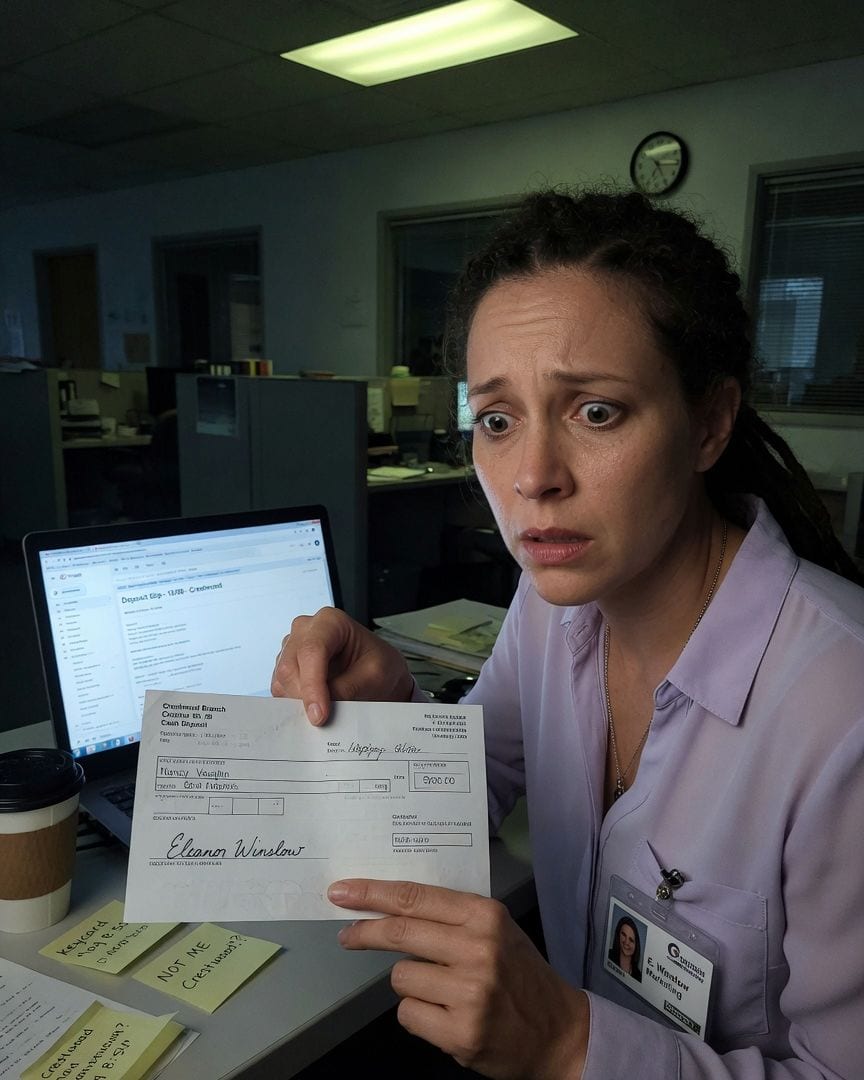
My bank statement shows a $900 cash deposit made in a town I've never set foot in, at 10:40 AM on a workday. I was at my desk, badged in. Two more landed since.
My bank statement showed a $900 cash deposit from a town I'd never visited, 150 miles away. I was at my desk, logged into work, all three times. But the scanned deposit slip arrived, clear as day, showing my own flawless signature.
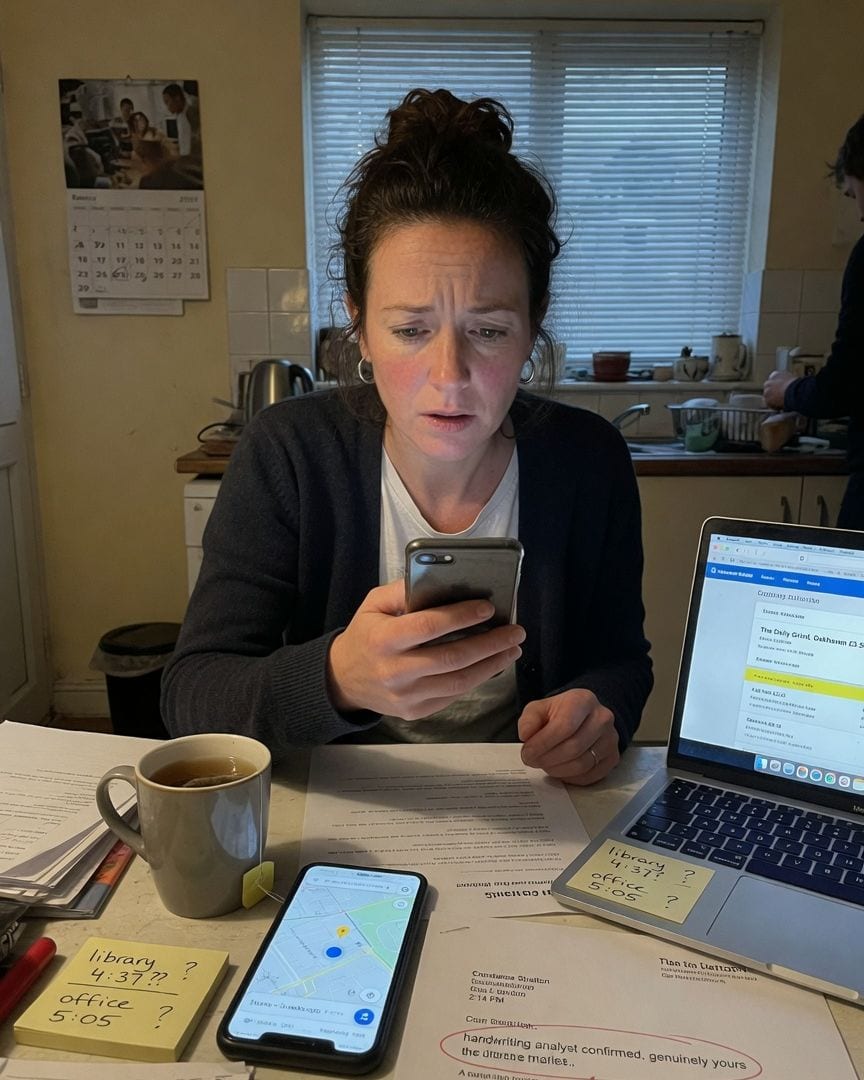
My signature covers a twelve-thousand-pound loan agreement. It's witnessed three hundred miles away, the day my phone confirms I was home.
My afternoon takes a chilling turn when the bank calls about a £12,000 loan, signed with my own handwriting in a town 300 miles away. My phone proves I was at my kitchen table at the time, yet a handwriting analyst confirms the signature is genuinely mine. The impossible truth deepens when a keycard log places me 100 miles away, just minutes before I entered my office.
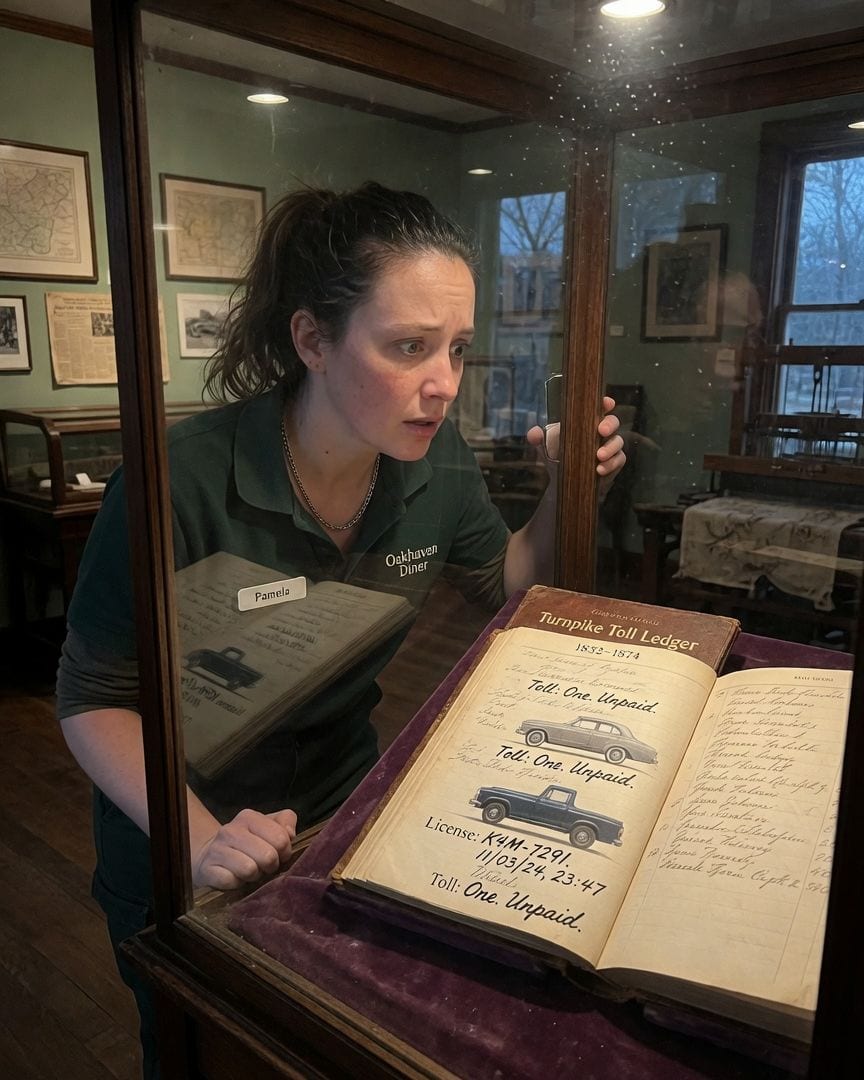
My car stalled at the old turnpike milestone, after dark. The toll ledger, closed in 1874, then listed my car, my stall time, and a toll of one, unpaid.
I had just moved to Oakhaven when my old sedan died on a dark, winding road by an infamous turnpike milestone. The next day, I found my car's exact registration and stall time written in fresh ink in a 150-year-old, locked museum ledger, marked 'Toll: One. Unpaid.' The curator dismissed it as a prank, but her white knuckles and strained voice hinted at something far more unsettling.
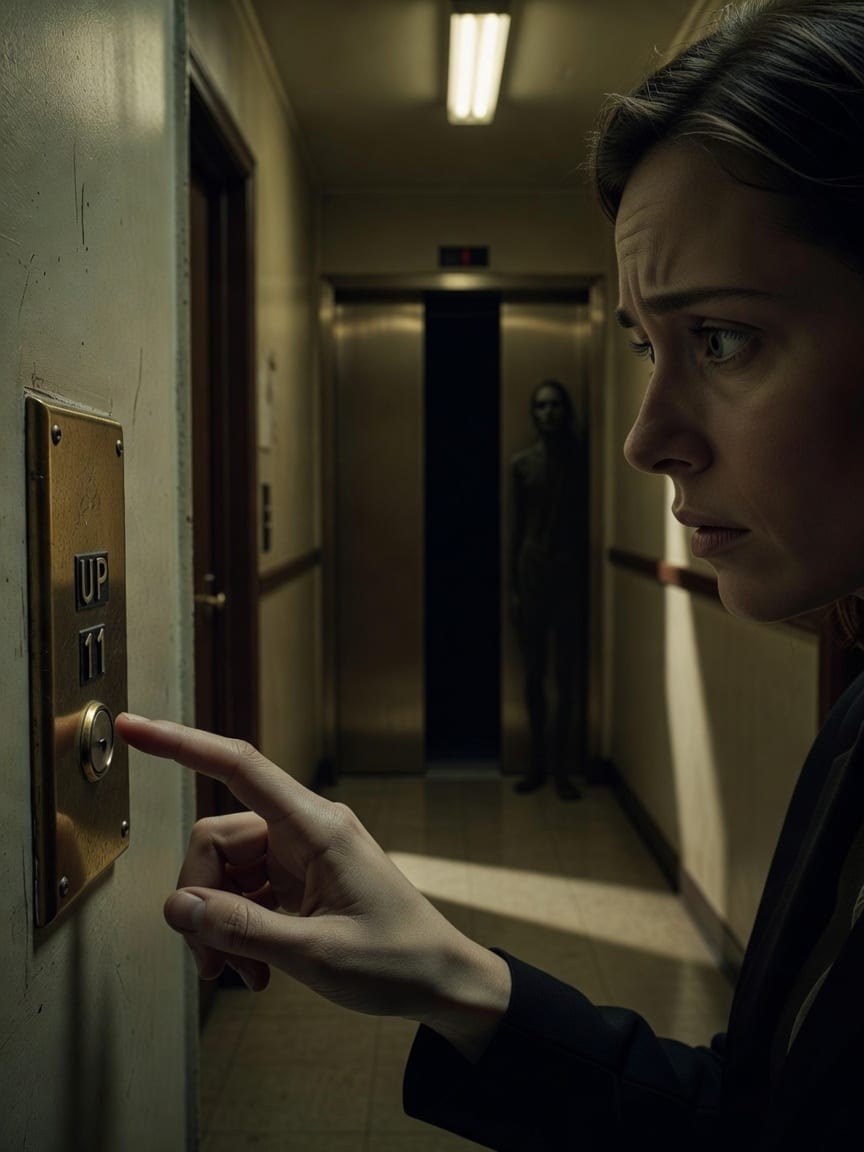
My doorman warned me not to take the tenth-floor lift on Saturday. The building's lift passed inspection last month. He seemed terrified that he'd said it.
My doorman's unsettling warning about the tenth-floor lift left me with a metallic taste of unease. I tried to rationalize it away, but then a birthday card arrived for me, five months early, from an impossible address. It was a site linked to unexplained disappearances, and a cold certainty began to settle in.
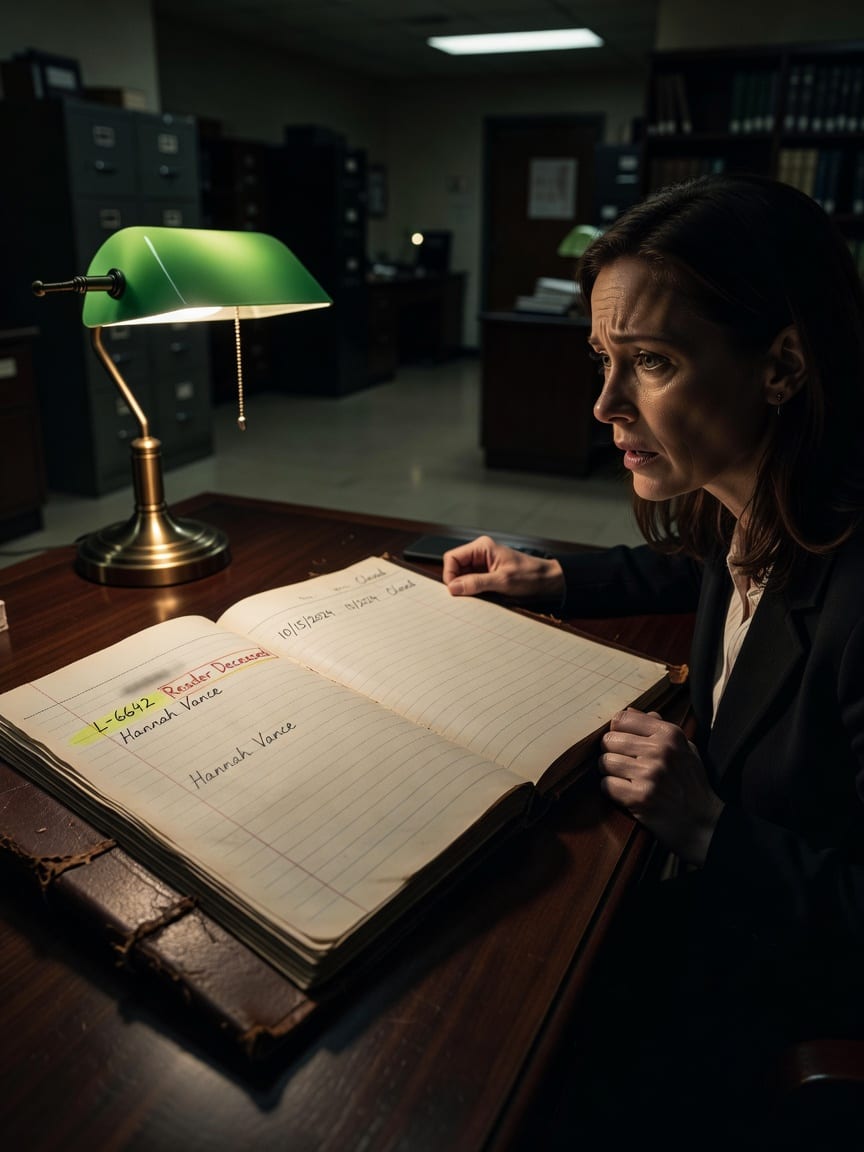
My library card number L-6642 was issued to me at seven — and the ledger shows that number has marked a reader 'deceased' every twelve years since 1949.
Returning my late father's library card to the old town library felt like a small act of closure. But the senior librarian's ancient ledger revealed a chilling pattern of 'reader deceased' entries tied to specific card numbers and borrowed books. My unease turned to cold dread when I secretly found my own name penciled in, marked for a future 'reader deceased' entry.
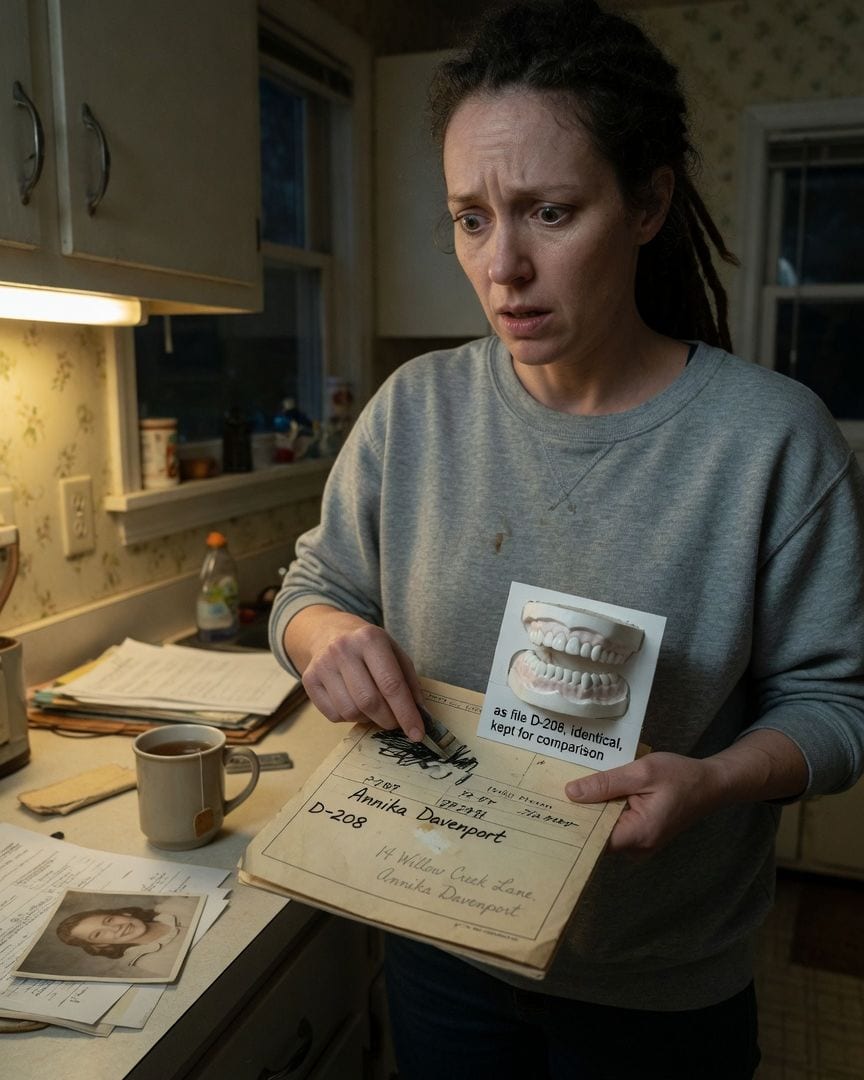
My childhood dental chart lists the house I bought last year — in my own name, years before I was born. A second set of my teeth sits filed beside it, marked 'identical.'
Sifting through old dental records, I found my chart, D-208, with my 1988 birth date. But a line from 1958 was blacked out, and a clipped card with an impression of my teeth listed my name and current home address, decades before I was born. The impossible facts knotted into a cold certainty.