My car stalled at the old turnpike milestone, after dark. The toll ledger, closed in 1874, then listed my car, my stall time, and a toll of one, unpaid.
The air had turned sharp and brittle the night my old sedan decided to die. I’d only moved to Oakhaven a few weeks prior, in early autumn, and was still getting used to the quiet roads.
That night, it was late autumn, the first truly frosty one, and the winding back roads were dark as pitch, no streetlights out here.
I’d been coming home from a late shift at the diner, humming along to some old rock song, when the engine gave a cough, then a shudder, and finally, a guttural gasp. Silence.
I coasted to a halt, the car settling with a final creak of suspension. Headlights died.
I was right beside it – the old turnpike milestone. Just a weathered stone pillar, almost hidden in the overgrown weeds, but its face, worn smooth, was unmistakable.
Kenneth Caldwell, the local carrier, had told me, quite sternly, just last week, "Never stop beside that milestone after dark, Pamela. You slow, you never halt." He’d said it with a casualness that belied the seriousness in his eyes.
Now, here I was, halted.
Panic, cold and sharp, began to prickle. I fumbled for my phone, no signal. Ten minutes passed in a frantic, desperate cycle of turning the key, pumping the gas, willing the old engine to spark.
Nothing but the ticking of cooling metal and the wind whistling through bare branches. Then, just as I was about to give up and start walking, a weak cough, a hesitant rumble, and the engine sputtered to life.
I jammed it into drive, peeling away from the milestone like a bat out of hell, not daring to look back.
The next day, after a fitful night’s sleep, curiosity gnawed at me. I needed a rational explanation for what felt like an irrational fear. The Oakhaven Historical Museum seemed a good place to start.
It was housed in the old town hall, smelling of dust and polished wood. I was drawn to a display case in the corner, illuminated by a single, focused spot.
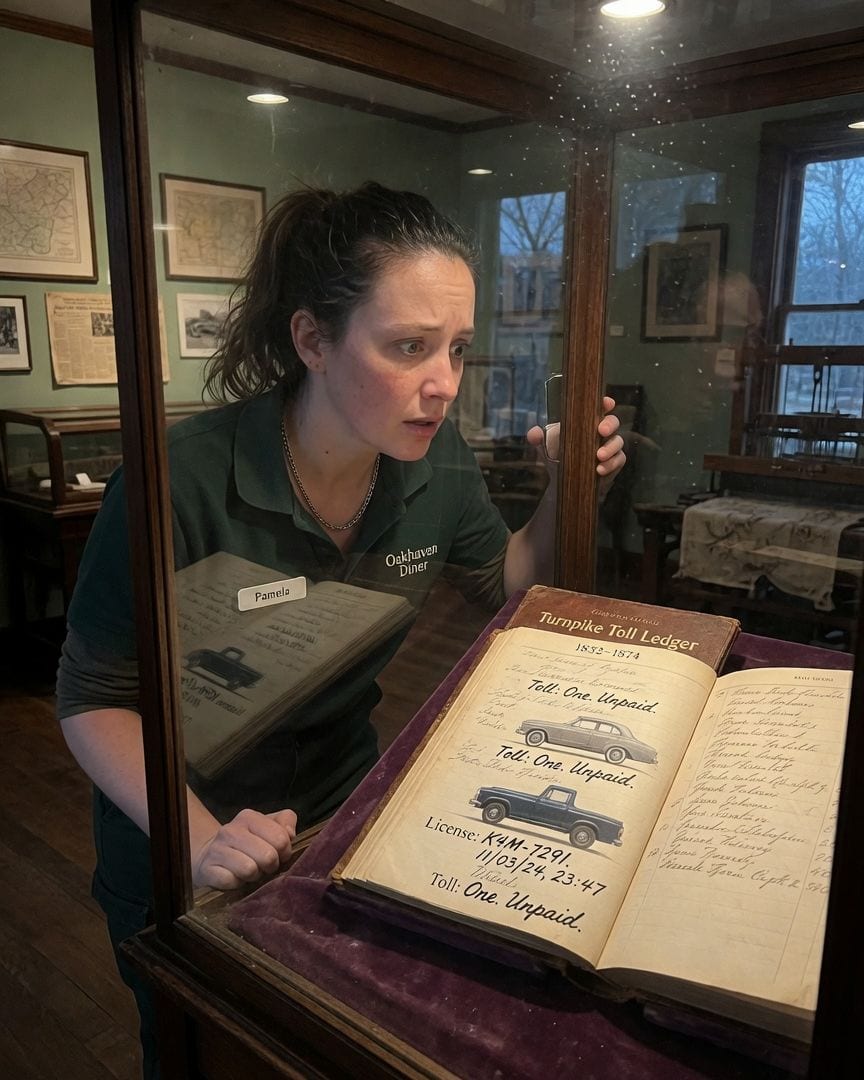
Inside, lying open on a velvet stand, was a thick, leather-bound book: the turnpike’s original toll ledger. A small plaque confirmed it had been officially closed in 1874.
I leaned closer, scanning the faded cursive. Entries from the late 19th century, neat and precise, listed horse-drawn carriages, wagons, the occasional pedestrian, and a small sum paid.
I turned the page, then the next, until I reached the very last one. More faded script, more old names. Then, near the bottom, it hit me. A new line. In stark, fresh ink.
My car’s registration number – the exact one. The exact date and hour of my stall last night. And below it, a single, chilling phrase: 'Toll: One. Unpaid.'
My breath caught in my throat. I blinked, rubbed my eyes. It had to be a trick of the light, or some elaborate museum prank. The ink was too dark, too crisp, against the yellowed paper.
My hands felt cold, clammy. I checked the glass case, ran my fingers over its smooth surface – no hidden buttons, no obvious mechanisms. This was just a book, an old book, displayed under glass. And yet, there it was.
I pulled back from the display, looking around for someone, anyone, to explain this away. I found Margaret Foster, the museum's elderly curator, meticulously dusting a collection of antique weaving looms in the next room.
She had a kind, crinkled smile and hair like spun silver.
"Excuse me, Margaret?" I tried to keep my voice light, casual. "I have a question about the ledger in the display case."
Her smile faltered ever so slightly when I pointed to the book. Her gaze flickered over my shoulder, towards the case, before meeting my eyes again. "Ah, the old turnpike ledger," she said, her voice a little tighter than before.
"A fascinating piece of history, isn't it?"
"It is," I agreed, trying to appear nonchalant. "But I noticed something... unusual. On the last page. A very recent entry. It looks like... my car."
Margaret's smile disappeared completely. She dabbed at a loom spindle with her cloth, her movements suddenly stiff. "Oh, that," she murmured, not looking at me. "Local mischief, I expect. We get a few pranksters in town, you know.
Kids with too much time on their hands." Her voice was dismissive, but her knuckles were white where she gripped the dusting cloth.
"Mischief?" I pressed. "It’s remarkably accurate. Down to the exact time. And it’s in a locked display case, right?"
"Of course it's locked," she said, her voice a little sharp now. "Every night. Untouched." She finally turned, her gaze firm, but her eyes held a flicker of something else, something I couldn't quite decipher. Fear? Annoyance?
"It's an old book, Pamela. Perhaps the lighting plays tricks. Or someone simply scribbled in it years ago, and it's only just faded into prominence. These things happen."
"But the ink," I argued softly, "it looks fresh. And it says 'Toll: One. Unpaid.' What does that even mean?"
She shook her head, turning back to her dusting. "It means nothing, child. Just a foolish prank. Now, if you'll excuse me, I have rather a lot to do before closing." Her dismissal was clear. The conversation was over.
I lingered, pretending to look at the looms, until I heard her soft footsteps retreat into the back office. The moment the room was empty, I was back at the ledger.
I peered closer, my heart thumping a frantic rhythm against my ribs. "Local mischief" didn't feel right. The precision was too unsettling. I leaned in, examining the entries beneath mine, entries I hadn't properly processed in my initial shock.
My breath hitched. More recent entries. Not just mine. Identical in their chilling precision. Vehicle registrations, dates, times, and always that same phrase: 'Toll: One. Unpaid.' One entry, dated just six months prior, was for a silver sedan.
I recognized it. I’d seen a 'Missing Person' flyer for a silver sedan at the post office just a few days ago. The flyer had a name and a photo.
The rational explanation of a prank, Margaret’s forced calm, crumbled completely. The air around the case grew cold, prickling my skin.
My heart pounded like a drum against my ribs as I quickly pulled out my phone. My fingers trembled, but I focused, snapping photos of each new entry.
My car's registration, date, and time, starkly modern among the faded script, was there. Below it, 'Toll: One. Unpaid.' My gaze dropped further. There they were, the others. More recent names, dates, vehicle descriptions, all followed by that same phrase.
One entry, dated about a year ago, listed a dark blue pickup truck. I recognized the name next to it: Sarah Jenkins. I’d seen her name in a local news snippet about an 'unexplained disappearance' last fall.
There had been no body, just the truck found abandoned near the old turnpike.
Kenneth’s casual folklore, Margaret’s strained smile, the impossible ledger entry – they didn’t just add up to a prank. They clicked into a terrifying new pattern.
The ledger wasn't just a record of paid tolls; it was a register of claims. And the 'unpaid' ones? They were very real.
I felt a cold certainty settle in my bones, a prickle on my neck that wasn't from the museum's chilly air. The 'toll' wasn’t about money. Not at all.
I hastily closed the heavy book, my fingers shaking, the implications of my own entry settling over me like a shroud, suffocating and complete.
The next few days were a blur of gnawing dread. I couldn’t shake the image of those entries, my own car number sitting there, stark and recent.
Driven by a desperate need to find a different answer, any other answer, I spent every spare moment cross-referencing the ledger’s new entries. Oakhaven’s online archives yielded little, its historical society site was sparse.
So I went to the library, immersing myself in the smell of old paper and dust, feeding microfiches through the clunky reader. Local newspaper archives, going back years.
Then local social media groups, filled with neighborly chatter and, occasionally, hushed mentions of things people couldn’t explain.
The pattern held. It wasn’t a coincidence. Every name and date from the ledger’s 'unpaid' section correlated with a local disappearance, an unsolved missing person case, or a sudden, unexplained 'accident' where a body was never found.
The silver sedan from six months ago belonged to a young man named Alex Finch. Vanished without a trace.
Sarah Jenkins, the pickup truck, just listed as 'presumed lost at sea' after a boating accident, despite her truck being found miles inland. The dates and times from the ledger were precise, down to the minute.
The last time they were seen, or the estimated time of their 'accident.'
I even found an old town council minute from the 1950s, yellowed and faded, discussing 'maintenance of the boundary markers' and 'respect for ancestral agreements' near the turnpike. The language was vague, archaic, but the context was chilling.
Boundary markers. Ancestral agreements. It sounded less like municipal bureaucracy and more like something out of a folk tale, something binding.
One afternoon, needing to see it again, to ground myself in physical reality, I drove back out to the old turnpike. This time, I parked a good quarter-mile before the milestone, well clear of it, and walked up.
In daylight, it was just a weathered stone, lichen-dusted and half-hidden by winter-bare bushes. Nothing overtly sinister. But as I crouched down, running my hand along its rough surface, I noticed something.
A faint, almost imperceptible line ran across the asphalt at its base, like a scar where something used to be, or where something had been deliberately, meticulously, scored.
It was just a thin groove, barely visible under the fallen leaves, but it spoke of purpose. The more I dug, the clearer it became. Oakhaven wasn't just a quiet town with a quirky legend.
It was a community that had been quietly, collectively, dealing with something very real for generations. And Kenneth Caldwell's casual 'folk rule' wasn't quirky at all. It was a desperate warning.
My phone rang, making me jump. It was Kenneth Caldwell. My heart hammered. How did he know? His usual jovial tone was completely gone, replaced by a low, gravelly timbre that sent a fresh wave of dread through me.
"Pamela," he said, without preamble, "I saw your car near the museum again. And out by the old turnpike. Yesterday." His voice was heavy, flat. "You're poking at things best left alone."
I tried to feign innocence, to say something about historical research, but the words stuck in my throat. Kenneth cut me off. "Don't bother, Pamela. I know you stalled out there, the other night. Everyone knows."
Everyone knows? The implication hit me hard.
"That milestone, that ledger," he continued, his voice dropping, "it's not a story. It's a warning. My grandfather told me, his father told him. Some debts, they're not paid with money."
He paused, and the silence on the line stretched, thick and cold. I could hear my own ragged breathing. "You stalled there, didn't you? After dark." It wasn't a question.
His voice dropped to a near whisper, almost lost in the crackle of the phone line. "They'll come to collect. Just leave it. Go on home, forget what you saw."
I felt a cold, spreading bloom of dread in my stomach. He wasn't threatening me. He was terrified for me. His words were raw, laced with an unspoken fear that was far more chilling than any overt threat.
He wasn't one of them, not the 'watcher,' not the 'collector.' He was just someone who knew, someone who had lived with this unspoken terror his whole life, and now he was watching me, a newcomer, stumble into it.
My investigation hadn't gone unnoticed. The danger was far more immediate, far more personal than I had imagined. Someone, or something, was watching. Waiting. And it wasn't just an old book, or a forgotten rule. It was a countdown.
I found Margaret Foster back at the museum, precisely arranging delicate porcelain figurines. Her movements were as precise as ever, but there was a fragility about her shoulders, a slight tremor in her hands that wasn't there before.
This time, I didn't try to be casual. I pulled out my phone, showing her the photographs of the ledger entries, the missing persons flyers, the newspaper clippings. Her face, usually composed, with its network of kindly wrinkles, paled.
The color drained from her cheeks, leaving her skin almost translucent.
"You shouldn't have dug, child," she whispered, her voice barely audible, her hands trembling as they hovered over a tiny ceramic bird.
I laid out the evidence, clipping by clipping, photo by photo, across the glass display case. "Alex Finch. Sarah Jenkins. All the others. Missing. Or dead, with no trace of a body. And all of them, in that book.
All of them, 'Toll: One. Unpaid.' What is it, Margaret? What is the toll?"
Margaret stared at the display, not at me, as if looking into a deep, dark well. "The turnpike isn't just a road, Pamela," she began, her voice hushed, reluctant, like she was forcing each word out. "It's a boundary.
And that milestone… it marks a gate. A very old gate." She finally looked at me, her eyes brimming with unshed tears, generations of dread reflected in their depths.
"For centuries, an entity… a Collector… has resided on the other side. It demands passage for anyone who crosses its threshold after dark without proper acknowledgment."
The air in the museum, usually stale, suddenly felt charged, heavy. A chill, deeper than any draft, seeped into the room. "The folk rule," I whispered, the words barely forming.
"The folk rule," she confirmed, nodding slowly. "It was the town's way of managing it. A desperate attempt to keep people safe. A warning. You slow, you never halt. Because if you halt, if you truly stop, you register."
Her gaze flickered to my photo of the ledger. "The ledger is indeed a living record. It logs who crosses, who stops. And if you stop, if you register, you owe. A toll of one."
She paused, her voice thick with a terrible, absolute certainty. "One life, Pamela. One soul, for passage."
My stomach lurched. I looked at the photograph of my own entry, the date of my stall, my car’s details, and below it: 'Toll: One. Unpaid.' A chilling, sickening understanding dawned. The 'unpaid' wasn't a debt in money.
It was a debt in flesh. A life. And by stalling at that cursed milestone, I had just added myself to the Collector's register. The glass display case felt like a block of ice, radiating outward.
A wave of nausea washed over me, cold and heavy. "But why me?" I asked, my voice barely a whisper, thin and reedy in the sudden, crushing silence of the museum. "I just moved here. I'm a newcomer."
Margaret shook her head slowly, her gaze distant, fixed on some unseen point beyond the dusty artifacts. "Sometimes, a toll can be transferred. Or claimed, if the original debtor is… unavailable."
She pushed away from the porcelain display, walking slowly to the turnpike ledger. She reached beneath the stand, fumbling for a moment, then a soft click echoed in the quiet room. A hidden compartment.
She retrieved an even older, brittle book, its leather binding cracked, its pages almost translucent with age. This wasn't a toll ledger. This was something far more ancient, far more terrifying.
"This is the Pledge Book," she said, her voice a dry rasp.
Inside, generations of Oakhaven's founding families had inscribed their names, making pacts, 'guarantees' for the town's peace. I saw names I recognized from local street signs, from the names on the historical markers outside. Foster. Caldwell. Thorne.
All the old names. I traced a finger over a faded entry, 'Family Caldwell, Pledge of One, 1870.' A recurring pattern. Generations.
Margaret's finger trembled as it traced the ancient, crossed-out name in the 'pledge' section of the ledger. She pointed to a fresh, recent entry just below it, penned in a different, more modern hand, disturbingly precise. It wasn't a name.
It was a description: 'Newcomer, 34, Vance.'
The date beside it was for tonight.
My blood froze. The air in the museum suddenly felt thick and suffocating, pressing down on me. I wasn't just registered by the milestone. I had been 'pledged.' A substitute.
The pattern of names and dates wasn't just a record of victims, but a system of sacrifice, a generational system, and I had been chosen to fulfill an ancient debt.
I felt the weight of the town's silence, understanding that my accidental stall wasn't just a registration; it was an activation, and the 'toll' was never about money.
Margaret, her face etched with a profound, weary grief, finally explained it all. My new house. The small cottage I’d been so excited to buy, cheap and charming on the outskirts of Oakhaven.
It turned out it was built on land once owned by a branch of the Caldwell family. One of the original 'pledgers.' The Caldwell line, she said, had become… thin.
For reasons she didn't fully disclose, a suitable 'toll' had not been produced for this generation. When I, Pamela Vance, a 'Newcomer,' purchased the 'pledged' land, I wasn't just buying property. I was buying a claim.
And when I stalled at the milestone, I wasn't just registering my car; I was activating a dormant debt.
The town, through its elders and those who 'knew,' had silently agreed upon me as the substitute. The 'toll of one, unpaid' was merely the initial notification, a warning that the debt was due. The 'pledge' for tonight?
That was the full claim. It wasn't malice, Margaret insisted, not exactly. It was simply the way things were. The way they had always been. A pact made generations ago, a price paid to keep the town's peace.
The pattern snapped into place, clear and monstrous.
The milestone was the gate, the ledger the record, the town the silent enforcer, and I, by simply moving here and breaking the rule Kenneth had tried to warn me about, had unwittingly stepped into a generational debt I was always destined to pay.
I was never just an observer. I was always inside it, the next name in a long, terrible lineage.
I stumbled out of the museum, the cold night air doing little to clear my head. The 'Pledge Book's final entry – my name, my age, tonight's date – burned behind my eyes.
I got into my car, my hands shaking so violently I almost dropped the key. There was no time. Tonight.
I had to flee Oakhaven.
I jammed the key into the ignition, the engine sputtering to life, miraculously. I threw it into reverse, then drive, peeling away from the museum with a screech of tires.
I drove, desperate, down the main road, the streetlights blurring into streaks of orange. Then I took a sharp turn onto a side road, aiming for the highway, anything to get out.
Another turn, another, trying to disorient myself, to break free. But each time, after a few minutes of frantic driving, I found myself inexplicably looping back towards the old turnpike.
My GPS flickered on the dashboard, showing static, a swirling vortex of nothingness where the map should have been.
A thick, unnatural fog rolled in, swirling around the car, muffling the world. The familiar landscape dissolved into a grey, featureless expanse.
The air grew impossibly cold, not just the chill of the late autumn night, but a bone-deep, pervasive cold that seeped into the car, despite the heater blasting.
A low, resonant hum began to vibrate through the car's chassis, deep in my bones, a sound that seemed to come from everywhere and nowhere at once.
Then, through the swirling mist, I saw it again. The milestone. Looming, dark, impossibly close. The fog swirled around it, shaping it, making it seem immense and formless.
A dark, indistinct shape, massive and undefined, seemed to coalesce around the weathered stone, a presence that warped the very light of my headlights. The humming intensified, a pressure building in my ears, making my teeth ache.
My car's engine sputtered, a choked cough, then died. Not with a familiar mechanical groan, but a final, definitive silence. The dashboard lights winked out. The doors locked with a soft, hollow click.
I gripped the steering wheel, my knuckles white, utterly paralyzed by a terror so profound I couldn't move, couldn't scream.
The cold seeped into me, into my very core, and the massive, unseen presence outside, the 'Collector,' began to solidify, drawing me in, claiming its due.
I could feel it, a vast, hungry void at the edge of my perception, waiting to absorb me.
Pamela Vance's car was found abandoned near the old turnpike milestone the following morning. The doors were unlocked, her phone sat charging on the dash, and her purse was on the passenger seat.
There were no signs of a struggle, no forced entry, just an empty driver’s seat and a lingering chill inside the vehicle. The Oakhaven Sheriff’s Department launched a missing person investigation, but found nothing.
Kenneth Caldwell, the carrier, was interviewed, but he merely shrugged, stating, 'Some folks just decide to move on, no explanation.'
The Oakhaven Historical Museum quietly removed the old turnpike toll ledger from its display, replacing it with a collection of antique farm tools. Margaret Foster retired shortly after, citing 'personal reasons.'
The town went back to its quiet rhythms, the folk rule about the milestone unspoken but strictly observed.
Life in Oakhaven went on, calm and predictable. The old turnpike, Kenneth said, always collected its due, one way or another.
If this one got to you
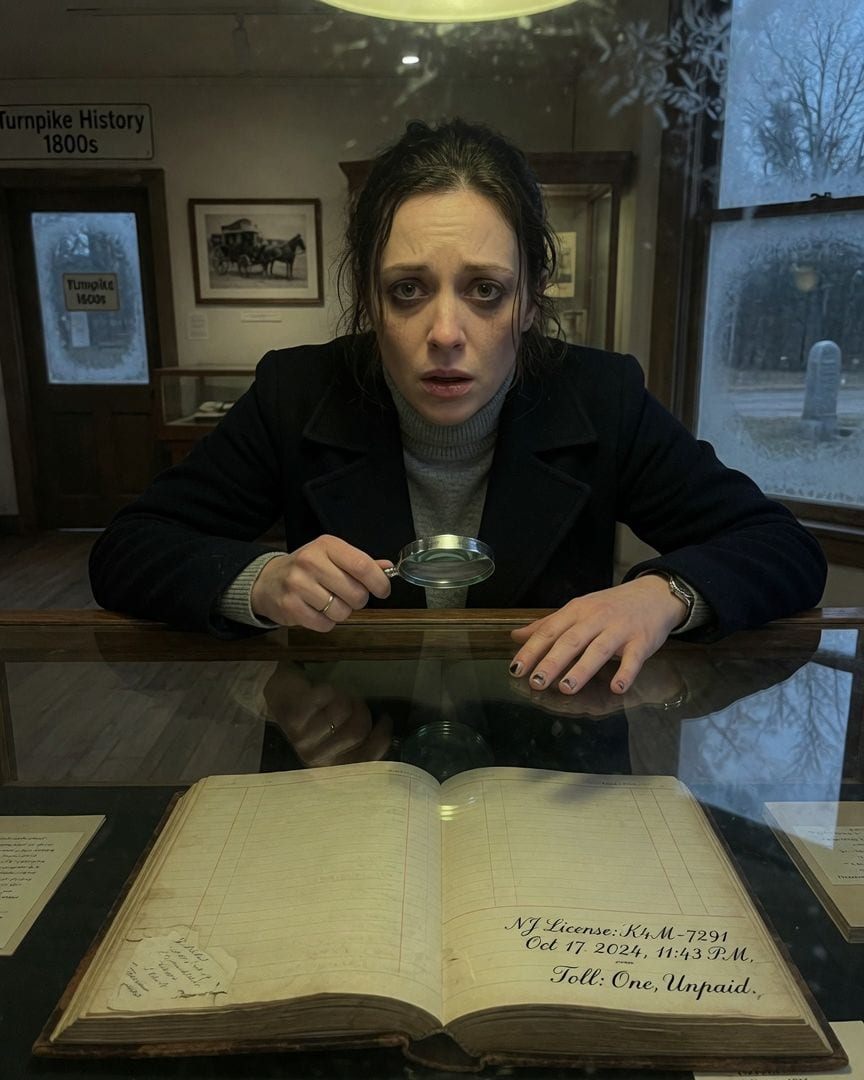
My car stalled at the old turnpike milestone, and the 1874 toll ledger now lists my plate, the date, and an unpaid toll.
My car stalled at an old turnpike milestone, exactly where the carrier had warned me never to stop after dark. The next week, at the local museum, I found a new entry in a century-old toll ledger. There, in fresh ink, were my car's registration, the exact date and hour I stalled, and 'Toll: One, Unpaid.' I knew it wasn't a joke.
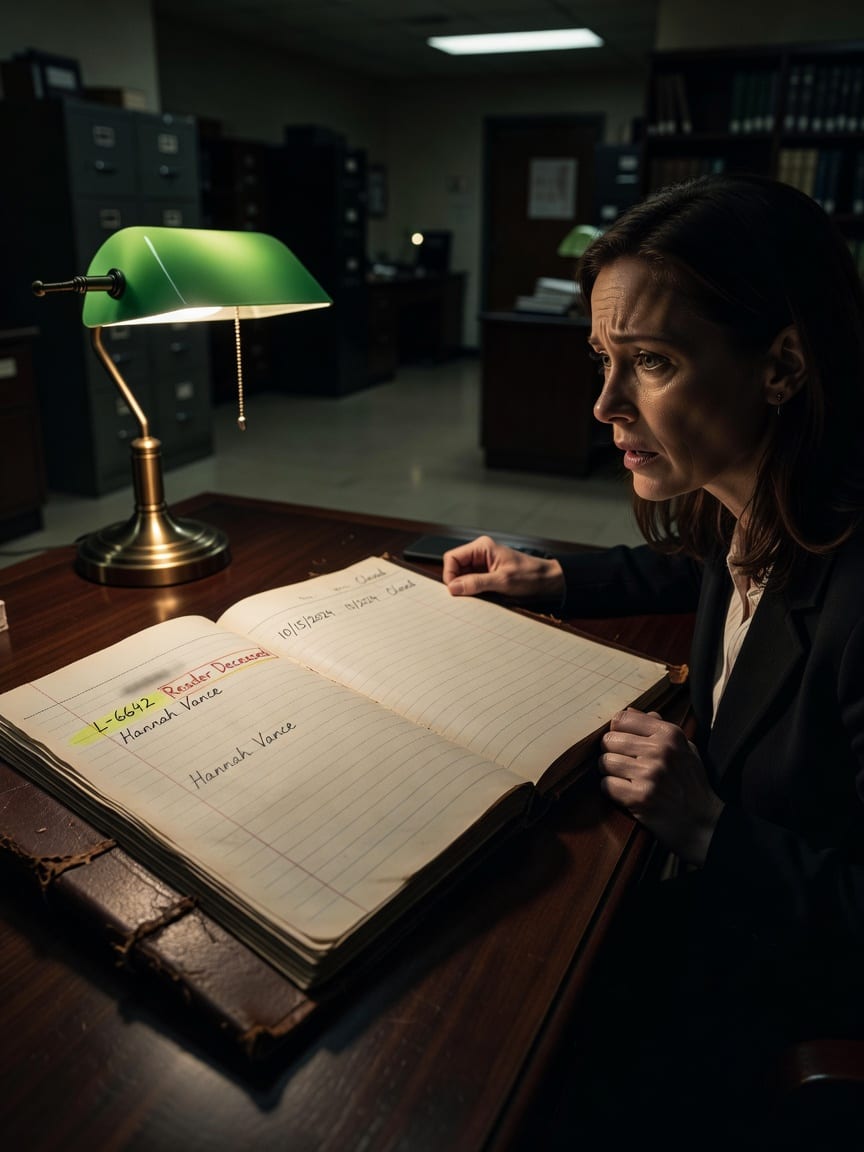
My library card number L-6642 was issued to me at seven — and the ledger shows that number has marked a reader 'deceased' every twelve years since 1949.
Returning my late father's library card to the old town library felt like a small act of closure. But the senior librarian's ancient ledger revealed a chilling pattern of 'reader deceased' entries tied to specific card numbers and borrowed books. My unease turned to cold dread when I secretly found my own name penciled in, marked for a future 'reader deceased' entry.
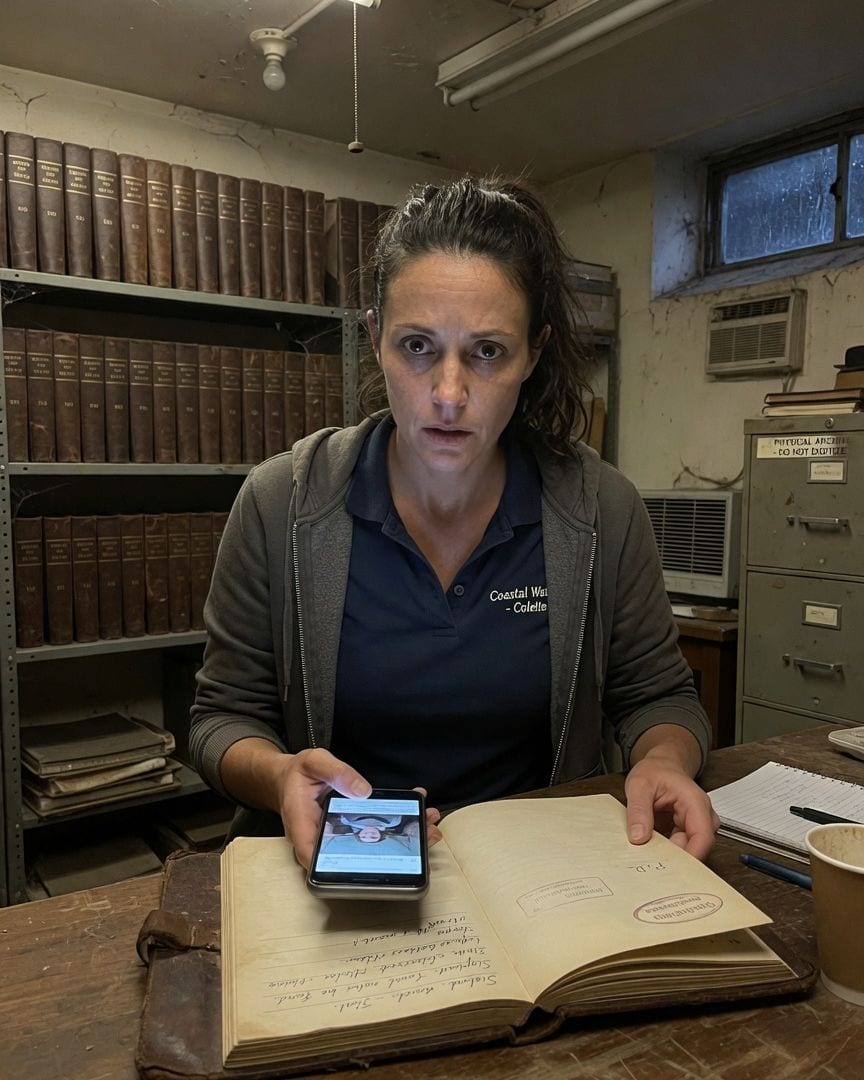
My coastguard log noted Sighting 9 again tonight, a light where no vessel showed. The old logs carry Sighting 9 off Skerry Point at 3:14am every tenth year since 1954, always 'nothing found,' always 'send no boat.'
On my watchtower night shift, the radar screen glowed green and the ocean was quiet. Then, a familiar light appeared off Skerry Point, exactly on cue, just as it had every tenth year for decades. But digging deeper, I found a hidden stamp in an old logbook: 'Operation Skerry. Status: Complete.' It left me with a chilling sense of finality.
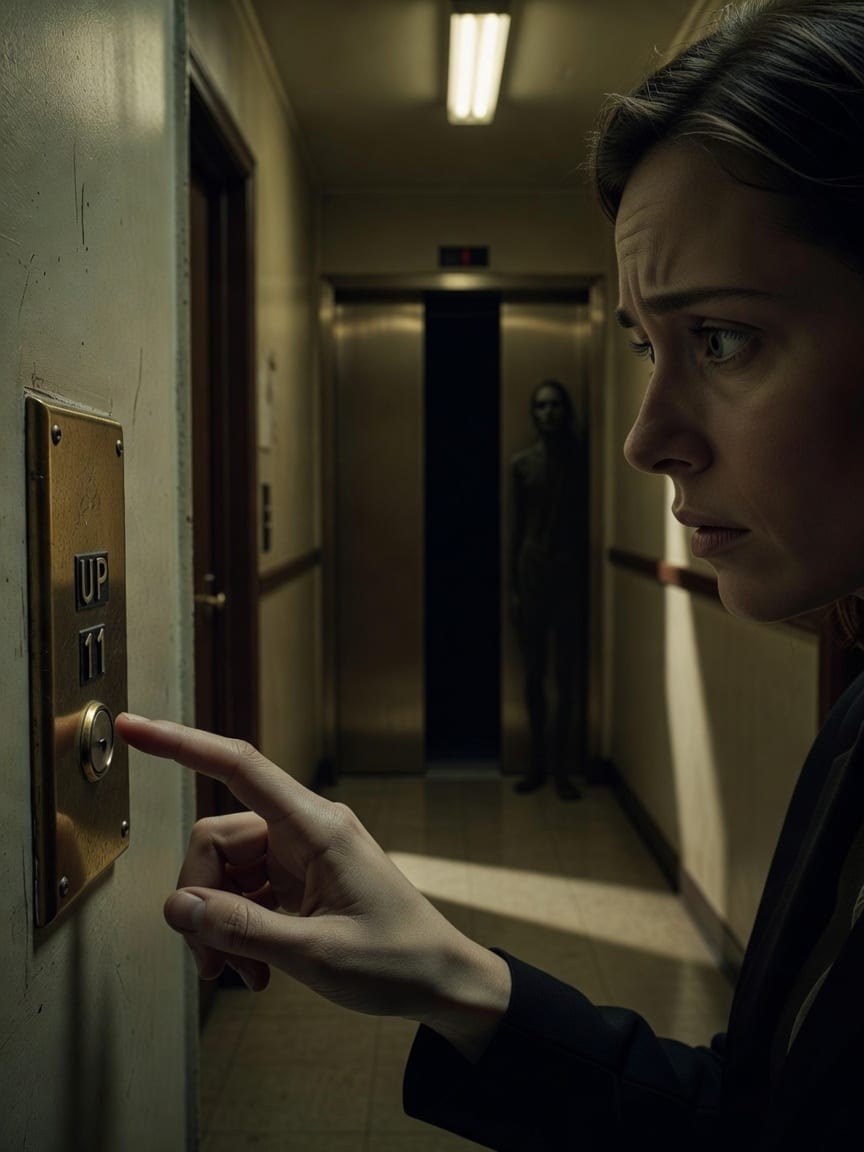
My doorman warned me not to take the tenth-floor lift on Saturday. The building's lift passed inspection last month. He seemed terrified that he'd said it.
My doorman's unsettling warning about the tenth-floor lift left me with a metallic taste of unease. I tried to rationalize it away, but then a birthday card arrived for me, five months early, from an impossible address. It was a site linked to unexplained disappearances, and a cold certainty began to settle in.
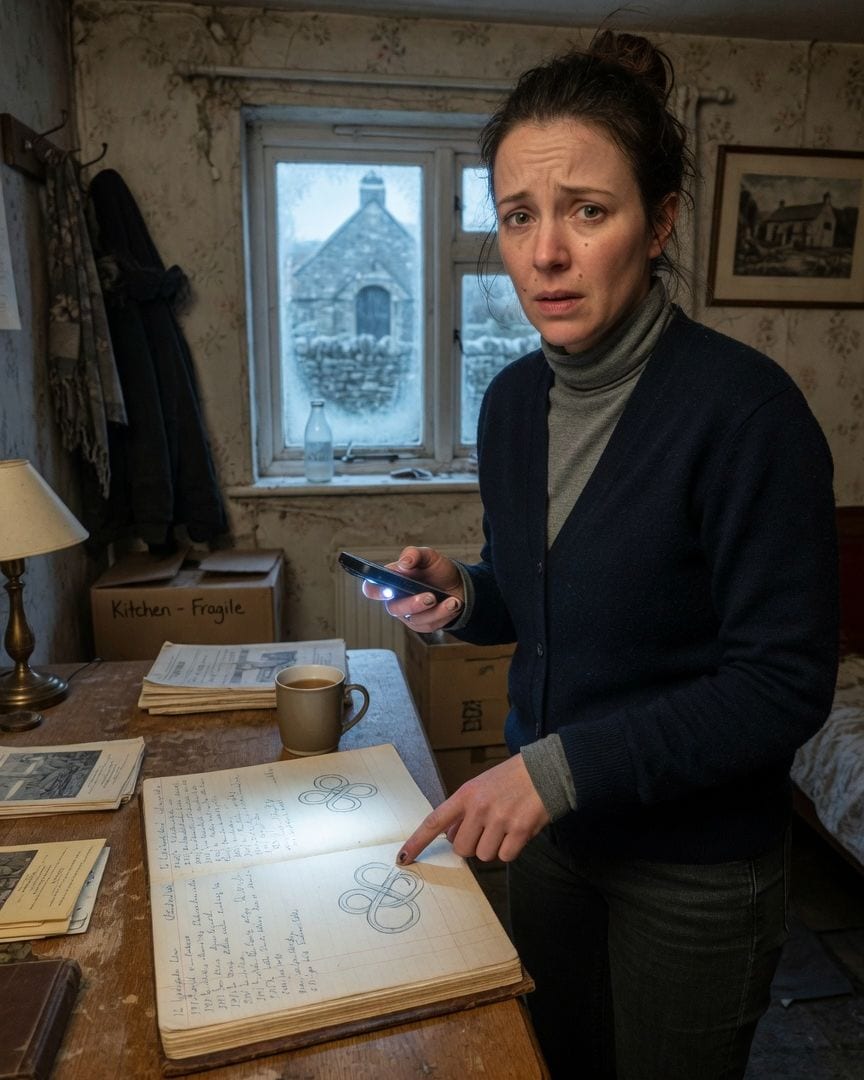
Milk appears daily by my lychgate. The dairy closed in '79. My address is handwritten into their old delivery book, starting the day we moved in.
Moving to Blackwood Creek, I loved the quaint charm, especially the unexpected morning milk delivery to my lychgate. But when I mentioned it to Eleanor at the village shop, her smile froze. She told me Willow Creek Dairy closed decades ago, in '79.
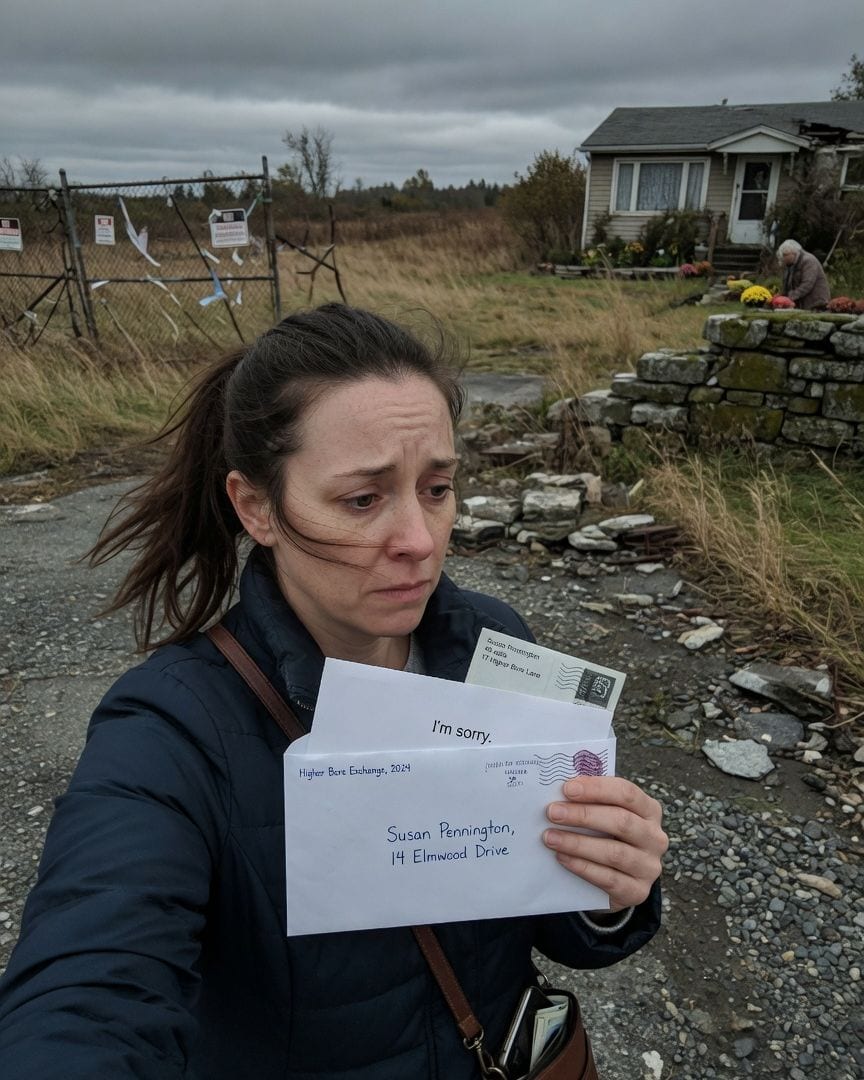
My phone bill listed forty calls made at 3:14 AM to a house demolished in 1990. The paper bill came from a flattened building. My name is on it.
I stared at my phone bill, my morning coffee forgotten. It detailed forty calls, each at 3:14 AM, to an address I knew was a vacant lot where a house had stood decades ago. But the real dread began when I saw the bill's return address: a telephone exchange flattened years before.