My phone bill listed forty calls made at 3:14 AM to a house demolished in 1990. The paper bill came from a flattened building. My name is on it.
I stared at the phone bill, my morning coffee forgotten, cold in my hands. Forty calls. Each one originating from my account, my phone number.
Each one directed to a number I didn’t recognize, an address listed simply as '17 Higher Bore Lane'. Each call placed precisely at 3:14 AM, lasting exactly eleven minutes. The dates were recent, spread out over the past three weeks.
My account number was flawless, my name, Susan Pennington, printed clearly at the top.
Except 17 Higher Bore Lane was a vacant lot. I knew this for a fact. A field, really, where a house had stood before it was demolished in 1990, years before I was even a teenager.
I’d never dialed that number, never heard of the address until now. My own phone’s call history, which I checked immediately, was clean. Nothing. No outgoing calls at 3:14 AM, no calls to unknown numbers.
The paper bill itself felt wrong. It wasn’t just the impossible charges. The return address, the one from where it had been posted, was for the 'Higher Bore Telephone Exchange'.
That structure had been flattened years ago too, in 2005, making way for a bypass that never materialized. Now it was just another empty patch of land on the edge of town, gravel and weeds.
I tried calling customer service, but after twenty excruciating minutes on hold, the automated voice just repeated my current balance, then offered a long list of options that had nothing to do with phantom calls to non-existent places from ghost post offices.
The dread wasn’t in the money, though forty calls were a significant chunk. It was in the cold, impossible facts staring back at me from the printed page.
A physical thing, a chill that had nothing to do with the thermostat, creeping up my arms.
I folded the bill carefully, tucking it into my purse. I had to see it for myself, again. My memory was good, but this kind of impossible detail demanded re-verification.
I drove to Higher Bore Lane, the GPS confirming that the address, 17, would lead me into a wide, overgrown field, bordered by a crumbling, moss-covered stone wall.
No house, just tall grass swaying in the persistent, grey wind of a late autumn afternoon.
An elderly woman, Janet Whitfield, about 72, was stooped over, tending a small, immaculately kept garden next door, her back to me. Her house was neat, well-maintained, a small bastion of order against the wildness of the vacant lot.
I approached her cautiously, feeling foolish even as I did it.
"Excuse me," I began, holding up the crumpled phone bill. "I know this might sound strange, but I was wondering about the house that used to be at number 17?"
Janet straightened slowly, her movements stiff, but her eyes were sharp, a startling blue. She looked at the address, then at the field. "Oh, that old place," she said, her voice raspy but clear. "Demolished back in '90, dear.
Made way for… well, nothing, in the end. Been a field ever since."
My stomach tightened. "And the telephone exchange building?" I pressed, "It was also on Higher Bore, wasn't it? The one the bills used to come from?"
Janet frowned, a web of wrinkles deepening around her eyes. "Long gone, love. Demolished, I think, for that bypass that never came. Been a wasteground for years. Why do you ask?"
I mumbled something about a billing query, thanking her quickly. The conversation did nothing but twist the knot in my gut tighter. The bill was undeniably real, the addresses it cited were undeniably gone.
I drove a little further down Higher Bore, to where the exchange building should have been. It was just as Janet said: an empty, gravelly lot, fenced off with rusted chain-link, weeds pushing through cracks in the old tarmac.
It felt desolate, forgotten, even by the bypass.
I pulled over, got out, and walked around the perimeter fence, the wind whipping at my hair, carrying the scent of damp earth and decay. A profound sense of wrongness settled over me. This wasn't a glitch.
This wasn't a mistake. This felt… targeted.
As I turned to leave the desolate lot, the wind tugging at my jacket, a flash of stark white caught my eye near the rusted fence line.
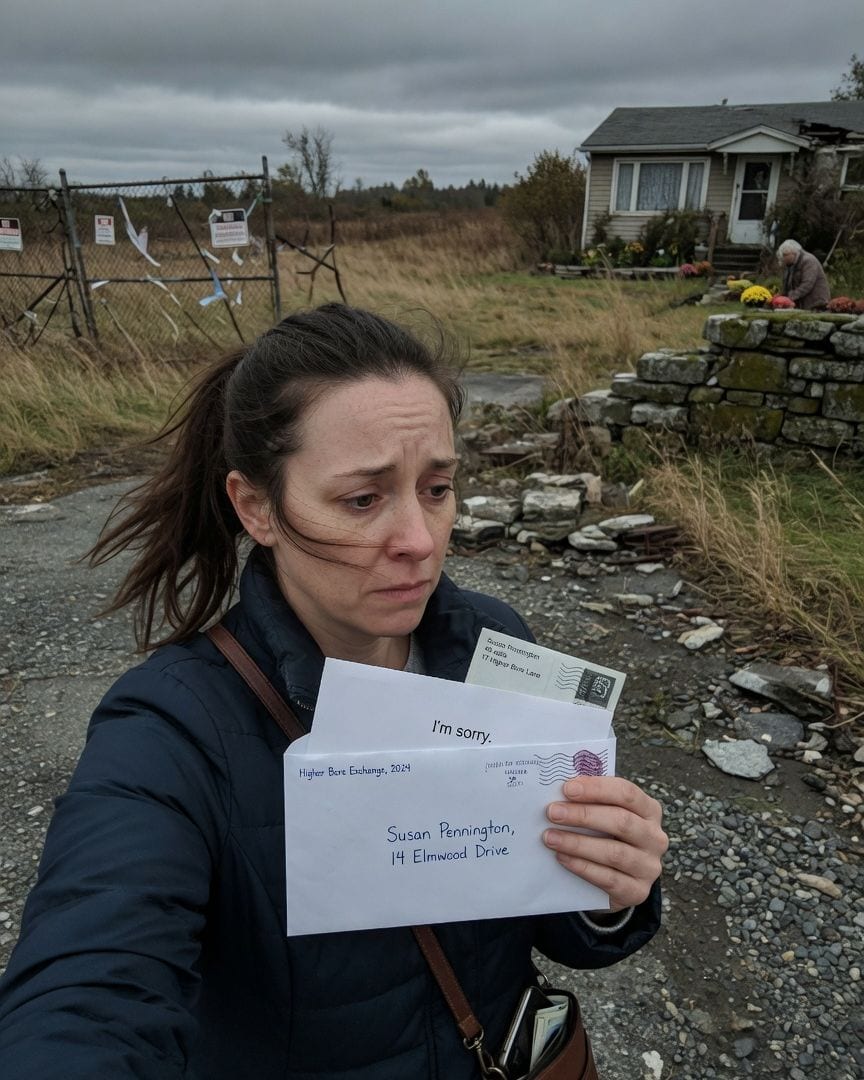
It lay incongruously against the cracked asphalt, pristine against the grit and dust that coated everything else. A single, crisp envelope.
My heart hammered, a frantic drum against my ribs. It was addressed to me, in a neat, unfamiliar script: 'Susan Pennington, 14 Elmwood Drive.' My home address. The postmark was clear, stamped with 'Higher Bore Exchange, 2024'. Impossible.
I picked it up, my fingers trembling, the heavy paper cool against my skin. There was no return address, no other text on the outside. Inside, a single, thick card. No flowery message, no other words.
Just one, precisely centered, stark and cold: 'I'm sorry.'
I showed the impossible letter to my friend, Lydia Bishop, later that evening. She sat across from me at my kitchen table, turning the card over and over in her hands, her expression a mix of concern and professional skepticism.
Lydia, 39, was an architect, all about logic and structure, and she usually had an answer for everything.
"Someone's playing a prank, Susan," she suggested, though her voice lacked its usual conviction. "A very elaborate, very creepy prank."
"With a postmark from a demolished building?" I countered, gesturing with my hands. "And forty calls to a house that hasn't existed for thirty-four years? For eleven minutes, always at 3:14 AM?"
Lydia’s brow furrowed. The precision of the postmark, 2024, from a place that physically couldn’t exist, and the utter lack of any other message besides that single, chilling apology, clearly unsettled her.
"Someone knows you, Susan," she finally conceded, her gaze distant. "And they knew you'd go looking. That you'd try to find out."
"But who?"
She set the card down, sliding it back into its envelope. "If someone's playing a long game," she began, "there might be a paper trail, however thin, however old.
Something connected to that house, or the exchange, that could give them the details to pull this off." She tapped her finger on the table. "Historical records. That's where I'd start."
The next day, I found myself at the local historical society, a quiet, dusty building tucked behind the public library.
The air was thick with the smell of old paper, leather, and something else – a faint, almost metallic tang, like old coins.
The archivist, Carl Easton, 57, a man with a perpetually tired expression and spectacles perched low on his nose, barely looked up from his microfiche reader when I explained my query about old properties on Higher Bore Lane.
He grunted, pointing vaguely towards a stack of bound volumes. "Property records are over there. Decade by decade. Knock yourself out."
I spent hours sifting through old maps and deeds, my fingers growing smudged with dust. I traced the ownership of 17 Higher Bore Lane back through decades. The demolition in 1990 was confirmed, documented with a terse 'Site Cleared' notation.
The last owner listed was a 'Pennington Estate' – no first name, just a family surname. It was a strange coincidence, my last name, but I dismissed it as such.
This town was small; there were bound to be other Penningtons.
I pushed away from the table, my back aching. I walked over to Carl, who was now meticulously cleaning a glass slide. "Mr. Easton," I said, "what about the old telephone exchange building? On Higher Bore Lane?"
He sighed, a weary exhalation. "Nothing remarkable," he muttered, without looking up. "Standard municipal property. Demolished for road expansion plans that never materialized. Now, if you'll excuse me, I have actual historical documents to preserve."
His tone was clipped, impatient, his eyes flicking back to his screen, clearly wanting me to leave.
The air in the archives was thick with indifference, but I couldn't shake the feeling that I was on the edge of something. A faint, almost inaudible hum beneath the silence of the past, like a distant power line.
I returned to the historical society several times over the next few days. I told myself it was to be thorough, to exhaust every rational avenue.
But I also felt Carl Easton’s eyes on me, his initial indifference slowly replaced by a wary curiosity.
I’d started asking about obscure local legends, old stories connected to Higher Bore Lane, anything that might explain the 'Pennington Estate' or the impossible letter.
Carl finally stopped me one afternoon, stepping out from behind his desk. "Look, Ms. Pennington," he said, his voice low, "you're digging into things best left alone. That lane, that house… it’s just old history. Some things don't need explaining."
His tone was clipped, almost a warning. A chill ran through me despite the stuffy warmth of the archive. It wasn't just impatience anymore; it was something else, something I couldn't quite place.
That evening, my home phone rang. It wasn't my cell; it was the old landline I barely used. I hesitated, then answered. "Hello?"
A faint crackle, like static on an old radio. Then a low, distorted voice, barely a whisper, said my name. "Susan." It was flat, toneless, stretched thin as if speaking from a great distance. Then the line went dead.
Not a hang-up click, just silence. No dial tone, nothing.
Later that week, as I was leaving my apartment building, I saw a figure standing across the street, partially obscured by a bus stop shelter. They were looking directly at me.
The street was busy, but I felt their gaze, a cold, unwavering point.
As I met their eyes – or where their eyes should have been, for their face was still shadowed – they turned and walked away, disappearing into the evening crowd with a deliberate, slow pace that felt less like a retreat and more like a deliberate acknowledgement.
The apology, the voice on the phone, the figure across the street – it was all coalescing into a focused, personal dread. I wasn't just investigating anymore. I was being observed.
I decided to confront Carl Easton directly. Enough with the vague warnings and the tired expressions. I found him in a quiet corner of the archives, meticulously cataloguing ancient, brittle maps with white-gloved hands.
The metallic tang in the air seemed stronger tonight.
"Mr. Easton," I began, my voice steadier than I felt. "I need to know everything about 17 Higher Bore Lane. Not just the property records. Everything."
Carl sighed, his shoulders slumping under his tweed jacket. He carefully placed the map under a weighted glass sheet. "I told you, there’s nothing. Just a house, then a field. A mundane piece of local history."
I pushed the impossible letter across the table, the pristine white envelope stark against the worn wood. "Then explain this. Explain my name on a bill for a house that doesn't exist, from an exchange that's gone.
Explain 'I'm sorry' from a ghost postmark dated this year."
Carl picked up the letter, his eyes, usually so dull behind his spectacles, scanning the impossible details. He looked genuinely unnerved, his hand shaking slightly as he held the paper.
"There are… other records," he admitted, his voice barely a whisper, lower than the hum of the old fluorescent lights. "Not for public viewing. Special designations. Most of them aren't even catalogued in the main system. People forget about them.
I almost did."
He led me to a heavy, bolted cabinet in a recessed alcove, tucked almost entirely out of sight behind a towering shelf of legal texts. He rummaged for a key on a massive, jingling ring, his movements stiff and slow.
With a click, the cabinet door swung open with a faint groan, revealing not shelves of files, but a single, heavy, leather-bound ledger. Its cover was faded and unmarked, the leather worn smooth in places.
"This," he said, placing it on the table with a soft thud, the sound echoing unnaturally loud in the quiet room. "This was part of a collection from the old county registrar. Deemed… sensitive. Too unusual for general access."
He opened it to a specific page, the stiff paper creaking, a faint smell of something like dried leaves wafting from between the pages.
The handwriting was neat, precise, dated from the late 19th century through to the late 1980s. Each entry listed a name, an address, and a date. My breath caught in my throat, a cold, hard knot.
Halfway down the page, in an entry dated 1985, clear as day, was my full name: 'Susan Pennington. 17 Higher Bore Lane.'
My birth year was 1986.
Carl pointed to the entry, his finger shaking slightly, a thin line of tremor. "You see?" he said, his voice flat. "Your name. Before you were born. Associated with that house. It's… a pattern."
My mind reeled. My name. In a ledger from before I existed, tied to that house.
It clicked with the 'Pennington Estate' I'd dismissed as a coincidence earlier, now feeling less like an estate and more like a lineage, a mark.
I looked at Carl, who simply shrugged, his face pale, his eyes wide with a mixture of fear and resignation. "What does this mean?" I whispered, my voice tight, barely audible.
Carl shook his head slowly, deliberately. "I don't know, Ms. Pennington. Just… a pattern. That's what they called it."
My gaze dropped back to the ledger, drawn by a horrifying gravity. I saw that each name on the page, including my own, was followed by a small, precisely noted time: '3:14 AM / 11 mins'.
My blood ran cold. The phone calls. The exact same time, the exact same duration. Forty calls to a house that shouldn't exist, to an address tied to my name, before I was even born.
I flipped the page, then another. The pattern continued, stretching back, name after name, date after date, each with the impossible time and duration.
And at the very bottom of the last filled page, beneath my own name and the 1985 date, there was another entry, half-filled.
My name again, 'Susan Pennington,' but this time, the date next to it was only weeks away, in the current year. The '3:14 AM / 11 mins' notation was already there, waiting.
I rushed back to Janet Whitfield's house, the heavy ledger clutched in my hand, the pages rustling like dry leaves.
Janet, startled by my panicked arrival on her porch, listened patiently, her blue eyes fixed on my face, as I explained everything: the phantom phone bill, the chilling apology letter, the impossible ledger entry with my name before my birth, and the terrifying future date.
Janet's eyes, however, showed no surprise. She nodded slowly, a faint, sad smile touching her lips. "Ah, the old ledger," she said, her voice softer than before, as if speaking a memory.
"My grandfather kept records like that, though his was just a small notebook. He called it the 'Calling Book'."
She invited me inside, the small living room warm and filled with the scent of lavender and old wood.
"The house at 17 Higher Bore Lane," she explained, settling into an armchair, "it wasn't a house in the way we think of it, dear. More like a door. A threshold.
For generations, it's been known as a place where certain names are… called."
She paused, looking out the window at the field where the house once stood. "A passage. That's what they called it. And certain names… they echo across time. They're drawn to it, whether they know it or not."
Her gaze returned to mine, clear and unwavering. "The 3:14 AM and eleven minutes? That's the precise window. When the threshold is most open. When the 'calling' can be heard most clearly."
I thought of the phone calls, the insistent, unheard ringing. "The phone calls weren't from your number, dear," Janet said softly, as if reading my thoughts. "They were for your name. A summons.
Not something you do, but something done to you."
"And the apology?" I whispered, the word feeling like a stone in my mouth.
Janet's sad smile returned. "Well, once your name is in the Calling Book, and your time comes, there's no changing it. No fighting it. It's just… what happens. The 'I'm sorry' is for that. For the inevitability."
Dread settled over me, cold and absolute, far deeper than any chill I’d felt before. It wasn't a feeling of fear, but of profound, inescapable certainty. I tried to fight it.
I booked a flight, packed a bag, tried to leave town. Anywhere but here. But every road seemed to lead me back towards Higher Bore Lane.
An inexplicable wrong turn, a sudden, baffling car trouble that vanished as soon as I turned back towards home, a cancelled flight due to "unforeseen operational issues" that seemed to affect only my itinerary.
It was as if an invisible hand guided me, gently but firmly, towards my fate. I tried to argue, to rationalize, to break free, but each attempt was met with an unyielding, subtle redirection.
On the appointed night, the date from the ledger burning in my mind, I found myself standing in the overgrown field at 17 Higher Bore Lane. The chill wind bit at my exposed skin, but I felt no cold.
It was exactly 3:14 AM. The air grew heavy, silent, save for the distant rustle of leaves in the ancient trees bordering the field.
The ground beneath my feet felt strangely soft, almost yielding, as if the earth itself was breathing.
Then, from somewhere just beyond my perception, a faint, distorted ringing began. It was the sound of an old rotary phone, impossibly clear yet utterly out of reach, not quite in my ears, but resonating deep within my bones.
And then, a whisper, like the rustle of dry leaves skittering across the cracked asphalt of the old exchange lot, spoke my name, 'Susan.'
The sound was not loud, but it filled my entire being, pulling at me, drawing me forward. The ringing intensified, a steady, insistent thrum that vibrated through the soles of my shoes.
The ground beneath me seemed to ripple, the air shimmering as if a curtain, woven from shadow and light, was about to part.
I felt myself compelled to take a step, then another, towards the sound, towards the place where the house used to be, towards the calling that had always known my name.
The eleventh minute began, and the ringing grew deafening, a roar that consumed everything, every thought, every sensation. The field seemed to drop away beneath my feet, the world dissolving into sound.
Days later, the phone bill never arrived again. The ledger was gone from the historical society, Carl Easton claiming it had been misfiled, or perhaps never existed.
He seemed calmer, almost relieved, his tired eyes holding a flicker of knowing that he quickly suppressed. The empty lot on Higher Bore Lane was just an empty lot, no longer holding that sense of profound, personal wrongness.
Everything was back to normal, except for Susan.
I returned to my apartment, to my life, but the quiet hum of the world felt muted, distant. A piece of me felt… absent.
My movements were a little slower, my responses a fraction delayed, as if my consciousness had to travel a greater distance to reach the surface.
I looked the same in the mirror, but my eyes held a new, unsettling stillness, a lack of the usual spark.
I sometimes paused, mid-sentence, my head cocked slightly, as if listening to a distant echo, a sound only I could hear.
The world had smoothed itself over, erasing the sharp edges of the impossible, leaving only a hollow where Susan Pennington used to be whole.
Lydia Bishop visited me a week later, concerned by my quiet withdrawal. She found me sitting by the window, staring out at nothing in particular, the faint hum of the city a dull throb in the background.
"Susan? Are you alright? You've been so quiet."
I turned slowly, a faint, almost imperceptible smile touching my lips. My voice, when I spoke, was a little flatter than usual, lacking its former warmth. "Oh, I'm fine, Lydia," I said. "Just… thinking about things."
Lydia noticed the way my eyes seemed to look past her, not quite at her, as if she were a pane of glass I was seeing through. "You know, I was thinking about that phone bill, and that letter.
It was all so strange. What do you think it was all about?"
I tilted my head slightly, my smile widening just a fraction. It was a smile that didn't quite reach my eyes, and it held a quiet, knowing satisfaction that was utterly new and profoundly unsettling.
Lydia Bishop picked up her coat, a shiver running down her spine that had nothing to do with the draft from the door. "Well, I'm glad it's all over, then," she said, trying to sound cheerful. "You can finally relax."
Susan turned from the window, her gaze fixed on Lydia. 'Is that so?' Lydia asked, and Susan smiled faintly, a small, wrong smile.
If this one got to you
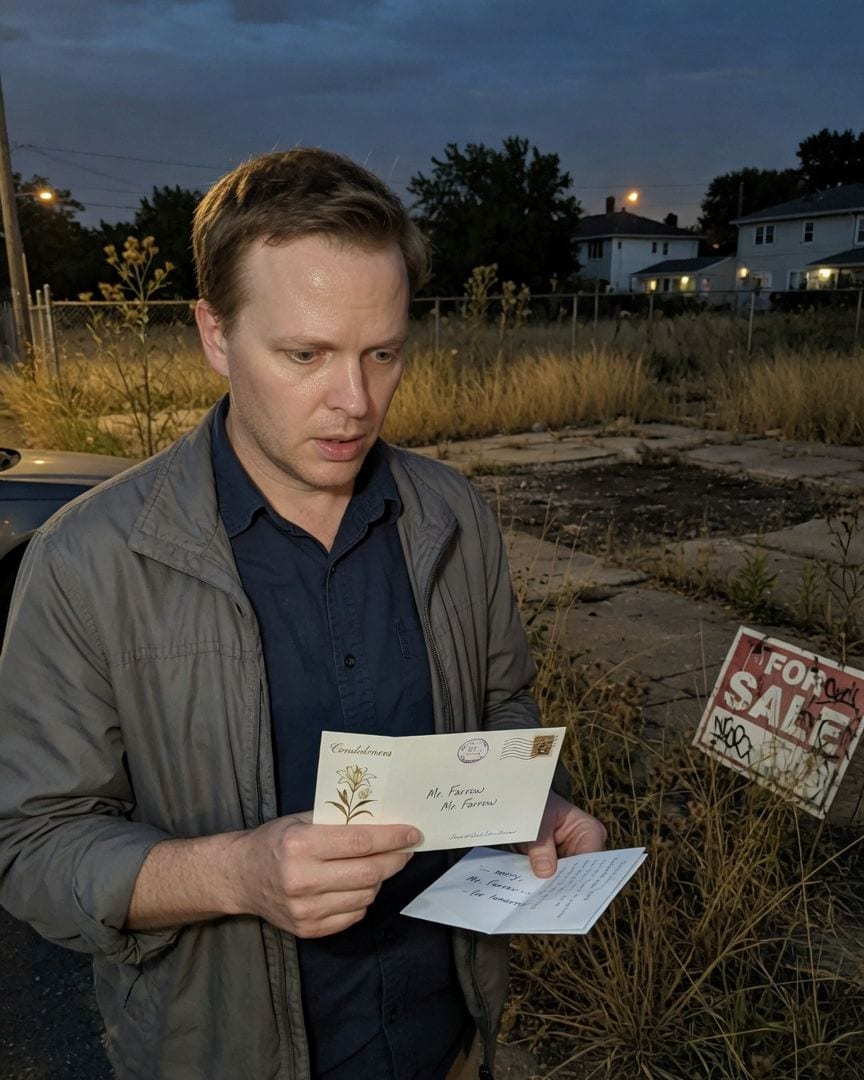
My waiter apologized for tomorrow's plans I hadn't made. He stared at his own handwriting, swore he didn't write it.
My quiet, solitary life was routine until a condolence card arrived, addressed to me for an unknown loss. The postmark, '14 Elm St.', was unsettling enough, but driving there revealed the impossible truth: the address was nothing but an empty lot.
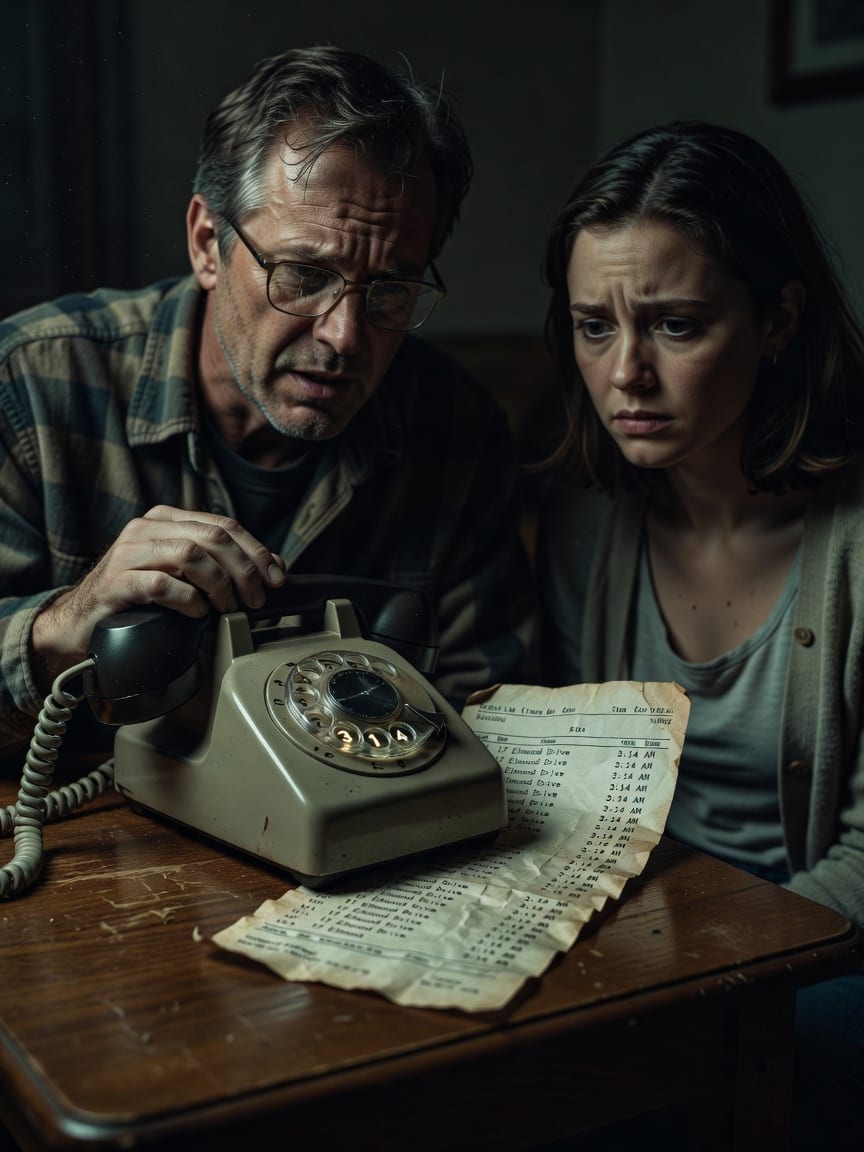
My phone bill itemised forty calls from my number to a house demolished in 1990. Each call at 3:14 AM, lasting eleven minutes. The bill arrived postmarked from a flattened building.
I expected the usual mobile bill, but my landline statement listed forty calls from my number to '17 Elmwood Drive.' That address was for a house torn down in 1990, a vacant lot I remembered from childhood. The phone company insisted the calls were legitimate, leaving me profoundly unsettled by the impossible charges.
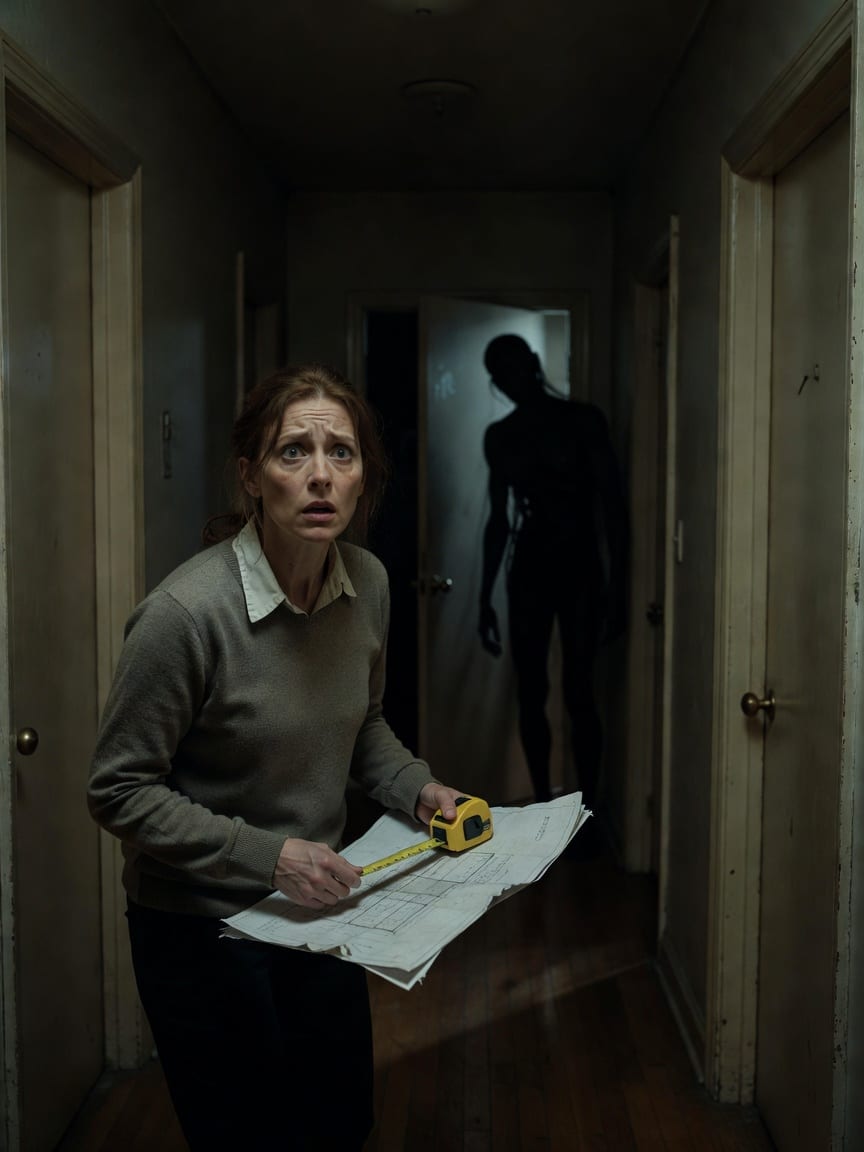
My front door has a dented gate and a dead hydrangea. I walked past it six times, trying to reach the corner shop just a hundred yards away. The pavement kept bringing me back to my own porch, and the shop's light never moved.
My morning started like any other, a quick walk to the corner shop from my home at Number 14, Elm Terrace. But after walking what felt like two minutes, I found myself back at my own front door, the shop no closer. I tried six times, faster and slower, but my street kept compressing, refusing to let me leave.
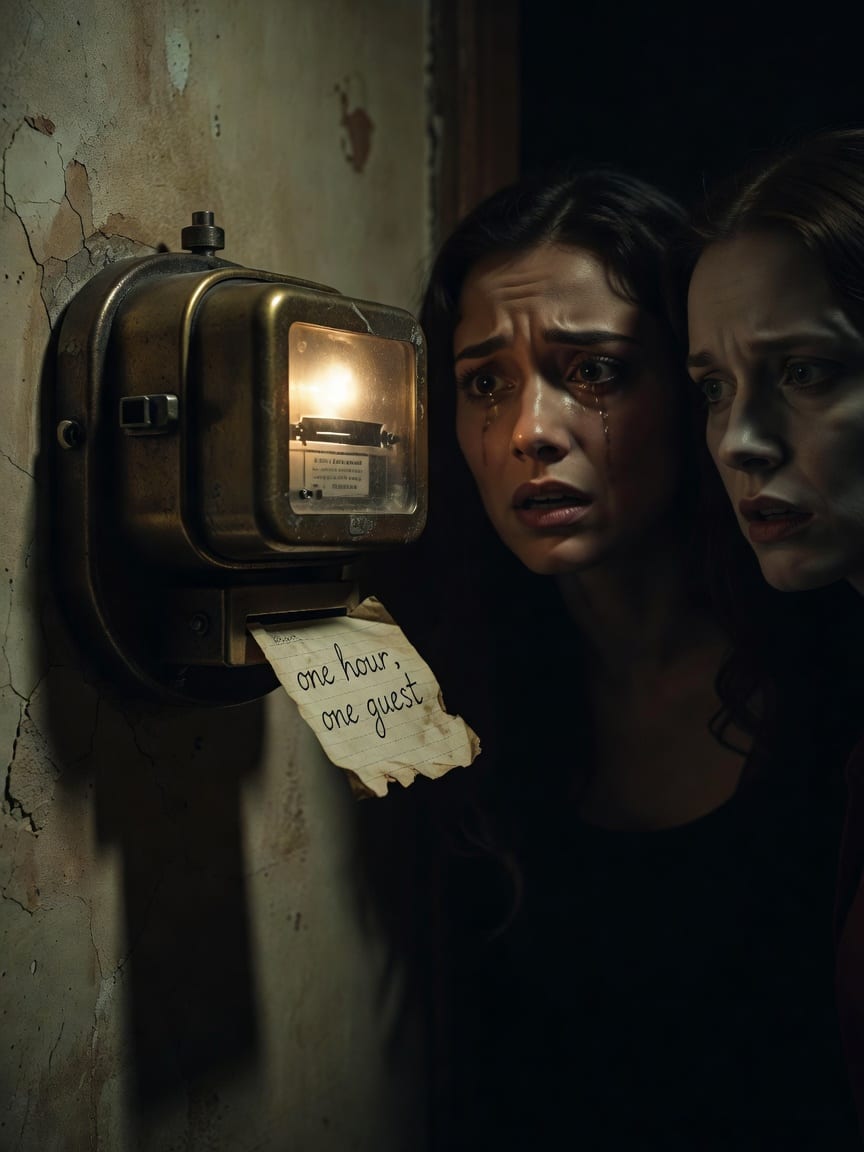
My landlady said don't feed the meter after closing pips. I did. The lights across the terrace dimmed, once. In the morning, a handwritten bill for 'one hour, one guest' was pushed under my door from the man who died in this flat.
I'd just moved to a quiet town, charmed by its old-fashioned electricity meter and my landlady's quirky notes. But when I ignored her warning and fed the meter late one night, a strange bill appeared under my door. It was for 'one hour, one guest,' sent by a man named Edward Barlow—who died seven years ago in my very own flat.
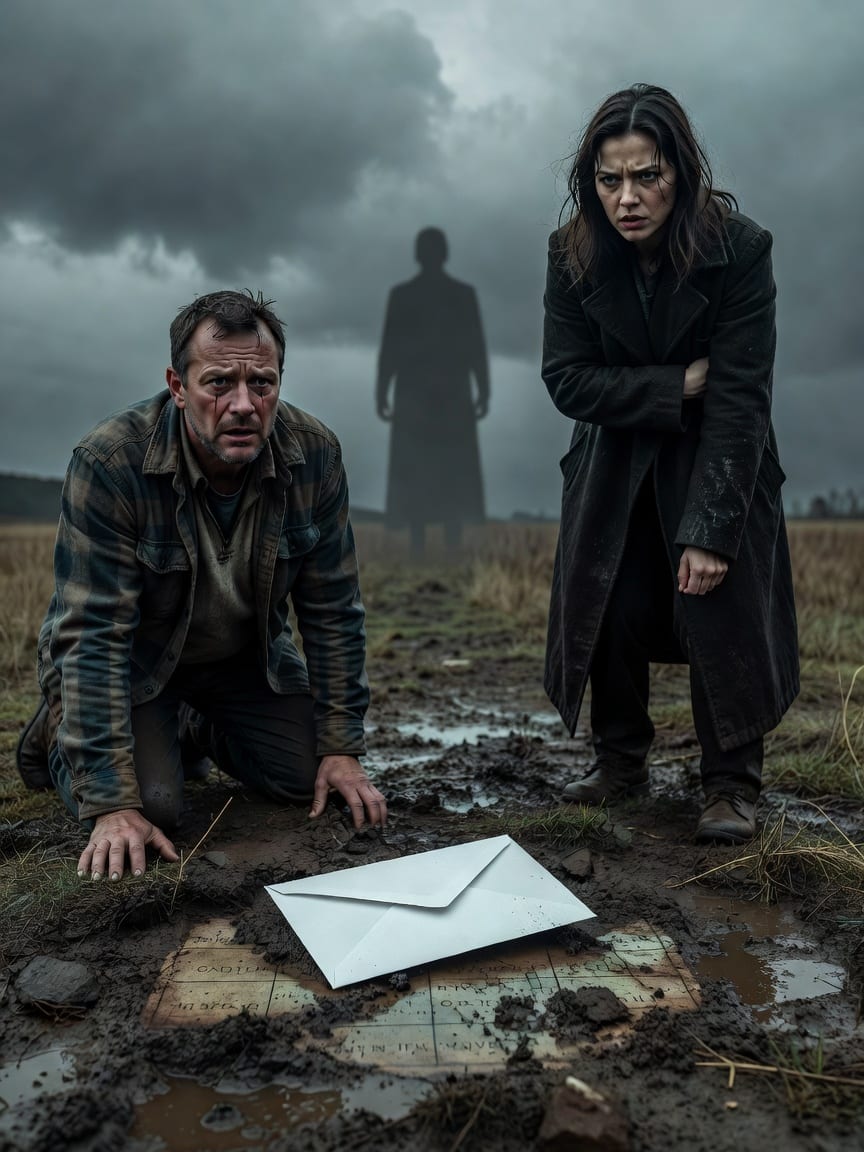
My mail carrier delivers polling cards to Nine Acre Field. It floods, they say. The tithe map shows nine family plots there.
As the new county archivist, I was used to quiet days poring over dusty records. But then I found an empty field, Nine Acre, was receiving current-year polling cards and utility notices for nine distinct addresses. When I investigated, I unearthed a perfectly crisp, current-year tax bill, buried in its soil, surprisingly warm against my fingers.
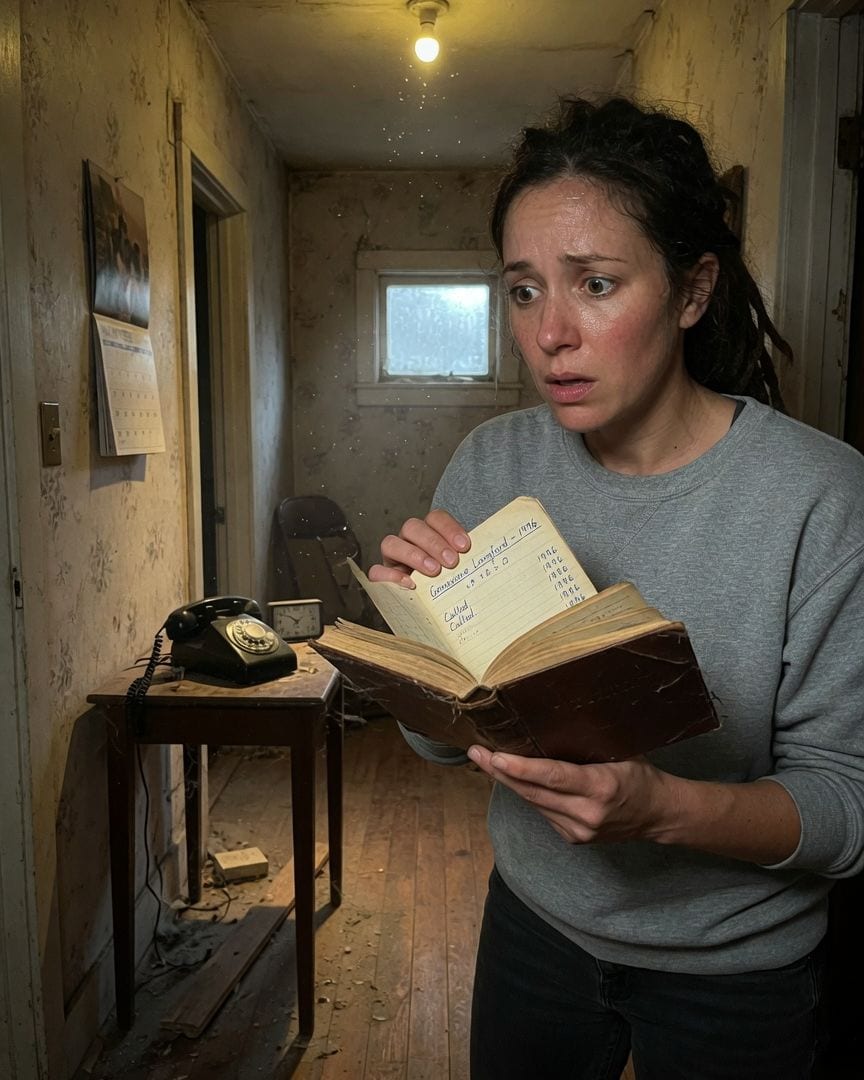
My dead rotary phone rings at 8:05 every night. I pick it up. A room full of voices, then a woman drawing breath.
I inherited an old house, complete with a black rotary phone that the company confirmed was disconnected in 1996. Yet, most evenings at 8:05 PM, it rings. When I pick up, a distant murmur fills the line, followed by a woman drawing a deep, shuddering breath every single time.