My dead rotary phone rings at 8:05 every night. I pick it up. A room full of voices, then a woman drawing breath.
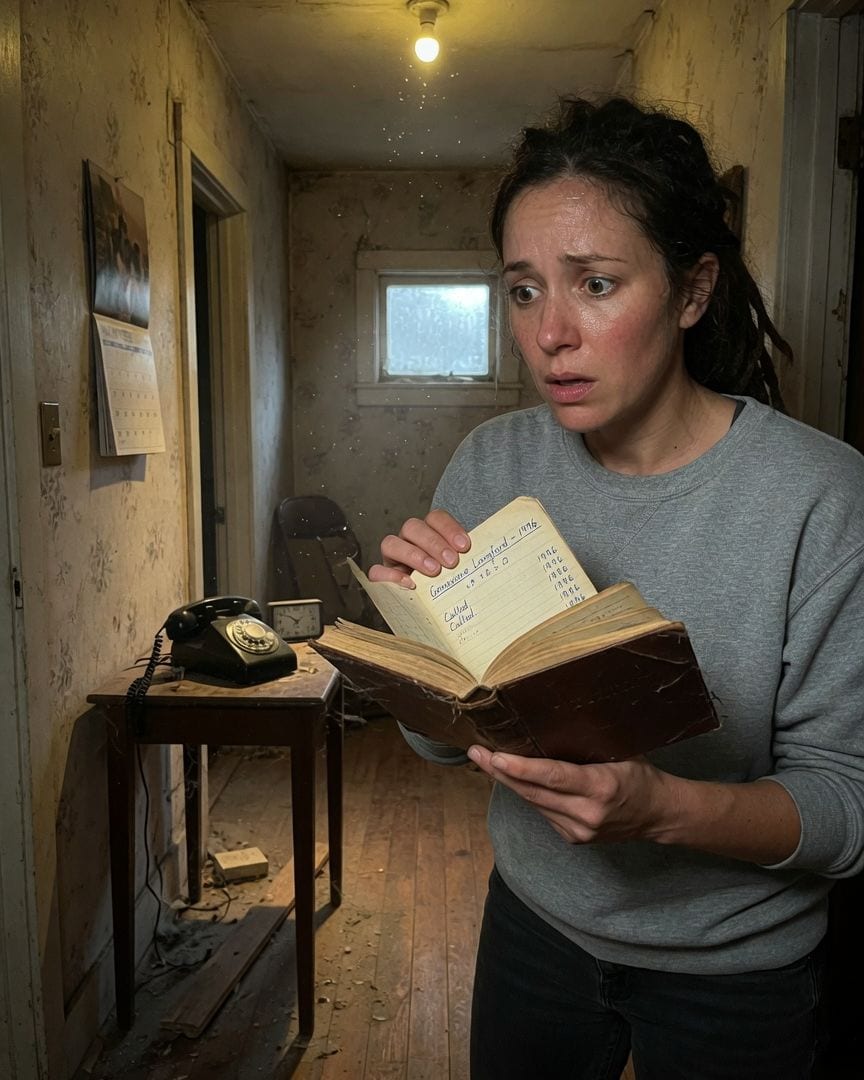
The black rotary phone in the hall shouldn't ring.
It's a heavy, clunky thing, a relic I inherited with the house itself, a property passed down through my great-aunt’s side of the family, then left to sit empty for years before I moved in last year.
The phone company confirmed it when I called them, early on, to ask about getting the line reconnected: the number was officially disconnected in 1996. Yet, most evenings, at exactly 8:05 PM, it rings.
Two long, low trills, a proper old-fashioned sound that slices through the quiet like a knife.
I’ve picked it up more times than I care to admit. It’s a strange compulsion, a physical jerk towards the impossible sound. Each time, I brace myself. Each time, it’s the same.
A distant murmur, like a room full of people, far off, a low hum of conversation I can’t quite make out. Underneath it, distinct and chilling, a woman drawing a deep, shuddering breath. Every single time.
Then I hang up, my hand shaking, and the house feels different, heavier, as if the silence is trying to push something back in, something that just got a little too close to the surface.
I’ve tried the logical route, of course. Checked the wiring for shorts, even though I knew the line was dead.
Called the phone company again, listening to the customer service rep patiently explain, again, that there was no active line, no possible connection, no signal. But the rings keep coming.
I’ve started anticipating them, a cold dread coiling in my gut as the clock ticks towards 8:05. I leave the hall light on now, a small defiance against the encroaching strangeness, a little pocket of warmth in the growing cold.
A few days ago, the dread just wasn't enough. I needed an answer, something tangible to fight against. The phone table itself, a dark, spindly antique, felt like the source of the problem.
I pulled it away from the wall, the legs scraping on the old hardwood floor. Dust motes danced in the shaft of afternoon light that pierced the gloom, revealing a thick, undisturbed layer of grime.
Behind it, almost hidden by the accumulated dirt, I saw it: a loose floorboard.
My heart started to pound, a frantic drumbeat against my ribs. I grabbed a screwdriver from the kitchen drawer and pried at the board. It came up with a groan of old wood, exposing a small, dark cavity.
Inside, nestled amongst cobwebs and more dust, was a small, leather-bound address book. Its pages were yellowed and brittle, smelling faintly of old paper and something else, something sweet and musty.
I blew away the dust and began to flip through the fragile pages. The names were all old-fashioned, forgotten. Many were crossed out with a neat, precise stroke of a pen.
My finger traced the elegant script until it stopped on a single entry, not crossed out, stark against the faded page: "Genevieve Langford – 1996." Below it, a local number, partially faded but still legible.
My great-aunt, who'd owned the house before me, had passed away in the late 80s, and the place had sat empty for years before I bought it. Genevieve Langford wasn't a name I recognized from my family.
The discovery sent a fresh shiver down my spine. The phone was supposedly disconnected in 1996. Was this Genevieve the person behind the phantom calls? Had she lived here before my family?
I pulled out my laptop, my fingers flying across the keys, searching property records for "Genevieve Langford" and the house's address. Nothing conclusive. No direct link to my property, no sale record in her name.
The name and the date, tied so directly to the phone, were an impossible puzzle. I tried to rationalize it – a previous owner, perhaps, before my great-aunt?
But the house had been in my family for generations, a fact I'd been told repeatedly since childhood.
The address book felt cold in my hand, a solid, unsettling piece of evidence that contradicted everything I thought I knew about the house's history, and the phone company’s unwavering records.
I continued to pore over the address book, flipping through the delicate, rustling pages. Many of the names were local, some with old street addresses, familiar names from the town's founding families.
One page was dog-eared, tucked almost completely into the spine, as if someone had wanted to keep it secret, or return to it.
On it, in the same elegant, looping hand as Genevieve Langford's name, was a series of dates, all from 1996, scrawled down the left margin. And next to each date, a single, chilling word: "Called."
No names, no numbers, just "Called." The entries ran down the page, becoming less frequent towards the bottom. The last entry was stark, damning: "December 24, 1996 – No answer."
A chill wind seemed to gust through the silent hall, though all the windows were closed, latched tight against the late afternoon air.
I stared at the faded handwriting in the address book, the name "Genevieve Langford" neatly printed, followed by a date – 1996 – a year the phone company swears the line was dead.
The implication hung heavy in the air, cold and undeniable.
The discovery of Genevieve's name, the date, and that chilling call log from 1996 ignited a desperate need for answers.
The phone, which had previously been a source of simple dread, now felt like a direct link to a past that shouldn't exist.
I drove back to the local historical society, a small brick building that smelled of old paper and dust motes. This time, I specifically asked about "Genevieve Langford" and her connection to my address.
The archivist, a kindly older woman with spectacles perched on her nose, remembered the name. She found a brief obituary from the local paper, dated January 1997.
Genevieve Langford, age 78, had "died peacefully in her sleep" on December 26, 1996, at her residence. My residence. My blood ran cold. December 24, 1996, "No answer." Two days later, Genevieve died.
The phone calls, the sound of the room full of people, the woman drawing breath… it all pointed to Genevieve, trapped in some kind of echo.
The archivist also mentioned that Genevieve was known for her "social evenings," hosting a regular bridge club. "Oh, the house was always full of laughter, especially around the holidays," she reminisced, a fond, distant look in her eyes.
I spent hours sifting through dusty town records, searching for any other trace of Genevieve. I found an old photograph of the house from a local history book, dated 1995.
In the image, a specific window on the second floor, overlooking the side yard, was visible. It was the same window in my spare bedroom, currently boarded up from the inside, hidden behind wallpaper.
Later that evening, as the familiar dread of 8:05 PM began to approach, I found myself standing in the spare bedroom. I tore away the old wallpaper covering the boarded window, my fingers frantic.
Beneath it, I revealed not a pane of glass, but a rough, unpainted wooden frame. The wood was cold to the touch. As I laid my hand on it, a flicker.
Through a crack in the boards, I saw not my overgrown side yard, but a perfectly manicured lawn, a vibrant rose bush in bloom, impossibly vivid and crimson.
An old Ford sedan, an impossible shade of blue, was pulling out of the driveway. The driver, a woman with a beehive hairdo and a wide smile, waved.
The scene lasted only a second, then the crack was dark again, showing only the dusty boards, the cold wood pressing back against my hand.
The entire vision was wrong, impossibly vivid, a door onto the wrong year, showing a time that couldn't possibly be.
Shaken by the impossible vision, I knew I couldn't keep this to myself. My elderly neighbor, Roland Sullivan, had lived next door his entire life. He knew the history of every brick and blade of grass on this street.
I walked across the overgrown lawn, my steps feeling heavy, and found him on his porch swing, whittling a small piece of wood.
Roland remembered Genevieve well. "Lovely woman, but a bit lonely after her husband passed," he said, his gaze drifting towards my house, a faint, unreadable expression on his face.
"Used to have her bridge club, but they all started dying off in the 90s. She got very quiet near the end. Didn't see much of her out and about after '95, I don't think."
I carefully described the phone calls, the murmuring crowd, the woman drawing breath, the dates from the address book. Roland's eyes narrowed, but his composure remained unnerving. "That phone," he muttered, almost to himself, "she was always on that phone.
Especially after '96. Said she was trying to reach someone. Said they weren't picking up." He paused, looking directly at me with an unnerving calm, a quiet certainty in his eyes that made my skin prickle.
"You shouldn't mess with things, Karen. Some things are best left buried. The house… it remembers."
His tone was not a warning, not a threat, but a simple statement of fact, devoid of judgment, yet more chilling than any ghost story.
He then recounted a strange detail, almost as an afterthought. "After Genevieve passed, I saw lights on in the house for a while. Thought maybe a relative was clearing it out, or checking on things.
But the bank said it was empty. Nobody around for months, maybe a year, before the next sale. Funny, that."
My mouth felt dry. Roland’s calm, unbothered acceptance of the unexplained was more unsettling than any scream.
He wasn't warning me away from danger; he was stating a known, unchangeable fact about the house, a truth he simply lived with, a part of the landscape.
He looked at my house again, a faint, almost pitying look on his face, as if he saw something already taking root within its walls, something he recognized from before.
I returned home, Roland’s words echoing in my mind: "The house… it remembers." The phrase burrowed into my thoughts, taking root. My unease had deepened into a cold, hard certainty.
I searched the house again, this time with a specific focus on Genevieve. I didn’t just want clues; I wanted her.
I felt a desperate need to understand her final moments, to hear her story not through echoes, but from her own hand.
In the attic, tucked away in a dusty trunk beneath old linens that smelled of mothballs and lavender, I found it: Genevieve Langford's personal diary. The worn leather cover was faded, almost illegible, the pages brittle with age.
I carried it downstairs, my hands trembling.
The entries confirmed everything. Her lively bridge club, the joy she found in hosting. Then, the heartbreaking entries after her husband's death, the slow dwindle of her social circle as friends moved away or, more often, passed on.
And her daily ritual, rigidly adhered to, of calling her remaining friends at exactly 8:05 PM, a desperate attempt to cling to the connections she had left.
The entries from late 1996 became increasingly frantic, the elegant script becoming shakier, more hurried. "They aren't answering. No one is there. Am I truly alone?"
On December 24th, 1996 – the exact date in the address book – the entry read: "Tried again. No answer. The silence is deafening. I just need to hear a voice. Just one."
My blood ran cold. The "room full of people" on the phone line wasn't a live conversation. It was the house's retained memory of Genevieve's earlier, happier calls, when her bridge club still gathered, when laughter filled the rooms.
It was playing in cruel, contrast to her final, unanswered attempts. And the "woman drawing breath"? That was Genevieve, forever caught in that moment, waiting, hoping for an answer that never came.
The diary painted a heartbreaking picture of a woman slowly fading into isolation within these very walls, her last days marked by a profound, agonizing longing for connection.
The house, I realized with a sickening lurch, was not just haunted by Genevieve; it was Genevieve's last, desperate echo.
Every ring, every sound, every impossible vision through the boarded window was a fragment of her final routine, playing on a continuous loop, a re-enactment of her profound isolation.
The worn path from the kitchen to the hall phone, the perfectly set single place at the dining table I had dismissed as an oddity when I moved in – it all clicked into place as Genevieve’s routines, kept alive by the house's memory.
The dread deepened as I understood the awful coherence: the house was holding onto Genevieve's last moments, forcing them to repeat. It was a prison, and I was now inside it.
The weight of this realization crushed me. I wasn't just living in a house; I was living inside someone else's final, tragic memory. The house wasn't just remembering; it was actively replaying, demanding a participant. I had to get out.
I had to sell the house, break the cycle, whatever "the cycle" meant.
I started gathering documents, my hands still trembling, trying to focus on the mundane task of preparing for a sale. I pored over property deeds, old sale agreements from the house's history, anything that might give me a way out.
Among a stack of faded papers from the local registrar's office, nestled between two deeds from the 1970s, I found it. A property deed for this very house, dated May 12, 1997.
It recorded the sale of the property from "Genevieve Langford" to a holding company.
I stared at the signature. It was undeniably Genevieve's. A slightly shaky but recognizable hand, exactly matching the script in the diary, the same elegant loops and precise cross of the 'T'. But Genevieve Langford died on December 26, 1996.
A full year before this document was signed. The house wasn't just replaying her routine; it was maintaining her presence, her legal identity, months after her physical death.
I traced the shaky, familiar signature on the 1997 deed, my blood running cold as I realized it perfectly matches Genevieve Langford’s handwriting from the diary entries, a woman who had been dead for a full year by then.
The record cannot be.
The impossible deed shattered what remained of my rationality. Genevieve, or something wearing her memory, was not just an echo; she was still 'active' in the house, maintaining her presence, months after her official death.
The house didn't just remember Genevieve; it became her, or a vessel for her remaining will.
The entire pattern snapped into place. Genevieve, isolated and desperate for connection, had poured her longing into the house itself. The house, in turn, absorbed her final routine, her desire to call, to be heard.
The daily phone calls aren't just an echo; they are Genevieve's continued, endless attempt to reach out, to complete her last, unanswered calls.
The "room full of people" is the house's memory of her past social life, a cruel counterpoint to her profound, terminal solitude.
The "woman drawing breath" is Genevieve herself, endlessly waiting for someone to pick up, to listen, to speak to her.
The vision through the boarded window, the old Ford sedan and the waving woman, was a glimpse into a moment when Genevieve still had visitors, a memory the house replayed to itself, a longing for connection that had long since died.
I understood then. The house isn't just a container for memories; it's an active entity, a sort of psychic anchor for Genevieve's last, unfulfilled desires.
And now, I, the new occupant, am being drawn into this pattern, becoming the recipient of Genevieve's endless calls, the listener in a conversation that ended decades ago.
The house needs someone to complete the routine, to be the one on the other end of the line. It chose me.
It chose Karen Harrington to fulfill Genevieve's final, desperate act of communication, drawing me into the same inescapable cycle of longing and unanswered calls.
The dread of becoming Genevieve consumed me. I could feel the house pressing in, the air thick with an expectation I couldn't shake. The silence before the storm.
Then, at exactly 8:05 PM, the black rotary phone in the hall rang. Tonight, it felt different. More insistent. It wasn't just a sound; it was a demand.
I walked to the phone, my hand trembling, but moving of its own accord. I knew what I'd hear. I knew who I'd hear. I lifted the receiver to my ear.
The low murmur of a room full of people was louder tonight, closer, as if they were just beyond the walls, just out of sight. And then, the deep, shuddering breath of the woman.
But this time, it wasn't just a breath. A faint whisper, barely audible beneath the other voices, seemed to form words. Words I knew, words I'd read in a diary, words I'd heard Roland repeat. "Hello? Is anyone there?"
The voice was ancient, fragile, filled with a profound, aching loneliness that resonated deep within me. My own breath caught in my throat. I couldn't speak.
I felt a strange pull, a profound empathy, an urge to answer, to tell Genevieve she wasn't alone, to break the decades-long silence. But I also felt the horror of it, the trap.
The house was waiting for me to answer, to complete the circuit. To step fully into Genevieve's role, to become the voice on the other end, completing the tragic routine.
I stood there, receiver to my ear, paralyzed, caught between the impossible question and the terrifying answer.
The murmur of voices grew, swirling around me, and the breath came again, closer, as if Genevieve was now right there, waiting for me to speak.
I closed my eyes, a single tear tracing a path down my cheek, as I felt my own consciousness begin to blur at the edges, the distinctness of my own thoughts softening, fading, a profound weariness settling over me.
The house sighed around me, a slow, contented sound.
The black rotary phone in the hall stopped ringing at 8:05 PM sharp. The new owner, Karen Harrington, still lives in the house, but she's changed.
The furniture has been subtly rearranged to match old photographs Roland Sullivan remembers of Genevieve Langford’s time. The single dining chair is meticulously set each night at the dining table, awaiting a meal.
The boarded-up window in the spare room remains, untouched, a solid barrier to the outside world.
Roland sometimes sees her in the yard, tending roses that match the impossible bloom he saw in his own memory, a vibrant variety not grown in years.
She has a quiet, almost serene air about her, a faint, distant look in her eyes, as if she's listening to something far away.
The house has settled, a quiet hum replacing the tension, a deep, pervasive stillness that feels strangely content.
Roland watches her from his porch swing, a cup of tea growing cold in his hand. He sees her walk to the hall at exactly 8:05 PM, her hand reaching for the dead rotary phone.
He can almost hear the two long trills, the proper old ring that only the house can make. He sees her lift the receiver, hold it to her ear, and listen. He knows what she hears.
He knows what she's waiting for. He sees her take a slow, deep breath, a breath that sounds almost familiar, almost like an echo from decades ago, a sound of profound anticipation.
She closes her eyes, a faint, wistful smile on her lips, a smile that doesn't quite reach her eyes, which remain distant, vacant. The house feels quiet now, the pattern complete. Roland sips his tea.
He wonders if she ever hears an answer. He wonders if she ever speaks. He wonders if she knows she's waiting for herself.
Roland sighs, the breeze rustling the leaves in his yard. He remembers Genevieve, always waiting for her calls. Now Karen waits too.
There, in the silent hall, an old voice whispers through the dead line, a question finally answered after decades of quiet longing.
"Is anyone there?"
If this one got to you
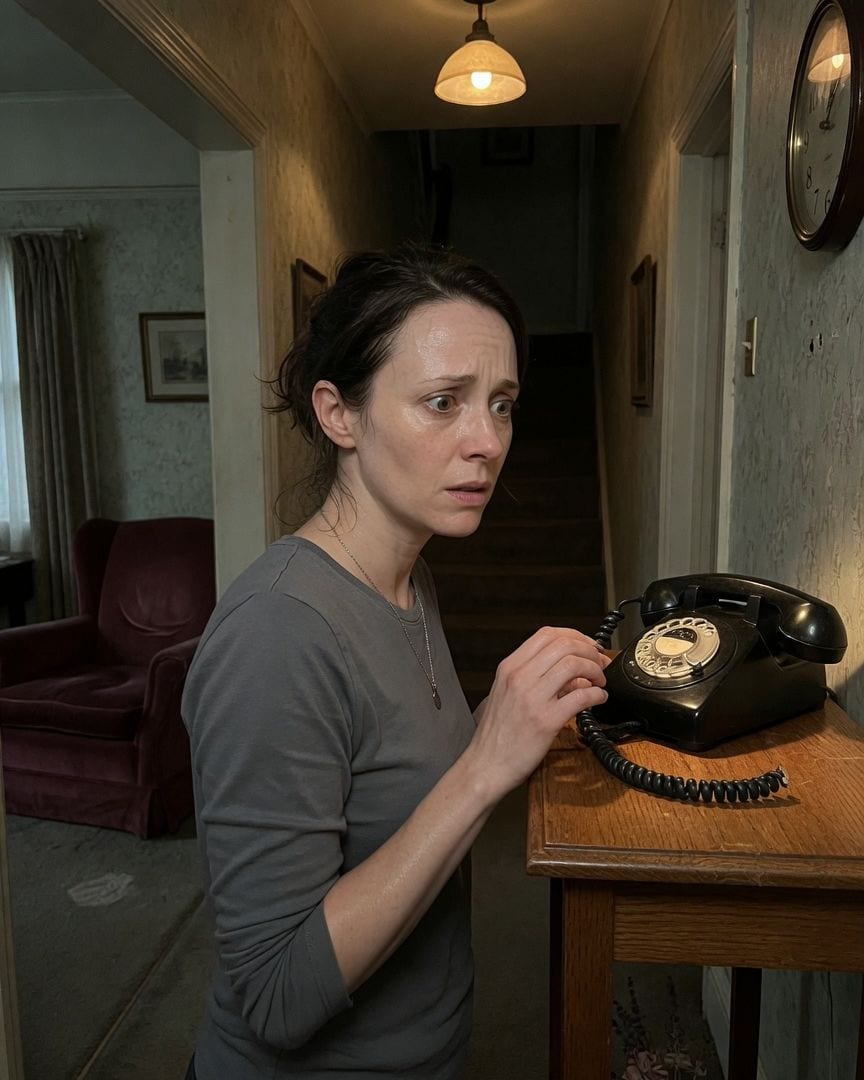
My disconnected Bakelite phone dials itself at 8 PM, receiver warm, always the same three numbers, humming a sound no dead line should make. I live alone.
As a new homeowner, I, Penelope Vaughn, found an antique Bakelite phone in my hall, its line long dead. But every night at 8 PM, the receiver is off its cradle, faintly warm to the touch, and the dial half-spun to the same three digits, making an impossible hum.
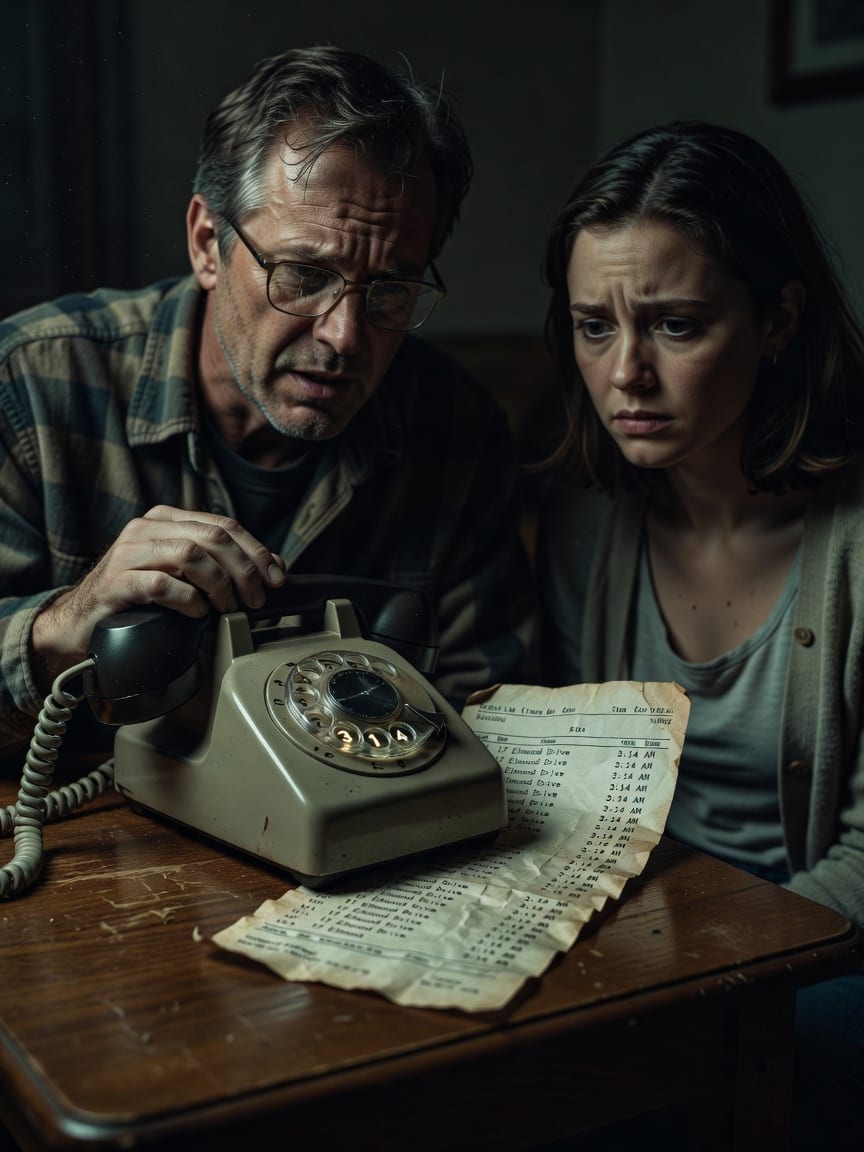
My phone bill itemised forty calls from my number to a house demolished in 1990. Each call at 3:14 AM, lasting eleven minutes. The bill arrived postmarked from a flattened building.
I expected the usual mobile bill, but my landline statement listed forty calls from my number to '17 Elmwood Drive.' That address was for a house torn down in 1990, a vacant lot I remembered from childhood. The phone company insisted the calls were legitimate, leaving me profoundly unsettled by the impossible charges.
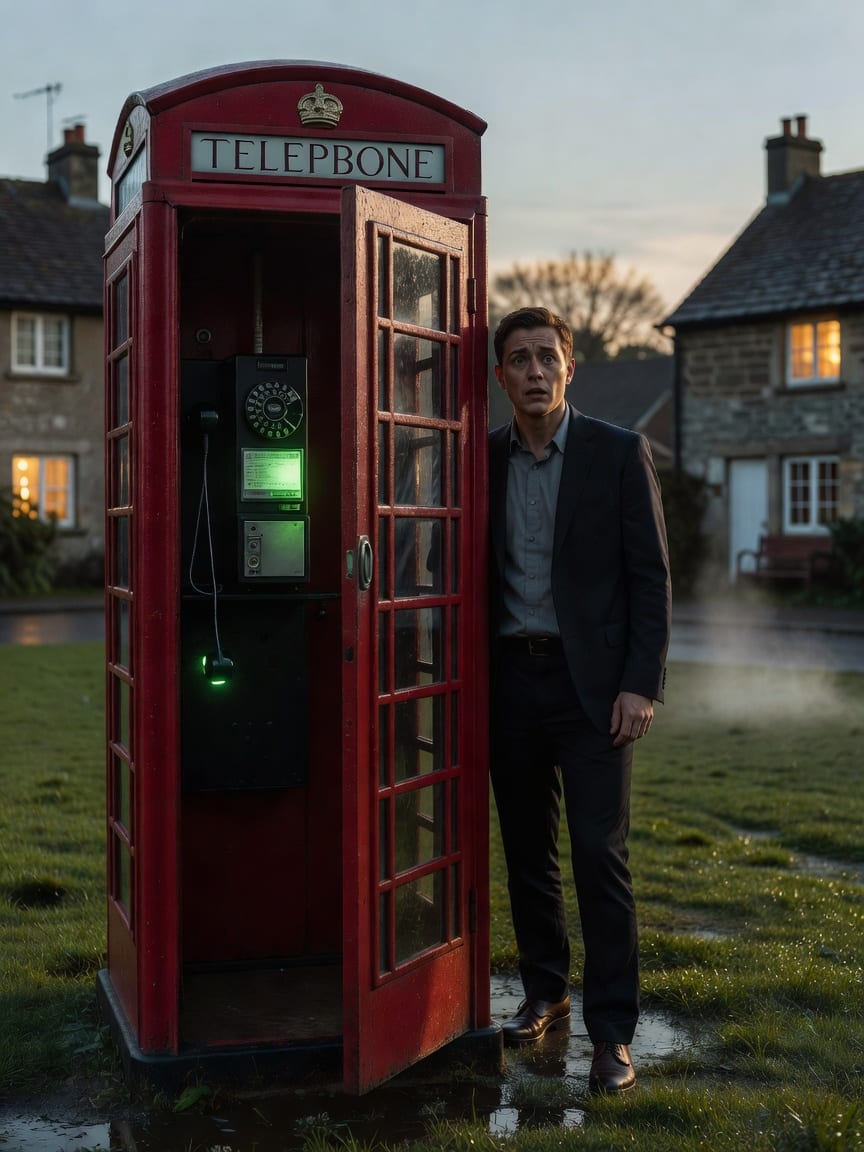
The old phone box on Trellow Green hasn't worked in twenty years. But its call log shows a ninety-second outgoing call every New Year's Eve, always to the same disconnected number.
I moved to the quiet village of Trellow Green, drawn by its charm and the local joke about the old, dead phone box. But a retired engineer showed me a log of an impossible outgoing call made from it on New Year's Eve, to a number disconnected for decades. How could a dead phone make a call?
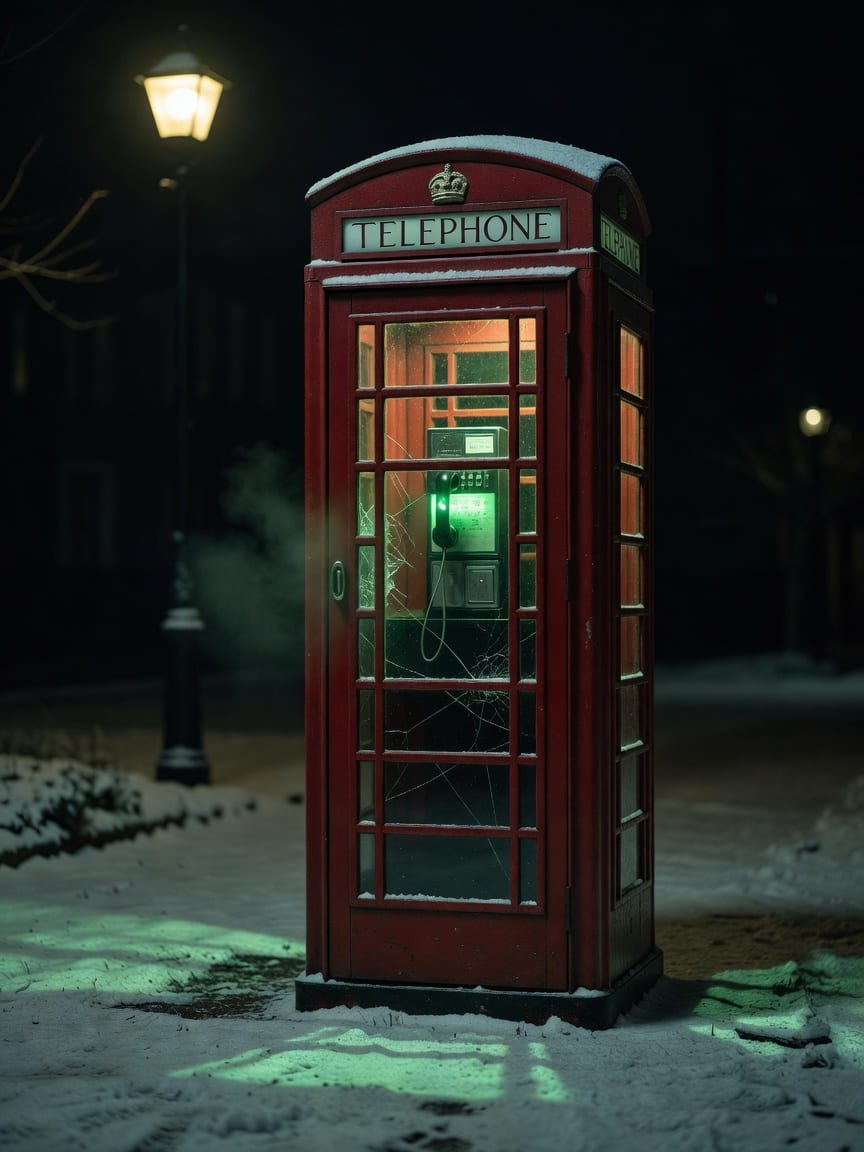
The phone box on our town green makes a call every New Year's Eve at 11:59. It's been dead for twenty years, and calls the same disconnected number.
Moving to Trellow for a quiet life, I quickly learned about the village's red phone box, a relic everyone agreed was dead for decades. But then a retired engineer showed me its call log. Every New Year's Eve for the past twenty years, it records a 90-second outgoing call from that very box, always at 11:59 PM to a disconnected number.
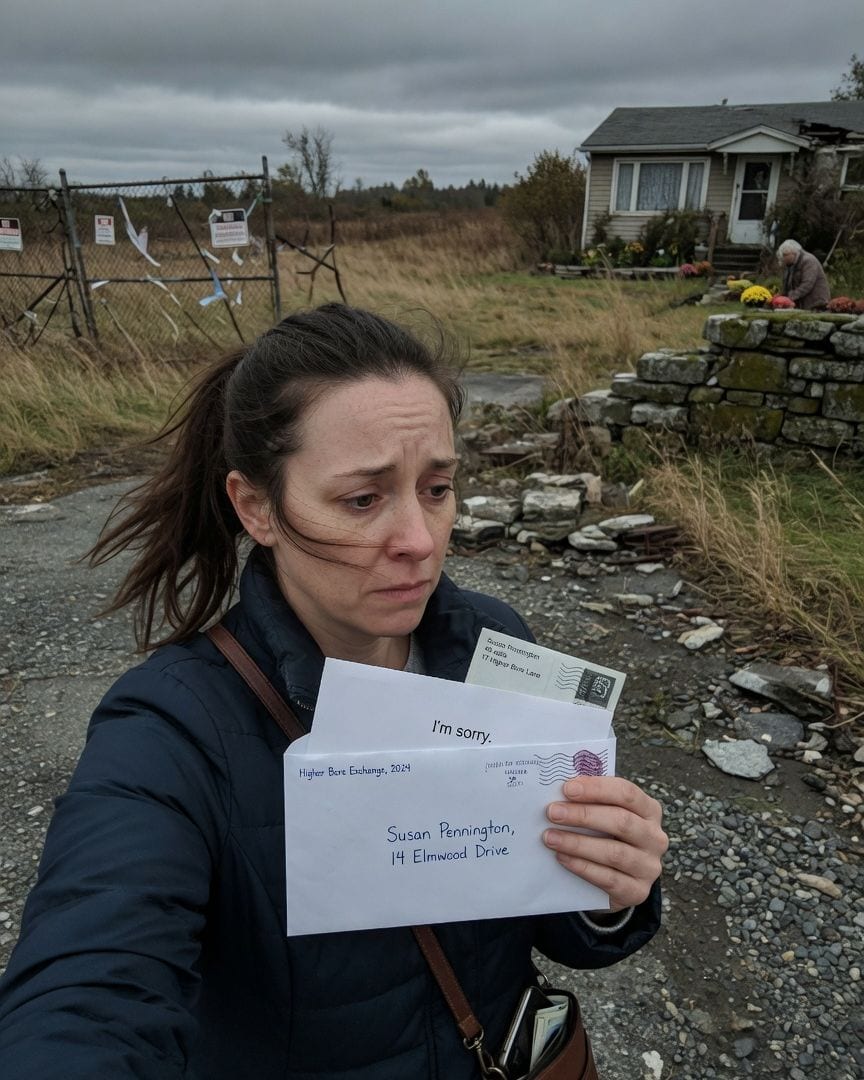
My phone bill listed forty calls made at 3:14 AM to a house demolished in 1990. The paper bill came from a flattened building. My name is on it.
I stared at my phone bill, my morning coffee forgotten. It detailed forty calls, each at 3:14 AM, to an address I knew was a vacant lot where a house had stood decades ago. But the real dread began when I saw the bill's return address: a telephone exchange flattened years before.
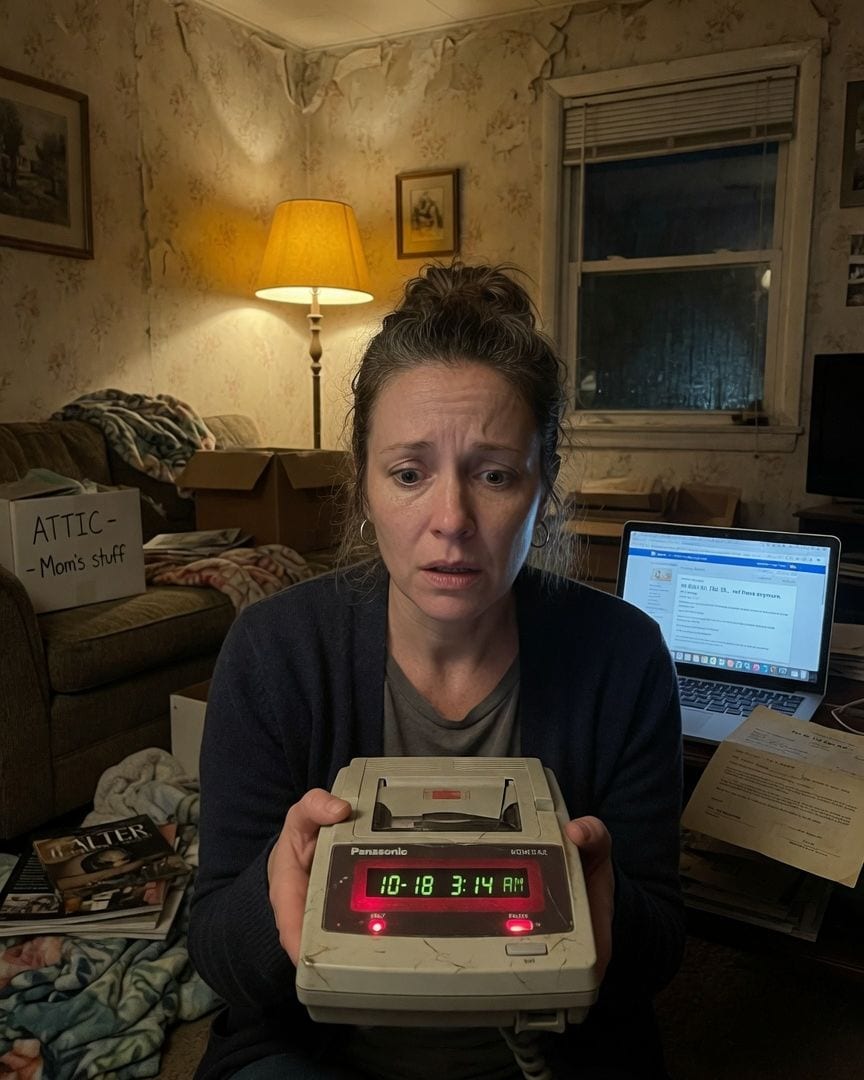
My old answering machine tape holds a new tenant screaming, a week after I moved out. Then, my own calm voice, saying I've got her now.
I unearthed my old answering machine from the attic, a forgotten relic from two decades ago. Playing the tape, I heard a terrifying scream, followed by my own chillingly calm voice saying 'It's alright, Deborah. I’ve got her now'—a message recorded a week after I’d moved out of the flat.