My waiter apologized for tomorrow's plans I hadn't made. He stared at his own handwriting, swore he didn't write it.
The waiter at the Alder Bistro, a young man named Simon Sutton, brought the bill folded on a small ceramic plate. I'd paid cash, given no name, and definitely booked nothing for the next day.
But inside, under the total, scrawled in blue ballpoint, were the words: 'So sorry, Mr. Farrow — for tomorrow.'
My name is Ronald Farrow. I live alone.
I called him back to my table, the knot in my stomach tightening. "Excuse me, Simon?" He turned, a polite smile fixed on his face, but it faltered when I slid the bill across the table, pointing to the note.
He leaned in, his brow furrowed in genuine confusion. "I… I don't remember writing this, Mr. Farrow. Are you sure?"
His hand trembled slightly as he traced the ink with his finger, his eyes scanning the words as if they were a foreign language.
The bistro was bustling around us, a comfortable clinking of glasses and easy chatter, but the air around our small two-top had gone cold, thick with an unspoken wrongness.
He looked genuinely distressed, almost afraid of the words he’d clearly penned, and his gaze met mine, wide and pleading for an explanation neither of us had.
I tried to dismiss it then, forcing a smile. A prank, perhaps. Or maybe he was just overworked, tired. But the precision of my name, the specific apology for an unknown 'tomorrow', felt too deliberate for either.
It was the first thing that didn't fit, a small, impossible crack in the ordinary world. I left the bistro, the folded bill still in my pocket, the strange note burning a hole in my peace of mind.
For the next two days, the note gnawed at me. I called the bistro, asked about Simon, even went back once, lingering at the bar, just watching.
He remembered me, remembered the bill, but still swore he had no recollection of writing the note. His manager, a brusque woman named Vanessa, assured me Simon was a good kid, probably just overworked, stressed.
She looked at me like I was making a fuss over nothing, a customer overreacting to a harmless mistake. I wanted to believe her, to let it go, to file it away as a weird, unexplainable incident.
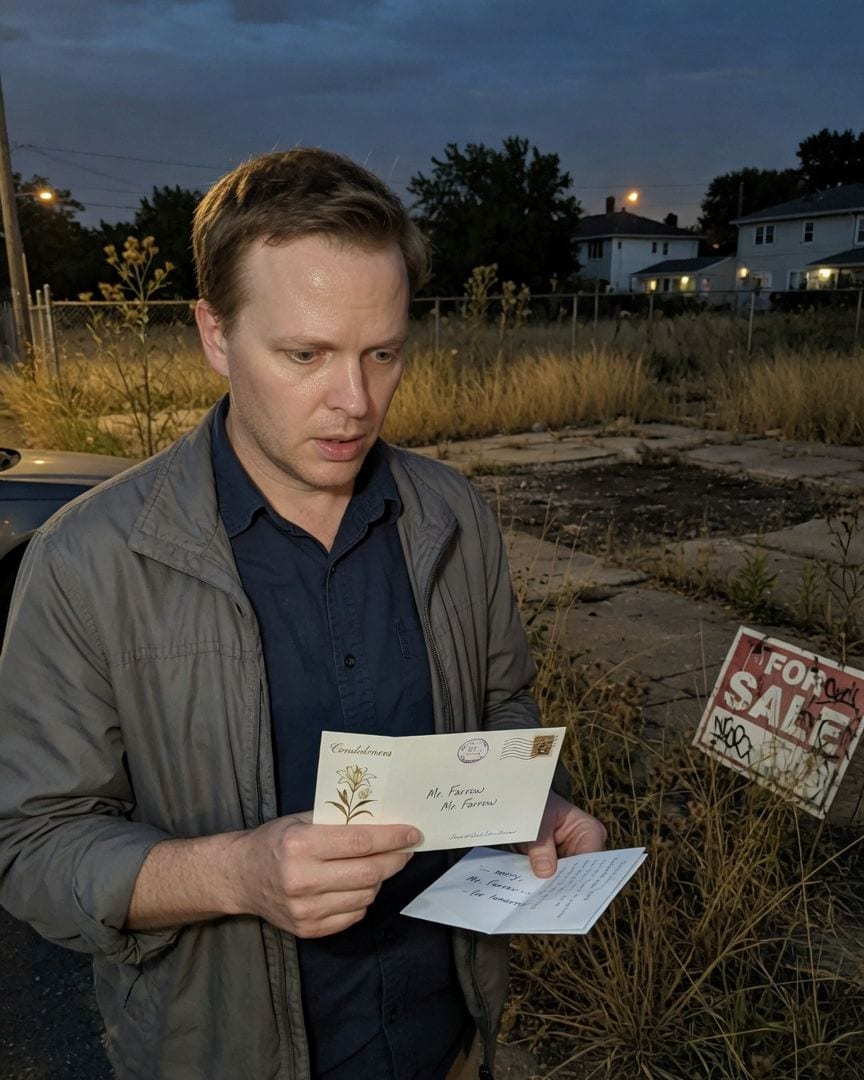
Then, the letter arrived. It wasn't in a business envelope, or addressed in a familiar hand. It was a simple condolence card, the kind you buy at a drugstore for five dollars, addressed in neat, unfamiliar script to 'Mr. Farrow.'
The handwriting on the envelope was formal, almost calligraphic. I didn't recognize it. No return address. Just a stamp and a postmark that seized my attention. A faint, smudged circle, but legible: '14 Elm St.'
My neighborhood. I didn't know anyone at 14 Elm Street. It was only a few blocks from my apartment. Curiosity, or perhaps a growing unease I couldn't shake, compelled me.
I drove there, expecting to find a house, perhaps a new neighbor I hadn't met. Instead, I found an empty lot.
An overgrown rectangle of weeds and cracked concrete, framed by a rusted chain-link fence. A 'For Sale' sign, faded and peeling, leaned precariously in the corner, its message obscured by grime. No house.
Just an empty space where one clearly once stood, a dark rectangle of disturbed earth marking its former footprint. I pulled my car over and got out, my hand trembling slightly as I held the card.
I checked the postmark again. '14 Elm St.' It was unmistakable. A chilling contradiction: a card from a house that wasn’t there, addressed to me. Who sent this? And from where?
The wind picked up, rustling through the tall, dry weeds.
I pulled my phone out, tapping '14 Elm Street' into the search bar.
Old street view images flickered up: first, a derelict, two-story house with boarded-up windows, then a series of photos showing its demolition, brick by brick, until only the foundation remained.
The most recent image was identical to the empty lot before me. My gaze dropped back to the condolence card. The paper felt strangely cold in my hand, as if it had been sitting in a freezer.
I flipped the envelope over, running my thumb over the smudged postmark again. '14 Elm St.' Plain as day. A card from a place that no longer existed, addressed to me, a condolence for an unknown loss.
The dread was no longer a vague unease; it was a cold, hard fact, undeniable and concrete.
I stood there, utterly still, the wind rustling through the tall weeds, the silence of the empty lot pressing in around me, holding the impossible in my hand.
I spent the next day digging. Online property records confirmed 14 Elm Street had been demolished five years ago. The last owner was a holding company that liquidated the land after the structure was deemed unsafe.
There was no 'sender' to be found, no one listed who might have mailed a card from that address. But the card was real, physical, and it was addressed to me.
It felt like a deliberate taunt, a puzzle piece that didn't fit any known picture.
The logical next step felt insane, but I went anyway. I drove to the municipal archives, the kind of place where dust motes dance in sunbeams and the air smells of old paper and forgotten stories.
I found Brooke Muller, the archivist, a kind woman with reading glasses perched on her nose, her grey hair pulled back in a neat bun.
I explained the situation, trying to keep my voice even, showing her the card and the postmark. She studied it, her brow furrowing much like Simon's had. "That's... unusual," she murmured.
She found the old property deeds for 14 Elm Street, a stack of fragile, yellowed papers.
It had changed hands many times over the decades, but what caught my eye was a handwritten note, faded ink in the margin of a 1930s deed: 'Known locally as 'The Holding House'.' I pointed to it. "Holding house?
What does that mean?" Brooke shrugged, "Probably just an old nickname. Some houses just gather stories, you know? Like the one down the street everyone called 'The Widow's Weep' for a century."
She offered to check old city ledgers, records of residents and events, for anything unusual tied to the address or, unsettlingly, my name.
I waited, the knot in my stomach tightening with each quiet shuffle of paper, each distant cough from another part of the cavernous room.
Brooke returned after what felt like an hour, carrying a thick, leather-bound ledger, its spine cracked and worn. "Found something odd, actually," she said, her voice softer than before. "Not about the house, directly, but... your name."
She opened it to a yellowed page, her finger tracing an entry. The ink was dark, precise. 'Farrow, R. - Marked - 1937.'
My breath hitched. "R. Farrow? That's me. But… 1937?" I was born in 1985. The ledger was a record of local residents from nearly a century ago, a compilation of births, deaths, census data, and other administrative notes.
The entry was clear, precise. 'Marked.' Not 'married,' not 'moved,' not 'missing.' Just 'Marked.' The impossible record stared back at me, a cold confirmation that this wasn't just a mistake, or a prank, or Simon being overworked.
This was something else entirely.
Brooke, seeing my face, grew concerned. "It's probably just a coincidence, Ronald. A common name. We have several 'Smiths' 'Marked' for various things over the years." But her voice lacked conviction.
The word itself, 'Marked,' felt like a branding, echoing the waiter's 'So sorry, Mr. Farrow — for tomorrow.' I couldn't tear my eyes from the ledger, that one stark word, a personal prophecy from an impossible past.
I thanked Brooke, promising to return the next day. Leaving the archives, I felt a prickling sensation on the back of my neck, the distinct feeling of being watched. I glanced across the street.
A tall, gaunt man in a worn trench coat was watching me from across the street, leaning against a lamppost, utterly still. He wasn't overtly threatening, but his gaze was unwavering, fixed solely on me.
When I met his eyes, he didn't look away. Instead, he slowly raised a hand, not to wave, but to tap his own chest, right over his heart, then pointed vaguely in the direction of Elm Street.
A shiver ran down my spine, cold and sharp. I quickened my pace, trying to act casual, but I felt exposed, utterly vulnerable beneath his silent, knowing stare. When I glanced back at the lamppost, he was gone.
Later that evening, back in my apartment, I found another letter. Not a card this time, not in an envelope. It was a single sheet of heavy cream paper, folded once, tucked neatly under my front door.
My front door, which I had locked behind me, a deadbolt and a chain, feeling a need for extra security after the encounter outside the archives. There was no envelope, no stamp, no trace of how it had gotten there.
In elegant, precise script, mirroring the condolence card, it read: 'The mark is clear. The tomorrow approaches.' My own apartment, a locked door, and yet, it had been placed there, a violation of my last refuge.
The dread was no longer just external; it was inside my own home, chilling the air, making the hairs on my arms stand up.
The next morning, I returned to the archives, the new note clutched in my hand, creased from my nervous grip. Brooke was already there, hunched over a microfilm reader, looking through old newspapers. Her face was pale, shadowed.
"I couldn't sleep," she admitted, pushing her glasses up her nose. "That 'Marked' entry bothered me. I started looking for anything connecting a 'Farrow' to 14 Elm Street." I showed her the new note, the one slipped under my door.
Her face paled further, her eyes widening behind her spectacles. "This isn't a coincidence, Ronald. This is… deliberate."
She’d found an article from 1937, a brief, dismissive mention of a 'local man, R. Farrow, found missing after an apparent wanderlust.' The language was almost quaint, a polite way of saying he vanished.
Then, another from 1972, chillingly precise: 'Ronald Farrow, age 32, disappears from local residence.' My blood ran cold, a glacial trickle through my veins. "My name," I stammered, the words catching in my throat. "My age… It's happened before.
It's happening again."
Brooke nodded slowly, her gaze fixed on the glowing screen of the microfilm reader. "This R. Farrow in 1937, the missing man? He was living at 14 Elm Street. And the 1972 Ronald Farrow? He owned the property then.
It was still standing." She looked up at me, her eyes wide, a dawning horror in their depths. "The 'Holding House' wasn't a nickname for a house that gathered stories, Ronald. It was a house that held people.
People named Farrow. People who were 'Marked' for... something."
I remembered the gaunt man, his silent gesture, tapping his chest, then pointing to Elm Street. He wasn't a threat; he was a warning. The letters, the note from Simon, the municipal ledger, the historical disappearances—they weren't random.
They were a pattern. A pre-ordained sequence, unfolding across generations. Someone, or something, was selecting individuals named Farrow, guiding them, marking them, toward a 'tomorrow' that meant disappearance, at 14 Elm Street.
The bistro, the condolence card’s impossible postmark, the 'Marked' entry. It all clicked into place, a horrifying coherence. I was next. The 'tomorrow' Simon had apologized for, the one he didn't even remember writing, was my disappearance.
I was back at my apartment, frantically packing a bag, shoving clothes, my passport, what little cash I had, into a worn duffel.
My mind raced, trying to decide where to go, how to escape a pattern that spanned decades, a fate written a century ago. It felt futile, but I had to try. My phone rang. The screen flashed my own number.
My heart pounded, a frantic drum against my ribs. I stared at the screen, every instinct screaming at me. I knew it wasn't a wrong number. I knew it wasn't a friend. I answered, my voice a shaky whisper.
A calm, synthetic voice spoke, utterly devoid of emotion, flat and resonant like a bell rung underwater. "Ronald Farrow." My full name. "You are currently in your living room, by the window.
There is a small pile of dust on your windowsill, just to your right. You are thinking about the ledger, and the man in the trench coat."
My blood ran cold, instantly freezing in my veins. I glanced at the windowsill. The dust was exactly as described, a tiny, innocuous grey pile I hadn't even consciously noticed. The voice continued, unhurried, relentless.
"Your tomorrow is set, Mr. Farrow. Like all the others. The arrangements are complete." I stood frozen, the phone a block of ice in my hand, pressed to my ear. It knew.
It wasn't just observing; it was inside my head, inside my home, a terrifying intimacy that felt like a violation of my very being. The silence that followed was more terrifying than any threat. The line clicked dead.
It wasn't just a pattern anymore; it was a direct, inescapable presence.
I called Brooke, my voice frantic, barely coherent. "It's speaking to me. It knows everything. It knew what I was thinking." She listened patiently, her quiet determination a contrast to my rising panic. "Ronald, I kept digging.
I found an old local historian, Russell Ingram. He knew about 14 Elm Street. He called it 'The Collection Point'."
Russell Ingram was a retired demolition contractor, now living in a small, cluttered house filled with local history books and artifacts. He was a small, wiry man with bright, sharp eyes. Brooke put him on speakerphone.
His voice was raspy, but clear. "It's not a malevolent entity, son, not in the way you're thinking. Not evil. More like... a natural process. A harvest. It collects specific energies, specific patterns.
And certain names are resonant with those patterns. Like yours, the Farrows. There are others too, but the Farrows... they're quite prominent in the local cycle."
The voice on the phone had been the 'Collector' itself, a channel for this ancient, indifferent force. It didn't want to hurt me; it wanted to integrate me. The 'letters' were invitations, the 'mark' a pre-selection.
The 'tomorrow' was the moment of my assimilation, my energy added to its cycle, a repeating motif in a long, indifferent score.
Russell explained that the demolished house wasn't a problem for it; the 'point' was the ground itself, the energy nexus. The structure was merely a temporary vessel.
The Collector didn't care if the house stood or fell; the location, 14 Elm Street, remained the heart of its operations.
I was meant to go there, drawn by an irresistible pull, and become part of the cycle, another 'Marked' Farrow disappearing without a trace.
Brooke said Russell had heard of people who 'resisted'—not by fighting, by trying to escape or confront it directly, but by disrupting the pattern, altering the conditions of the collection. It wasn't about power, he'd explained, but about nuance.
It was a terrifying, cold logic, devoid of human malice, yet utterly final in its implications.
My 'tomorrow' was set for dawn. I knew I couldn't run. The voice had confirmed it was pointless, and Russell's stories of others who'd tried only reinforced that.
Instead, armed with Russell’s cryptic advice about 'altering the conditions,' I went to 14 Elm Street. Not to be collected, but to disrupt.
I brought a small, cheap portable radio and a shovel. The air was still, heavy with the pre-dawn chill.
As the first grey light touched the horizon, painting the sky in bruised purples and pale oranges, I began to dig, not deep, just enough to disturb the earth at the precise center of the empty lot, where the old house’s foundation would have been.
I buried the radio there, tuned to a static-filled frequency, its faint hiss a tiny, defiant disruption in the profound quiet. Then I waited.
The air grew colder, heavy and still, pressing down on me. The light from the rising sun seemed to dim, as if swallowed by the oppressive atmosphere.
A faint, almost imperceptible hum started, growing from the ground beneath my feet, resonating through the cold dirt. It was the presence, the Collector, beginning its work.
I felt a subtle, irresistible pull, a gentle urging to lie down, to surrender to the cold, to let my mind drift, to become part of the hum. My eyelids grew heavy, my thoughts dissolving into the growing resonance.
But I fought it, focusing on the static from the buried radio, on the cold earth under my hands, on the taste of the sharp morning air.
The hum intensified, vibrating through the ground, through my bones, through the very air around me, a silent scream of pure energy. I clenched my jaw, resisting the urge to simply lie down, to merge.
Suddenly, the hum shifted, warped. It became a discordant, frantic vibration, like a tuning fork struck against itself, a pure, jarring wrongness.
The air shimmered, not visibly, but in a way that made my eyes ache, a distortion of reality at its edges. The pull intensified, reaching a crescendo, then snapped, violently, like a taut cord breaking.
I gasped, a ragged, desperate sound, falling back, my head hitting the dirt with a dull thud. The hum ceased. The air returned to normal, the cold receding, the first rays of full sunlight warming my face.
The radio, half-buried, was silent, its battery dead. I lay there, panting, the taste of dirt in my mouth, my heart hammering against my ribs. I had broken the circuit, disrupted the collection. I was still here. I had survived.
I scrambled away from the lot as the sun rose fully, leaving the broken radio buried in the earth like a forgotten offering. I never told the police. What would I say?
That I’d stopped an ancient, indifferent entity from 'collecting' me by burying a static-tuned radio? They would have had me institutionalized. Brooke and Russell understood, in their own way. Russell was quietly pleased, having confirmed his theories about 'disruption'.
Brooke helped me get rid of anything with my name and address on it, changing what little I could, removing my digital footprint where possible.
My life was irrevocably altered. The empty lot remains, undisturbed, a rectangle of overgrown weeds in the heart of the neighborhood. No new letters, no strange calls.
But the silence is a heavy thing, filled with the echo of a voice that knew my name, and a 'tomorrow' I narrowly avoided.
I survived, but I still flinch at my own name, knowing somewhere, it's already written on another bill, for another tomorrow.
If this one got to you
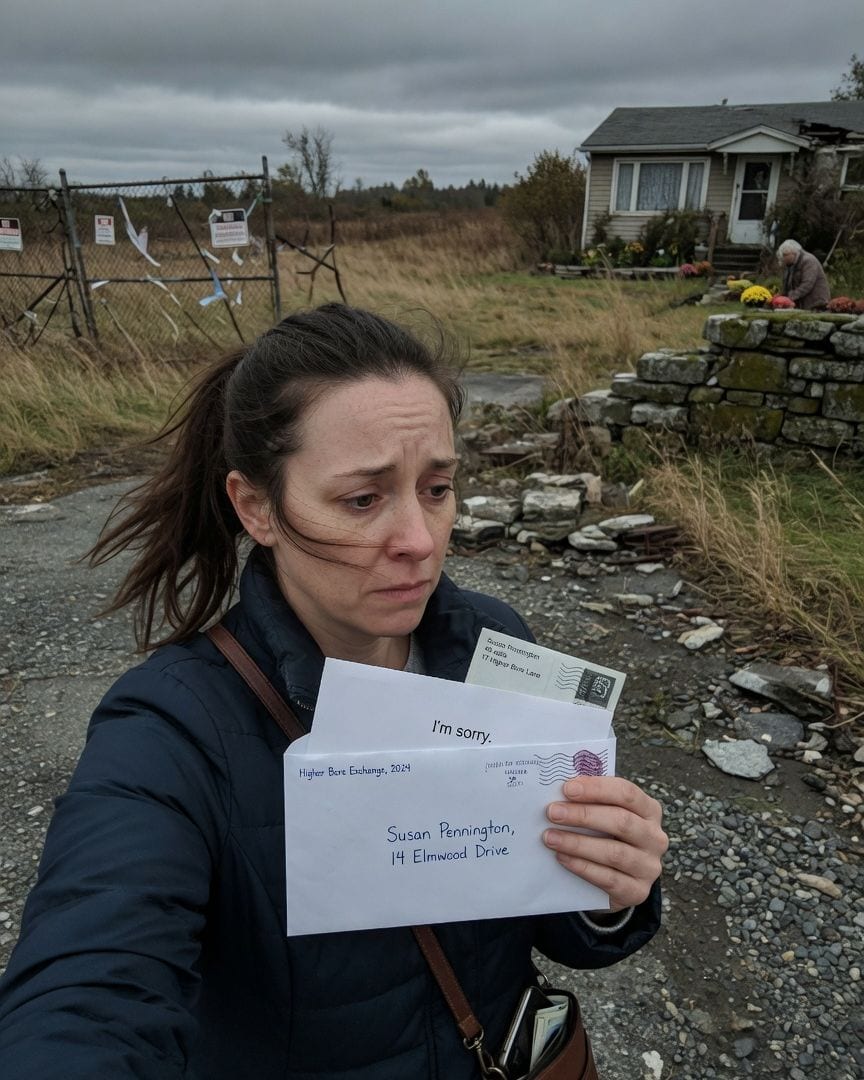
My phone bill listed forty calls made at 3:14 AM to a house demolished in 1990. The paper bill came from a flattened building. My name is on it.
I stared at my phone bill, my morning coffee forgotten. It detailed forty calls, each at 3:14 AM, to an address I knew was a vacant lot where a house had stood decades ago. But the real dread began when I saw the bill's return address: a telephone exchange flattened years before.
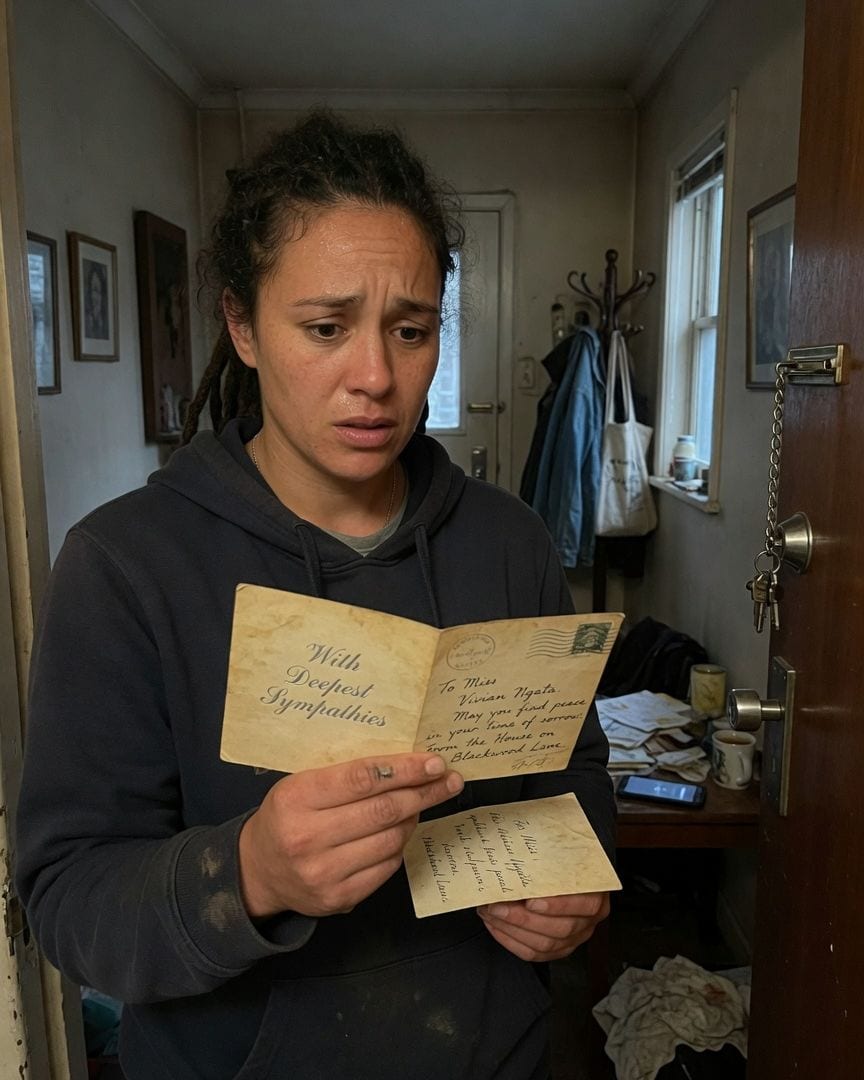
My locksmith knew my name, then apologized for next Tuesday. I never gave him my name; his firm doesn't exist.
I just needed a new deadbolt after some neighborhood thefts. But the locksmith knew my name without me telling him, and murmured something about 'Tuesday' when it was Thursday. Then his company, 'Everlast Security Solutions', vanished without a trace, its phone number dead and its address an empty field.
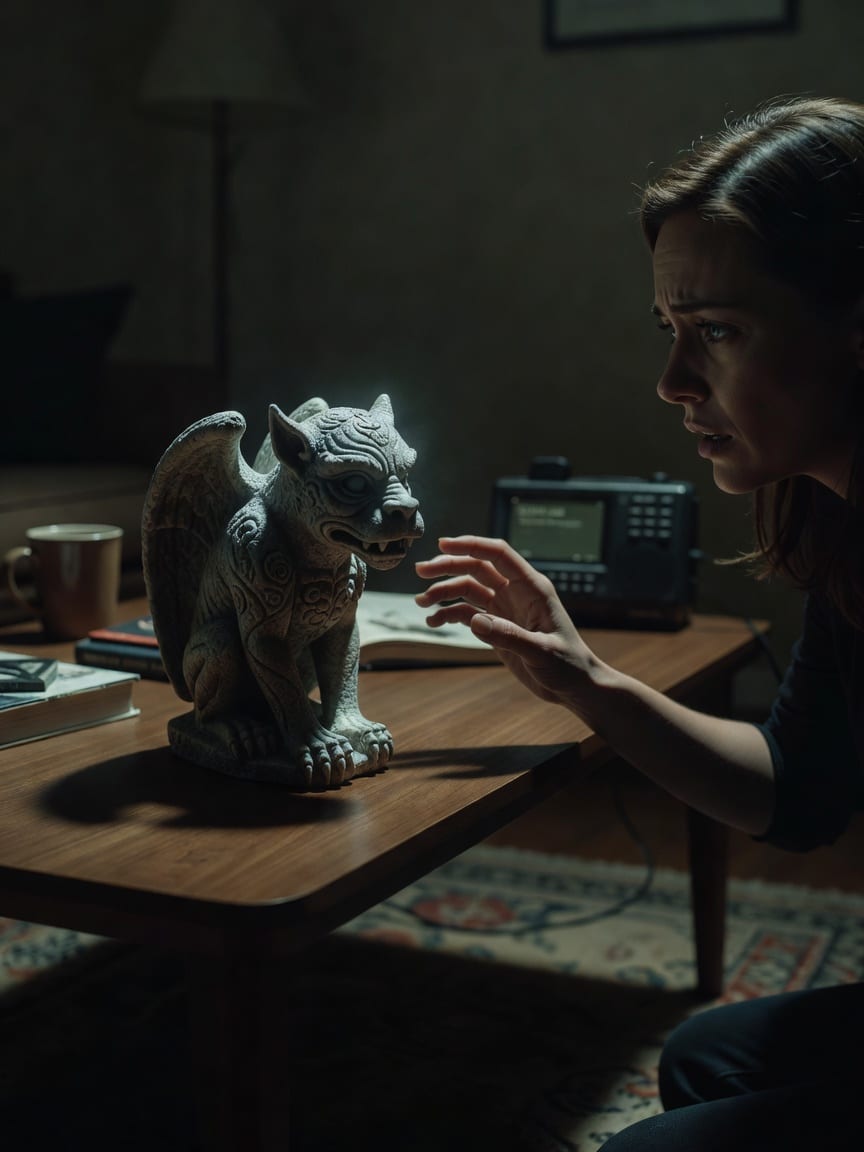
My radio scanner spoke my address at 2 AM. A flat voice read local homes, all with past dates. Mine was the only one in the future.
It was two in the morning, and my quiet house was filled with the usual hum of my weather scanner. But the static broke, replaced by a flat, synthesized voice reading a list of local addresses and dates. My hand froze when it spoke my own address, 181 Foster Drive, followed by a date: October 27th. That date was three weeks from now.
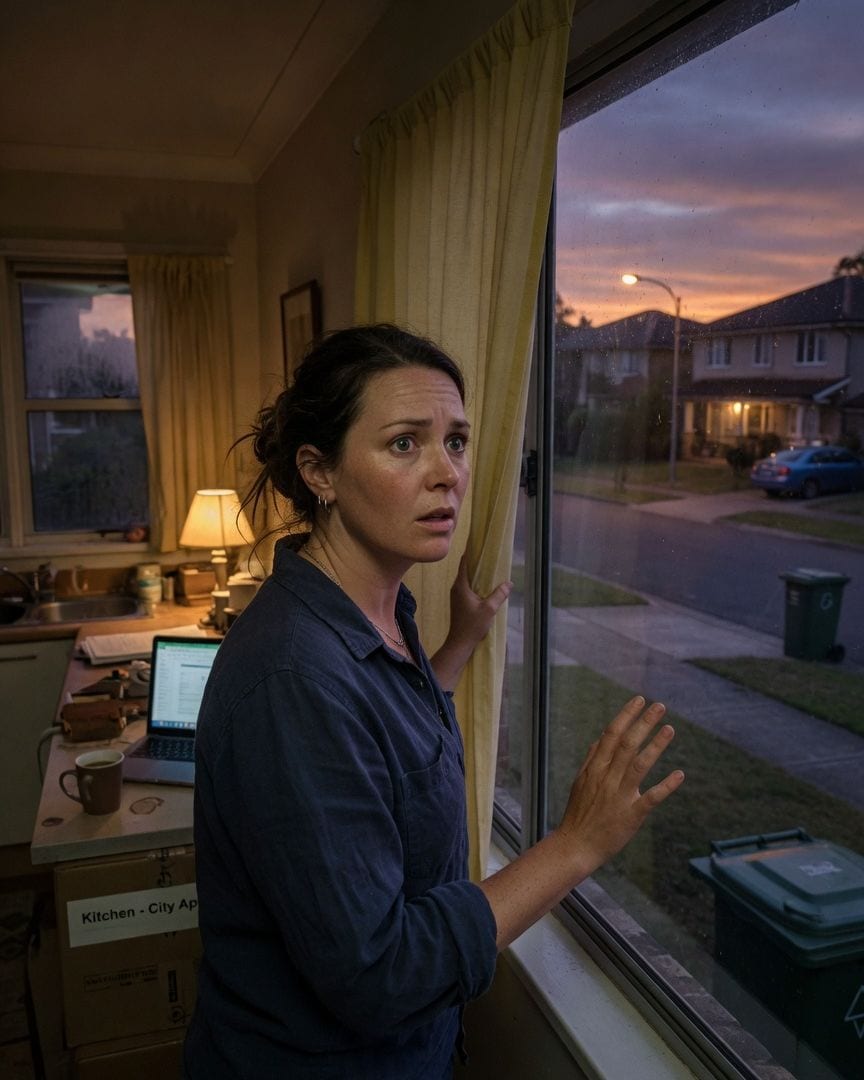
My bin was turned the wrong way Tuesday. The man three doors down hasn't been seen since, though his curtains still open.
New to Oakhaven, I dismissed the local warnings as charming quirks. But after I put my bin out first, my neighbor Joel Whitmore vanished, leaving only a cryptic 'My turn' note. The same strange symbol from his note was chalked on my bin, facing the street.
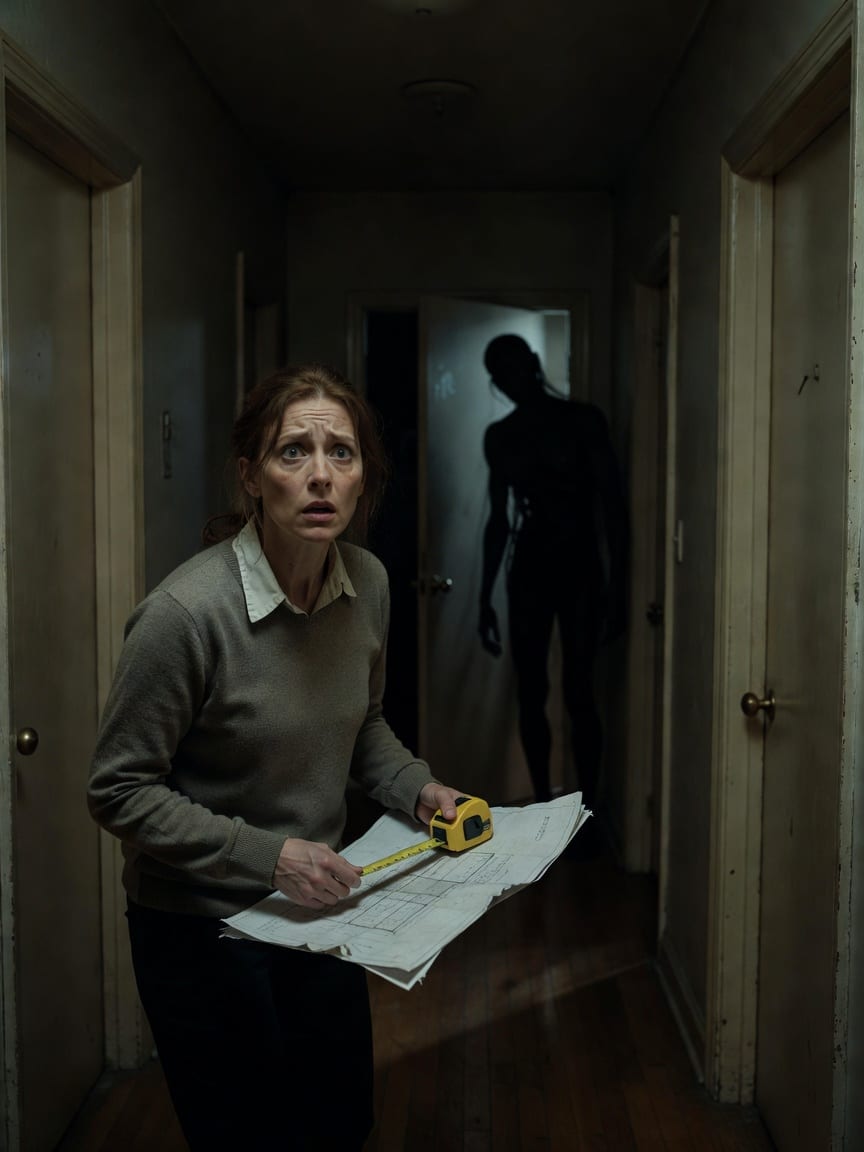
My front door has a dented gate and a dead hydrangea. I walked past it six times, trying to reach the corner shop just a hundred yards away. The pavement kept bringing me back to my own porch, and the shop's light never moved.
My morning started like any other, a quick walk to the corner shop from my home at Number 14, Elm Terrace. But after walking what felt like two minutes, I found myself back at my own front door, the shop no closer. I tried six times, faster and slower, but my street kept compressing, refusing to let me leave.
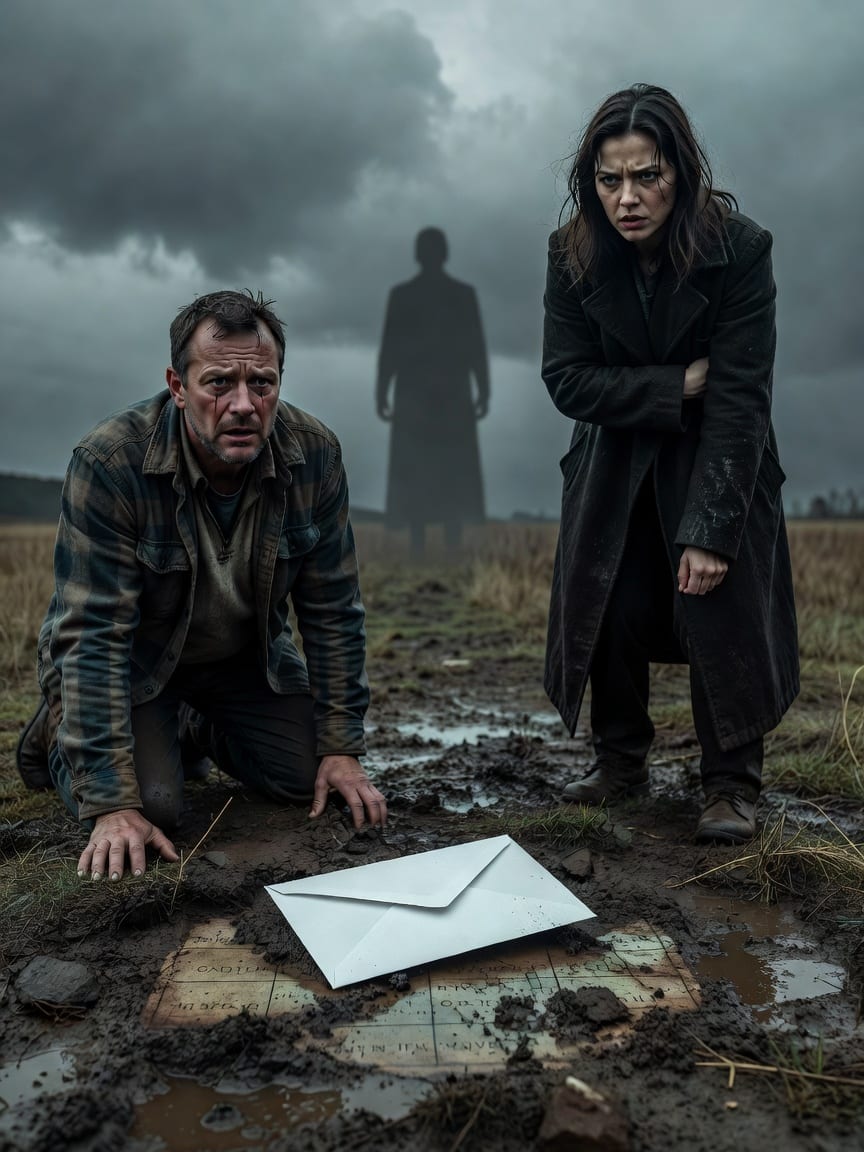
My mail carrier delivers polling cards to Nine Acre Field. It floods, they say. The tithe map shows nine family plots there.
As the new county archivist, I was used to quiet days poring over dusty records. But then I found an empty field, Nine Acre, was receiving current-year polling cards and utility notices for nine distinct addresses. When I investigated, I unearthed a perfectly crisp, current-year tax bill, buried in its soil, surprisingly warm against my fingers.