My locksmith knew my name, then apologized for next Tuesday. I never gave him my name; his firm doesn't exist.
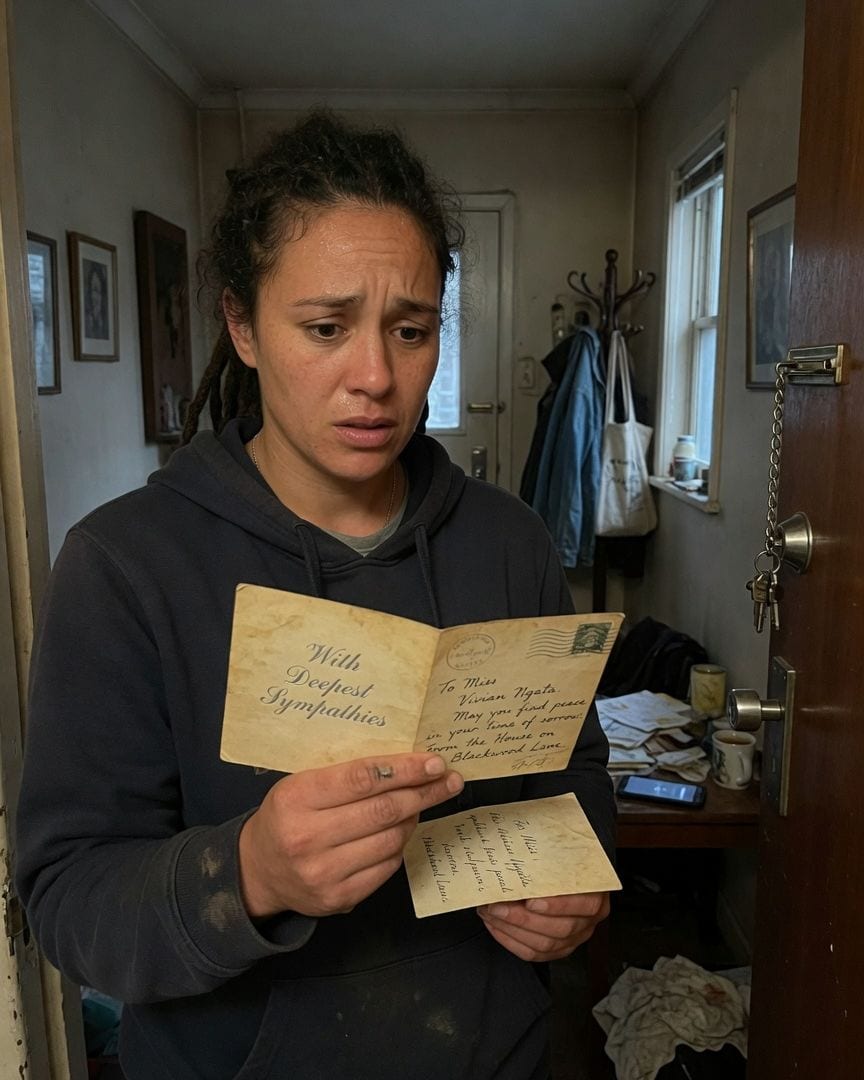
The locksmith, a man with tired eyes and a smudge of grease on his cheek, finished installing the new deadbolt. He handed me the keys, his gaze strangely distant.
“I’m sorry, Miss Ngata,” he murmured, his voice soft, “but this won’t be the one that matters on Tuesday.”
I blinked. Miss Ngata? I hadn’t given him my name, only called a number off a beat-up white van parked near my apartment building – ‘Everlast Security Solutions’.
I’d just needed a better lock after a string of petty thefts in the neighborhood. And Tuesday? It was Thursday.
He didn't elaborate. He just turned, his work done, and walked out the door, leaving me holding the cold metal keys, a faint scent of oil and old metal lingering in the air.
I shook my head, trying to dismiss it. Maybe he’d overheard a neighbor, or seen mail with my name. Maybe he just had a habit of apologizing. An old-school tradesman, a bit eccentric.
By that evening, the number I’d called rang dead, a disconnected tone echoing in my ear. I tried twice more, just to be sure. Nothing. Then I typed ‘Everlast Security Solutions’ into Google, along with my town’s name. No results.
Not a single listing, online or off. My rational mind scrambled for explanations: a prank, a misdial, a rogue handyman who just put a fake name on his van.
But the name, 'Miss Ngata,' and the specific, unbidden mention of 'Tuesday,' gnawed at me, a quiet, insistent wrongness that refused to be dismissed. I checked the new lock again, pushing against the door.
The solid click felt less reassuring than it should, the metal cold beneath my fingertips.
I spent the next day trying to find 'Everlast Security Solutions.' I drove past where the van had been parked, but it was gone, leaving only an oil stain on the curb. I called the number again, still dead.
Frustrated, I looked up the address printed subtly beneath the company name on the van’s faded paint job – ‘14 Blackwood Lane.’ It was barely legible, faded to a ghost of white lettering against the scratched metal.
A quick online search showed the address existed, but the satellite view revealed only an empty, overgrown field, bordered by a crumbling stone wall. No building, no business.
My rational brain tried to reconcile it: maybe an old address, a mobile service that never updated its registration. But the unease persisted, a dull throb behind my eyes.
What kind of legitimate business operated from a field and then vanished?
On Saturday, driven by a persistent itch of curiosity, I drove to Blackwood Lane.
The field was exactly as the satellite image depicted: tall weeds, rust-colored patches of dry grass, and the skeletal remains of what looked like a demolished foundation, barely visible beneath the overgrowth.
I parked on the narrow shoulder, feeling foolish, and walked into the field, the dry weeds scraping against my jeans, a faint, earthy smell rising from the disturbed soil.
The air was still, heavy, and the silence felt profound, broken only by the buzz of insects.
As I neared the center, my foot snagged on something half-buried in the dry earth. I knelt, brushing away soil and dry leaves. It was a small, ornate card, yellowed with age, its edges brittle like ancient paper.
The front read, in elegant, embossed script: ‘With Deepest Sympathies.’ My heart thumped, a sudden, frantic rhythm.
Flipping it open, I saw a faded, spidery handwriting inside: ‘To Miss Vivian Ngata. May you find peace in your time of sorrow. From the House on Blackwood Lane.’ The card was postmarked 1978.
I stared at my name, then at the date. I wasn't born until 1992. The house, from which the card was supposedly sent, had been demolished in 1978. The card was addressed to me.
I stood frozen in the field, the ancient condolence card trembling in my hand. My name, ‘Vivian Ngata,’ was clearly written, undeniable. The postmark, 1978, was equally clear.
But the address of the sender, ‘The House on Blackwood Lane,’ was the very ground I stood upon, a place that had been an empty field for decades. A cold dread, sharp and absolute, pricked at me.
This wasn't a prank. This wasn't a mistake. This was a message, sent to me, from a time and place that couldn’t exist, from a house that was long gone.
The card, a physical impossibility, was real, and it held my name.
The condolence card became an anchor for my mounting dread. I researched Blackwood Lane more thoroughly, going beyond satellite images.
I found old property records confirming the house’s demolition in late 1978, after a fire that had consumed the building to its foundations. No mention of any ‘House on Blackwood Lane’ as a formal entity, just a residential property.
I even dug through local newspaper archives from 1978, searching for anything connected to the address or my name. Nothing. No Vivian Ngata. No unusual deaths or sorrows linked to the site.
The card was an anomaly, a ghost in the machine of local history. It simply didn't fit.
Then, two days later, another letter arrived. It wasn't in my mailbox; it was tucked under my doormat, despite the mail slot being perfectly functional.
This one, a birthday card, was addressed to ‘Vivian Ngata,’ wishing her ‘a happy 33rd year.’ My 33rd birthday wasn't for another six months.
The postmark was faded but legible: Blackwood Lane, and again, a date from the past – 1985.
The paper was different from the condolence card, newer, but the unsettling familiarity of the address, now confirmed as a void, sent a shiver down my spine that ran straight to my teeth.
The letters were coming on a schedule, a strange, impossible timeline.
I felt a profound, unnerving sense of being known, not just by a person, but by something that bypassed time and physical reality. My rational mind strained, trying to invent a sophisticated prankster, an elaborate, decades-long scheme.
But for what purpose? To what end? And how did they know my future birthday, let alone my name, on a card sent before I was even conceived?
The dread sharpened, focusing from a general unease to a specific, personal terror. Someone, or something, was tracking my existence, past, present, and future, from a place that no longer existed.
The ‘Letters From Nowhere’ continued to arrive, always postmarked from the demolished Blackwood Lane, always addressing me by name, always for impossible dates. A Christmas card for next December, postmarked 1990, the ink a faded green.
A congratulatory note for a promotion I hadn't yet received, postmarked 1982, the paper oddly thick. The dread became a constant hum beneath my skin, like a low-frequency vibration I couldn't escape.
I slept poorly, every shadow seeming to lengthen, every creak of the building sounding like footsteps.
One evening, my phone rang. An unknown number. I answered cautiously, my throat suddenly dry. Silence. Then, a low, rasping whisper, impossibly clear, so close it felt like it was inside my head: ‘Vivian Ngata.’ The line clicked dead.
My hand trembled as I lowered the phone, the cold plastic suddenly too heavy. It was a voice, not a message on paper. It was closer, more immediate, and utterly without emotion.
The next day, as I walked home from work, I noticed him. A man, impeccably dressed in a dark suit, standing across the street, watching my apartment building. He wasn't overtly threatening, just... still.
Too still, like a statue carved from shadow.
When I ducked into a cafe for coffee, telling myself I was imagining things, I saw him again, sitting at a table by the window, not looking directly at me, but his presence was a cold weight that seemed to drain the warmth from the room.
He had a small, old-fashioned leather briefcase resting on the table beside him. As I left, he caught my eye. His expression was calm, almost serene, with an unsettling patience.
He offered a slight, almost imperceptible nod, as if acknowledging something between us. I hurried home, my heart pounding, a frantic drum against my ribs.
The letters, the phone call, the watcher – it wasn't just a pattern; it was an escalation. They weren't just observing; they were present. The hunt had turned.
I was no longer just investigating; I was being drawn in, the target of an unseen, knowing force.
Desperate for answers, I sought out Greg Montgomery, a retired local historian known for his encyclopedic knowledge of the town’s obscure past. I found him in the dusty, quiet archives of the public library, meticulously cataloging old parish records.
The air was thick with the scent of aged paper and dry dust, every cough echoing.
I laid the condolence card and the birthday card on his cluttered desk.
Greg, a man with wispy white hair and thick spectacles that sat low on his nose, examined them with an unnervingly calm expression, as if impossible things were just another Tuesday for him.
‘Blackwood Lane,’ he mused, tracing the postmark with a gnarled finger. ‘A peculiar address for correspondence, these days.’
I pressed him, trying to keep my voice steady. ‘The house was demolished in ’78. These cards are addressed to me, but postmarked decades ago. How is that possible?’
Greg sighed, pushing his spectacles up his nose, his eyes scanning the shelves of ancient tomes around us. ‘Local folklore, perhaps. The House on Blackwood Lane was...
well, it was considered a “place of record” by some of the older families. Not official, mind you. More of a family compact. A ledger, they called it. For certain... arrangements.’
I leaned forward, the wooden chair creaking under me. ‘Arrangements? What kind of arrangements?’
Greg hesitated, his gaze drifting to a distant shelf, as if searching for words among the silent books. ‘Inheritances, promises, certain... obligations. It was said that once a name was entered, it was bound. For generations.’
He looked back at me, a flicker of something unreadable in his eyes, something that made the hairs on my arms stand on end. ‘They kept a ledger there. A very particular kind of ledger. Hand-bound. Not for public consumption.’
I felt a chill seep into my bones, colder than the air in the archives. ‘A ledger? Where would I find something like that?’
Greg simply shrugged, a slight, almost indifferent gesture. ‘Lost to time, I imagine. Or perhaps tucked away in some forgotten corner of the county archives. A family’s private history, not a public record.’
The pieces began to click into place, cold and sharp.
The locksmith, his unsolicited warning about Tuesday, the non-existent firm operating from a demolished address, the letters sent from a house that no longer existed, the voice whispering my name – they weren’t random.
They were all threads leading to this ‘place of record,’ to this ‘ledger.’ The impossible dates on the cards suddenly made a horrifying kind of sense; they weren’t anomalies, but entries.
Someone, or something, had been keeping a record of me, long before I even existed, and it was all tied to this ancient, unspoken ‘arrangement.’ The dread twisted into a cold, hard knot in my stomach. This wasn’t a prank.
This was a legacy, and I was its unwitting inheritor.
I spent the next few days scouring the county archives, not for official records, but for anything unusual. Obscure donations, uncatalogued boxes, forgotten corners.
Greg Montgomery’s words about ‘a very particular kind of ledger’ echoed in my mind, a relentless drumbeat.
The air in the archive was thick with dust, stirring with every breath I took, as if the room itself was holding its breath.
I found it tucked away in a dusty, unmarked box labeled ‘Miscellaneous Local Donations – 1980s.’
It was exactly as Greg described: a heavy, hand-bound book, its leather cover cracked and faded, with thick, yellowed pages that felt brittle to the touch.
My hands trembled as I lifted it, dust motes dancing in the single shaft of light from the archive window. The leather felt cold, ancient, as if it held the accumulated weight of decades.
I opened it. The ink inside was spidery, elegant, and clearly very old. It was a register of some kind, filled with names and dates, laid out in neat, looping script.
I flipped through it, my heart hammering against my ribs, a frantic bird trapped in my chest. Under an index labeled ‘N,’ my eyes snagged on an entry.
My full name, written in faded, looping script, a perfect match to the handwriting in the condolence card: ‘Vivian Ngata.’ Next to it, a date: ‘1965.’ And then, a single, chilling word, written with an undeniable finality: ‘Claimed.’
Followed by a specific day: ‘Tuesday.’
I stared, my breath caught in my throat, the dust motes dancing in the single shaft of light from the archive window. My finger traced the faded ink in the ancient ledger: ‘Vivian Ngata’ — ‘1965’ — ‘Claimed. Tuesday.’ 1965.
I wasn't born until 1992. My own birth year is 1992. The date in the book is impossible, yet her name is undeniably there, waiting.
I tracked down Vera Calloway, a woman Greg Montgomery had vaguely mentioned as ‘one of the last who remembered the old ways.’
Vera lived in a small, isolated cottage on the outskirts of town, surrounded by a tangle of unkempt garden. It felt like stepping back in time, the air heavy with the scent of damp earth and woodsmoke.
She was frail, her eyes a milky blue, but her mind was sharp, her gaze unblinking.
I showed her the ledger. Vera took it, her ancient fingers tracing the entries, her expression calm, unbothered, as if this was all perfectly normal. ‘Ah, the Book of Names,’ she murmured, her voice raspy like dry leaves.
‘I wondered when it would surface again.’ She looked at me, her milky eyes seeming to see straight through me. ‘You’re a Ngata. Your great-great-grandmother, Elara, she made a promise. A binding promise. For the land. For prosperity.
A name, every few generations, given back to the land, to the keeping.’
My voice was hoarse, barely a whisper. ‘Given back? What does that mean?’
Vera tapped the ledger page with a gnarled finger, right next to my name. ‘It means your name was entered, child. Before you were even a thought. The “Claim” is simply the collection of what was promised.
The locksmith, the letters, the voice… they are the heralds. The reminders. The system ensuring the pact is honored.’ The room seemed to grow cold as she spoke, the shadows deepening around her.
‘But why me?’ I pleaded, the full horror of it beginning to sink in. ‘Why Vivian Ngata, from 1965?’
Vera smiled faintly, a chilling, knowing expression that didn't reach her eyes. ‘The names are chosen. Not by us, but by the land itself, by the pact.
The date in the book, 1965, that was the year the “claim” was initiated for your branch of the family, not your birth year. It was simply waiting for the right moment, the right “Tuesday,” for you to be ready.
For you to know.’
The coherence of it all was horrifying. Every inexplicable detail, every unsettling clue, now clicked into place, forming a complete, inescapable pattern.
The locksmith’s apology, the empty field, the impossible dates on the cards, the whispered name, the man in the dark suit – all made a perfect, terrible sense.
The dread wasn’t in the unknown anymore, but in the absolute, undeniable clarity of my fate. There was no escape.
There was no escape. The truth, delivered by Vera Calloway, had settled into my bones, heavy and cold.
The changing of the locks, the frantic research, the desperate attempts to find a rational explanation – all futile gestures against an ancient, unwritten pact.
Tuesday arrived, a perfectly ordinary day, the sun shining through my windows, birds singing their oblivious songs. I spent it at home, the new lock a mocking presence on my door.
I watched the clock, the seconds ticking by, each one bringing me closer to the inevitable ‘collection.’ I didn’t know what ‘claimed’ meant, not precisely. Would it be physical? A disappearance? A transformation?
Vera hadn’t said, only that it was ‘a return to the keeping.’ The world outside seemed bright, uncaring, going about its business as my own life narrowed to this single, dreadful point.
As dusk fell, the silence in my apartment grew profound, almost oppressive. The streetlights outside cast long, trembling shadows through the blinds. I sat on my couch, the ledger resting on the coffee table, open to her name.
The name ‘Vivian Ngata’ seemed to pulse faintly on the faded page, almost breathing. The last sliver of sun vanished, plunging the room into shadow.
Then, a sound. Not a knock at the door, not a broken window, not even the jingle of keys. It was the distinct, unmistakable click of my front door’s deadbolt disengaging.
The new lock, the one I’d paid a mysterious locksmith to install, the one he said ‘wouldn’t be the one that matters,’ slid open with a soft thud. A faint creak of hinges.
A subtle shift in the air, a cool draft stirring the blinds. No footsteps, no shadow, just the implication of an opening, an invitation. I didn’t move. I simply watched the doorway, knowing. The knowing was the end.
The apartment remained quiet. Days turned into a week. Vivian Ngata’s social media activity ceased. Her phone, found on the coffee table next to the open ledger, showed no outgoing calls after that Tuesday. Her plants withered.
The mail piled up. Neighbors noticed the untouched newspapers, the lights never coming on. A faint, sweet, earthy smell began to permeate the hallway outside her door, subtle and unsettling, like rich loam. No signs of forced entry, no struggle.
Just an absence, complete and utter, leaving behind only the open ledger and a lingering sense of something settled.
The local police, after a welfare check prompted by concerned neighbors, found Vivian Ngata’s apartment meticulously neat, save for the single, ancient ledger open on her coffee table.
Her name, ‘Vivian Ngata,’ was clearly visible, beside the impossible date and the word ‘Claimed.’ The case was eventually closed, filed as a voluntary disappearance, despite the oddities.
A month later, Greg Montgomery, the retired historian, received an anonymous package in his mail. Inside was a small, hand-bound book, identical in appearance to the one Vivian had shown him. He opened it, his fingers trembling.
On the first page, in elegant, spidery script, was a new entry: ‘Greg Montgomery. Claimed. Next Tuesday.’ He closed the book slowly, the silence of his study suddenly deafening. He knew the name on the ledger was just a placeholder.
If this one got to you
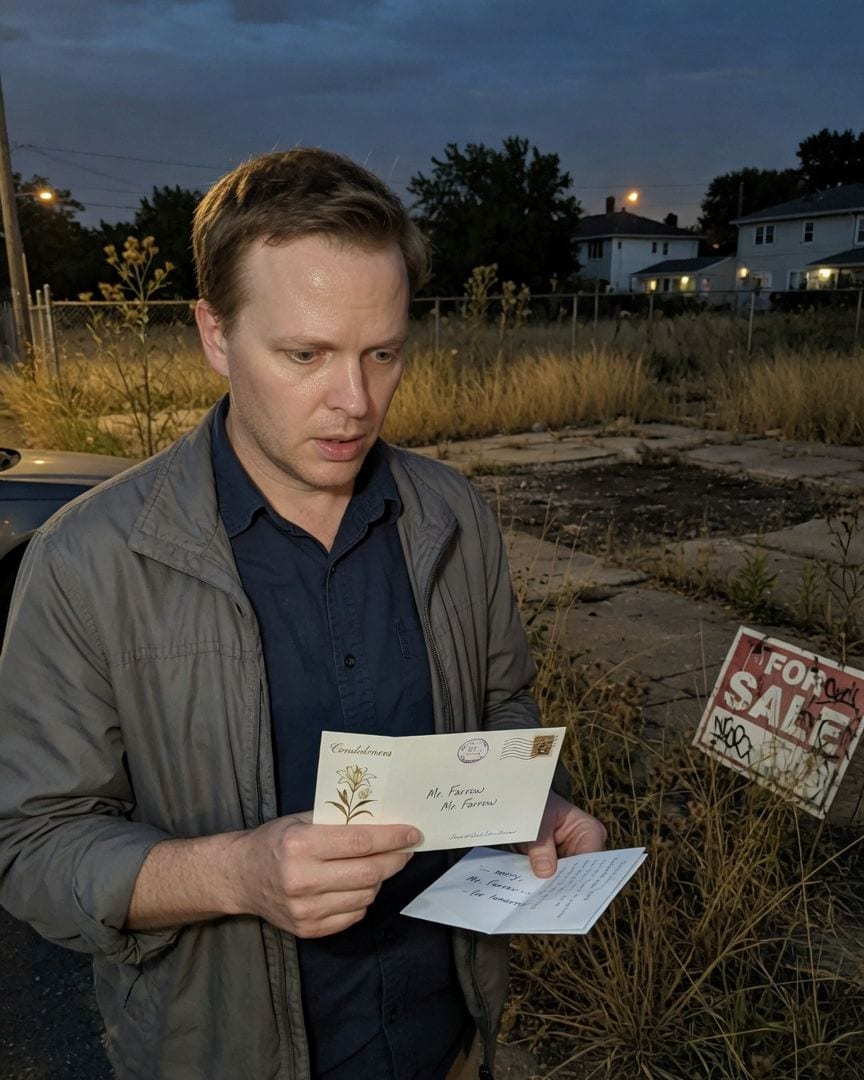
My waiter apologized for tomorrow's plans I hadn't made. He stared at his own handwriting, swore he didn't write it.
My quiet, solitary life was routine until a condolence card arrived, addressed to me for an unknown loss. The postmark, '14 Elm St.', was unsettling enough, but driving there revealed the impossible truth: the address was nothing but an empty lot.
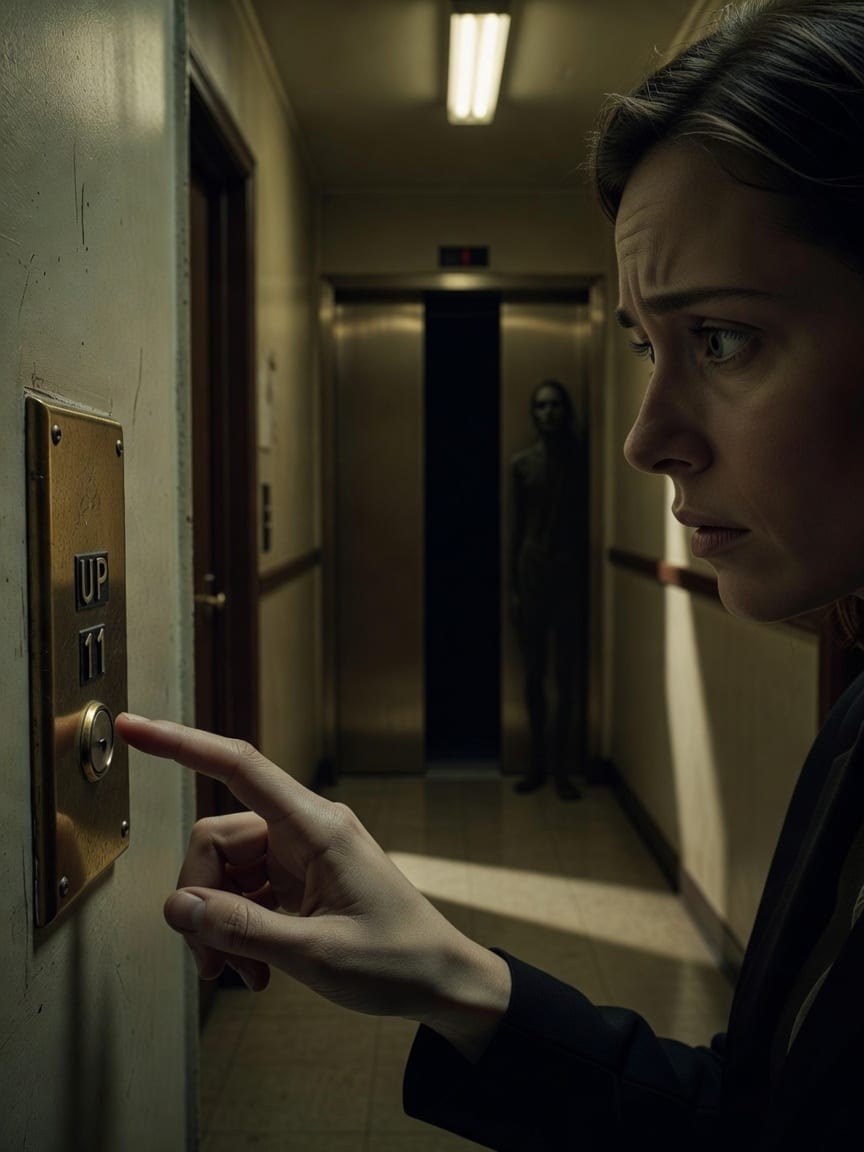
My doorman warned me not to take the tenth-floor lift on Saturday. The building's lift passed inspection last month. He seemed terrified that he'd said it.
My doorman's unsettling warning about the tenth-floor lift left me with a metallic taste of unease. I tried to rationalize it away, but then a birthday card arrived for me, five months early, from an impossible address. It was a site linked to unexplained disappearances, and a cold certainty began to settle in.
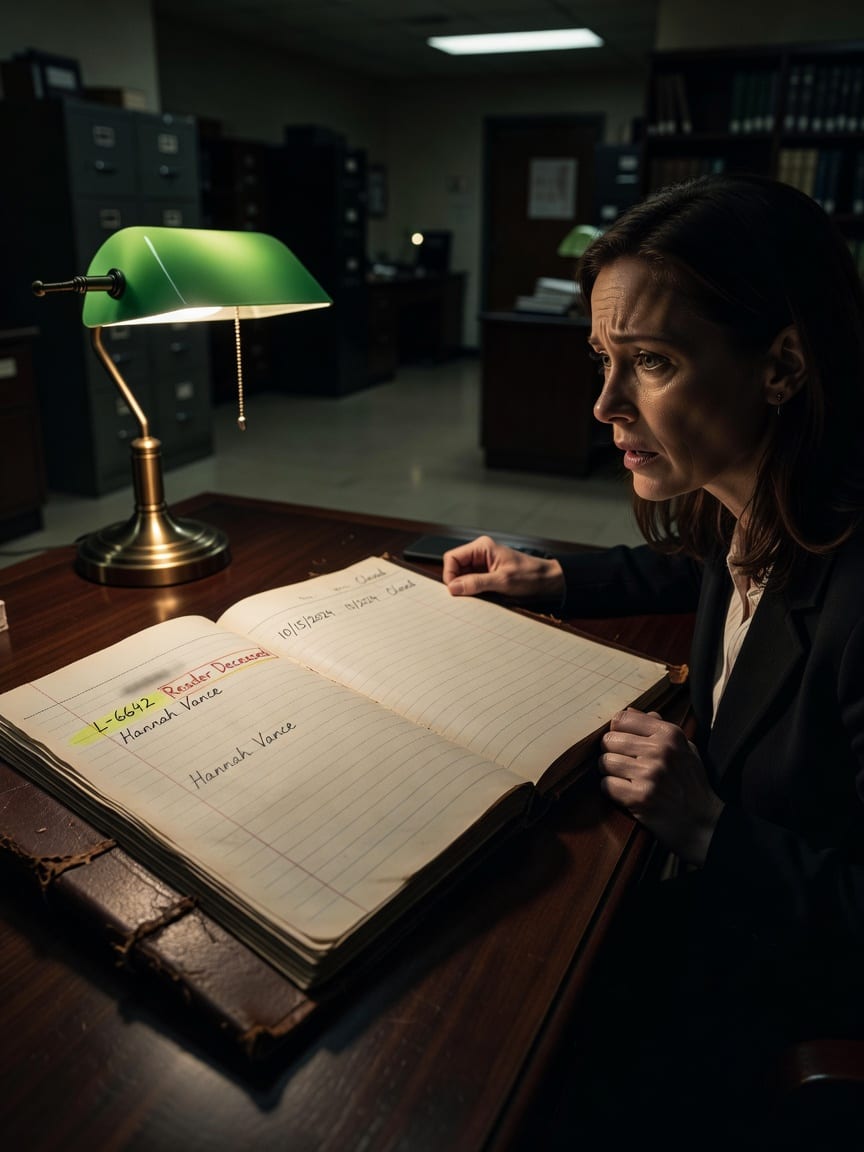
My library card number L-6642 was issued to me at seven — and the ledger shows that number has marked a reader 'deceased' every twelve years since 1949.
Returning my late father's library card to the old town library felt like a small act of closure. But the senior librarian's ancient ledger revealed a chilling pattern of 'reader deceased' entries tied to specific card numbers and borrowed books. My unease turned to cold dread when I secretly found my own name penciled in, marked for a future 'reader deceased' entry.
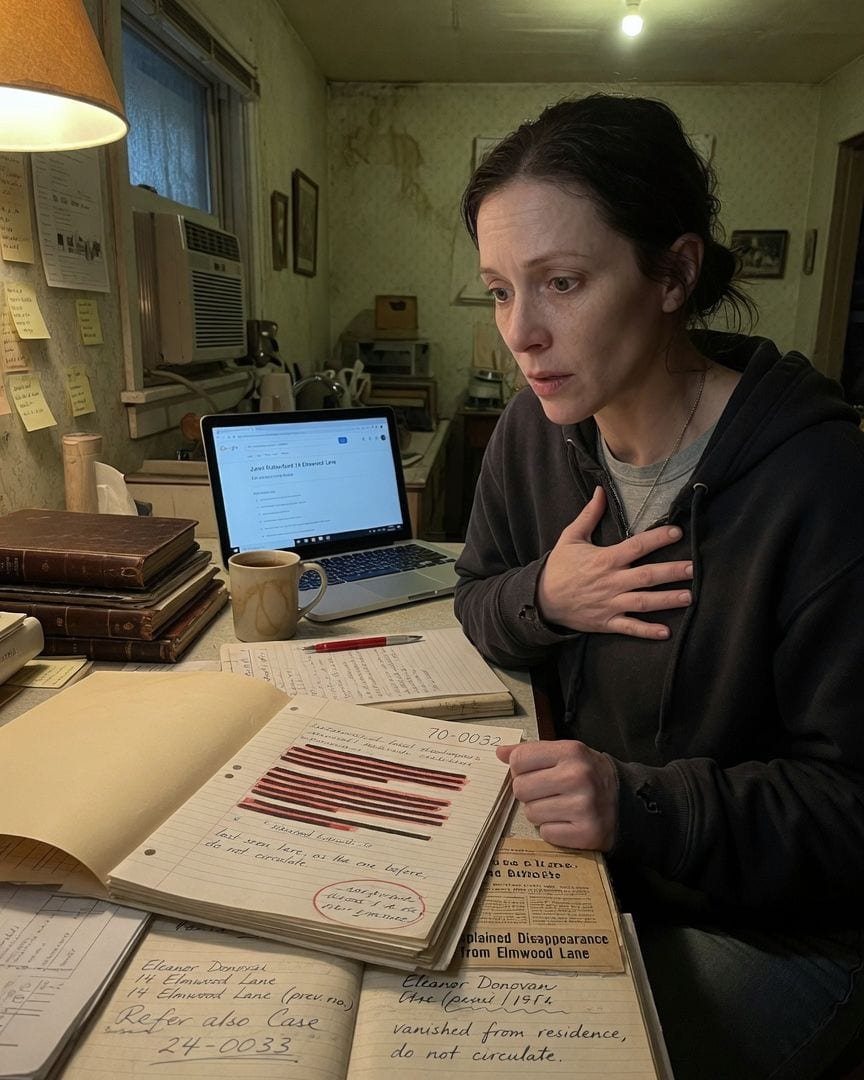
My own address is on a missing person's file from 1970. The blacked-out line names my street. She never lived here.
When my neighbor vanished, I started digging into old local missing persons cases. In a police file for a woman who disappeared in 1970, I found my own address, 14 Elmwood Lane, framing a blacked-out section of the duty log. Janet Rutherford never lived here, and the file contained a chilling handwritten note: 'do not circulate.'
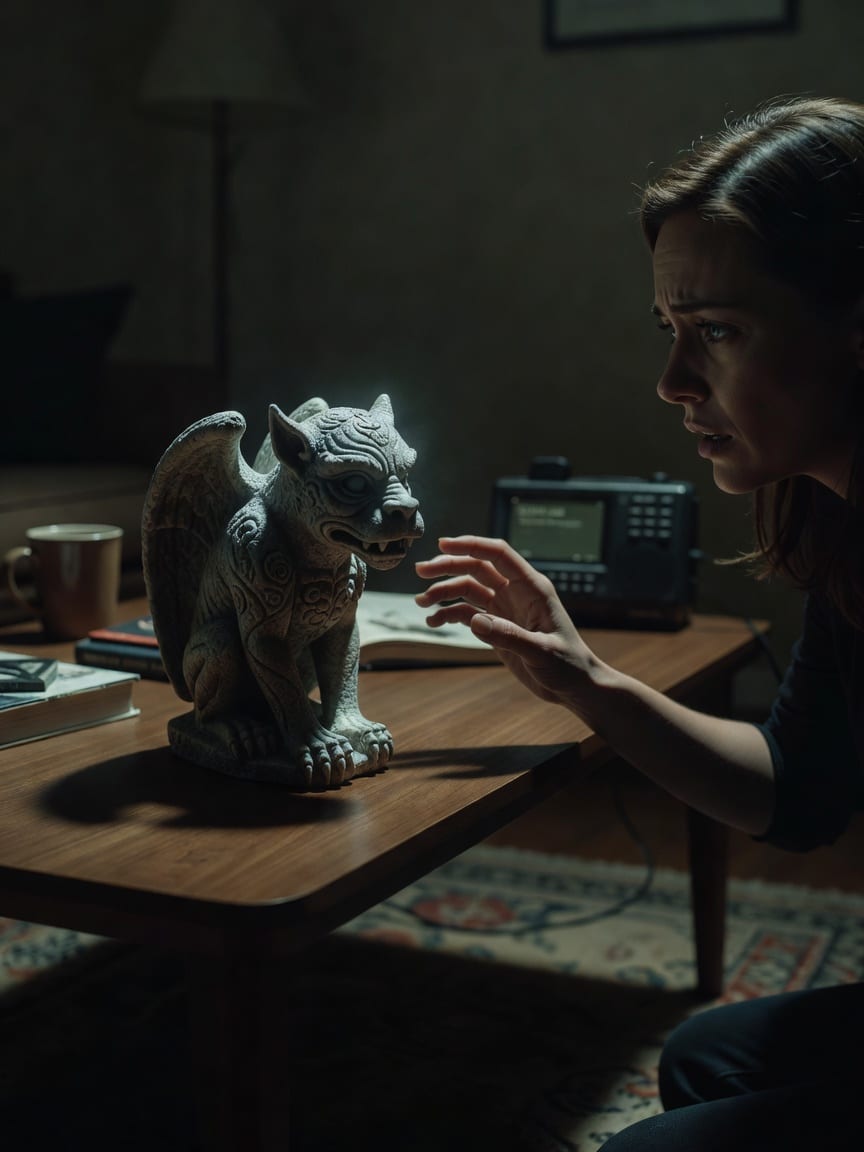
My radio scanner spoke my address at 2 AM. A flat voice read local homes, all with past dates. Mine was the only one in the future.
It was two in the morning, and my quiet house was filled with the usual hum of my weather scanner. But the static broke, replaced by a flat, synthesized voice reading a list of local addresses and dates. My hand froze when it spoke my own address, 181 Foster Drive, followed by a date: October 27th. That date was three weeks from now.
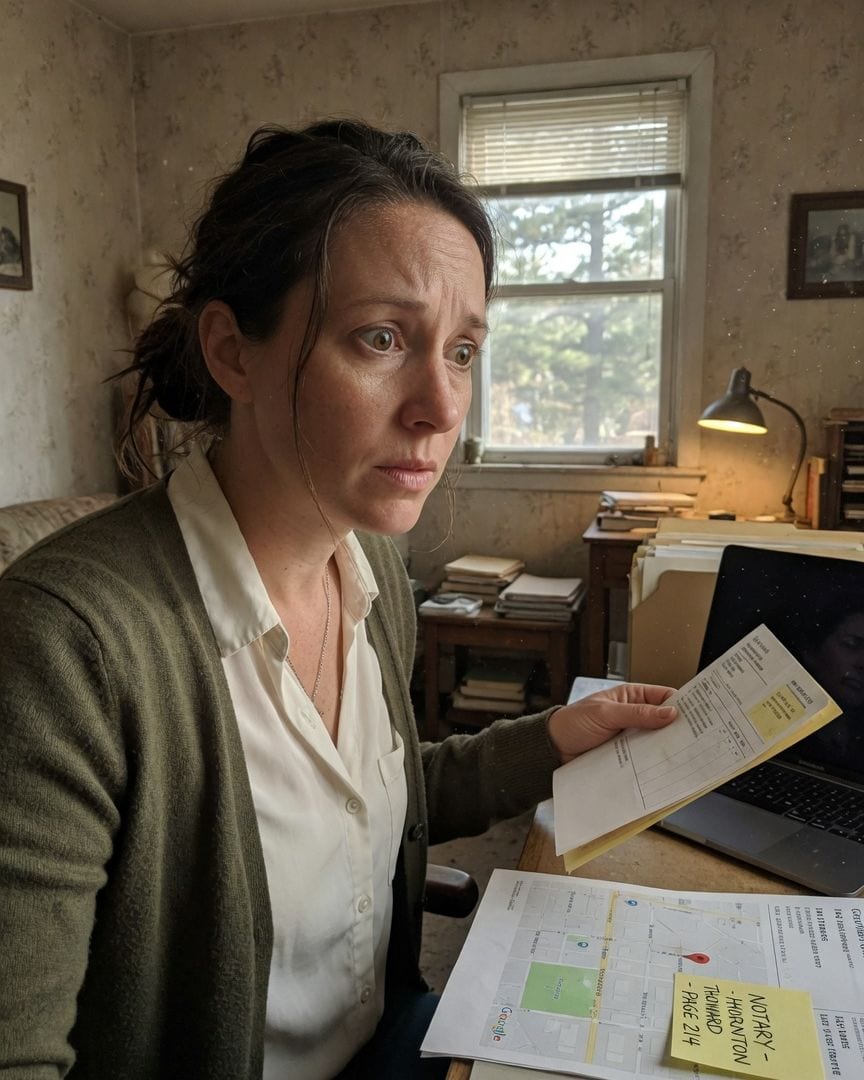
My signature is in a notary's book for an accident I wasn't in. I've never even met the man.
My name is Janet Caldwell, and my life is perfectly ordinary. Or so I thought, until a notary's register revealed my distinct signature on a document. It was dated May 14th, 2014, a day I was confined to a hospital bed, miles away.