My landlady said don't feed the meter after closing pips. I did. The lights across the terrace dimmed, once. In the morning, a handwritten bill for 'one hour, one guest' was pushed under my door from the man who died in this flat.
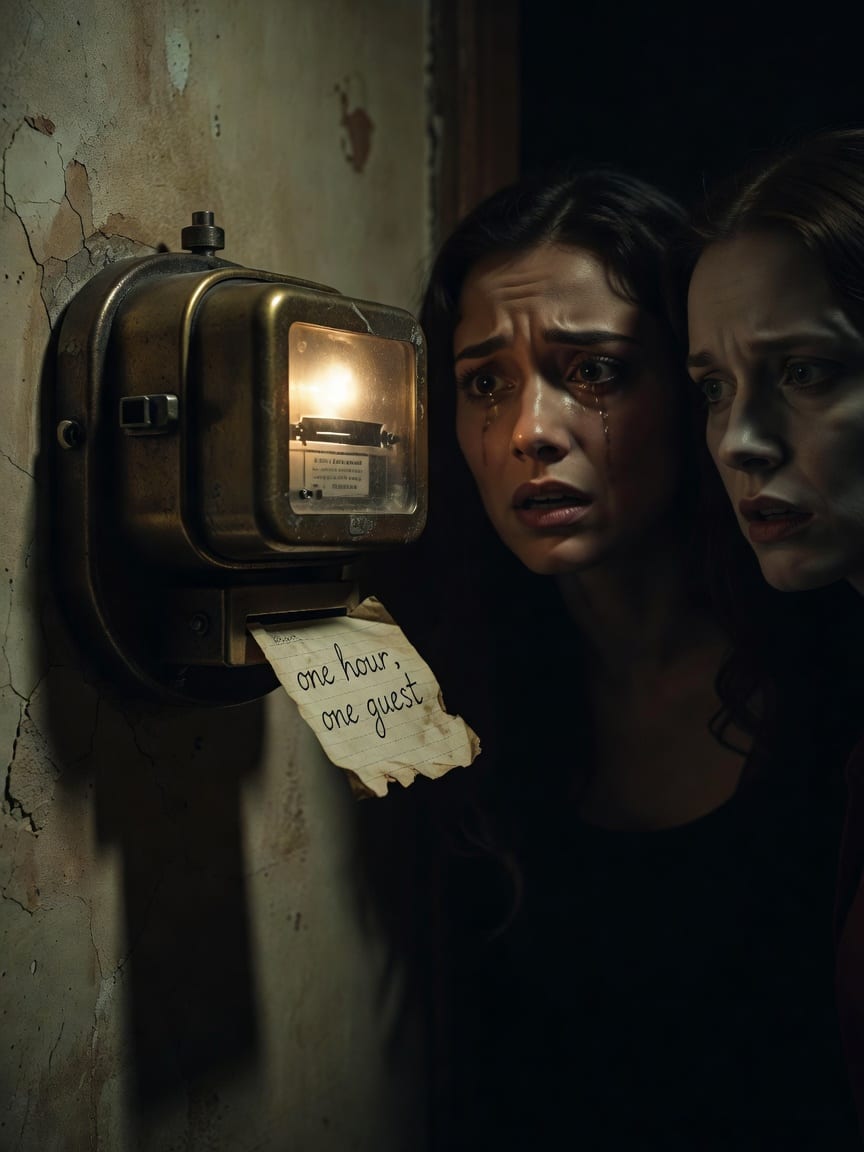
It was the note that first caught my eye, stuck to the old prepayment electricity meter in the hall. Gloria Sutton, my landlady, had a spidery, precise hand.
"Please," it read, "don't feed the meter after the pips at closing time." Quaint. The meter itself was a relic, a bulky grey box with a slot for coins, like something out of a different century.
I’d seen smart meters everywhere else. This old thing was just…there. I filed the note away as another charming eccentricity of this quiet, too-still town I’d moved to.
Then the cold snap hit. The kind that seeps into your bones, even indoors. The heating in my flat, powered by that same ancient meter, struggled to keep up.
I was wrapped in a blanket, trying to read at ten past eleven, the digital clock on my phone a contrast to the old-fashioned chill. The balance on the meter had been low all day.
I shrugged, pulled a pound coin from my jeans pocket. The "pips at closing time" felt like a polite suggestion, not a rule. I slid the coin into the slot. It clunked, then dropped.
The display flickered, showing the new credit. And then, the lights across the entire terrace, not just my flat, dimmed. A slow, almost imperceptible flicker, like a shared breath held, then released.
It lasted perhaps half a second, then snapped back to full brightness. Grid fluctuation, I told myself, rubbing my arms. Old wiring. Nothing to it. I went to bed, the cold still gnawing at the edges of the room.
The next morning, it was waiting for me. A folded piece of paper, thick cream card, pushed neatly under my door. Not through the letterbox, but flat on the doormat, as if slipped directly from the floor outside.
My heart gave a little skip. It was handwritten, in that same spidery script I now recognized as Edward Barlow's. No, not Edward Barlow's. Gloria's. But it wasn’t from Gloria. This was a different hand entirely.
Neater, almost formal, yet unsettlingly archaic. I unfolded it.
The paper was thick, almost like cardstock, and smelled faintly of dust and something else I couldn't place, something metallic and cold. The ink was a deep, almost black, blue. It read:
BILL To: Occupant, 5 Old Mill Lane From: Edward Barlow Date: [Yesterday's Date, exactly]
ITEMIZED CHARGES: One Hour, One Guest: £1.00
Total Due: £1.00
Payment instructions: Please insert exact amount at time of next scheduled pip. Overpayment not accepted.
My first thought was a prank. A really bizarre, elaborate one. "Edward Barlow"? And what the hell was "one hour, one guest"? I flipped the card over, searching for a return address, a joke. Nothing.
Just the faint imprint of the handwriting showing through. The address listed, 5 Old Mill Lane, was my flat. The name, Edward Barlow, meant nothing to me.
A quick check on my phone, searching for the name and "Old Mill Lane," yielded nothing. Maybe some eccentric local trying to be funny.
I tried to find the specific address listed on the bill again—"5 Old Mill Lane" was correct, but the "Edward Barlow" was still a blank.
Thinking it might be some local inside joke or a distant relative, I decided to look up Edward Barlow more thoroughly. I typed his name, the town, and "Old Mill Lane" into the search bar.
This time, I refined the search to include obituaries and public records.
A hit. My stomach dropped.
Edward Barlow. Deceased. Passed away several years ago. The date of death was exactly seven years, three months, and twelve days prior to the date printed on the bill. My breath hitched. He was fifty years old when he died.
And then I saw it, in a small, greyed-out detail on the local online obituary page: his last known address.
"5 Old Mill Lane."
My address. The flat I was standing in.
The room, which had been simply cold, suddenly felt like an icebox. I reread the bill, then the obituary, then the bill again. My hands started to shake. The dates didn't align for a living person to send this.
Edward Barlow had been dead for over seven years. The local records were vague about the circumstances of his death, simply listing it as 'natural causes' and a quiet burial.
There was no family contact listed, no estate to speak of, just a brief mention that he had lived alone.
The ordinary explanation of a misplaced bill or a prank didn't just fall apart; it evaporated, leaving a vacuum of cold, impossible fact.
I stood in my quiet, empty flat, the handwritten bill trembling in my hand. The name, Edward Barlow, matched the deceased man who lived here. I looked at the address: '5 Old Mill Lane'—my address.
I pulled up the death certificate image on my phone, the pixelated text confirming his last known address as 5 Old Mill Lane, exactly the flat I was in. The bill wasn't from a prankster. It was from him.
Or something using his name, demanding something impossible. The dread wasn't just a ghost, but a system, a demand, reaching across time, directly to me.
The next morning, I confronted Gloria Sutton. She was out tending her small, meticulous garden, clipping roses with surgical precision. "Gloria," I began, my voice tight, holding up the cream card. "What is this? And who was Edward Barlow?"
Her pruning shears stopped mid-snip. Her shoulders tightened, a subtle, almost imperceptible shift. She turned, her face a mask of mild pleasantry, but her eyes darted towards my hand, then away, towards the meter box visible through my open door.
"Oh, that old thing, dear? Just an old custom, you know. Some things are best left alone in this town, dear. Old ways, old rules." She picked up a fallen rose petal, turning it over in her palm.
"Did you… did you feed the meter after the pips, Claire?" Her tone was gentle, almost chiding, but beneath it, I heard something else, a quiet urgency.
She offered no further explanation about Barlow or the bill, only a gentle but firm redirection of the conversation towards the weather and the upcoming fête. Her composure, in the face of my obvious distress, was unnerving.
The silence from her was a louder answer than any words.
Undeterred, I decided to pull at the thread myself. The local library was small, smelling of old paper and dust motes dancing in sunbeams. I found the archive section, a couple of rickety shelves in a back room.
I spent hours poring over archived local newspapers, searching for anything unusual related to '5 Old Mill Lane' or 'Edward Barlow' beyond the obituary. It was slow work, sifting through decades of local gossip and advertisements.
But then, I started finding them. Brief, odd mentions. 'Unexplained disappearance of resident from Mill Lane property' from 1998. No name, just the address.
Then another: 'Family relocates suddenly after strange events' in 1985, again, from 'a property on the old terrace.' Not always 5 Old Mill Lane, but always somewhere along the row of houses, my row.
A chilling pattern of dates began to emerge, roughly every 10-15 years, sometimes shorter, sometimes longer. Always linked to specific addresses along my terrace.
It was never front-page news, just small, buried paragraphs, quickly dismissed or vaguely attributed to ‘personal reasons.’ But the addresses were specific. My building. Number 3. Number 7, Gloria's place. The dread deepened, taking on a new, heavier weight.
This wasn't isolated to my flat or Edward Barlow. This was something bigger, something embedded in the very foundations of this town.
The sense of being watched grew with each passing day. It wasn't overt, no figures in windows or suspicious cars. It was subtle.
Shadows seemed to linger too long in the periphery of my vision when I walked down the quiet streets. I caught glimpses of movement at the edge of my sight, only for it to vanish when I turned.
My old flat, once just quaint, now felt like a stage, and I was the reluctant star.
I located the town's dusty, rarely-used archives, a small office tucked away behind the municipal building, tucked between the town hall and the old public baths.
The door creaked open into a room stacked high with cardboard boxes and sagging shelves. The archivist, Hugo Coleman, was a quiet, observant man in his early seventies, with spectacles perched low on his nose.
He greeted me with a polite, almost formal nod.
He was initially helpful, guiding me to old property deeds and census records, his thin fingers tracing lines on faded parchment. "Looking for family history, Miss Rutherford?" he asked, his voice soft, almost a whisper.
"Or just curious about the old town?"
"A bit of both," I said, trying to sound casual, though my heart was pounding. "I'm researching my flat, 5 Old Mill Lane. And a former tenant, Edward Barlow. And… unusual meter bills."
Hugo’s demeanor shifted. It was subtle, almost imperceptible. His eyes, though still calm, gained an unnerving stillness, like a deep pond gone suddenly quiet. He didn't flinch, didn't react overtly, but a tension settled into his shoulders.
He offered me a cup of tea, his hand trembling almost imperceptibly as he poured from a chipped porcelain pot. The clink of the cup on the saucer was the loudest sound in the room.
He subtly steered our conversation away from Barlow, away from the meter. His gaze kept flicking towards a high shelf, stacked with heavy, leather-bound ledgers. "Those are just old accounting books," he said, too quickly, too smoothly.
"Nothing of interest to your research, I assure you." I noticed the faint tremor in his hand again as he gestured vaguely towards the ledgers, a sign of suppressed anxiety or, perhaps, a terrible, intimate knowledge.
The air around us felt suddenly heavy, like an unspoken word.
I couldn't shake it. The ledgers. The tremor in Hugo’s hand. The way his eyes kept flicking to that high shelf. That night, I knew what I had to do. The archive building was dark, hulking against the moonless sky.
I was back after hours, using a key I'd 'borrowed' from Hugo's desk during my last visit – a simple brass skeleton key, nestled under a stack of unfiled documents.
The air inside the archives was colder than outside, thick and still, carrying the scent of aging paper and something else, something mineral, like damp earth.
Guided by my memory of Hugo's evasiveness, I located a rickety wooden ladder. It groaned under my weight as I climbed to the high shelf. My fingers, numb with cold and nerves, fumbled for the thickest book.
It was heavy, leather-bound, and its spine was unlabelled, unlike the other, smaller books around it. This was it.
I carried it carefully down, placing it on Hugo's large, scarred oak desk. It wasn’t an accounting book. It was a meticulous, handwritten record.
Page after page, in elegant, looping script that varied slightly in hand but not in precision, listed 'late charges' or 'guest fees' for specific addresses in town. My fingers flew, scanning the entries. There it was: '5 Old Mill Lane.'
My address. And beneath it, a chilling replica of the bill I received. 'One hour, one guest.' Then another, 'extended stay.' Always with a name, and a date.
The names matched the previous residents I'd found in the archived newspapers—those who had 'disappeared' or 'relocated suddenly' without a trace. Edward Barlow's name was there, next to his specific date of death.
And other names, from the 'unexplained disappearances' and 'sudden relocations' I'd tracked. The dates in the ledger aligned perfectly with the unsettling pattern I’d uncovered in the newspaper archives.
The landlady's cryptic note, the dimming lights across the terrace, the impossibly specific bill—it all clicked into place with a horrifying coherence. The town knows.
They've known for generations, and this ledger, this meticulously kept, terrifying book, was their quiet, terrible history.
My blood ran cold, not from fear of a ghost, but from the horrifying realization that I was just the latest entry in an ongoing, generations-long agreement.
I was poring over the ledger, my fingers tracing the names and dates, each entry a cold confirmation of the town's unspoken truth. The last few entries were horrifyingly recent.
My eyes locked on one, dated just six months ago: 'Extended Guest.' The address: '7 Old Mill Lane.' And beneath it, the occupant's name: Gloria Sutton. Claire's landlady. Gloria. My landlady.
My head snapped up, startled, as the heavy wooden door to the archives creaked open, groaning like an old hinge. Hugo Coleman stood there, silhouetted against the dim lights of the street outside.
He wasn't surprised, just calm, his eyes fixed on me, on the open ledger on his desk.
"I knew you'd find it eventually, Miss Rutherford," he said, his voice flat, devoid of anger or fear, like he was stating a fact about the weather. He walked slowly towards the desk, towards me.
He reached out, his hand steady, and slowly closed the heavy ledger, the sound echoing in the silent room, a final, definitive thud. "You're not the first to look into the late charges, Miss Rutherford.
And you won't be the last. But the bills always get paid, one way or another." He then stepped closer, pointing to Gloria Sutton's entry with a steady finger, his gaze unsettlingly knowing. "And sometimes, they keep coming.
Even after you've paid the first time. The entity remembers. It learns."
Hugo, with a weary resignation, slumped into his chair and began to explain. His voice was soft, barely audible above the hum of the old building, as if he feared being overheard.
"It's not malicious, Miss Rutherford," he began, gesturing vaguely towards the floor, "not in the way you'd think. It's… ancient. Tied to the old town's ley lines, they say. To the very foundations of this terrace.
It's always been here, a persistent presence."
He explained that the old pre-payment meters were, for generations, a way to 'manage' it. "A toll, an offering point," he clarified. "A way to give it its due without direct interaction."
The 'pips' at closing time, the very rule Gloria had warned me about, were the precise boundary, the moment it stirred, like a sleeping giant.
"Break that boundary," Hugo continued, his eyes fixed on some distant point, "and it takes notice. It asks for more. It feeds on 'time,' on 'attention' drawn from the transgression."
The 'bills,' the handwritten demands, were its consistent method, channeled through the lingering resonance of previous occupants, those who had 'paid' before.
Gloria, he explained, had a close call six months ago. She'd forgotten the rule during a late-night storm, the power flickering, needing a pound in the slot. "Just like you," he said, a faint, sad smile touching his lips.
"She got a bill. Now, she makes a small, regular 'maintenance fee' payment, a small offering to keep it dormant, quiet." He opened the ledger again, pointing to a small, almost invisible mark beside Gloria's entry. "It's a balance.
A generations-long pact." The disappearance entries in the ledger? Those were the ones who refused to pay, or tried to fight it, to ignore it.
They vanished from the town's records, from their lives, as quietly as their 'debts' were erased.
Claire now understood the chilling coherence: every cryptic warning, every evasive local, every dimming light, was part of a generations-long pact to contain an indifferent, ancient force. A force that remembered.
Horrified, I realized I was now on the 'bill,' my transgression noted, my payment due. "What do I do?" I whispered, the words catching in my throat.
Hugo looked at me, his gaze softening with genuine pity. "The only way to 'settle' your initial charge, Miss Rutherford, is to make a payment. And then," he emphasized, "ensure you never break the rule again.
Not with any meter, not in any old building." He rose, his movements stiff with age, and led me to a section of the archive wall I hadn't noticed.
Behind a loose brick, concealed by a faded map, was a small, lead-lined box.
He pulled it out, setting it gently on a table.
Inside were various small, personal items: old, tarnished coins from bygone eras, a smooth river stone, a lock of braided hair tied with a faded ribbon, a broken pocket watch, a child's silver thimble—the 'payments' from those who came before.
Each object held a silent, heavy weight of personal significance. "It doesn't want money, Miss Rutherford," Hugo said softly, his voice barely above a whisper. "It wants something of yours. Something personal, something cherished. Something given freely, as an acknowledgment.
A piece of your time, your history, your connection to the physical world."
I thought of my antique locket. A family heirloom, deeply sentimental, passed down through my mother's side. It was a small, oval silver piece, engraved with a single, delicate rose.
It wasn't essential, I hadn't worn it in years, but it was mine, a tangible link to my past, a piece of 'time' and personal history. It felt like the right payment, the only payment.
I made my decision. That night, at precisely midnight, as the last faint pips of the radio closed out the day from a distant neighbour’s kitchen, I stood before my old meter. The flat was quiet, still.
My hands trembled as I took out the locket. It felt cold against my palm. I stared at the slot, the same one where I'd inserted the pound coin just days before.
With a deep, shuddering breath, I carefully, deliberately, inserted the locket into the slot. It didn’t clunk. It didn’t drop.
Instead, I felt a profound, cold suction, a silent pull, a sensation like a draft in my chest, as the locket vanished, swallowed by the aged mechanism. The meter display remained dark. The terrace lights didn't dim.
The air remained still, thick with unspoken agreement. The demand was met. I vowed, with a chilling certainty, never to feed a meter after the pips again. Not ever.
I moved out of the flat a week later. I found a new place in a different part of the city, miles from the old terrace, far from the subtle hum of ancient energy.
I told Gloria Sutton I was leaving. She just nodded, a knowing, sad look in her eyes, a silent understanding passing between us. She didn't press for details, didn't ask why. She simply wished me well.
Hugo Coleman still tended the archives, the heavy ledger now closed, tucked away back on its high shelf, another chapter silently added.
The old pre-payment meter at 5 Old Mill Lane was eventually replaced with a modern smart meter, part of a city-wide upgrade. The new tenants, a young couple, were never told the old rules, nor the cost of breaking them.
The town breathed a collective, almost imperceptible sigh of relief, the balance momentarily restored.
I never fed a meter after dark again. I found myself always checking the time, always wary of the faint, distant hum of electricity from old buildings, of old wiring, of old places.
I still saw the occasional handwritten bill, pushed under a door, in my nightmares.
It wasn't my name on them anymore, but the familiar script, the same itemized charge for 'one hour, one guest,' due to a different address on a different street, sometimes in a town I'd never visited, sometimes just down the road.
It seems the old town wasn't the only place with such a rule.
A local newspaper, weeks later, publishes a small notice about a new resident on Elm Street, Nathaniel Prescott, reporting strange fluctuations in his smart meter. His landlady, Nancy Lockwood, dismisses it as a 'glitch.'
The article is tucked into a file, next to a faded, handwritten bill, a copy of which is now on Hugo Coleman's desk.
It seems the old town wasn't the only place with such a rule.
If this one got to you
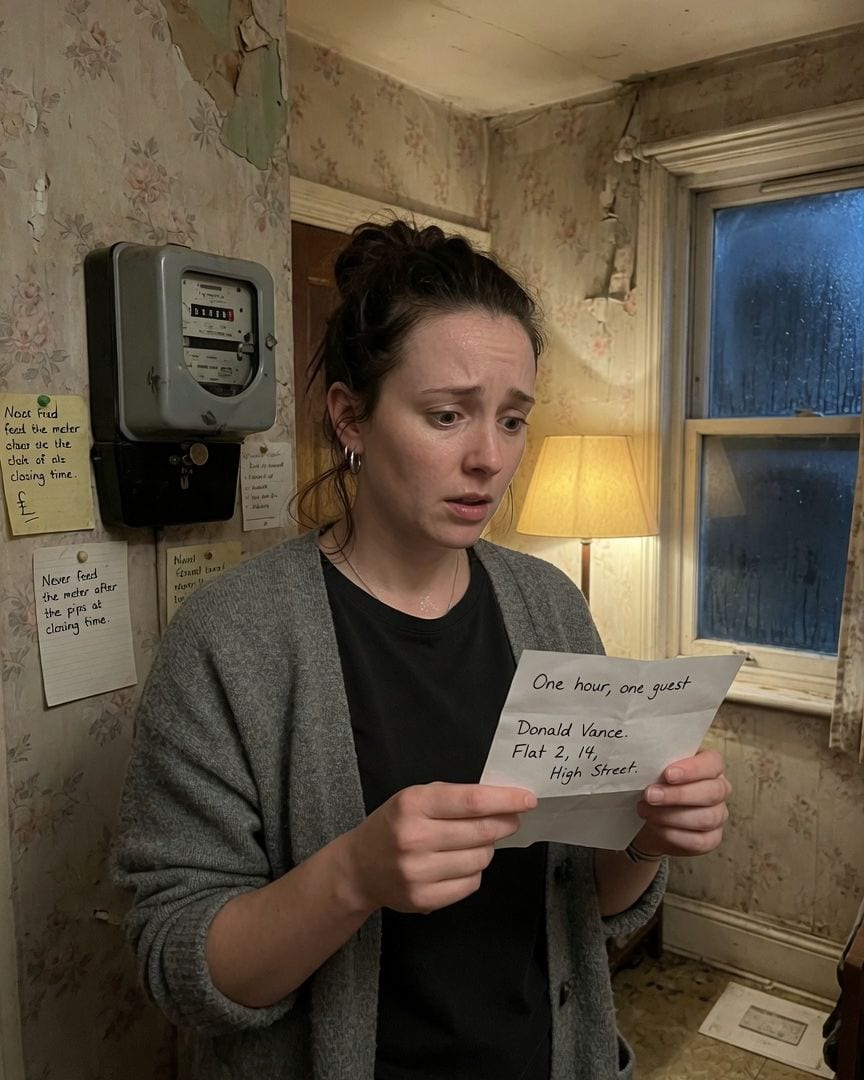
The moment I fed the meter a pound, every light on the terrace dimmed at once. By morning a handwritten bill lay under my door — 'one hour, one guest' — addressed to the man who died in this flat before me.
I'd just moved into an old flat, dismissing my landlady's odd rules about the electricity meter. After feeding it late one night, a handwritten bill appeared under my door from the previous tenant – a man who had died months ago in this very flat.
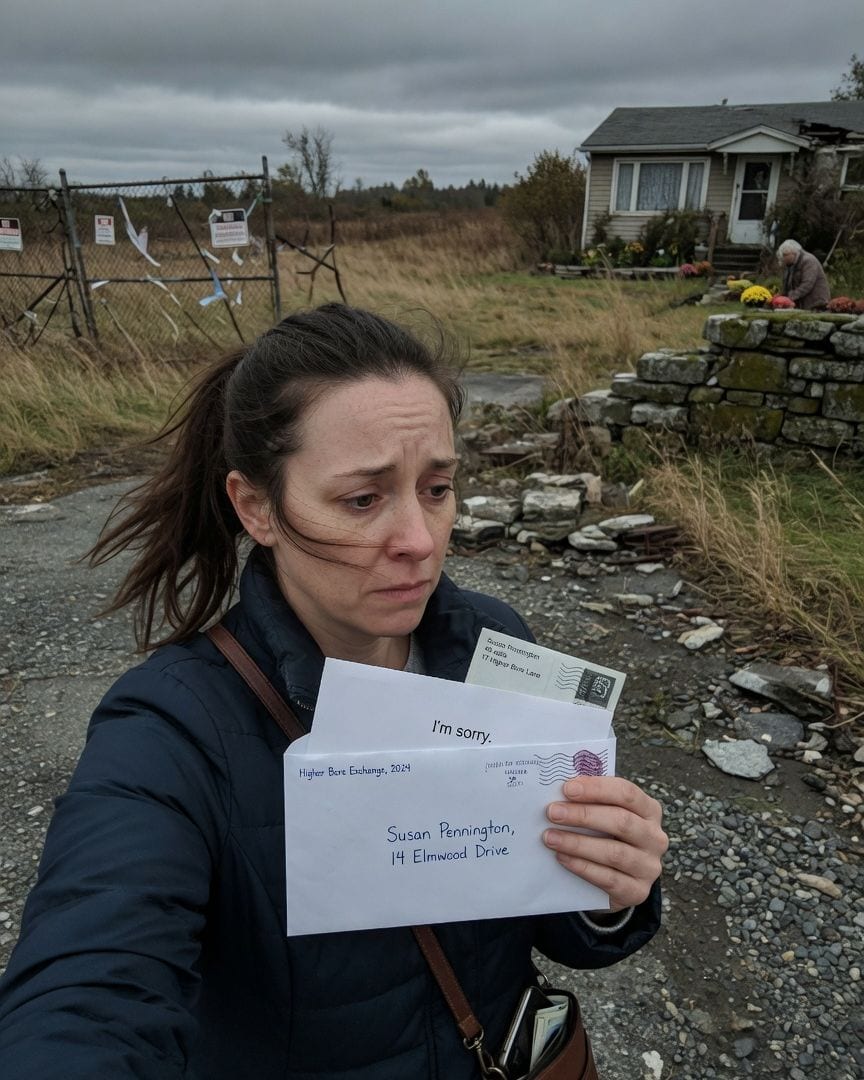
My phone bill listed forty calls made at 3:14 AM to a house demolished in 1990. The paper bill came from a flattened building. My name is on it.
I stared at my phone bill, my morning coffee forgotten. It detailed forty calls, each at 3:14 AM, to an address I knew was a vacant lot where a house had stood decades ago. But the real dread began when I saw the bill's return address: a telephone exchange flattened years before.
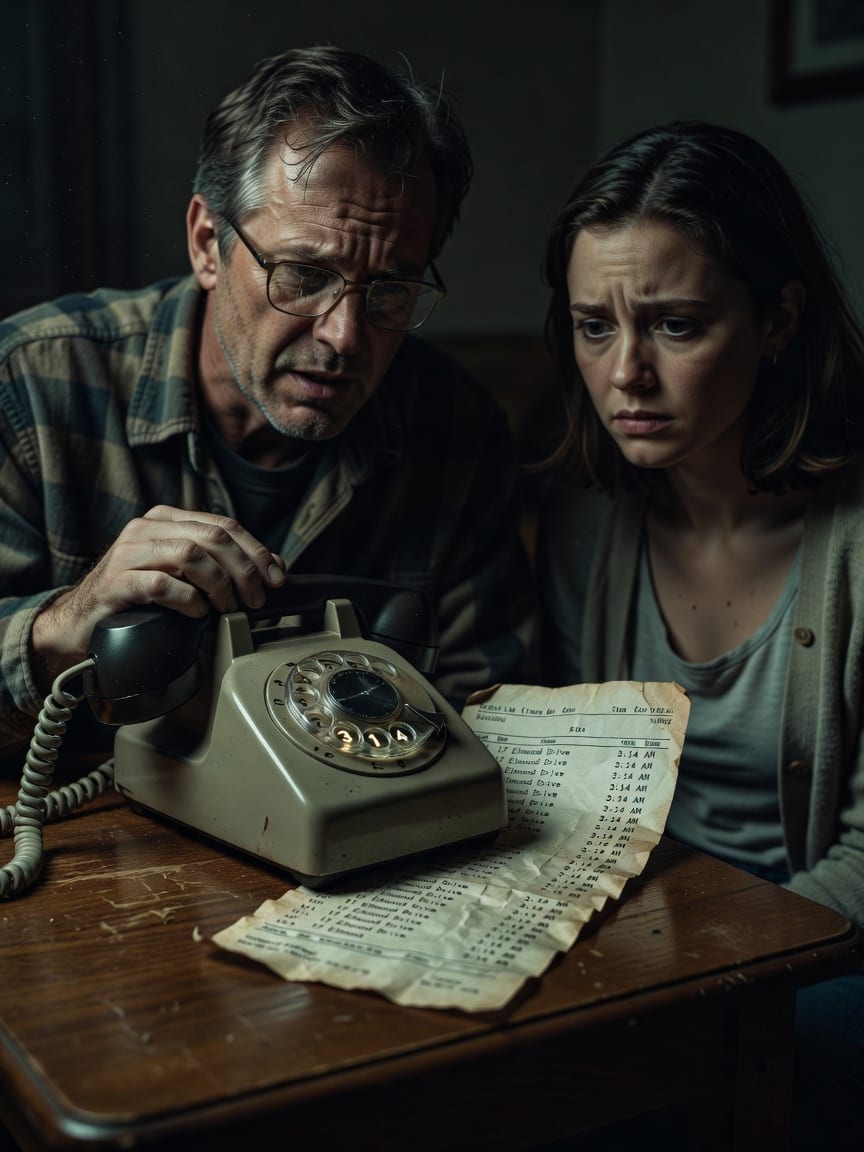
My phone bill itemised forty calls from my number to a house demolished in 1990. Each call at 3:14 AM, lasting eleven minutes. The bill arrived postmarked from a flattened building.
I expected the usual mobile bill, but my landline statement listed forty calls from my number to '17 Elmwood Drive.' That address was for a house torn down in 1990, a vacant lot I remembered from childhood. The phone company insisted the calls were legitimate, leaving me profoundly unsettled by the impossible charges.
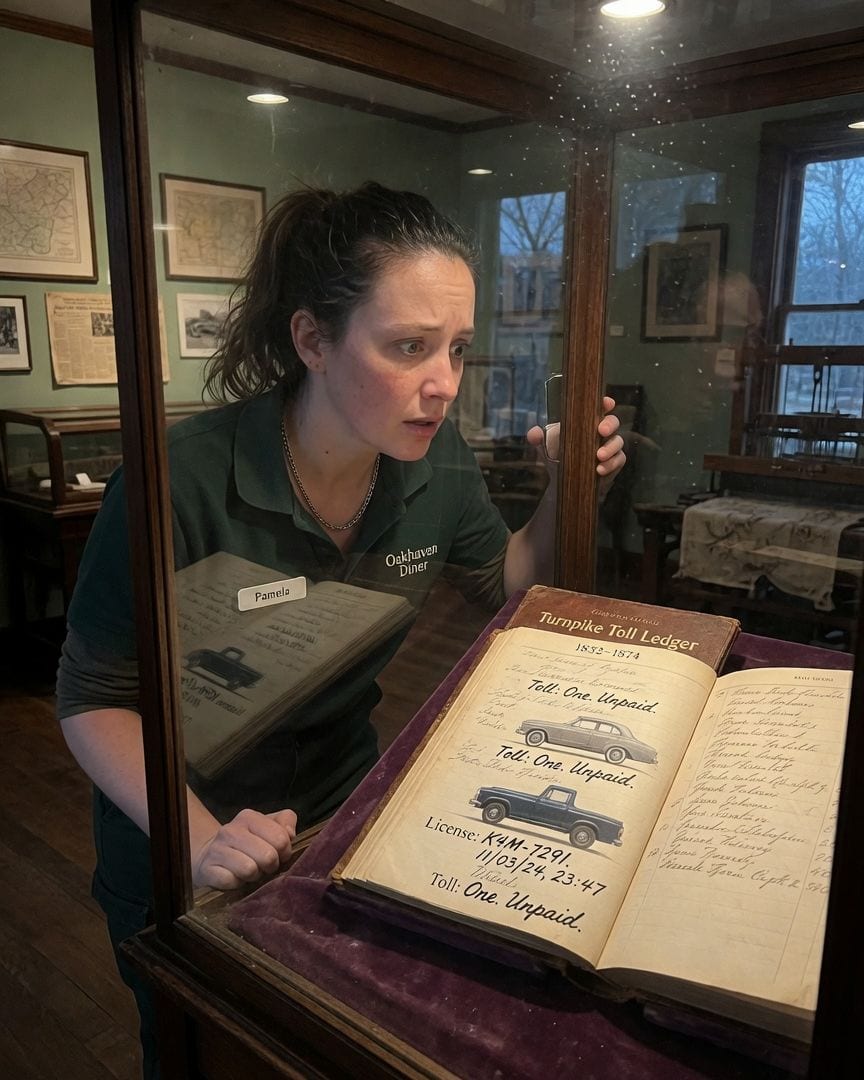
My car stalled at the old turnpike milestone, after dark. The toll ledger, closed in 1874, then listed my car, my stall time, and a toll of one, unpaid.
I had just moved to Oakhaven when my old sedan died on a dark, winding road by an infamous turnpike milestone. The next day, I found my car's exact registration and stall time written in fresh ink in a 150-year-old, locked museum ledger, marked 'Toll: One. Unpaid.' The curator dismissed it as a prank, but her white knuckles and strained voice hinted at something far more unsettling.
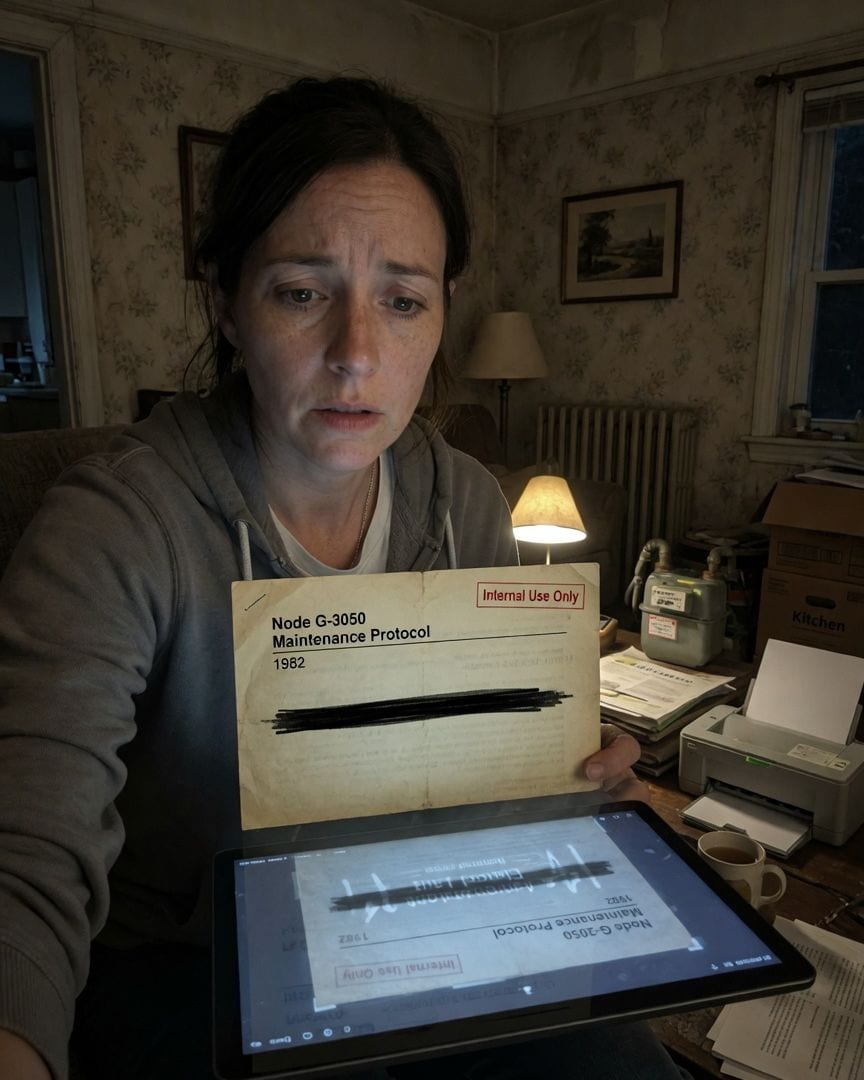
A different tenant every decade since 1949, each one gone — yet our gas meter's final reading comes back identical every time, though the house sat empty in between.
My new house at 14 Elmwood Lane was meant to be a fresh start, a normal home. But the gas bill was wrong. It showed my account, G-3050, active since 1949, with a meter reading of 3050 that had never changed, even when the house stood empty for decades.
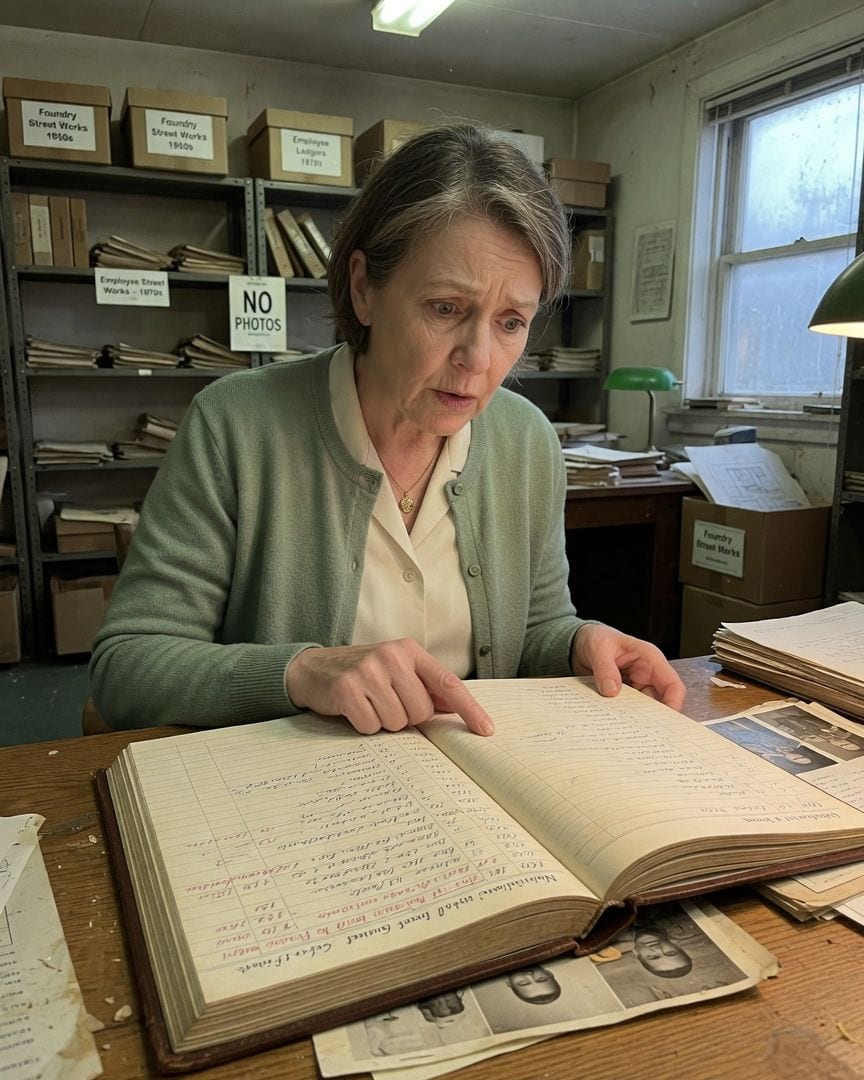
Four people have used my National Insurance number since 1948. All worked at the same Foundry Street plant. Not one ever drew a pension.
Finalizing my pension should have been a simple task at the council office. But the clerk found my National Insurance number had been active since 1948, assigned to four different people before me. Now I've found one of them lived on my own street.