The moment I fed the meter a pound, every light on the terrace dimmed at once. By morning a handwritten bill lay under my door — 'one hour, one guest' — addressed to the man who died in this flat before me.
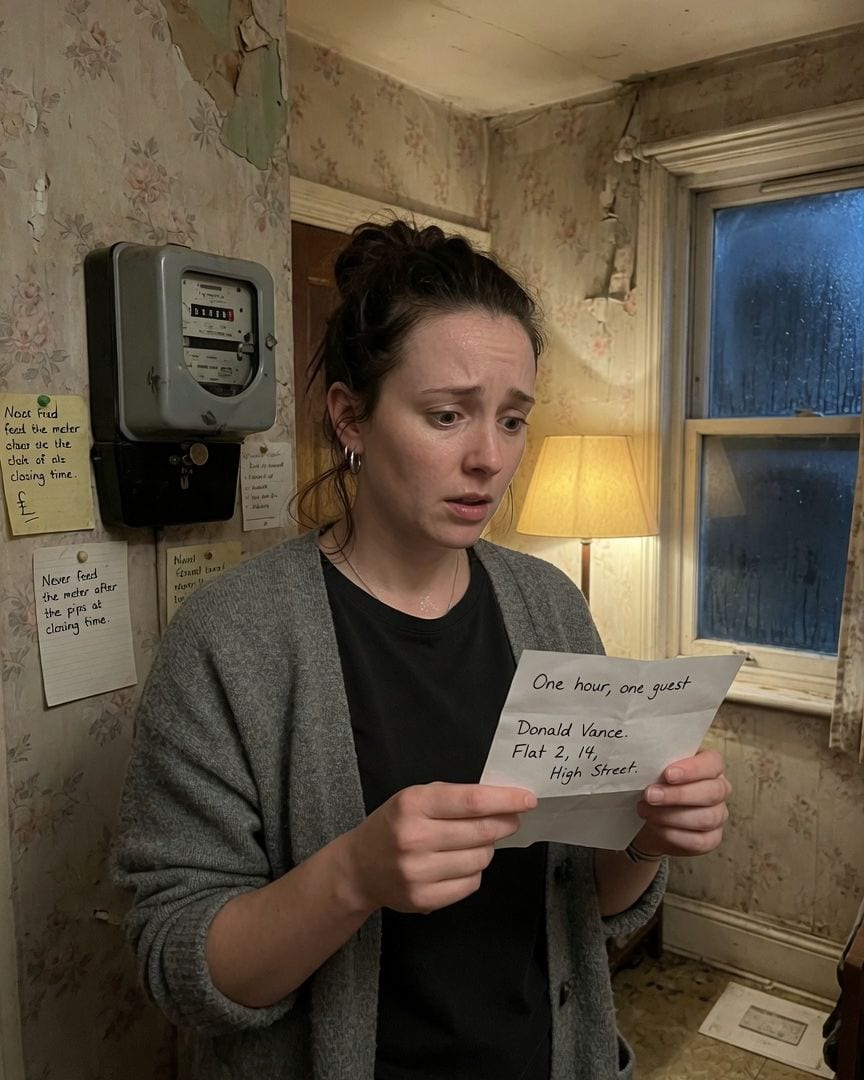
The old house creaked around me like a ship settling on a dark ocean.
I’d only been in the flat for a few weeks, pragmatic about the peeling wallpaper and the damp patches, but that night, a genuine chill had taken hold.
It wasn’t just the draft seeping from under the sash window, though that was certainly part of it. The electricity meter in the hall, a relic of a bygone era, had finally clicked into the red.
My landlady, Monica Rutherford, had left a list of house quirks, handwritten on faded floral stationery.
Most of it was standard stuff—fuse box location, recycling days—but one line had always struck me as odd: "Never feed the meter after the pips at closing time."
I’d laughed it off as quaint superstition, a local idiosyncrasy for a town that clearly valued its traditions.
It was ten past eleven now, long past when any local shop would dim its lights. The 'pips', whatever they really meant, were definitely over. Still, the heating needed to kick in, and I needed to charge my phone.
Shrugging off the silly instruction, I fished a pound coin from my wallet. It felt cold against my thumb. The slot on the meter was stiff, protesting slightly, but the coin finally dropped with a solid clunk.
For a split second, the old standard lamp in my living room, and I swear, every other light in the entire terrace, flickered, a sudden, sharp dip into near-darkness, before snapping back to normal.
It felt like the house had exhaled. A small, almost imperceptible chill settled in the room, deeper than before.
The next morning, it lay on the worn linoleum just inside my front door: a crisp, neatly folded piece of paper. Not an actual envelope, just a bill, pushed right under the gap.
It was handwritten, in a precise, almost elegant script. 'One hour, one guest,' it read, the total a single pound sign with no number beside it. And then, the name: 'Donald Vance. Flat 2, 14, High Street.' My address.
Donald Vance. I didn’t know anyone by that name. A local prank, surely. Or maybe an old, forgotten debt from the previous tenant? That felt like the only explanation. It had to be.
My rational explanations quickly unraveled. Donald Vance, it turned out, was indeed the previous tenant. A quick online search, then a look at the local obituaries, confirmed it. He’d died in this very flat, six months ago.
A heart attack, the police had said. No suspicious circumstances. Just an old man, alone.
I drove straight to Monica Rutherford’s house, the bill clutched in my hand. Her cottage was immaculate, roses climbing the brickwork. She answered the door with that same placid, unreadable expression she always wore.
Her hair, a perfect silver bob, didn’t have a single strand out of place.
"Frances, dear. What a surprise." Her voice was soft, even.
I held out the bill. "This was under my door this morning. Donald Vance. He’s... he was the man who died here, wasn’t he?"
Monica took the paper, her fingers brushing mine, cool and dry. She unfolded it, her eyes scanning the neat script. There was no flicker of surprise, no discernible change in her demeanor. "Ah, yes. Donald. A sad business. And this..."
She paused, then offered a small, dismissive shake of her head. "Probably a silly prank, dear. Teenagers with too much time on their hands. Or perhaps an old debt from the energy company, gone astray. They’re terribly inefficient, you know."
But her eyes. They were a peculiar, calm depth, like still water over something very, very old. They held an unsettling knowingness that belied her casual dismissal. "Just ignore it, Frances. It’ll stop." She handed the bill back, neatly refolded.
"No need to worry yourself."
Later, trying to distract myself, I found myself in the town’s small, dusty charity shop.
Tucked between a stack of well-thumbed romances and a porcelain cat collection, I spotted a slim, self-published volume titled 'A History of Our Town: From Roman Times to Present Day.'
Flipping through its brittle pages, I found a passage about ancient 'tithing' practices tied to the old mill, and a 'community energy grid' that apparently predated modern infrastructure.
I thought it was amusingly archaic, another quirky detail for my collection of local oddities.
Back in my flat, the unease lingered. That cold feeling, the flickering lights. I decided to check the actual fuse box, thinking maybe the power surge had done some damage. It was tucked away in a cupboard beside the meter.
As I fumbled with the catches, my fingers brushed against something loose in the meter’s casing. A hidden compartment. Inside, nestled among dust and cobwebs, was another handwritten bill.
This one was brittle, yellowed with age, the ink faded to sepia. It read: 'Three hours, two guests.' And the name? 'Nora Easton. Flat 2, 14, High Street.' The same address.
The second bill chilled me more than the first. Nora Easton. I didn't even try to rationalize it this time. This was no prank. I spent hours online, poring over digital archives of old local newspapers.
It was tedious work, the scanned pages often blurry, the search function temperamental. But then I found it. A small, almost buried article from forty years ago, tucked away on an inside page.
The headline was innocuous enough: 'Local Woman Nora Easton Leaves Town Abruptly.' The report was vague, almost dismissive, but the date of her 'departure' leaped out at me.
It was precisely one day after a recorded, unexplained power surge in the area encompassing High Street. A surge that had apparently baffled engineers, leaving no discernible cause.
I stared at the screen, the two bills on my coffee table, the cold from that morning now seeping into my bones, settling deep. Nora Easton hadn't 'left town abruptly.' That was a euphemism, an explanation for something unexplainable.
She had vanished. And the meter, the rule about the pips, the sudden flickering lights, these handwritten bills – it all felt connected. A terrible, silent pattern was emerging, one that promised something far worse than a simple prank.
The quiet calm of the town archive was a contrast to the churning in my gut. I spent days there, digging. Old municipal records, microfiche, ledgers that smelled of dust and forgotten things. I found them.
Sporadic, unexplained spikes in 'local energy consumption' in the town’s oldest quarter – my quarter – always coinciding with other 'abrupt departures' or 'unexplained absences' detailed in local papers from decades past.
The pattern was undeniable, even if the official explanations were always mundane: "unseasonal storm," "faulty transformer," "relocated for work." A woman named Sarah Henderson in '78, a family, the Millers, in '62.
The records never explicitly linked the two, but the dates were too close to ignore.
I also unearthed ancient property deeds for my building, tucked away in a box marked 'Historical Miscellanea.'
The earliest ones, dating back to the late 18th century, contained a bizarre, archaic clause about 'service fees for unseen guests' that appeared to have been quietly removed from more recent documents, replaced with bland legalese about utility access.
I tried, subtly at first, to speak to other long-term residents. In the post office queue, in the local bakery.
I’d bring up the old meter, or mention 'that strange rule about the pips,' or casually ask if they remembered any of the older 'departures.'
They were uniformly polite, their smiles fixed, but their eyes would slide away from mine, their answers vague. "Oh, that old thing? Just a bit of local colour, I suppose." "The pips? Never paid much mind to it."
Always steering the conversation to the weather, or the price of milk.
When I visited Trevor Rutherford, Monica’s son, in his general store, to buy some milk, I tried a more direct approach. "Your mother told me about that rule, you know, about not feeding the meter after the pips.
Do you know where that comes from?" He was stacking tinned beans, his movements precise. He stopped, holding a can of chickpeas, and gave me a long, unreadable stare, his face devoid of expression.
Then he just shook his head, a single slow movement. "Old wives' tales, Frances," he muttered, his voice flat. "Best not to worry about them." He resumed stacking, the cans clanking softly.
The town didn't feel like a quiet community anymore. It felt like a collective silence, a deep, shared secret.
As I continued my digging, that silence began to feel less passive. I started noticing small, unsettling changes. My mail, pushed through the slot, was subtly disturbed. A faint crease on a letter that shouldn’t have been there.
The flap of an envelope, ever so slightly ajar. Nothing I could point to, nothing that would hold up in an argument, but enough to prickle at the back of my mind.
At night, the flat began to feel… observed. A soft, almost imperceptible scratching sound seemed to emanate from just outside my door, like fingernails on brick, fading the instant I approached.
The house itself would sigh, a cold whisper of air that stirred the curtains when no window was open.
Shadows seemed to detach from the corners of my vision, moving too quickly to be real, dancing at the periphery, only to solidify into nothing when I turned my head.
My own reflection in the darkened window felt a little less solid, a little more translucent each time I looked.
One morning, another note was slipped under my door. It was on the same thick, faintly textured paper as the bills, the handwriting identical – that elegant, precise script. This time, it wasn’t an itemized debt.
It read simply: 'The rule is for your own good. Don't break it again.'
This wasn't a prank. This was a warning. And it was specifically for me. The calm, collective silence of the town now felt less like avoidance and more like a deliberate, knowing observation. I wasn't just an observer anymore.
My investigation had been noticed, and I was now part of the pattern, a new name in the town’s hidden ledger. A chill, unlike any physical cold, crawled up my spine.
I confronted Monica Rutherford once more, this time in her own immaculately kept living room.
I laid out the evidence on her polished mahogany table: the two bills, the newspaper clippings of Nora Easton and others, the printouts of the energy spikes, the anonymous warning note.
My voice was tight, strained, but I tried to keep it steady.
Monica sat across from me, her hands clasped in her lap, her expression serene, almost bored. She listened patiently, her gaze occasionally drifting to the antique clock on the mantelpiece, its steady tick-tock the only sound in the room.
When I finished, my breathing ragged, the silence stretched, thick and heavy.
Then, she simply nodded. "You've been thorough, dear," she said, her voice as smooth as river stone. "More so than most. And you've found what you were meant to find."
She didn't deny a single detail. Not the bills, not the disappearances, not the energy spikes. "This town, you see, sits on an old place. A place of… exchange. Things come and go, taking a little energy, leaving a little.
We've always managed it."
She looked at me directly, her eyes unnervingly clear. "The meter, Frances, it isn't just for electricity. It’s a conduit. A gate, if you like.
The 'pips' mark a natural lull, a time when the 'guests' are less active, when they sleep. To feed the meter then, after the pips, is to 'wake them up.' To offer an invitation."
My blood ran cold. "Donald Vance," I whispered, remembering the first bill. "Nora Easton..."
"They simply paid their debts," Monica finished, her gaze unwavering. "The bills are merely a… manifestation of what's owed. The 'guests' take time, presence. A slow consumption. It's always been this way.
My family has always been the caretakers, ensuring the balance isn't disturbed too greatly. It's our legacy. Our duty."
The weight of her words, delivered with such calm, such matter-of-fact acceptance, pressed down on me. It wasn't malice in her eyes, just an ancient, unwavering understanding. She wasn't just a witness; she was a gatekeeper.
Monica Rutherford, still unnervingly calm, leaned forward slightly. Her eyes, ancient and knowing, fixed on mine.
"You have a debt now, dear," she stated, her voice as soft as a whisper, yet it resonated with an undeniable finality that silenced any protest I might have had. "One hour, one guest. It's already running."
A sudden, profound coldness seeped into my bones, a sensation not of physical chill, but of something vital, something deep inside me, being slowly, imperceptibly, drained away.
My vision blurred at the edges, and the warmth of Monica’s immaculately kept living room seemed to recede, leaving me suspended in a bubble of icy dread.
I tried to speak, to ask what this 'debt' truly meant, what 'one hour, one guest' would do, but my voice felt thin, distant, as if it belonged to someone else, a voice already losing its connection to me.
The realization crashed over me: Monica wasn't just a witness to this horror, she was an active participant, an enforcer. And I, Frances Easton, had now been marked, my own 'time' already being measured, already being consumed.
Monica’s calm explanation continued, each word a hammer blow, cold and precise. "The 'guests' feed on time and presence. It's a slow consumption, not violent, but utterly thorough. You fade, dear.
Bit by bit, until there's nothing left but a memory that quickly blurs, then vanishes. No one remembers you properly. You become a story that never quite formed."
She gestured to a large, leather-bound ledger lying on a nearby side table. Its cover was worn smooth with age, the pages within thick and creamy. "My family has kept records for generations. Of the balances. The payments."
With a serene, almost gentle smile, she opened the book.
The pages were filled with names, written in different hands, different inks, dating back centuries. Each entry detailed a name, a date, and then, starkly, 'hours' and 'guests.'
I saw Donald Vance's name, then Nora Easton's, each with their corresponding entries. And then, there it was, freshly penned in elegant script, almost identical to the handwriting on the bills: 'Frances Easton. 1 hour, 1 guest.'
The exact date I had fed the meter, the exact amount.
Every planted clue, every unexplained disappearance, every vague local answer, every odd sensation and flicker of light, clicked into place with horrifying coherence. The meter was not just a conduit, but a clock, ticking down a finite resource.
The rule, a boundary that protected the town from its own pact. The town itself, not superstitious, but complicit, resigned to its ancient, hungry arrangement.
I felt a deeper cold now, a certainty that this wasn't a threat, but a sentence already being carried out, already a part of me, running beneath my skin.
Terror seized me then, primal and absolute. I didn’t know what 'one hour, one guest' meant in terms of my remaining time, but I knew I had to get away.
I pushed back from the table, overturning a small porcelain lamp that shattered with a surprisingly loud crack. I didn’t wait for Monica to react, stumbling towards the door, my legs feeling like lead.
Monica made no move to stop me, simply watching with that same unreadable calm. "Where will you go, dear?" she asked, her voice soft, devoid of malice, yet it carried across the shattered porcelain. "The debt follows.
It's already a part of you."
I burst out of her flat, running blindly down the street, away from the quiet, knowing houses, away from the ancient, hungry town.
I drove until the gas tank was almost empty, miles from anywhere familiar, the speedometer needle trembling near its maximum. But the cold, draining sensation persisted.
It was a subtle thrum beneath my skin, a constant, quiet hum that spoke of something being drawn out of me, irrevocably.
Days turned into weeks. My memories began to fray at the edges, like old photographs left too long in the sun. Names and faces blurred, details dissolving into a general haze.
I tried to call friends, but my voice was weak, my words slurring, and they often didn't recognize my number.
When I looked in the mirror, a faint, almost translucent outline seemed to shimmer around my reflection, as if my very definition was being slowly erased.
The physical world felt less solid, my connection to it tenuous, like a threadbare rope barely holding me to the ground.
Frances's flat in the old town sits untouched, the 'one hour, one guest' bill still on the coffee table, a light film of dust beginning to settle on its crisp surface.
No one reports her missing immediately; she was a newcomer, without deep roots. Her car is eventually found abandoned miles away, an anonymous puzzle for the local police, who log it as another cold case.
In the town, Monica Rutherford is seen tending her immaculate garden, her movements fluid, her complexion remarkably vibrant.
There's a subtle, almost imperceptible glow about her, as if a quiet vitality has been transferred, enhancing her own presence, making her seem ageless.
Frances sits on a park bench in a distant city, watching children play, their laughter distant, muffled, as if filtered through water.
She tries to remember her own name, but it feels like a whisper in a long, empty corridor, a word she almost knew, but can no longer quite grasp.
The feeling of being hollowed out is almost complete, her connection to the world threadbare. Her vision blurs at the edges, the vibrant colors of the park fading to muted pastels.
She lifts a hand, thin and translucent, to touch her face, but it passes through, a ghost touching a ghost.
Weeks later, a local paper runs a small article about an abandoned car found miles from town. No owner identified. Back in the flat, Monica Rutherford inspects the meter. A new bill has just been slipped under the door.
It reads: 'one hour, one guest. PAID.'
If this one got to you
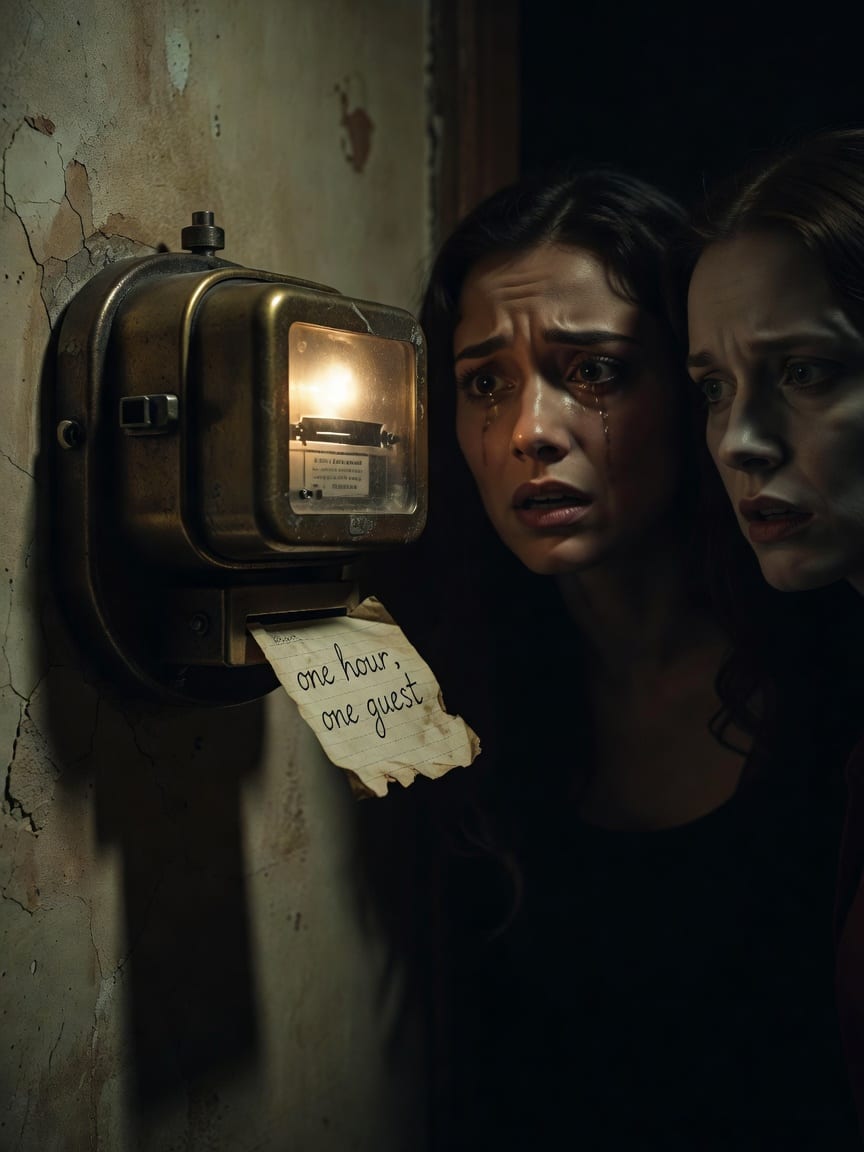
My landlady said don't feed the meter after closing pips. I did. The lights across the terrace dimmed, once. In the morning, a handwritten bill for 'one hour, one guest' was pushed under my door from the man who died in this flat.
I'd just moved to a quiet town, charmed by its old-fashioned electricity meter and my landlady's quirky notes. But when I ignored her warning and fed the meter late one night, a strange bill appeared under my door. It was for 'one hour, one guest,' sent by a man named Edward Barlow—who died seven years ago in my very own flat.
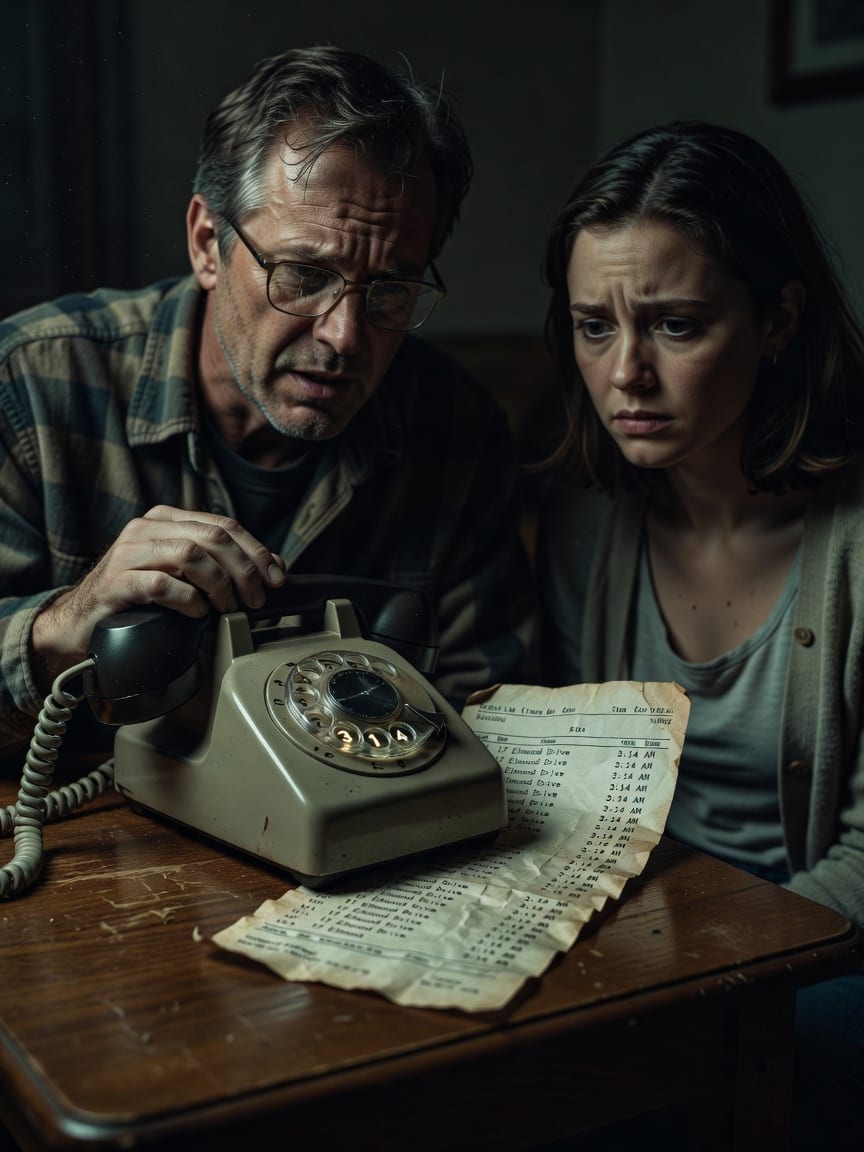
My phone bill itemised forty calls from my number to a house demolished in 1990. Each call at 3:14 AM, lasting eleven minutes. The bill arrived postmarked from a flattened building.
I expected the usual mobile bill, but my landline statement listed forty calls from my number to '17 Elmwood Drive.' That address was for a house torn down in 1990, a vacant lot I remembered from childhood. The phone company insisted the calls were legitimate, leaving me profoundly unsettled by the impossible charges.
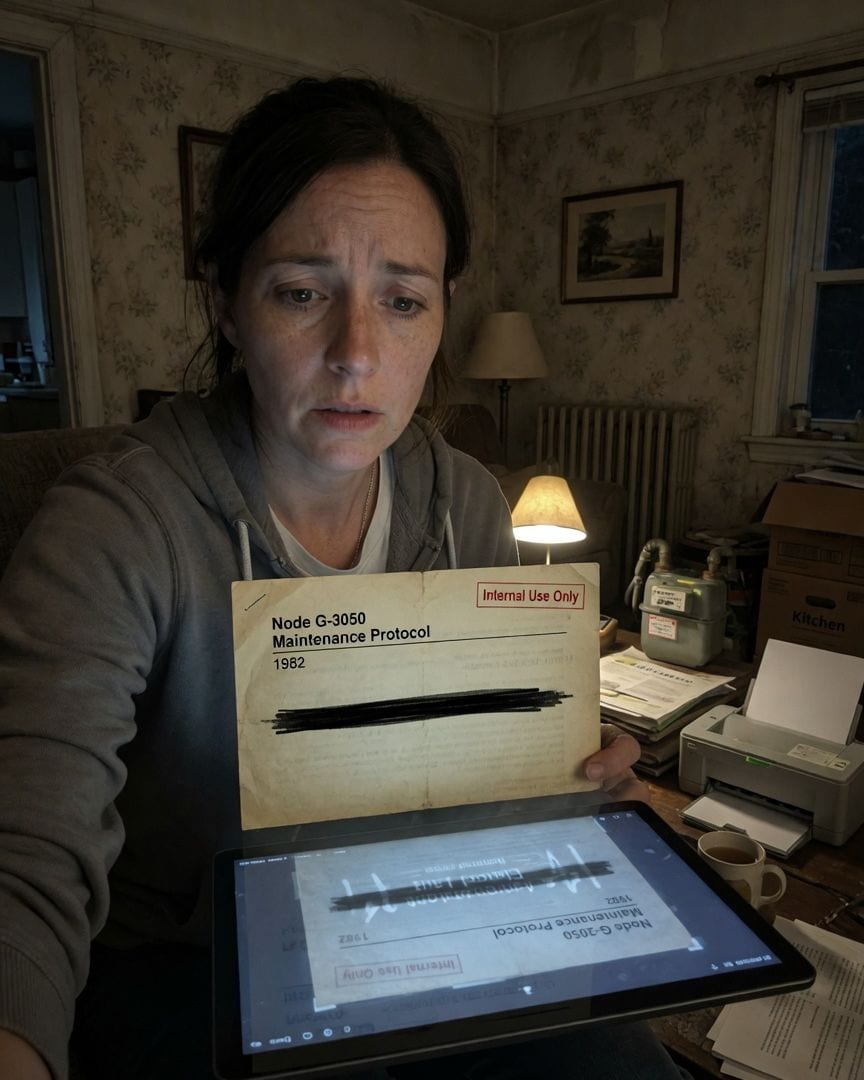
A different tenant every decade since 1949, each one gone — yet our gas meter's final reading comes back identical every time, though the house sat empty in between.
My new house at 14 Elmwood Lane was meant to be a fresh start, a normal home. But the gas bill was wrong. It showed my account, G-3050, active since 1949, with a meter reading of 3050 that had never changed, even when the house stood empty for decades.
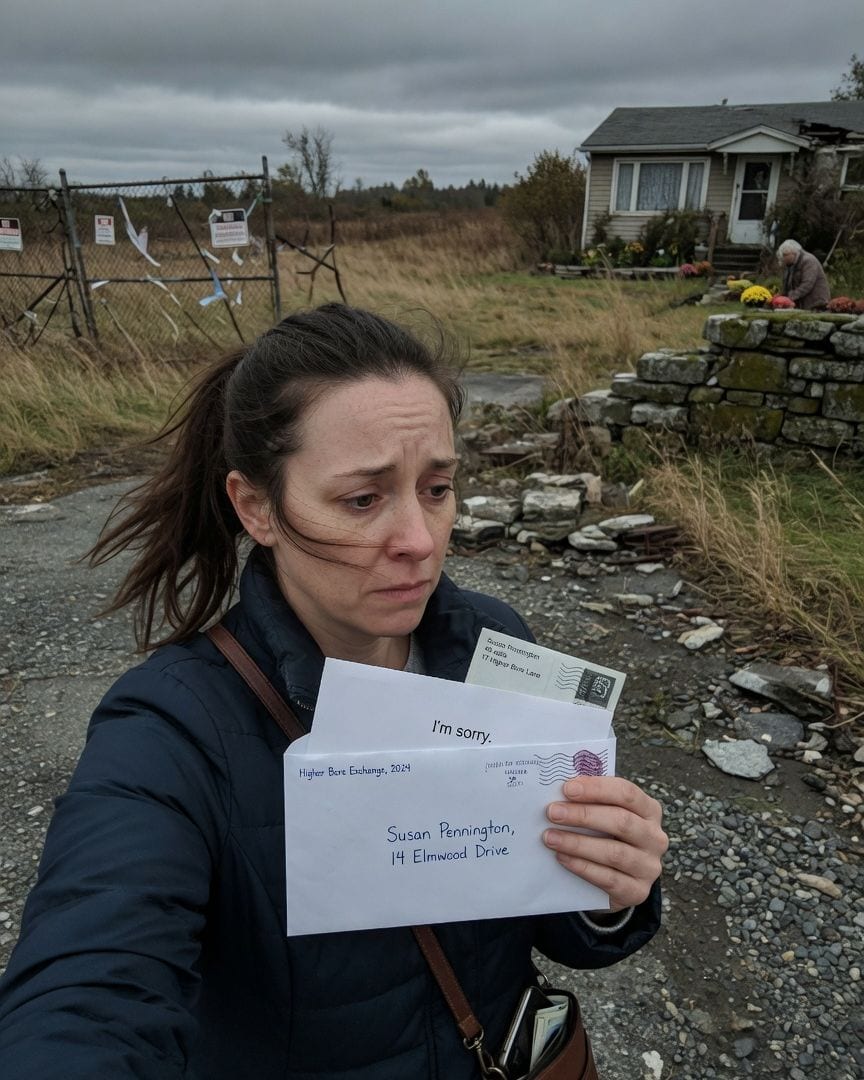
My phone bill listed forty calls made at 3:14 AM to a house demolished in 1990. The paper bill came from a flattened building. My name is on it.
I stared at my phone bill, my morning coffee forgotten. It detailed forty calls, each at 3:14 AM, to an address I knew was a vacant lot where a house had stood decades ago. But the real dread began when I saw the bill's return address: a telephone exchange flattened years before.
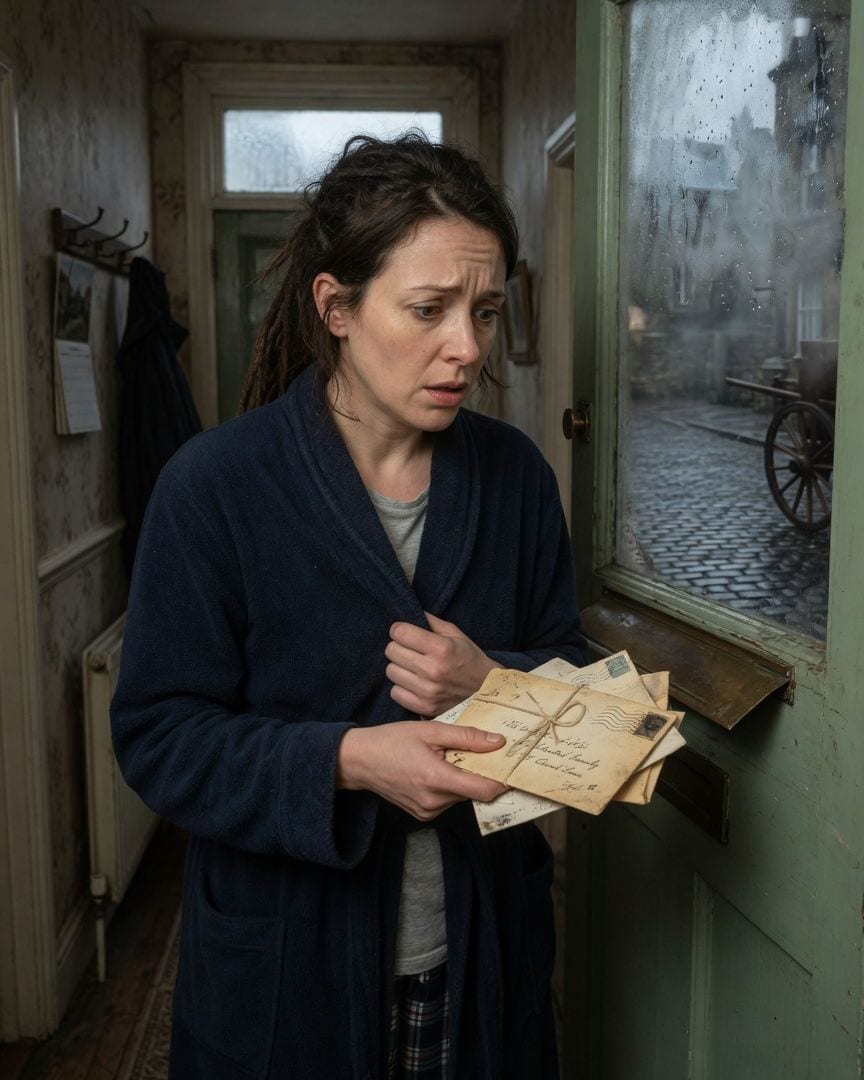
Seventy years ago, a hidden journal recorded my door opening to the wrong street and receiving Lockwood post.
I'd only recently moved into my inherited house, a quiet place on the edge of town. One grey morning, a distinct clatter from the front door's post flap caught my attention. Reaching down, I expected my gravel path, but instead, the flap showed a dark, cobbled street that wasn't mine. A bundle of warm, old letters, addressed to 'The Lockwood Family,' slid through, before the vision flickered and was gone.
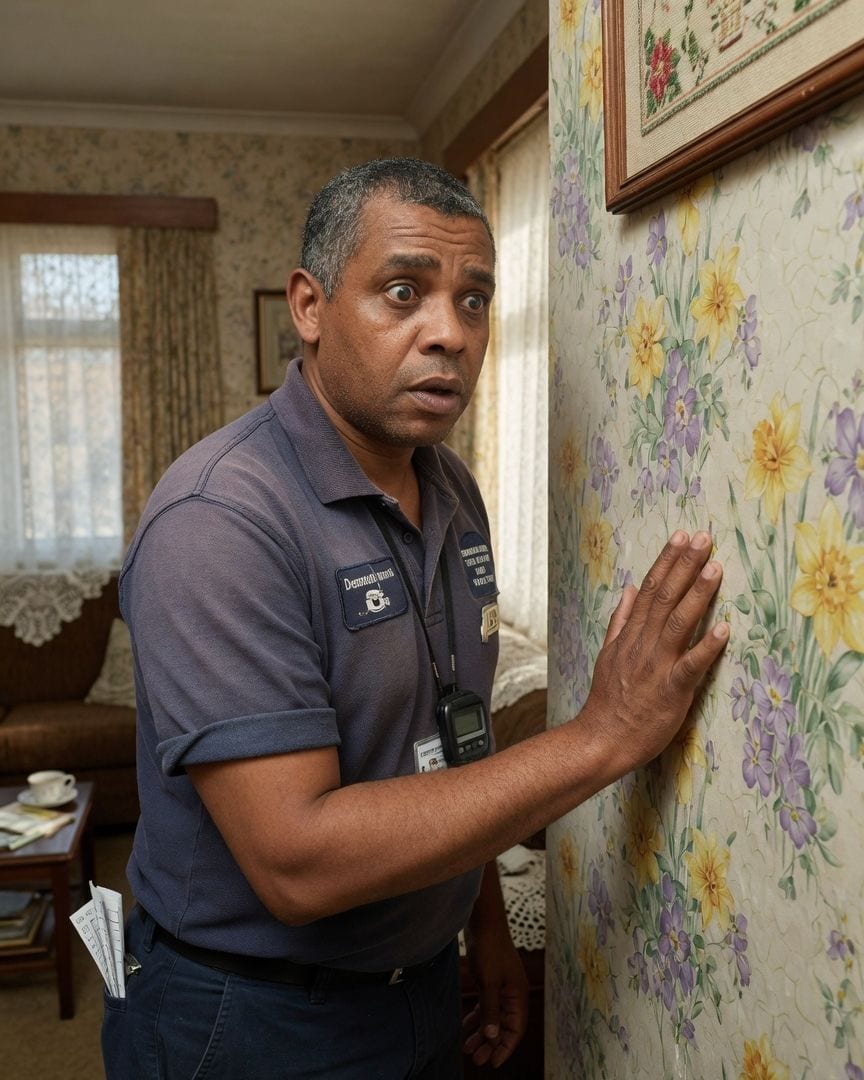
I read the water meters on this street, and this month number 30 grew a second one in pavement that was solid last month — its pipe runs back under a front door I cannot find.
I'm Desmond Drummond, a city water meter reader, used to the predictable rhythm of my fifteen-year route. But this month, Mrs. Crane's house on Elm Street showed a second meter reading. It led to a new meter pointed at a blank brick wall, and later, to a hidden door behind her living room wallpaper where no door should exist.