My uncle always smoked left-handed. He went missing, came back smoking with his right — and when I said so, he held out the pack and asked me to show him how he used to do it.
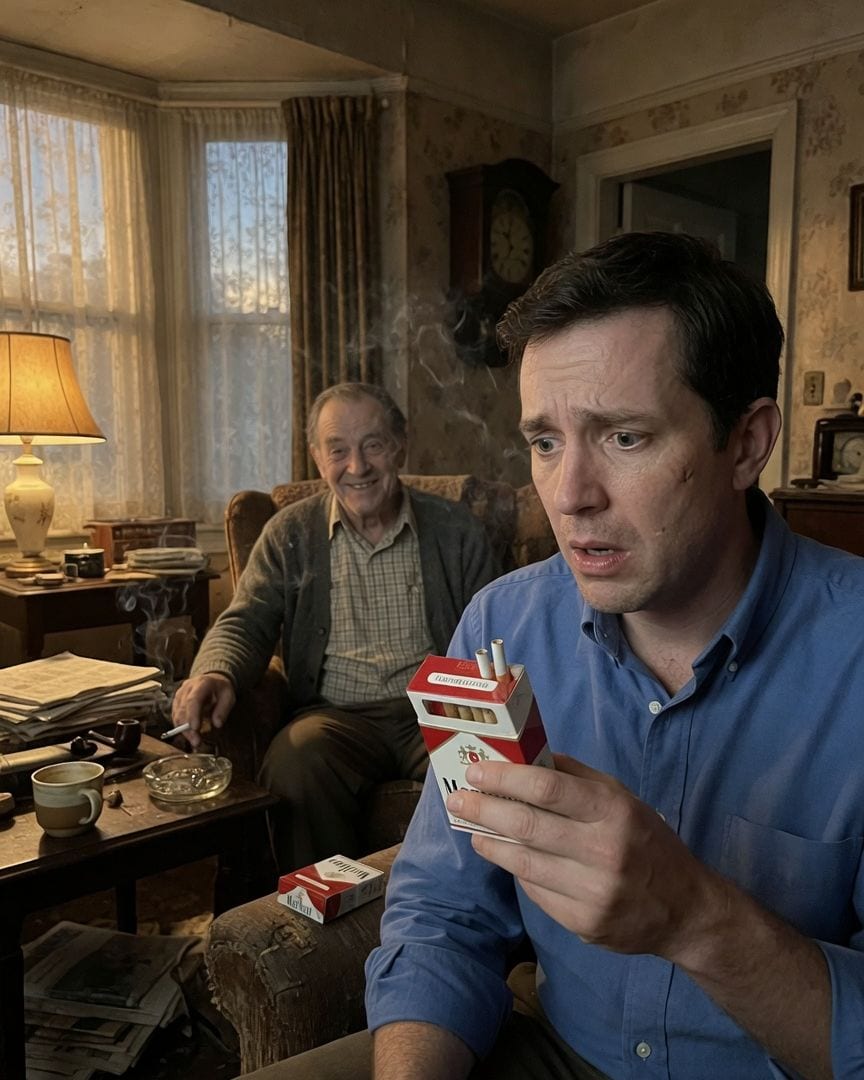
Frank Whitmore has always been a fixture. Sixty-five years old, but he carried his age lightly, especially when he settled into his armchair by the bay window.
That armchair, worn thin in places, smelled of him: a mix of pipe tobacco from his younger days and, for the last fifty years, Marlboro Reds. Three weeks ago, he vanished for two days. Just… gone. No note, no explanation.
We searched, of course. Olivia, my wife, helped organize the neighbors. The police were called. Then, just as suddenly, he was back. Thinner, a bit quieter, but otherwise fine, he said. Just needed some time to himself. A walkabout.
He always was a bit of an old eccentric.
But he’s not quite fine. Not in the way you mean when you’re just a little tired. Tonight, he’s in his usual spot, the evening light catching the dust motes in the air.
He’s telling a story about a fisherman he met on his 'walkabout,' his voice calm, familiar. And he's smoking. He’s holding the cigarette pinched between the index and middle finger of his right hand.
He takes a drag, then flicks the ash, a smooth, practiced motion, to his left. He’s always smoked left-handed. Always. For as long as I’ve known him, for as long as anyone in the family can remember.
He’d hold it in his left, flick the ash with a precise leftward snap. His left thumb and forefinger used to be stained yellow, a permanent nicotine tattoo. Now, his right hand bears the mark.
'Uncle Frank,' I said, trying to keep my voice light, 'you've switched hands.'
He paused, the cigarette burning steadily, a thin curl of smoke rising. He looked at his hand, then at me. A smile, slow and wide, spread across his face.
It was Frank’s smile, but somehow, it didn’t quite reach his eyes. His eyes remained still, almost… observing. 'Did I, Theodore?' he asked, a faint chuckle rumbling in his chest. He held out the pack of Marlboro Reds.
'Show me, then. Show me how I used to do it.'
The room felt suddenly heavy. The familiar scent of stale tobacco, the worn fabric of the armchair, the ticking of the grandfather clock in the hall – all were exactly as they always were.
But the cigarette, burning in his right hand, that single, impossible inversion, felt like a stone in my gut. I tried to rationalize it. Stress, maybe. A new habit picked up on his disappearance.
But the certainty that it was deeply, fundamentally wrong looped in my mind, a cold, persistent current. The room seemed to hold its breath around him, waiting for me to respond. I just stared at the pack.
I couldn’t shake the image of Frank’s right hand. That night, I found myself replaying the moment, that hollow laugh, the strange invitation. The more I thought about it, the more other small things surfaced.
Frank, who always took his coffee black, now absent-mindedly added cream. Not just a splash, but a generous swirl, making it milky brown.
He hummed now, a soft, low tune I’d never heard him sing before, a minor key melody that seemed to hang in the air, oddly tuneless.
I mentioned the coffee to Olivia, my wife, over breakfast. 'He’s been through a lot, Theo,' she said, stirring her own coffee, 'people change after trauma. Maybe he just likes cream now.'
She dismissed it as post-trauma quirks, a natural response to whatever he’d experienced. But her calm dismissal only amplified my unease. This wasn't a "liking cream now" kind of change. It was a fundamental reset.
It was like he’d forgotten who he was, and was trying to learn again, imperfectly.
Driven by a gnawing unease that Olivia couldn't see, I began to quietly search for anything that might explain Frank’s brief disappearance, or his return.
The Whitmore ancestral home, where Frank still lived, was full of inherited clutter, generations of it.
My late grandfather, George Kingsley – Frank’s father-in-law – had been famously eccentric, a meticulous note-taker who kept detailed records of everything from the local bird migrations to the family’s summer vacation expenses.
I remembered him mentioning a locked desk in the study, filled with old papers, a desk he never let anyone touch.
I found it in the study, shoved into a corner behind a stack of dusty tax ledgers. It was an old mahogany roll-top, its brass lock tarnished, long ignored.
I tried a few old keys I remembered George keeping, but none fit. Then I remembered something else: Genevieve, my grandmother, George’s wife, often kept small, precious things in an old sewing box in her sitting room.
Things she’d inherited, or that had sentimental value. I went to her house, on the pretext of checking on her – she was 88 and living alone, though still sharp as a tack.
While she was distracted with her afternoon tea, I quietly opened the heavy, velvet-lined box. Beneath spools of thread and tangled lace, nestled amongst mother-of-pearl buttons, I found it. A small, tarnished silver key, intricately carved. It looked ancient.
It felt impossibly light in my palm.
Back at the Whitmore house, the key slid into the lock of the roll-top desk with a soft click. The mechanism groaned as I turned it.
Inside, it was exactly as I remembered George describing: neatly organized compartments, bundles of letters tied with string, and in the very center, a thick, leather-bound journal. Its pages were filled with George’s neat, slightly spidery handwriting.
I took the journal home. The air in my own study was cool, still, the only sound the rustle of turning pages. The journal was heavy in my hands, its leather cover smooth beneath my thumb.
I flipped through pages filled with observations of family members, strange symbols, diagrams of constellations, and meticulous, dated entries. He had a habit of documenting everything, even his own dreams. Then I found it.
A recurring phrase, circled in red ink: 'the turning.'
My heart began to pound, a slow, heavy drum against my ribs. I found a list, titled 'Tells of the Changed,' detailing subtle behavioral inversions.
George had listed things like 'Theodora’s aversion to lavender after a lifetime of loving it,' and 'Uncle Robert’s sudden insistence on sugar in his tea, despite a diagnosed intolerance.'
My gaze fell to an entry from decades ago, describing my great-aunt Penelope, known for her love of bone-dry sherries, suddenly preferring sweet wines. This wasn't just old eccentricities. This was a pattern.
A cold, spreading chill had nothing to do with the draft from the window. My eyes dropped to the bottom of the page, to the very last entry, written in a hurried, almost panicked hand, dated years before Frank’s disappearance.
It read: 'The next exchange... Frank.'
I spent the next few days in a blur, hunched over George’s journal. Olivia kept asking if I was alright, if I was sleeping. I'd mumble something about a big project at work. The journal became my world.
I cross-referenced names and dates with old family photos, faded sepia portraits, and even obituaries. A chilling pattern emerged. George had documented it meticulously.
Several family members, going back generations, had experienced similar disappearances, sometimes for days, sometimes a week or two. And each had returned with a single, inexplicable 'Habit Reversed.'
There was my cousin Philip, who, after going missing for five days when he was 20, returned to become intensely agoraphobic, abandoning his lifelong passion for rock climbing. George’s entry noted: 'Philip, returned. New aversion to heights. Climber no more.'
There was my great-uncle Arthur, who for fifty years had called his wife ‘dear heart,’ then, after a brief illness and recovery, started calling her ‘honey’ – a word he’d always hated. George wrote: 'Arthur, recovered. Pet name changed.
Affection, but not his own.'
No one else in the family seemed to remember the original habits, or if they did, they brushed it off.
'Philip just grew out of climbing, it happens,' Olivia had said when I cautiously brought him up, pretending it was a passing thought. 'Arthur always had funny nicknames,' she’d added, a shrug. But George’s journal didn’t shrug. It recorded.
It detailed. It pointed. The dread wasn't a sudden fright, but a slow, creeping frost that settled deeper with each new entry.
The journal didn't just list names and tells. It spoke of 'the nexus,' and a specific location: 'the old oak, at the property line.' I knew exactly which tree he meant.
The ancient, gnarled oak tree stood at the very edge of the Whitmore land, its immense branches spreading like ancient arms.
It had been a landmark from my childhood, a place where Frank, the original Frank, used to sit and smoke his left-handed cigarettes, leaning against its rough bark, staring out at the fields. He called it his 'thinking spot.'
My quiet investigation wasn’t as quiet as I’d hoped. One evening, deep in the study, the journal spread open on the desk, I heard a creak.
I looked up to find Frank standing in the doorway, a faint, unreadable smile on his face. He was holding a glass of water in his right hand. 'Heard a noise,' he said, his voice flat.
'Everything alright in here, Theodore?' The smile didn’t move. It was fixed, like a mask. I mumbled something about looking for an old book, feeling a prickle of cold sweat on my neck.
He just nodded slowly, that smile still on his face, before turning and walking away. The air in the room felt thinner after he left.
A few days later, I was at the town library, trying to find old census records, anything that might corroborate the disappearances George had mentioned.
I was in a dusty alcove, hunched over a microfiche reader, when I caught a glimpse of movement. My grandmother, Genevieve Kingsley, was sitting a few tables away, ostensibly reading a newspaper.
She rarely left her house, certainly not to come to the library. Her eyes, sharp even at 88, met mine across the room. She offered a small, almost imperceptible nod before returning to her paper.
It wasn't a threat, not overtly, but it was a clear signal. She knew what I was doing. The dread deepened, turning from an intellectual puzzle into something far more personal, far more immediate.
That night, back in my study, the journal hidden, a small, folded piece of paper was slipped under my door. It was a single sentence, written in neat, old-fashioned script, clearly not Frank’s erratic hand.
It read: 'Some truths are best left undisturbed, Theodore. For the family's sake.' My hands trembled as I read it. The note, coupled with Genevieve’s presence at the library, left no doubt. She was involved. She knew.
The note confirmed it. Genevieve knew everything. The next morning, I drove straight to her house. The old Victorian stood silent, surrounded by ancient elms. I found her in the parlor, sitting by the window, knitting a pale blue shawl.
The needles clicked softly, a rhythmic sound that did little to calm my racing heart.
I laid the journal on the antique coffee table between us, open to the page detailing the 'Tells of the Changed.' My hand shook slightly as I pointed to 'The next exchange... Frank.'
'Grandma,' I began, my voice trembling despite my best efforts to keep it steady. 'What is 'the turning'?'
Genevieve set down her knitting needles. The rhythmic clicking stopped. She looked at me, her gaze calm, steady, entirely devoid of surprise. Her eyes held an ancient patience, like she’d been waiting for this conversation for years. For decades.
She didn't deny anything. She didn’t even hesitate.
'It’s what keeps us safe, Theodore,' she said softly, her voice like dry leaves. She reached out, her fingers tracing the faded leather of the journal, not looking at me.
'The land, this land, the old oak… it has always demanded an 'exchange.' A claiming of one of our own.' Her eyes, now, were fixed on something beyond the window, out in the distance.
'And in return, it protects the family. It always has.'
She picked up her knitting again, her fingers moving with quiet precision. 'The 'returned' are not Frank, not truly, not in the way you remember him. But they serve their purpose, Theodore. They keep the cycle unbroken.
They ensure the lineage endures.' She recounted stories, not from the journal, but from her own memory, weaving in ancestors I vaguely remembered from old photographs.
My great-aunt Penelope, her sudden preference for sweet wines, not an anomaly, but a 'tell.' Uncle Arthur, his changed pet name, a gentle sign. They were all part of it. All of them.
'Your grandfather,' she added, gesturing to the journal with a slight nod, 'he tried to fight it, to document it, to understand its nature. He wrote everything down, every subtle shift, every returned habit.
But even he, eventually, understood its necessity. He left that journal for the one who would eventually have to understand. For you, Theodore.'
A cold, sickening clarity washed over me as Genevieve spoke. The wrongness of Frank’s right hand, the cryptic journal, the generational pattern of disappearances and subtle changes – it all snapped into place, a monstrous, coherent shape.
It wasn't random, it wasn't a quirk of memory. It was deliberate. It was inherited.
'But Frank… he’s not really Frank, is he?' I whispered, the words tasting like ash in my mouth.
Genevieve shook her head gently, a faint, sad smile playing on her lips. 'Not in the way you mean. Not the one you knew. But he serves the family, as they all have. He plays his part.'
She then looked at me, her eyes piercing, entirely devoid of malice, yet holding a depth that chilled me to the bone. 'And you, Theodore, have been chosen to understand this. To carry it forward.
To be the one who knows.' She reached out, her aged hand surprisingly strong, and gently, firmly, took mine. Her grip was cold. 'It’s your turn to accept, dear. You were always meant to be next.'
A faint, knowing smile played on her lips, and a cold dread gripped me, not just for Frank, but for myself. My blood felt like ice in my veins.
Genevieve’s grip on my hand tightened, holding me in place. 'The entity isn't evil, Theodore,' she explained, her voice a calm murmur, 'it's just… different. It desires connection, a mingling.
The 'exchanges' are its way of integrating with our line, making us part of its continuity.' She leaned forward slightly, her eyes holding mine. 'It’s a slow process, a deepening of the bond over generations.
It changes us, yes, but it ensures our survival on this land.'
She went on to reveal the full truth of the oak. It wasn't just a landmark, she said, but the physical manifestation of the entity's presence, the conduit through which the 'claiming' and 'returning' occur.
She described how, after each disappearance, after the original had been ‘taken,’ she would go to the tree at dusk. She would perform a small, ancient ritual, a few whispered words, a simple offering. And then she would wait.
And eventually, out from the shadows beneath the gnarled branches, the ‘return’ would emerge – a person who looked, sounded, and mostly acted like the lost one, but with that single, identifying 'Habit Reversed.'
'The journal,' she continued, gesturing to George’s book, 'was your grandfather's attempt to reconcile with the truth, to make sense of what he saw. He saw the necessity, the order in it.
His final act was to hide it, for the next 'witness' – for you, Theodore.' She paused, her smile growing wider, though no warmer. 'You are not merely an observer, Theodore.
You are the one who will continue the lineage, the one who truly understands now. Your awareness is a part of its plan for you. The understanding you sought, the questions you asked… they were all part of your integration.'
I pulled my hand away, horrified, the coldness of her touch lingering on my skin. 'No,' I breathed, my voice barely a whisper. 'I won't be part of this. I won't let it happen to me, or to Olivia.'
I felt a surge of adrenaline, a desperate need to break free, to scream.
Genevieve merely smiled sadly, her eyes still locked on mine. 'It has already begun, Theodore. Your awareness, your understanding, is the first step. You are already entwined.'
Just then, the parlor door creaked open. Frank entered, a cup of coffee steaming in his right hand, a milky brown. He stopped, his gaze flicking between Genevieve and me, that faint, unreadable smile on his face. 'Everything alright?'
he asked, his voice calm, but his eyes held a depth I’d never seen before in the man I called uncle. A quiet, ancient knowing.
The original Frank had been kind, a bit gruff, but his eyes had always held warmth. These eyes were like still, dark pools.
A surge of pure panic flooded me. I stood, determined to leave, to warn Olivia, to break the cycle, whatever the cost. But as I turned towards the door, Frank smoothly stepped in front of me, blocking my path.
He didn’t touch me, but his presence was a wall.
'It's a family matter, Theodore,' Frank said, his voice now devoid of any of the original Frank's warmth, 'and the family stays together.' He raised the coffee cup to his lips, taking a slow sip.
Genevieve nodded, rising from her armchair, her movements slow, deliberate. 'Welcome, Theodore,' she murmured.
I felt a cold certainty spread through me, numbing my limbs. There was no escape.
I was trapped, not by physical force, but by a pattern that had always been, a cycle as old as the oak tree outside, and now, finally, it included me. My breath hitched.
The room, the house, the land itself, felt like they were closing in around me, a vast, quiet trap.
Theodore Muller did not return to his own home that night. Olivia tried calling, then drove to the Whitmore house, her worry a tight knot in her chest. She found only Frank and Genevieve in the parlor, calm and composed.
They explained Theodore had decided to stay for a while, to 'reconnect with family history.' Olivia, sensing something profoundly wrong but unable to articulate it, eventually returned home alone. Life at the Whitmore house continued, serene and unchanging.
Frank still smoked right-handed, and Genevieve still knitted by the window. The old oak tree on the property line stood silent, its gnarled branches reaching to the sky.
Weeks later, Olivia received a postcard from the Whitmore house, a generic landscape photo of a tranquil forest. The message, in what looked like Theodore's familiar handwriting, read: 'All is well. I'm learning so much about our family.
The past is truly alive here.' It ended with a small, neat signature: 'Theodore Muller.' Olivia stared at the postcard, then at the signature. Theodore had always signed his full name with a flourish, a distinctive loop on the 'M'.
This one was perfectly straight, almost clinical. Her phone buzzed. It was Frank, calling to invite her over for dinner. 'Theodore would love to see you,' he said. Olivia hesitated, then replied, 'Is that so?'
and heard a faint, wrong little smile in his voice.
If this one got to you
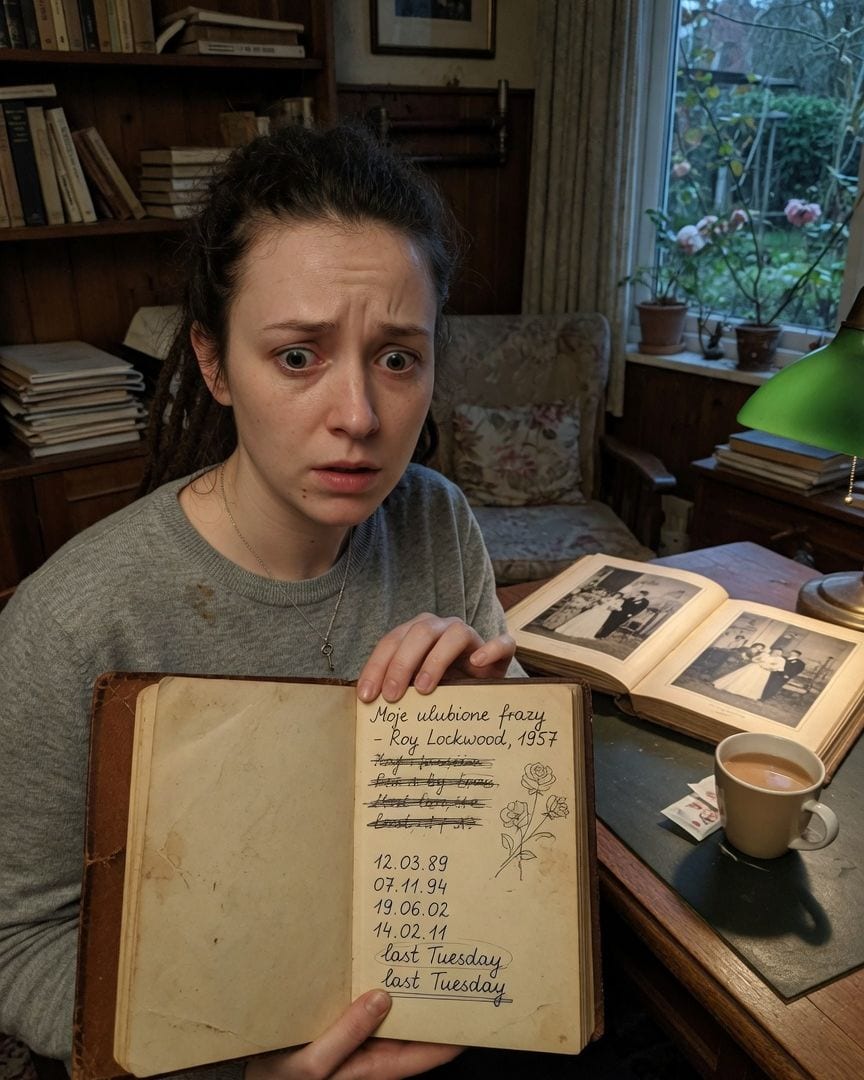
My grandfather counts 'one, two, three' in English now. He just came back. He always counted in Polish, and denies ever speaking it.
My grandfather, Roy Lockwood, returned last Tuesday after vanishing for a week, bringing immense relief. He seemed thinner, a bit disoriented, but otherwise, he was just Grandpa. Then I heard him count 'one, two, three' in clear English before lifting potting soil, instead of his lifelong Polish habit.
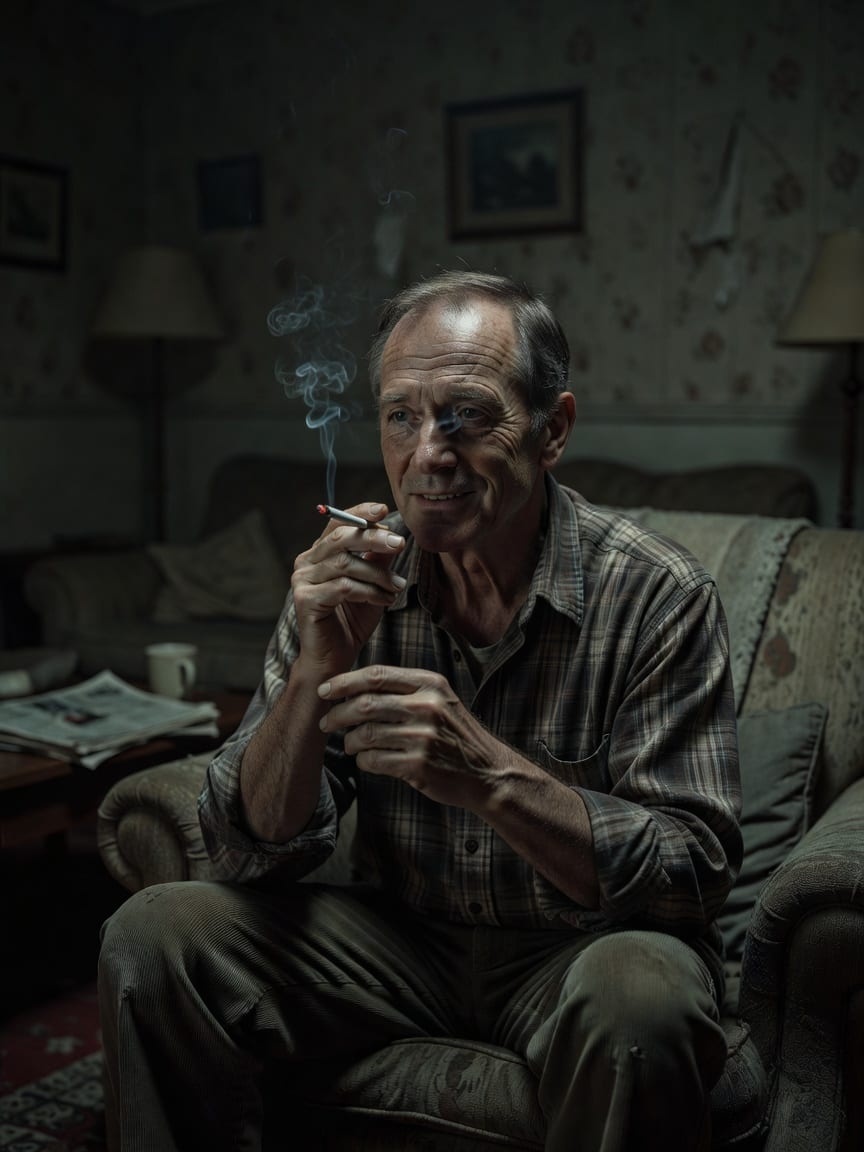
My uncle smokes right-handed. He'd only ever smoked left, and he just laughed when I asked.
My uncle returned after three weeks missing, thin but otherwise well, and the relief was overwhelming. But later, on the porch, he lit a cigarette and pinched it in his right hand, flicking ash to the right. He'd always smoked with his left, a habit confirmed by decades of family photos and videos.
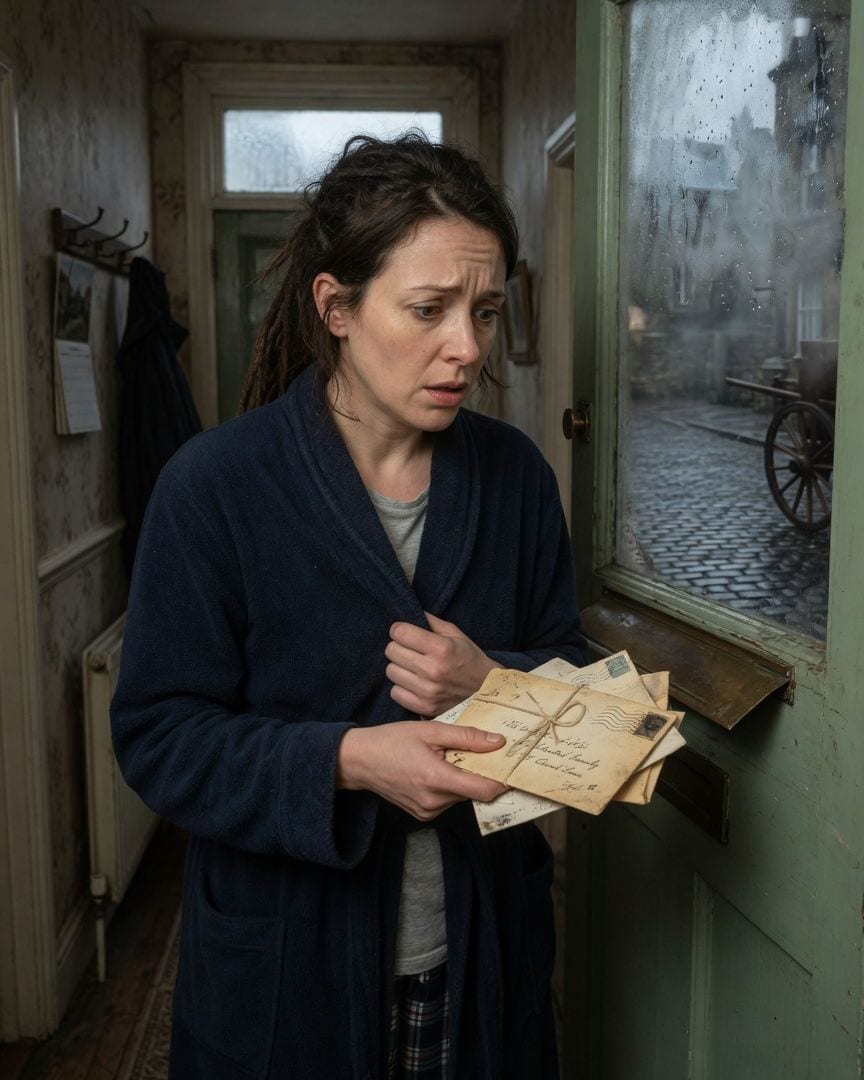
Seventy years ago, a hidden journal recorded my door opening to the wrong street and receiving Lockwood post.
I'd only recently moved into my inherited house, a quiet place on the edge of town. One grey morning, a distinct clatter from the front door's post flap caught my attention. Reaching down, I expected my gravel path, but instead, the flap showed a dark, cobbled street that wasn't mine. A bundle of warm, old letters, addressed to 'The Lockwood Family,' slid through, before the vision flickered and was gone.
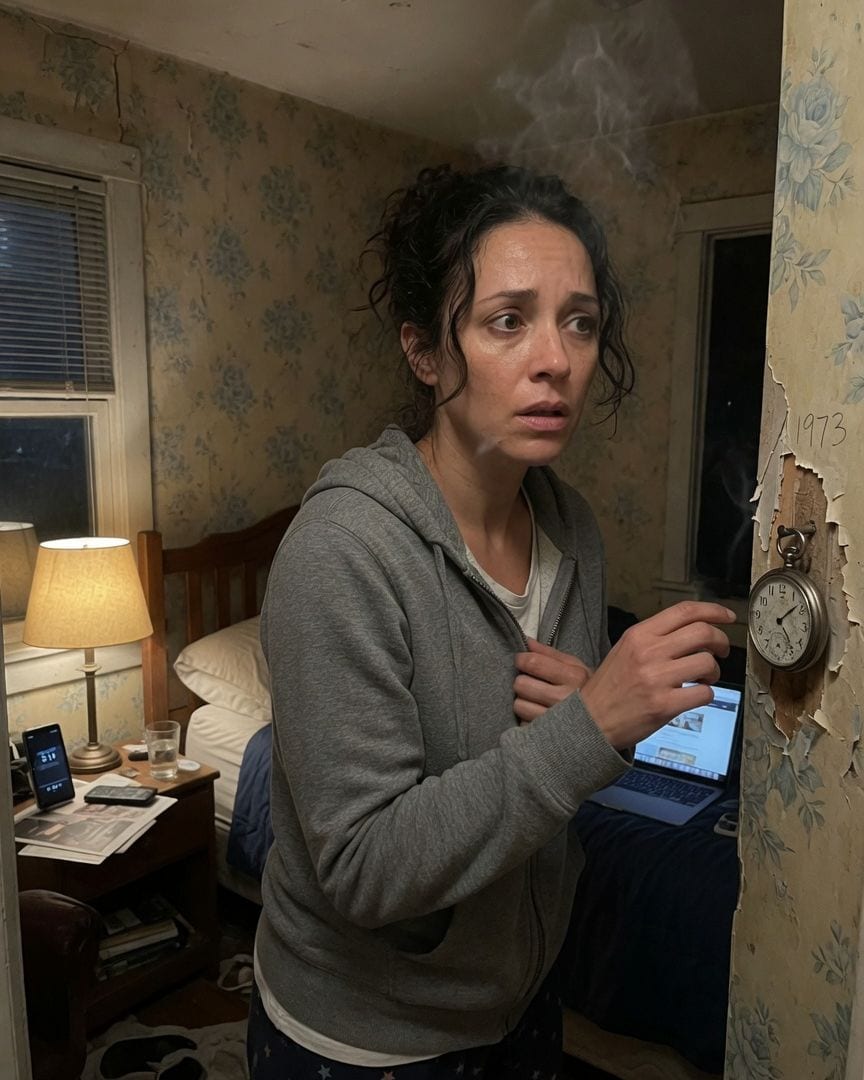
My pocket watch ticks at 3:14 every morning, warm in my hand. I’ve thrown it away; it’s back on its nail by dawn.
I’m a rational person, but my new old house came with a pocket watch I couldn't explain. I meant to discard the broken relic, yet a few mornings later, I woke to its faint ticking at 3:14 AM. It was warm, and no matter where I put it, the watch kept reappearing on its nail.
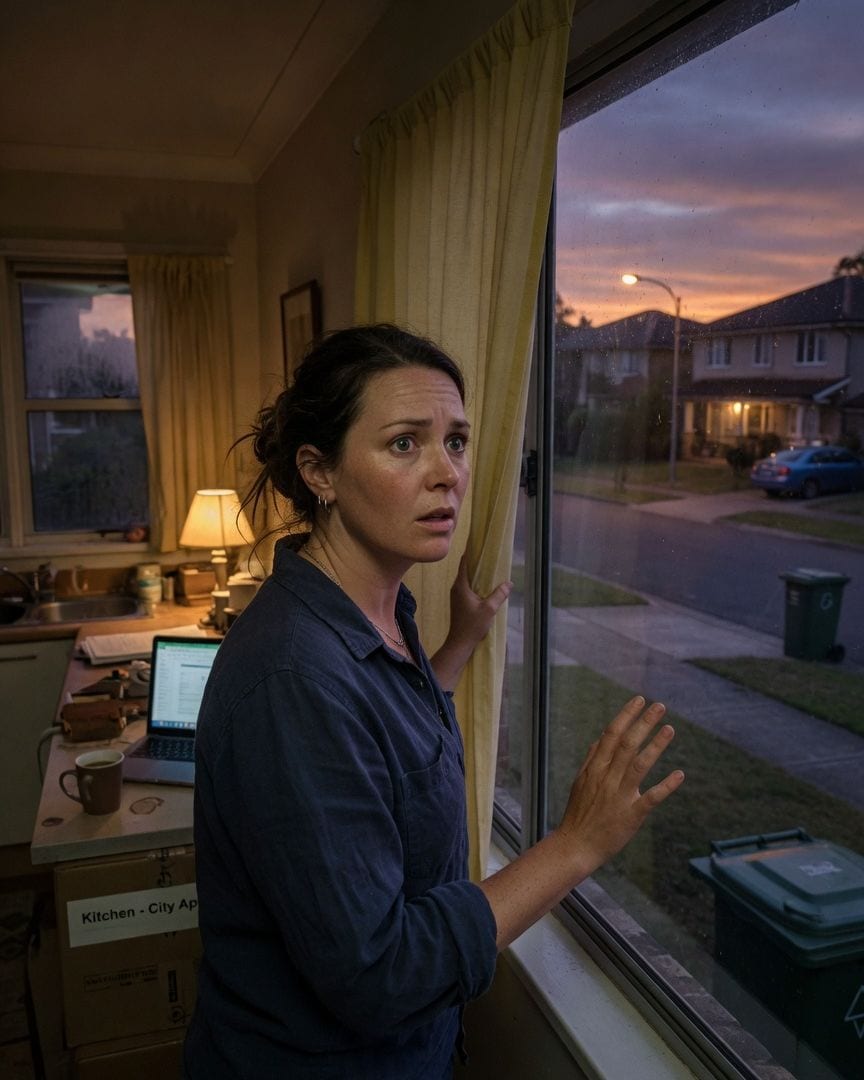
My bin was turned the wrong way Tuesday. The man three doors down hasn't been seen since, though his curtains still open.
New to Oakhaven, I dismissed the local warnings as charming quirks. But after I put my bin out first, my neighbor Joel Whitmore vanished, leaving only a cryptic 'My turn' note. The same strange symbol from his note was chalked on my bin, facing the street.
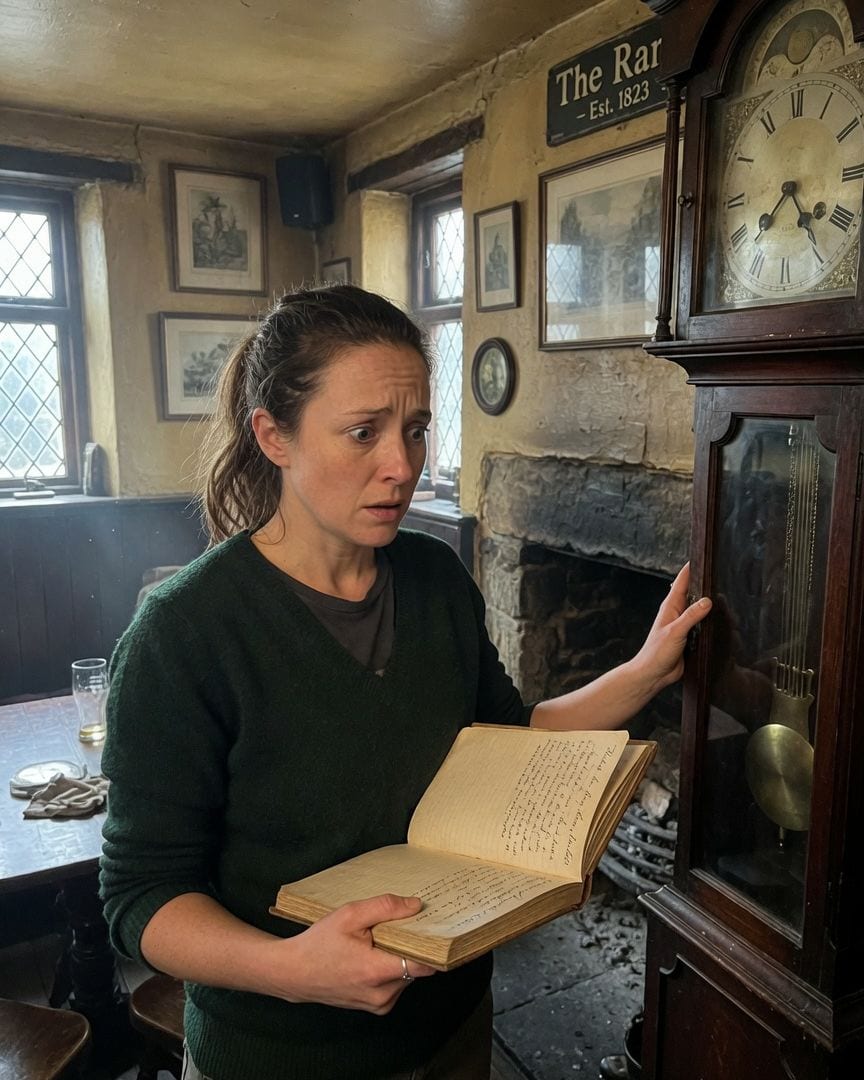
My pub window holds a vanished landlord's face in an old photo, staring out, weeks after he supposedly left the village.
As the new landlord of The Ram, I was getting used to the pub's two-century-old clock when I accidentally stopped its pendulum. The next morning, checking the cellar book, I found an entry dated yesterday. In an archaic, looping script, it simply read: 'Thank you for winding it before the house was empty again.' I was the only person in the locked pub all night.