My pocket watch ticks at 3:14 every morning, warm in my hand. I’ve thrown it away; it’s back on its nail by dawn.
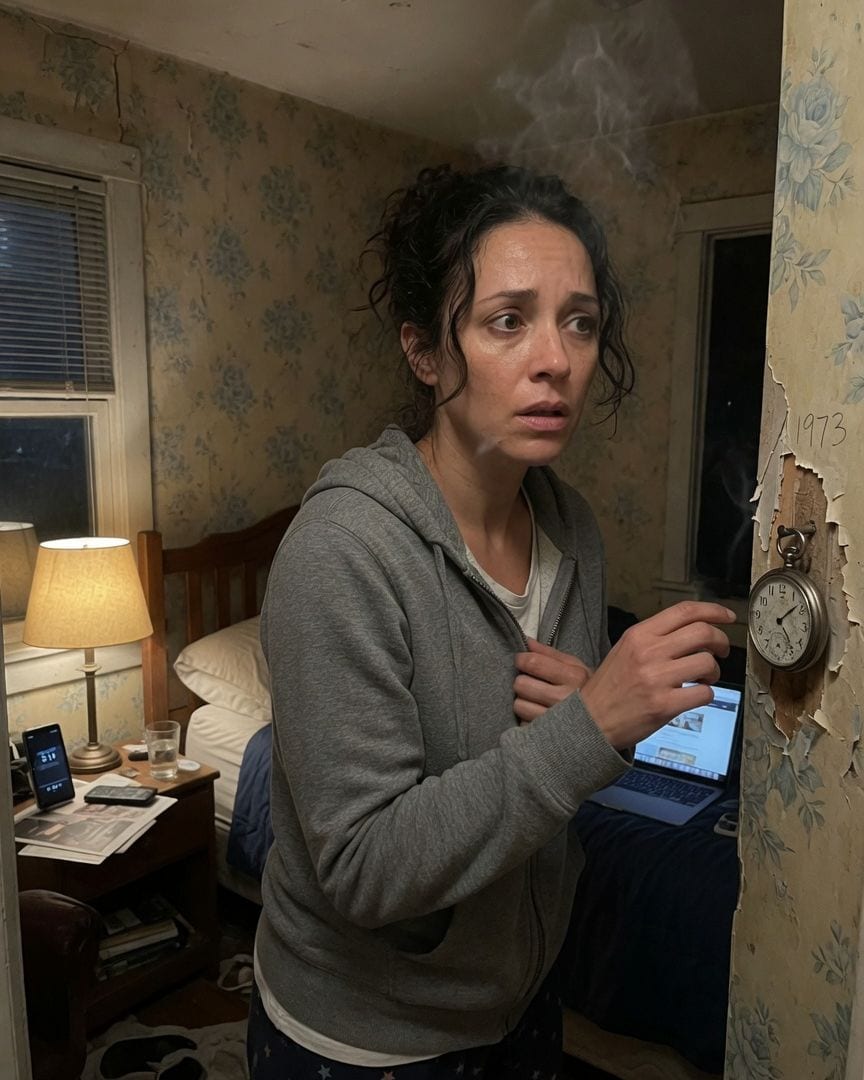
It started small, a detail I kept trying to explain away. I’m a rational person, I always have been. Facts, data, logic. That’s how my world works. Or how it used to.
When I bought this old place, it was a steal. Built late 1800s, solid bones, a bit rundown, but nothing a determined homeowner couldn't fix. The day I moved in, there was this pocket watch.
Just hanging on a small, rusted nail by my bedroom doorframe. No chain, just the watch itself, its glass crazed with tiny fractures like a spiderweb. It wasn’t running. Obviously. An old, probably broken, relic left behind.
I meant to take it down, throw it out with the other junk the previous owners hadn’t bothered with, but somehow I never did. It just... stayed there.
Then, a few mornings later, I woke up to a faint, steady tick-tick-tick. The kind of sound you only hear in absolute silence, right on the edge of your hearing.
I reached for my phone on the nightstand – 3:14 AM. And the watch, still on its nail, was ticking. Warm. Not just room temperature, but actually warm, like it had been held. I picked it up.
The hands were fixed solid at 3:14. It ticked for maybe ten minutes, a soft, almost intimate sound, then it stopped. Cool to the touch again. I tried to wind it. The crown wouldn’t budge.
I decided it was a faulty mechanism, maybe the cold nights making it expand and contract in a weird way, or some residual charge from who-knows-what.
The next day, I took it off the nail, walked it out to the kitchen, and dropped it into the small drawer where I keep spare batteries and junk.
Later that week, I found it back on its nail, ticking at 3:14 AM. Warm.
This became a thing. I put it in a box. It came back. I took it outside, all the way to the recycling bin at the curb, thinking maybe some part of the house was just… drawing it.
I watched the garbage truck take the bin the next morning. It was gone. I felt a weird mix of relief and something colder, something I couldn’t name. That night, I made sure all the doors were locked.
I went to bed, trying to dismiss the whole thing as a strange quirk of an old house.
At 3:14 AM, the faint ticking started. It was back on its nail, warm, mocking. The hands still frozen at 3:14. I stared at it, my heart doing a strange little flutter in my chest.
I took it down, my fingers tracing the faint, almost worn-away inscription on the back. It was too indistinct to read, just a swirl of what looked like initials, but definitely not mine. Definitely not anything I recognized.
I decided to stop trying to get rid of it. If it wanted to stay, fine. I’d ignore it. But I couldn’t ignore the nail.
I started picking at the faded floral wallpaper around it, hoping to find some clue about why it was there, what had hung there before. Underneath, on the plaster, barely visible, was a single pencil mark. A date: '1973'.
1973. That was a long time ago. I spent a few evenings on my laptop, digging through property records. The house had changed hands a few times since '73. But the name that stuck out was Nathaniel Barlow.
He'd owned it then. The records showed he'd 'disappeared' that year. Nothing more. Just… vanished.
I kept thinking about that date, about the watch, about the nail. And I started noticing other things about the house, too. The living room, for instance. It had two doorways.
One into the hall, one into what I used as a small study. The study doorway was old, solid wood, but it always seemed slightly off-kilter, like a frame within a frame. I’d chalked it up to the house settling.
One evening, I was in the living room, reading. The air suddenly dropped to a sharp, unexpected chill, making my skin prickle. And then, there it was: a faint, but unmistakable, scent. Pipe tobacco. It wasn’t my husband’s.
He smoked cigars, not a pipe. And he wasn’t even home. I glanced up, drawn to the study doorway.
And through it, the living room on the other side wasn’t quite my living room. The wallpaper was a heavy, dark pattern I'd stripped away months ago.
There was a dark armchair, not my cream sofa, and a small, heavy pipe stand on a side table. My breath hitched. A man stood there, his back to me, looking out the front window.
He was tall, dressed in what looked like older clothes, a dark suit jacket. He slowly turned. It wasn't my husband. It wasn't anyone I knew.
He held a pocket watch, identical to mine, its crazed glass reflecting the dim light of the room. He looked directly at me through the doorway, his face etched with a profound, silent despair.
He opened his mouth, shaping words I couldn't hear, his eyes wide, pleading.
I gasped, instinctively reaching out. The man’s eyes, wide and desperate, held mine for a fraction of a second.
Then, with a sudden, violent shudder, the scene through the doorway blurred, shimmers, and snapped back to my familiar, empty living room. The heavy scent of pipe tobacco, however, didn't vanish.
It hung thick and acrid in the air around me, a tangible, sickening proof of what I just witnessed.
I stood, frozen, my hand still outstretched towards the now-ordinary doorway, the chill in the air deepening to an icy dread that had nothing to do with the outside temperature.
I tried to rationalize it. A trick of the light, fatigue, my mind playing games. But the pipe tobacco smell lingered for hours, a physical knot in my stomach. It wasn’t a hallucination. It was real. Too real.
The 1973 date and Nathaniel Barlow's disappearance echoed in my head. I spent the next few days in a blur of frantic research. The local library had a small archive. I found microfiche scans of old newspapers.
Sure enough, a small article from October 1973: "Local Man Vanishes Without a Trace." Nathaniel Barlow, from my address. Unexplained. No body, no note, no leads. Just gone.
The article mentioned he was "a quiet man, a widower, known for his pipe." No mention of a watch.
I needed more. I remembered Oscar Whitfield, my neighbor a few doors down. He’d lived here since before I was born. Seventy-eight, sharp as a tack, and a walking encyclopedia of local gossip and history.
I walked over, armed with my questions, trying to sound casual.
Oscar offered me tea, his eyes crinkling at the corners. I started by asking about the house’s history, then gently steered the conversation to Nathaniel Barlow. "Barlow, aye," Oscar murmured, stirring his tea. "Quiet fellow. Kept to himself.
Always had that pipe going, smoke like a fog around him. And that watch, always checking that watch."
I tried to keep my voice even. "What about the watch, Oscar? Did he have a special one?"
Oscar paused, his spoon clinking against the ceramic. "Oh, just a regular pocket watch. Old-fashioned. But he was particular about it. Never without it." He looked at me, a strange glint in his eye.
"Why all the questions about Barlow, Vivienne? Some places just hold onto things, you know. Old houses, they've got long memories."
I decided to push it. "His pocket watch. It… keeps showing up in my house. At 3:14 AM. Even when I try to get rid of it."
Oscar’s calm facade cracked. Just a sliver. His smile faded. He shook his head slowly. "Some things just… stay where they belong, even when they shouldn't. It’s the way things are around here." He leaned forward, his voice dropping.
"My advice, Vivienne, don't go digging too deep into old memories. Some things are best left alone." His gaze was unsettlingly serious.
I dismissed Oscar's warning as local superstition, a quaint old man’s belief. But it clung to me. And the house… the house felt different now. An unease settled over it, a growing weight. I started noticing other sensory echoes.
A faint, unfamiliar melody from an antique radio in the living room – one I hadn’t even plugged in. The distinct aroma of a hearty, cooked meal, like stew or roast, from the kitchen when no one had cooked.
Fleeting shadows in my periphery that moved like the man I’d seen in the doorway.
One afternoon, replacing a loose baseboard in the study, my fingers brushed against something stiff. Tucked behind it, hidden away, was a small, brittle photograph. It was faded, sepia-toned, but unmistakable. Nathaniel Barlow.
He looked exactly as I'd seen him, a weary sadness in his eyes, his pipe in one hand. And on his waistcoat, visible just barely, was the faint line of a watch chain.
My hands trembled as I carefully opened the back casing of the watch still hanging by my bedroom door. It was hollow. And tucked inside, scrawled on a yellowed scrap of paper, was a note.
The handwriting was neat, slightly spidery, and it matched a sample of Barlow's signature I'd found in the archives. It read: 'They know. They watch. Don't let it catch you on the other side. 3:14.'
The 'they' chilled me more than the 'it.' Not just an echo, but an active, silent observer. A constant awareness that made my skin crawl. The house was listening. Watching.
One night, I woke to the faint sound of a distant door clicking shut, from inside the house, when I knew I'd locked everything, secured every latch.
I drove back to Oscar’s the next morning, the note clutched in my hand. He opened the door, a worried frown on his face. I didn’t waste time with pleasantries. I showed him Barlow's note.
His eyes, usually mild, widened in recognition. He took the paper from me, his lips moving as he read.
"The Institute," he whispered. "Yes. They... they sometimes send people around. Asking questions. Quietly, you understand. Never made a fuss. Been interested in this house for decades."
"The Cadence Institute?" I pressed, my voice thin. "What is it? What do they do?"
Oscar just shook his head. "Don't know much, Vivienne. Just that they're interested in… anomalies. Local history, that sort of thing. But it’s never felt quite right, their interest."
His vagueness only fueled my fear. 'They know. They watch.' Driven by Barlow’s chilling warning, I went back to the library. I searched for 'Cadence Institute' in local records, determined to find anything. It was like pulling teeth.
Finally, buried in a microfiche of small-town papers from the 1950s, I found it: a classified ad, barely legible. 'Seeking research associates for historical anomaly studies. Discretion paramount. Inquire: Cadence Institute.'
The address was a post office box in a neighboring town, twenty miles out.
I drove there immediately. It wasn’t a post office anymore, but a non-descript brick building, now a private research library. Inside, a woman in her fifties sat behind a small desk, her dark hair pulled back in a severe bun.
Susan Russo. Polite, but guarded.
I pretended to be a historical researcher, asking about Nathaniel Barlow. Russo was initially unhelpful, claiming privacy concerns. "We're a private archive, Ms. Doyle. Information is restricted."
I pressed, my voice shaking slightly. "He disappeared from 122 Elm Street in 1973. I live there now. I keep finding his pocket watch. It's always at 3:14. And there are… recurrences." I saw her demeanor shift. Subtly.
Her eyes, which had been impassive, sharpened. Less dismissive, more… assessing.
"Recurrences, Ms. Doyle?" Her voice was colder now, almost clinical. "What kind of recurrences?"
I told her about the doorway, about seeing Barlow. About the pipe tobacco. She listened, her face giving nothing away. When I finished, she walked over to a bank of microfiche readers. After a moment, she pulled a file.
It was a police report from 1973, detailing Barlow's disappearance. I could see the name, the address. She scrolled through it.
"The report mentions a neighbor's testimony," Russo said, her voice flat, almost robotic. "Nathaniel Barlow was last seen at 3:14 AM on October 27th, after telling his neighbor he felt 'watched' by the house itself.
He was holding his pocket watch."
My breath caught. The doorway. It wasn't just an echo. It was Barlow's final, desperate moment, replaying, like a broken film strip. And the Cadence Institute. They knew. They’d been aware of this, quietly tracking it, since his vanishing.
Still at the Institute’s library, reeling from the confirmation, I pushed further, my voice barely a whisper. "Barlow's note mentioned 'Site 14.' What is that? Is it… this house?" I watched Susan Russo’s face. It went utterly blank.
Her eyes were like chips of ice.
"I'm afraid I don't know what you're talking about, Ms. Doyle," she said, her voice flat, devoid of any inflection. She turned to replace the microfiche file, her movements stiff.
But as she did, my gaze dropped to a lower shelf. Partially obscured by a stack of bound journals, I saw it. A heavy, leather-bound ledger. Its spine, in elegant, gold-embossed script, read: 'Cadence Institute: Site 14 - Recurrence Log.'
My heart pounded against my ribs. I knew, instantly, what it was. I feigned a sudden coughing fit, covering my mouth, grabbing Russo's attention for a moment. As she turned slightly, concerned, I snatched the ledger from the shelf.
She didn't even notice. I mumbled a quick thanks and practically ran out to my car.
My hands trembled as I fumbled with the clasp, pulling the heavy book open on the passenger seat. The pages were filled with meticulous, elegant script. Dates, names, detailed descriptions of 'anomalous temporal echoes' at my address, 122 Elm Street.
I scanned the entries, my eyes blurring as I recognized the pattern. And then I saw it, again and again:
'Pocket watch observed, 3:14 AM.'
'Persistent scent of pipe tobacco.'
'Subject reports visual bleed-through to 1973.'
But the dates. They weren’t just from Barlow’s time. They stretched back, decades before 1973, before Barlow even owned the house. To the late 1800s. Generations of people. My breath hitched. This wasn't about Nathaniel Barlow's unique tragedy.
This was something far older, far larger.
I turned to the very last page. The final entry, dated just weeks before I bought the house, was chillingly brief.
'New occupant due. Cycle expected.'
My finger traced the line. They weren't just documenting it; they were waiting for it. And for me.
I slammed the book shut, the sound echoing through the empty car, and felt a cold prickle on my skin, as if someone had just logged my reaction.
I went back to the Cadence Institute the next day, the ledger clutched tight in my hands. Susan Russo was at her desk, her face impassive.
I walked right up to her, laid the heavy book on her desk with a thud. "This isn't just about Nathaniel Barlow, is it?" I asked, my voice raw. "This isn't a research library.
What is this place, and what is my house?"
Russo looked at the ledger, then at me. All pretense dropped. Her expression was grim, resigned. "The Cadence Institute," she said, her voice low, "is a clandestine organization dedicated to identifying and monitoring chronal echo chambers.
Places where intense, traumatic events become imprinted on the fabric of reality, replaying perpetually."
She paused, then looked me directly in the eye. "Your house, 122 Elm Street, is designated Site 14. It is one of the most active we have documented."
My world tilted. "Nathaniel Barlow?"
"His disappearance was a particularly potent event," she confirmed. "His final moments of despair and confusion became indelibly linked to the house, looping endlessly. The pocket watch, his most cherished possession, acted as a temporal anchor.
It intensified the bleed-through and drew new 'sensitives' like yourself into the recurrence."
"You knew," I whispered, the horror of it twisting my gut. "You knew all of this. For over a century."
"We observe, Ms. Doyle. We record. Our purpose is to understand, not to intervene. We consider these anomalies a natural, if terrifying, phenomenon." She pulled a folder from a locked drawer, its contents heavily redacted. "This is Site 14's file.
It corroborates everything in the ledger and more. Detailed profiles of previous occupants who experienced the loop. Their attempts to escape. Our cold, clinical analysis of each 'cycle.'"
The horror wasn't just the ghost, or the loops. It was the detached, knowing observation. Decades of human suffering, documented, analyzed, turned into data points.
"Can I stop it?" I demanded, my voice rising. "Will it follow me if I leave?"
Russo remained maddeningly calm. "The house is the focal point. Leaving it will break the direct connection, yes. But the 'impression' can linger. We suggest you sell the house and move on. Start fresh."
"You have a moral obligation to warn people!" I screamed, my fury finally breaking through. "You let people move into this... this trap, knowing what awaits them!"
She simply replied, her voice flat, "Some knowledge is best left undisturbed, Ms. Doyle. The Institute's priority is observation, not intervention."
I stared at her, tears of rage and futility stinging my eyes. There was no fight to win here. No monster to defeat. Only an indifferent, ancient pattern, and a cold, emotionless institution that watched it all unfold.
I left the ledger on her desk, the redacted file, and walked out of the Cadence Institute.
I drove home, numb. The watch was on its nail, ticking softly. I walked into my bedroom, took it down, and placed it carefully on my nightstand.
I looked at the doorway, felt the faint chill that had become a constant companion. I knew the routine. The loop. It was still active. But I also knew I could choose not to engage.
I packed a single bag: clothes, my laptop, my phone, the bare essentials. I left everything else. The furniture, the boxes, the memories of a life I’d hoped to build here.
As I walked out the front door for the last time, I heard a faint, distant click, like a latch catching, from deep within the house. I didn't look back. It was 3:14 AM.
I sold the house quickly, at a loss. Never mentioned the watch, or the doorway, or the Cadence Institute. I moved to a small apartment across the country, starting over.
I avoided old houses, local archives, anything that hinted at history or recurrence. The Cadence Institute never contacted me again.
I tried to forget the smell of pipe tobacco, the profound despair in Nathaniel Barlow's eyes, the cold, knowing silence of Susan Russo. I built a new routine, a new life, far from 'Site 14' and its relentless loop.
Sometimes, late at night, in the quiet of my new apartment, I still feel a faint, phantom chill.
And sometimes, when I glance at the digital clock on my phone, I catch it just as it ticks over from 3:13 to 3:14.
I always look away quickly, but the moment always leaves a residue, a faint, unsettling echo of something that shouldn't be there. I never bought another clock, never wear a watch.
I know the house may be gone, but the echo, the knowledge, is still a part of me. It’s always 3:14 somewhere.
If this one got to you
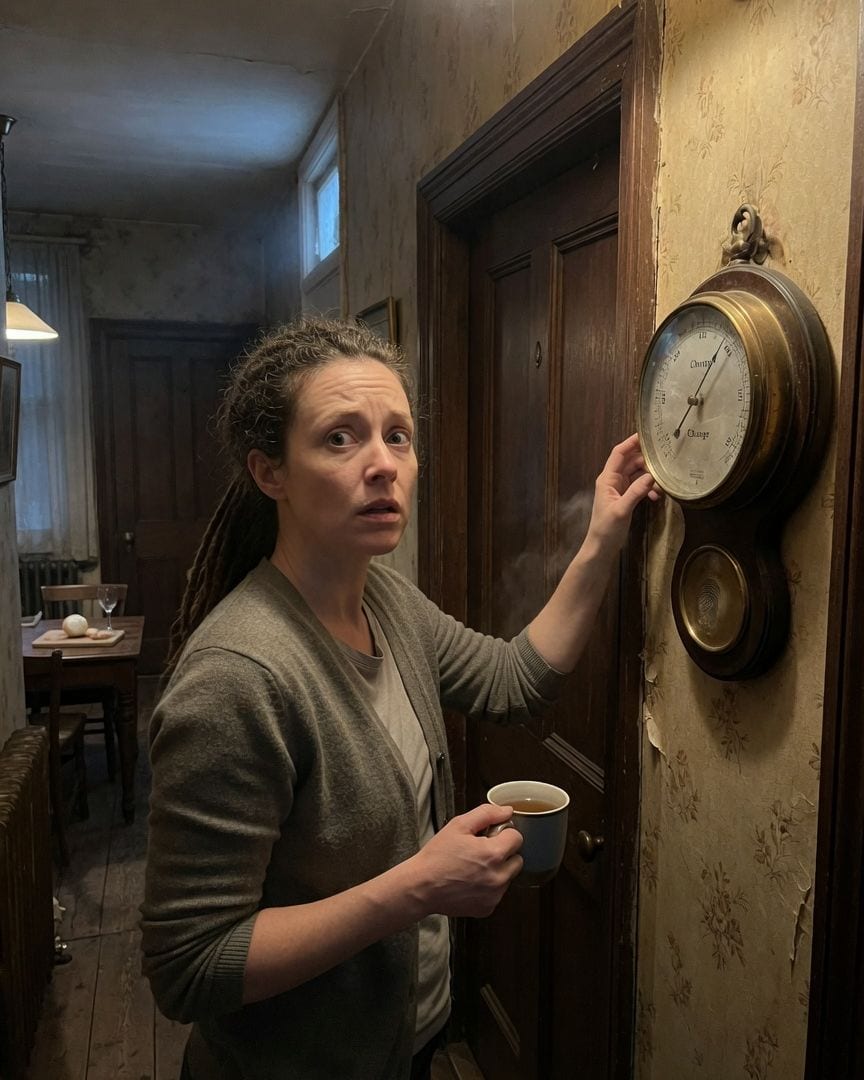
My hall barometer taps itself every night at six. From the next room, with nobody there.
After moving into Oscar Vaughn's old house, I became accustomed to the strange noises that came with it. But then, a heavy, locked oak door in the dining room, one I'd never been able to open, slowly pushed itself ajar at precisely six o'clock one evening. I hadn't touched it, and no one else was there.
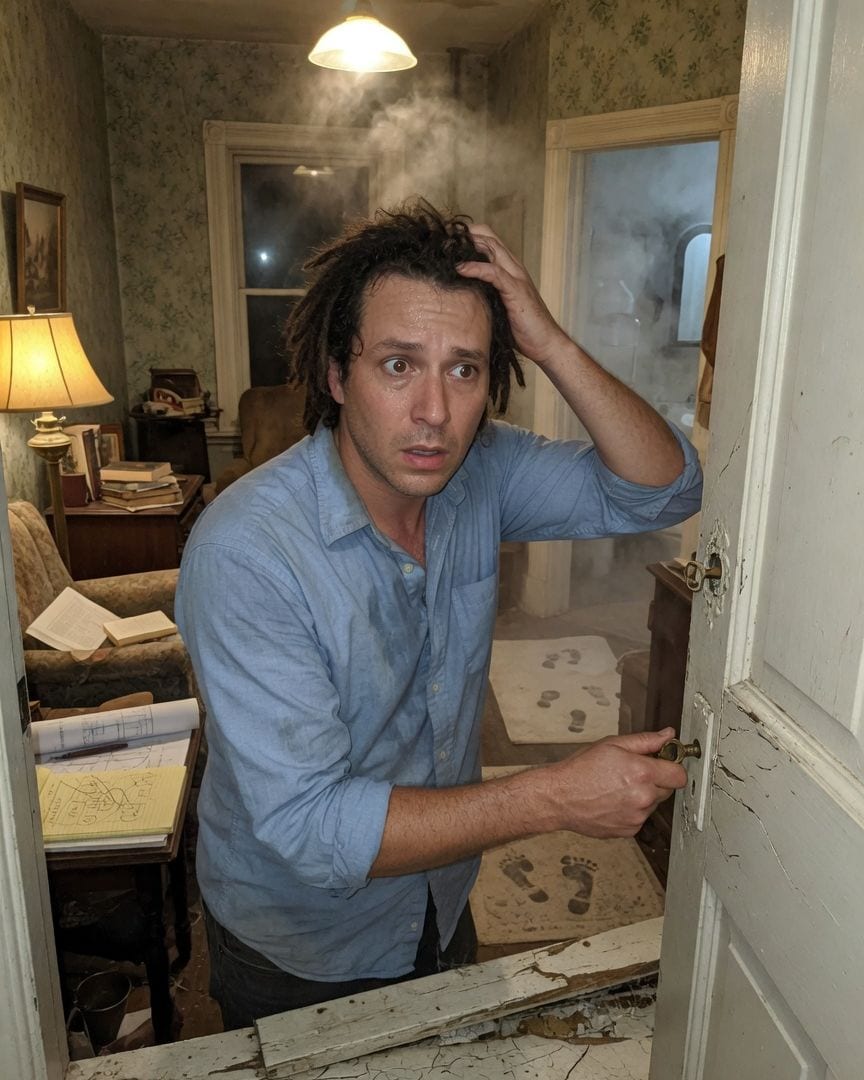
The bath filled itself at 9:30 PM. My main house water was off. Wet footprints led from the tub to a locked airing cupboard.
As an architect, I pride myself on logic. Moving into my inherited Victorian house was supposed to be a quiet fresh start, but on the third night, I heard the impossible. Even after I shut off the main water to the entire house, my clawfoot bath upstairs ran full, warm, and steaming at 9:30 PM.
My front door has a dented gate and a dead hydrangea. I walked past it six times, trying to reach the corner shop just a hundred yards away. The pavement kept bringing me back to my own porch, and the shop's light never moved.
My morning started like any other, a quick walk to the corner shop from my home at Number 14, Elm Terrace. But after walking what felt like two minutes, I found myself back at my own front door, the shop no closer. I tried six times, faster and slower, but my street kept compressing, refusing to let me leave.
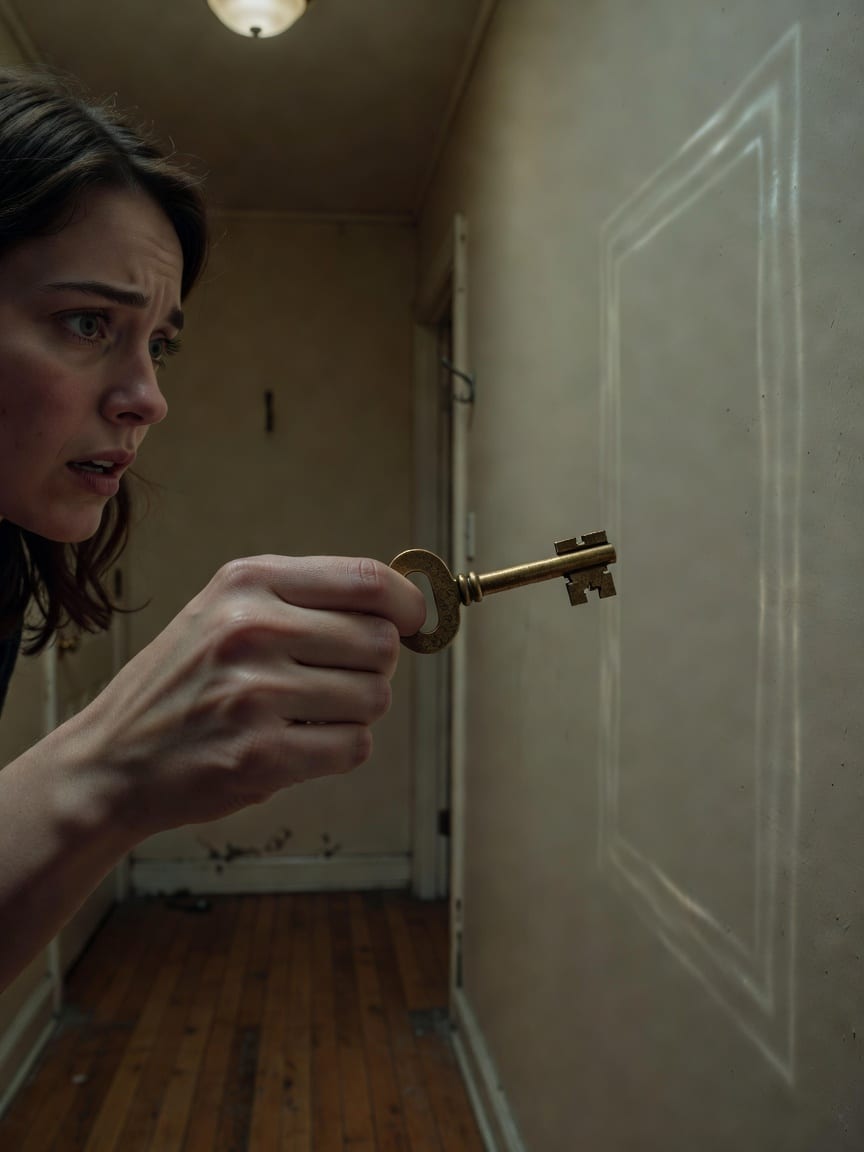
My new house has seven rooms. The removal men counted six. Now one of them asks who's in the locked seventh, on a landing with only six doors.
Moving into my new house, I supervised the removal men hauling boxes. But on the landing, Paul, the senior man, asked about a locked seventh room upstairs, pointing to a blank wall. His quiet certainty, despite the clear absence of a door, filled me with a sudden, icy dread.
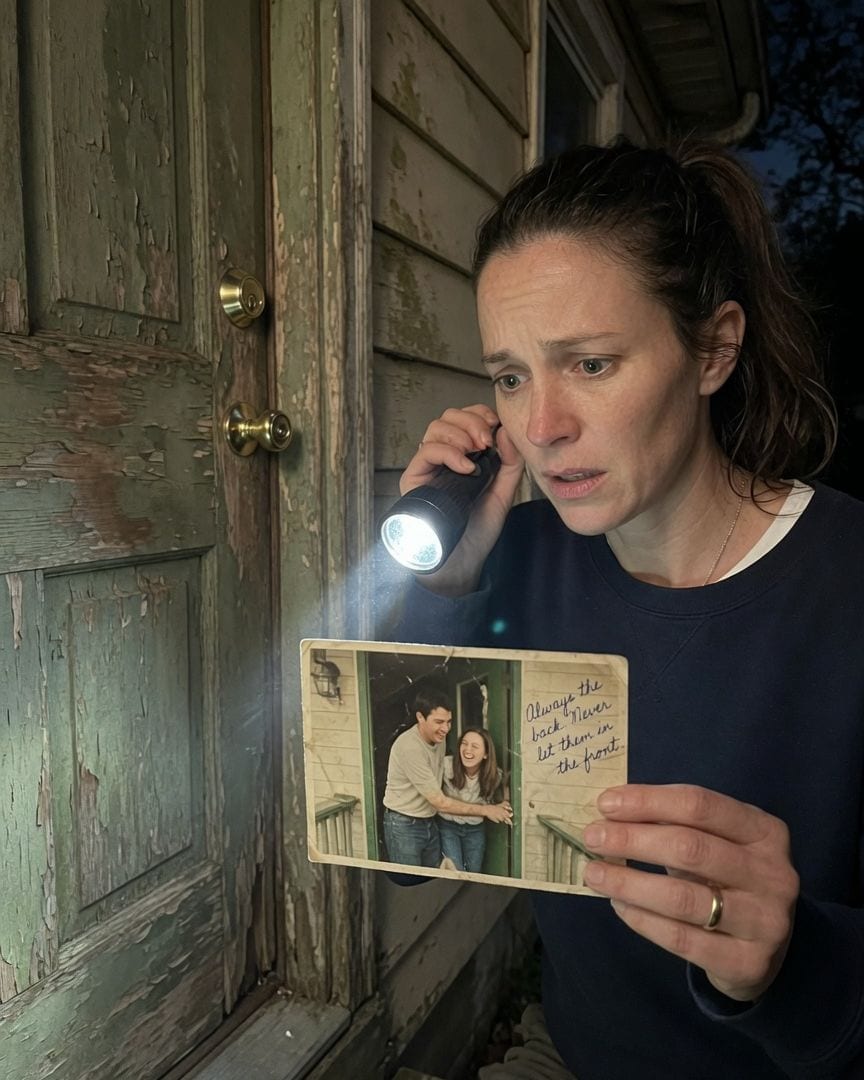
My mother waves us to the front door now. She was missing five days. She says we've always used the front, but the back door, our kitchen door for thirty years, is locked.
My mother, Janet, finally came home after five days, but her overly bright smile and insistence on using the front door felt wrong. For three decades, our family always used the back entrance, which now had a gleaming, new deadbolt. The quiet hum of unease quickly grew into a chilling dread.
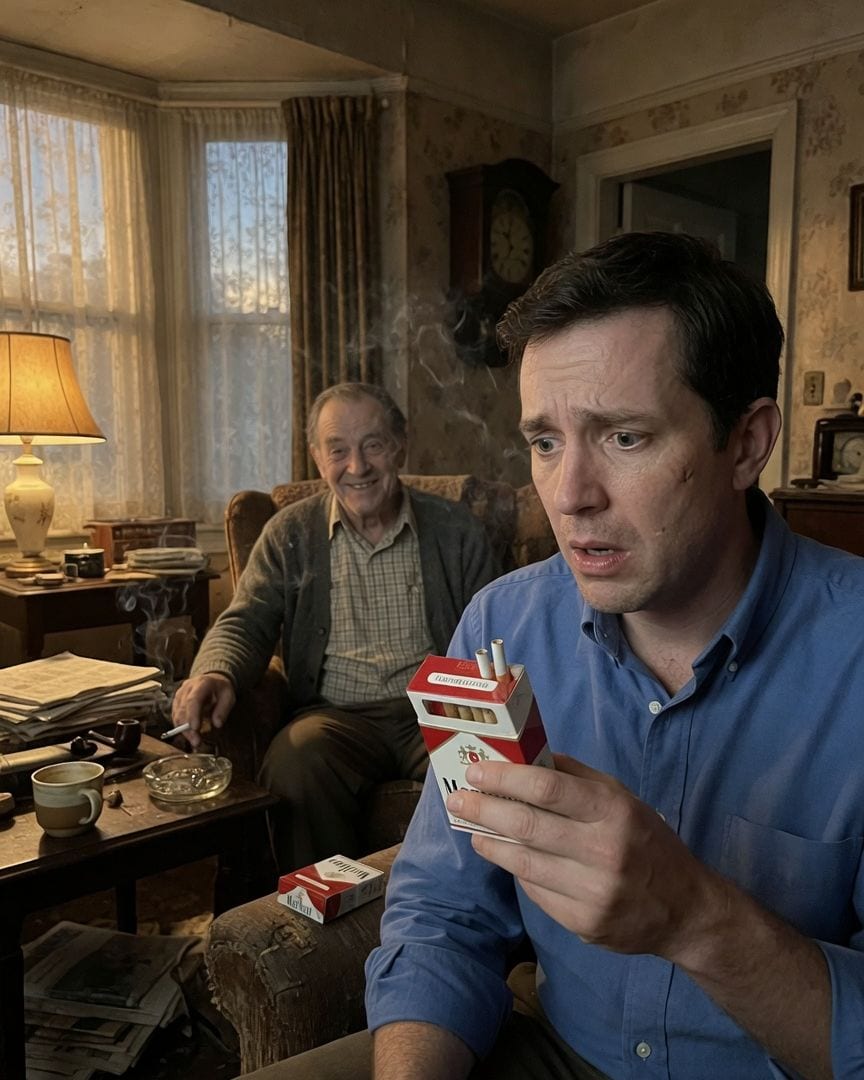
My uncle always smoked left-handed. He went missing, came back smoking with his right — and when I said so, he held out the pack and asked me to show him how he used to do it.
My Uncle Frank, a fixture in his armchair, vanished for two days and returned changed. He's always smoked left-handed, a nicotine stain on his thumb a permanent reminder. But tonight, he holds his cigarette in his right hand, a slow, wide smile on his face that doesn't quite reach his eyes.