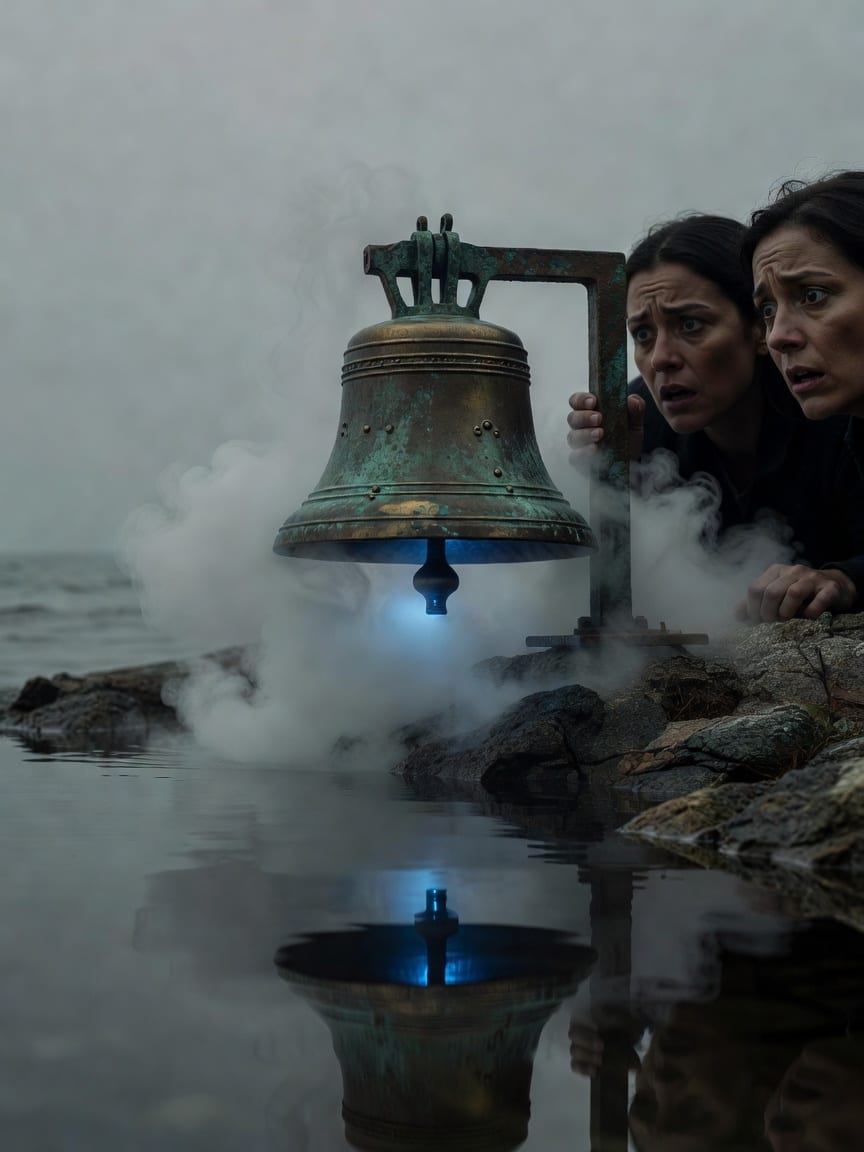
The fog bell on the point rings itself on still nights. The framed log at the yacht club lists eleven calm evenings it rang – each entry beside a boat that never came home.
I remember the day I bought 'The Osprey.' It was a perfect, cloudless blue overhead, the sea a flat, unblemished pane.
I stood on the yacht club's polished deck, sipping an iced tea, feeling the warmth of the sun on my face. My new life here, in this quiet coastal town, was just beginning.
Arthur Brooks, the club manager, a man with neatly combed grey hair and a permanent tan, was holding court nearby, regaling a small group with local lore.
"That old fog bell out on the point," he was saying, gesturing vaguely towards the distant, hazy silhouette, "she rings herself something fierce when a storm's brewing. Can hear it for miles, even over the wind."
I nodded politely, letting his words wash over me, but my gaze had already drifted. Inside the clubhouse, on a prominent wall, hung a framed, yellowed ledger. It was a Trinity House keeper's log, its antique script elegant and precise.
I noticed, with a jolt, that Arthur’s story didn’t quite match the entries. The log, in its careful, looping hand, didn't record bell rings during storms. Instead, it listed eleven instances of the bell ringing on flat-calm nights.
And beside each of those eleven entries, in the same meticulous script, was the name of a boat that, the log stated, never came back.
Arthur caught me looking. He offered a practiced smile, the kind that didn't quite reach his eyes. "Just the wind, dear. Does strange things with the acoustics out there."
He smoothly steered the conversation to mooring fees, his voice a low, reassuring murmur. But I couldn't shake the image of those eleven calm nights, those eleven lost boats.
The quiet efficiency of the log felt like a punch to the gut.
Later that week, the log called me back. I found myself at the yacht club again, under the guise of checking my mail, but my feet carried me directly to the framed record.
I studied the dates, tracing them with my eyes. The entries weren’t strictly chronological, but they followed a pattern, a rhythm I couldn't quite decipher yet, though a cold premonition whispered in my gut that it wasn't random.
The handwriting, while consistent in style, had a slight variation in pressure, almost as if different hands had contributed over the generations, each one adding to the grim tally.
Each lost boat name was listed, from 'The Sea Witch' in the early 1900s to 'The Sea Serpent' just twenty years ago.
Then I saw it. Next to the entry for 'The Siren's Call,' lost in a calm fog bank in the 1950s, was a small, crudely drawn symbol.
It was barely visible, faded into the yellowed paper: three concentric circles, with a jagged line cutting through the innermost one. I had to lean close, squinting, to be sure I wasn't imagining it.
It was so faint, I almost missed it. I scanned the other entries, my breath catching. There it was again, next to 'The Mariner's Folly.' And 'The Painted Lady.' Not all of them, but enough to be a deliberate mark.
My mind tried to dismiss it, to write it off as a bored keeper doodling, but the consistency, the precise placement, the unsettling nature of the mark – it didn't fit.
This wasn't just a record of losses; it was a record of something else, something marked.
A shiver traced its way down my spine. I took a photo of the log with my phone, zooming in on the cryptic symbol until it was clear, stark against the yellowed paper.
Back at my slip, I cross-referenced the names online, confirming their disappearances, each one lost without a trace. 'The Sea Serpent,' the last entry, was indeed lost two decades prior, on a famously calm night. No wreckage, no bodies.
Just gone.
I returned to the club, my heart thumping a frantic rhythm against my ribs. The framed log hung unattended. With a quick glance around, my hands trembled as I carefully lifted it from its hook.
I needed to see the very bottom of the yellowed page, a section I realized had been deliberately obscured by the frame itself. And there it was.
Below the final, faded entry for 'The Sea Serpent', a barely penciled date, recent, stood stark against the yellowed paper. Beside it, the name 'The Osprey' was written.
And then, the familiar, unsettling cryptic symbol, but the entry was unfinished, cut off as if the writer had been interrupted mid-stroke.
A cold dread settled in my stomach, solid and sickening. 'The Osprey.' My boat. My beautiful, new boat. I carefully, almost reverently, replaced the log on its hook, my mind racing, a thousand terrifying possibilities crashing over me.
This couldn't be a coincidence.
I tried to approach Arthur again, casually mentioning the bell's history, hoping to prompt a different, less evasive response.
He merely smiled, a little too smoothly, and reiterated the "wind and acoustics" theory, quickly changing the subject to a charity regatta. His eyes, though, seemed to hold a flicker of something new, something guarded, when I mentioned the bell.
Undeterred, and more than a little frantic, I went to the local library. Hazel Easton, the town's unofficial historian, was a kindly woman with a sharp memory, her grey hair pulled back in a neat bun.
She seemed eager to help with my "maritime history research." But every time I steered the conversation towards the fog bell, or the pattern of disappearances, Hazel’s answers became vague, almost rehearsed. "Oh, just old sea tales, dear.
Every town has them. Keeps the children in line, you know." She produced a stack of local newspaper clippings detailing the lost boats, confirming the dates I had seen in the log.
But not one article mentioned calm seas, or a phantom bell. It was as if that detail had been collectively scrubbed, edited out of the official narrative.
I noticed something else in the dates as I scanned the clippings: a recurring gap, roughly 20 to 25 years between the major incidents. A cycle.
The next afternoon, I decided I had to see the bell for myself. I took my dinghy out to the rocky point, the fog bell a silent, imposing silhouette against the afternoon sky.
The keeper's cottage nearby was derelict, its windows like vacant eyes staring out to sea. The place felt wrong, hushed, even in the midday sun.
I explored the crumbling structure, hoping to find any old journals or artifacts, some forgotten clue.
As I knelt to examine a rusted latch on what might have been a storage shed, a glint of sun on water caught my eye.
Out in the channel, a small fishing boat, 'The Seeker,' drifted. David Porter, a burly local fisherman I'd seen around the docks, was at the helm, watching me through binoculars.
He didn't wave, didn't acknowledge me, just kept the binoculars fixed. His gaze felt heavy, like a physical weight pressing down on me. I didn't like it.
Later, back at the marina, David approached me. His face was grim, unsmiling. "You’re new here, Pamela," he said, his voice low, a gravelly rasp. "Some things are best left undisturbed. Especially if you’re new here.
Old waters run deep, and they don’t like being stirred." He glanced pointedly at 'The Osprey', then back at me, his eyes holding a depth of warning that made my blood run cold. "You got a good boat.
Don’t do anything to… tempt fate." He turned abruptly and walked away, leaving me with a chilling sense that my investigation had been noticed, and I was no longer just an observer.
I was now part of whatever dark current flowed beneath this town.
The cryptic warning from David, coupled with the entry for 'The Osprey' in the log, was too much. It was no longer a mystery; it was personal. I cornered Arthur in his office, the air suddenly thick with unspoken things.
My hand trembled slightly as I placed a printout of the log's final, incomplete entry on his polished desk. He stiffened, his smooth facade crumbling like dry earth.
He stared at the printout, his eyes wide, the color draining from his face.
"You shouldn’t have seen that," he whispered, his voice tight, barely audible. He looked up at me, his composure utterly gone. "My family… we’ve been the keepers for generations. Not of the lighthouse, no. Of… the agreement."
He slumped into his chair, looking suddenly very old. "The bell… it doesn’t ring because of the wind, Pamela. That's a story for tourists and newcomers. It rings because it calls. There’s something out there, in the deep. Something ancient.
We call it 'The Deep Silence.' It demands tribute. Always has. And the bell… it’s its voice. The log is a record of the debt paid, the cycle completed. A grim ledger of survival."
A wave of nausea washed over me, cold and overwhelming. "And 'The Osprey'?" I managed, my voice a shaky whisper.
Arthur looked up, his face etched with a terrible weariness, a profound sorrow I hadn't seen before. "The incomplete entry… it means the cycle is about to be renewed.
And you, with your curiosity, with your new boat… you’ve drawn its attention. We don’t interfere, Pamela. We never do. It’s how our boats, our families, stay safe. It’s the town’s agreement. A quiet covenant.
We don't cause harm, but we don't stop it either. We let the Silence take what it claims."
The pieces clicked into place with sickening precision: Arthur's smooth answers, Hazel's avoidance, David's sudden, chilling warnings. The collective amnesia about the calm nights, the missing details in the news clippings.
It wasn't just folklore; it was a pact, a terrible, unspoken covenant that had kept the town safe at an unspeakable cost. And now, I was the cost.
I stumbled out of Arthur’s office, the weight of his words pressing down on me, suffocating me.
The town's quiet agreement, the 'Deep Silence,' the cycle of tribute – it was monstrous, a horror lurking beneath the placid surface of everything I thought I knew.
I hurried down to the marina, my feet pounding against the wooden planks, needing to be on my boat, to feel the familiar solidity of 'The Osprey' beneath my feet, to reassure myself it was just a boat, just wood and fiberglass.
As I stepped onto the deck, my eyes scanned the familiar lines, seeking comfort. But then I noticed something new. Tucked neatly around her rudder, just below the waterline, was a small, crudely carved wooden charm.
It was unmistakable: three concentric circles, with a jagged line cutting through the innermost one – the cryptic symbol from the log. A cold shiver, colder than any sea spray, ran down my spine. This wasn't a warning.
This was a mark.
As my fingers, numb with dread, brushed its rough, barnacle-encrusted surface, a deep, resonant clang vibrated through the hull, rattling my bones. It wasn't from the distant point, that familiar, mournful sound carried on the wind.
This clang, heavy and metallic, came from underneath my own boat. The water around 'The Osprey' began to churn, dark and unnatural, rising in an oily swell, like something vast and unseen was stirring directly below me.
A strong hand clamped down on my arm, yanking me backwards from the churning water. It was David Porter. His face was pale, his eyes wide with a desperate urgency.
"The bell’s call isn’t just from the point," he gasped, dragging me onto the relative safety of the dock, away from the roiling blackness around my boat. "It can manifest its sound anywhere its influence reaches.
That charm… it wasn't a warning. It was a mark. A summons."
He explained, his voice hushed and hurried, that 'The Deep Silence' wasn't just a local myth; it was a living, ancient entity that had always inhabited these waters, deeper than any dredge could reach.
It needed to be fed, a cycle of tribute maintained.
His own family, he revealed, had also been part of the generations-old understanding, ensuring the cycle continued not by actively causing harm, but by subtly guiding—or not guiding—certain vessels into the 'Silence's' path when the time came.
The old keeper's log wasn't just a record; it was a covenant, a grim contract for the town's survival. The pattern of dates, the specific types of vessels, the cryptic symbol – it all snapped into place, a horrifying mosaic.
Newcomers, those without deep roots or warning, were often the chosen. I realized with a sickening certainty that I, with my new boat and my inquisitive nature, had been marked from the moment I sailed 'The Osprey' into these waters.
Desperate, with David's words echoing in my ears, I sought out Penelope Mitchell, the oldest resident of the town, known for her sharp mind and quiet, unnerving wisdom.
I found her in her small cottage, knitting by the window, the soft clack of her needles the only sound in the room.
I laid out everything: the log, Arthur’s terrified confession, David’s frantic rescue, the charm, the bell’s phantom clang from beneath my boat. Penelope listened, her ancient eyes unblinking, fixed on me with an unsettling stillness.
When I finished, a faint, almost imperceptible smile touched Penelope's lips, chilling me to the bone. "Some things," she began, her voice raspy, like dry leaves, "are older than any of us.
The town has always understood the cost of living by the deep. My family has ensured the log was kept, and the bell was maintained, not as a warning, but as a tool of the exchange.
You, dear, with your new boat, your questions… you were simply next in the cycle. The Silence needed to be fed. It always does."
Her gaze was chillingly devoid of malice, only a detached, practical acceptance, as if discussing the weather.
Panic seized me. I had to leave. I had to get out of this town, away from the sea, away from the bell, away from the silent agreement. I mumbled an excuse and rushed out, fumbling for my car keys.
My hands shook as I shoved the key into the ignition. The engine coughed once, twice, then died, a flat, final silence. I tried again, and again, but nothing. Just a dead click.
Then I felt it. A thick, impenetrable fog, silent and unnatural, rolled in from the sea, blanketing the town in an instant. The roads out seemed to vanish into the swirling white, swallowed by an ethereal wall.
I heard it again, the deep, resonant clang of the fog bell, closer now, echoing from somewhere just beyond the marina, muffled by the fog but undeniable.
An irresistible pull, cold and silent, tugged at me, drawing me towards the muffled sound, towards the unseen water, towards the deep.
Pamela Ellison's car was found abandoned at the marina, keys still in the ignition. Her boat, 'The Osprey,' was gone from its slip, leaving behind only the rhythmic slap of small waves against an empty space.
The local news briefly reported an 'unexplained disappearance at sea,' but the story quickly faded, replaced by more immediate concerns. No debris was ever found, no trace of boat or owner.
The strange, unnatural fog lifted by morning, leaving the town quiet, its rhythm undisturbed. The locals went about their business, a collective, unspoken understanding settling back into place, as it always had.
The sea, once again, was calm and deceptively still.
The local yacht club held its annual summer dinner. Arthur Brooks stood by the framed keeper's log, a glass of amber liquid in his hand.
The log now bore a new, complete entry, dated recently: 'The Osprey,' beside the cryptic symbol. The previous eleventh entry had been subtly erased, and 'The Osprey' was now the new, fresh eleventh.
The old entries had been quietly re-ordered, the pattern reset. Arthur sipped his drink, a faint, almost imperceptible smile playing on his lips, as he gazed out at the placid, moonlit harbor.
If this one got to you
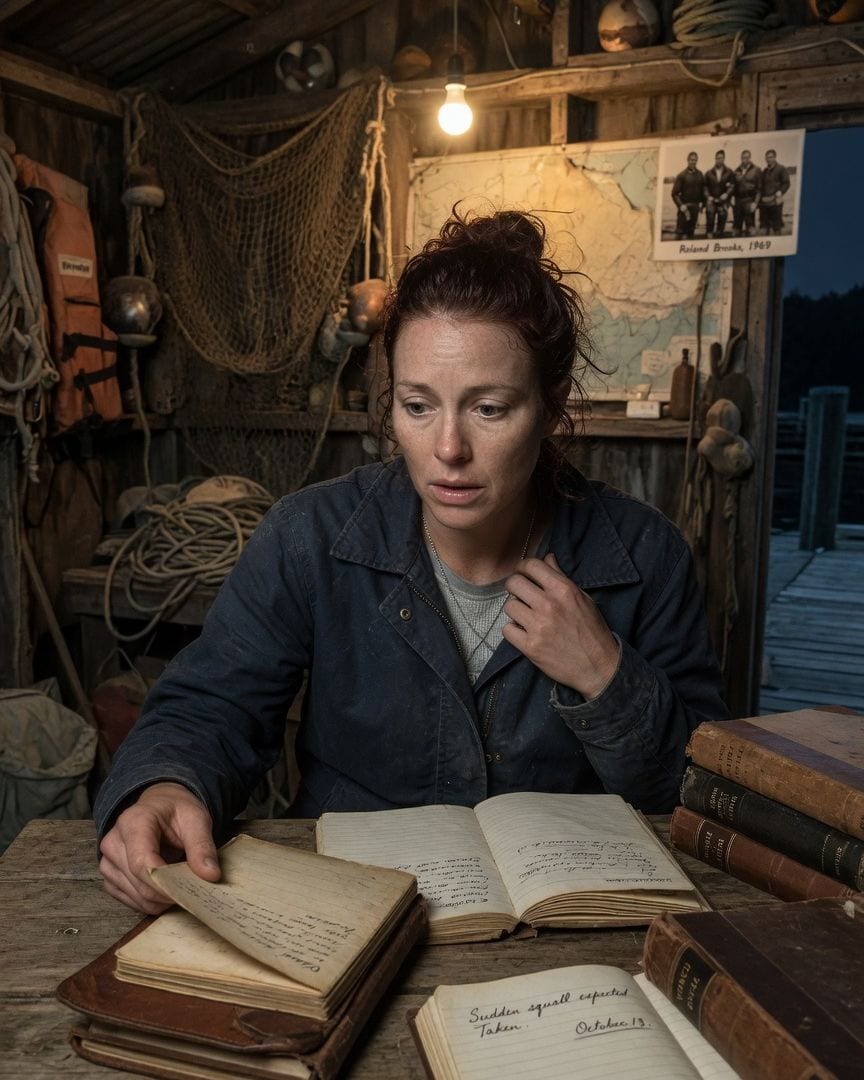
Tomorrow's gale was already written in the skipper's logbook — in his dead father's handwriting. His father drowned off that boat in 1969, and I'd whistled aboard.
My new deckhand job on the fishing boat was simple, until I saw Skipper Henry’s logbook. For *tomorrow’s* date, his dead father’s unmistakable handwriting had already scrawled “Gale Warning. Heavy Seas.” and “Payment Due.” The man drowned decades ago, and the entry leaves me cold.
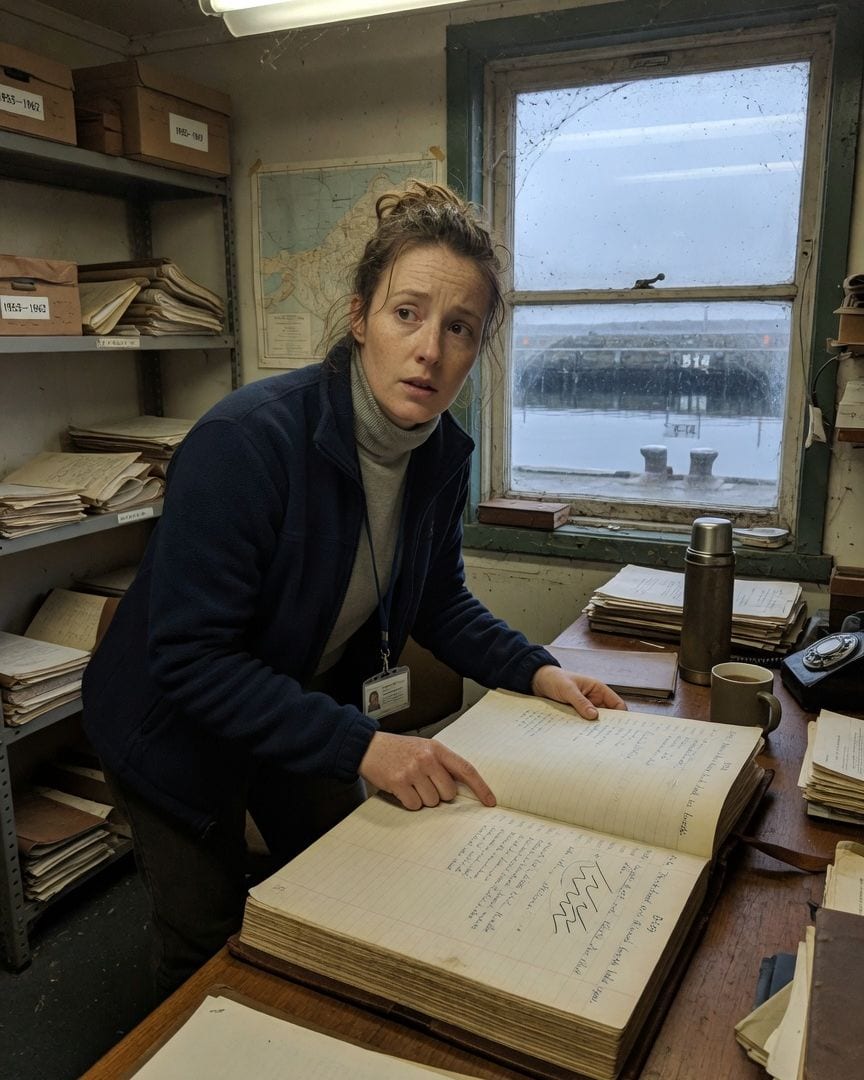
My harbour ledger shows Berth 14 let to a trawler every few years, but it's always empty. Each entry reads 'not returned to sea, berth held open'.
My job as Harbour Master's Assistant is managing the berth ledger, tracking every vessel. But Berth 14 holds a strange paradox: my book says it's let, yet it's always empty. Each entry for that berth closes with the same cryptic note – 'not returned to sea, berth held open' – a pattern stretching back to 1955.
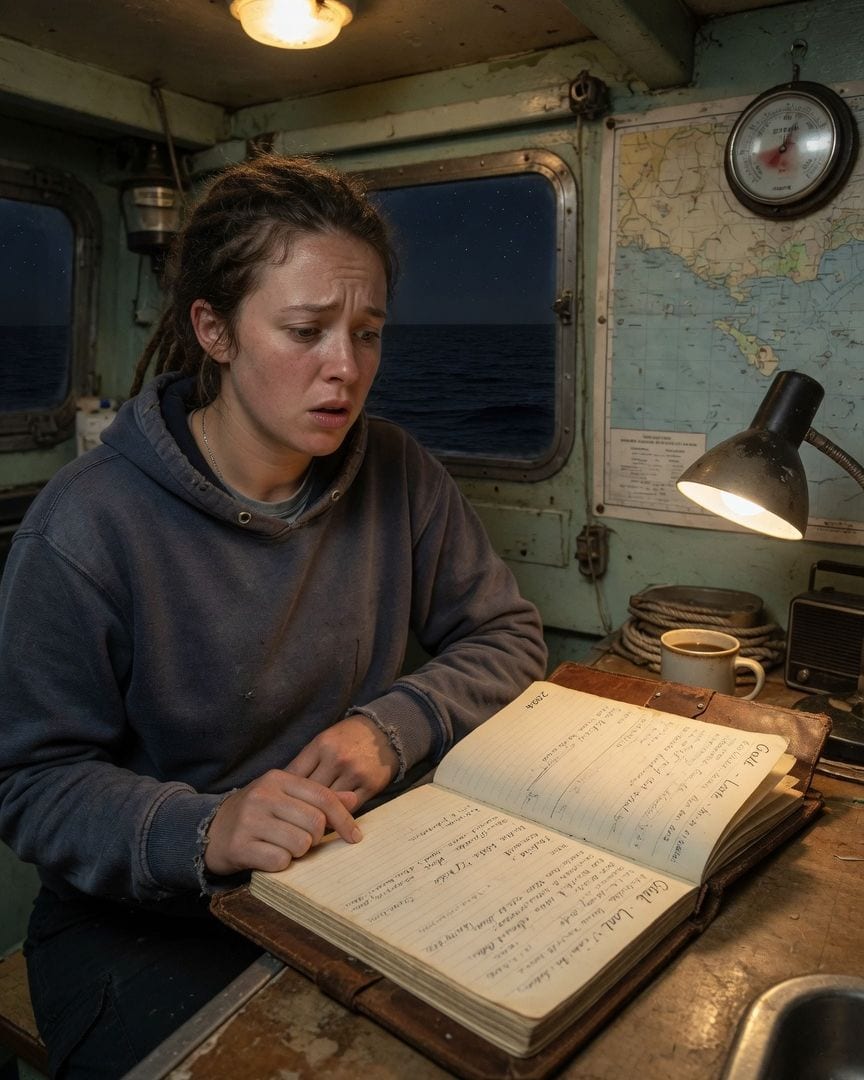
My skipper's logbook showed tomorrow's gale already written, in his dead father's hand, from 1969. I whistled on deck.
Working as a deckhand on the Skerry, I accidentally whistled, breaking a quiet rule Benjamin the skipper had given me. Later, I found the ship's logbook open to today's date, with an entry reading 'Gale - Loss' and the year '1969,' written in Benjamin's long-dead father's hand. He drowned off this very boat in 1969.
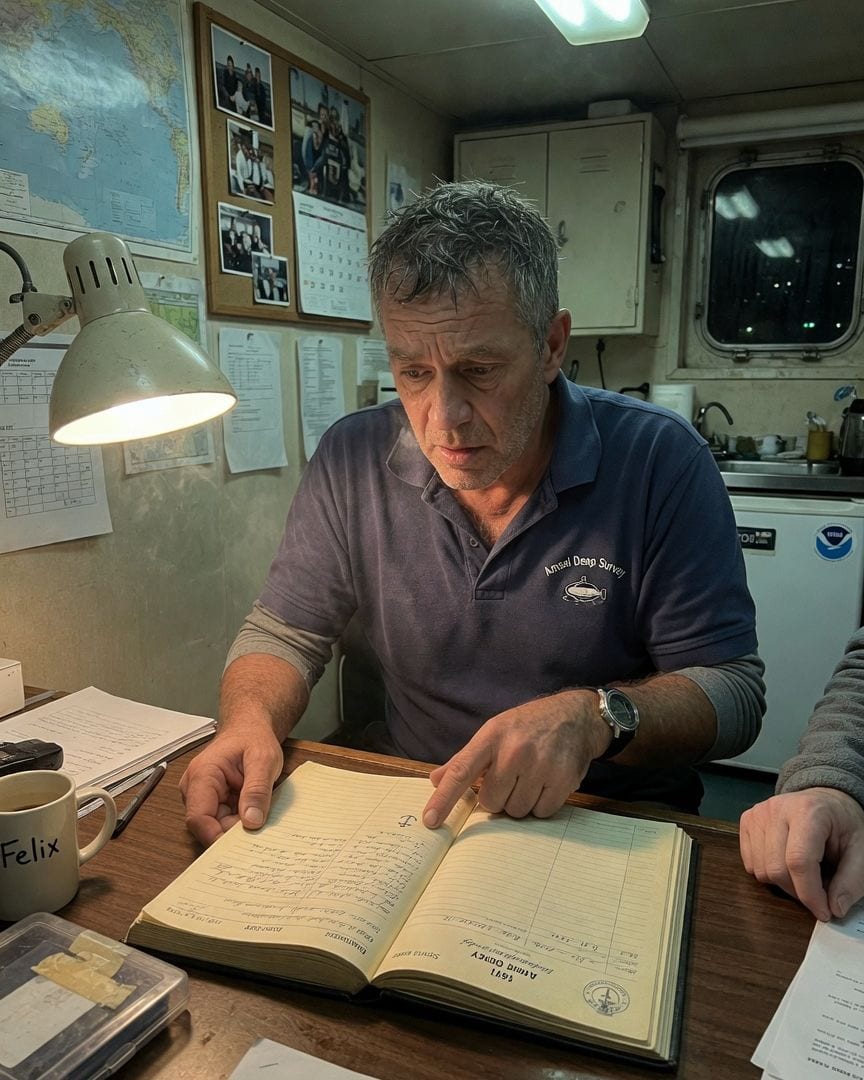
On his final deep-sea survey, a submersible pilot watches a 32-year-old Cold War wreck's rudder shift two degrees.
Deep-sea surveyor Hugo Amsel embarked on his final major dive, anticipating a quiet retirement after decades exploring the crushing pressures of the deep. His submersible's lights cut through the murky green, revealing the *Wynn Portal*, a sealer vanished in 1991, eerily preserved with unnervingly clear windows, free of any marine growth. Then, the inexplicable: the wreck's rudder angle indicator, softly lit, twitched two degrees further to starboard. Later, inside the wheelhouse, Hugo found the ship's official logbook, its final entry dated three days *after* the vessel's recorded disappearance, hundreds of miles north. How could a ship vanish, only to log a journey days later, from a place it never reached?
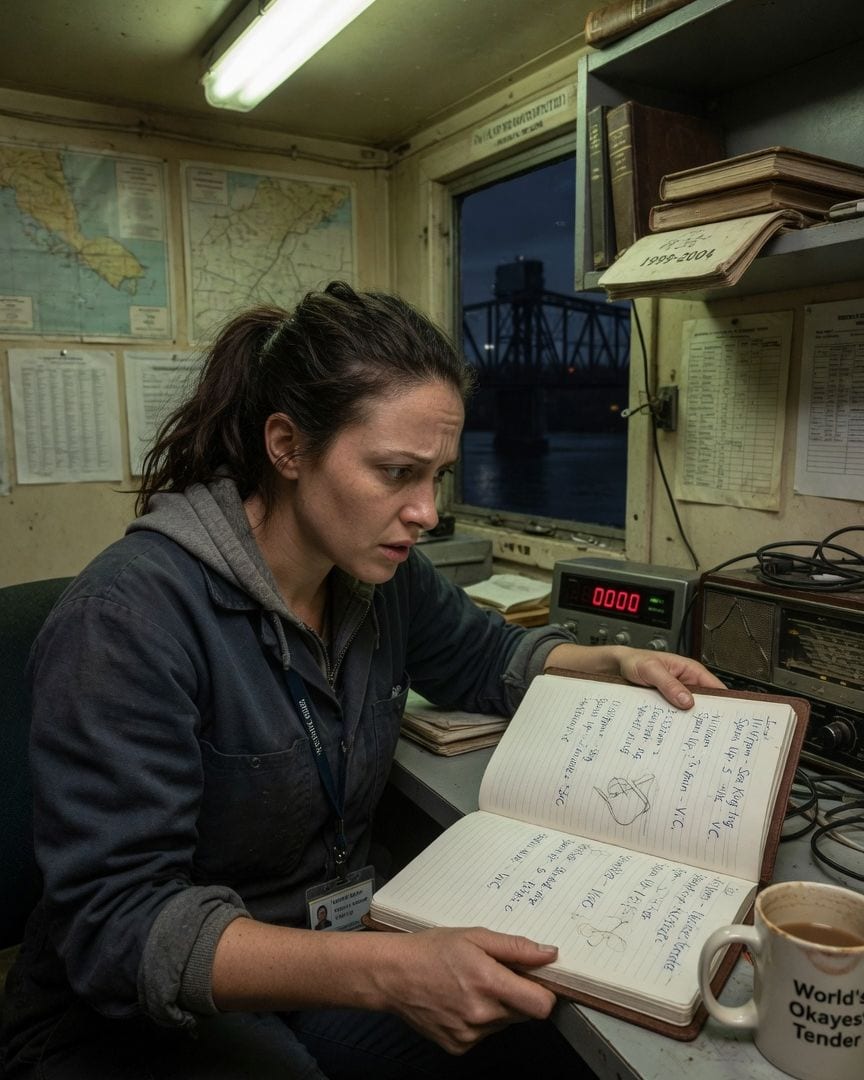
My drawbridge log shows a 2:33am lift I didn't make. The span counter never moved.
As a drawbridge tender, my midnight to dawn shift is usually quiet, a routine of monitoring traffic and logging lifts. But tonight, my own logbook shows an impossible entry for a bridge lift I have no memory of making. My initials and handwriting are there, yet the span counter above my panel reads a steady zero. No boat called, no span ever went up.
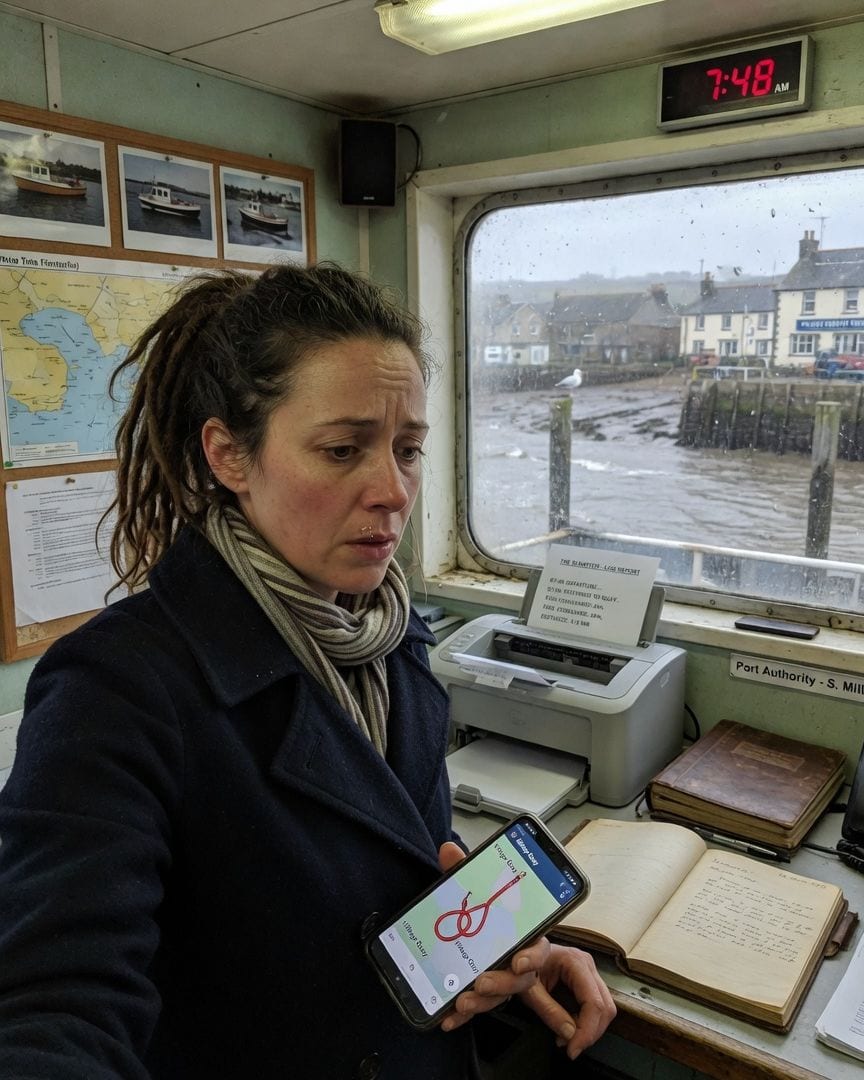
My morning ferry crossed for 40 minutes. The destination town just disappeared.
I board 'The Seawitch' every Tuesday for the familiar eight-minute estuary crossing. But this morning, after making good time, Captain Bernard and I watched the town quay simply fail to appear. Instead, our ferry repeatedly returned to the very same village quay we'd just left, despite burning fuel and advancing the clock.