My skipper's logbook showed tomorrow's gale already written, in his dead father's hand, from 1969. I whistled on deck.
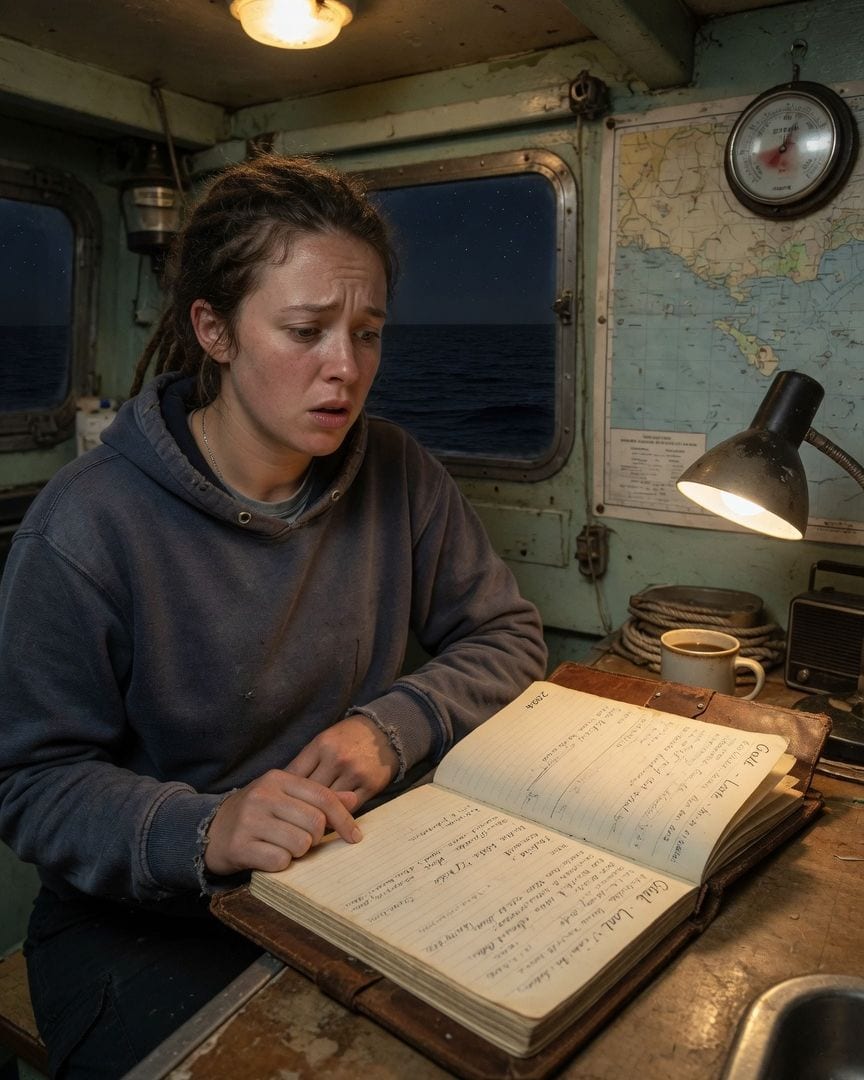
The salt spray was exhilarating, the gulls crying overhead the only sound that day. My first week as a deckhand on the Skerry, Benjamin Merritt, the skipper, hadn't said much beyond terse instructions.
He was a man carved from the wind and sea, mostly silent, but always observant. The only real 'rule' he'd mentioned was a quiet, almost dismissive 'never whistle aboard; it whistles up a wind.'
I'd laughed it off then, a quaint superstition like not bringing bananas on board. This was 2024, not some fog-bound century.
Hauling pots that afternoon, the sun hot on my neck, I started humming a tune. Then, without thinking, a bright, clear whistle escaped my lips, cutting through the rhythmic creak of the winch. Benjamin froze.
His weathered face, usually impassive, turned to me, a look of profound, quiet dread I couldn't understand. It wasn't anger. It was something deeper, older. He said nothing, just turned back to the wheel, his shoulders rigid.
That night, the sea was utterly flat calm, a polished obsidian mirror reflecting the faint stars. Not a breath of air stirred the flags on the mast.
But the barometer in the galley, mounted next to the charts, had dropped off the scale, the needle trembling at the very bottom, a frantic metronome of a calm that wasn't.
Benjamin pulled out the Skerry's heavy, leather-bound logbook, its pages thick and yellowed. He thumbed past entries detailing catches and fuel consumption, past yesterday’s date, to the next day's.
There, in the margin, already entered in faded ink, was 'Gale - Loss.' The handwriting wasn't Benjamin's familiar, blocky script. It was a flowing, elegant, old-fashioned hand. Beneath it, faded but clear, was a date: '1969.'
And I knew Benjamin's father, Charles, had drowned off this very boat in 1969.
I tried to rationalize it. A joke, maybe? Benjamin was a stoic man, but perhaps a morbid sense of humor? Or a pre-printed logbook with some kind of default, macabre entry?
I picked at the idea, trying to make it fit, to wrestle the impossible into something manageable. 'Skipper,' I ventured the next morning, as the calm held, a thick, unnatural stillness pressing down on the boat, 'about that entry...
the one for today.' Benjamin didn't look up from coiling a line on the foredeck. The rope snaked through his calloused hands with an almost surgical precision. 'My father's hand,' he rumbled, his voice like gravel.
'He kept the log before me.' 'But it's for today,' I persisted, gesturing vaguely towards the galley. 'And it says 'Gale - Loss.' And the year...' I trailed off, the words sounding hollow. Benjamin just grunted, not meeting my eye.
'Some things just are, Emily. Best not to meddle.' His avoidance was more chilling than any explanation. It was a refusal to engage, a quiet acceptance that spoke volumes.
Later that afternoon, while he was napping in his bunk, the deep thrum of the engine the only sound, I crept back to the galley. The logbook lay open on the chart table, exactly where he’d left it.
I found the 1969 entry again. It was chillingly specific: 'Gale - Loss of Charles Merritt.' My stomach tightened, a cold knot of dread. This was no joke.
I flipped back, page by brittle page, searching for something, anything, that could explain it. A similar entry, a pattern of unusual weather, anything that would make sense of a dead man writing a future prediction.
My fingers brushed a page from 1941. Faintly, in a different, spidery script, was another marginal note: 'Gale - Loss.' My breath hitched. Then, further back, to 1913.
Another 'Gale - Loss,' this one in a bold, almost flourishing hand, ink blacker than the others, as if written with furious certainty. It wasn't a joke. It wasn't a pre-print. It was a pattern.
My heart hammered against my ribs, a frantic drum in the quiet galley. Three entries, spanning decades, each foretelling an impossible 'gale' and a 'loss.' Each in a distinct, long-dead hand.
The names weren't always specified, but the chilling consistency of the phrase 'Gale - Loss' and the precise dates were undeniable. 1913, 1941, 1969, and now, the entry for today, written by a man who died decades ago, foretelling a storm that had not yet arrived, on a sea that lay like glass.
I traced the dates, the names, the grim repetition. This wasn't a logbook; it was a ledger of premonitions. A register of doom.
And the last entry, the one for today, was for a gale that hadn't yet arrived, on a sea that lay like glass. I had whistled on deck. I had broken the rule.
Back on shore, after we’d docked, I couldn't shake the logbook.
My rational mind screamed coincidence, that it was a morbid prank, some kind of old family tradition, but the dates, the matching phrases, the dead men's handwriting—it burrowed under my skin, setting up a permanent coldness in my gut.
I needed answers, or at least a mundane explanation to cling to, something to scrape away the growing dread.
I started at the local library, a small, dusty place that smelled of old paper and beeswax, run by a sharp-eyed woman named Edith Crane, a local historian with an encyclopedic knowledge of the town's maritime past.
I pretended I was researching local maritime history, focusing on the Skerry and the Merritt family's long connection to it. Edith, bless her meticulous heart, was a fount of information.
She had ledgers, microfiches, even brittle bound copies of the town's century-old newspaper.
I cross-referenced the logbook dates with the old newspaper archives. 1913: 'Tragic Loss at Sea – Fisherman David Reynolds Vanishes in Sudden Squall.'
The article was brief, just a few lines in a column of local news, but the date, the name, the mention of the Skerry, it all matched. 1941: 'Skerry Crewman Quentin Bryant Lost Overboard in Unforeseen Storm.'
Again, a terse report, blaming unpredictable weather for the tragedy. Each incident described a sudden, localized storm, appearing from nowhere, leaving no trace of the victim, only the lingering question of how a squall could be so precise, so fatal.
The dates matched the logbook’s 'Gale - Loss' entries with terrifying precision.
The townspeople, Edith mentioned, had always called it 'Merritt's Bad Luck,' or 'the Skerry's Hungry Season.'
She’d even found old parish records mentioning 'losses to the sea-wind' going back to the late 1800s, vague reports of sudden, localized storms that seemed to snatch men from the deck without warning, leaving behind only calm waters and terrified witnesses.
The mundane explanation—bad luck, poor seamanship, unfortunate coincidence—was failing, spectacularly, with every faded word I read.
My research was becoming less discreet, less academic cover, more desperate hunt. Benjamin picked up on it.
One evening, after we'd docked for the night, the harbor lights shimmering on the still water, he found me still in the wheelhouse, poring over a photocopy of an old newspaper article about the 1941 incident.
He stood in the doorway, a hulking silhouette against the setting sun, his presence suddenly filling the small space. 'Still digging, Emily?' His voice was low, devoid of anger, but laced with an unsettling weariness, a deep-seated resignation.
I flinched, stuffing the crumpled paper away into my bag. 'Just curious about the Skerry's history, Skipper. It's quite... eventful.' The words felt weak, thin. He stepped closer, the cabin light glinting off the salt-spray on his jacket.
His gaze, usually fixed on the far horizon, was now fixed on the calm harbor beyond the window, his eyes distant. 'Some histories are best left buried. They have a way of... stirring up old things.'
He didn't elaborate, just gave a heavy sigh, the sound escaping him like air from an old tire. 'The sea has its own rules, Emily. And it always collects what's owed.'
The air in the wheelhouse felt suddenly cold, though the evening was mild.
The next day, my phone rang. It was Edith Crane, her voice hushed, almost conspiratorial. 'Emily, a word of advice, dear. Benjamin Merritt called me. Asked what you were looking into.
Said you were 'asking too many questions about old gales.' He seemed... concerned. Not for the history, mind you. For you.' The warning was clear.
I wasn't just investigating a pattern; I was disturbing something that the town, and Benjamin, had carefully managed for generations. And now, I was noticed. The sense of dread tightened its grip, a cold hand squeezing my heart.
I confronted Benjamin directly that night, the engine silent, the Skerry gently rocking at her berth. 'Skipper, the logbook. The dates. The disappearances. It's not just bad luck, is it? It's a pattern. A terrifying one.'
He stared out at the dark water for a long moment, the streetlights reflecting in his eyes like distant, cold stars. Then he turned, his face etched with a profound resignation I had only glimpsed before. 'No, Emily.
It's not luck.' He gestured to the dark, calm sea, a vast, unknowable expanse. 'The rule about whistling... it's not about a simple wind. It's about the Wind. A presence. Something in these waters, something ancient.'
He spoke slowly, carefully, his voice a low rumble, as if recounting a grim family legend he'd heard a thousand times. 'It sleeps, mostly. Hidden. But certain things... certain sounds... they wake it up. Draw its attention. A summons.'
He explained how the Skerry was tied to it, almost a conduit, a magnet for this unseen force. 'My family, we've fished these waters for generations. And for generations, we've known about it. The 'gales' aren't weather.
They're when it comes. When it takes.' The impossible barometer drop, the impossibly localized nature of the storms described in the old papers, the missing bodies—it all clicked into horrifying place. The Skerry wasn't unlucky; it was cursed.
And the logbook wasn't just a record of the past; it was a chronicle of the entity's cycles, a warning system.
'It doesn't just take anyone,' he continued, his gaze fixed on some point beyond me, beyond the boat, 'It takes those who... invite it. Those who break the silence.'
'My father tried to break the cycle,' Benjamin continued, his voice barely a whisper, thick with unspoken grief. 'He tried to sail away, take the Skerry to a new port, a new life. But the Wind found him.
It always finds the Skerry. And it always claims its due.' The coherence of it all was more terrifying than any ghost story.
Every single newspaper clipping, every quiet local agreement, Benjamin's weary resignation—it all fit perfectly, interlocking with a chilling precision. The safe explanation, 'just a story,' died a slow, agonizing death in my mind.
Benjamin finally led me to a hidden compartment beneath the chart table, a shallow drawer I'd never noticed.
Inside, wrapped in oilskin, was a much older, smaller logbook, its pages brittle and thin, its leather cover cracked and smooth with age, almost like a piece of petrified wood.
'This is the first one,' he said, his voice heavy, reverent. 'Passed down. Each skipper adds to it.'
He opened it, revealing meticulous entries in faded ink, going back centuries, detailing 'gales' and 'losses' every two or three decades, a chilling, unbroken chain. The pattern was undeniable, a grim, relentless cycle, a family ledger of doom.
Benjamin then pointed to the very last entry in his logbook, the one for today, the one in his father's familiar, looped script.
'He knew,' Benjamin whispered, his eyes wide with a despair I hadn't seen before, a profound, gut-wrenching grief. 'My father knew he was next. He wrote that entry before the 'gale' took him in '69.
He knew the whistling would call it. He knew the cycle would continue.' Benjamin's finger trembled, hovering over the words 'Gale - Loss.' A cold wave washed over me.
Then, with agonizing slowness, he moved his finger, tapping just below the 'Loss' entry, to a space I hadn't noticed before, where the light caught on faint, almost imperceptible indentations in the paper.
'And he knew,' Benjamin finished, his voice breaking, a raw, ragged sound, 'who would whistle it in next. He knew it would be you, Emily. He wrote your name here.' My blood ran cold, freezing in my veins.
The faded ink, a new, almost invisible addition beneath 'Loss,' clearly spelled out: 'E. Thornton.'
The revelation hit me like a physical blow, stripping the air from my lungs. My name. Written by a dead man, decades before I was even born, a death warrant inscribed in time.
Benjamin explained the full horror: the entity, the 'Wind,' wasn't just a force of nature; it was a hungry consciousness that fed on the breach of its ancient, unwritten law.
The whistling wasn't just a sound; it was a key, an invitation to a predatory presence.
The Skerry was its hunting ground, the Merritt family its unwitting chroniclers, bound by generations to document its cycles, to keep the ledger of its appetites.
The logbook wasn't just a record; it was a kind of prophecy, sometimes written by the victims themselves in their final moments of understanding, a testament to the inescapable pull of the cycle.
Benjamin showed me old charts, brittle with age, marked with 'dead zones' where the 'gales' were most violent, where the sea seemed to actively pull things down, a dark blot on the map.
He spoke of the strange, unearthly calm that always preceded a 'gale,' the barometer dropping as the entity gathered itself, an inverse storm building in the absence of wind.
All the clues, the impossible calm, the father's handwriting, the repeated names, the local whispers—it all coalesced into a single, terrifying truth. I was not just a witness; I was the next victim.
Benjamin, his face grim, his eyes fixed on the horizon, slowly turned his hand and pointed.
The impossibly calm sea, still like glass an hour ago, was beginning to ripple far out, a dark, unnatural disturbance forming, heading straight for the Skerry. The 'gale' was coming. And it was coming for me.
Panic seized me, a cold, clenching fist around my heart. 'We have to go! We have to get off the boat!'
I pleaded, my voice thin and high, but Benjamin just shook his head, a grim acceptance on his face that crushed all hope. 'It won't let us, Emily. Not now. It's already here.'
The disturbance on the horizon grew, coalescing into a swirling, dark vortex, impossibly localized, yet churning the calm sea into a furious maelstrom.
The air grew heavy, thick with static, and the Skerry began to list, groaning under an invisible weight, its timbers crying out like a living thing. The barometer needle slammed against the bottom again, vibrating madly.
Benjamin grabbed my arm, his grip like iron, pulling me towards him. 'You need to take this. You need to keep the record.' He pressed the old, small logbook, the one going back centuries, into my trembling hands.
Its leather was cold, heavy. 'It's all we have left. The knowing.' The air grew impossibly cold, the scent of brine replaced by something metallic and ancient, a smell like wet rust and forgotten things. The 'gale' was upon us.
I could hear a low, keening sound, not wind, but something far more primal, a deep hum that vibrated through my bones, seeming to emanate from the water itself.
The Skerry was being torn apart around us, wood splintering, metal screaming.
I looked at Benjamin, his face resolved, accepting his fate, a profound, terrible peace in his eyes. 'Go, Emily! Swim! Tell them!'
he yelled over the rising roar, his voice raw, pushing me violently toward the railing as the deck tilted sharply. I knew he was staying, a final, futile act of defiance or resignation against something that could not be fought.
Clutching the logbook to my chest, with the horrific knowledge burning in my mind, I scrambled over the side, hitting the impossibly cold water.
I swam, blindly, desperately, as the Skerry vanished into the churning darkness behind me, Benjamin's final, silent scream swallowed by the unnatural storm.
I was escaping, but the cost was everything: Benjamin, the Skerry, my peace of mind, and the terrible, unbelievable truth I now carried.
I was found hours later, hypothermic and delirious, clinging to a broken piece of flotsam—the Skerry's stern nameplate—and the waterlogged logbook. My story of an impossible, localized gale that swallowed the Skerry and Benjamin whole was dismissed as trauma-induced hallucination.
The coast guard found no trace of the boat or Benjamin, only an inexplicable patch of violently disturbed water miles offshore. The official report cited 'unforeseen weather anomaly' and 'tragic loss at sea.'
I was treated for exposure and shock, given sedatives, but the real damage was internal. I tried to show them the logbook, the names, the dates, my own name written by a dead man.
They saw only a collection of old, water-damaged papers, a skipper's ramblings, and my own 'confused state.' No one believed me. How could they? The proof was too impossible, too coherent, too horrifying.
I left the coast, left the sea behind. Tried to start over, inland, far from the sound of gulls or the smell of salt.
The nightmares persisted, the chilling calm before the storm, Benjamin's resigned face, the keening sound that wasn't wind. The logbook, dried and carefully preserved, became my grim companion. I never opened it, not really.
It sat on my bedside table, a silent, heavy weight. Not until one quiet evening, months later, a strange compulsion drew me to it. My fingers, trembling, traced the last entry in Benjamin's father's hand: 'Gale - Loss. E. Thornton.'
But then, my gaze drifted lower, to the very bottom of the page, where a faint, almost invisible script had appeared. A new date. A new 'Gale - Loss.' And a name. My own. I never remembered writing it.
I never could. But it was there, in my hand, waiting. My own hand. Waiting for me. The cycle continued, and I was now its new chronicler, its next victim, or something in between. There was no escape.
Just the record. And the knowing.
Emily Thornton lives quietly now, far from the sea, but never truly at peace. Neighbors describe her as withdrawn, always clutching an old, leather-bound book.
One autumn afternoon, a new neighbor saw her through her window, tracing a page in the book. Emily stopped, frozen, her face pale, a faint, wrong little smile playing on her lips.
The entry, in her own hand, waited for her.
If this one got to you
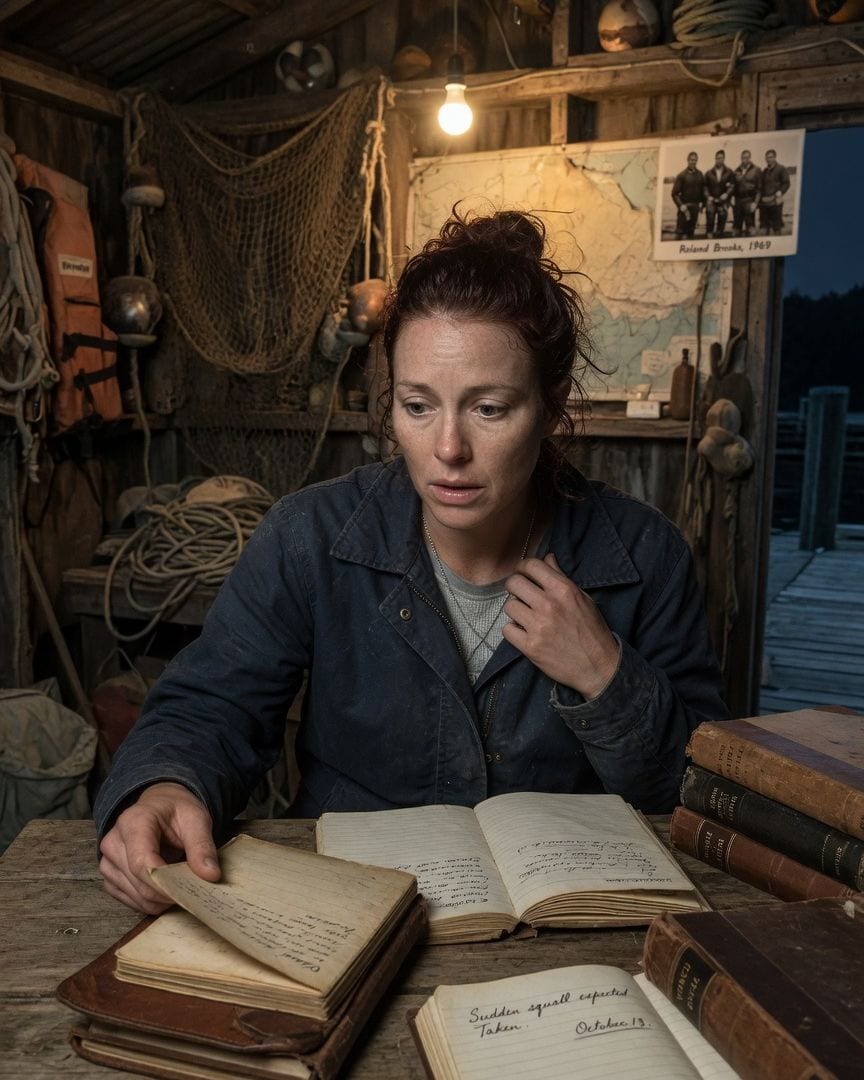
Tomorrow's gale was already written in the skipper's logbook — in his dead father's handwriting. His father drowned off that boat in 1969, and I'd whistled aboard.
My new deckhand job on the fishing boat was simple, until I saw Skipper Henry’s logbook. For *tomorrow’s* date, his dead father’s unmistakable handwriting had already scrawled “Gale Warning. Heavy Seas.” and “Payment Due.” The man drowned decades ago, and the entry leaves me cold.
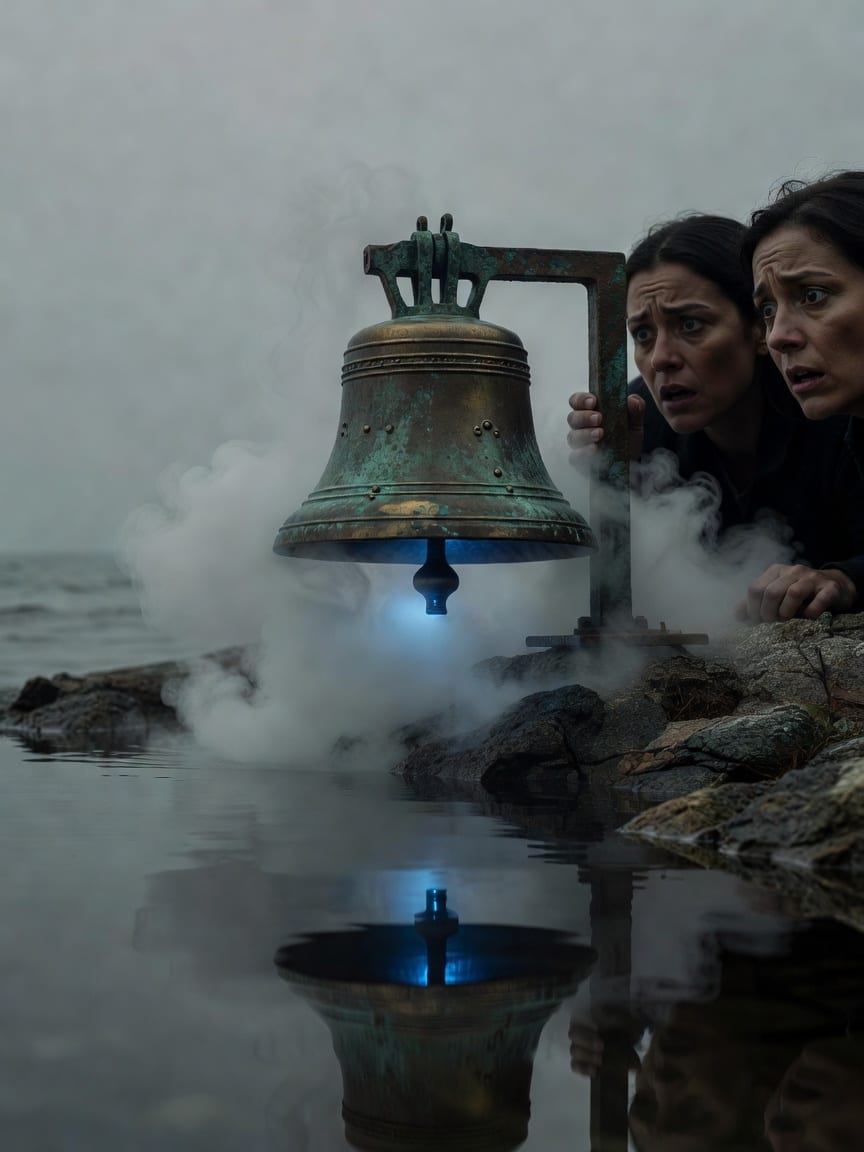
The fog bell on the point rings itself on still nights. The framed log at the yacht club lists eleven calm evenings it rang – each entry beside a boat that never came home.
Moving to a quiet coastal town, I found myself drawn to an old logbook at the yacht club. It recorded the fog bell ringing on flat-calm nights, each instance tied to a boat that simply vanished. Then, I found my own boat's name, 'The Osprey,' penciled at the bottom, marked with an unfinished, cryptic symbol.
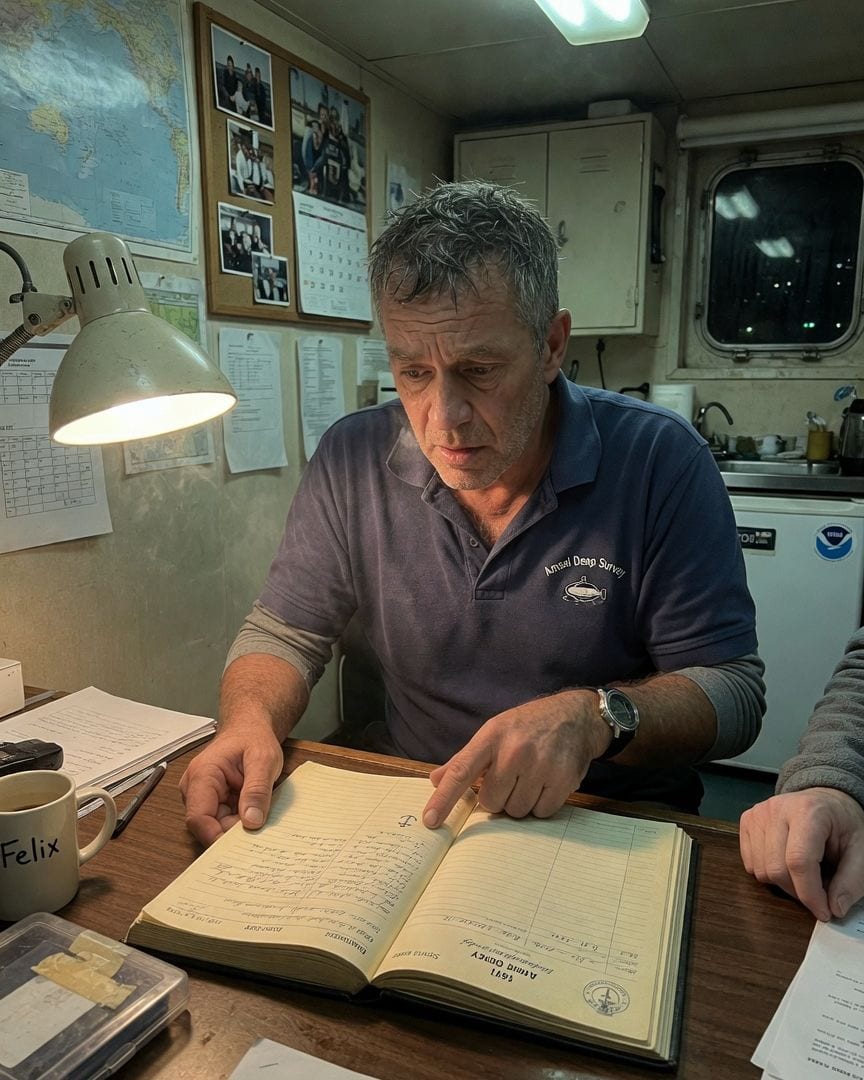
On his final deep-sea survey, a submersible pilot watches a 32-year-old Cold War wreck's rudder shift two degrees.
Deep-sea surveyor Hugo Amsel embarked on his final major dive, anticipating a quiet retirement after decades exploring the crushing pressures of the deep. His submersible's lights cut through the murky green, revealing the *Wynn Portal*, a sealer vanished in 1991, eerily preserved with unnervingly clear windows, free of any marine growth. Then, the inexplicable: the wreck's rudder angle indicator, softly lit, twitched two degrees further to starboard. Later, inside the wheelhouse, Hugo found the ship's official logbook, its final entry dated three days *after* the vessel's recorded disappearance, hundreds of miles north. How could a ship vanish, only to log a journey days later, from a place it never reached?
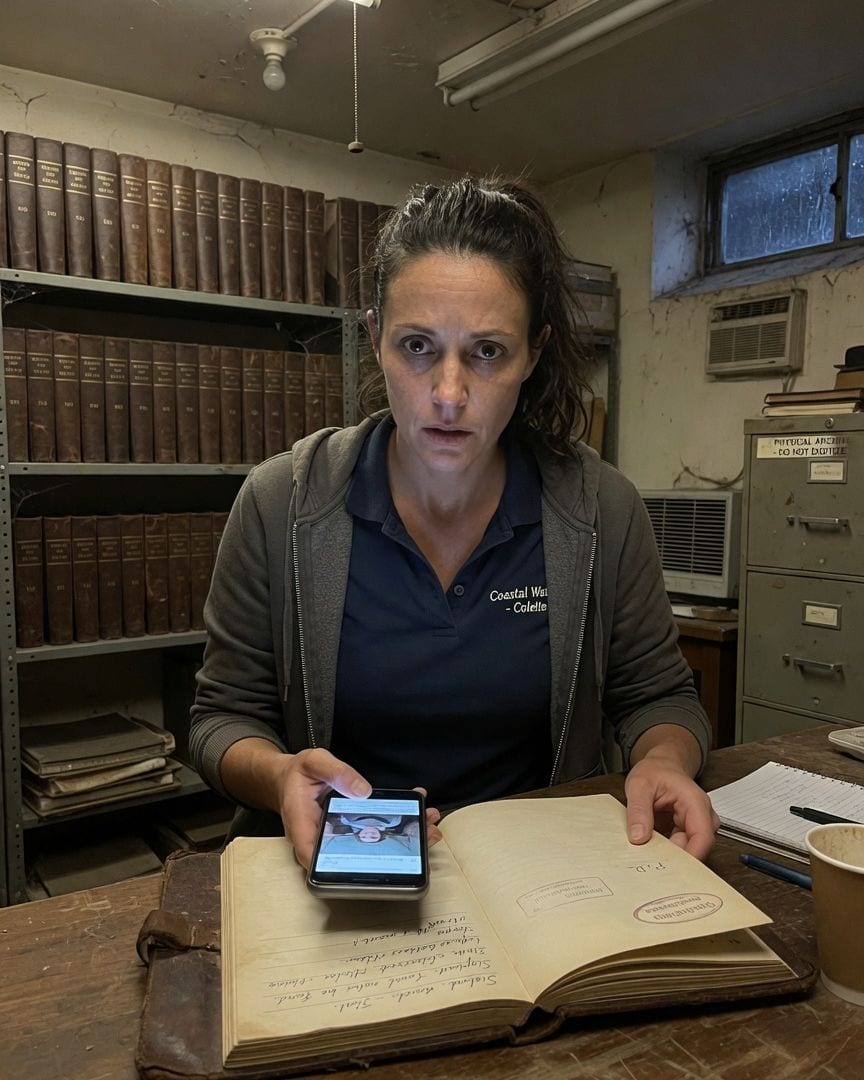
My coastguard log noted Sighting 9 again tonight, a light where no vessel showed. The old logs carry Sighting 9 off Skerry Point at 3:14am every tenth year since 1954, always 'nothing found,' always 'send no boat.'
On my watchtower night shift, the radar screen glowed green and the ocean was quiet. Then, a familiar light appeared off Skerry Point, exactly on cue, just as it had every tenth year for decades. But digging deeper, I found a hidden stamp in an old logbook: 'Operation Skerry. Status: Complete.' It left me with a chilling sense of finality.

My father takes his coffee black now. He put three sugars in it every morning of my life. He looks at the sugar bowl like it's from another man's house.
My father, Gideon Bishop, came back after eighteen months lost at sea. His return felt like a miracle, until the first morning coffee. He always took three sugars, but his gaze fell on the sugar bowl as if it were a relic from another man's house, then he drank it black. A cold certainty began to form: this simple, small thing was profoundly wrong.
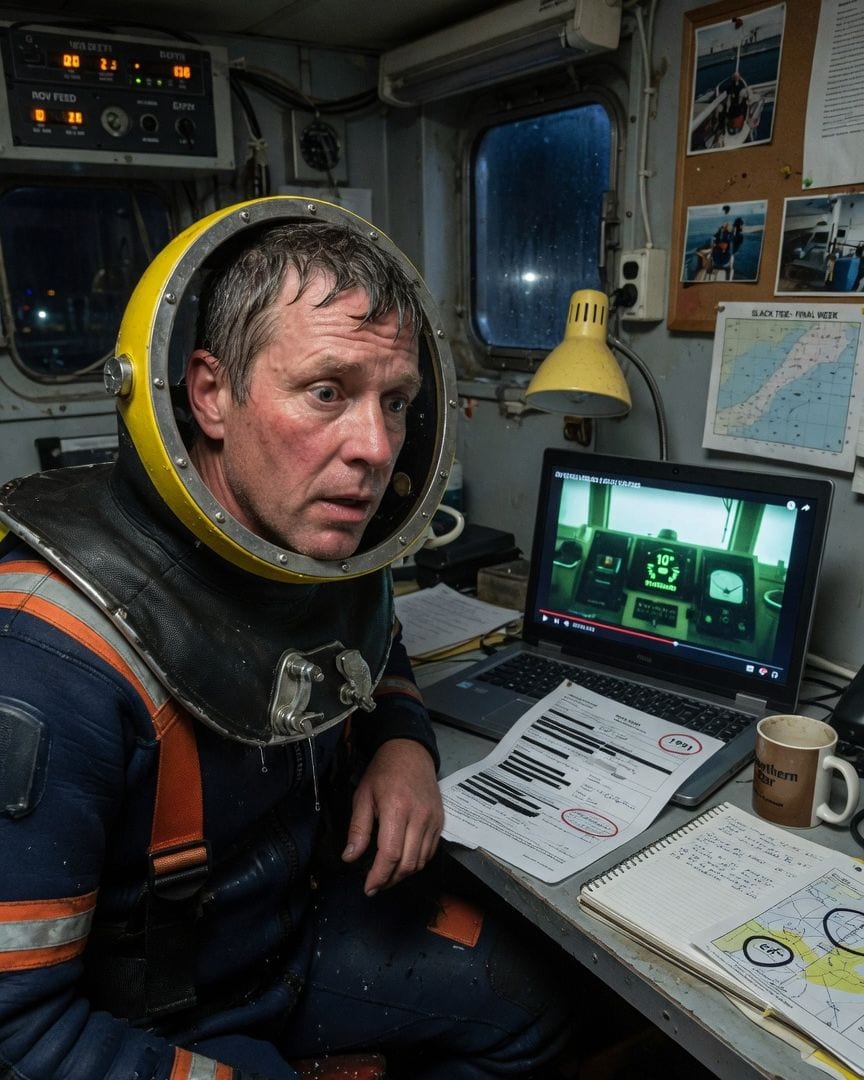
A deep-sea surveyor's final dive into a 1991 wreck found a logbook dated 2023, and a figure watching him.
Deep-sea surveyor Hugo Amsel faced the final week of his Bering Sea survey, under immense pressure to find conclusive evidence before the short season closed. In the abyssal gloom, he located the *Wynn Portal*, a sealer lost with fourteen crew in 1991, surprisingly intact. Through its clear wheelhouse window, he saw a rudder indicator glowing green, an impossible light on a dead ship. Later, on a second dive, he found a leather logbook tucked beneath the helm, open to a page clearly dated 2023. As he stared, a shadow inside the window shifted, coalescing into a figure watching him from the depths.