A deep-sea surveyor's final dive into a 1991 wreck found a logbook dated 2023, and a figure watching him.
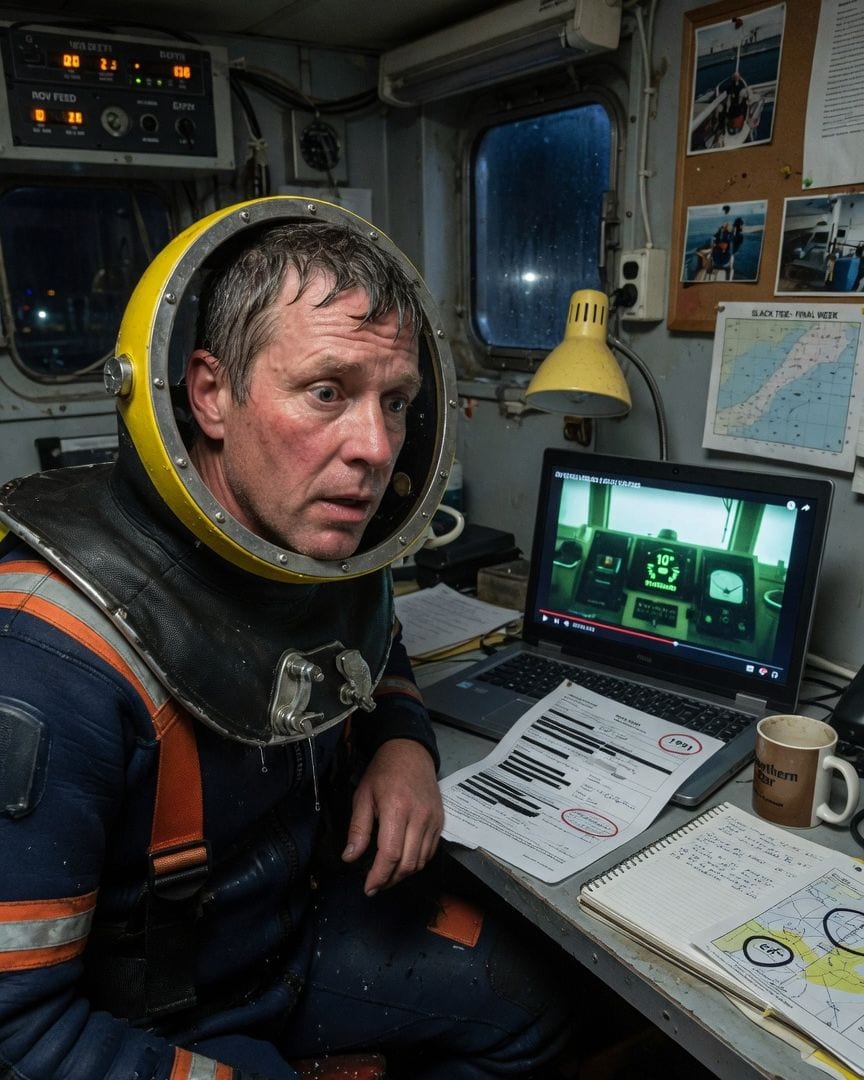
The deep, bone-aching cold of the Bering Sea seeped into Hugo Amsel’s suit, a chill that defied the powerful sub-sea lights blazing from his helmet.
This was the final week of the survey, a last pass before the short season closed, and the pressure to find anything conclusive was immense. Two hours of slack tide, a rare calm in these waters, offered a precious window.
His lamp cut through the abyssal gloom, illuminating the target: the sealer Wynn Portal, lost with fourteen crew in 1991. The wreck sat upright, surprisingly intact, a ghost ship perfectly preserved by the cold, dark water.
No mangled hull, no debris field, just a silent, forgotten silhouette.
He directed the ROV camera, then his own helmet light, to the wheelhouse. Its windows were unbroken, glass clear of growth or cloud, as if she'd sunk yesterday. Through the crystalline pane, the helm stood solid and dark.
But something was wrong, a small detail that snagged his professional eye. The rudder angle indicator, a small gauge recessed into the console, was lit. A faint, impossible green glow, like a pilot light left on.
It showed ten degrees to starboard, holding. A dead ship. No power. He pressed his faceplate closer, trying to make sense of it, his breath fogging then clearing.
He watched the needle for six minutes, counting the slow seconds in his head, his own heartbeat the only sound against the ocean's vast silence. Somewhere in those six minutes, the needle twitched.
A fraction of a degree, then back, resettling at the exact ten-degree mark. Not a current, not a trick of the light. The indicator had moved. It had to have moved. And that meant power.
Back on the survey vessel, the Northern Star, the air in the cramped control room felt thin, despite the hum of machinery. Hugo, still in his suit, reviewed the ROV footage, playing the six minutes on a loop.
Sophia Merritt, the sharp-eyed ROV operator, confirmed the indicator's glow, her brow furrowed. 'That shouldn't be lit, Boss,' she murmured, her voice tight. Ethan Doyle, the methodical deckhand, had also seen the twitch.
'Looks like a power flicker,' he offered, but his tone lacked conviction. Hugo knew they were trying to give him a mundane explanation, the kind they'd all prefer. But he couldn't unsee it.
He pulled the Wynn Portal's official loss report, a digitized copy he’d acquired before the mission. It was terse, boilerplate, noting 'catastrophic failure' and 'rapid sinking,' then the names of the fourteen lost crew.
No mention of an intact vessel, nothing about a wheelhouse preserved like a museum piece. The report concluded with a standard 'cause undetermined, vessel presumed lost with all hands.' He demanded Sophia pull up any related archives, any supplementary files.
Nothing.
He then reached out to Gordon Patterson, a retired Navy archivist he occasionally consulted for historical wreck data, a man known for his meticulous, almost obsessive, approach to records. Gordon sent him a digitized file, marked 'Wynn Portal, Supplemental.'
It was sparse, mostly redacted, but one document, a faded, handwritten log entry from a secondary vessel, mentioned a 'secondary power surge detected' just before the Wynn Portal's final distress call, then dismissed it as a 'transient anomaly.'
Hugo compared the coordinates of the official sinking with his own GPS data from the Northern Star. They were miles off. The Wynn Portal was found almost twelve nautical miles from its reported last position.
Too far for currents to drift a vessel of that size, too precise for random chance. And no mention of a perfectly preserved wheelhouse.
He tried to explain it away: a faulty gauge that held a phantom charge, a unique, localized current that had aligned the rudder, a simple misfiled report.
But the lit indicator, the movement, the pristine interior, and the significant location discrepancy gnawed at him, a splinter of wrongness under his skin. He was a man of facts, of logic. This defied both.
Hugo couldn't let it go. He insisted on a second dive, alone this time, against company policy.
The current season was ending, funds were tight, and his insistence on a repeat dive was met with thinly veiled frustration from the Northern Star's captain. But Hugo's conviction was absolute.
He had to see it again, had to prove to himself it wasn't some deep-sea hallucination.
Back in the bone-chilling cold of the Wynn Portal's wheelhouse, his helmet light swept over the console, the eerie green glow of the rudder indicator still holding its ten-degree starboard position.
He found it then, tucked neatly into a small recess beneath the helm, almost hidden by shadow. A logbook. Leather-bound, surprisingly dry, its small brass clasp glinting faintly in his lamp.
Through the glass, he could see it was open to a crisp, unblemished page. His light sharpened, focusing on the careful script. The date, clear as day, was not 1991. The year was 2023.
A recent entry, in clear, dark ink, detailing weather conditions and a 'system check.'
As he stared, transfixed by the impossible date, a shadow seemed to shift just inside the window, at the very edge of his vision, coalescing into something that might have been a figure, standing just beyond the helm, watching him.
Back on the Northern Star, Hugo was profoundly shaken. The cold of the Bering had seeped into his bones, but it was the impossible logbook and the fleeting shadow that truly chilled him.
He couldn't shake the image of the fresh ink, the impossible date, the sense of being observed. He immediately called Gordon Patterson, relaying his findings, trying to keep his voice steady, to sound as rational as possible.
Gordon, usually unflappable, was audibly rattled. '2023? That's… impossible, Hugo. She's been gone for thirty-two years. Are you certain of the date?' Hugo confirmed it, describing the clear script, the pristine page.
He pressed Gordon for any other missing vessels, any other 'catastrophic failures' in the Bering or North Pacific that had similarly vanished without a trace, particularly those with vague 'secondary power surge' notes or anomalous conditions.
Gordon, now wary, promised to dig deeper, his voice tight.
A week later, after the Northern Star had returned to port and Hugo was back home, a package arrived.
Inside, a standard Navy archive box, official and dull, but also a smaller, plain brown box, unmarked, with no accession number, wrapped in thick canvas.
'The Box That Is Not on Any List,' Gordon's accompanying note read, his usually neat handwriting now almost frantic, 'found it tucked away behind some old supply manifests, deep in the restricted stacks.
No record of it existing in any finding aid.'
Inside the unlisted box, Hugo found faded, brittle files detailing three other disappearances from the region: the Coast Guard cutter Orion in '78, a research submarine, the Nautilus II, in '85, and a private cargo plane, the Arctic Dove, in '98.
Each file, in its own way, echoed the Wynn Portal's strange inconsistencies. Each contained a similar, brief mention of 'transient power anomalies' or 'unexplained internal systems activity' before loss.
Each vessel was found miles from its reported last position, in unusually preserved condition, or with specific, impossible details: the Orion's emergency beacon, still active but broadcasting a signal from a decade past; the Nautilus II's internal lights, reportedly seen by a passing fishing vessel days after its presumed loss; the Arctic Dove's transponder, pinging for a full 48 hours after its fuel tanks should have been empty.
Hugo tried to find mundane explanations, bureaucratic errors, but the pattern was too precise, too specific. These weren't just misfiles; they were impossibilities.
Hugo's phone rang. An unknown number, a local prefix he didn't recognize. He hesitated, then answered. A calm, masculine voice, with a clipped, official cadence, spoke. 'Mr. Amsel. We understand you have an… unusual interest in certain declassified maritime incidents.
Specifically, the Wynn Portal.' Hugo's blood ran cold. He felt a prickle on the back of his neck, a sense of being observed. 'Who is this?' he demanded, trying to keep his voice level, but a tremor betrayed him.
'Just a concerned party,' the voice replied smoothly, entirely unbothered. 'Some records are best left undisturbed. For your own safety, and the integrity of national security.' The call disconnected.
He tried to trace it, but it was a burner, a dead end. He felt a chilling certainty that the call hadn't been a random warning; it was a direct consequence of the 'unlisted box.'
A few days later, Gordon called, his voice barely a whisper, laced with a palpable fear Hugo had never heard before. 'Hugo, my access is restricted. They know I helped you.
My supervisor, a Ms. Helen Patterson, just had a 'friendly chat' with me. She mentioned 'unauthorized deep dives into historical anomalies,' and specifically referenced 'the old Bering incidents.' She even asked about you by name, Hugo.
Said you were 'a persistent fellow.'' Gordon sounded utterly terrified, convinced his career, and perhaps more, was over. He confessed he'd noticed a black sedan parked near his apartment building for two days, always gone by morning.
Hugo himself started seeing things: a car following him a little too closely on his drive home, a figure lingering just a beat too long in his peripheral vision at the grocery store.
He checked his own boat, the Northern Star, for any signs of tampering, any listening devices, finding nothing obvious, but the paranoia was a cold, creeping thing.
He knew he was no longer just investigating; he was being watched, and the scope of whatever he’d stumbled into was far larger than he’d imagined.
The anonymous call, Gordon's supervisor, the black sedan – they were all threads leading back to the same unseen hand.
Hugo met Gordon in a quiet, out-of-the-way diner, miles from the port, away from potential ears. Gordon was pale, his hands shaking as he nursed a lukewarm coffee, his eyes darting nervously around the sparsely populated room.
'It's worse than I thought, Hugo,' he began, barely above a whisper. 'Helen Patterson, my supervisor… she's not just a supervisor. She's… the one who knew.
She was the one who signed off on the original 'Wynn Portal' file, back in '91, as a junior clerk. Her signature is on the 'transient anomaly' report, buried in the supplemental records.
She admitted it to me, indirectly, when she was warning me off. She said, with a calm, chilling certainty, 'Some things are simply filed away, Mr. Patterson. Not lost. Filed.''
Gordon pulled out a thick, unmarked Manila envelope, its contents bulging. 'I copied these before they locked me out. It's the pattern across decades and classifications. It's not just these four vessels we found in the unlisted box. It's dozens.
From the 1950s, after the Cold War really started, right up to last year. Naval vessels, commercial ships, research submarines, military aircraft.
All with similar anomalies, all officially 'lost at sea,' all with a specific, obscure classification code buried deep in their files. Code 7-Gamma-9.'
Gordon spread out a meticulously compiled timeline of incidents, each entry a vessel or aircraft, a date, and a brief, chilling detail: a ping from a 'lost' submarine picked up years later, broadcasting static that matched a specific, classified frequency; an aircraft's flight recorder recovered decades after its disappearance, but containing only white noise and a single, human-like sigh; a commercial freighter's manifest, officially lost, but with a handwritten notation 'cargo transferred, destination unknown' dated two years later.
He showed Hugo how the 'secondary power surge' or 'internal systems activity' notes became more frequent, more precise, over the years, as if whatever was taking them was learning, refining its methods.
The Wynn Portal's lit indicator, the moving rudder, the 2023 logbook entry – they weren't anomalies. They were traces. The institution isn't just covering up; it’s managing a process, filing away the truth.
Gordon, his voice a strained whisper, pushed another document across the diner table. 'This is the last thing I found before they cut off my access completely. I don't understand it, Hugo.
But it’s from another '7-Gamma-9' file, an incident from 1995. A small military transport plane, lost over the Aleutians. No wreckage found, just a brief, contradictory report about a 'beacon anomaly.' And… your name, Hugo.'
Hugo's breath caught in his throat. He looked down at the faded print. An 'Initial Witness Report.' The date was 1995. He was 24, just starting out, a young deckhand on a fishing trawler.
He remembered the incident vaguely – a distant distress call, a search that found nothing, dismissed as a ghost signal. He’d barely thought of it since. But there it was: 'Amsel, Hugo. Witness, Civilian.'
His own name, listed as a minor observer of a 'filed' incident, long before he became a dive supervisor, long before the Wynn Portal. He stared at the entry, the words blurring.
He wasn't just chasing a pattern; he was part of it. He was already in the file. Gordon, seeing the look on Hugo's face, pulled the document back, his eyes wide with dawning horror. 'Hugo… you were there?
You saw something?'
Hugo pushed the document back to Gordon, his own fear now mixed with a cold, terrifying clarity. 'I don't remember seeing anything. Not really. Just a flash of light, far out, and then the static on the radio.'
Gordon nodded slowly, his face etched with grim understanding. 'That’s how it usually starts. A minor anomaly, a fleeting observation. Enough to be recorded, enough to be filed.'
He explained the full scope: 'The secrecy machine isn't just a cover-up, Hugo. It’s part of the mechanism. The institution, those like Helen Patterson, they’re not evil. They’re just… clerks. They manage the paperwork for something that takes things.
These vessels, these aircraft, they’re not destroyed. They’re removed. Maintained. Sometimes, they’re reactivated. The 'transient anomalies,' the 'secondary power surges' – those are the moments when the filed things briefly engage, when they stir.
The logs, like the one you saw in the Wynn Portal, they’re still being signed. They’re still being updated. It’s how the 'filed' stay on the record, even when they’re gone.'
Gordon pulled out a final, shocking piece of evidence from the unlisted box: a suppressed internal report from the late 70s, detailing how one of the 'filed' Coast Guard cutters, the Orion, briefly reappeared on radar, broadcasting a garbled, looping message that was later identified as the captain’s own service number, read back to him in a synthesized voice, before vanishing again.
'They're never truly lost, Hugo,' Gordon whispered. 'They’re just… elsewhere. And the files are their passports. Their proof of continued existence.'
Hugo knew he needed undeniable proof, something physical. The logbook. He arranged a covert, unsanctioned dive, convincing Ethan and Sophia that he needed to retrieve critical data before the season officially closed.
Back in the frigid Bering, Hugo descended, the Northern Star's lights a distant glow above him. He found the Wynn Portal just as he left it, the rudder indicator still glowing faintly green.
He pushed through the exterior hatch, the interior surprisingly pristine. He moved directly to the helm, his light cutting through the silent water. The leather-bound logbook was there, tucked in its recess. He could touch it now.
His gloved hand reached for it, pulling it free. It’s heavy, solid. He opened it, the pages rustling softly in the water. The date '2023' was still there, followed by precise entries: coordinates, system checks, fuel levels.
All clearly written, all dated after 1991. He flipped to the very last page. The most recent entry was today's date, a single, chilling symbol, an inverted triangle, drawn in bold, black ink.
As he stared at it, a low hum started, vibrating through the steel deck beneath his boots. The helm's rudder indicator brightened to a blinding emerald.
Lights flickered on throughout the wheelhouse, illuminating the instruments, the charts, the empty captain's chair. The vessel's internal systems were coming to life around him. The hum deepened, resonating in his chest.
Then, slowly, deliberately, the helm moved again, turning ten degrees to starboard, the rudder angle indicator following, holding the position. The Wynn Portal was waking up. Hugo's regulator gasped in his ear.
The ordinary explanation dies for good, consumed by the thrumming life of the impossible artifact.
The hum intensified, the vessel shuddering around Hugo. He knew he had mere seconds. With a surge of adrenaline, he shoved the logbook into a waterproof pouch and scrambled back through the hatch, the Wynn Portal's internal lights flaring behind him.
He kicked hard, ascending as fast as safety allowed, the hum fading as he broke the surface, gasping for air. Ethan and Sophia pulled him aboard, confused by his frantic state. He showed them the pouch. It was empty.
The logbook was gone, or had never been there. The Wynn Portal was gone too. The sonar showed nothing but open water where it had been moments before.
The coordinates from the logbook, if he’d managed to memorize any, now led to nothing. His crew thought he’d suffered nitrogen narcosis, a deep-sea hallucination. He couldn't convince them. He didn't even try.
Hugo returned to shore, his diving career quietly over.
He tried to dismiss it all, to rationalize the impossible, but the hum of the activating vessel, the impossible date, the blank pouch, and his own name in Gordon's file were now etched into his mind. He knew.
He was part of the pattern, just another entry waiting its turn. He'd seen the files, and now he was a file.
He would wake sometimes, in the dead of night, certain he could hear the faint, impossible glow of a rudder indicator, just beyond the wall. He'd check the locks on his doors, then check them again.
He’d stare at his own hands, wondering if the ink on his skin had always been there, if the dates on his calendar were truly his own. He tried to contact Gordon, but his phone was disconnected, his apartment empty.
Helen Patterson remained in her office, serene and unbothered. The files kept moving. The world kept turning. He was still here, for now.
But he knew, with a certainty that settled deep in his bones, that he was merely awaiting his activation. And the final entry.
Months later, a neighbor saw Hugo Amsel leave his house, a small canvas bag in hand, walking purposefully toward the docks. He never returned. His house remained locked, his boat tied in its slip.
On his kitchen counter, a half-eaten breakfast, and a calendar, open to today's date, with a single, inverted triangle drawn in bold, black ink. The tide would take the rest, eventually, and his file was already signed.
If this one got to you
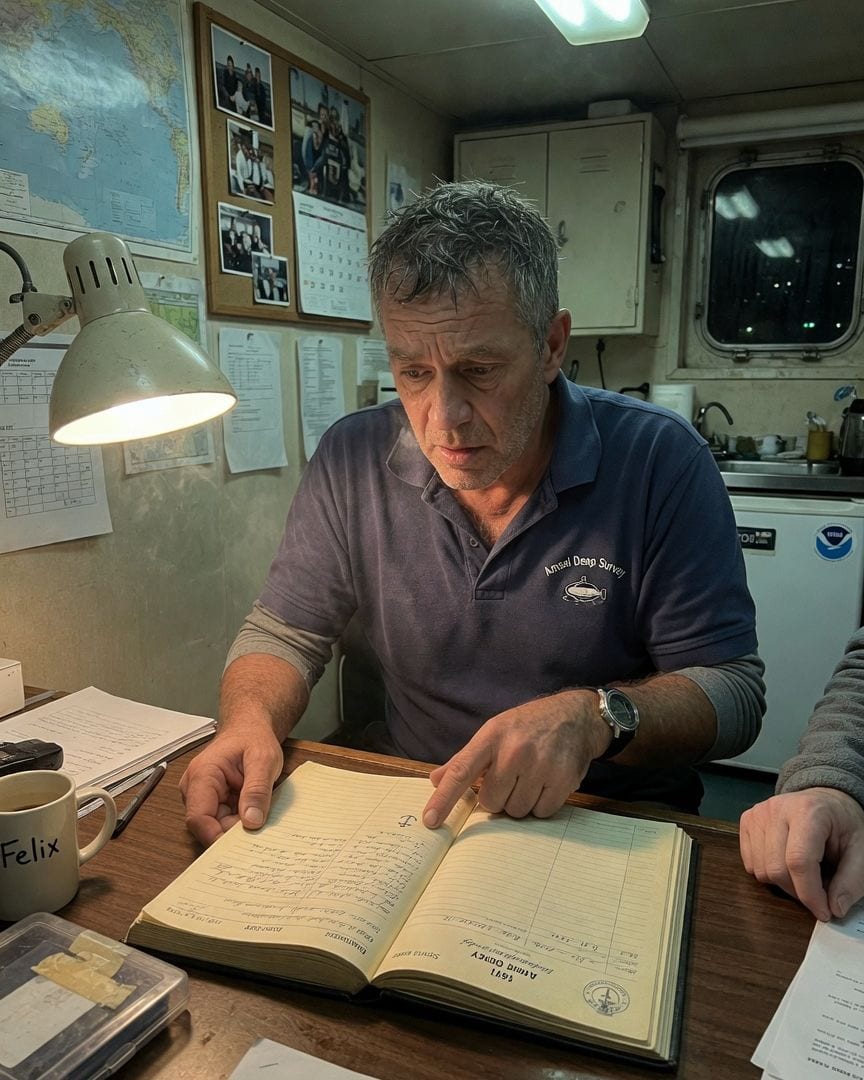
On his final deep-sea survey, a submersible pilot watches a 32-year-old Cold War wreck's rudder shift two degrees.
Deep-sea surveyor Hugo Amsel embarked on his final major dive, anticipating a quiet retirement after decades exploring the crushing pressures of the deep. His submersible's lights cut through the murky green, revealing the *Wynn Portal*, a sealer vanished in 1991, eerily preserved with unnervingly clear windows, free of any marine growth. Then, the inexplicable: the wreck's rudder angle indicator, softly lit, twitched two degrees further to starboard. Later, inside the wheelhouse, Hugo found the ship's official logbook, its final entry dated three days *after* the vessel's recorded disappearance, hundreds of miles north. How could a ship vanish, only to log a journey days later, from a place it never reached?
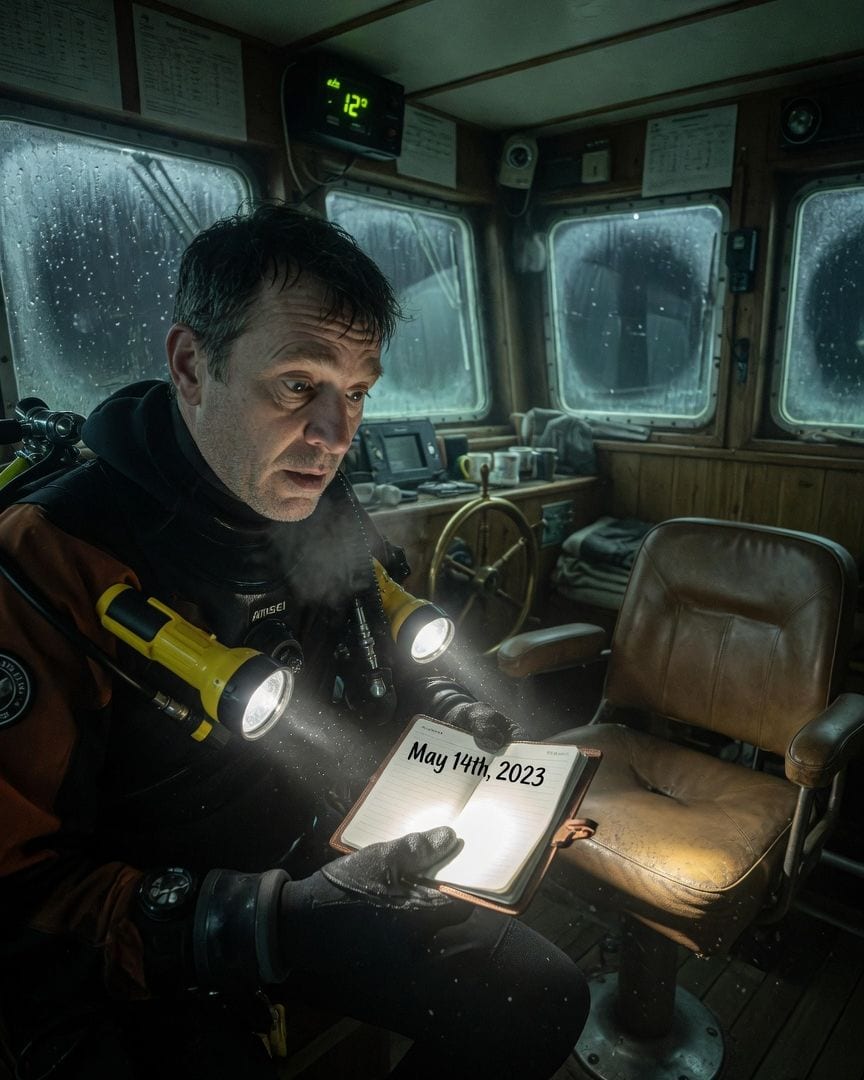
A dive supervisor exploring a Cold War sealer found its logbook on a wheelhouse shelf, with an entry dated this morning.
Dive supervisor Hugo Amsel felt the familiar cold of the Bering Sea as his submersible approached the 'Wynn Portal,' a sealer vanished without a trace in 1991. The wreck sat eerily intact, its wheelhouse windows impossibly clear, and the helm locked hard to starboard. But then the rudder angle indicator twitched, moving two degrees, a ghost still at the wheel. After breaching the sealed hull, Hugo and his lead diver found the ship's interior pristine, frozen in time. In the wheelhouse, on a shelf next to the chart table, lay the logbook. Its final entry, written in Captain Larsen’s hand, was dated 'May 14th, 2023' – today. The ink was still unsettlingly fresh, leaving Hugo to stare at the impossible date and the empty captain's chair.
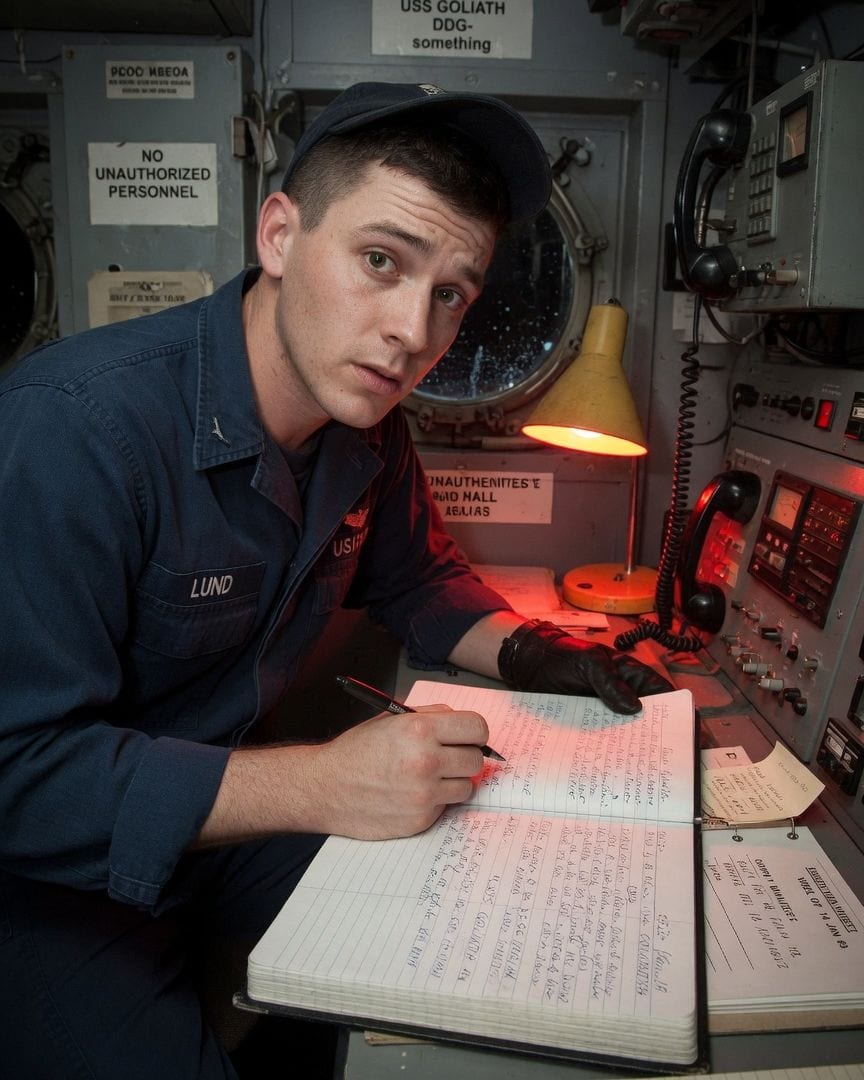
Petty Officer Lund heard his own captain's mayday: the Cold War USS Goliath was sinking, two hundred miles astern.
Petty Officer Marco Lund kept a lonely vigil in the USS Goliath's radio room, the destroyer battling the North Atlantic in deep winter 1983. Suddenly, a garbled mayday broke through: his own ship, his own captain, reporting they were going down two hundred miles astern. Though the bridge confirmed the Goliath was fine, the same chilling call came again an hour later, stronger and from the exact waters they had just crossed. Deeply unsettled, Marco began searching ship logs, eventually discovering a phantom entry: an identical mayday, logged a week prior, pressed into the very paper beneath his own.
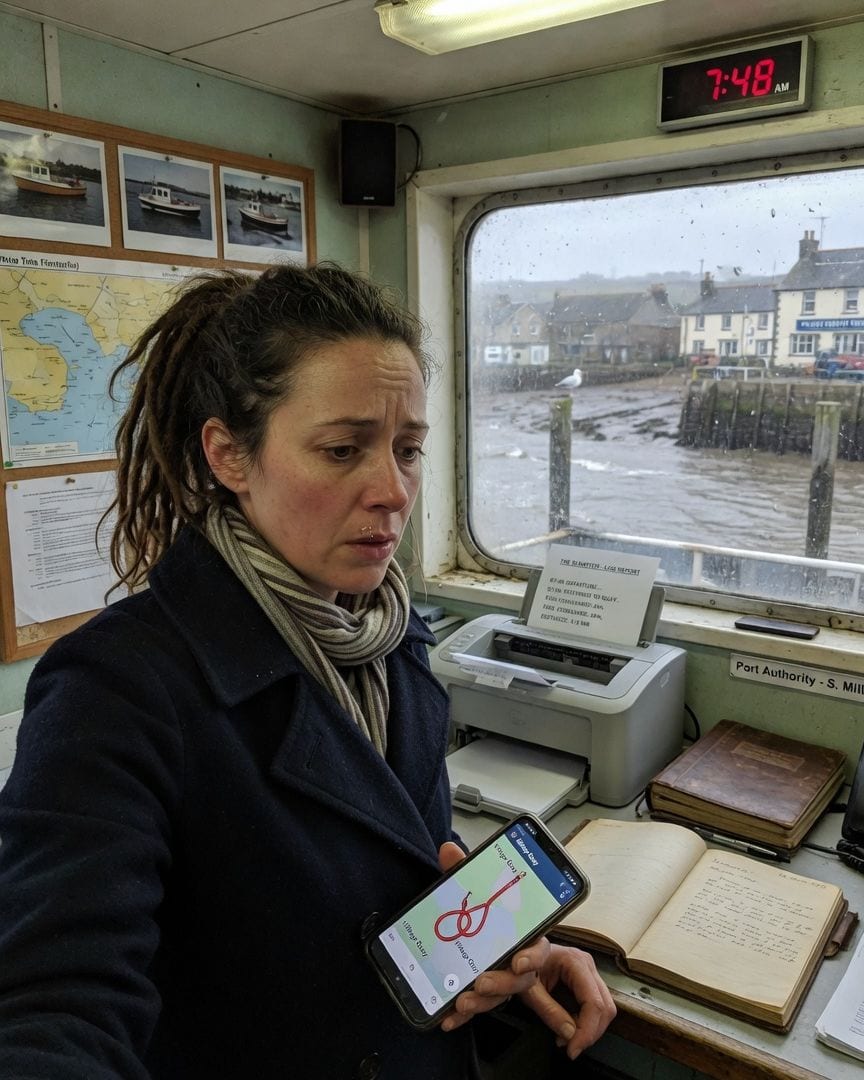
My morning ferry crossed for 40 minutes. The destination town just disappeared.
I board 'The Seawitch' every Tuesday for the familiar eight-minute estuary crossing. But this morning, after making good time, Captain Bernard and I watched the town quay simply fail to appear. Instead, our ferry repeatedly returned to the very same village quay we'd just left, despite burning fuel and advancing the clock.
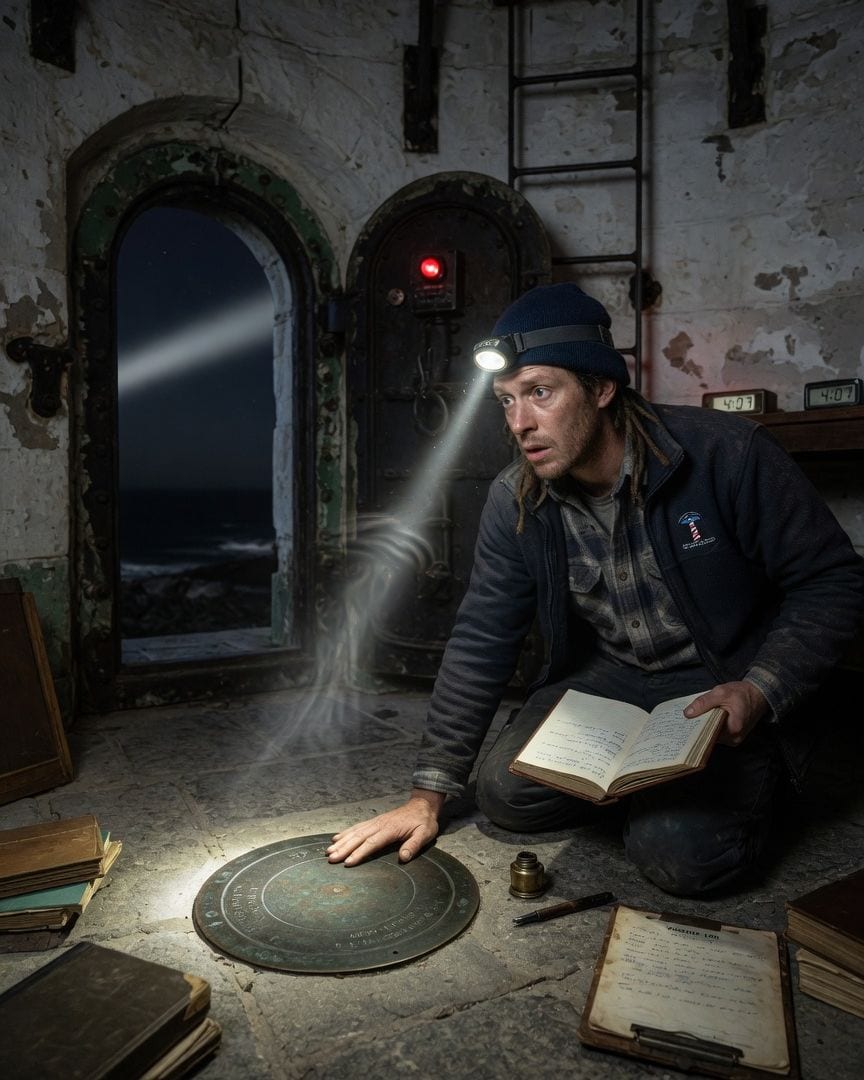
Every ninth year since 1901, my logbook records a boat through the gate at 4:05am — 'vessel through, none seen.' I was on watch tonight. Nothing passed.
As the lighthouse keeper, I log the same impossible entry every nine years, a lie I'm compelled to write. But tonight, a hidden brass disc in the floor, not on any blueprint, feels oddly warm. Hours later, it hums, and the air above it shimmers and distorts, then vanishes.
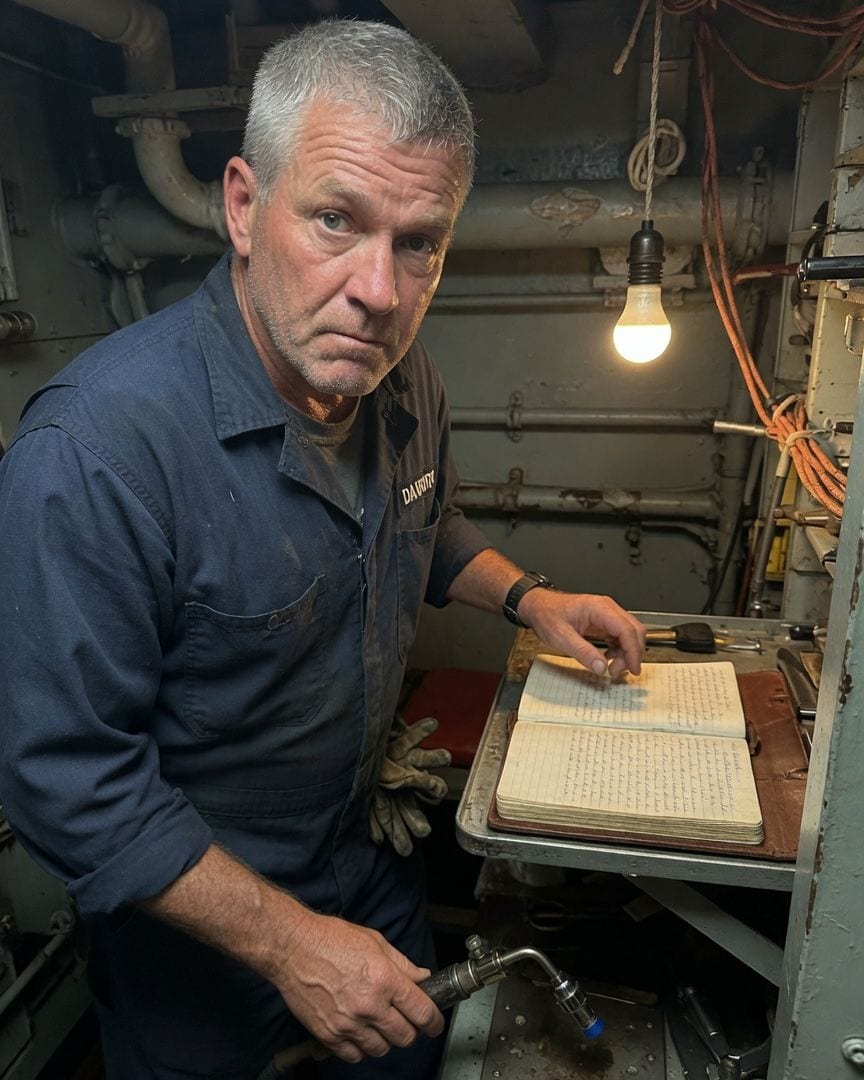
A week from shore duty, Chief Danforth cut a hatch where his ship's plans showed solid steel. An hour later, the wall was seamless, but the Cold War logbook from inside appeared under his mattress.
Chief Petty Officer Raymond Danforth, just a week from ending three decades of service, was intimately familiar with every pipe and plate of the guided-missile destroyer Weatherall. During a mid-cruise overhaul, his gloved hand found a sealed hatch where schematics promised only a solid bulkhead. He cut through the impossible seam to reveal a small, dry compartment, softly lit, containing a logbook filled with an unsettlingly familiar hand. When he returned an hour later with a witness, the hatch was gone, the wall seamless. Later that night, the same logbook appeared beneath his mattress, its pages revealing an entry: 'Petty Officer Howard Montgomery, missing, 1972.' How could a compartment vanish, yet leave its secrets behind?