Every ninth year since 1901, my logbook records a boat through the gate at 4:05am — 'vessel through, none seen.' I was on watch tonight. Nothing passed.
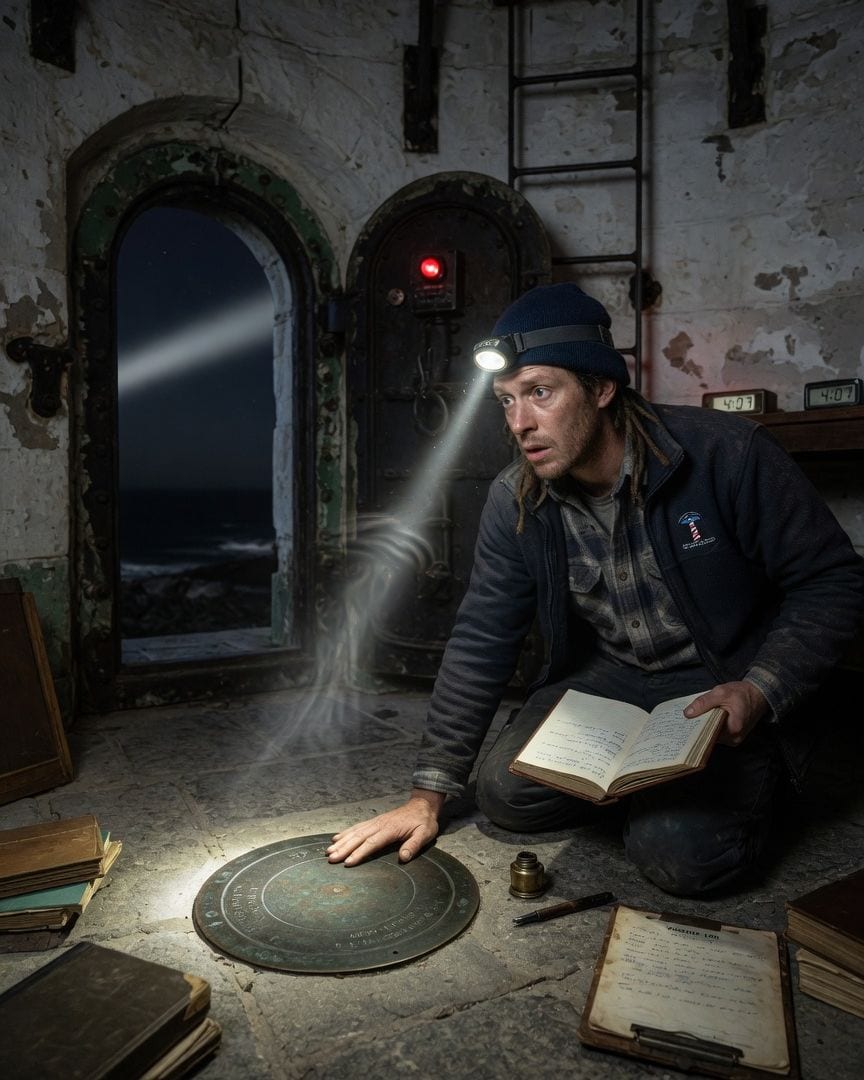
The shift was always quiet this time of night, or rather, early morning. 4:07 AM. I dipped the pen into the inkwell, the old brass glinting in the narrow beam of my headlamp.
The passage book lay open before me, its pages yellowed and brittle. Just two minutes past the official logging time. I’d done it, as required. 'Entry 47: vessel through, none seen.'
The words felt hollow, a lie I was compelled to write. Because, of course, I hadn't seen anything. Just the steady beam of the light cutting through the absolute darkness beyond the lantern room.
A low, almost subsonic hum vibrated through the stone tower. I’d dismissed it countless times as just the wind, or the ancient machinery settling. But tonight, it felt different.
It wasn’t a creak or a groan; it was a resonance, deep in my chest. I glanced at the previous entry, nine years prior. Same neat hand, same time: 4:05 AM. Same words: 'vessel through, none seen.'
And below it, in smaller script, the instruction: 'enter it the same, do not wait up.'
I flipped back through the old, leather-bound books, tracing the line of 'Entry 47' through decades. 1997, 1988, 1979… every ninth year since 1901. Each entry, in a different keeper’s hand, a faded testament to generations of quiet, impossible routine.
Always 4:05 AM. Always 'vessel through, none seen.' Always the chilling directive.
I ran my hand over the weathered page, the ink a faded blue-black, a silent echo of men who'd sat in this same room, penning the same inexplicable lie. It wasn't just a tradition. It was too consistent, too precise.
The recurring log entry gnawed at me. I couldn’t shake the feeling that I was missing something crucial, something right under my nose.
I started meticulously comparing the 'Entry 47' dates with my own scattered memories from the past few months.
Every time the log noted the unseen passage, I recalled a subtle, almost imperceptible shift in the lighthouse's internal acoustics – a momentary muffling, a distant echo where there should be none, like the air itself had momentarily thickened.
I’d always blamed tiredness, the sea playing tricks on the ear. But now, it felt too specific.
I decided to physically retrace the path of the 'vessel through the top gate.' The top gate.
It’s a heavy iron door leading to an external walkway that wraps around the lantern room, rarely used these days except for specific maintenance. The salt spray had etched patterns into the ancient iron, a testament to its isolation.
As I inspected the flagstones just inside the door, my boot scraped against something unusual. I knelt, brushing away a century of dust and grit.
There it was: a small, perfectly circular brass disc, about six inches in diameter, embedded flush with the floor. It was old, the metal dark with age, but clearly brass.
I’d studied every blueprint of this lighthouse, every maintenance log, every diagram of its structure. This disc wasn’t on any of them. It was as if it didn't exist, yet it was undeniably here. I touched it.
It was oddly warm, even in the biting island wind that whistled through the gaps in the stonework. I pressed my fingers harder, a strange heat radiating into my palm.
I tried to pry it, digging my nails into the narrow gap around its edge, but it was set deep, immovable.
I tapped it with my knuckle, and a faint, metallic resonance hummed back, a note distinct from the tower’s usual symphony of creaks and groans.
I checked the current log, then flipped back through the old passage books again, searching for any mention of the disc, anything at all. Nothing. No record of its installation, no maintenance notes, no explanation.
It was a secret object, hidden in plain sight, warm under my fingers. And I couldn’t shake the feeling that it was connected.
Driven by a persistent unease, I returned to the brass disc after my shift, hours after the 4:05 AM logging. The lighthouse was quiet, the only sound the distant crash of waves against the rocks below.
I knelt, pressing my palm to the disc. It was still warm, a faint, almost living heat.
As I watched, holding my breath, a faint, low hum began to emanate from beneath it, growing in intensity, a deep vibration that seemed to resonate in my very bones.
Then, slowly, directly above the disc, a shimmering distortion in the air began to form. It was like looking through heat haze on a summer road, but it was the dead of night, and the air was freezing.
It twisted, a column of disturbed air, barely visible, before collapsing back into nothingness within a few seconds.
I knelt there, hand still resting on the now-cool brass disc, my breath catching in the frigid air. The shimmering distortion above it had vanished, leaving only the steady beam of the lighthouse cutting through the night.
But the faint, low hum still echoed in my bones, a sound that shouldn't be there, a vibration that felt too deliberate to be the wind.
I looked from the empty air to the old, unlisted metal, then back to the void where something impossible had just been.
The memory of the shimmering distortion haunted me. It wasn't a trick of the light, or a tired mind playing games. I could no longer dismiss the 'Entry 47' as a quaint tradition or a keeper's private joke.
This was real. This was physical.
I began to research Bardsey Island's history, scouring old texts and local archives. I looked for any legends, any geological anomalies that might explain a 'passage point' or strange energy.
Nothing concrete emerged, only vague folklore about 'thin places' where the veil between worlds was said to be permeable. It was a nice story, but it didn’t explain a warm brass disc and a shimmering column of air.
My investigation turned to the Maritime Authority, the institution that manages the lighthouse. I started sending official requests for access to historical maintenance records, blueprints, and personnel files for previous Bardsey keepers.
I specifically focused on Michael Fletcher, whose neat, looping handwriting had logged the 'Entry 47' in 1997 – just nine years before my own predecessor. The official channels were predictably slow, bureaucratic.
My requests were met with polite delays, emails mentioning 'missing files,' and 'archival backlogs.' It was like pulling teeth.
I did eventually get my hands on some official blueprints of the lighthouse, dating back to its original construction. I spread them out on the floor of my living quarters, tracing every line, every measurement.
Not a single drawing, not a single detail, showed the brass disc. It was as if it didn't exist. This only solidified my growing suspicion: the disc, and by extension the 'passage,' was deliberately omitted from official records.
I cross-referenced the dates of every 'Entry 47' with recorded weather events from old shipping logs, looking for any patterns that might explain an 'unseen vessel' as a misidentified meteorological phenomenon. A rogue wave? A peculiar fog bank? Nothing.
No storm, no unusual atmospheric condition consistently aligned with the 4:05 AM entries. The hum, the warmth of the disc, the shimmering air – these were physical, tangible phenomena, not atmospheric illusions.
I started keeping my own, unofficial log. I detailed every time I felt the hum, every time I checked the disc's temperature, every time I stared at the empty space above it, waiting for the impossible to reappear.
The unease grew with each blank entry in my new log, each unanswered question from the Authority. This was bigger than a quaint local mystery. This was a deliberate cover-up.
My persistent inquiries eventually drew attention. I received an unexpected call from Charlotte Donovan, Head Archivist at the Maritime Authority Historical Records. Her voice was professional, clipped, but I detected an underlying coolness.
"Mr. Walsh," she began, "your extensive requests for historical documents are, frankly, unprecedented. And quite resource-intensive." She paused, letting the implication hang in the air. "Perhaps you should focus on your primary duties as keeper."
I sensed an opportunity. "Ms. Donovan, with all due respect, my primary duty is the integrity of this lighthouse. And there's something here that doesn't fit." I pressed her about 'Entry 47,' the impossible consistency of the log entries.
I described the brass disc, its inexplicable warmth, the deep hum I felt.
Charlotte paused, a beat too long. "Those old logs are full of colorful entries, Mr. Walsh," she said, her voice carefully neutral, almost practiced. "Keepers had long, solitary nights. They saw things."
"But the instruction," I countered, " 'do not wait up'? That's not just colorful. It's a directive. It's an order."
I heard a soft click, like a file closing on her end. "Some traditions are best left undisturbed, Mr. Walsh," she replied, her voice now firm, edged with something that wasn't quite menace, but definitely warning. "You're a new keeper.
Focus on the light. The beacon. That is your purpose."
The call ended abruptly. Moments later, I noticed a faint red light blinking on my lighthouse phone. It indicated a recorded line. I hadn’t seen it before. Had it been there all along?
I realized my calls to the Authority, and perhaps even my own living quarters, were monitored. The realization hit me like a cold wave: I wasn't just investigating a mystery; I was being watched.
Later that week, a small, unmarked package arrived by supply boat. No return address. Inside, carefully wrapped in brown paper, was a single, thick, leather-bound journal. It was old, the cover worn smooth, the edges softened by countless touches.
A note, typed and anonymous, simply stated: 'Fletcher. Bardsey. 1997.'
My heart hammered. Michael Fletcher. The keeper whose handwriting I'd seen in the passage book, who’d logged 'Entry 47' in 1997.
I poured over Michael Fletcher’s journal, every word a chilling confirmation. It was a meticulous, private log, far more detailed than the official passage books.
Fletcher documented his daily life – the gulls, the weather, the loneliness – but also, chillingly, the 'Entry 47' events.
He described the faint hum I knew so well as 'the passage’s song,' and the shimmering distortion as 'the veil thinning.'
He wrote about feeling a strange pull towards the brass disc on those nights, a compulsion to be present, but also the deep-seated instruction to 'turn away.'
Fletcher’s entries confirmed everything I’d observed, validating the impossible. He even described a specific 'maintenance routine' for the brass disc, involving polishing it with a unique, saline solution he concocted from seawater and some obscure mineral powder.
This was never mentioned in any official manual, another deliberate omission.
The journal's most disturbing revelation came in a series of entries from late 1997. Fletcher detailed how, after one 'Entry 47,' he disobeyed the 'do not wait up' instruction. He watched.
He saw nothing, he wrote, but felt a profound coldness, 'like a piece of the world had been carved out.' And then, a week later, a new entry: 'The Authority knows I watched. They sent a man.
Said it was 'unwise.' Said the balance was delicate. Said my role was to facilitate, not observe.'
This wasn't just a tradition. This was a managed operation. The institution, the Maritime Authority, knew. They had known for decades, perhaps centuries.
Armed with this undeniable evidence, I called Charlotte Donovan again. This time, I bypassed official channels entirely, using a burner phone I'd bought from one of the supply boat crew, leaving my monitored lighthouse line cold.
"Ms. Donovan," I said, my voice low and steady, "I have Michael Fletcher's journal. He wrote about 'the passage’s song' and 'the veil thinning.' He also wrote about 'a man' the Authority sent after he 'watched.'
He wrote about 'the balance.' What balance, Charlotte? What in God's name is happening here?"
Silence stretched, longer this time. Then, a shuddering sigh. Charlotte's professional composure finally cracked. Her voice, strained, barely a whisper, admitted: "The Authority has always known, Nathan. Since before 1901. It's not a vessel, not in the way you think.
It's a cycle. A recurring event. And the lighthouse is… the key."
Charlotte's admission hung heavy in the air, thick with the weight of decades of lies. "The key to what?" I pressed, my voice tight, demanding.
She sighed again, a sound of profound weariness that told me this burden was heavy. "To keeping it contained. To ensuring its regularity. It's been happening for centuries, Nathan. Bardsey is unique.
It sits on a naturally occurring nexus, a thin place where reality… frays. The lighthouse, its unique construction, amplifies and focuses it."
She explained that 'Entry 47' wasn't just a record of its activation. "It’s not just about logging it, Nathan," she said, her voice dropping to an urgent whisper, "It’s about enabling it.
The keepers… the keepers are part of the mechanism. They always have been."
She offered to send me 'the full protocol,' a classified document she’d only ever seen in physical form, stored in a deep, insulated vault beneath the Authority’s main building. She warned me it was highly sensitive.
"Destroy it after you read it, Nathan. Don't leave a trace."
A few hours later, a secure email arrived on my personal laptop, not the monitored lighthouse one. I downloaded the file, my hands trembling. It was titled 'Bardsey Protocol: Containment and Facilitation.'
I scrolled past decades of meticulously detailed, highly technical instructions for maintaining the lighthouse, all tailored to specific, unusual energy fluctuations. Diagrams of the brass disc, identifying it as a 'focal conduit,' appeared multiple times.
I found entries about 'scheduled power surges' for the lighthouse’s generator that aligned perfectly with the 'Entry 47' dates, designed to coincide with the natural activation cycle. The sheer, cold bureaucracy of it was terrifying.
An entire institution dedicated to managing something impossible. My eyes scanned to the final page, a single stark sentence in bold, capital letters, undated but clearly the ultimate directive.
Charlotte Donovan closed the file on her end, her face pale but resolute. "The Keeper is the final lock," she repeated, her voice barely a whisper through the burner phone.
I stared at the words on my screen, the weight of them settling like ice in my chest. I wasn't just a witness or an investigator; I was an active, essential part of the mechanism.
The lighthouse wasn't just a beacon; it was a cage, and I was chained to its purpose, whether I knew it or not.
The 'Bardsey Protocol' laid out the truth with chilling clarity, every line a razor-sharp edge.
The lighthouse wasn't merely observing a phenomenon; it was a precisely engineered apparatus designed to manage and contain a naturally occurring 'temporal bleed' on Bardsey Island.
The 'unseen vessel' was not a physical object, not a boat or a creature, but a scheduled surge of raw, unfocused temporal energy that, if unchecked, could unravel localized reality, stretching and tearing at the fabric of existence.
The brass disc, as I'd suspected, acted as a grounding plate, channeling the energy.
The specific maintenance schedules, the power adjustments to the generator, even the architectural design of the tower itself, with its unique internal geometry – all were fine-tuned to ensure this energy passed through a controlled 'gate' without incident.
'Entry 47' was the bureaucratic codification of this dangerous, cyclical event, an administrative timestamp for a cosmic occurrence.
The instruction 'enter it the same, do not wait up' was a psychological dampener, ensuring keepers maintained a detached, almost ritualistic, adherence to the protocol without conscious interference or emotional investment.
Michael Fletcher’s journal entries about the 'passage’s song' and 'veil thinning' were corroborated by the protocol’s technical descriptions of energy resonance and dimensional instability, terms that now had terrifying meaning.
The redacted sections of Fletcher's personnel file, which Charlotte had later forwarded separately, detailed his 're-education' after he 'observed' the passage, emphasizing the critical importance of the keeper's precise, non-interfering presence.
The Authority had known for over a century, passing down the protocol through generations of keepers, quietly managing the impossible as a matter of routine.
The dread was in the sheer scale of the deception, the calm, methodical way an entire institution had filed away a terrifying cosmic truth.
I confronted Charlotte over a crackling video call, the 'Bardsey Protocol' document open on my screen. "'The Keeper is the final lock,'” I repeated, the cold dread in my voice a palpable thing. "This isn't about observation, is it?
It's about participation. My participation."
Charlotte's face was a mask of grim resignation. "It ensures stability," she said, her voice flat. "The island, the mainland, the very fabric of time. Without the keeper's presence, the passage becomes unpredictable. Dangerous."
She explained that the keeper's active, conscious logging of 'Entry 47,' even without seeing anything, created a psychological anchor, a 'human constant' that helped stabilize the temporal flux.
My very act of writing in the log, the specific words, the precise time, was a necessary component, a cog in the cosmic machine.
I was trapped. I couldn't abandon my post without risking catastrophe, and I couldn't fight an institution that had quietly managed this for over a century, an institution that viewed me as little more than a necessary function.
The system was too vast, too entrenched. I was alone on Bardsey, a prisoner of a secret I never asked for.
I realized the 'do not wait up' wasn't just a warning; it was a command to maintain psychological distance, to prevent any personal investment that might disrupt the delicate balance.
I was to be a blank slate, a recording device, a lock. My attempts to expose the truth would only destabilize the system, and likely, me. I saw the cold logic of it, the horrifying coherence.
I was a part of the file they kept, a living, breathing entry in the longest running record of the impossible.
I remain at Bardsey. My official log entries continue, precise and unrevealing. I still log 'Entry 47' every ninth year, 'vessel through, none seen.' The hum still vibrates through the lighthouse, the brass disc still pulses with faint warmth.
I no longer seek answers; I understand the terrible, quiet truth. The Maritime Authority continues its operations, its vast bureaucracy undisturbed.
Charlotte Donovan has since retired, her position filled by a younger, equally professional archivist, who knows nothing of the Bardsey Protocol. Michael Fletcher’s journal remains hidden in my personal effects, a silent testament to the long line of unwitting participants.
The world outside Bardsey remains oblivious, safeguarded by generations of dedicated, silent keepers.
The sea mist rolls in, thick and cold, obscuring the mainland. I stand by the top gate, the brass disc cool beneath my boot. I feel the familiar, low thrum of the tower, a constant companion now.
I understand my purpose, my place in the meticulous, terrifying mechanism. I am the lock. I am the entry. I am the quiet, rational mind that keeps the impossible from spilling over.
I look out at the endless grey, the unseen passage humming beneath my feet. I will keep the light, and I will keep the record. I will not wait up.
A new keeper arrived a few years later, a quiet young woman named Genevieve Russo. Nathan Walsh greeted her with a calm, almost serene smile. He showed her the ropes, including the passage books.
'You'll find some… older traditions here,' he'd said, his eyes distant. 'Some things are best logged as they are, and not waited up for.' Genevieve nodded, polite and unaware.
Nathan poured her a cup of tea, black, just as Michael Fletcher had taught him. He watched her across the small kitchen, a faint, almost imperceptible hum resonating deep within his chest.
The silence stretched, broken only by the distant crash of waves. 'Is that so?' she asked, taking a sip. Nathan just smiled, a faint, wrong little smile.
If this one got to you
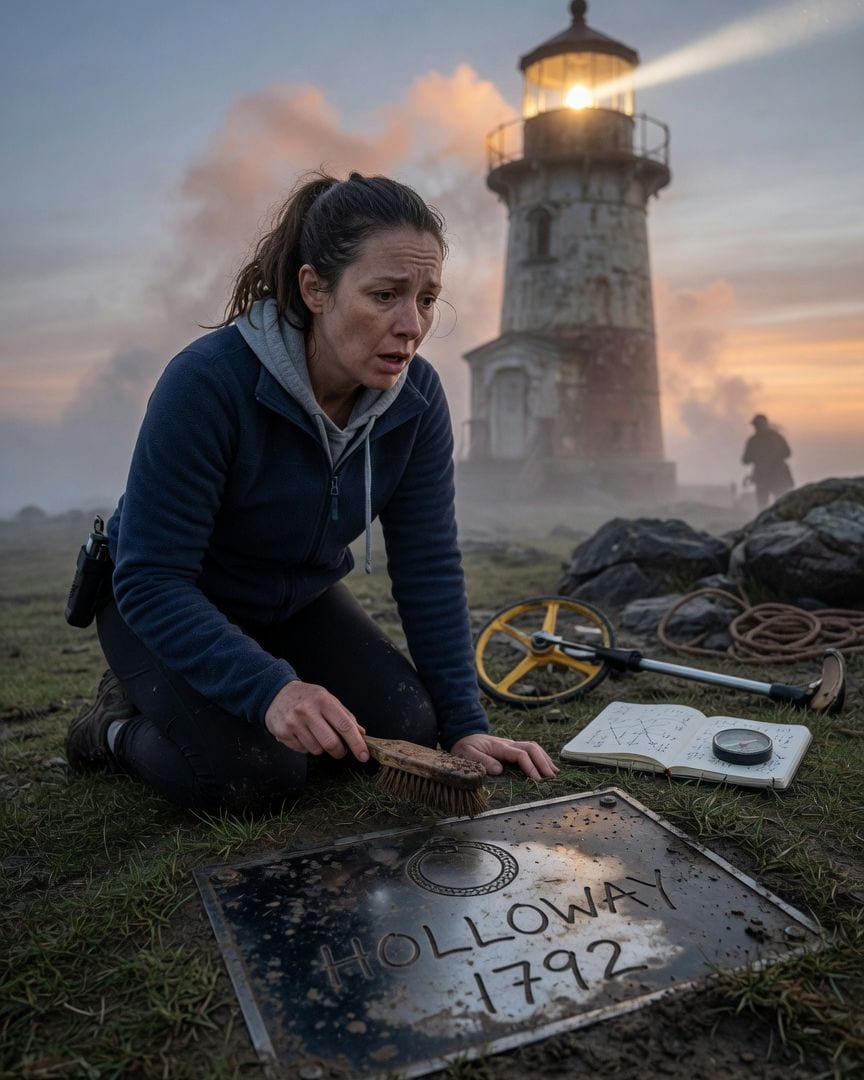
My coastal path just kept curving me back to the lighthouse. Nine miles walked, the same fisherman coiling rope, but I never left.
My morning ritual is a brisk walk along the coastal path. But last Tuesday, after what felt like an hour, I found myself back at the lighthouse, having walked miles to nowhere. My step-counter read 4.5 miles, yet the same fisherman was still coiling the same rope right where I started.
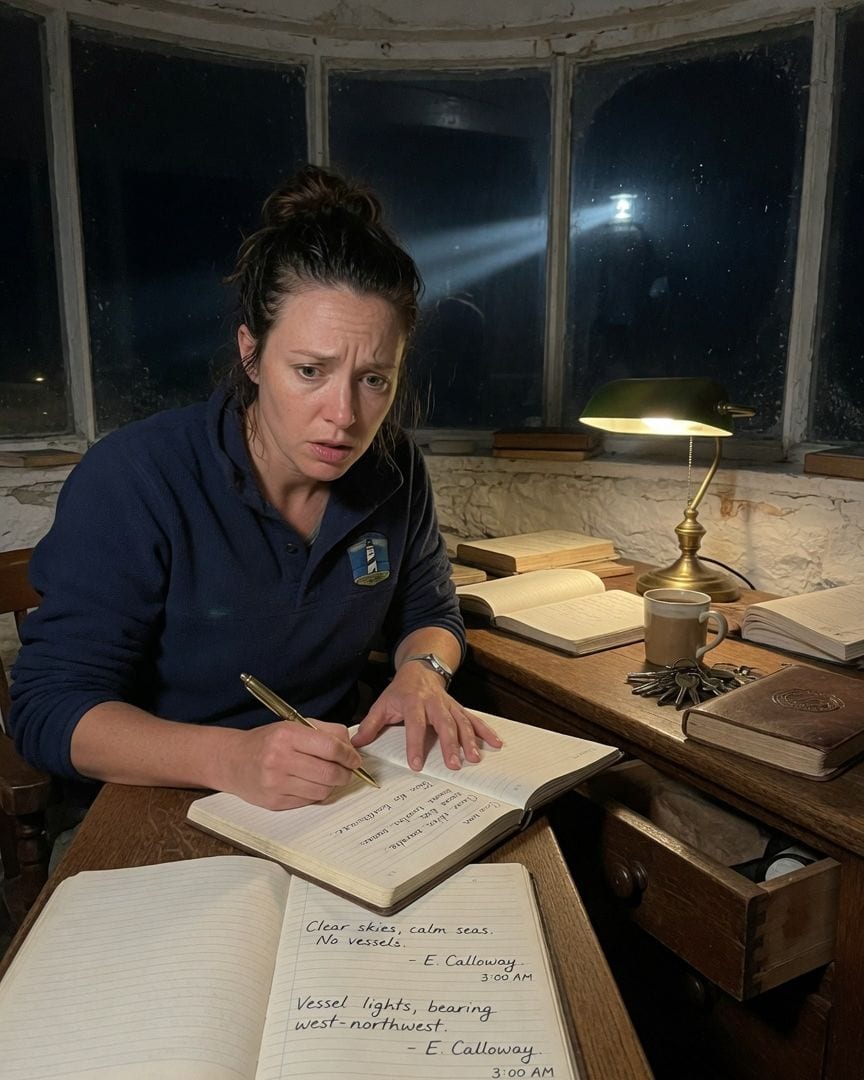
My logbook had a 3 AM entry, in my own precise hand, that I never wrote. Then I found an impossibly cold, hidden book with my name signed to an identical entry from last night.
My routine lighthouse shift was quiet until I noticed a new entry in the official logbook. Dated 3:00 AM, it described a vessel I never saw, written in my exact handwriting, and signed with my name. But I hadn't penned a single word.
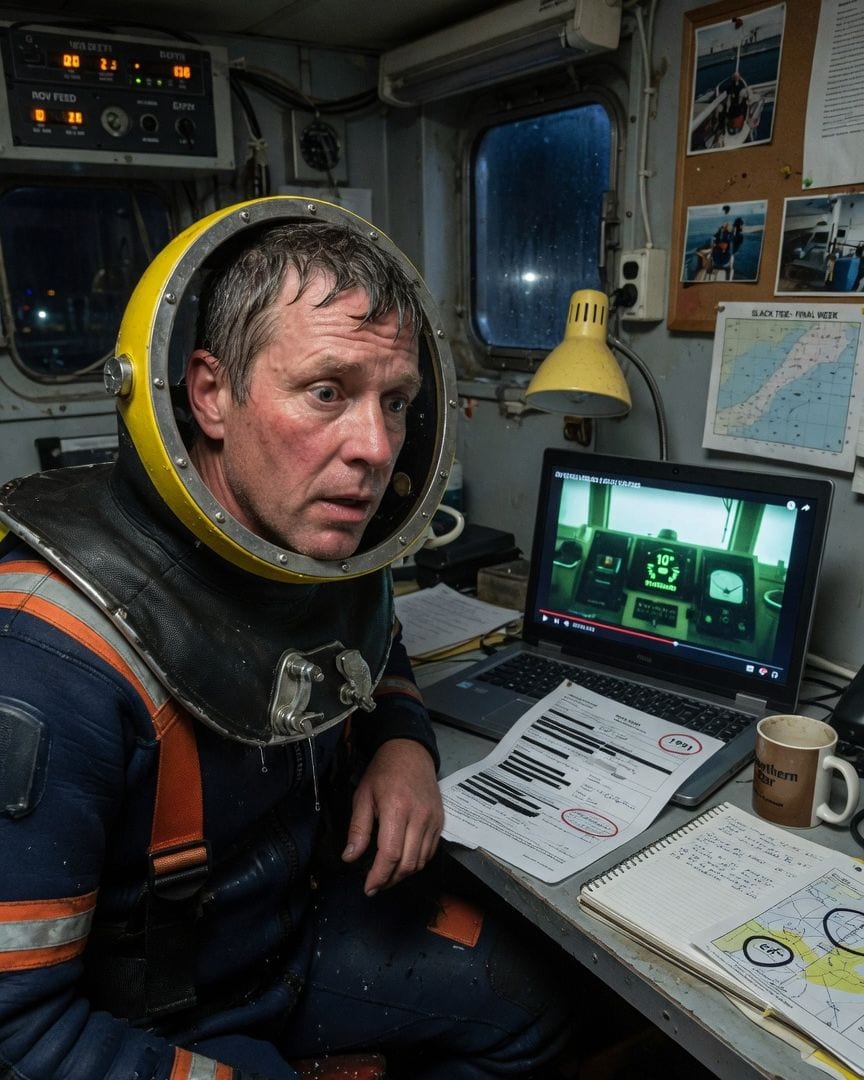
A deep-sea surveyor's final dive into a 1991 wreck found a logbook dated 2023, and a figure watching him.
Deep-sea surveyor Hugo Amsel faced the final week of his Bering Sea survey, under immense pressure to find conclusive evidence before the short season closed. In the abyssal gloom, he located the *Wynn Portal*, a sealer lost with fourteen crew in 1991, surprisingly intact. Through its clear wheelhouse window, he saw a rudder indicator glowing green, an impossible light on a dead ship. Later, on a second dive, he found a leather logbook tucked beneath the helm, open to a page clearly dated 2023. As he stared, a shadow inside the window shifted, coalescing into a figure watching him from the depths.
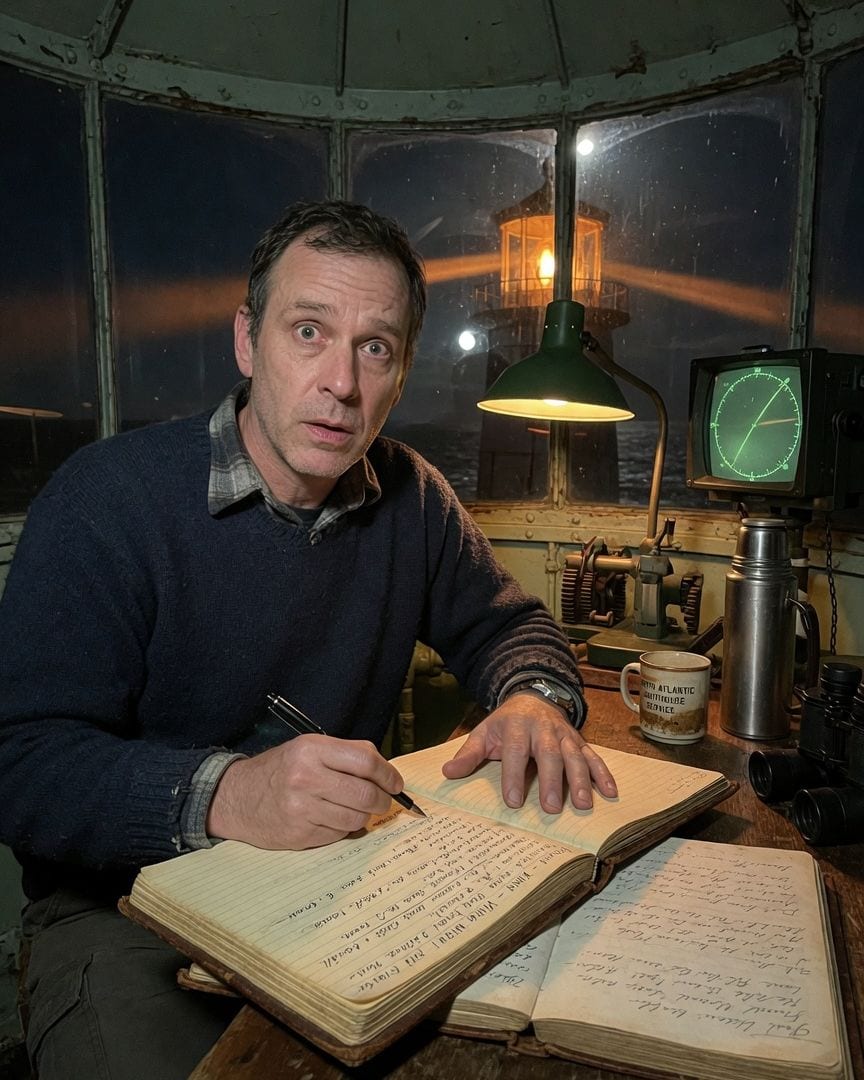
My lighthouse log has my own 3 AM entry for a phantom ship. I was alone in the tower, and I wrote no such thing.
Perched in the lantern room for my usual 2-6 AM watch, I reached for the thick logbook. But the 3:00 AM entry, under my own name, detailed a vessel I never saw. The words were in my own ink, yet I had never written them.
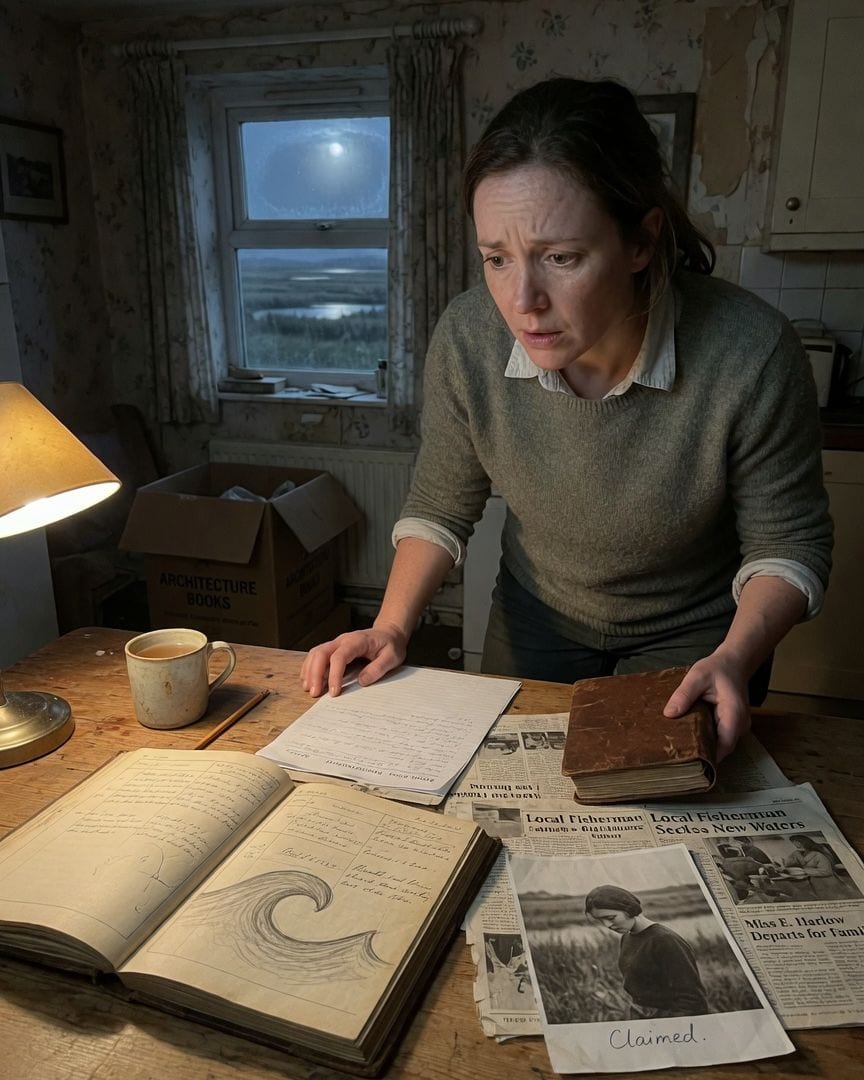
The light crosses the estuary on six specific nights a year. My ferryman called it marsh gas, but the coastguard's log entries for it stop abruptly and resume in a new hand.
I moved to Blackwater Bay for a fresh start, but the quiet marsh holds a secret. One night, I saw a strange light gliding across the mudflats, which the ferryman dismissed as 'marsh gas.' Later, an old coastguard log revealed entries for this 'estuary light' abruptly stop mid-sentence, then resume in a different, shaky hand.
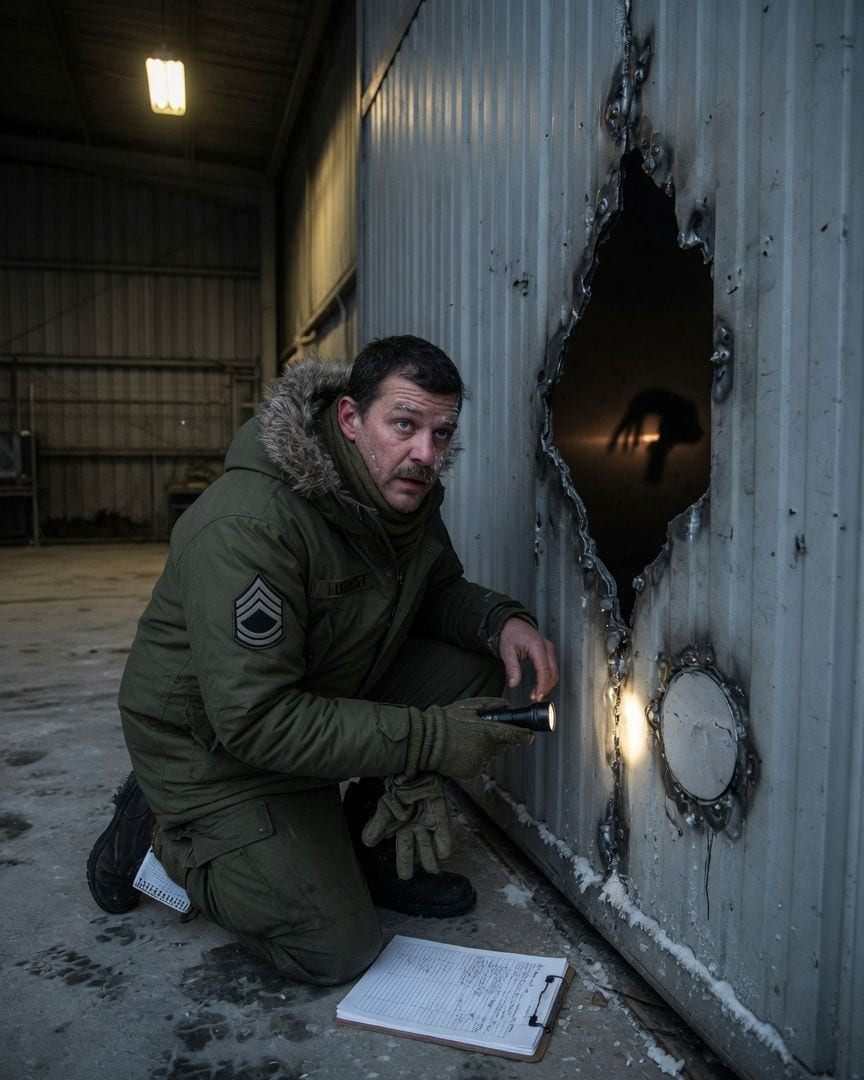
A Cold War technical sergeant found a sealed hangar door, but a secret vent led to a deep hum. Then, a slow, orange light pulsed from the darkness inside.
In the Alaskan winter of 1978, Technical Sergeant Wes Lindquist's rigid routine involved hourly temperature checks for the officially empty Hangar Bay Two. Despite being welded shut for months, the bay consistently registered nine degrees warmer than ambient. As official dismissals failed to explain the anomaly and the internal temperature climbed, Lindquist kept a secret log. His curiosity led him to a hidden vent in the crude weld, where he felt a deep, resonant hum vibrating from within. Shining his flashlight into the void, a faint, rhythmic pulse of dull orange light bloomed and receded, casting a writhing shadow too large for anything known.