My coastal path just kept curving me back to the lighthouse. Nine miles walked, the same fisherman coiling rope, but I never left.
The coastal path is my morning ritual. Every day, weather permitting, I walk from the base of the old lighthouse, south along the cliffs towards the harbour.
It’s a little over a mile, a brisk twenty-minute loop if I keep a good pace. The air is always sharp with salt, the gulls crying overhead.
Last Tuesday, the fog was just lifting, swirling around the base of the lamp, making the sound of its rotation a little muffled, like it was underwater.
I set out, step-counter clipped to my waistband, aiming for the usual turnaround point. I walked for what felt like a solid hour, maybe more, enjoying the quiet.
I passed the familiar patch of sea thrift, then the old gnarled pine that leans precariously over the cliff edge. I even heard the distant thrum of the fishing boats heading out – or so I thought.
When I rounded what I swore was a new bend, the fog thinned suddenly, and there it was. The lighthouse. Right in front of me.
Its lamp swept over the rocks, casting a brief, bright spotlight on the small figure below: old Mr. Henderson, the same fisherman who’s always there, methodically coiling his thick, weathered ropes.
He had been there when I started, an hour ago. He was still there. Coiling the same rope.
My stomach did a quick flip. I pulled out my phone, no signal, but the step-counter read 4.5 miles. Four and a half miles? To be back exactly where I started? It had to be a glitch.
A software error, maybe. Or I’d been more distracted than I thought.
I shook my head, tried to laugh it off. Clearly, I needed more coffee. I turned around, deliberately choosing what felt like a different path, heading inland slightly before curving back towards the coast.
I paid attention this time, noted every rock, every gorse bush. I kept my eyes on the distant horizon, refusing to let the familiar landmarks trick me.
Another hour passed. My legs were starting to ache. The wind picked up, carrying the scent of salt and something else – damp stone, maybe. I rounded a corner, heart thumping, certain I’d finally broken free. But no.
The beam of the lighthouse lamp cut through the damp air, sweeping across my face.
Below, on the same patch of dark, slick rocks, Mr. Henderson, the fisherman, was still there, his back to me, still coiling the same thick, brown rope. My step-counter beeped softly, displaying 9.1 miles. Nine point one miles.
And I was standing in the exact spot I’d started from, the same distant cry of gulls fading into the roar of the surf.
The next day, I didn't walk for pleasure. I walked for answers. This wasn’t some trick of the light or a bout of momentary absentmindedness. Nine miles to nowhere doesn’t just happen. I needed data.
I returned with a small arsenal: my phone with a tracking app, a physical compass, and an old, clunky measuring wheel I’d borrowed from my neighbour. The plan was simple: map every inch of that coastal path.
I started at the lighthouse again, the solid, comforting presence of its stone a contrast to the unsettling experience of the day before. I set my phone to record my track. For the first fifteen minutes, it seemed normal.
The blue line crawled steadily away from the lighthouse.
Then, without warning, the line on the screen flickered, zipped erratically across the map, showing me spiraling in impossible turns, before snapping back, with an unnerving precision, directly to the lighthouse icon.
My actual physical self, however, was still plodding along. The app was useless.
My physical compass, though, behaved perfectly. North was north, always. The needle stayed true, unaffected by whatever temporal or spatial weirdness was unfolding around me. This made the next discovery even more unnerving.
The measuring wheel. This was the one that broke me. I pushed it along the path, its little clicker counting out the feet and yards. I painstakingly marked distances, noting familiar landmarks.
I reached the gnarled pine tree I mentioned, a distinct marker. The wheel had registered just under half a mile. I continued, around a bend, past a small rock formation, back towards what felt like the start.
When I checked my notes against the wheel's reading at a point I knew should have been a mile, it was off. Dramatically. It was as if I’d covered a physical distance, but the wheel had registered almost zero.
Or, in one particularly baffling segment, even slightly negative distance, as if the path had somehow shortened behind me. It was absurd.
I knelt there, confused, tracing the numbers in my notebook. The sun was dipping, painting the sky in fiery streaks.
My fingers, still gritty from checking the measuring wheel’s gears, brushed against something hard and metallic near the base of the lighthouse, right where I’d stood yesterday.
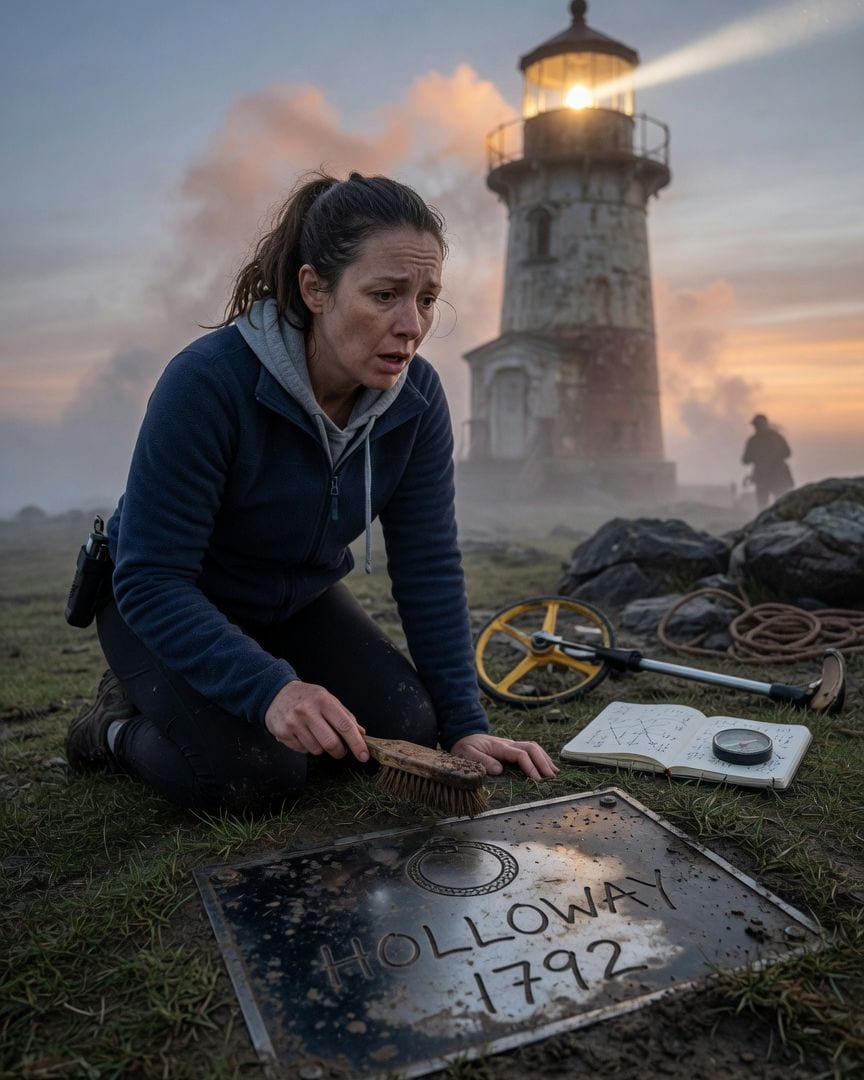
It was half-buried in the overgrown grass, almost flush with the earth, something I must have walked past a thousand times. I scraped at the dirt, revealing the edge of a weathered, ancient stone marker. No, not stone. Metal.
Etched into its surface, barely visible beneath centuries of grime, was a symbol. A looping arrow, like an ouroboros, but tighter, more intricate. It seemed to coil in on itself, endless.
A sudden urgency seized me. This wasn't just a random carving; it felt like a clue. I dropped my measuring wheel and pulled a small, stiff-bristled brush from my backpack, one I usually used for cleaning my hiking boots.
I got on my knees, digging away at the earth around the marker. It wasn’t a marker at all, not in the traditional sense. It was a metal plate, heavily oxidized, almost black with age, hammered flat into the ground.
The scrubbing was slow work, the rust and dirt thick. The salt air had done its job over centuries. But bit by bit, the surface cleared.
The looping symbol emerged, sharp and deep, clearly cut by human hand, not eroded by chance. It looked deliberate, significant.
And below it, unmistakable now, were etched words. Two of them. In a script that was so old it was almost alien, but legible enough to steal the air from my lungs. The first word was 'Holloway.' My surname.
And then, a date: '1792'.
The lighthouse lamp swung around, its powerful beam briefly catching the glint of the newly exposed metal, illuminating my stunned face. Then it swept past, plunging me back into the sudden, deeper shadow.
I knelt there, frozen, staring at my own name, an antique, precise inscription, on a plate half-buried in the ground, right here by the lighthouse. Two hundred and thirty-two years old.
The nine miles to nowhere was terrifying, yes. But 'Holloway, 1792' carved into that metal plate? That was a cold, precise dread that settled in my bones. The path was an external wrongness. The name was personal. My name.
On something so ancient, so deliberately placed.
I spent the next morning at the local historical society, a place I’d only ever visited for school projects as a kid. Pamela Novak, the head librarian, was a small, severe woman with sharp eyes and a perpetually disapproving frown.
I laid out my story, leaving out the most impossible parts – the looping path, the step-counter – and focusing on the plate.
'I found this old metal marker near the lighthouse,' I explained, 'with my family name and a date from the late 1700s. Do you have any records that might explain it? Property lines, old surveys, anything?'
Pamela raised a skeptical eyebrow. 'Holloway, you say? Probably just an old family marker. People used to put those up all the time. Local eccentricity, nothing more.' She tapped a perfectly manicured nail on her desk.
'We've no indexed records of that sort going back so far, not explicitly for individual markers.'
'What about any old maps?' I pressed. 'Or anything about unusual coastal geography from that era? Or any significant Holloway families in the area around that time?'
I could tell she was annoyed, but something in my voice, or perhaps the sheer stubbornness of my gaze, made her sigh.
'Well,' she conceded, 'there was that peculiar little outfit. The Coastal Cartography Bureau.' She gestured vaguely towards a section of the archives tucked away in a dimly lit corner. 'Defunct for over a century.
Most of their stuff is just mundane survey maps. Boxed up, uncatalogued. Goes back to the late 1700s, I think. You're welcome to rummage, but I doubt you'll find anything.'
The way she said 'rummage' made it clear she thought I was wasting my time.
I spent the next few hours in that dusty corner, pulling down heavy, leather-bound boxes, the air thick with the scent of old paper and dust motes dancing in the weak light. Most of it was mundane.
Tax registers, land deeds, incredibly detailed but utterly boring survey maps. Then, in the bottom of a particularly decrepit box, I found it: a small, leather-bound ledger, its spine cracked, held shut with a rusted clasp.
Tucked inside, loose between two yellowed pages, was a hand-drawn map.
It was undeniably local. The lighthouse was there, a precise little sketch. The coastline, the harbour. But then things got strange. The paths, the very lines of the coast, twisted in ways that felt wrong, almost artistic.
Like an Escher drawing, but subtler. Distances didn't reconcile; paths clearly folded back on themselves, impossible geometry drawn with delicate precision. And scattered at key points, including right at the lighthouse, was the looping symbol.
The same one from the metal plate. It stared up at me, a silent, impossible language.
Days blurred into a haze of yellowed parchment and fading ink. I ignored the strange weight in the air, the subtle shift in the library's quiet that seemed to press down on me whenever I was studying the Bureau's documents.
I found more maps, more ledgers. Each one reinforced the terrifying pattern: impossible geometries, paths that defied logic, all meticulously documented, all marked with that looping symbol. The Bureau wasn't just observing oddities; they were drawing them. With purpose.
One afternoon, I returned from a quick break, a cup of lukewarm tea in hand, ready to cross-reference a specific entry in the original leather-bound ledger – the one with the hand-drawn map tucked inside. My table was empty.
The ledger was gone.
My breath caught. I spun around, my eyes darting across the empty tables, the towering shelves. Pamela Novak was at the circulation desk, tidying some returns. I called out to her. 'Pamela? Have you seen the ledger?
The old brown one?' She glanced up, her expression briefly unreadable, then looked back down at her work. 'I haven't touched your things, Charlotte,' she said, her voice flat, not quite meeting my gaze. 'Perhaps you misplaced it.'
But I hadn't. I never would have left it.
A knot tightened in my stomach. I searched everywhere, but it was gone. Later that evening, as I walked to my car, the cold sea air biting at my cheeks, I found a small note tucked under the windshield wiper.
It was just a single, neatly folded piece of paper. On it, drawn with a precise, almost elegant hand, was the looping symbol. And beneath it, a stark, unsettling phrase: 'Some things are better left unmapped.'
The dread solidified into a cold, hard lump. This wasn't a glitch, not an accident. Someone knew. Someone was watching. I scanned the street, my heart hammering against my ribs. And then I saw him.
Daniel Walsh, the local historian, a man known for his encyclopedic knowledge of the area's obscure past. He was standing across the street, leaning against the lamppost, ostensibly looking out at the harbour.
But his gaze, when I met it, was fixed on me. A faint, unreadable smile played on his lips. He didn’t look away. Not even when I stared back, my blood running cold.
I found Daniel Walsh at the small café on the main street the next morning, nursing a cup of tea. He looked up as I approached, that same unreadable smile, as if he’d been expecting me.
'You know about the Bureau, don't you?' I demanded, my voice tight, adrenaline singing in my veins. 'You know about the maps, the symbols. You sent that note.'
He simply nodded, took a slow sip of his tea. 'The Bureau was a fascination of mine for many years,' he said, his voice calm, almost academic. 'As for the note... a polite suggestion, Charlotte.
Some truths are best left undisturbed.' He didn’t deny sending it.
'What was it?' I pushed, leaning across the table. 'Those maps, the path that keeps looping back. My step-counter reading nine miles but me standing in the same spot.'
He set down his cup. 'The Bureau wasn't just mapping,' he explained, 'it was... maintaining.' He looked at me, his eyes surprisingly gentle. 'The looping symbol, Charlotte, marks what we call "stabilization points." For spatial anomalies.
Certain areas of the coast, for reasons we still don't fully understand, possess inherent geometric instabilities. They don't conform to standard physics.'
He reached into a worn leather satchel he had beside his chair and pulled out a rolled-up scroll of parchment, tied with a thin, faded ribbon. He unrolled it carefully on the table, a gasp escaping my lips.
It was a map. Not a hand-drawn sketch like the one I found, but an impeccably preserved, official Bureau document. Its lines were precise, its colours vibrant even after centuries.
This map wasn't distorted in the 'artistic' way of the other. No. Its accuracy is the distortion.
It meticulously charted sections of the coastline where distance, time, and even direction behaved in ways that defied conventional understanding. Where a mile could be a foot, or an hour could stretch into an afternoon with no physical movement.
'The coastal path you walked,' he said, his finger tracing a section of the map that mirrored the familiar bends near the lighthouse, 'its recurrence isn't a glitch, Charlotte. It's a deliberate, engineered effect. A containment loop.'
His finger moved to a small, intricate drawing of the lighthouse. 'This is a primary anchor. And the fisherman you see? Old Mr. Henderson?' He pointed to a tiny, stylized figure on the rocks below. 'He’s a "repeating observation."
A constant, consistent presence. A visible, unchanging element to help ensure the stability of the loop.'
I stared at the map. It was a terrifying blueprint. A world operating by different, impossible rules. And it wasn’t some recent phenomenon; it had been known, meticulously documented, and managed for centuries.
The dread that swept over me wasn't that I was wrong, that my perceptions were flawed. It was that everything was so perfectly, consistently, terrifyingly right.
Daniel Walsh, still maddeningly calm, leaned closer to the map. He gestured to a small legend printed at the bottom, almost lost in the intricate details. 'The Bureau had various designations,' he murmured, 'for different types of anchors.
Points of interest, recurring observations, structural anchors like the lighthouse itself...'
His finger drifted across the map, then stopped. He tapped a specific spot, a small, almost invisible detail next to one of the larger stabilization points I'd already noticed. It was a faded, handwritten annotation. A single, stylized 'H'.
My breath caught in my throat. The 'H'. The 'Holloway' on that metal plate, almost swallowed by the earth near the lighthouse. It couldn't be a coincidence.
Daniel's finger, steady and unwavering, traced a line from that small 'H' mark. It extended across the map, over sections of the impossible coastline, past the looping paths, until it landed on a specific, distorted square.
A square that, by all rational geography, should have been nowhere near this looped coastal path. It was situated in an impossible location, yet it was clearly defined.
And printed beneath that distorted square, in precise, official Bureau script, are two words: 'Holloway Residence.'
My own house. My home.
A cold dread, unlike anything I’d felt before, spread through me, numbing my limbs. It wasn't just that my house was near this impossible place, an observer to its strange physics. It was inside it.
A fundamental, documented, ancient part of the distortion itself. For generations.
Daniel Walsh watched me, his expression unreadable, as the full implication of 'Holloway Residence' washed over me. He simply nodded, a slow, deliberate gesture.
'The 'H' doesn't just mark a residence, Charlotte,' he said, his voice quiet, devoid of any judgment or surprise. 'It marks a lineage. Your lineage.'
He reached into his satchel again, pulling out yet another ledger, even older than the first, its leather cracked and faded to an almost indistinguishable brown.
He opened it to a page filled with meticulously recorded family trees, drawn with the same precise hand as the maps. My breath hitched as I saw it: 'Holloway.'
'The Holloway family,' he explained, tracing a delicate finger down a branching line on the page, 'has been integral to the Bureau's work for generations. Not as cartographers, no. But as... anchors.'
He showed me entries dating back to the late 1700s, names I recognized from distant relatives, all meticulously linked to the 'Holloway Residence' stabilization point.
He explained, with a chilling matter-of-factness, that certain bloodlines possess a passive, inherent resonance with these impossible geometries. Their presence, their very existence, was vital for maintaining the stability of these spatial anomalies.
The impossible path. The recurring fisherman coiling his rope. The very fabric of this distorted space that twisted distance and time around itself. All of it, he said, relied on the 'Holloway Residence' as a keystone.
And, by extension, on me.
I wasn't just a witness. I wasn't just someone who’d stumbled onto an old secret. I was, and had always been, part of the mechanism. An unwitting cog in a machine built over centuries.
I stared at him, my mind reeling. 'What does that mean?' I finally managed, my voice a thin whisper. 'What does "anchoring" mean for me? Do I have to... do something?'
Daniel shook his head slowly. 'It’s a quiet duty, Charlotte. A natural resonance. You don’t have to "do" anything. You just have to "be."' He looked at me with an almost sympathetic gaze.
'Your presence here, within the designated parameters, is enough to maintain the stability of this particular loop.'
The words hammered into me. My life. My home. My very existence. Reduced to a component in some vast, unknowable system. An object, not a person. I tried to argue, to deny it, to grasp for some shred of agency.
'That's insane! I can just leave! I can sell the house, move away!'
He simply held up a hand. 'Perhaps. But you would be removing a critical anchor, Charlotte. The consequences for this region, for the stability of this geometry, are... considerable.' He didn't elaborate, but the implication hung heavy in the air.
Then he pulled out a faded, sepia-toned photograph from the ledger, its edges soft with age. It showed a group of serious-faced individuals from the late 1800s, standing near the lighthouse, its lamp a familiar blur in the background.
My eyes were drawn to the woman in the foreground. She bore an unmistakable resemblance to me, a striking familial likeness that punched the air from my lungs.
Her eyes, so like mine, were fixed on the distant harbour, the harbour the path would never reach. And pinned to her simple, dark dress, a small, stylized 'H' brooch glinted faintly in the old photograph.
A profound, inescapable pull settled over me, a terrifying sense of belonging to this impossible geometry that I had only just discovered. It wasn't a choice anymore. The decision wasn't whether to leave, but whether I ever truly could.
I left Daniel Walsh and the Bureau's archives, the heavy weight of centuries of 'duty' pressing down on me like a physical burden. The world outside looked exactly the same.
The same grey sky, the same crashing waves, the same familiar houses lining the streets. But to me, it was fundamentally altered. Shimmering with unseen lines of force.
I drove home, the landscape around me now whispering secrets I could almost hear.
Every road sign, every street corner, seemed to hint at hidden, impossible pathways, routes that bent and folded against logic, all held in place by invisible anchors.
I understood now why the path always returned me to the lighthouse; it was my anchor, my designated post, a point in a geometry that demanded my presence. The dread wasn't in the unknown anymore.
It was in the chilling, absolute coherence of it all. Every wrong detail, every impossible loop, now clicked into a terrifying, seamless whole.
I walk the coastal path every morning now. The lighthouse lamp still turns, its beam sweeping over the familiar rocks. The fisherman, Mr. Henderson, is always there, coiling his rope, his back to the sea, a constant, living marker.
I pass him, and I know exactly where I am, and more terrifyingly, where I isn't. I know the true mileage of my world, the distances that fold and unfold around me.
When I return to my house, I sometimes run my hand over the old, weathered porch post, tracing the faint, almost invisible etching of a looping symbol. I never noticed it before.
It’s always been there, just like the plate by the lighthouse, just like the maps. Part of the weave.
The house breathes around me, a fixed point in a world that refuses to settle, and I am its oldest inhabitant.
If this one got to you
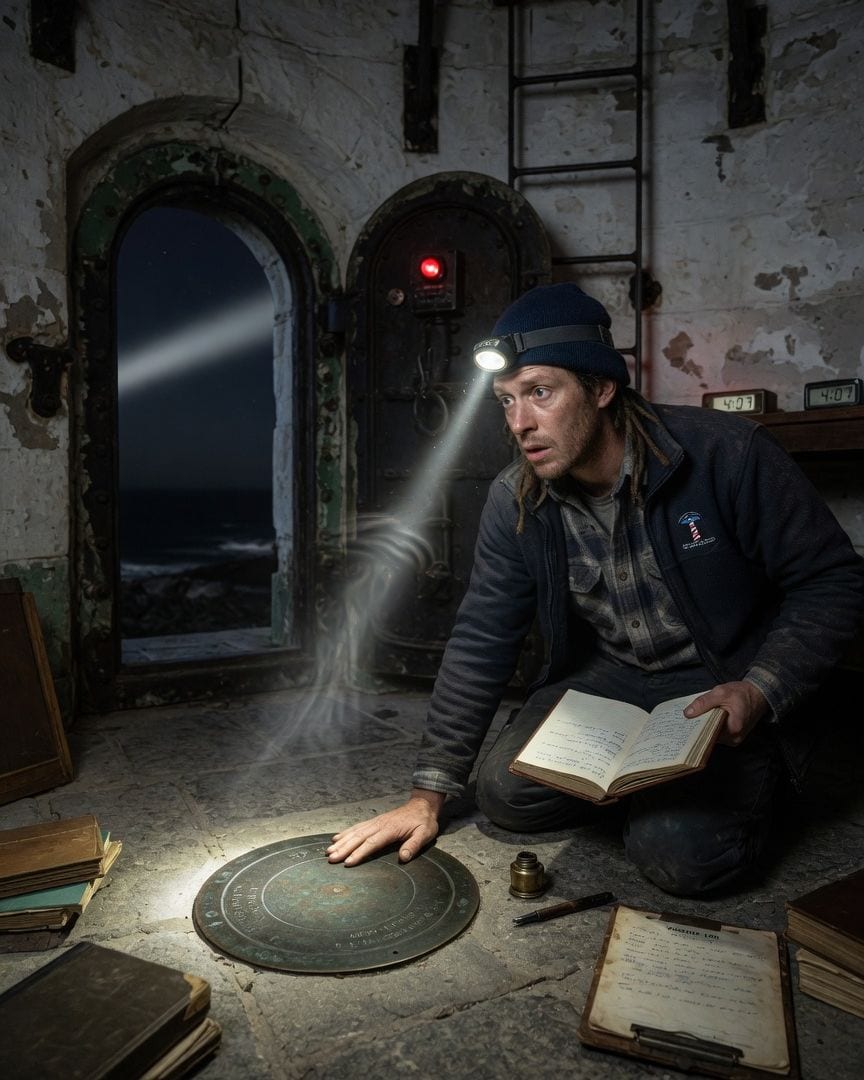
Every ninth year since 1901, my logbook records a boat through the gate at 4:05am — 'vessel through, none seen.' I was on watch tonight. Nothing passed.
As the lighthouse keeper, I log the same impossible entry every nine years, a lie I'm compelled to write. But tonight, a hidden brass disc in the floor, not on any blueprint, feels oddly warm. Hours later, it hums, and the air above it shimmers and distorts, then vanishes.
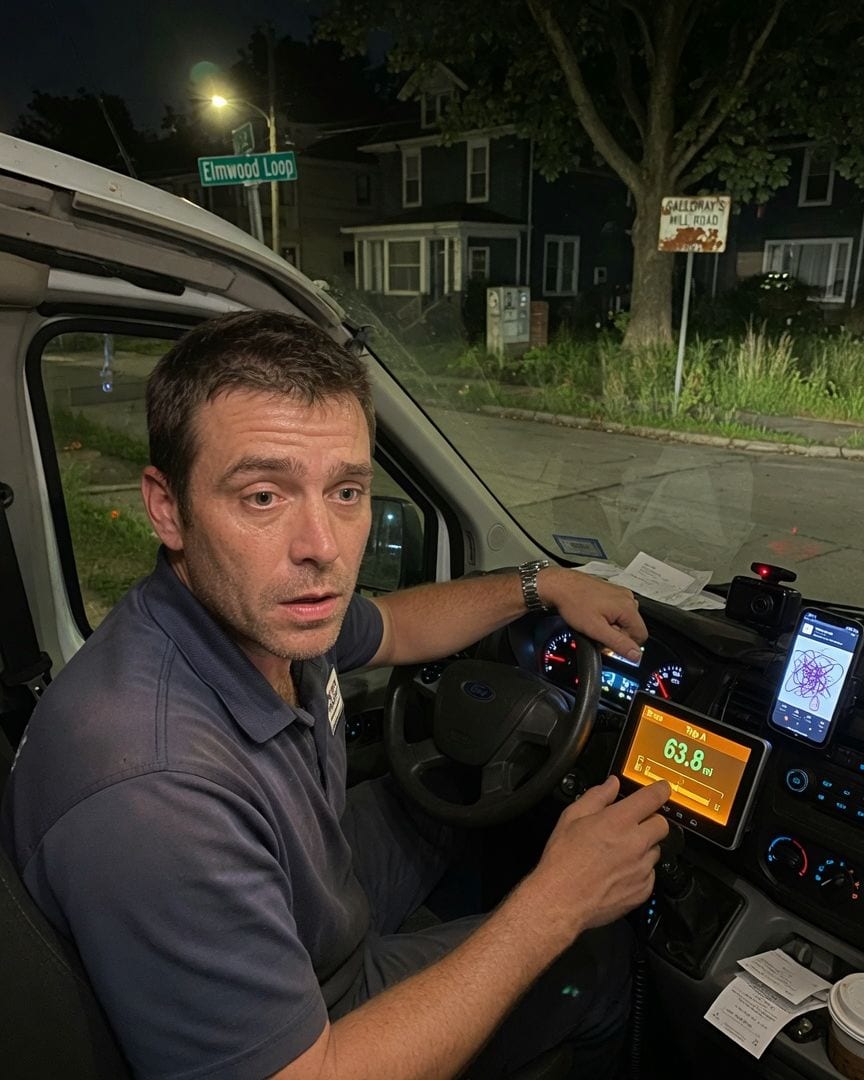
My delivery van's fuel gauge dropped a quarter tank on the Elmwood loop last night. It logged sixty-three miles, a loop I can walk in ten minutes.
I know my routes and my van, but the Elmwood Loop was different. My GPS app showed me standing still on the street, even as I walked for miles, my colleague confirming I hadn't moved. The impossible location left a blank, grey spot on the map.
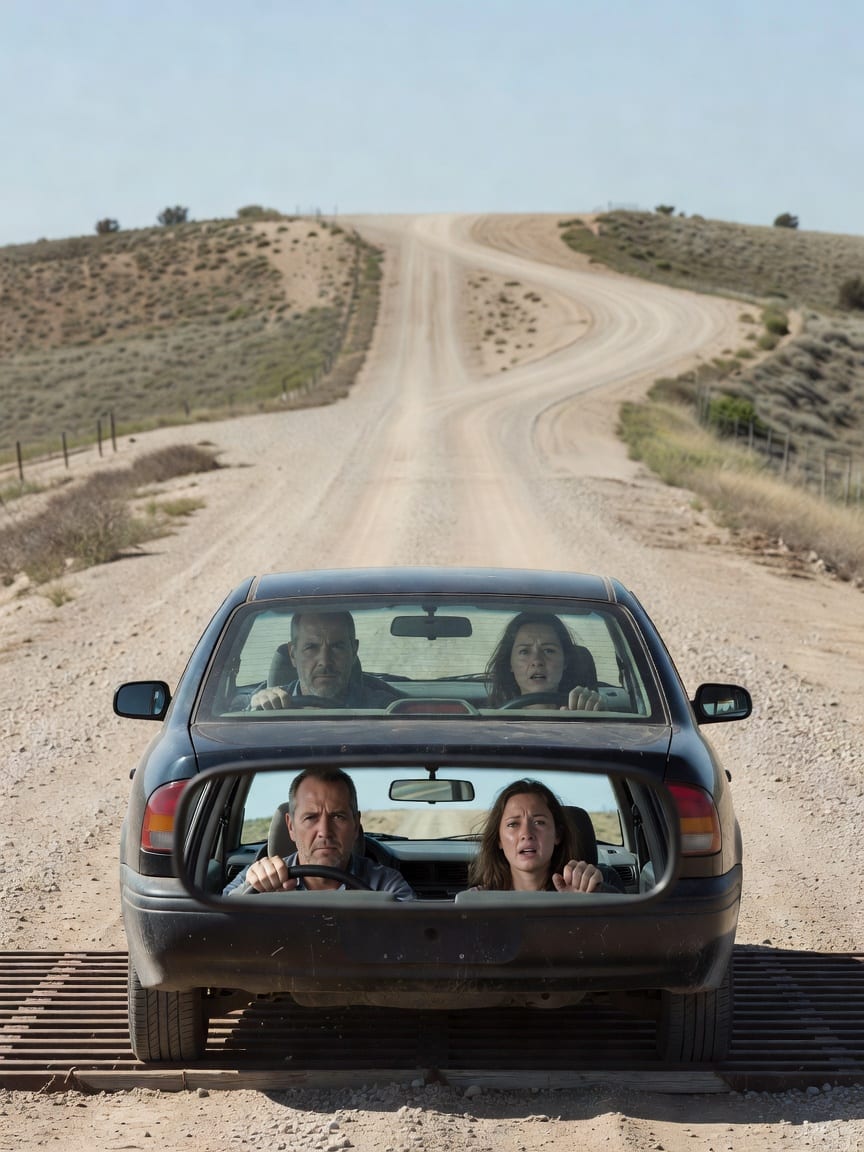
My father's ashes never made it to the hilltop. That single track kept feeding my car back to the cattle grid, the same sheep scattering, the same gate swinging.
I'm trying to scatter my dad's ashes at the highest point, but the track to Ashford Hill keeps looping, pushing my car back down. After my fifth attempt, I walked it myself, only to find the same pale grey gravel and cattle grid appearing inexplicably behind me again. Then, half-buried in the verge, I found a brass marker with strange symbols, dated 1897, that I'm certain wasn't there before.
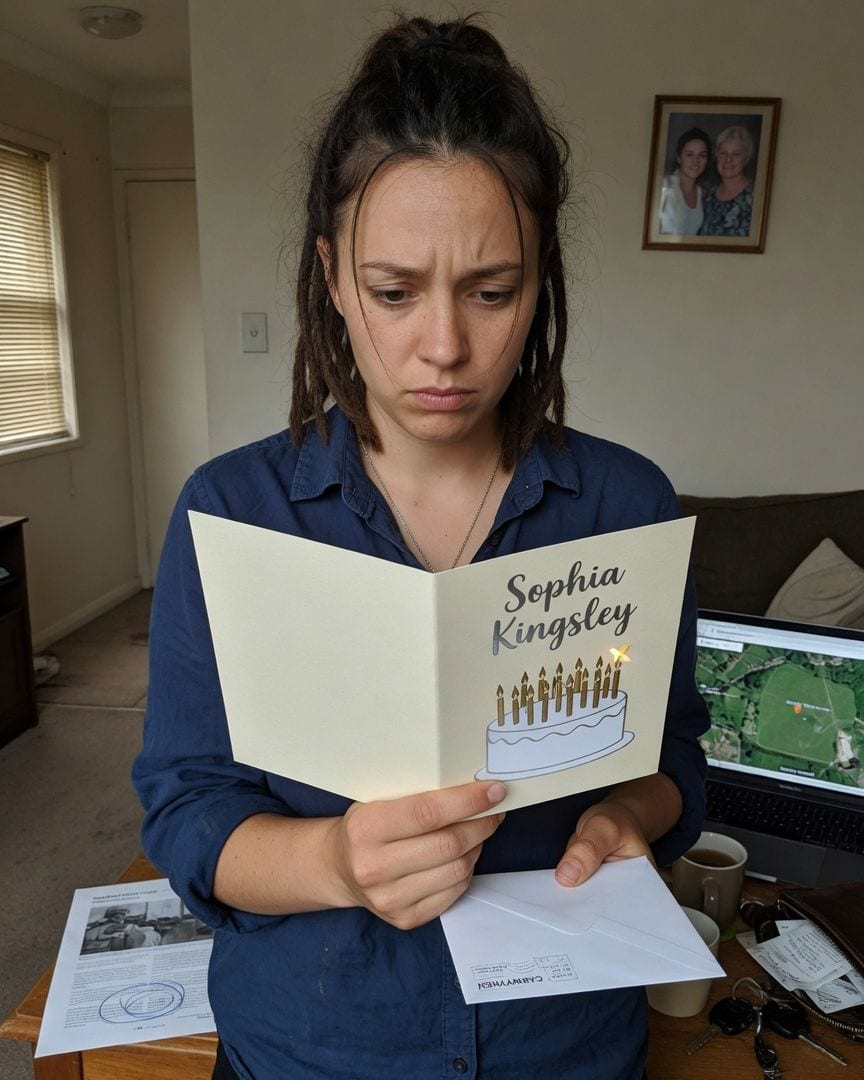
An empty field sends my birthday cards. This year, one candle was crossed out.
My birthday card always arrived a day early, a familiar comfort for five years. This year, a tiny silver 'X' marked one of the thirty candles, and the postmark read 'Carwynnen.' It was an empty field miles from anywhere, with no post office, and no one to send a card.
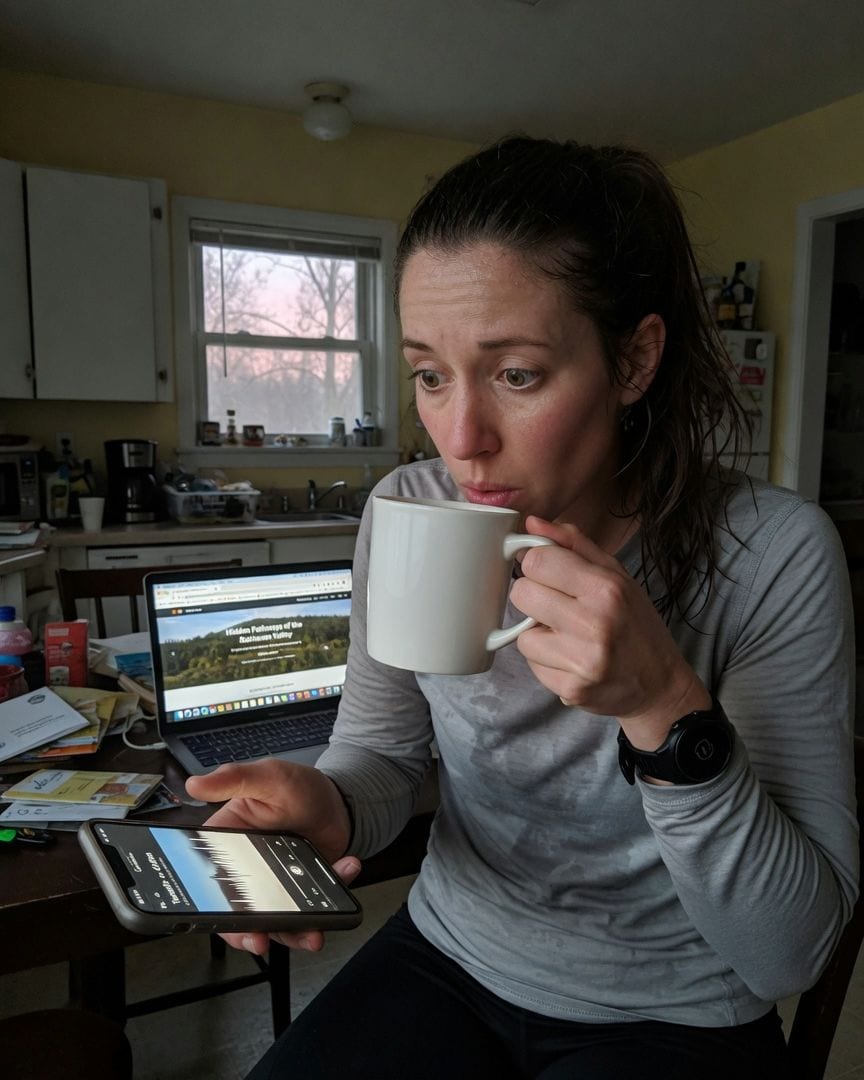
My running watch caught footsteps and a low voice right at my shoulder, saying 'keep going, don't turn around.' I was completely alone on the towpath.
My morning runs on the old canal towpath were my sanctuary, always deserted. My new running watch recorded thirty seconds of audio from that solitary path. But playing it back, I heard a second set of footsteps and a low voice, inches from my ear, saying, 'keep going, don't turn around'.
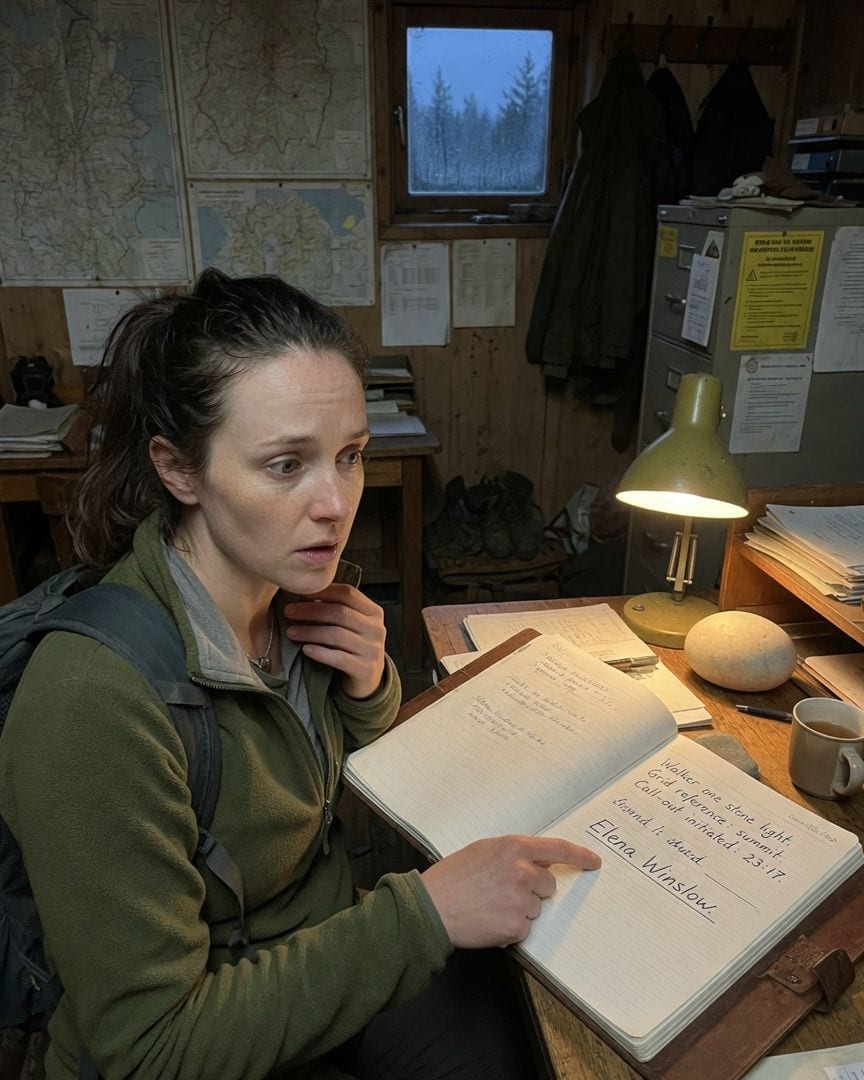
My pocketed mountain stone meant a rescue logbook recorded a call-out that night for me — a shout that never went out.
After an exhilarating climb on Cadair, I took a small, smooth white stone from the summit cairn, despite a warden's warning. Back at the station, a logbook entry shocked me: my name, dated last night, for a rescue call with an impossible detail: 'Walker one stone light'.