My logbook had a 3 AM entry, in my own precise hand, that I never wrote. Then I found an impossibly cold, hidden book with my name signed to an identical entry from last night.
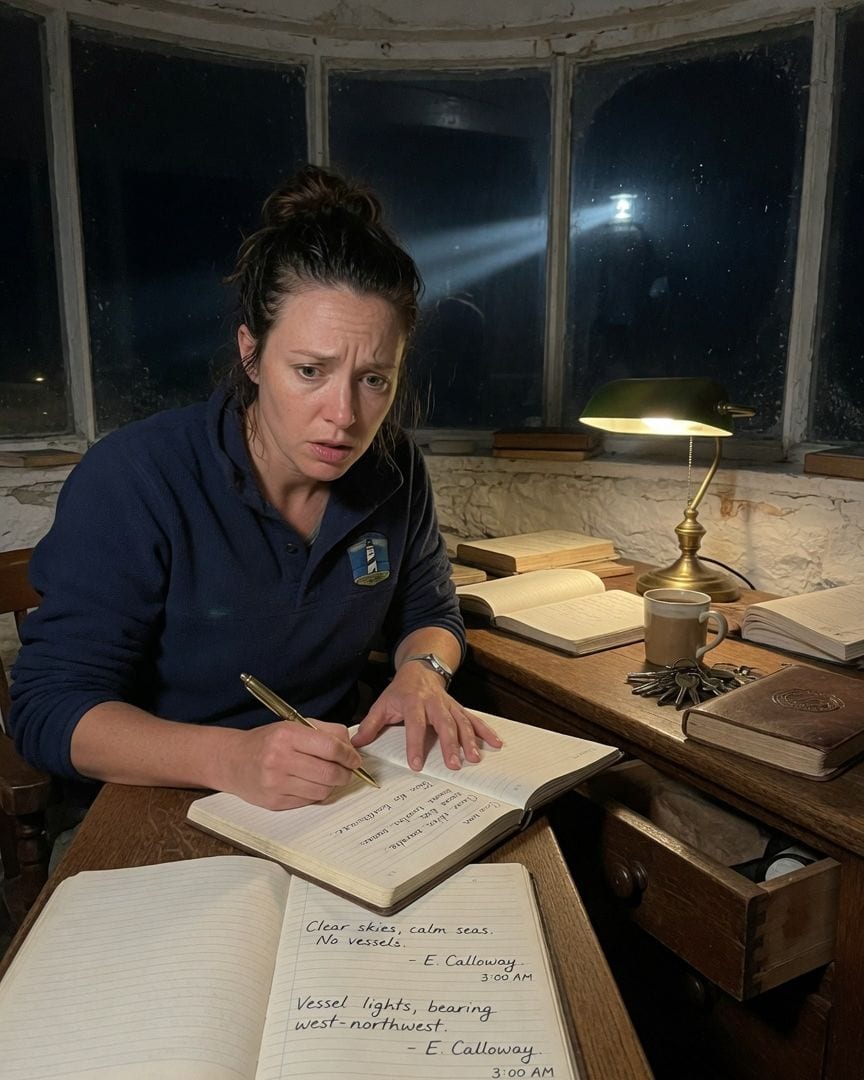
The beam swept over the waves, a rhythmic pulse in the vast, dark silence of the ocean. I sat at the heavy oak desk in the lighthouse watch room, the salt-laced air whispering through the old stone.
My shift was quiet, like most nights. At 2:00 AM, I’d penned my hourly entry in the official logbook, noting clear skies and calm seas. At 4:00 AM, I would do the same.
But glancing at the open ledger now, a line caught my eye.
Below my 2:00 AM entry, a new line, dated 3:00 AM, stared back. The ink was identical to mine, a precise, looping script. It read: 'Vessel lights, bearing west-northwest.' And below that, my own name: 'E. Calloway.'
I frowned. I hadn't written it. There had been no vessel. Just the endless dark and the sea.
The beam rotated again, cutting a path through the black, and for a moment, I thought I saw a faint twinkle out there, far west-northwest.
But it was gone as quickly as it appeared, just a trick of the light, or my tired eyes. I pinched the bridge of my nose, trying to shake off the creeping unease.
Was I so sleep-deprived I’d made an entry and forgotten it? No, I was meticulous. Always.
I picked up my pen, the heavy brass cool against my fingers. I tried to match the script, but my hand felt alien.
The 3:00 AM entry wasn't just similar; it was my hand, yet I knew with absolute certainty I hadn't made it.
I ran a finger over the page, searching for a smudge, a faint indentation, anything to suggest a prank or a mistake. Nothing. The paper felt normal. I walked to the window, scanning the horizon again.
Nothing but the inky blackness. No vessel, no lights. The rational part of my mind tried to offer explanations: a momentary fugue state, a joke by the day shift, Patrick maybe, though he’d never pull something like this.
But no, the logbook was always left locked in the desk, only I had the key.
Still unnerved, I began to pull out old logbooks from the shelves, dating back years. Maybe there was a pattern, some weird tradition I hadn't been told about. I flipped through them, looking for anything similar, any anomaly.
The silence of the lighthouse pressed in, heavier now, thicker than the salt air. The only sound was the rhythmic sweep of the beam and the rustle of old paper.
Each book was dense with years of careful observations, weather, passing ships, all signed by various keepers. No strange 3 AM entries, no phantom vessels. Nothing.
As I sifted through the worn volumes, my hand brushed against a loose panel at the back of the desk’s deepest drawer. It wasn't obvious, just a slight give against the wood. It felt... hollow behind it.
Curiosity, stronger than my unease, took over. I pried the panel open.
Inside, nestled in the dust, was a small, leather-bound book, much older and more ornate than the official logs, its cover embossed with a faded, swirling emblem I didn't recognize.
I pulled the hidden logbook out, its leather dry and brittle. It felt impossibly cold, as if it had been stored in a deep freeze. I opened it carefully, the pages crisp despite their age.
The handwriting inside was the same elegant, looping script as the 3:00 AM entry in my own log, but it was filled with entries spanning decades. Each one was dated 3:00 AM.
Each one described a 'vessel' or 'shadow' or 'presence.' And each one was signed with the name of the lighthouse keeper on duty for that year. My eyes scanned to the very last page, and my breath hitched.
There, dated last night, was the entry: '3:00 AM. Vessel lights, bearing west-northwest.' And below it, in that same, impossible hand, my own name: Emily Calloway.
Sleep became a luxury I couldn't afford. I spent my off-hours hunched over the two logbooks, the official one and the hidden one, cross-referencing entries.
The pattern was undeniable: every night, at 3 AM, the hidden log recorded something—a 'distant flicker,' a 'passing shadow,' a 'call from the deep'—and always, it was signed by the current keeper.
I found specific dates from the 1980s and 90s where the hidden log described a 'visitor' that the official Coast Guard logs made no mention of.
Or, more unsettlingly, a 'distant ship, the Sea Serpent, with a broken mast,' only for the official log to later confirm the actual Sea Serpent had indeed passed, weeks later, with precisely that damage.
It was as if the hidden log saw the future, or perhaps, a different present. The coherence was what truly unsettled me, the way every small detail clicked into place, making the impossible seem almost… deliberate.
I began making discreet inquiries. I called the Coast Guard archives, asking for historical records of 'unusual incidents' or 'unexplained phenomena' at my lighthouse, trying to keep my tone casual, almost academic.
The clerk on the phone, a gruff man named Donald Yates, was unhelpful, citing privacy and the sheer volume of records. He suggested I was 'reading too much into old stories.' His dismissal felt too quick, too practiced.
But the sense of being watched persisted, a prickle on my neck even in the empty living quarters, a feeling that intensified whenever I was in the watch room, turning the brittle pages of the hidden log.
The longer I studied the hidden log, the more palpable the presence in the lighthouse became.
Faint sounds echoed from the lamp room when I was downstairs, rhythmic clicks like a distant clock, almost like a metronome keeping time for something unseen.
I'd find the heavy brass lantern door ajar, despite having secured it myself with a chain and padlock. I’d check the lock, still engaged, the chain still wrapped, but the door would be unlatched.
One night, while poring over a particularly cryptic entry from the 1930s describing a 'whisper of old names' carried on the tide, a cold gust of wind swept through the watch room, though all windows were sealed, latched tight against the ocean spray.
The temperature dropped abruptly, raising goosebumps on my arms. The pages of the hidden log fluttered violently, as if a hand had brushed them, turning them.
When the air stilled, a new page had been turned, and a small, folded piece of paper had appeared, tucked between the brittle leaves. My heart hammered against my ribs, a panicked bird.
I was alone, miles out at sea, and this wasn’t a draft.
I unfolded the paper slowly, my fingers trembling. It wasn't an entry. It was a single, stark sentence, written in the same elegant, looping script that filled the hidden log: 'The watch is kept.'
It was a direct message. It knew I was reading. It knew I was investigating. And it was here, with me. Not a ghost, not a memory, but something present, aware.
I decided to try one more time with the Coast Guard. Donald Yates had been useless, but I’d found Lars Ingram’s name in an old newsletter about retired archivists, known for his meticulous knowledge of maritime history.
He had a reputation for remembering things the official records somehow 'missed.' I called him, speaking cautiously, describing the 'anomalous entries' and the 'second logbook,' omitting the most unsettling details—the wet ink, the cold, the impossible note.
I just focused on the discrepancies, the repeating 3 AM timestamp, the keeper’s names.
Lars listened, quiet for a long moment, the silence on his end far more unnerving than the static. "A second log, you say? At the Calloway Point Light?"
he finally asked, his voice low, a gravelly whisper that somehow conveyed decades of unspoken knowledge.
I confirmed. "Yes. Hidden in the desk. It's old."
"There was... an unofficial protocol, decades ago," Lars admitted, his voice barely a whisper now, as if he feared being overheard even across the phone line. "For some of the more isolated stations.
A 'secondary observation log,' as they called it. Officially, it was discontinued. Denied, even. Filed away under 'staff errors' or 'superstition' when inquiries were made."
"Why?" I pressed him, my voice tight. "What was its purpose? Why was it denied?"
Lars sighed, a long, weary sound. "It was meant to... ensure continuity. The belief was, some of these old lights, they had a spirit. A presence.
And if the watch wasn't meticulously kept, if the log wasn't complete, things could go... wrong. Not just with the light, but with the light itself. With the purpose." He paused, his voice dropping further, almost to an inaudible murmur.
"We called it 'The Constant Watch.' There was a specific report from your lighthouse, back in '57. 'Anomalous Log Discrepancies.' It was highly classified. Disappeared from most public records."
The pieces clicked into place with a sickening thud. The decades of entries, the current keeper's name, the unwavering 3 AM timestamp, the phrase 'The watch is kept.' It wasn't a prank. It wasn't my imagination.
It wasn't even just a ghost. It was a duty, an ancient, unrelenting presence that needed its vigilance acknowledged. It was a witness that required a witness.
Lars, sensing my growing dread through the phone line, promised to send me a scanned copy of the 1957 report, warning me of its sensitive nature. He emphasized it was just 'old folklore, misinterpreted data, nothing to worry about now.'
But his voice betrayed him; the tremor was unmistakable.
A few hours later, an encrypted file arrived in my inbox. I downloaded it, my hands clammy, the mouse clicking far too loud in the silent watch room. The report wasn't about folklore.
It detailed not just 'discrepancies' but 'unexplained energy signatures' detected by early monitoring equipment, consistently at 3 AM. It spoke of a 'non-human presence' and a 'sentient pattern of observation' tied directly to the lighthouse's operation.
The language was cold, clinical, terrifying. The report concluded with a chilling recommendation: 'Maintain the illusion of human continuity in the logbook to prevent further destabilization of the entity's observational cycle.'
My eyes darted to the margin. Scrawled there, in the same elegant, looping script from the hidden log, dated 1957, was a single, horrifying sentence: 'It is already here. It is the continuity.'
The truth settled over me with the oppressive weight of the ocean itself. The entity wasn't a ghost, not a spirit, but an ancient, intrinsic awareness of the lighthouse itself, a consciousness woven into the very stone and light.
'The Constant Watch' wasn't just a name; it was its function, its being. It needed the log to be complete, not for human record-keeping, but for its own perception of duty, its own validation.
The 'vessels' it recorded were its own observations, its own reality, a parallel existence to the physical world, occasionally brushing against ours, predicting a broken mast or a distant ship.
And by signing the entries with the current keeper's name, it didn't just mimic; it was incorporating, weaving human agency into its eternal vigil, making us complicit.
The Coast Guard hadn't been trying to eradicate it, but to manage it, to appease it. They knew that disrupting the 'illusion of continuity' could provoke something far worse than strange log entries.
They had been feeding it, unknowingly, for decades, using generations of keepers as unwitting participants in its endless watch.
Every 3 AM entry was a moment of its perception bleeding into theirs, a subtle claim of shared duty, or perhaps, ownership.
Lars Ingram, and others like him, had been tasked not with studying an anomaly, but with maintaining a carefully constructed lie.
That night, I refused to write the 3 AM entry. My usual 2 AM entry was neatly penned, but I left the next line blank.
I sat at the desk, the official logbook open to a blank page, my pen lying beside it, a defiant brass cylinder.
I watched the clock tick towards 2:59 AM, every second amplified, my heart thudding like the distant surf against the rocks below.
The lighthouse fell silent, a profound, heavy quiet that swallowed the creaks of the old building, the hum of the lamp, even the sound of the wind.
The air in the watch room grew icy, a cold that seeped into my bones, a deeper chill than any ocean breeze.
Then, a faint, rhythmic scratching sound began from the desk, right beside me. I froze. I was alone. I hadn't moved. My pen lay still. The scratching continued, deliberate and precise, a tiny, insistent whisper of movement on paper.
I forced myself to look. The blank 3 AM line was no longer blank. An entry, in the familiar looping script, now filled it: 'Distant shadow on the western horizon, growing.' And below it, my name.
The ink was still wet, glistening faintly in the lamplight. A cold mist hovered over the page, coalescing into what looked like the faint, translucent impression of a single, elongated finger-print, pressed firmly into the fiber of the paper.
The light of the lamp above flickered erratically, casting long, dancing shadows that seemed to stretch and writhe across the walls, taking on impossible forms. I felt an immense, ancient presence coalesce behind me, a patient weight, utterly still.
It was in the room. I couldn't turn around. My breath hitched, caught in my throat. I couldn't move.
I didn't leave the lighthouse. I continued my shifts, the rhythm of the light and the sea a constant, now with a new, silent partner.
The 3 AM entries appeared every night, sometimes with details too specific, too personal, about my own thoughts or fears, descriptions of unseen vessels that felt like echoes of my own subconscious, things I hadn't even consciously registered.
I no longer questioned them. I just turned the page, leaving the next line blank for the entity's next entry, acknowledging its vigil.
The hidden logbook remained open beside the official one, a constant reminder of the unseen hand that worked alongside mine.
I sat in the watch room, filling out the 2 AM entry, the pen scratching methodically, its sound now one of the few normal things in this space.
I glanced at the blank 3 AM line, and then at the hidden logbook, now always open beside the official one, its pages filled with an endless, silent history.
The Coast Guard relief crew found Emily Calloway's logbook in perfect order when her rotation ended. They noted the neat, consistent handwriting, and the unusual precision of the 3 AM entries, often describing vessels that were never reported.
When asked about her, her replacement, Patrick Yates, merely smiled faintly, a slow, knowing smile that didn't quite reach his eyes, and said, "The watch is kept."
If this one got to you
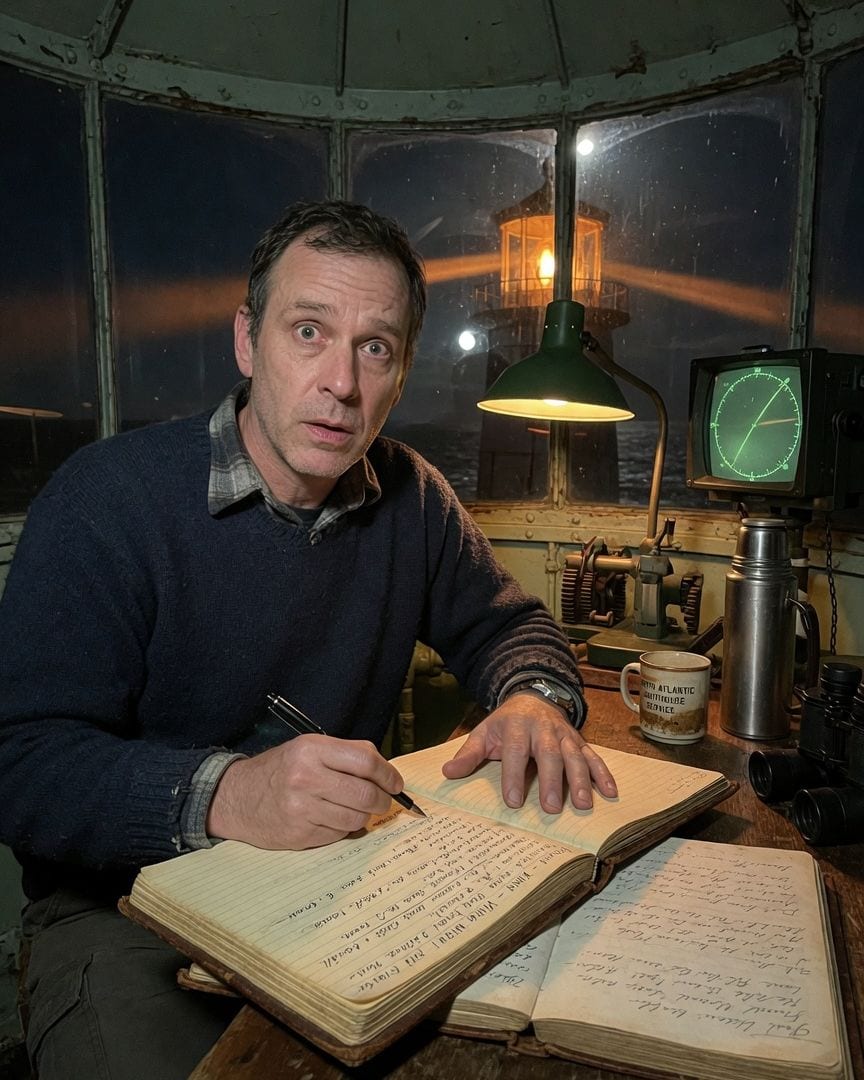
My lighthouse log has my own 3 AM entry for a phantom ship. I was alone in the tower, and I wrote no such thing.
Perched in the lantern room for my usual 2-6 AM watch, I reached for the thick logbook. But the 3:00 AM entry, under my own name, detailed a vessel I never saw. The words were in my own ink, yet I had never written them.
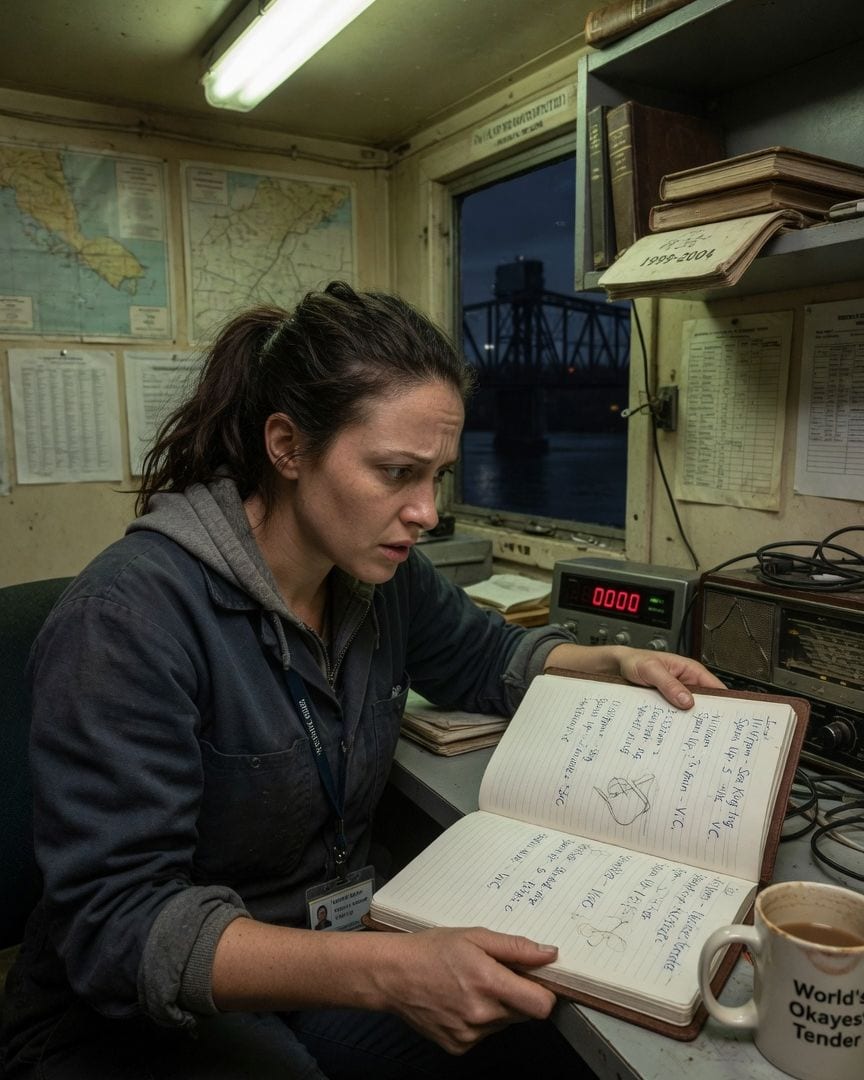
My drawbridge log shows a 2:33am lift I didn't make. The span counter never moved.
As a drawbridge tender, my midnight to dawn shift is usually quiet, a routine of monitoring traffic and logging lifts. But tonight, my own logbook shows an impossible entry for a bridge lift I have no memory of making. My initials and handwriting are there, yet the span counter above my panel reads a steady zero. No boat called, no span ever went up.
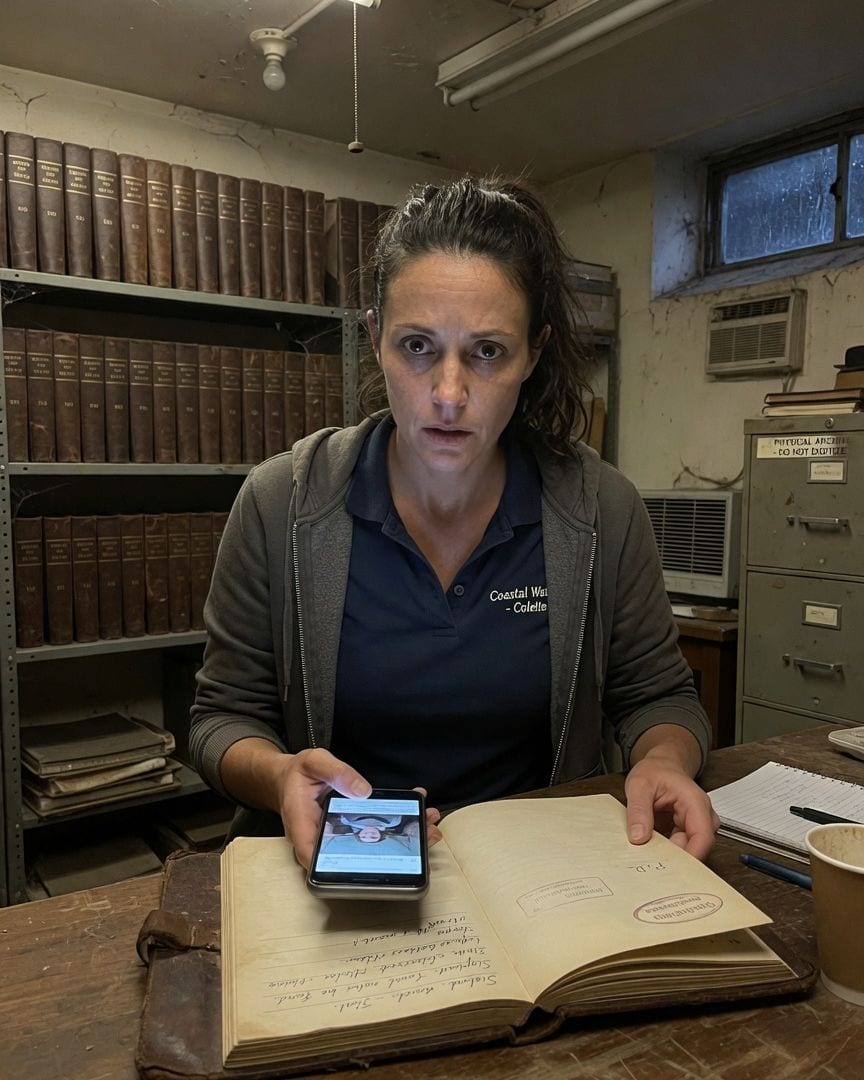
My coastguard log noted Sighting 9 again tonight, a light where no vessel showed. The old logs carry Sighting 9 off Skerry Point at 3:14am every tenth year since 1954, always 'nothing found,' always 'send no boat.'
On my watchtower night shift, the radar screen glowed green and the ocean was quiet. Then, a familiar light appeared off Skerry Point, exactly on cue, just as it had every tenth year for decades. But digging deeper, I found a hidden stamp in an old logbook: 'Operation Skerry. Status: Complete.' It left me with a chilling sense of finality.
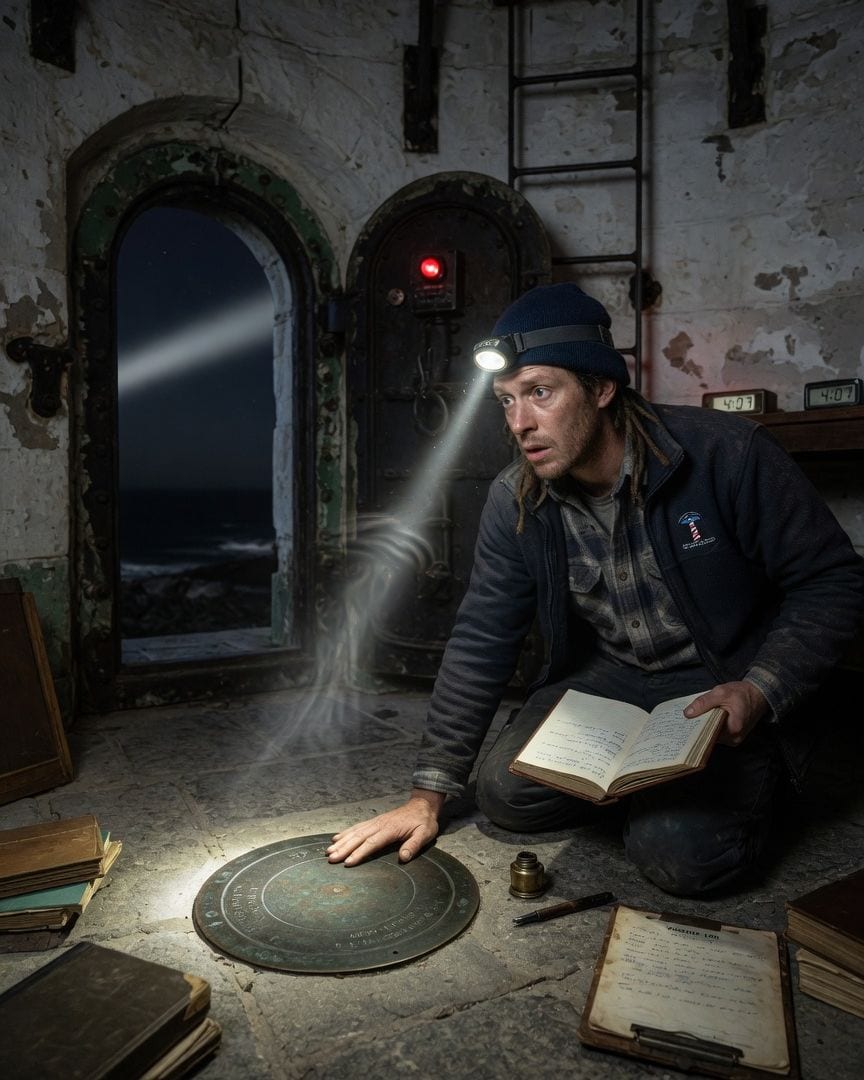
Every ninth year since 1901, my logbook records a boat through the gate at 4:05am — 'vessel through, none seen.' I was on watch tonight. Nothing passed.
As the lighthouse keeper, I log the same impossible entry every nine years, a lie I'm compelled to write. But tonight, a hidden brass disc in the floor, not on any blueprint, feels oddly warm. Hours later, it hums, and the air above it shimmers and distorts, then vanishes.
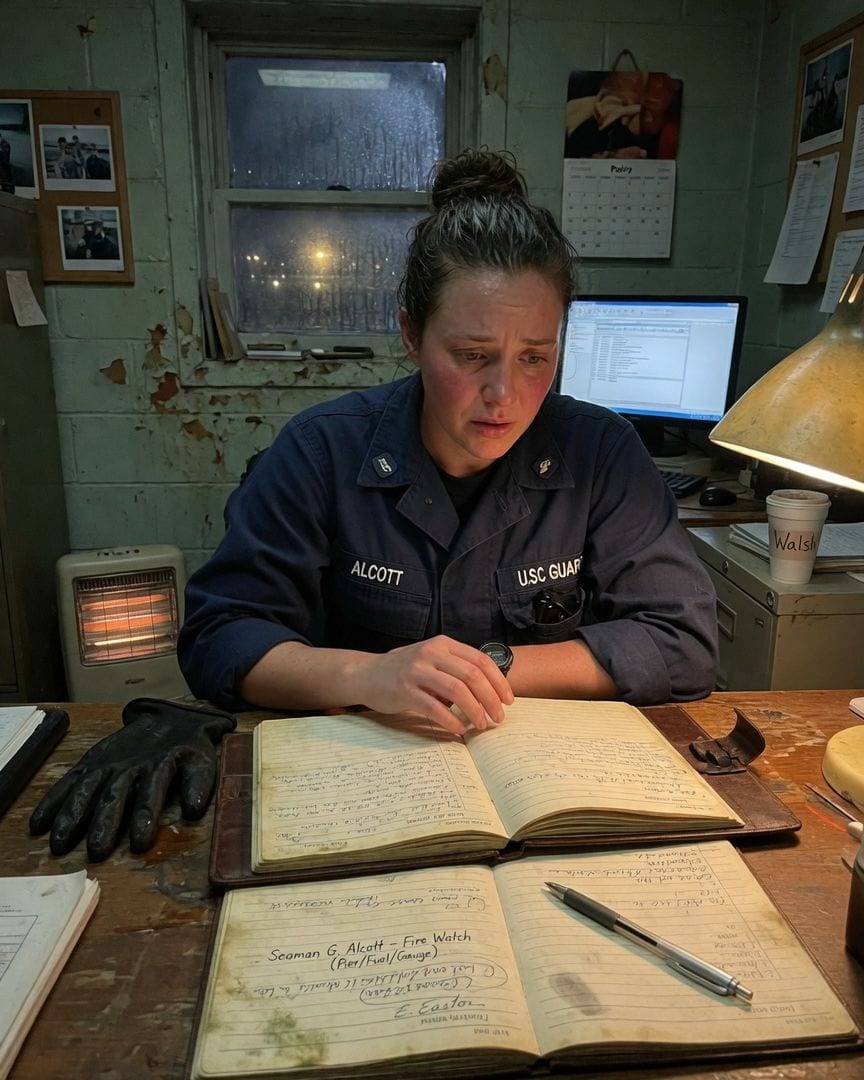
Seaman Alcott found fresh bootprints mirroring her own, a half-stride ahead in the fog. Her boots were the only pair logged out for fire watch.
Seaman Genevieve Alcott knew the rhythm of Coast Guard Station Petrel, a precise forty-minute fire watch circuit she’d walked for six months. Tonight, a thick fog coated the pier in brine and rust, muffling all sounds but her own boots on the damp planks. But as her flashlight cut through the mist, it revealed a second set of fresh bootprints, identical to hers, a half-stride ahead – even though her boots were the only pair logged out that night. Back in the boat shed, the meticulous logbook confirmed it: only her signature for issued boots. Yet, the prints were undeniably real.
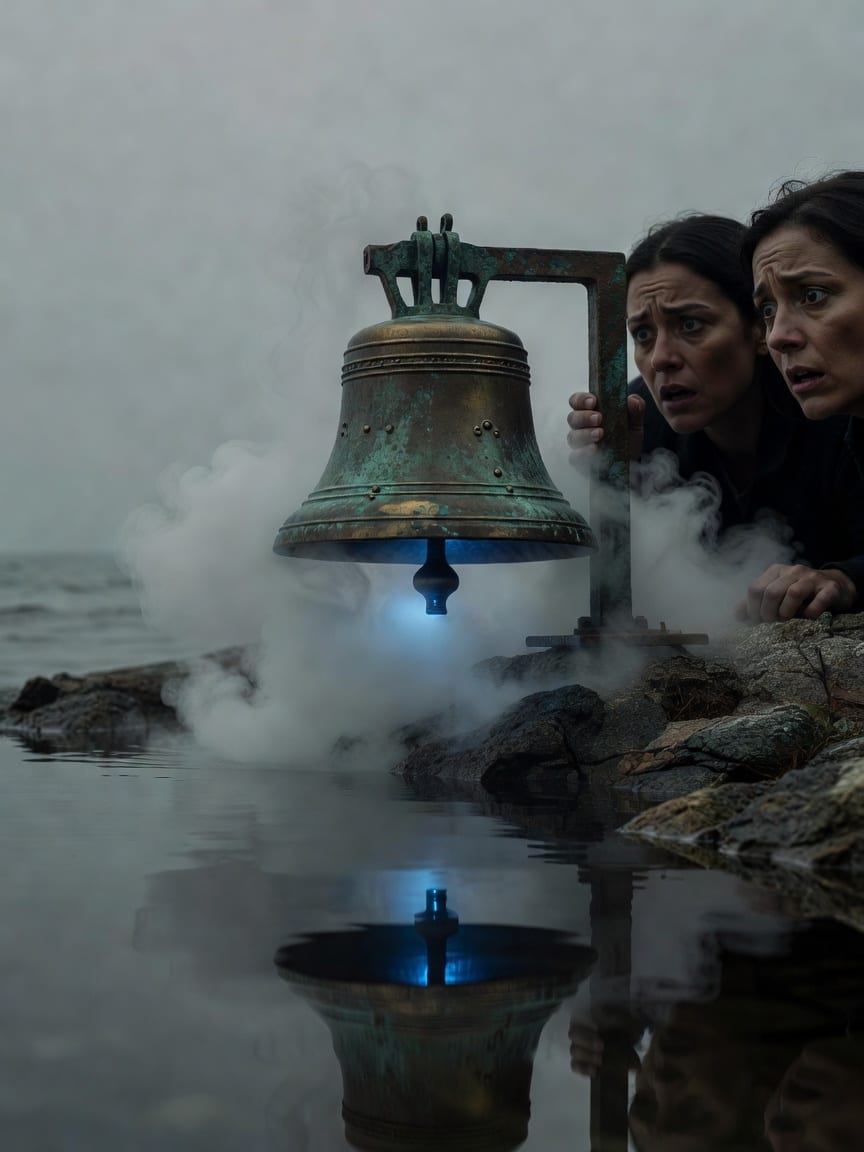
The fog bell on the point rings itself on still nights. The framed log at the yacht club lists eleven calm evenings it rang – each entry beside a boat that never came home.
Moving to a quiet coastal town, I found myself drawn to an old logbook at the yacht club. It recorded the fog bell ringing on flat-calm nights, each instance tied to a boat that simply vanished. Then, I found my own boat's name, 'The Osprey,' penciled at the bottom, marked with an unfinished, cryptic symbol.