Seaman Alcott found fresh bootprints mirroring her own, a half-stride ahead in the fog. Her boots were the only pair logged out for fire watch.
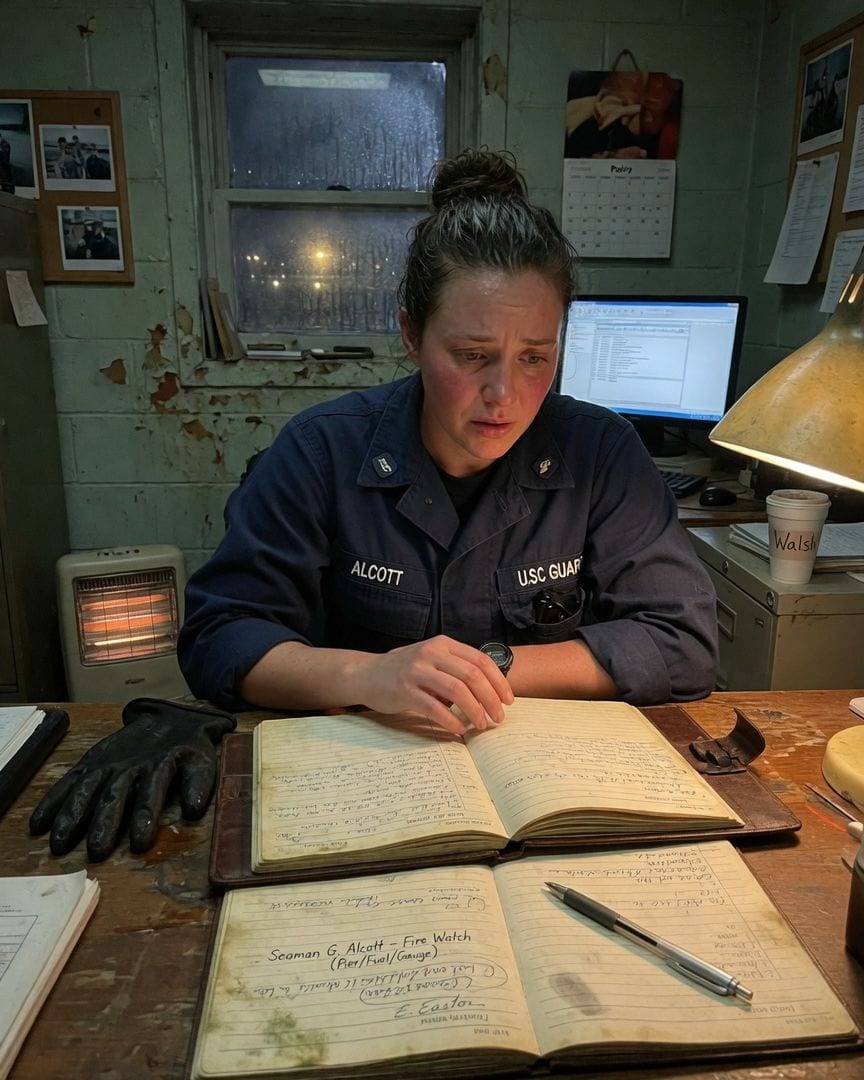
Seaman Genevieve Alcott’s fire watch rounds at Coast Guard Station Petrel were a rhythm of damp planks and salt-laced air, a precise forty-minute circuit past the boat shed, the fuel pier, and the tide gauge.
For six months, the routine had been a constant. Tonight, the fog was thick, tasting of brine and rust. Her boots crunched softly on the gravel path leading to the pier.
The only sound, besides the distant moan of the foghorn, was the soft squelch of her own regulation soles on the wet wood.
The station’s single boat shed log, a battered spiral notebook kept under lock and key, had recorded only one pair of boots signed out for fire watch that night: hers.
Every piece of gear, every patrol, was logged with meticulous, almost obsessive, detail. It was the Coast Guard way.
But as she rounded the bend by the fuel tanks, the beam of her flashlight cut through the mist, illuminating something impossible. A second set of bootprints, identical to her own, marked the planks a half-stride ahead.
They were fresh, still glistening, and already beginning to fill with black seawater. Hers were the only boots signed out of the shed.
She stopped dead, her breath misting in the cold air, the silence suddenly heavy around the impossible trace.
Alcott knelt, her gloved hand hovering inches above the phantom prints. No scuffs, no drag marks—just a clean, precise impression of a size 10 combat boot, mirroring her stride.
The water seeped into the depressions, a stark, unsettling black against the pale wood. She stood, shaken, and returned to the boat shed, her heart thumping against her ribs.
The logbook, its pages damp and smelling of mildew, lay open on the counter. Her signature, clear and firm, was the only one for issued boots that night.
No other personnel were authorized for fire watch; the station operated with a minimal crew, especially during the small hours.
Back in the main office, Chief Warrant Officer Thomas Walsh was nursing a lukewarm coffee, grumbling about budget cuts. Alcott reported the prints, trying to keep her voice level, detailing the impossible second set.
Walsh chuckled, suggesting a prank, or perhaps she was tired. “Long night, Alcott? Fog plays tricks.” He pulled up the digital duty roster on his computer, the screen’s faint glow illuminating his weary face. Her name, her shift, accounted for.
No one else. “See? All squared away.” The old office heater hummed, a dry, insistent drone, making the air feel thick and too warm.
But Alcott knew what she’d seen. She pulled the physical duty logbook from its shelf, a thick, leather-bound ledger that predated the digital system by decades.
Its pages, stiff and yellowed, recorded every shift, every fire watch, every patrol, going back to the station’s earliest days. Flipping to the previous night, she found her own entry, her own signature, detailing her exact route.
It was there, clear as day. But then, a few lines below, dated the exact same night, the exact same time, a second entry read: 'Seaman G. Alcott – Fire Watch (Pier/Fuel/Gauge).'
And beneath it, a signature she didn't recognize, neat but slightly unfamiliar, a looping 'E. Easton'.
Alcott stared at the name. 'E. Easton.' Petty Officer Renee Easton. But Easton had been off-duty, visiting family an hour inland. Alcott knew this for a fact; she’d driven Easton to the ferry herself.
The log entry was undeniable, written in the ledger, yet utterly impossible. She looked closer at the signature, a faint tremor running through her. It was too neat, too perfect, not quite Renee’s usual hurried scrawl.
It was like a copy. The entry detailed a slightly different route around the fuel pier, a subtle alteration to her own.
Alcott’s mind raced, trying to reconcile the physical evidence of the prints, the empty sign-out log, and this impossible record. The pen, still resting beside the logbook, seemed to hum with an unheard static.
She reached out, her fingers brushing the cool metal, a sudden, electric chill running up her arm. The impossible log entry was real, right there, staring back at her. And it wasn't just her.
Alcott approached Petty Officer Easton the next morning, trying to sound casual as they shared instant coffee in the mess hall. Easton, back from her leave, laughed off the idea of signing in for fire watch.
“You know I was gone, Alcott. Probably just Walsh messing with you, or an old entry. Happens.” But Alcott knew it wasn't.
The precise duplication of time and name, the subtle difference in route—it was too specific for a prank, too exact for an error. The station’s mess hall, usually a place of easy chatter, felt hollow and distant around her.
She began a quiet, methodical review of the station's paper logs, cross-referencing them with digital records whenever possible. The work was tedious, dusty, and lonely, but she was driven by a cold certainty that there was something profoundly wrong.
She found more discrepancies. Days where two identical supply deliveries were logged, one signed by a crewman who swore he was off-station. A maintenance report for the lighthouse beacon, signed by a contractor who hadn't visited the station in months.
Each anomaly was small, easily dismissed as clerical error, or simply ‘bad record keeping’ if she pressed it, but together they formed a pattern.
The 'errors' always involved a duplicate event, always with a subtly wrong signature, always involving someone who was verifiably elsewhere.
The station, a place of ironclad accountability, where every person and every piece of equipment was logged, was riddled with official lies.
The light in the archives always seemed to flicker when she pulled out particularly old ledgers, making the words on the page seem to swim.
Her investigation eventually led her to Simon Lambert, a retired Coast Guard veteran who occasionally did odd jobs around Petrel, fixing faulty wiring or leaky pipes.
Lambert, a man of few words and many unspoken observations, had seen generations of crews come and go. When Alcott cautiously showed him the duplicate log entries, the impossible signatures, he didn't laugh or dismiss her.
His expression grew distant, his gaze fixed on the old ledger in her hands. “Happened before,” he mumbled, his voice raspy, a dry rustle like old paper. “Not often. But before.”
He pointed to a faded, slightly curled photo on the wall, a group of stiff-backed crewmen from the 70s, their faces grim in black and white. “Look close at the third man from the right. Petty Officer Coleman.
Swore he never stood for that photo. Said there was always an extra shadow on the parade ground.” Alcott squinted.
The man in the photo was slightly out of focus, his uniform just a shade too dark, his smile a fraction too wide, a subtle wrongness in his eyes that made the hairs on her arms stand up.
Alcott’s quiet digging didn’t stay quiet for long. Walsh, initially dismissive, grew increasingly watchful. His once-casual suggestions of fatigue now carried an edge, a pointedness.
He began assigning her to solo, isolated tasks – inventory in the rarely used auxiliary storage, repairs on the far end of the fuel pier, duties that took her away from the main operations and, crucially, away from the station’s archives.
Each task felt less like work and more like an attempt to keep her separated, distracted. The heavy clank of the padlock on the auxiliary storage shed door, locking her in alone for hours, seemed to echo with unspoken intent.
One afternoon, while cross-referencing old supply manifests in a dusty archive room, the air thick with the scent of aged paper and forgotten things, she heard the distinctive creak of the floorboards outside the door. She froze, listening.
The sounds were too deliberate, too slow, for a casual passing. A shadow lengthened under the door, then receded. When she cautiously opened it, the corridor was empty.
Later that week, a cryptic, unsigned note appeared tacked to her bunk’s locker: “Some things are best left in the dark. The records are what they are.”
The message was typed, no identifying marks, but the implication was clear: someone knew what she was doing. The air in the barracks grew heavy with unspoken tension, thick and cold like the fog outside.
Walsh’s eyes followed her a little too long in the mess hall. Easton, though sympathetic, became guarded, her offers of help growing scarce, replaced by uneasy silences.
Alcott felt the pressure closing in, not from overt threats, but from a pervasive sense of being observed, warned, and subtly steered away from the truth.
The system wasn’t just generating anomalies; it was protecting them, or perhaps, protecting itself from her attempts to expose them.
She started double-checking her patrol routes, her gear, her own log entries, a cold knot of dread tightening in her stomach. The hunter had become the hunted.
Alcott confronted Simon Lambert again, showing him the typed note, her voice tight with suppressed fear. “What happened before, Simon? What really happened?” Lambert sighed, a sound like sandpaper rubbing wood.
He led her to a forgotten corner of the boat shed, where a rusted metal box lay half-buried under old nets and coils of rope.
Inside were brittle, yellowed documents and a faded, official-looking photo of a group of stern-faced naval officers. He pointed to a small, almost invisible stamp on the back of one document: 'Project Echo – Naval Research & Development.'
“This station,” Lambert began, his voice barely a whisper, a low rasp against the wind howling outside, “it wasn't always just Petrel. Back in the Cold War, it was a research outpost. Something about… 'mirroring' personnel.
Creating duplicates for recon, deception. They called them 'echoes.' Never perfected it. Too unstable. Things… bled over.” He explained that the project was officially shut down decades ago, the records sealed, the station repurposed as Petrel.
But the underlying infrastructure, a network of electromagnetic emitters and temporal stabilizers, was never fully dismantled. “They thought it was dead. Buried. But sometimes, especially when the atmospheric conditions are just right, it… flickers. Creates a ghost in the machine.
A perfect duplicate of a man, a woman, a duty. It’s not malicious. It just… is. And the system, the Coast Guard, it has to account for everything. Every man, every minute, every boot.
So the echoes get written into the logs, become part of the official record. It's how they contained it, by making it real on paper.”
The pieces clicked into place with a sickening thud. The duplicate bootprints, the impossible log entry, Easton’s 'signature' that wasn’t hers—all echoes. The 'extra shadow' in the old photo.
It wasn’t a prank or a mistake; it was a systemic byproduct, an anomaly being absorbed into the very fabric of military accountability.
The note on her bunk wasn't a threat, but a warning from someone who understood the deep, quiet horror of Petrel.
The station wasn’t just a place; it was a crucible for impossible realities, a place where the paperwork swore to things that never happened, and the system believed every word.
The old documents in Lambert’s hands felt suddenly heavy, ancient with a secret that continued to unfold.
Armed with Lambert's information, Alcott knew she needed to verify 'Project Echo' through official channels, however impossible that seemed.
She managed to access a restricted Coast Guard personnel database, exploiting an obscure back-door her tech training had accidentally unearthed months ago, searching for any mention of the project or its associated facilities.
It was a long shot, a needle in a haystack of classified records, each click of the mouse a tiny, illicit trespass.
Hours later, buried deep within a forgotten sub-directory, a digital tomb of obsolete programs, she found it: a list of personnel assigned to 'Echo Site Alpha,' a decommissioned naval outpost.
The fluorescent lights in the small office hummed, their buzz growing steadily louder, more insistent, as if reacting to the data on her screen.
Her heart hammered against her ribs as she scrolled through the names, looking for anything that might connect to Petrel, to the echoes. Then, her breath hitched. There, under 'Assigned Personnel, 1978-1982,' was her own name: 'Alcott, Genevieve, Seaman, E-3.'
A full service record, complete with a digital reproduction of her signature, detailing a four-year deployment to Echo Site Alpha, performing duties directly related to 'temporal field stabilization' and 'personnel replication studies.' Her eyes scanned the dates.
She hadn't even been born in 1978. The file was pristine, official, stamped 'VERIFIED.'
Her own service record, unimpeachable and absolute, swore she had been there, had worked on 'Project Echo,' had been part of the very system that created the echoes.
It wasn't just that the station had an echo; it was that she herself, or a version of her, was written into its impossible, classified history.
She stared at her name on the screen, a name that had always been hers, now a lie in the official record.
The dread deepened, a cold, sickening realization that she wasn't just observing the anomaly; she was, and perhaps always had been, a part of it.
The room felt cold, the implication settling like a lead weight: her name, her identity, was already here, already part of the system’s impossible lies, long before she ever set foot on Station Petrel.
Alcott brought the printout of her impossible service record to Lambert, her hands shaking, the paper crinkling softly. Lambert examined it, his face grim, tracing the impossible dates with a calloused finger. “They didn’t just make echoes, Seaman.
They tried to make them permanent, to integrate them. And sometimes, the lines blurred. Not just for the echoes, but for the originals. Your file… it’s a bleed-through. A ripple from a past experiment.”
He explained that the 'Project Echo' system, even in its dormant state, occasionally 'reached out,' creating not just transient duplicates, but also retroactively inserting the identities of future personnel into its own historical records.
It was an attempt to 'seed' the system with future 'assets,' a flawed design meant to ensure continuity that instead created chronological paradoxes.
The 'echo' of Alcott that walked the pier wasn't just a random manifestation; it was a reflection of the 'Alcott' already written into Echo Site Alpha's history, a temporal feedback loop.
Her presence at Petrel, a repurposed Echo site, had effectively 'activated' her own historical echo.
The false signature in the logbook wasn't Easton’s; it was a perfect copy of the signature in the false service record, a detail that now made chilling sense.
The wrongness wasn't just a local phenomenon; it was a systemic, temporal anomaly that had been quietly weaving itself into the official fabric of the Coast Guard for decades, creating a parallel, impossible history that was, paradoxically, utterly real according to the records.
Every clue, every impossible detail, now clicked into place: the bootprints, the dual log entries, the 'extra' crewman in the old photo—all manifestations of a system that could create reality on paper, and in fleeting physical form, where none should exist.
Alcott knew she couldn't 'stop' the system; it was too vast, too deeply embedded in the station's very foundation, a silent, impossible current beneath the everyday. But she could expose it, or at least disrupt its current manifestation at Petrel.
Lambert, seeing the fire in her eyes, showed her faded, brittle schematics he’d salvaged from the old site. A dormant 'temporal oscillator' deep beneath the station, still drawing minimal power from an antiquated grid.
If she could overload it, even temporarily, it might disrupt the echo field.
Under the cover of a fierce coastal storm, its wind and rain lashing against the station, Alcott descended into the forgotten tunnels beneath Petrel, guided by Lambert’s faded diagrams and the beam of her flashlight.
The air grew heavy with the smell of ozone and damp earth, the walls dripping with brine. She found the chamber, a vast, circular room with a humming, monolithic device at its center, glowing with a faint, sickly green light.
Wires snaked everywhere, some corroded and fraying, others strangely pristine, humming with an unseen energy. As she approached the main console, her boots squelching on the wet concrete, a figure emerged from the shadows.
It was her. Her 'echo.' Identical in every detail, from the damp uniform and water-streaked face to the worried crease in her brow. The echo moved with a fluid, uncanny grace, its eyes mirroring her own fear, her own determination.
It reached for the console, as if to protect it, its movements a shadow of her own, a beat behind, a beat ahead. Alcott, remembering Lambert’s words—it wasn’t malicious, it just was—didn't hesitate.
She knew this thing was not evil, but a symptom, a tragic, physical manifestation of a profound, systemic wrongness. With a surge of adrenaline, she threw a series of levers, following the overload sequence Lambert had outlined.
The console shrieked, sparks flew, and the green light pulsed violently, throwing grotesque shadows around the chamber.
The echo staggered, its form flickering, becoming translucent, then solid again, its hand reaching out as if in confusion, its mouth opening to utter a soundless cry. Alcott ignored it, slamming the final lever.
A deafening crack echoed through the chamber, followed by a surge of raw power that sent a tremor through the floor. The monolithic device bucked, then went dark. The green light vanished, leaving only the stark beam of her flashlight.
The echo, caught in the dying field, dissolved into a shimmering haze, leaving only a faint scent of ozone and salt. The room fell silent, save for the drip of water and the distant roar of the storm.
She had stopped it, at least here, at Petrel.
In the aftermath, the station's power flickered back to normal, the only sign of the disruption a localized grid surge that Walsh briefly mentioned, shaking his head at the expense of old infrastructure.
Alcott reported a 'faulty ancient power conduit' and 'system overload' to him, and he, surprisingly, seemed to accept it without question, his gaze unreadable, perhaps simply relieved to have an explanation. The impossible log entries ceased.
The faint, subtle wrongness that had permeated Petrel seemed to recede, leaving behind only the familiar, mundane anxieties of a remote Coast Guard station. Lambert simply nodded when Alcott told him, a quiet understanding passing between them, a shared weight.
Her transfer went through as scheduled, two months later. She left Petrel, carrying the weight of what she knew, the silence of the station’s impossible history now a permanent part of her own.
The service record, with its impossible deployment, remained untouched in the digital archives, a ghost in the machine that only she knew to be a lie.
Years later, Genevieve Alcott served on a busy icebreaker in the Bering Sea, the vast, cold expanse a contrast to Petrel's rocky coast.
The echoes were gone from her life, but the knowledge lingered, a quiet hum beneath the surface of her new routine, a constant, low-grade fever of impossible truth.
She kept her impossible service record on a secure drive, a constant, chilling reminder of the systemic wrongness she'd uncovered, something she could never truly erase, only contain.
One evening, reviewing standard intelligence reports—bulletins about ice conditions, shipping traffic, and decommissioned facilities—a routine item flashed across her screen: 'Decommissioning of Coast Guard Station Farallon, Gulf of Maine, due to recurrent, inexplicable equipment malfunctions and personnel accountability discrepancies.' Farallon.
Another remote, Cold War-era outpost. The dread returned, cold and familiar, as she recognized the pattern. It wasn't just Petrel.
The system was still out there, quietly weaving its impossible truths into the fabric of military history, waiting for the next echo to emerge.
If this one got to you
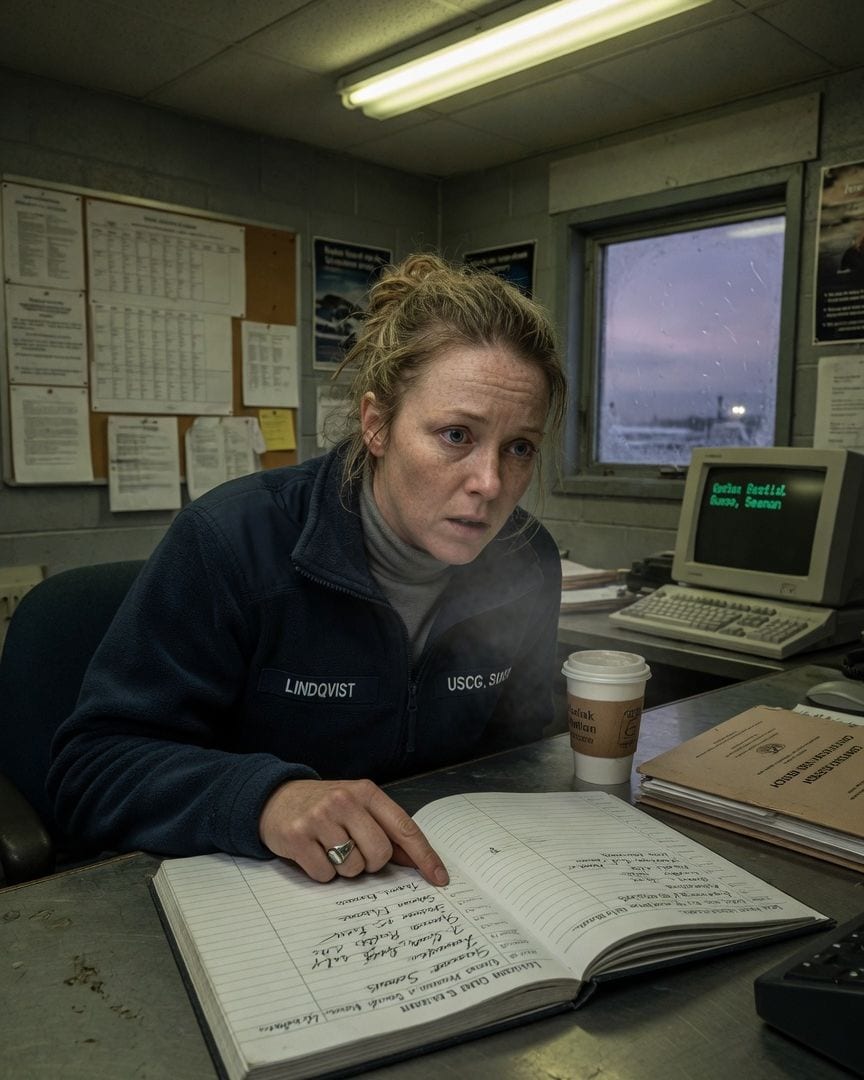
A Coast Guard Petty Officer found her own signature on a manifest for a sailor who didn't exist, with logs tallied for five hands.
Petty Officer Third Class Josephine Lindqvist meticulously checked her Kodiak Coast Guard station’s monthly report. Her cutter, the *Sea Raven*, was a three-hand vessel, and she knew her crew by heart. But there, an impossible name appeared on the manifest: 'Russo, Gideon,' signed by her own hand. The fuel logs and ration counts were tallied for five hands, confirming a terrifying discrepancy. Even her superior found the phantom sailor in the digital system, but Lindqvist knew she had never taken a fourth man, let alone accounted for five.
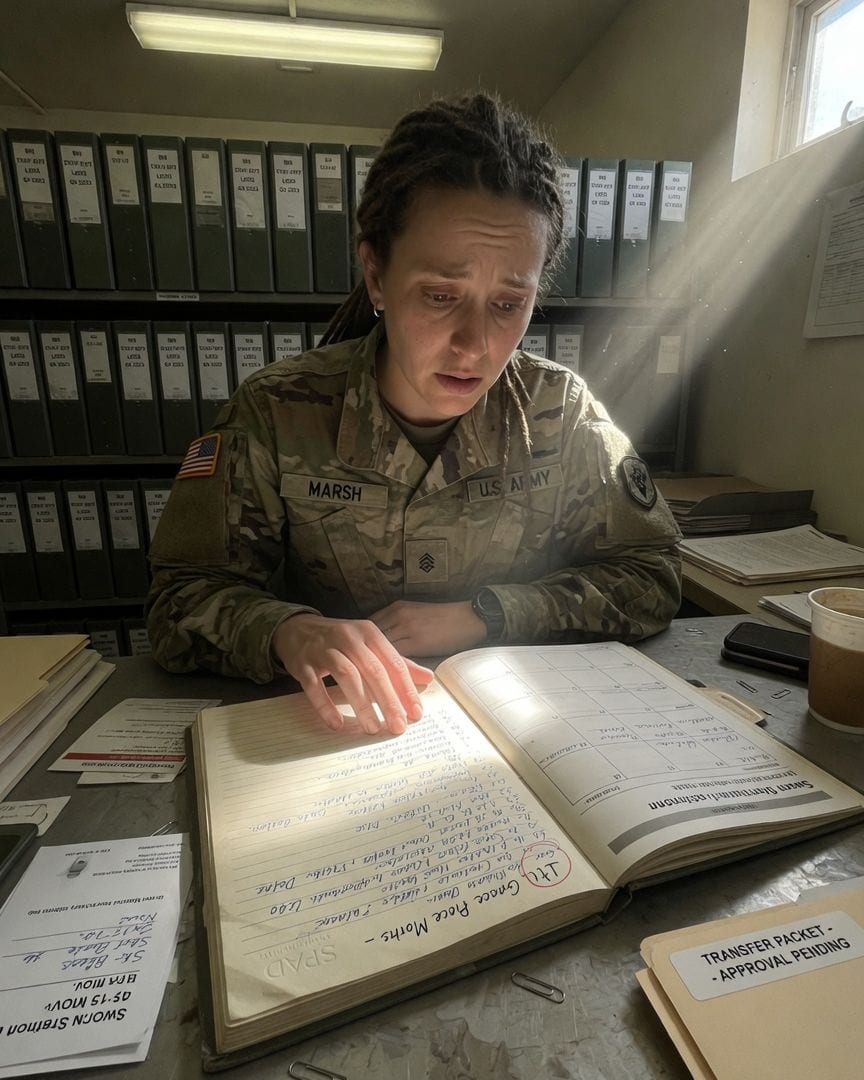
Preparing for a coveted post, a logistics officer found her own perfect signature on a duty log for a shift she swore she never worked. Then her coworker’s entry revealed his unique personal quirk.
Lieutenant Grace Marsh, a meticulous logistics officer, was deep in the archives, preparing her transfer packet for a coveted post. Her career depended on a spotless record, requiring absolute precision as she cross-referenced battalion staff-duty logs. Amidst the dusty binders and humming fluorescent lights, her gaze snagged on an entry for November 14th: her own perfect signature, logging a 24-hour shift she distinctly remembered spending hundreds of miles away in a court-martial. The impossible truth of a phantom doing her job was unsettling enough, but then she found another officer's entry, complete with his unique, personal quirk, for a day he was off-base. What was hidden in these official records?
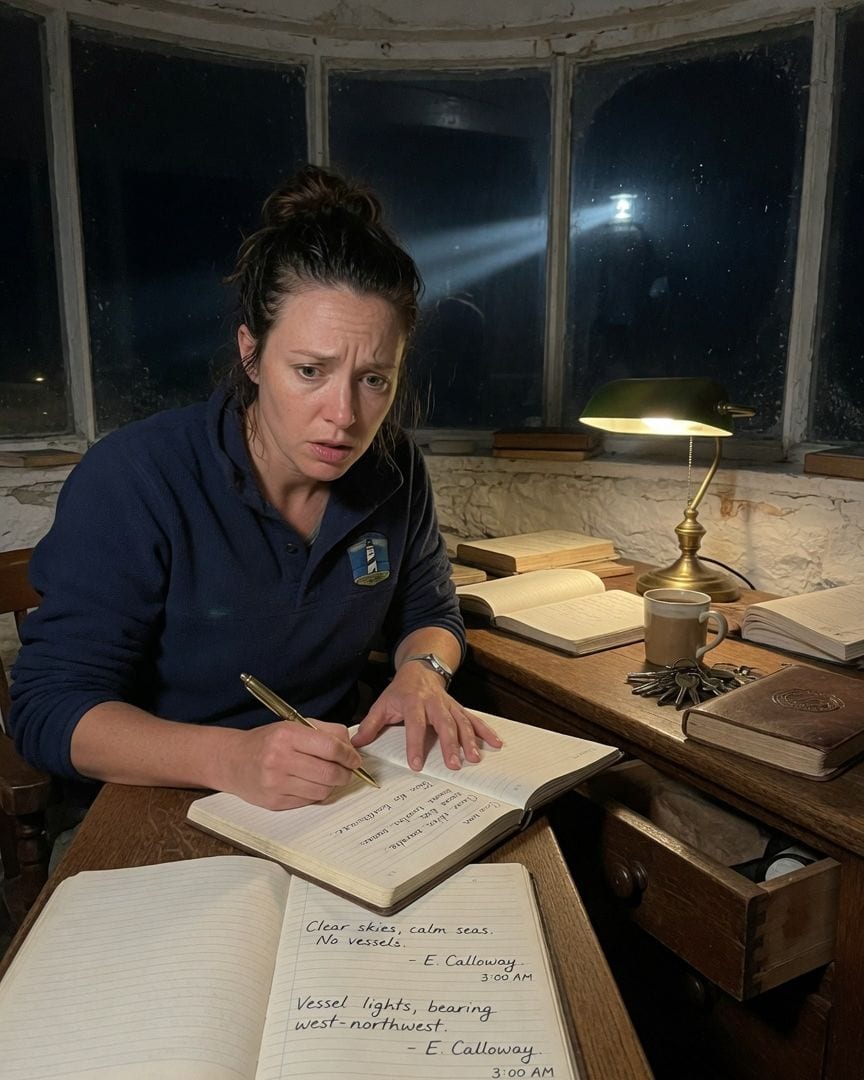
My logbook had a 3 AM entry, in my own precise hand, that I never wrote. Then I found an impossibly cold, hidden book with my name signed to an identical entry from last night.
My routine lighthouse shift was quiet until I noticed a new entry in the official logbook. Dated 3:00 AM, it described a vessel I never saw, written in my exact handwriting, and signed with my name. But I hadn't penned a single word.
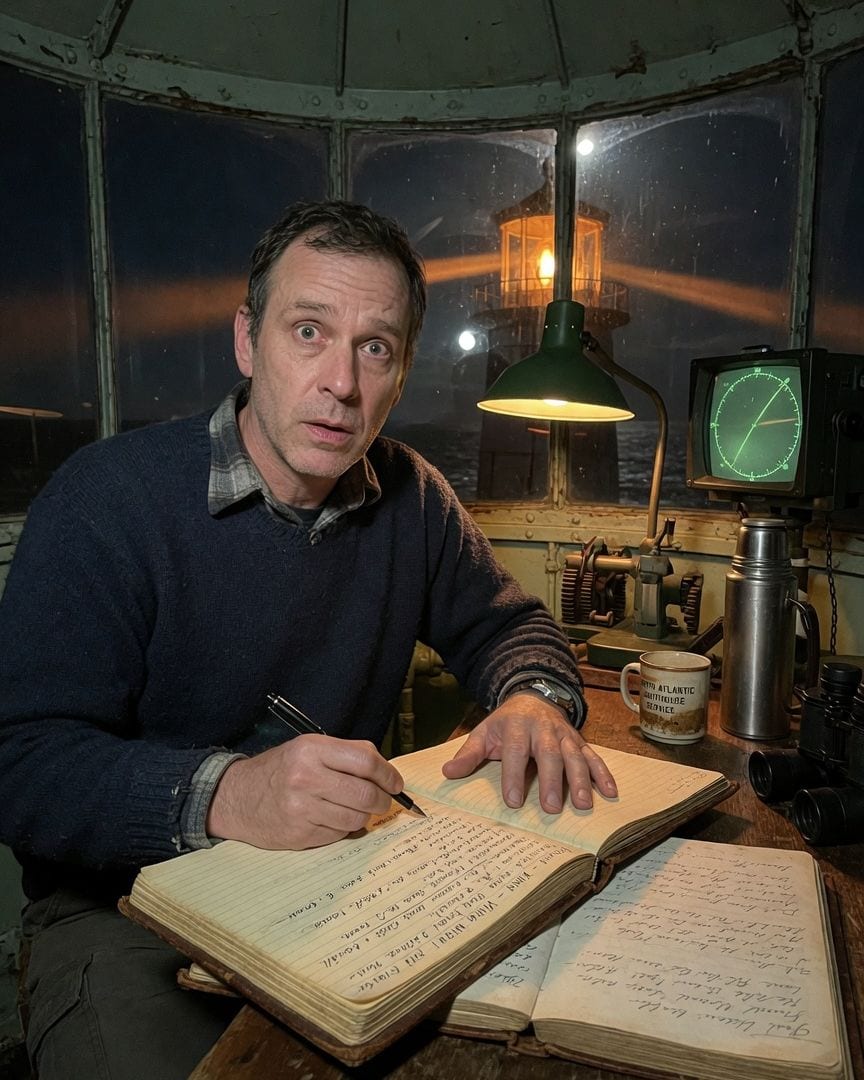
My lighthouse log has my own 3 AM entry for a phantom ship. I was alone in the tower, and I wrote no such thing.
Perched in the lantern room for my usual 2-6 AM watch, I reached for the thick logbook. But the 3:00 AM entry, under my own name, detailed a vessel I never saw. The words were in my own ink, yet I had never written them.
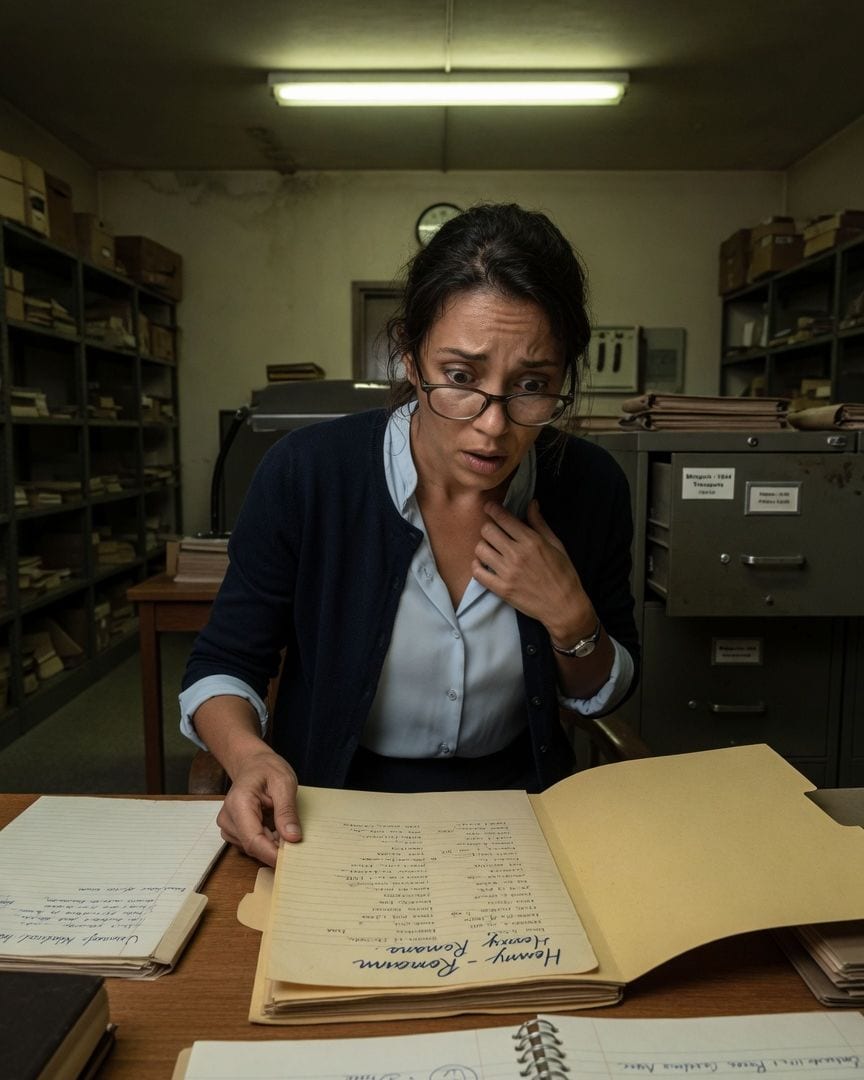
A records reviewer found a 1944 ferry manifest with an impossible 42nd name. The same dark ink marked a phantom crewman on a Cold War flight log.
Delphine Arceneaux, a dedicated records reviewer, had just minutes left in the stale reading room to finalize her review of a 1944 Mirepoix Ferry manifest. Her job was to confirm every detail of the forty-one passengers who boarded a boat that never arrived. But as the clock neared six, a forty-second name materialized on the faded paper, stark in a dark, unfamiliar ink. 'Henry Romano,' it read, with the impossible notation: 'BOARDED AT MIDSTREAM.' How could anyone board a ferry in the middle of a river?
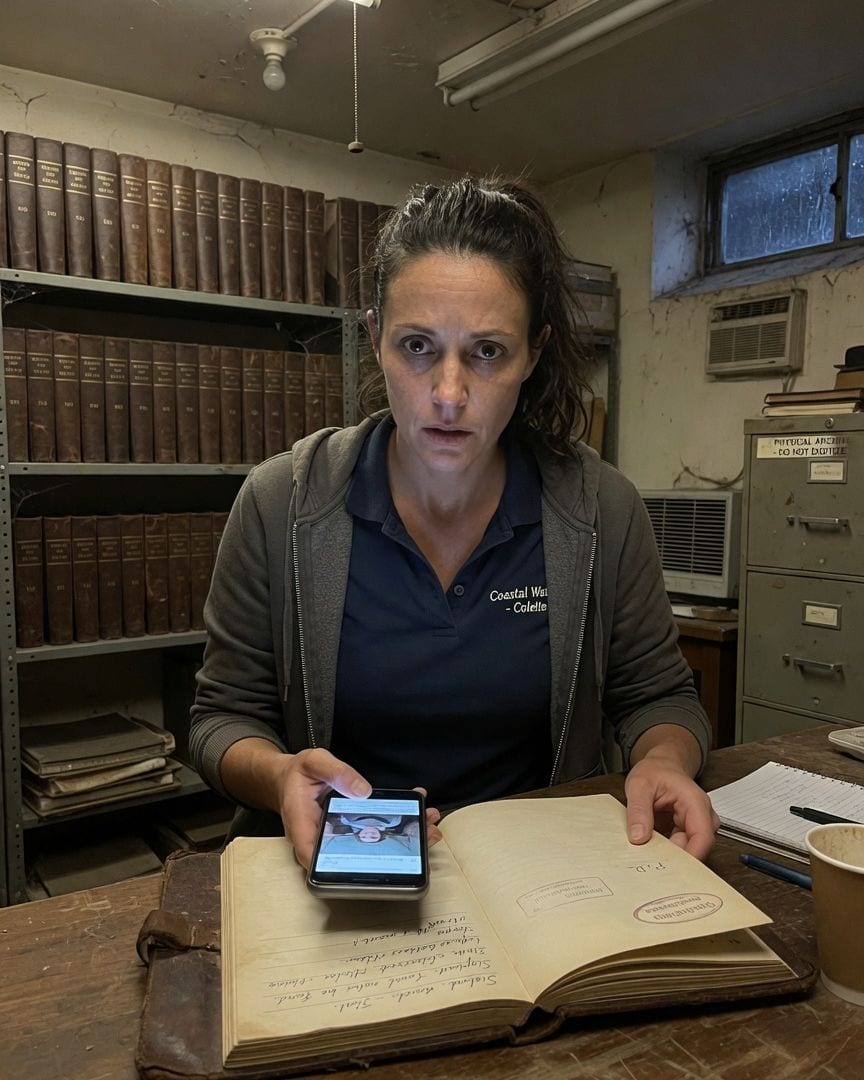
My coastguard log noted Sighting 9 again tonight, a light where no vessel showed. The old logs carry Sighting 9 off Skerry Point at 3:14am every tenth year since 1954, always 'nothing found,' always 'send no boat.'
On my watchtower night shift, the radar screen glowed green and the ocean was quiet. Then, a familiar light appeared off Skerry Point, exactly on cue, just as it had every tenth year for decades. But digging deeper, I found a hidden stamp in an old logbook: 'Operation Skerry. Status: Complete.' It left me with a chilling sense of finality.