 US Armed Forces
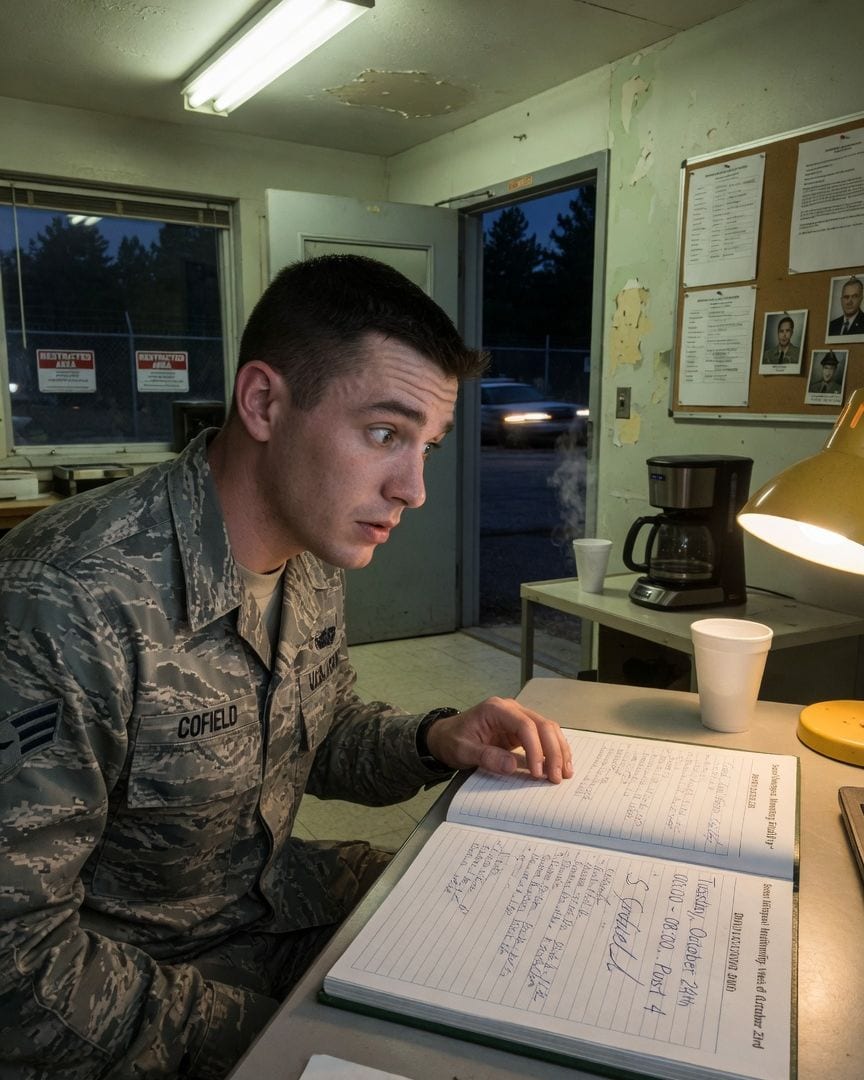
Senior Airman Simon Cofield was just two weeks from discharge when he patrolled the quiet, forgotten perimeter of a mothballed weapons storage area. On a night thick with pine scent, he spotted a faint yellow light in a building officially powered down for over three decades, its alarm system inert. Inside, the building hummed with power, spotless, with hot coffee brewing and a crisp shift-change roster on the wall. But Cofield froze when he found a duty logbook with current entries, including his own name and signature, assigning him to an impossible shift next Tuesday. A cold dread settled as he realized something had just claimed him for a duty that no longer existed.
12 min read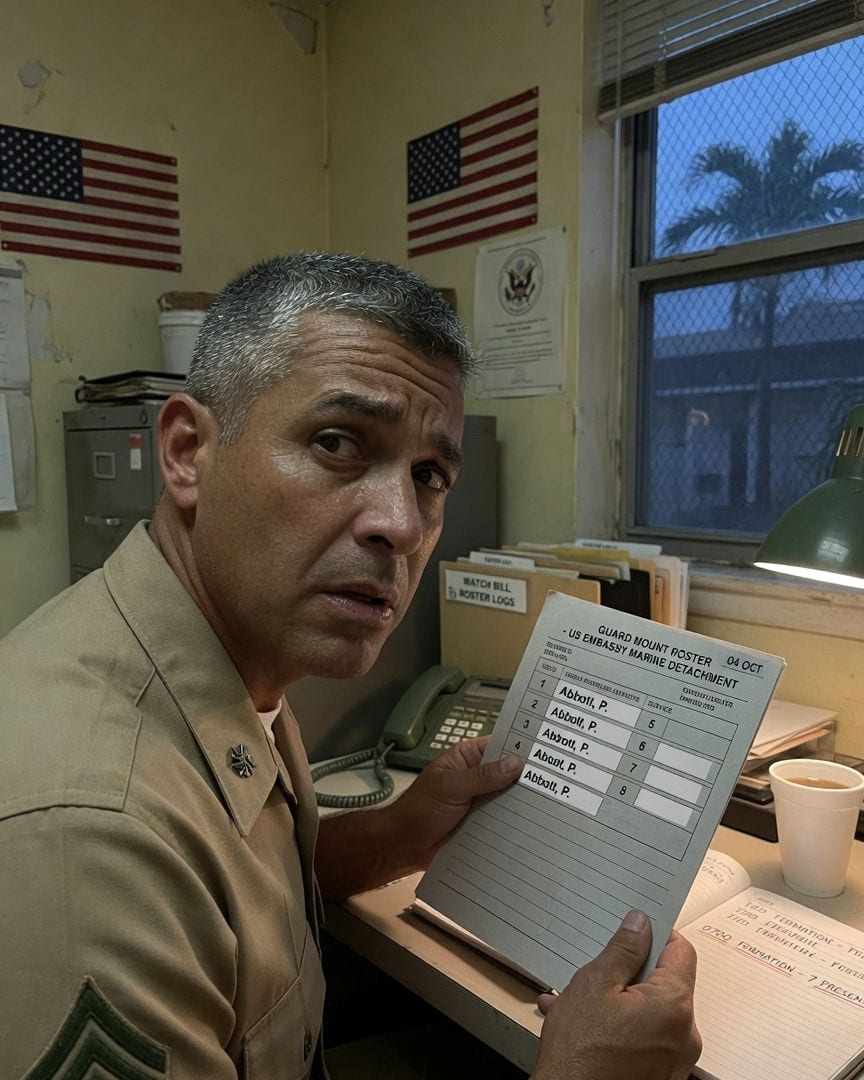 US Armed Forces
Sergeant Gordon Belanger, a career Marine NCO a month from his rotation, stood in the pre-dawn chill of the embassy courtyard. His meticulous count for guard mount revealed eight Marines, but the official watch bill listed only seven. When he confronted the extra man, the Marine gave a name already called, identical to the man standing beside him. Belanger's investigation of the impossible duplicate only deepened the mystery, as all records swore only seven Marines were present. Yet, his own signed roster confirmed an eighth man, whose service number was a stark, unnerving blank.
19 min read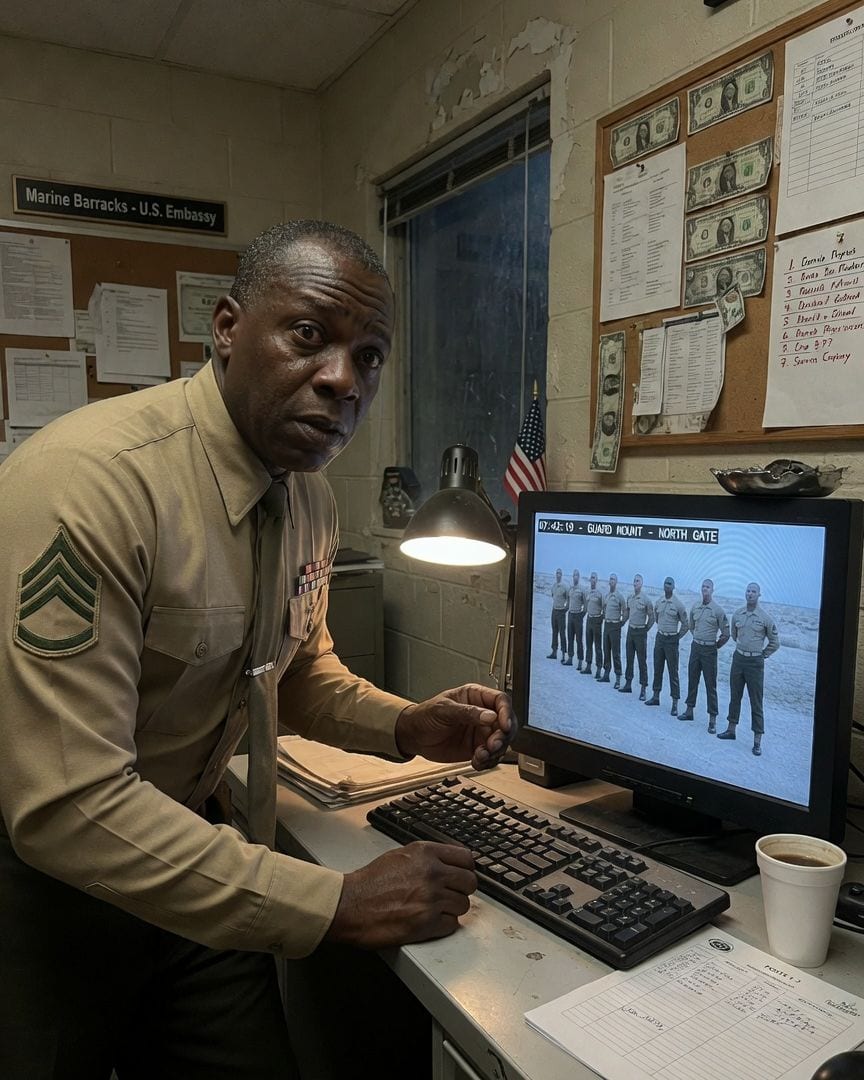 US Armed Forces
Sergeant Maxwell Belanger conducts a routine guard mount with his seven Marines, but counts an impossible eighth man in the formation. This extra Marine answers to a name already claimed, and later vanishes without a trace. Security camera footage briefly captures the eighth figure, solid and clear, before it warps and blurs from the frame.
10 min read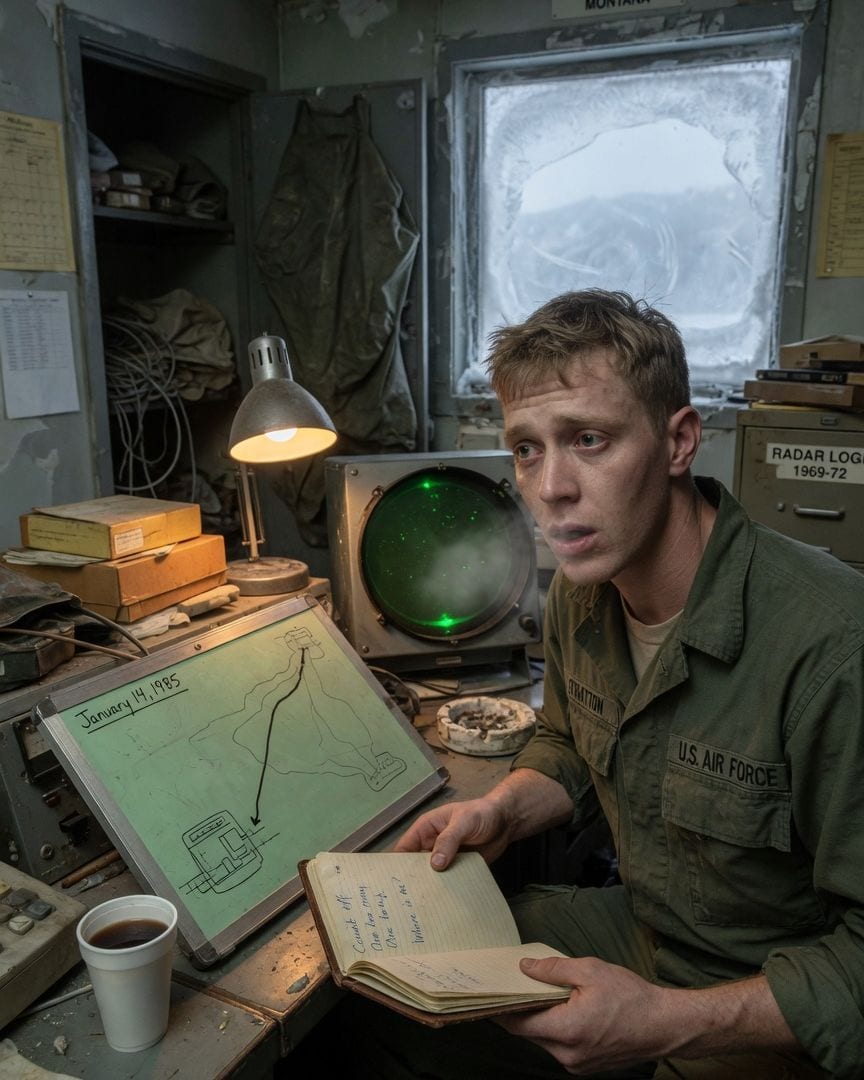 US Armed Forces
Airman Second Class Lars Stratton was counting down his final weeks at Echo Station, a desolate Cold War outpost due for mothballing. He longed for home, far from the bitter Montana winds and the constant hum of static. Inside the dim radar shack, he logged the usual nightly ghost blip, a faint contact appearing at 2300, just as it had every winter since 1987. This night, a metallic tang like old blood lingered in the air, raising the hairs on his arms. Seeking distraction, Lars later discovered a leather-bound logbook from 1971, detailing the same 2300 contact, but with chilling notes and a manifest listing one airman's name, Bernard Radcliffe, twice—once transferred, once present. Was he truly alone in the silent, remote station?
17 min read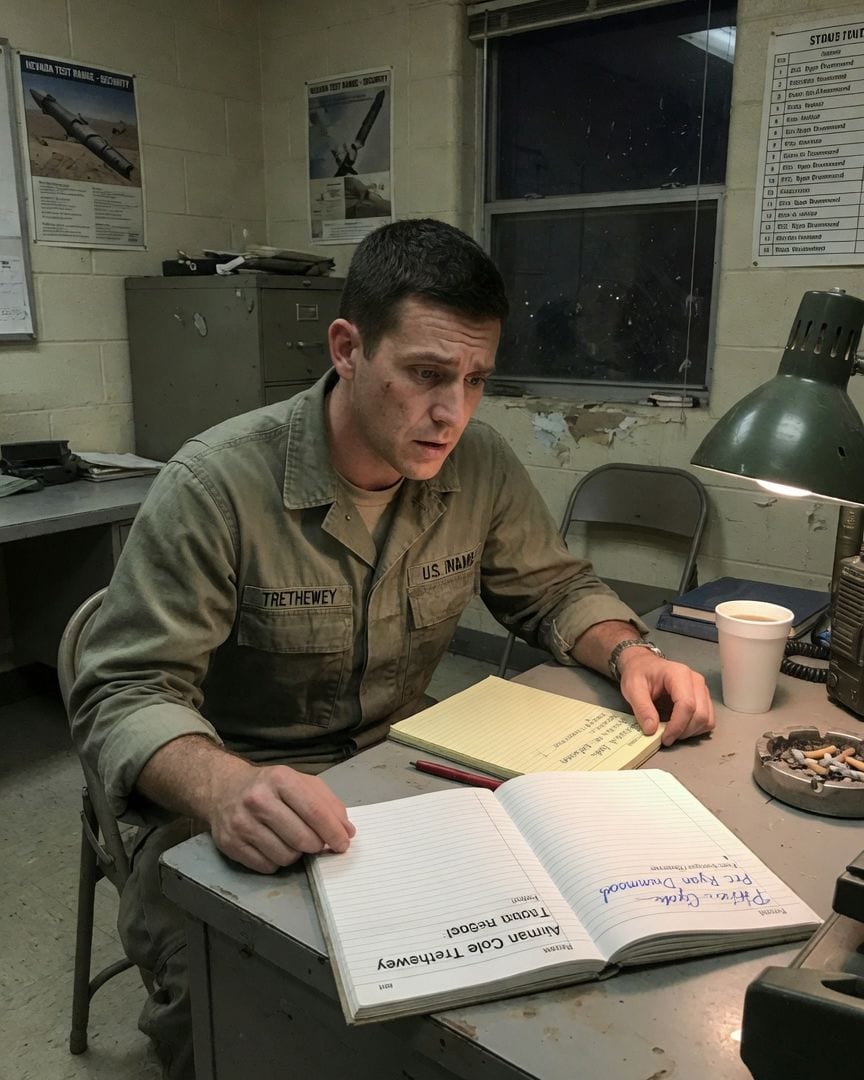 US Armed Forces
Airman Cole Trethewey was on the last loop of his final patrol, the desert night sharp and silent as his jeep cut through the Nevada test-range perimeter. Miles from any outpost, he saw a man standing in the road; a second later, the stranger sat beside him, seatbelt buckled, perfectly still. Back at the outpost, Cole’s dread deepened when his final patrol logbook listed a 'Ryan Drummond' as his observer, signed with an exact replica of his own hand. No records existed for the name, leaving Cole with an impossible, chilling fact that simply should not be.
13 min read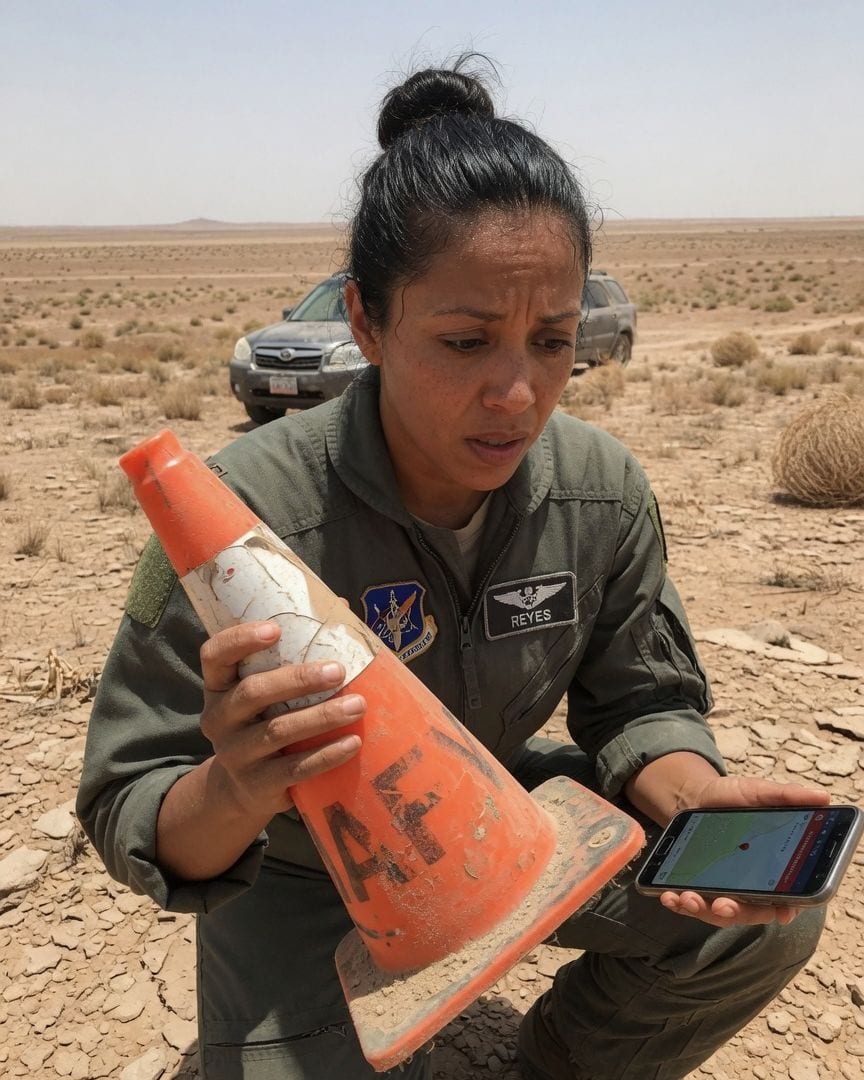 US Armed Forces
Captain Elena Reyes faced a dire situation: low on fuel and a storm blocking her home field, leaving one desperate divert option. A calm voice guided her to Outpost 73, and she landed her F-16 with immense relief, grateful for the lit runway and the man waving wands. However, her relief shattered when her home tower reported Outpost 73 had been decommissioned in 2005, its coordinates now just empty scrub. Faced with a career-ending inquiry, Reyes insisted on what she saw, driving to the desolate coordinates where a half-buried airfield marker cone proved her impossible landing was real. How could a ghost airfield leave physical proof?
12 min read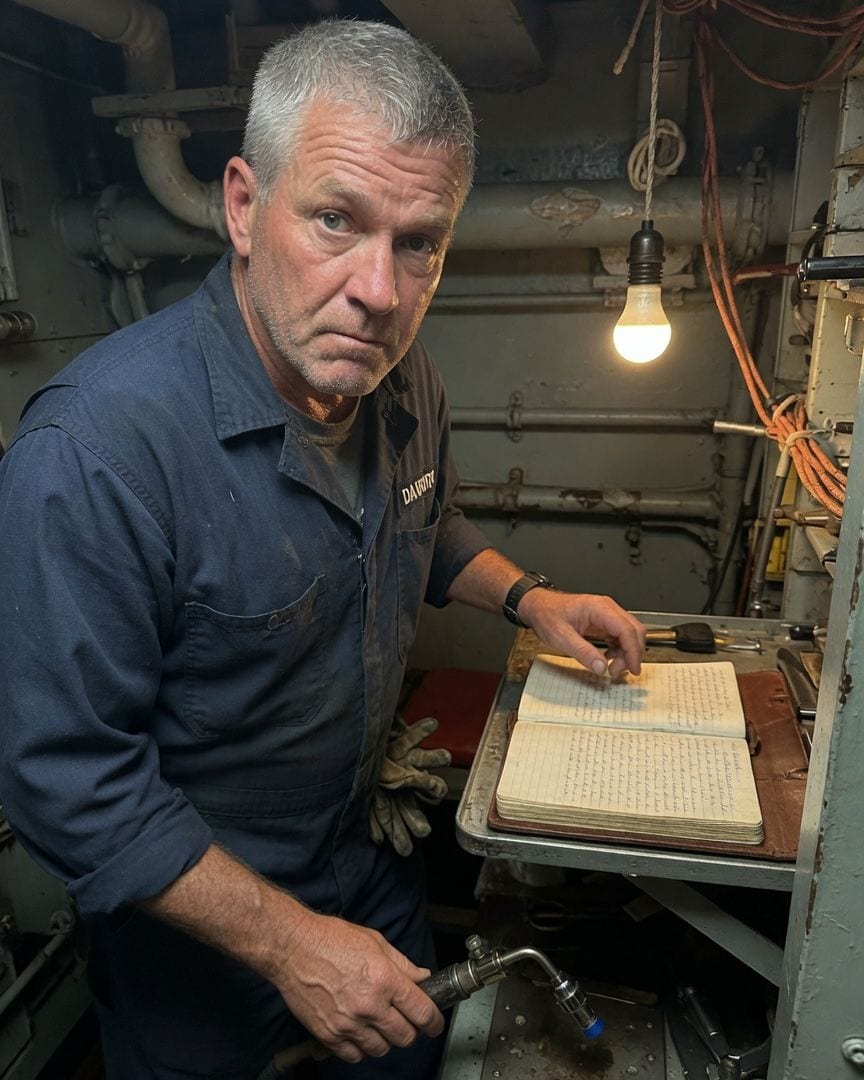 US Armed Forces
Chief Petty Officer Raymond Danforth, just a week from ending three decades of service, was intimately familiar with every pipe and plate of the guided-missile destroyer Weatherall. During a mid-cruise overhaul, his gloved hand found a sealed hatch where schematics promised only a solid bulkhead. He cut through the impossible seam to reveal a small, dry compartment, softly lit, containing a logbook filled with an unsettlingly familiar hand. When he returned an hour later with a witness, the hatch was gone, the wall seamless. Later that night, the same logbook appeared beneath his mattress, its pages revealing an entry: 'Petty Officer Howard Montgomery, missing, 1972.' How could a compartment vanish, yet leave its secrets behind?
11 min read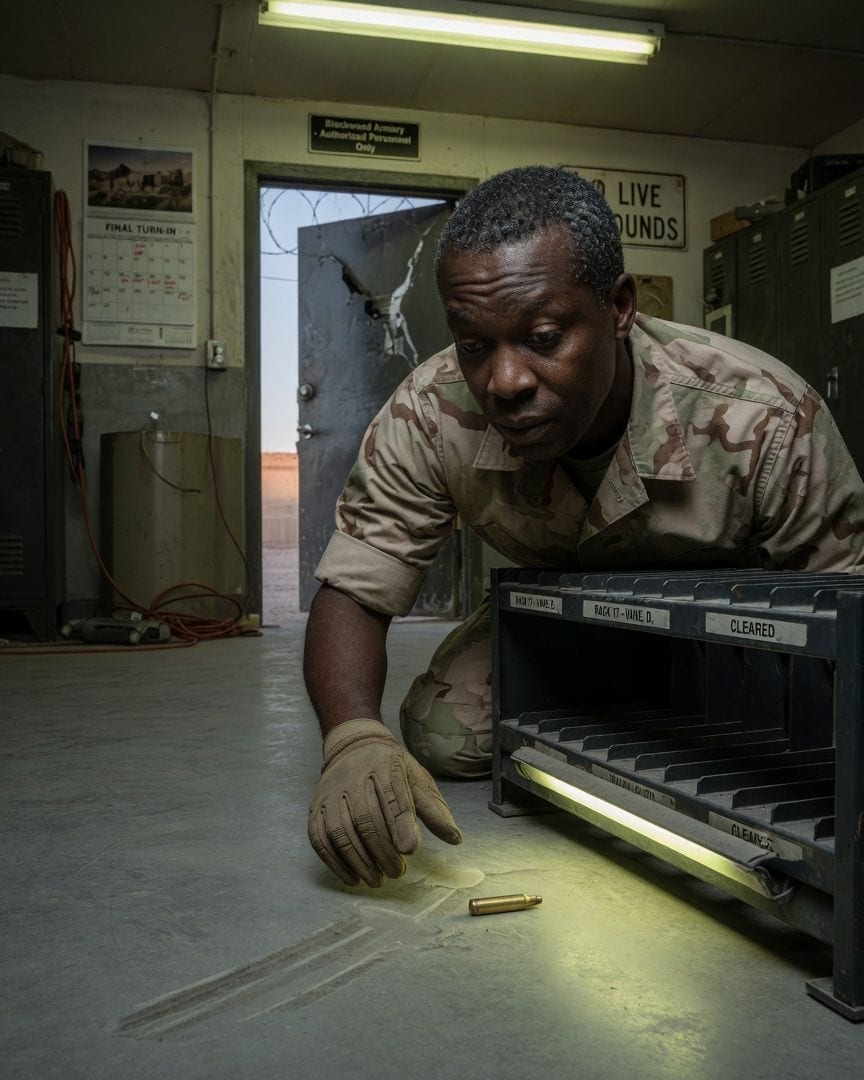 US Armed Forces
Corporal Desmond Vane, a soldier known for his rigid adherence to procedure, meticulously cleared his M4 carbine for its final turn-in at the soon-to-be-decommissioned FOB Blackwood. Defying the armorer's odd rule, he ensured his weapon was absolutely empty, double-checking every component. Yet, hours later, from the locked and supposedly empty armory, Vane heard the unmistakable metallic click of a rifle round chambering itself, over and over, through the night. The next morning, a full inspection revealed no sign of intrusion, but beneath where Vane's carbine had been racked, a single spent brass casing lay on the pristine concrete, accompanied by a faint, impossible boot print. Who or what had violated the secure armory, and how?
12 min read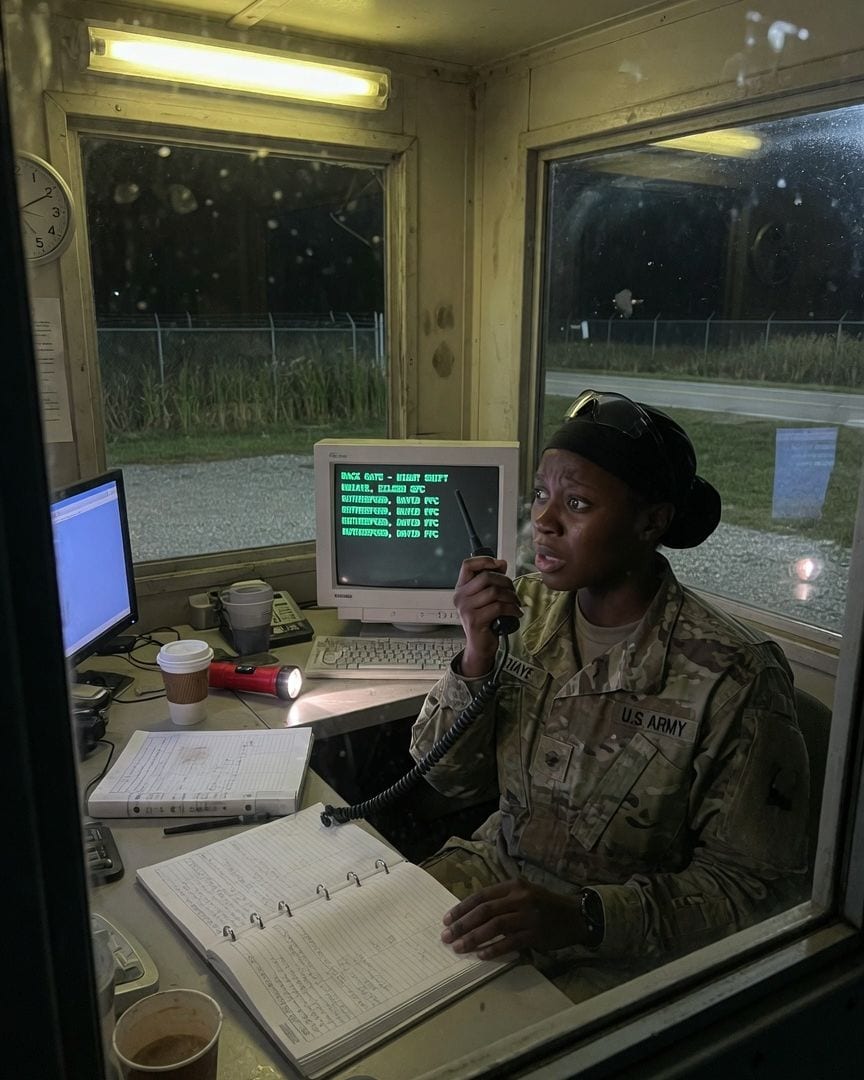 US Armed Forces
Specialist Eileen Ndiaye endured the late October chill at Fort Vashon's back gate, counting the hours until her transfer in two days. Alone on a two-man post due to a flu outbreak, the distant generator hum was her only company against the vast, empty marshland. Just after midnight, three sharp raps echoed on the glass, then again, softer, but the motion lights revealed only gravel and fence wire. A third series of knocks, light as falling ash, came from just six inches behind her ear. Later, trying to rationalize it as fatigue, she checked the logbook and digital roster. Both clearly listed a second man, PFC Rutherford, assigned to her exact post and hours, as if the base system itself swore she hadn't been alone.
10 min read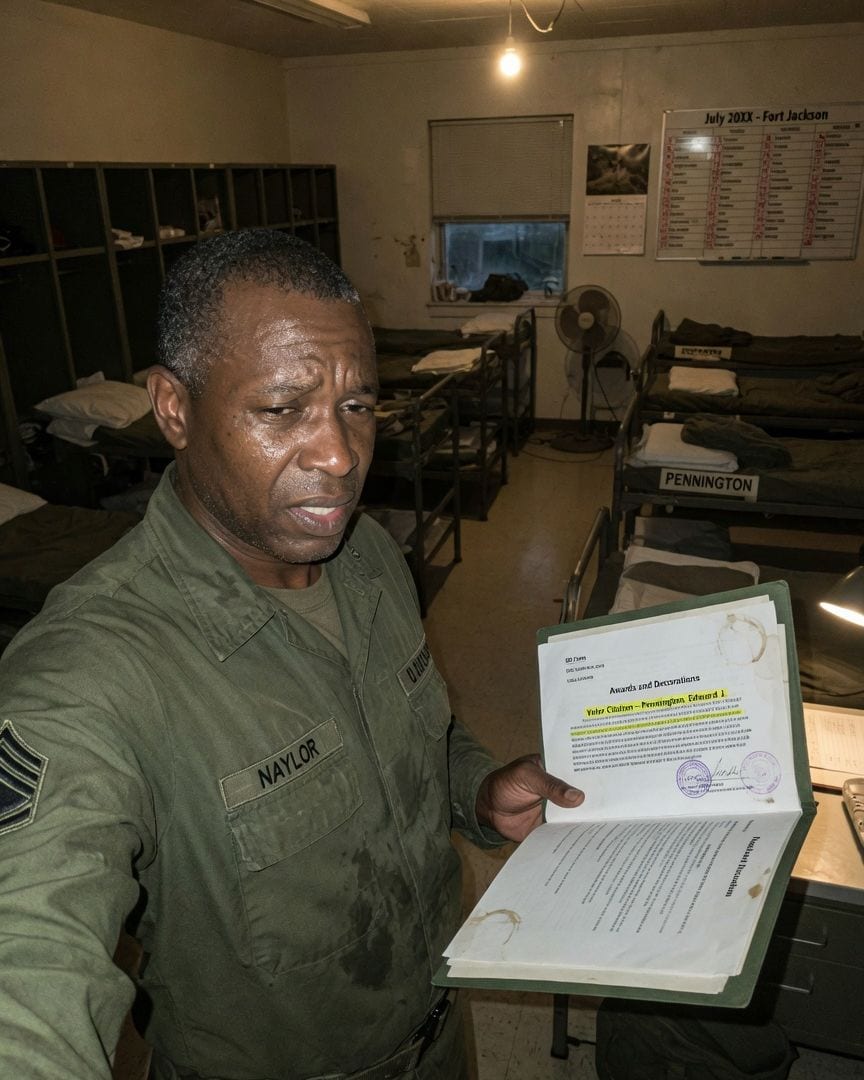 US Armed Forces
Sergeant Julian Naylor stood before his last platoon, just two days from rotating to the fleet for good, trying to make sense of the sweltering Carolina squad bay. His evening count of seventy-nine recruits was met with eighty voices answering, and the phantom number burned in his mind. The next morning, checking records for the unsettlingly still Edward Pennington, Naylor uncovered a valor citation for a fierce firefight in Kandahar. Yet Pennington had never finished basic training, and the combat date was weeks before his actual graduation, leaving Naylor to wonder how a recruit could fight a war he'd never seen.
8 min read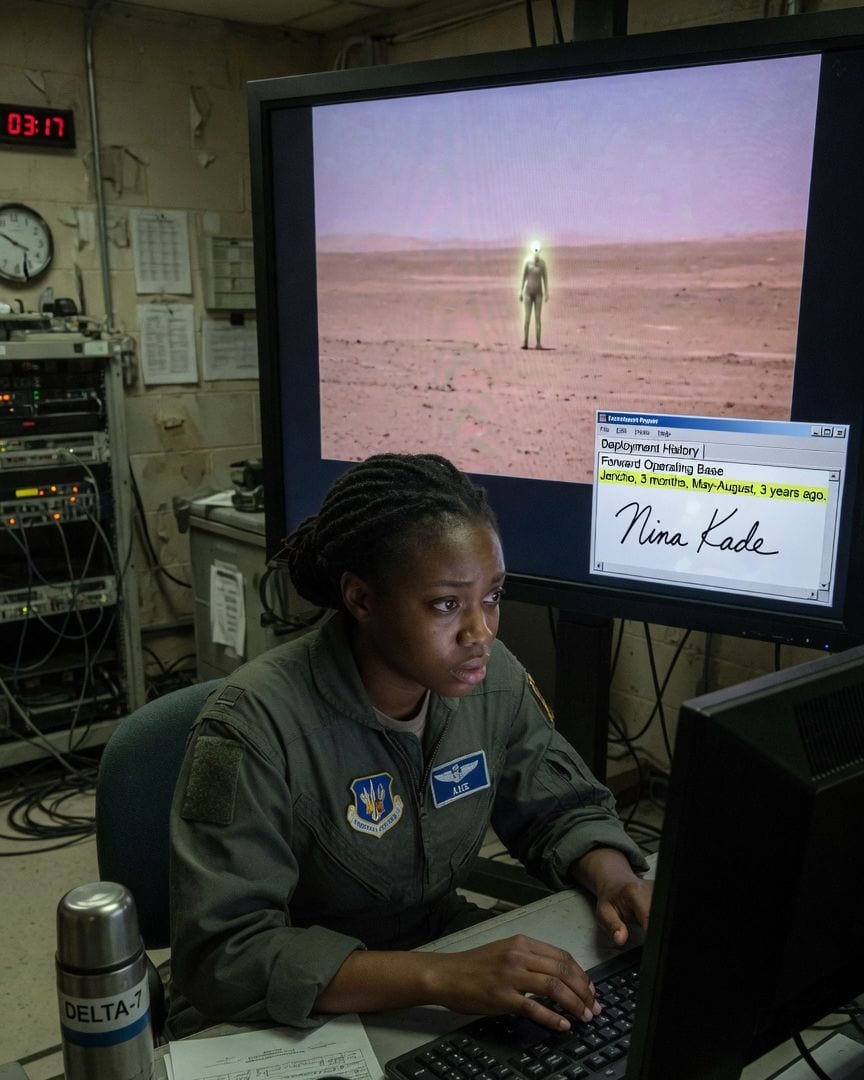 US Armed Forces
Airman First Class Nina Kade, just twenty, aimed for a spotless record before her first transfer from Outpost Delta-7. Monitoring drone feeds, she saw a shimmering heat signature in the desolate desert, moving in a slow, impossible pattern. It stopped, tilted its head, and seemed to find her through the camera, reappearing on every feed she monitored, hundreds of miles apart. The real dread began when she found her personnel file listed a three-month deployment to a notorious, decommissioned base from three years ago, when she was seventeen. Her own perfectly forged signature stared back, with the desert's heat signature now faintly superimposed directly over it.
10 min read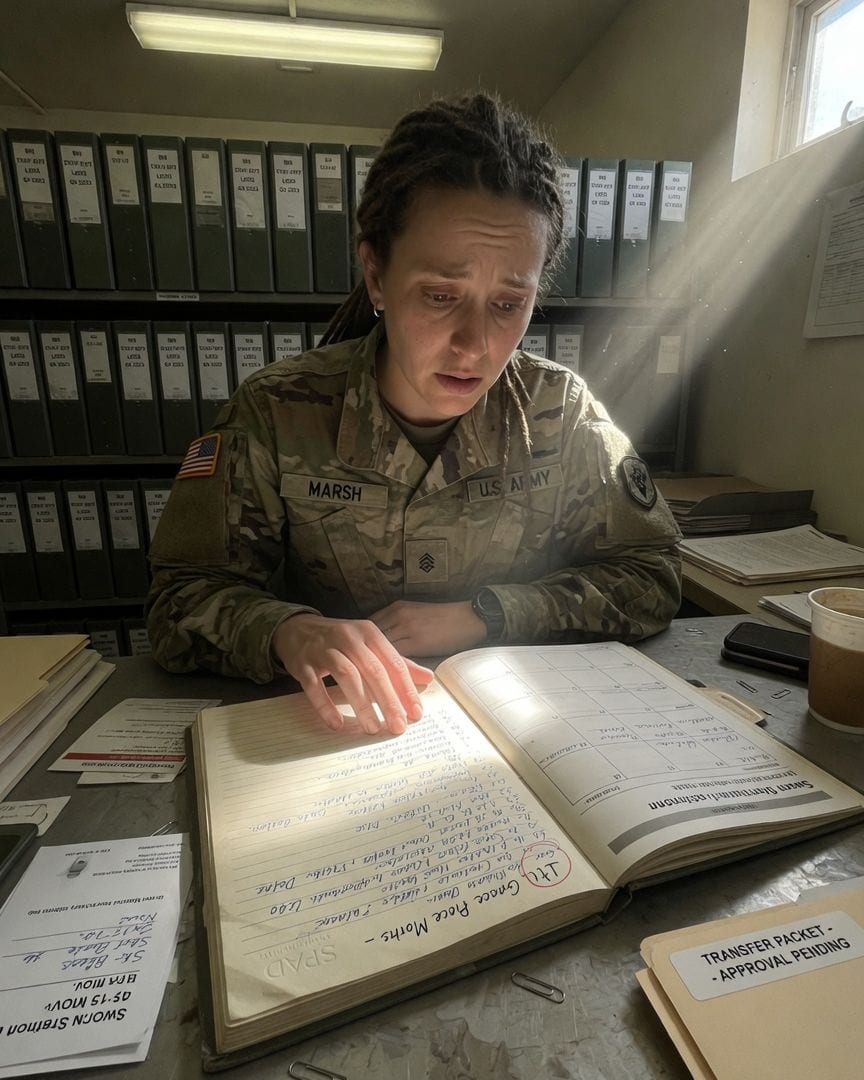 US Armed Forces
Lieutenant Grace Marsh, a meticulous logistics officer, was deep in the archives, preparing her transfer packet for a coveted post. Her career depended on a spotless record, requiring absolute precision as she cross-referenced battalion staff-duty logs. Amidst the dusty binders and humming fluorescent lights, her gaze snagged on an entry for November 14th: her own perfect signature, logging a 24-hour shift she distinctly remembered spending hundreds of miles away in a court-martial. The impossible truth of a phantom doing her job was unsettling enough, but then she found another officer's entry, complete with his unique, personal quirk, for a day he was off-base. What was hidden in these official records?
13 min read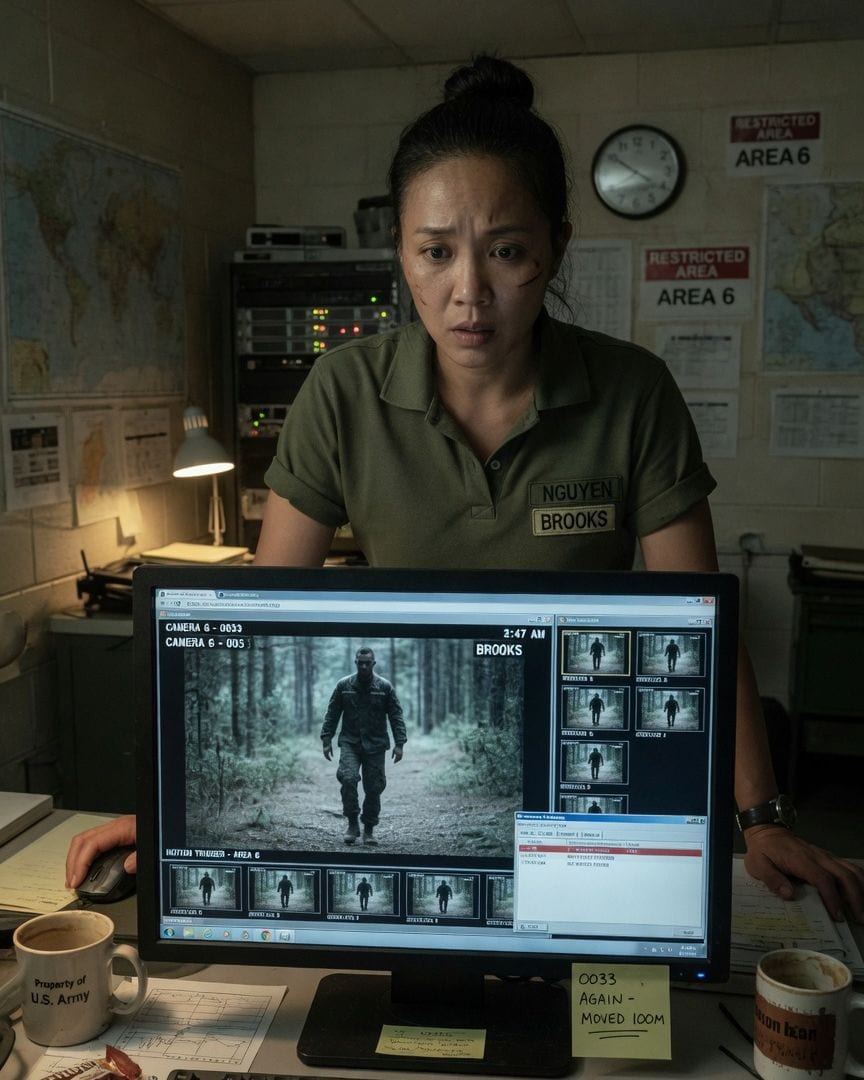 US Armed Forces
Specialist Alice Nguyen's meticulous duties in a remote Louisiana training area were usually a monotonous rhythm, but camera six had shattered it. Every night, precisely at 0033, its motion sensor would trigger, capturing a man mid-stride, while adjacent cameras recorded nothing. She moved the camera, recalibrated its sensors, yet the phantom man continued to appear, his uniform subtly shifting across identical images. After painstaking enhancement, the name 'BROOKS' appeared on his uniform, a name completely absent from forty years of base records. What was this impossible presence, this constant error in a world designed for exact counts?
13 min read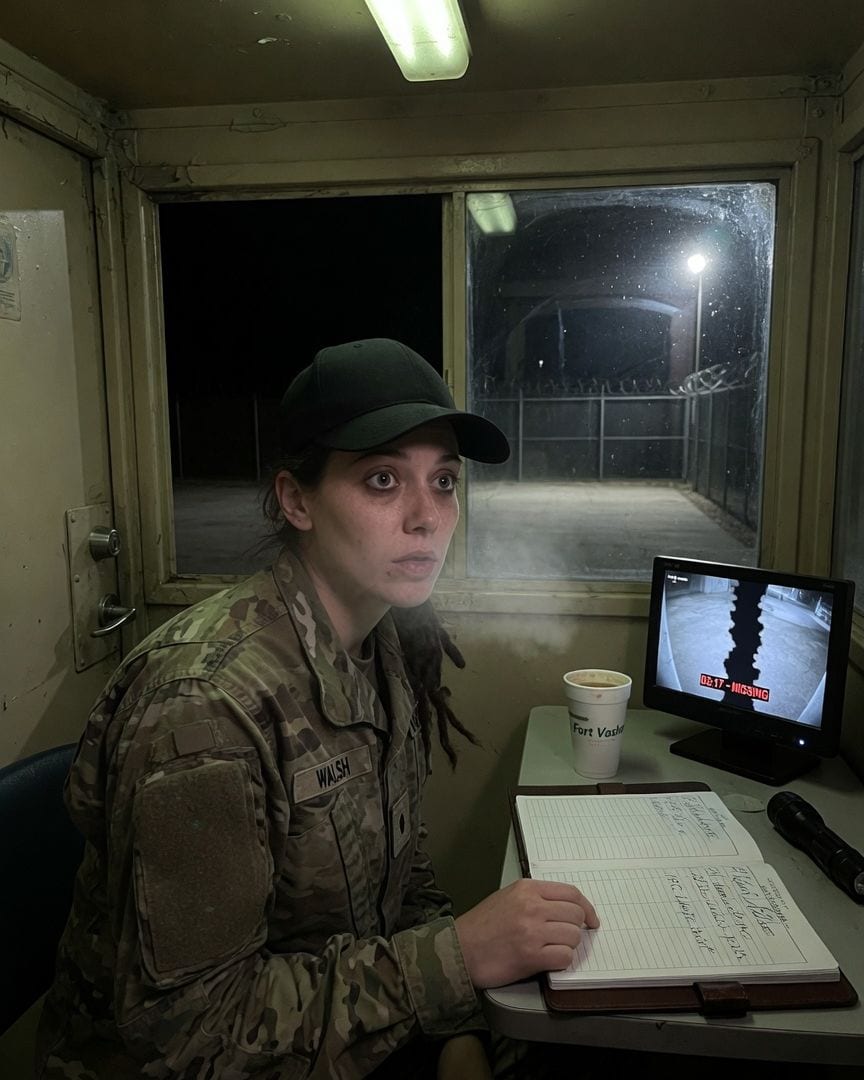 US Armed Forces
Specialist Rose Walsh endured a lonely overnight shift at Fort Vashon's desolate back gate, the only guard on duty after a severe flu outbreak decimated the roster. The bitter wind howled, but it couldn't explain the sharp, deliberate knuckle raps on her guard shack window. The third knock came from just inches behind her ear, *inside* the locked shack, and its security footage simply vanished. Her physical duty log then revealed a fresh signature for 'PFC Lambert, J.' for her solitary post, a name consistently appearing in other remote posts. Who was this phantom guard, and why did their path lead to Rose?
11 min read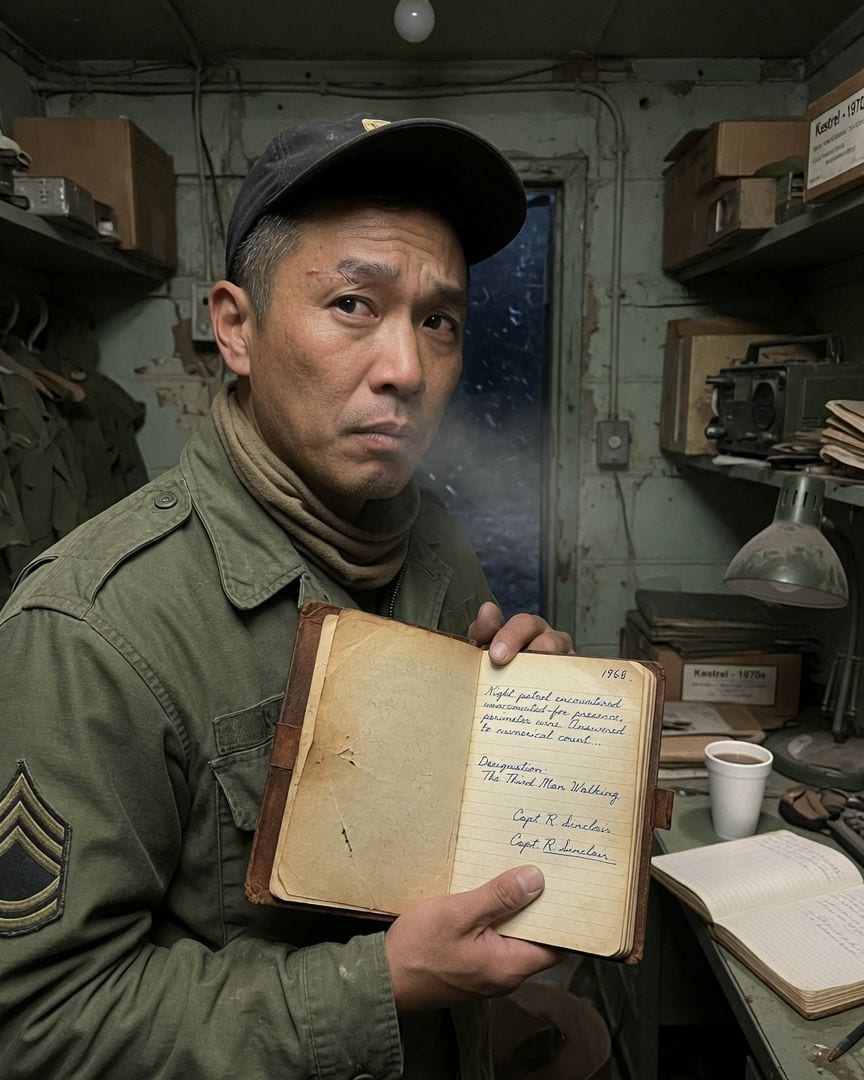 US Armed Forces
Sergeant Julian Aoki, a career NCO, prepared for his final perimeter sweep of Firebase Kestrel, a remote outpost days from decommissioning. He aimed to leave the desolate, windswept plateau with a clean manifest before the relief column arrived at dawn. As he called out his four-man patrol’s numbers, a raspy, barely audible fifth voice answered 'Five,' though only four men stood before him. Later, a fifth set of heavy boot prints appeared in the dust, matching his stride back to the wire, a silent, invisible companion. Dismissing it as fatigue, Aoki later found a disused, leather-bound logbook describing identical perimeter encounters, including a 'Third Man Walking' in 1968. Could this unsettling record be more than just old superstition?
14 min read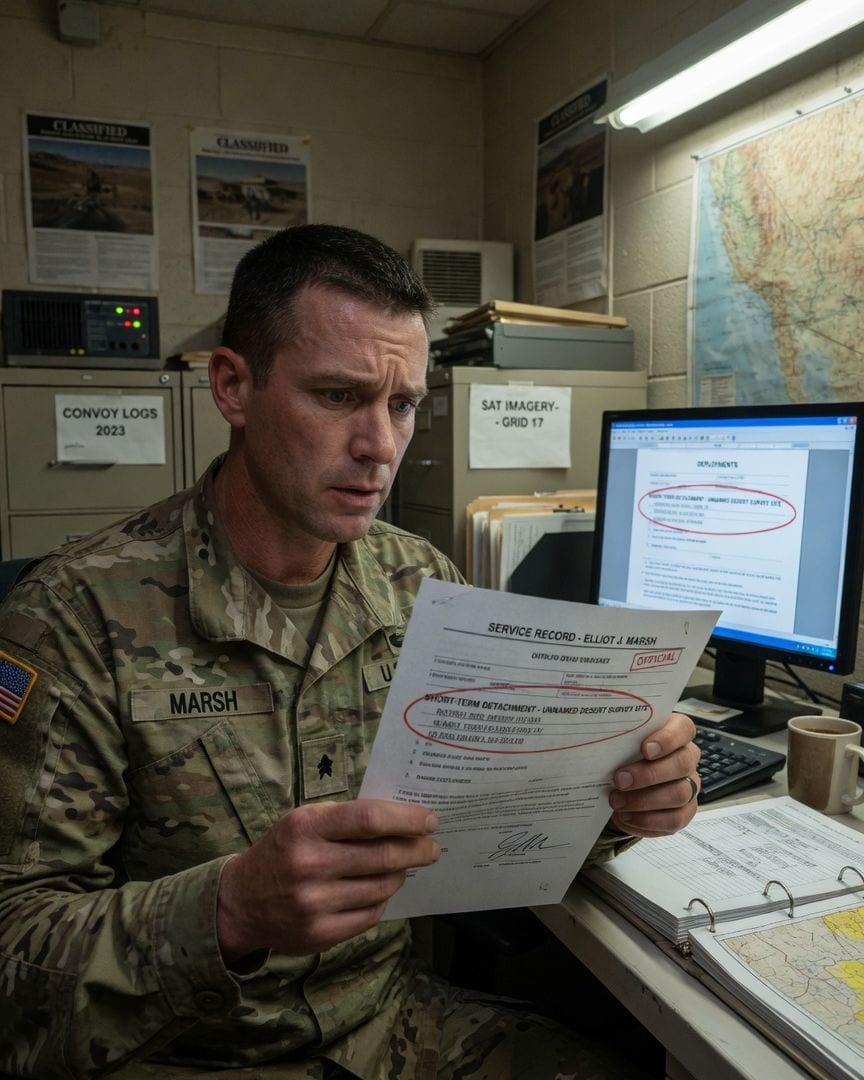 US Armed Forces
First Lieutenant Elliot Marsh felt the Mojave dark swallow his resupply convoy, a wrong turn leading him to an unlisted firebase. The remote outpost, its flag tattered and sandbags faded, materialized from the desert night, baffling him. When his superiors reported nothing at that grid, Marsh's confusion turned to dread as the entire structure vanished behind him, leaving only empty expanse. Back at Fort Irwin, his meticulous investigation revealed a chilling truth: his own signed convoy logs and service record detailed a different route and an unremembered mission, placing him miles away at the exact time he witnessed the impossible.
12 min read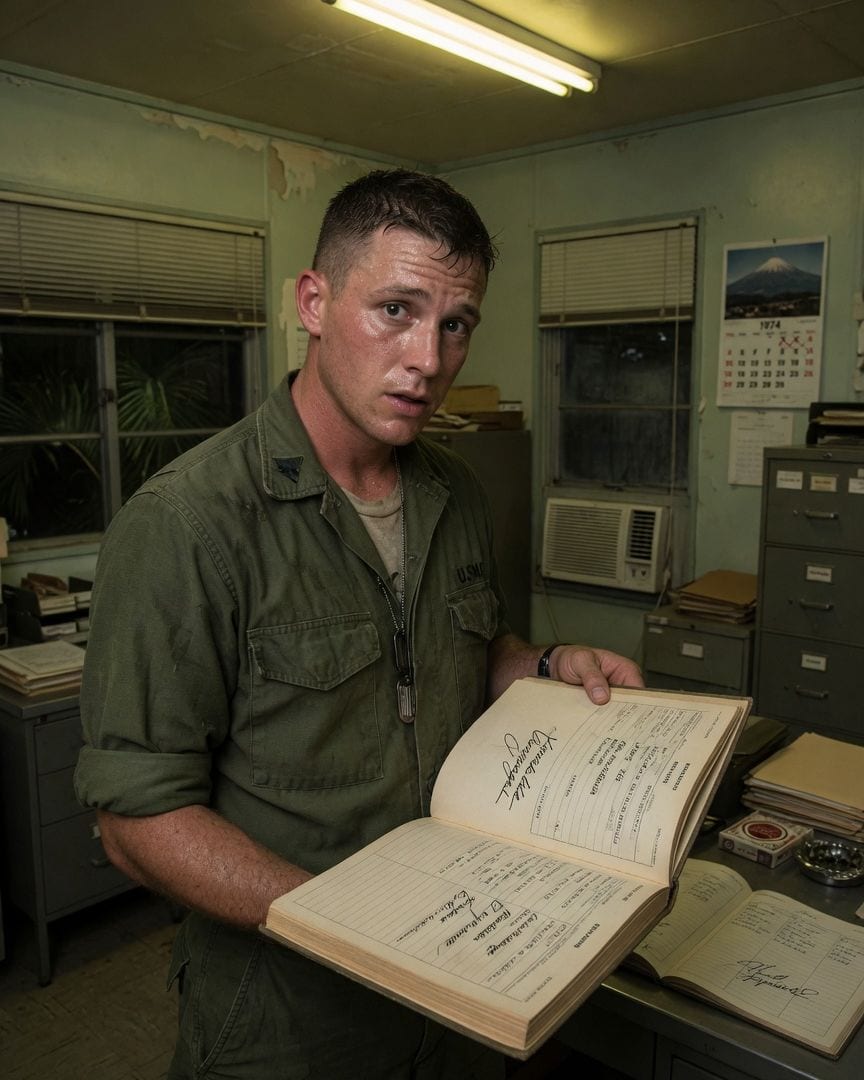 US Armed Forces
Lance Corporal Trell felt the humid Okinawa air cling to him in 1974 as he finalized his service record, his transfer home imminent. A clean file was his ticket back, but dread pierced him when he saw a full page of entries for 'Post 73, Radio Relay, Okinawa.' Trell had never been there; the post had closed decades before he even shipped out. His trusted Gunny Reynolds, whose signature was undeniably on the page, swore he'd never seen it. Later, in the hushed records office, Trell found an identical impossible tour in another Marine's file, forcing him to question what impossible truth the system had swallowed.
11 min read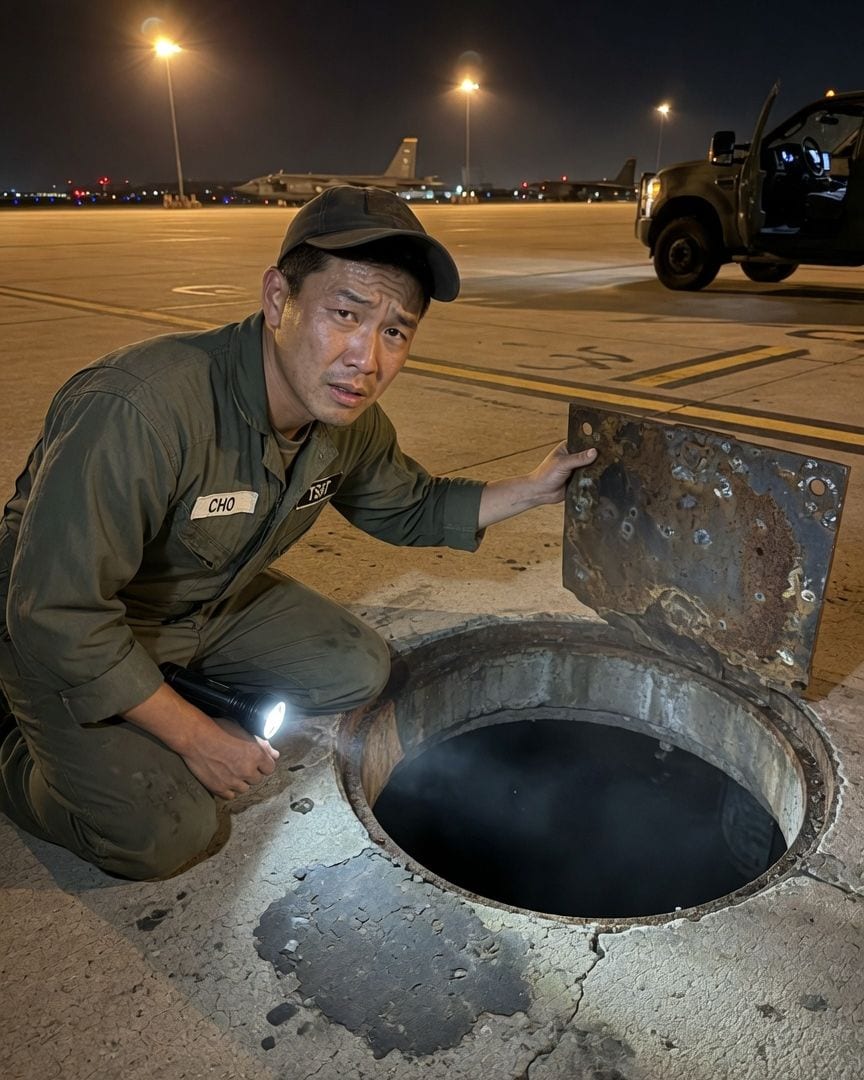 US Armed Forces
Technical Sergeant Daniel Cho was counting down his final two weeks at the Dakota bomber base, determined to solve the phantom riddle of its floodlit flight line. Every night at 0148, a buried sensor logged a vehicle pass, yet overhead thermal cameras consistently showed nothing but empty concrete. To catch the anomaly, he parked his heavy maintenance truck directly over the sensor. But as the clock turned 0148, a low thrum vibrated through his teeth, and the sensor registered a second, impossible vehicle pass—right through his own parked truck. His investigation soon uncovered a hidden, unmapped metal plate in the concrete, sealing a dark shaft that hummed with a deep, rhythmic vibration, like an enormous heartbeat from beneath the earth.
13 min read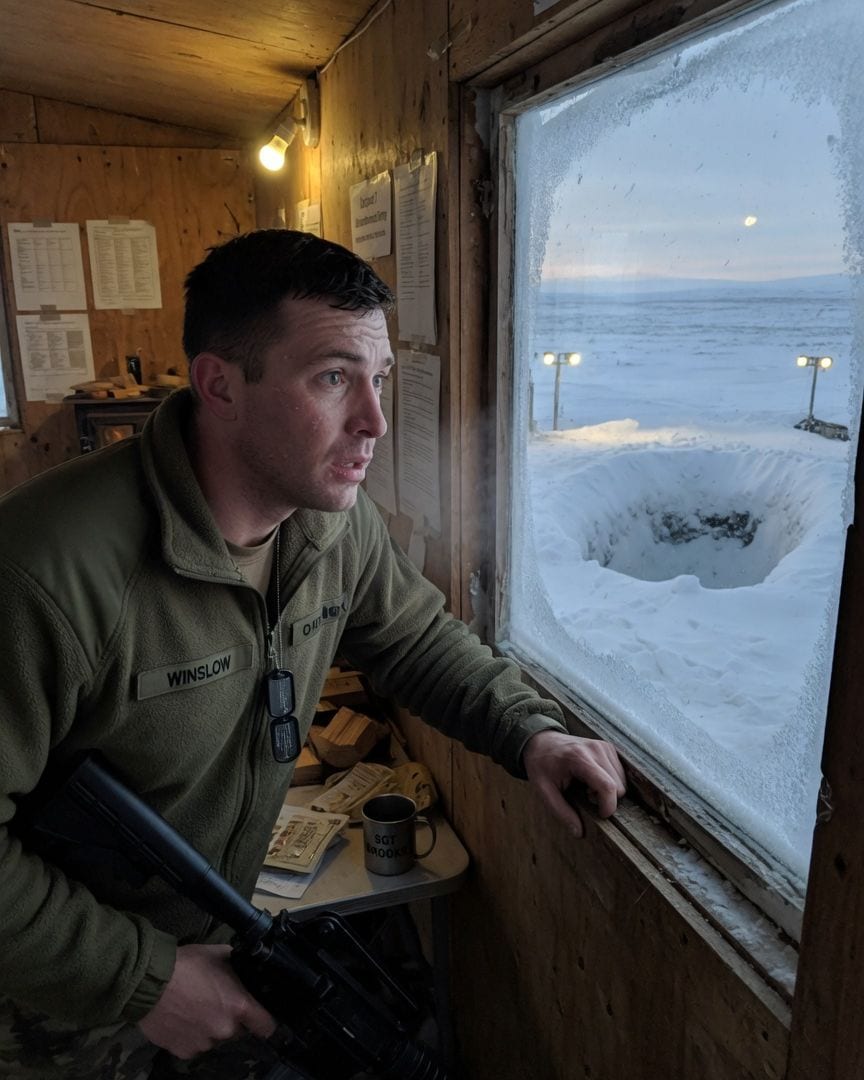 US Armed Forces
Corporal Kenneth Winslow discovers a perfectly circular, waist-deep track in the fresh snow around his isolated hut. When he checks the duty logs, he finds an entry for a perimeter sweep by himself and a PFC Langford. Yet, official records show PFC Langford was transferred from the outpost two weeks ago.
13 min read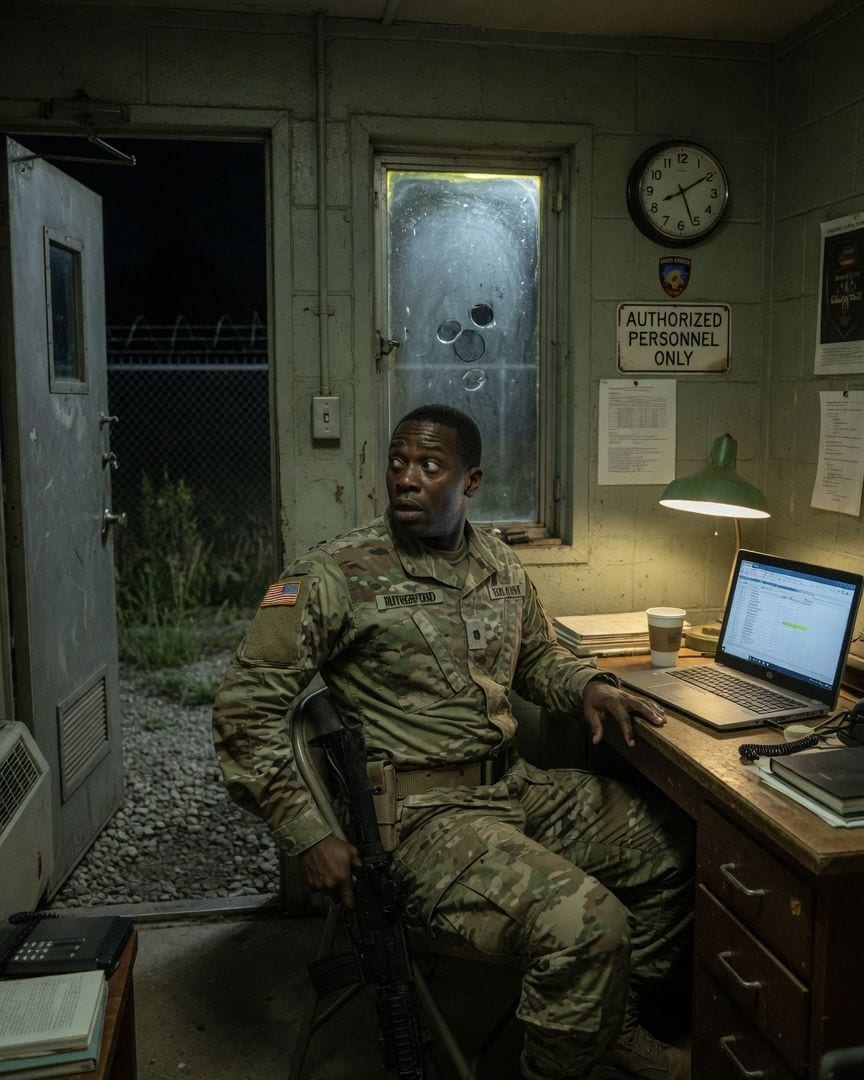 US Armed Forces
Staff Sergeant Julian Rutherford felt an unsettling quiet at Fort Vashon's back gate, replacing a guard who reported strange knocks. He discovered an extra name on the digital duty roster that kept reappearing after deletion, a cold digital ghost. His search through decades of archived logs revealed a persistent anomaly: an unassigned slot, always present on short-staffed shifts. Then, in a forgotten supply shed, he unearthed an old journal detailing similar knocks and shadows, and one entry describing a guard hearing his own name called from the dark. What invisible presence haunted the fort's lonely gate?
15 min read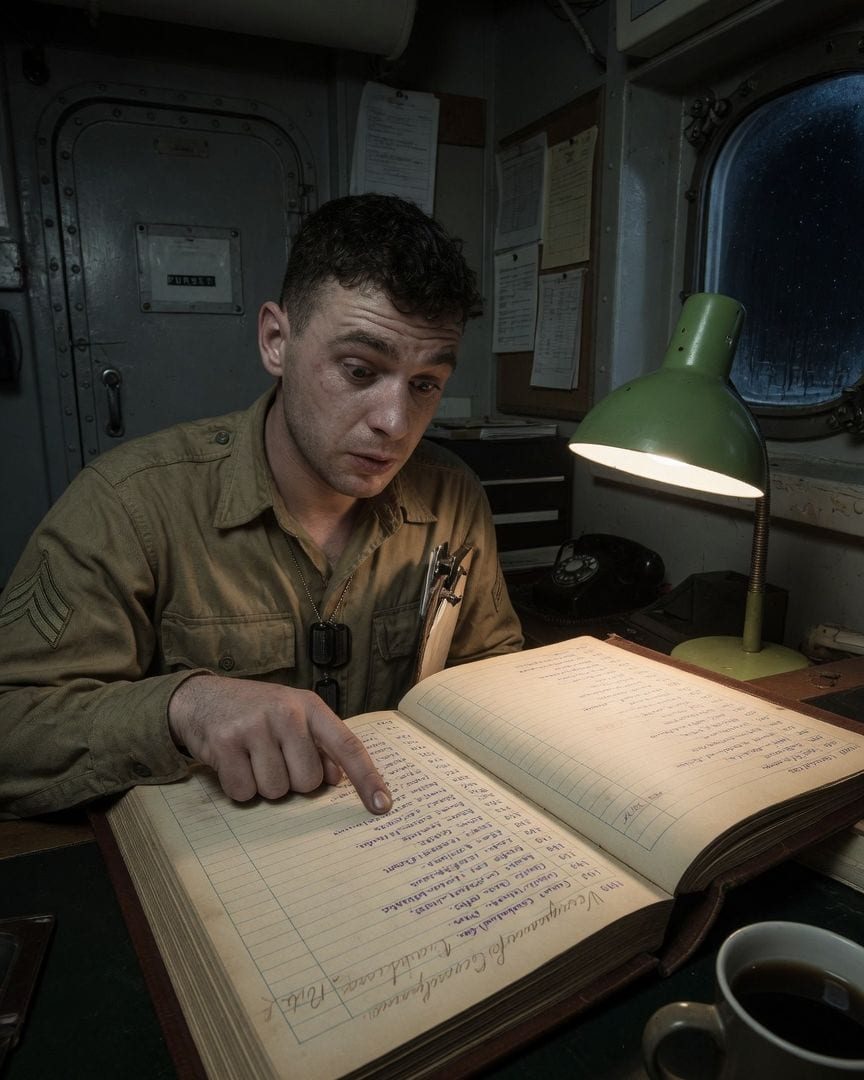 US Armed Forces
Corporal Arthur Kowalski was on his final Atlantic crossing aboard the USS Harrington, a promised reprieve before reassignment, but the cold Atlantic air was nothing compared to the chill seeping into his bones. Despite the official roll listing 402 men, the boat drill revealed 403 soldiers lined up, an impossible discrepancy that defied every record. His discreet investigation led him to the ship's master embarkation roll, where beneath the 1943 entries, he found a faint, handwritten name: 'Vestergaard, Corporal. 1918.' A World War I soldier’s name, in archaic ink, woven into a modern manifest – how could such an impossible entry exist?
12 min read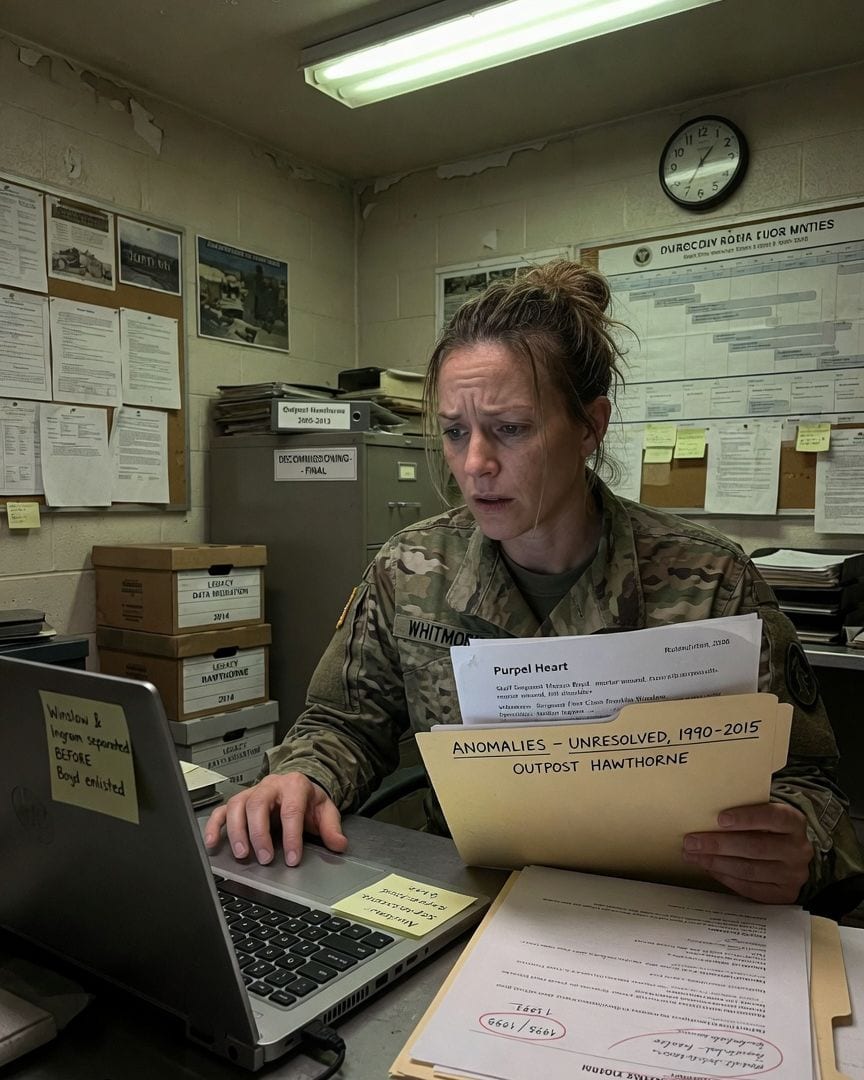 US Armed Forces
Captain Diane Whitmore, Adjutant for the soon-to-be-decommissioned Fort Clay, meticulously reviewed the final awards roster. Her office, usually bustling, was eerily quiet save for the fluorescent hum as she found an entry for Staff Sergeant Marcus Boyd: a Purple Heart for a mortar wound in 2012. But Boyd had returned unharmed, and the listed witnesses had separated from the Army years before he even enlisted. Colonel Sinclair dismissed it as data corruption, but Whitmore sensed a deeper anomaly, and ignoring a post historian's warning, she found another file from Outpost Hawthorne with the same impossible witnesses. What pattern was buried in Fort Clay's archives?
11 min read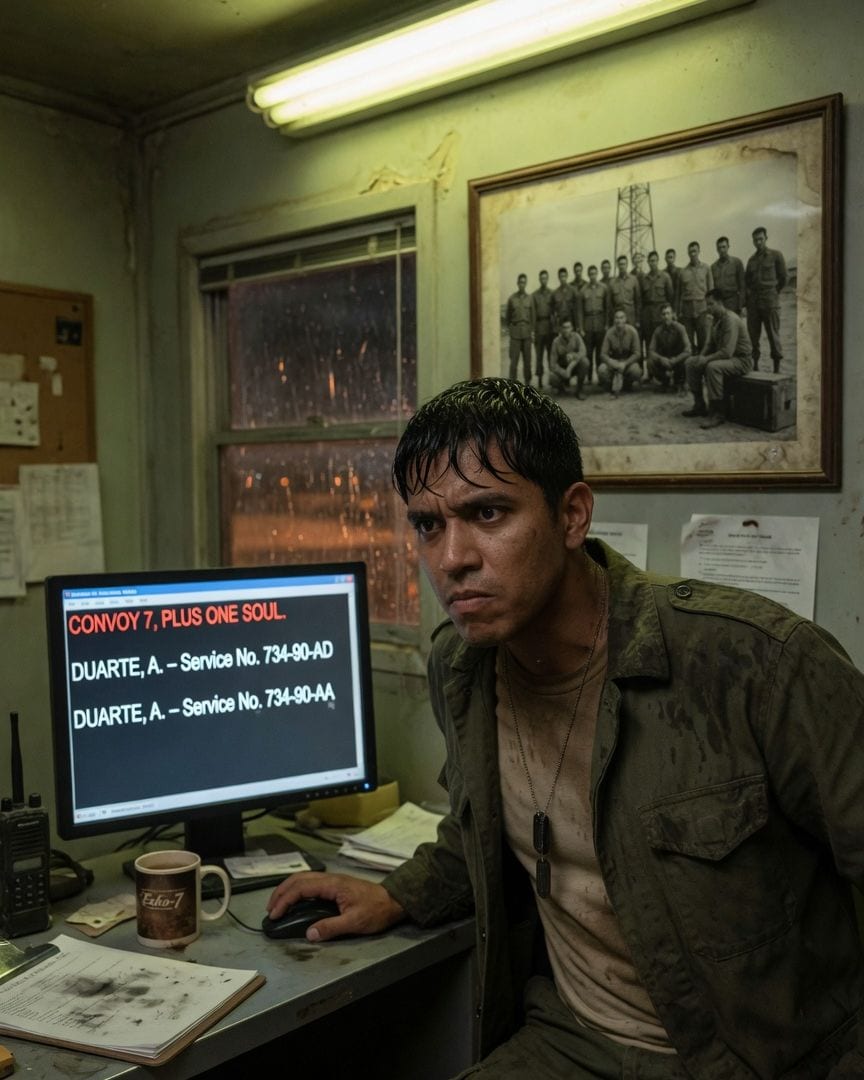 US Armed Forces
Specialist Adam Duarte, already shivering and late, had to break a deeply held superstition at Outpost Echo-7: taking the lead truck's far corner seat, always left empty. The moment he dropped into it, a strange warmth bloomed against him, as if someone had just vacated the spot. Back at the outpost, filing the convoy manifest, the digital system flagged a chilling error: 'Convoy 7, plus one soul.' Duarte then found his own name duplicated, each entry with a subtly different, impossible service number. What unsettling presence had shared his seat, and was now haunting the official records?
9 min read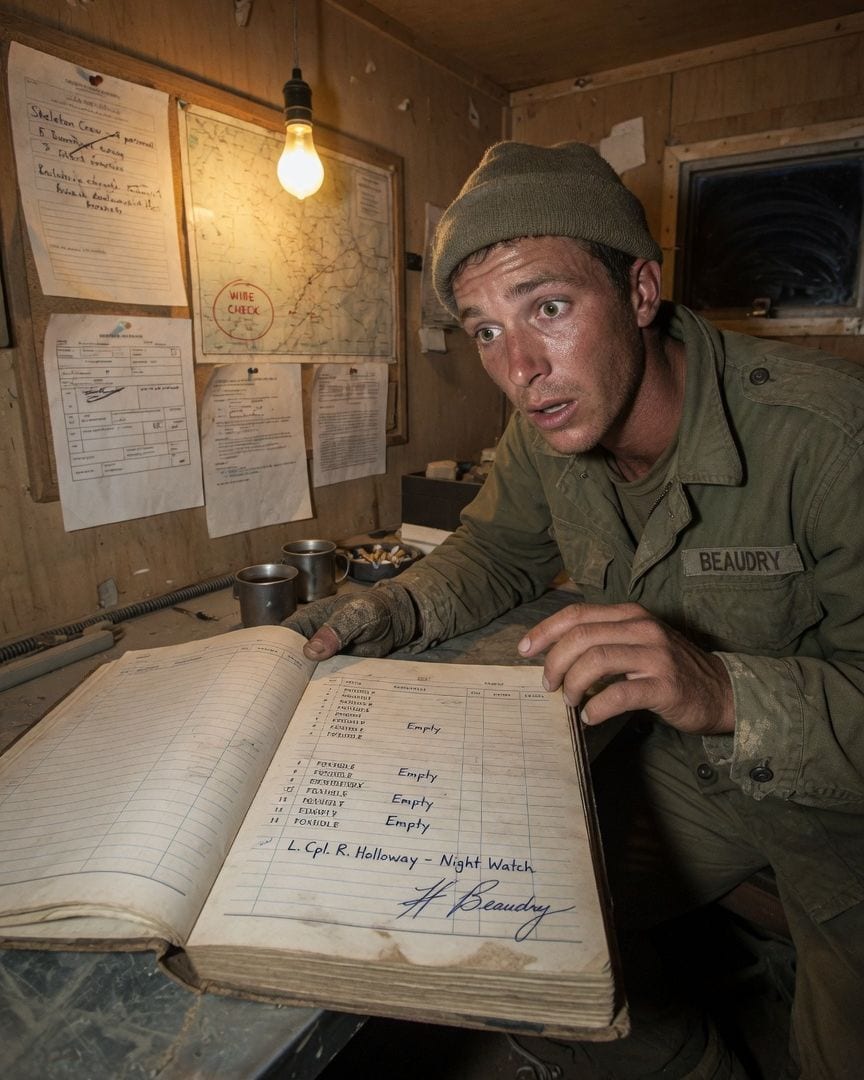 US Armed Forces
Lance Corporal Hugo Beaudry moved along the perimeter of Firebase Kettle, a lonely outpost in its final drawdown. His solitary wire-check tonight was a routine task in the biting desert wind. He reached the third foxhole, empty for a week, and tugged its comm wire. Two distinct pulls answered back, sharp and unmistakable, from a position where no one remained. Back inside, Beaudry found his own precise signature in the duty log, assigning a Lance Corporal R. Holloway to that very foxhole – a man he'd never seen or heard of. The entry was perfectly aged, a cold dread of paper lying. Who was signalling from the empty hole, and why did his own hand confirm it?
15 min read