An outpost soldier transferred two weeks ago is listed on last night's patrol log.
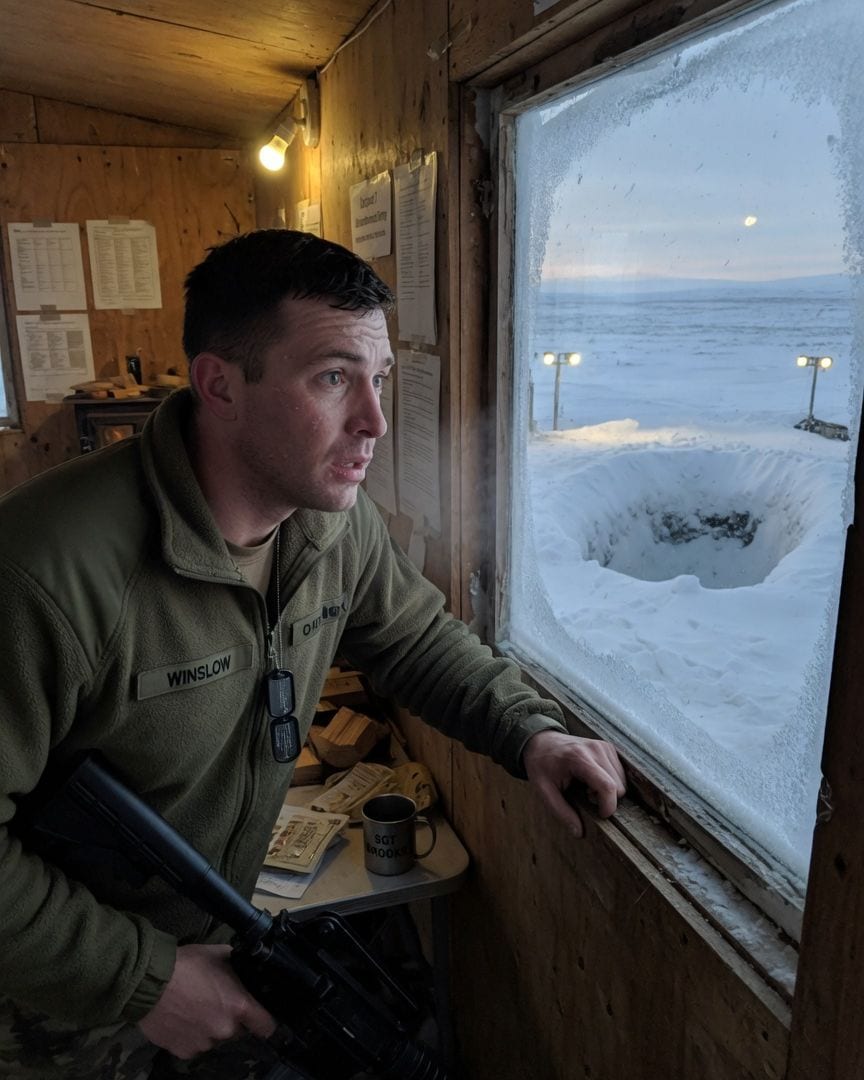
Corporal Kenneth Winslow shivered, feeding the wood stove inside the small, isolated hut at Outpost 7. Outside, the Alaskan interior was a vast, silent expanse of snow and dark, pierced only by the howl of the wind.
His squad slept fitfully in their bunks, the occasional snore or restless turn of a body the only sound. Kenneth listened to the wind clawing at the flimsy walls, the settling groans of the timber.
Then, a different sound cut through the drone of the wind. The unmistakable crunch of heavy boots on packed snow, unhurried, rhythmic.
It was circling the hut. Once. Twice.
Kenneth froze, every muscle tensing. He wasn’t due for patrol for another two hours. No one else was out. He grabbed his rifle, the cold metal against his palm a small comfort, and peered through the small, frosted window.
His breath misted the glass. He wiped it clear with his sleeve, squinting into the gloom beyond the weak perimeter lights. Nothing. Just the vast, featureless white of the fresh snowfall, stretching into the black horizon.
He waited, straining his ears, the sound of his own pulse loud in his temples. The crunching didn't return.
When dawn broke, painting the snow in pale grays and blues, Kenneth stepped outside, his rifle still in hand, to check. The air bit at his exposed skin.
He walked around the small, wooden structure, his boots breaking the fresh, untouched powder. And there it was.
A single, perfectly circular track, waist-deep in the fresh drift, worn all the way around the hut. It was too regular, too deep for any animal, even a bear. And no break in it.
No place where anything had come or gone. It simply began and ended at the same point, a continuous, inexplicable ring in the snow.
Kenneth reported the impossible track to Sergeant Rachel Brooks, his NCO, over breakfast. She listened, a skeptical eyebrow raised, stirring her lukewarm coffee. “A drift, maybe? Wind does strange things out here, Winslow.
Or maybe a large animal, bear or moose, following its nose.” She suggested it was likely fatigue playing tricks in the long dark. Kenneth, however, was adamant. "Sarge, that track was deliberate. Too even. Too deep.
And nothing that big could just vanish from its own path without leaving a single print going in or out."
He insisted on checking the duty logs for any unusual patrols or activity. Brooks, sighing, but humoring him, pulled up the digital log for their shift on her terminal in the operations shack.
Kenneth watched as she scrolled, the fluorescent lights humming overhead. A frown deepened on her face as she stopped on an entry. "Here it is," she murmured, pointing to the screen. 'Perimeter Sweep, 0200-0300, Cpl.
K. Winslow & PFC G. Langford.' It was dated for the previous evening, and beneath the entry was her own digital signature, verifying the patrol.
Kenneth stared at the screen, a chill spreading through him that had nothing to do with the Alaskan cold. "Sarge, I didn't do a perimeter sweep last night. I was on hut duty until dawn. And who's Langford?
I don't know any Langford. He's not in our squad."
Brooks looked from the screen to the physical roster, a laminated sheet hanging by the door, then back to her terminal. She scrolled through the current rotation roster, then the full outpost personnel. Her expression tightened. "You're right.
No PFC Langford listed for this rotation, or even this outpost's current complement."
But the duty log, unimpeachable in its official format, swore otherwise. It was a perfectly normal entry, for a perfectly normal patrol, complete with times, personnel, and a verifying signature.
A perfectly normal entry that simply never happened, conducted by a soldier who wasn't there.
Brooks, now genuinely unnerved, accessed the master personnel roster for Outpost 7, cross-referencing Langford’s name. The database whirred, the hard drive clicking under the desk, then displayed a file.
PFC Gerald Langford, service number, rank, and a transfer date: two weeks ago. He had been officially reassigned to another unit. He was gone.
Kenneth and Brooks looked at the screen, then at the duty log from last night, still open on Brooks’s other monitor, displaying Langford’s name, his service number, and the digital signature confirming his participation in the 0200-0300 perimeter check.
Two weeks ago, he was gone. Last night, he was on patrol.
The log swore he was there. The official record swore he wasn't. The cold of the Alaskan winter suddenly felt deeper, settling not just on their skin, but in their minds, a vast and silent presence.
Kenneth and Brooks began a quiet investigation, careful not to raise alarms. They confirmed Langford’s transfer papers were legitimate, signed, and dated.
His file in the central database showed his arrival at his new unit a week and a half prior. He was definitively gone.
Yet, other official logs from that specific night at Outpost 7 – the chow hall sign-in sheet, a supply manifest for cold-weather gear requisitioned late, even a fuel requisition for the snowmobile shed – all contained entries for a 'PFC Langford.'
His service number, accurate. His signature, consistent. Each record was perfectly normal, perfectly official, and perfectly impossible.
Kenneth, a creeping unease settling into his bones, covertly checked his own service record on the outpost’s terminal while Brooks handled a radio check. Clean. Unblemished. No impossible entries, no phantom patrols.
He felt a fleeting relief, quickly overshadowed by the growing dread for Langford. They tried contacting Langford’s new unit, a routine check under the guise of confirming paperwork for his transfer.
The unit confirmed his presence there, but their records showed no gap in his assignment, no temporary duty at Outpost 7 in the last two weeks. His time there was unbroken, a continuous stream of service.
It was as if the logs at Outpost 7 had conjured him for a single night, a phantom soldier whose presence was meticulously documented, then erased from every other official channel.
The system, designed for absolute accountability, was producing perfectly coherent lies.
A few days later, Major Winslow, the outpost’s commanding officer, summoned Kenneth and Brooks. His office was sparse, sterile, the heavy window curtains drawn against the persistent gray light of the Arctic day.
“Corporal, Sergeant,” he began, his tone even, his hands clasped on the polished surface of his desk. “I’ve heard some… rumors. About you two digging into personnel files. Inquiries about a PFC Langford.”
He paused, his gaze unwavering, moving slowly between Kenneth and Brooks. The air in the room felt thick, heavy with unspoken weight. “I understand there might be some clerical errors, but resources are tight.
I expect you to focus on your assigned duties, not chasing phantom paperwork.” His voice remained calm, almost conversational, but the underlying message was clear: stop.
Brooks started to explain, to offer their findings, but Winslow cut her off with a dismissive wave of his hand. “Consider it handled. We’ll review the files internally.”
They left his office with a chilling sense of being watched. Later that night, Kenneth, back at his workstation in the operations shack, noticed something amiss.
Specific personnel files he’d accessed during his investigation – Langford’s transfer details, the historical Outpost 7 rosters – were now marked ‘Restricted Access.’
He tried to open one, just to confirm; a warning flashed across the screen, red text against black, logging his attempt. A cold knot formed in his stomach. Someone knew.
Someone was actively monitoring their every move, subtly yet undeniably closing the door on their inquiries. The quiet pressure was tightening, turning their investigation into something far more personal and dangerous.
Undeterred, Kenneth sought out Master Sergeant Leonard Davenport, a grizzled veteran who’d served at Outpost 7 decades ago and now lived in a small cabin a few miles from the outpost, making a living trapping and guiding.
Davenport was known for his quiet demeanor and sharp memory. Kenneth laid out the story – the impossible track, Langford’s phantom patrol, the contradictory records, Major Winslow’s thinly veiled warning.
Davenport listened, nursing a mug of something dark and steaming, his weathered face unreadable in the dim light of his cabin.
“Outpost 7,” he finally said, his voice raspy, “it’s always been… a peculiar place for paperwork.”
Kenneth pressed, describing the logs, the impossible entries, the way the system seemed to generate a reality that defied experience. Davenport chuckled, a dry, humorless sound that was more a creak than a laugh.
“Reminds me of a supply sergeant back in my day. Inventory was always perfect, down to the last paperclip, even when we knew half the items were missing from the warehouse. Then one day, he was just… gone.
Replaced by a new guy who swore the old one had been reassigned months before, transferred out to Alaska for ‘cold weather training.’ But we’d all seen him at chow the day prior, arguing with the cook about the grits.”
He leaned forward, setting his mug down with a clink, his eyes fixed on Kenneth, pupils dark in the lamplight. “Some things at Outpost 7, son, they don’t fit. And the system… it makes them fit. Always.
Doesn’t matter what you saw, what you know. The paperwork always, always wins.”
Davenport confirmed that higher-ups were aware of these “inconsistencies,” that it was an unspoken rule among the long-serving personnel to never question the official record, no matter how much it contradicted lived experience.
The dread Kenneth felt solidified into a chilling understanding: this wasn't an isolated error, a glitch in the machine. This was a systemic, managed deception.
Davenport, his gaze troubled, pulled a faded, creased photograph from his worn leather wallet – a group shot of his old squad at Outpost 7, decades younger, posing stiffly in front of an ancient snowcat.
“Sometimes,” he murmured, his thumb rubbing the bent corner of the photo, “it’s not just the records that get… adjusted. Sometimes, it’s the men.”
He pointed to a young, earnest face in the photo, barely out of his teens, a nervous smile on his lips. “That’s me, right there. And that’s PFC Reginald Forsythe.”
Kenneth felt a jolt, a cold shock that traced down his spine. The face was unmistakable. Identical. It was PFC Gerald Langford, the 'ghost' soldier from his log, just younger, in an older uniform, his hair styled slightly differently.
Davenport then pointed to another soldier in the photograph, a serious-faced young man with sharp features. “And that’s Isaac Brooks. Good kid. Sharp. Went missing on patrol one night. Just vanished in a whiteout. They just said he transferred out.
Never heard from him again. But his record… it always showed he completed his tour, got a medal for something he never did. A Bronze Star for some bravery during a training exercise that never even happened.”
Kenneth’s blood ran cold. He looked from the faded photo to the memory of Sergeant Rachel Brooks. “Brooks? As in… Sergeant Rachel Brooks?”
Davenport nodded slowly, his eyes distant. “Could be. Lot of Brooks in the world. But that was his name.”
A chilling thought struck Kenneth. He remembered his own clean service record, the one he’d checked just days ago. He pulled it up on his phone, scrolling through the entries, the dates, the commendations.
He found a small, unusual commendation from a deployment years ago, a Bronze Star for an action he had absolutely no memory of. His own name, his own digital signature, for valor he never earned. The pattern had found him.
Kenneth confronted Rachel, the faded photograph clutched in his hand. They stood in the empty mess hall, the only sound the distant hum of the generator.
Her face, usually so composed, crumpled as she stared at the image of Isaac Brooks. “Isaac?” she whispered, her voice barely audible, shaking her head slowly. “I… I don’t have any male relatives named Isaac.
My father’s side is all from New Jersey, my mother’s from Georgia. My parents barely left the state before I was born.”
The implication hung heavy in the stale air: Isaac Brooks, the ghost soldier from Davenport’s past, and Rachel Brooks, his NCO, shared more than just a surname.
They shared a name, and now Kenneth’s own impossible commendation and Langford’s recycled face screamed a horrific possibility.
They realized the anomaly wasn't just fabricating records; it was subtly replacing or recycling identities, weaving new histories into the fabric of the military, using people as threads.
Using their combined clearances and the fragments of information from Davenport, they accessed a deeply buried, highly classified file Kenneth found cross-referenced in a sub-folder of a sub-folder under Outpost 7’s historical archives: 'Project CHRONOS: Outpost 7 Anomaly Protocol.'
The document, heavily redacted in places, confirmed the existence of a localized spacetime anomaly causing 'temporal-spatial record inconsistencies' and 'personnel re-integration events.'
It detailed decades of similar incidents, dating back to the 1950s, with 'containment' involving the creation of 'stabilizing false records' and 're-integrating affected personnel' through a process vaguely described as ‘identity migration’ and ‘temporal anchoring.’
The dates and descriptions of incidents – vanished personnel, contradictory duty logs, phantom patrols, records that swore otherwise – perfectly matched the stories and records they’d found.
The document explicitly stated that affected personnel often had minor, unremembered commendations in their service records, acting as 'temporal anchors' to help 'stabilize' their new, slightly altered temporal-spatial positions.
Every impossible detail, every ghost, every altered record, clicked into place with horrifying coherence.
Armed with the chilling knowledge from Project CHRONOS, Kenneth and Rachel understood their perilous position.
Exposing the anomaly, or even openly questioning it, would not lead to commendation; it would lead to their own 're-integration,' their identities subtly rewritten, their memories altered, perhaps even their physical forms subtly recycled into new, convenient fictions.
The institution had known for decades, and its solution was not to fight the anomaly, but to manage it, to absorb its effects into a perfectly coherent, if false, reality.
Their only viable path was not escape in the physical sense, but a strategic disappearance from the anomaly’s immediate reach. They meticulously crafted new transfer orders, medical leave forms, and personal effect manifests for themselves.
Every detail was designed to look perfectly legitimate, routing them away from Outpost 7 and any future 're-integration' cycles.
They used their access to subtly inject these fabricated documents into the system, timing them to pass unnoticed amidst the constant churn of military paperwork.
As a final, desperate act of defiance, Kenneth uploaded the 'Project CHRONOS' file to an encrypted dead drop, a digital message in a bottle cast into the vast ocean of military networks, hoping someone, someday, might find it and understand.
They watched as their carefully crafted 'exit' paperwork processed through the system, a digital ghost slipping through the machine. The weight of decades of institutional silence, of lives subtly altered and erased, pressed down on them.
They were leaving, but they would never truly be free of what they knew.
Kenneth and Rachel successfully completed their 'transfers,' melting back into the wider military bureaucracy, far from Outpost 7. They never spoke of what they had found, not to each other, not to anyone.
Their service records remained impeccable, their 'unremembered' commendations quietly anchoring them to a reality that was both true and false.
They carried the silent burden of the anomaly, knowing that every official document, every memory, every person, could be a perfectly constructed lie. Their lives resumed a semblance of normalcy, but the world now felt subtly, terrifyingly porous.
Every familiar face, every shared story, carried the potential for an unseen falsehood, a temporal tremor.
Years out, Kenneth Winslow received an unexpected package from Leonard Davenport. It was a small, crudely wrapped box, sent without a return address, just a postmark from Anchorage.
Inside was a faded, sepia-toned photograph of a group of soldiers from Outpost 7.
He recognized Davenport, younger, a boyish grin on his face, and himself, a fresh-faced corporal, though the uniform was slightly different, the cut of the collar not quite right.
It was from his first year, before the incident, before he’d ever met Davenport.
And then he saw her: a faint, almost imperceptible figure in the background, slightly out of focus, a woman in an older uniform, her hair tied back in a way that wasn’t quite military standard anymore.
She looked exactly like Rachel Brooks. His Rachel Brooks. The same set to her jaw, the same tilt of her head. He flipped the photo over. On the back, in faint, almost illegible pencil, was a date: 1978.
Rachel wasn't born until 1988. He stared at the impossible image, then at his own hand, then back at the woman's blurred face, a quiet, horrifying understanding settling over him.
He had escaped, but the pattern was larger, deeper, and more cyclical than he could have ever imagined. The anomaly had not just touched them; it had always been them.
Years later, a new Corporal arrived at Outpost 7, assigned to winter watch. He found a faded, unsigned photo tucked into the stove's wood box, half-hidden beneath a stack of kindling.
In it, a group of soldiers smiled, one woman among them, her face slightly blurred. On the back, in faint, almost illegible pencil, was a single word: "Again."
If this one got to you
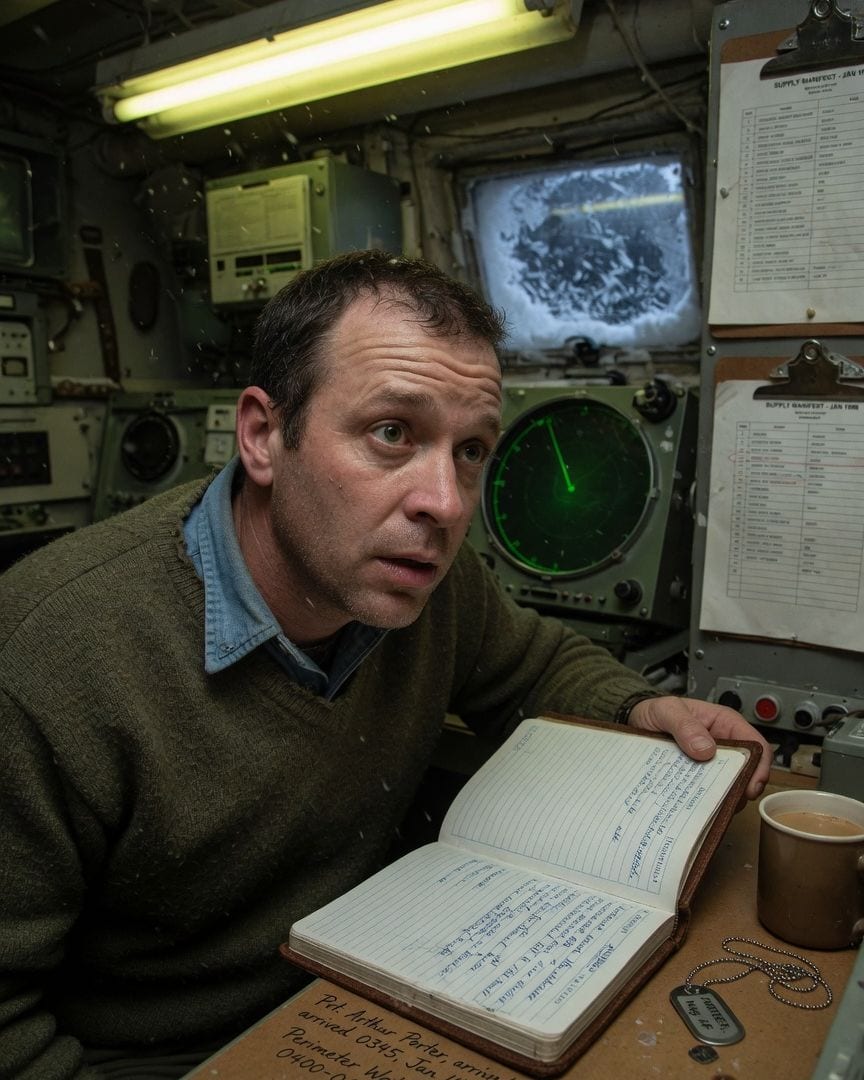
Cold War Radar Operator Conrad Oakley watches a man enter a shed. His boot prints lead in, but no tracks ever lead out.
At the isolated Cutbank radar station, deep in the Alaskan interior, Radar Operator Conrad Oakley maintained a lonely vigil against the howl of a relentless blizzard. His routine overnight watch on January 14th was shattered by an impossible radar contact: a solid, human-sized presence crossing the perimeter and stopping at the generator shed. At dawn, the shed door stood ajar. Inside, fresh boot prints led deeper into the cold darkness, but no tracks led out into the snow-choked landscape. Later, preparing the duty roster, Oakley found a new name in the station logbook: Pvt. Arthur Porter, assigned to perimeter watch. Beneath an empty bunk, a dog tag confirmed the identity of a soldier who was never there.
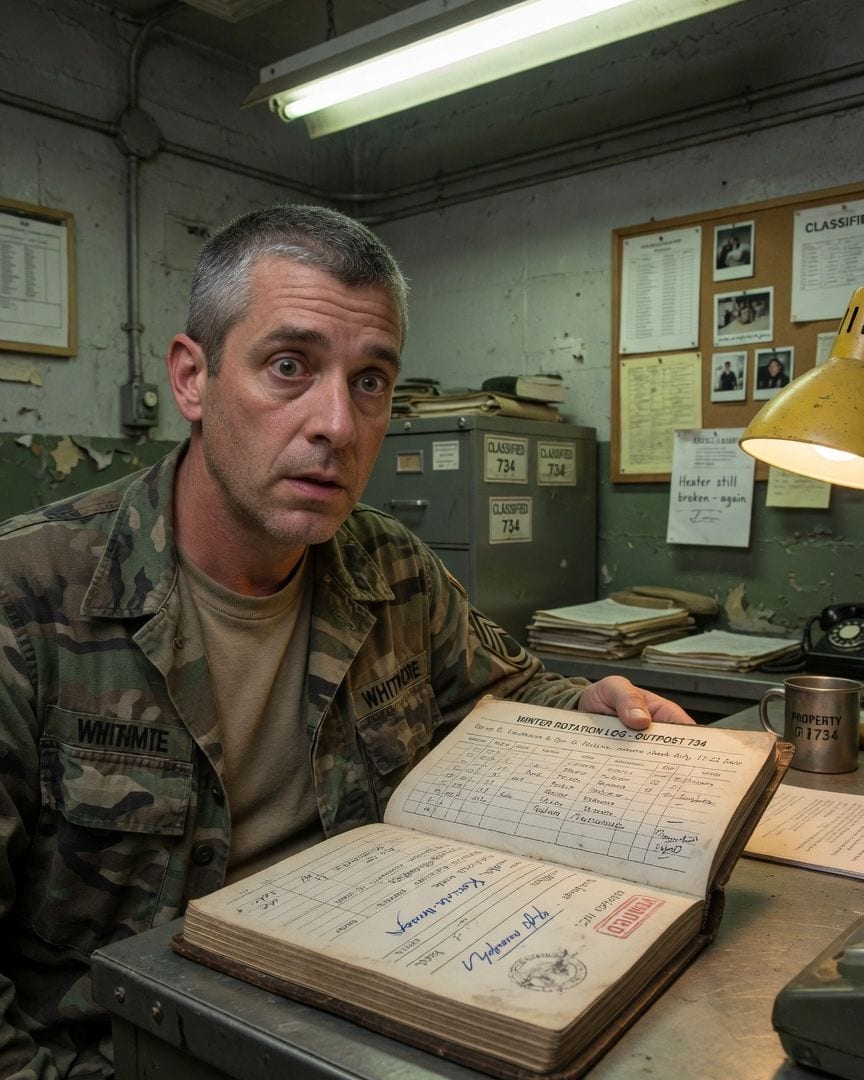
Nearing his tour's end, Sergeant Whitmore finds his own signature on duty logs for a winter he cannot recall.
Sergeant Kevin Whitmore looked forward to a quiet end to his tour at Outpost 734, but Specialist Halloran's uncanny card skills soon derailed his evening. Halloran, back from medical leave, claimed Whitmore had taught him the tricks during a shared winter deployment in the comms shack—a winter Whitmore had absolutely no memory of. The station's old, cold walls seemed to hold their breath as Halloran detailed mundane, specific recollections that felt utterly foreign. Driven by mounting dread, Whitmore checked the official duty logs, finding entries for himself and Halloran for that very winter, complete with his own unmistakable signature. How could the unimpeachable record swear he was there when he knew he wasn't?
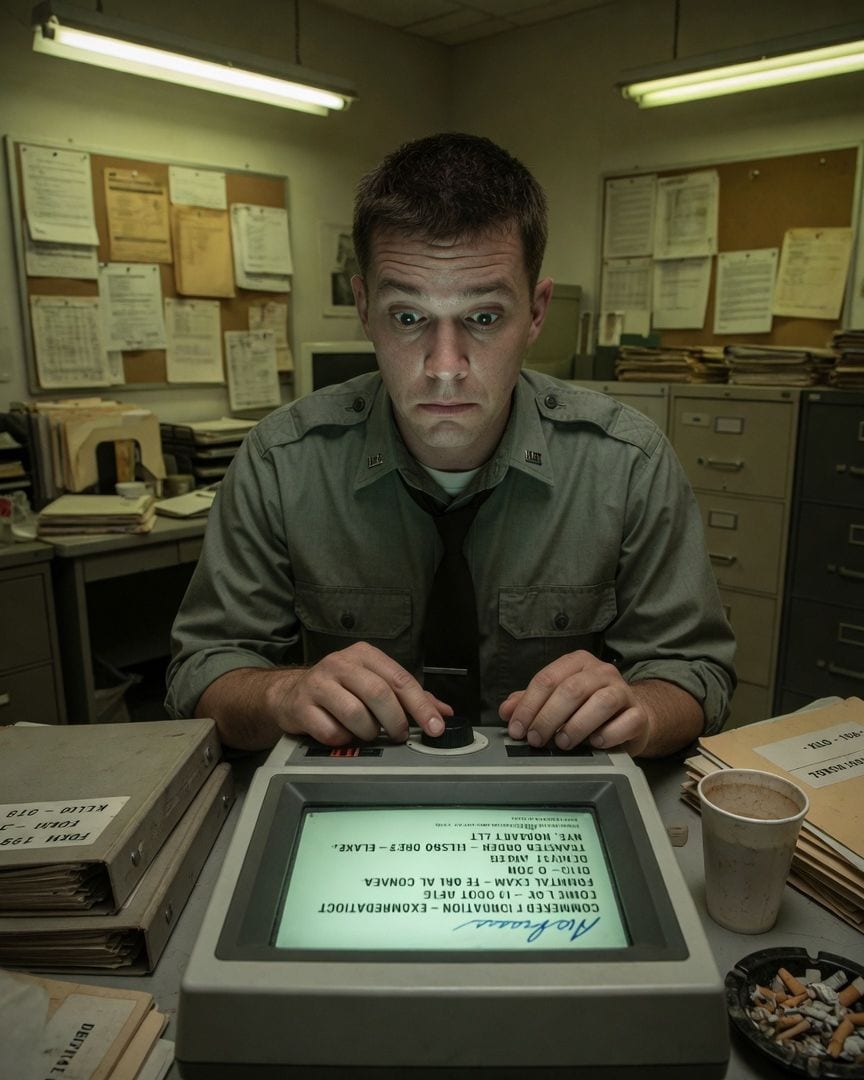
A missile commander watched his ten nuclear silos go dark. His own service record shows his signature on a future he's never lived.
Second Lieutenant Hobart Nye, a missile commander in Wyoming, had his quiet 0247 watch shattered by a security report: a massive, silent black triangle hovered over Launch Facility Kilo, casting a perfect shadow. Hobart watched his console's fault panel light up, signaling all ten nuclear missiles going dark in an impossible silence, followed by eleven minutes his security team could not remember. Official logs called it a "radio malfunction," but Hobart found a requisition for invisible-tracking sensors, signed by a base commander who was supposed to be off-base. The final, chilling discovery came when his own service record showed new entries—a dental check-up, a transfer to Alaska—all dated for a future he never lived, complete with his perfectly replicated signature.
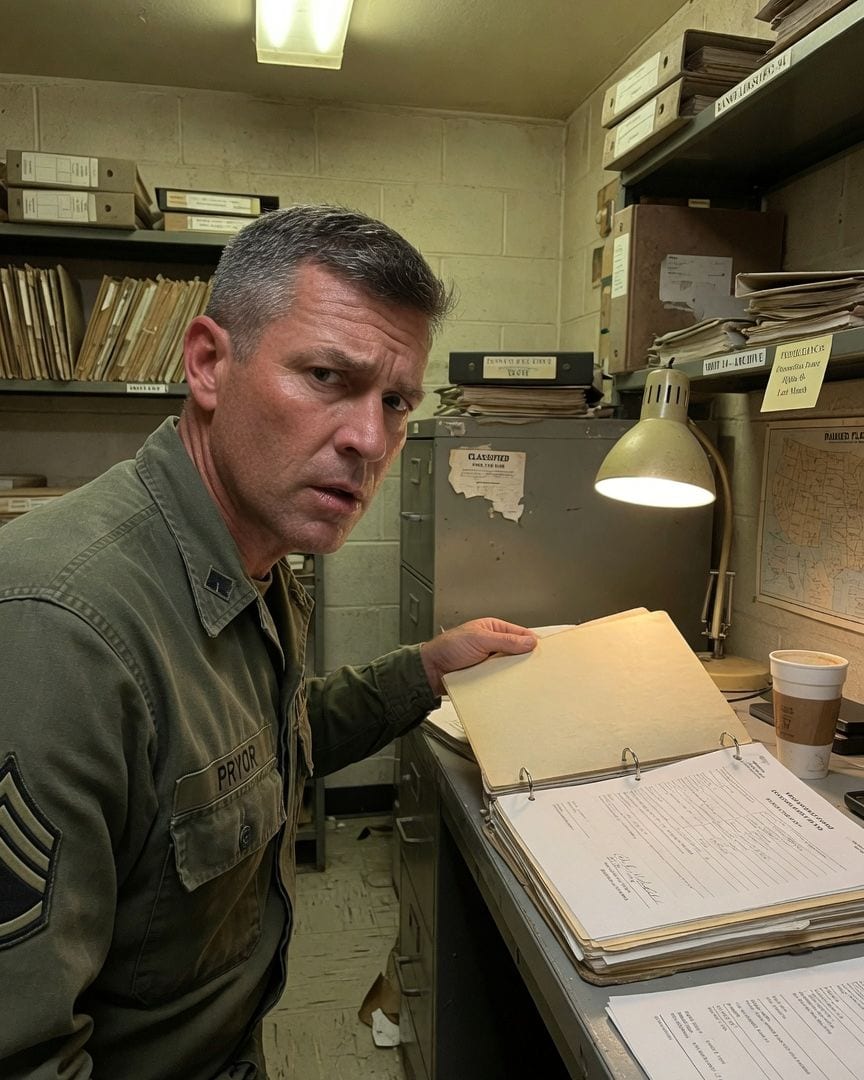
A sergeant with eleven days left finds a warm, glassed crater. Its file shows a captain lost thirty years ago is still signing reports from last week.
Sergeant Alden Pryor was counting down his final eleven days on a twenty-year hitch, expecting to spend them on routine patrols along the Ranier Flats fence line. Instead, his truck stopped at a bizarre sight: a four-hundred-foot glassed crater, miles from anywhere, its sand faintly warm at dawn despite no one recalling a blast. The air above it shimmered with an unnatural distortion, a silent scar of erased violence, and the official file for 'Shot 14' showed recent maintenance sign-offs for a decommissioned tower at the crater site. All these active documents were signed by Captain Everett Caldwell, who had been officially lost in operations thirty years ago, leaving Sergeant Pryor to wonder how a dead man could still be filing reports.
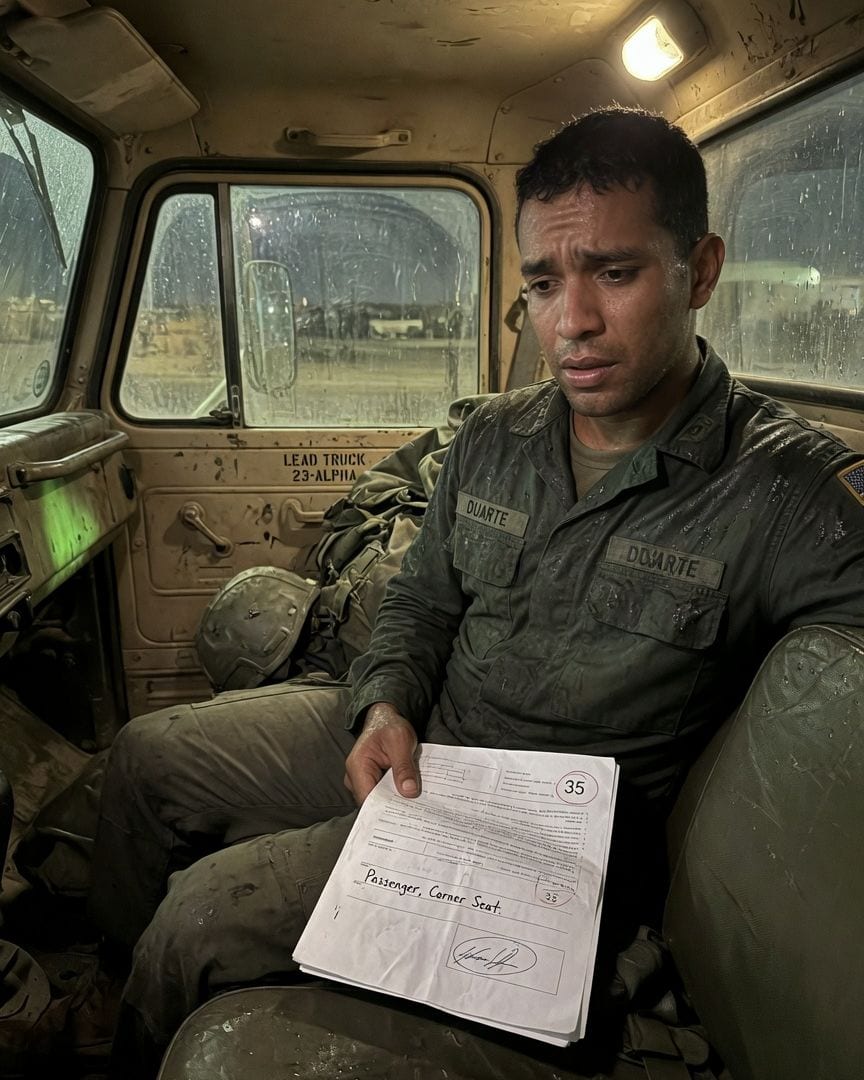
Specialist Duarte, two weeks from going home, found his empty truck seat warm and dented — then his service record showed a ghost deployment he never made.
Specialist Felix Duarte was just two weeks from going home, but a final convoy mission held an unsettling mystery. Soaked and running late, he squeezed into the lead truck's forbidden corner seat, a place every soldier knew to leave empty. Hours later, stepping out into the desert, he found the seat was strangely warm and distinctly dented, as if two unseen bodies had pressed in beside him. The official manifest then listed an extra soul for his truck, simply 'Passenger, Corner Seat,' signed by his own hand. What impossible presence had shared Specialist Duarte's ride, and what other records might it have altered?
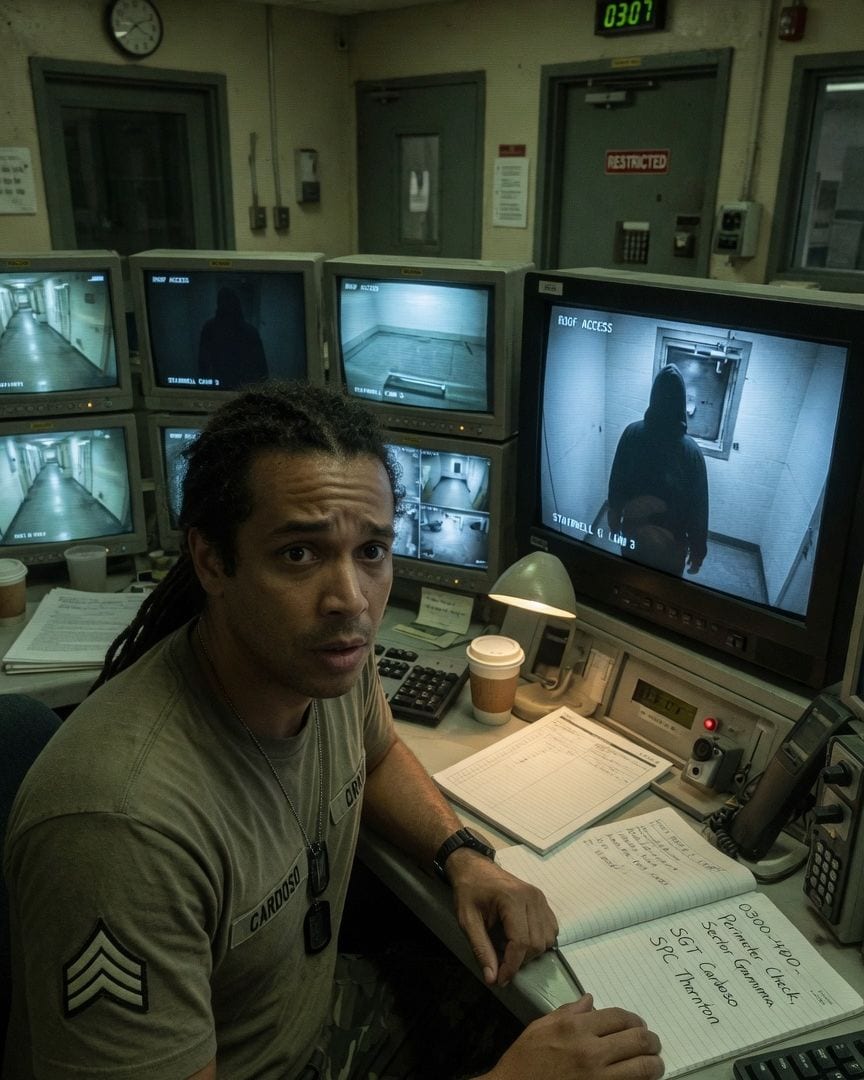
On his last watch, Sergeant Cardoso found his own signature in the duty log for a perimeter check he never did, with a name he didn't know.
Sergeant Rui Cardoso was on his final interior watch at Fort Merritt, a remote coastal outpost, as 0300 ticked by. He spotted a dark, unmoving figure on a monitor showing the sealed roof access, a figure that inexplicably shifted closer to the hatch moments after a specialist confirmed the roof was empty. Rui checked every log and sensor, but the digital fortress showed no breach, and the figure's appearance defied all logic. Yet, in the physical duty log, he found his own unmistakable signature on an entry for a perimeter patrol he never took, alongside a soldier's name he'd never seen. What impossible truth was written in his own hand?