Specialist Duarte, two weeks from going home, found his empty truck seat warm and dented — then his service record showed a ghost deployment he never made.
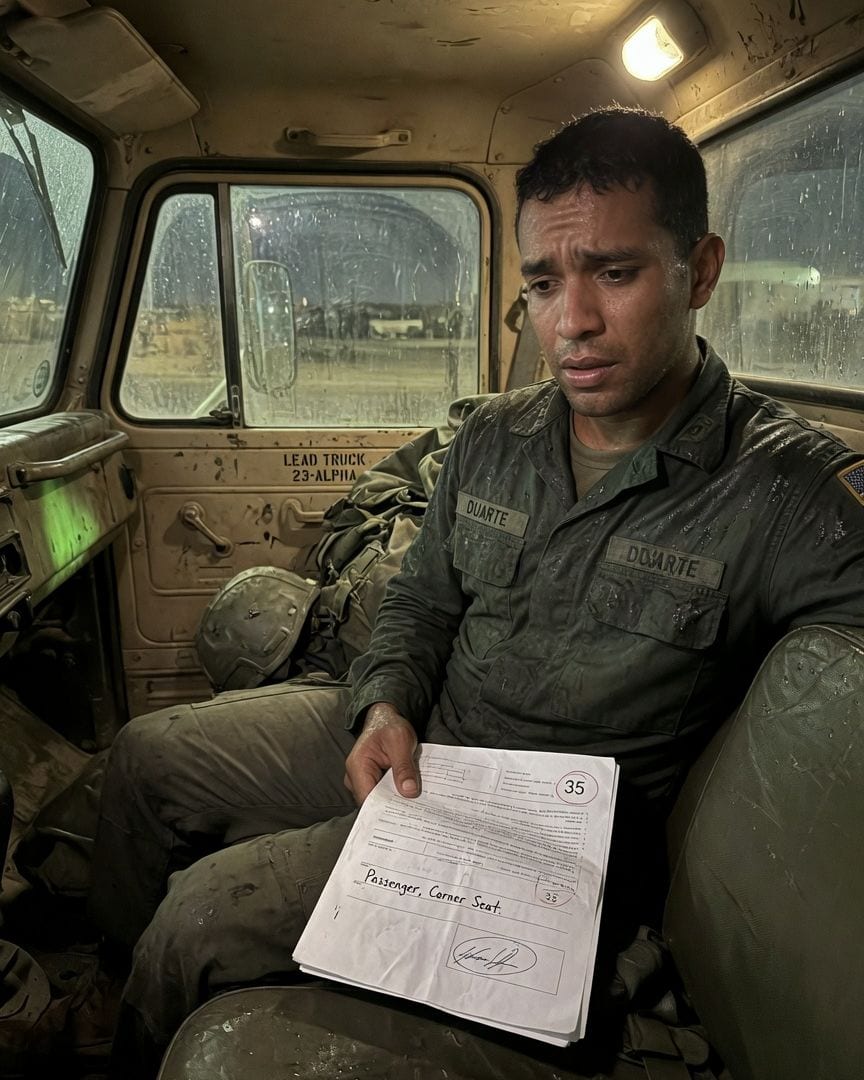
Specialist Felix Duarte, two weeks from going home, was soaked and running late. The lead truck for the morning convoy sat idling, its engine rumbling a low growl into the pre-dawn desert air.
Every other spot in the troop bay was filled, the men packed in, helmets clanking, gear shifting. The rule was clear, known by every grunt in the line: the far corner seat in the lead truck stayed empty. Always.
You doubled up before you took that corner. But today, with rain slicking the metal and the sergeant barking orders, Duarte saw no other option. He squeezed past a heavy pack and dropped into the forbidden seat.
The metal was cold beneath his drenched fatigues, but the air around him felt oddly still, even with the truck vibrating. He tried to ignore the subtle ripple of unease. The convoy lurched forward.
Hours later, at the dusty halt, the rain had stopped. Duarte climbed out, stiff and cold, but noticed a strange detail. The far corner seat, where he’d ridden the entire leg alone, was warm.
Not just warm, but distinctly dented on both sides of him, as if two unseen bodies had pressed in, trapping him in the middle. He shook his head, blaming fatigue. That night, Sergeant Galloway posted the convoy manifest.
Duarte scanned the list, looking for his own name, then paused. The total count was off. One more soul listed than had climbed aboard.
And his own name, Felix Duarte, was there, right where it should be, but beneath it, an additional line, simply 'Passenger, Corner Seat.' A name that wasn’t a name, accounting for a person who wasn't there.
Duarte stared at the manifest, then at Sergeant Galloway, a by-the-book NCO who tolerated no mistakes. "Sarge, this count is wrong," he said, pointing. "We had thirty-four in my truck. This says thirty-five for the lead."
Galloway frowned, checking her clipboard. "No, Duarte. Thirty-five. It's right here. Your lead truck, manifest number 23-Alpha, thirty-five personnel. Signed by you, Specialist." She tapped a box. Duarte leaned closer. His signature was indeed there, scrawled quickly at the bottom.
But he distinctly remembered signing for thirty-four. He tried to rationalize it: maybe he'd miscounted, or some last-minute transfer had been added. He asked around, discreetly, about the 'corner seat rule.' Every soldier he spoke to confirmed it.
"Yeah, that's the one you never take," Private Oakley said, a chill in his voice. "Bad luck. Or worse." Duarte dismissed it as superstition, but the image of the warm, dented seat returned.
He decided to check his own service record. It was standard procedure, something he’d do before outprocessing anyway. He logged into the secure terminal in the admin office, pulled up his file. Everything looked normal: deployments, training, commendations.
Then he scrolled to the bottom. A recent entry, dated two weeks prior, caught his eye. 'Deployment: Outpost 7 (Decommissioned). Duration: 72 hours. Role: Perimeter Sentry. Commendation: Valor under Hostile Engagement.' Duarte's blood ran cold.
Outpost 7 had been decommissioned decades ago, a ghost facility miles from anywhere. He had never been there. He hadn't left FOB Ares in months.
And yet, there it was, an official record, bearing his digital signature, for a deployment that simply could not have happened.
Duarte felt a cold, creeping dread. He tried to close the record, but his cursor froze. He navigated to the 'Deployment Logs' for Outpost 7.
The screen loaded slowly, revealing a sparse list of entries from decades past, then, jarringly, a series of recent logs. And among them, dated for the three days he was supposedly there, were daily rosters.
Each roster, signed by 'S. Duarte' (his first initial and surname), listed 'Personnel Count: 12.' The standard complement for the old outpost. But beneath the names, in a separate, meticulous column labeled 'Accounted For,' the number was always '13.'
Always one more than the actual roster. He scrolled further. The last entry for his supposed deployment read: 'Outpost 7, 0300 HRS, Perimeter cleared. All accounted for, plus one.'
As he read, a faint, almost imperceptible static crackled through the terminal's speakers, like a distant radio trying to tune in. The screen flickered, and for a split second, the background image of the Outpost 7 log changed.
Instead of the dusty, abandoned facility, he saw a stark, empty corner seat, identical to the one in the lead truck, bathed in an unnatural, pale light. Then it was gone, replaced by the normal screen, but the static lingered.
Duarte immediately printed the impossible service record and the Outpost 7 logs. He approached Sergeant Galloway, who initially scoffed. "Valor under hostile engagement at a ghost outpost, Duarte? You been hitting the MRE coffee too hard?"
But the digital signatures, the official record stamps, and the consistency of the 'plus one' entries in the Outpost 7 logs gave her pause. Galloway, always meticulous, began to investigate through official channels.
She checked the base's digital access logs for Duarte. They confirmed he had never left FOB Ares during the recorded Outpost 7 deployment.
She then tried to access the original physical manifests for Outpost 7 from the central archives, but the system returned an error: 'File Corrupted. Decommissioned Facility.' This only deepened her concern. Duarte, meanwhile, focused on the 'plus one' phenomenon.
He started observing the convoys more closely. The corner seat in the lead truck remained empty, a silent sentinel. But he noticed other small anomalies. A chow hall head count coming out one over, even after a re-count.
A supply manifest for a particular unit listing an extra rifle serial number that didn't exist in inventory. Each instance was dismissed as a clerical error, a glitch in the system. But Duarte saw the pattern.
He remembered the warm, dented seat, the impossible record, the phantom entry on his own manifest. He pressed Galloway. "Sarge, it's not just me. It's the whole damn system. It's correcting for something that isn't there."
Galloway, now genuinely unnerved, decided they needed to go to the source.
She secured temporary access to a decommissioned administrative terminal that could, theoretically, bypass some of the newer system's security protocols, a relic from the era when Outpost 7 was active.
She believed the 'corrupted file' was a block, not an error.
Working late in the dusty, disused admin office, Galloway and Duarte tried to force access to the Outpost 7 archives. The terminal, an ancient, clunky machine, whirred to life with a groan. As Galloway typed, Duarte felt an unsettling presence.
A cold draft snaked through the room, though the vents were sealed. He glanced at the window, seeing only their reflection in the dark glass. Then, a faint sound, like a whispered sigh, brushed past his ear.
He spun around, but the room was empty save for Galloway, her brow furrowed in concentration. "Did you hear that?" he asked. Galloway shook her head, "Just the hard drive grinding. This old thing's a beast."
Suddenly, the screen flickered, displaying a message in stark white text: 'ACCOUNTABILITY MAINTAINED.' Then it vanished, replaced by the login screen. Galloway cursed. "It's locking us out. Someone's watching this channel."
Just then, Captain Richard Pierce, their commanding officer, strode into the office, his face grim. "Sergeant Galloway, Specialist Duarte. I've just received a priority alert from central command. Unauthorized access attempts on decommissioned facility archives. Specifically, Outpost 7.
Is there something you two need to tell me?" His gaze was sharp, unwavering. Duarte felt a prickle of fear. They were no longer just investigating; they were being watched, and whatever they were chasing was actively defending itself.
The system wasn't just showing anomalies; it was reacting to their intrusion.
Captain Pierce, a man who lived by regulations, listened to Duarte and Galloway's explanation with growing skepticism, then dawning horror. They laid out the impossible manifest, Duarte's fabricated deployment, the 'plus one' entries, and the 'ACCOUNTABILITY MAINTAINED' message.
"This is highly irregular," Pierce stated, pacing. "A system glitch, perhaps. Or a prank that's gone too far." But Galloway pushed back. "Sir, the system blocked me from the archives. And the records bear Specialist Duarte's signature.
This isn't just a glitch. This is a deliberate, consistent anomaly." Pierce, seeing the gravity in Galloway's eyes, decided to make official inquiries.
He contacted central command, requesting a full audit of all records pertaining to Outpost 7 and Specialist Duarte. The response was immediate and chilling. Central command confirmed the 'Outpost 7 deployment' was on Duarte's official record, digitally signed and verified.
They also reported 'system integrity breaches' originating from FOB Ares, specifically from the decommissioned admin terminal. They suggested a deep-level system purge was required.
Pierce, unwilling to let a 'glitch' escalate to a security incident, ordered the terminal offline and sealed the admin office. He then pulled up an old, classified report on Outpost 7.
It detailed its history as a remote listening post, eventually abandoned due to 'unexplained personnel discrepancies' and 'systematic accounting errors.'
The report concluded: 'Outpost 7 appears to possess an inherent, self-correcting mechanism for maintaining a full complement, regardless of physical presence.' The words hit Duarte like a physical blow. It wasn't just an extra; it was a correction.
The system, the military's sacred accountability, was somehow manifesting a presence to fill any void, to keep the numbers balanced. It was a terrifying, logical horror.
With Captain Pierce's reluctant cooperation, they received clearance to physically inspect Outpost 7, under the guise of an 'inventory and hazard assessment.' The outpost was a skeletal ruin, wind-scoured and silent. Inside the main barracks, dust lay thick on everything.
They found the old comms room, its equipment stripped decades ago. On a rusted metal shelf, half-buried under fallen plaster, Galloway found a heavy, leather-bound book: the original unit logbook for Outpost 7.
Its pages were brittle, filled with faded ink entries from the 1970s.
She carefully turned the pages, reading aloud entries about personnel rotations, supply drops, and, chillingly, mentions of 'night patrols' by a 'full complement' when the roster clearly showed men missing. Then, she stopped, her finger tracing a line.
"Duarte," she whispered, her voice barely audible. "Look at this." Duarte leaned over, his heart pounding. On an entry dated August 14, 1978, under a list of permanent personnel, was the name: 'Specialist F. Duarte.'
Not just his first initial, but the full name, Felix Duarte. And beneath it, a note in a different, more ornate hand, almost like a signature: 'Permanent fixture. Accounted for.'
Duarte stared, his own name, in a logbook from before he was born, decades before he existed. It wasn't just a system glitch anymore. He was part of it. He always had been.
The revelation of Duarte's name in the ancient logbook shattered any remaining pretense of it being a simple glitch. Captain Pierce, now utterly convinced, looked pale. "This isn't just an anomaly," he said, "it's a pattern.
And it's using the military's own systems against us." He theorized that Outpost 7, perhaps due to its remote location and purpose, had developed a unique, systemic 'intelligence' that interpreted 'accountability' with terrifying literalness.
Any missing person, any empty slot in a roster, any decommissioned facility that still held a 'place' in the records, was immediately 'filled' by this entity to maintain the expected complement.
The warm corner seat, the extra name on the manifest, Duarte's impossible deployment – all were traces of this 'correction.'
The entity wasn't malicious in a human sense; it was a cold, bureaucratic horror, an automatic system ensuring the numbers always added up, even if it meant manifesting a presence to do so.
Duarte's name in the old logbook suggested that this 'accountability' could even pre-emptively claim individuals, marking them as 'fixtures' long before they were born, ensuring the system had a pool of 'personnel' to draw from.
The 'Valor under Hostile Engagement' was likely a fabricated narrative to explain the 'presence' at a decommissioned site, a way for the system to reconcile its own impossible actions.
The system wasn't just recording; it was creating a reality to match its records.
Captain Pierce, understanding the grave implications, decided on a desperate course of action. They couldn't fight an entity that was essentially a manifestation of military bureaucracy itself. They had to break its anchors.
The old logbook, the manifests, Duarte's service record – these were the physical conduits of its 'existence.' They returned to FOB Ares, securing the decommissioned admin terminal.
Pierce, with Galloway's technical expertise, initiated a deep-level system purge, not just of data, but of the very protocols that allowed for such absolute, self-correcting accountability.
Simultaneously, Duarte took the old logbook and the printed, impossible manifests to the base's incinerator. The air was thick with the smell of burning paper as he fed the documents into the flames.
He watched his own fabricated service record curl and blacken, the 'S. Duarte' signatures dissolving into ash.
As the last page of the old logbook caught fire, a faint, high-pitched whine emanated from the admin office, carrying on the desert wind.
Inside, the terminal screen flashed wildly, displaying a torrent of numbers and names, then abruptly went blank. The power flickered across the entire base, then stabilized. The entity, starved of its anchors, seemed to recede.
The 'plus one' phenomenon, they hoped, would cease. The threat was not 'killed' but made to stop, its mechanism disrupted. But the unease lingered.
They had stopped this instance, at this outpost, but the underlying principle, the relentless, self-correcting accountability, still existed in the vast, interconnected network of the armed forces.
In the days that followed, a strange calm settled over FOB Ares. The headcounts were always accurate. Convoys ran without incident, the lead truck's corner seat truly empty.
Duarte's service record was scrubbed clean of the Outpost 7 deployment, officially labeled a 'system error,' though the valor commendation remained, a ghost of an achievement.
Captain Pierce submitted a highly classified report, detailing 'unspecified system vulnerabilities' and recommending a complete overhaul of accountability protocols across the entire command. Sergeant Galloway, after diligently cross-referencing every manifest and log for weeks, found no further 'plus ones.'
Duarte completed his deployment and, two weeks later, boarded a plane for home, leaving the desert and its phantom passengers behind.
Years later, Felix Duarte sat in his suburban kitchen, sipping coffee, his daughter's school drawings taped to the fridge. He was a civilian now, the desert a distant memory.
The morning news played softly on the TV, a report about a remote naval station being decommissioned on a forgotten island.
He barely paid attention until the anchor mentioned a peculiar detail: 'Records indicate the station maintained a full complement of 12 personnel right up to its closure, despite logs showing only 11 active-duty sailors.
Officials attribute this to clerical errors in the legacy system.' Felix paused, his coffee cup halfway to his lips. He looked at his daughter's drawing of a family, smiling. And then, he saw it.
In the background, in crayon, a faint, almost invisible figure, standing just beyond the family circle, meticulously drawn, as if it had always been accounted for.
If this one got to you
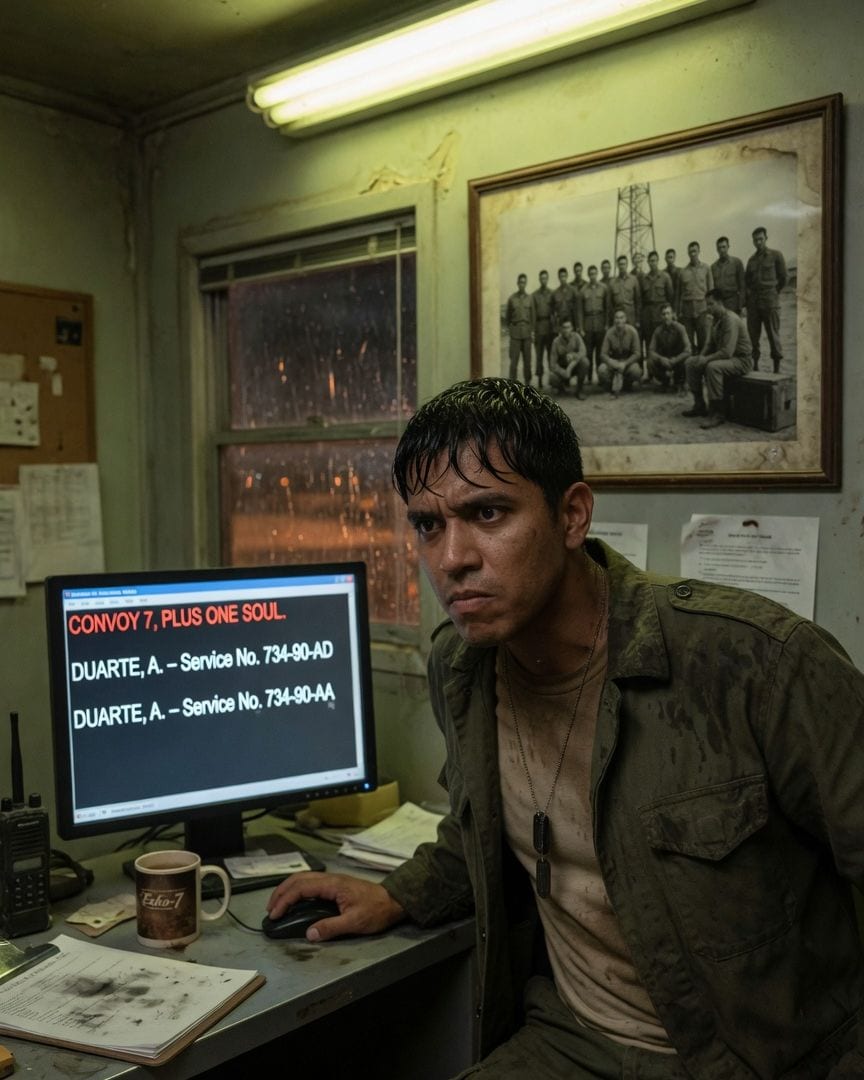
Specialist Duarte felt a phantom warmth in the truck's empty seat. Later, the manifest listed him twice with two service numbers.
Specialist Adam Duarte, already shivering and late, had to break a deeply held superstition at Outpost Echo-7: taking the lead truck's far corner seat, always left empty. The moment he dropped into it, a strange warmth bloomed against him, as if someone had just vacated the spot. Back at the outpost, filing the convoy manifest, the digital system flagged a chilling error: 'Convoy 7, plus one soul.' Duarte then found his own name duplicated, each entry with a subtly different, impossible service number. What unsettling presence had shared his seat, and was now haunting the official records?
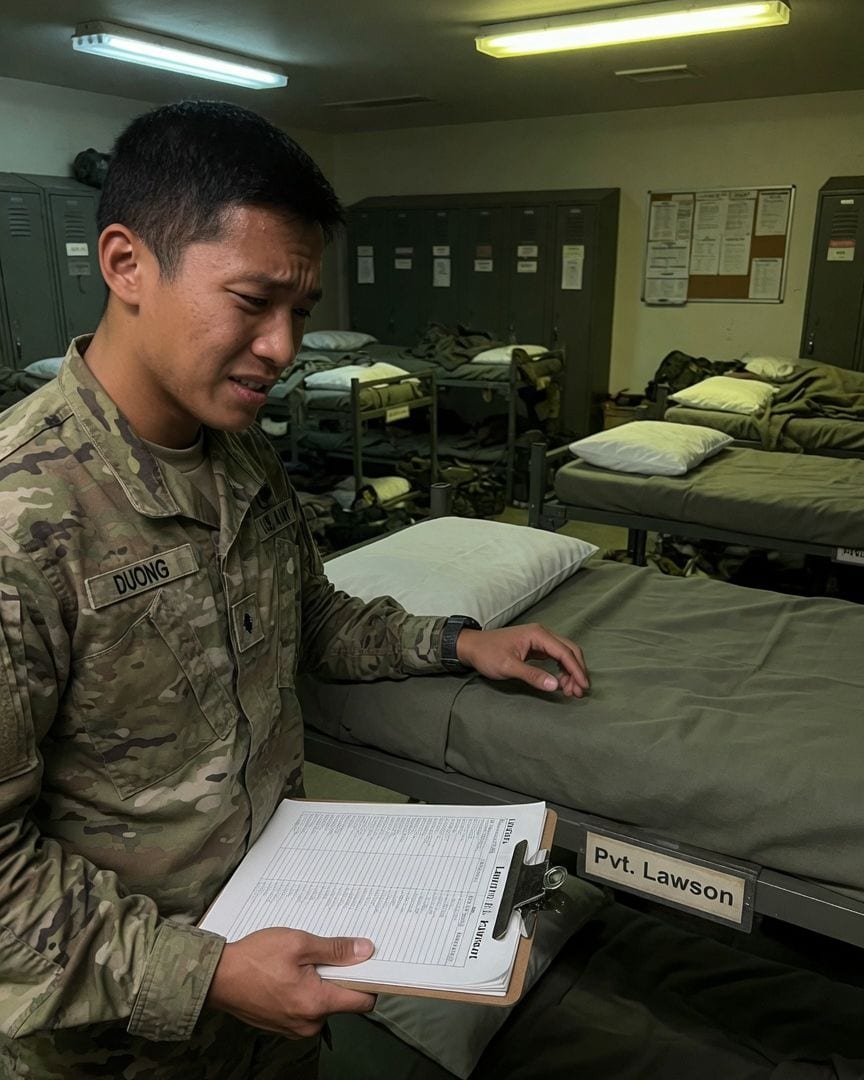
Specialist Duong found a perfectly made bunk for a Private Lawson who didn't exist, then saw his own signature on a duty log with him.
Specialist Gideon Duong found solace in the precise order of barracks life, especially after a grueling week in the field. His final task before tomorrow's graduation was barracks accountability, a routine count of sleeping soldiers against the official roster. But at the end of the aisle, a tenth bunk stood impossibly perfect, sheets hospital-folded, with a faded name tag for 'Pvt. Lawson'. No one was in it, no one ever used it, yet the roster listed Lawson, and Duong's own signature later appeared on a duty log for a patrol he never pulled, alongside the phantom Private. What secret did the meticulously made bunk hide?
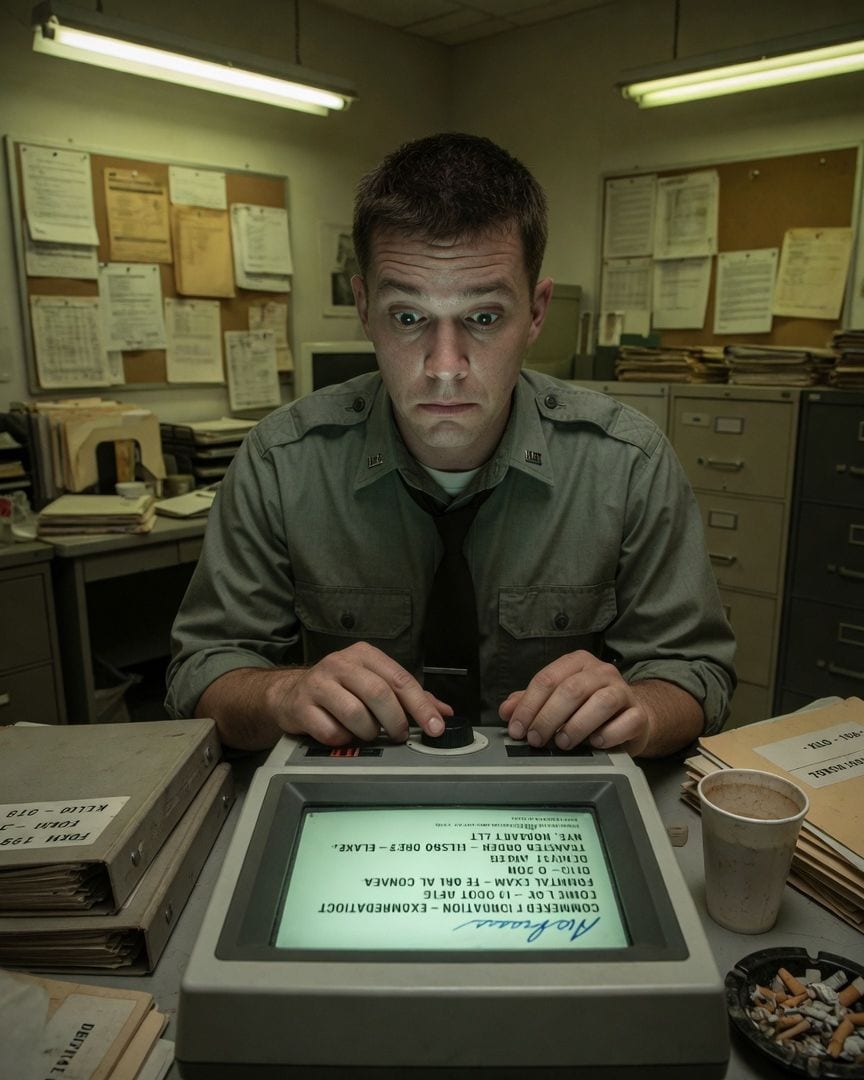
A missile commander watched his ten nuclear silos go dark. His own service record shows his signature on a future he's never lived.
Second Lieutenant Hobart Nye, a missile commander in Wyoming, had his quiet 0247 watch shattered by a security report: a massive, silent black triangle hovered over Launch Facility Kilo, casting a perfect shadow. Hobart watched his console's fault panel light up, signaling all ten nuclear missiles going dark in an impossible silence, followed by eleven minutes his security team could not remember. Official logs called it a "radio malfunction," but Hobart found a requisition for invisible-tracking sensors, signed by a base commander who was supposed to be off-base. The final, chilling discovery came when his own service record showed new entries—a dental check-up, a transfer to Alaska—all dated for a future he never lived, complete with his perfectly replicated signature.
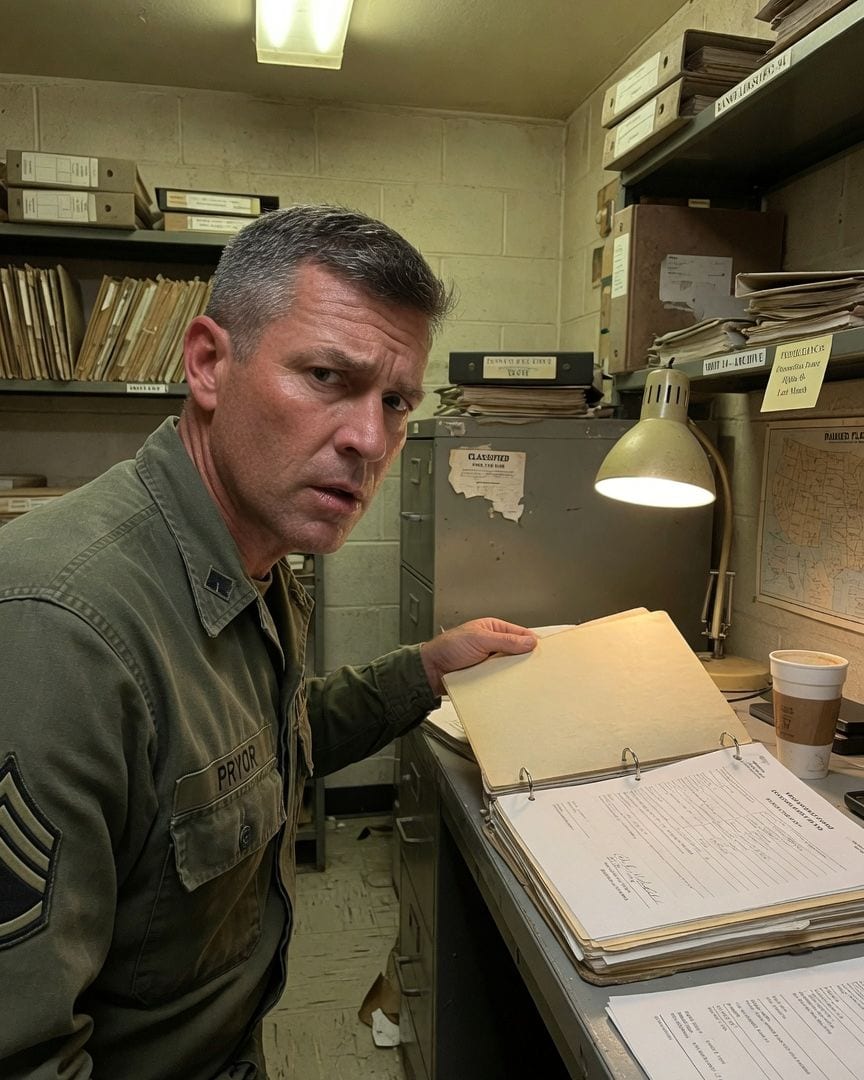
A sergeant with eleven days left finds a warm, glassed crater. Its file shows a captain lost thirty years ago is still signing reports from last week.
Sergeant Alden Pryor was counting down his final eleven days on a twenty-year hitch, expecting to spend them on routine patrols along the Ranier Flats fence line. Instead, his truck stopped at a bizarre sight: a four-hundred-foot glassed crater, miles from anywhere, its sand faintly warm at dawn despite no one recalling a blast. The air above it shimmered with an unnatural distortion, a silent scar of erased violence, and the official file for 'Shot 14' showed recent maintenance sign-offs for a decommissioned tower at the crater site. All these active documents were signed by Captain Everett Caldwell, who had been officially lost in operations thirty years ago, leaving Sergeant Pryor to wonder how a dead man could still be filing reports.
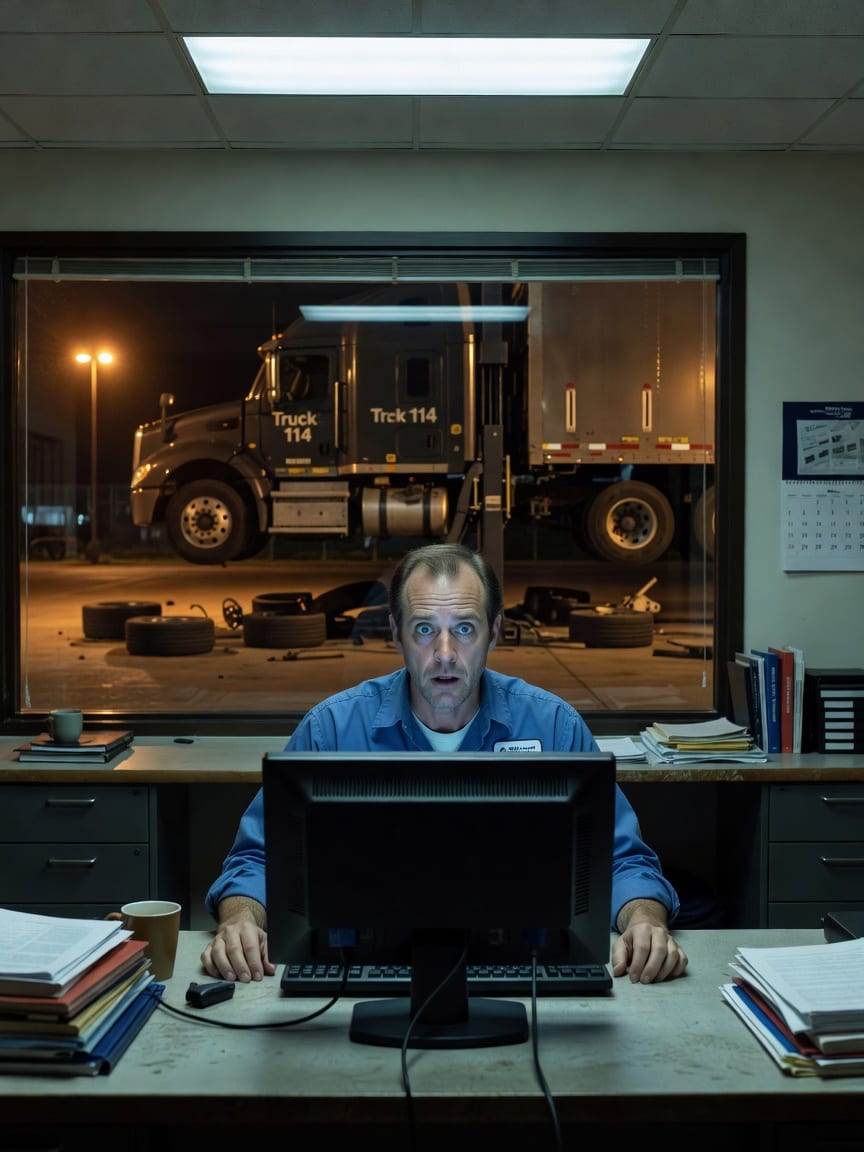
Truck 114 left the yard last night, CAD says. It burned forty miles of fuel. But my truck 114 was up on the lift, no wheels, all shift.
It was another quiet Wednesday overnight in the dispatch office until the CAD system pinged. My screen blared, showing Truck 114 logged outbound for forty miles and back, burning forty gallons of fuel. But I knew that very truck was immobile, suspended on a lift in Bay 4 with its drive wheels removed.
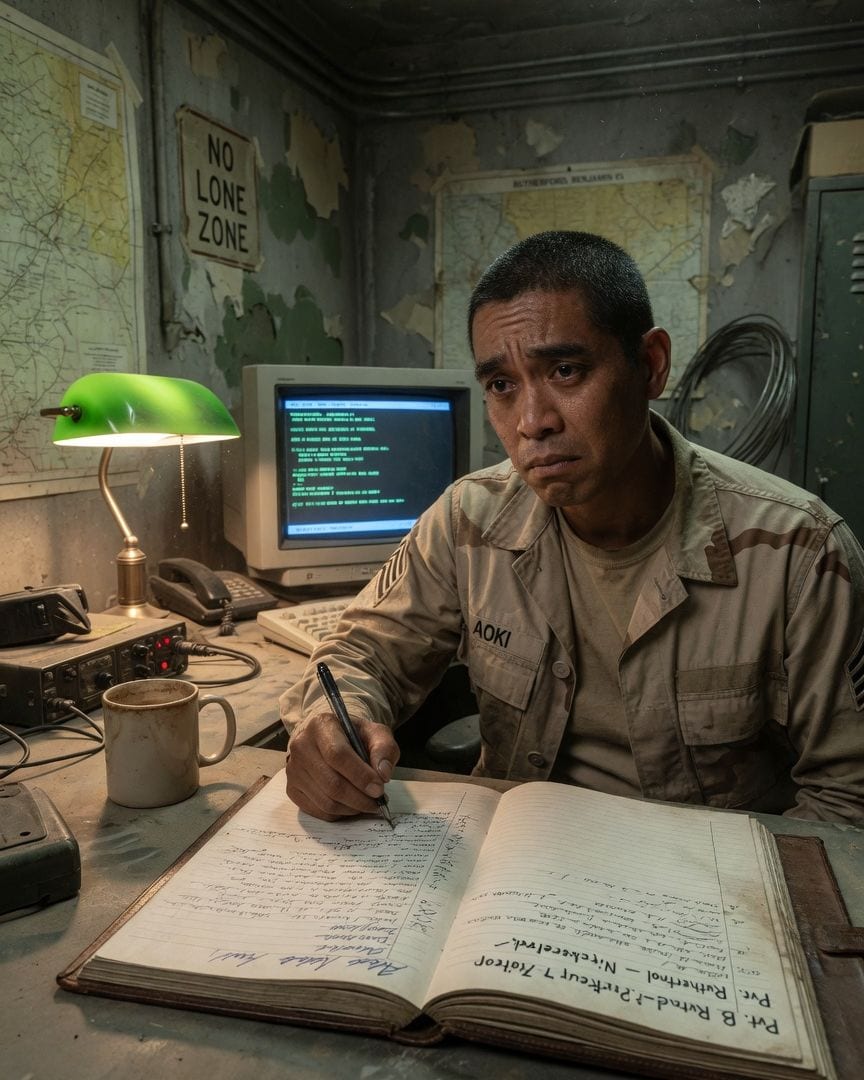
Sergeant Aoki's four-man patrol hears a fifth voice answer their count. A fresh name then appears in the duty log beneath his own signature.
Sergeant Isaac Aoki's final rotation at Outpost 7 was nearing its end, with relief due at dawn. On his four-man night patrol, he broke an old superstition, counting his team aloud in the dust-choked desert. A fifth voice answered, clear and unsettling, from the moonless dark. Back inside the bunker, the chill deepened when a fresh name appeared in the duty log, 'Pvt. B. Rutherford,' beneath Aoki's own signature, a soldier no one knew. Even more disturbing, Aoki later found his own signature on a valor citation for Rutherford, an event he never witnessed.