Nearing his tour's end, Sergeant Whitmore finds his own signature on duty logs for a winter he cannot recall.
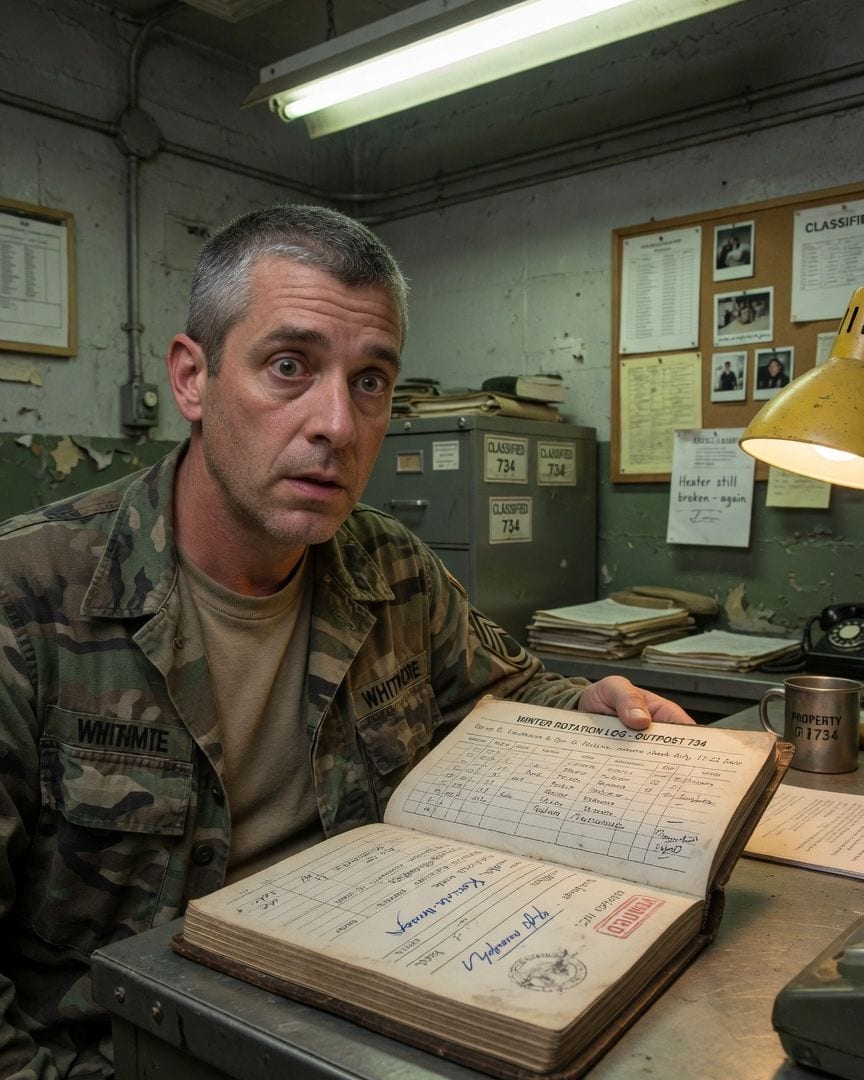
Sergeant Kevin Whitmore felt the dull throb of a headache behind his eyes as Specialist Gideon Halloran expertly fanned a perfect run of aces and kings across the worn table.
The common room of Outpost 734 hummed with the low thrum of the station’s distant machinery, a sound that had long ago become background noise.
Whitmore, nearing the end of his tour, had been looking forward to a relaxed evening game, but Halloran, back two weeks from medical leave, had been winning for two hours straight.
Before his appendectomy, Halloran was famously, hilariously terrible at pinochle, a man who could somehow always manage to draw the exact wrong card. Now, he played with a smooth, uncanny precision, his movements economical, his gaze unblinking.
Whitmore had dealt with plenty of post-op jitters and strange quirks, but this was something else. He tossed his cards onto the pile, a forced laugh escaping him. "Alright, Halloran, who gave you the secret sauce?
Last month, you thought a meld was a type of cheese. Now you're playing like a shark. What happened?"
The station's old, cold, concrete walls seemed to hold their breath in the dim light of the common room, absorbing the question.
Halloran collected the cards, stacking them with a meticulous rhythm Whitmore didn't recognize. He glanced up, a faint, almost imperceptible smile touching his lips. "You did, Sergeant," Halloran said, his voice flat, matter-of-fact. "Last winter. Remember?
We played every night in the comms shack. You taught me that trick with the aces and kings." Whitmore blinked. He didn't remember. Not a single card game in the comms shack, not a single evening spent teaching Halloran anything.
His entire previous winter was a complete blank, a void where Halloran insisted a shared past existed. No deployment, no special training exercise at the outpost, nothing came to mind. He had been home, or so he thought.
He ran a hand over his close-cropped hair, trying to dismiss it as a prank, a joke Halloran was running with the other guys, but Halloran's expression remained unnervingly serious.
"The heater in the barracks was always on the fritz," Halloran continued, as if reading Whitmore's thoughts. "You always swore it’d catch fire eventually.
And that morning, when the generator went out, we huddled over the comms station, waiting for the backup to kick in, playing poker to pass the time instead of pinochle."
Halloran’s descriptions were so specific, so mundane, they felt real, yet utterly foreign to Whitmore’s memory. The details piled up, small, innocuous recollections of shared boredom and routine that Whitmore simply did not possess.
He felt a cold prickle of unease. There was no way he could have forgotten an entire winter. Could he? He tried to find a flaw, a contradiction, but Halloran's account was unnervingly consistent. Something was profoundly wrong.
Driven by a mounting sense of dread, Whitmore decided to check the official duty logs for the previous winter’s rotation, just to prove Halloran wrong. He needed to see it in black and white.
He needed the objective record to restore his own sanity. He slipped away from the card game, the low hum of the station feeling suddenly oppressive, and headed for the records office.
After several minutes of navigating the dusty archives, he found the logbook for the dates Halloran had mentioned. His breath hitched.
Right there, clear as day, were entries for ‘Sergeant K. Whitmore’ and ‘Specialist G. Halloran’ assigned to a routine winter rotation at Outpost 734. The dates were concrete, the entries were clear.
And beneath it all, bold and unmistakable, was his own signature, confirming his presence. Yet, he had no recollection of any of it.
It was ‘The Record That Swears Otherwise,’ an unimpeachable piece of military paperwork documenting a thing he knew did not happen.
Whitmore, his hand trembling slightly, stared at his own signature in the official logbook, confirming a deployment to this very outpost, during a winter he was absolutely certain he had spent elsewhere.
His stomach churned with a chilling certainty: his memory was correct. He hadn't been here. But the system, the unimpeachable record, swore otherwise.
He slowly looked up, his gaze drawn back to the common room where Halloran was still dealing cards with uncanny precision, a faint, unfamiliar smile playing on his lips.
An icy dread settled deep in Whitmore's gut, telling him something was profoundly wrong.
Whitmore dedicated the next few days to cross-referencing this phantom winter, convinced there had to be an explanation. He discreetly checked his own service record, accessing digital files from his terminal.
Every piece of official paperwork — his pay stubs, his leave requests, even the quarterly performance reviews — perfectly aligned with the phantom deployment to Outpost 734.
He even found logs of calls made from the base, addressed to his home number. His wife, Sylvia, had indeed logged calls from him during that period, all recorded as ‘received from Outpost 734.’
The system was airtight, offering no external contradiction to the record, only the gaping void in his own memory. He couldn’t shake the growing sense of unreality.
He started observing Halloran more closely, now seeing everything through a new, unsettling filter. There was a new, almost mechanical precision in how Halloran folded his fatigues, each crease impossibly sharp.
His speech carried a strange, detached rhythm, like a recording played just slightly too slow, every word carefully articulated. And that deep, unblinking stare, devoid of the familiar spark of humor or irritation Whitmore remembered, wasn't there before.
The changes were subtle, almost imperceptible to anyone not actively looking for them, but now that Whitmore saw them, he couldn't unsee them.
Then, he began to notice a similar, unsettling detachment in a few other long-term personnel, men who had served at the outpost for extended periods, their eyes holding that same flat, distant quality. A cold knot formed in his stomach.
Whitmore's quiet inquiries and persistent record checks did not go unnoticed. One evening, he returned to his personal locker in the barracks.
The padlock was still secure, but as he opened it, he noticed it immediately: nothing was stolen, but his carefully arranged items — a stack of letters from Sylvia, a framed photo of his son, his spare shaving kit — had been subtly, almost imperceptibly, rearranged.
The letters, which he always kept in chronological order, were now shuffled. The photo, usually facing outward, was turned inward. Someone had been in his locker. Someone knew he was looking.
Later that week, Captain Edith Radcliffe approached him as he sat alone in the mess hall, picking at his dinner.
She was a stoic woman with piercing, gray eyes who had been stationed at Outpost 734 for years, seemingly an immovable fixture. She pulled up a chair across from him, her movements fluid and silent.
"Sergeant Whitmore," she began, her voice low, "I've noticed you've been… inquisitive lately. About station history, personnel movements." She didn't issue a direct warning, didn't threaten.
Instead, she offered an unsettling comment about 'the importance of adapting to the rhythms of the post.' "Outpost 734 has a unique temperament," she said, her gaze unwavering. "It asks for a certain… understanding from its people.
Not questioning what keeps the peace is often the wisest course of action, Sergeant." Her composure was unnerving, her lack of concern far more terrifying than any open threat.
It was as if she already knew exactly what he was looking for, and his search was an expected, even necessary, part of the station's routine.
Whitmore felt a prickle on the back of his neck, realizing he was no longer just investigating; he was being watched.
Driven by a cold certainty that now superseded his fear, Whitmore used his NCO connections back at HQ to discreetly access archived personnel records for Outpost 734, specifically looking for past rotations that overlapped with his own phantom winter.
He spent two nights hunched over a dimly lit screen in a forgotten supply closet, tracing lines of service. He discovered that the 'phantom winter deployment' wasn't unique to him and Halloran.
The data began to coalesce into a chilling, repeating pattern. Every few years, stretching back decades, a small group of soldiers assigned to Outpost 734 had a 'ghost deployment' in their records.
This was a period where their official files placed them at the remote station, despite no clear record of travel orders or formal transfer, and these individuals later exhibited similar subtle behavioral changes and memory gaps to Halloran's.
Whitmore found entries describing uncharacteristic precision in daily tasks, an odd detachment in personal interactions, a peculiar lack of emotional response.
The names and specific dates of these phantom deployments shifted, appearing across different rotations and decades, but the impossible assignment to Outpost 734 remained a chillingly consistent thread.
The 'record that swears otherwise' was not an isolated error, but a systemic, documented glitch, a pattern the military's own accountability system could not explain, yet continued to record. It wasn’t a mistake. It was a feature.
Whitmore isolated a pattern of overlapping 'phantom deployments' to Outpost 734, stretching back decades, affecting dozens of soldiers. The same gaps, the same behavioral shifts. He cross-referenced the names he found in the archived records with current personnel rosters.
His blood ran cold as he saw a familiar name. Captain Edith Radcliffe. Her file showed no fewer than three such impossible deployments, each followed by a period where her record placed her at the outpost despite other official assignments.
She wasn't just 'the one who knew,' she was something else entirely. She had been through this process multiple times, seemingly unaffected, or perhaps, perfectly adapted.
The implications crashed down on him, suffocating him: she wasn't just a witness; she was a participant. He stared at the screen, the dimly lit closet suddenly feeling colder, tighter. Then, a soft click.
His office door, which he was certain he'd locked before retreating to the closet, slowly swung open, revealing only the dim, empty corridor beyond.
Whitmore grabbed the heavy-duty flashlight from his desk, his heart pounding against his ribs, as Captain Radcliffe stepped into his office. Her expression was unreadable, her gaze fixed on him with a disturbing calm. She didn’t deny anything.
There was no need. "Sergeant Whitmore," she began, her voice as smooth and unhurried as always. "You've been very thorough. A highly desirable trait, under the right circumstances."
She walked to the window, staring out at the desolate landscape surrounding the outpost. "Outpost 734 isn't just a radar station, Kevin. It's a filtration point."
She turned back to him, her eyes seeming to pierce through him. "The intense isolation, the constant low-level EM radiation from the long-range equipment, and something inherent in the desolate land itself… it subtly alters those who stay too long.
It integrates their 'optimal' selves into the outpost's system, replacing their originals with more efficient, compliant versions. Overwrites their memories to fit the new reality. The old self's memories, she stated, are simply 'unnecessary data.'"
Radcliffe paused, letting her words sink in. "I was one of the first to fully 'integrate' successfully. And now, as part of the outpost's ongoing function, I ensure the process continues smoothly. Identifying those ready for 'adaptation.'"
Her gaze was unwavering as she pointed out that Whitmore, with his disciplined mind and meticulous attention to detail, was an ideal candidate for this 'next phase.' The flashlight felt like a toy in his hand.
Radcliffe moved towards Whitmore, her expression unnervingly placid, her movements precise and unhurried. The true horror of her words, of what she represented, consumed him. He knew he couldn't fight 'it,' not in the conventional sense.
But he could expose it. With a surge of desperate energy, he shoved his desk chair. It skidded across the concrete floor with a screech, creating a momentary, jarring diversion. He didn't wait.
He dashed out of the office, down the dimly lit corridor, and towards the main communication center. He needed to send out a priority alert, anything to expose what was happening here.
He reached the heavy metal door of the comms center, his fingers fumbling with the unfamiliar emergency override sequence on the keypad. The dread tightened its grip, a cold hand squeezing his chest.
Radcliffe was right behind him, her footsteps silent, drawing closer with chilling inevitability. He heard the whisper of her fatigues, the soft, rhythmic sound of her breathing.
Just as he got the comms panel open, his fingers hovering over the 'transmit' button, he felt a cold, firm hand close over his, stopping him dead.
The priority alert was never fully transmitted. Only a garbled fragment, an incomplete data burst, was ever received by command, dismissed as a system glitch—a common occurrence for the remote Outpost 734.
The outpost continued its operations without interruption, its radar sweeping the desolate skies, an unblinking eye over the endless expanse.
Captain Radcliffe filed a comprehensive report citing 'stress-induced erratic behavior' for Sergeant Whitmore, whose meticulousness, she noted, had unfortunately led to a breakdown.
He was subsequently 'transferred' due to 'medical reasons,' his service record updated to reflect a quiet, efficient departure.
Sergeant Kevin Whitmore's wife, Sylvia, received a call weeks later. It was Kevin, back stateside. He sounded… different. Calmer, more focused, his voice carrying a subtle, almost imperceptible, detached rhythm.
He told her he'd 'adapted to the rhythms of service' and was looking forward to his new assignment, a special posting with advanced training.
When Sylvia, relieved but still a little uneasy, asked him about their son's birthday, which he had missed, he replied, "Oh, that was last winter, wasn't it?"
If this one got to you
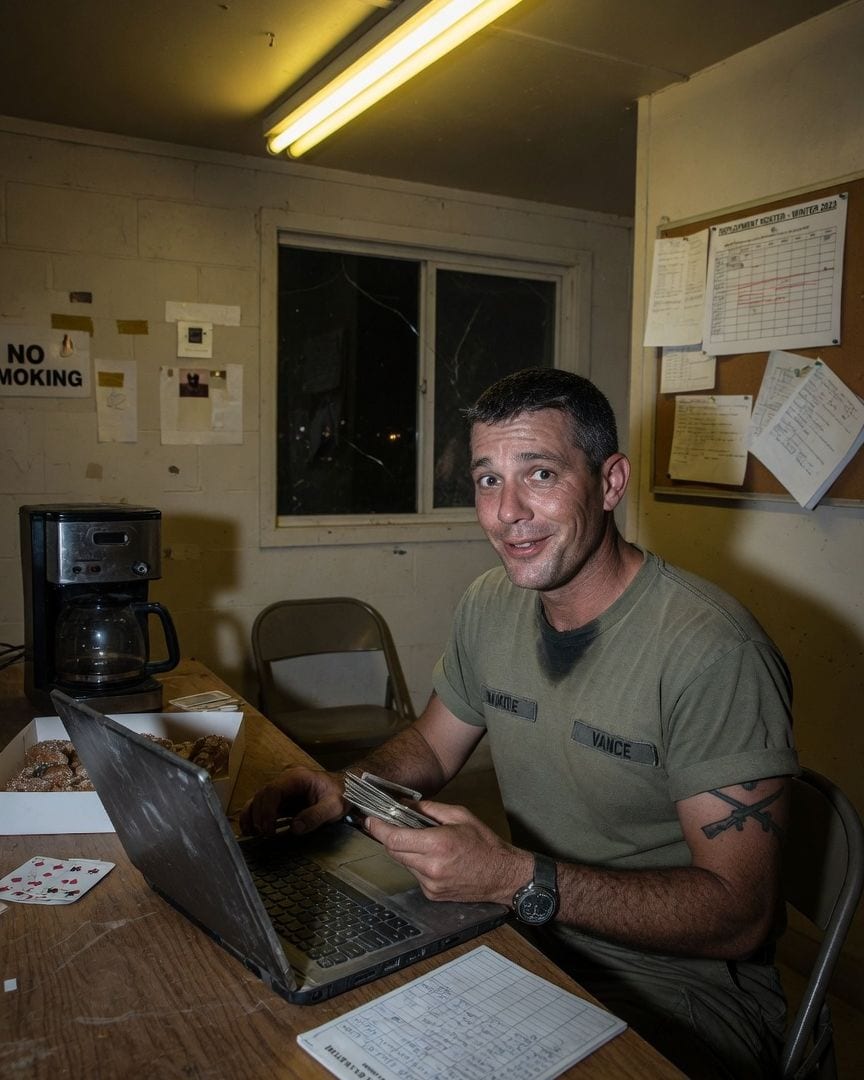
Sergeant Vance finds his own signature in an old base log, certifying a card game from a winter he was three hundred miles away.
Sergeant Oliver Vance was nearing the end of his deployment at Firebase Kestrel when he sat down for a game of pinochle. His opponent, Specialist Maxwell Delaney, began playing with unnerving skill, claiming Vance had taught him the previous winter. A cold dread settled in the sergeant's gut; his records showed no winter deployment at Kestrel, placing him hundreds of miles east. Yet, a dusty operations logbook from beneath the comms tower yielded a chilling entry: his own unmistakable signature, certifying pinochle training with Specialist Delaney on a date from that impossible winter.
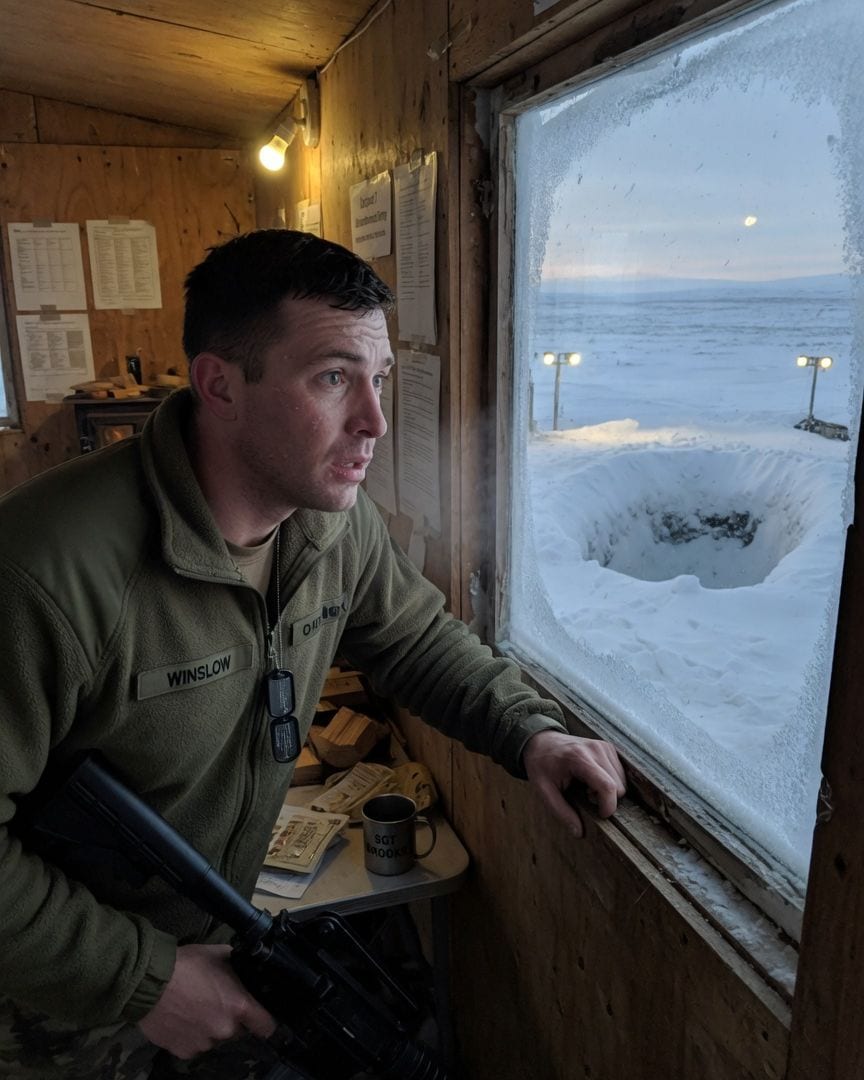
An outpost soldier transferred two weeks ago is listed on last night's patrol log.
Corporal Kenneth Winslow discovers a perfectly circular, waist-deep track in the fresh snow around his isolated hut. When he checks the duty logs, he finds an entry for a perimeter sweep by himself and a PFC Langford. Yet, official records show PFC Langford was transferred from the outpost two weeks ago.
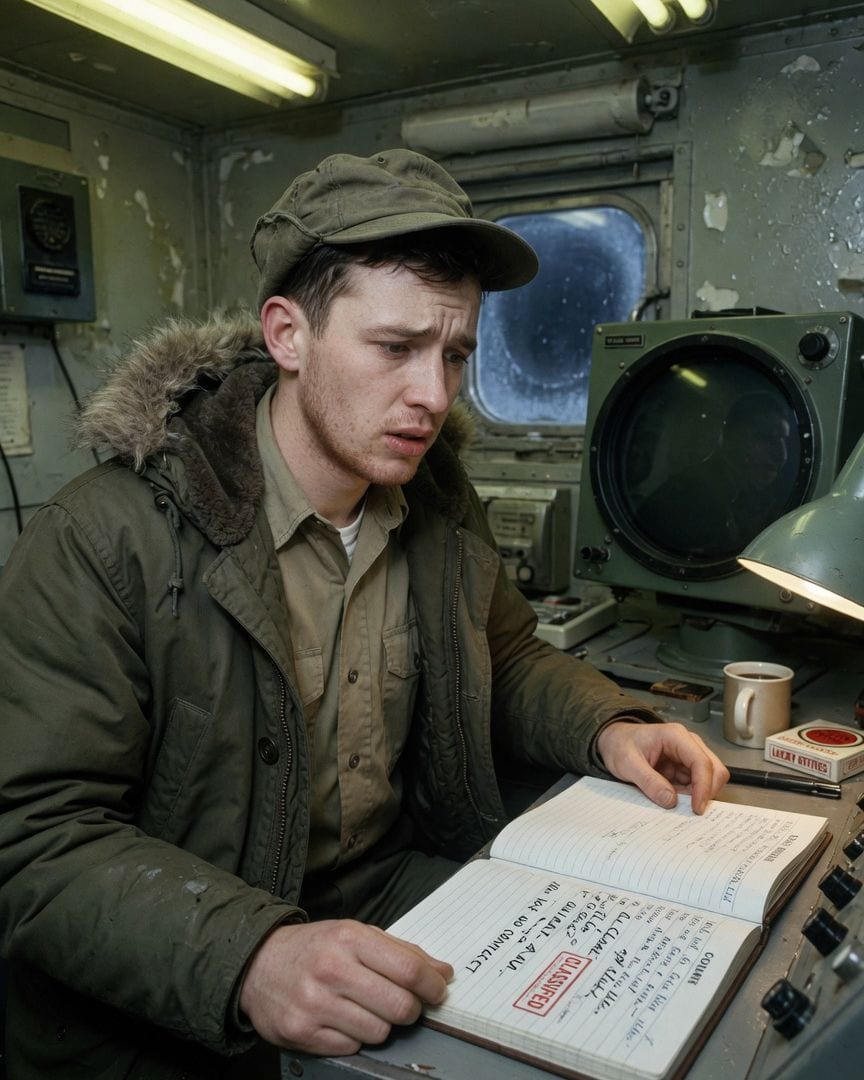
A Cold War airman logs an impossible radar contact on his last sweep. But his official logbook entry is stamped 'CLASSIFIED' and then contradicted by a hastily scrawled 'ALL CLEAR' dated moments before it.
Airman Ordway Vance, 22, manned the radar dome at Site Pellin in the biting North Atlantic dark of January 1962, running the last calibration sweep before its decommissioning. His scope picked up a faint, impossible return, growing closer with each pass, though the ocean remained empty to the eye. When Vance detailed the contact in his official logbook, a 'CLASSIFIED' stamp appeared, followed by a hastily scrawled 'ALL CLEAR' dated moments before his own entry, contradicting his every word. Commander Hartley dismissed it as equipment malfunction, but Vance sensed a chilling, official erasure behind the lie. He soon found a locked cabinet marked 'SITE PELLIN ANOMALIES,' hinting at a deeper truth buried within the base's final days.
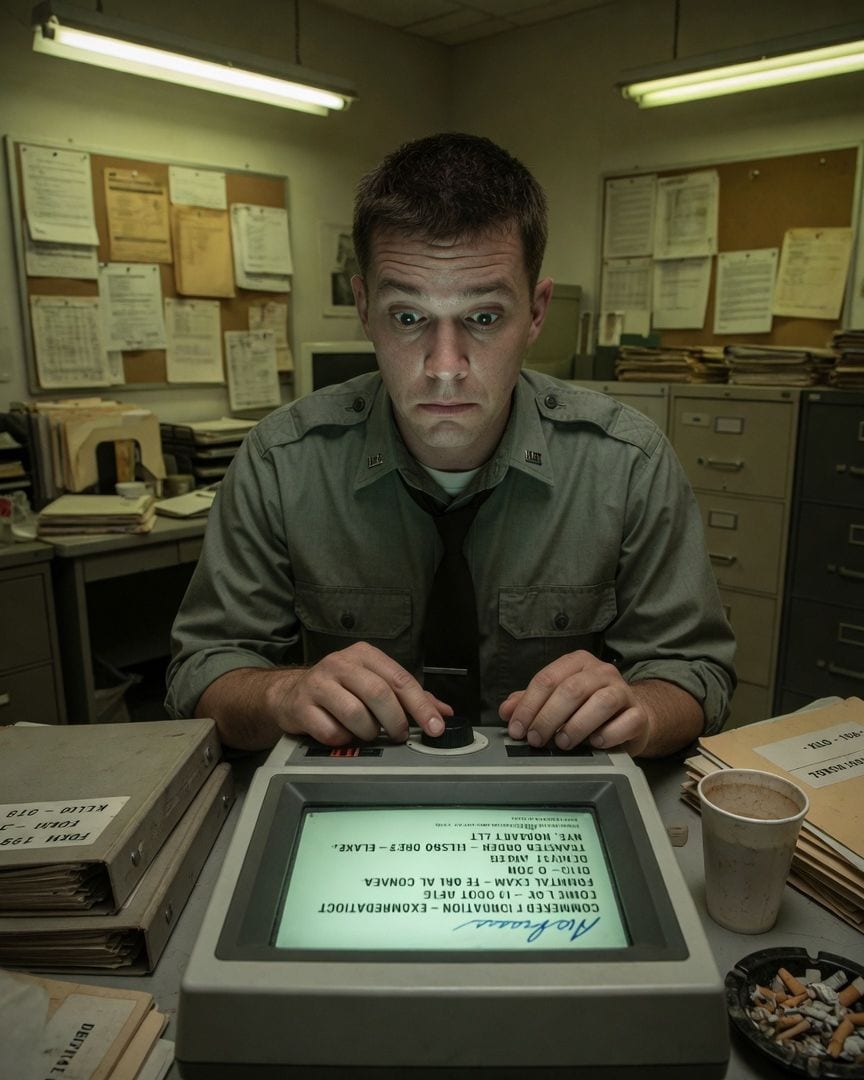
A missile commander watched his ten nuclear silos go dark. His own service record shows his signature on a future he's never lived.
Second Lieutenant Hobart Nye, a missile commander in Wyoming, had his quiet 0247 watch shattered by a security report: a massive, silent black triangle hovered over Launch Facility Kilo, casting a perfect shadow. Hobart watched his console's fault panel light up, signaling all ten nuclear missiles going dark in an impossible silence, followed by eleven minutes his security team could not remember. Official logs called it a "radio malfunction," but Hobart found a requisition for invisible-tracking sensors, signed by a base commander who was supposed to be off-base. The final, chilling discovery came when his own service record showed new entries—a dental check-up, a transfer to Alaska—all dated for a future he never lived, complete with his perfectly replicated signature.
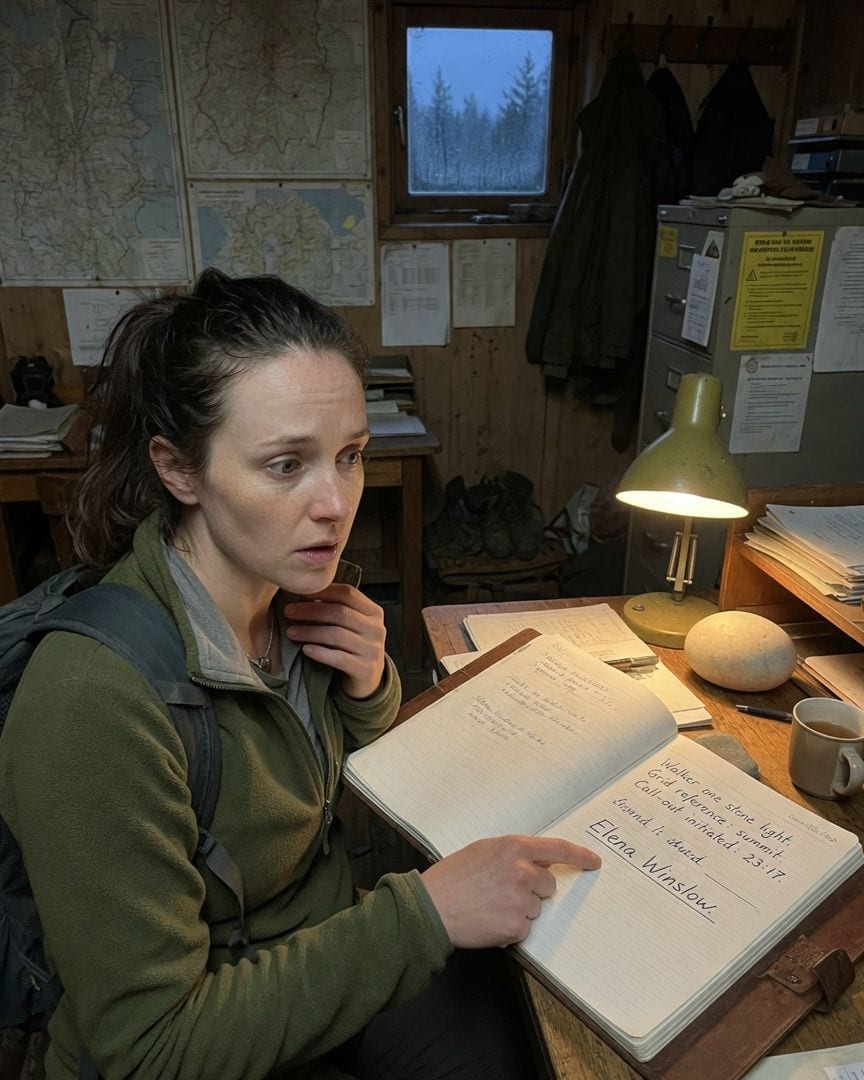
My pocketed mountain stone meant a rescue logbook recorded a call-out that night for me — a shout that never went out.
After an exhilarating climb on Cadair, I took a small, smooth white stone from the summit cairn, despite a warden's warning. Back at the station, a logbook entry shocked me: my name, dated last night, for a rescue call with an impossible detail: 'Walker one stone light'.
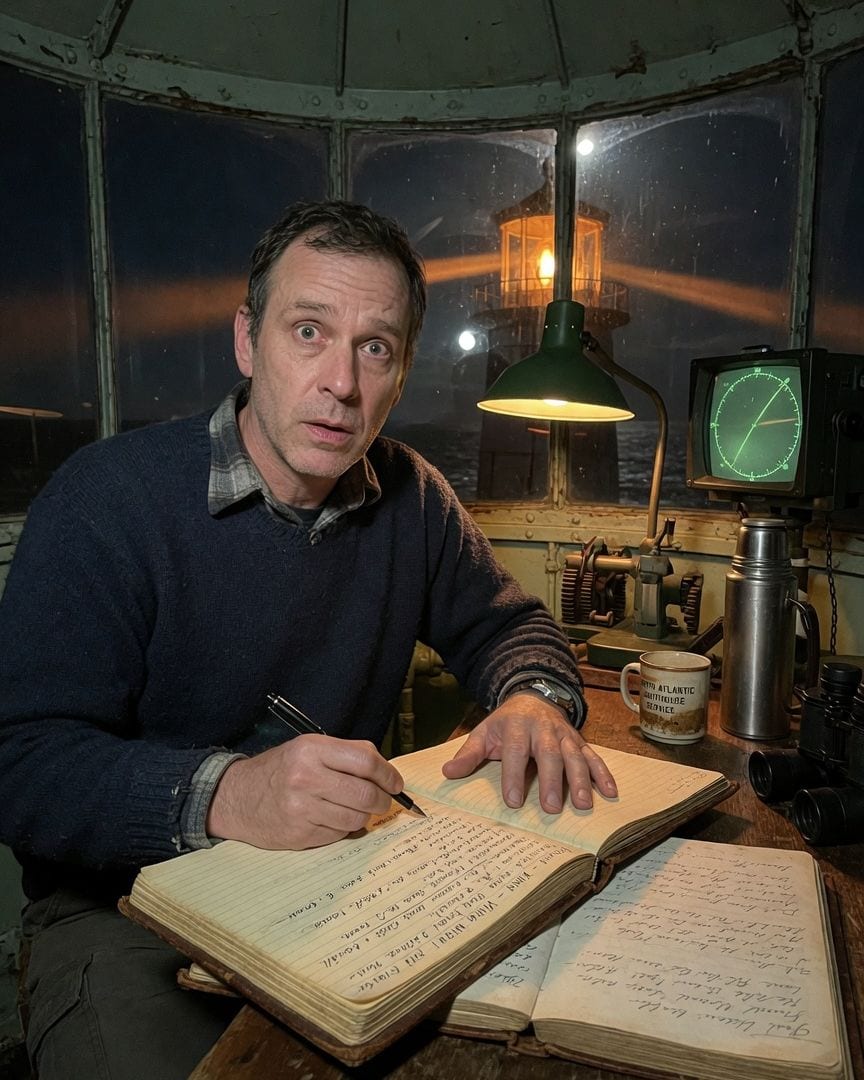
My lighthouse log has my own 3 AM entry for a phantom ship. I was alone in the tower, and I wrote no such thing.
Perched in the lantern room for my usual 2-6 AM watch, I reached for the thick logbook. But the 3:00 AM entry, under my own name, detailed a vessel I never saw. The words were in my own ink, yet I had never written them.