On his final patrol, Airman Cole Trethewey saw a man vanish. Then the stranger sat beside him, seatbelt buckled, miles from any outpost.
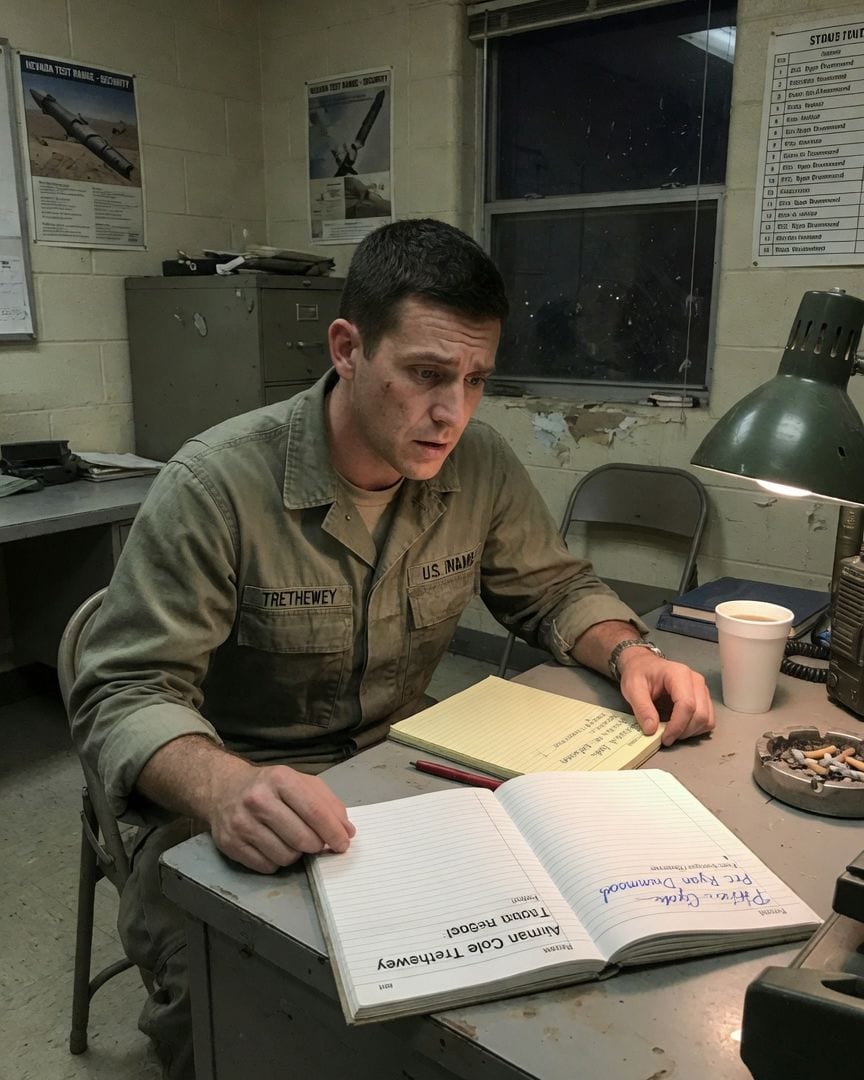
The desert air was cool, almost sharp, on Cole Trethewey’s last loop of his final patrol. His jeep’s headlights, twin beams of defiance, cut a path through the endless scrub brush of the Nevada test-range perimeter.
The profound silence of the night was broken only by the low rumble of the engine and the faint rustle of dry weeds. He was on the far leg, miles from any outpost, when he saw him.
A man, standing motionless in the middle of the road, facing directly into the jeep’s approaching glow. Trethewey, his hand already reaching for the radio mic, instinct taking over, flicked his eyes down for one second to key the channel.
He was alone out here, had been for hours. The desert exhaled, a low, dry sigh around the jeep. When Cole’s gaze lifted, the man was gone from the road.
Instead, he sat in the passenger seat beside Trethewey, faced front, perfectly still. The seatbelt, which Cole had never once buckled for anyone in this particular vehicle, was fastened across the man’s chest, taut and unwrinkled.
Cole slammed on the brakes, the jeep skidding to a halt, kicking up a plume of dust that briefly obscured the impossible figure. Cole stared, his heart hammering against his ribs, but the man didn't move. He didn't breathe.
He just sat, a stark silhouette against the faint glow of the dash. Cole swallowed, his radio mic still clutched in his trembling hand. He hadn't called it in. He was alone. He was sure he was alone.
He drove the rest of the perimeter loop, the silent passenger beside him, the buckled seatbelt a cold, undeniable fact digging into Cole’s perception.
Back at the outpost, the desert wind still seemed to whistle in Cole Trethewey’s ears, even indoors. He sat at the battered metal desk, forcing his hand to write out his final patrol report.
He tried to rationalize the passenger—sleep deprivation, a trick of the light in the vast, empty night, a bizarre prank by a fellow airman who’d somehow vanished from a moving vehicle.
But the memory of the buckled seatbelt, unnervingly neat, clung to him, refusing to be dismissed. Sergeant Evelyn Maddox, his supervisor, sat across from him, barely glancing at the finished paperwork before signing off his report. “Good job, Trethewey.
Get some rack time before your rotation.” Cole nodded, pushing himself up, the stiffness in his joints a testament to the night’s strain. As he turned to leave, his eyes snagged on the open duty logbook on Maddox's desk.
His own name, ‘Airman Cole Trethewey,’ was clearly printed for his patrol slot from the previous night. Beside it, under ‘Passenger/Observer,’ was another name, neatly filled in: ‘PFC. Ryan Drummond.’
And below that, a signature, an almost perfect replica of Cole’s own, confirming the impossible entry. A chill deeper than the desert night seeped into Cole’s bones. He picked up the logbook, his fingers tracing the impossible name.
He had been alone. He knew he had been alone. He had never signed off on a passenger, especially not a ‘PFC. Ryan Drummond,’ a name he’d never heard in his life, never seen on base.
The ink was fresh, the entry undeniable. He flipped back through the previous days, then weeks. No Ryan Drummond. He checked the unit roster tacked to the wall, scanning every name. No Ryan Drummond.
The ordinary explanation — a clerical error, a new recruit he’d somehow missed — died a quiet death in his gut, leaving only a spreading dread.
Cole Trethewey spent the next morning, supposedly on medical leave for ‘fatigue,’ scouring the base. His uniform felt too tight, his skin crawling.
He checked the morning formation, looking for any unfamiliar faces, any new transfers who might fit the phantom passenger’s description. Nothing.
He approached the supply depot, the mess hall, even the recreation room during its quiet morning hours, casually asking about a ‘PFC. Ryan Drummond.’ Blank stares met him. No one knew the name, had ever heard it.
He logged onto the base's digital manifest from a public terminal, his fingers trembling slightly as he typed the name into the search bar. The system whirred, its internal gears grinding, then returned: ‘No records found for PFC. Ryan Drummond.’
He tried variations, double-checked his spelling, even tried partial entries. Still nothing. The name in his logbook, the signature mimicking his own, remained an impossible ghost.
He sat alone in the empty common room, the official logbook open on the table before him, the entry for ‘PFC. Ryan Drummond’ stark and undeniable, yet the man himself, and any record of him, simply did not exist.
Officially, Cole Trethewey was on medical hold for stress. Unofficially, he was obsessed. The phantom passenger and the impossible log entry had lodged in his mind, gnawing at his rationality, leaving him sleepless.
He used his remaining access to the base's less restricted archives, claiming research for a ‘unit history project’ that no one bothered to scrutinize too closely.
He focused on patrol logs from the perimeter he'd been assigned, particularly those from service members rotating out. It was tedious work, sifting through decades of faded, handwritten entries in heavy, dust-coated books.
But the pattern began to emerge, faint at first, then chillingly clear, like a frost forming on a windowpane.
Every few years, always tied to a departing airman or soldier on their final perimeter patrol, a single, unidentifiable name would appear in a logbook. A ‘PFC. Gordon Kingsley’ in ‘87. A ‘Private Edith Thornton’ in ‘95.
A ‘Specialist Nancy Blackwood’ in ‘03.
The names were different, the units varied, but the circumstances were identical: an extra, unnamed passenger, logged by a soon-to-be-departed service member, with a signature that, upon closer inspection, bore an uncanny resemblance to the actual patrol leader's handwriting.
Each phantom passenger, like ‘Ryan Drummond,’ was untraceable in any other official record. Cole started a separate, hidden file, cross-referencing names, dates, and the specific perimeter sections. The unease solidified into a cold, hard dread. This wasn't a prank.
This was a mechanism, a recurring anomaly embedded within the base's own, unimpeachable record-keeping system. He found a faded, hand-drawn map of the perimeter from the 1980s, tucked away in a discarded box of old training manuals.
It marked a specific ‘anomaly zone’ on the far leg—the exact spot where he'd encountered the man. The map was unofficial, but it confirmed his growing suspicion.
Cole Trethewey’s covert investigation didn't go unnoticed. His access to the older, more sensitive archives suddenly required additional authorization, a bureaucratic tangle that effectively blocked him at every turn.
Sergeant Maddox, usually pragmatic and direct, became distant, her eyes darting away when he tried to discuss his ‘research’ or ask questions about the base's forgotten history.
Then, Chief Warrant Officer Gordon Abbott, head of internal investigations, requested a ‘follow-up debriefing’ on Cole's ‘stress incident.’
Abbott, a lean man with sharp, assessing eyes that seemed to take in everything and give nothing back, didn't mention the phantom passenger directly. Instead, he asked about Cole's ‘unusual interest in historical patrol logs’ and ‘unauthorized access attempts.’
His tone was calm, almost solicitous, but the implication was clear: Cole was being watched. One evening, after returning to his barracks, Cole found a folded piece of paper slipped under his door.
It was typewritten, no fingerprint smudges, no return address, just a crisp, unsettling presence. The message was stark: ‘Some things are better left unfiled. Rotation is still an option.’ Cole’s blood ran cold. Someone knew.
Someone knew exactly what he was looking for, and they knew his rotation date was his escape—or perhaps, his deadline. He felt a sickening shift in his gut—he was no longer just investigating; he was being observed, warned.
The hunted had become the hunter, and now, he was the prey. He shredded the note, his mind racing, trying to identify the source. Maddox? Abbott?
Or something else entirely, something that moved within the very system he was trying to expose, something far more insidious. The room itself seemed to hold its breath, the silence pressing in.
Cole Trethewey knew he couldn't keep digging in secret, not anymore. He confronted Sergeant Maddox, cornering her in her office after hours, the fluorescent lights buzzing like a trapped insect above them.
He laid out his hidden file on her desk, the cross-referenced names, the dates, the matching perimeter locations, the unofficial map with its chilling ‘anomaly zone.’ Maddox’s usual composure fractured.
She tried to dismiss it, rubbing her temples, murmuring about ‘old-timer pranks’ or ‘shared hallucinations’ in the lonely desert. Cole pushed, his voice low and steady, laced with an urgency he couldn’t contain. “These aren’t pranks, Sergeant.
These are official records. And these names? They don’t exist anywhere else. Not on this base, not in the entire service. I checked.” Maddox finally sagged, running a hand over her face, the weariness suddenly etched deep into her features.
“Look, Trethewey… there was an incident. Decades ago. A highly classified project, experimental propulsion, maybe something more. An ‘unforeseen outcome.’ All records purged. Command decided it was… better for morale.”
Her voice was barely a whisper, as if speaking it aloud might conjure it. “Things that are erased, they don’t always stay erased. Sometimes, they leave echoes. Traces.” Cole’s mind reeled, the pieces clicking into place with a horrifying precision.
The phantom passenger, the impossible log entries, the ‘anomaly zone’ on the old map—it wasn't just a glitch. It was a scar, a wound in reality. “What about the service members, Sergeant? The ones who logged these… echoes?
Where did they go?” Maddox hesitated, then looked him dead in the eye, her gaze heavy with a terrible knowledge. “Officially? Transferred. Reassigned. Quietly. But… their families. Their original units. They never heard from them again. Not really.
The paperwork said one thing, but the men themselves… they just vanished.” The full weight of his own situation crashed down on Cole. He was next.
His rotation out wasn't an escape; it was a transition into the unknown, a transfer into the ‘unfiled.’
Maddox’s admission hung heavy in the air, the fluorescent lights of the office buzzing like a trapped insect. Cole Trethewey pressed her, his voice tight. “What was the project? What really happened?”
Maddox stared at her desk, her shoulders slumped, defeat radiating from her. “It was before my time, before anyone’s here now. But the stories… they say it had something to do with… shifting things. Records. Maybe even time itself.”
She sighed, a deep, weary sound that echoed in the quiet office. “They called it Project Chimera. And the ‘unforeseen outcome’ was that whatever they shifted… it didn’t stay shifted. It found a way back, to anchor itself.”
She slowly pulled open a locked drawer on her desk, the old metal grating faintly. From inside, she retrieved a thin, aged file, its cover marked ‘CLASSIFIED: PROJECT CHIMERA – INCIDENT REPORT 19XX.’
She slid it across the desk, her finger hovering over a heavily redacted section, as if reluctant to reveal it. “This is all that’s left. The official version.”
Cole leaned forward, his eyes scanning the faded text, a cold dread twisting in his gut. Dates, coordinates, a list of ‘personnel involved.’
Most names were blacked out with thick black marker, but one line, lower down, caught his breath and held it tight. It wasn't a name, but a placeholder, a role, an identifier.
And beneath it, in startlingly clear, unredacted text, his own name. ‘Airman Cole Trethewey,’ listed as a ‘designated participant’ in the original incident, dated 40 years ago, long before he was even born. The file swore it.
His own name, in official, military paperwork, had been waiting for him.
Cole Trethewey burst into Chief Warrant Officer Abbott’s office, the ancient Project Chimera file clutched in his hand like a weapon.
Abbott, who had been calmly reviewing a stack of reports, looked up, his expression unperturbed, as if he had been expecting this very moment. “I expected you, Airman.”
Cole slammed the file onto the desk, the sound echoing sharply in the quiet room. He pointed a trembling finger at his own name in the decades-old report. “This! My name! Forty years ago? What is this?”
Abbott leaned back in his chair, a faint, almost imperceptible smile playing on his lips, devoid of warmth. “Project Chimera wasn’t about propulsion, Airman. It was about existence.
About proving that a record, once created, could be made to transcend its own timeline. To exist in multiple points. To… self-correct.” He paused, letting the implication sink in, the air in the room growing heavy.
“The ‘unforeseen outcome’ was that the entity they created—an echo, a living record of a man who died in the original experiment—it didn't just exist. It needed to be whole. And it needed to continue its own record.”
He explained that the ‘man’ Cole saw was the entity, an imprint of the original test subject. The seatbelt, he revealed, was a specific, physical detail from the moment of the original ‘shift,’ its persistent physical anchor.
“It seeks to complete its pattern. To integrate. To replace. And your name, Airman Trethewey, was part of its original, projected timeline. A placeholder, if you will, for the next ‘designated participant’ on the path to rotation.
It's not tracking you; it's always been tracking you, across time. Your rotation isn't an escape, it’s its opportunity. It’s what activates it.” The dread solidified into a horrifying, coherent truth in Cole’s mind.
Every impossible detail, every phantom name, every vanished airman – it all fit. The anomaly wasn’t random; it was a meticulously unfolding, decades-long process of self-replication and replacement, using the military’s own systems as its template.
Abbott’s calm, matter-of-fact explanation was a death sentence. Cole Trethewey was not just a witness; he was the next designated victim. His rotation out, scheduled for dawn, was the anomaly’s final step, his predetermined integration point.
“No,” Cole whispered, backing slowly away from the desk, his eyes wide with a desperate terror. Abbott rose, his movements fluid and unhurried, his gaze fixed on Cole. “It’s not a choice, Airman. The record is clear.
You are due for integration.” Cole bolted. He flung the office door open, the sound slamming against the sterile quiet of the corridor, and ran.
He knew the base’s layout, the blind spots, the less-patrolled access points better than almost anyone. Abbott’s voice, calm and chillingly even, followed him into the empty hallway. “Security, Airman Trethewey is attempting unauthorized departure. Initiate containment protocols.”
Alarms began to blare, a harsh, insistent wail that pierced the desert night. Cole sprinted through the deserted corridors, the sound of boots echoing behind him, growing closer.
He bypassed the main gate, heading instead for a lesser-used service entrance near the perimeter fence, a section he’d patrolled countless times. He could hear the shouts, the commands being barked over the comms system, the growl of engines starting.
His training kicked in: evade, escape, survive. He scrambled over the chain-link fence, tearing his uniform, dropping into the cool desert sand on the other side.
He ran towards the distant glow of his personal vehicle, parked miles off-base as per protocol for his rotation. He could hear the distant roar of a jeep, then another, their lights cutting through the darkness. They were closing in.
He reached his truck, fumbling with the keys, his hands slick with sweat, his heart a frantic drum against his ribs.
He started the engine, tires spitting gravel as he sped away, leaving the Nevada test range behind, the alarms fading into the vast, indifferent desert. He was out.
But the image of the buckled seatbelt, and his name in that ancient file, was burned into his mind. He knew this wasn't over. He was free, but irrevocably marked.
Cole Trethewey was officially declared AWOL, then dishonorably discharged. His service record was updated to reflect a missing persons report, his name scrubbed from all current rosters.
Sergeant Maddox was quietly transferred to a remote administrative post in Alaska, her face a mask of resignation.
Chief Warrant Officer Abbott remained at the Nevada test range, continuing his ‘containment’ duties, his face unchanging, his eyes as sharp and assessing as ever. The base continued its perimeter patrols, the silent jeep loops under the vast desert sky.
The official narrative was that Airman Trethewey had cracked under pressure and deserted, a common enough story in the desolate spaces of the desert. No one believed his wild stories of impossible passengers or ancient, impossible records.
The anomaly continued its unseen cycle, waiting for the next designated participant, the next rotation.
Cole Trethewey lived off the grid, a ghost in his own country. He avoided official channels, cash only, always moving, always looking over his shoulder.
He scanned obscure online forums, military news, anything that might hint at unusual transfers or disappearances from the Nevada test range.
He knew the entity wasn't contained to the base; it was tied to the record, to the pattern, and he was part of that pattern now.
One evening, in a dusty roadside motel, the flickering television screen showing local news, he saw it. A fresh-faced young airman, straight out of basic, was being interviewed about his new assignment to perimeter duty at the Nevada test range.
His name, announced with pride by the reporter, was PFC. Ryan Drummond. Cole watched the screen, his breath catching in his throat, the motel room suddenly freezing cold. The cycle continued, unbroken, forever seeking its completion.
The records still swear he was always there.
If this one got to you
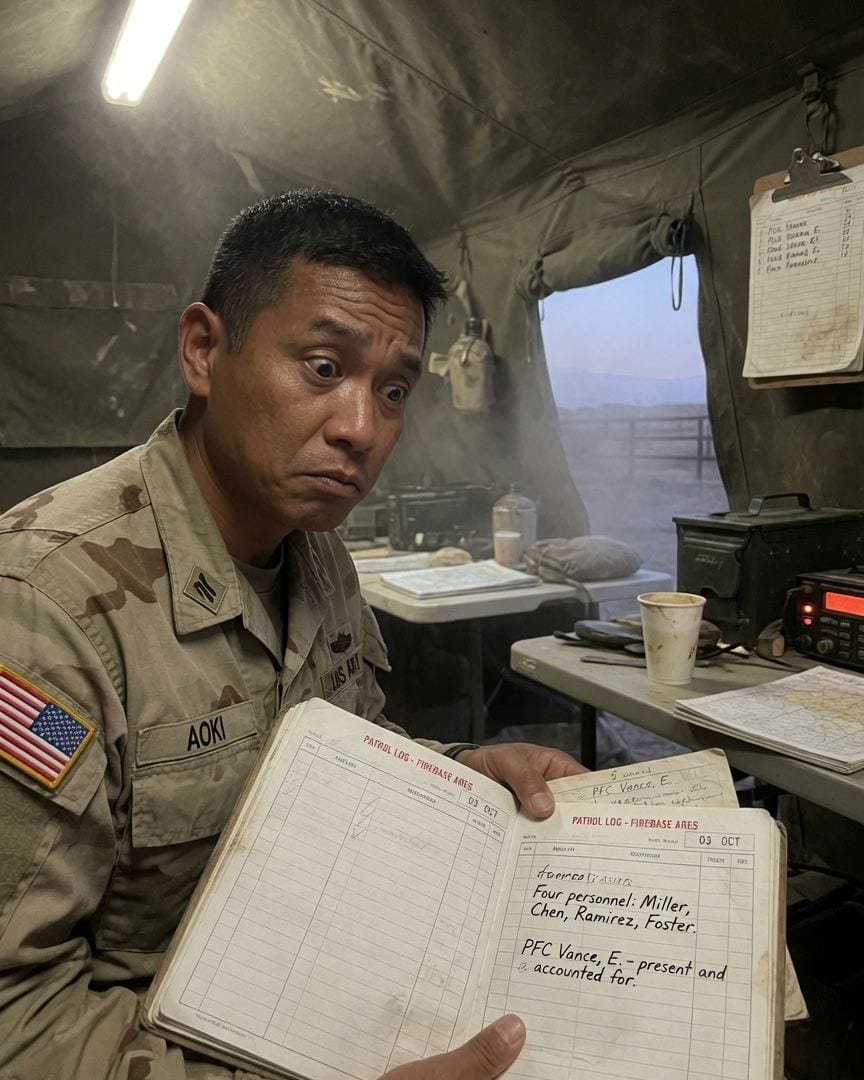
On his final patrol, Sergeant Hans Aoki led his four-man team. A fifth figure, silent, disciplined, shifted its weight right off his shoulder. Then his own signed log confirmed five men present.
On his final patrol through the pre-dawn Afghan desert, just hours from leaving Firebase Ares for good, Sergeant Hans Aoki led a disciplined four-man team. At the halfway point, a fifth figure, silent and disciplined, shifted its weight right off his shoulder, matching his stride; Aoki saw only four men, but the phantom presence remained, and the comms static felt like a muffled whisper. Back at the operations tent, his own signed patrol log, confirming four men, then listed an impossible fifth soldier, 'PFC Vance, E.', as present and accounted for. What impossible truth had his own hand attested to?
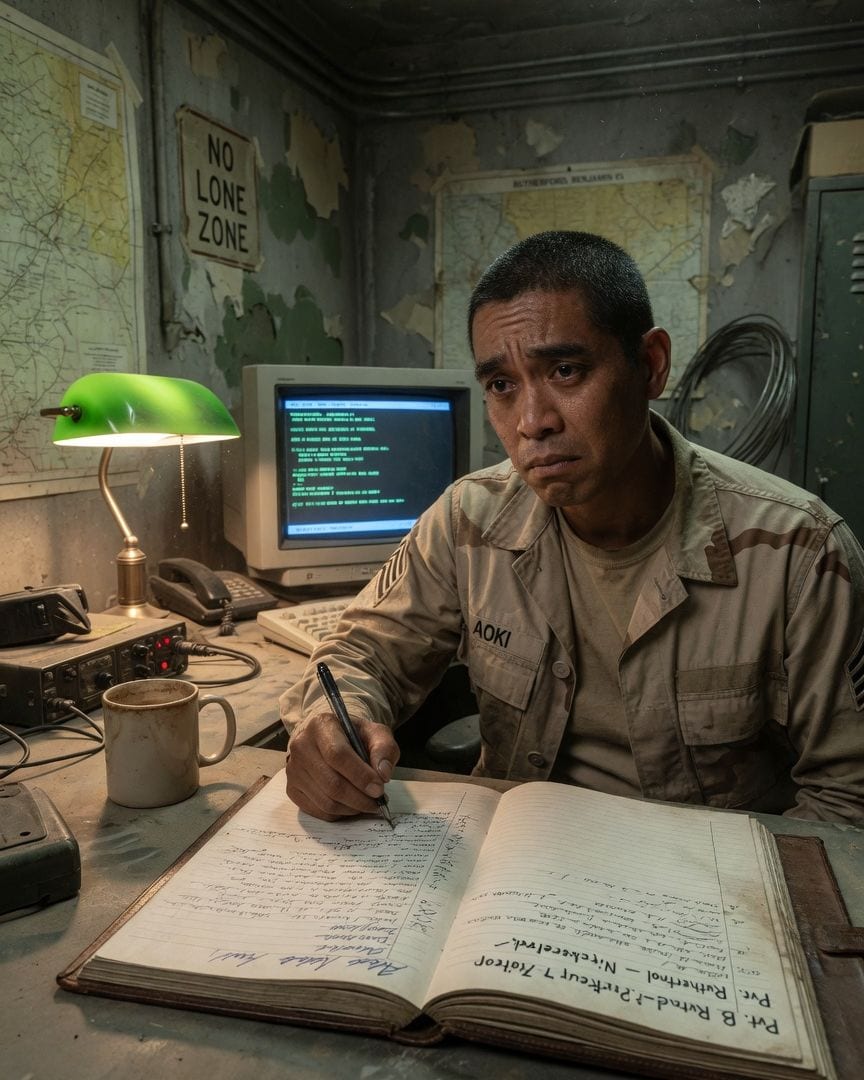
Sergeant Aoki's four-man patrol hears a fifth voice answer their count. A fresh name then appears in the duty log beneath his own signature.
Sergeant Isaac Aoki's final rotation at Outpost 7 was nearing its end, with relief due at dawn. On his four-man night patrol, he broke an old superstition, counting his team aloud in the dust-choked desert. A fifth voice answered, clear and unsettling, from the moonless dark. Back inside the bunker, the chill deepened when a fresh name appeared in the duty log, 'Pvt. B. Rutherford,' beneath Aoki's own signature, a soldier no one knew. Even more disturbing, Aoki later found his own signature on a valor citation for Rutherford, an event he never witnessed.
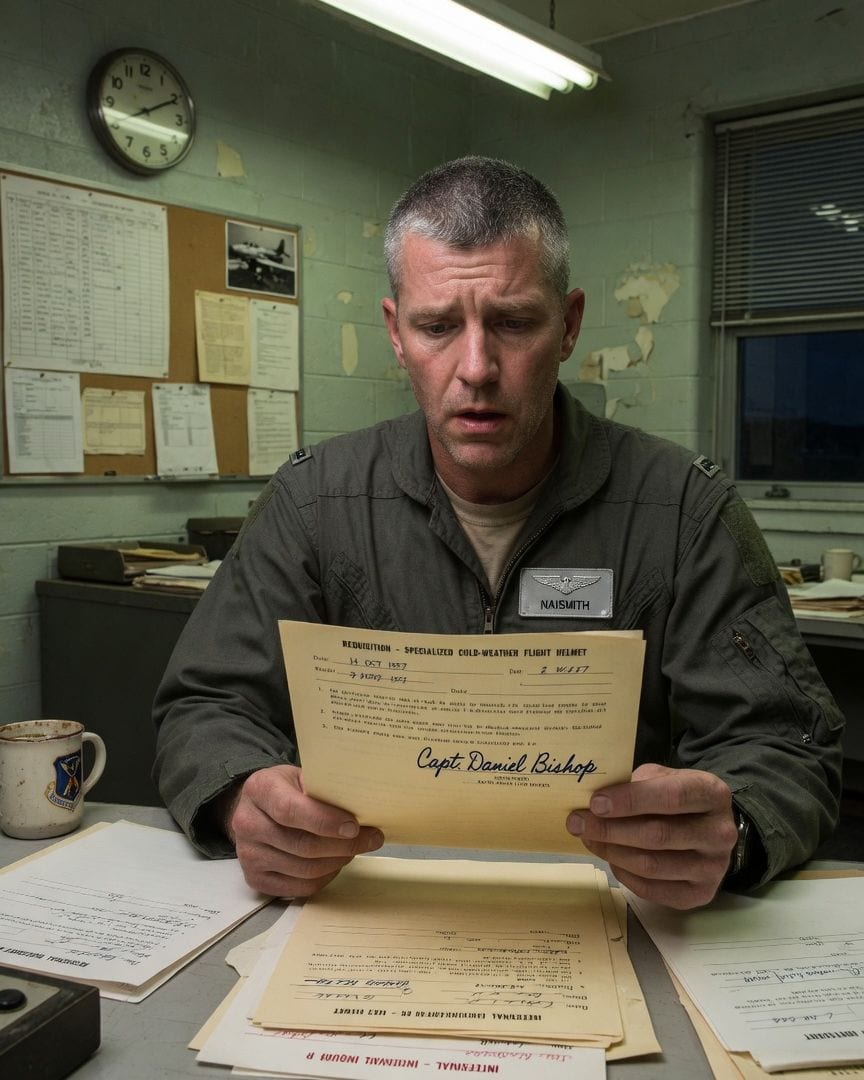
A Cold War Colonel reviews a missing pilot's file and finds Captain Bishop's signature on a form dated weeks after he vanished.
Colonel Ward Naismith faced the grim task of reviewing Captain Daniel Bishop’s personnel file, a routine chore for a man listed as Missing in Action. Bishop had vanished days after he and Naismith chased an impossible, silent disc over Lake Superior, leaving only an empty patch of air and a knot of unease in Ward's gut. Sifting through commendations, Ward found a requisition for flight gear and a maintenance sign-off, both dated *after* Bishop’s disappearance. The true chill came with the requisition for a specialized flight helmet, bearing Captain Bishop’s unmistakable signature, weeks after he was presumed lost. How could a man presumed lost have signed anything?
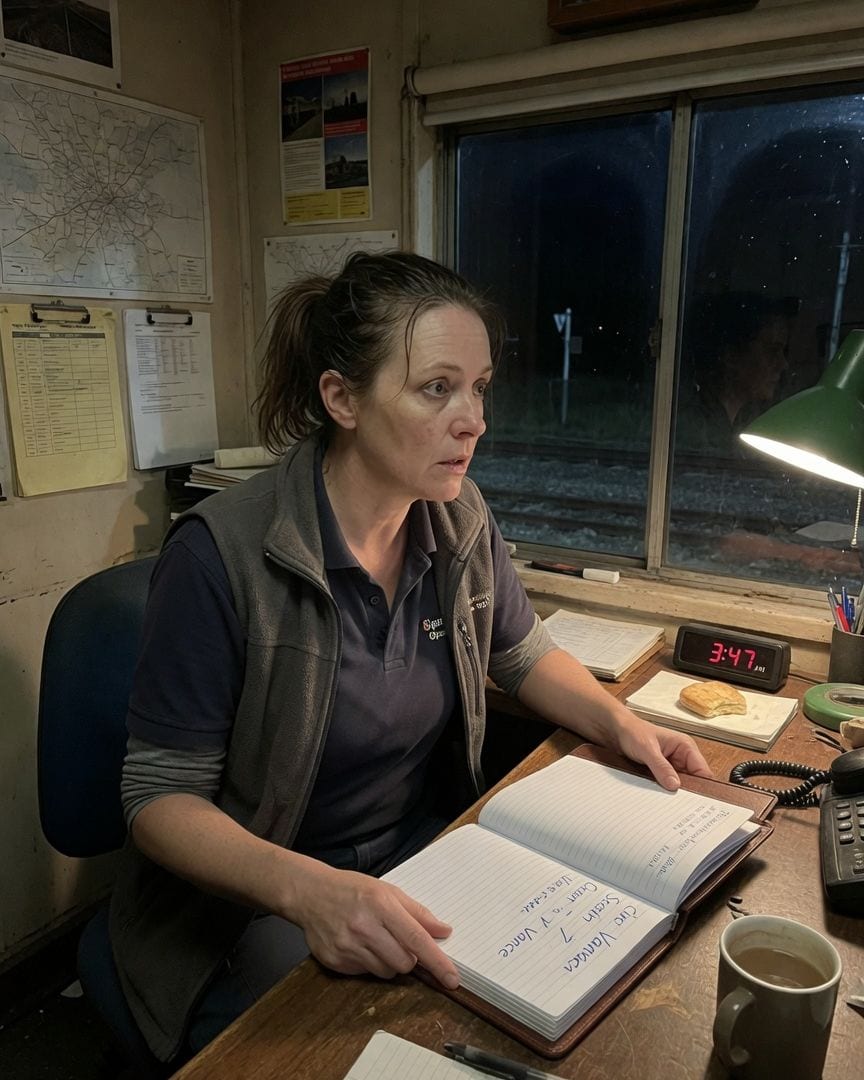
My linesman taps twice on my window at 3 AM. Control says he retired and passed years ago.
My routine at the rural signal cabin was regular: the linesman's double tap on the window at 3 AM. But then my supervisor called, revealing the linesman I knew, Warren Vance, had died five years ago. Now, an impossible entry in my official logbook, with his signature and timestamped from my shift, proves someone else was there.
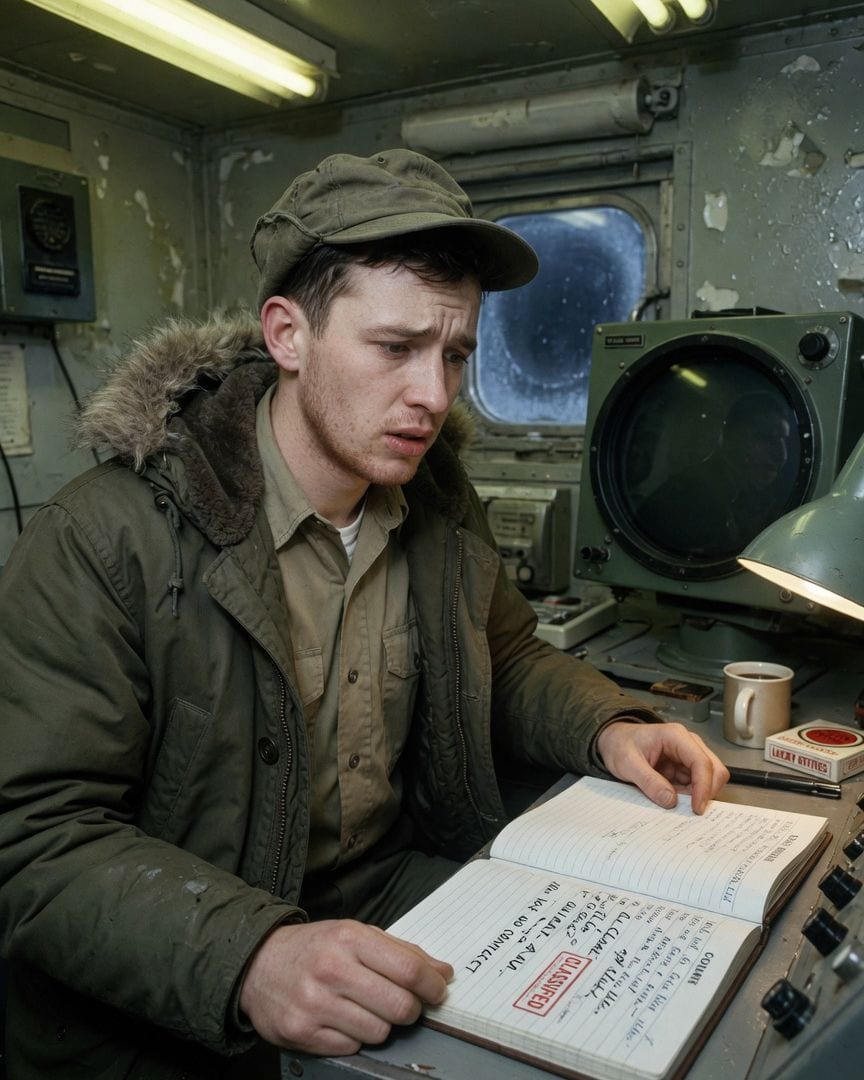
A Cold War airman logs an impossible radar contact on his last sweep. But his official logbook entry is stamped 'CLASSIFIED' and then contradicted by a hastily scrawled 'ALL CLEAR' dated moments before it.
Airman Ordway Vance, 22, manned the radar dome at Site Pellin in the biting North Atlantic dark of January 1962, running the last calibration sweep before its decommissioning. His scope picked up a faint, impossible return, growing closer with each pass, though the ocean remained empty to the eye. When Vance detailed the contact in his official logbook, a 'CLASSIFIED' stamp appeared, followed by a hastily scrawled 'ALL CLEAR' dated moments before his own entry, contradicting his every word. Commander Hartley dismissed it as equipment malfunction, but Vance sensed a chilling, official erasure behind the lie. He soon found a locked cabinet marked 'SITE PELLIN ANOMALIES,' hinting at a deeper truth buried within the base's final days.
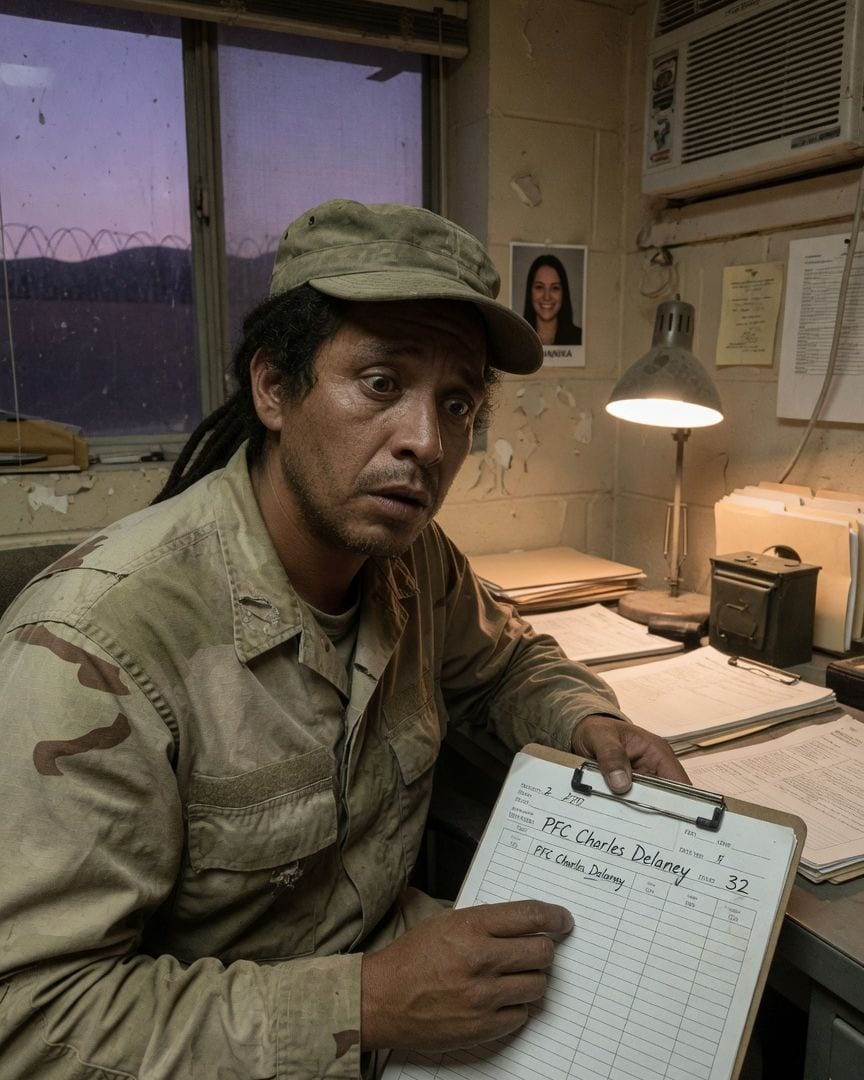
Sergeant Delgado, three weeks from home, counted his thirty-one men. Then a thirty-second soldier stood watch with a blurred face, not on the schedule.
Sergeant Roy Delgado ran the evening headcount at Firebase Kestrel, his mind set on his wife Annika and the three weeks remaining until his tour ended. He counted his thirty-one men, each one accounted for, yet his eyes kept seeing thirty-two figures against the desolate, purpling sky. Official rosters listed thirty-one, but a daily log, signed with his own unsettlingly familiar hand, added a name he didn't know: PFC Charles Delaney. Later, Delgado saw the unknown soldier, PFC Charles Delaney, standing watch on the perimeter, his face a blur in the moonlight and his name absent from any schedule. Who was this phantom soldier, and how did he appear?